
Arlington National Cemetery (ANC) is first and foremost a military cemetery. But several members of the U.S. Supreme Court are buried there as well. Most are buried in Section Five, just below the grave of President John F. Kennedy.

Most of the justices were eligible to be buried at ANC because they met the cemetery’s military service requirement, but others were given special permission to be buried there.
Justices By The Numbers
Since it was established in 1789, 114 persons have served as a justice (associate justice or chief justice) on the Supreme Court. Of these, 103 have died. Four chief justices and 10 associate justices are buried at ANC.
The first death of a justice was that of James Wilson on Aug. 21, 1798, and the most recent was that of Ruth Bader Ginsburg on Sept. 18, 2020. Pres. William Howard Taft, chief justice from 1921 to 1930 after serving as president from 1909 to 1913, was the first justice for whom a state funeral has been held. Ginsburg, who served as an associate justice from 1993 to 2020, was the second to receive this honor.
I photographed the graves of six justices buried at ANC. That doesn’t include Pres. Taft, whose grave I’ve already shared here in a previous installment.
Oliver Wendell Holmes, Jr.
The first associate justice buried at ANC was Oliver Wendell Holmes, Jr. (1841-1935). After graduating from Harvard, Holmes served in the Union Army during the Civil War, wounded three times in battle. He entered Harvard Law School in 1864 and was admitted to the Massachusetts bar in 1867. For the next 14 years, he practiced law in Boston, but his love for legal scholarship became evident during this time.

Holmes was offered a post teaching law at Harvard, but after teaching only one semester, he resigned to accept an appointment to the Supreme Judicial Court of Massachusetts, the state’s highest court. Holmes served on the Supreme Judicial Court for 20 years, eventually becoming its Chief Justice.
In 1902, Holmes was appointed by President Theodore Roosevelt to the U.S. Supreme Court. It might never have happened, except that Roosevelt and Holmes were both friends with Massachusetts Senator, Henry Cabot Lodge. He convinced Roosevelt that Holmes was favorable towards Roosevelt’s progressive policies.
Roosevelt would come to regret that decision after Holmes participated in striking down some of those initiatives. Holmes served on the Supreme Court longer than any other person up to that date, 30 years.
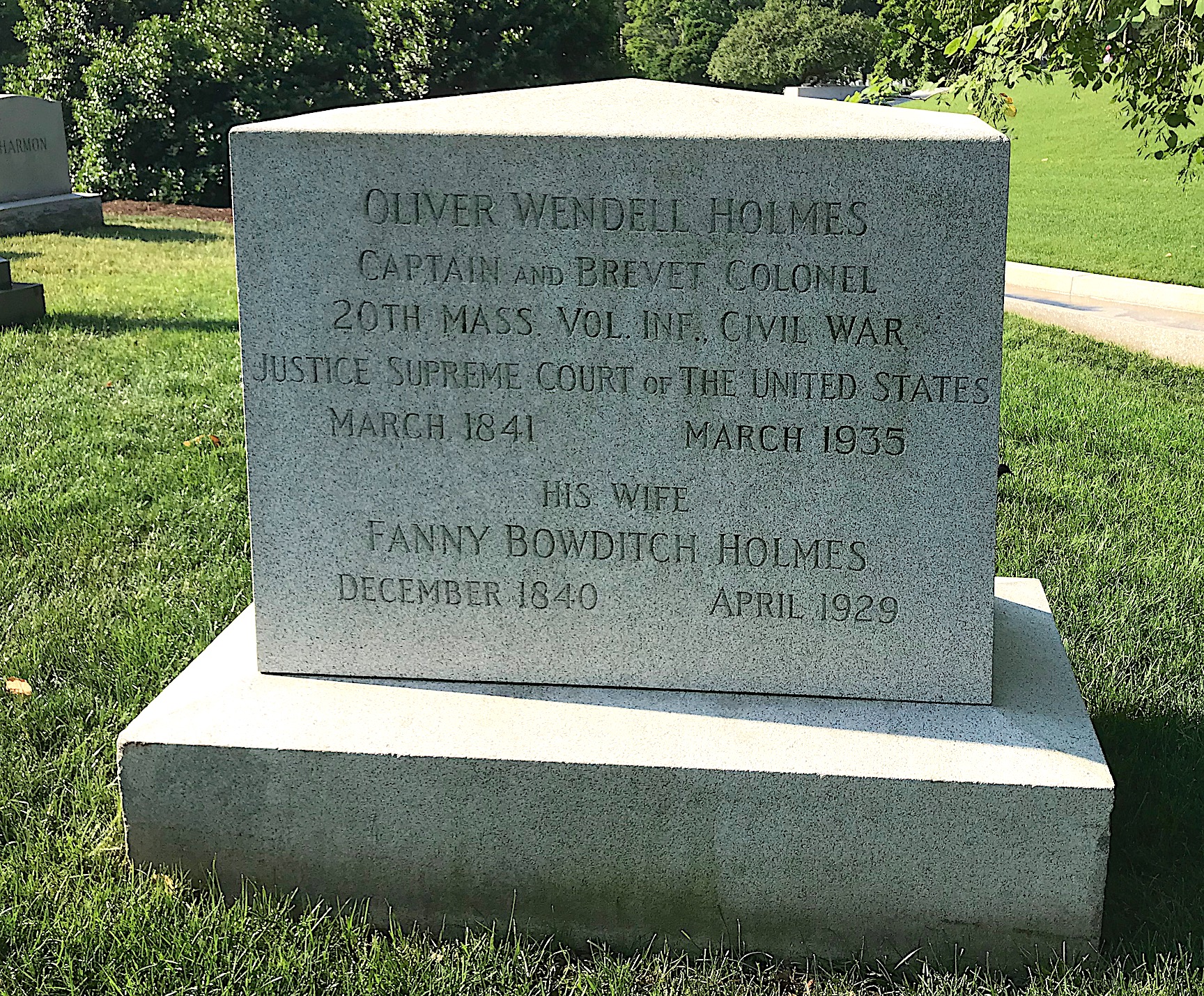
Holmes was called “the Great Dissenter” because he was often at odds with his fellow justices and eloquently expressed his dissents. Holmes resigned due to poor health in 1932, at age 90, at which point he was the oldest justice ever to have served on the Court. He died in March 1935, two days short of his 94th birthday.
William Orville Douglas
Born in Minnesota, William Orville Douglas (1898-1980) attended Columbia University where he received his law degree in 1925. After graduation, he practiced corporate law and taught part time at Columbia Law School. He joined the faculty at Yale Law School where he taught from 1928 to 1934. While at Yale, he became known for his work in bankruptcy law.
He accepted a position with the Securities and Exchange Commission (SEC) in 1934 and became chairman of the SEC (1937-1939), replacing Joseph P. Kennedy after he became ambassador to Great Britain. President Franklin Roosevelt appointed Douglas to the Supreme Court in 1939 to replace Justice Louis D. Brandeis.

Many thought Douglas would be pro-business. Instead, he became a strong individualist and an activist interpreter of the guarantees of the Bill of Rights. He opposed censorship and maintained a powerful distrust of government power.
As Supreme Court justice, Douglas wrote many dissenting opinions. He often faced critics who demanded his impeachment. The first came in 1952 when he granted a stay of execution to Julius and Ethel Rosenberg, found guilty of passing atomic secrets to the Soviet Union.
There were more calls for his impeachment in the late 1960s because of his criticism of the Vietnam War. In 1970, congressman (later President) Gerald R. Ford organized yet another attempt to impeach Douglas, which failed.

On Dec. 31, 1974, Douglas suffered a stroke. He returned to the Supreme Court but his health was fragile. Douglas retired on Nov, 12, 1975, after 36 years on the Supreme Court, a record not likely soon to be broken. He died on Jan. 19, 1980 at age 81.

Potter Stewart
Potter Stewart (1915-1985), son of the Republican mayor of Cincinnati, graduated from Yale University in 1937, graduated from Yale Law School in 1941, and was editor of the Yale Law Journal.

After serving in the Navy in World War II, Stewart entered private practice and local politics in Cincinnati. He was appointed to the U.S. Court of Appeals as judge for the Sixth Circuit in 1954. President Dwight D. Eisenhower appointed him to the U.S. Supreme Court in 1958. As a conservative, he followed a moderate approach that defied easy categorization. In 1968, Stewart removed himself from consideration for the position of chief justice, when other members of the court previously had sought the position.
He went on to play a significant role in formulating the court’s unanimous opinion in 1974, which ordered President Richard Nixon to surrender to the special prosecutor the tape recordings whose disclosure later led Nixon to resign. He retired from the bench in 1981.

After his retirement, Stewart appeared in a series of public television specials. He died of a stroke at age 70 on Dec. 7, 1985.
Thurgood Marshall, Sr.
Born in Baltimore, Md., Thurgood Marshall, Sr. (1908-1993) attended segregated public schools. Marshall attended Howard University Law School, graduating first in his class in 1933. After graduation, Marshall practiced law in Baltimore. In his first major court victory, in 1935, he successfully sued the University of Maryland Law School for denying admission to a black applicant on the grounds of race.

In 1940, he founded and served as executive director of the NAACP Legal Defense and Educational Fund. In that position, he argued numerous cases before the Supreme Court — including Brown vs. Board of Education (1954), which held that the racial segregation of public schools violated the Constitution. Marshall won 29 of the 32 cases that he argued before the Supreme Court.
In 1961, President John F. Kennedy appointed Marshall to the U.S. Court of Appeals for the Second Circuit. In 1965, President Lyndon B. Johnson appointed him as Solicitor General. This made Marshall (at the time) the highest-ranking black government official in U.S. history.
President Johnson nominated him to the Supreme Court on June 13, 1967. Marshall’s nomination was confirmed by the U.S. Senate on August 30, 1967.

On the Supreme Court, Marshall consistently defended the constitutional protection of individual rights, including the rights of criminal defendants. He also continued advocating for the civil rights of African-Americans and other minorities. He described his legal philosophy as, “You do what you think is right, and the law will catch up.”
Marshall did not wish to retire. He often said “I was appointed to a life term, and I intend to serve it.” But due to ill health, he announced on June 27, 1991, that he would retire. He died on Jan. 24, 1993.
Warren Burger
Warren Earl Burger (1907-1995) served as the 15th Chief Justice of the United States from 1969 to 1986. The longest-serving Chief Justice of the 20th century, his court delivered ground-breaking decisions on abortion and school desegregation.
A native of Minnesota, Burger attended night school at the University of Minnesota, while selling insurance to support himself. He enrolled at what became William Mitchell College of Law, receiving his degree in 1931. He took a job at the firm which became Faricy, Burger, Moore & Costello. He also taught for 12 years at St. Paul College of Law.

In 1956, President Eisenhower appointed him to a judgeship on the U.S. Court of Appeals for the District of Columbia Circuit, where he remained for 13 years.
In 1969, President Nixon appointed Burger to succeed Warren. It became apparent that Burger was not going to turn the clock back on the rulings of the Warren court. In the early 1970s, the Court issued rulings supporting busing to remedy de facto racial segregation in schools and invalidating all U.S. death penalty laws (although Burger dissented from the latter decision).
In the most controversial ruling of his term, Roe vs. Wade, Burger voted with the majority for the legalization of abortion. Burger also wrote the landmark 1973 decision that supplied the still-used legal definition of obscenity. In 1974 Burger ruled against Nixon’s attempt to keep several memos and tapes relating to the Watergate scandal private, prompting Nixon to resign the presidency in order to avoid impeachment.

Overall, Burger did not dominate the court. He generally wrote only uncontroversial opinions, where the Court was not evenly divided. Instead, he concentrated on the other role of the Chief Justice, administering the nation’s legal system.
Burger retired on Sep. 26, 1986 and died on June 25, 1995 of congestive heart failure at age 87. Burger’s casket was displayed in the Great Hall of the U.S. Supreme Court Building, an honor previously bestowed only on Chief Justice Earl Warren and Justice Thurgood Marshall.
Harry Blackmun
A native of Nashville, Ill., Harry Andrew Blackmun moved to Minnesota as a boy. He received his undergraduate degree in math from Harvard University in 1929, and earned his law degree also from Harvard in 1932. He returned to Minnesota to practice law. His career included nine years as resident counsel for the Mayo Clinic.
In 1959, President Eisenhower appointed him to the U.S. Court of Appeals. In 1969, Justice Abe Fortas was forced to resign from the Supreme Court. President Richard Nixon then appointed Clement Haynsworth but he was rejected by the Senate. Nixon then appointed G. Harold Carswell, who was also rejected by the Senate.

Blackmun was recommended to Nixon by Chief Justice Warren Burger, who was Blackmun’s childhood friend. He was confirmed by the Senate without opposition. Because Blackmun was Nixon’s third choice to the court, he jokingly called himself “Ol’ Number 3” and said it kept him humble.
Blackmun had been on the court just three years when he wrote the majority opinion in the landmark case of Roe v. Wade. Two causes he championed were the strict separation of church and state, and freedom of speech.
He resigned from the Court on Aug. 3, 1994, having served for 24 years. He continued to come daily to the Court, where he kept up his habit of going to breakfast in the cafeteria with his clerks. In 1997, he played Justice Joseph Story in the film “Amistad,” becoming the first Supreme Court justice to appear in a motion picture.

On February 22, 1999, Blackmun fell at his home and the next day underwent hip replacement surgery. He died on March 4, 1999.
Please join me soon for Part IV when I share some ANC stories from beyond the stars.

 Adventures in Cemetery Hopping
Hi Traci. My name is Lynn Huddleston and I live in Fayetteville , Georgia. I visited an old cemetery in Roberta, Georgia today and I have a couple of photos that I would like to send you. Do you have an email address that I can send these photos to?
Hi, Lynn! I think you and I may have swapped messages at some point in the past. You can send me your photos at traci.rylands@gmail.com.