
In my last post, I introduced you to Iowa City, Iowa’s Oakland Cemetery and focused on the story of the Black Angel. This week, I’ve got some veterans I’d like to honor by sharing their stories.
During the Civil War, Iowa contributed 48 regiments of state infantry, one regiment of black infantry, nine regiments of cavalry, and four artillery batteries. In addition to these federally mustered troops, the state also raised a number of home guard or militia units. In other words, a lot of soldiers!
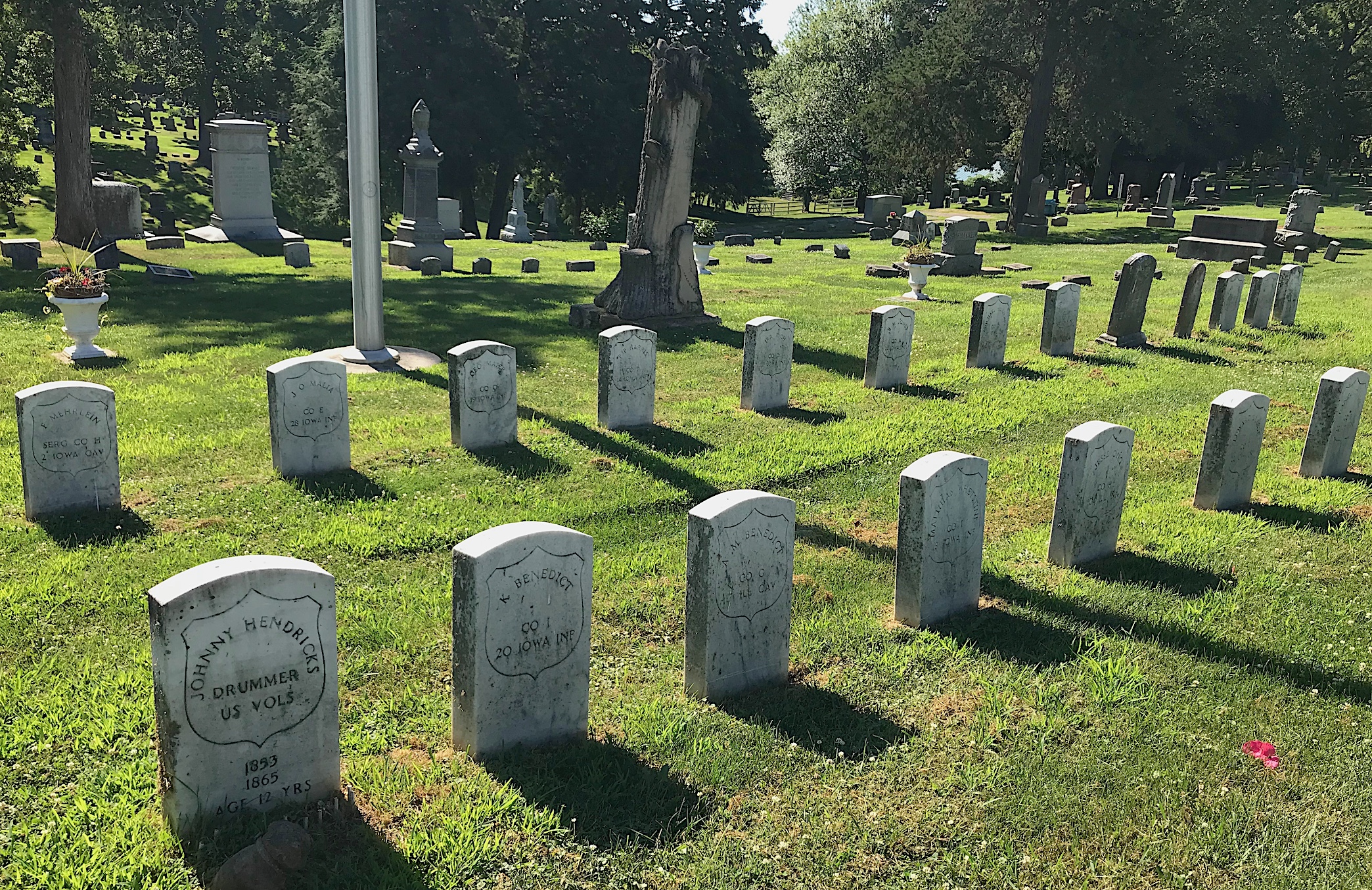
Near the front of Oakland is the Grand Army of the Republic (GAR) section where you’ll find a handful of military graves for soldiers who served during the Civil War. They were Union soldiers enrolled in different groups from various states, most from Iowa but not all. There are other veterans buried at Oakland as well.
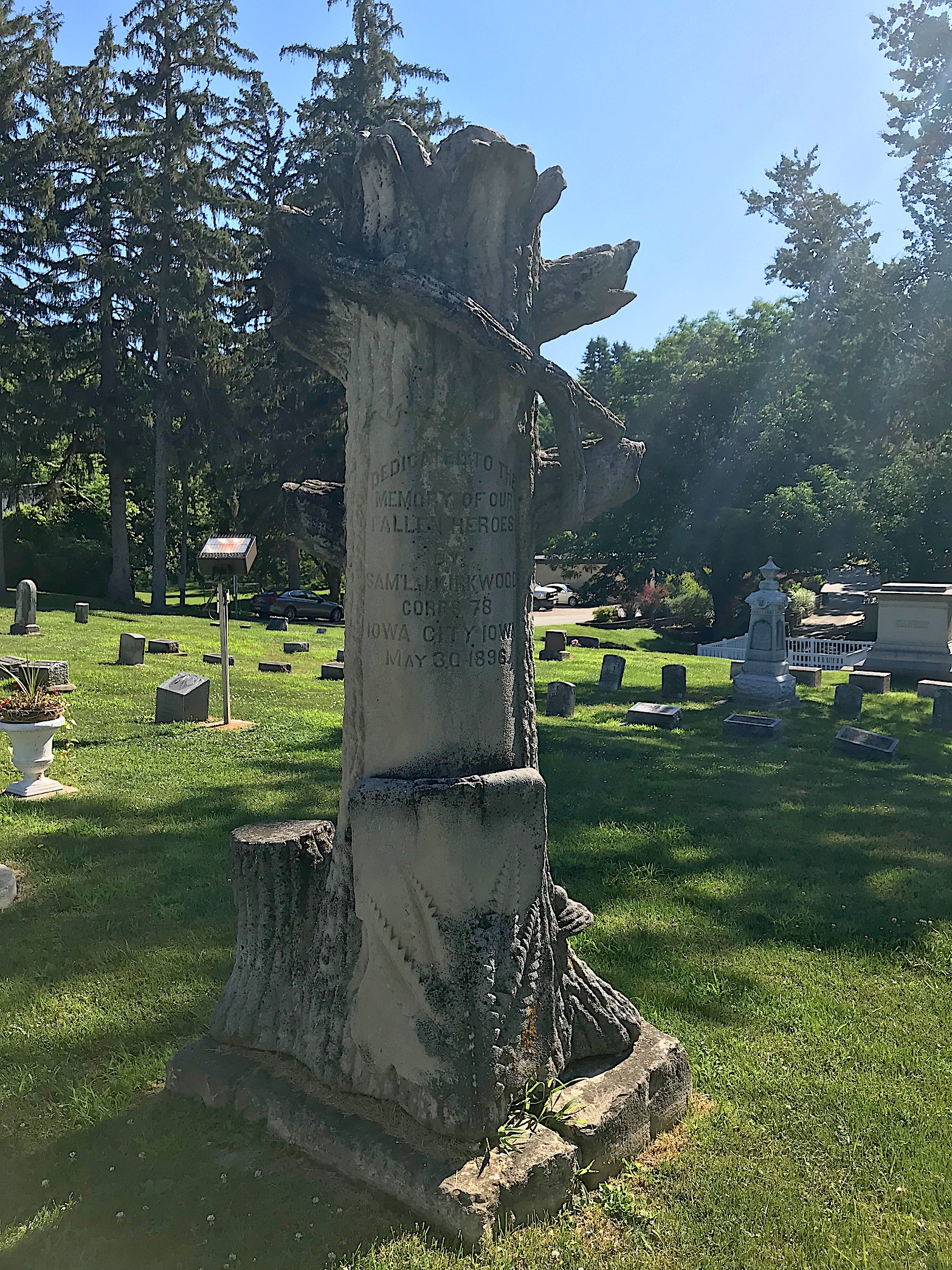
Samuel J. Kirkwood Corps 78 GAR Monument
Oakland Cemetery has something I can’t say I see very often and that is a tree-shaped GAR monument. It was erected on May 30, 1896 by the Samuel J. Kirkwood Corps 78 to honor the fallen GAR soldiers. At the time it was placed, there were 16 GAR graves there.
Samuel J. Kirkwood was Iowa’s governor twice (1860 to 1864 and 1876 to 1877). He also served in the U.S. Senate and was U.S. Secretary of the Interior. He passed away in 1894 and is buried at Oakland, but I’ll feature him in more detail in Part III.
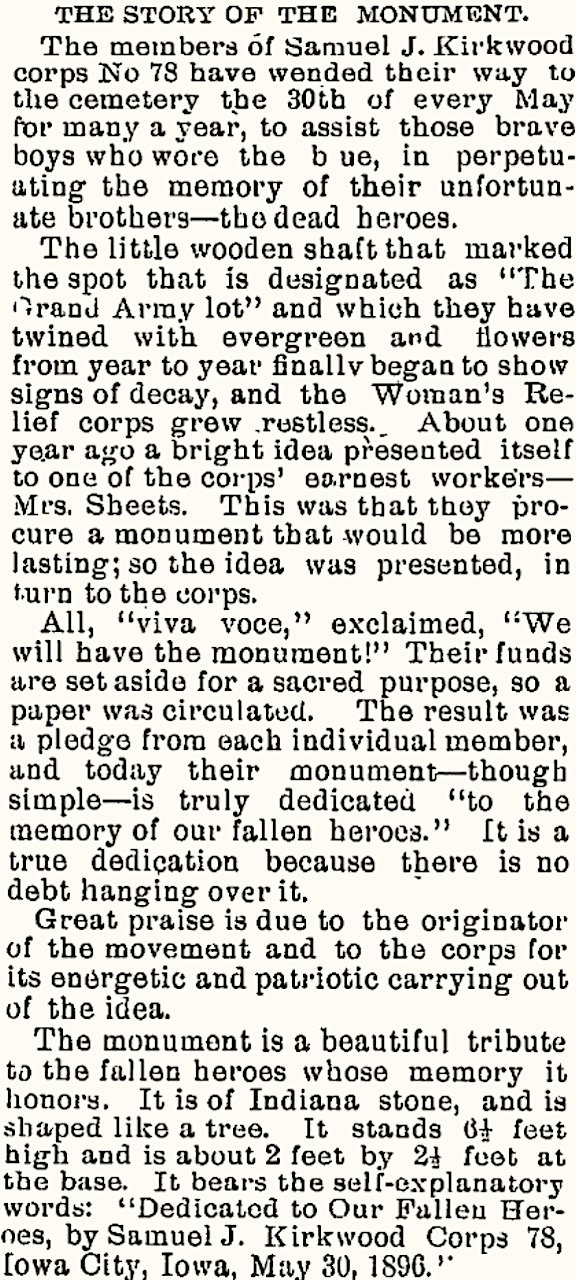
I wasn’t sure what the Samuel J. Kirkwood Corp 78 was until I stumbled up on this tidbit on Pat Grandsta’s web site about the governor’s early involvement in the Civil War in raising troops for the Union:
Kirkwood immediately issued a proclamation calling for the various counties to raise volunteer companies consisting of a minimum of 78 men each; the companies would comprise a state militia which would ultimately be mustered into the United States army. In addition, the governor used his oratorical skills to explain his — and Lincoln’s— belief that the Union should remain inviolate. The result was that twice as many Iowans volunteered as could be accepted.
I admit I was almost giddy to find an article about this exact monument in the Iowa City Weekly Republican from June 3, 1896. Iowa City’s GAR veterans pooled their money to erect a proper monument to honor their comrades interred at Oakland Cemetery.
Little Drummer Boy
At the GAR plot, my gaze was drawn to the marker for Johnny Hendricks. It’s not often you see a Civil War veteran marker for a 12-year-old boy.
I couldn’t find much about Johnny back in 2019. But a fellow named Kurt Knapp on another Facebook page managed to find out the following:
Not very much info available on Johnny, being only 12. Below is a brief listing of his death in the Iowa Volunteers Casualty/Death list. He was a private in the 25th Iowa Volunteers. Died in a hospital in Nashville on May 5, 1865. Most likely, he had friends who paid for embalming and shipping his remains back to Iowa.
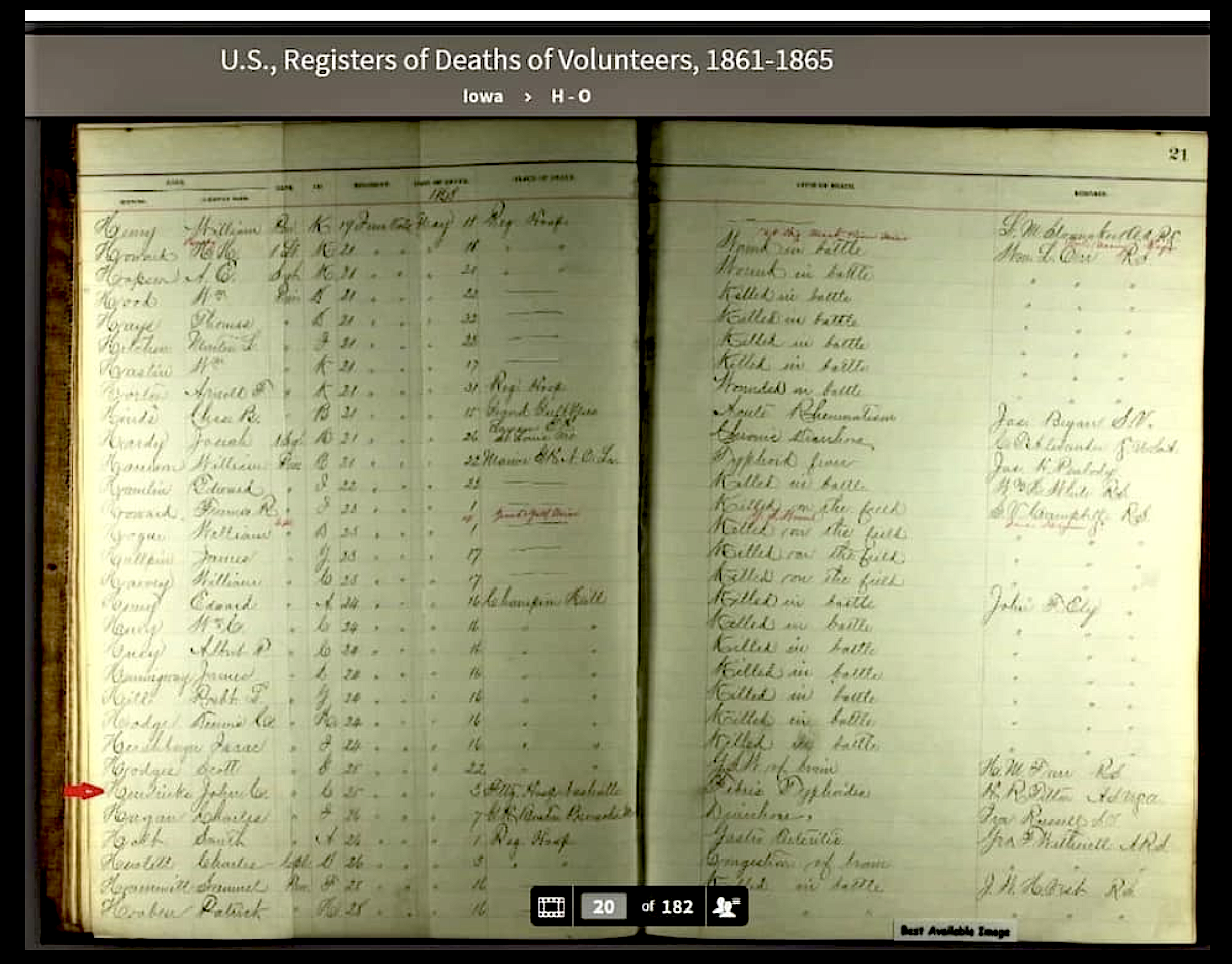
At the time, most soldiers of both sides were buried in local graveyards or other open land, unless compassionate friends pooled their resources to return the remains to their home state.
Difficult to see the cause of death, but looks like: Febris Typhoidea. (Typhoid), a serious stomach and intestinal infectious disease caused by bacteria Salmonella typhi. Not uncommon among Civil War soldiers, in fact, more died from diseases than trauma.
Children on the Civil War battlefield were not as uncommon as you might think. According to the Vintage News, it’s thought that over 250,000 of participants were younger than 18, some not much older than 10. Tossed into an unfamiliar world, they were forced to act like adults. Most had lied about their age and joined without their parents’ permission.
The youngest, like Johnny, often became drummers and messengers.
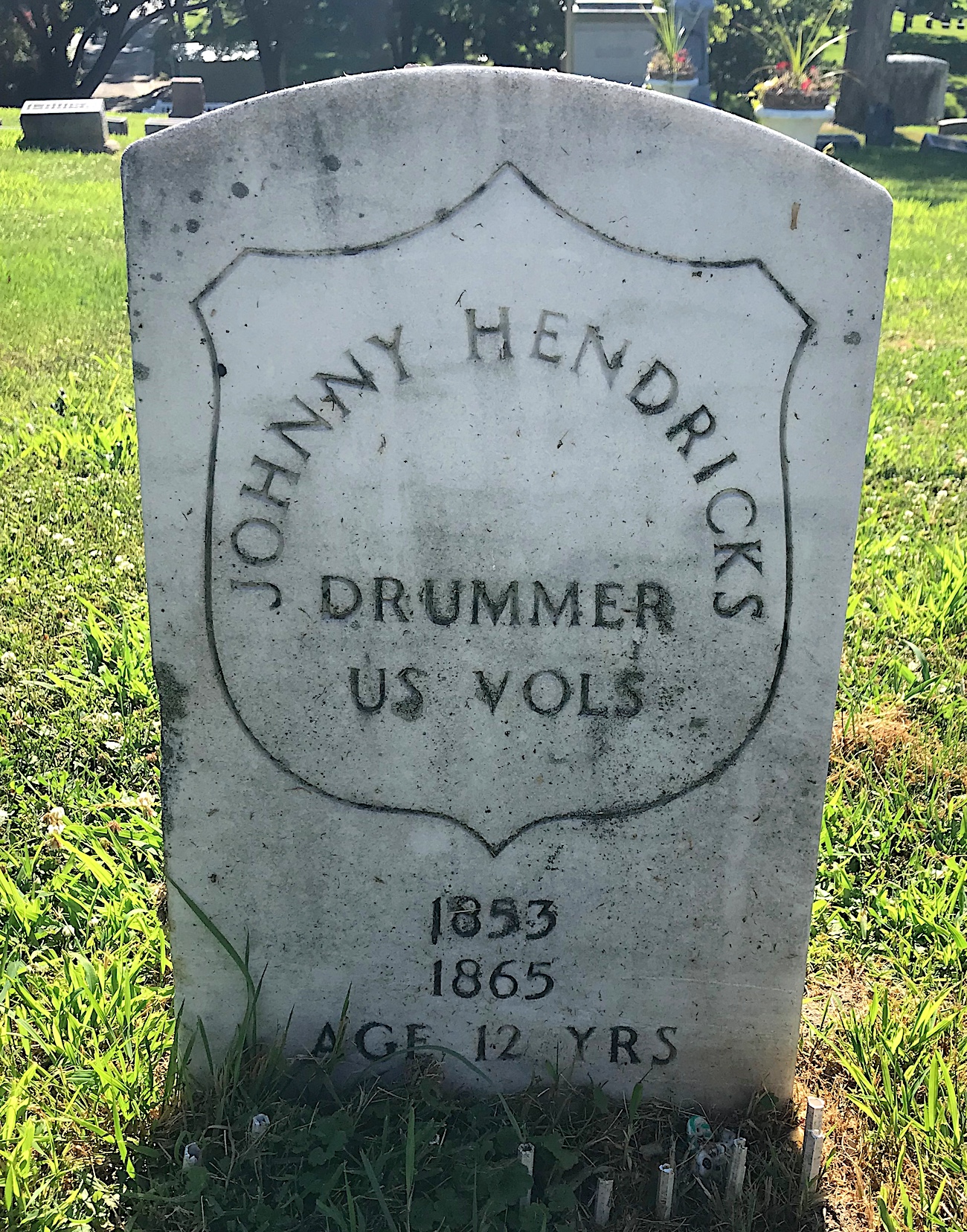
Johnny’s friends (it appears) rallied to get his remains sent home so he was not left to rest in a grave in a state he never knew. While his life was short, Johnny was not forgotten then. Or now.
“We Miss Thee Everywhere”
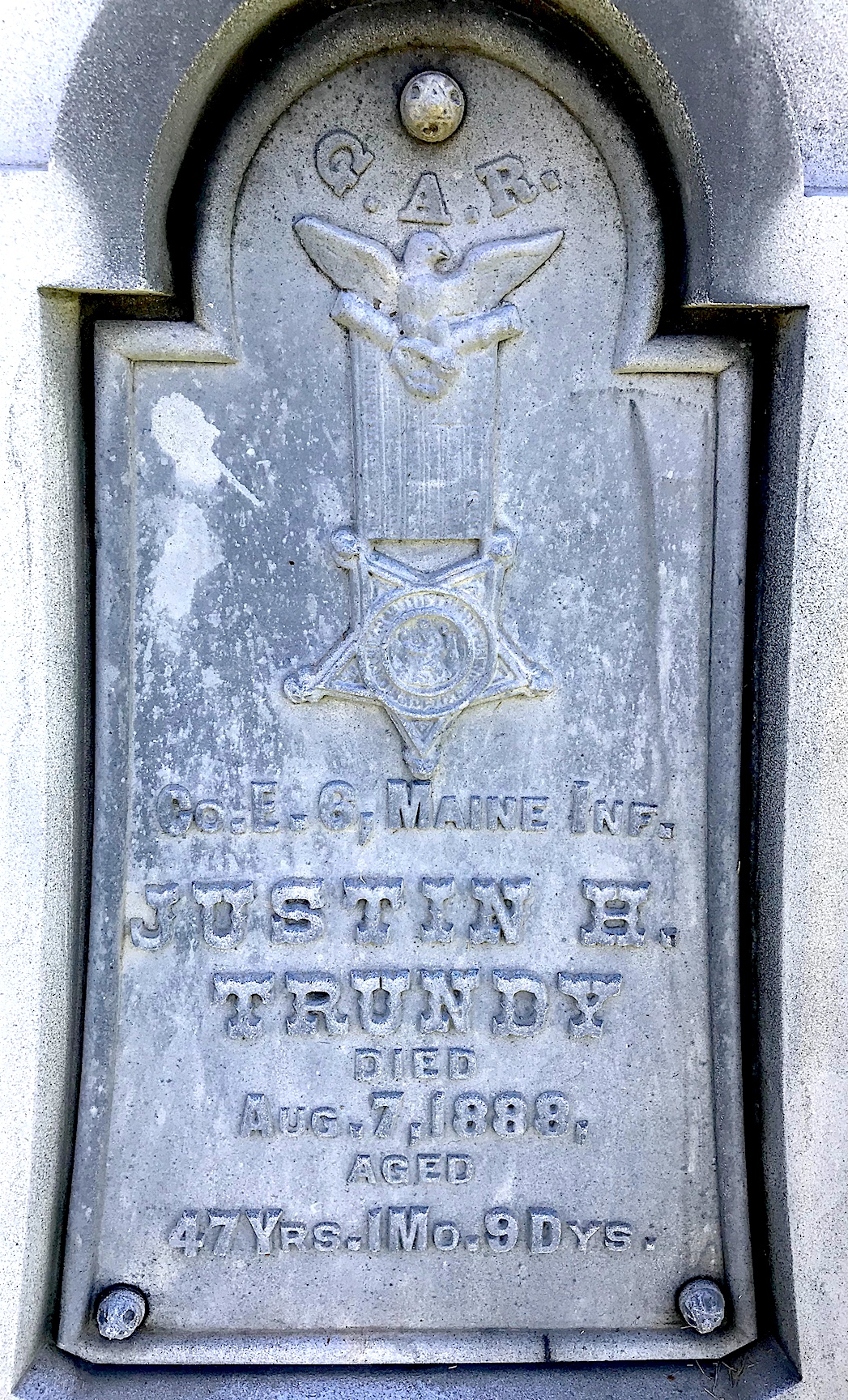
Not far away from the GAR plot are two white bronze (zinc) monuments that got my attention. The first was for Dover, Maine native Justin H. Trundy, who saw a great deal of action while a member of the Sixth Maine Infantry, Co. E.
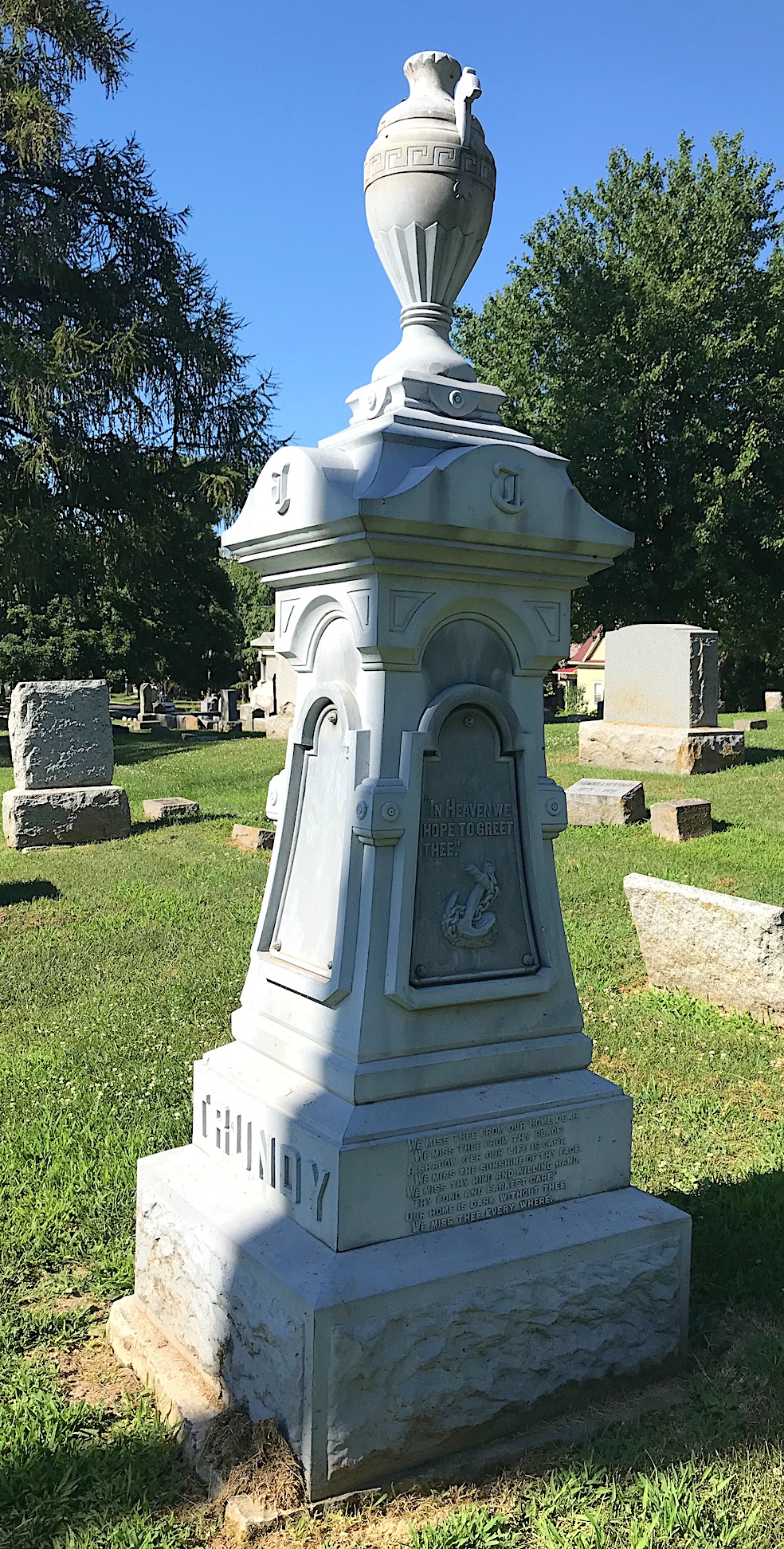
Trundy moved to Iowa City with his new bride, Nellie, in 1869. When he died on Aug. 7, 1888 at age 47, he was senior vice commander of Iowa City’s GAR. He and Nellie had one son, George. Nellie would outlive Justin by 45 years, passing away in 1933.
Trundy’s monument has one of the more poignant epitaphs on the base.
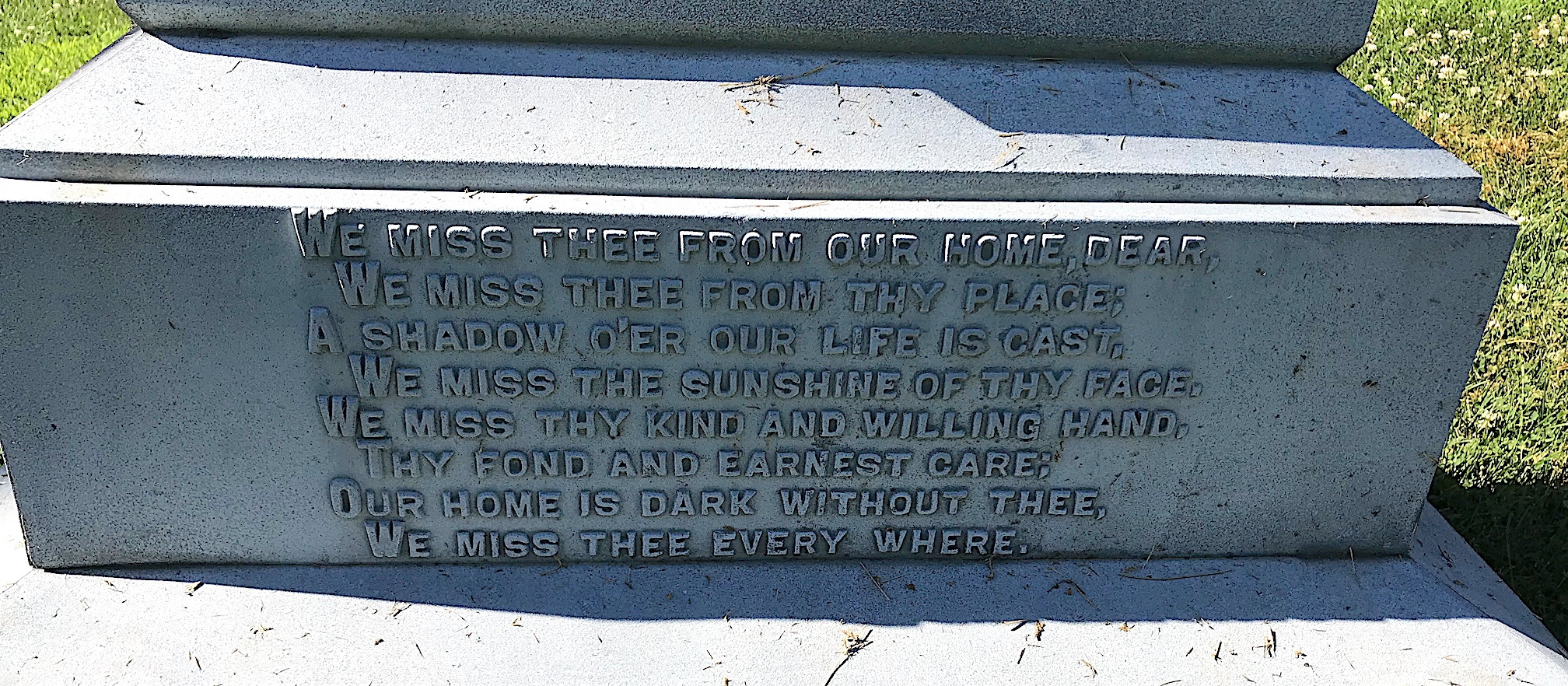
We miss thee from our home, dear.
We miss thee from they place;
A shadow o’er our life is cast,
We miss the sunshine of they face.
We miss thy kind and willing hand,
They fond and earnest care;
Our home is dark without thee,
We miss thee every where.
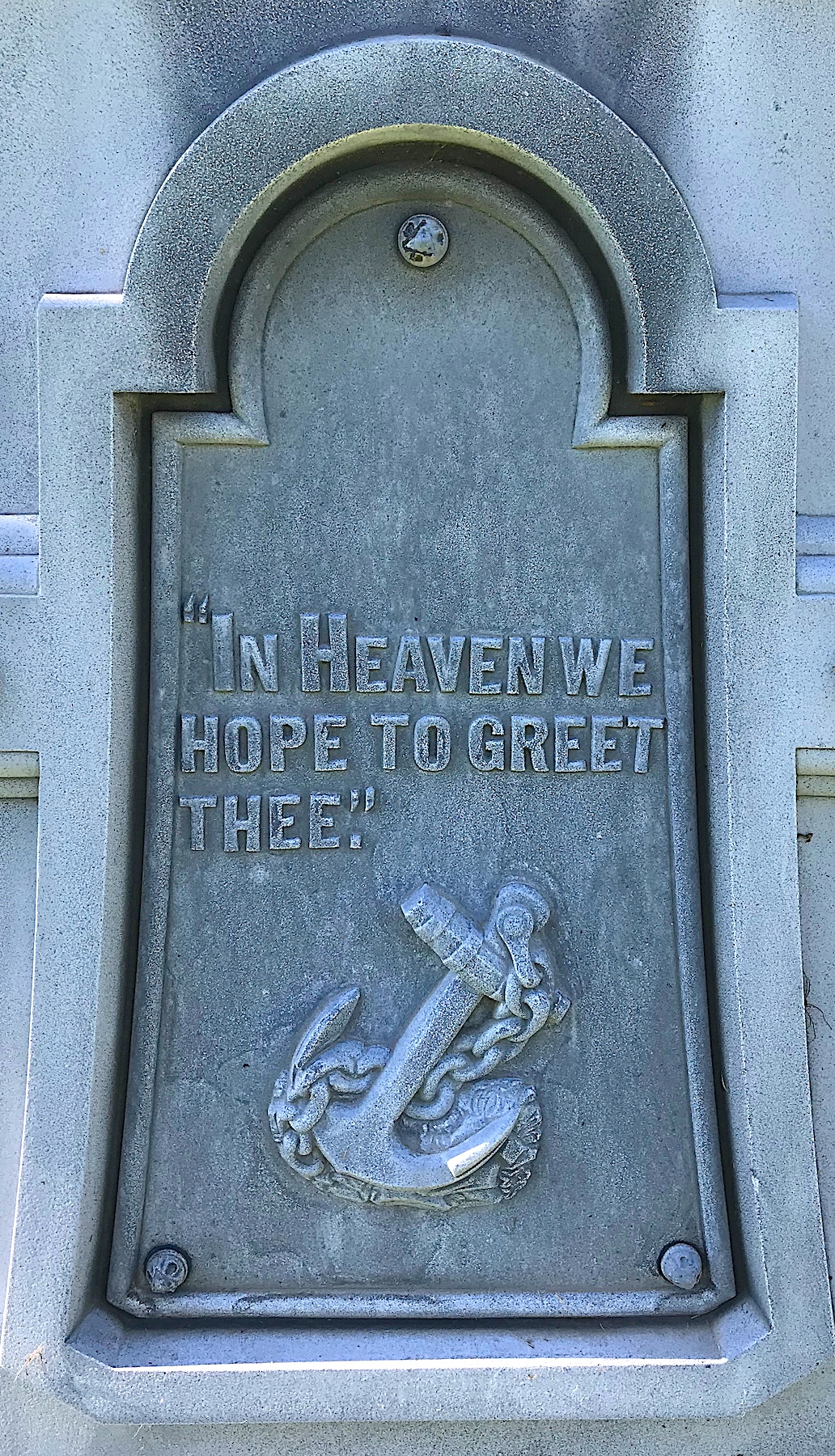
“Rest, Soldier, Rest”
Ohio native Jasper N. Templeman enlisted at 16 in the Union Army but due to his small stature, he was made a drummer boy much like Johnny Hendricks. He was noted for his handsome features and good nature. He mustered into the 22nd Iowa Infantry, Co. G, on Feb. 17, 1864.
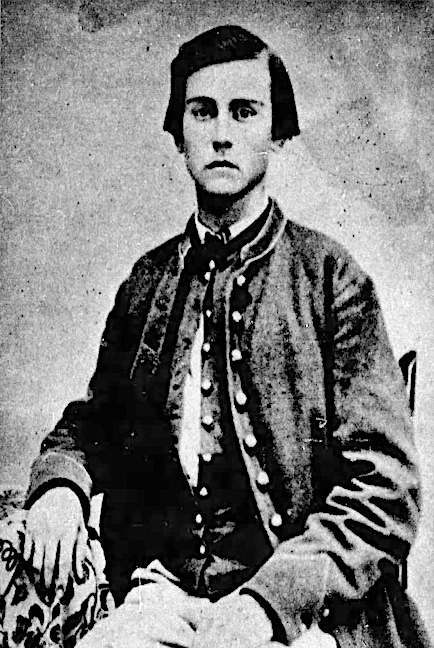
Three of Jasper’s brothers also served in Co. G. One of them, Milton, would die of disease in 1863. Jasper mustered out with the regiment in Savannah, Ga. on July 25, 1865.
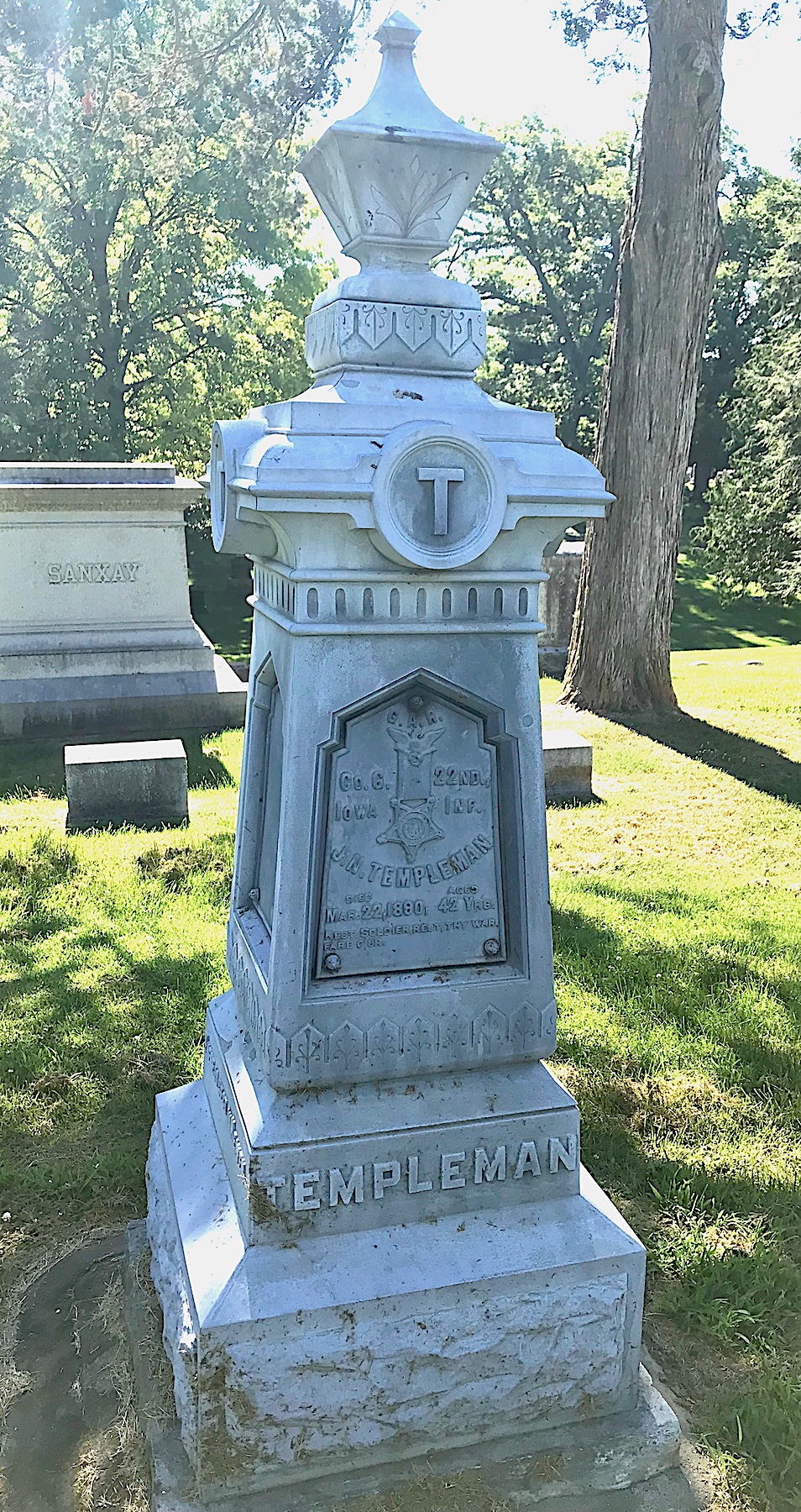
After the war, Jasper moved to Miller, Dakota Territory, where he worked for the Northern Pacific Railroad and later opened the Pioneer Gallery, a photography studio in Miller. In 1870, he married Alma Reeves in Norway, Iowa. They would have seven children together, all but one living to adulthood.
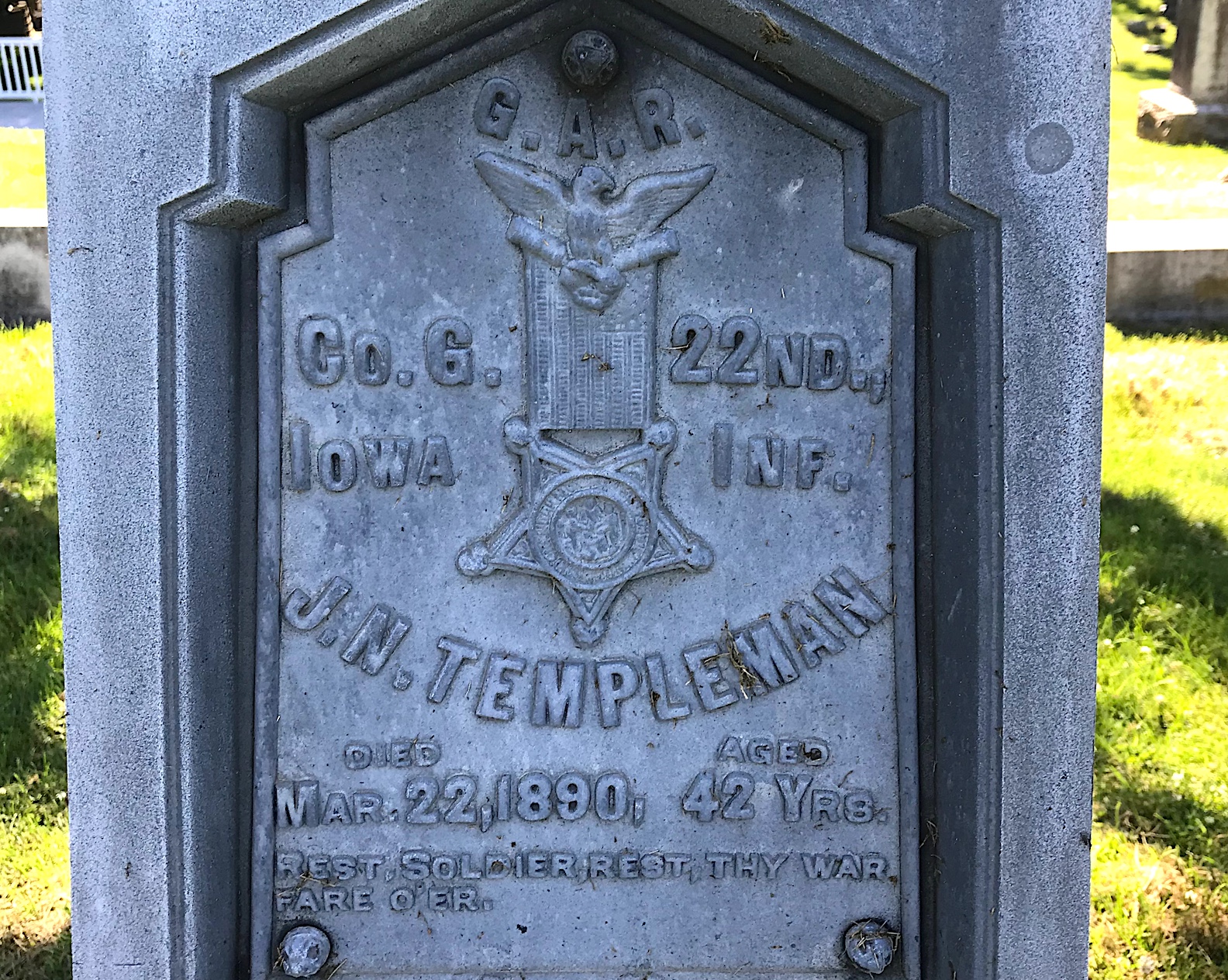
Unfortunately, Jasper’s health was failing by the time he reached his 40s. His youngest child was still an infant when he died at age 42 on March 22, 1890.
From the Oxford Weekly Journal (Oxford, Iowa), April 3, 1890:
Jasper N. Templeman died at his home in this city, on Saturday morning after a long and painful illness He had only recently returned from southern California where he had spent some time in hope of restoration to health. He leaves a wife and seven children. Mr. Templeman was about 43 years of age; in 1864, when a boy not yet seventeen, he enlisted in Co. G, 22nd Iowa Infantry, and made a good record as a soldier. His burial was conducted by Iowa City Post, G.A.R. Many of our citizens will remember the deceased as a former citizen of our town. He was highly respected by all who knew him.
Alma did not remarry but remained in Iowa City, later moving to California for a time. She died in 1946 at age 95 and is buried beside Jasper.
I’ll be back soon with more stories from Iowa City’s Oakland Cemetery.
 Adventures in Cemetery Hopping
Excellent research, I loved reading your article.
Thank you, Susan! I’m glad you enjoyed reading it. 🙂