
[Note: For more information on Tours by Grace, visit: https://www.toursbygrace.com/]
Last week, I told you I planned to feature some local (to me) cemeteries in my next blog posts. But this week, I realized I didn’t want to do that.
In the past, I’ve tried to write about my adventures chronologically. However, sometimes I get the urge to do something different.
When you make the rules, you can do that.
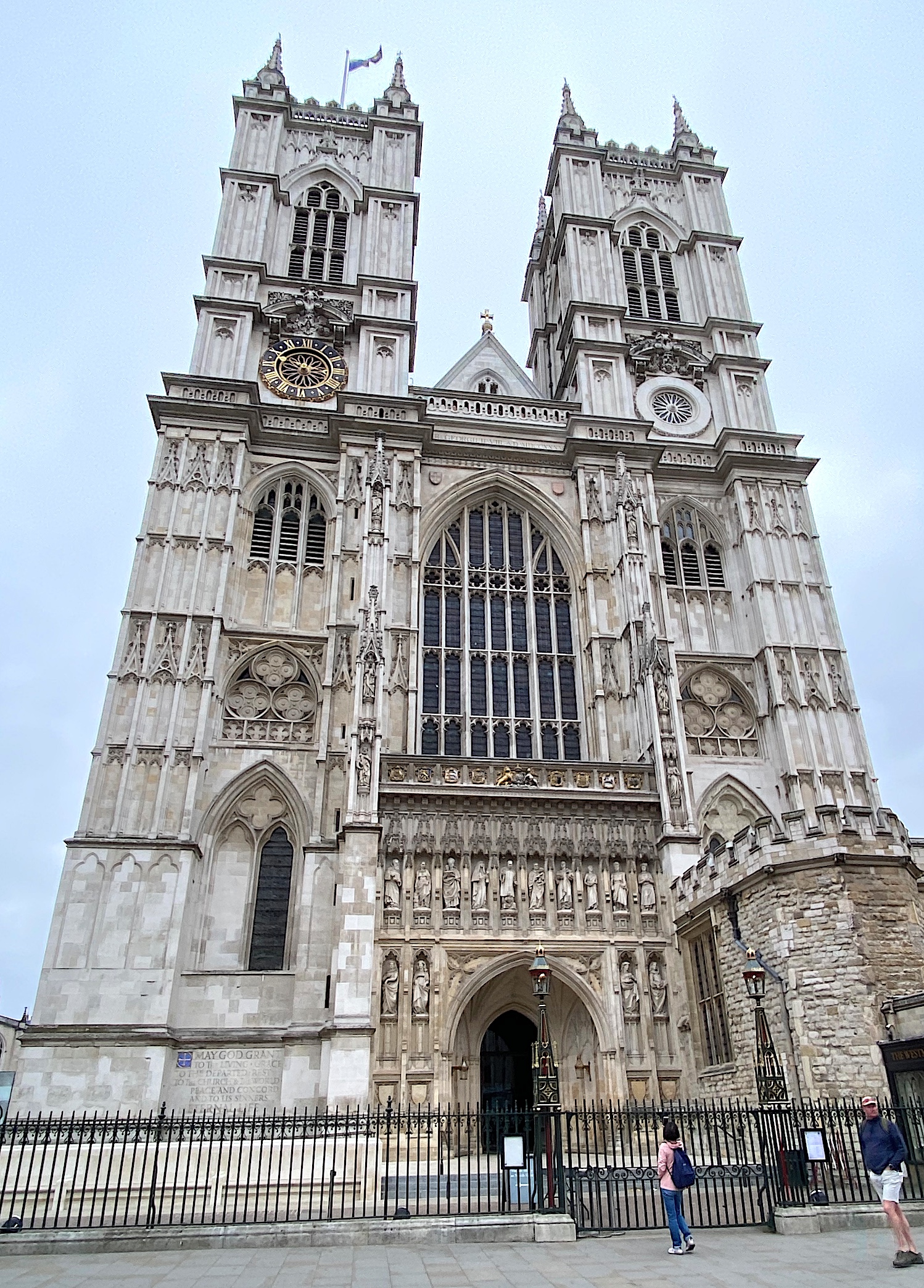
Today I’m starting a new series on London’s Westminster Abbey, which I visited in June 2023. There’s a bit of a story behind my relationship with this place, but I’ll try to keep it brief.
Disappointed in 1998
It started in July 1998 when I visited London for the first time with my college roommate and dear friend Megan. While I was not yet a cemetery hopper, I wanted to see Westminster Abbey. So one day we headed over there and to my disappointment, it was closed for an event.
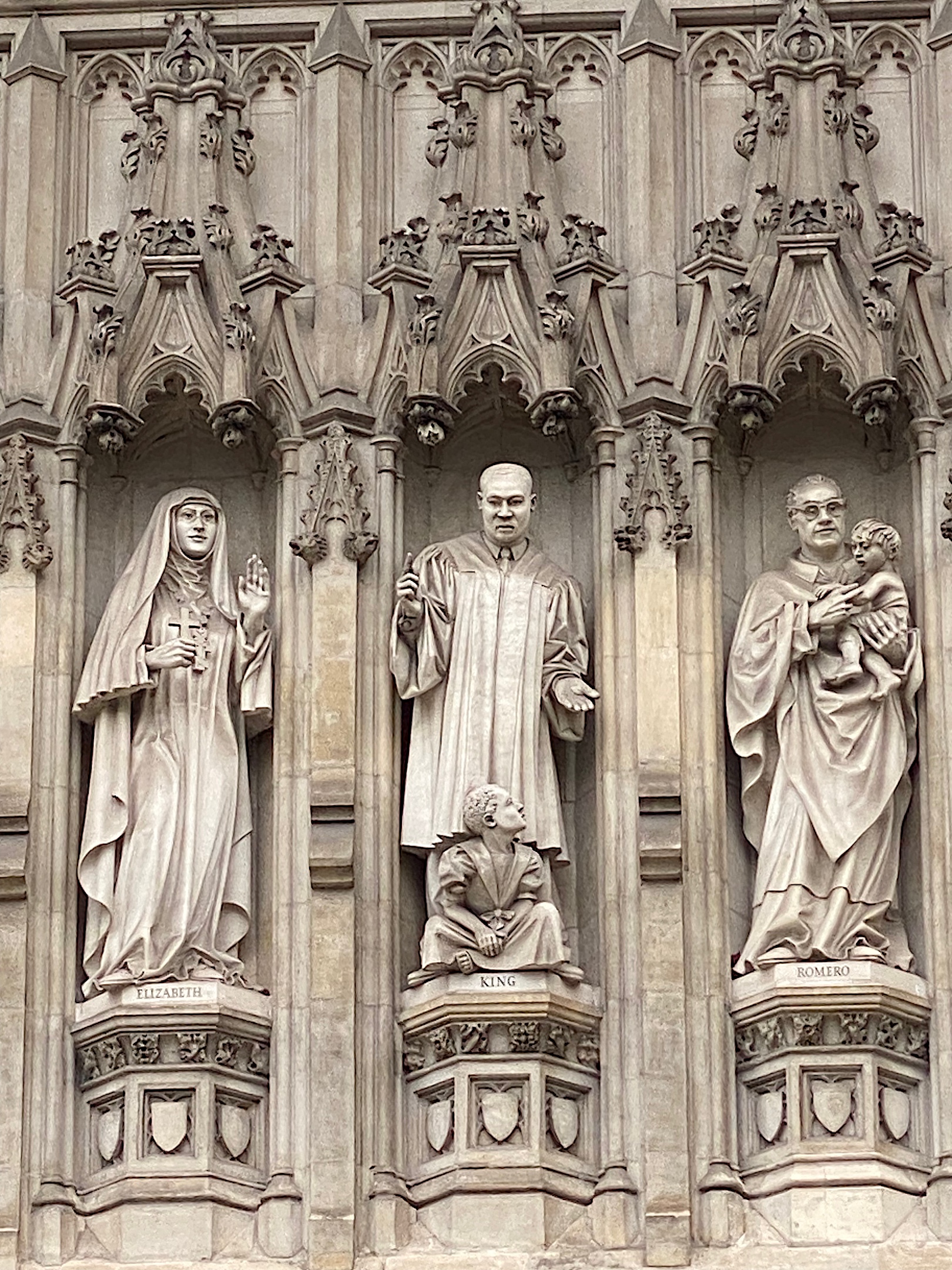
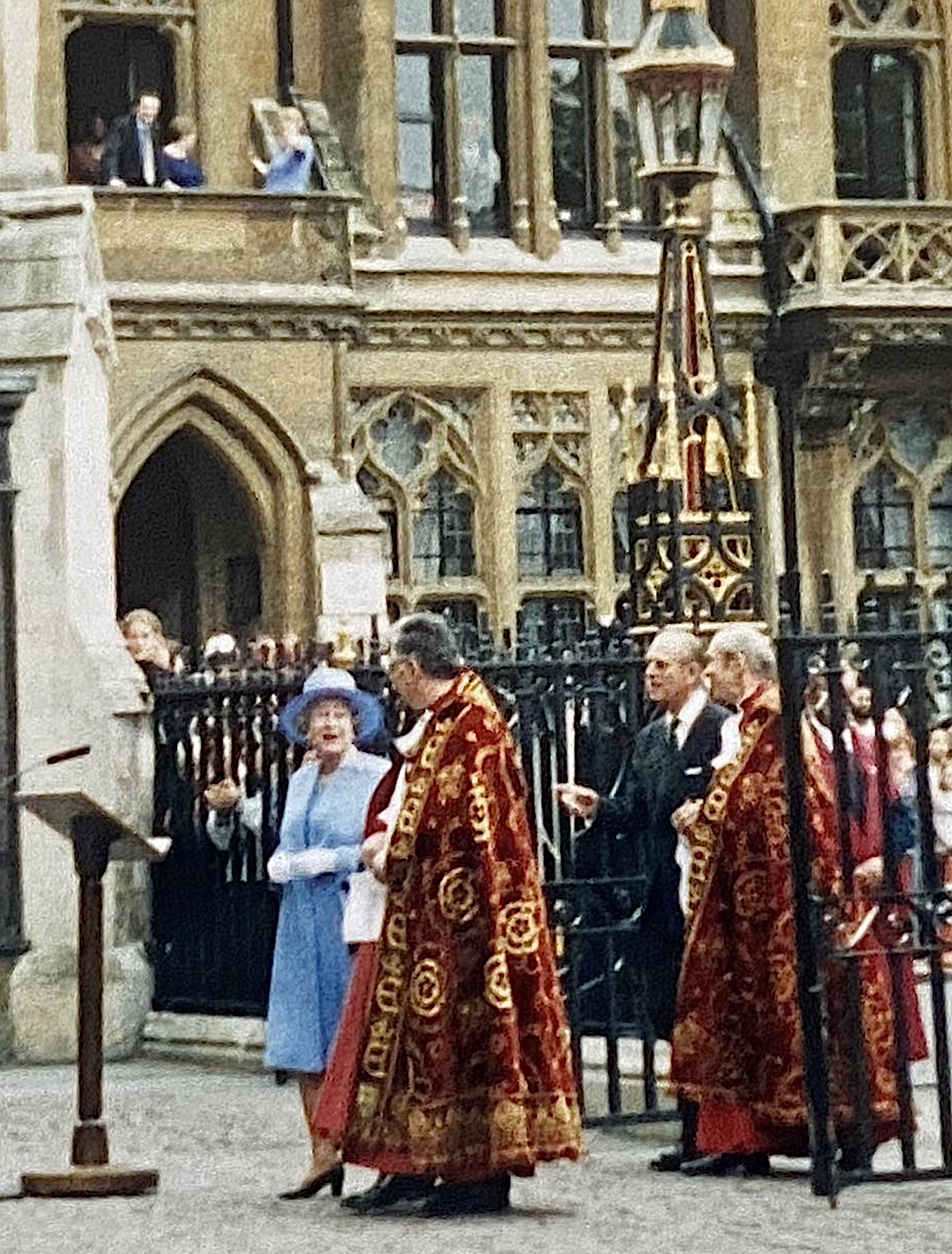
However, that event turned out to be a visit from Queen Elizabeth II and Prince Phillip! They were due to arrive in a few hours. We decided to settle down and wait, getting a prime place to watch near the gates. They were going to be part of a ceremony in which some new statues of 20th-century martyrs were to be unveiled.
Needless to say, seeing the royal couple walk in was worth the wait! But that meant we missed out on going inside.
My second opportunity came in September 2000 after a week-long tour of Scotland. I spent a few days in London after the tour before heading west to Swindon to stay with a couple I knew. I planned to go back to the Abbey, but I ran into a fellow tourist in my hotel’s Internet cafe who was catching a bus to see St. Paul’s Cathedral and he invited me to tag along. So I did.
Fast forward to January 2020 as my family and I prepared to visit London and Paris, my husband and son had been to neither. I’d never been to Paris. Covid rudely put that off until June 2023 and we made new plans. I was determined to not only visit Westminster Abbey, but to hire a guide who could show us around to make the most of it.
Hopefully, the third time would be the charm.
Tours By Grace
There are plenty of guides eager to show you around Westminster Abbey. You can also rent an audio tour if you prefer. But when I found Grace (of Tours by Grace) online, I got the feeling right away that she was exactly the right person for us. And she was!
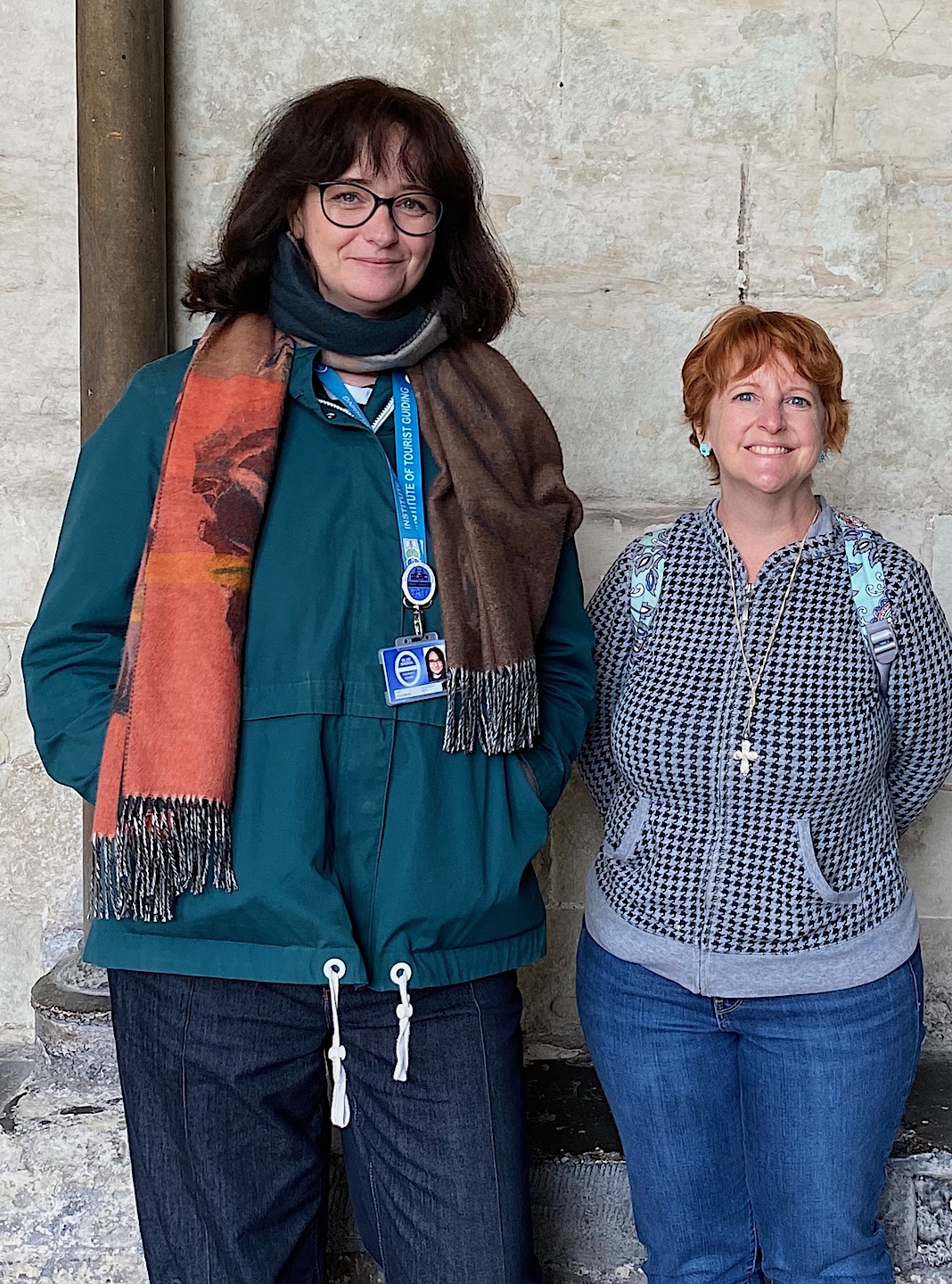
Grace is a certified Blue Badge London Tourist Guide and that’s nothing to sneeze at. It takes two years of training and passing strict qualifications to become one. These are not folks reciting a list of facts out of a guidebook while glancing at their watch. They tailor your tour to what you specifically want to see. Even if what you want to see most are graves.
There’s an awesome benefit to having waited until 2023 to visit. You couldn’t take pictures inside the Abbey until October 2020. Photography is still not allowed during services. But had I visited before, I wouldn’t have been able to take a picture of a single grave or tomb.
Britain’s Oldest Door
If it hadn’t been for Grace pointing it out, I’m not sure we would have seen Britain’s oldest door.
The door was dated for the first time in 2005 by a process called dendrochronology. A detailed study of the wooden door (in the vestibule leading to the Chapter House), showed that the wood came from a tree chopped down after 1032 A.D. The door was constructed sometime in the 1050s. This was during the reign of King Edward the Confessor.
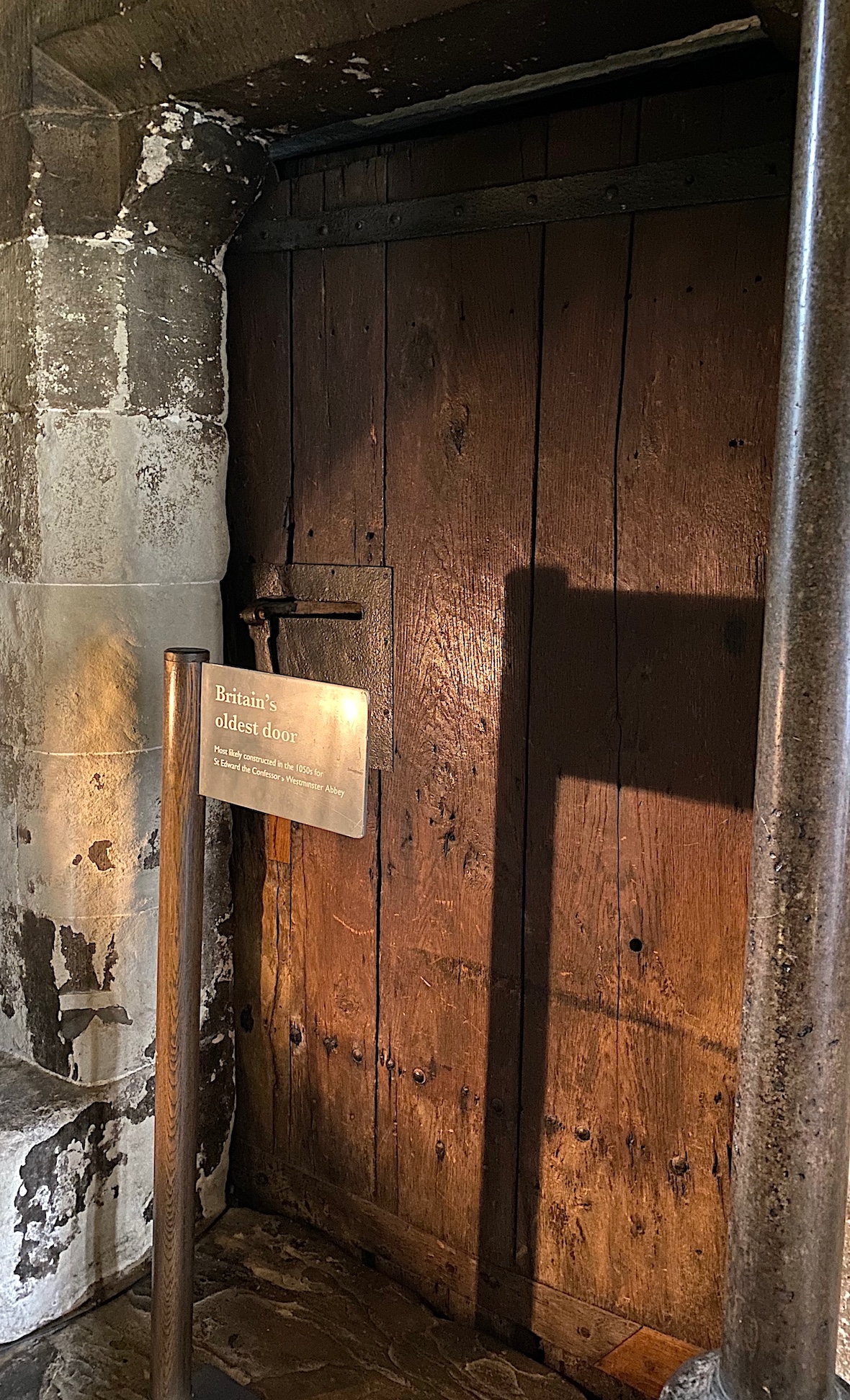
According to the Westminster Abbey web site:
The door was obviously retained when Henry III rebuilt the Abbey and Chapter House from 1245 but cut down to be put in a new position. In the 19th century, the fragments of cow hide were first noted and a legend grew up that this skin was human. It was supposed that someone had been caught committing sacrilege or robbery in the church and had been flayed and his skin nailed to this door as a deterrent to others.
A Few Facts
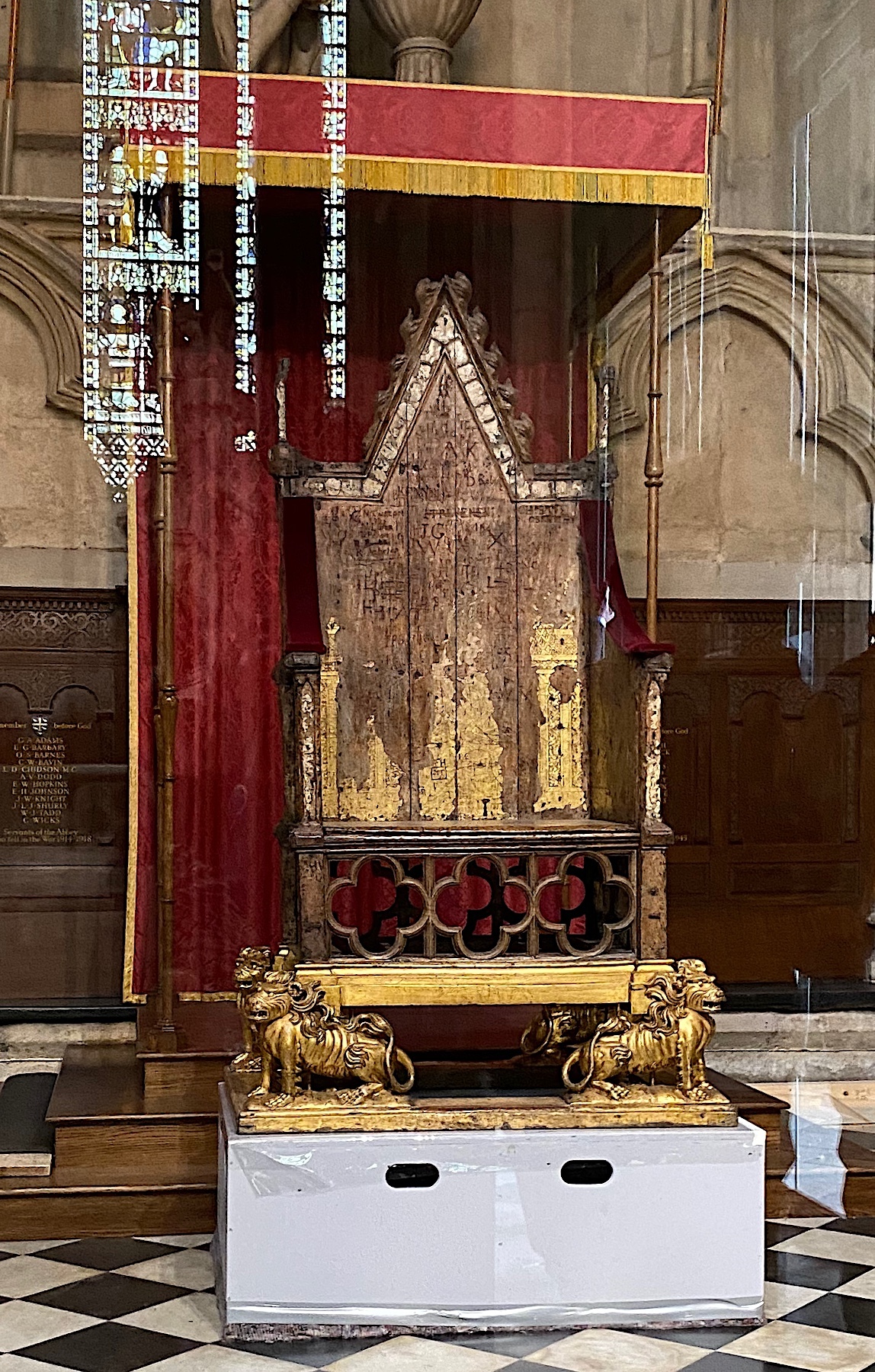
I’m not going to spend much time on the history of Westminster Abbey, which is over 1,000 years old. With only two exceptions, every monarch since 1066 has been crowned there. The Abbey had just hosted the coronation of King Charles less than a month before our visit. We saw the Coronation Chair, pictured below, that he sat in. It has plexiglass in front of it, thus the reflection of the stained glass.
The Abbey has never had a bishop, except for a brief time during the 1540s (before then, it was presided over by an abbot). Upon its re-founding by Elizabeth I in 1560, it was established as a royal peculiar. Ever since, it’s been outside the hierarchy and jurisdiction of the Church of England.
Westminster Abbey is among many monasteries founded in the Catholic Church, although it was later repurposed as a powerful symbol of Protestant national identity. Although much of the architecture is French in origin, the Abbey is widely regarded as quintessentially English.
How Many People Are Buried in Westminster Abbey?
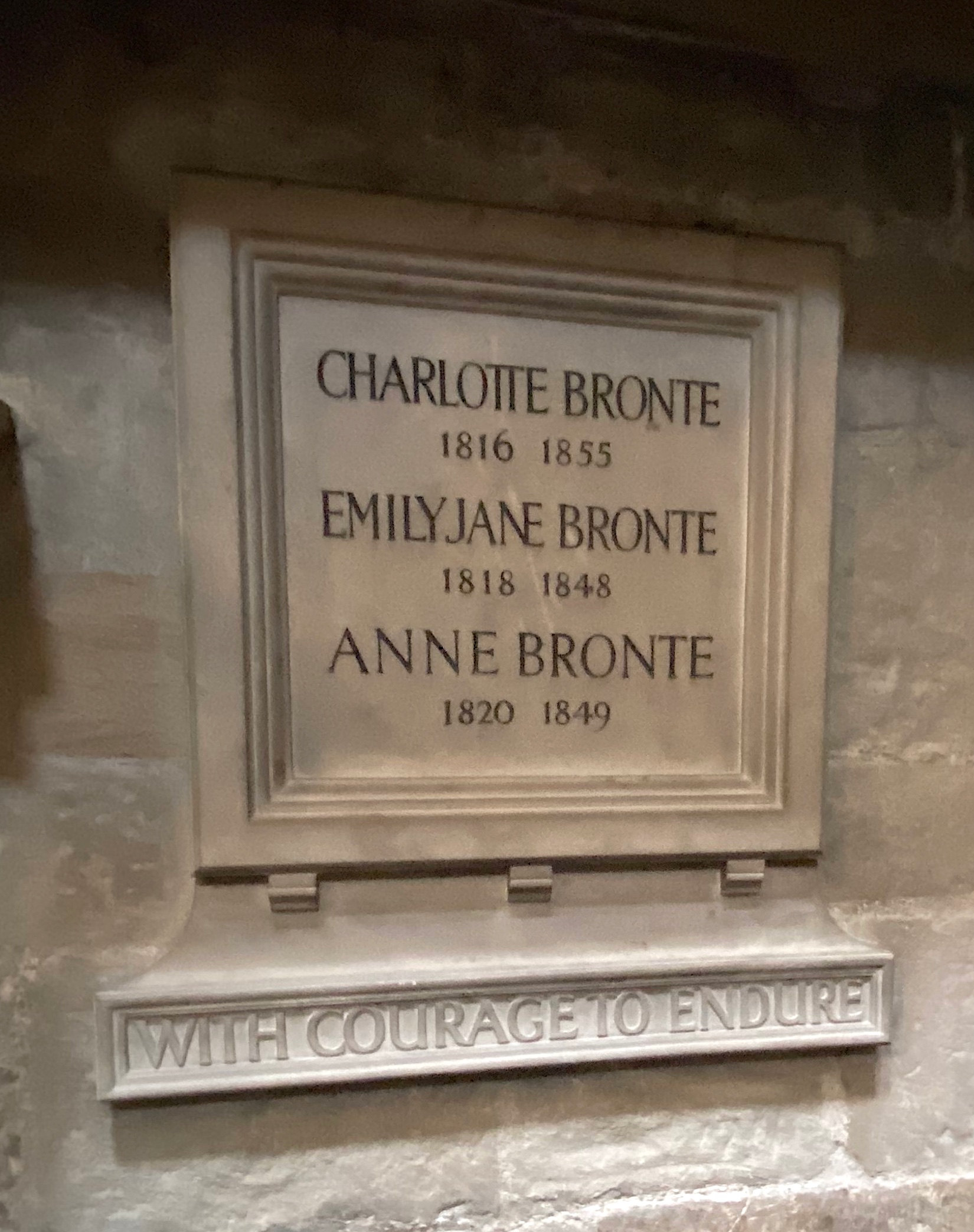
Over 3,300 people are buried or commemorated in the Abbey. Many are not buried there but have a cenotaph placed in their honor, such as Victorian authors (and sisters) Charlotte, Emily, and Anne Bronte. They’re actually buried in Haworth in Yorkshire.
An estimated total of 18 English, Scottish and British monarchs are buried in the Abbey, including Edward the Confessor, Henry III, Edward I, Edward III, Richard II, Henry V, Edward V, Henry VII, Edward VI, Mary I, Mary Queen of Scots, Elizabeth I, James I, Charles II, Mary II, William III, Queen Anne, and George II.
During the early 20th century, for reasons of space, it became more common to bury cremated remains (ashes). In 1905, actor Sir Henry Irving became the first person to have their ashes interred at the Abbey.
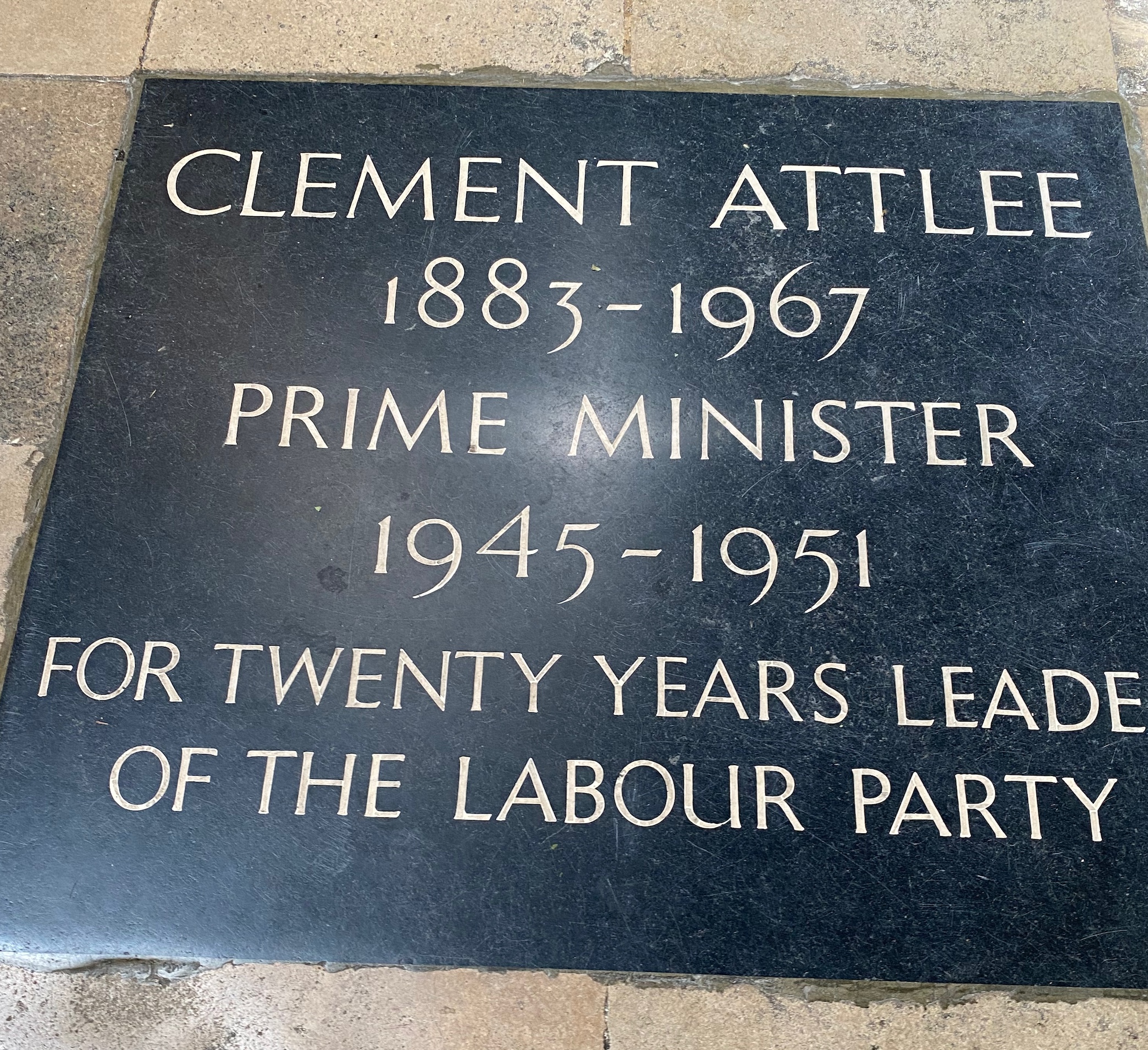
Eight British prime minister are buried in the Abbey, and I happened to notice a few of them as I was walking around (and over) them. That’s the tricky thing about walking around Westminster Abbey. You might be stepping on a king or a poet or a prime minister and not even realize it!
The Unknown Warrior
At the west end of the Nave, you’ll find the grave of the Unknown Warrior, whose body was brought from France to be buried at the Abbey on Nov. 11, 1920. The grave, which contains soil from France, is covered by a slab of black Belgian marble from a quarry near Namur.
Where did the idea come from? In 1916, a chaplain at the Front, the Rev. David Railton (1884-1955), noticed something in a back garden at Armentières. It was a grave with a rough cross on which were written the words “An Unknown British Soldier”. In August 1920, Rev. Railton wrote to the dean of Westminster, Herbert Ryle, who took up the cause of creating a memorial. The body was chosen from unknown British servicemen exhumed from four battle areas, the Aisne, the Somme, Arras, and Ypres. (some sources say six bodies but confirmed accounts say four).
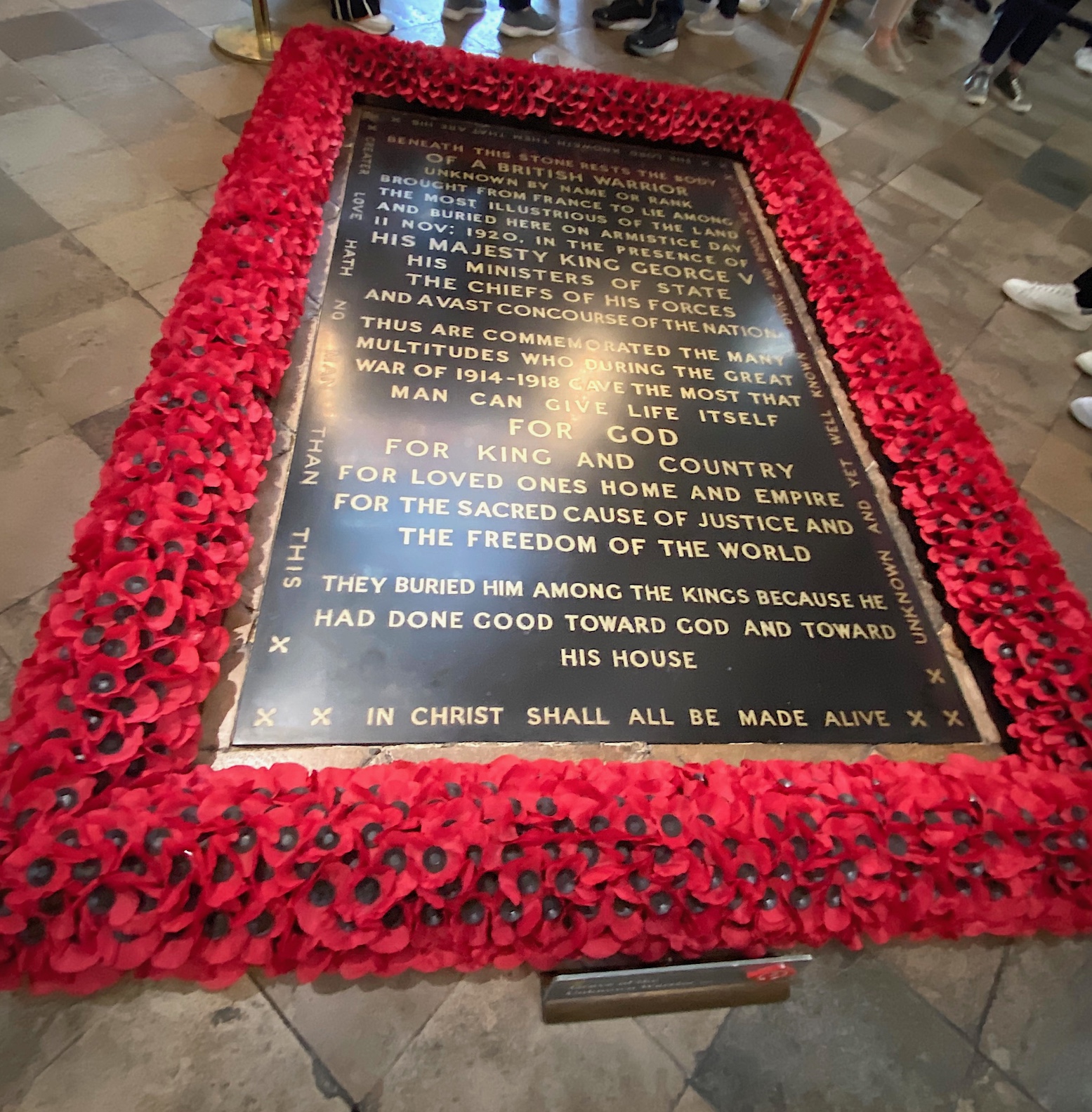
General John J. “Black Jack” Pershing, on behalf of the United States, conferred the Congressional Medal of Honor on the Unknown Warrior on Oct. 17, 1921, which hangs in a frame on a pillar near the grave.
First Impressions
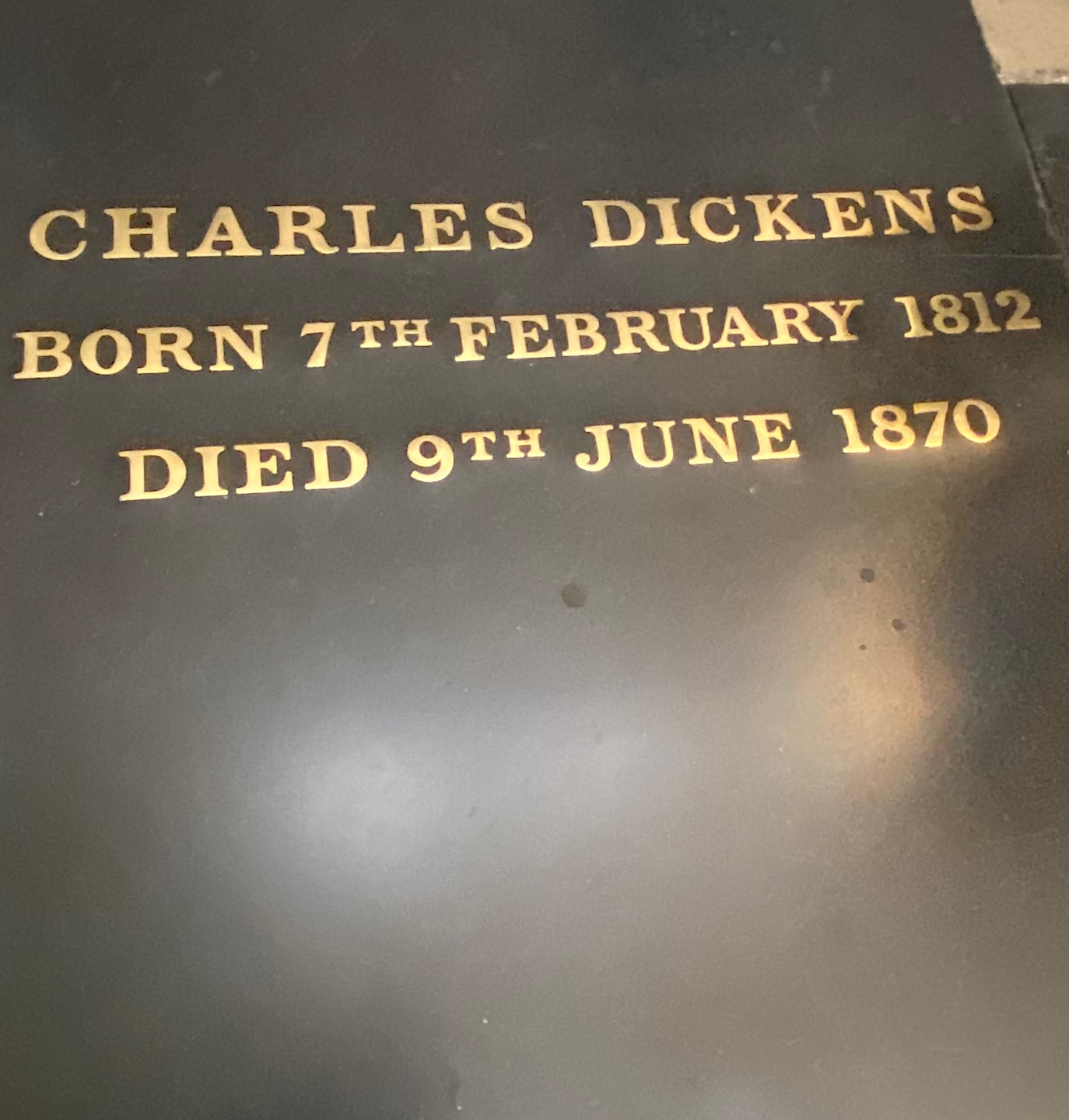
As an American accustomed to outdoor cemeteries, I found the tombs/graves of Westminster Abbey overwhelming and amazing all at once. The range of materials, along with the different sizes of monuments and memorials, had my head spinning. A single rectangle represented the author Charles Dickens, while an admiral I’d never heard of merited an enormous monument that could fill a small house.
Some feel that Dickens actually wanted to be buried in Rochester Cathedral, near where he died in 1870. But public opinion at the time demanded that Westminster Abbey was the only place for the burial of someone of his distinction.
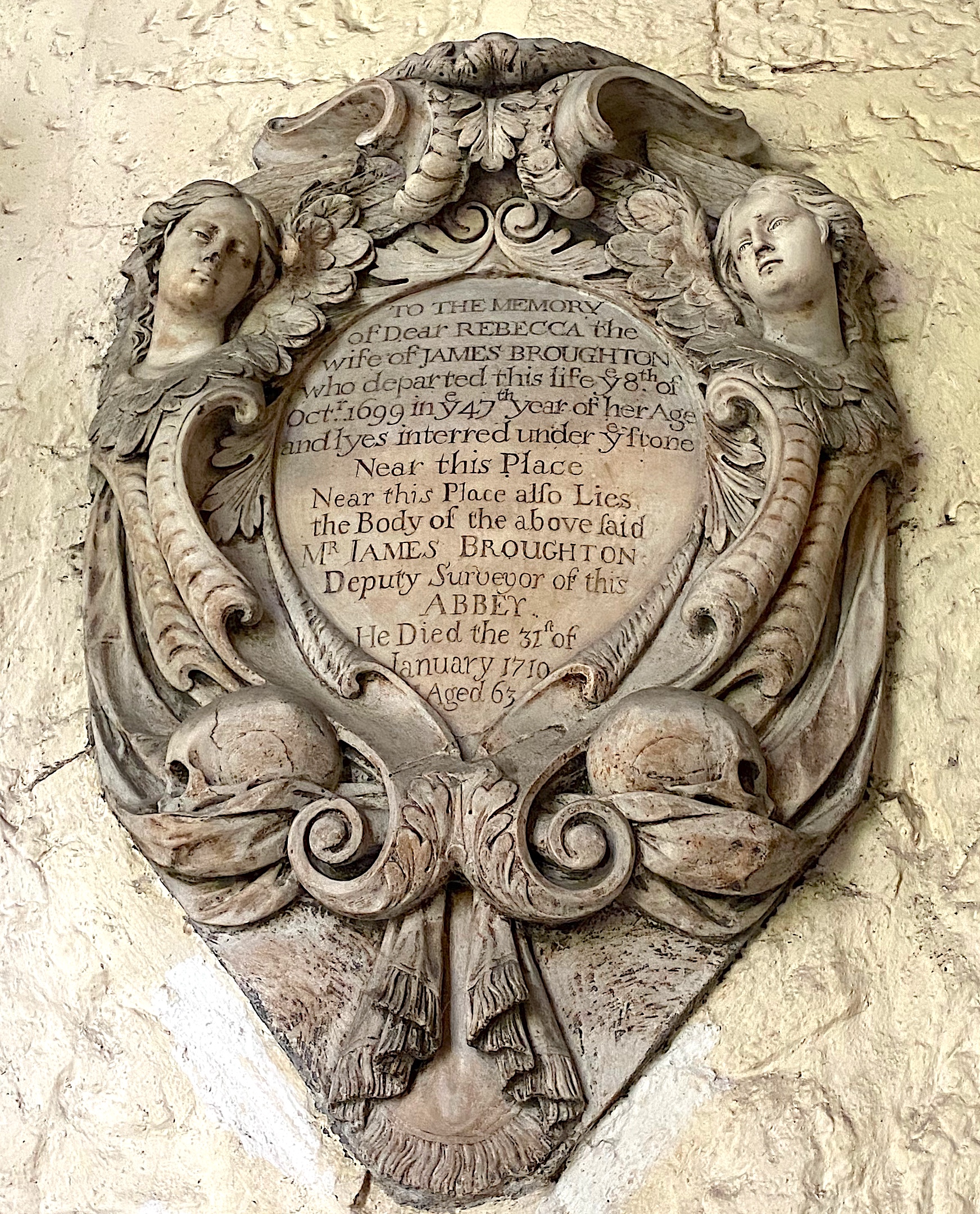
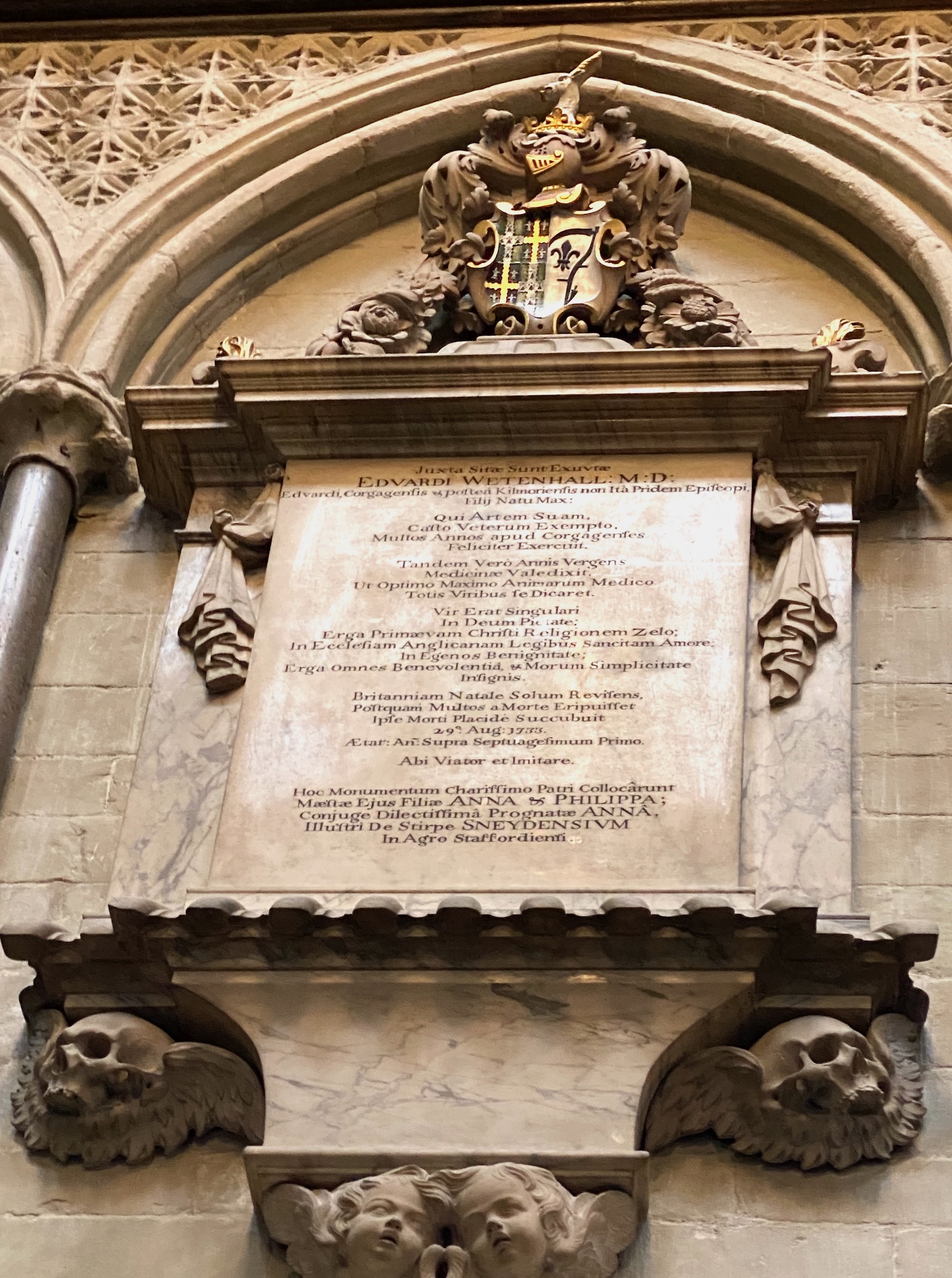
Also, you can look up at a wall in the East Cloister and see a memorial that just happens to include some skulls. While I’ve seen skulls on grave markers in New England cemeteries, that’s not something I’ve ever seen inside an American church.
There’s a great deal more to see at Westminster Abbey. So much more. I hope you’ll join me.
 Adventures in Cemetery Hopping
Just Magnificent !Oh, to see this place some day.
Famous?! Undoubtedly, that old landmark in England is, and, Lord willing, will always be a memory to see! I have never been to England, let alone the British Isles but, my mom had twice in her lifetime: 1975 & 1990. She loved it, along with her genealogy exploration with my dad in ’75, and a cousin in ’90.
That Britian journey sound like fun, Traci! And…the classic history settings of those old cemeteries…Wow! Things ARE very different in “the old country” as “they” say.. ”Cheeri-o, sweet, pretty Lassie!”