• About Me
  • Cemeteries I Have Visited
  • Have questions?
  • Photos

Adventures in Cemetery Hopping

~ A blog by Traci Rylands

Adventures in Cemetery Hopping

Monthly Archives: June 2024

Westminster Abbey 2023: On Top of the World with Britain’s Brightest Science Stars, Part VI

29 Saturday Jun 2024

Posted by adventuresincemeteryhopping in General

≈ Leave a comment

Many thanks to the amazing Grace Barrett of Tours by Grace for leading us through Westminster Abbey!

I’m sure many people have a favorite monument/memorial at Westminster Abbey. There are so many that made my own jaw drop. But I think you’d be hard pressed to not find yourself in a bit of awe when gazing up at the monument to British mathematician, physicist, astronomer, alchemist, theologian, and author Sir Isaac Newton.

If you asked the average person on the street, they might say “Oh, he’s the guy who discovered gravity.”

However, there was clearly much more to the man than that. His work Principia Mathematica (1687) laid the framework for the Scientific Revolution of the 17th century.

Born in 1642, Sir Isaac Newton did a lot more than just “discover” gravity. (Photo Source: Artist Godfrey Kneller, 1689)

More Than Gravity

Born on Christmas Day in 1642 in Lincolnshire, England, Isaac Newton’s father (a farmer) was also named Isaac Newton. He died three months before his son entered the world. His mother, Hannah Ayscough, remarried when little Isaac was three and she went to live with her new husband, the Rev. Barnabas Smith. Isaac was left in the care of his maternal grandmother, Margery Ayscough (née Blythe). Despite his mother’s wish that he become a farmer, Isaac was destined for a different path in life.

Newton attended the King’s School in Grantham before enrolling at the University of Cambridge’s Trinity College in 1661. While there, he became interested in the work of René Descartes. When the Great Plague closed Cambridge in 1665, Newton went home and began working out his theories on calculus, light, and color. His farm was the setting for the supposed falling apple that inspired his work on gravity.

I read that while the part where he was actually hit on the head by it isn’t true, the part about watching an apple falling from a tree inspired his thoughts on gravity was based in real events.

Isaac Newton dispersing sunlight through a prism, engraving after a picture by J.A. Houston, published around 1879.

In 1666, Newton experimented with light, and found that different colors had different refractions. He began lecturing on this topic in 1670.

Newton published his most famous book, Principia Mathematics, in 1687, while he was a mathematics professor at Trinity College, Cambridge. In the Principia, Newton explained three basic laws that govern the way objects move. Newton also discovered diffraction, which led him to enter the field of physics.

He also established a new field in mathematics known as calculus, although the German Gottfried Leibniz was working on these ideas at the same time. His work has greatly contributed in the areas of science and mathematics making him one of the most influential scientists in human history and one of the greatest mathematician of all time.

Elected a Fellow of the Royal Society in 1672, Newton served as its president from 1705 to 1727. He became Master of the Mint in 1699 and was knighted in April 1705.

Photo of Sir Isaac Newton’s death mask.

A lifelong bachelor, Newton died at Kensington on March 20, 1727 and was buried in Westminster Abbey on March 28. His body lay in state in the Jerusalem Chamber and his coffin was followed to its grave by most of the Fellows of the Royal Society. The Lord Chancellor, the Dukes of Montrose and Roxburgh and the Earls of Pembroke, Sussex, and Macclesfield were pall bearers. He was the first scientist to be so honored at the Abbey.

Newton’s Monument

Newton’s monument stands in the nave against the choir screen, to the north of the entrance to the choir. In the photo below, which Chris took, Newton’s monument is to the left. The one on the right is for James Stanhope (who died in 1721), a politician, soldier, and diplomat. I was so fixated on Newton’s monument that I didn’t even take any picture of poor Stanhope’s equally stunning one.

My eyes were immediately drawn to the monument for Sir Isaac Newton on the left side.

Both monuments were executed by the sculptor Michael Rysbrack (1694-1770) to the designs of the architect William Kent (1685-1748). Newton’s was unveiled in 1731 while Stanhope’s was erected in 1733.

Poet Alexander Pope wrote an epitaph for Newton but this was not allowed to be put on the monument in the Abbey. “Nature and Nature’s laws lay hid in night: God said, Let Newton be! and all was light”.

It’s hard to not be blown away by Sir Isaac Newton’s grand monument.

I think Westminster Abbey’s web page can describe what’s going on in terms of symbols better than I can:

The monument is of white and grey marble. Its base bears a Latin inscription and supports a sarcophagus with large scroll feet and a relief panel. The relief depicts boys using instruments related to Newton’s mathematical and optical work. One has a telescope, one is looking through a prism and another is balancing the Sun and planets on a steel yard. Others depict Newton’s activities as Master of the Mint (producing coin of the realm) – the figures carry pots of coins and an ingot (bar) of metal is being put into a furnace.

Above the sarcophagus is a reclining figure of Newton, in classical costume, his right elbow resting on several books representing his great works. They are labelled (on the fore-edges) ‘Divinity’, ‘Chronology’, ‘Opticks’ [1704] and ‘Philo. Prin. Math’ [Philosophiae Naturalis Principia Mathematica, 1686-7)]. With his left hand he points to a scroll with a mathematical design shown on it (the ‘converging series’), held by two standing winged boys.

The painting on this scroll had been erased or cleaned off in the early 19th century and was re-painted in 1977 from details in Newton’s manuscripts. The background is a pyramid on which is a celestial globe with the signs of the Zodiac, of the constellations, and with the path of the comet of 1680. On top of the globe sits a figure of Urania (the muse of Astronomy) leaning upon a book. On either end of the base is his coat of arms, two shinbones in saltire, within a decorative cartouche.

Michael Rysbrack, who executed Newton and Stanhope’s monuments, put his name on his work.

In Newton’s later years, his niece Catherine Barton Conduitt and her husband, John, lived with him. It was John Conduitt who commissioned the Newton monument. He drew a sketch of what he had in mind and gave it to Kent to design.The monument originally stood out against the flat front of the choir screen, but was enclosed within the present decorative arch when Edward Blore re-modeled the screen in 1834.

I haven’t read (or seen the movie) Dan Brown’s best-selling book “The DaVinci Code” but apparently Newton’s monument plays an important role in the plot and the word “apple” turns out to be part of it.

Newton also has a stone in the floor nearby as well. This Latin inscription can be translated as: “Here lies that which was mortal of Isaac Newton.”

I have no doubt countless people have unwittingly trod upon Sir Isaac Newton’s stone over the years.

Stephen Hawking

Fast forward to recent times and an equally ground-breaking scientist was interred at Westminster Abbey. While he doesn’t have a huge monument like Newton, his ashes are interred near him.

Professor Stephen Hawking (1942-2018) attended school in St. Albans and continued on to Oxford, and later Cambridge. While in his 20s, he was diagnosed with motor neuron disease. He first married Jane Wilde in 1965 with who he had three children, and the couple later divorced. He later married Elaine Mason in 1995 and they divorced in 2007.

Stephen Hawking was a groundbreaking cosmologist. (Photo Source: NASA)

Hawking became a research fellow at Cambridge and started his work on black holes. He was elected to the Royal Society when he was 32, and in 1979 became Lucasian Professor of Mathematics at Cambridge University, a post also held by Newton. His best known work is “A Brief History of Time”. He died on March 14, 2018 at age 76.

The Caithness slate stone was designed and made by John Maine and the letter cutter was Gillian Forbes.

Stephen Hawking’s stone is made of Caithness slate from Scotland.

The Westminster Abbey web page describes it thus:

The stone depicts a series of rings, surrounding a darker central ellipse. The 10 characters of Hawking’s equation express his idea that black holes in the universe are not entirely black but emit a glow, that would become known as Hawking radiation. In this equation the T stands for temperature; the h for Planck’s constant which is used to understand parts of quantum mechanics; c stands for the speed of light; 8Pi helps us to grasp its spherical nature; G is Newton’s constant to understand gravity; M stands for the mass of the black hole and k stand for Boltzmann’s constant, which is the energy of gas particles.

Charles Darwin

I’ll finish up with a world-famous naturalist, geologist, and biologist, Charles Darwin (1809-1882). Simply put, many think of him as the person who first truly wrote about evolution. Darwin is buried in the north aisle of the nave of Westminster Abbey, near Newton and Hawking.

Born in Shrewsbury, England on Feb. 12, 1809, Charles Darwin was the son of Robert Waring Darwin and Susannah Wedgwood Darwin, daughter of Josiah Wedgwood (of English china fame).

This photo of Charles Darwin is likely from around 1854.

Darwin studied with his brother Erasmus at Edinburgh University in Scotland but was not keen on the idea of following in his father’s footsteps as a doctor. At Cambridge, he became interested in natural history and sailed on the ship HMS Beagle in 1831 to South America and the Galapagos islands.

In 1839 he married his cousin Emma Wedgwood and they went to live at Downe, a small village in Kent. “On the Origin of Species” was published in 1859 and he continued working although his health was often poor.

I’m sorry to say that this was the best photo I have of Charles Darwin’s stone.

Darwin died on April 19, 1882. His body lay overnight in the Abbey, in the small chapel of St. Faith, and on the morning of April 26, his coffin was escorted into the Abbey. Pallbearers included Sir Joseph Hooker, Alfred Russel Wallace, James Russell Lowell (U.S. ambassador), and William Spottiswoode (president of the Royal Society).

The burial service was held in the Lantern. Chief mourners then followed the coffin into the north aisle of the Nave where Darwin was buried next to the eminent scientist Sir John Herschel.

His simple gravestone is made of pale Carrara marble.

You can look forward to Poet’s Corner next time in Part VII.

This is a memorial stone placed in 1969 for British poet, Lord Byron (1788-1824). He’s actually buried buried in his family vault at Hucknall Torkard in Nottinghamshire, near Newstead. The Dean of Westminster refused his burial in the Abbey.

Westminster Abbey 2023: The Work of Carvers Hubert Le Sueur, Nicholas Stone, and Cornelius and William Cure, Part V

22 Saturday Jun 2024

Posted by adventuresincemeteryhopping in General

≈ Leave a comment

Many thanks to the amazing Grace Barrett of Tours by Grace for leading us through Westminster Abbey!

When last I posted, I was still at Westminster Abbey and sharing the graves royals that got the “not so royal” treatment. The last monument I shared was for a non-royal named Ludovic Stewart, who isn’t known for much at all.

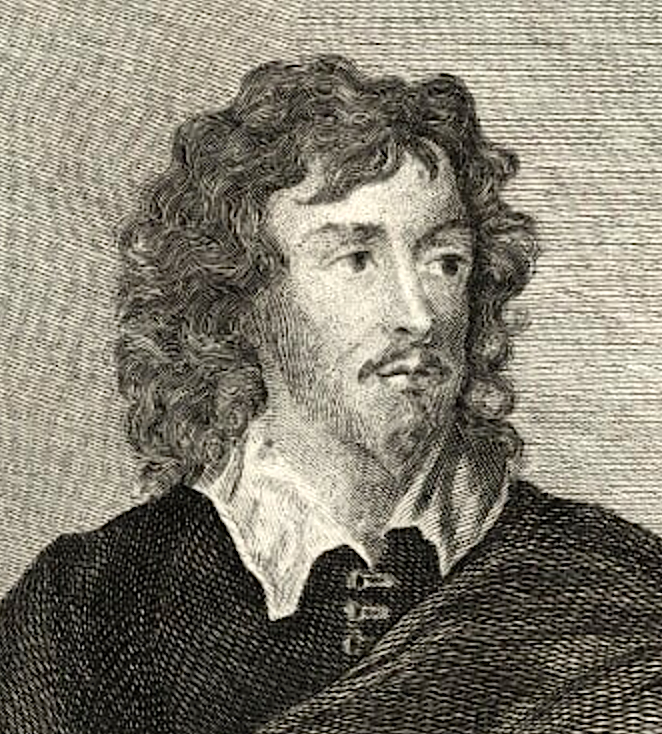
Stewart’s monument was created by Hubert Le Sueur (1580-1658), a French sculptor who trained with Renaissance artist Jean de Boulogne (known better as Giambologna) in Florence, Italy. Hubert moved to England and spent most of his career there, providing monuments, portraits, and replicas of classical antiquities for the court of Charles I.

A student of Giambologna, Hubert Le Sueur was a French sculptor who spent much of his life in England.

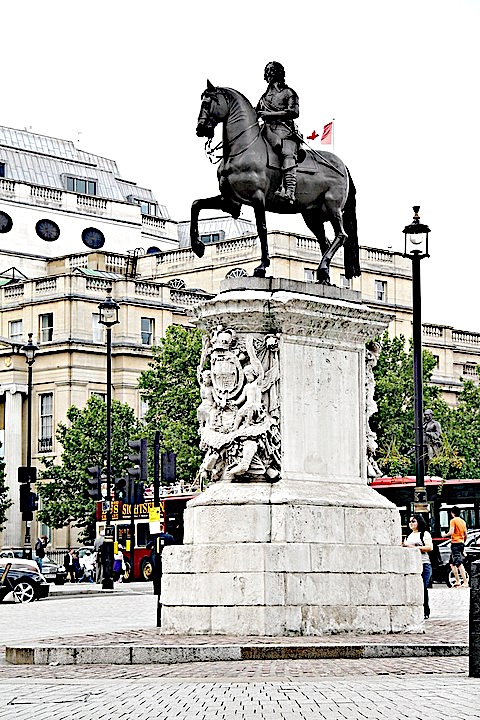
If you find yourself in London’s Trafalgar Square, you’ll see the statue he did of Charles I in 1633, when it was originally commissioned by Charles I’s Lord Treasurer Sir Richard Weston for his house Mortlake Park, Roehampton. The statue was later erected in Trafalgar Square (on the site of Eleanor Cross) in 1674.

This highly influential equestrian statue, the first of its kind in England, was originally commissioned in 1630 by Charles I’s Lord Treasurer Sir Richard Weston.

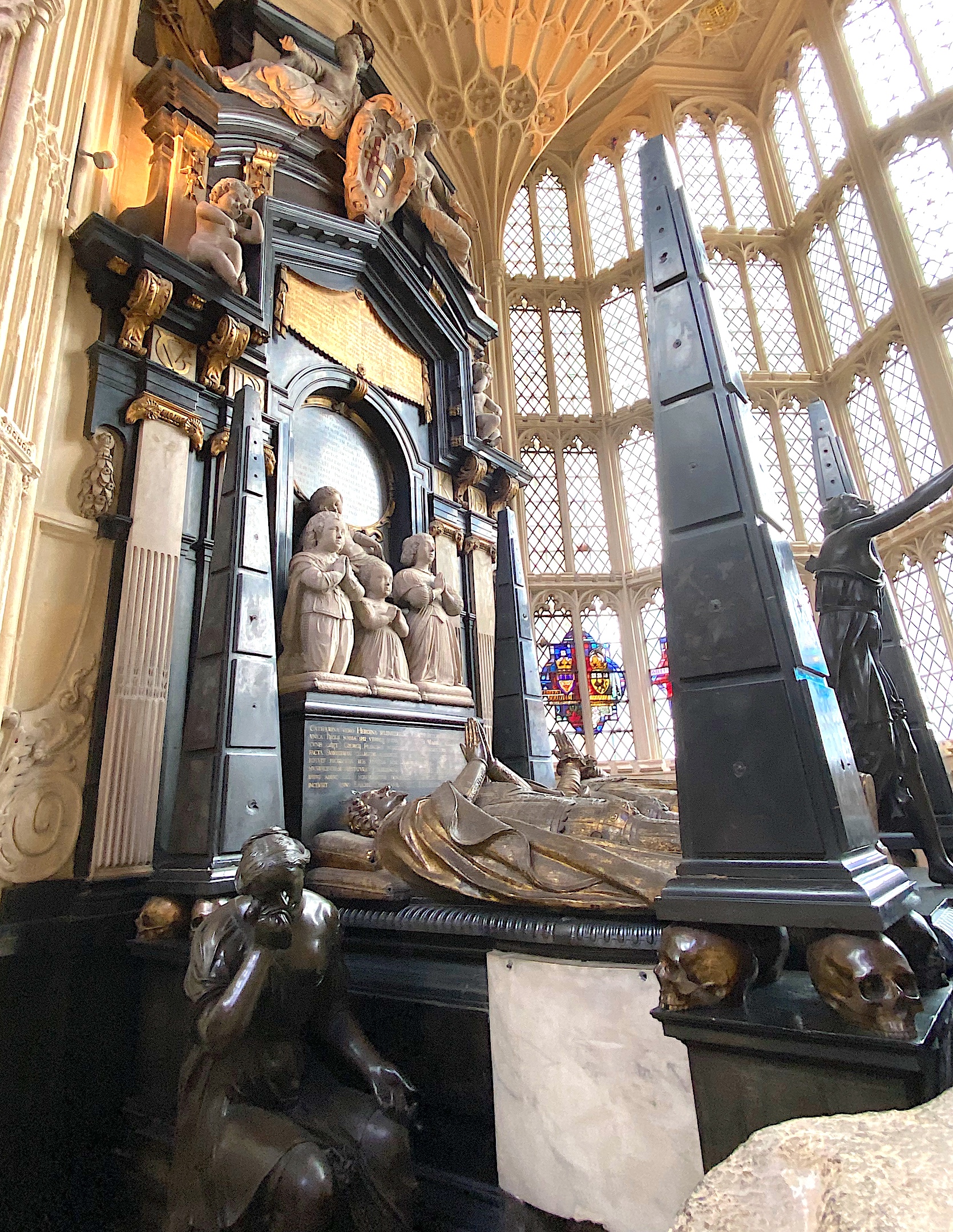
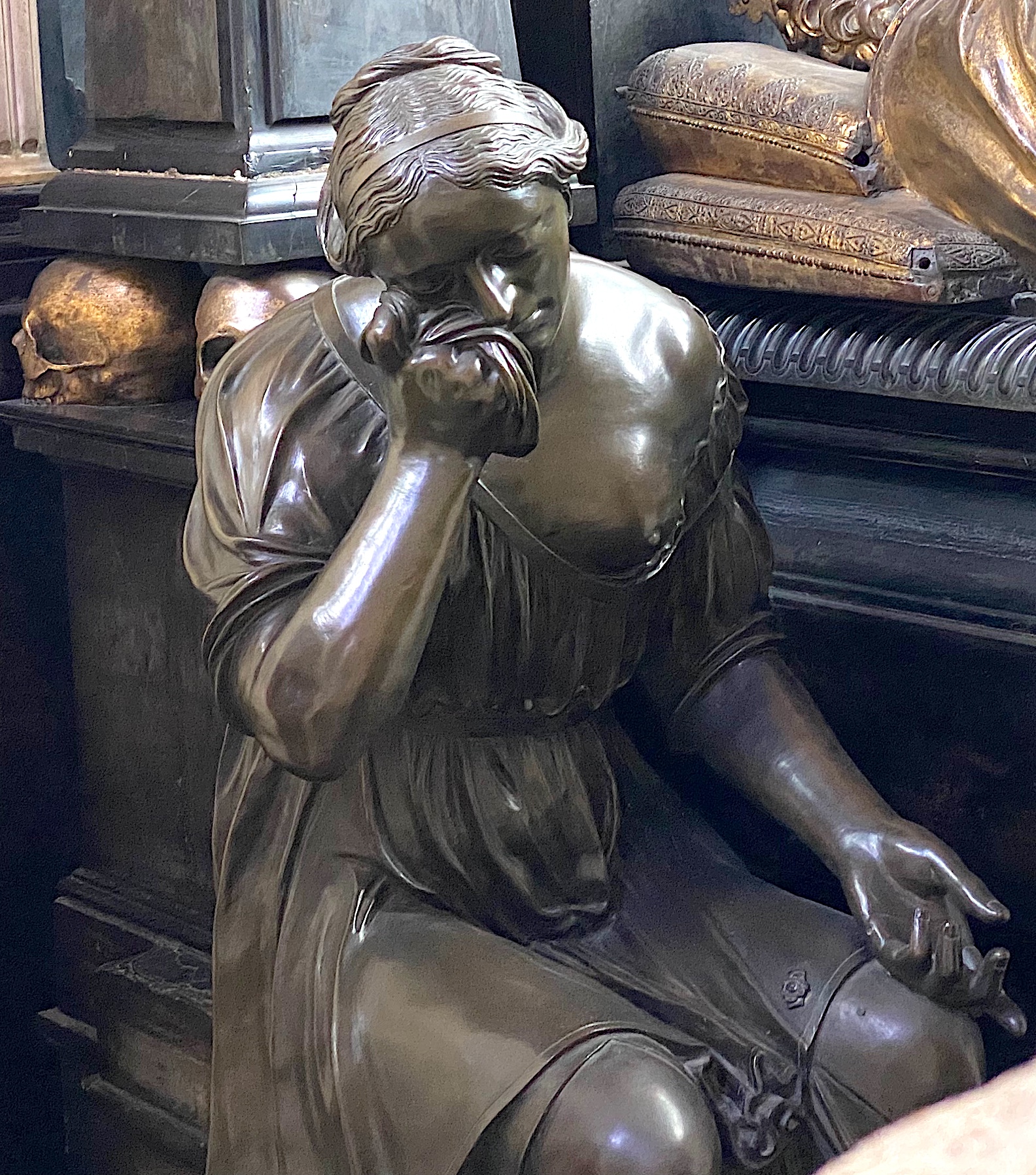
I was interested in Le Sueur because he did another memorial at Westminster Abbey that became one of my favorites. The monument to George and Katherine Villiers is stunning. It features some similar motifs as the one he did for Ludovic Stewart, such as weeping ladies and toothy skulls.

George Villiers, Duke of Buckingham

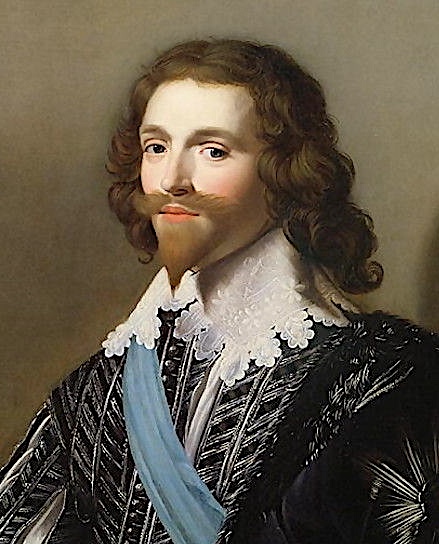
George Villiers, the first Duke of Buckingham, born in 1592, was a favorite of James I and Charles I. He rose to power quickly, but the results of his erratic counsels made him unpopular with the people, if not the king.

Portrait of George Villiers, the first Duke of Buckingham, painted by Gerrit Van Honthorst. He was assassinated in 1628.

On the eve of leading an expedition for the relief of La Rochelle in France, he was assassinated on Aug. 23, 1628 at Portsmouth by disgruntled soldier John Felton. Villiers’ mother, Mary, had such a strong premonition about his death that she was reportedly calm when she was told about it.

Before I knew who this was made for, I thought it has to be for a member of royalty.

Charles I ordered the Duke’s burial in the chapel (previously reserved for those only of royal descent) but with little pomp for fear of public backlash. The Duke was buried at night on Sept. 18, 1628.

The Duke’s wife, Duchess Katherine (Manners), erected the large monument of black/white marble and bronze in 1634. Her effigy is shown beside him but she was actually buried at Waterford in Ireland (she died Nov. 3, 1649). Her second husband was Randal MacDonnell, the first Marquess of Antrim.

Hubert Le Sueur’s memorials tended to feature weeping female mourners.

The gilded bronze effigy of the Duke shows him in monogrammed plate armor while the Duchess is shown in an embroidered dress, ruff, and mantle, both wearing coronets. At their feet is a figure of Fame although it has lost its trumpet.

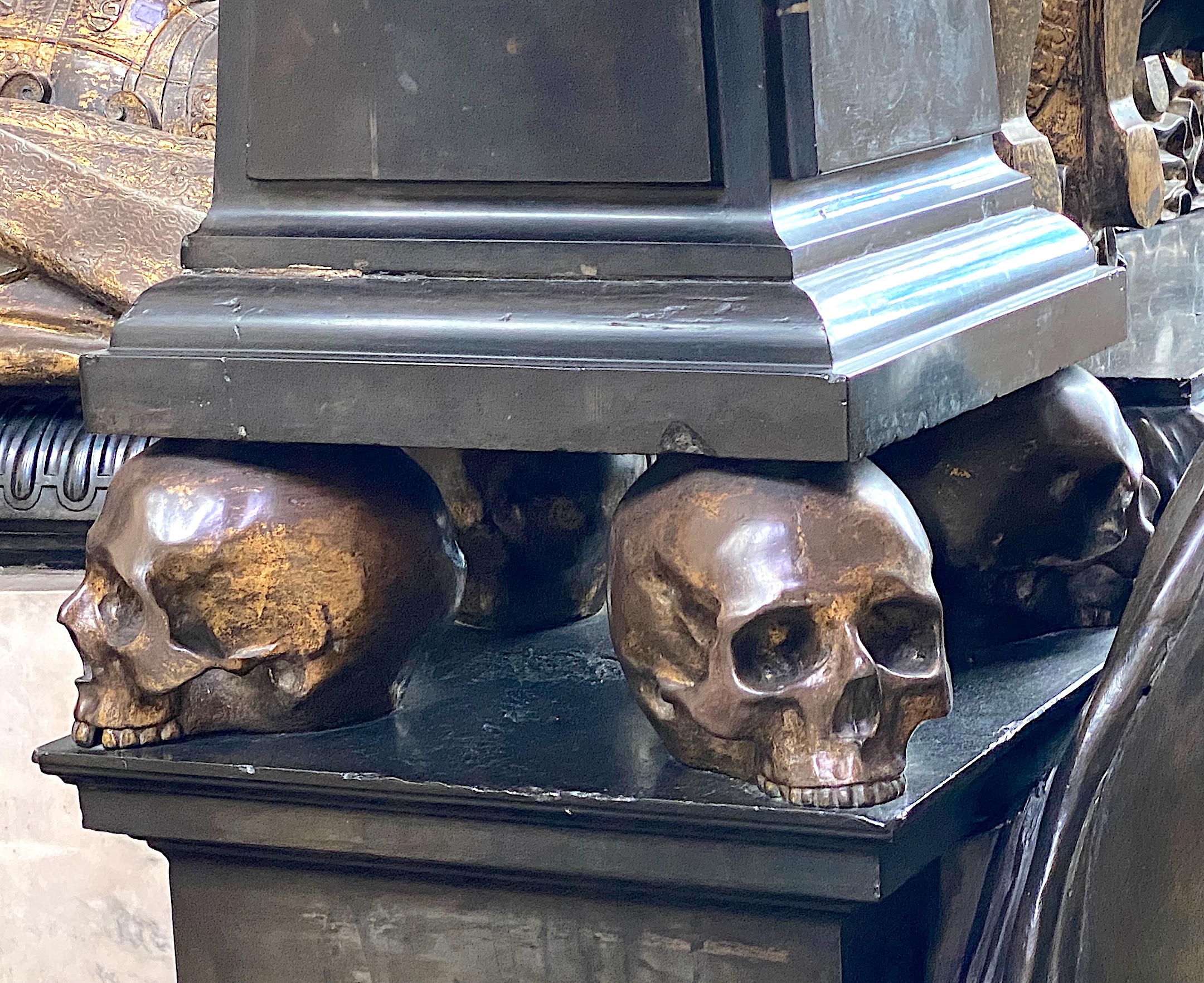
Le Sueur was fond of putting skulls into his works.

At each corner is a black marble obelisk supported on four skulls with bronze mourning figures of Pallas, Benevolence, Neptune, and Mars.

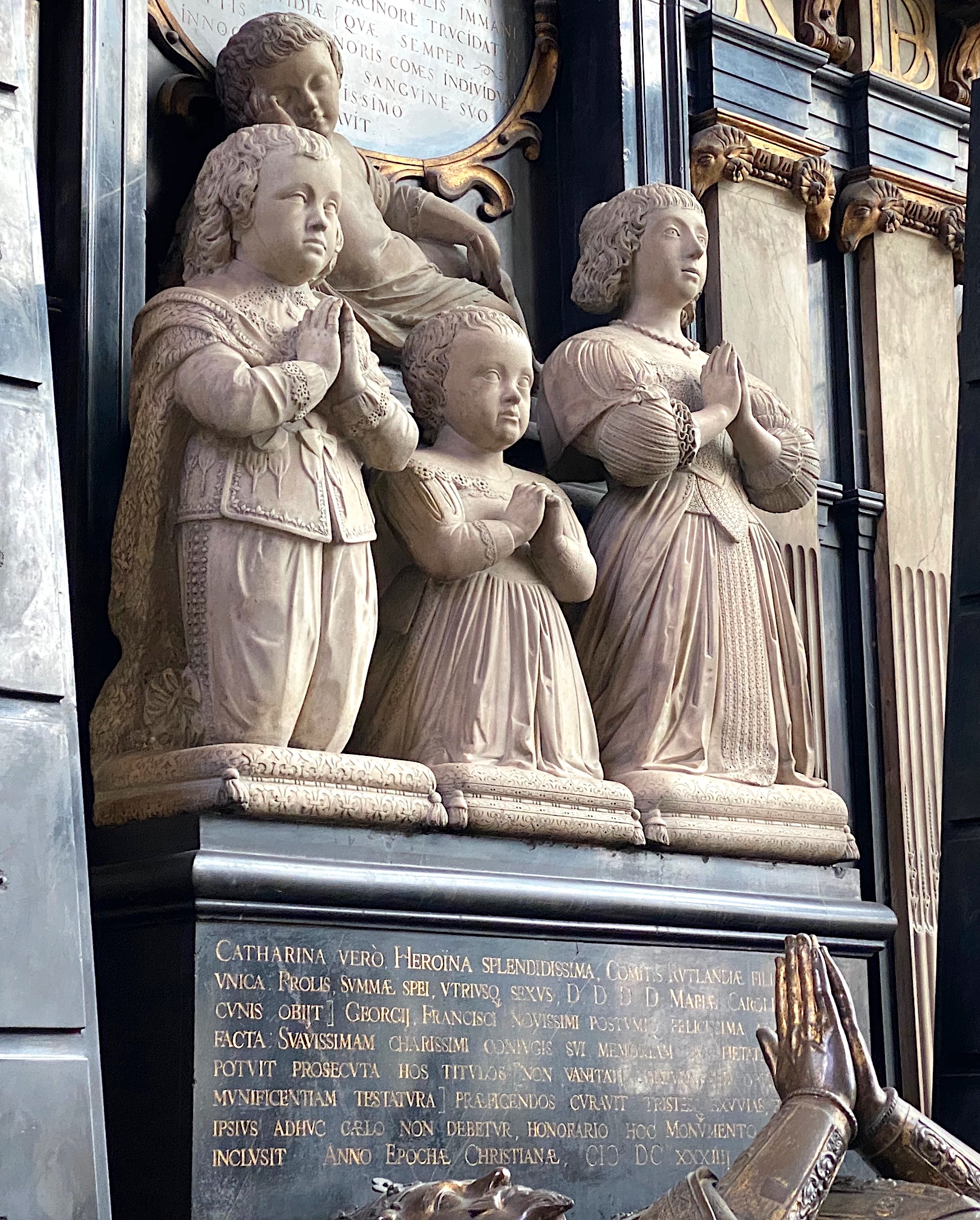
I think, however, one of the most poignant motifs in the monument is that of the Duke and Duchess’ children.

Small statues, by sculptor Isaac Besnier, represent four of their children including Lord Francis Villiers (1629-1648), a posthumous child killed fighting the Parliamentary forces and is buried in the Buckingham vault. The other children buried in the Abbey are Charles (1625-1627), George (second Duke of Buckingham), and Mary, Duchess of Richmond.

These kneeling statues represent the four children of the Duke and Duchess of Buckingham.

Sir George Villiers and Mary, Countess of Buckingham

If you want a glimpse of the Duke’s parents, you can find them (or rather one of them) across the way in the Chapel of St. Nicholas in the Lady Chapel.

A sheep farmer, Sir George was the son of William Villiers and his wife Colett (Clarke). Serving as a sheriff of Leicestershire, he was knighted in 1593 and served as a Member of Parliament.

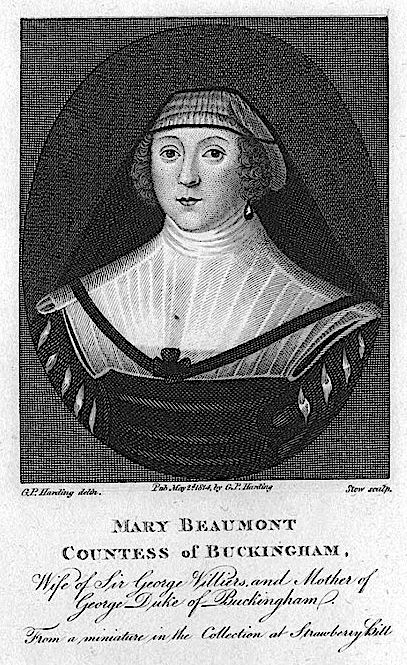
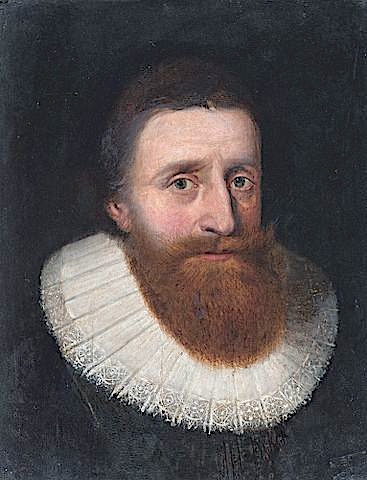
Portrait of Mary Beaumont, Countess of Buckingham. She was the daughter of Anthony Beaumont of Glenfield, Leicestershire, a direct descendant of Henry de Beaumont, and his wife Anne Armstrong, daughter of Thomas Armstrong of Corby.

He had four daughters and two sons with his first wife Audrey. He married next his cousin Mary, daughter of Anthony Beaumont, and had four children that included George, the aforementioned first Duke of Buckingham. Mary was created Countess of Buckingham in her own right in 1618, and married secondly Sir William Raynor and last, Sir Thomas Compton.

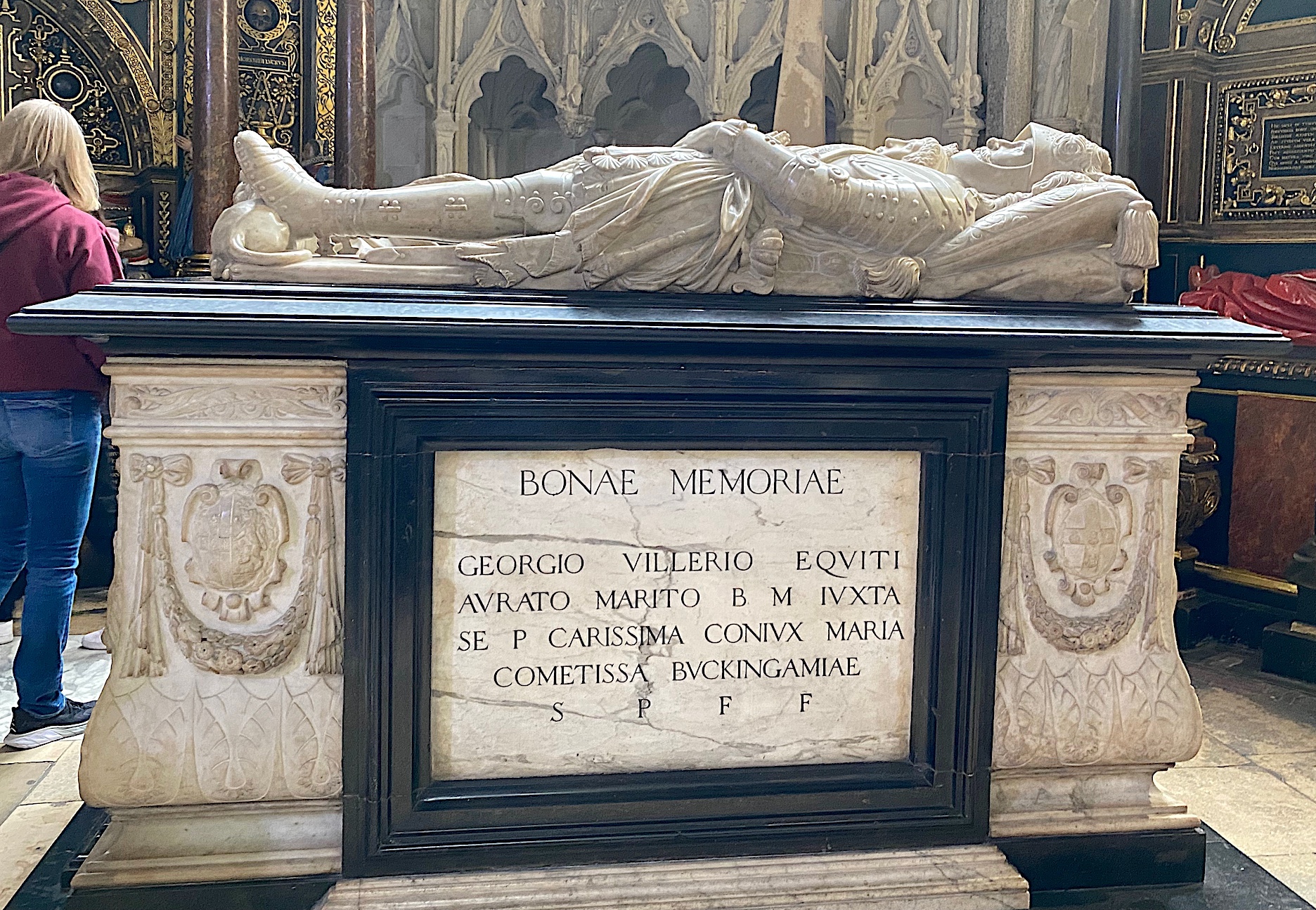
While Sir George has an effigy, he was actually buried on Jan. 5, 1606 at St Denys, Goadby in Leicestershire, near his residence.

Sir George died on Jan. 4, 1606 at age 61. Although he has an effigy, he’s actually buried at St. Denys, Goadby, in Leicestershire near his home.

The Westminster Abbey web page describes the monument like this.

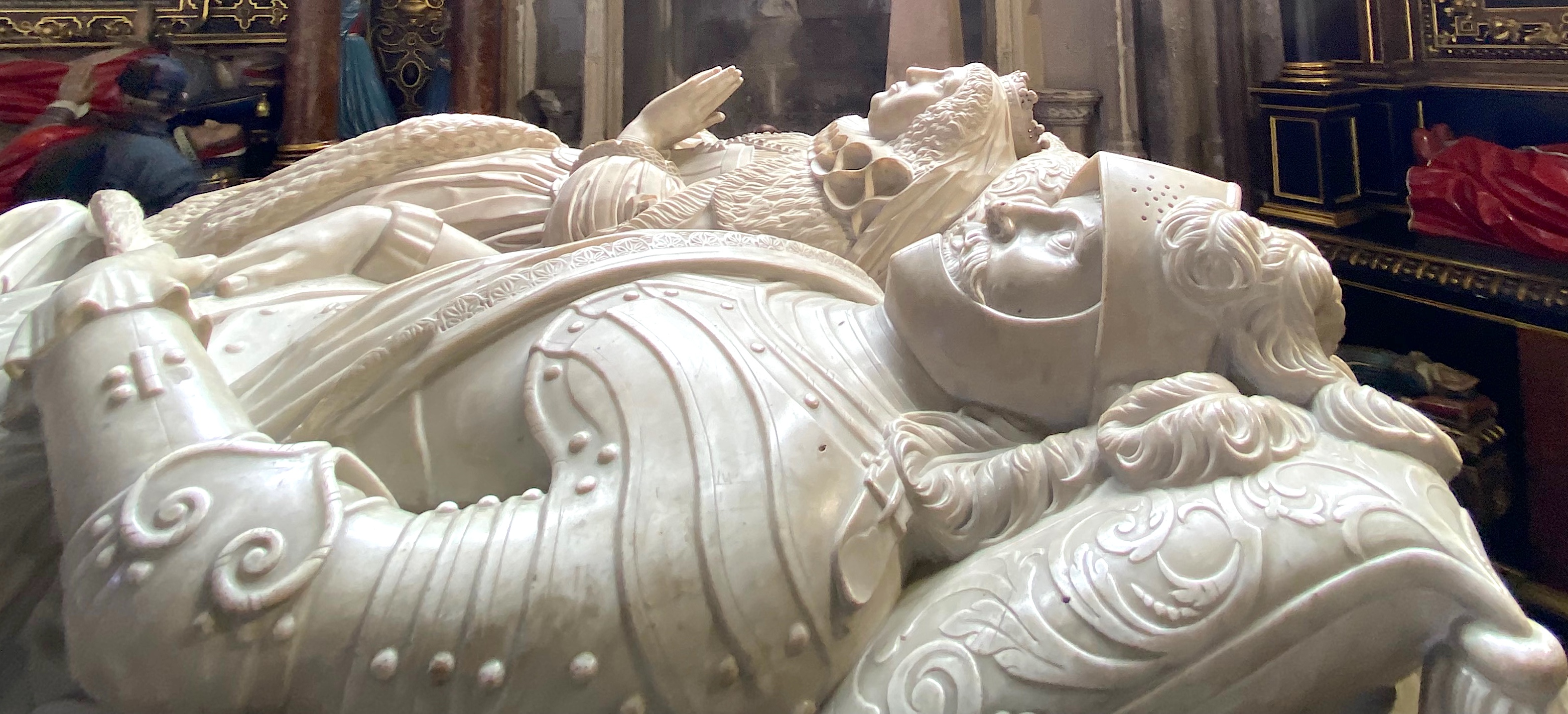
On the altar chest, he is represented partly in plate armor with a plumed helmet, wearing trunk breeches and a sash on which are depicted shells. His feet rest on a lion. His wife has her head on embroidered cushions with cherub head tassels and wears an ermine lined robe, coronet and jewelled necklace with a pendant cross. She has a lion at her feet also. At each end of the monument chest are heraldic achievements with initials SGV and CMB at the corners. It was made in 1631 at the request of the Countess by sculptor Nicholas Stone who was paid 560 pounds for it. The carvers of the arms were Anthony Goor and Harry Akers.

I have a little bit of information on Nicholas Stone at the end of this post.

A closer view of Sir George and his wife, Mary.

Mary died on April 19, 1632 and was buried a few days later in the chapel. Although she married twice after Sir George’s death, it was he that she wanted to be buried with after she passed away.

Mildred and Anne Cecil

A few weeks ago, I showed photos of Mary, Queen of Scots’ large monument, carved by Cornelius Cure and completed by his son, William. There’s another grand monument at the Abbey that Cornelius did that was for Mildred Cooke Cecil (1526-1589), Lady Burghley, and her daughter, Anne Cecil de Vere, Countess of Oxford.

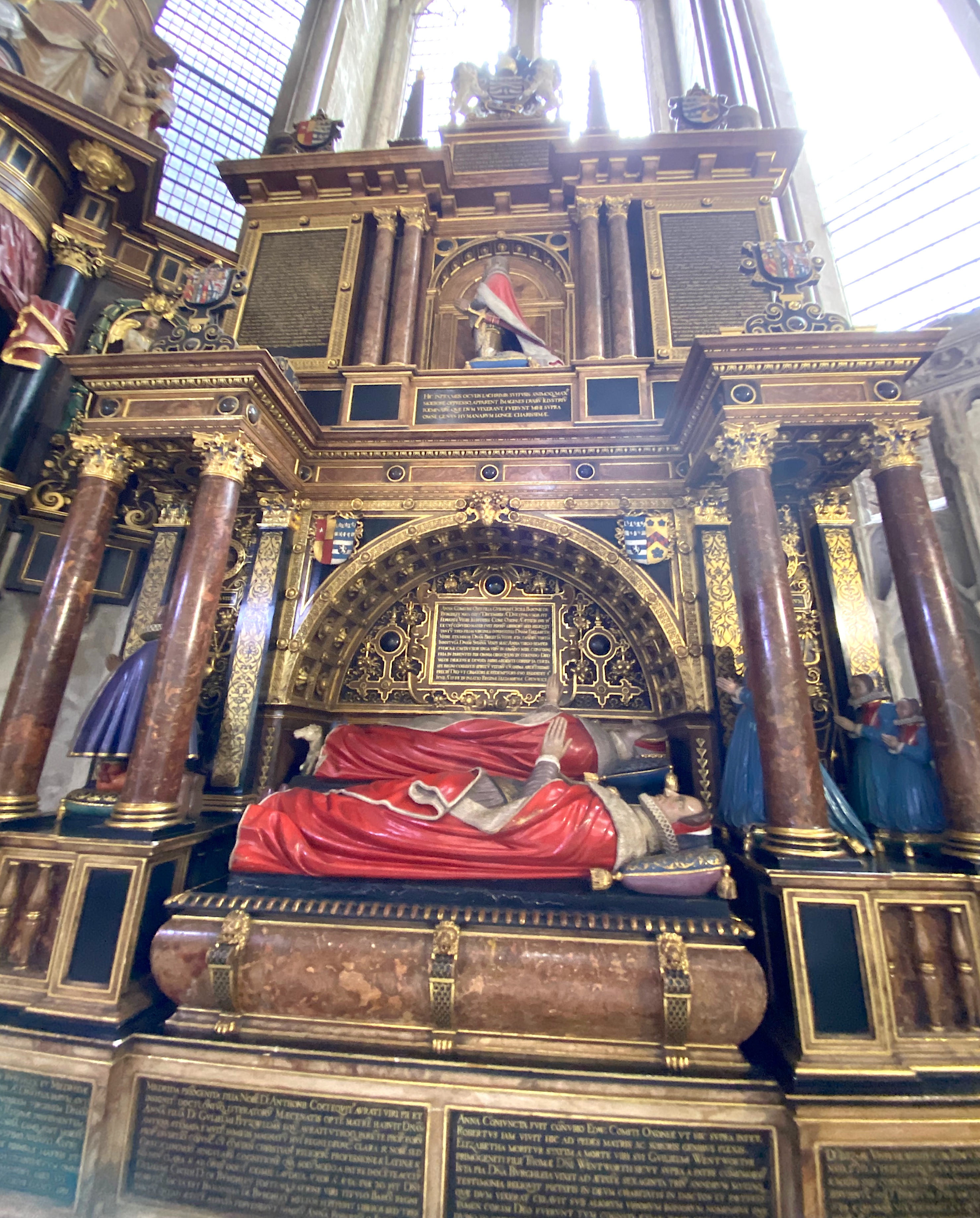
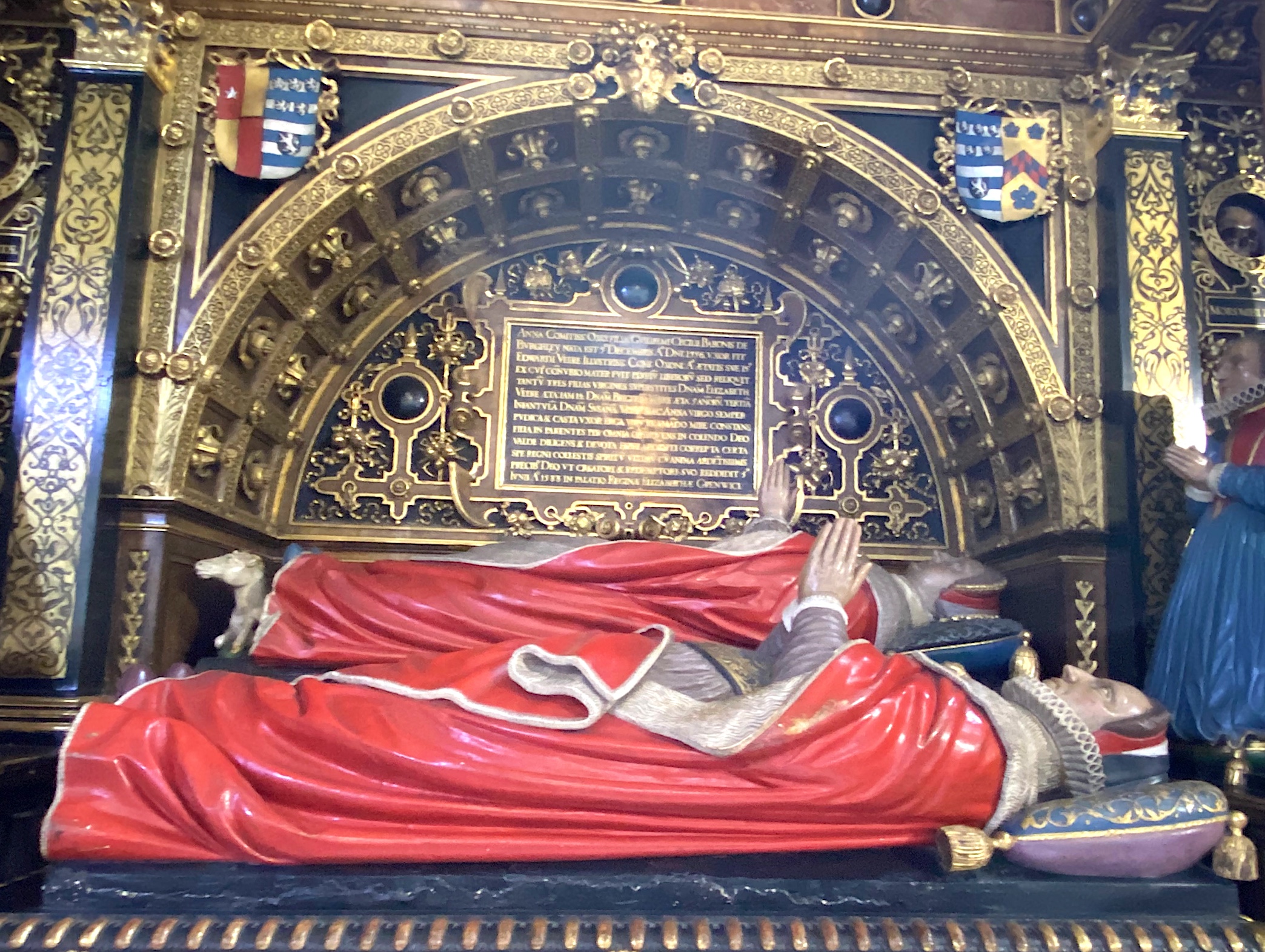
The monument is 24 feet high, in St Nicholas’ Chapel. Both Mildred and Anne wear long fur-lined red cloaks, and there is a unicorn at Anne’s feet.

It’s probably bad form, but I found myself uttering “That’s HUGE!” many times at Westminster Abbey.

So who were this mother/daughter pair?

Born in 1526, Mildred was one of the daughters of Sir Anthony Cooke (or Coke) of Gidea Hall, Essex, tutor to Edward VI (you might recall his tiny square I featured last week!). Educated by her father, Mildred was known as a scholar and philanthropist. She was William Cecil’s, Lord Burghley’s, second wife. Her effigy is the one in front.

Lord Burghley was Secretary of State and High Steward of Westminster. He was a trusted adviser of Elizabeth I.

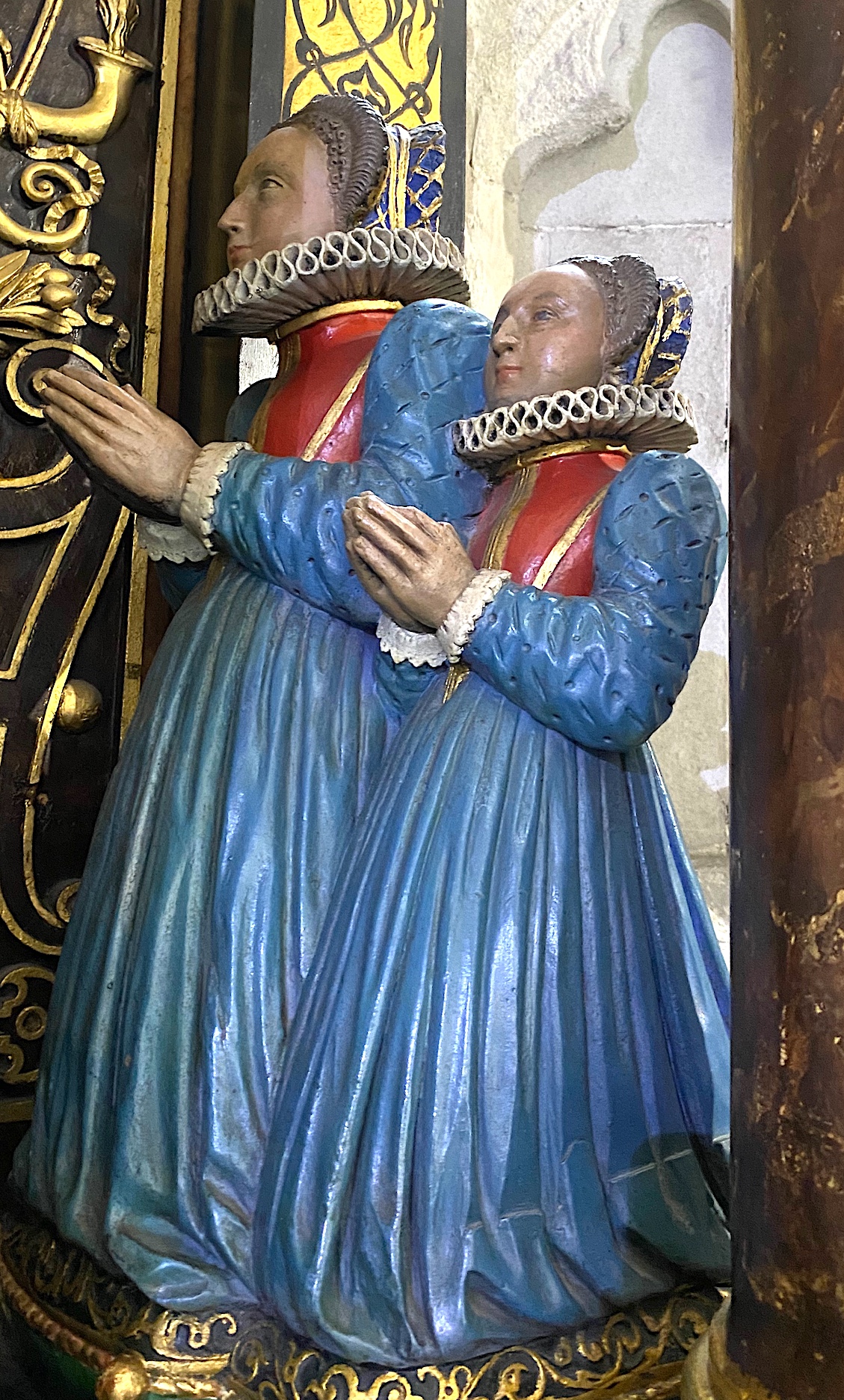
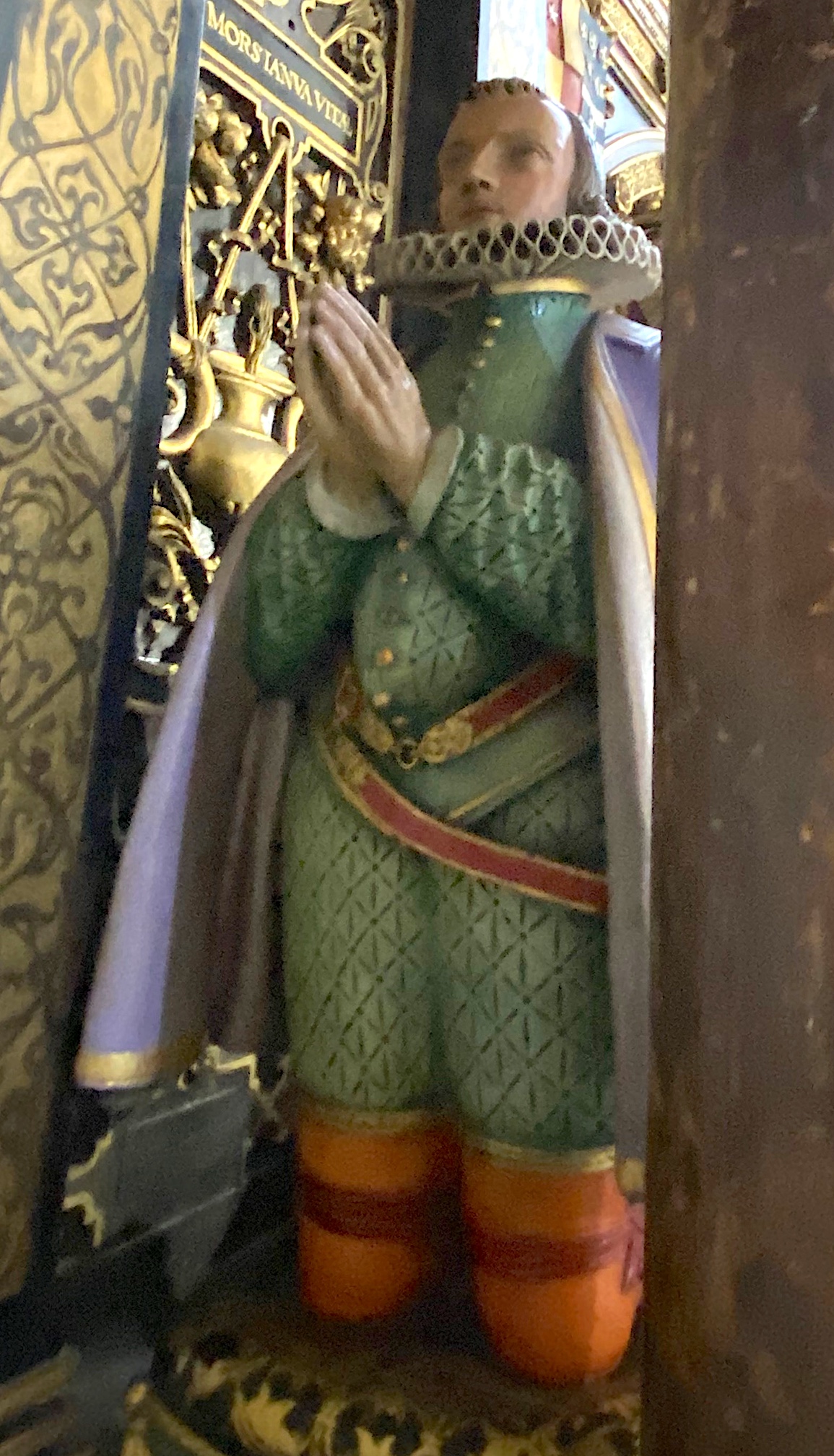
These are thought to be two of Anne’s daughters, Bridget and Susan, who are buried with her.

Mildred’s children were Anne (1556-1588), Robert (1563-1612) and Elizabeth (1564-1583). Anne is the effigy behind Mildred’s. She was married to Edward de Vere, 17th Earl of Oxford in 1571 at Whitehall Palace, in the presence of Queen Elizabeth I. The marriage was reportedly unhappy one, producing three daughters; Elizabeth, Bridget and Susan, who were later buried with Anne and Mildred. Anne’s husband, Edward, was buried at St. Augustine, Hackney with his second wife.

Here’s a closer look at the effigies of Anne and her mother, Mildred. To the far right, you can get a glimpse of the blue-gowned figure of Elizabeth, one of Anne’s daughters.

The kneeling figure of Lord Burghley is up at the top center of the monument, which you can see in the picture just above the one of Bridget and Susan. He’s not buried here, however, and is at St. Martin’s Churchyard in Stamford, England.

There’s also the kneeling figure of Sir Robert Cecil, who was Mildred’s son and Anne’s brother. Sir Robert is credited with being the person who discovered the Gunpowder Plot of 1605, an act of treason against King James I. He’s not interred at Westminster Abbey but is at St. Etheldreda Cathedral in Hertfordshire, England.

Figure of Sir Robert Cecil (1563-1612), the son of Mildred and brother of Anne. He’s actually buried at St. Etheldreda Cathedral in Hertfordshire, England.

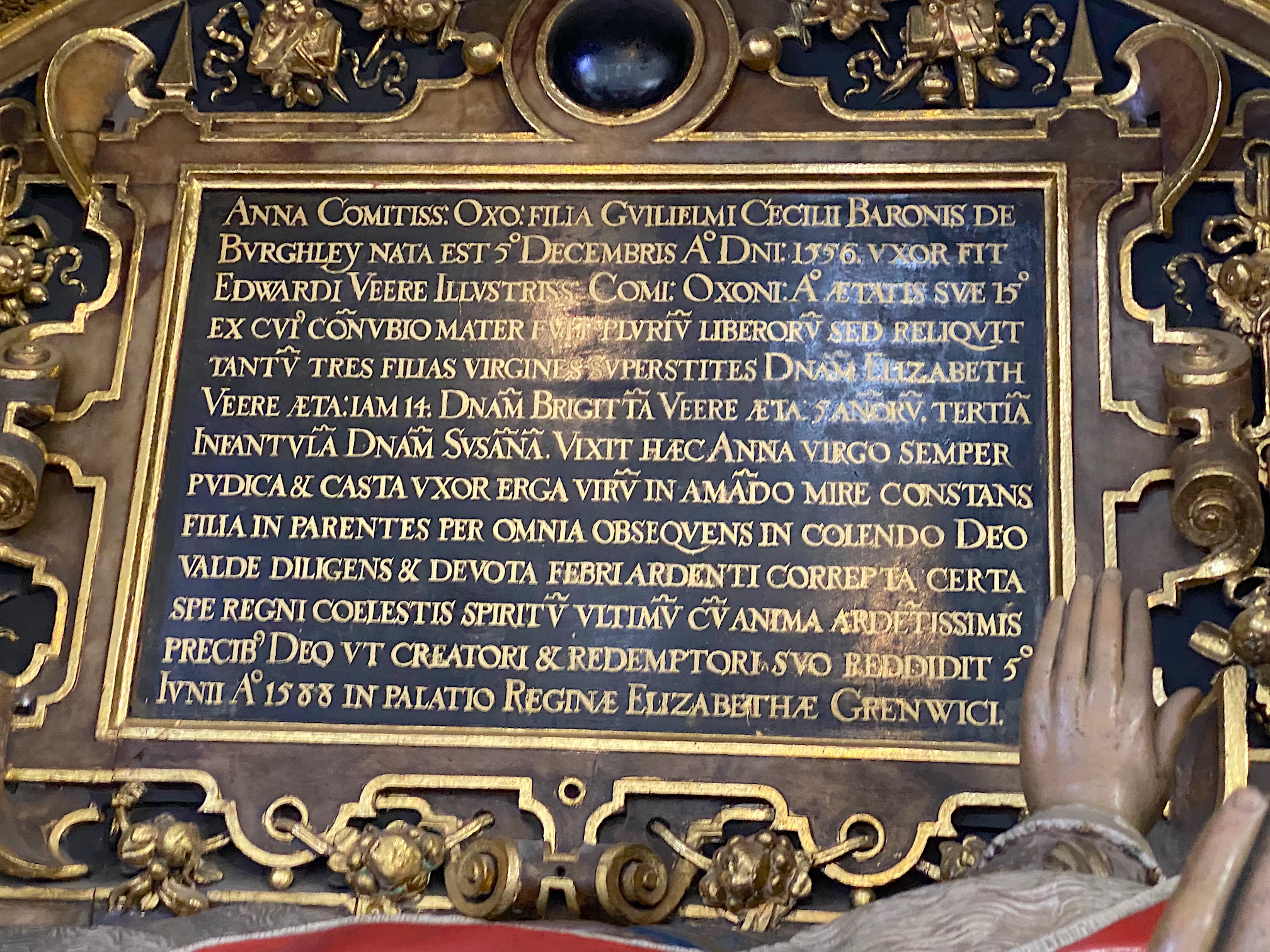
You’ll find a number of long epitaphs all over the monument, said to be written by Lord Burghley himself. You can read them all translated into English here.

Just one of many epitaphs you can find on the Cecil family monument.

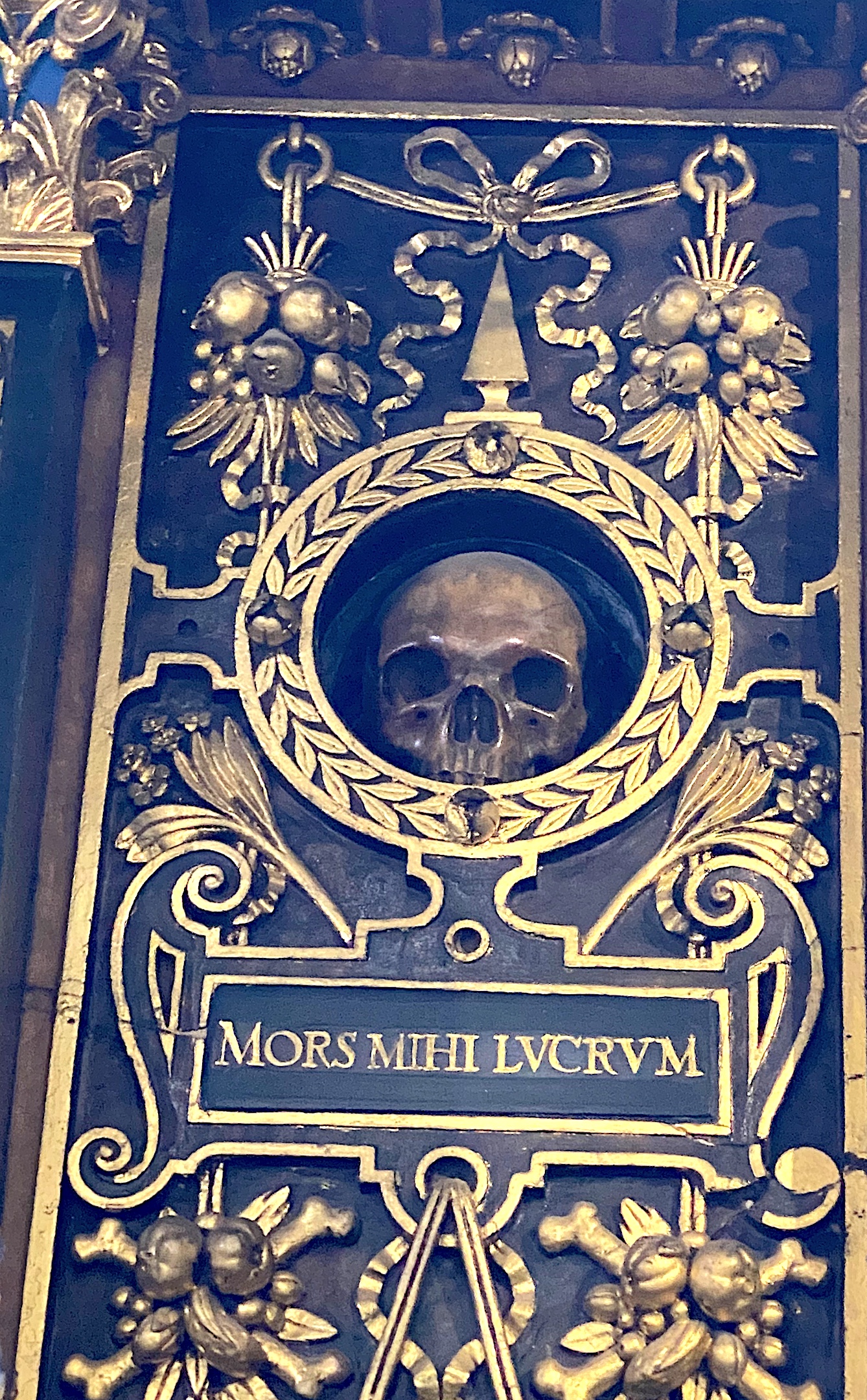
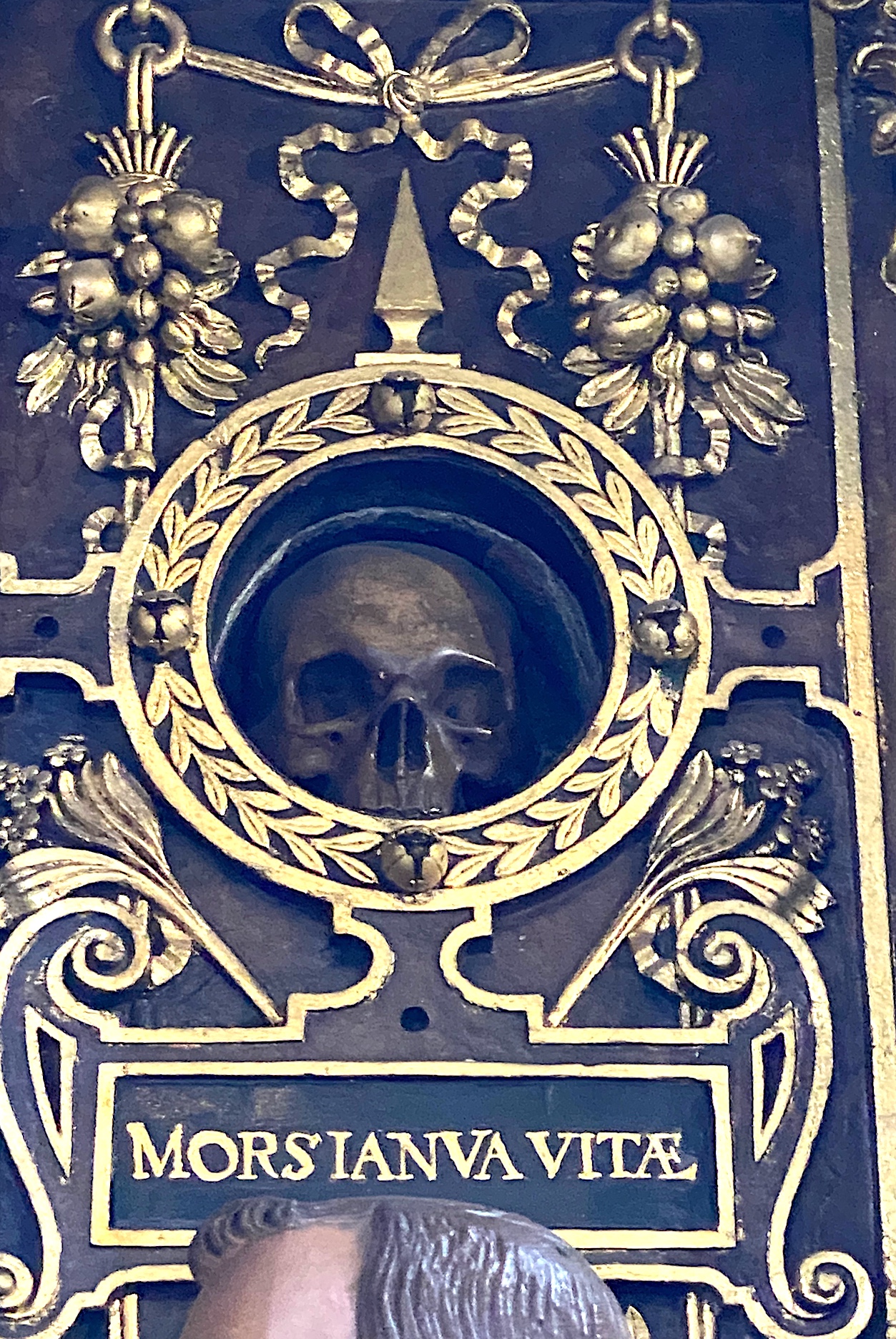
Then there are the pair of skulls on either side of the monument, with the inscriptions “Death is Life” (on the left) and “Death to me is gain” (on the right).

“Death to me is gain.”

In the 19th century, the monument was restored by Lord Cranborne, and cleaned and re-painted in the late 1950s.

Cornelius Cure’s father was William Cure I, a Dutchman, but Cornelius was born in England. He lived and worked in Southwark. William Cecil, Lord Burghley, recommended that he be appointed to replace Edward Young as royal master mason to the courtier William Killigrew, highlighting Cure’s skill, honesty, and knowledge of work in foreign places. Cure was appointed master mason of the Tower of London and the Queen’s other residences in June 1596. Cornelius Cure died in 1607.

So it makes perfect sense that Cornelius Cure would be the one to carve the Cecil family’s grand monument.

William succeeded his father to the post of master mason to James I. He worked under Inigo Jones at the Banqueting House, Whitehall, and continued to hold the office until his death in 1632. William was succeeded by Nicholas Stone, who created the monument to Sir George Villiers and his wife, Mary, that I showed you earlier.

Next time, I’ll be on top of the world with Sir Issac Newton.

“Death is Life.”

Westminster Abbey 2023: When the “Royal” Treatment Isn’t Always so Royal or Please Don’t Step on Me, Part IV

15 Saturday Jun 2024

Posted by adventuresincemeteryhopping in General

≈ Leave a comment

Many thanks to the amazing Grace Barrett of Tours by Grace for leading us through Westminster Abbey!

It’s hard to believe a year has already passed since we visited Westminster Abbey in June 2023. But as I’ve been working on this series, it’s brought back some wonderful memories and stirred up new observations.

Last time, I showed you the grand monument to Mary, Queen of Scots and shared the story of her tragic life. Having your death ordered by your cousin is not something most of us (fortunately) will ever have to face. Despite doing nothing to prevent his mother’s death, James I later ordered the construction of one of the finest memorials in Westminster Abbey to be created for her.

Not every king and queen (or prince) got the “royal” treatment at Westminster Abbey.

King William III and Queen Mary II

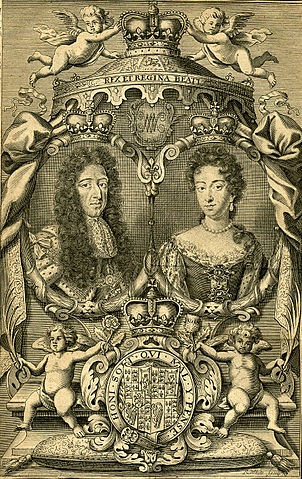
I mentioned in an earlier post that when you’re at Westminster Abbey, you can look down and realize that you’re possibly standing on someone important. That happened when I was near the tombs of King William III and Queen Mary II, who served jointly in the late 1600s. Unlike other monarchs, William and Mary are only marked by stones in the floor of the Triforium of the Lady Chapel.

A 1703 engraving of King William III and his wife Queen Mary II, who shared the English monarchy in the late 17th century.

William was the only child of William II, Prince of Orange and Princess Mary, eldest daughter of Charles I of England. He was born in Holland on Nov. 4, 1650, a few days after his father’s death.
English authorities did not want any son of the Roman Catholic James II to become king, so in 1688 they asked William to come to England and march against James to take the throne, and reign jointly with his wife, Mary (whom he wed in 1677). However, before William reached London, James fled to France and his abdication was declared.

I left my feet in this photo so you can see how easy it is to almost step on royalty!

William III and Mary II were crowned as joint monarchs in the Abbey on April 11, 1689, the first time this had happened in England. They had no children, the throne passing to Mary’s sister Anne. Mary died in 1694 at age 32. William died in 1702 at age 51.

I thought you might find Westminster Abbey’s web site take on William’s death interesting:

His death on 8th March 1702 was caused by a fall from his horse which had stepped in a mole-hill. The ‘little gentleman in black velvet’ (the mole) was therefore praised by his enemies. In contrast to his wife’s funeral his was private and simple, at the monarch’s own request. But there was a long carriage procession from Kensington Palace. William was buried with his wife in a vault beneath the south aisle of Henry VII’s Lady Chapel, not far from his mother’s grave. Although a monument was designed for the couple it was never erected.

Anne of Cleves

As the only one of Henry VIII’s six wives interred inside Westminster Abbey, you might think Anne of Cleves received a monument befitting her status. But she did not.

Of Henry’s many spouses, he was wed to Anne of Cleves the shortest amount of time. It lasted from January 1541 to July 1541 when its annulment was completed. As his fourth wife, Anne was born in 1515 in Germany and was the second daughter of John III of the House of La Marck, and his wife Maria, Duchess of Jülich-Berg.

Reproduction of the portrait of Anne of Cleves by Hans Holbein the Younger. Henry VIII felt he had been misled by it and didn’t care for his fourth wife’s appearance.

Despite the brevity of their marriage, Anne came out better in the end than her fellow wives. Having left her homeland knowing no English and little of the country she would spent the rest of her life living in, Anne took to it fairly well.

As former queen, she received a generous settlement, including Richmond Palace, and Hever Castle, home of Henry’s former in-laws, the Boleyns. Anne of Cleves House, in Lewes, East Sussex, is one of many properties she owned, although she never lived there.

Anne was invited to court often and, out of gratitude for her not contesting the annulment, Henry decreed that she would be given precedence over all women in England save his own wife and daughters.

I’ve read differing accounts on whether or not she wished to return to Germany after Henry’s death. In the end, she ended up spending the rest of her life in England.

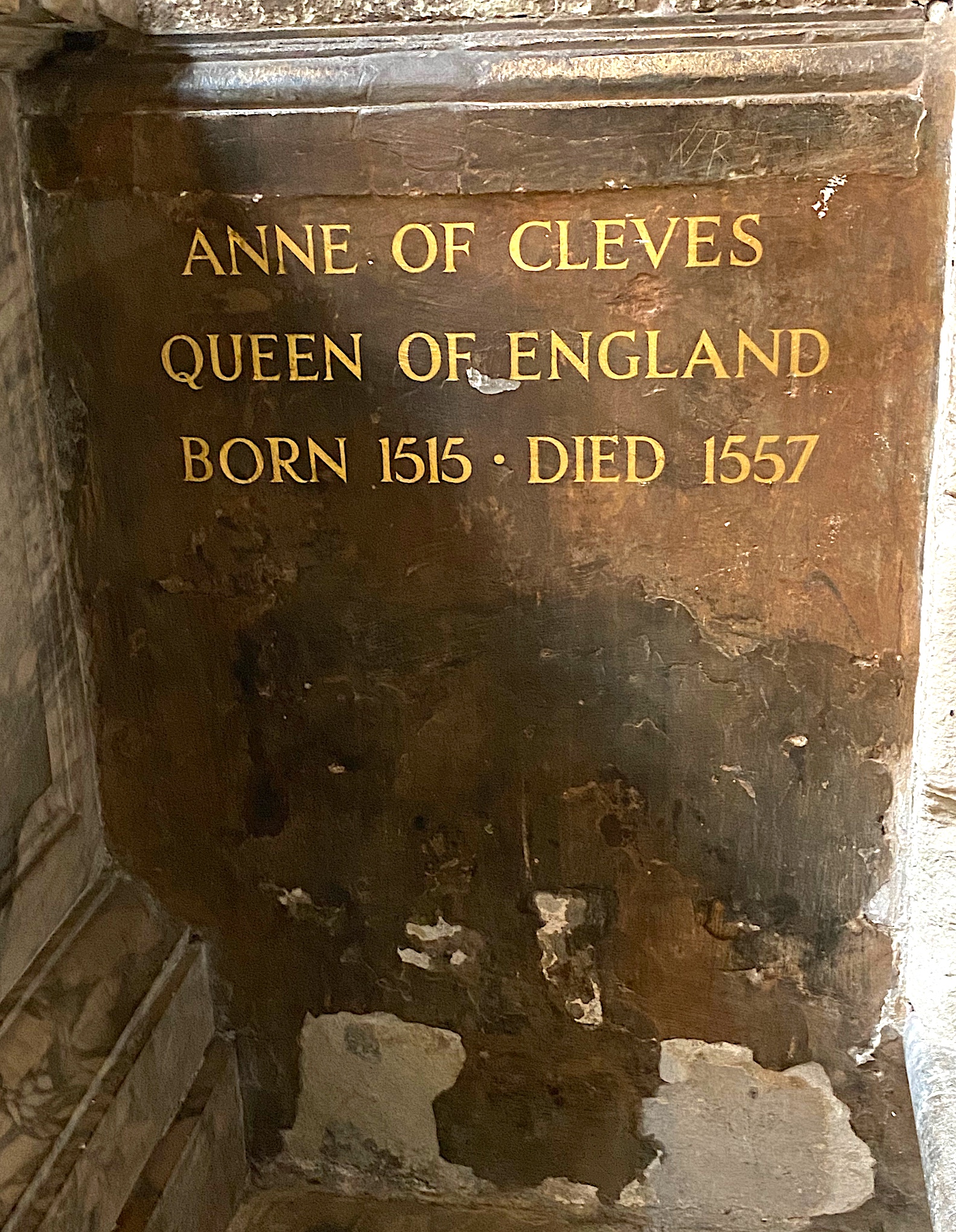
This is all I could see of the tomb of Anne of Cleves at Westminster Abbey.

When Anne’s health began to fail, her former stepdaughter Mary allowed her to live at Chelsea Old Manor, where Henry’s last wife, Catherine Parr, lived after her remarriage. Anne died there on July 16, 1557. The most likely cause of her death was cancer. Passing away 10 years after Henry VIII, Anne was the last of his wives to die.

Mary ordered her burial in the Abbey, and the funeral held on Aug. 4, 1557 was conducted according to Catholic rites as Anne wanted. She lies on the south side of the High Altar and her monument is a low stone structure of three sections with carvings showing her initials AC with a crown, lions’ heads, and skulls and crossed bones. It was probably made by Theodore Haveus of Cleves but was never finished.

The tomb’s location is within the area of the sanctuary where the coronation service takes place and is therefore not accessible. For that reason, I only saw what you see in the photo above, which wasn’t easy to find at that because it’s in between two massive monuments for other people. Not exactly what you’d expect for a queen.

Prince Edward VI

King Edward VI (1547-1553) was the son of Henry VIII and his third wife, Jane Seymour. Born on Oct. 12, 1537, Edward’s mother died 12 days later at Hampton Court Palace. A healthy baby, Edward VI was well educated but tended to be sickly.

He succeeded his father when he was only nine years old and was crowned in the Abbey on Feb. 20, 1547. Since he was a minor, a Regency was created and his uncle, Edward Seymour, later Duke of Somerset, became Protector.

Edward died of tuberculosis at age 15 at Greenwich Palace on July 6, 1553. According to John Foxe’s account of his death, his last words were: “I am faint; Lord have mercy upon me, and take my spirit”.

Throughout England, the people greeted the birth of a male heir, “whom we hungered for so long”.

Edward was buried in the Henry VII Lady Chapel at Westminster Abbey on Aug. 8, 1553. But no grand memorial marked his grave for hundreds of years. That was not remedied until the 1960s. I find that a genuine pity considering he was indeed king for part of his life.

I have no doubt that poor Edward VI gets unknowingly trampled upon every day. Those are not my toes in the picture, however.

Edward’s burial place was unmarked until as late as 1966, when an inscribed stone was laid in the chapel floor by Christ’s Hospital School to commemorate its founder. I just happened to look down and see it. Rest in peace, Edward.

Diplomat and Royal Cousin Ludovic Stuart

By contrast, you don’t have to be royal to manage a jaw-dropping sized monument in your honor. When I saw the one for Ludovic Stuart and his family, I thought he certainly had to be royal to merit something so grand. While he wasn’t a king, he did have royal ties.

While not a king or prince, Ludovic Stewart had royal ties and was a nobleman of means.

Ludovic Stewart, second Duke of Lennox and first Duke of Richmond (1574–1624) was a Scottish nobleman who through his paternal lines was a second cousin of King James VI of Scotland and I of England. He was involved in the Plantation of Ulster in Ireland and the colonization of Maine in New England.

He held a number of titles over his lifetime, including lord high admiral, member of the English privy council, ambassador to Paris (1604–1605) and high commissioner to the Scottish Parliament (1607). In 1623, he was created Duke of Richmond.

Ludovic Stewart is buried in a vault in the southeast Apsidal Chapel of Henry VII’s Chapel in Westminster Abbey.

Although Ludovic was married three times, he only had one legitimate child and that was a daughter with his second wife. He died suddenly in bed in his lodging at Whitehall Palace on Feb. 16, 1624 at age 49. His third wife, Frances, died in 1639 and is interred with him.

This is the best picture I could get of Ludovic Stewart’s effigy. The one for his third wife, Frances, is beside him out of sight.

The Westminster Abbey web site describes the Stewart monument like this:

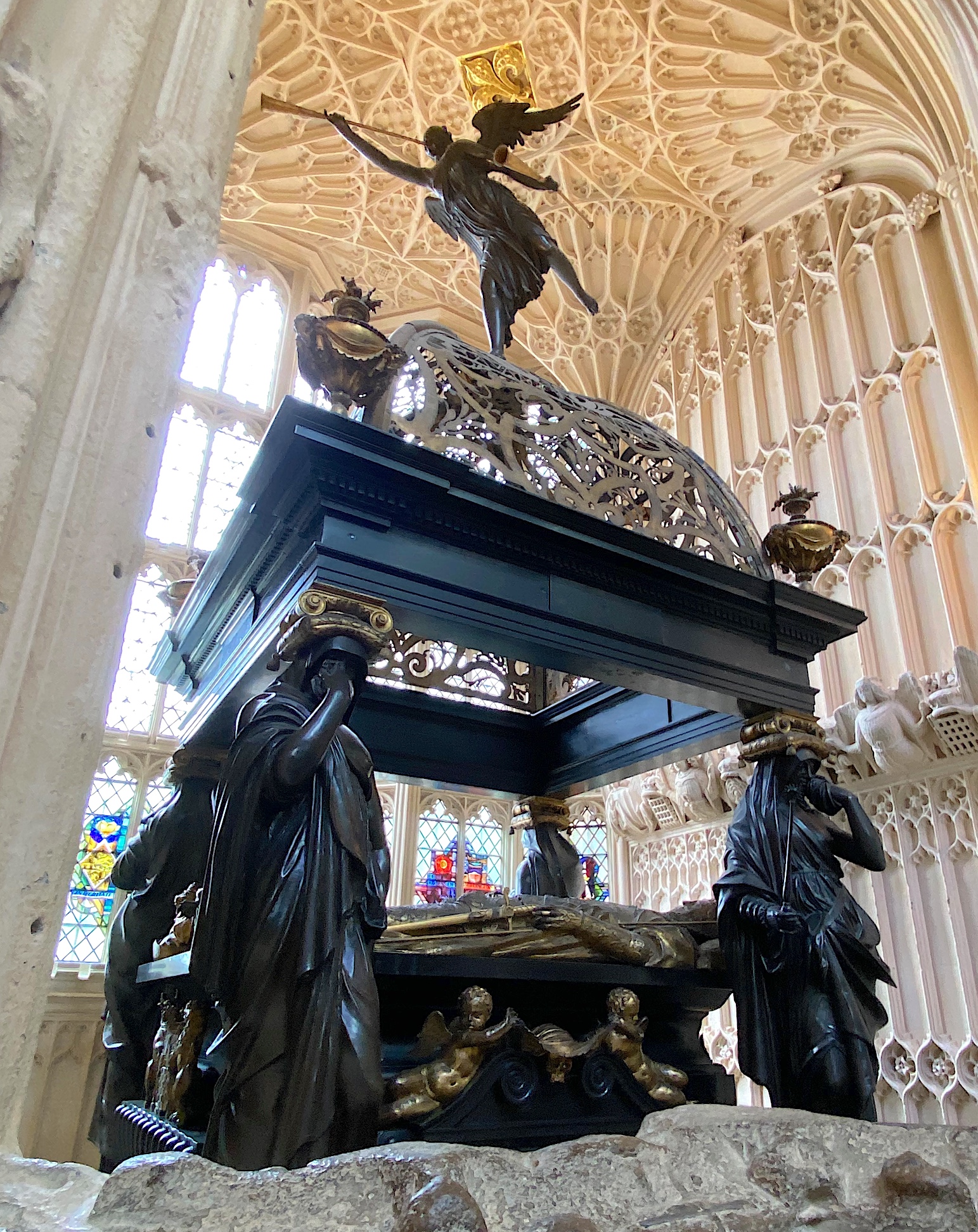
He has a very large monument of black marble and bronze by sculptor Hubert Le Sueur which fills the small chapel. Gilt bronze recumbent effigies of the Duke and Duchess hold hands; he is wearing plate armour, coronet, mantle and collar of the Order of the Garter and carries a wand, while wife Frances wears a ruff, stomacher and coronet. At his feet is a bull’s head and at hers is a chapeau with a couchant lion. At each corner of the tomb are large bronze life size figures representing Hope, Truth, Charity and Faith, acting as caryatides, supporting the domed open-work bronze canopy, with vases at each corner and a figure of Fame on the top. It was repaired and restored in 1875.

Two cherubs flank a shrouded skull above the epitaph.

To say that the Stewart monument is mind blowing (to me), is an understatement. There’s quite a lot going on here.

One of the four pillars holding up the bronze canopy of the Stewart monument.

Then you’ve got this angel on the top holding a trumpet.

An angel blows a trumpet and holds an additional trumpet in her other hand.

There’s still much to discover at Westminster Abbey so I’m not done just yet!

Recent Posts

  • More Pensacola, Fla. Cemetery Hopping: Taking a Ramble Through Saint John’s Cemetery, Part III
  • More Pensacola, Fla. Cemetery Hopping: Taking a Ramble Through Saint John’s Cemetery, Part II
  • More Pensacola, Fla. Cemetery Hopping: Taking a Ramble Through Saint John’s Cemetery, Part I
  • The City of Five Flags: Stepping back in time at Pensacola, Fla.’s Saint Michael’s Cemetery, Part V
  • The City of Five Flags: Stepping back in time at Pensacola, Fla.’s Saint Michael’s Cemetery, Part IV

Archives

  • December 2025
  • November 2025
  • August 2025
  • July 2025
  • June 2025
  • May 2025
  • April 2025
  • March 2025
  • February 2025
  • January 2025
  • October 2024
  • August 2024
  • July 2024
  • June 2024
  • May 2024
  • April 2024
  • March 2024
  • February 2024
  • January 2024
  • December 2023
  • November 2023
  • October 2023
  • September 2023
  • August 2023
  • July 2023
  • June 2023
  • May 2023
  • April 2023
  • March 2023
  • February 2023
  • January 2023
  • December 2022
  • November 2022
  • October 2022
  • September 2022
  • August 2022
  • July 2022
  • June 2022
  • May 2022
  • April 2022
  • March 2022
  • February 2022
  • January 2022
  • December 2021
  • November 2021
  • October 2021
  • September 2021
  • August 2021
  • July 2021
  • May 2021
  • April 2021
  • March 2021
  • February 2021
  • January 2021
  • December 2020
  • November 2020
  • October 2020
  • September 2020
  • August 2020
  • July 2020
  • June 2020
  • May 2020
  • April 2020
  • March 2020
  • February 2020
  • January 2020
  • December 2019
  • November 2019
  • October 2019
  • September 2019
  • August 2019
  • July 2019
  • June 2019
  • May 2019
  • April 2019
  • March 2019
  • February 2019
  • January 2019
  • December 2018
  • November 2018
  • October 2018
  • September 2018
  • August 2018
  • May 2018
  • April 2018
  • March 2018
  • February 2018
  • January 2018
  • December 2017
  • November 2017
  • October 2017
  • September 2017
  • August 2017
  • July 2017
  • June 2017
  • May 2017
  • April 2017
  • March 2017
  • February 2017
  • January 2017
  • December 2016
  • November 2016
  • October 2016
  • September 2016
  • August 2016
  • July 2016
  • June 2016
  • May 2016
  • April 2016
  • March 2016
  • February 2016
  • January 2016
  • December 2015
  • November 2015
  • October 2015
  • September 2015
  • August 2015
  • July 2015
  • May 2015
  • April 2015
  • March 2015
  • February 2015
  • January 2015
  • December 2014
  • November 2014
  • October 2014
  • September 2014
  • August 2014
  • July 2014
  • June 2014
  • May 2014
  • April 2014
  • March 2014
  • February 2014
  • January 2014
  • December 2013
  • November 2013
  • October 2013
  • September 2013
  • August 2013
  • July 2013
  • June 2013
  • May 2013
  • April 2013
  • March 2013
  • February 2013
  • January 2013

Categories

  • General

Blogroll

  • A Grave Interest
  • Cemetery Photography by Chantal Larochelle
  • Cemetery Tours of Berlin by Matti
  • Confessions of a Funeral Director (Caleb Wilde)
  • Find a Grave
  • Hunting and Gathering (cool photography site)
  • Save Our Cemeteries (New Orleans, La.)
  • The Cemetery Club
  • The Graveyard Detective
  • The Rambling Muser
  • Westminster Abbey Tours by Grace

Meta

  • Create account
  • Log in
  • Entries feed
  • Comments feed
  • WordPress.com

Blog at WordPress.com.

  • Subscribe Subscribed
    • Adventures in Cemetery Hopping
    • Join 402 other subscribers
    • Already have a WordPress.com account? Log in now.
    • Adventures in Cemetery Hopping
    • Subscribe Subscribed
    • Sign up
    • Log in
    • Report this content
    • View site in Reader
    • Manage subscriptions
    • Collapse this bar
 

Loading Comments...