• About Me
  • Cemeteries I Have Visited
  • Have questions?
  • Photos

Adventures in Cemetery Hopping

~ A blog by Traci Rylands

Adventures in Cemetery Hopping

Author Archives: adventuresincemeteryhopping

“Me Want It Now”: Visiting Nadine Earles’ Dollhouse at Lanett, Ala.’s Oakwood Cemetery.

29 Friday Apr 2022

Posted by adventuresincemeteryhopping in General

≈ 10 Comments

I left Greenville, Ala. in the afternoon, hoping to make it to Atlanta before it got too late. Then I remembered there was an Alabama cemetery near the state line I’d always wanted to stop at and wondered if it was anywhere close. Looking on my phone, I realized that I could chart my route to go right by it and hopefully, have enough daylight to photograph it.

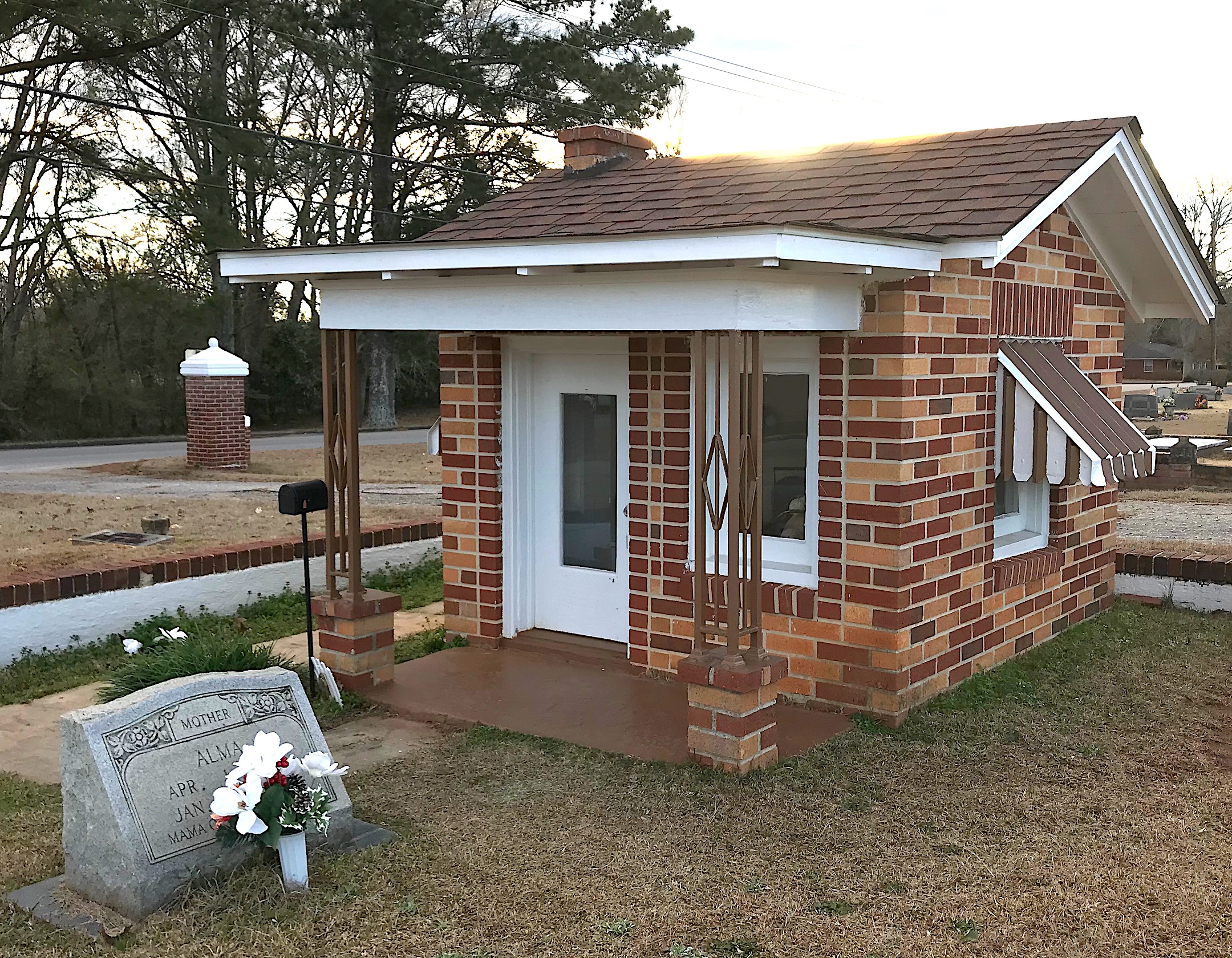
I was looking for a cemetery with a life-size dollhouse.

This dollhouse covers the final resting place of Nadine Earles, who died in 1933.

I’d read about this place for years, wondering what it looked like in person and the grave of the child it was built for almost 100 years ago.

The Short Life of Nadine Earles

Born to parents Julian Comer Earles and Alma Moody Earles on April 3, 1929, Roselind Nadine Earles and her family lived in Lanett, Ala. Lanett is located close to the Alabama/Georgia border near West Point, once a major railroad hub. Huge West Point Lake is nearby, which still attracts fishermen and boaters from around the South.

Nadine didn’t have an easy life. Born with a cleft palate, she became accustomed to visiting doctors from an early age. Nadine passed the time in waiting rooms playing with her beloved dolls. It wasn’t as easy then to have the condition corrected. Alma, her mother, worked with her on speech therapy for hours. Her little brother, Comer, was born in 1931.

In summer 1933, Julian and Alma took Nadine to Atlanta for the first of two surgeries to correct her mouth. A second surgery was planned in November. Nadine knew exactly what she wanted for Christmas. A life-size dollhouse in her backyard. Julian purchased the materials, hoping to get started on it in his down time from work.

Nadine Earles was awaiting her second surgery for a cleft palate when she died.

“Me Want It Now”

The Earles were preparing for Nadine’s next surgery when she became ill. At first, doctors thought it might be measles but eventually diagnosed diphtheria. A vaccine was developed in the 1920s but was just starting to become more widespread in the 1930s. Because of the contagious nature of diphtheria, the Earles home was roped off and the family put in quarantine.

With spare time on his hands, Julian tried to build the dollhouse but the noise bothered Nadine so he stopped. For an early Christmas gift, they gave her a life-size doll and tea set. But the little girl hadn’t forgotten her request. Growing weaker, she reportedly turned to her parents and said,

“Me want it now.”

Nadine died on Dec. 18, 1933 and she was buried at Lanett’s Oakwood Cemetery. Julian felt terrible that he hadn’t fulfilled his daughter’s last wish. He dismantled what he had begun on her dollhouse and took it over to the cemetery with the goal of having it built over Nadine’s grave.

According to Anna Earles, the wife of Nadine’s brother Comer, Julian hired two contractors to finish the dollhouse. While he didn’t do the work himself, he supervised it closely. It was completed several months later.

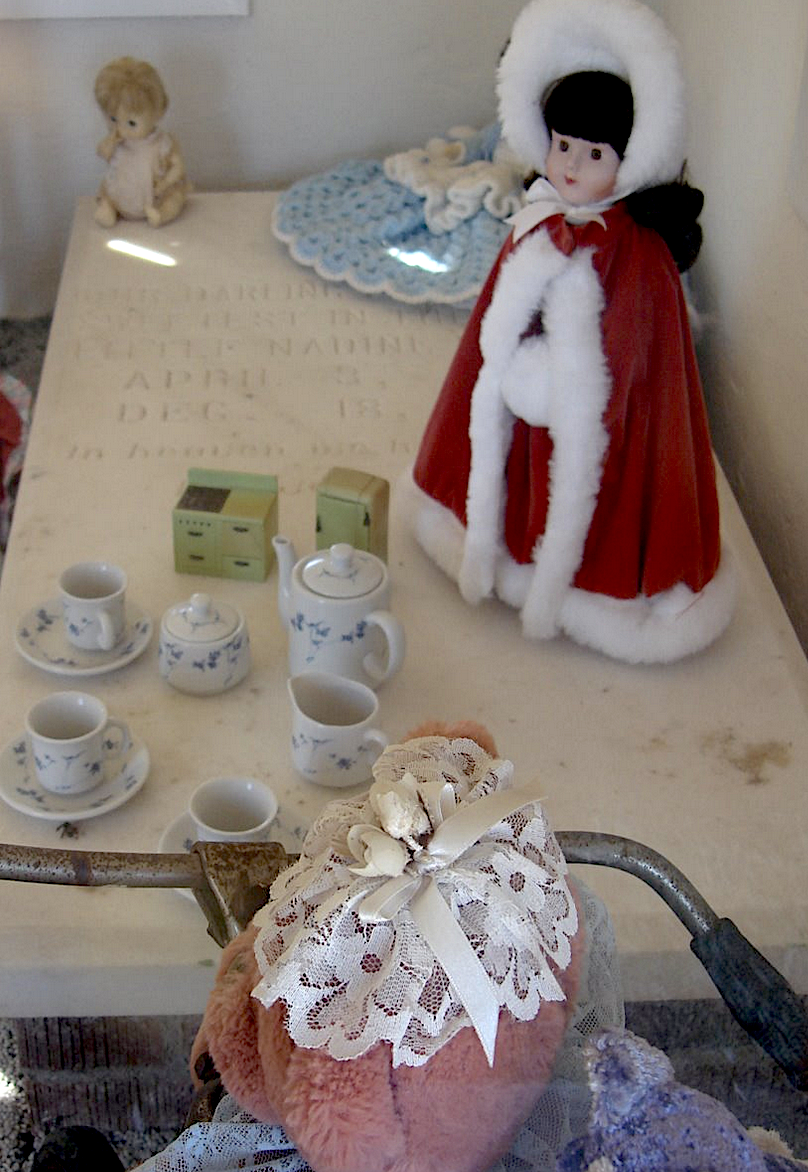
When I was at Oakwood Cemetery, the sun was going down and I did not get a good picture of Nadine’s little box grave marker that the dollhouse was built over. I found this photo of it online. So just to be clear for those wondering, Nadine is NOT inside the dollhouse or above ground. Her marker is inside of it but she is buried UNDER the dollhouse.

A close up of the box grave of Nadine Earles. I did not take this picture.

Her grave marker says:

Our Darling Little Girl
Sweetest In The World
Little Nadine Earles
April 3, 1929
Dec 18, 1933
In heaven we hope to meet
“Me want it now”

Julian and Alma had a another scare during this time. Their little son, Comer, developed a kidney ailment and nearly died. But thankfully, he survived.

I took a photo through one of the windows.

Happy Birthday

After the dollhouse was completed, Julian and Alma filled it with toys and dolls in Nadine’s memory. On birthdays and holidays, they would bring more gifts to place inside the dollhouse. Nadine’s fifth birthday party was even held there. I believe the postcard below is a photo of that event.

Nadine’s fifth birthday was remembered with a party at her dollhouse. That’s Alma, Julian, and Comer in the front.

Life went on. Julian and Alma had another child, Jimmy, in 1935. Every Christmas, toys would come to the dollhouse and old ones would be removed. People came to visit and leave their own gifts sometimes.

Comer married Anne in 1959. By that time, Julian and Alma had divorced. Alma remarried but Anne remained close to both her and Julian. She said Alma rarely spoke of Nadine’s death because it had been so hard on her. Julian never remarried and as the years passed, more and more he would go visit “Honey”, his pet name for Nadine. According to Anne, shortly before he died, he told her he was going to be with Honey.

Julian died on Feb. 25, 1976 at age 66. He is buried beside the dollhouse. I did not get a good photo of his grave so I apologize for the poor quality of it.

Julian visited Nadine’s dollhouse often before he died.

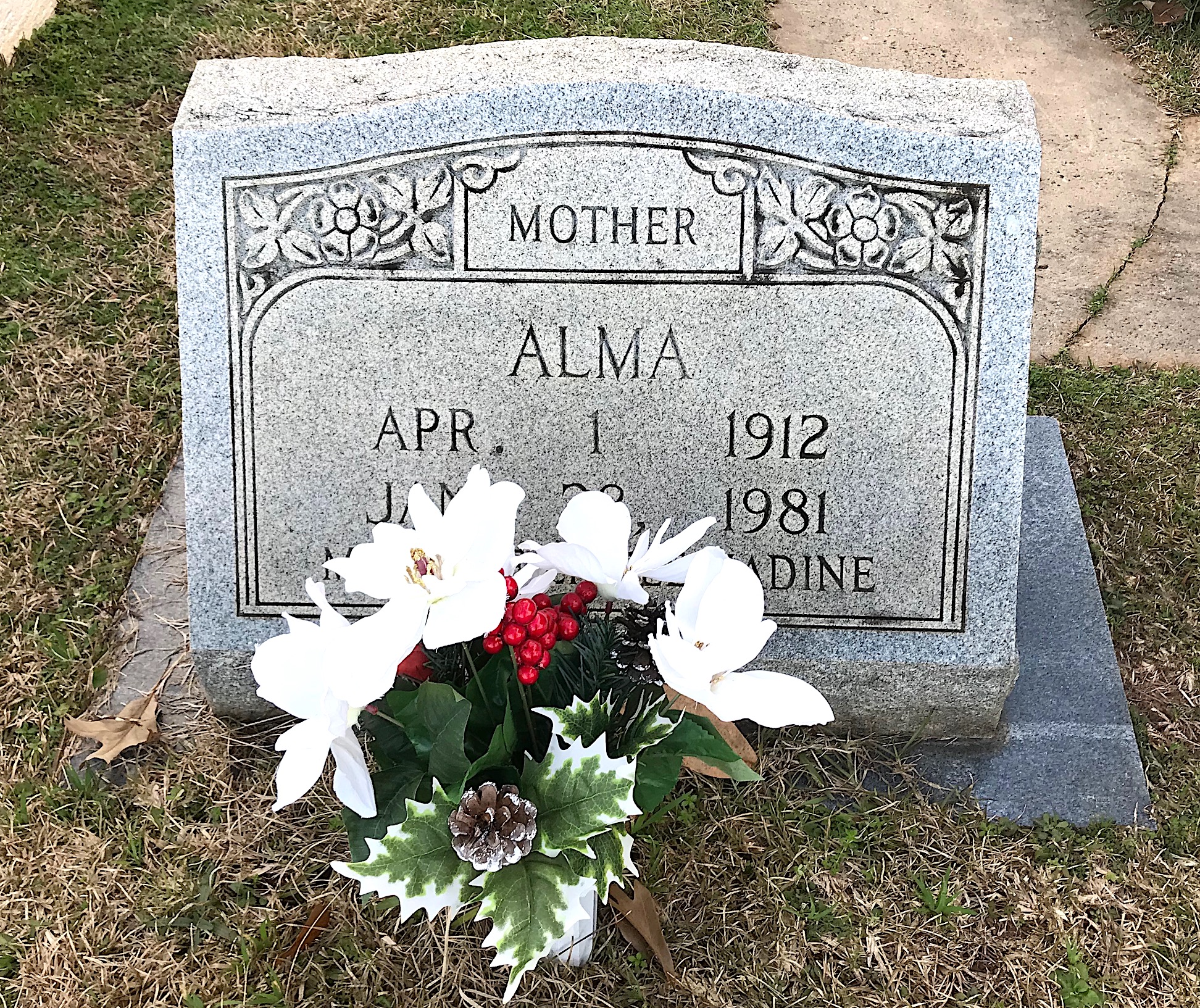
It was also Alma’s wish, Anne said, to also be buried next to Nadine and she asked her daughter-in-law to make sure that happened. After Alma died on Jan. 28, 1981, she joined Nadine and Julian in the Earles plot. Thankfully, I took a better picture of her grave marker. Comer died in 2003 and Jimmy passed away in 2018. I could not trace Anna past the 1987 newspaper interview she gave about Nadine.

Alma was buried beside Nadine’s dollhouse after her death in 1981.

Different people and organizations took the responsibility of looking after Nadine’s dollhouse by cleaning it, painting it, and even decorating it during holidays. I’m not sure who is caring for it now. Curious visitors like me drop by to visit. Some leave notes and cards in the dollhouse’s mailbox, which I didn’t even notice until after I looked at my pictures.

The sun was going down as I said goodbye to Nadine.

Goodbye, Nadine…

The sun was going down as I prepared to leave Nadine’s dollhouse. Cars were going by the cemetery and I could hear a dog barking as people were ending their day. Life was moving along. But standing there, I felt as if I was back in 1933 for a moment. When a little girl asked for the one thing she wanted more than ever.

“Me want it now.”

Three Brides and a Pastor: Farewell to Greenville, Ala.’s Magnolia Cemetery, Part IV

22 Friday Apr 2022

Posted by adventuresincemeteryhopping in General

≈ Leave a comment

If last week’s post was any indication, you probably knew I wasn’t done at Magnolia Cemetery.

I had a feeling that the monument beside Zenobia “Nobie” McKenzie had a story. Because of the grain of the stone, reading the inscription was difficult. But after fiddling with the photo, I realized May McKenzie Stallings died as young as her sister Nobie had and in one of the worst accidents about which I’ve ever read.

May McKenzie Stallings had only been married three months
when she died in 1905.

Born in 1888, May was the youngest child of Greenville merchant William F. McKenzie and Emma Herbert McKenzie. Nobie, her older sister, died from illness at age 19 when May was five. William was mayor of Greenville at one point.

May met and fell in love with Samuel Stallings, the only son of Jesse Francis Stallings, who served in the U.S. House of Representatives from 1893 to 1901. Sam hadn’t finished college yet and May was only 17. While they were eager to marry, both sets of parents understandably wanted them to wait a little longer.

Samuel Stallings and May McKenzie eloped to Columbus, Ga. to be married in August 1905. (Photo source: The Living Truth, August 25, 1905)

Accompanies by friends, the couple eloped to Columbus, Ga. to wed. Despite their worries about their parents, Sam and May were received back in Greenville with open arms.

Tragedy in Greenville

It was three months later on Nov. 3, 1905 when it happened. I’ve read three different newspaper accounts of what happened that day and while some of the details vary, the basic facts are these. May and Sam had ridden their carriage into Greenville to visit someone near the train station, possibly Sam’s father. They were sitting in the carriage when two mules hitched to a wagon nearby were spooked and bolted.

Sam jumped down to lift May out of harm’s way but was too late. The mules hit the carriage and May tumbled down into the clash of wagon, carriage, and mules. She was dragged many yards down the road before the vehicles were stopped. May died the next morning of her injuries. Having already lost Nobie 12 years before, I am certain her parents were devastated.

As for Sam, I can’t imagine what he was thinking. The young couple had only been married three months and his beautiful bride was gone.

May’s monument is in between that of her sister, Nobie, and her parents, W.F. and Emma McKenzie.

Sam remarried two years later to Grace Heaton of Birmingham and they had four children together. He died in 1959 in a car accident at age 75. He and Grace are also buried in Magnolia Cemetery.

One Husband, Two Sisters

I have another story of a young bride dying young but this one comes with a final twist.

Edna Flowers Jennings died only a month and a half after her wedding.

Born in 1880, Edna Flowers was the daughter of Joseph Hampton Flowers (J.H.) and Clara Howard Flowers. J.H. was the brother of William Flowers, whom I talked about last week. Like his brother, J.H. was successful in the lumber business. The family lived in Bolling, a little south of Greenville, but later moved to Blakely, Ga.

It was there Edna met Dr. William Jennings, a 1898 graduate of Baltimore Medical College. They were married on Nov. 26, 1901 in the Flowers home. I don’t usually post articles about weddings but I don’t always find accounts of such events. Afterward, the couple settled in Iron City, Ga., only about 30 miles south of Blakely.

Edna Flowers and Dr. William Jennings were married in her home in Blakely, Ga.

Their happiness was soon ended. Edna was stricken with a sudden illness and died on Jan. 17, 1902. Being that her new husband was a physician, it was probably even more painful that he could do nothing for his new bride. It took me a while to find her obituary because the Greenville Advocate mistakenly reported William’s last name as “Jenkins” instead of “Jennings”.

Here’s a longer photo of Edna’s monument.

I thought it was interesting that Edna’s monument includes her marriage date above her death date. Then there is “Edna Flowers-Jennings” on the bottom, a hyphenated last name being something I definitely don’t see often on a monument from this era.

It’s not often I see a hyphenated last name in so young a bride but I’m sure she didn’t go by that name when she was alive.

Dr. Jennings was comforted by his young bride’s family. Then something happened that occurs more often than you might think but in this case, it took place five years later. It usually happens much sooner.

William married Edna’s younger sister, Sarah “Sadie” Flowers, who was six years younger than Edna. The couple had at least one son together, also named William. William Sr. died in 1925 from heart disease but Sadie lived many years after, dying in 1980 at age 93. The couple is buried together at Laurel Hill Cemetery in Thomasville, Ga.

“Universally Loved”

Our final bride is one whose death was likely caused by the birth of her first and only child.

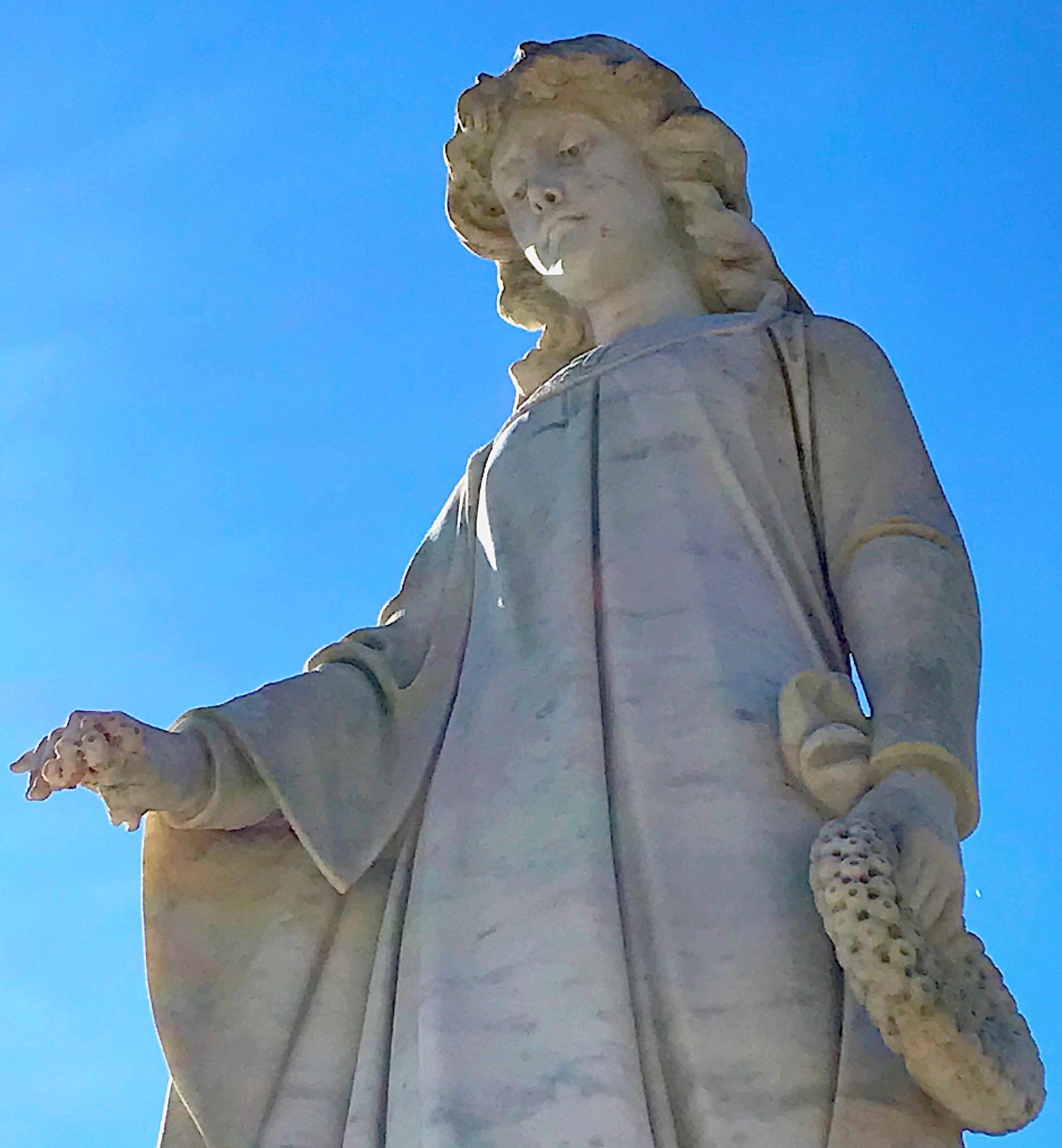
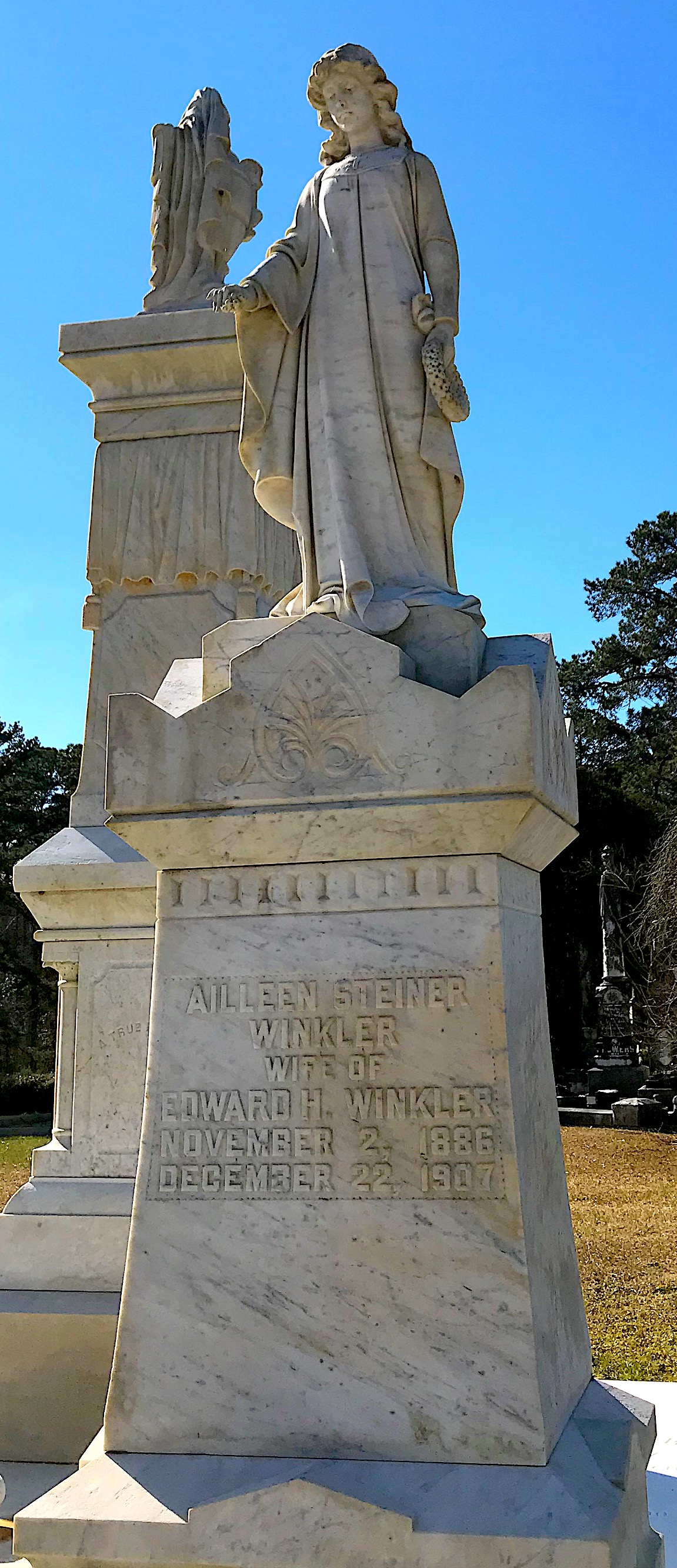
Born in 1886, Aileen Steiner was the granddaughter of Joseph Steiner and Margaret Mathilda Camp Steiner. You may remember them from Part I of my series. She’s buried behind them in the Steiner plot. Her father, Joseph Manning Steiner, Sr., was a prosperous merchant like his father.

On Dec. 12, 1906, Aileen married Edward Winkler, who worked in his father’s store. She was 20 and he was 25. The article written about their wedding mentioned it was the first one held in the “new Methodist Church” in Greenville. After the ceremony, the couple left on a train for a two-week honeymoon in New York and “other points of interest.”

Aileen Steiner Winkler died a few weeks after giving birth to her first child.

The date of December 8, 1907 was a happy one for the couple when their son Edward August Winkler was born.

But tragedy was lurking. During the evening of Dec. 21, 1907, Aileen suddenly became ill. Her obituary states that she seemed to improve but died at 3 a.m. the next day, “heart failure being the cause.” She probably died of postpartum cardiomyopathy. According to WebMD, it occurs in the last month of pregnancy or up to five months after delivery. It’s a type of congestive heart failure, which causes your heart to become larger than normal and weak. This decreases the amount of blood that your heart can pump. It is quite rare in the U.S. now and only 1,000 to 1,300 women develop this condition every year.

A full photo of Aileen Steiner Winkler’s monument.

Edward waited quite a while to remarry. On December 31, 1920, he married Louise Thagard, in Birmingham, Ala. They had three children together, all of whom lived to adulthood. His child with Aileen, Edward August Winkler, died at age 58 in 1966 in Montgomery, Ala. They are all buried in Magnolia Cemetery.

“Remember the Days of Thy Creator”

The last person I’m going to talk about at Magnolia Cemetery is not a woman, a bride, or even Caucasian. He also lived a much longer life than they did.

The Rev. Frank W. Ward is buried in what was probably referred to back in the day as (and I say this with no pleasure) the “negro area” of the cemetery. There are parts of Magnolia that were not connected as they are now. Many of the graves around Rev. Ward’s are fairly recent.

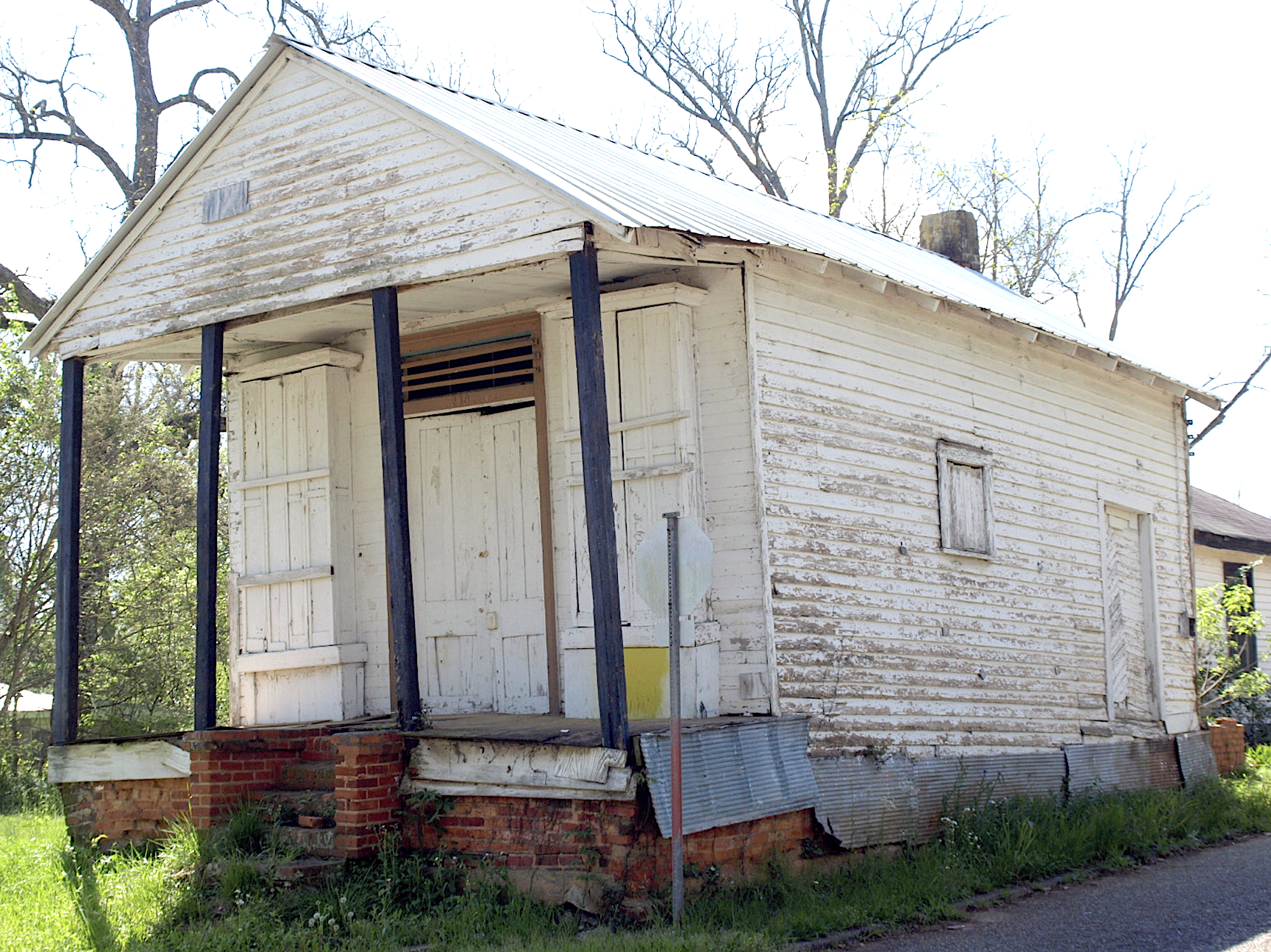
Rev. Ward’s monument is the only grave marker of its kind I have seen in the Southeast for an African-American pastor and frankly, it caught me by surprise when I saw it. But as I read about him, it made sense. He was not only a beloved pastor, Rev. Ward was a valued businessman in the Greenville community.

The Rev. Frank Ward was a prominent AME Zion pastor but was best known for his Greenville store.

Rev. Ward’s monument states he was born in 1857. His parents were probably slaves. He was a prominent AME (African Methodist Episcopal) Zion pastor in Alabama but was also well known in Greenville for his store. He purchased the land for it in 1884 from Patrick and Sarah Pryor. That cannot have been an easy feat during that era.

I found this information in the application to make Frank Ward’s Corner Store (as it was known) a National Historic Site, which it did become:

Although Ward is best remembered as the proprietor of this small neighborhood grocery store which he opened (around) 1885, he was also recognized as one of the leading AME Zion ministers actively involved in stimulating the growth of the denomination of the East Alabama Conference between 1881 and 1892.

Ward successfully combined his professional activities as a minister with this business pursuit and by the turn of the century, conducted an impressive business evidenced in the handsome residence situated behind the store, his imposing grave site in Magnolia Cemetery, and a lengthy obituary attesting to his prominent and modest economic achievements.

The inscription on Rev. Ward’s monument is from Ecclesiastes 12:1.

Rev. Ward’s health declined steadily in 1924. He was preaching a sermon on Feb. 22, 1925 when he had a stroke in the pulpit and passed away the following day. The only obituary I could find about Rev. Ward was not lengthy but it was probably more than most African-Americans could expect to read in a Southern newspaper in 1925. Some of the wording makes me wince, especially the mention of him being a “good negro”.

Rev. Ward had a stroke while preaching a sermon and died the next day.
This is what Fred Ward’s Corner Store looks like today. I’m not sure when the picture was taken. (Photo Source: https://theclio.com/entry/124357)

After Rev. Ward’s death, his wife, Sallie, took over running the store. She passed away in 1930 and is buried beside Frank. Oddly, her marker says her birth date was 1873 and the death date is empty. Since she married Rev. Ward in 1877, that is impossible so there must have been a carving error.

The Ward property was purchased by Nobie Price, who also operated a neighborhood grocery store there. The building was leased out during the 1960s and known for its weekend fish fries. As far as I know, the building remains in the ownership of the Price family. It is a reminder of one man’s efforts to preach the gospel while providing a valued community center for his neighbors.

Saying Goodbye to Greenville

My afternoon in Greenville, Ala. is one of the most moving in my cemetery hopping career. It was here I encountered some of the most amazing monuments (especially Abrams’ cast iron grave covers) and stories I have even encountered. There’s so much more that I didn’t even talk about in these eight blog posts.

This place became quite special to me. I’m so glad I stopped.

“Hours Fly, Flowers Die”: Discovering Greenville, Ala.’s Magnolia Cemetery, Part III

15 Friday Apr 2022

Posted by adventuresincemeteryhopping in General

≈ 6 Comments

I’m lingering at Greenville, Ala.’s Magnolia Cemetery a bit longer so you can take in some of the beauty and history I encountered while I was there. I don’t want you to miss anything, like the lovely monument for Zenobia “Nobie” McKenzie pictured below. She was only 19 when she died suddenly on April 29, 1893.

Monument to Zenobia “Nobie” McKenzie (1874-1893) who died suddenly at age 19.

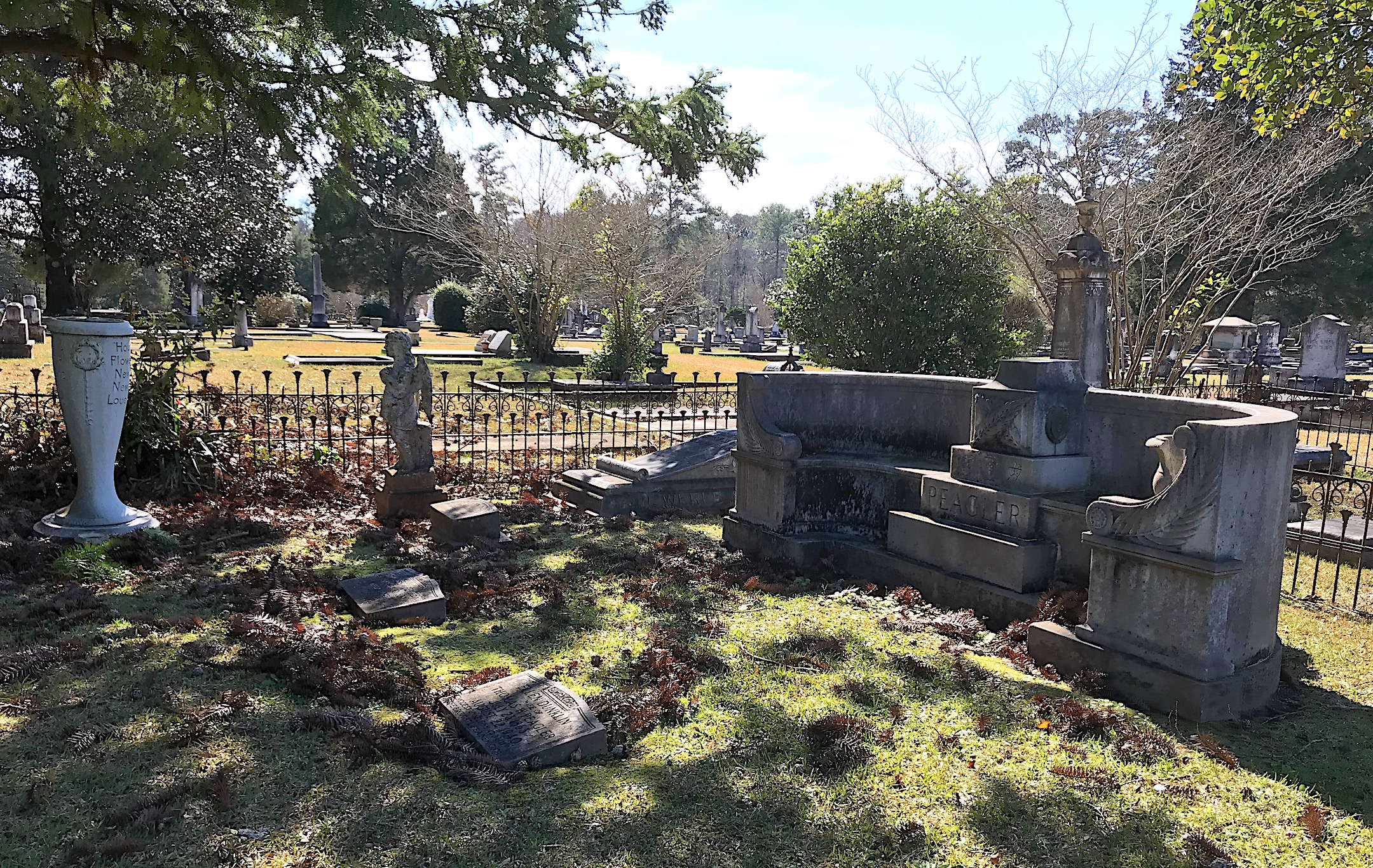
There are about 21 Peaglers buried at Magnolia Cemetery and I happened upon one of their family’s plots. It’s not one you’d find yourself immediately drawn to from across the cemetery as some are with towering monuments like Zenobia’s. And Magnolia has plenty of those. But there was something about this one that got my attention.

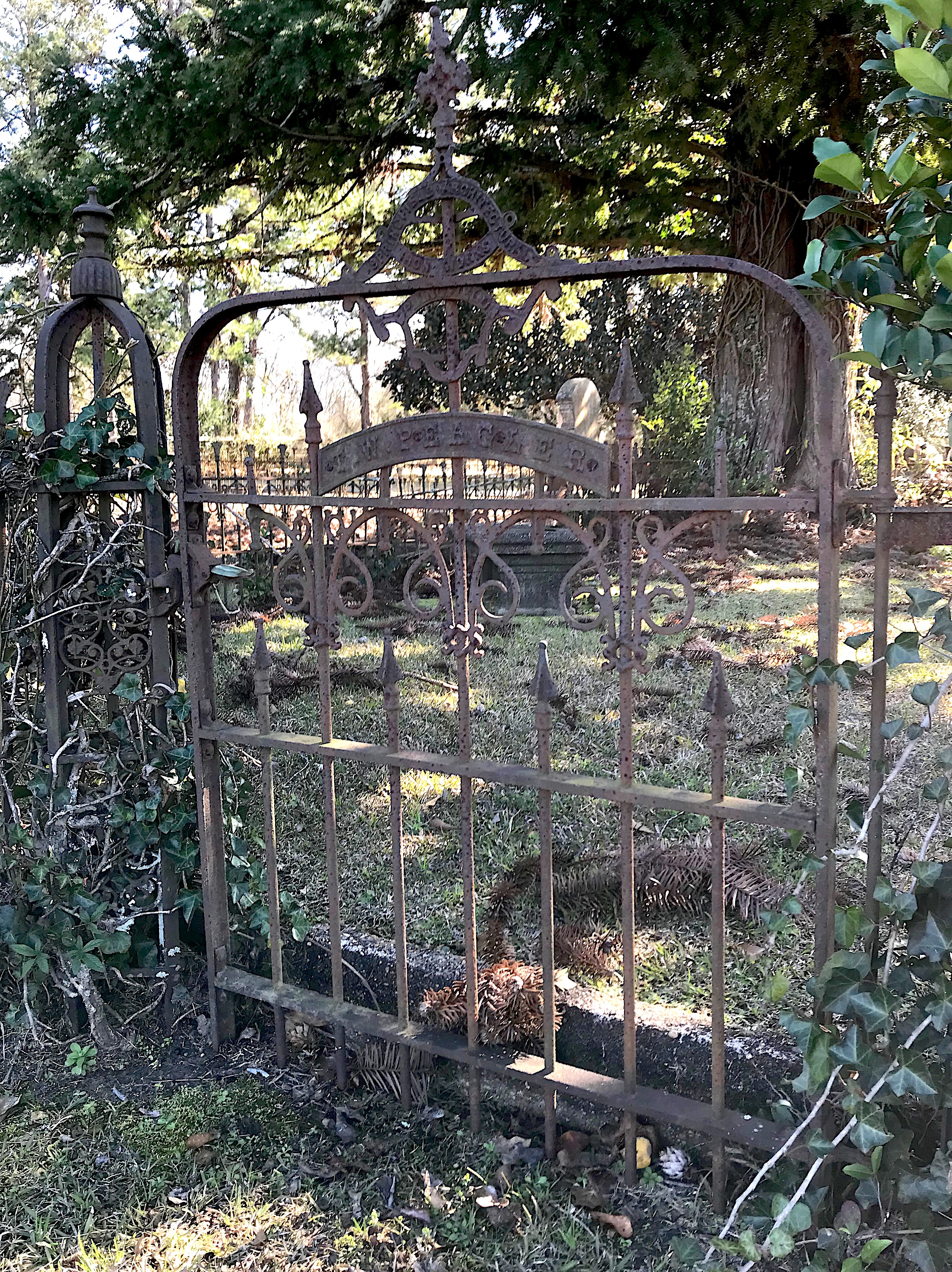
First, you have to enter through the iron gate. It’s a lovely specimen produced by the Springfield Architectural Iron Works of Springfield, Ohio. I found a copy of their catalog from the late 1880s and while I couldn’t find an exact match, their was one that had a similar look to it.

Here’s the Peagler gate:

This is the T.W. Peagler family plot. Welcome!

Here’s a gate I found in the SAIW catalog from 1889. The Peagler gate is not exactly the same but it’s pretty close.

From the Springfield Architectural Iron Works 1889 catalog.

If you open the gate and step inside, you’ll find a rather inviting scene. But before you get too comfortable, take a look at the fence. Notice the little flowers on top? They look awfully similar to the ones in the catalog illustration, don’t they? So why doesn’t the gate have them? It’s a mystery.

You can sit down and enjoy the quiet of the cemetery in the Peagler plot.

The initials on the gate are for T.W. Peagler, Thomas William Peagler (1859-1921). He likely bought the plot. He and his older brother, Gideon (1847-1931), are the two main people buried in the plot so you’ll be hearing a lot about them.

Thomas Peagler: Druggist and Banking Executive

Thomas and Gideon were the sons of George S. Peagler and Absilla Thigpen. Brother Thomas was born in 1859. He was often referred to as “Major Peagler” but that was due to his membership in the local militia and National Guard unit, not a rank he earned while serving in the military during any war.

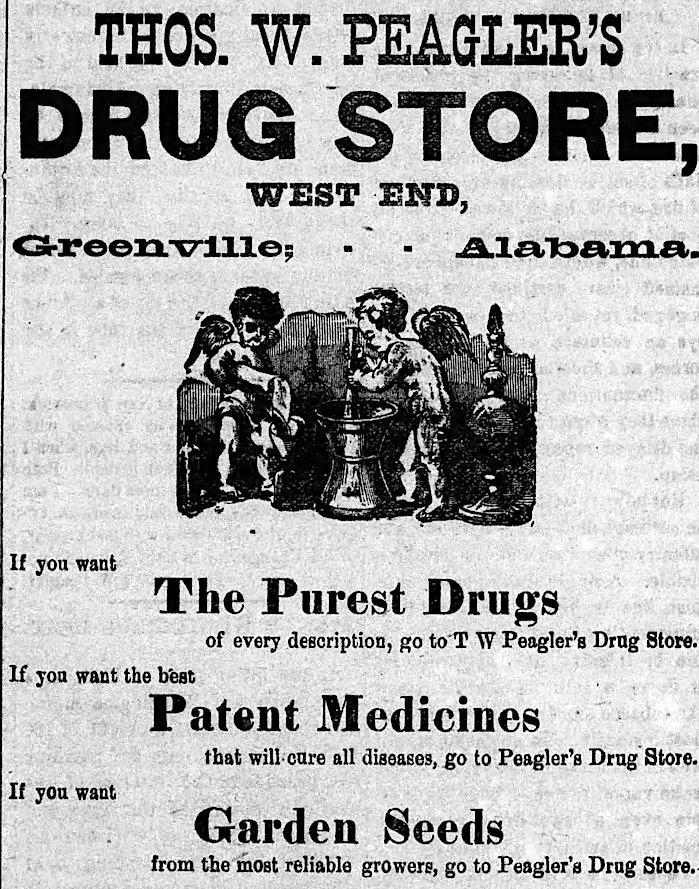
This is just a fragment of the ad for Thomas W. Peagler’s drug store in Greenville, Ala. He sold everything under the sun. (Photo source: Greenville Advocate, March 4, 1891).

A druggist by training, Thomas eventually owned and operated his own drug store in Greenville. He also got into banking and railroads, becoming the first vice president of the Bank of Greenville. Like most civically-minded Greenville businessmen, he was active in the Masons, Knights of Pythias, Knights Templar, and Woodmen of the World.

Thomas Peagler was active in several Greenville civic organizations.

Thomas married Ellen Reid Dunklin in 1882, a surname you’ll remember from nearby Pioneer Cemetery. They would have four children, three of which lived to adulthood.

Buried in the back corner of the plot is Thomas and Ellen’s oldest son, Walter Werle Peagler. Born in 1883, Werle was a graduate of the Alabama Polytechnic Institute (which became Auburn University). He married Gladys Williams in March 1917, working as an assistant cashier at the Bank of Greenville.

Unfortunately, Werle became Greenville’s first victim of the Spanish Flu. He died at age 37 on Oct. 19, 1918. Gladys, who never remarried, is buried in another area of Magnolia Cemetery. It had to have broken his parents’ hearts when he died.

“Called By the Grim Reaper”

In April 1921, Thomas became ill and traveled to Montgomery for an operation. He died shortly thereafter on April 22, 1921. He was 62 years old.

Thomas Peagler passed away after an operation on April 22, 1921.

Also buried in the Peagler plot is one of Thomas and Ellen’s grandchildren. Their daughter, Myra, married widower William Blackwell in 1921. Their daughter, whom they named Myra, was born and died on Feb. 26, 1926.

Thomas and Ellen’s granddaughter, Myra, was born and died on Feb. 26, 1926.

Tragedy would strike William and Myra again on April 30, 1949 when their other child, Thomas Peagler Blackwell, died after a long illness at the age of 17. He is buried with them in another plot at Magnolia.

“Hours Fly, Flowers Die”

Thomas Peagler’s older brother, Gideon, was born in 1847 and would leave the University of Alabama to fight in the Civil War, earning a pension in his later years. While Thomas was often called “Major Peagler”, Gideon was referred to as “Colonel Peagler” in a number of newspaper articles I found.

Gideon never married but went into the lumber business with a brother-in-law W.H. Flowers and earned his fortune that way. He was active in the Knights of Pythias like Thomas. In the later decades of his life, he lived with Thomas and his family and it was a happy arrangement for all concerned. Gideon continued to live with his brother’s family after Thomas died in 1921.

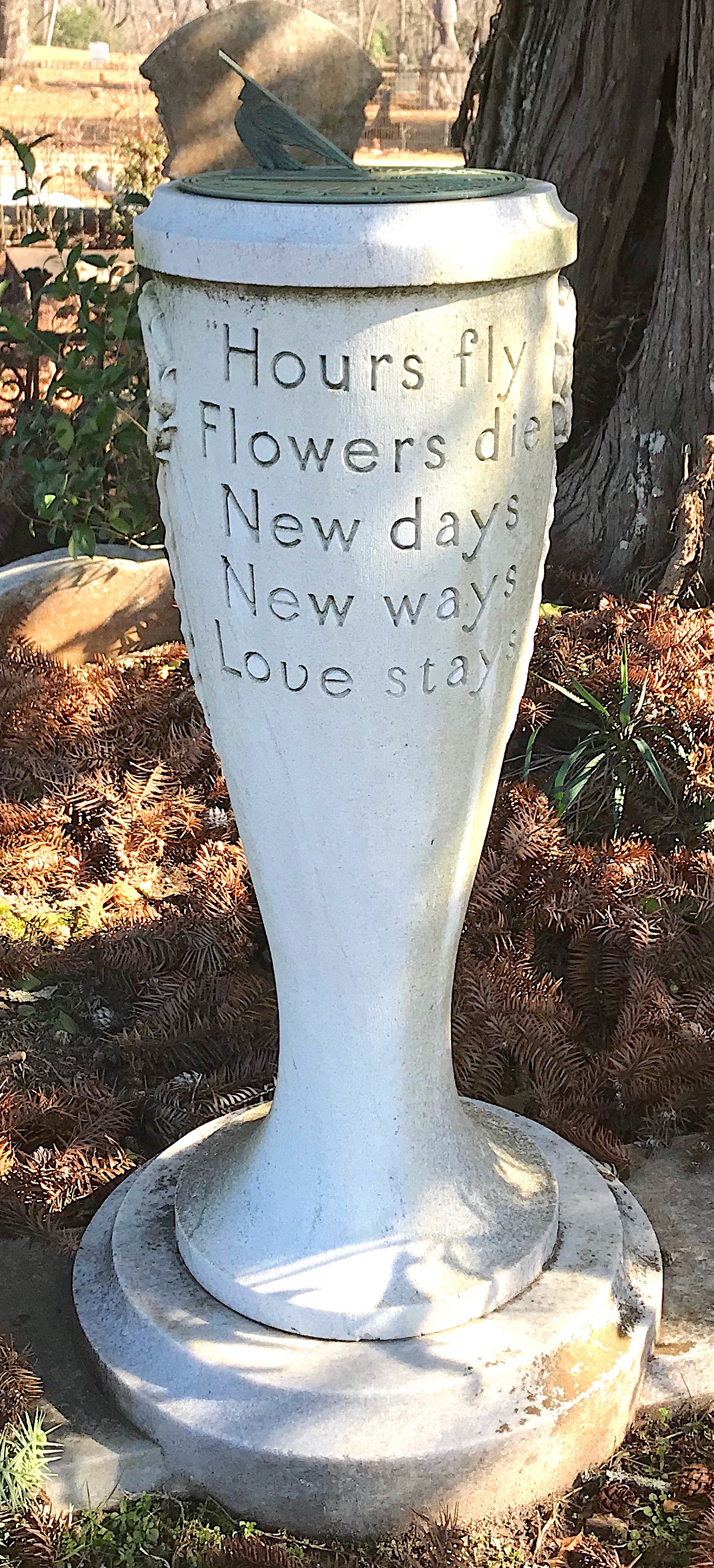
On April 30, 1931, Gideon died after a year-long illness. His grave marker is actually a sundial, which is something I encounter from time to time. But I’ve never seen one quite like this, especially with part of a poem inscribed on the side.

Gideon Peagler’s grave marker is a sundial.

The inscription on his sundial was part of a poem called “Inscription for Kartina’s Sun-Dial” written by Henry Van Dyke in 1920.

Hours fly,
Flowers die
New days,
New ways,
Pass by.
Love stays.

*****

Time is
Too Slow for those who Wait,
Too Swift for those who Fear,
Too Long for those who Grieve,
Too Short for those who Rejoice;
But for those who Love,
Time is not.

I do wonder if Gideon had a hand in planning his own marker before he died, it is such an unusual but wonderful memorial piece. I wonder if this poem was a favorite of his or if his beloved nieces and nephews decided on it together. His will is a testament to his love for them as each one received an equal portion of his estate, along with money set aside for Ellen, Thomas’ widow.

Ellen died on Aug. 22, 1940 at age 77. She is buried beside Thomas.

Ellen Peagler lived another 19 years after her husband died.

By contrast, the monument to Gideon and Thomas’ sister, Sophronia, is quite ornate by comparison.

Sophronia was born in 1849, a few years after Gideon. She married William M. Flowers, a local merchant, in 1868. They would have five children together. You might recall I mentioned earlier that William and Gideon pursued a number of business ventures together.

In checking the 1880 U.S. Census, I saw that William is noted for having “billious fever” while Sophronia was suffering from “nervous dibility”. I had seen “billious fever” before but not “nervous dibility”. Apparently, that could mean being poor in strength or even having depression.

Sophronia Peagler Flowers’ monument is much grander than her brothers’ grave markers.

Sophronia died on March 20, 1888 at age 38. According to her death notice, she has been suffering from a painful and lingering illness for several months. William Flowers did not remarry but died at age 64 on April 29, 1907. He is buried beside her.

Perhaps it was a good thing that Sophronia and William were not alive to endure the deaths of two of their sons in one year. Both were away from Greenville when they died. George, 42, had been staying in Atlanta seeking treatment for an illness when he died. His sister, Kate, and teen daughter, Mildred, were at his side before he died on April 29, 1913. Walter, 35, was in Mobile, Ala. on business when he suddenly became ill and died on July 31, 1913. He left behind a widow and young child. The brothers were both brought home for burial at Magnolia Cemetery.

“We Live In Deeds, Not Years”

I noticed that William and Sophronia’s daughter, Kate, had married Dr. L.V. Stabler after her first husband, J.F. Johnson, died in 1911. Dr. Stabler operated an infirmary in Greenville for many years and it was where her uncle, Gideon Johnson, had passed away in 1931.

Katie Flowers Johnson Stabler is buried with her first husband, John F. Johnson.

Kate died at age 61 in 1937 and is buried with her first husband, John F. Johnson. Between their names are inscribed the words “We Live in Deeds, Not in Years”.

Another daughter of William and Sophronia Flowers is buried near the Abrams family plot. Born in 1869, Abbie married lumber merchant Oscar Richardson Porter in 1889. He was the grandson of Judge B.F. Porter, whom I mentioned in my posts about Pioneer Cemetery. The couple had two children together, Oscar Jr. and Kate (possibly named after her sister). An infant, James, did after three months in 1896. At some point, Oscar was mayor of Greenville.

Abbie Flowers Porter was almost the same age as her mother, Sophronia, when she died in 1910.

In a sad mirroring of her mother’s life, Abbie became in invalid in the last year of her life. She died the day after Christmas in 1911 at age 41. Her daughter, Kate Porter Lewis grew up to become an accomplished writer.

I’m not sure if I’m ready to leave Magnolia Cemetery just yet. I may have a Part IV left to write. Stay tuned.

Grave Covers Revisited: Discovering Greenville, Ala.’s Magnolia Cemetery, Part II

01 Friday Apr 2022

Posted by adventuresincemeteryhopping in General

≈ Leave a comment

Last week, I introduced you to Magnolia Cemetery in Greenville, Ala. One of the many reasons I put this cemetery on my bucket list years ago was because a special man is buried here: Joseph R. Abrams. He is one of the first people to patent a cast iron grave cover as a way to protect a grave. This week, I’m doing a deeper dive on these and you won’t believe what I found.

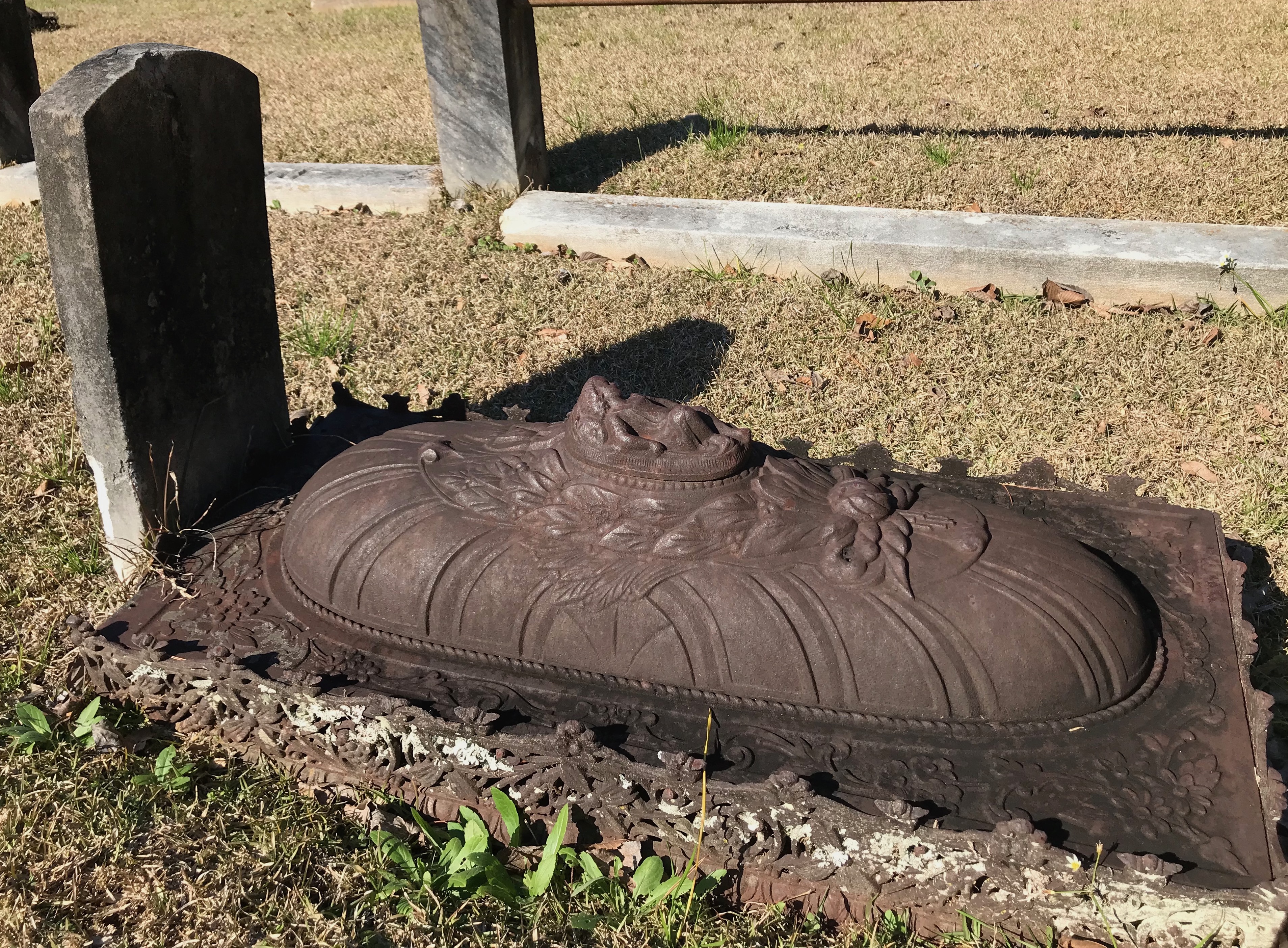
This is just one of several cast iron grave covers I saw at Magnolia Cemetery. I’m not sure what the white coating is on it but I’ve seen it on a few others over the years.

Because the name plate on the back is now gone, the identity of the person buried here is unknown. It is located by Charles and Elizabeth Warley’s graves, so it may be a child of theirs who died young.

I first wrote about Abrams’ grave covers in January 2015. He’s not the first person to come up with this idea. There were a few before him and even a few after. But his cast iron grave covers are the ones most frequently seen in Southern cemeteries and were patented in the early 1870s.

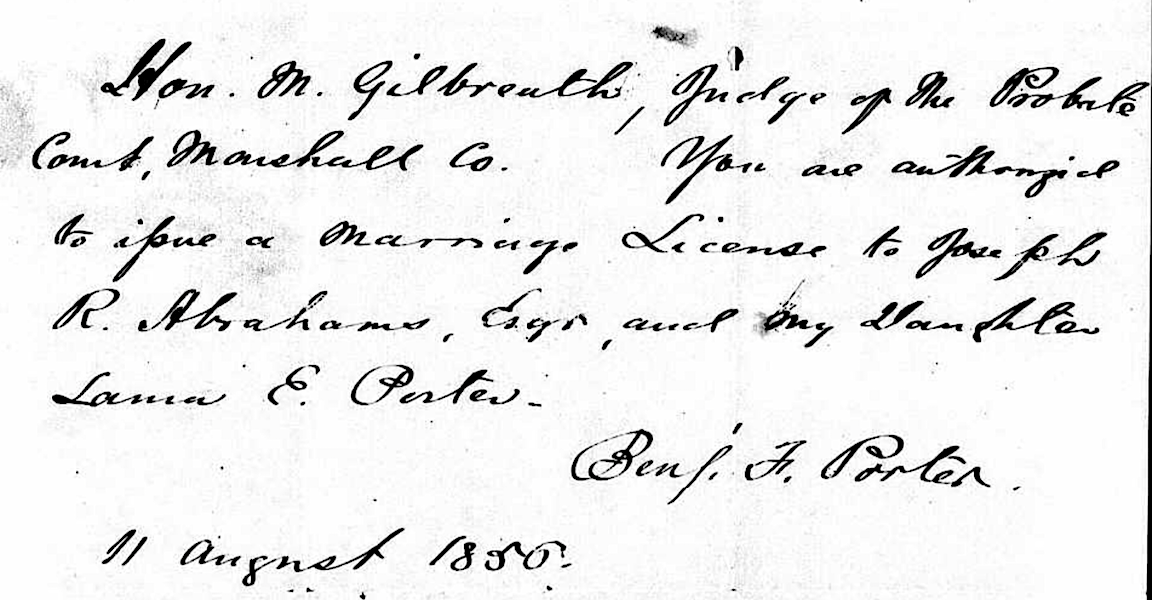
As I shared in an earlier post about Pioneer Cemetery, civil engineer Joseph R. Abrams was a native of South Carolina and a graduate of the Citadel who married Laura Porter in 1856 in Marshall County, Ala. Her father, Benjamin Faneuil Porter, was a physician before becoming an attorney then a prominent Greenville, Ala. judge. In fact, he ordered his daughter’s marriage license to her future husband, as this note I found on Ancestry.com reveals. He misspelled his future son-in-law’s last name, too (Abrahams instead of Abrams).

It’s not every day your father can demand the local judge of the probate authorize your marriage license, but Laura Porter’s father did in 1856.

Over the years, Joseph and Laura had at least six children together. Joseph worked as a railroad contractor at one point but in later years, sold fire insurance. All the while, he was inventing new things and having them patented. His cast iron grave cover was just one of many.

The Abrams family lived in this home on 201 Herbert Street after purchasing it in 1863 for $4,000. It remained in the family until 1904 (after Joseph and Laura died) by their daughter Kate Abrams Persons, who gave birth to future Alabama Gov. Seth Gordon Persons in 1902. Kate sold it to Laura B. Knight, who had it until 1939. The home was designated an Alabama landmark in the 1970s and while not currently on the market, it looks like it will take much TLC to renovate and restore.

The Abrams family lived in this home from 1863 until after Laura Abrams’ death in 1903. Her daughter, Kate, married Alabama Gov. Gordon Persons.

Was the Meley Patent Grave Mound a Shell Grave?

With this round of research on Joseph R. Abrams, I uncovered a startling bit of new information. An article from June 12, 1873 refers to Abrams’ connection to marketing a Meley “grave mound”, a term I’d never heard of before.

When I looked it up, I found a 1868 patent by a man from Trenton, Tenn. named Jonathan Meley who had patented his own “grave mound”. But Meley was using seashells! Does that sound familiar? You might remember there are several such graves at Pioneer Cemetery and a few are at Magnolia as well. Here’s a photo of one of them.

Could this be a Meley grave mound? It’s at Magnolia Cemetery.

Take a look at this ad in the Aug. 1, 1872 Eufaula Weekly News. It mentions that these Meley grave mounds can be found in Greenville and Troy cemeteries. I found similar ads in 1870s newspapers in other Alabama cities, along with more in Mississippi and even Galveston, Texas.

The description in this ad sounds like typical shell grave.

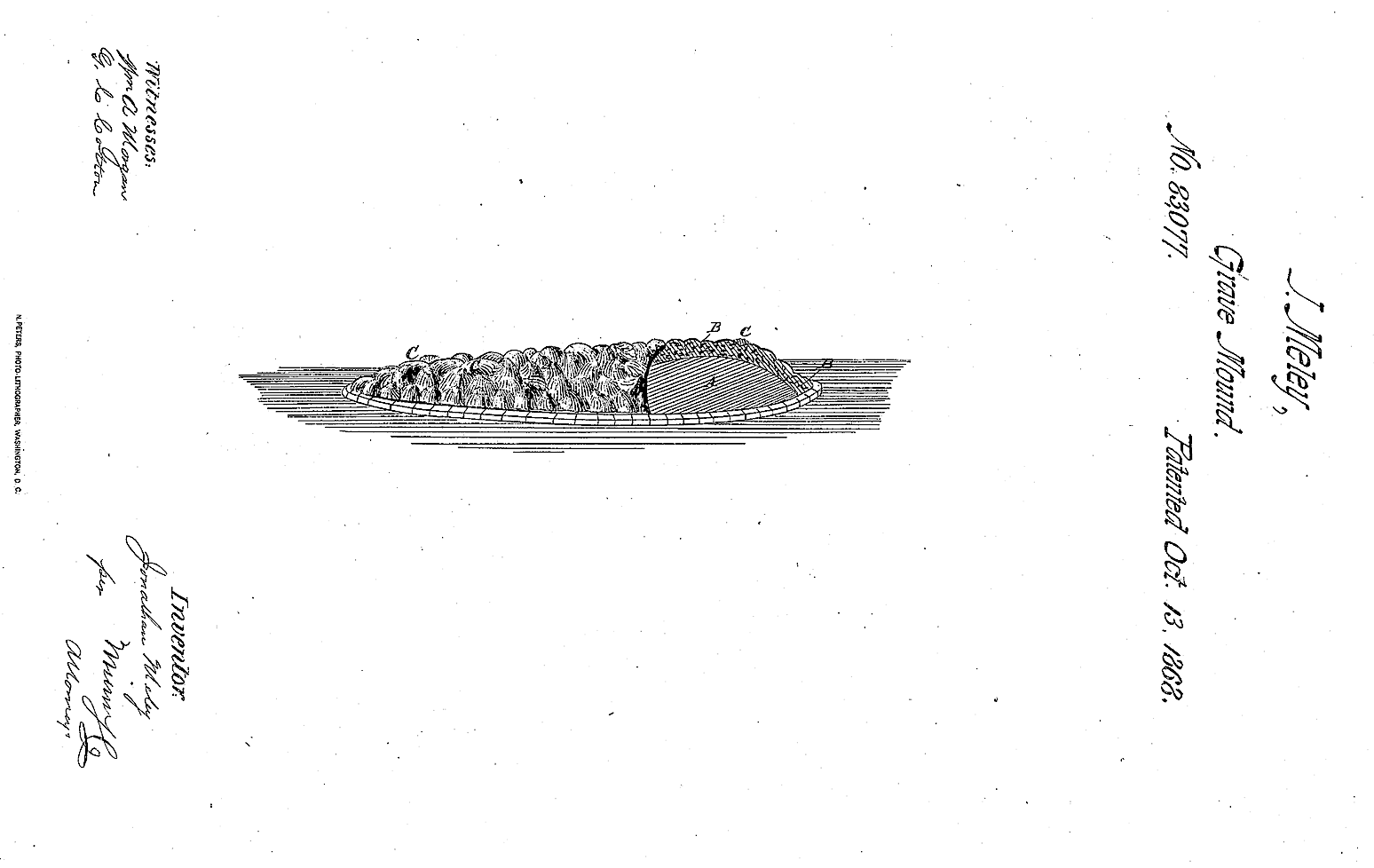
I even found a drawing of the Meley grave mound in the patent he submitted in 1868. It may very well be that Meley had a hand in providing many of the shell graves I’ve seen scattered across Alabama. Maybe they weren’t just randomly made after all. I’ve posted it on its side so you can get a better idea of what it looks like flat on the ground.

The 1868 patent drawing for Jonathan Meley’s grave mound looks like a lot of the shell graves I’ve seen over the years.

From Shells to Cast Iron

According to another article I found from 1872, Joseph Abrams had been promoting the Meley grave mounds but was leaving Greenville for a time to market his own new invention, the cast iron grave cover. Unlike Meley, Abrams took the grave mound covering idea to a new level by replacing a mound of cement-bonded sea shells with a longer-lasting cast iron cover with the goal of providing protection for the grave mound.

It’s my belief that Meley’s 1868 invention inspired intrepid inventor Joseph Abrams to go one step further. I think it’s fascinating that Abrams knew all about shell graves, was promoting them in the state, then got into the “grave cover” game himself.

Take a look at this list of patents I found. Both Abrams and Meley are listed.

You can clearly see both J.R. Abrams and J. Meley listed for their different patents.

Abrams was in business with a gentleman named Dr. J.P. Amerine (who is also buried at Mangolia Cemetery) to sell his grave covers. I found a few 1873 articles promoting their enterprise. I don’t know where they had them made but it’s possible manufacturing took place in Birmingham or nearby Montgomery.

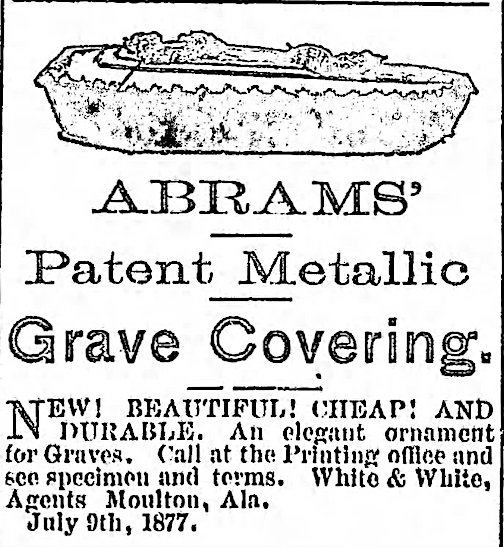
This time when I took a look on Newspapers.com, I found ads for Abrams “metallic grave covers” in several newspapers. Here’s one in the Moulton (Ala.) Advertiser from July 25, 1878. You cannot imagine how excited I was to finally find an ad for one! It’s further proof that Abrams contracted with agents in various states to sell his invention during the 1870s.

It may not seem like much but this ad in the July 25, 1878 Moulton (Ala.) Advertiser made my day.

Despite his efforts, I don’t think Abrams made much money from selling his grave covers. Dr. Amerine died in 1876. In the years to come, most of the news I found about Abrams concerned his civic involvement in Greenville and his thriving insurance business.

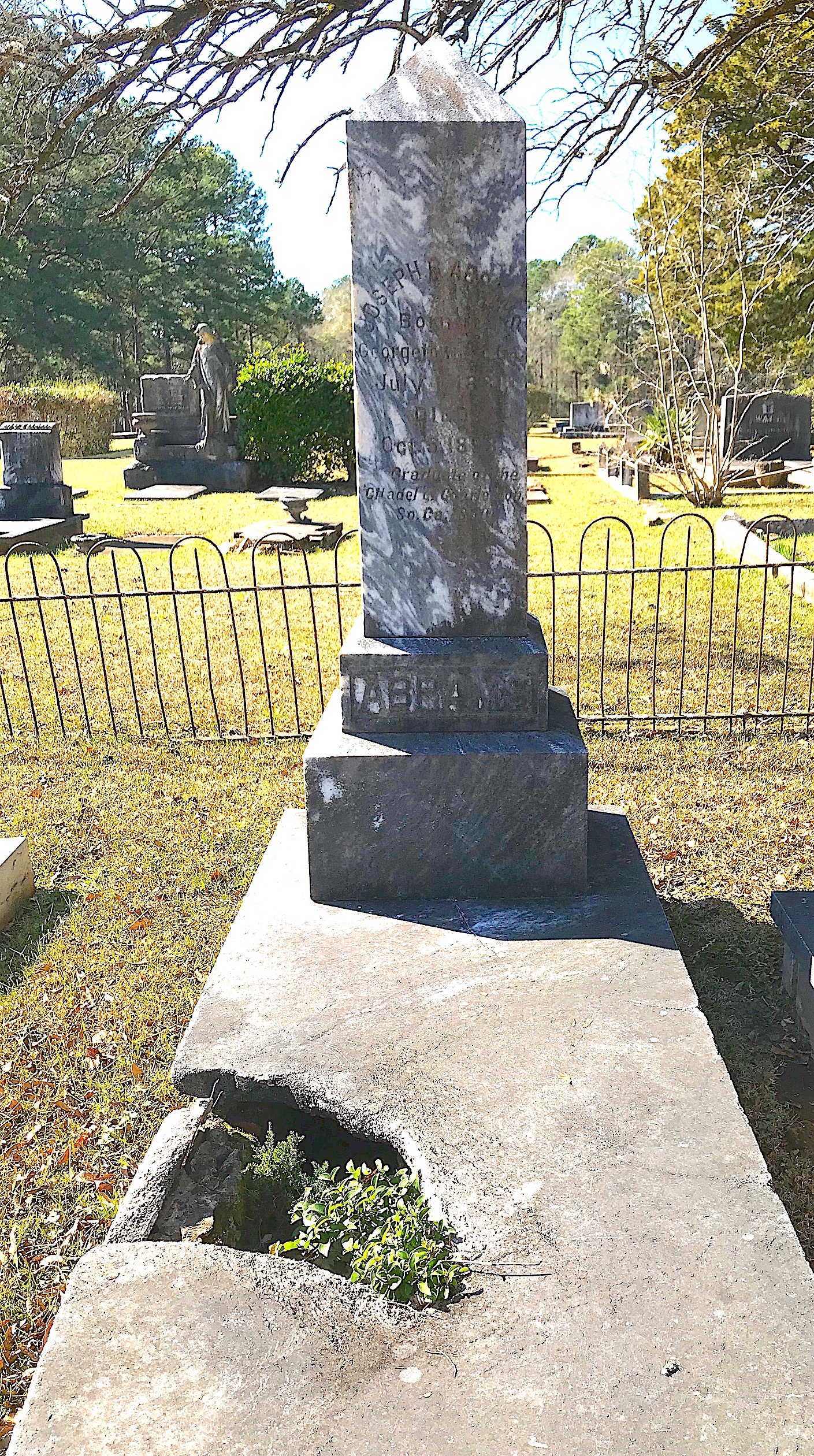
Joseph Abrams died at the age of 62 on Oct. 5, 1893. Laura died 10 years later in 1903. I was very curious to see if any of the Abrams family had a cast iron grave cover but none buried in the plot did. Since the earliest death in the plot is for Joseph in 1893, it’s my guess they simply didn’t make them any longer.

You’ll notice there are no cast iron grave covers in the Abrams family plot.

Joseph and Laura are buried with two of their daughters. Lida Abrams Moody died at 44 in Ocala, Fla. in March 1900. Her sister, Dixie Abrams Howard, died five years later in 1905 at age 45. Dixie’s daughter, Kate Abrams Howard, never married and died in 1953. She is buried beside her mother. Their oldest child, Benjamin H. Abrams, was an insurance agent like his father and died in 1910 at age 53 in Atlanta, Ga. and is buried in Westview Cemetery.

Joseph R. Abrams’ monument notes that he was a graduate of the Citadel in Charleston.S.C. The slab the covers his box grave is broken.

The Short Life of Sidney Johnson

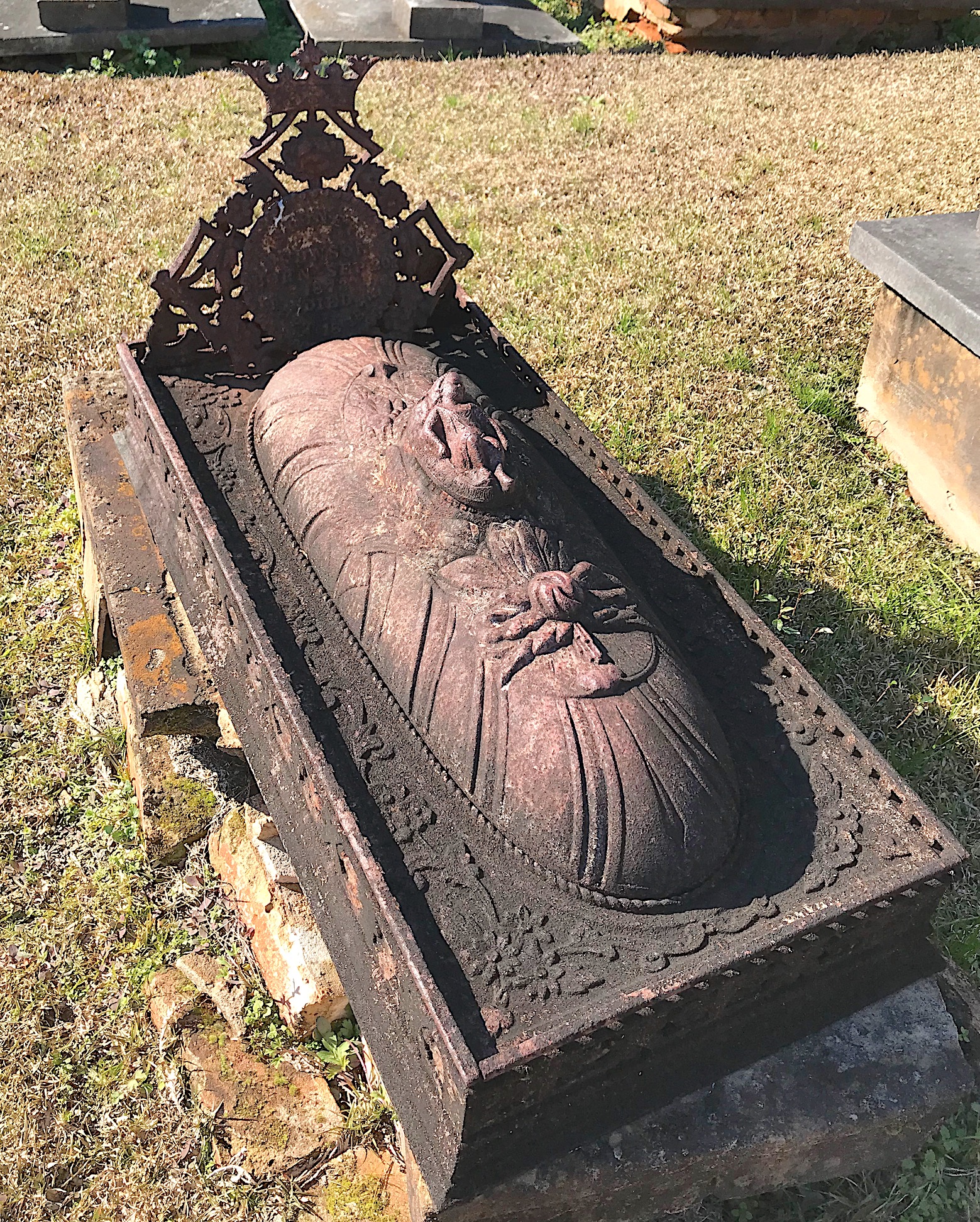
Near the Abrams family plot is a nice specimen of an Abrams grave cover. You may remember last week that I featured Jake McGeHee, a Greenville merchant. His nephew, son of his sister Emily McGeHee Johnson, was Sidney Johnson. Sidney was born on Sept. 20, 1873 and died almost a year later on Sept. 18, 1874.

Sidney Johnson almost made it to his first birthday
when he died on Sept. 18, 1874.

Although Sidney’s nameplate did break off, it is still with the grave so we know that it’s his grave.

It’s rare to find a nameplate still intact with an Abrams grave cover.

“Her Pure Spirit Has Gone to Rest”

This cast iron grave cover I wanted to share with you is probably the nicest one in the cemetery. At first, I thought it was for one individual but it appears that Callie is probably not alone.

Born on 18, 1853, Callie was the daughter of Comer Watts Knight and Catherine Priscilla Reid Knight. On Nov. 18, 1872, at age 19, she married Greenville druggist Robert Payne. She gave birth to a baby on Oct. 4, 1874 and died a few hours later. According to her death notice, the child died the following day. I believe they are buried together.

Callie Knight Payne, 21, died only a few hours after the birth of her child in 1874.

The finial to the top of Calliei’s grave cover is missing. I suspect it was a shell. But her nameplate is still attached to her grave cover.

Callie was married almost two years when she died.

I learned that there was a good reason Callie has a cast iron grave cover. Her husband, Robert Payne, sold them at his drugstore in Greenville. Take a look at the ad I found in the Aug. 24, 1876 Greenville Advocate. Note that it mentions that they are “offered at prices that bring them within the reach of the poorest.”

Robert Payne, a Greenville druggist, bought one of Abrams grave covers he sold for his wife and child when they died in 1874.

A Life Cut Short

The last cast iron grave cover I’m going to share is for a child. We don’t know Lilly Perdue’s exact birthday but the stone marker that backs up to her grave cover states she was nine months old when she died on Sept. 14, 1870. She was the daughter of Greenville sheriff James H. Perdue and Jane Franklin Perdue.

Lilly’s father was a sheriff in Greenville, Ala.

On the other side of the marker is Lilly’s grave cover. Note that she died in 1870. This was before Abrams had officially patented his cast iron grave cover. I think the Johnsons likely purchased the cover a few years after she died and placed it over her grave. I’ve found this to be the case at other cemeteries even after burials in the late 1860s.

Lilly Johnson’s cast iron grave cover was likely added a few years after her death in 1870.

There’s still quite a bit of Magnolia Cemetery you haven’t seen yet. I’ll have more in Part III.

“Shed Not For Me the Bitter Tear”: Discovering Greenville, Ala.’s Magnolia Cemetery, Part I

25 Friday Mar 2022

Posted by adventuresincemeteryhopping in General

≈ 8 Comments

I’ve left Greenville, Ala.’s Pioneer Cemetery to travel just a half mile down the road to nearby Magnolia Cemetery. It’s much larger than Pioneer and recently became active again. According to Find a Grave, Magnolia has close to 4,900 memorials recorded but I suspect there are many more there than that.

It’s not surprising to see a huge magnolia tree just inside the gates of Magnolia Cemetery.

The history of Magnolia Cemetery is a bit complicated. From what I could figure out, Magnolia opened in the 1870s after Pioneer filled up. A small burial ground called Pine Crest Cemetery was adjacent to it that opened in the 1920s. By the 1940s, Magnolia was expanded and Pine Crest was incorporated into Magnolia, dropping the Pine Crest name. If someone has a correction to that timeline, please let me know because I have read a few different accounts.

Sales of plots at Magnolia Cemetery stopped in 1992 when they ran out of space. However, a 2017 article reported that work completed to fix storm drain issues across Alabama Highway 10 and through Magnolia Cemetery enabled Greenville to offer new burial spaces for the first time in more than 20 years.

The Perry Family

After locating what always attracts me the most, the older part of the cemetery, I noticed a row of monuments clustered together and surrounded by some brickwork. So I photographed those first, hoping to do the research on them later.

The Perry/Dohrmeier plot as it looks today. This is the photo I took with a back view of the monuments because the other side was in shadow.

Untangling the Perry/Dohrmeier plot took some doing, but some work done by others helped. Basically, it’s John T. Perry, his wife, one of his sisters, and his mother. Because the inscriptions are so worn, it took some detective work to transcribe them. Two of the monuments include anchors, which are often considered a symbol of hope.

The oldest monument is for Mary E. Perry (pictured below). She was born in 1804 in South Carolina and died on July 5, 1867 in Greenville, Ala. I’m not sure if her husband passed away before the move south.

Mary Perry’s monument is very hard to read.

On the other end of the row is Mary’s son, John T. (J.T.) Perry. He was born in 1833 in South Carolina. According to his obituary, the family moved to Greenville, Ala. when J.T. was “but a boy”. He married Polk County, Ala. native Armitta (or Arminta) Tomkins in 1871 when he was around 40 and she was 23. The couple had no children.

J.T. had his finger in many pies over the years, amassing quite a fortune. He went into the grocery business at one point with his sister Mahala’s husband, Herman Dohrmeier. Around 1879, J.T. built and opened the Perry House Hotel by the Greenville train depot. It included a bar, barber shop and billiard saloon. It was torn down in the 1970s. He also had interest in the local mill. At the time of his death, he was the mayor of Greenville.

J.T. Perry was kept busy with his hotel and other business interests.

Armitta died at age 39 on Sept. 26, 1886. Her obituary notes that she suffered from “congestion of the bowels” before she died. J.T.’s health declined after that and he died less than a year later on June 27, 1887 at the age of 54.

Because the couple had no children, J.T.’s death caused legal problems when it came time to administer his will. His three sisters (Mahala, Mary, and Martha) went to court to duke it out, which included a last-minute codicil and some cash found in a safe. Mahala expected to inherit a considerable chunk. By the time it went to court, she had married a gentleman with the last name Rothenhoffer and is listed as such in legal papers I read. There was also a nephew involved who wanted his share.

I tried to untangle the legal jargon and lengthy court proceedings but I never did figure out exactly who got what in the end. The case went all the way to the Alabama Supreme Court.

Mahela Isabella Perry Dohrmeier (Rothenhoffer?) died
in 1913 at age 68.

Mahala died on Jan. 19, 1913 at age 68 and her monument is between her brother, J.T., and her mother, Mary. Although she married Mr. Rothenhoffer after Herman Dohrmeir’s death in 1883, the 1910 U.S. Census lists her last name as Dohrmeier. Her monument has her last name as Dohrmeier and her obituary also lists her by that name. I’m not sure what happened to Mr. Rothenhoffer, so that’s one mystery I never did solve.

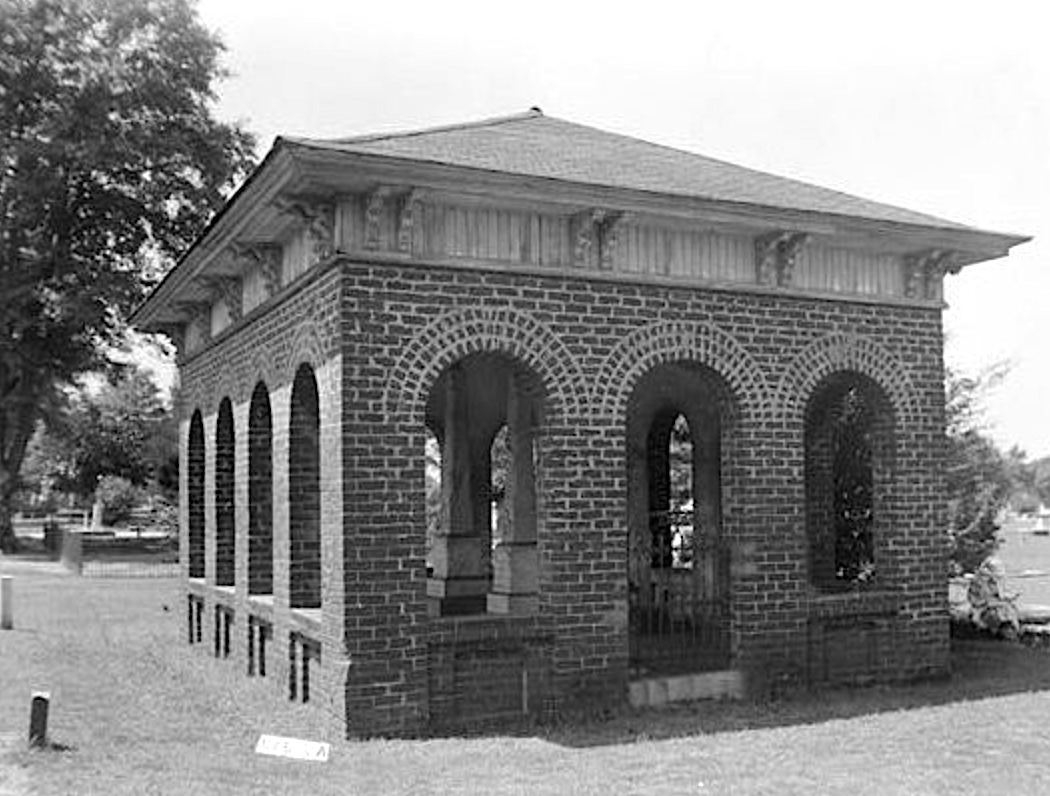
One tidbit you’ll find interesting is that at one time, there was a pavilion or “grave house” sheltering the Perry/Dohrmeier plot. This picture was taken by W. N. Manning on June 12, 1935. I guess over the years the structure collapsed and all that is left are the brick plot boundaries.

This interesting “grave house” or pavilion covered the Perry/Dohrmeier plot for many years. (Photo source: W.N. Manning, June 12, 1935)

“Shed Not For Me the Bitter Tear”

As I wandered over to a cluster of what appeared to be recently cleaned monuments, I saw this one for Bettie Steiner. It stood out to me for a number of reasons. The intricately carved profusion of flowers above the inscription was one of them.

According to a newspaper report of her death, Bettie Steiner was engaged to be married at the time of her death.

Born in 1850, Bettie was the eldest child of Joseph Steiner, a prosperous Greenville merchant and later a banker who emigrated from Austria as a young man, and Alabama native Margaret Mathilda Camp Steiner.

A Selma newspaper reported that Bettie’s death took place on July 26, 1870 and that she was supposedly engaged. It did not say to whom. She was only 20 when she died. Her touching epitaph is etched on the middle of the monument:

Shed not for me the bitter tear, Nor give the heart to vain regret, ‘Tis but the casket that lies here, the gem that filled it sparkles yet.

You might have noticed the carver’s mark on the bottom right of the monument. Does it look familiar at all?

The firm of McDonald, March & Co. of Mobile, Ala. carved Bettie Steiner’s stone.

Yes, that’s the mark of McDonald, March & Co. They carved the monument for the Dunklin children over at Pioneer Cemetery. You’ll notice, however, that they chose a different lettering style or “font” from the Dunklin one to use on Bettie’s monument.

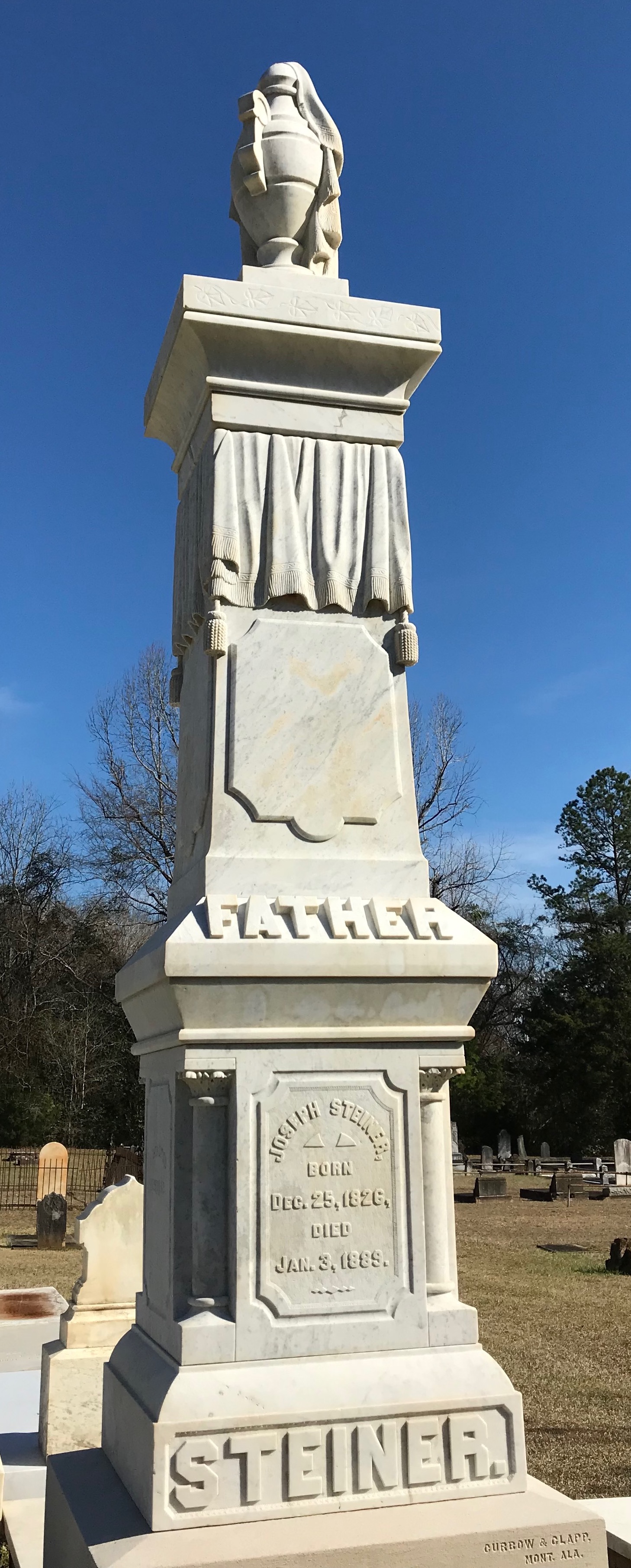
Bettie had at least four siblings who lived longer lives. Her father, Joseph Steiner, died on Jan. 3, 1889 from apoplexy after a few years of illness. His monument is quite grand.

Joseph Steiner died in 1889, 19 years after his daughter, Bettie.

You might think it was also done by McDonald, March & Co. but it wasn’t. Instead, Joseph Steiner’s monument is signed by Montgomery, Ala. firm Curbow & Clapp. By the time Joseph Steiner died in 1889, Daniel McDonald had already passed away.

The firm of Curbow & Clapp was based in Montgomery, Ala.

Curbow & Clapp was owned by Georgia-born Joseph A. Curbow and Avery L. Clapp. Joseph’s name may sound familiar to you. He took over H.W. Hitchcock’s marbleworks after he died in 1878.

Newspaper ads for their business state that the partnership began in 1850. The pair are probably best known for their involvement in the long process to create the large Confederate monument on Capitol Hill in Montgomery, Ala. They are sometimes given credit for the entire monument but it turns out they were brought in midway when communication between the Ladies Memorial Association (LMA) with designer/sculptor Alexander Doyle broke down. The story behind that monument’s creation is quite interesting.

An ad for Curbow & Clapp in the Feb. 16, 1887 edition of the Montgomery Advertiser.

Curbow & Clapp were so well regarded that Alabama Congressman Henry Washington Hilliard (1808-1892) specifically mentioned them in his will as the firm he wanted to provide his grave monument after he died. His will also stated he’d already designed what he wanted. As it happens, I unwittingly photographed it when I visited Oakwood Cemetery in Montgomery in February 2021 when I visited.

Alabama Congressman Henry W. Hilliard left instructions in his will for his monument to be carved by Curbow & Clapp for his grave at Montgomery’s Oakwood Cemetery.

Joseph A. Curbow died on Feb. 3, 1895 at age 58 and Avery Clapp died died the following year in 1896 at age 70. Both men are buried at Montgomery’s Oakwood Cemetery. I did not happen to photograph their graves while I was there but it’s possible I walked right past them.

Died on Valentine’s Day

Finally, I did solve a mystery that had plagued me since I photographed a small child’s grave that is near Bettie Steiner’s. There was no last name on it but the first name was so unique, I thought I had a chance of tracking him down. It was finding his death notice that solved the mystery.

Irby McGeHee died at the age of 15 months when he
died on Valentine’s Day in 1875

Bettie’s younger sister Mathilda Caroline “Callie” Steiner was born in 1852 and she married merchant Jacob “Jake” Abner McGeHee in 1871. On Sept. 17, 1873, she gave birth to a son they named Irby. I don’t think they had any other children. He died on Valentine’s Day in 1875, only 15 months old. His obituary details his short life.

From the Feb. 18, 1875 edition of the Greenville Advocate.

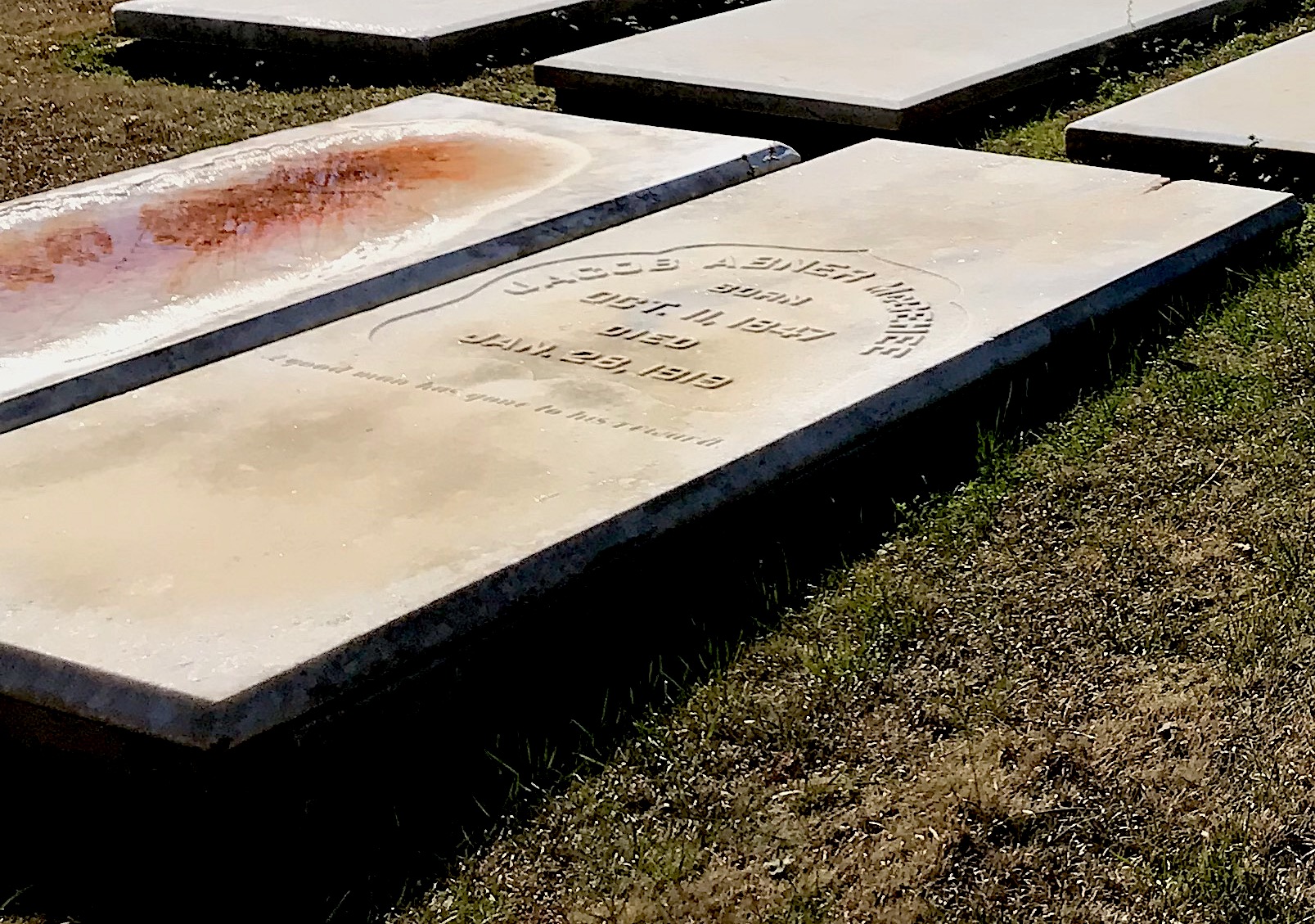
Callie died on July 4, 1901 and her death notice said she’d been an invalid for some time. She was 48. Jacob never remarried. He died on Jan. 28, 1919 at the home of his brother, William, at age 71. They are both buried in the Steiner plot close to Irby. I only got a photo of their graves as part of a larger picture I took of the family plot. I believe that is Callie’s grave to his left.

Jacob A. McGeHee did not remarry after the death of his wife, Callie, in 1901. I believe that is her grave to the left of his. Infant son Irby’s grave is near them.

Next time, I’ll be sharing some of the cast iron grave covers of Magnolia Cemetery and the grave of the man who patented them in the 1870s.

“Not Lost But Gone Forever”: Exploring Greenville, Ala.’s Pioneer Cemetery, Part IV

18 Friday Mar 2022

Posted by adventuresincemeteryhopping in General

≈ Leave a comment

Today I’m finishing up my series on Pioneer Cemetery in Greenville, Ala. by tying up some loose ends.

One thing I noticed as soon as I opened the gate of Pioneer Cemetery is the lone mausoleum on the property. It belongs to Walter Oliver Parmer (1855-1932) and his wife, Elizabeth “Lizzie” Dunklin Parmer. Her parents were James H. Dunklin and Abbie Reid Dunklin, whom I wrote about in one of my previous posts.

Although Walter O. Parmer and Lizzie Dunklin Parmer were both born in Greenville, they spent most of their marriage in Nashville, Tenn.

Born in 1855 to Dr. Clinton Dale Parmer and Eleanor Oliver Parmer in Greenville, Walter entered East Alabama Male College (now Auburn University) in 1871. In April 1873, before finishing his junior year, Walter returned home due to his father’s illness. He never completed his degree. Forty years after he left Auburn, the institution honored him with a diploma and membership in the alumni association.

On January 2, 1877, Walter married Lizzie Dunklin. During Reconstruction, Walter continued to produce cotton on the family farms but soon sold most of the family mercantile interests and cotton acreage. In 1883, he and Lizzie moved to Sumner County, Tenn., near Nashville where he bought the 107-acre Hughes place at Woodbine. He maintained his livestock, which included thoroughbred horses, until 1907.

Walter Parmer had many business interests, from thoroughbred horse breeding to banking to railroads.

That same year, Walter bought 600-acre Edenwold, an established thoroughbred breeding farm. In the meantime, he leased 400 acres of Belle Meade Plantation on the west side of Nashville, where the best thoroughbreds were stabled. Later, he would purchase Belle Meade and 24 adjoining acres from Colonel Luke Lea at a public auction in May 1916 for $55,000. When I lived in Nashville from 2003 to 2005, I visited Belle Meade (now a museum and winery) and it is indeed a beautiful place.

The Parmers purchased Nashville’s Belle Meade Plantation in 1916 for $55,000.

The Parmers’ philanthropic efforts are too numerous to list but they were especially devoted to education. The Parmer Elementary School in Belle Meade was constructed on land given by Parmer to the Davidson County Schools in 1925. The brick school building, opened in 1928, was in use until 1982. All that remains of the school after a 1985 fire is a brick archway.

But the Parmers still had a special place in their hearts for their hometown of Greenville. In 1925, Parmer announced that in his will he was providing a scholarship fund of $500,000, to be used perpetually as an educational trust for Butler County boys to become available upon the death of his wife. From school year 1936-37 to school year 2008-2009, more than 400 students have been selected as recipients of the Walter O. Parmer Scholarship.

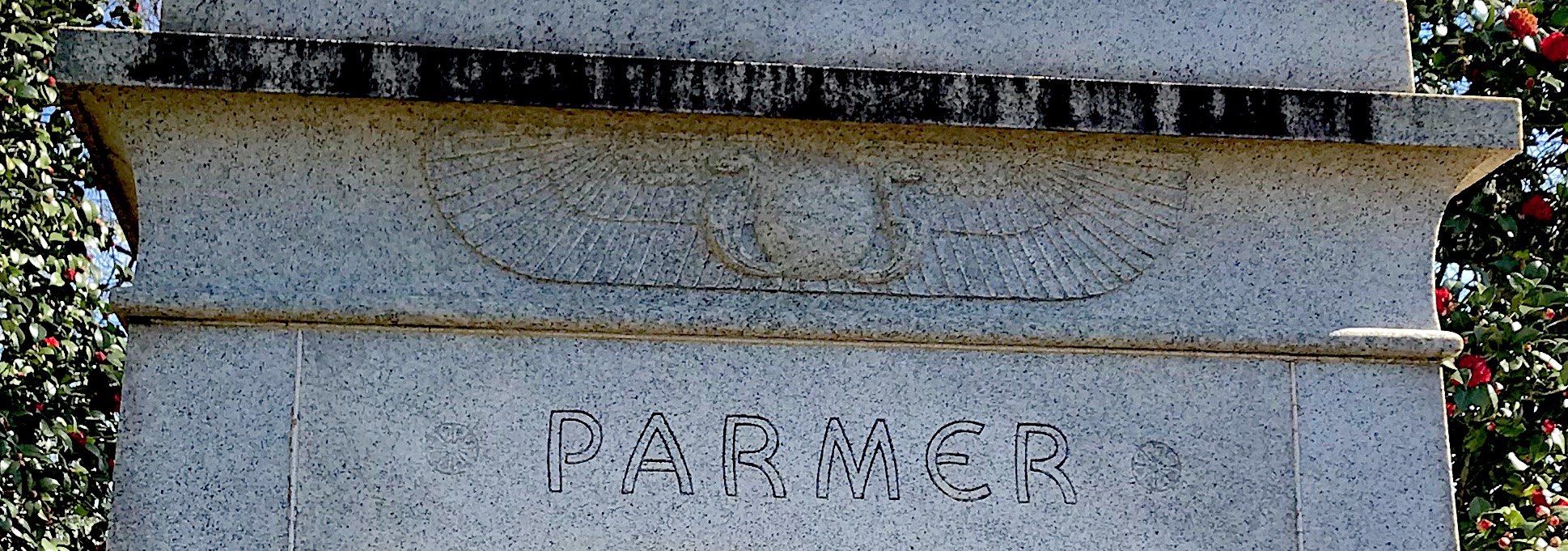
Walter died on May 23, 1932 at age 76 and Lizzie died at age 76 on April 27, 1934. They never had any children of their own. They were brought back to Greenville for interment in the mausoleum. You’ll notice an interesting carving above the door. It’s a symbol I see from time to time and it often denotes that the deceased was a Mason (but not always).

What do the snakes and wings signify?

In Ancient Egypt, the winged disk was a combined emblem of the sun, a double-headed cobra, and eagle or vulture wings. The cobra and the vulture represented Upper and Lower Egypt, in the geographical sense and in the sense of a Celestial Egypt and a Terrestrial Egypt. Such symbols are also associated with the Zodiac. Some people simply liked the look of it but as I said, it’s possibly because Parmer was likely a Mason.

The Daniel G. Dunklin Family

There are 26 Dunklins buried in Pioneer Cemetery and how they are related can get confusing. When I came across this row of monuments, I prepared to dive into the records to climb the branch of the Daniel G. Dunklin family tree.

Daniel G. Dunklin is buried between his two wives, Susan and Hannah.

Born on Oct. 28, 1823 to James Hilliard Dunklin and Catherine Lee Dunklin, Daniel Gafford Dunklin was considered a Greenville pioneer. His father, James, died when he was only four years old. Daniel was a merchant by trade and did well. He married Susan Catherine Burnett in 1847. Walter James Dunklin, their first son and the child who would live the longest, was born in 1852.

Daniel Gafford Dunklin was a well-regarded Greenville merchant and considered a founding member of the community. (Photo Source: Greenville Advocate)

But the 1850s would bring a great deal of sorrow to Daniel and Susan. Born on Jan. 25. 1855, second son William Burnett Dunklin died on March 22, 1857. His brother, Daniel Girard Dunklin, was born a month later on April 21, 1857 but he died on June 5, 1859. I do not have photos of their graves but they are buried in front of their parents’ monuments.

“Not Lost But Gone Forever”

Fourth son Jesse Frank Dunklin was born on Aug. 8, 1859. His mother, Susan, died on June 28, 1862 at age 32. Her monument has a beautiful flower bud carved into it.

Susan Burnett Dunklin lost three children in infancy before dying at age 32 in 1862.

As if Daniel didn’t have enough to endure Jesse died at age three on Feb. 23, 1863. I did manage to get a picture of his grave.

Jesse Frank Dunklin died about six months after his mother on Feb. 23, 1863.

I noticed that there was a damaged marker commemorating the lives of the three little boys the couple had lost atop a box grave.

A stone remembering the three sons of Daniel and Susan Dunklin.

On Jan. 11, 1864, Daniel remarried to 24-year-old Hannah Pickett Patton, daughter of Matthew and Louisa Patton. On Oct. 5, 1868, Hannah gave birth to their only child, Patton Bolling Dunklin.

Daniel continued to prosper as a merchant, serving as a city council member. He also served in the Alabama House of Representatives and on the State Democratic Executive Committee for 15 years. While I found evidence he served in the Confederacy during the Civil War, I don’t believe he reached the rank of major, a title he was addressed by in newspaper articles. This was a courtesy often given to Southern gentlemen high up on the social ladder. I’ve encountered quite a few honorary “colonels” that never served in the military at all. It was a common practice done out of respect.

On Sept. 14, 1895, Daniel died at age 71. Hannah, after some years as an invalid, passed away less than a year later on June 19, 1896. She is buried to his right.

Daniel G. Dunklin’s funeral included the Masonic rites, according to his obituary.

So who was left to run the store? The task fell to Daniel’s two sons, William J. and Patton. Neither man had married and were now living together at the “old homestead” near Greenville.

Sleep, Brother Dear

Patton died at age 32 on Nov. 2, 1900. His last years had been trying ones, according to his obituary. It notes that he was seriously injured in an accident in 1893 when the horse he was riding ran away and dashed him against a bridge support. Despite poor health, he affectionately attended his mother, Hannah, in her last years before the death of both his parents.

Patton Dunklin died four years after his mother at age 32.

It’s possible brother William felt quite all alone after his brother died. He was the only one left alive in his family. The inscription on Patton’s monument is one I have seen before. But the “brother” part has a sad ring to it.

Sleep, brother dear, and take thy rest. God called you home, He thought it best.

William J. Dunklin lived another 24 years after the death of Patton. He died at age 72 on May 30, 1924 after a long illness. He looked after his father’s store until selling it off to manage the family farm interests. He lived with his younger cousin, Walter Burnett (he was named after Walter J.), and his family during his last decade. It appears they took good care of him and he enjoyed being with the children.

However, William’s obituary has a rather bittersweet ring to it at the end:

For 72 years he has been going in and out before the people, having seen all of his associates of his younger days either moved away or or laid to their final rest. The present population to a great extent was new to him.

Where is William?

William’s obituary also says he was buried at Pioneer Cemetery, but I could not find a grave with his name on it when I was there. He does not have a memorial on Find a Grave. Perhaps because he was the last of his family, nobody took the responsibility of marking his grave. Or maybe he had one and it was broken. I don’t know. But it is my hope he is buried near his half-brother, Patton, with whom he was very close.

The unknown dead of Pioneer Cemetery.

I do know that there are many unmarked graves at Pioneer. It looks like they have done GPR mapping of the cemetery and several have markers denoting these graves.

Having written this blog for over nine years now, I’ve written about many final resting places. Naturally, some stand out more than others. But Pioneer Cemetery is special to me for a number of reasons. Part of it is due to the many J. Abrams cast iron grave covers, but it goes beyond that. Brothers who died young. Children lost to illness. A barely wed couple separated by death. Widows and old gentlemen. These are stories that linger in my heart and head.

Magnolia Cemetery, half a mile away, is my next destination.

“To Bloom Forever in Heaven”: Exploring Greenville, Ala.’s Pioneer Cemetery, Part III

11 Friday Mar 2022

Posted by adventuresincemeteryhopping in General

≈ 2 Comments

For the last two weeks, I’ve shared a lot about cast iron grave covers at Pioneer Cemetery in Greenville, Ala. Can you tell I’m a little obsessed with them? This week, I’m going to concentrate on some of the other monuments at Pioneer because a few are (in my opinion) what I’d describe as “jaw droppers”.

These first two monuments are unlike any I have ever seen before and I’m willing to bet you haven’t either. I’ll let you be the judge.

George and Emma Cook

The story of George and Emma Cook is brief because they died so young. But they clearly meant something special to those that loved them if their monuments are any indication.

The short lives of George and Emma Cook are memorialized in these two monuments.

Born in South Carolina on Dec. 5, 1830, George Massey Cook was the son of planter John Pope Cook and Charlotte Massey Cook. The family moved to Lowndes County, Ala. (north of Greenville) when George was young.

Emma Herbert, born on Sept. 22, 1838, was the daughter of educators Thomas E. Herbert and Dorothy Young Herbert. She was 21 when she married George, then 28, on June 15, 1859. Sadly, Emma died nine months later on March 23, 1860. I don’t know what the cause of her death was. It might have been childbirth. A brief newspaper notice said, “She often spoke of her life to be a short one.”

Emma Herbert Cook died only nine months after her wedding.

Emma’s monument features a carving of a young woman (Emma) kneeling beside a grave marker. In her left hand is a wreath, which often signifies victory. I’m not sure what is in her other hand. Her feet are bare. One of her epitaphs reads:

In early spring-time, the flower has faded from earth, to bloom forever in Heaven.

The one carved below her face reads:

A dutiful daughter, an affectionate sister, a devoted wife, and a true Christian.

Off to War

On April 17, 1861, George enlisted in the Confederate Army in Lowndes County. I saw a copy of his will and it was recorded just five days later on April 22, 1861. George knew very well that he could die. Did he know, like Emma, that his life would be short?

George was assigned to Company M of the Sixth Alabama Infantry, better known as the Autauga Rifles. While the Sixth was present at the Battle of First Manassas (First Bull Run) in Virginia, it did not engage. The same was true at Williamsburg. But it was in the Battle of Seven Pines that the Autauga Rifles were thrust into battle. The Sixth suffered the deaths of 108 men and 283 wounded out of 632 engaged. George was one of the casualties, dying on March 31, 1862 at age 31. He had achieved the rank of sergeant.

Sgt. George Cook died at age 31 at the Battle of Seven Pines in Virginia.

George’s monument shows a soldier, a rifle at his side. A tree stump, signifying a life cut short, holds a wreath, again symbolizing victory or eternal life.

From earlier pictures I saw, both Emma and George’s monuments were in a state of disrepair before my 2019 visit. Emma’s needed significant work and was lying on the ground at one point.

H.W. Hitchcock’s Marble Works

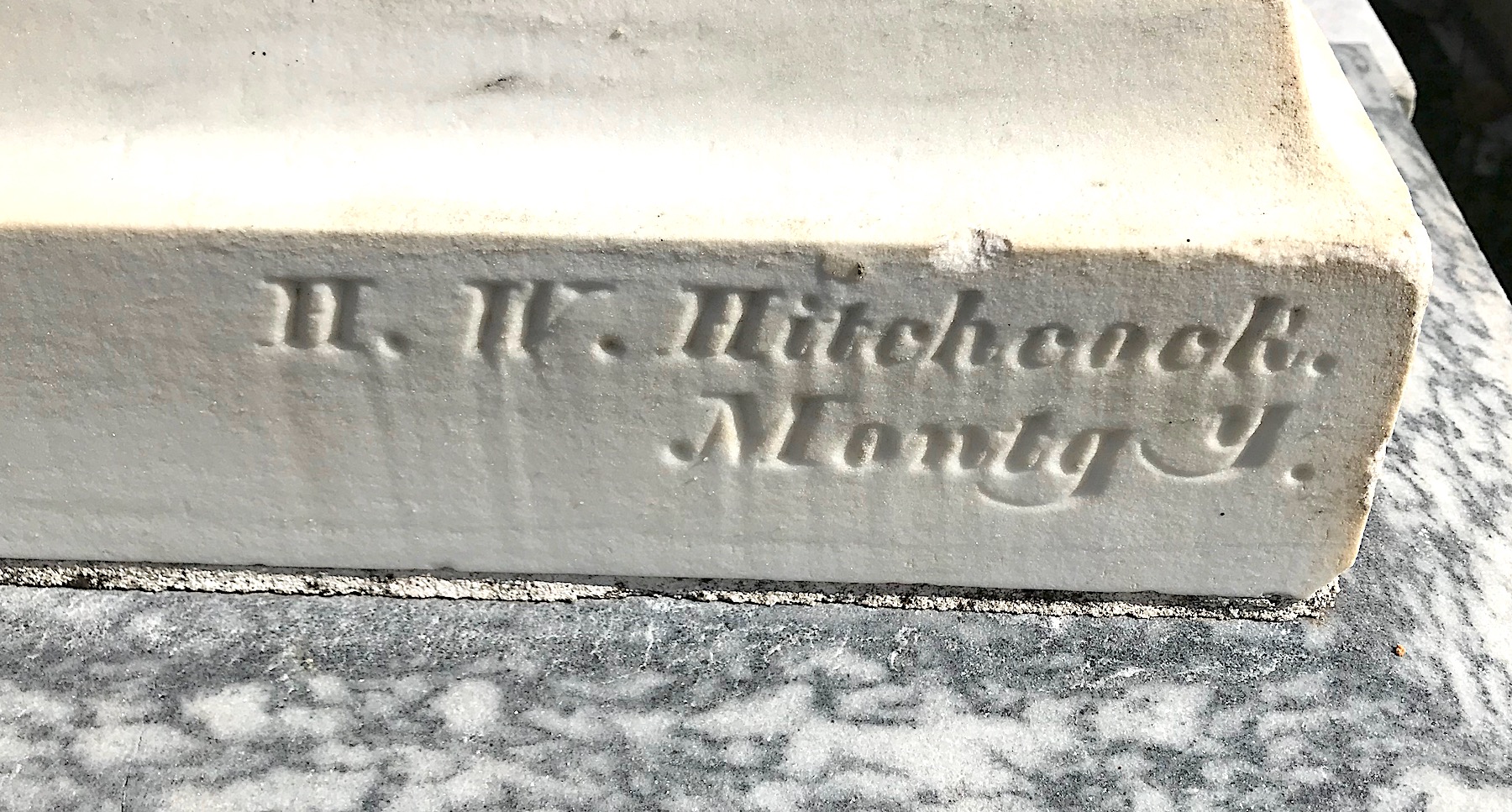
Emma’s monument is signed at the base by H.W. Hitchcock of Montgomery, Ala. I am sure he also did George’s, although his does not appear to be signed.

Emma’s monument is signed while George’s is not, but they were likely both done by the Hitchcock firm.

Horatio Waldo (H.W.) Hitchcock was born in 1817 near Hawley, Mass. He moved to Alabama and established his firm, H.W. Hitchcock’s Marble Works, in Montgomery sometime in the 1850s. It doesn’t appear that he ever married. His will was recorded on June 24, 1875. I think he was already in poor health at that point because he died on July 29, 1876 in Androscoggin County, Maine. He is buried in Pine Grove Cemetery in Poland, Maine but there is no photo of his marker on Find a Grave. He may not even have one, which is ironic for man who made his living as a stone carver.

H.W. Hitchcock had already passed away when this ad was placed in the June 14, 1882 edition of the Union Springs Herald.

I found an advertisement for the firm in the June 14, 1882 edition of the Union Springs Herald. H.W. apparently sold the business to Joseph A. Curbow and his brother, who continued to operate it. Joseph Curbow died in 1892 and is buried at Oakwood Cemetery in Montgomery, Ala.

The Herbert Brothers

Greenville was home to many Herberts and H.W. Hitchcock provided monuments for some of them as well. One of the most interesting ones is for two brothers, George and James. They actually share a monument, dying only two months apart. Thomas Herbert, whom I mentioned earlier, was their uncle and the brother of their father, Dr. Hillary Herbert. Their mother was Abigail “Abbie” Bolling Herbert.

Brothers James and George Herbert’s monument is on the right. The monument for James’ wife, Eliza, is on the left. Both were carved by H.W. Hitchcock’s firm.

Unfortunately, I don’t know much about the Herbert brothers. James Dunklin Herbert was born on June 12, 1824 in Greenville. He married Mary Eliza McDaniels around 1850 and was a well-to-do farmer. Their son, James Ennis Harbert, was born on March 6, 1851. For reasons unknown, James died on Dec. 4 1851 at age 27. The inscription on the side of the shared monument is difficult to read beyond his birth and death dates.

James’ brother, George, was born on June 29, 1826. I don’t know where he studied medicine but since his father and his Uncle George were doctors, he must have had a good education. The 1850 U.S. Census indicates he was still living with his parents and was unmarried. They lived on the same street as brother James and his wife, Mary. George died only two months before James on Oct. 9, 1851.

Dr. George Herbert’s monument inscription is a bit worn.

George’s epitaph was a little easier to read than his brother’s, although one word eluded me:

In the springtide of a life promising great ?, His many virtues gained universal regard.

The front of the monument features two entwined weeping willow trees. Many people think weeping willows signify sorrow and grief, which has some validity. However, others feel that the willow tree has older associations. According to ancient Greek lore, Orpheus carried a willow branch with him when he descended to the Underworld to rescue Eurydice from Hades. Regardless of what it means, you can find weeping willows on grave markers across America and in other countries.

“They Sleep Together in Death.”

If you look on the back, there is a carving of two clasped hands. While it says “Fraternal Love” above the motif, I am puzzled that it is clearly a female hand (with a lacy cuff) that is being clasped by a male hand. This is common on the grave markers of husbands and wives, not brothers. Under it is the inscription, “Conquicscant in pace”. A rough translation of the Latin is “Together in Peace.”

“Conquicscant in pace”

James’ wife, Mary Eliza, died on July 27, 1852. Her monument also features a weeping willow. Her death left their son, James, an orphan. He did grow up, marry, and raise a family before dying in 1925 at age 75. He is buried in nearby Magnolia Cemetery.

“They Have Gone Home”

I promised I would share the monument of two of the children of James Hilliard Duncan (who died in 1877) and Mary Jane Reid Dunklin Padgett. Over the course of their marriage, they would have several children in addition to the two he had with his first wife, Abbie.

The two children on top represent a daughter and son who died in childhood.

Their third child, an unnamed infant daughter, was born on Dec. 9, 1867 and died a few weeks later on Dec. 21, 1867. The cause of death is unknown. An upside down lit torch is on the left side of her panel on the monument, representing the death of the flesh, but the eternal life of the soul.

I’m not sure why there is a comma after the last “1867” instead of a period.

Thomas Judge Dunklin, their fifth child, was born on April 18, 1871. He died almost a year and a half later on Dec. 31, 1872. His cause of death is unknown. Like his little sister, an inverted lit torch is on the side of Thomas’ panel.

Unlike his sister’s panel, Thomas has a period at the end of his inscription.

One panel features an epitaph that speaks of their reuniting with their parents in Heaven, which indicates to me that the monument was installed before James Dunklin’s death in 1877.

Mary Jane Reid Dunklin would have two more daughters that would live well into adulthood.

McDonald, March & Co.

Unlike the monument for James’ first wife, Abbie, the children’s monument was carved by the firm of McDonald, March & Co. of Mobile, Ala. A native of Ireland, Daniel J. McDonald came to Mobile as a child with his parents, William and Mary White McDonald.

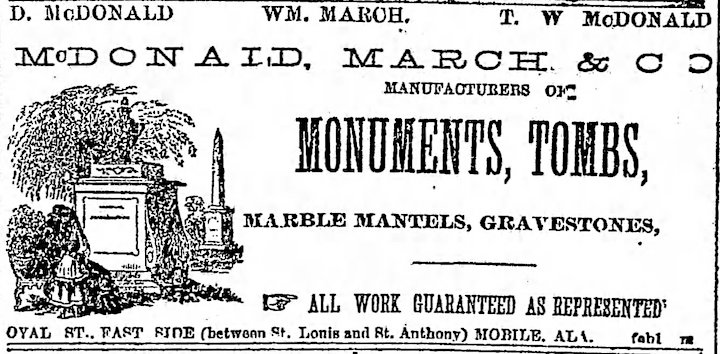
By 1860, Daniel was 17 and working as a stone cutter. He married Sarah McDermott around 1870. I don’t think they had children. He was operating his own marble works with his younger brother, Thomas, and William March. Below is an advertisement from the Nov. 19, 1876 Mobile Daily Tribune.

Daniel J. McDonald ran his business with younger brother, Thomas.
Daniel J. McDonald operated a marble works in Mobile, Ala.

Daniel died on Oct. 20, 1878 at age 40 in Mobile, a day after he wrote his one-page will leaving most of his estate to his wife, Sarah. He is buried in Mobile’s Catholic Cemetery. I noticed in the Find a Grave pictures taken by Larry Bell that the lettering on Daniel’s stone is the same as that of the Dunklin children’s monument, and the one made for his parents and four of his siblings that are buried in Mobile’s Magnolia Cemetery. I believe Daniel’s brother, Thomas, continued the business for several more years with his son, who was also named D.J. McDonald.

Does the lettering on Daniel McDonald’s grave marker look familiar? (Photo source: Larry Bell, Find a Grave)

I’ve got a few more stories left to tell about Pioneer Cemetery in Part IV.

Abrams Cast Iron Grave Covers: Exploring Greenville, Ala.’s Pioneer Cemetery, Part II

04 Friday Mar 2022

Posted by adventuresincemeteryhopping in General

≈ 4 Comments

Last week, I introduced you to Pioneer Cemetery in Greenville, Ala., where you can see a number of patented Joseph R. Abrams cast iron grave covers. In my experience, it’s rare to see this many in one small cemetery.

More Cast Iron Grave Covers

This cast iron grave cover for Elizabeth Routon Gafford Bragg (1802-1870) is an example of one that’s held up fairly well and still has its nameplate intact (although it has broken off). The main flaw is that the finial on top is missing.

The name plate for Elizabeth Routon Gafford Bragg’s cast iron grave cover has broken off but ihankfully, it hasn’t been lost.

Born in 1801 in Georgia to Pleasant Routon and Catherine Lee Routon, Elizabeth Routon married Jeremiah Gafford at age 16 in 1818. They settled in Butler County soon after and started a family. Jeremiah died on July 6, 1844 at the age of 48.

Jeremiah Gafford’s box grave is next to Elizabeth’s grave.

It’s not surprising that Elizabeth, a young widow at 41, remarried in 1846 to widower Dr. Thomas Miles Bragg, Sr. His first wife, Catherine, died in 1838. They had three children (two surviving).

Elizabeth Routon Gafford Bragg was buried next to her first husband, Jeremiah, in Pioneer Cemetery.

When Elizabeth died on Oct. 11, 1870, she was buried beside first husband Jeremiah Gafford. When second husband Thomas died on Nov. 28, 1882, he was buried beside his first wife, Catherine, in the family cemetery in Greenville.

Attorney, Editor, Pastor

I found two cast iron grave covers connected to the Porter family, who I talked about last week. Joseph Abrams’ wife, Laura, was the daughter of Judge Benjamin F. and Eliza Taylor Kidd Porter. Laura was one of 10 children and her younger brother, James Dellet Porter was born in 1839. He married Vermont native Ellen Tammy Ferguson in Lexington, Miss. in 1861. They would have three daughters and one son together.

During the Civil War, James served as adjutant of Blount’s Brigade (Fifth Battalion, Alabama Infantry Volunteers). While helping to bury the dead following the Battle of Shiloh, Porter contracted pneumonia. He was made a government telegrapher until the end of the war, after which he returned to Greenville. He then practiced law, edited a newspaper, and studied theology.

James D. Porter had gone from being a newspaper editor and lawyer to a pastor.

By 1880, James had become the Rev. James Porter, although I’m not sure he attended a seminary of any kind, and became rector at Greenville’s St. Thomas Episcopal Church. I found a newspaper notice from the May 20, 1880 Greenville Advocate that listed him among the other pastors.

Rev. Porter had not been at his post long when he died on Nov. 20, 1880 from pneumonia, leaving Ellen a young widow at age 40. Their youngest daughter, also named Ellen, had been born only eight months before her father died. Ellen did not remarry and died on Nov. 30, 1896 after a year of feeble health at age 58.

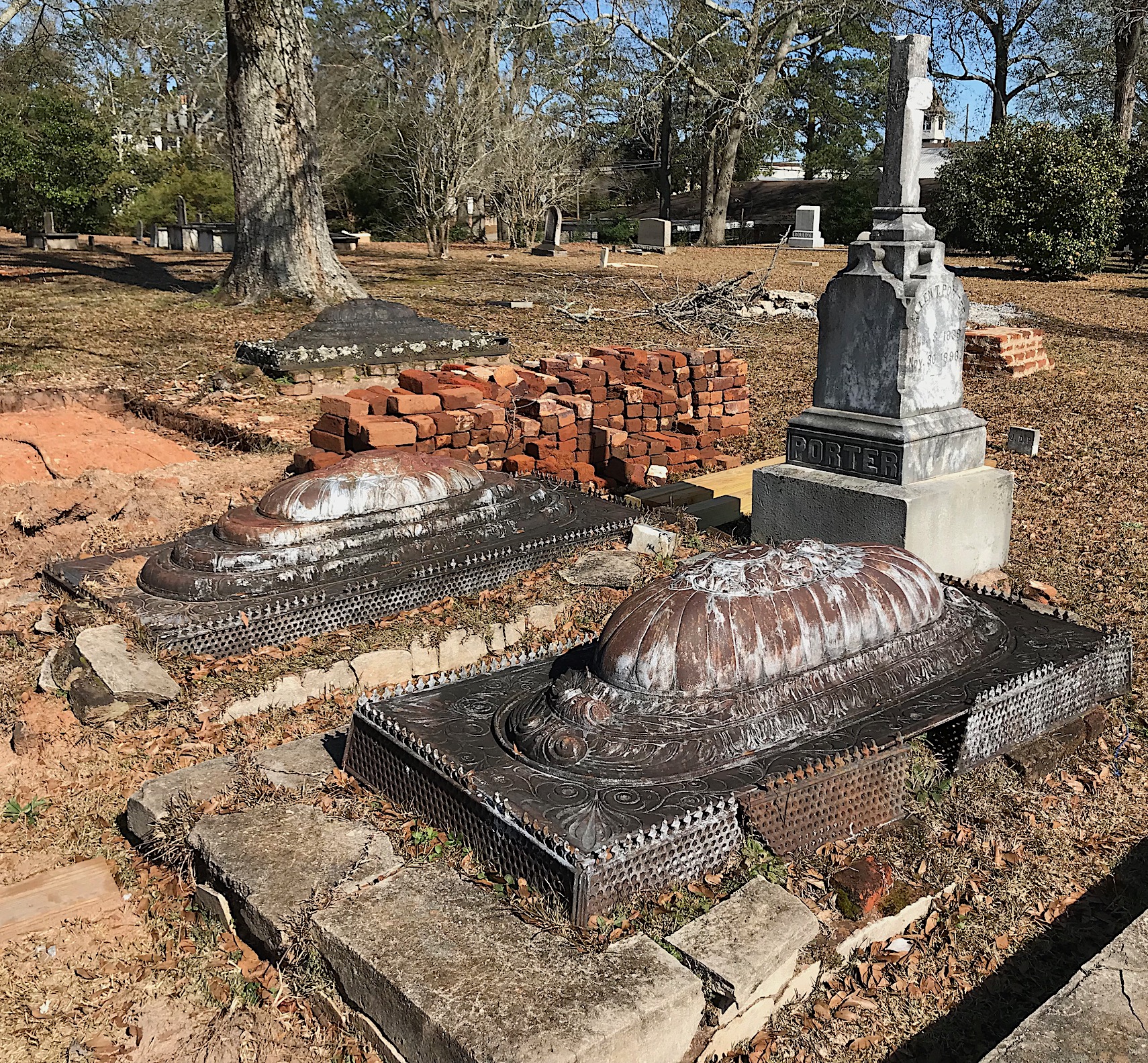
These two cast iron grave covers are located in front of Rev. Joseph Porter and his wife, Ellen Ferguson Porter. Who do they belong to?

Since Rev. Porter died in 1880 and Ellen Porter died in 1896, I’m not sure that the two cast iron grave covers pictured above belong to their graves. Their footplates are on the other side of the monument they share. But because the name plates that belong to these two covers are gone, we don’t know to whom they belong. Perhaps they were children who died in infancy.

I have another theory, however. Judge B.F. Porter died in 1868 and wife Eliza in 1883. There are no known grave markers for them in Pioneer Cemetery but evidence suggests they are buried here. Could these grave covers be for them?

Shell Graves

Pioneer Cemetery has several shell graves. Whenever I show pictures of shell graves to people not familiar with them, they are fascinated yet puzzled. But to those of us who live in the South, they are fairly common. They can be found in many cemeteries here, especially in Georgia, Alabama, Florida, Louisiana, Mississippi, and Texas. Scallop, oyster, clam, and mussel shells were often used. They could be from the ocean or a river. I’m told some can be found further north but I think it’s mostly a Southern thing.

This is a typical shell grave from Pioneer Cemetery with no identifying stone to accompany it.

So what do shell graves mean? I could go into all the different theories out there, but that would take up most of this post. If you want one of the best roundups of the proposed meanings that are out there, this article does a wonderful job. But one of the best explanations I’ve seen is that shells were not only a decorative and effective grave protection, they were cheap and available.

Unfortunately, many shell graves lack an accompanying stone to explain whom the grave is for. At Pioneer, there is a shell grave identified as that of Anna Catherine Reid. When I was there, her broken marker had been repaired but it was so faded you could barely read it.

Compared to her sister Abigail Reid Dunklin’s grand monument, the shell grave of Anna Catherine Reid is quite humble.

The Reid Sisters

The daughter of prosperous farmer Archibald and Elizabeth Herbert Reid, Anna Catherine Reid was born in 1843. She was one of 13 children born to the couple. We don’t know what brought about her death, but Anna passed away at the age of 21 on Sept. 24, 1864. Her shell grave is the bottom right of the trio in this picture.

Anna Catherine Reid passed away on Sept. 24, 1864.

You may notice that the two shell graves to the left and behind Anna’s have no identifying stone. The one to her left was probably that of a child. It could be one of Anna’s siblings who died in infancy. Because Anna died in the throes of the Civil War, it may not have been possible to obtain a better grave marker than the one they were able to provide. Anna’s parents, Archibald and Elizabeth, are buried at nearby Magnolia Cemetery.

“Her Death Was Calmly Triumphant”

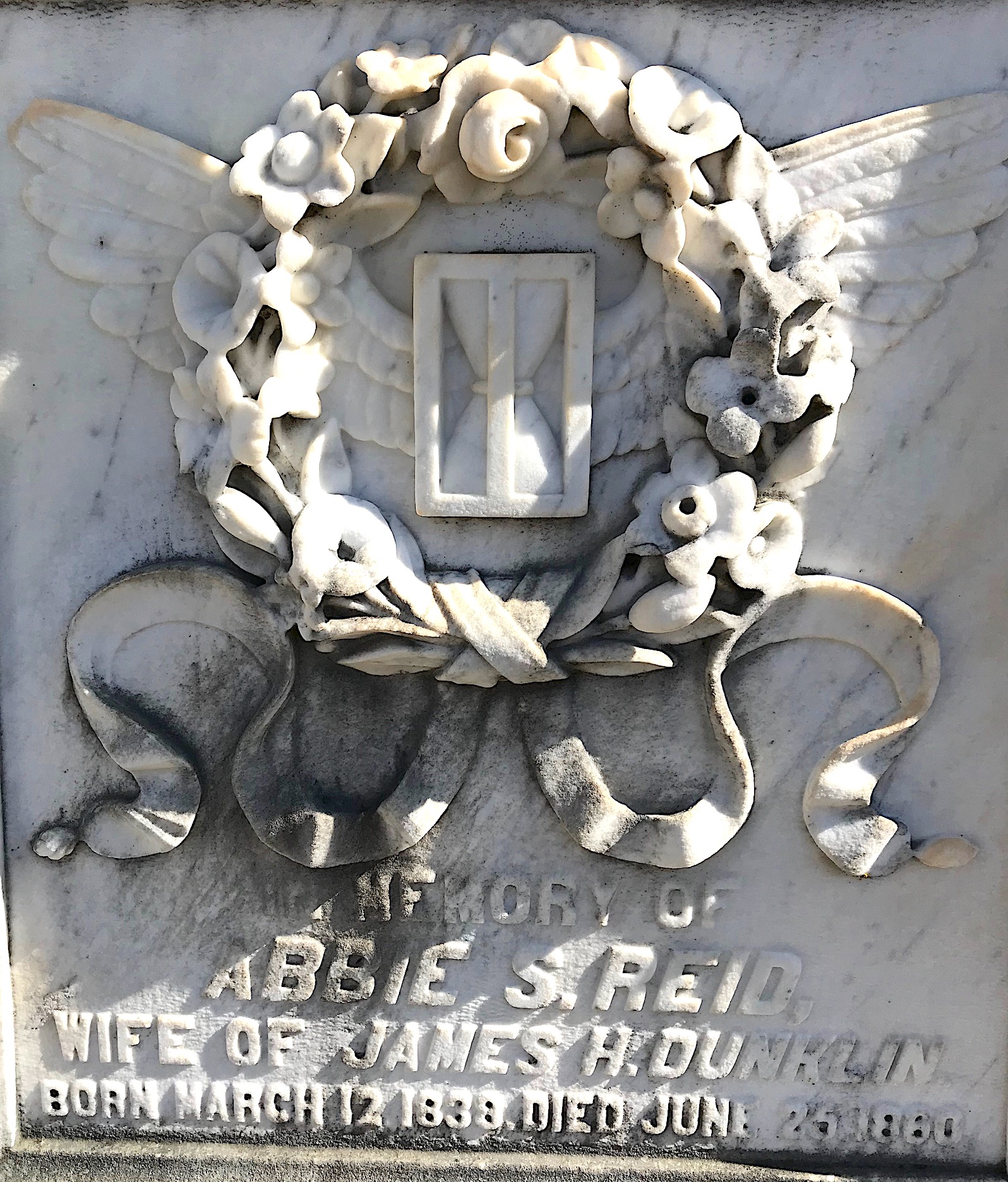
By contrast, the monument to Anna’s older sister Abigail “Abbie” Susan Reid is markedly grander. Born on March 12, 1838, Abbie married druggist James Hilliard Dunklin on Aug. 5, 1856. She was 18 and he was 21. On April 9, 1859, Abbie gave birth to a daughter, Elizabeth, who lived well into adulthood. She is also buried in Pioneer Cemetery.

According to Abbie’s obituary, she suffered an illness of 12 days before passing away on June 25, 1860. She was only 22 when she died.

I was not expecting to find an ornate monument by Charleston, S.C. carver William T. White.

Abbie’s monument is admittedly one of the grandest I’ve seen. The classical female figure on the pedestal is holding a Bible in one hand and a cross (now broken) in the other. One the front is a beautiful wreath and a winged hourglass (meaning time and life are fleeting). I’m not sure when it was installed at Pioneer Cemetery because it would have taken time to obtain. It was likely shipped to Greenville by train.

The winged hourglass often signifies that time (and life) are fleeting in nature.

As I walked around Abbie’s monument, I marveled at the skill with which it had been carved. This was work I had seen somewhere before. Then I saw the side and found out exactly who had done it.

“She is Now Sleeping in Jesus”

As part of a Charleston, S.C. stone carving dynasty, William T. White was the son of John White, Jr. and the grandson of John T. White. His work can be found in many South Carolina cemeteries. His work was done mostly between 1850 and 1870. I can tell you I was not expecting to see his work so far away from his usual “territory”. Nevertheless, it is a fine example of what he could accomplish.

A Widower Remarries

Abbie’s husband, James, remarried a little over a year after she died on Sept. 17, 1861. It may surprise you to learn that he married Abbie’s younger sister, Mary Jane, who was 19. This was not unusual at the time. Several years ago, I featured the story of the Rev. William H. Clarke, who married three different sisters over the course of his life. It was often a case of proximity and practicality, not romance.

We don’t know what the case was for James and Mary Jane but they did have several children together. Two lived to adulthood, three died in infancy, and one died in her 20s. When James died in 1877, his obituary said he left eight children behind. I will feature some of their grave markers next week.

During the Civil War, James rose to the rank of colonel in the 33rd Alabama Volunteer Infantry, Company C, serving with many men from Greenville. After the war, he entered into a partnership operating a large cotton commission business that made him quite wealthy. In 1876, he was elected to the Alabama Senate. However, he became ill in 1877 and died on May 20, 1877.

James Hilliard Dunklin died on May 20, 1877 while serving in the Alabama Senate.

I didn’t get a photo of the sides of James Dunklin’s monument to see for sure if William T. White carved his monument as well. The crossed swords in the middle signify his military service. A draped urn tops his monument with a Masonic seal below it.

Mary Jane remarried in 1886 to someone whose name you might remember from last week. Elam M. Padgett’s first wife, Marjorie, died in 1868 soon after giving birth to a daughter who died four months later. Mary Jane became Elam’s second wife and the couple moved to Florida, living there until Elam’s death in 1906. He is buried in Lone Oak Cemetery in Leesburg, Fla. Mary Jane moved back to Greenville soon after and died on April 7, 1909. She was buried in Pioneer Cemetery.

Mystery Grave

There’s a sad footnote to Mary Jane’s death. Her memorial on Find a Grave says “Cemetery records indicate there may no longer be a marker for her grave.” If there is one, I didn’t see it when I was there. While her sisters Anna and Abbie, and her two husbands all have markers, Mary Jane’s final resting place is a mystery. Not even marked with a single shell.

More to come next time from Pioneer Cemetery in Part III.

Abrams Cast Iron Grave Covers: Exploring Greenville, Ala.’s Pioneer Cemetery, Part I

25 Friday Feb 2022

Posted by adventuresincemeteryhopping in General

≈ 6 Comments

After dropping Christi off at the airport in Panama City to fly back to frozen Nebraska, I headed for Greenville, Ala. I’d long wanted to visit Greenville because it was the home of Joseph R. Abrams, inventor of the cast iron grave cover. I must note that there are others who made attempts at earlier versions but Abrams was one of the first to patent it. In 1875, Egbert Sipes of Pennsylvania filed a patent for an improved design.

I originally wrote about Joseph Abrams back in 2015 after I’d found one of his cast iron grave covers in Fairburn City Cemetery in Fulton County, Ga. I had never seen anything quite like it and I still find them fascinating.

Abrams moved from South Carolina to Greenville (in Butler County) sometime after he married Laura Porter in 1856. When he wasn’t working as a railroad contractor (1860s) or an insurance salesman (1870s), he loved inventing things and one of them was the cast iron grave cover, originally targeted to protect the graves of children. I had seen photos online of several cast iron grave covers in Pioneer Cemetery and nearby Magnolia Cemetery, where Joseph and Laura Abrams are buried. I’ll be writing about Magnolia Cemetery later. But for now, let’s focus on Pioneer Cemetery.

Pioneer Cemetery is Greenville’s oldest cemetery and one of the oldest in the state.

Established in 1819

Greenville became Butler County’s seat of government in 1822. Residents set aside a two-acre plot for a church and graveyard, marked on three sides by what are now South Park Street (originally named Cemetery Street), Walnut, and Dunklin Streets. The western side of the churchyard and cemetery, where the First United Methodist Church stands today, was then the town’s western boundary.

Pioneer Cemetery is one of the oldest I’ve ever visited in Alabama. Established in 1819, it’s Greenville’s oldest cemetery. The oldest known grave is that of James Dunklin (1779-1827), but there are many unmarked and “lost” graves that may be older than that.

Captain William Butler, for whom the county is named, is buried there along with many Greenville/Butler County pioneers. The last burial took place in 1961 when Lily Black Stanley (1876-1961) was buried there. There are almost 300 recorded memorials for Pioneer Cemetery on Find a Grave.

Entrance gate to Pioneer Cemetery.

When I visited Pioneer Cemetery, it was undergoing restoration work. These efforts are often expensive and take a lot of time. In 2008, Greenville began working hand in hand with The Pioneer Cemetery Preservation Association  (PCPA) to accomplish this. The PCPA has been fortunate to receive grants from the Alabama Historical Commission to help with expenses. So when you see piles of bricks and mounds of dirt in some of my photos, it’s not from neglect but a snapshot of a moment in time amid this restoration in February 2019.

I didn’t photograph James Dunklin’s grave but I did see the large memorial boulder placed next to the grave of Capt. William Butler. His grave has a connection to Joseph Abrams in a roundabout way.

The boulder was placed in 1926 by the Father Ryan Chapter of the United Daughters of the Confederacy.

A Bloody Death

A Virginia native born in 1759, Capt. William Butler fought in the War of 1812. He lived in Georgia for a few years before coming to Alabama. On March 18, 1818, Capt. Butler (accompanied by Daniel Shaw and William Gardner) was delivering a message to nearby Fort Dale when he and the two men were violently attacked by Native Americans led by warrior Savannah Jack. The account I read describes how they were killed in such horrific detail that I won’t share it here. It’s graphic by even today’s standards. It was later referred to as “Butler’s Massacre” by some.

The men’s remains were buried in the nearby forest and left there for many years until the 1850s when a group of locals had them moved to Greenville Cemetery. One of them was Eliza Taylor Kidd Porter, the wife of Judge Benjamin F. Porter and mother of Laura Porter, who married Joseph Abrams. The remains of Capt. Butler, Shaw, and Gardner were exhumed and re-interred with much ceremony at Greenville Cemetery in 1858.

Butler County was named after Capt. William Butler, who was killed

Eliza Porter paid for the small marker to be placed on Capt. Butler’s grave in 1861. The large boulder was not placed until 1926 by the Father Ryan Chapter of the United Daughters of the Confederacy (UDC). I’m not sure why Capt. Butler’s death date is inscribed as 1820 instead of 1818 on it.

The Caldwells

I’d like to share the Caldwells graves with you because not only do they have cast iron grave covers marking their burial site, they also have a handsome marble gravestone in front of it.

John and Elizabeth Black Caldwell were long-time residents of Greenville.

Born in 1801, North Carolina native John Carruthers Caldwell helped establish Greenville’s Presbyterian Church. In 1819, he married local Butler County miss Elizabeth Black. John became a prominent merchant, jeweler, and goldsmith. He also served as justice of the peace.

The fact that John Caldwell was a jeweler leads me to believe he knew and appreciated beautiful, artistic items. It’s my belief he probably knew Joseph Abrams and was aware of the fascinating new invention he’d come up with. It doesn’t surprise me at all that he had two planned for his and Elizabeth’s graves to accompany their grave marker.

Both John and Elizabeth Caldwell’s graves feature cast iron grave covers patented by local Greenville resident Joseph R. Abrams.

The cast iron covers that top the Caldwell graves feature shell finials on top. Sometimes these are stolen or vandalized, but it thrilled me to see these both intact. You can also see the acorns surrounding the finials, symbolizing wisdom. To get a better look at home these pieces come together, you can see Abrams’ original 1873 patent here.

Abrams patented his invention in 1873, shortly after the Caldewells died in 1871 and 1872. So there may have been a delay in their placement. The name plates originally attached to the back broke off and were lost. This is a common occurrence since the cast iron lattice work sometimes became brittle and broke. But the pair are still a great example of this invention.

Mother and Daughter

There are two pairs of cast iron grave covers at the rear of Pioneer Cemetery and both were in the process of being restored. I’m featuring the graves of Lucinda Brazzell Taylor and her daughter, Sarah Taylor, because the both still have their nameplates.

The graves of Lucinda Taylor and her daughter, Sarah, are topped by cast iron grave covers.

The story behind this mother/daughter duo is intriguing because there are some holes in their history. We do know that the mother was Lucinda Brazzell Taylor. I’m using the spelling Brazzell for her maiden name although it has been written as Brassell and Braswell in other places. Born around 1812, she married Ludwell Taylor in Montgomery, Ala. in 1832. Of their four children, daughter Sarah was born on June 23, 1836.

Ludwell Taylor passed away in 1842 and Lucinda remarried to a William Turner in 1849. They had a son, Richard, but he only lived a year. Interestingly, in the 1850 U.S. Census, William Turner is not listed but baby Richard is. I can only surmise that William Turner died soon after they married. In the 1860 U.S. Census, Lucinda and Sarah were living with the family of Marcus Lane, a successful Greenville attorney. Marcus was the husband of Lucinda’s daughter (and Sarah’s sister), Frances Taylor Lane.

Lucinda died on March 25, 1868 at age 56 after a “protracted illness.”

Lucinda Brazzell Taylor Turner died in 1868 after a “protracted illness.”

Although Lucinda had remarried, the last name on her grave cover is Taylor. You’ll note that the finial on her grave cover is not a shell like the Caldwells but a cup or urn, which is rare. The cover is also decorated with carved flowers instead of acorns like the Caldwells’ grave covers.

Patented Proof

I found a record for Sarah’s marriage to a John Kelly in Butler County in 1864. But when she appears in the 1870 U.S. Census, she is listed as Sarah Taylor and living next door to the Lanes. She died at age 36 on Feb. 20, 1872.

Sarah Taylor’s nameplate is still attached to her grave cover, which is a rarity.

So how do we know for certain that this is a Joseph R. Abrams cast iron grave cover? As I wrote in 2015, Joseph was a true patent enthusiast and he applied for many of them over the years. You can see the notation for it at the end of Sarah’s grave cover if you look closely. Although Abrams’ grave cover was not patented in 1868 when Lucinda died, I suspect they did not install it until after Sarah’s death.

You might also notice that these covers are flush with the ground. Others I have seen have a concrete, brick, or stone base underneath them.

If you look to the right at the bottom of Sarah Taylor’s grave cover, you can see the patent inscription.

At the time, I didn’t know the connection but beside the Taylor graves is an obelisk for Frances Taylor Lane and her husband, Marcus. Frances died on April 18, 1868 at age 34, the day after giving birth to a baby girl who lived less than four months. This happened less than a month after her mother, Lucinda, died. Marcus, who was by then a judge, died on July 28, 1870 at age 45. The couple left behind five children.

Florence Taylor Lane died at age 34 after giving birth to a daughter in 1868 only a month after her mother, Lucinda, died.

Anonymous Graves

I pointed out earlier that many cast iron grave covers have missing nameplates that have snapped off at some point. As a result, unless they are next to a stone grave marker or someone has other proof, the identity of the deceased is often unknown. This can often pose problems if a cemetery does not have good burial records.

Just down the way from the Taylor graves is the grave of Marjorie Dunklin Padgett. Born in 1845, she married Elam Padgett in 1868. She died on Jan. 10, 1872 after giving birth to an infant son. Like the daughter of Marcus and Frances Taylor Lane, the child died four months later.

I suspect the two cast iron grave covers (one topped by a shell finial) beside Marjorie’s grave are for two of their children, whose graves Abrams originally intended for his invention to protect. One may be for the baby born in 1872 but nobody knows for sure. Both graves have a brick base beneath them.

I’m just getting started with stories about Pioneer Cemetery. More to come in Part II.
Pioneer Cemetery is located in downtown Greenville, Ala.
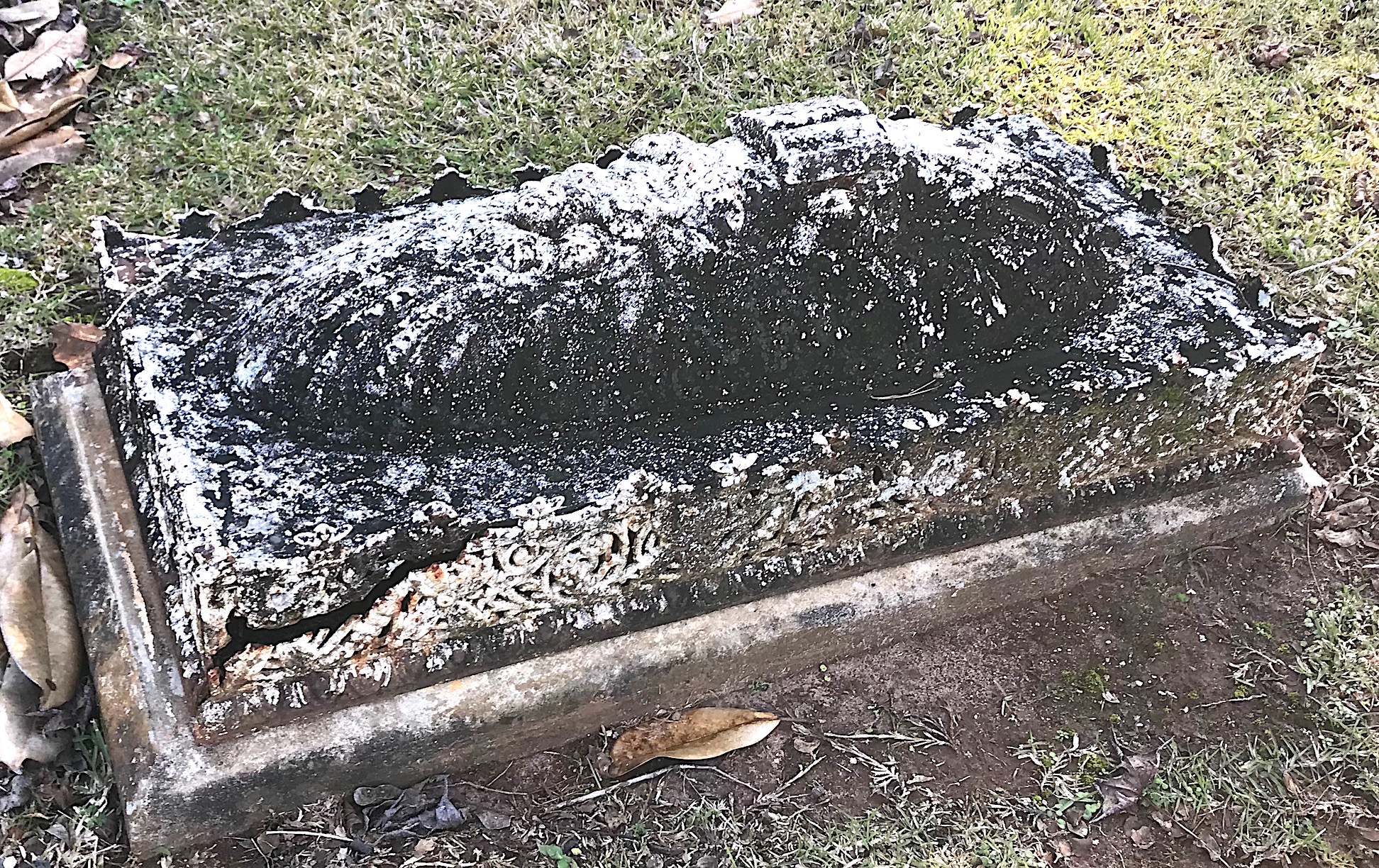
Florida Panhandle Adventure 2019: Visiting Destin’s Marler Memorial Cemetery, Part II

11 Friday Feb 2022

Posted by adventuresincemeteryhopping in General

≈ 1 Comment

Last week, I dove into some of the history behind Destin’s evolution from a humble fishing village to a sunny tourist destination. Now let’s take a look at some of the other stones at Marler Memorial Cemetery.

Thomas M. Knapp’s obelisk is under the tree on the right.

One tall marker stands out. It’s not for a Marler or a Destin but a Knapp, the only one buried here. Thanks to again to H.C. “Hank” Klein, I was able to uncover some of the story of how he ended up in the cemetery.

Born in 1871 in Illinois, Thomas Morse Knapp married Cecily Flynn in Clayton, Mo. in 1897. According to the U.S. 1900 federal census, Edward and Cecily, were living in Havana, Cuba, at the headquarters of the Department of Matanzas and Santa Clara Hospital Corps. Edward had served in the Spanish-American War in 1898 and stayed on to work as a clerk.

Plans of a Homecoming

Edward continued working as a civil servant for the U.S. Army in Cuba until Nov. 30, 1910, when he resigned. He and his family planned to join Edward’s parents in Northwest Florida, near Destin, when they returned to America. Edward’s parents had staked a claim under the Homestead Act of 1862 on land in Shoals, Fla., (now Miramar Beach) in 1909. One of their lots could have been where Edward and Cecily hoped to build their new home.

Edward Knapp was only 39 when he drowned in the Choctawhatchee Bay.

On Dec. 26, 1910, four weeks after Edward retired, he was moving his family to Shoals when he drowned in the Choctawhatchee Bay between Santa Rosa and Shoals. According to Hank, an affidavit from Capt. Billy Marler (who you read about last week) said Edward fell off a motorboat while moving furniture to his home in Shoals and died. He was pulled from the water, but no one knew how to resuscitate him.

However, Edward’s Find a Grave memorial includes a January 15, 1911 article from the Pensacola Morning Journal that has a different account of his death:

The body was not found until Thursday, Jan. 5, 1911. It had come to the surface and floated near his home, where it was first seen and brought ashore by the loving hands of his wife, who was keeping a constant vigil for it along the beach. All other means had been exhausted and it became apparent that they must wait until the body should rise and float. The great privilege was given his wife of being the first to rescue the last earthly remains of him whom she so fondly loved from the maw of the hungry sea.

I’m not sure which of these two stories is true but sadly, Edward was gone. Cecily remarried in 1920 to Rufus McChesey and moved back to Missouri where they lived until her death in 1954. They are buried together in Bellefontaine Cemetery in St. Louis, Mo.

“Gone to a Fairer Land”

Last week, I told you how Carrie and Capt. Billy Marler lost eight children in infancy, all buried at Marler Memorial Cemetery. The Destins were also no stranger to tragedy. Leonard Destin’s son-in-law, Frederick, would know it all too well.

Born in 1869 in what was then called East Pass, Leonard’s daughter Fannie grew up with her siblings as her father fished. Excerpts of her childhood journal exist on Ancestry.com. Here’s one entry from July 1881:

Sun shining brightly.  Wind from the north.  Read my lesson to Uncle Elias then helped Priss.  My sister Jane is with us yet.  Mr. Woodward, her husband is at Pensacola.  Brother George came in last night.  Very glad to see him.  Wind from the north yet.  Green corn is all gone I am sorry to say.  Read lesson to Uncle Elias.  Wind is blowing from the west quite strong.

“Gone to a Fairer Land” Fannie Destin Studebaker died a day after giving birth to a daughter. They share a marker against the back fence.

Fannie grew up and married fisherman (and later a lighthouse keeper) Robert Studebaker in 1898. Their daughter, Martha, was born in 1900. On March 2, 1902, she gave birth to another daughter, who died the same day. Martha died the next day. Mother and daughter share a marker located back against the fence.

Robert Studebaker moved to Cromanton Bay, Fla. and remarried to Hattie Pratt in 1903. In a sad twist of fate, Hattie would die on Nov. 15, 1903 after giving birth to a daughter, Lillian. The baby also died. Robert married a final time to Nina Ecker in 1909. He died in 1947 at age 73 and Nina died in 1949 at age 70. They are buried together in Panama City’s Greenwood Cemetery, as is Robert and Fannie’s daughter Martha Studebaker Brown.

Death in New Mexico

Earlier, I shared an excerpt from Fannie Destin Studebaker’s childhood journal where she mentions her sister, Jane Destin Woodward. Jane married Frederick Harlow Woodward in 1875 and together they had several children, including a son name named George born in 1892. This is a photo of her with her oldest son, Edward, sitting on her lap.

Jane Destin Woodward was only 45 when she died in 1901. Her oldest son, Edward, sits on her lap. (Photo source: Find a Grave, Hank Klein)

Jane died on July 31, 1901 at age 45. Her marker is broken and in sad condition. Frederick died on Nov. 2, 1908 and is buried beside her.

Jane Woodward’s epitaph reads, “She died as she lived, a Christian.”

Son George Woodward grew up to be a fisherman. He married Minnie Marler, I’m not sure where she fits into the Marler family tree. But George’s health began to suffer in the late 1910s. Like many people at that time, he went to New Mexico in hopes that a dryer climate might help. He may have had tuberculosis.

Unfortunately, it wasn’t enough. George died on Feb. 8, 1922 at age 29. Minnie accompanied his body back to Destin and he was buried in Marler Memorial Cemetery beside his parents. I’m not sure if Minnie remarried after his death or what happened to her.

George Woodward traveled to faraway Albuquerque, N.M. in early 1922, hoping to improve his health. It was not to be.

A Mysterious Fire

One small homemade grave marker caught my attention but I didn’t have time to look up the person until I was writing my blog post this week. A sad story unfolded that is still shrouded in questions.

Born to Milton Shirah and Elgin Inez Sprinkle Shirah in 1938, Shirley Annette Shirah grew up in Alabama. She was a graduate of Central High School in Phenix City, Ala. She married a few years later and the family moved to the Destin area.

On the night of May 21, 1963, while her husband was working out of state, Shirley went with some friends to the dog races in Erbo. She returned late that night and told the babysitter she was going over to the vacant house she and her husband owned nearby “to get something”. In the wee hours of the next morning, Shirley was found badly burned across the street from the vacant house, which was now on fire.

Young wife and mother Shirley Destin died in a mysterious fire in the early hours of May 22, 1963.

Shirley was whisked to the hospital but never recovered. She died on June 7, having been unable to tell the police what happened. A Pensacola News Journal article detailed how one of the group she attended the races with was suspected of being involved in a bank robbery and had left town soon after the fire. I could find nothing more. I’m sure Shirley’s family was devastated by her death.

Next time, I’ll be at nearby Brooks Memorial Cemetery in Fort Walton.

← Older posts
Newer posts →

Recent Posts

  • More Pensacola, Fla. Cemetery Hopping: Taking a Ramble Through Saint John’s Cemetery, Part III
  • More Pensacola, Fla. Cemetery Hopping: Taking a Ramble Through Saint John’s Cemetery, Part II
  • More Pensacola, Fla. Cemetery Hopping: Taking a Ramble Through Saint John’s Cemetery, Part I
  • The City of Five Flags: Stepping back in time at Pensacola, Fla.’s Saint Michael’s Cemetery, Part V
  • The City of Five Flags: Stepping back in time at Pensacola, Fla.’s Saint Michael’s Cemetery, Part IV

Archives

  • December 2025
  • November 2025
  • August 2025
  • July 2025
  • June 2025
  • May 2025
  • April 2025
  • March 2025
  • February 2025
  • January 2025
  • October 2024
  • August 2024
  • July 2024
  • June 2024
  • May 2024
  • April 2024
  • March 2024
  • February 2024
  • January 2024
  • December 2023
  • November 2023
  • October 2023
  • September 2023
  • August 2023
  • July 2023
  • June 2023
  • May 2023
  • April 2023
  • March 2023
  • February 2023
  • January 2023
  • December 2022
  • November 2022
  • October 2022
  • September 2022
  • August 2022
  • July 2022
  • June 2022
  • May 2022
  • April 2022
  • March 2022
  • February 2022
  • January 2022
  • December 2021
  • November 2021
  • October 2021
  • September 2021
  • August 2021
  • July 2021
  • May 2021
  • April 2021
  • March 2021
  • February 2021
  • January 2021
  • December 2020
  • November 2020
  • October 2020
  • September 2020
  • August 2020
  • July 2020
  • June 2020
  • May 2020
  • April 2020
  • March 2020
  • February 2020
  • January 2020
  • December 2019
  • November 2019
  • October 2019
  • September 2019
  • August 2019
  • July 2019
  • June 2019
  • May 2019
  • April 2019
  • March 2019
  • February 2019
  • January 2019
  • December 2018
  • November 2018
  • October 2018
  • September 2018
  • August 2018
  • May 2018
  • April 2018
  • March 2018
  • February 2018
  • January 2018
  • December 2017
  • November 2017
  • October 2017
  • September 2017
  • August 2017
  • July 2017
  • June 2017
  • May 2017
  • April 2017
  • March 2017
  • February 2017
  • January 2017
  • December 2016
  • November 2016
  • October 2016
  • September 2016
  • August 2016
  • July 2016
  • June 2016
  • May 2016
  • April 2016
  • March 2016
  • February 2016
  • January 2016
  • December 2015
  • November 2015
  • October 2015
  • September 2015
  • August 2015
  • July 2015
  • May 2015
  • April 2015
  • March 2015
  • February 2015
  • January 2015
  • December 2014
  • November 2014
  • October 2014
  • September 2014
  • August 2014
  • July 2014
  • June 2014
  • May 2014
  • April 2014
  • March 2014
  • February 2014
  • January 2014
  • December 2013
  • November 2013
  • October 2013
  • September 2013
  • August 2013
  • July 2013
  • June 2013
  • May 2013
  • April 2013
  • March 2013
  • February 2013
  • January 2013

Categories

  • General

Blogroll

  • A Grave Interest
  • Cemetery Photography by Chantal Larochelle
  • Cemetery Tours of Berlin by Matti
  • Confessions of a Funeral Director (Caleb Wilde)
  • Find a Grave
  • Hunting and Gathering (cool photography site)
  • Save Our Cemeteries (New Orleans, La.)
  • The Cemetery Club
  • The Graveyard Detective
  • The Rambling Muser
  • Westminster Abbey Tours by Grace

Meta

  • Create account
  • Log in
  • Entries feed
  • Comments feed
  • WordPress.com

Blog at WordPress.com.

  • Subscribe Subscribed
    • Adventures in Cemetery Hopping
    • Join 402 other subscribers
    • Already have a WordPress.com account? Log in now.
    • Adventures in Cemetery Hopping
    • Subscribe Subscribed
    • Sign up
    • Log in
    • Report this content
    • View site in Reader
    • Manage subscriptions
    • Collapse this bar
 

Loading Comments...