• About Me
  • Cemeteries I Have Visited
  • Have questions?
  • Photos

Adventures in Cemetery Hopping

~ A blog by Traci Rylands

Adventures in Cemetery Hopping

Author Archives: adventuresincemeteryhopping

Close to Home: Taking a Stroll Through Fayette County, Ga.’s Ebenezer United Methodist Church Cemetery

07 Friday Mar 2025

Posted by adventuresincemeteryhopping in General

≈ Leave a comment

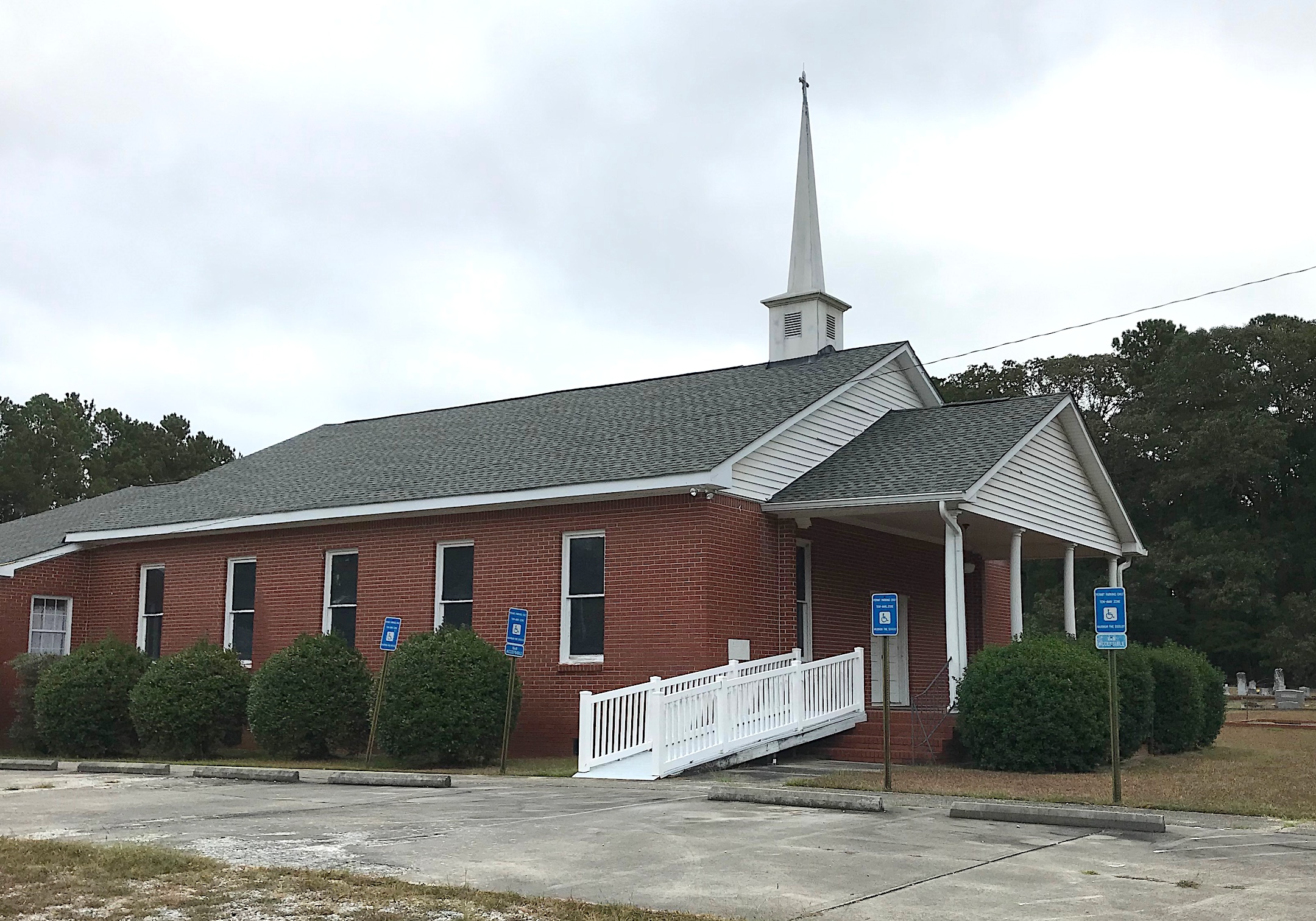
After refueling over lunch, Mom and I decided to hit one more cemetery before calling it a day. Ebenezer United Methodist Church Cemetery (EUMCC) is not far from Partner’s Pizza so it was an easy stop to make.

EUMC is still an active church with a rich heritage. It was established around 1882. According to a church history on their web site, EUMC was originally known as Old Field Church. Charter members were G. M. Davis, James Davis, Frank Davis, Barney Tinsley, James Speer, William S. Brown, F. B. Brown and Ed Speer. The 1884 dedication service included the hymn “Nearer My God to Thee”.

Ebenezer United Methodist Church as it looked in 2019.
Ebenezer United Methodist Church was established around 1882.

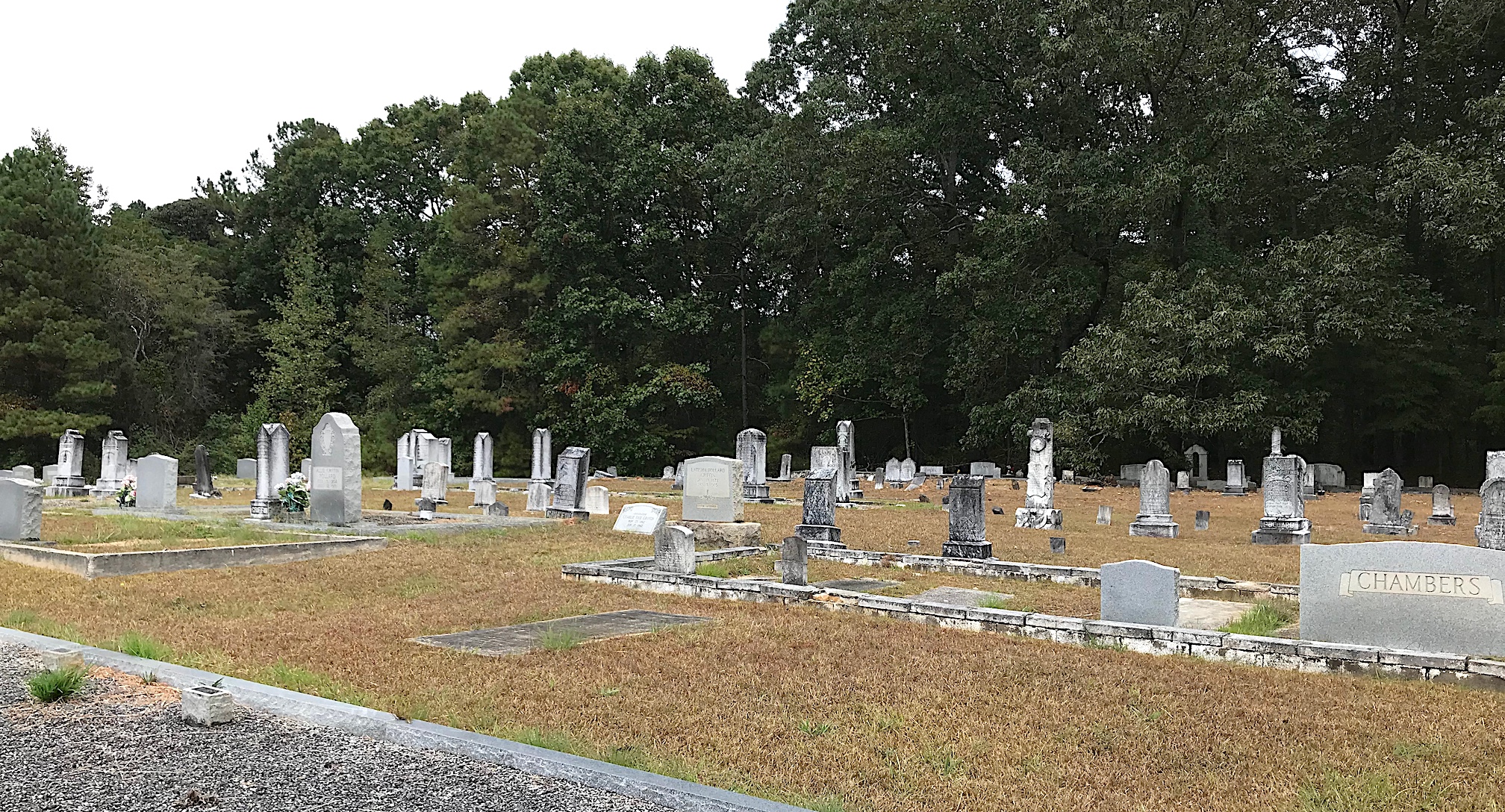
Polly Palmore donated the acre that the church was built on, and Chub Davis provided the adjacent land for the cemetery. According to Find a Grave, there are about 530 marked graves on the property. It is in good condition and looked to have been recently mowed. I saw a few recent burials.

Chub Davis provided the land for the cemetery at Ebenezer United Methodist Church.

A Tragic Fire

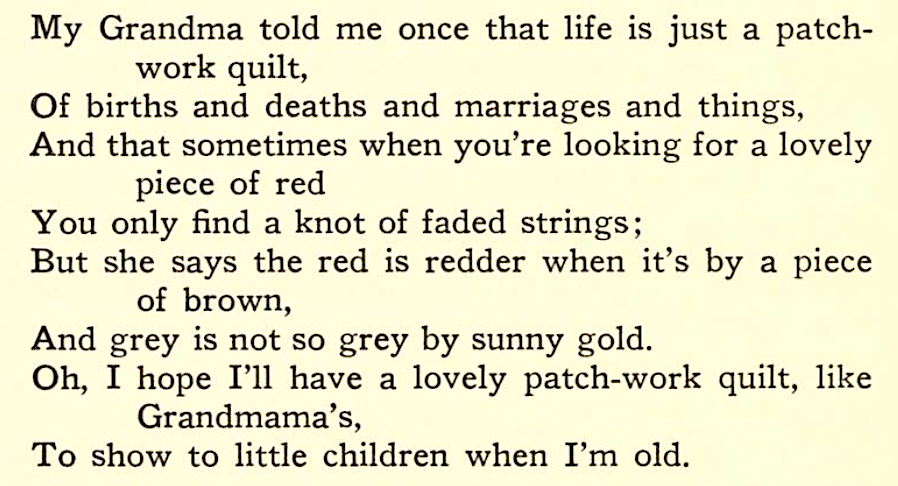
One of the first stones we happened upon was for a woman and a child. I felt a wave of sadness, knowing that something bad had likely happened to them. Unfortunately, when I looked into their story, my fears were confirmed.

A small lamb adorns the grave of Bessie Pope and her little boy, Ralph.

Born in 1911, Elizabeth “Bessie” Parrott was the daughter of William and Rachel Lavonia Adams Parrott. She married Ralph “Boots” Pope, a Fayette County farmer. They had a son, Ralph Gerald Pope, on March 11, 1939. They lived in a four-room house on the Redwine farm where Ralph worked.

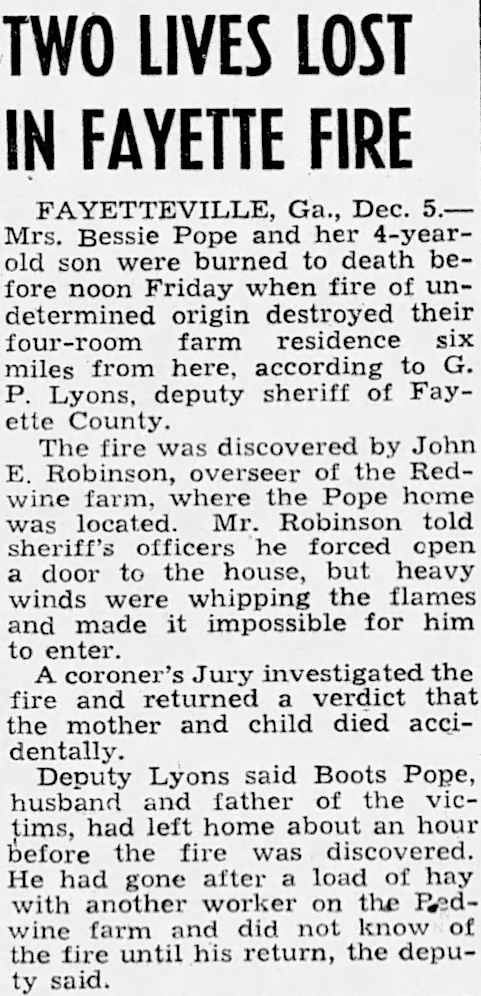
On Dec. 4, 1942, Ralph said goodbye to Bessie and little Ralph, then headed with a co-worker to fetch a load of hay. An hour later, the overseer caught sight of the Pope house and it was engulfed in flames.

Ralph “Boots” Pope lost his wife and son in a terrible fire in 1942.

Despite all attempts, Bessie and little Ralph could not be saved. The cause of the fire was deemed accidental. Robert was now a widower at 31.

Bessie and their son were laid to rest together at EUMCC. Ralph did not remarry (as far as I know). He worked as a freight handler in his later years. He died at age 82 on Oct. 23, 1994. He was buried beside Bessie and little Ralph.

Ralph “Boots” Pope is buried beside Bessie and their son.

Accidental Shooting

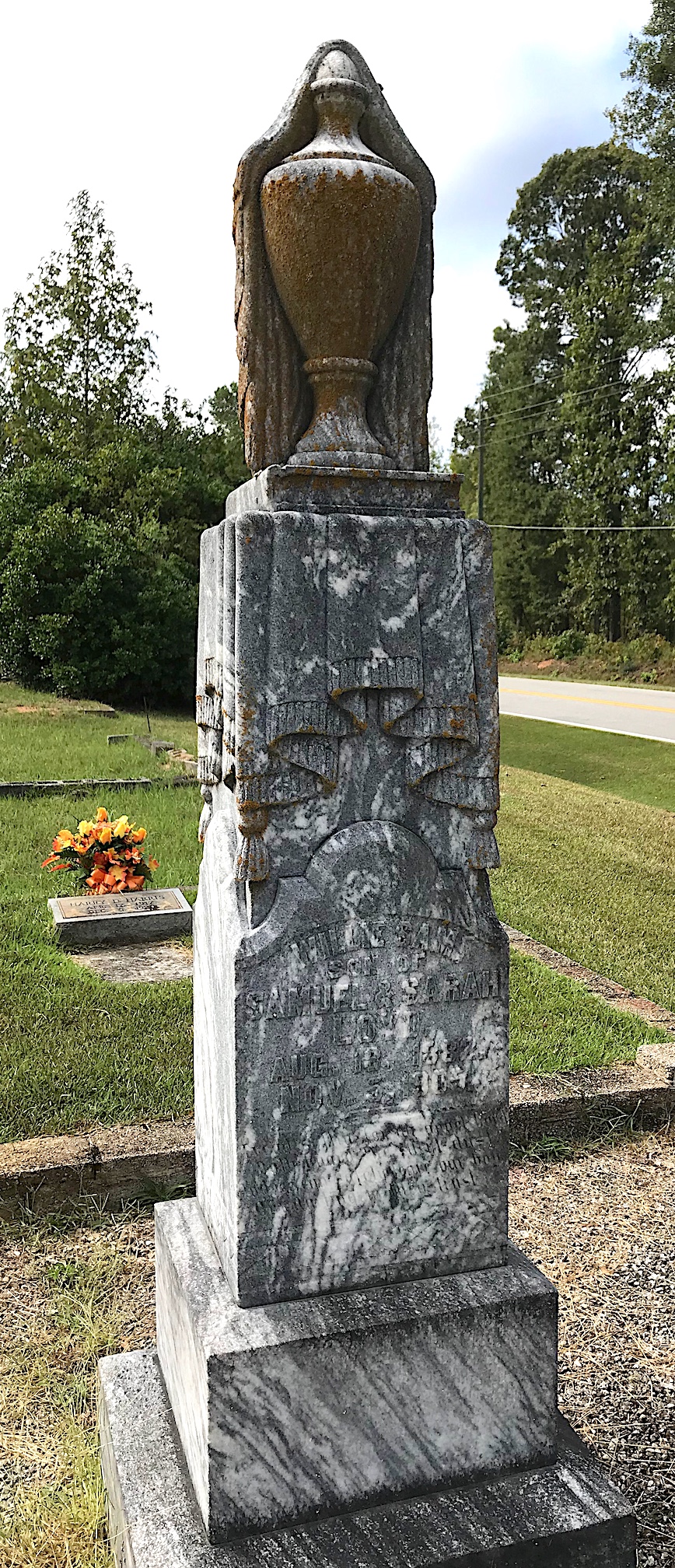
We like to think that deaths caused by playing with guns is a modern occurrence, but it has been happening for decades. I only learned this week that this was the case for college senior Willie Sam Loyd.

Born in 1882, Willie Sam Loyd was the youngest son of Samuel and Sarah Loyd. The Loyds were well-to-do farmers in Fayette County. Willie attended the University of Georgia in Athens and was approaching graduation when tragedy struck.

Headline from the Macon Telegraph, Nov. 6, 1905.

On the evening of Nov. 5, 1905, Willie was relaxing with his roommate in their dorm when he drew out a pistol and began playing with it. Despite his roommate’s warning to stop, Willie continued and accidentally shot himself below his stomach. He died about an hour later, despite medical efforts to save him. Willie was 23 when he died.

Yearbook picture of Willie Sam Loyd from the 1905 University of Georgia Pandora.

Willie’s parents were understandably heartbroken. Their older son, Thomas, had died two years earlier at age 45. A delegation of Willie’s classmates accompanied him as his remains were taken home to Fayetteville. Many people from near and far attended his funeral at EUMCC.

Willie Sam Loyd was only 23 when he died at the University of Georgia in Athens.

Willie’s mother, Samuel, died on June 30, 1909 at age 72. His mother, Sarah, died on Aug. 22, 1910 at age 69.

Grave of a Murderer

At the end of last week’s post, I mentioned that I was going to follow up on a convicted killer buried at this cemetery. If you want the full story about the murder, please read my post from May 2019 about Bethany United Methodist Church Cemetery. It’s also located in Fayette County.

In that post, I told the story of Acey Edward “Eddie” Banks on May 15, 1931. He was only 38 a the time. Eddie was married to Lexie Mae Griffin Banks. Lexie’s mother, Emma Griffin, lived in fear of her husband (and Lexie’s father), Charlie Griffin. She was living at her daughter’s home when Charlie arrived and tried to take her home.

Eddie stepped in to protect Emma and Charlie killed him, fleeing into the nearby woods. He was caught and convicted of murder, then sent to prison. Amazingly, he only served seven years and was released. Eddie was buried at Bethany United Methodist Church Cemetery. Lexie, who remarried, died in 1964 and is buried with Eddie.

Charlie died a few years after his release on Jan. 11, 1945 at age 70. The epitaph on his marker is a familiar one: “Remember me as you pass by.” Unfortunately, the Banks family likely remembers him painfully for what he did to Eddie.

Charlie Griffin’s grave marker’s epitaphs reads: “Remember me as you pass by.” I am sure the Banks family remembers him none too fondly.

Emma, like her daughter, lived until 1964 and was 89 when she died. She is also buried at EUMCC.

The Short Life of Simmie Griffin

I didn’t connect Charlie Griffin to the Banks murder until several days later. I was distracted by another grave marker that I saw at EUMCC for a young man named Simmie Griffin, who was Charlie’s nephew. Simmie was the son of Charlie’s brother, Clifford.

It was what was inscribed on Simmie’s stone that stopped me in my tracks. I have never (or since) read anything like this before.

Simmie’s parents, Clifford and Nancy Pollock Griffin, were both deaf and mute.

I don’t know how Clifford and Nancy met. I don’t know if they were both born deaf and mute or if they were became so later in life. It appears they both lived in Mitchell County. I wondered if perhaps they met at a school for the deaf but I could find nothing. They married in Dekalb County in 1902. Together, they would have five children. They did not let their disabilities stop them from living happy and active lives.

Simmie was the second oldest of the children. According to what I read, he served as the “spokesman” for his parents and made sure the household ran smoothly. From what I can tell, neither he or his siblings had any hearing/speech/sight issues. At night, when his baby sister would cry, Simmie would take her to their mother because she couldn’t hear her.

On April 22, 1918, Simmie went out for a ride with local automobile salesman Thomas Nipper. They were struck at a railroad crossing and Simmie was killed. He was only 14 years old. Thomas Nipper, while injured, survived. He would die a few months later on Oct. 22, 1918 at age 23 after a long illness. He is buried at Fayetteville City Cemetery.

“We Have No Simmie Now”

I don’t normally post this lengthy of an obituary, but in this case, I thought it was worth sharing.

This tribute was published in the Fayetteville News on June 7, 1918.

Sometime between 1920 and 1930, the Griffins moved to Cincinnati, Ohio where both Clifford and Nancy took factory jobs. Clifford died in 1942 and his body was sent home to Fayetteville for burial at EUMCC. Despite the fact her name is on Clifford’s marker, after Nancy died in 1963, she was buried at Arlington Memorial Gardens in Mount Healthy, Ohio (near Cincinnati).

While Nancy Griffin’s name is on this marker, she is actually buried in an Ohio cemetery near Cincinnati.

End of the Road

This wraps up my Fayette County “hop” with my Mom from October 2019. We’ve been on a few since then, and I’ll be sharing them in due time.

Next time, I’ll be taking you with me out of Georgia. The angel statue immortalized in Thomas Wolfe’s autobiographical novel, Look Homeward, Angel, now marks a grave at the Oakdale Cemetery in Hendersonville, N.C. Lots of stories to share from that cemetery!

Lucile Loyd was almost four years old when she died of “membranous croup” on Oct. 2, 1908. It was a form of diphtheria that is now rare.

Close to Home: Wandering Through Fayette County, Ga.’s County Line Christian Church Cemetery, Part II

07 Friday Feb 2025

Posted by adventuresincemeteryhopping in General

≈ 3 Comments

To be honest, I hadn’t planned to do a Part II on this cemetery. I thought I’d covered all the bases there in Part I.

Then I found a story about two of County Line Christian Church Cemetery’s burials that got my attention. I felt it was important enough to dig into what happened because (sadly) this kind of thing is not as unusual as you might think. In fact, it will come up again in the next cemetery we visited.

Another view of County Line Christian Church Cemetery.

You might remember back in 2016, I wrote about Wyuka Cemetery in Lincoln, Neb. Charles Starkweather, a spree killer who murdered 11 people with his girlfriend Caril Ann Fugate between January 21 and 29 in 1958, is buried there. He was executed in the electric chair in 1959. At the time, I was stunned to learn that five of Starkweather’s victims are also buried there. In fact, his grave is quite close to three of them. With Wyuka being so big, that surprised me.

As it turns out, both a man who committed a murder and his victim are buried at CLCC Cemetery. I stumbled upon the story quite by accident.

The Short Life of Charlie E. Coggin

I must note that sometimes Charlie’s last name appears as Coggin, Coggins and even Goggins in some newspaper reports I found.

The son of farmer Augustus Abraham “A.A.” Coggin and Henrietta Lona Daniell Coggin-Banks, Charlie was born on Sept. 30, 1892 in Griffin, Ga. That’s not far from Brooks. He fell in the middle of the birth order of the Coggin family.

A.A. died in May 1917 as World War I loomed on the horizon. Charlie enlisted in the U.S. Army on Sept. 18, 1917. His draft card indicates he was disabled. Despite that, Charlie was assigned to the 122nd Infantry, Company F. He did not serve overseas, largely because of his poor health. He was honorably discharged on Oct. 14, 1918. Oddly enough, his service record indicates he was “37.5 disabled”.

About a year later, Charlie married Mattie Mae Smith. They had one son, Thomas Elliott “Eddie” Coggin.

Murder or Self Defense?

I’ve read several articles about what took place on Oct. 22, 1921. There are some differences of opinion on when who did what to whom. Both Charlie Coggin and a man named Grover Ison, 26, were in a store in nearby Senoia. Like Charlie, Ison was a World War I veteran but he actually served overseas with the American Expeditionary Force in France.

This is just one of several articles written about the death of Charlie E. Coggin on Oct. 22, 1921. (Photo Source: The Newnan Herald, Oct. 28, 1921)

One indisputable fact is that Ison shot and killed Charlie. Some said he did it because Charlie hit him with a baseball bat and Grover responded in self defense. Others said Charlie had asked Grover (alleged to be drinking and cussing in the store) to stop using inappropriate language in front of his family, and Grover had shot him in response. Some alleged that a brother-in-law of Charlie had hit Grover with the baseball bat AFTER he’d shot Charlie.

Grover Ison went on trial in the Spalding County Superior Court the following month and despite his pleas of self defense, he was convicted of murder and sentenced to life in prison. He got a new trial but was convicted again in February 1923 and began serving his sentence in August 1923. Then in December 1929, he was denied clemency by the state prison board.

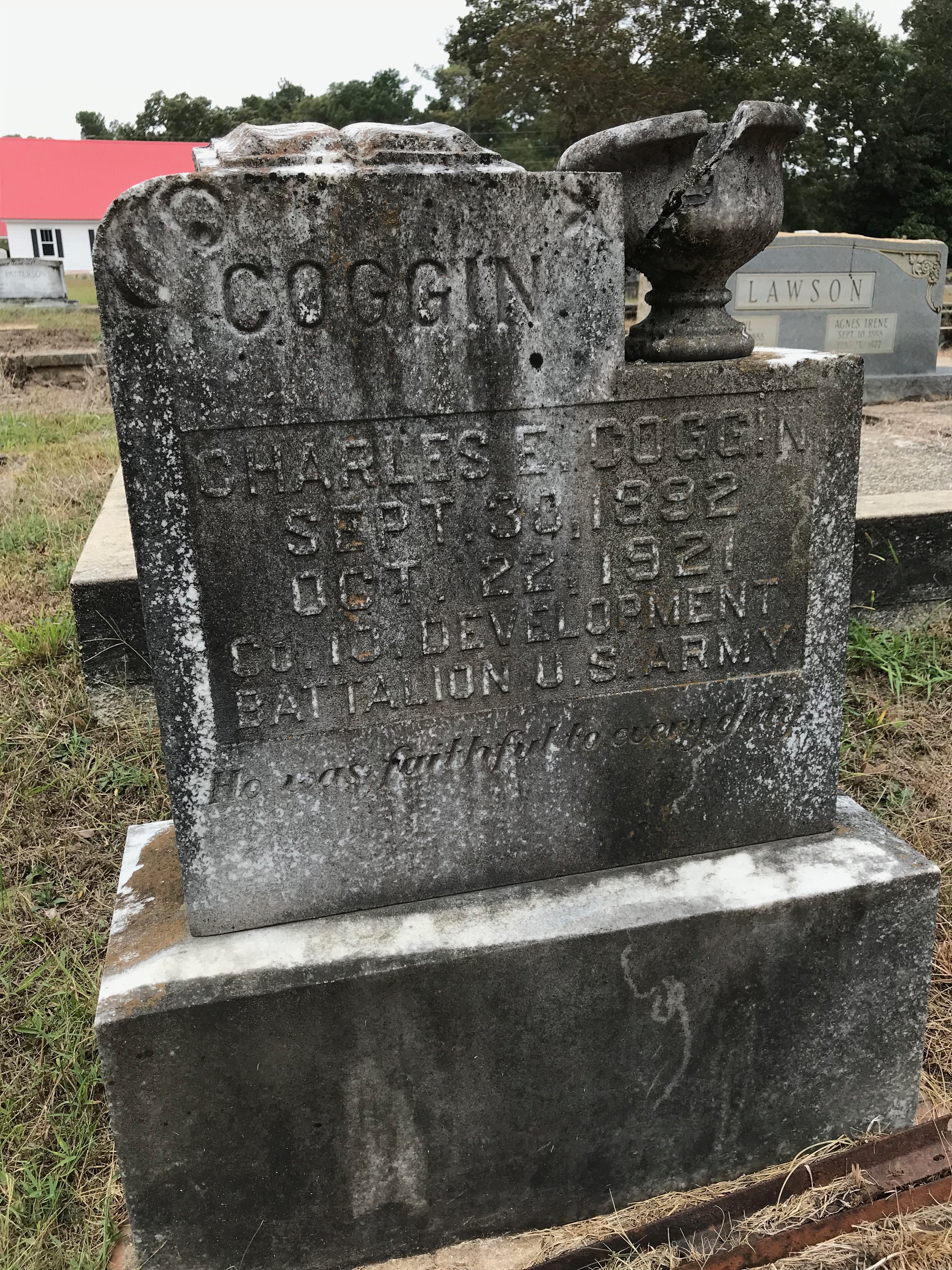
In the meantime, Charlie was buried at CLCC Cemetery. His marker notes that he served in the Co. 10 Development Battalion. I saw no reference to this in his service records.

Charlie Coggin left behind a wife and child when he died in 1921.

Charlie’s wife, Mattie, remarried to Sam Gosa in 1923. They had 10 children together. They lived in Spalding County for many years. Mattie died in 1968 and is buried in Marietta National Cemetery with Sam, who died in 1958.

Buried in the Same Cemetery

In March 1930, Grover Ison was paroled and returned to Brooks. He married Inez Malone on April 1, 1930. I am guessing he knew her before he went to prison. They had a son and daughter together. According to the 1950 U.S. Census, he was operating a pulpwood business in Spalding County. He died on May 1, 1953 at the age of 60. Inez died in 1966 at age 70. Both are buried in the CLCC Cemetery. I did not get a picture of their graves.

I don’t know how close Charlie’s grave is to Grover’s grave. The area around Brooks where the Isons and Coggins families lived is not heavily populated. Everybody knew everybody. I cannot imagine coming face to face in a store with the man who had shot and killed my husband. Or in a church. Or at an event. But it’s likely that this happened.

Charlie and Mattie’s son, Eddie, grew up and worked in a mill in Griffin. He married and moved to Magee, Miss. During World War II, he served with distinction and received the Bronze Star and the Purple Heart. He died on Sept. 19, 2005 and is buried with his wife, Leola, in Magee Cemetery in Mississippi.

Part of me wonders if Mattie ever took Eddie to visit Charlie’s grave and if he asked his mother what happened. Did she point over to where his father’s killer was buried? The thought of it saddens me.

What Happened to Christia?

I’m sharing this last story as an example of something I call “the mystery surviving spouse”. You can find one of these in almost every decent-sized cemetery. A grave marker in which the name and dates of the deceased is on one side, and the name and birth day of the spouse is beside it. Only there is no death date on it.

There are many reasons for this. Sometimes the surviving spouse marries someone else and ends up buried elsewhere with that person, sharing their monument. Sometimes the surviving spouse doesn’t remarry but ends up buried in a different cemetery. More often than not, the surviving spouse doesn’t remarry, dies, but nobody bothers to get their side of the monument engraved. As a result, there’s a mystery.

In the case of Christia Ann Scott Chappell, I tried to find out what happened to her with little success.

Christia was the second wife of William “Henry” Chappell, whose first wife Jane died on New Year’s Eve 1900 at age 38. She and Henry had five daughters together. She is buried in Banks Cemetery in Fayetteville.

Henry remarried to Christia Odell on May 4, 1902. She was 38 and Henry was 41. They had one son, Roy, the following year.

We don’t know when Chrisita Ann Scott Chappell died or if she’s actually buried here.

By the time of the 1910 U.S. Census, only one of Henry’s daughters, Ethel, was still living at home. Henry died on Nov. 21, 1921 at age 60. His obituary mentions him having a wife (no name) and the names of his five daughters. Roy is not mentioned. Henry was buried in the CLCC Cemetery. Three of his daughters are also buried there.

Christia lived with son Roy and his family in Newnan, (he married Janie Whatley in 1924), through 1940. After that, she disappears. She does not appear on the 1950 U.S. Census as living with him. I could find no death record or obituary for her. Roy died in 1961 and is buried in Oak Hill Cemetery in Newnan.

It’s quite possible that Christia is buried beside Henry. But if that’s the case, why was her death date never engraved on their shared marker? I have no idea. It’s sad to think that nobody cared enough to add it. But it happens often.

Lunch!

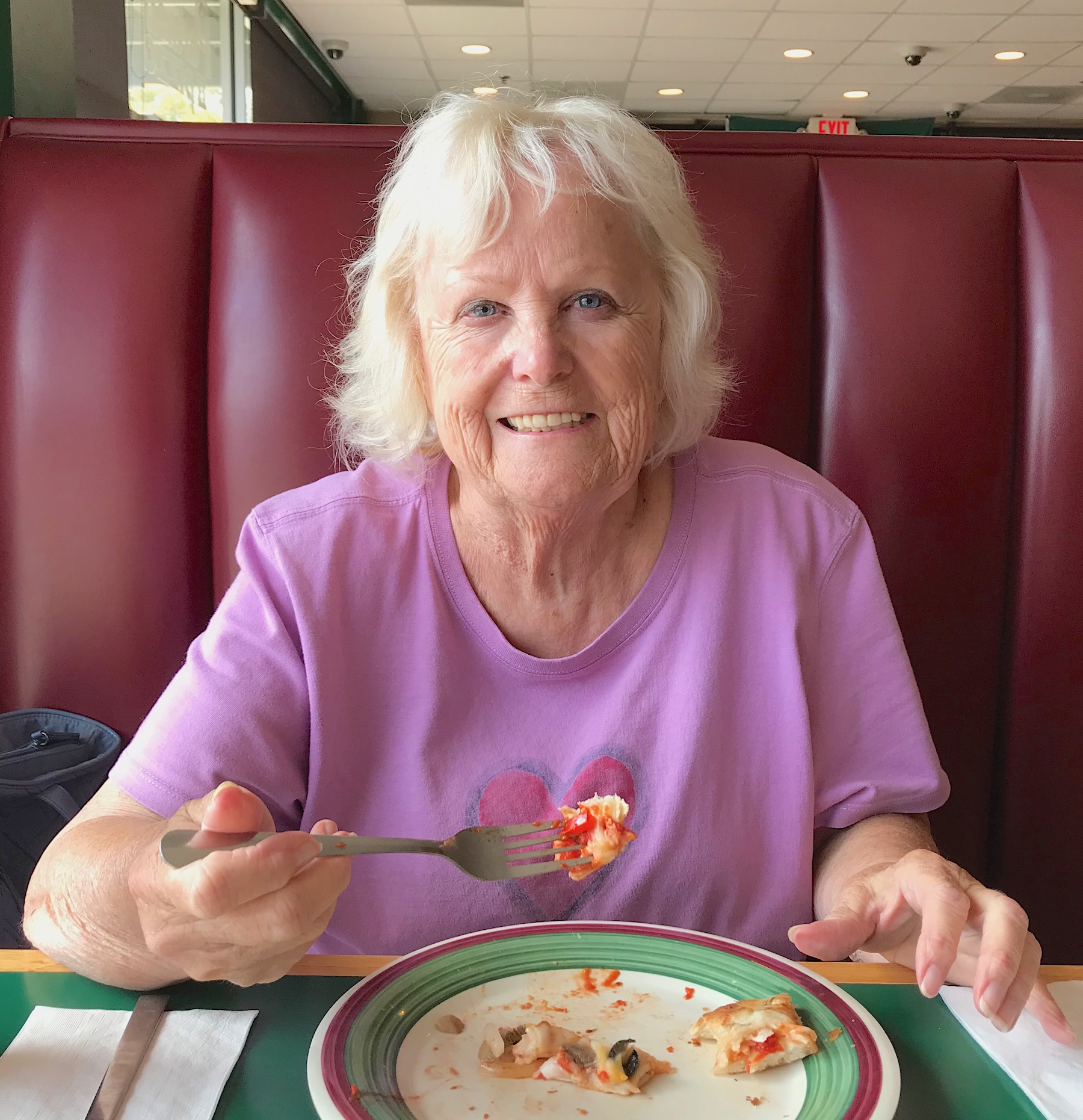
By this time, Mom and I had earned a much deserved lunch at our favorite pizza place in Fayetteville, Partner’s Pizza. Cemetery hopping can get quite tiring and we needed to refuel.

Mom and I both enjoy traipsing among the tombstones but we also like good pizza!

Next time, I’ll be visiting the last stop on our Fayette County hop at Ebenezer United Methodist Church Cemetery. I’ve got a few interesting stories just waiting to be told.

Thomas G. Traylor, a father of 10 and a Civil War veteran, died in 1898 at age 69.

Close to Home: Wandering Through Fayette County, Ga.’s County Line Christian Church Cemetery, Part I

24 Friday Jan 2025

Posted by adventuresincemeteryhopping in General

≈ 3 Comments

Our next stop before a well-earned lunch was the cemetery at County Line Christian Church just below Brooks.

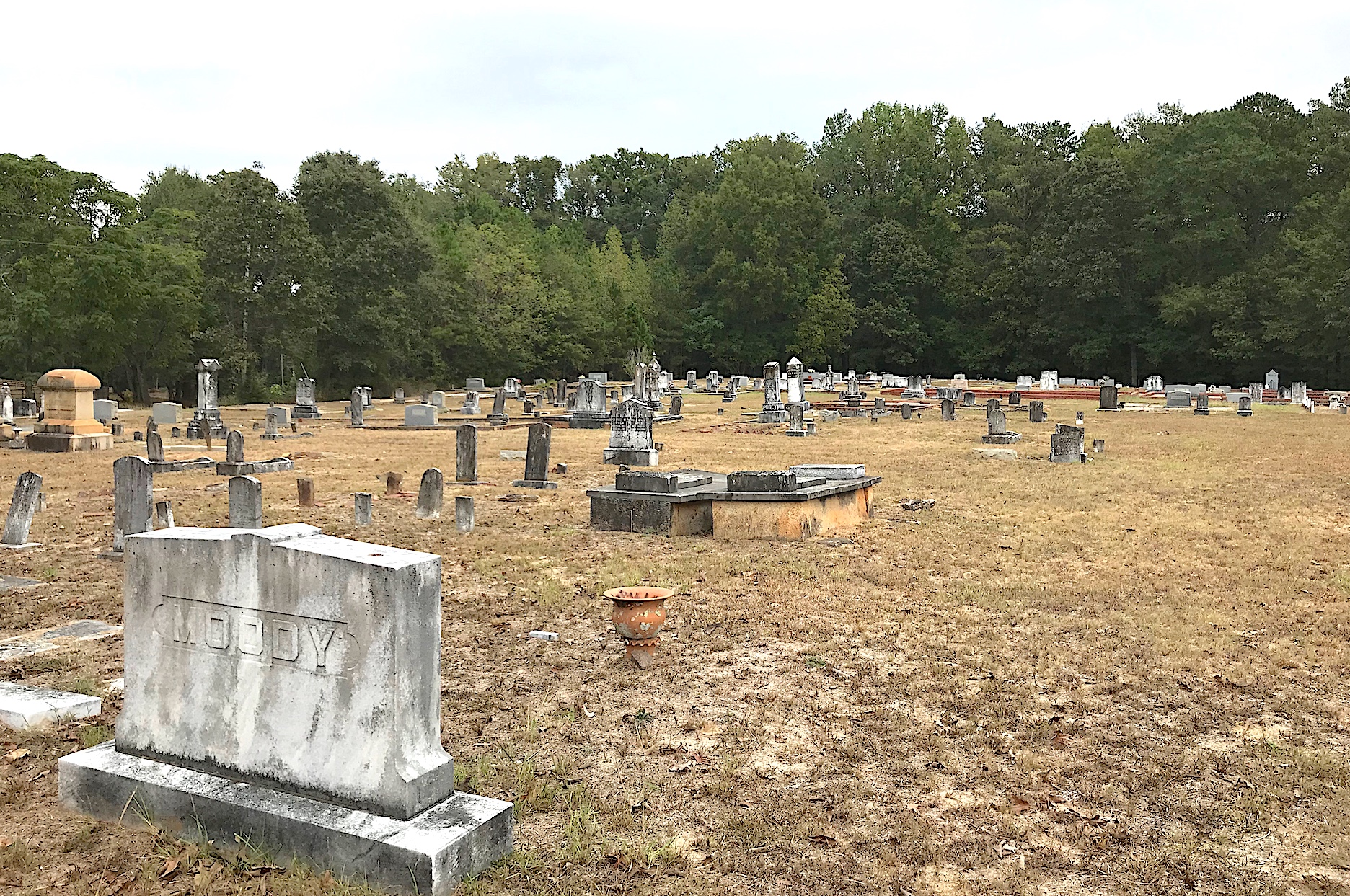
County Line Christian Church Cemetery contains close to 700 graves, according to Find a Grave.

What little I found about this cemetery comes from a August 25, 2015 article in The Citizen newspaper:

The church is considered the second oldest Christian church in Georgia, its founding members among the earliest pioneers in Fayette County. Some of those pioneer founders included James W. Lynch, George Lynch, Isham Moody, Kirkland Leach, and J.W. Westmoreland. It is said the church was organized about 1828 in the shop of a Dr. Westmoreland and met there until 1843 when J. W. Westmoreland gave five acres of land (the present site) upon which to build a church. The first building was built of logs and was destroyed by fire in 1845.  

The church was rebuilt in 1848 and remodeled in 1875. The structure has remained in the same site since that time.

County Line Christian Church celebrated its 175th anniversary in 2015.

The oldest marked grave here is for John Westmoreland, who lived from 1756 to 1816. He may have been the father of J.W. Westmoreland (mentioned above). I suspect that this marker was added at some later date because it looks too new to be that old.

The oldest marked grave at CLCC Cemetery belongs to John Westmoreland.

Find a Grave shows that there are nearly 700 graves here. While I did not find the graves of the founders listed above, I did see their last names on several stones. You can see Moody in the bottom left of the photo below.

Wooden Grave Markers

If you’ve read my blog for a while, you know that encountering a wooden grave marker is almost unheard of these days. While wooden markers were often used back in the day, they didn’t usually stand the test of time. So when I see one intact, I’m genuinely surprised.

For whatever reason, the two wooden grave markers for George Washington Jefferson Lynch and his wife, Sallie Warner Lynch, have stone markers in front of them. My guess is that family didn’t want their graves to end up being lost to time and eternity so they had new ones made. That’s the kind of decision I admire because it means we get to see something that rarely survives.

It’s a rare treat for me to see wooden grave markers that have survived.

Born in 1848, George was the son of George W. Lynch. It’s possible that this George Lynch is the son of the man who helped found the church back in 1843. He married Sallie in 1874. The couple had seven children together.

George died at age 74 on Sept. 14, 1921. Oddly enough, his death certificate lists no cause of death at all. Sallie died almost five years later on Aug. 6, 1926 at age 66.

Buried between them is their unnamed infant grandson, the child of Joe and Clara Lynch. The child died on Dec. 14, 1933.

Anonymous Graves

It’s fortunate that the Lynches knew who was buried beneath those wooden markers. Many times, the identity of the deceased is lost forever. It’s something I see if many cemeteries. Here are a few examples.

I’ve shared photos of shell graves before. Many folks assume shell graves are usually located near the beach, but I’ve seen them hundreds of miles inland. The reasons why people used shells to decorate graves are many, the most common (and logical) reason being that it’s what they had. Simple as that.

In this case, these two were possibly a mother and child since one grave is larger than the other. There is a marker for the larger one, but it’s now impossible to read. It may have never had any inscription.

The identities of these two people are unknown.

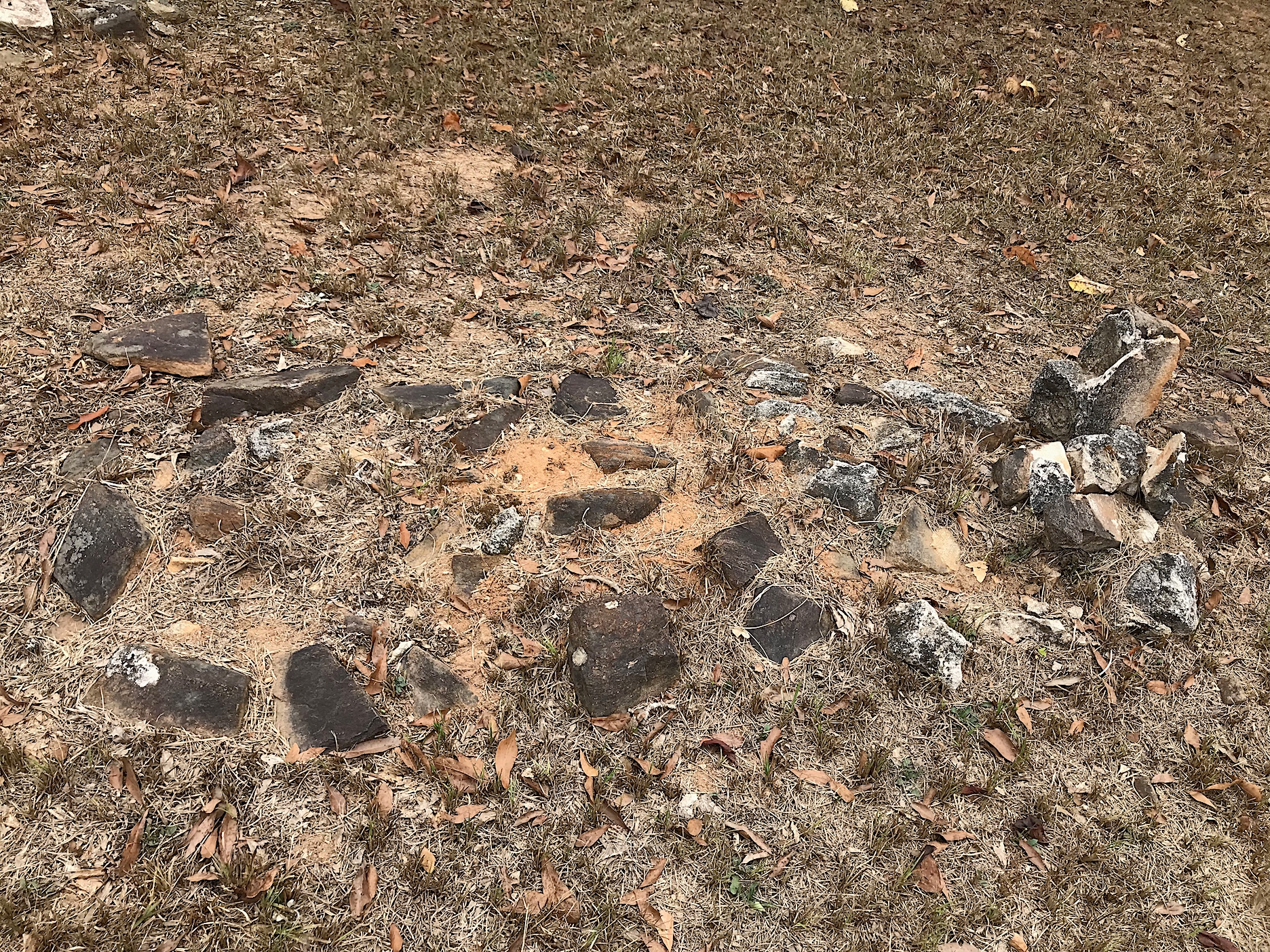
Then there’s this type of grave, which is fairly common, a circle of stones grouped together. This could be a child’s grave due to the size, but I don’t know for sure. This is not a Southern phenomenon, either. I’ve seen them in Ohio and Oklahoma as well. Again, people were using what they had. Purchasing a marker may have been beyond their means at the time.

Another anonymous grave, made up of stones.

Two Brothers Marry Two Sisters

It’s not unusual for two brothers from one family to marry two sisters from another. It happened in my own family more than once. That was the case for South Carolina-born brothers Hosea (1817) and Benjamin Gray, Jr. (1819). The Gray family moved to Coweta County sometime in the 1840s.

Hosea married Sarah Freeman in 1843 and the couple had two children, Nancy (who died in 1854) and Benjamin (who died in 1892). Sarah died in 1855. Hosea then married Susan Elizabeth Kempson in 1856. They would have at least 10 children together.

Benjamin married Susan’s sister, Martha Catherine “Mary” Kempson, in 1862. They had two children, Nancy (1863) and Benjamin Jr. (1865). I’m not sure when Benjamin enlisted in the Confederate Army but he did so. He was attached to the Second Battalion of the Georgia Cavalry, Company C, also known as the “Sidney Johnston Avengers”. By this point, older men like Benjamin (who was 45) and young teens were enlisting in the Confederate Army to help the cause.

“Harvest of Death”

I could find few details about Benjamin’s war record, but I do know he died on Dec. 13, 1864. He either died in Grisworldville, Ga. (in Jones County) or in a military hospital near Macon. The Battle of Griswoldville took place on Nov. 22, 1864, which was the first battle of Sherman’s infamous March to the Sea. I had never heard of it before doing this research about Benjamin.

Historic sign describing the events surrounding the Battle of Grisworldville in November 1864 during the Civil War. The town was not rebuilt afterward.

It was a devastating encounter for the Confederate soldiers, as described in Ryan Quint’s article on the “Emerging Civil War” web site:

As the Union soldiers policed the battlefield, they were horrified at the results. These men were veterans of many of Sherman’s campaigns, and they had seen their fair share of battlegrounds, but Griswoldville was different. One account wrote, “Old grey-haired and weakly looking men and little boys not over fifteen years old, lay dead or writhing in pain.” In front of the 100th Indiana, Theodore Upson wrote that “It was a terrible sight…We moved a few bodies, and there was a boy with a broken arm and leg—just a boy 14 years old; and beside him, cold in death, lay his Father, two brothers, and an Uncle. It was a harvest of death.”

Private Benjamin Gray was 45 when he died about a month after the Battle of Griswoldsville.

Benjamin was wounded at Griswoldville (an estimated 500 or so were wounded and 600 captured, with 51 dead). According to his wife’s obituary, he died in a military hospital in Macon but it also lists that he was a captain. So that may not be true. His body was brought back for burial in the CLCC Cemetery. Mary, his wife, gave birth to son Benjamin Jr. a few weeks later on Jan. 9, 1865.

Benjamin Gray’s monument is identical to that of his brother Hosea’s.

Benjamin Gray Jr. died of typhoid fever in 1892. He is buried at Senioa Cemetery in neighboring Coweta County. Mary died in 1929 at age 93 at the home of her daughter, Nancy Gray Couch Wilkes. Mary is buried with Benjamin Jr. in Senoia Cemetery. Nancy died in 1948 and is buried in Atlanta’s Westview Cemetery.

Benjamin’s brother, Hosea, also served in the Confederacy but returned home alive. I’m not sure what unit he served in. Hosea and Susan’s daughter, Villular, was born in February 1864, just a month after her cousin Benjamin Jr.

According to Ancestry, on Oct. 5, 1866: “Villular was accidentally shot when someone left a gun on the bed. The covers got caught in the trigger and when the baby pulled on the covers, the gun went off and she was killed.”

Villular was originally buried on the property where the Grays lived but was later moved to CLCC Cemetery.

Villular Gray was only a toddler when she died of an accidental gun shot wound in 1866.

Hosea died on Dec. 14, 1902 at age 85. Wife Susan died on April 4, 1923. They are buried together at CLCC Cemetery.

Because Hosea’s marker is identical to his younger brother’s, I suspect they were placed at the same time in 1902.
Susan died six years before her sister (and sister-in-law) Mary Kempson Gray.

A Father and Son Killed

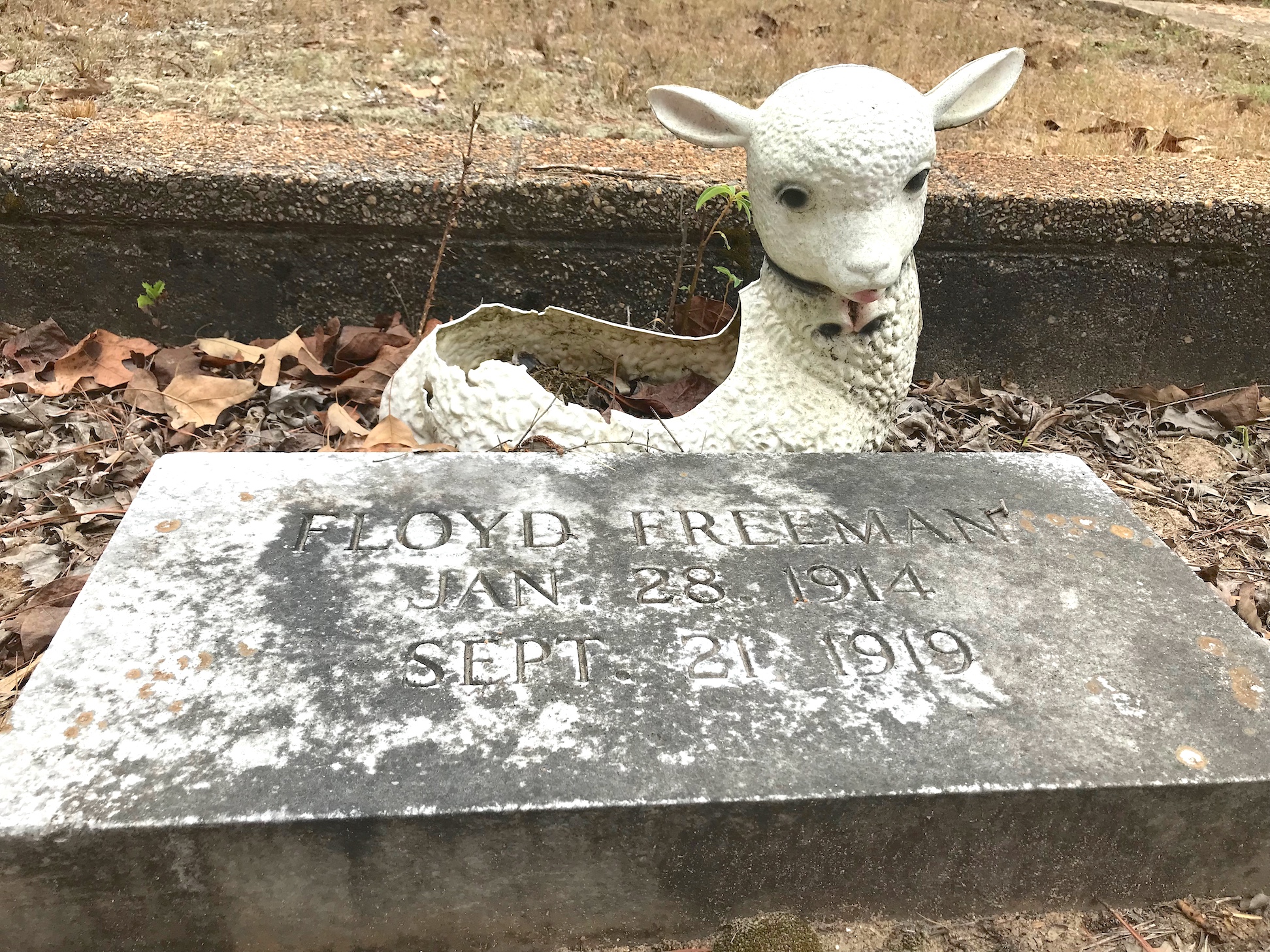
When I saw the grave of little Floyd Freeman, I wondered if perhaps he had died of Spanish Flu. He died in 1919, so it’s not an off-the-wall theory. However, when I scanned the local newspaper to find out if that was so, I found a story that broke my heart.

Floyd died a few hours after he and his father, James, were hit by a passenger train while they were in their buggy crossing the tracks. James was killed instantly.

James Freeman and his son, Floyd, died in a terrible accident.
A broken lamb stands watch over Floyd Freeman’s grave.

James is buried near Floyd with his wife, Alice Reeves Freeman. She died in 1942 at age 71.

I’ve got more to share from County Line Christian Church Cemetery. I hope you’ll join me for Part II.

Grave of William Wright Matthews (1824-1880) was commissioner for Fayette County in 1871. He served as a Georgia state senator from 1873 to 1876.

Close to Home: Exploring Fayette County, Ga.’s Brooks City Cemetery

17 Friday Jan 2025

Posted by adventuresincemeteryhopping in General

≈ 1 Comment

Note: Tomorrow marks the 12th anniversary of this blog! WOW! I never imagined I would have enough to write about to fill 12 years but here we are. I hope you’ll stick around for more stories from the stones in 2025 and beyond — Traci

First, my apologies for not writing a post since early October 2024! I’ve never gone that long without doing so but sometimes life gets in the way of your plans. A stress fracture in my left foot certainly threw me off. At any rate, happy New Year!

Second, this post contains stories about Confederate veteran graves. If that is a trigger for you, you may wish to stop reading now.

Brooks City Cemetery contains about 120 graves.

Mom and I stopped by Brooks City Cemetery on our multi-cemetery “hop” around Fayette County, not knowing what to expect. I knew it contained several Confederate veteran graves. A large sign tells you that the cemetery is maintained by the General McLaws Camp #29 of the Sons of Confederate Veterans. It also states that 18 Confederate veterans are buried there. Find a Grave lists about 120 memorials for Brooks City Cemetery. That’s about all I know.

Namesake of Brooks

There are four Brooks graves at this cemetery and one of them happens to be the person for whom the town was named. His marker isn’t very grand so I had no idea who he was when I photographed it back in 2019.

I’m not sure where Hillery Brooks was born but he married Nancy Anderson in Oglethorpe County in 1827. They lived in Henry County and started a family. He and Nancy moved to Fayette County in the 1850s, following some of their now married daughters. The town was called Sharon Grove at the time. The Brooks family thrived and Hillery was active in their Baptist church.

Undated photo of Hillery Brooks, who donated the land upon which the town’s train depot was built in the 1870s. (Photo source: Find a Grave)

In 1871, the Savannah, Griffin, and Alabama Railroad finished construction through Sharon Grove (which had begun before the Civil War). Hillery donated the land for the depot with the only condition being that it be called Brooks Station. Over time, Sharon Grove began to be called Brooks Station and eventually was shortened to Brooks in 1907.

As a side note, the Brooks family is thought to have been the first in town to have a well on their property. Before then, folks carried water from nearby streams.

“The Good Man is Gone From Us”

Hillery Brooks died in 1881 at age 75, after suffering a bout of dropsy. This obituary from the Newnan Herald describes his funeral.

This description of Hillery Brooks’ funeral appeared in the Feb. 10, 1881 edition of the Newnan Herald.

Wife Nancy lived another nine years, dying on July 1, 1890 after a “lingering illness.” I suspect that both Hillery and Nancy’s markers were made at the same time since they are so much alike. I like the motif of the finger-pointing hand emerging from an open Bible.

Nancy and Hillery’s markers feature a finger-pointing hand emerging from what appears to be a Bible.

Hillery and Nancy’s son, John R. Brooks, is also buried here. A Confederate veteran, he served Georgia’s 53rd Infantry, Company C. They were known as the “Fayette Planters”. In June 1864, he was held prisoner in Cold Harbor, Va. but was eventually released. He died on May 26, 1936 at age 90.

Like many Brooks men, Corp. John R. Brooks served in the 53rd Georgia Infantry Regiment, Company C, known as the “Fayette Planters”.

A Teenage Soldier

James Madison Bridges has two markers. One that he shared with his wife, Maenette, and his Confederate grave marker beside it.

James Bridges was 47 when he died in 1896.

Born in 1847 in Fayette County to Robert Bridges and Sallie Price Bridges, James had many siblings. He enlisted in the Confederate Army in June 1863 in nearby Griffin, and was assigned to Company E of the Second Regiment of the Georgia Cavalry. They were also known as the “Fayette Dragoons”. He would have been only 16 at the time.

Private James Madison Bridges was only 16 when he enlisted in 1862. (Photo Source: Ancestry.com)

I don’t know much about James’ service in the Civil War. He surrendered with his company in April 1865 in Greensboro, NC. Then he returned to Fayette County and married Mary Antoinette (Maenette) Cobb in April 1869.

The couple farmed next door to James’ parents. By 1880, they had a son and two daughters. According to the 1910 U.S. Census, they had 12 children altogether, with seven of them surviving.

James died of paralysis on February 3, 1896. It’s possible he had a stroke that caused it but I can’t be sure. I could not find any documentation to back up the statement in James’ obituary that he represented Fayette County in the Georgia legislature. But he was clearly loved by his neighbors.

Obituary for J.M. Bridges, who died at age 48 in 1896. (Photo Source: Fayetteville News, Feb. 7, 1896)

Maenette did not remarry but continued living in Fayette County. She applied for a Confederate widow’s pension in 1910 and it appears that she did receive it. Maenette died on April 12, 1919. Brooks, like the rest of America, was suffering through the Spanish Flu pandemic at the time. She was 73. James and Maenette share this marker.

Maenette lived another 25 years after her husband died.

Confederate Widow

Finally, I want to share the story of another couple, Kenion and Nettie Brooks. But in this case, Kenion went to war and never returned.

Born on May 2, 1829 in Fayette County, Kenion (sometimes spelled Kinion) Abraham Brooks married Parthenia Ann (Nettie) Mitchell in 1851. She was born around 1836, so Nettie was a young bride. The couple would have at least seven children together.

Enlisting in May 1862, Kenion served in Company C of the Georgia 53rd Infantry. This is the same Fayette Planters that John R. Brooks (mentioned above) served in. He saw a great deal of action, fighting in the Battle of Malvern Hill, the Battle of Stone Mountain (Va.), and the Battle of Sharpsburg (Antietam).

“In Memory of” on a military marker like this usually indicates it is a cenotaph and the deceased is buried elsewhere.

But it was at the Battle of Salem Church (Chancellorsville, Va.) that would seal Private Banks’ fate. From May 3 to May 4, 1863, the 53rd lost 15 men and 105 were wounded. Kenion Banks was among the wounded and later died at Spotsylvania (Va.) Courthouse on May 7, 1863. He was 34.

I believe that the actual burial site of Kenion Banks is unknown, somewhere in Spotsylvania. His marker at Brooks Cemetery is most likely a cenotaph because of the words “In Memory Of” and was placed at a later date.

Back in Brooks, Nettie was pregnant and caring for their children. She gave birth to Kenyon Bradford Banks on July 16, 1863. They lived with her father, Francis, for a time. She died on July 30, 1885 at age 50.

A hand clutching a bouquet of flowers with one finger pointing up is a motif I don’t often see.

I think Nettie’s grave marker is one of the loveliest I’ve seen. The motif of the hand clutching a bouquet of flowers with one finger pointing up is not one I see very often. It could mean that God plucked a beautiful flower to take to Heaven. I do believe Nettie’s children loved her very much to have provided such a thoughtful stone for their mother.

Next time, Mom and I will take a walk through Fayette County’s County Line Cemetery.

Also a soldier in the Georgia 53rd, Company C, Private Alexander Haisten was one of several brothers who fought in the Civil War. Only he and his brother, Henry, came home alive.

Close to Home: Stopping by Fayette County, Ga.’s Whitewater Baptist Church Cemetery.

08 Tuesday Oct 2024

Posted by adventuresincemeteryhopping in General

≈ Leave a comment

Our next stop lay just a little southwest from Woolsey in Brooks, Ga., an equally small town. I knew nothing about White Water Baptist Church Cemetery (WBCC), but I wanted to walk around.

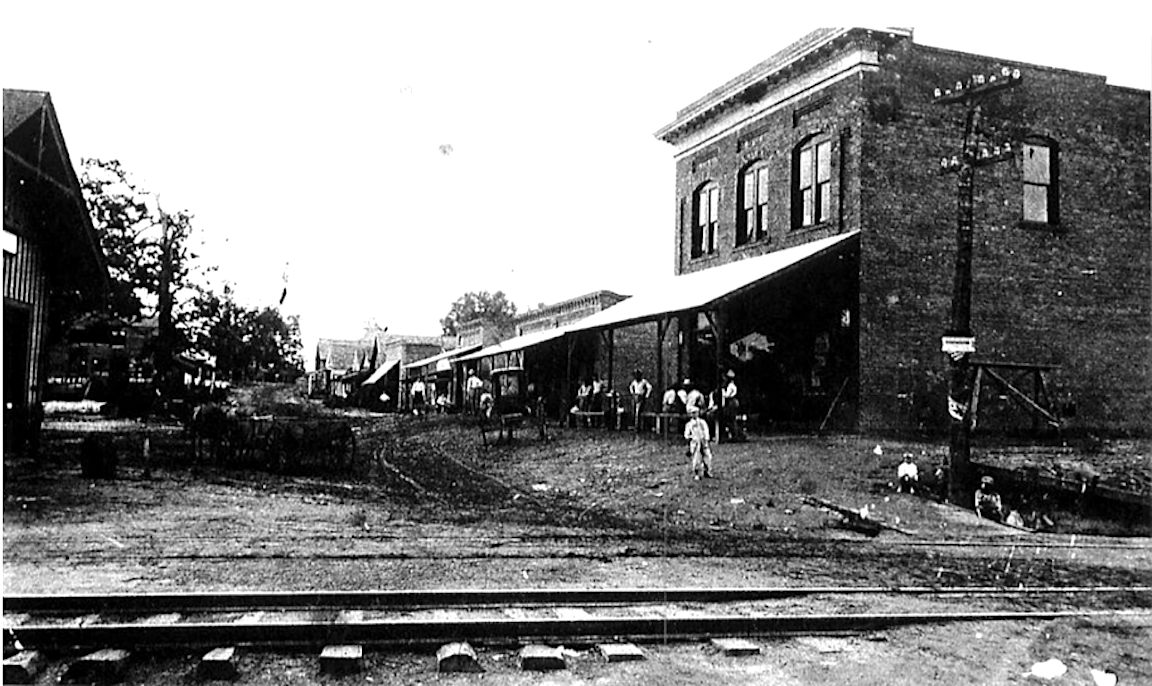
Before the area around Brooks began to be inhabited by white settlers in the early 1800s, the Creek Indians lived there. Around 1850, a planter named Hillery Brooks sold the lot upon which the new train depot was to be built. He asked that it be called Brooks Station. It was shortened to Brooks in 1905.

Photo of Brooks taken around 1912.

Until 1921, cotton was king in Brooks until the boll weevil destroyed many of the crops, placing the town in an economic depression. Brooks lost its charter but began to emerge out of the depression in 1939 after electricity was installed in the town. Brooks received its town charter again.

These days, Brooks has a population of around 600 people. That may not seem like a lot but that’s double the number since 2013.

Whitewater Baptist Church

I could not find much information about Whitewater Baptist Church. It was constituted in 1823. Currently, it’s part of a small network of churches that operate under the umbrella of Crossroads Church.

Whitewater Baptist Church as it looked in October 2019.

According to Find a Grave, there are about 500 memorials listed. The earliest graves appear to be for Civil War soldiers who died around 1865.

Whitewater Baptist Church Cemetery in October 2019.

The Dunn Family

There are 48 Dunns buried at WBCC. Several of them served in the Civil War in the Confederate Army. Some came home alive, others did not. Within the Dunns, they must have been big fans of Kentucky-born politician Henry Clay because several of them have names that contain “Henry Clay” within them.

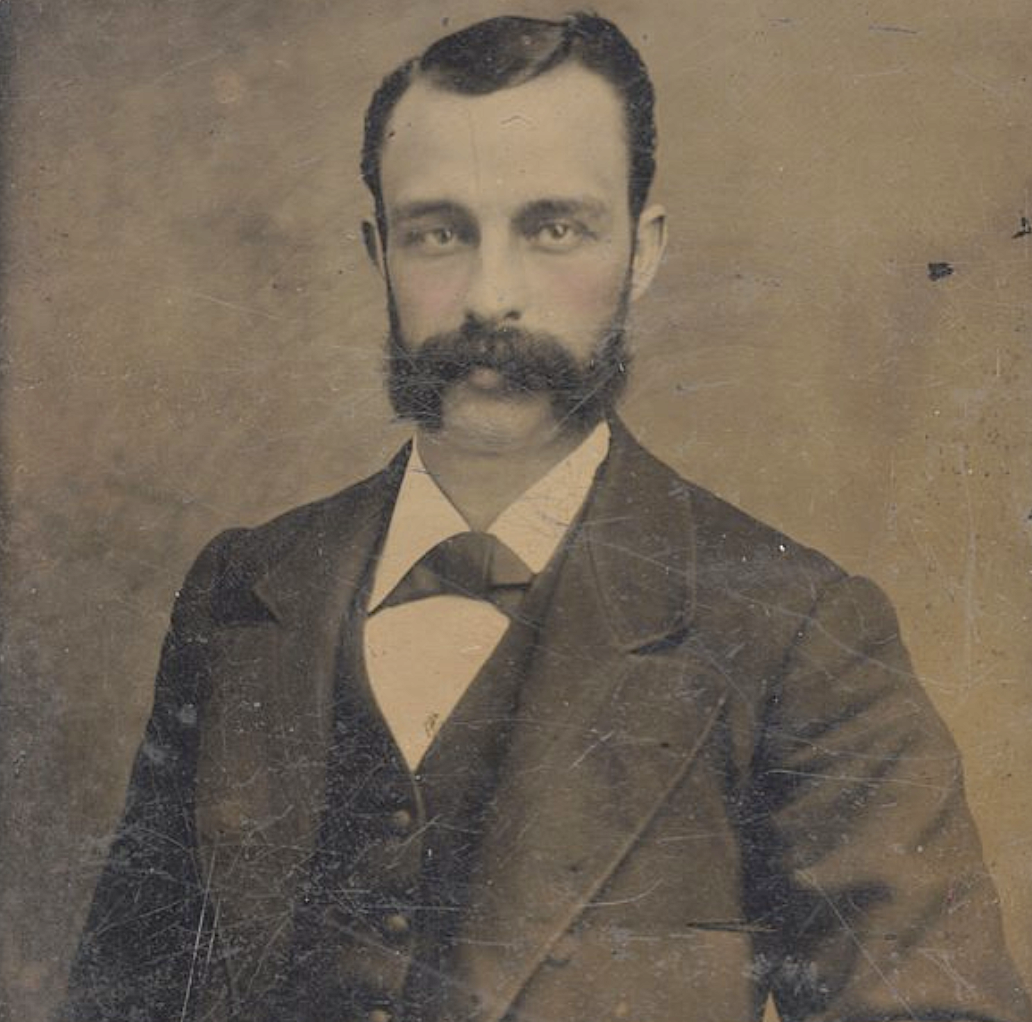
Born in Fairfield Co, S.C. to Stephen Smith Dunn and Drucilla Ross Dunn in 1822, Alexander “Alex” Hamiter Dunn married Jenny Louisa Westbrook around 1840 in Henry County, Ga. William was born in 1841 and Henry Clay “Bub” Dunn was born in 1842. Jenny died in 1852. Alex remarried the following year to Mary Ann Elizabeth Akins.

Undated photo of Alex Dunn. (Photo source: Find a Grave.com)

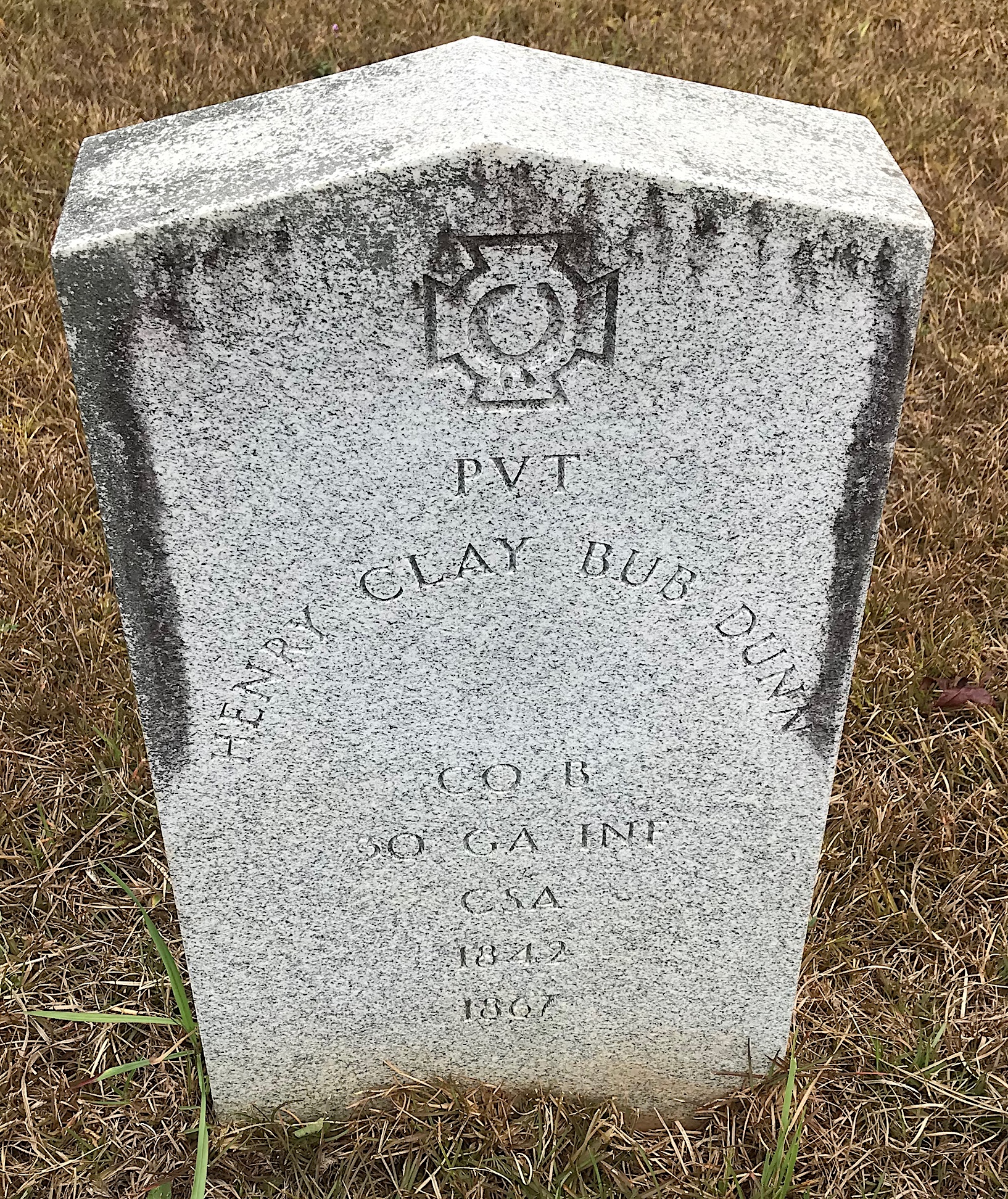
Both William and Bub served as privates in the 30th Georgia Infantry, Co. B. Bub died at age 24 in 1867. I don’t have an exact death date for him, unfortunately. He must have returned home after the war. Details are unknown.

Pvt. Henry Clay “Bub” Dunn served in the same unit as his brother during the Civil War.

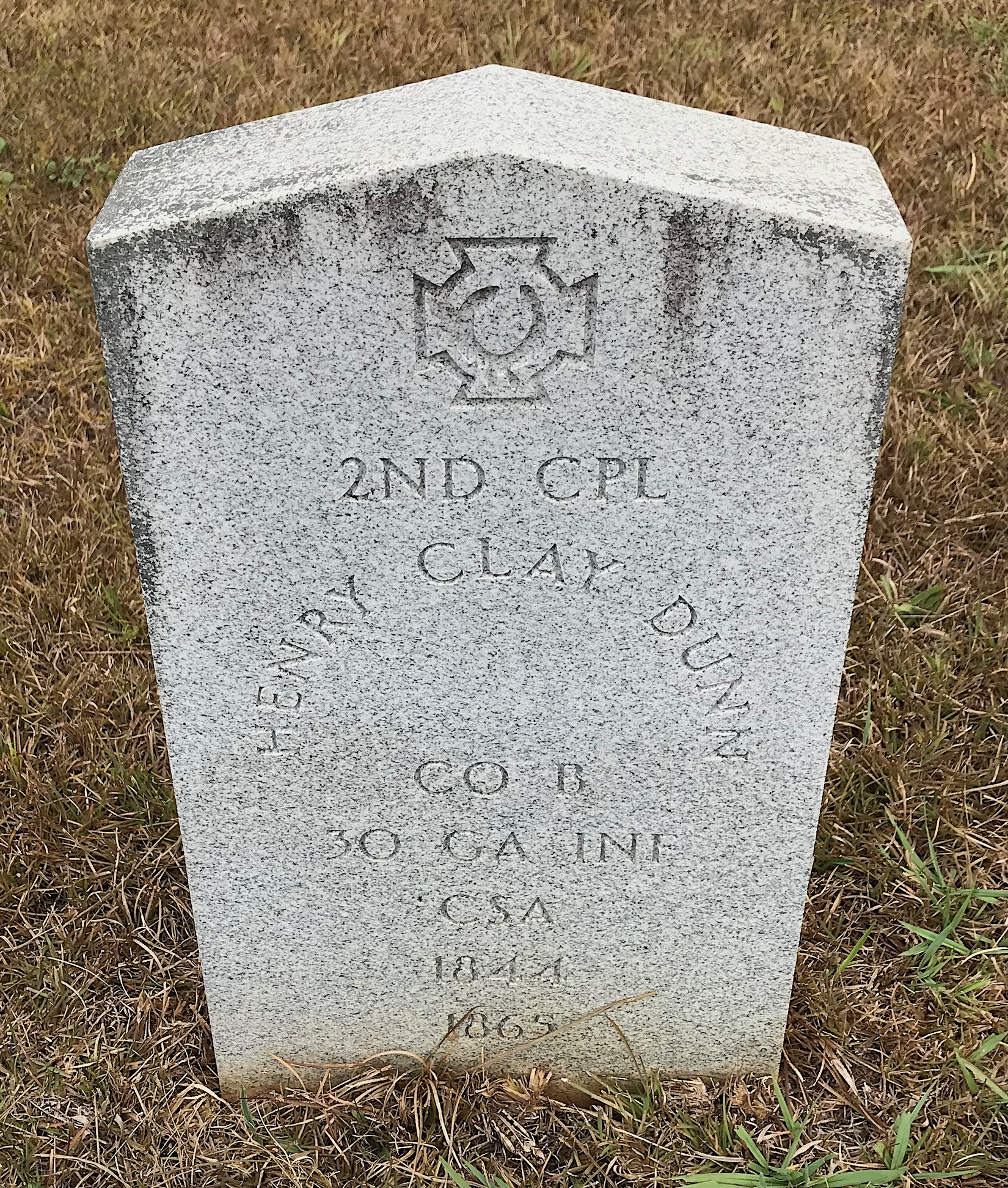
Then there’s a marker for a Henry Clay Dunn. According to the dates, he was born in 1844 and died in 1865. He, too, served in Co. B of the 30th Georgia Infantry.

Grave of 2nd Corporal Henry Clay Dunn. How was he related to Bub Dunn?

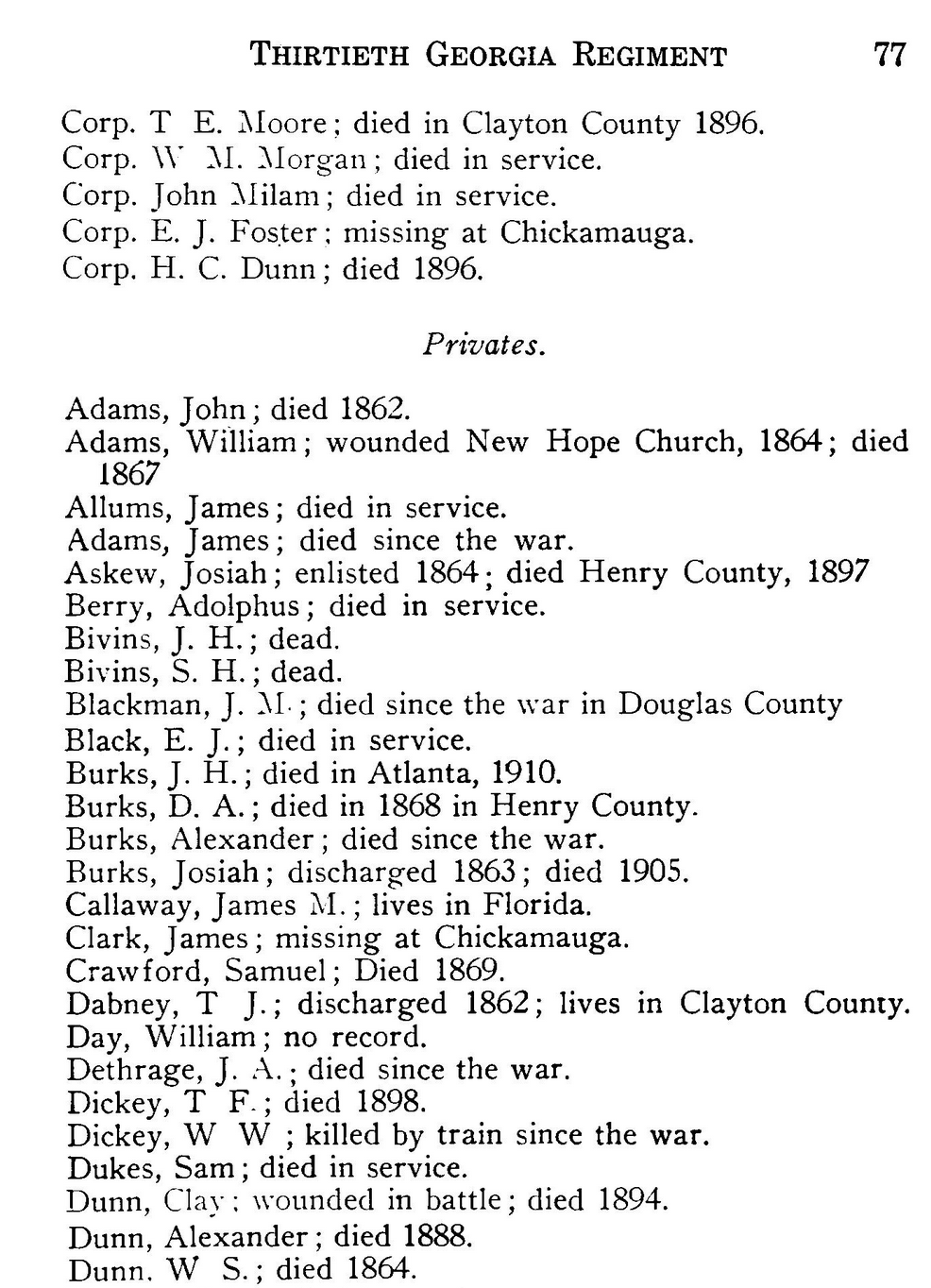
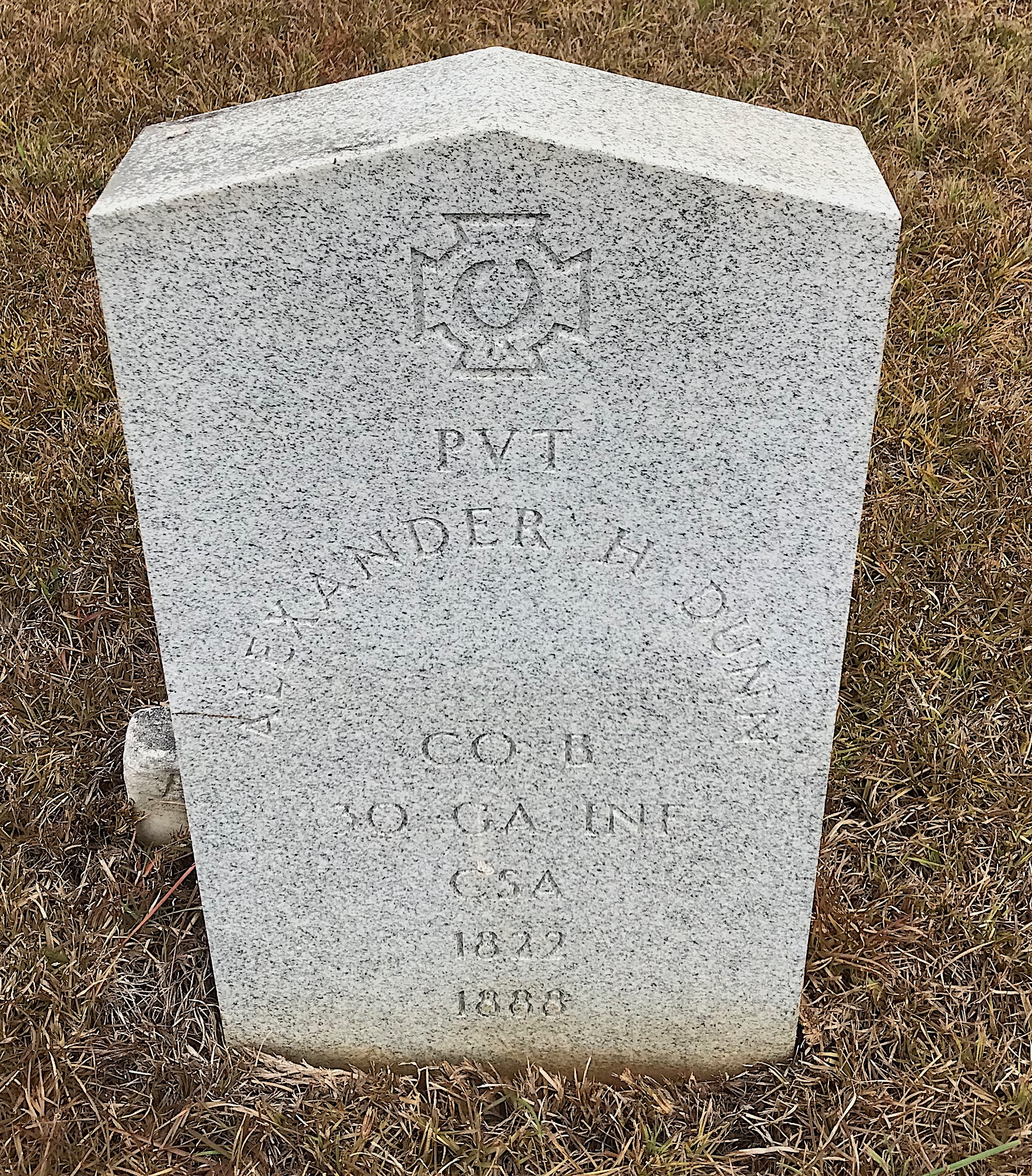
I found documentation of the names of those who served in Company B of the 30th Infantry. A Corporal H.C. Dunn is listed as dying in 1896. A Private Clay Dunn, wounded in battle, died in 1894. Private Alex Dunn is listed as having died in 1888. W.S. Dunn is listed as having died in 1864.

From the book “Brief History of the 30th Georgia Regiment”, published in 1912.

Of this information, I can only confirm that Alex Dun did indeed die in 1888 in Brooks.

Alex Dunn survived the Civil War and returned to his family in Brooks.

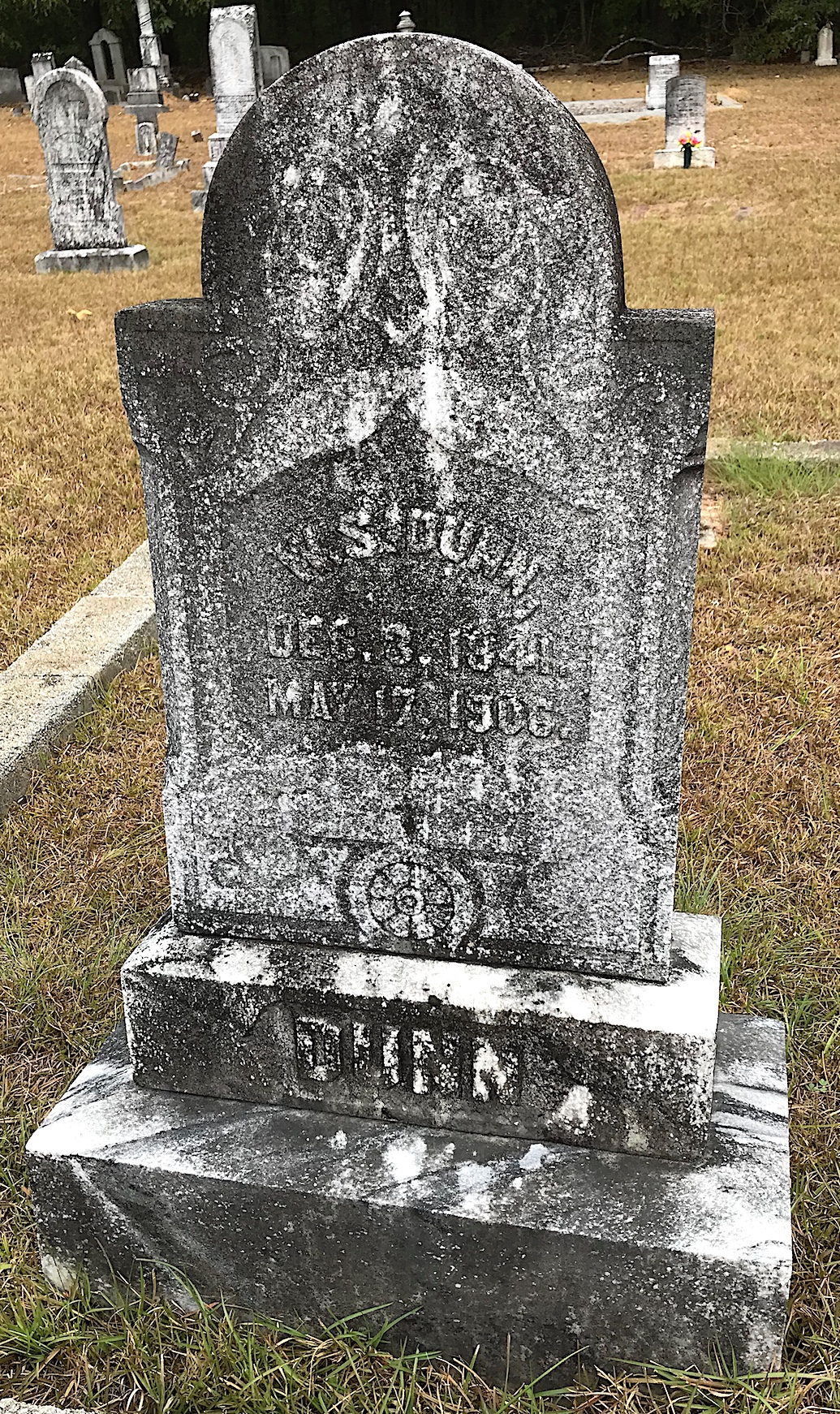
William Samuel Dunn’s marker states he died in 1906.

William Samuel Dunn outlived his brother by several decades.

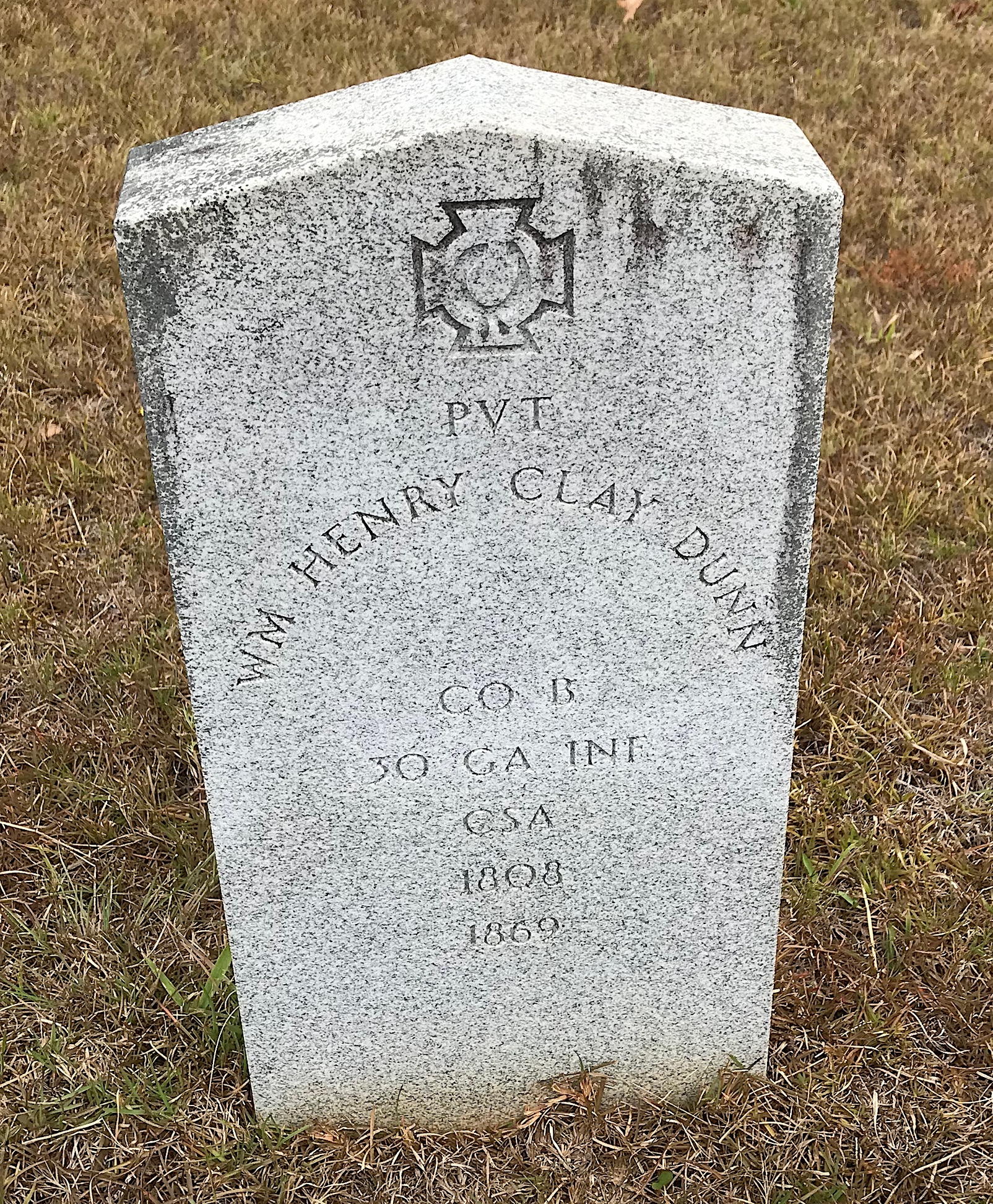
Then we have William Henry Clay Dunn, son of Joel Dunn and Sarah Smith Dunn. Born in 1808, he also served in the 30th Georgia Infantry and died in 1869.

How was Private William Henry Clay Dunn related to the other Dunns?

In 2009, John Rigdon wrote “Historical Sketch & Roster of the 30th Georgia Infantry” and provided more information. Oddly, I did not find Alex listed anywhere in his publication.

Dunn, Henry C., Jr. 2d Corporal Sept. 25,1861. Discharged May 14, 1862. Reenlisted as a private May 14, 1862. Sick in camp at Savannah, Ga. Dec. 31, 1862. Died in 1865.

Dunn, William H. C. private September 25, 1861. Wounded in forehead. resulting in loss of sight of right eye, at Chickamauga, Ga. September 19, 1863. Captured at Marietta, Ga. June 19, 1864 . Paroled at Camp Morton, Inf. and forwarded via Baltimore, Md. to Point Lookout, Md. for exchange, Feb. 19, 1865.

Dunn, William S. private Sept, 25, 1861. Appointed Corporal. Captured at Nashville, Tenn. Dec. 16, 1864. Released at Camp Chase, Ohio on June 12,1865.

I’m sure someone with a subscription to Fold3.com and more experience with military records can somehow sort out how these Dunns are related. But I didn’t have time or the patience. There are several other Confederate veterans buried at WBCC, but they don’t appear to have served in the 30th Georgia Infantry as the Dunns did.

Death of a Railway Man

Unfortunately, when I see that a young man died in his 20s during the later 1800s, I wonder if it was the result of some kind of railroad accident. I am proven right more often than not, sadly.

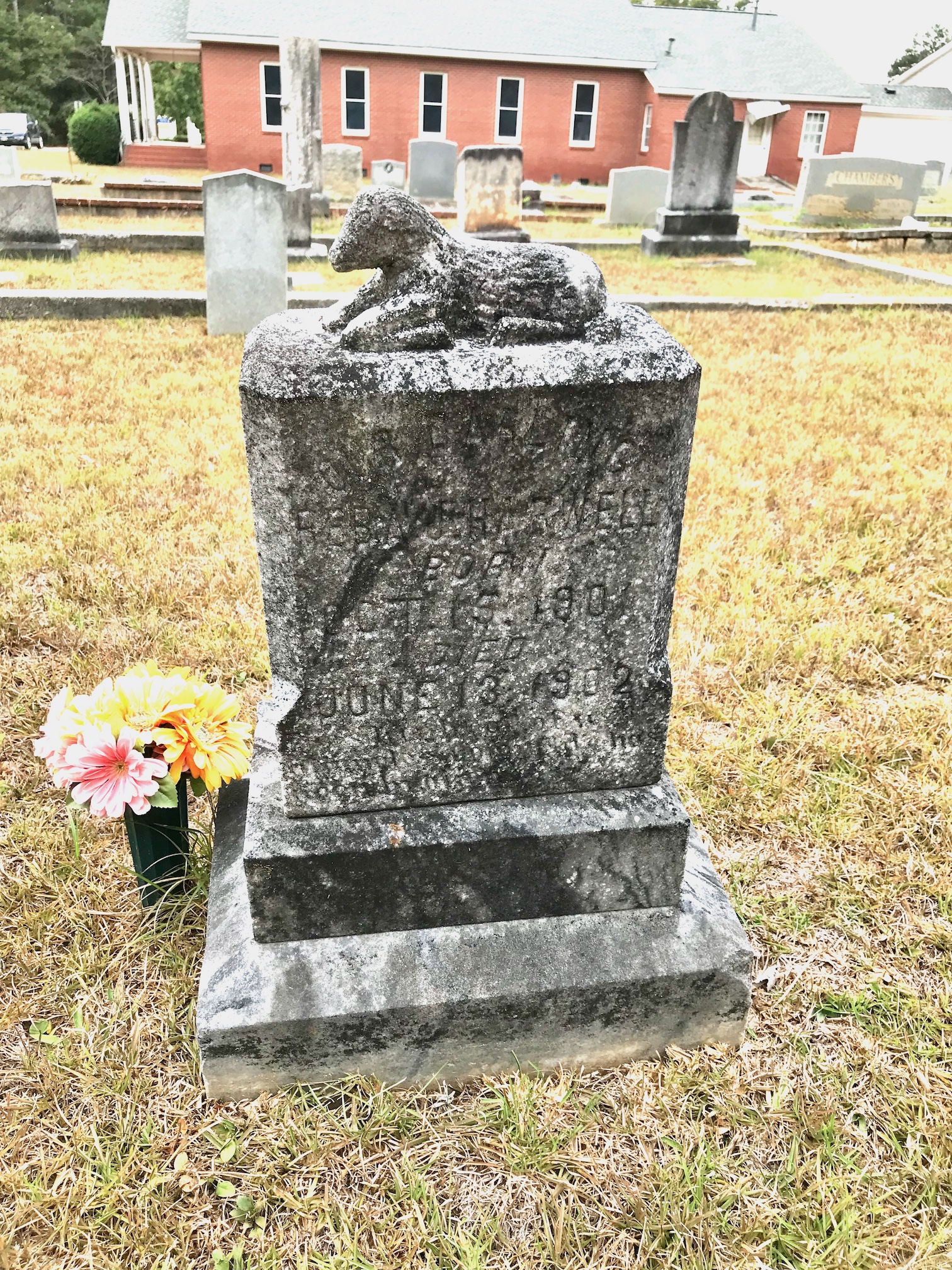
Little Reba Harwell died less than a year before her father was killed in an accident.

Born in February 1875 to Jackson Harwell and Rebecca McLean Harwell, Charles “Charlie” Harwell grew up in Brooks. Rebecca died when he was five years old. He married Sallie Rogers the day after Christmas in 1897 and they had at least three children together. Their last child, Reba, died on June 13, 1902 at the age of seven months. She is buried in WBCC.

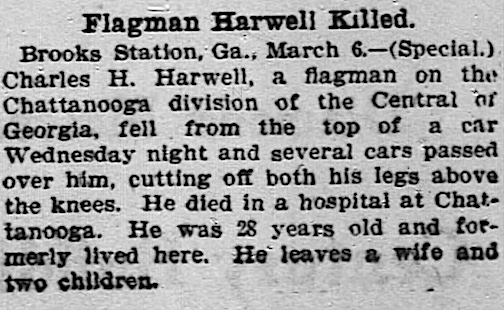
At the time of Reba’s death, Charlie was working the Central Railroad of Georgia. On March 6, 1903, he died in a terrible accident near Chattanooga, Tenn.

Charlie Harwell left behind a wife and two sons. (Photo source: Atlanta Constitution, March 7, 1903)

Charlie was buried next to Reba at WBCC.

That wasn’t the end of the tragedy for the Harwell. Charlie and Sallie’s son, Robert, died at age 30 on Oct. 13, 1930 in a car accident in Statesville, N.C. I don’t know where he is buried. Sallie may have remarried or died, I could not trace her after Charlie’s death.

A Mother and Son

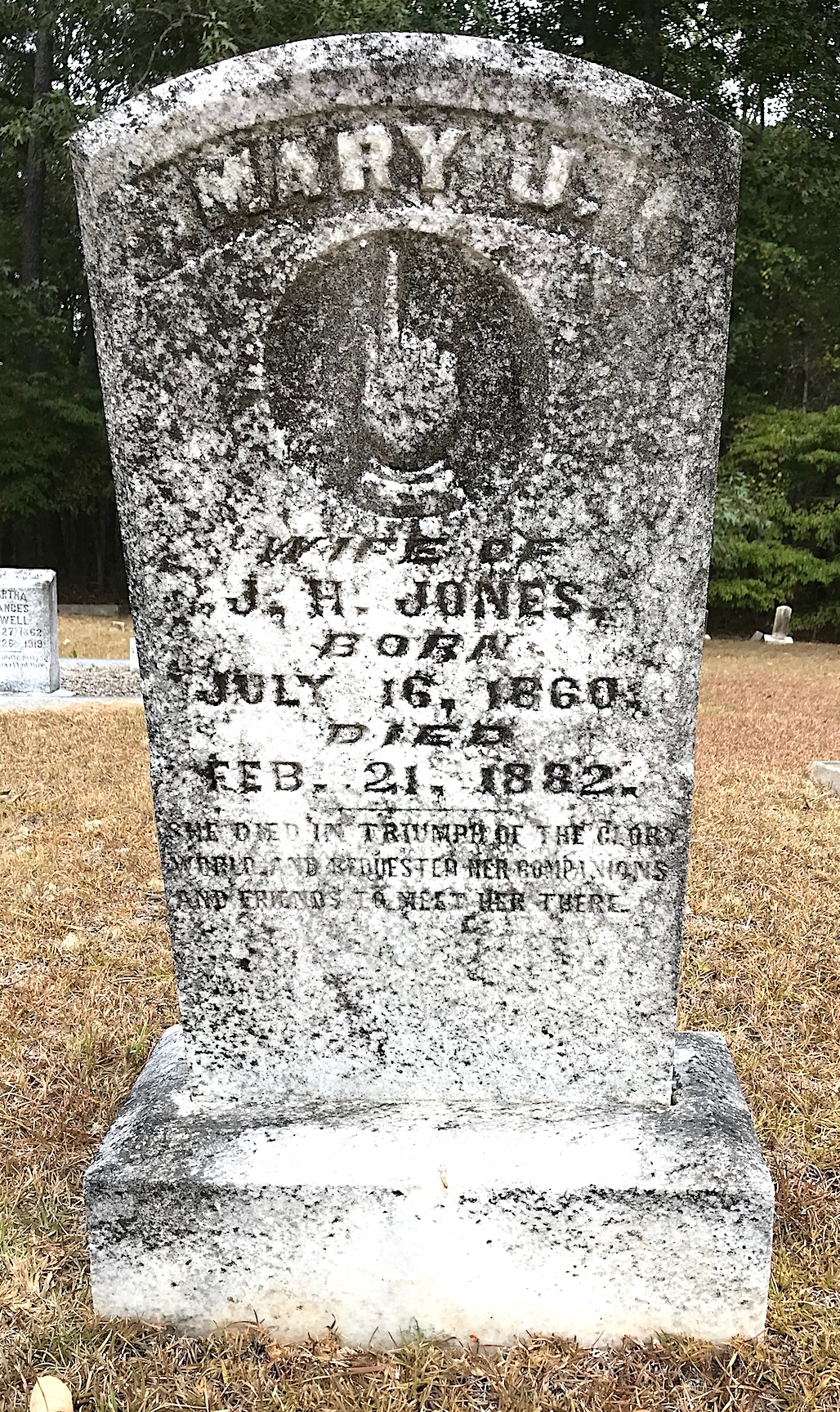
Nearby is the grave of Charlie’s older sister, Mary Harwell Jones. Born in 1860, she married James H. Jones in October 1880 at age 20. She gave birth to a son, James, on Nov. 1, 1881.

For reasons unknown, Mary died on Feb. 21, 1882. Her grave marker is inscribed with this unusual epitaph:

She died in triumph of the glory world and requested her companions and friends meet her there.

Little James died the next day, he was only three months old. Perhaps there was an illness that swept through the Jones home.

Little James Jones died only three months after he was born.

Mary’s husband James H. Jones married Elizabeth Lee Posey on Christmas Day 1883. She passed away in 1912 and is buried in Brooks’ County Line Cemetery. He married a third time to Minnie Lee Thomas. He died at age 83, having been involved in a car accident in late December then succumbed to a heart attack on Jan. 15, 1940. He is buried with his second wife, Elizabeth, at County Line Cemetery.

The Padgett Sisters

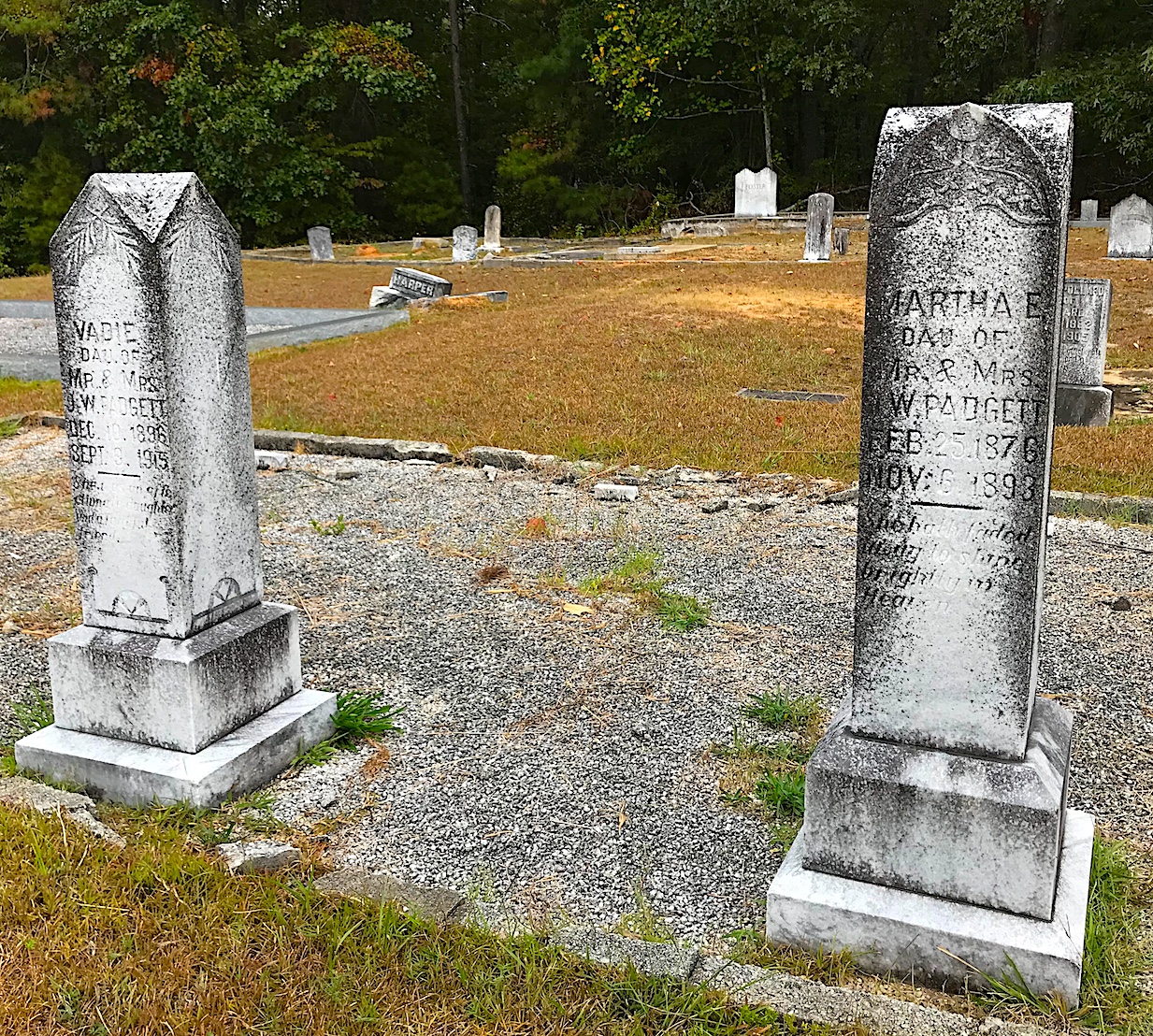
There are 35 Padgetts buried at WBCC. When I photographed these two graves of the Padgett sisters, I wasn’t paying attention to the dates. But this week when I went back to check them, an interesting situation began to unfold.

Civil War veteran John W. Padgett married Martha Cornelia Dunn in 1870 when Martha was only 17. They proceeded to have at least a dozen children. It doesn’t appear that any of them were twins, either.

Martha E. Padgett, their third child, was born on Feb. 25, 1876. For reasons unknown, Martha died on Nov. 6, 1893 at age 17.

Vada C. “Vadie” Padgett, their last child, was born on Dec. 10, 1896. That’s three years after Martha E. died, so the two never knew each other. Vadie died at the Padgett home from a fever on Sept. 9, 1915 at age 18.

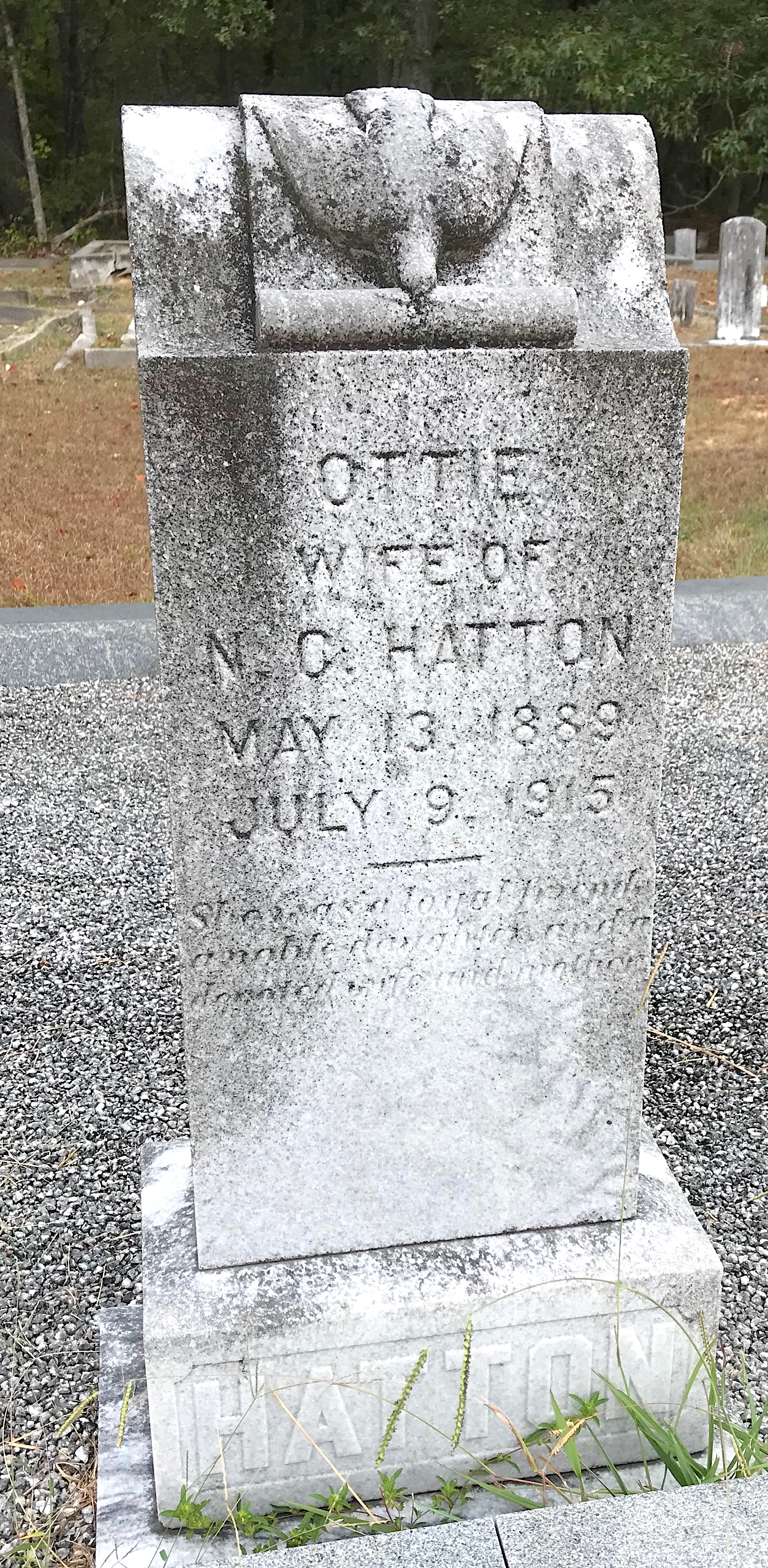
As I looked at the Padgett family tree, I realized another sister was buried nearby. Eighth Padgett child Cora “Ottie” Padgett, born on May 13, 1889, married Nathan Hatton on Dec. 4, 1910. She gave birth to a daughter, Florene, in 1913 and a son, John, arrived in 1914.

Cora Ottie Padgett Hatton was the eighth of the Padgett children.

Ottie died of typhoid fever on July 9, 1915 at age 26. That was less than two months before her sister Vadie died.

Nathan remarried to Mattie Sue Ivy Horton and they had two daughters. He died in 1960 at age 72. He is buried with Mattie at WBCC.

There were more stories waiting to be told at WBCC but it was time to head to another cemetery. Our next stop was Brooks City Cemetery.

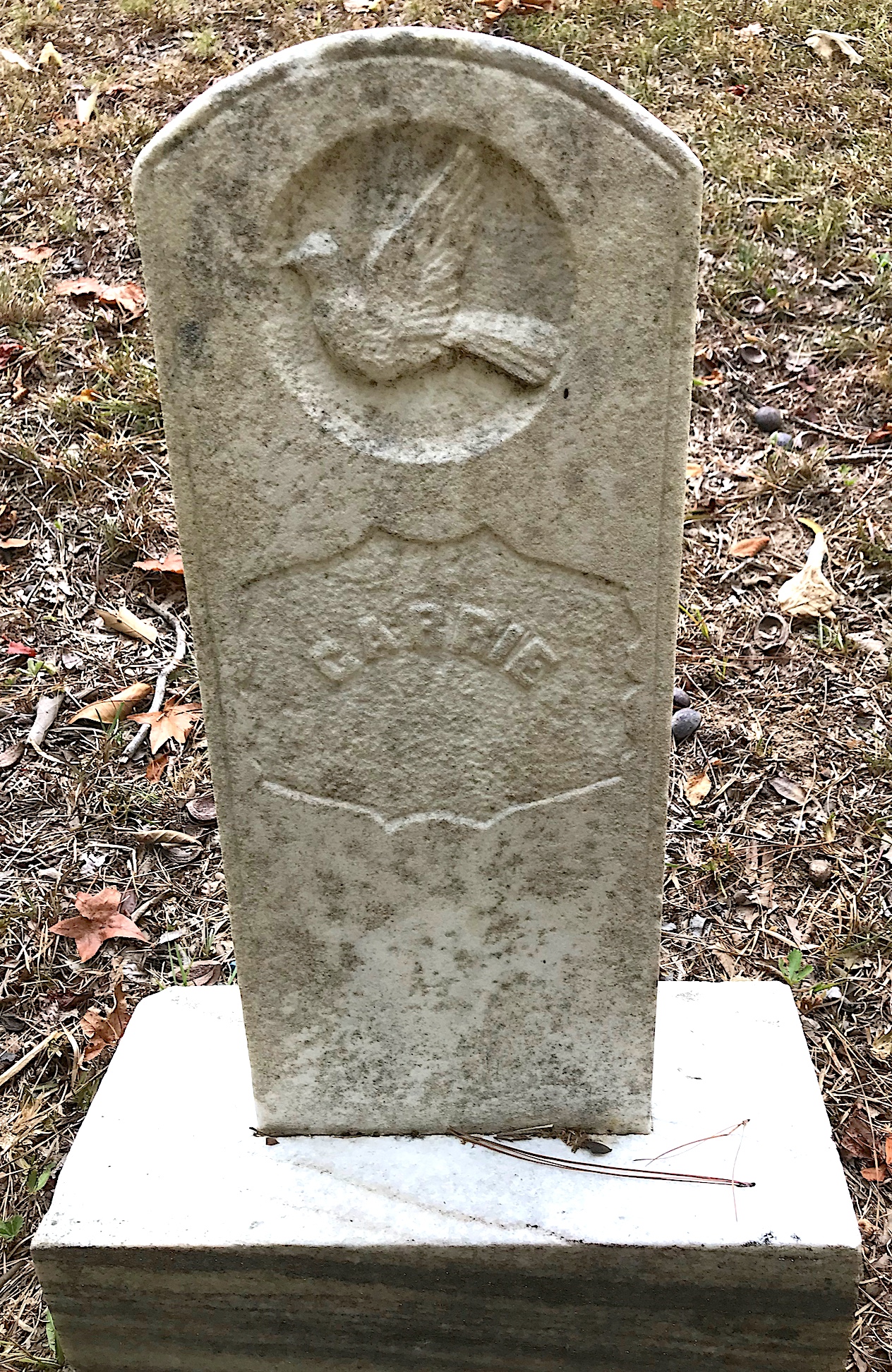
I think this is likely an infant’s grave. Rest in peace, Carrie.

Close to Home: Visiting Fayette County, Ga.’s Antioch Baptist Church Cemetery

28 Wednesday Aug 2024

Posted by adventuresincemeteryhopping in General

≈ 2 Comments

The next stop on my Fayette County, Ga. cemetery hopping adventure was Antioch Baptist Church Cemetery. Just down the rode from Woolsey Cemetery. The Sams surname is also here, along with Spurlin, Morris, Callaway, and Whitaker.
This cemetery stands out because it has two parts. When Antioch Baptist Church was established on March 5, 1829, five of the 19 charter members were black. The rest were white. While the cemetery is now integrated, it was segregated at the time of the church’s formation.

I found online the original list of charter members of the church and the first names of those five black members are listed, and who they are a “servant” of. No last names. I assume that means they were slaves unless they were free persons of color (FPOC), who did exist at that time. But most FPOC at would have had their last names listed and they wouldn’t have been servants for whites. They also lived in large cities like Savannah and Charleston, S.C. A few lived in Atlanta. Not in a tiny town like Woolsey.

Antioch Baptist Church, established in 1829, is unique in that some of its charter members were slaves.

From what I can tell, black and white members were buried separately. It looks like someone had done ground penetrating radar (GPR) and crosses were placed on unmarked graves. I don’t know what the different colors signify (blue/red/white). Among them are a handful of stone markers with names/dates. According to the sign (see above), the first person of color was buried there in 1848.

Sadly, I could find very little information about the few people who do have stones here. One example is Clifford Watkins. She was the daughter of Lizzie and John Tombs. She died on Sept. 30, 1911. So she was only 18 when she died. Her grandparents (and possibly her parents) were likely slaves.

Clifford Watkins was only 18 when she died in 1911.

I had better luck with Pinkie Ray, the wife of Charles Ray, whom she married at 15. According to the 1910 Census, the couple had seven children. Pinkie died at at age of 32 in December 1918. Her cause of death may have been Spanish Flu.

Pinkie Ray was a mother of seven children when she died in 1918.

Because there are no dates on this stone, I could find nothing about Charaty Whitaker. I only know that she was 60 when she died.

Charaty Whitaker was 60 when she died.

As you might imagine, the number of white grave markers was much higher. Find a Grave has about 600 memorials recorded, with the earliest being an infant grave from 1830.

Antioch Baptist Church Cemetery appeared to be in “mid mow” when we visited in October 2019. Some parts were and others were not.

The Sams Family

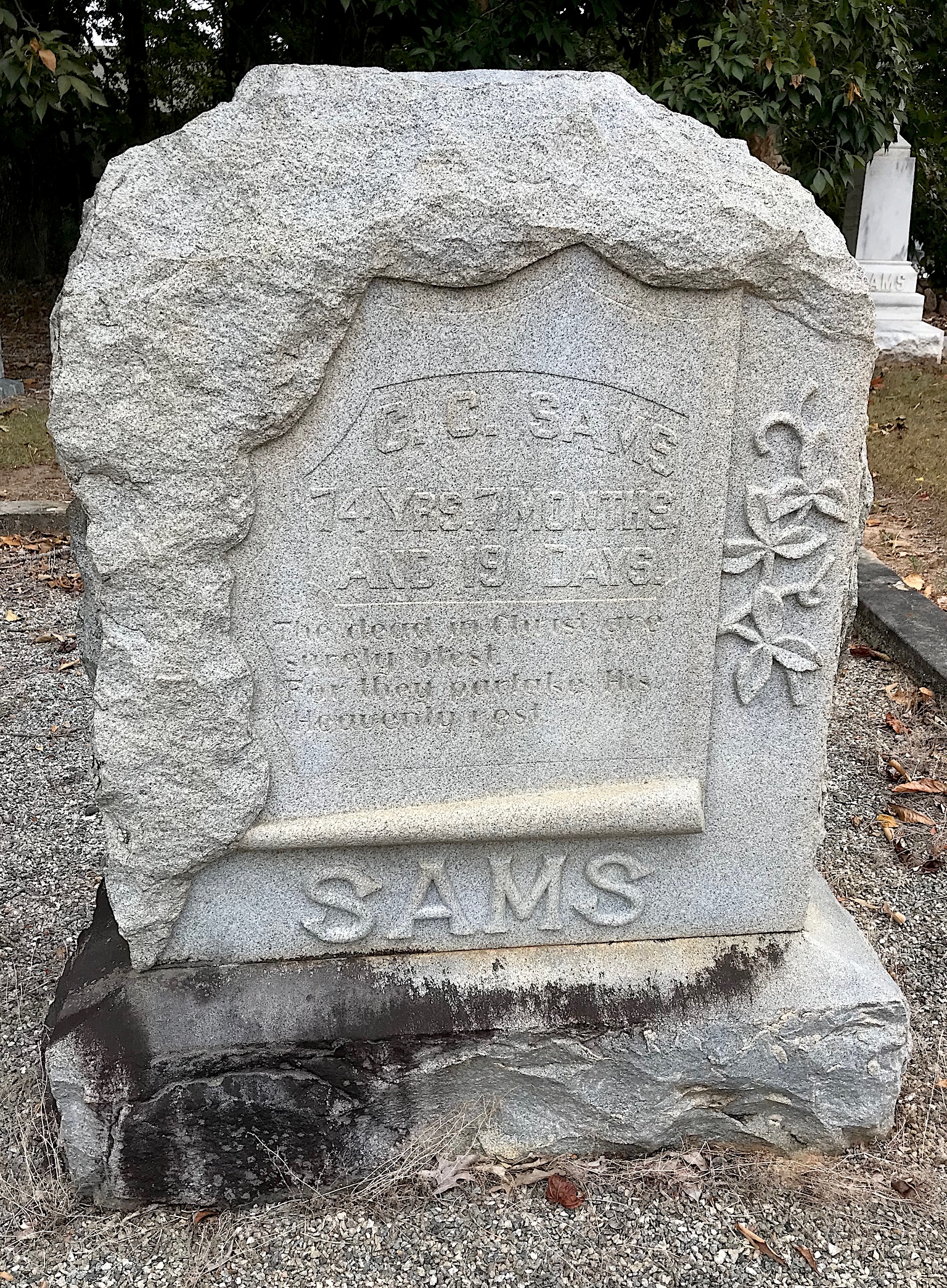
The grave marker for Julia Sams got my attention because it is cross-shaped and has that woodsy Arts and Crafts style that was common during the era. The daughter of Christopher Columbus “Lum” Sams and Sarah Martha Ozborn Sams, Julia was born on Feb. 4, 1867.

Julia Sams was only 30 when she died in 1997.

Julia’s obituary explained that she had long suffered from consumption (tuberculosis) and this it was the cause of her death on Nov. 4, 1897.

Julia died on tuberculosis, although it was called consumption at that time.

Her father’s large marker is nearby and it made me curious to know more about the man who had been named after the famous Italian explorer. As I began to look at the family tree, it got interesting quickly.

Julia’s mother, Sarah Martha Ozborn, first married Lum’s older brother Lt. William Joseph Sams. They had five children together before William died at age 29 in Virginia during the Civil War in 1862. A first lieutenant in the Confederate Army, he served in the the Georgia 27th Infantry, Co. E. He is buried at Antioch Cemetery but I did not get a photo of his grave marker.

Lum’s first wife was Martha Whitaker Sims, and they wed in 1858. She died on Oct. 5, 1860 after giving birth to their second son, Matthew. Lum then married his brother’s widow, Sarah, in July 1865. The couple had six children together, with Julia being the eldest. So not only were their combined children half-siblings, they were also cousins.

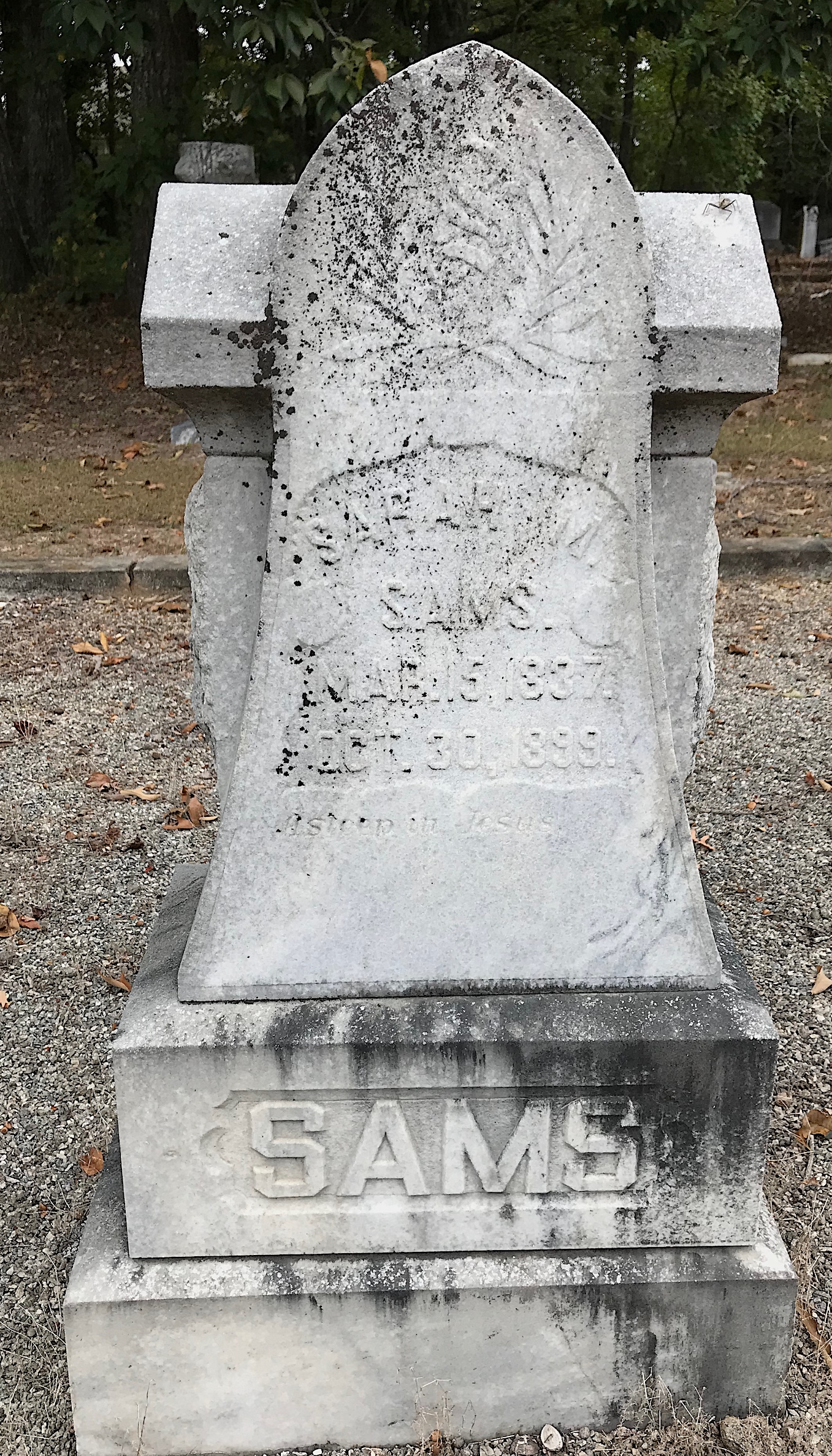
Sarah Ozborn Sams Sams (yes, that’s correct) died at age 62 in 1899.

Like his brother, Lum served in the Confederacy during the Civil War but with the Second Battalion of the Georgia Infantry. From what I can tell, he amassed a good bit of property over the years in Fayette, Clayton, and Coweta Counties.

Sarah died at age 62 in 1899. There may have been a third Mrs. Sams but I do know that his last wife was Eliza Connelly, who he married in 1908. Lum died on March 16, 1910, according to his obituary. He was 74. The obituary also said Lum was married four times, which is why I mentioned a potential third Mrs. Sams.

Was Lum Sams married four times?

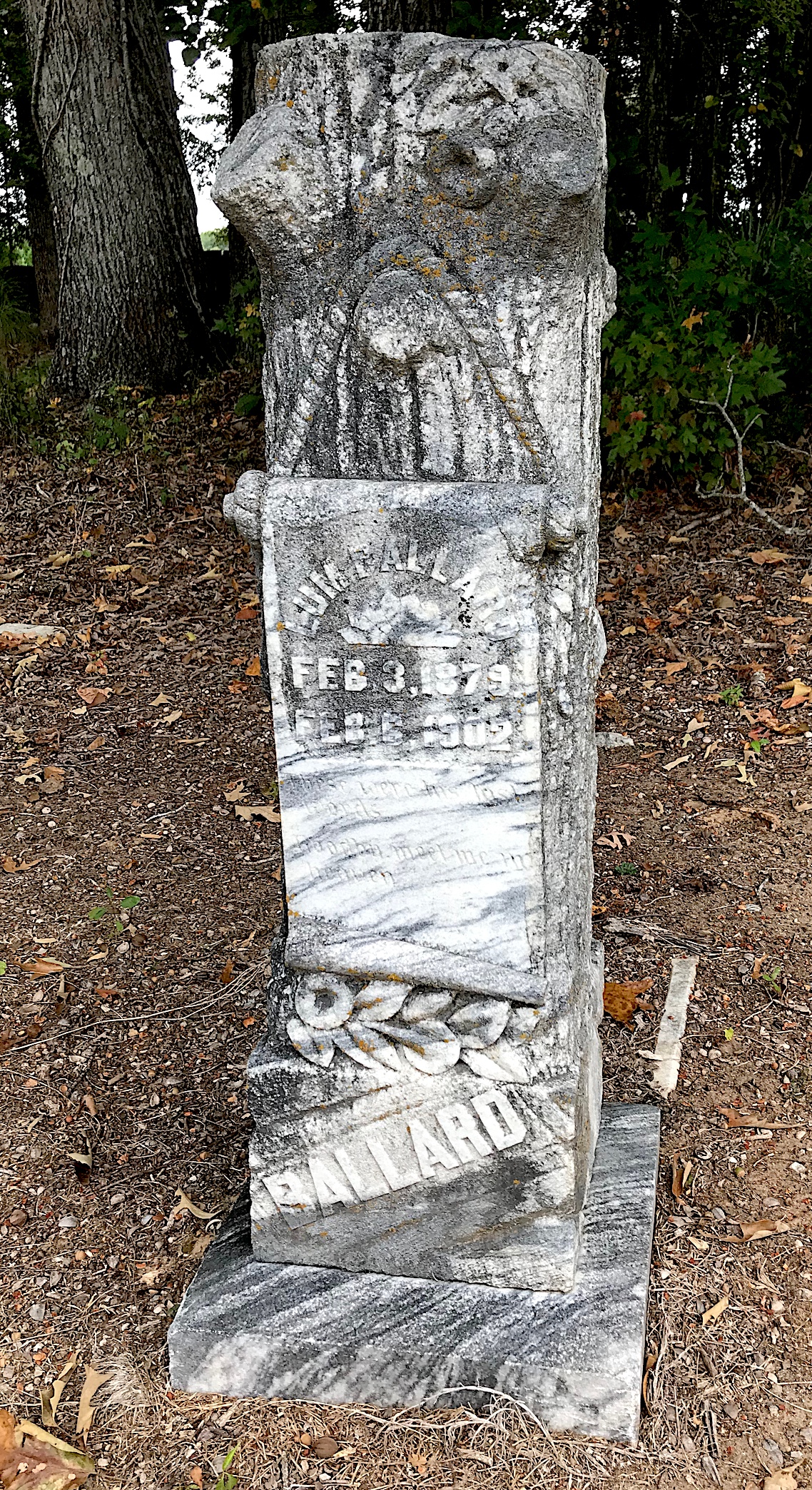
I noticed there was a tree-shaped marker for a Lum Ballard and wondered if he was connected to Lum Columbus. He is. Lum’s step-daughter (and niece) Ada Elvira (born in 1855), named her son after him.

The son of Ada and her husband, Washington Augustus Ballard, Lum Ballard born on Feb. 3, 1879. He married Lois Wallace in July 1901. They had a son, whom was also named Christopher Columbus “Lummie” Ballard. Lum (his father) died on Dec. 6, 1902 at age 23. His obituary did not mention his cause of death.

Lum Ballard’s cause of death is unknown. He was only 23.

Ada’s brother, Matthew, born in 1853, has one of the handsomest monuments in the cemetery. That often indicates wealth or a remarkable death. I was right about that, as I soon learned.

An Abrupt Death

Matthew was a much-respected farmer in Fayette County. He married Ida Gay in 1873 and the couple had several children together. His nickname was Babe. Then I found this article about his death, which happened on Dec. 6, 1900.

Matthew “Babe” Sams life ended abruptly on Dec. 6, 1900.

I don’t know what happened to Will Patterson or if he was charged in any way. He may have claimed self defense in the matter.

You might recognize the last name of Gay. Ida, Matthew’s wife, was the niece of the Gay siblings I wrote about last week that are buried at Woolsey Cemetery. She did not remarry after her husband’s death. She died at age 77 in 1933 and is buried with Matthew.
Ida Gay Sams did not remarry after her husband’s violent death in 1900.

Rev. James Spurlin

Born in North Carolina in 1802, James M. Spurlin wed Mary “Polly” Ann Williams in Jasper, Ga. in 1826. They moved to Chambers, Ala. and began raising a family. According to his Find a Grave memorial, James was a missionary to the Creek Indians at some point. He was ordained in the ministry in 1842 and served as pastor of High Pine Baptist Church in Randolph County, Ala.

By the 1850s, the Spurlins had moved to Troup County, Ga. and Rev. Spurlin was pastor of State Line Baptist Church. Sometime in the 1850s, they moved to Fayette County. According to minutes I found, Rev. Spurlin was appointed the superintendent of Antioch Baptist Church’s Sunday School in 1859.

Rev. James M. Spurlin was 85 at the time of his death.

He served as a private in the 13th Georgia Infantry, Co. F, during the Civil War. Some of his sons also served. I believe at some point, he became pastor of Antioch Baptist Church. But he was also a farmer.

Rev. Spurlin died on July 30, 1887 at age 85. I was not surprised to find that the Rev. Isaac G. Woolsey, pastor of Woolsey Baptist Church, preached the sermon at his funeral. I have no doubt the two men were likely good friends.

Rev. Spurlin is buried beside his youngest son, Reuben, who died just a few months later on Oct. 16, 1887 at age 36. Polly Spurlin died at age 84 on April 6, 1892. She is buried with her husband and son.

Confederate Widow

I was taken with the style of Keziah Callaway’s marker and had to find out more about her.

Born in Hancock County in 1832, Keziah was the daughter of Elijah and Edna Turner. She grew up in Dekalb County and married William Monroe Callaway at some point before 1856, when their son Thomas Jefferson Callaway was born. The couple had a daughter, Mary Jane, in 1859. They settled in Webster County.

During the Civil War, William served in the Seventh Georgia Infantry, Co. K. His stone says he was a sergeant but records indicate he was a private. He died on Jan. 7, 1862 in a hospital in Richmond, Va. He is buried in Oakwood Cemetery in Richmond. He was 25 when he died.

Keziah Turner Callaway became a young widow in 1862. S

I’m guessing that Keziah had family in Fayette County and moved her children from Webster County to Woolsey be closer to them. There is a marker for a Keziah Malinda “Kissie” Morris Turner (1847-1922) at the cemetery. Turner was Keziah Callaway’s maiden name.

When I looked at the 1870 U.S. Census, Keziah Callaway was living next door to the J.G. Morris family. J.G. Morris was Kissie Turner’s father. His wife was Sarah J Callaway Morris. Perhaps Sarah was related to Keziah’s late husband William Callaway.

Keziah Callaway died on March 9, 1877 at the age of 44. That same year, her son Thomas married Telitha Preston. Her daughter, Mary Jane, wed Telitha’s brother Oliver Preston in 1882.

I’ve got a few more stops to make on my Fayette County “hop” so join me for another next week.

The child of Mattie Barfield Peoples (Peeples) and Leonard E. Peeples was born Dec. 1, 1903 and died 10 days later. Mattie died two years later on Jan. 11, 1905 at age 27.

Close to Home: Exploring Fayette County, Ga.’s Woolsey Cemetery

16 Friday Aug 2024

Posted by adventuresincemeteryhopping in General

≈ Leave a comment

After spending eight posts talking about London’s prestigious Westminster Abbey, I’m downshifting to a much smaller burial ground that’s much closer to home.

On Oct. 9, 2019, I spent a day cemetery hopping around Fayette County, Ga. with my mother, Jenny. You may recall that I wasn’t born in Georgia but in Ohio. We moved to Fayette County in the 1970s when I was a child due to a job transfer my Dad took because it was move or lose his job. But I wasn’t interested in cemeteries in my younger days, so I hadn’t visited that many. It was time to remedy that.

Historic Woolsey Church Cemetery

The first place we stopped was Woolsey Cemetery. Woolsey’s always been a tiny town and these days, it has about 200 or so residents. The surnames of Woolsey, Ballard, Gay, Sams, and Peeples, sprinkled throughout the cemetery, can be found in all of my school yearbooks.

This is an undated photo of the Woolsey Church that belongs to the Fayette County Historical Society. It was taken before 1950 when they replaced the two separate doors with a centered double door.

The cemetery is located next to Historic Woolsey Church. It began as Harmony Grove Missionary Baptist Church on Aug. 26, 1888 with 23 charter members. On Oct. 2, 1904, they changed the name to Woolsey Baptist Church. It’s now called Historic Woolsey Baptist Church to avoid confusion with another Woolsey Baptist Church, which opened later.

I didn’t get a good photo of the church when I was there. This one below was taken in February 2023 by Gary Laggis. Just a month after I visited in 2019, locals formed a group called Friends of Historic Woolsey, Inc. This week, I explored their web site, and learned much more about the cemetery and community.

Here’s what Historic Woolsey Church looked like in February 2023. The annex (on the right) was added in 1963. (Photo Source: Gary Laggis)

The Friends of Historic Woolsey are doing a bang up job getting the church building restored and making improvement to the cemetery. They’ve done GPR (ground-penetrating radar) on the grounds and discovered about 40 unmarked graves. Find a Grave currently lists about 186 memorials.

According to the Friends, the cemetery was originally called Thomas Bolling Gay Burial Ground, based on genealogical research and personal journals. Two of Thomas’ children were buried there in the 1830s. In 1875, Gay’s heirs sold the land to Dr. Isaac G. Woolsey who permitted members of the community to be interred in the cemetery.

Who was Dr. Isaac Woolsey?

When I dove into the life of Dr. Woolsey, I was surprised to find what a unique fellow he was. It’s not often you encounter a man who was a doctor AND a pastor. He cared for both bodies and souls.

Born in 1828 in Kentucky, Isaac was raised in Fentress County, Tenn. After teaching school there for a time, he graduated from the Cincinnati College of Medicine and Surgery, and practiced medicine in Fentress County until 1861.

Dr. Woolsey was married in 1852 to Clemanza Reagan, who died in 1862, leaving five children. She is buried in Beaty Cemetery in Moody, Tenn. Three of their adult children are buried at Woolsey Cemetery.

During the Civil War, Dr. Woolsey enlisted in the Confederacy as a quartermaster, and served until August 1862, when he organized Company C, 8th Tennessee Confederate Cavalry, in which company he served as captain in Gen. Nathan Bedford Forrest’s division until the Battle of Chickamauga in September 1863. It was there he was severely wounded and resigned his commission. He wed his second wife Arvazena “Arva” Hutchinson Wood the same year.

The tiny town of Woolsey, Ga. was named after Dr. Isaac G. Woolsey. He was both a physician and a pastor.

The Woolseys moved to Henry County, Ga. and he practiced medicine in Locust Grove. In 1864, Dr. Woolsey also became an ordained minister. Over the years, he usually served three or four churches at a time. In the 1870s, he returned to Cincinnati to improve upon his early medical training.

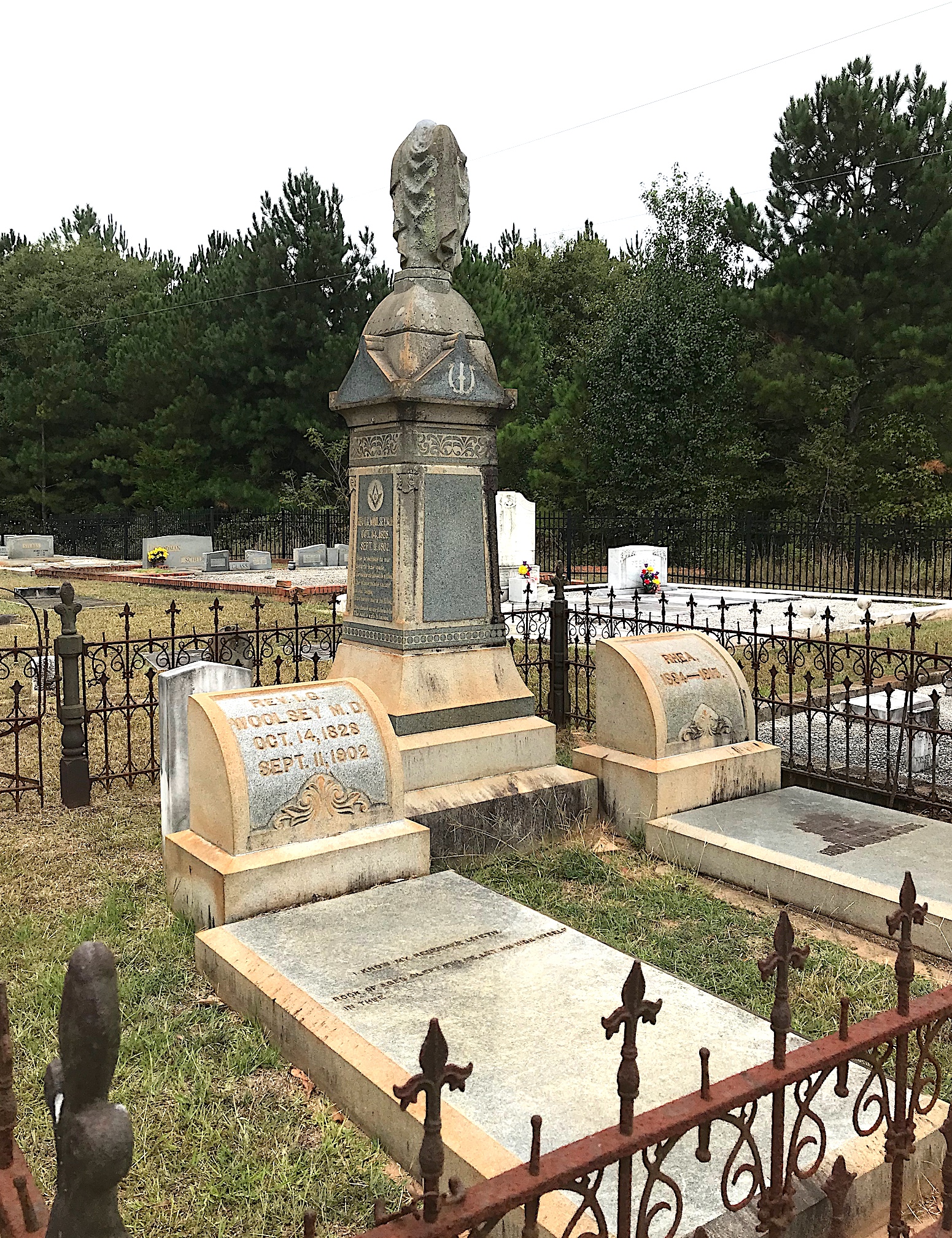
Dr. Woolsey’s plot is surrounded by a handsome fence. His second wife, Arva, who died in 1915, is buried to his right.

The community in Fayette County in which he lived in his later years was incorporated as Woolsey in his honor in 1893. When his health began to decline, he limited his pastoral duties to Woolsey Baptist Church. He died on Sept. 11, 1902 of heart failure at age 73. Arva died in 1915 and is buried beside him.

Dr. Woolsey is one of the few doctors I know of that was also a pastor.

Dr. Woolsey’s daughter Isabella married James Lewis in 1872. She died in 1934 and is buried with her husband in front of her father’s plot.

Dr. Woolsey’s daughter, Isabella Clemanza Woolsey Lewis, died at age 78 in 1934 in Sarasota, Fla.

The Gay Family

I mentioned Thomas Bolling Gay earlier as having buried some of his children at the cemetery. Thomas and his wife Martha’s daughter, Nancy, is buried at Coweta County’s Tranquil Cemetery (not far from where my sister lives). Nancy married Dr. George H. Page, whose story of how he treated two dying Union soldiers during the Civil War, is one I will save for another time.

Thomas, born in 1797, owned property worth $30,000 according to the 1850 Census. He married Martha Bridges in 1818. They had 10 children together. Some died in childhood while three died in their 20s and 30s within a three-year span. Martha died on May 6, 1860 at age 55.

Did the death of his wife in 1860 and three of his adult children not long after hasten the death of Thomas Gay?

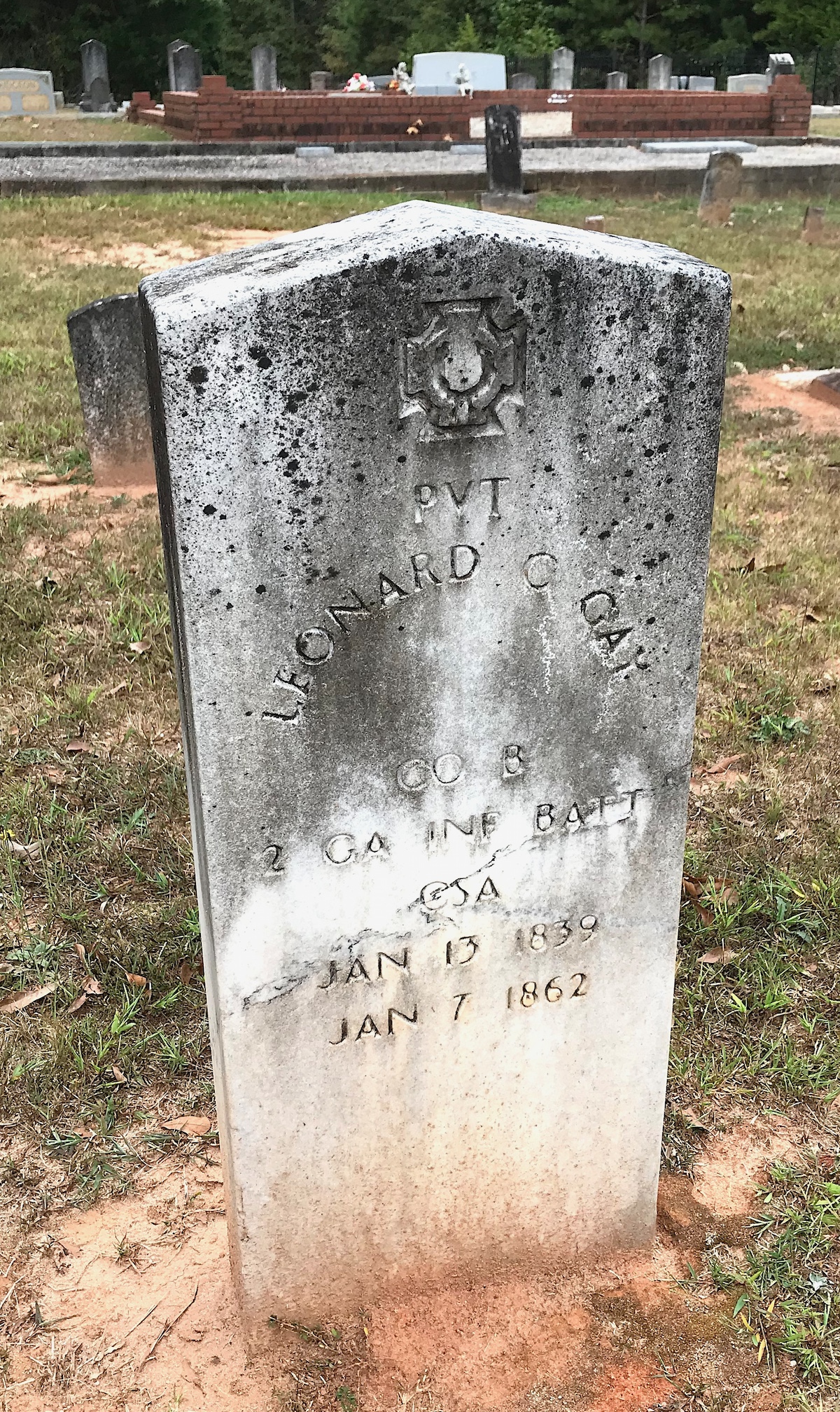
Son Leonard, who enlisted in the Confederacy on April 20, 1861, served in the Second Georgia Infantry Battalion, Co. B. He died at age 22 on Jan. 7, 1862 at a hospital in Norfolk, Va. His remains were brought back to Woolsey Cemetery for burial.

Pvt. Leonard Clark died in a Norfolk, Va. hospital in January 1862 at age 22.

Daughter Sarah Jane, born in 1826, married William Malone in 1845. They had at least three children. Sarah died in February 1862 at age 35. She is buried at Woolsey Cemetery near her parents.

The cause of Sarah Gay Malone’s death in February 1862 is unknown.

Son John died on Nov. 4, 1862 at age 36 but I could not find a military record for him, so I suspect it was not Civil War-related. He may have had some medical training. He is buried at Tranquil Cemetery near his older sister, Nancy Gay Page.

Thomas Gay, perhaps burdened by his sorrow over the death of his wife and three of his children, died on Oct. 1, 1864 at age 67.

Cpl. Archibald Preston

It’s always a thrill to see a photo of the person whose grave I’ve photographed.

During my 2019 visit, I took this photo of the grave of Corp. Archibald “Archie” Gray Preston. Born in 1840 in Monroe County, Ga., he was the son of James and Permelia Preston.

During the Civil War, Archie enlisted in September 1861 and attained the rank of corporal in the 30th Regiment, Georgia Volunteer Infantry. He served in Company A, also known as “Butts’ Invincibles” because many of the men were from Butts County (southeast of Fayette County) where he lived in his early years. It became Company I after reorganization in 1862.

According to records, Archie saw plenty of battle action in Georgia and Tennessee in the 30th. He was imprisoned in Nashville, Tenn. in December 1864. He was also imprisoned at Camp Chase, a prison camp for Confederate soldiers, in Columbus, Ohio. He was released in June 1865. Camp Chase has a Confederate cemetery of its own that I visited in 2021.

Archibald, also known as “Archie” or “A.G.”, Preston ran a blacksmith shop in Woolsey. I found this photo of him on the Friends of Historic Woolsey web page. (Photo Source: Virginia Bailey)
In 1867, he married Martha Emily Mayo and the couple had nine children together. The family settled in Fayette County.

Thanks to the Friends of Historic Woolsey’s Facebook page, I learned that Archie played an important role in the community since he operated a blacksmith shop, and locals enjoyed congregating there to chat and share news.

Archie died on Feb. 28, 1905 at age 59. His obituary described him as “an honorable and upright man,” highlighting his sterling character.

Archie Preston’s wife, Martha, died 10 years after he did.

Archie shares a marker with his wife, Martha, who died on Dec. 29, 1919 at age 71. There’s a touching inscription on the back that I’m glad I did not miss.


This inscription is on the back of Archie and Martha Preston’s shared grave marker.

Run with the Horsemen

Finally, I’d like to talk about someone buried here that I personally knew. Like Dr. Woolsey, Dr. Sams had two professions. He was both a doctor and an author.

Born on Sept. 26, 1922, Dr. Ferrol Aubrey Sams, Jr. (known by many as “Sambo”) and his wife, Dr. Helen Fletcher Sams, were the only two doctors I ever saw as a child. They were the healthcare of Fayette County at their office on Jeff Davis Drive for many years, which featured enormous goldfish in an indoor fountain/pond that diverted many a child waiting to be seen.

Dr. Sams published his first book in 1982 at the age of 60. He kept serving the residents of Fayette County while writing more books. (Photo Source: Billy Howard Photography)

While I saw “Dr. Helen” the most, I did see Dr. Sams from time to time. They were both kind, salt of the earth people who were regarded with great affection and respect by everyone.

In 1982, Dr. Sams dove into his childhood memories of Fayette County when he wrote Run with the Horseman. It was the start of a trilogy of works featuring Porter Osborne Jr., a character largely based on Dr. Sams himself. The buzz around Fayette County was enormous as people tried to figure out who the other characters might be based on.

In 1991, Sams was awarded the Townsend Prize for fiction for his publication of When All the World Was Young. He wrote a total of eight books.

Run With the Horsemen was Dr. Ferrol Sams’ first book, published in 1982.

My most vivid memory of Dr. Sams is when I finished my master’s degree at the University of Georgia in 1992. I was having difficulty finding a job and my training was as a journalist. My father, one of his patients, thought Dr. Sams might have some words of wisdom. So we went to his office to have a chat.

Dr. Sams was kind and asked me a few questions. He told me about his current publisher, Longstreet Press, and suggested I contact them. While I didn’t end up getting hired by them, I was grateful that he took time out of his busy day to see me.

Dr. Sams retired in 2006. He died on Jan. 29, 2013 at age 96. Dr. Helen died only a few weeks later on Feb. 23, 2013 at age 89.

Drs. Ferrol and Helen Sams served the Fayette community faithfully for decades.

The Sams’ legacy can still be felt today in their children. W. Ferrol Sams is a Superior Court judge and Dr. Ferrol Sams, III, is a physician. Dr. Sams (the younger) was incredibly helpful in assisting my mother in making the decision to bring my father out of a nursing home so he could spend his last days in home hospice care. I will always be grateful to him for that.

I’m thrilled that the folks of Woolsey are working together to preserve the heritage of the community and the cemetery, which are an integral part of Fayette County’s rich history.

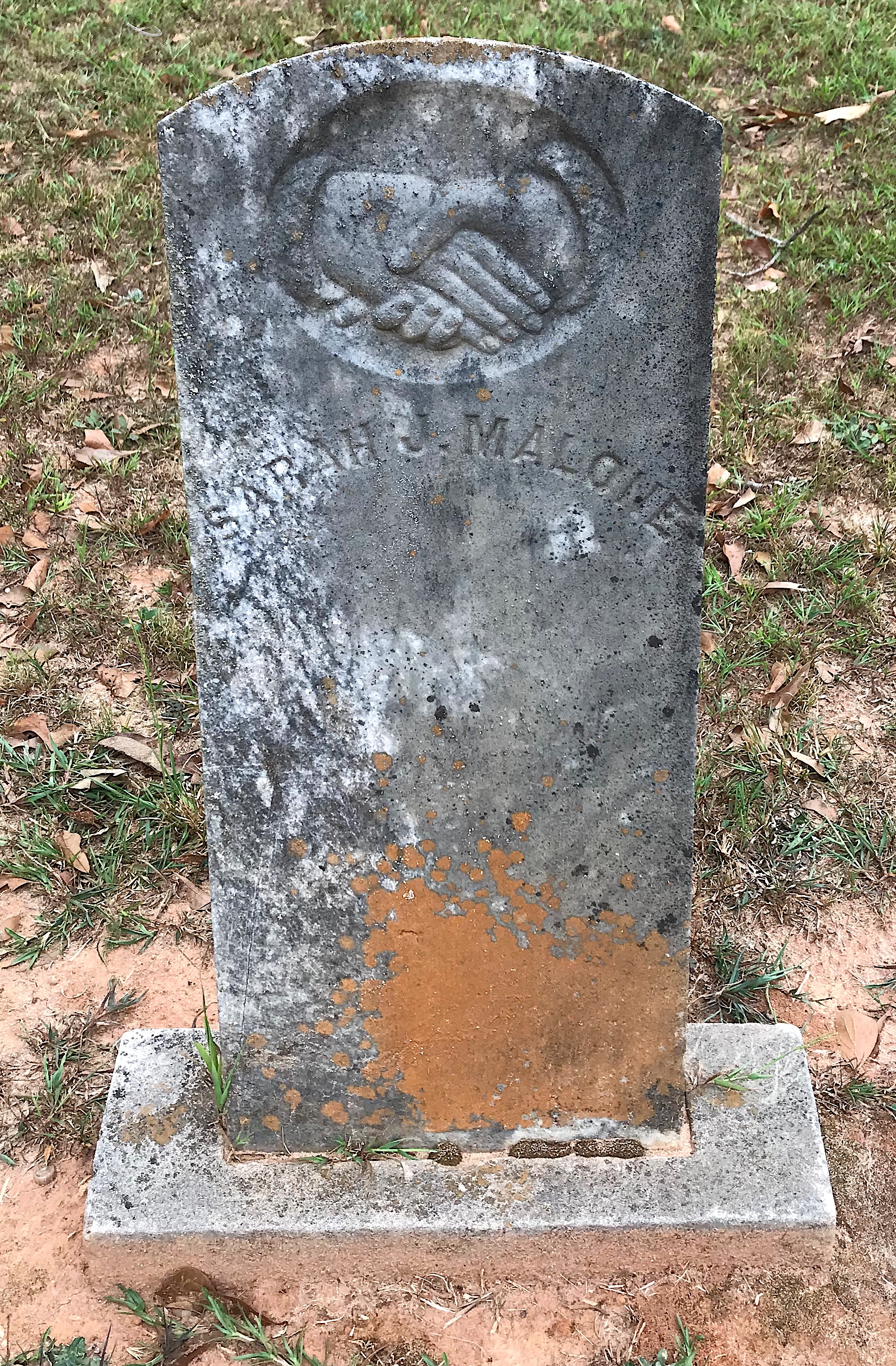
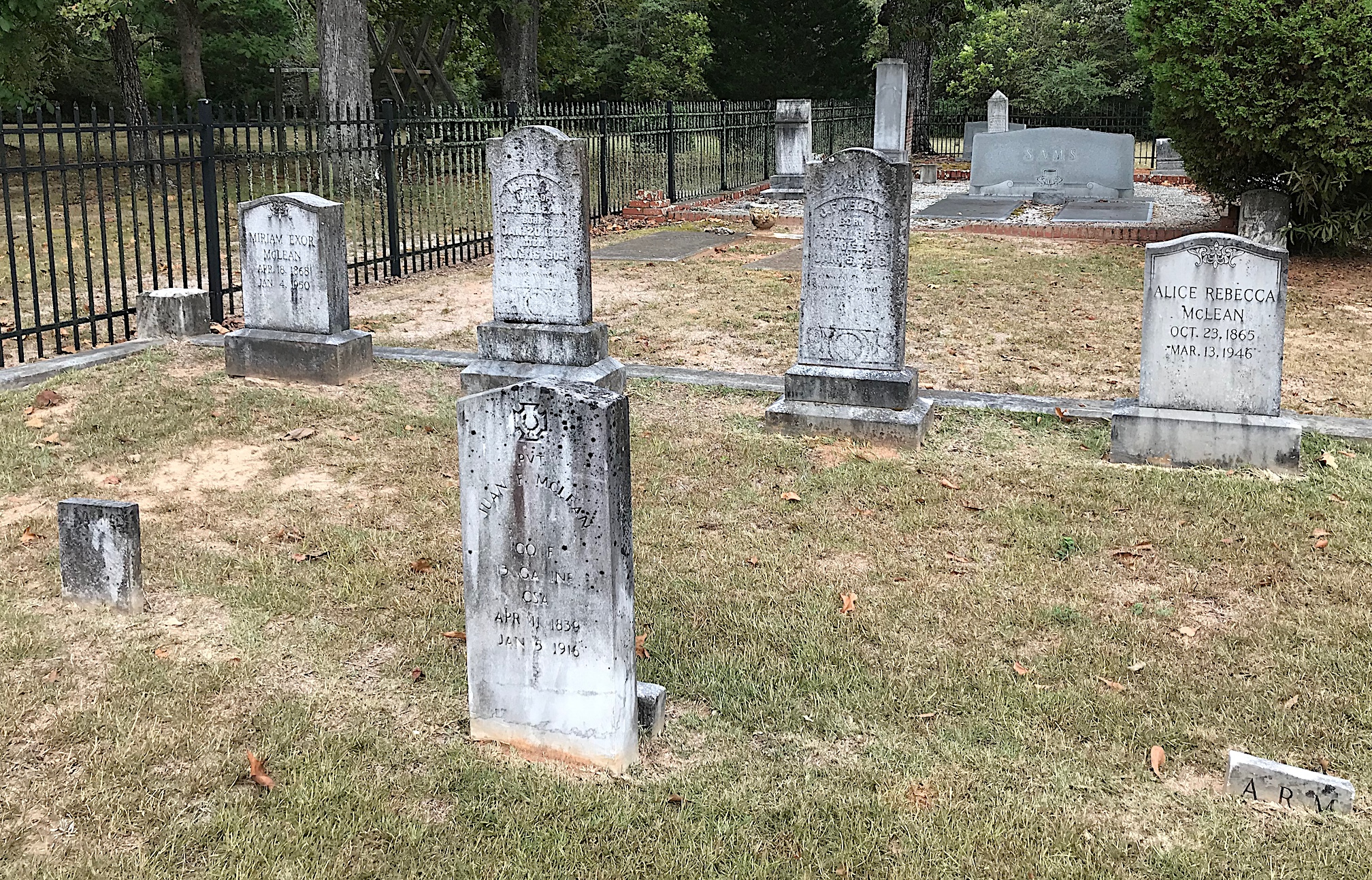
Juan Fernandez McLean (1839-1916), whose marker is front and center, purchased the original fence for the cemetery from Stewart Ironworks in 1907. It was later replaced with a more modern one. To preserve the fence’s history, the original has been incorporated into the Friends of Historic Woolsey’s logo (see below).

For more information on the Friends of Historic Woolsey’s work and how you can get involved, click here.

Westminster Abbey 2023: Saying Farewell – Bits and Pieces, Part VIII

09 Friday Aug 2024

Posted by adventuresincemeteryhopping in General

≈ 2 Comments

Many thanks to the amazing Grace Barrett of Tours by Grace for leading us through Westminster Abbey! She was fabulous!

This is my eighth and final blog post about Westminster Abbey. I think that’s a new record for me!

Today I’m rounding up the last bits and pieces that I haven’t gotten to talking about just yet that I think are worth mentioning.

Meet the Russells

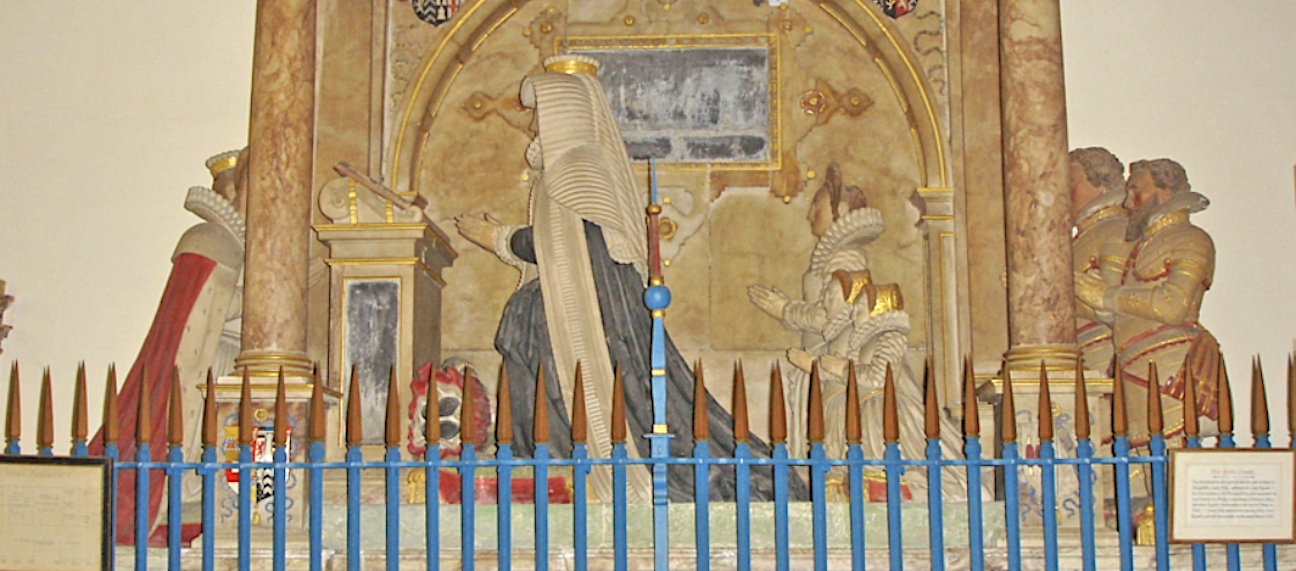
In my opinion, the monument to John Russell, and the one for his daughter Elizabeth (which is beside) it), are two of the most fascinating in the Abbey. They are located in the Chapel of St. Edmund.

The monument to John Russell (sometimes called Baron Russell) is stunning. All of the inscriptions were composed by his wife Elizabeth, except for one written by John’s son-in-law. They are in English, Latin, and Greek.

Born in 1553, John Russell was the son of Francis, second Earl of Bedford. John was summoned to Parliament in January 1581 as Lord Russell. He died on July 24, 1584.

Elizabeth, his wife, was born in 1528 and moved in exclusive circles. She was the daughter of Sir Anthony Cook (who tutored Edward VI) and widow of Sir Thomas Hoby. By her first husband, she had two sons and two daughters.

After Sir Thomas died in France, she commissioned Dutch sculptor William Cure to create a very handsome alabaster tomb at Bisham Church in Marlow on which repose the effigies Sir Thomas and his half-brother, Sir Phillip Hoby. This William Cure was the father of Cornelius Cure, who carved Queen Elizabeth I’s monument at Westminster Abbey. William Cure II was his grandson.

There’s a reason I’m mentioning all this that I’ll get to shortly.

She married John Russell on December 23, 1574 and had two daughters (Elizabeth and Anne), as well as a son Francis who died in infancy.

I have some issues with the dates. Elizabeth would have been 25 years John’s senior when they married. This would mean Elizabeth was having children in her late 40s. So I’m not at all sure if those dates are correct. Elizabeth is thought to have died in 1609 at age 81. She is interred at Bishan Church with her first husband.

The effigy at the feet of John Russell represents his son Francis, who died in infancy.

Here’s how the Westminster Abbey web page describes John Russell’s monument:

His large monument of alabaster and marble shows his effigy reclining in his ermine-lined red Parliamentary robes, with his head supported on his elbow. There are columns and many shields of arms (including those of Russell, De la Tour, Meschems, Herring, Froxmere, Wise, Sapcote, Semark and Cook). Two female bedeswomen support the achievement of arms. The monument was redecorated by order of the Earl of Bedford in the 19th century and the most recent re-painting was done in the 1960s.

“Bedeswoman” is from the Old English biddan, “to pray”; literally  ”a man of prayer”; and from the Anglo-Saxon bed), was generally a pensioner or almsman whose duty was to pray for his benefactor.

Two female bedeswomen support the achievement of arms.

The inscriptions were written by his John’s wife, Elizabeth, who was thought to be one of the most accomplished women of her day. One of them was written by their son-in-law. They are in English, Latin, and Greek.

There’s a reason Elizabeth chose this pose and it goes back to the Bisham Church monument she designed. The effigies of her first husband and his half-brother are situated in a very similar position. She was likely inspired by a monument she saw in the Celestine convent in Paris. I suspect Elizabeth had a hand in designing John’s monument, too. She was very much a hands on kind of woman.

John Russell looks a bit bored to me.

Before Elizabeth died in 1609, she designed another monument at Bishan Church that represents herself and her five children. The web site for Bisham Church describes it like this:

In the form of a tableau, we see her kneeling at a prayer desk. Behind her kneel her three daughters who predeceased her: Elizabeth Russell (daughter to Elizabeth and Lord John Russell, her second husband), Elizabeth Hoby and Anne Hoby. Lying beneath her is the effigy of her infant son Francis Russell, who sadly died shortly after birth. Facing her outside the canopy is her only surviving daughter, Anne. At the opposite end of the monument and outside the canopy are her two sons, Sir Edward Hoby and Sir Thomas Posthumous Hoby, the latter having been born in Paris shortly after the death of his father.

That’s Elizabeth Russell in the center in the blue gown with her five children kneeling behind her. I believe the Cures likely carved this one as well. (Photo source: www.bishanchurchfriends.org/monuments)

Back to Westminster Abbey. Let’s take a look at the monument to John and Elizabeth Russell’s daughter, Elizabeth. Notice she’s also resting her chin on her hand. And she’s got a skull under her foot!

In doing research for my blog post, I learned that Elizabeth has not only a statue (at the Abbey) at an effigy (at Bisham Church) in her honor.

Elizabeth was born in the precincts of London’s Westminster Abbey and baptized in the Abbey. Queen Elizabeth I and the Countess of Sussex were her godmothers and Robert Dudley, Earl of Leicester, her godfather. She was a maid of honor to the queen but died young of tuberculosis in 1601. We don’t know her exact age but she was unmarried.

Her monument consists of an alabaster and marble pedestal, on which is her statue, seated in a wicker chair with her right foot resting on a skull. As I mentioned, her head reclines on her right elbow and her left arm points down to the skull.

This led to the idea that she died by pricking her finger. But the skull is simply a symbol of mortality. The pedestal is decorated with ribbons, swags, ox heads and an eagle. Hers was the first memorial in England to depict a seated figure on a free-standing monument.

I like to think Elizabeth and Anne Russell were very close for Anne to have commissioned such a monument.

The Latin inscription can be translated:

“She is not dead, but sleepeth. Sacred to the happy memory of Elizabeth Russell, her afflicted sister Anne has erected this monument.”

Anne, her sister, married Henry Somerset, the first Marquees of Worcester, in 1600. Queen Elizabeth I, who had been close to their mother Elizabeth, attended the wedding. That’s only a year before Elizabeth (the sister) died. Anne had nine sons and four daughters with the Marquees, who was a prominent Royalist during the early years of the English Civil War.

The Talbots

Also located in the Chapel of St. Edmund is a large monument to Edward Talbot (1561-1618), the eighth Earl of Shrewsbury, and his wife, Jane (died 1626), the eldest daughter and co-heiress of Cuthbert, seventh Baron Ogle, by his wife, Catharine Carnaby. We don’t have an exact birth year for her but she did outlive her husband. The couple wed in 1583.

Chris took this photo of the jaw-dropping Talbot monument. Made of alabaster, it was completed by sculptor William Wright.

In 1616, Edward succeeded his brother Gilbert as eighth Earl of Shrewsbury. He was a member of Parliament for Northumberland and member of the Council of Wales. He died on Feb. 8, 1618.

A kneeling figure of a child, dressed in blue, is shown near the feet of the effigies. They had one son who predeceased his father so this is probably him although dressed as a girl, which was usual for small children at this period. There is no record of them ever having a daughter.

Although dressed like a girl, this figure likely represents a son the Talbots had that died.

After Edward died, Jane had the monument designed in his honor. She died in January 1626 and was interred with him.

Here’s a closer look at the Talbot effigies. Unlike Lord Russell’s, the Talbots are lying flat on their backs and looking up.

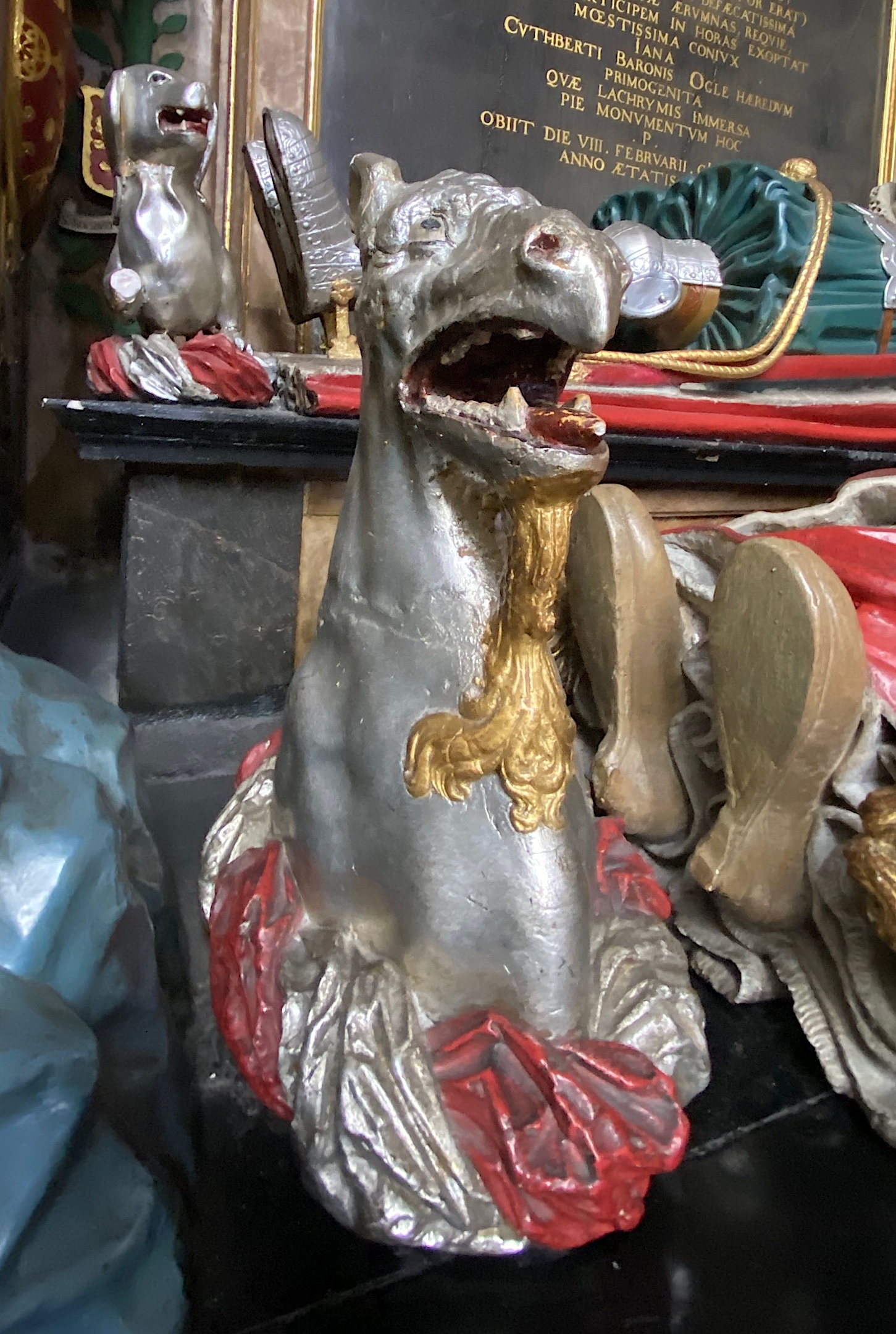
Edward’s effigy is attired in armor, with a talbot (a medieval hunting dog) at his feet. You can see it in the photo below. I’m glad the Abbey web page explained this because I wasn’t sure exactly what it was. Jane, who wears an ermine-lined red mantle, has a griffin at her feet.

There always seems to be something interesting resting at the foot of these effigies. Here there’s a talbot (hunting dog) and a griffin.

The recess is ornamented with 13 shields of arms connected with the family, with names underneath. At the top of the monument is a large achievement of arms, with two talbot supporters and the motto Prest d’accomplir (ready to accomplish). The monument was repainted and missing hands replaced during the late 1950s cleaning of the Abbey.

Oliver Cromwell’s Brief Abbey Rest

The last person I’m going to talk about had a brief “rest” at the Abbey that only lasted a few years.

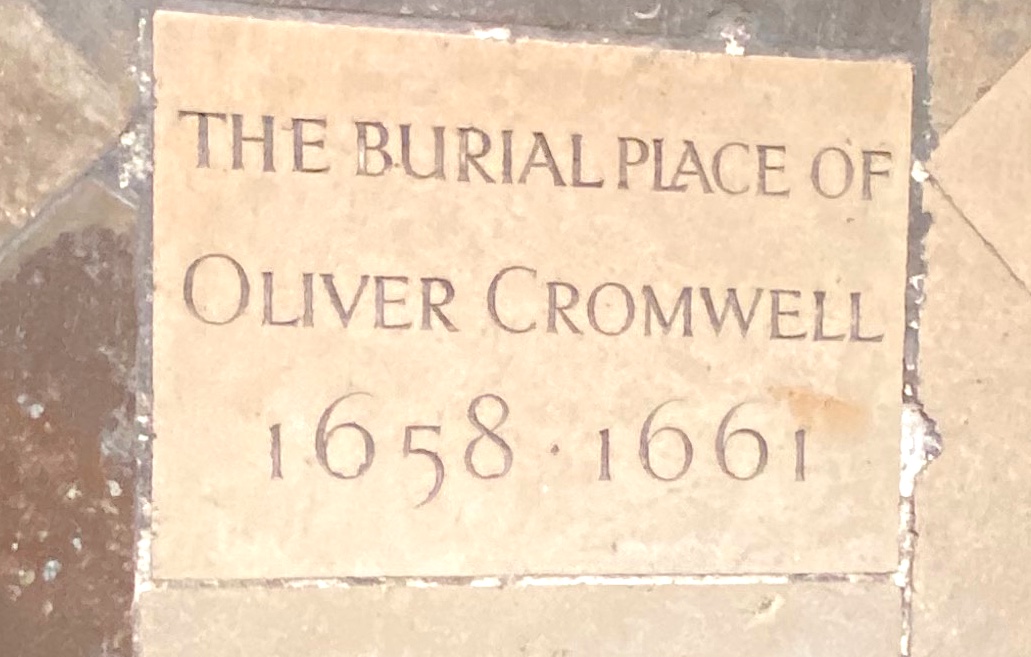
When we came upon a small marker in the Lady Chapel with his name on it, Chris and I looked at Grace (our lovely tour guide) with hopes of an explanation and she gave it.

I’m not going to give you a long-winded version of the history of the Reformation, you can find plenty of information on that elsewhere.

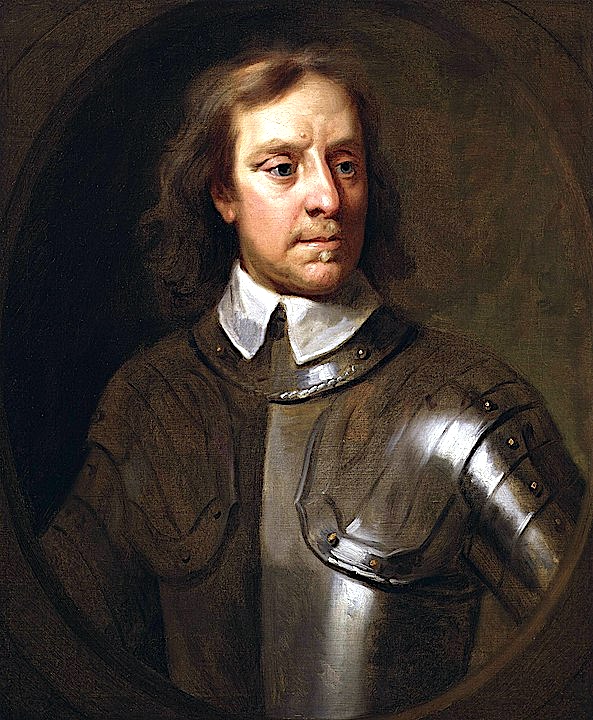
Portrait of Oliver Cromwell, painted by Samuel Cooper.

Oliver Cromwell (1599-1658) was a country squire and Member of Parliament for Huntingdon, and then for Cambridge. He became a Puritan and came to prominence while serving in the Parliamentary army fighting against the Royalists.

When he defeated Charles I, Cromwell had the king executed in 1649 and became Lord Protector of the Commonwealth of England, Scotland, and Ireland in 1653. Charles II fled across the Channel. This was the only time in English history that the monarchy had been ousted.

For his second investiture as Protector in 1657, the 14th-century Coronation Chair was taken from Westminster Abbey to Westminster Hall, and Cromwell sat in it arrayed in royal robes. After his death at Whitehall on Sept. 3, 1658, his son Richard, who had little interest in politics, gave up the government and lived abroad. This paved the way for the Restoration of Charles II to the throne in 1660.

One might say this was the last span of years that Oliver Cromwell’s remains literally rested in peace. It was all downhill after that.

After being embalmed and lying in state for a few weeks, Cromwell was buried privately without ceremony (according to contemporary sources) in a vault at the east end of Henry VII’s chapel in the Abbey on the night of Nov. 10, 1658. But he didn’t stay there long. Charles II was out for revenge. The Westminster Abbey web page explains the gruesome activities like this:

When Charles II was restored to the throne, the House of Commons voted on Dec. 4, 1660 that the coffins of regicides Oliver Cromwell, Henry Ireton, and John Bradshaw should be dug up from the Abbey, drawn on a hurdle to Tyburn and the bodies hung up on the gallows there. So on Jan. 26, 1661 Cromwell and Ireton were removed and taken to the Red Lion Inn at Holborn, where they were joined a few days later by Bradshaw’s coffin (the delay was caused by the fact that Bradshaw’s body had not been embalmed like the others and smelt badly).

On January 30, the anniversary of the execution of Charles I, the hangings took place and then the heads were cut off and stuck on spikes outside Westminster Hall. The bodies were buried under Tyburn gallows (near the modern Marble Arch). Cromwell’s head is believed to [now] be buried at Sidney Sussex College [Cambridge].

There are a great many stories/theories concerning what exactly happened to Cromwell’s head over the years but that’s a rabbit hole you can go down on your own.

A fond farewell to Westminster Abbey…

As we made out way to the exit and bid goodbye to Grace, I felt exhilarated and exhausted at the same time. One of my biggest Bucket List items had finally been crossed off. I almost floated down the steps toward the obligatory Westminster Abbey gift shop.

As a taphophile, it will remain a highlight of my cemetery hopping career. I hope you enjoyed reading about it (all eight parts!).

Westminster Abbey 2023: Wandering Through Poet’s Corner, Part VII

19 Friday Jul 2024

Posted by adventuresincemeteryhopping in General

≈ 2 Comments

Many thanks to the amazing Grace Barrett of Tours by Grace for leading us through Westminster Abbey!

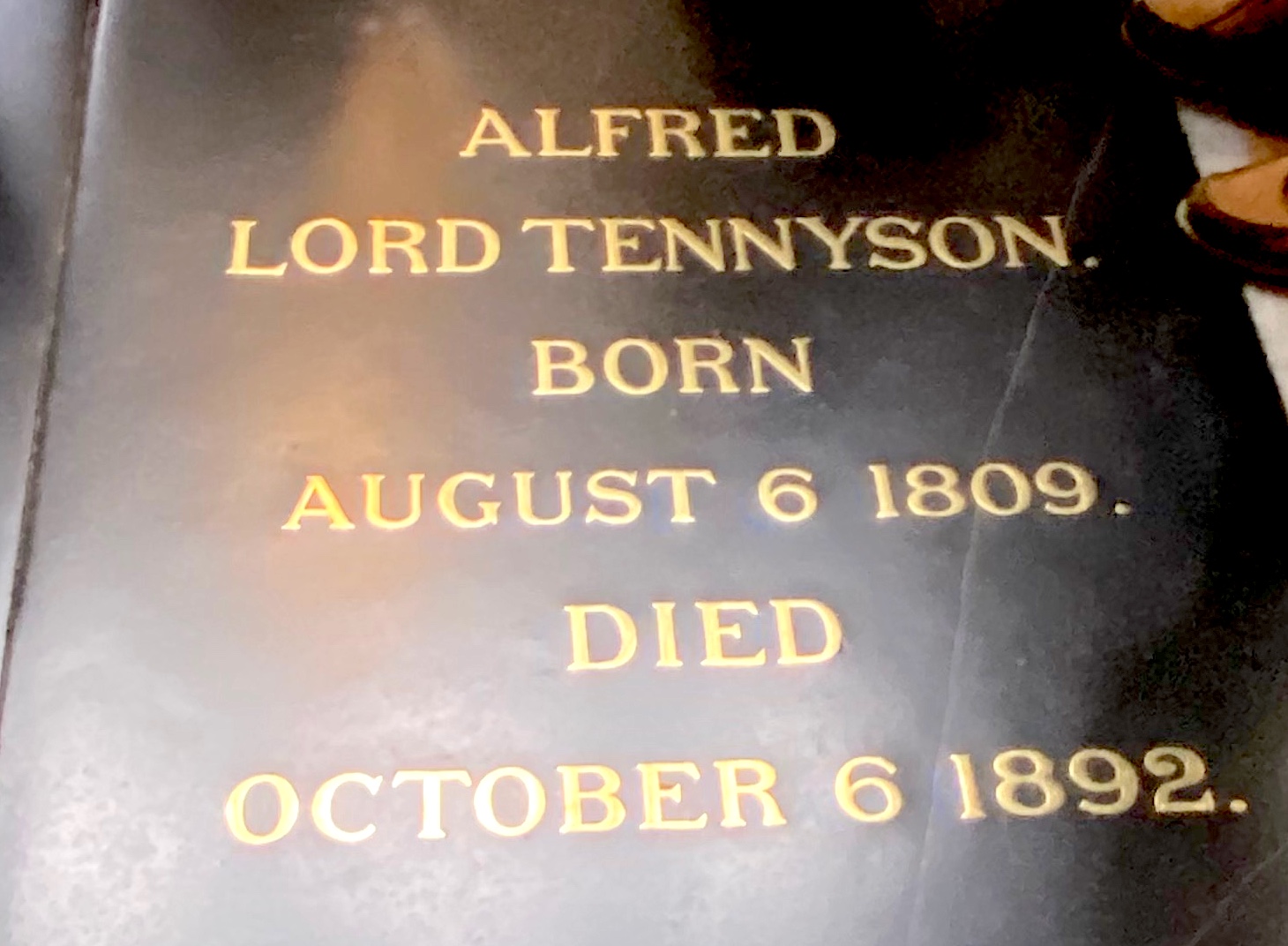
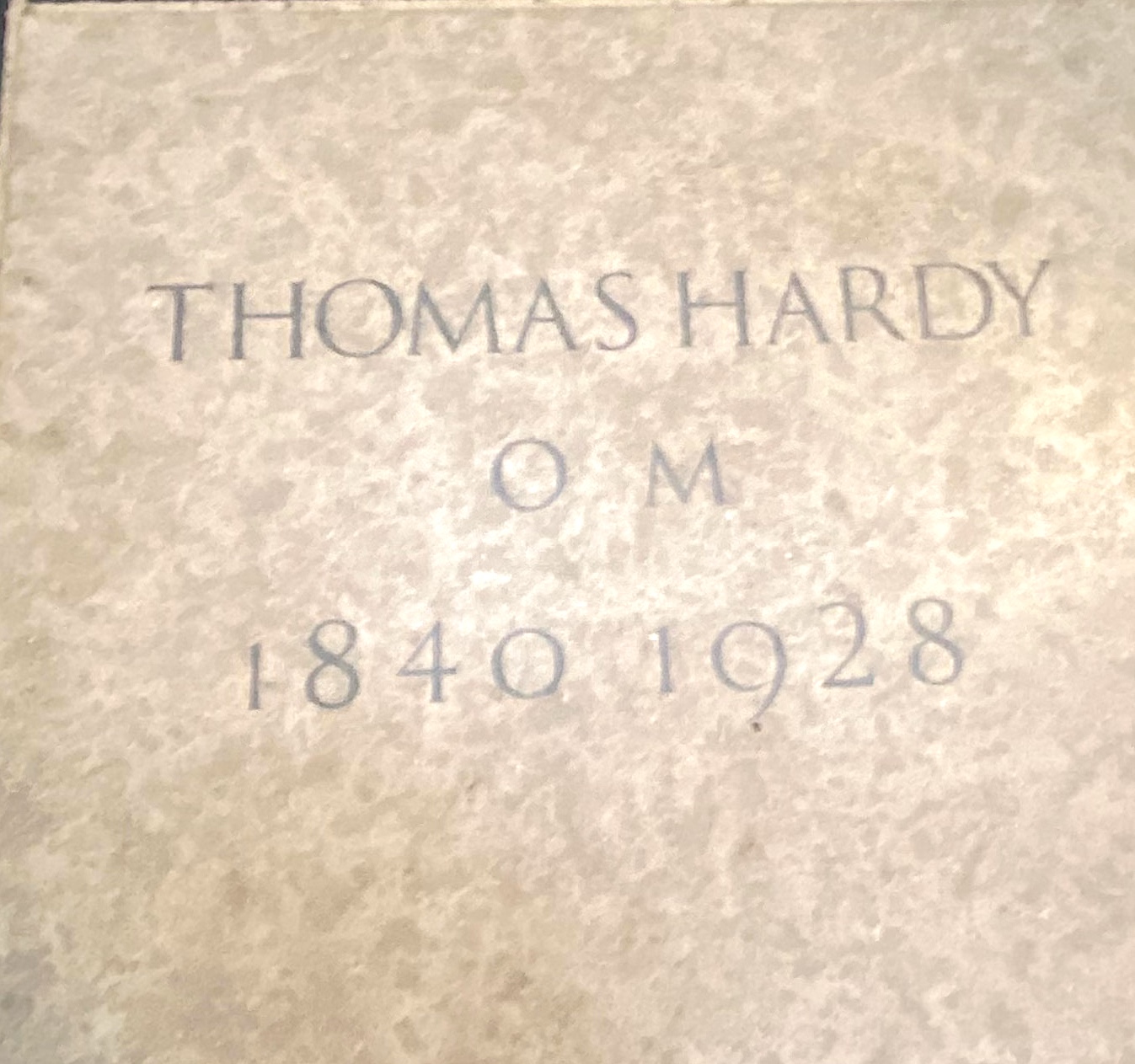
This week, let’s explore that area of Westminster Abbey known as Poet’s Corner. More than 100 poets/writers are buried or have memorials there. Some of the memorial “squares” on the floor indicate where the person is actually buried if they are not interred in the Abbey. But not all of them.

There are also several clergymen and actors buried in this transept, and composer George Frederick Handel.

I’ll warn you that you’re going to see a lot of feet in these pictures simply because it was very crowded and it couldn’t be helped.

Poet’s Corner is in the eastern aisle, the ‘corner’, of the south transept, although over time graves and memorials have spread across the whole transept. Chris took this picture.

Westminster Abbey’s First Poet Interment

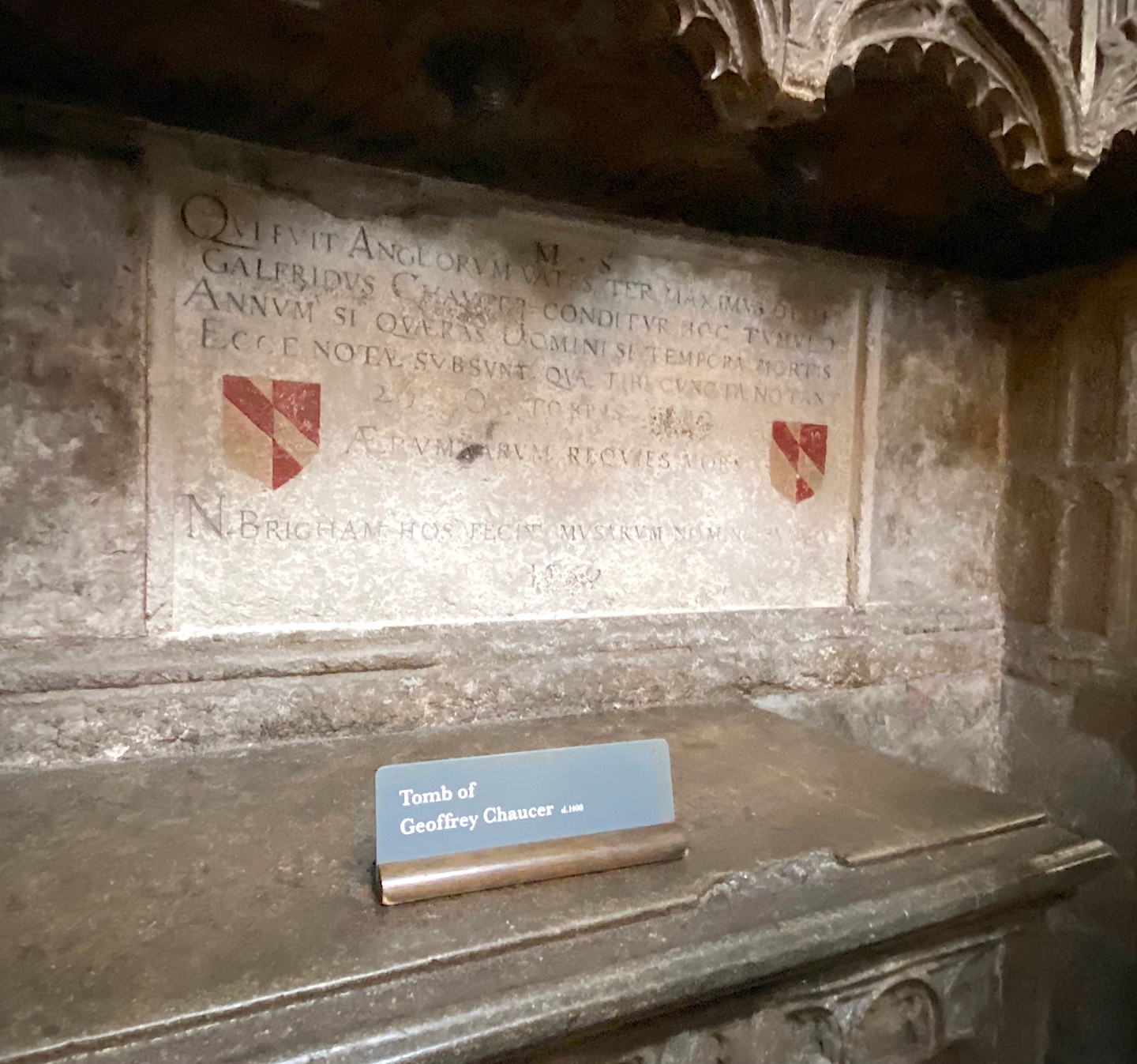
The first poet buried at Westminster Abbey in 1400 was Geoffrey Chaucer, author of “The Canterbury Tales”. However, it wasn’t due to his status as a writer but because because he was Clerk of the King’s Works. That means he organized most of King Richard II’s building projects.

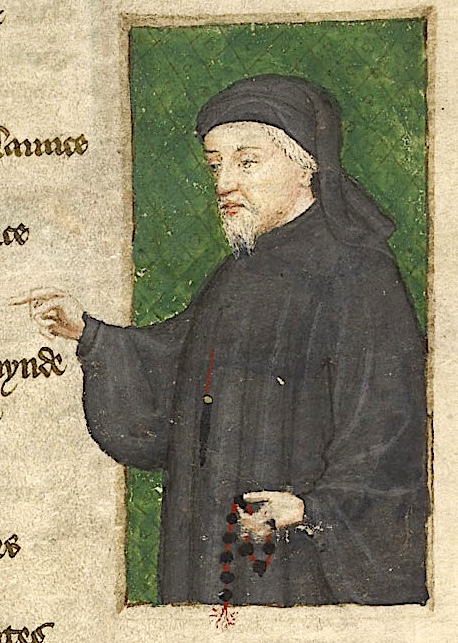
Portrait of Chaucer by Thomas Hoccleve in the Regiment of Princes (1412), who claimed to have personally known Chaucer.

No major works were begun during his tenure, but Chaucer oversaw repairs on Westminster Palace, St. George’s Chapel, Windsor, and continued building the wharf at the Tower of London. Chaucer was also comptroller of the customs for the port of London from 1374 to 1386. To have had that job for 12 years indicates he was quite good at it.

Chaucer obtained the job of comptroller of the customs for the port of London, which he began on June 8, 1374. He continued in that role for 12 years, a long time in such a post at that time.

It would be 200 years later when Edmund Spencer (1553-1598) was interred at Westminster Abbey. He wrote “The Faerie Queen” for Queen Elizabeth I, one of the longest poems in the English language. He asked to be buried near Chaucer. I did not get a photo of his memorial, unfortunately.

So how does one get included in Poet’s Corner? The Deans of Westminster decide who receives a place based on merit, although they consult widely. Poets’ Corner proper is in the eastern aisle, the ‘corner’, of the south transept, though over time graves and memorials have spread across the whole transept.

Graham Jones designed a new window above Chaucer’s tomb in Poets’ Corner to allow memorials to poets and writers to be added to it in the future.

In the picture above that Chris took, you can see more recent memorials to Alexander Pope, Robert Herrick, A.E. Housman, Oscar Wilde, Christopher Marlowe, Fanny Burney and Elizabeth Gaskell. There is room for more to be added in the future. None of them are actually interred at Westminster Abbey.

Who’s Really Here?

I’m glad you asked! I’m going to show you photos of memorials of those folks who are truly interred at the Abbey. It’s just a sampling, mind you. I’ve included some that stand out for various reasons. I’ve already shared the grave of Charles Dickens, so I won’t talk about him again.

A recording of Olivier reading an extract from Act 4 of Shakespeare’s Henry V was played during the service, the first time the voice of the deceased had been heard during their memorial service in the Abbey.

Actor Sir Laurence Olivier died on July 11, 1989 but his ashes were not buried there until Sept. 16, 1991, at a private ceremony. He was 82. A memorial service was held in the Abbey on Oct. 20, 1989.

A recording of Olivier reading an extract from Act 4 of Shakespeare’s Henry V was played during the service, the first time the voice of the deceased had been heard during their memorial service in the Abbey.

His memorial stone was unveiled on Sept. 23, 1991 by Sir John Gielgud. The stone of Westmorland green slate was cut by Ieuan Rees. Gielgud’s ashes (he died in 2000) were buried beside him. (See photo below.) Gielgud specifically requested that no memorial service be held for him.

The “OM” stands for Order of Merit.

Sir John Gilgud died on May 21, 2000 and was cremated at Oxford. He specifically requested that no memorial service be held for him.

Alfred, Lord Tennyson

At last an actual poet!

Alfred, Lord Tennyson, Poet Laureate, died on Oct. 6, 1892. On Oct. 11, his coffin was brought to Westminster Abbey and lay overnight in St. Faith’s chapel (just off the south transept). The chapel was hung with purple and the Union Flag covered the coffin. Queen Victoria’s tribute was a laurel wreath containing an inset lyre.

The funeral held the next day was attended by thousands of mourners. The Abbey organist, Frederick Bridge, set to music words from Tennyson’s poem “Crossing the Bar”. It’s one of my favorites and I see quotes from it on a number of grave markers I’ve photographed

In 1895, a bust of the poet, by Thomas Woolner, was placed on a pillar nearby. I didn’t get a picture of it but you can see it here.

Rudyard Kipling

Most people remember writer/poet Joseph Rudyard Kipling (1865-1936) because he wrote The Jungle Book in 1894. But he also wrote Plain Tales from the Hills, Soldiers Three, Kim, and Wee Willie Winkie.

His poems include “Mandalay” (1890), “Gunga Din” (1890), “The Gods of the Copybook Headings” (1919), “The White Man’s Burden” (1899), and “If—” (1910).

In 1907, Kipling was the first English writer to receive the Nobel Prize for literature. He was one of the first members of the Imperial (now Commonwealth) War Graves Commission. He died at age 70 on Jan. 18, 1936 after an operation for a perforated ulcer.

Rudyard Kipling was born in Bombay, India in 1907.

Thomas Hardy

Located just below Kipling is the grave marker of author/poet Thomas Hardy (1840-1928). I imagine many people remember having to read his book Return of the Native in English back in high school

In my case, I started reading Hardy’s books out of curiosity as a teenager and fell in love with how he wrote. I’ve read every one of them. Many, such as Far from the Madd’ing Crowd, Tess of the D’urbervilles, Jude the Obscure, and yes, Return of the Native, have been made into films over the years.

Hardy’s “square” is located just below that of Rudyard Kipling.

Most of Thomas Hardy is interred at the Abbey, but not his heart.

Hardy’s funeral at the Abbey was on Jan. 16, 1928. It caused quite a stir because he’d wanted his ashes to be interred at Stinsford in the same grave as his first wife, Emma. His family and friends agreed. However, his executor, Sir Sydney Carlyle Cockerell, insisted that he be placed in Poets’ Corner. A compromise was reached whereby his heart was buried at Stinsford with Emma, and his ashes in Poets’ Corner.

I didn’t know this when I was reading his novels years ago, but there’s another reason I must have felt a kinship to Hardy. In the mid-1860s, he was in charge of the excavation of part of the graveyard at Old Church St. Pancras in London in the course of the construction of the Midland Railway’s London terminus, St. Pancras station. So he spent a lot of time in a cemetery just like me!

Samuel Johnson

Samuel Johnson (1809-1784) is not a name that might ring a bell to you but for English majors like me, it does. We have Johnson to thank for his great Dictionary of the English Language.

I studied Johnson while getting my master’s in English literature at the University of Georgia, and he led a rather roller coaster life of many ups and downs.

The inscription reads: “Samuel Johnson, Doctor of Laws, died 13 December in the year 1784, aged 75.”

After failing at being a schoolmaster, he came to London in 1737, with his friend David Garrick (the famous actor buried next to him). In 1735, he married widow Elizabeth Porter (she died in 1752). After periods of poverty and ill health, he made his name with essays entitled The Rambler and published his great Dictionary of the English Language in 1755. One of his last great works was The Lives of the Poets. He died on Dec. 13, 1784 at age 75.

In 1790, the Dean and Chapter gave permission for erection of a monument to Johnson but this was never actually put up. According to Westminster Abbey’s web page, a statue was erected at St. Paul’s cathedral in 1796 and this might have been the monument which had been intended for the Abbey.

Later on in the day that we visited Westminster Abbey, we visited the crypt at St. Paul’s Cathedral (which I will be writing about later). I got to see the very monument they mentioned (pictured below).

This statue of Samuel Johnson at St. Paul’s Cathedral may have been meant for Westminster Abbey.

George Frederick Handel

I certainly can’t leave out German-born composer George Frederick Handel (1685-1759).

Born at Halle in Saxony in 1685, Handel made his first visit to London in 1710. In 1727, he was naturalized as an Englishman by Act of Parliament.

Handel was blind at the time of his death in 1759.

Handel started three commercial opera companies to supply the English nobility with Italian opera. In 1737, after a physical breakdown, he transitioned to English choral works. After his success with Messiah (1742), he never composed an Italian opera again.

His orchestral Water Music and Music for the Royal Fireworks remain popular today. One of his four coronation anthems, Zadok the Priest, has been performed at every British coronation since 1727.

Monument to Geore Frederich Handel, created by Louis Francois Roubiliac).

Three days before he died in 1759, Handel signed a codicil to his will saying he hoped to be buried in the Abbey and desired that his executor erect a monument for him. He got his wish. The Abbey’s web site describes it like this:

On the wall above his grave is a fine monument by the sculptor Louis Francois Roubiliac (with the same inscription as on the stone but with the dates in Roman numerals). The life-size statue, unveiled in 1762, is said to be an exact likeness as the face was modeled from a death mask. Behind the figure, among clouds, is an organ with an angel playing a harp. On the left of the statue is a group of musical instruments and an open score of his most well-known oratorio Messiah, composed in 1741. Directly in front of him is the musical score I know that my Redeemer liveth. The index finger of his left hand had been missing for a long time and a new one has recently been sculpted to replace it.

Who’s NOT Buried at Westminster Abbey (But Has a Memorial)

You can get a glimpse of a bust of Samuel Johnson in this picture (lower left) of this wall of poets/playwrights. He’s the only one in that group interred at Westminster Abbey.

Notably, Shakespeare is buried at Holy Trinity Church, Stratford upon Avon in Warwickshire. Robert Burns is buried in St Michael’s churchyard, Dumfries, Scotland. Poet John Keats died of tuberculosis in Rome in 1821 and was buried in the Protestant cemetery there. Poet Percy Shelley died in 1822 in Italy, drowned while sailing and his body washed ashore at Viareggio. His ashes were placed in the Protestant cemetery in Rome.

Shakespeare, Burns, Keats, Shelley, Austen, Thomson, and Southey are not interred at Westminster Abbey. But Samuel Johnson is.

Author William Makepeace Thackeray (1811-1863), best known for his novel Vanity Fair, is not buried at Westminster Abbey. But he has a bust done by sculptor Carlo, Baron Marochetti. A petition to the Dean of Westminster for permission to erect a memorial was signed by Charles Dickens and many other authors and artists of the day. The monument was paid for in 1865.

Vanity Fair author William Thackeray (1811-1863) is buried at Kensal Green Cemetery in London.

Thackeray is actually buried in Kensal Green cemetery in London.

There are many, many more poets/composers/playwrights/artists and such that I could talk about with memorials at the Abbey, but you can look them up if you’re curious.

Next week, I will try to wrap things up at the Abbey with Part VIII, but there are no guarantees.

Author/theologian C.S. Lewis is probably best known for his Narnia series of books. This is a memorial stone unveiled at the Abbey 50 years after his death in 2013. He is buried in the cemetery at Holy Trinity Church in Headington, Oxford. We did visit his grave earlier in the week and I’ll write about it later.

Westminster Abbey 2023: On Top of the World with Britain’s Brightest Science Stars, Part VI

29 Saturday Jun 2024

Posted by adventuresincemeteryhopping in General

≈ Leave a comment

Many thanks to the amazing Grace Barrett of Tours by Grace for leading us through Westminster Abbey!

I’m sure many people have a favorite monument/memorial at Westminster Abbey. There are so many that made my own jaw drop. But I think you’d be hard pressed to not find yourself in a bit of awe when gazing up at the monument to British mathematician, physicist, astronomer, alchemist, theologian, and author Sir Isaac Newton.

If you asked the average person on the street, they might say “Oh, he’s the guy who discovered gravity.”

However, there was clearly much more to the man than that. His work Principia Mathematica (1687) laid the framework for the Scientific Revolution of the 17th century.

Born in 1642, Sir Isaac Newton did a lot more than just “discover” gravity. (Photo Source: Artist Godfrey Kneller, 1689)

More Than Gravity

Born on Christmas Day in 1642 in Lincolnshire, England, Isaac Newton’s father (a farmer) was also named Isaac Newton. He died three months before his son entered the world. His mother, Hannah Ayscough, remarried when little Isaac was three and she went to live with her new husband, the Rev. Barnabas Smith. Isaac was left in the care of his maternal grandmother, Margery Ayscough (née Blythe). Despite his mother’s wish that he become a farmer, Isaac was destined for a different path in life.

Newton attended the King’s School in Grantham before enrolling at the University of Cambridge’s Trinity College in 1661. While there, he became interested in the work of René Descartes. When the Great Plague closed Cambridge in 1665, Newton went home and began working out his theories on calculus, light, and color. His farm was the setting for the supposed falling apple that inspired his work on gravity.

I read that while the part where he was actually hit on the head by it isn’t true, the part about watching an apple falling from a tree inspired his thoughts on gravity was based in real events.

Isaac Newton dispersing sunlight through a prism, engraving after a picture by J.A. Houston, published around 1879.

In 1666, Newton experimented with light, and found that different colors had different refractions. He began lecturing on this topic in 1670.

Newton published his most famous book, Principia Mathematics, in 1687, while he was a mathematics professor at Trinity College, Cambridge. In the Principia, Newton explained three basic laws that govern the way objects move. Newton also discovered diffraction, which led him to enter the field of physics.

He also established a new field in mathematics known as calculus, although the German Gottfried Leibniz was working on these ideas at the same time. His work has greatly contributed in the areas of science and mathematics making him one of the most influential scientists in human history and one of the greatest mathematician of all time.

Elected a Fellow of the Royal Society in 1672, Newton served as its president from 1705 to 1727. He became Master of the Mint in 1699 and was knighted in April 1705.

Photo of Sir Isaac Newton’s death mask.

A lifelong bachelor, Newton died at Kensington on March 20, 1727 and was buried in Westminster Abbey on March 28. His body lay in state in the Jerusalem Chamber and his coffin was followed to its grave by most of the Fellows of the Royal Society. The Lord Chancellor, the Dukes of Montrose and Roxburgh and the Earls of Pembroke, Sussex, and Macclesfield were pall bearers. He was the first scientist to be so honored at the Abbey.

Newton’s Monument

Newton’s monument stands in the nave against the choir screen, to the north of the entrance to the choir. In the photo below, which Chris took, Newton’s monument is to the left. The one on the right is for James Stanhope (who died in 1721), a politician, soldier, and diplomat. I was so fixated on Newton’s monument that I didn’t even take any picture of poor Stanhope’s equally stunning one.

My eyes were immediately drawn to the monument for Sir Isaac Newton on the left side.

Both monuments were executed by the sculptor Michael Rysbrack (1694-1770) to the designs of the architect William Kent (1685-1748). Newton’s was unveiled in 1731 while Stanhope’s was erected in 1733.

Poet Alexander Pope wrote an epitaph for Newton but this was not allowed to be put on the monument in the Abbey. “Nature and Nature’s laws lay hid in night: God said, Let Newton be! and all was light”.

It’s hard to not be blown away by Sir Isaac Newton’s grand monument.

I think Westminster Abbey’s web page can describe what’s going on in terms of symbols better than I can:

The monument is of white and grey marble. Its base bears a Latin inscription and supports a sarcophagus with large scroll feet and a relief panel. The relief depicts boys using instruments related to Newton’s mathematical and optical work. One has a telescope, one is looking through a prism and another is balancing the Sun and planets on a steel yard. Others depict Newton’s activities as Master of the Mint (producing coin of the realm) – the figures carry pots of coins and an ingot (bar) of metal is being put into a furnace.

Above the sarcophagus is a reclining figure of Newton, in classical costume, his right elbow resting on several books representing his great works. They are labelled (on the fore-edges) ‘Divinity’, ‘Chronology’, ‘Opticks’ [1704] and ‘Philo. Prin. Math’ [Philosophiae Naturalis Principia Mathematica, 1686-7)]. With his left hand he points to a scroll with a mathematical design shown on it (the ‘converging series’), held by two standing winged boys.

The painting on this scroll had been erased or cleaned off in the early 19th century and was re-painted in 1977 from details in Newton’s manuscripts. The background is a pyramid on which is a celestial globe with the signs of the Zodiac, of the constellations, and with the path of the comet of 1680. On top of the globe sits a figure of Urania (the muse of Astronomy) leaning upon a book. On either end of the base is his coat of arms, two shinbones in saltire, within a decorative cartouche.

Michael Rysbrack, who executed Newton and Stanhope’s monuments, put his name on his work.

In Newton’s later years, his niece Catherine Barton Conduitt and her husband, John, lived with him. It was John Conduitt who commissioned the Newton monument. He drew a sketch of what he had in mind and gave it to Kent to design.The monument originally stood out against the flat front of the choir screen, but was enclosed within the present decorative arch when Edward Blore re-modeled the screen in 1834.

I haven’t read (or seen the movie) Dan Brown’s best-selling book “The DaVinci Code” but apparently Newton’s monument plays an important role in the plot and the word “apple” turns out to be part of it.

Newton also has a stone in the floor nearby as well. This Latin inscription can be translated as: “Here lies that which was mortal of Isaac Newton.”

I have no doubt countless people have unwittingly trod upon Sir Isaac Newton’s stone over the years.

Stephen Hawking

Fast forward to recent times and an equally ground-breaking scientist was interred at Westminster Abbey. While he doesn’t have a huge monument like Newton, his ashes are interred near him.

Professor Stephen Hawking (1942-2018) attended school in St. Albans and continued on to Oxford, and later Cambridge. While in his 20s, he was diagnosed with motor neuron disease. He first married Jane Wilde in 1965 with who he had three children, and the couple later divorced. He later married Elaine Mason in 1995 and they divorced in 2007.

Stephen Hawking was a groundbreaking cosmologist. (Photo Source: NASA)

Hawking became a research fellow at Cambridge and started his work on black holes. He was elected to the Royal Society when he was 32, and in 1979 became Lucasian Professor of Mathematics at Cambridge University, a post also held by Newton. His best known work is “A Brief History of Time”. He died on March 14, 2018 at age 76.

The Caithness slate stone was designed and made by John Maine and the letter cutter was Gillian Forbes.

Stephen Hawking’s stone is made of Caithness slate from Scotland.

The Westminster Abbey web page describes it thus:

The stone depicts a series of rings, surrounding a darker central ellipse. The 10 characters of Hawking’s equation express his idea that black holes in the universe are not entirely black but emit a glow, that would become known as Hawking radiation. In this equation the T stands for temperature; the h for Planck’s constant which is used to understand parts of quantum mechanics; c stands for the speed of light; 8Pi helps us to grasp its spherical nature; G is Newton’s constant to understand gravity; M stands for the mass of the black hole and k stand for Boltzmann’s constant, which is the energy of gas particles.

Charles Darwin

I’ll finish up with a world-famous naturalist, geologist, and biologist, Charles Darwin (1809-1882). Simply put, many think of him as the person who first truly wrote about evolution. Darwin is buried in the north aisle of the nave of Westminster Abbey, near Newton and Hawking.

Born in Shrewsbury, England on Feb. 12, 1809, Charles Darwin was the son of Robert Waring Darwin and Susannah Wedgwood Darwin, daughter of Josiah Wedgwood (of English china fame).

This photo of Charles Darwin is likely from around 1854.

Darwin studied with his brother Erasmus at Edinburgh University in Scotland but was not keen on the idea of following in his father’s footsteps as a doctor. At Cambridge, he became interested in natural history and sailed on the ship HMS Beagle in 1831 to South America and the Galapagos islands.

In 1839 he married his cousin Emma Wedgwood and they went to live at Downe, a small village in Kent. “On the Origin of Species” was published in 1859 and he continued working although his health was often poor.

I’m sorry to say that this was the best photo I have of Charles Darwin’s stone.

Darwin died on April 19, 1882. His body lay overnight in the Abbey, in the small chapel of St. Faith, and on the morning of April 26, his coffin was escorted into the Abbey. Pallbearers included Sir Joseph Hooker, Alfred Russel Wallace, James Russell Lowell (U.S. ambassador), and William Spottiswoode (president of the Royal Society).

The burial service was held in the Lantern. Chief mourners then followed the coffin into the north aisle of the Nave where Darwin was buried next to the eminent scientist Sir John Herschel.

His simple gravestone is made of pale Carrara marble.

You can look forward to Poet’s Corner next time in Part VII.

This is a memorial stone placed in 1969 for British poet, Lord Byron (1788-1824). He’s actually buried buried in his family vault at Hucknall Torkard in Nottinghamshire, near Newstead. The Dean of Westminster refused his burial in the Abbey.
← Older posts
Newer posts →

Recent Posts

  • More Pensacola, Fla. Cemetery Hopping: Taking a Ramble Through Saint John’s Cemetery, Part III
  • More Pensacola, Fla. Cemetery Hopping: Taking a Ramble Through Saint John’s Cemetery, Part II
  • More Pensacola, Fla. Cemetery Hopping: Taking a Ramble Through Saint John’s Cemetery, Part I
  • The City of Five Flags: Stepping back in time at Pensacola, Fla.’s Saint Michael’s Cemetery, Part V
  • The City of Five Flags: Stepping back in time at Pensacola, Fla.’s Saint Michael’s Cemetery, Part IV

Archives

  • December 2025
  • November 2025
  • August 2025
  • July 2025
  • June 2025
  • May 2025
  • April 2025
  • March 2025
  • February 2025
  • January 2025
  • October 2024
  • August 2024
  • July 2024
  • June 2024
  • May 2024
  • April 2024
  • March 2024
  • February 2024
  • January 2024
  • December 2023
  • November 2023
  • October 2023
  • September 2023
  • August 2023
  • July 2023
  • June 2023
  • May 2023
  • April 2023
  • March 2023
  • February 2023
  • January 2023
  • December 2022
  • November 2022
  • October 2022
  • September 2022
  • August 2022
  • July 2022
  • June 2022
  • May 2022
  • April 2022
  • March 2022
  • February 2022
  • January 2022
  • December 2021
  • November 2021
  • October 2021
  • September 2021
  • August 2021
  • July 2021
  • May 2021
  • April 2021
  • March 2021
  • February 2021
  • January 2021
  • December 2020
  • November 2020
  • October 2020
  • September 2020
  • August 2020
  • July 2020
  • June 2020
  • May 2020
  • April 2020
  • March 2020
  • February 2020
  • January 2020
  • December 2019
  • November 2019
  • October 2019
  • September 2019
  • August 2019
  • July 2019
  • June 2019
  • May 2019
  • April 2019
  • March 2019
  • February 2019
  • January 2019
  • December 2018
  • November 2018
  • October 2018
  • September 2018
  • August 2018
  • May 2018
  • April 2018
  • March 2018
  • February 2018
  • January 2018
  • December 2017
  • November 2017
  • October 2017
  • September 2017
  • August 2017
  • July 2017
  • June 2017
  • May 2017
  • April 2017
  • March 2017
  • February 2017
  • January 2017
  • December 2016
  • November 2016
  • October 2016
  • September 2016
  • August 2016
  • July 2016
  • June 2016
  • May 2016
  • April 2016
  • March 2016
  • February 2016
  • January 2016
  • December 2015
  • November 2015
  • October 2015
  • September 2015
  • August 2015
  • July 2015
  • May 2015
  • April 2015
  • March 2015
  • February 2015
  • January 2015
  • December 2014
  • November 2014
  • October 2014
  • September 2014
  • August 2014
  • July 2014
  • June 2014
  • May 2014
  • April 2014
  • March 2014
  • February 2014
  • January 2014
  • December 2013
  • November 2013
  • October 2013
  • September 2013
  • August 2013
  • July 2013
  • June 2013
  • May 2013
  • April 2013
  • March 2013
  • February 2013
  • January 2013

Categories

  • General

Blogroll

  • A Grave Interest
  • Cemetery Photography by Chantal Larochelle
  • Cemetery Tours of Berlin by Matti
  • Confessions of a Funeral Director (Caleb Wilde)
  • Find a Grave
  • Hunting and Gathering (cool photography site)
  • Save Our Cemeteries (New Orleans, La.)
  • The Cemetery Club
  • The Graveyard Detective
  • The Rambling Muser
  • Westminster Abbey Tours by Grace

Meta

  • Create account
  • Log in
  • Entries feed
  • Comments feed
  • WordPress.com

Blog at WordPress.com.

  • Subscribe Subscribed
    • Adventures in Cemetery Hopping
    • Join 402 other subscribers
    • Already have a WordPress.com account? Log in now.
    • Adventures in Cemetery Hopping
    • Subscribe Subscribed
    • Sign up
    • Log in
    • Report this content
    • View site in Reader
    • Manage subscriptions
    • Collapse this bar
 

Loading Comments...