Remembering Lance Corporal Jerry Davis

One of the first FiAG requests I fulfilled was to photograph the grave of Lance Corporal Jerry Vanoid Davis. I didn’t know his family personally. All I knew was that he was from Tucker (where I now live) and that he was killed in action during the Vietnam War.

Jerry is buried in Melwood Cemetery in Stone Mountain, Ga. I’d never been to Melwood before, although I have passed it many times. I was a little nervous because big cemeteries can intimidate me. Many are owned/managed by people who don’t like FiAG photo volunteers. They think we take up their time by asking for their help to locate graves. Some of the corporate chains have policies in which FiAG volunteers are asked to leave unless they have written permission from the family to take a picture of the grave.

Melwood Cemetery in Stone Mountain, Ga.

In a way, that reputation can be valid. From what I have heard, sometimes a FiAG volunteer will walk into a cemetery office with a long list of names, expecting someone to drop whatever they’re doing and help the volunteer locate graves. That isn’t right and it shouldn’t happen. But I think most of us are respectful of others’ time and try to avoid making their work more difficult.

Fortunately, while Melwood is indeed large, it is still locally owned, not bought out by a large chain (yet). The ladies in the office were more than happy to locate Jerry’s grave for me and one of them even drove over to it (with me following in my car) so I could see exactly where it was. I really appreciated that.

LcpJerryDavis2

The gravestone has his middle name as “Vanoy” but on all records I have seen it is “Vanoid”.

According to Jerry’s FiAG memorial, he wasn’t even 20 yet when he enlisted in March 1966. He chose the United States Marines, a branch of the armed services noted for its toughness of character. Looking at his picture, I wonder what was going through his mind before he left everything he knew behind in a small Georgia town for an uncertain future thousands of miles away.

Jerry’s name is listed on the Vietnam Veterans Memorial in Washington, D.C. on Panel 24E, Row 20.

After he arrived in Vietnam, Jerry was assigned to Company B, 1st Battalion, 7th Marines, 1st MAR DIV (Rein) FMF. Records indicate he was an antitank assaultman.

590px-USMC_-_7th_Marine_Regiment_New_Logo

Jerry’s memorial explains how he died. “Near the Hoa Ham hamlet in Dai Loc District a LP (Listening Post) inside the Company perimeter wire, [Davis] received an incoming grenade and five rounds of small arms fire resulting in LCpl Davis being killed in action by the enemy rifle fire.”

By looking on Ancestry.com, I discovered that Jerry’s older brother died in 1965. He wasn’t in the military. I don’t know the cause of death. He was only 23. I wonder if he and Jerry played “war” as kids in the backyard. When they got older, did they talk about enlisting together? Or was it Jerry’s dream alone to become a Marine?

Ten years ago, Jerry’s story wouldn’t have touched me as deeply. Because now I have a son myself, albeit a very young one. It changes the lens through which you view life. If I knew my son was only going to live to the age of 20 and end up being shot to death halfway around the world, it would tear me to pieces.

I think of Jerry’s mother, Martha, as she watched her sons grow from little boys into young men. What did she say when Jerry told her he wanted to enlist? I picture her at his funeral, accepting the flag of our country. Having now lost both of her sons within a two-year period, her heart had to be broken. She died only 10 years after Jerry.

I wish I could have met Martha. I would tell her, from one mother to another, that I’m sorry her boys died so young. That Jerry’s death in combat was not in vain, that his life did mean something. He was not just a casualty number on a blackboard.

I would also tell her that while few people know Jerry’s story, I do. And I won’t forget it.

I hope you won’t, either.
My First Hop

Almost every year, I fly to Omaha to visit my best friend, Christi. It’s often during the worst time of the year, weather wise, to visit Nebraska. Not sure how that tradition got started. But on my visit in 2009, I decided we were going on a field trip to a little town about 25 miles from Omaha called Blair. I consider this my first cemetery “hop” and it had nothing to do with Find a Grave.com because it involved my own family tree.

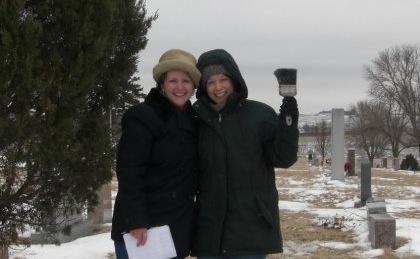
The paintbrush is for sweeping snow/ice off the gravestones. We mean business!

The paintbrush is for sweeping snow/ice off the gravestones. We mean business, people!

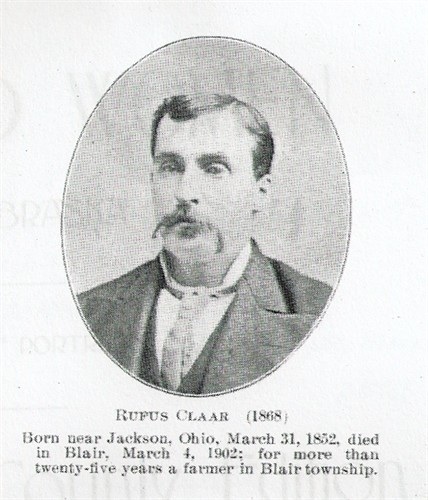
Through Ancestry.com, I discovered that a distant cousin of mine, Rufus Claar, owned a farm in Blair during the late 1800s. That might not seem like a big deal but the rest of the Claars lived in Southeast Ohio and most remained there. What made him decide, as a young man, to uproot and move hundreds of miles away to an unknown future?

Rufus was one of 13 children, son of Samuel and Lydia Claar. His little sister, Eliza Jane Claar Weed, made the move to Nebraska in 1875 with her husband, Charles. One brother ended up in Kansas, a sister in Indiana. One brother died at the age of 22, fighting for the Union in the Civil War.

Rufus was actually born in 1848, not 1858. This was taken from the book: "Men and Women of Nebraska -- A Book of Portraits", the Washington County edition.

Rufus was actually born in 1848′ not 1852. This was taken from the book: “Men and Women of Nebraska — A Book of Portraits”, the Washington County edition.

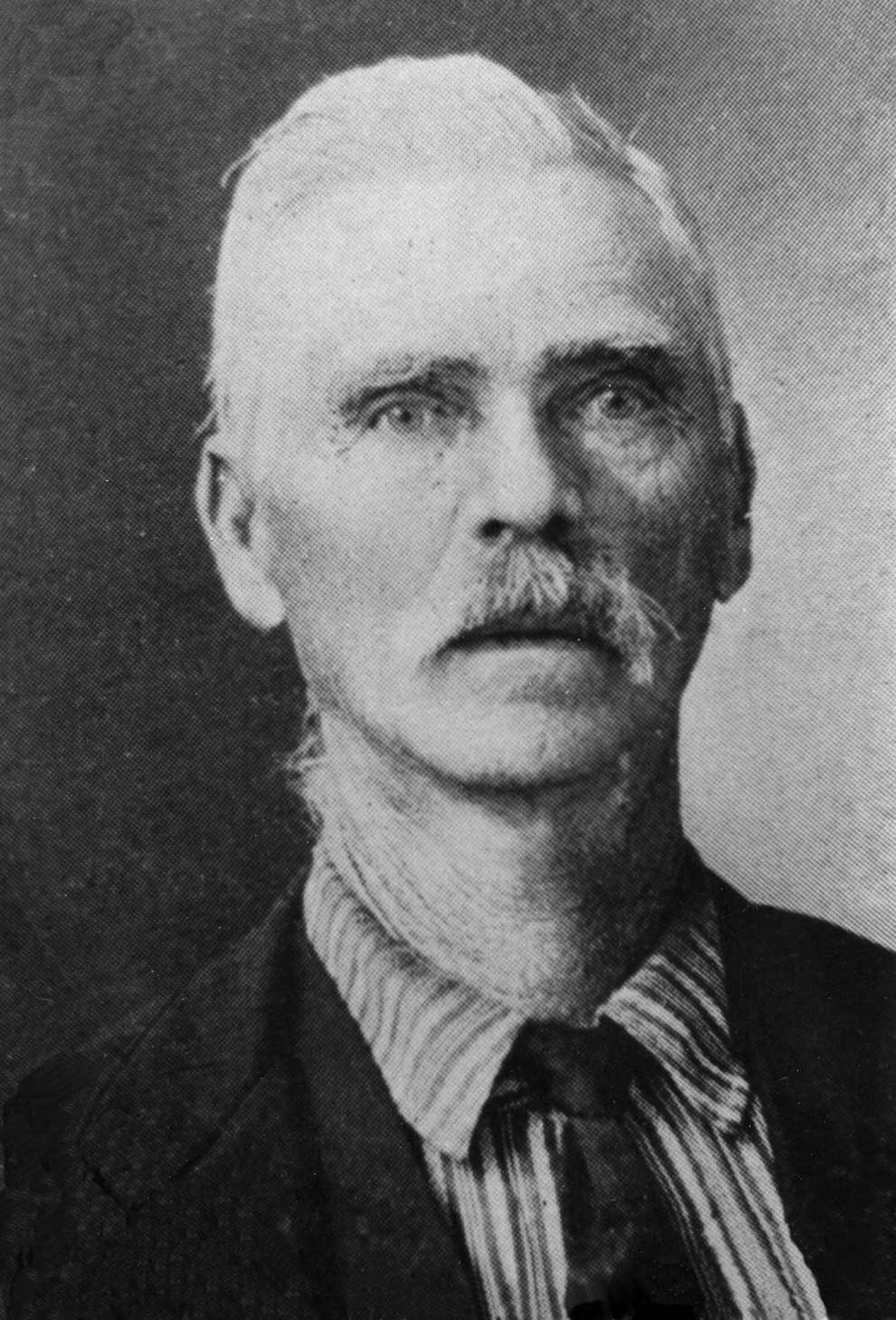
The 1870 U.S. Census notes that Rufus was working as a laborer for veterinarian/farmer Milton B. Wild (what a name!) near Blair. Wild’s wife was Vilena Carter, from Scioto County, Ohio, which is quite close to where the Claars lived. According to Wild’s obituary, he and Vilena moved to Nebraska in 1865 to start farming in the new territory. My guess is that Rufus, a teenager then, heard stories from the Carter family and thought life on the prairie might be more exciting than Ohio.

I wonder if Milton lived up to his name. Reprinted from Washington County History, 1900/1903.

In 1878, Rufus married Alma Stewart and they had five children. The twins, Lisle and Arthur, were born on April 26, 1880 and both died on July 26, 1881. I could not find their gravestones but according to records, they are buried with their parents in the Claar plot in Blair Cemetery.

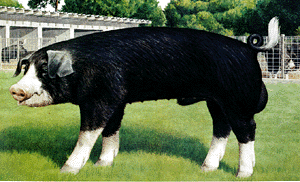
Along with running a large farm, Rufus bred champion Poland-China pigs. One of his prize-winning pigs, Black Joe (that’s not his picture below), fathered literally more than a hundred swine across the Midwest. That’s a lot of bacon!

Photo courtesy of the National Pork Producers Council (and no, I am not making that up).

Photo courtesy of the National Pork Producers Council (and no, I am not making that up).

An auction of much of Rufus’ stock and farm implements took place right before he died from pneumonia in 1902, only 54 years old. The rest of his land was sold because the remaining Claar children chose not to continue running the family farm. All three eventually left the state.

Pat Hunsche, a kind lady who lives in Blair, drove us over to the city cemetery. It was a slip, slide and away kind of day due to the ice and snow. I got out of the car and took about three steps before I slipped and fell flat on my dignity. Not a great way to start but it made all three of us laugh.

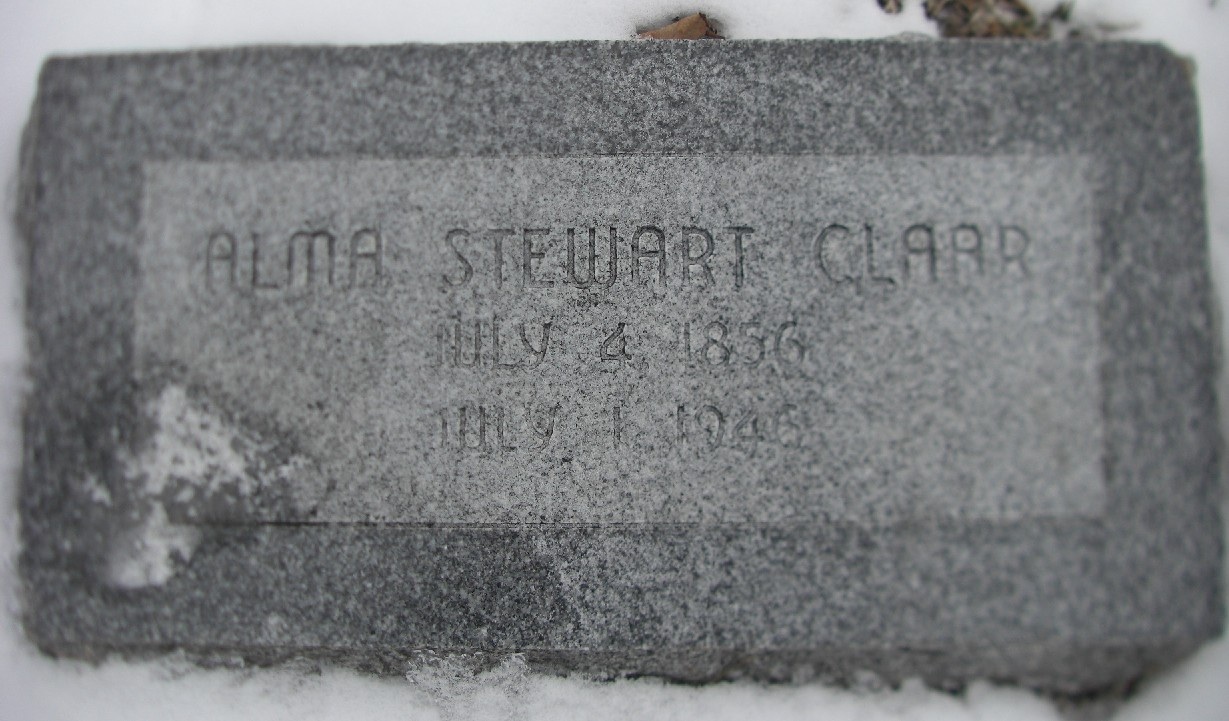
I did locate Rufus and Alma’s graves. Pat told me that if I looked out and down the hill, I could see what was once Rufus’ farmland. It lay vast and frozen in the distance, still being used for crops today. Not overrun by a freeway or shopping centers.

image

My pictures of Rufus’ grave did not turn out well. Alma’s gravestone shows how frozen the ground was that day.

Later we drove through the area and I saw for myself what Rufus had seen. Wide open spaces and nothing for miles. And I felt like it was meant for me to be there, to connect with this part of my history.

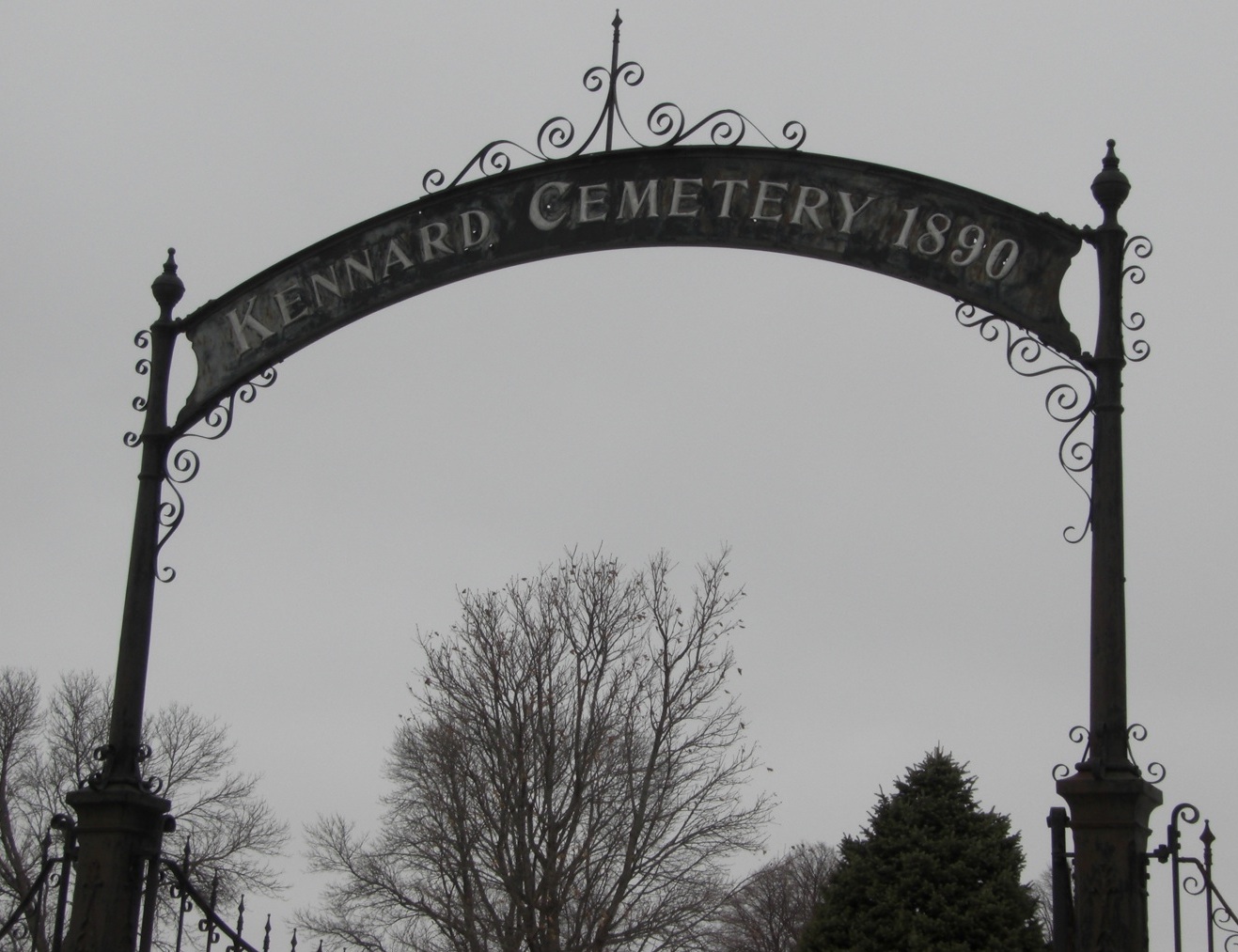
Kennard Cemetery

We drove to nearby Kennard Cemetery to visit the graves of Eliza Jane and her husband, Charles, a Civil War veteran. His obituary describes in rather stark detail what lead to his demise.

“He had blood poison in his foot and it was necessary to amputate the leg about half way between the ankle and the knee. This had caused him a great deal of pain and suffering and life didn’t mean much to him at being age, 81 years.”

My trip to Blair proved to be a catalyst for my current love of cemetery hopping. Connecting with a cousin from another time and place was part of that. Maybe the thrill of the hunt was, too.

All I know is I don’t plan on stopping my hopping any time soon.

Behind the Iron Gate

Behind the Iron Fence

The word “cemetery” can conjure up images of horror films, Halloween ghosts and blood-thirsty zombies. But in real life, they are peaceful, harmless places. Cemeteries are the last stop a body takes on its earthly journey. It’s a place to mourn and a place to laugh, a spot of ground to remember a life lived. To honor someone’s son or daughter, wife or husband, friend or enemy.

I recently signed on to be a photo volunteer for Find a Grave.com, a database of cemeteries around the world. Within that database are thousands of listings for graves, some with photos of the headstone, many without. Why would anyone care about that?

People researching their family trees find cemeteries to be very helpful resources. Not just for names and dates but a sense of history and place. For example, say you have a Great Aunt Frieda that you never knew was buried in Georgia, but you live in California. Chances are you are not going to travel all the way to Georgia just to visit her grave, but you would still like to see her headstone.

As a FiAG volunteer, I visit cemeteries around North Georgia, hunting for the graves of loved ones and taking pictures of their headstones at someone’s request. The search can be like a treasure hunt because you have no idea what you’ll find. Sometimes it’s nothing because nobody ever purchased a headstone for the deceased. Sometimes the headstone has been destroyed by time/conditions/vandalism. But many times, the headstone is right where it’s supposed to be. Just waiting to be discovered.

My interest in cemeteries started when I was an intern at the Athens Daily News while I attended the University of Georgia. I took obituaries over the phone. I got to know some of the funeral directors and their practices.

My fascination continued when I worked at a life insurance company that sold “pre-need” funeral policies in which you could plan your funeral out in detail and pay for it in advance. That’s when I really learned about the funeral industry’s ins and outs.

When I joined Ancestry.com, I began hunting down the graves of my loved ones online. My first “live” experience was when I visited a cemetery in Nebraska to find graves of distant relatives. That was my first real taste of “cemetery hopping” (when you move from grave to grave in a cemetery looking for a specific one). I was hooked then and still enjoy “hopping” through cemeteries looking for headstones.

The purpose of this blog is to document my work as a FiAG volunteer, with bits of history, trivia and just plain weird stuff mixed in. One day it may be the story behind the person interred in a particular grave. Or it may be about the funeral practices of Victorian England. Or I might talk about the process of donating one’s body to science, skipping the cemetery altogether.

So stop by on Fridays to see what’s new. I don’t have a road map of where I plan to go. But I hope you’ll join me on the journey.