
Over the years, I’ve been asked if I’ve ever visited a particular “queen or king of the gypsies” grave. The problem with that question, likely unbeknownst to the person who asked it, is that there are several such graves across the country and around the world. This is no ONE queen or king that represents them all.
I’ve visited one such plot in Dayton, Ohio’s Woodland Cemetery for Owen and Harriet (also known as Matilda) Stanley. According to new reports, crowds came from several states to witness her elaborate funeral procession when she died in 1878. You can read about the Stanleys here.
Truth be told, there are many different groups of “travelers” as they are sometimes known, often of Romani and Irish descent. Rose Hill Cemetery happens to have a gypsy queen buried there that draws many people to visit.
Kelly Mitchell, Gypsy Queen
Born around 1868, Kelly Mitchell is thought to be the descendant of a group of Romani people who, expelled from Europe, had migrated to South America. From there, they made their way into the U.S. A document found in the Lauderdale (Miss.) County Department of Archives and History notes that Kelly was born in Brazil, and that her mother was a native Brazilian who married into a Romani family.
Kelly left for America and married Emil Mitchell, who in 1909 became a king of the Gypsies after the death of his father.
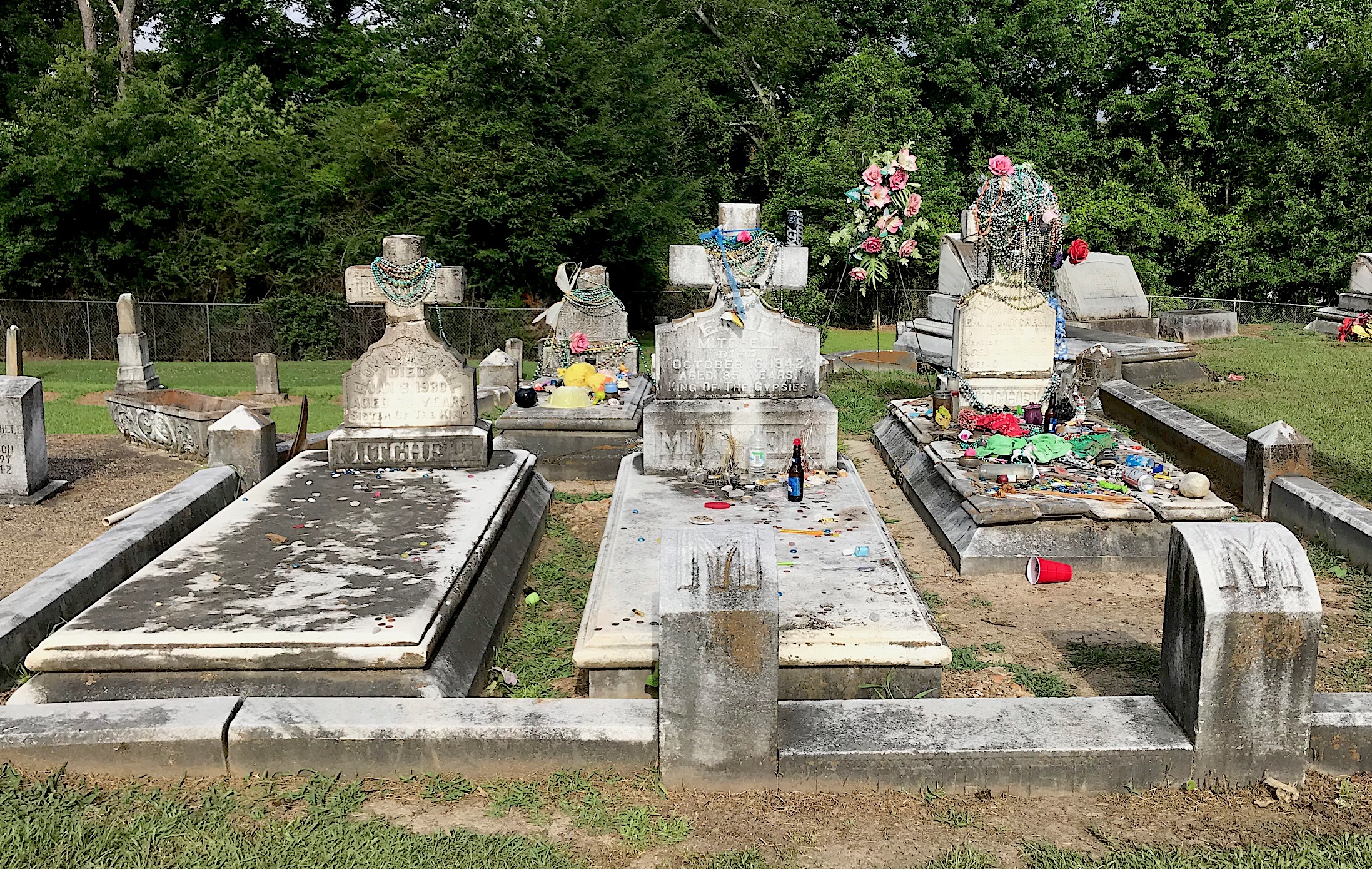
On Jan. 31, 1915, Kelly died due to complications during the birth of her 14th or 15th child. At the time, the tribe was camped near the Mississippi-Alabama state line in Coatopa, Ala. I’ve read that her body was kept on ice for about six weeks, to allow for the news to be disseminated to various groups of Romani in the Southeast and give them time to come to Meridian for her burial. That sounds about right because when Matilda Stanley died, the funeral was delayed for some time for the same reason.
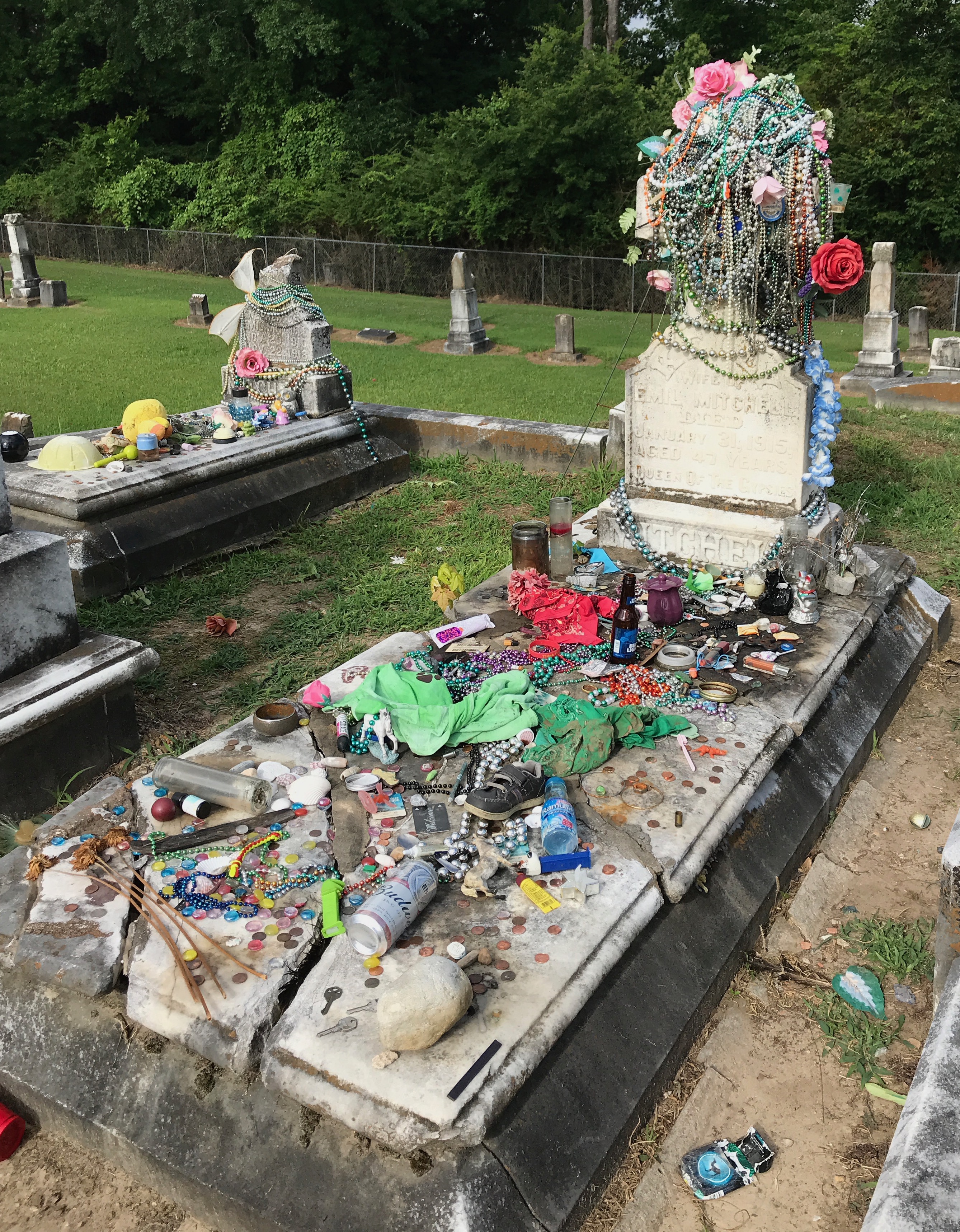
A service was held in Meridian’s St. Paul’s Episcopal Church, and an estimated 20,000 people attended her funeral. More than 5,000 followed the body to the cemetery to witness last rites. She was said to have been buried with many jewels and personal valuables, and her grave was heavily concreted to discourage vandals. Descriptions of the colorfully costumed mourners were written about in the newspapers. I don’t think Meridian had ever seen anything like it before.
To the back left of Kelly’s grave is the one for Mehill Mitchell, her eight-year-old nephew who died in 1918. It was possibly due to Spanish Flu. He was the second burial in the Mitchell plot.
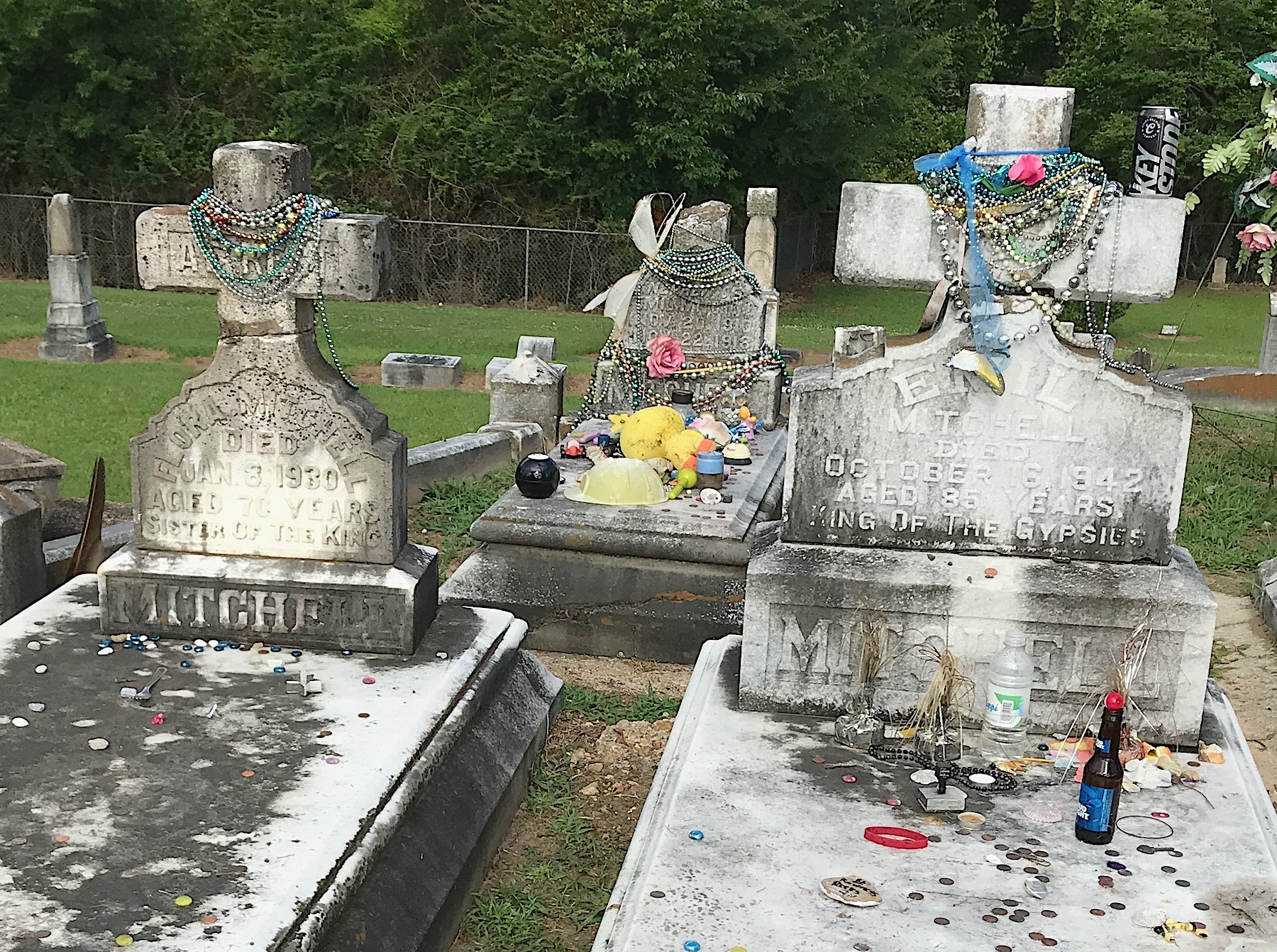
Emil’s sister, Flora Mitchell, took over the role of queen after Kelly’s demise. Flora died in Yazoo City, Miss. on Jan. 8, 1930 at age 70. She is buried to Emil’s left. Emil remarried to a woman named Lapa. I’m not sure where she is buried.
Emil Mitchell died on Oct. 16, 1942 in Albertville, Ala. at age 85. His nephew, Slatcho, died the following day (he was 45). Also known as Mike Wilson, Slatcho was the leader of a small tribe of gypsies in Mississippi. It’s possible he died en route to his uncle’s funeral. They were buried on the same day at Rose Hill.
Gypsy Princess
I’m not exactly sure where Diana Sharkey Mitchell fits into the family, but she is regarded as a gypsy princess. Born on July 4, 1918, she was married to Joseph “Joe” Sharkie Mitchell. I somehow missed getting a photo of his grave. He died in 1993. Diana’s grave is also decorated with beads and flowers.
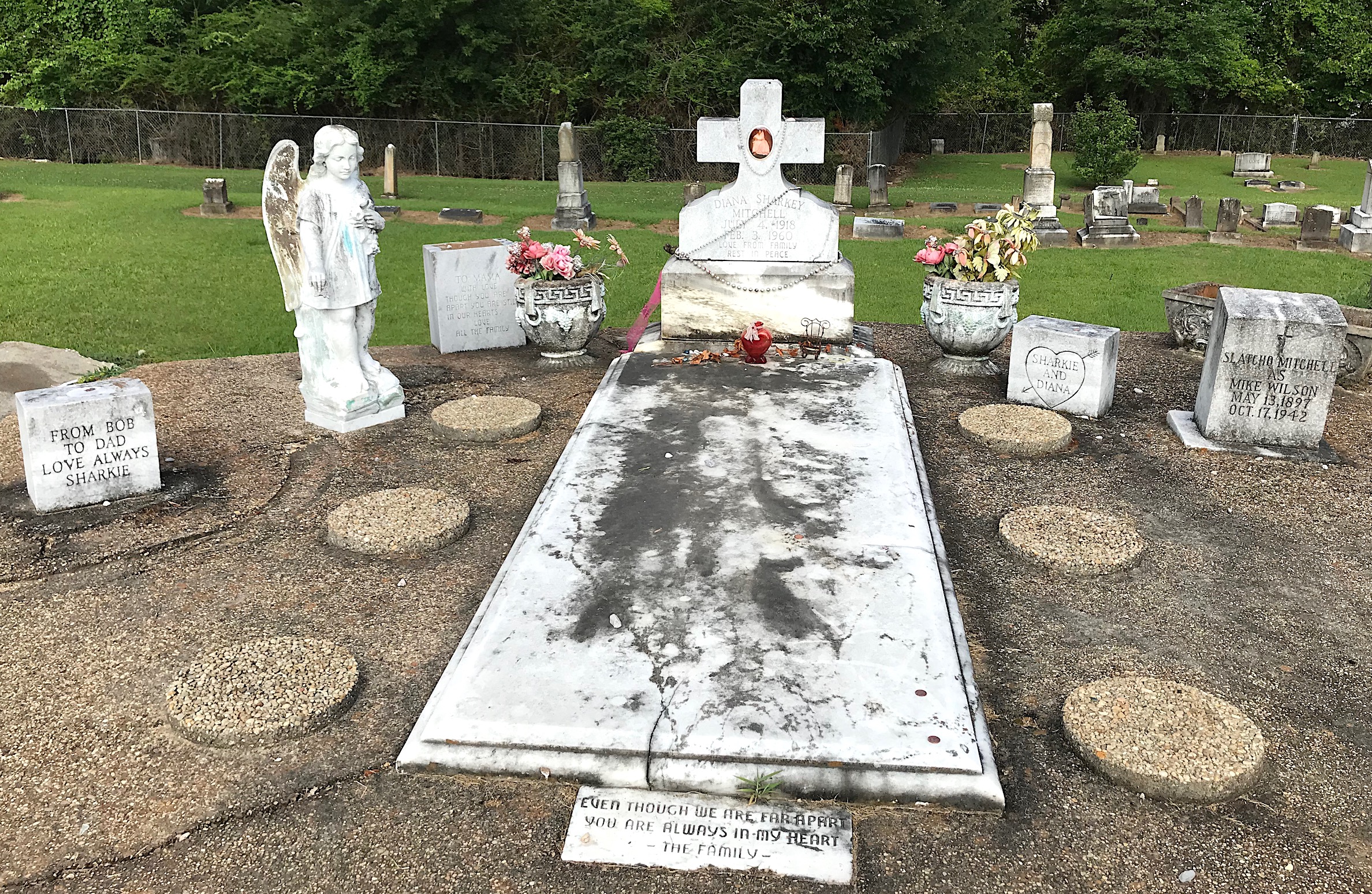
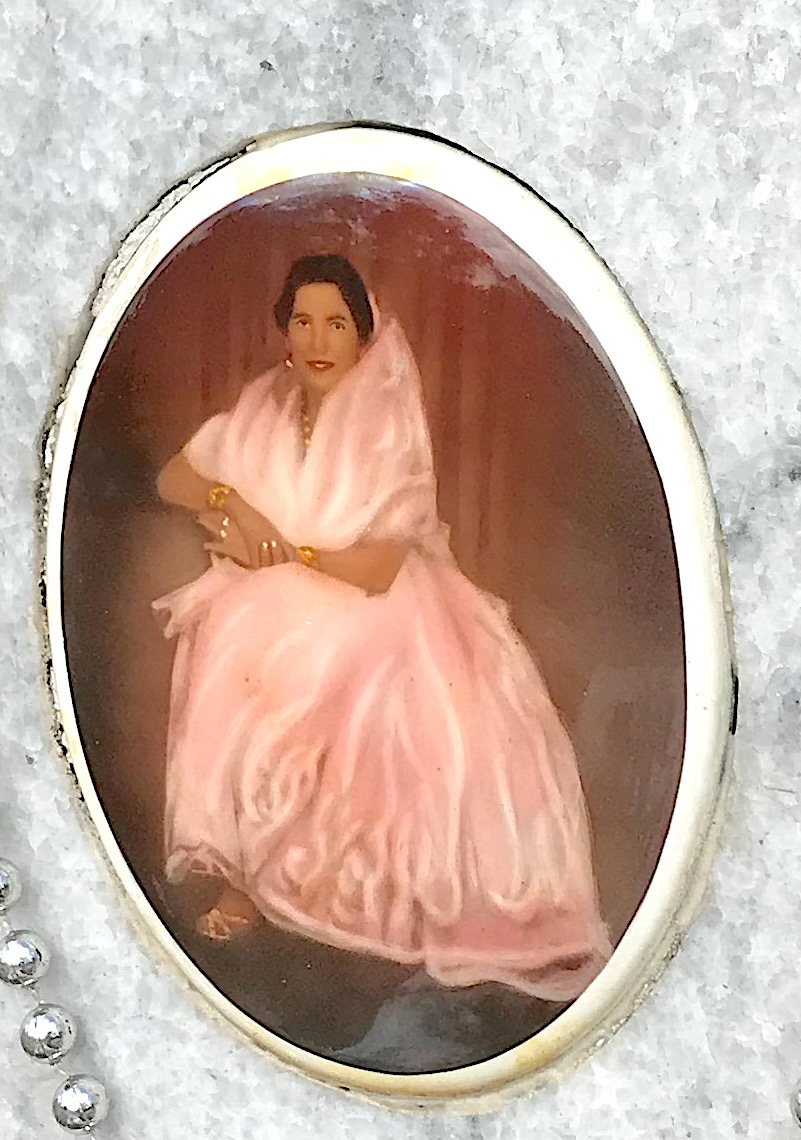
There are several other gypsies buried at Rose Hill that are connected to the Michells. I read that some practiced fortunetelling in Meridian at one time. I don’t know how many descendants of Emil and Kelly might still be living in the area today.
Sea Wolf of the Confederate Navy
When you think about the American Civil War (1861-1865), the thought of both sides having a navy is not something most of us consider. Especially the Confederates, who didn’t have nearly the resources that the Union Army did.
But over the years, I have encountered the graves of Confederate sailors. One of the best known is buried at Meridian and his name is Charles William “Savez” Read. He became known as the Sea Wolf of the Confederate Navy.

Born in 1840 in Mississippi, Read was not exactly who you’d envision as a dashing Navy man when you looked at him. He was short, spoke with a lisp, and graduated last among the 25 members of his 1861 U.S. Naval Academy class.
Read hated to study. Among difficult academic subjects, he found French the hardest to comprehend. The only word he could pronounce correctly was “savez,” a form of the verb “to know,” which he repeated frequently. He even ended sentences with it. For the rest of his life, Read would answer to the nickname “Savez.”
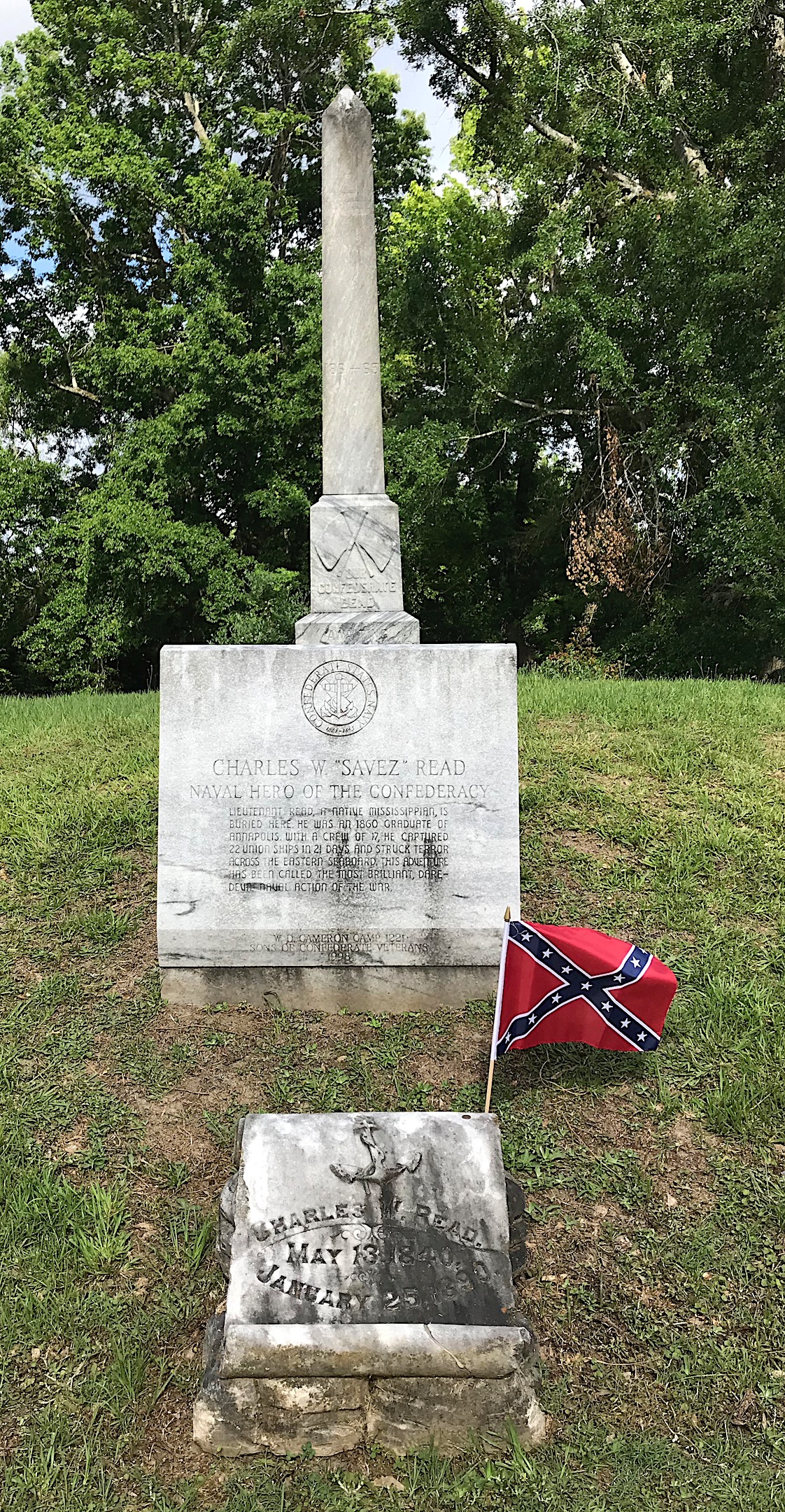
In 1861, Read resigned his Union commission and joined the Confederate Navy. His first naval victory he participated in was on the CSS McRae at New Orleans. He commanded the ironclad CSS Arkansas during the battle near Vicksburg on July 13, 1862 and Baton Rouge on August 6, 1862. He also served on the CSS Florida from in 1863. Savez received the Confederate Medal of Honor during a raiding mission that lasted from June 6 to June 27, 1863.
On June 27, 1863, Read and his crew were captured in Portland, Maine and sent to Fort Warren, in Boston Harbor, Mass. He was released in October 18, 1864 but would be captured again, with release in June 1865. As a Confederate raider, he helped capture or destroy 22 Union ships in 21 days.

In 1867, Read was second officer aboard a ship involved in an effort to help Cuban rebels overthrow the Spanish government of the island. He and others were arrested by the U.S. government but were quickly released.
Read married Rosa Hall in December 1867 and together they had six children. Rosa died in 1878 at age 36 and is buried in Mississippi’s Biloxi City Cemetery. Read remarried in 1884 to Nebraska Carter, and they had one daughter, Mary, in 1885.
Confederate Burial Mound
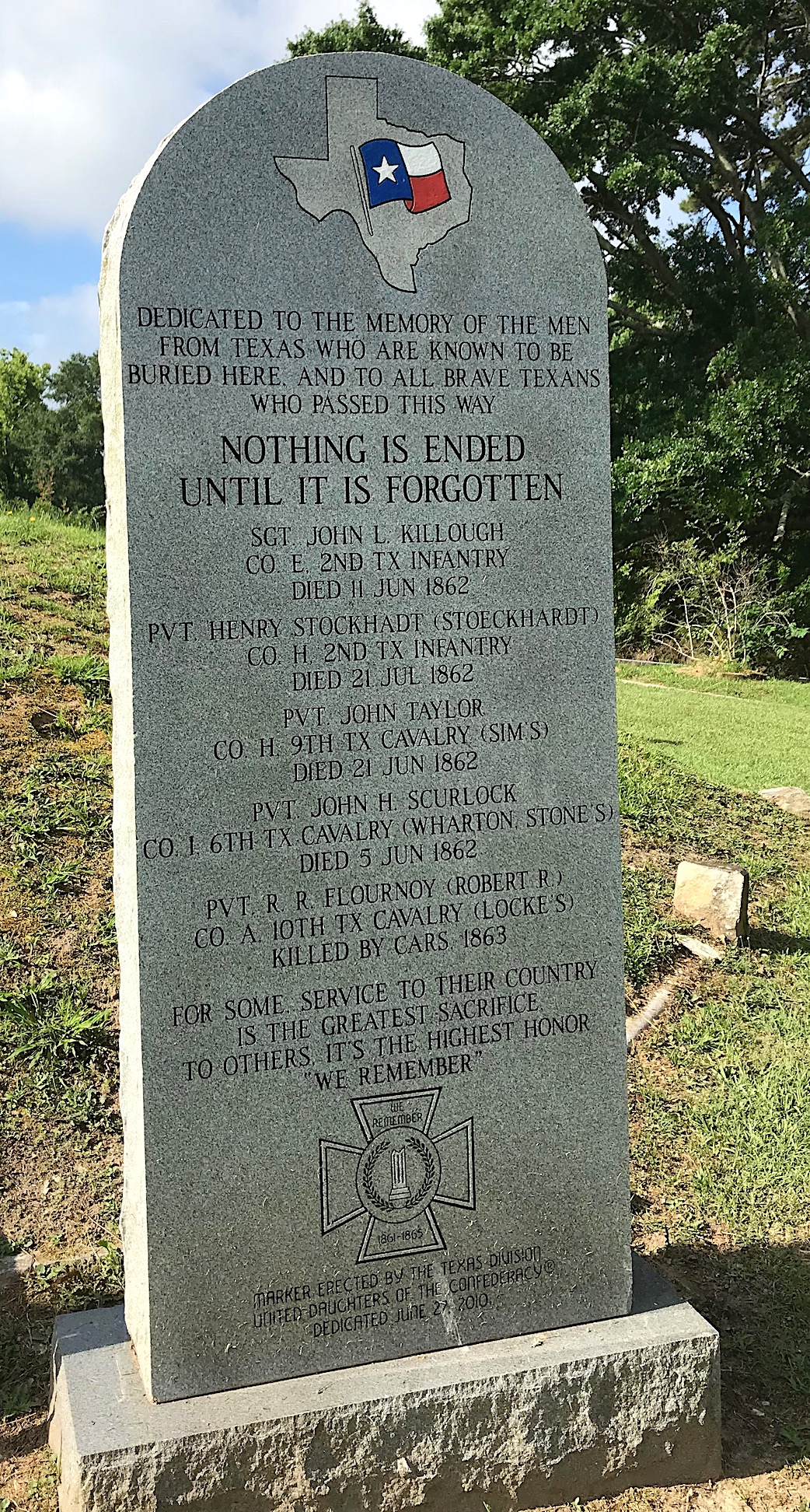
About a hundred soldiers who died at Meridian’s Confederate hospital are buried in a large mound at Rose Hill. This was not their original resting place. They were moved here when their graves were discovered during the construction of Meridian’s first high school.
Charles Read was added to the burial mound after he died on Jan. 25, 1890. His wife, Nebraska, who wanted to be buried beside her husband, is the only woman in the mound. She died in 1928 at age 73.
“Murdered By Tramps”
This last story came about by chance. I was perusing my photos and saw this one for the Taylor family plot. Railroad conductor/agent John Taylor has a large obelisk in the center. Her served as mayor of Meridian from April 1878 until his death in 1882 at age 38, leaving behind a wife (Annie) and three children.
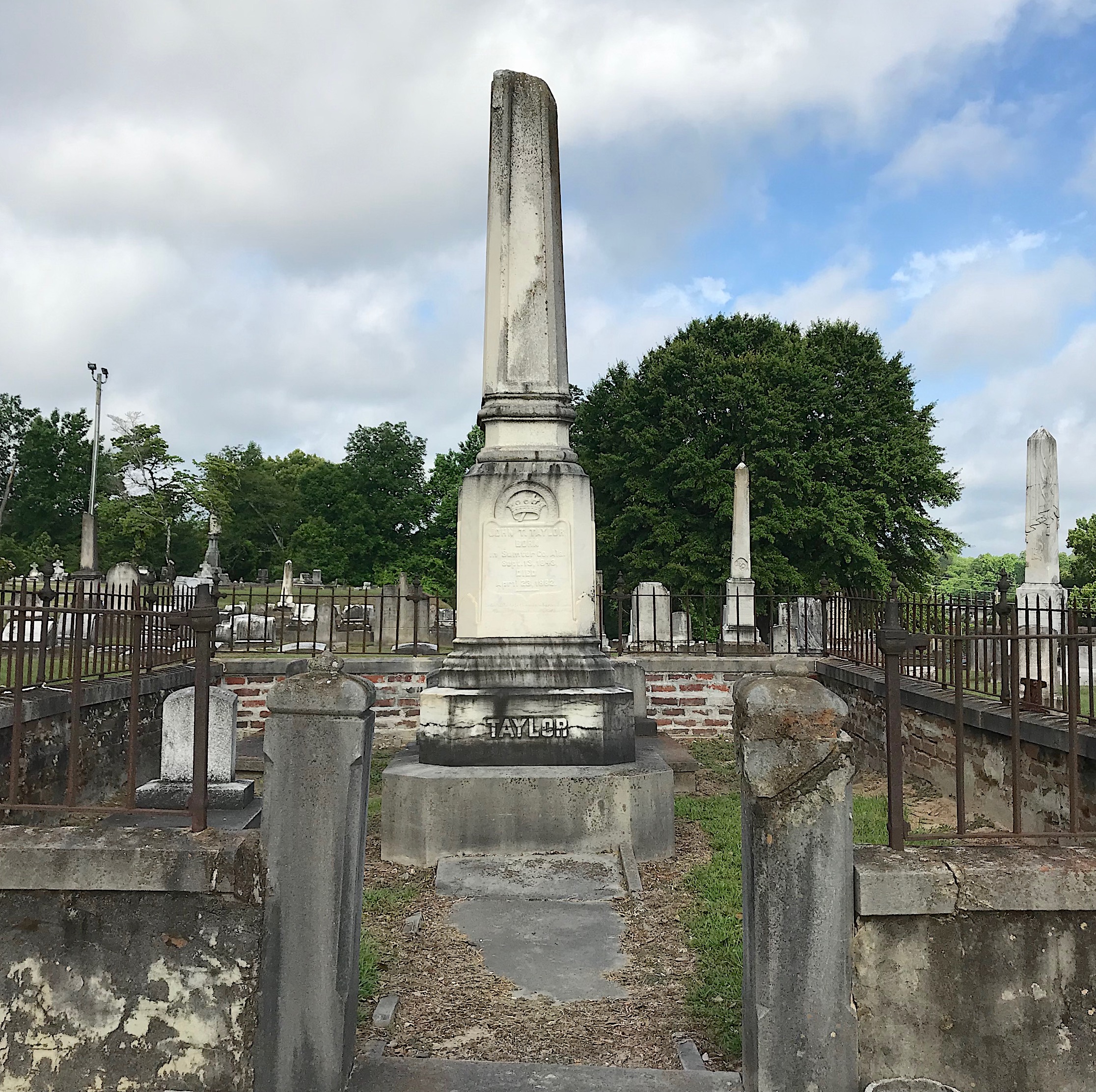
One of his children was Frank D. Taylor, who died in 1898 at age 23. The image of a hand reaching from Heaven to remove a link in a chain is one I had seen before, but it is not a common one. It signifies that someone important in the family chain has been taken too soon. Find a Grave had nothing about him but Newspapers.com yielded a sad tale.
The Taylor family was financially comfortable, but Frank wanted to follow in his father’s footsteps. He found employment with the Mississippi Valley Railroad, working as a brakeman.
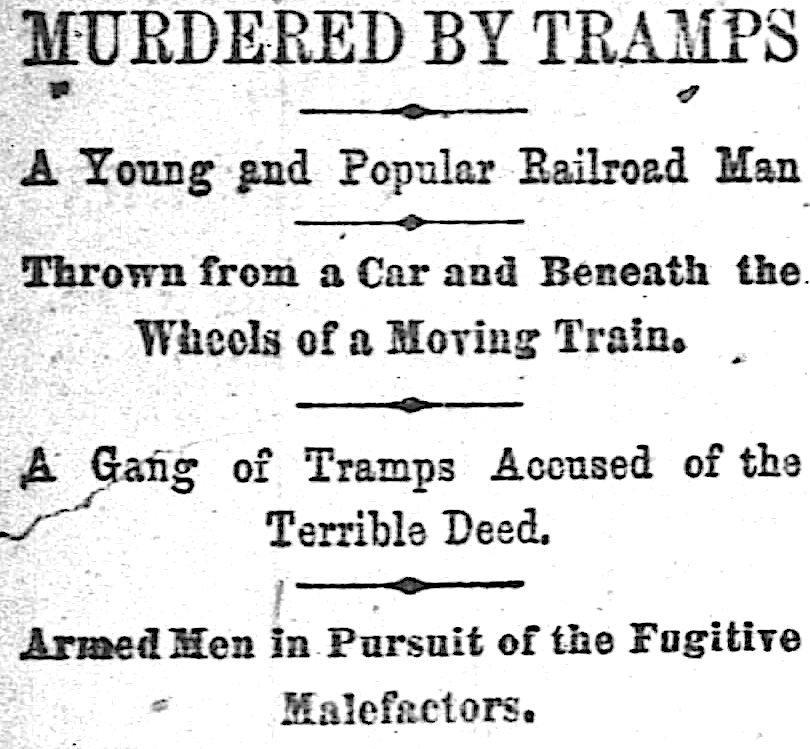
On the evening of Jan. 18, 1892, Frank was assisting with the journey of a shortened train that was traveling slowly to Meridian via Southport and Kenner, La. A number of tramps had stolen passage onto the train in Southport. As the train neared Kenner, Frank encountered a group of them on top of one of the rail cars. He got into a scuffle with them (as evidenced by muddy footprints found later) and was pushed between the cars, resulting in Frank being crushed to death beneath the train’s wheels.
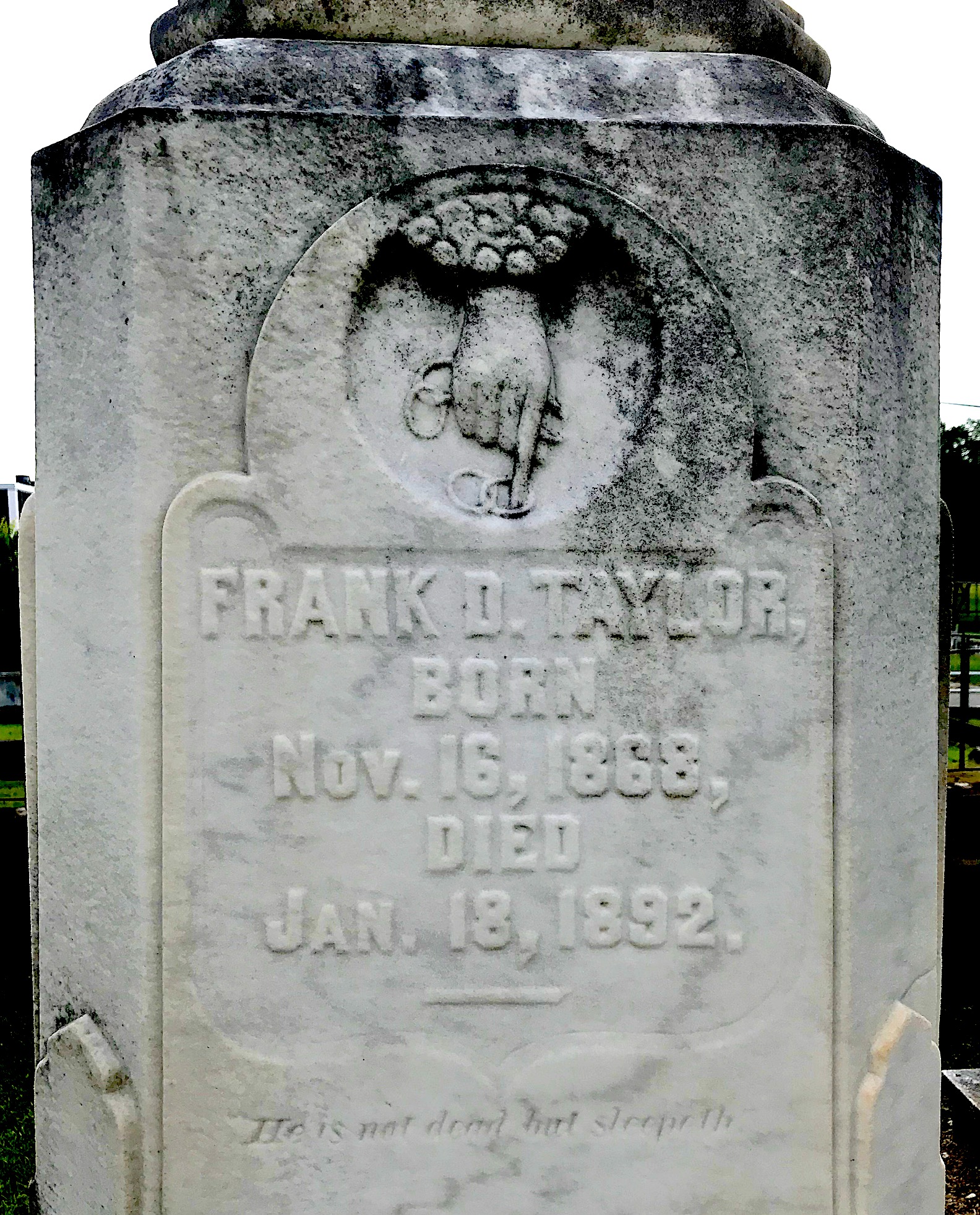
Frank’s body was brought back to Meridian for burial at Rose Hill Cemetery. His mother, Annie, must have been devastated by the news. She died at age 74 in 1924, and is buried with her husband, son, and daughter, Mamie.
It was time for our last stop (and hop) on the Oklahoma Road Trip 2019: Live Oak Cemetery in Selma, Ala.
 Adventures in Cemetery Hopping
C.W. “Savez” Read…looks favor the famous poet, Edgar Allen Poe.
“The Gypsy Queens” while reading this episode story, Traci, a somewhat popular rock tune of 1971 came floating in on my mind: “The Witch Queen of New Orleans” by Redbone.
The posting you did this month on Facebook of the famous Westview Cemetery in Atlanta had a good selection of images of the 600 plus acres site. I need to incorporate them into another video of Westview – updated with your internet new photos.
MOST interesting, Traci. With all of the trinkets and things left at the ‘Gypsy’ gravesites, it is amazing that there is still a ‘following’ all these many, many years after their deaths. Your ‘sleuthing’ on all of these stories is superb. Way back in the 70’s I was transferred by my employer from Atlanta to New Orleans…MS. was part of my sales territory. I would stay occasionally in Meridan, and would dine at a famous place called Wiedmann’s (sp?) It may still be there today. We enjoy your blog site.