• About Me
  • Cemeteries I Have Visited
  • Have questions?
  • Photos

Adventures in Cemetery Hopping

~ A blog by Traci Rylands

Adventures in Cemetery Hopping

Monthly Archives: February 2024

Beyond Bars: Visiting Iowa’s Anamosa State Penitentiary Cemetery, Part II

09 Friday Feb 2024

Posted by adventuresincemeteryhopping in General

≈ 1 Comment

Last week, I introduced you to the Anamosa State Penitentiary (ASP) Cemetery and shared some of the stories I uncovered while researching the graves. I hope you’re ready for a few more!
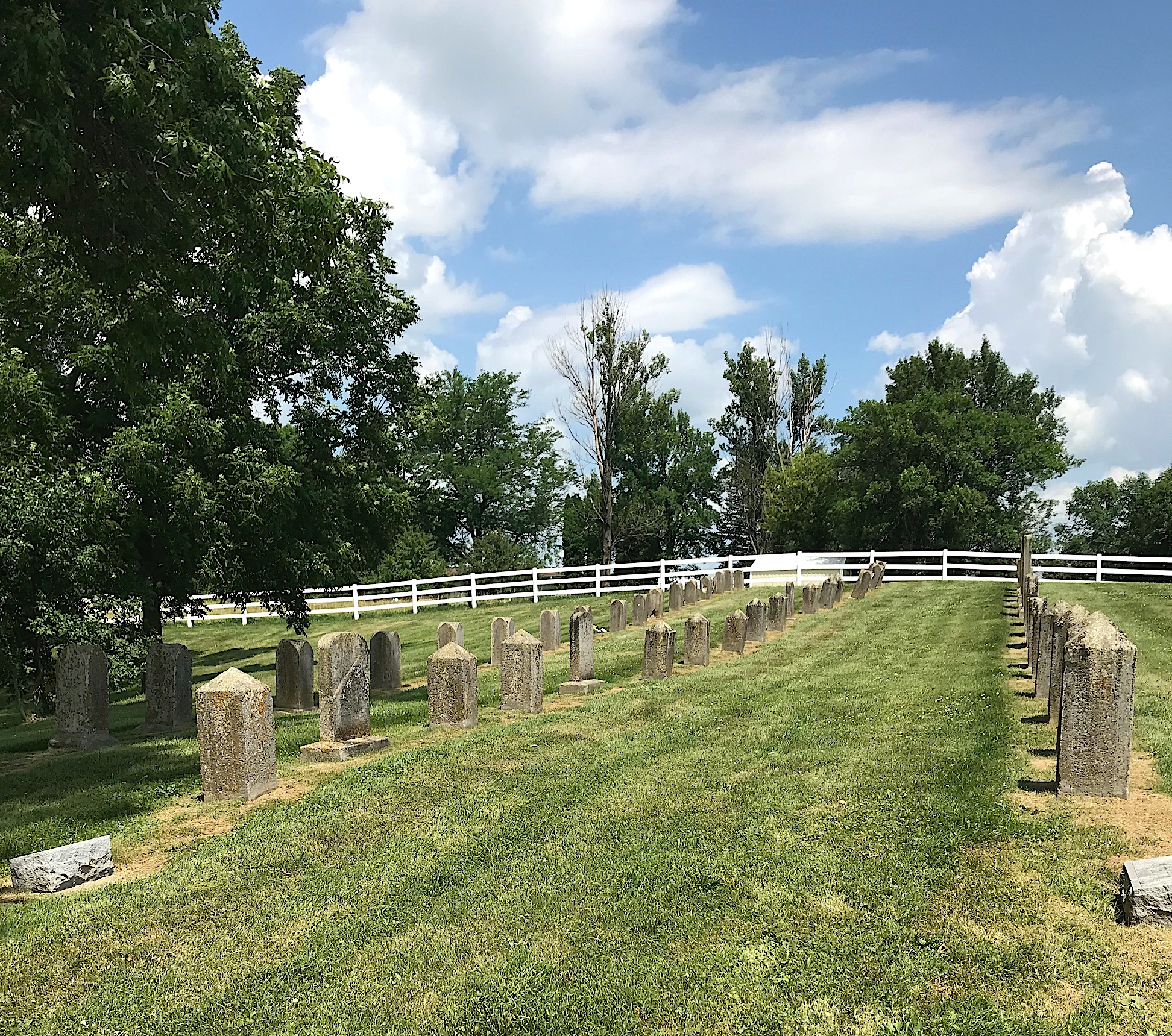
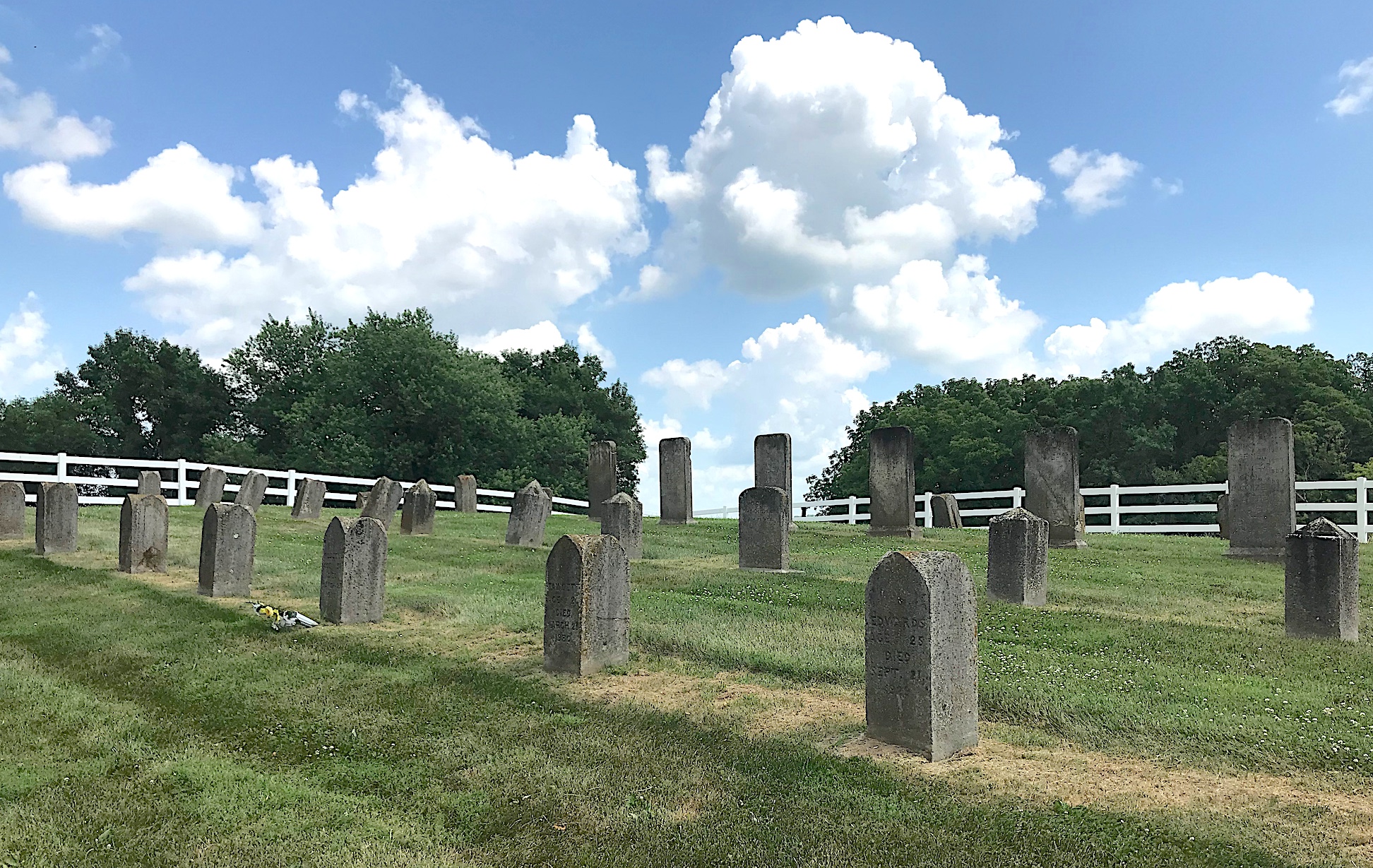
ASP Cemetery was neatly mowed the day we visited in July 2019.

“Until Sane”

One of the more bizarre stories I came across at the ASP Cemetery was about Truman J. Gilchrist. His last name was misspelled on his grave marker. Then I saw on his Find a grave memorial was that he had been committed to ASP for safekeeping “until sane”.

If that doesn’t make you want to dig deeper, I don’t know what would.

Born in 1865 in Iowa to Joseph Gilchrist and Sarah Bushyager Gilchrist, Truman grew up on a farm in Franklin County, Iowa. At age 34, he married Tena Albertena Howard in 1901. They settled in the Hampton area (about 130 miles from ASP) and had two children together.

On the morning of Oct. 28, 1904, Truman showed up at a neighboring farm belonging to the Bushyagers (possibly his mother-in-law’s family) nearly naked and told them he had killed Tena. They rushed to the Gilchrist home to find Tena laying dead in the bedroom, her two little ones alive and well nearby. She had been shot with a double-barreled shotgun.
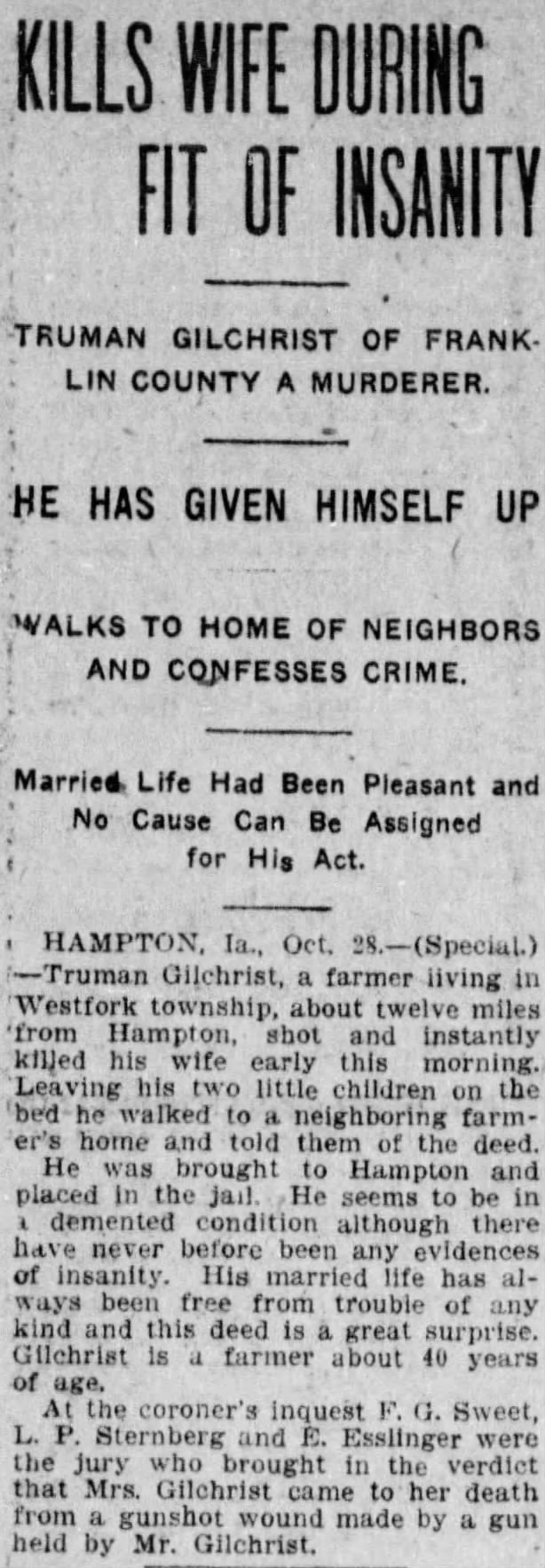
What caused Truman Gilchrist to murder his wife? (Photo Source: Des Moines Register, Oct. 29, 1904)

At first, everyone was stunned. There had been no indication that Truman ever had a beef with his wife. He’d not appeared to be insane. Rumors swirled that Truman suspected in the weeks leading up to the murder that Tena was poisoning him (she was not). He’d supposedly sought help from a doctor. Truman was put in the county jail to await the court’s decision. In the meantime, one article said, the Gilchrist children were being adopted by the Fred Paullus family in Hampton.
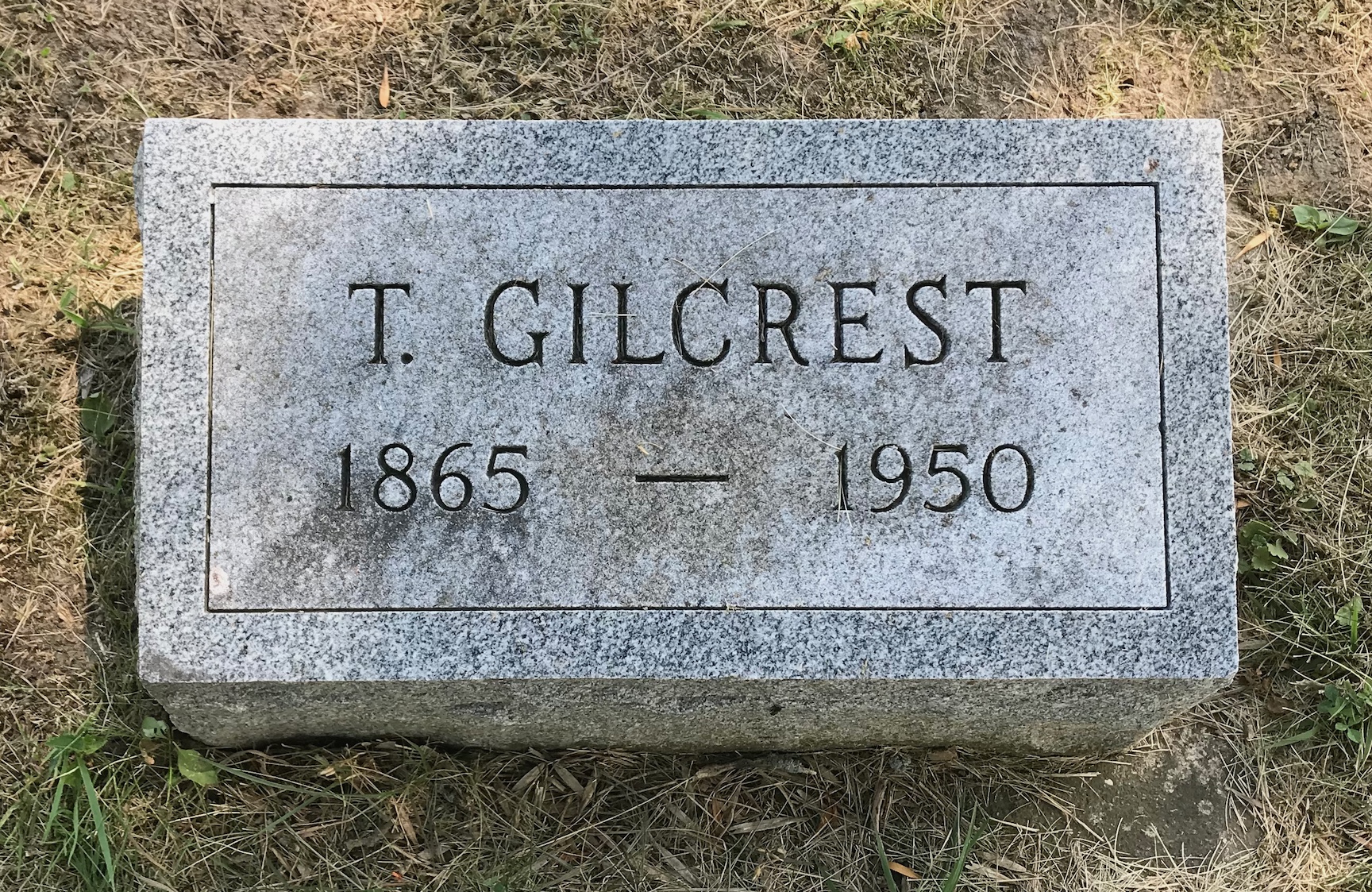
Truman J. Gilchrist (his name is misspelled on his marker) spent the rest of his life at ASP.

In early February, a judge declared Truman insane and he was sent to ASP’s Insanity Unit where he was to stay until he “became sane”. If and when he did , he could be tried for the murder. Truman would remain at ASP for 45 years, never leaving the Insanity Unit. He died there on Aug. 30, 1950 at the age of 85.

Tena is buried in Union Cemetery in Lockridge Township, Iowa. She was 40 when she died. I don’t know what became of their children.

“Recovered”

In the case of Elias Lyons, prison officials deemed him “recovered” from his insanity but he was back at ASP not long after his release.

Born in 1890, Elias Lyons was convicted of larceny in 1911 and sentenced to serve his time at Iowa State Penitentiary in Fort Madison (which closed in 2015). He was later sent to ASP to spend some time in the Insanity Unit. But in 1914, he was deemed “recovered” and sent back to Fort Madison along with 19 other prisoners. He was released from prison on Nov. 22, 1914.
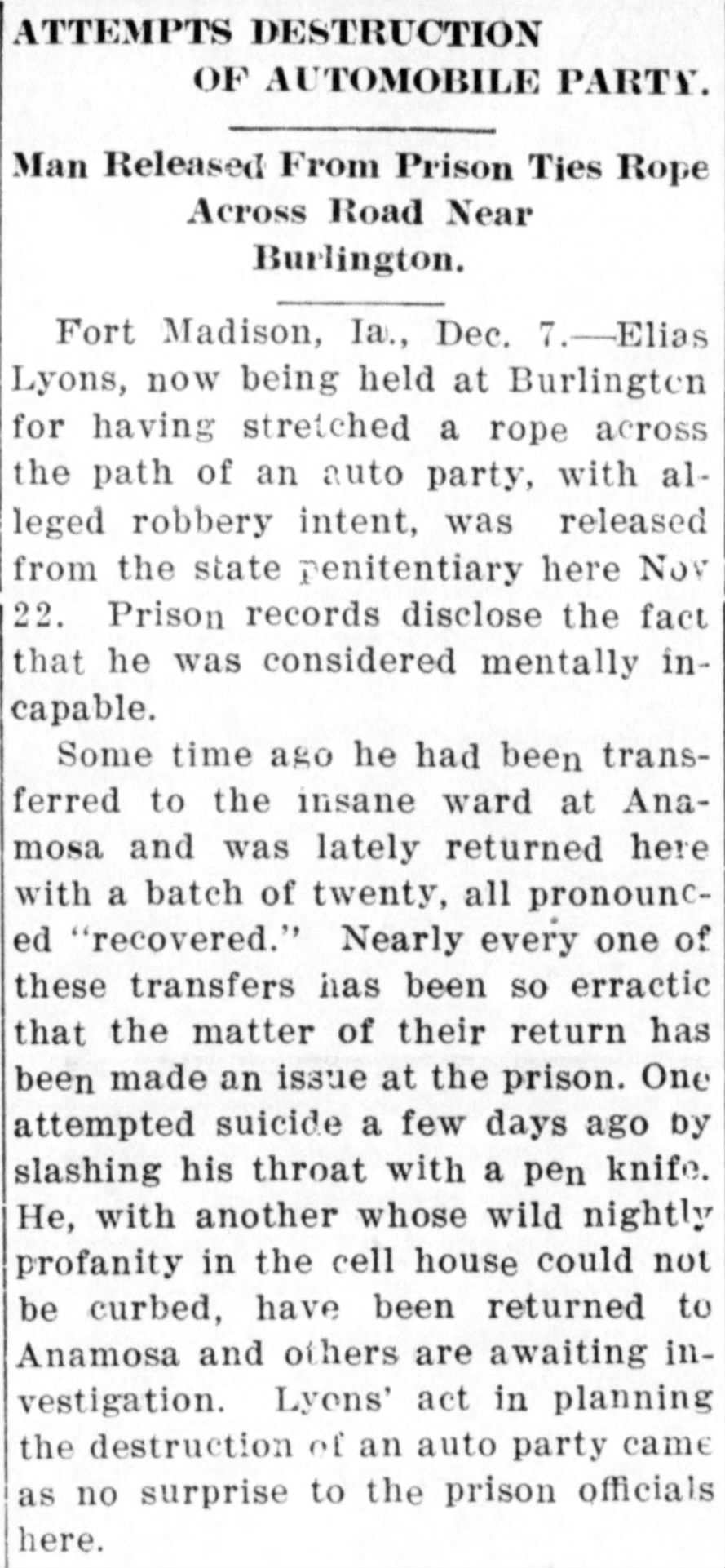
Elias Lyons’ sanity was on shaky ground. (Photo Cource: Decorah Public Opinion, Dec. 9, 1914)

On Dec. 7, 1914, Elias attempted to stop a car to rob its passengers by placing a rope across a bridge road in Burlington, Iowa.

Elias was sent back to ASP where he died on May 19, 1925. He was 34. I don’t know what his cause of death was.
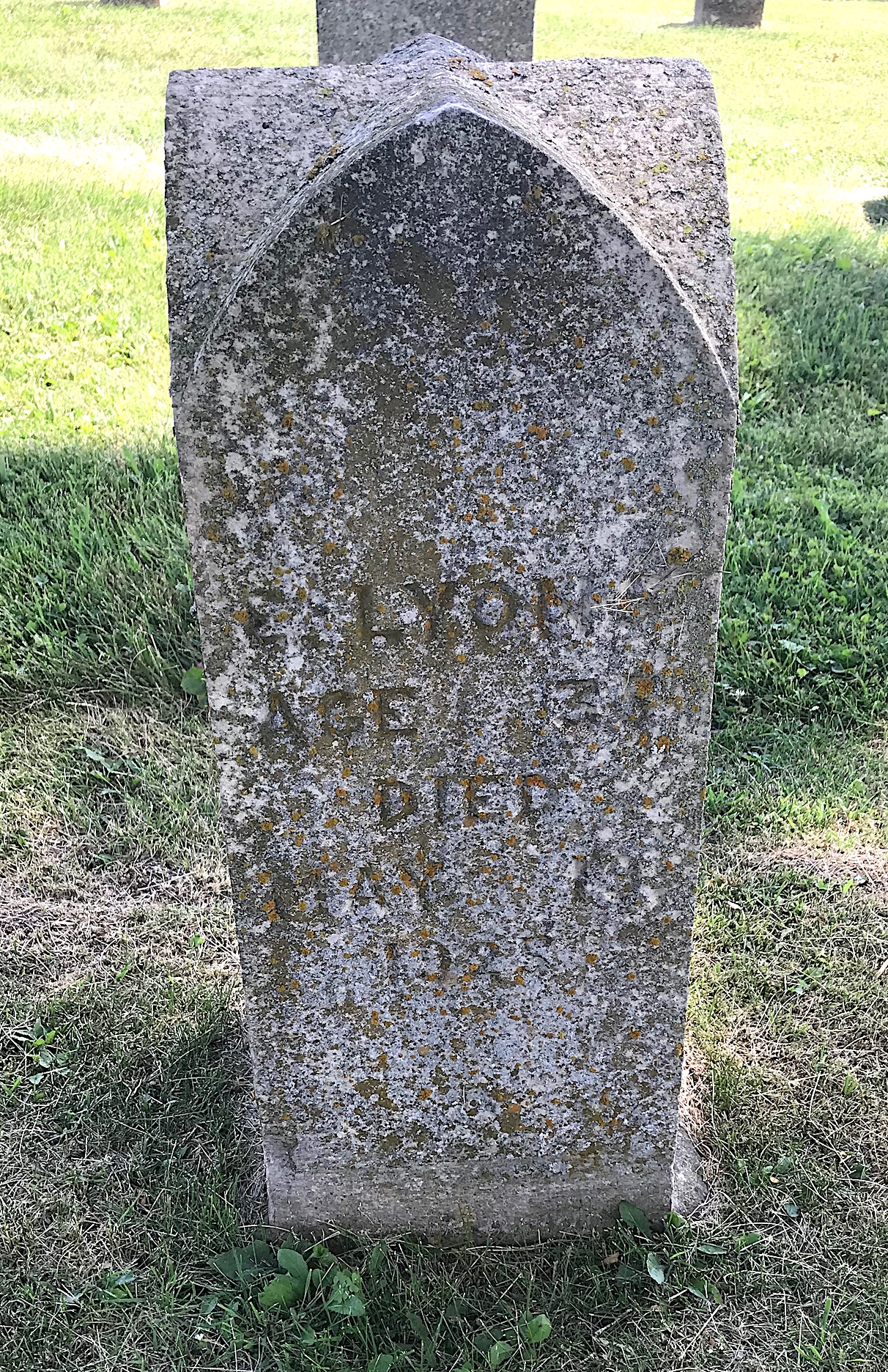
Elias Lyons died at the age of 34.

“Interior Decorator Before Prison”

Charles DeForrest Ives only spent the last few months of his life at ASP. But he’d already spent the previous 15 years at another prison. However, from what I can tell, Charles hadn’t always led a life of crime.

Born in Elkhart, Ind. in 1901, Charles was the son of Joseph G. and Helen Van Doren Ives. Charles wed teacher Florence Lake in Des Moines, Iowa in 1923. They settled there and Charles worked various jobs over the next several years, from engineer to painter/wallpaper hanger. The couple had two sons together.

Unfortunately, Charles slid into criminal activity. On Jan. 10, 1931, he attempted to rob a grocery store owned by George Cordaro. He had an accomplice, whose wife was thought to be the lookout. Later, Charles would confess to sheriff Charles Keeling that he and Cordaro had struggled over the gun and “In the scuffle, my gun went off.”

Charles also is noted to have felt bad about what he’d done and said, “Tell them to get the clean sheets ready at Fort Madison,” referring to the Iowa State Penitentiary.
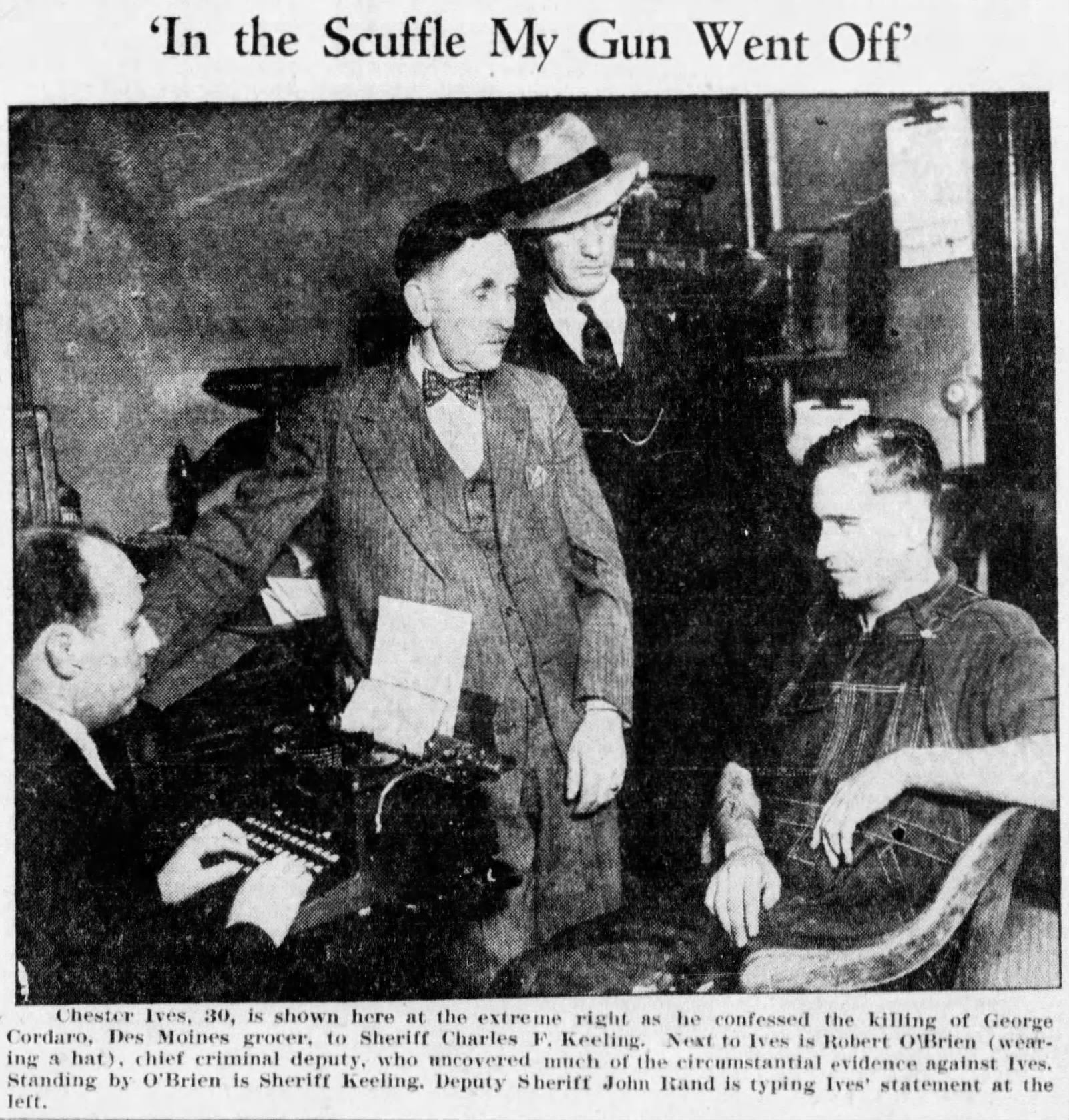
Des Moines Register photo of Charles Ives (far right) confessing to the killing of grocer George Cordaro in January 1931.

Charles was in a truth-telling frame of mind and went on to confess to six street car robberies and two holdups. He claimed he had only done it because he needed the money. When he went to trial, he plead not guilty to the murder, but was convicted and sentenced to life in prison.

However, many suspected there was more to it than that. The lookout, Lela Wiggins, was thought to be the reason Ives had held up the store. The two were thought to be lovers and some felt Ives confessed to protect her from serving time. Her husband, Hoyt, had assisted Ives in several robberies. He was convicted of a different robbery and sentenced to 10 years at Fort Madison. Lela divorced Hoyt while he was in prison.
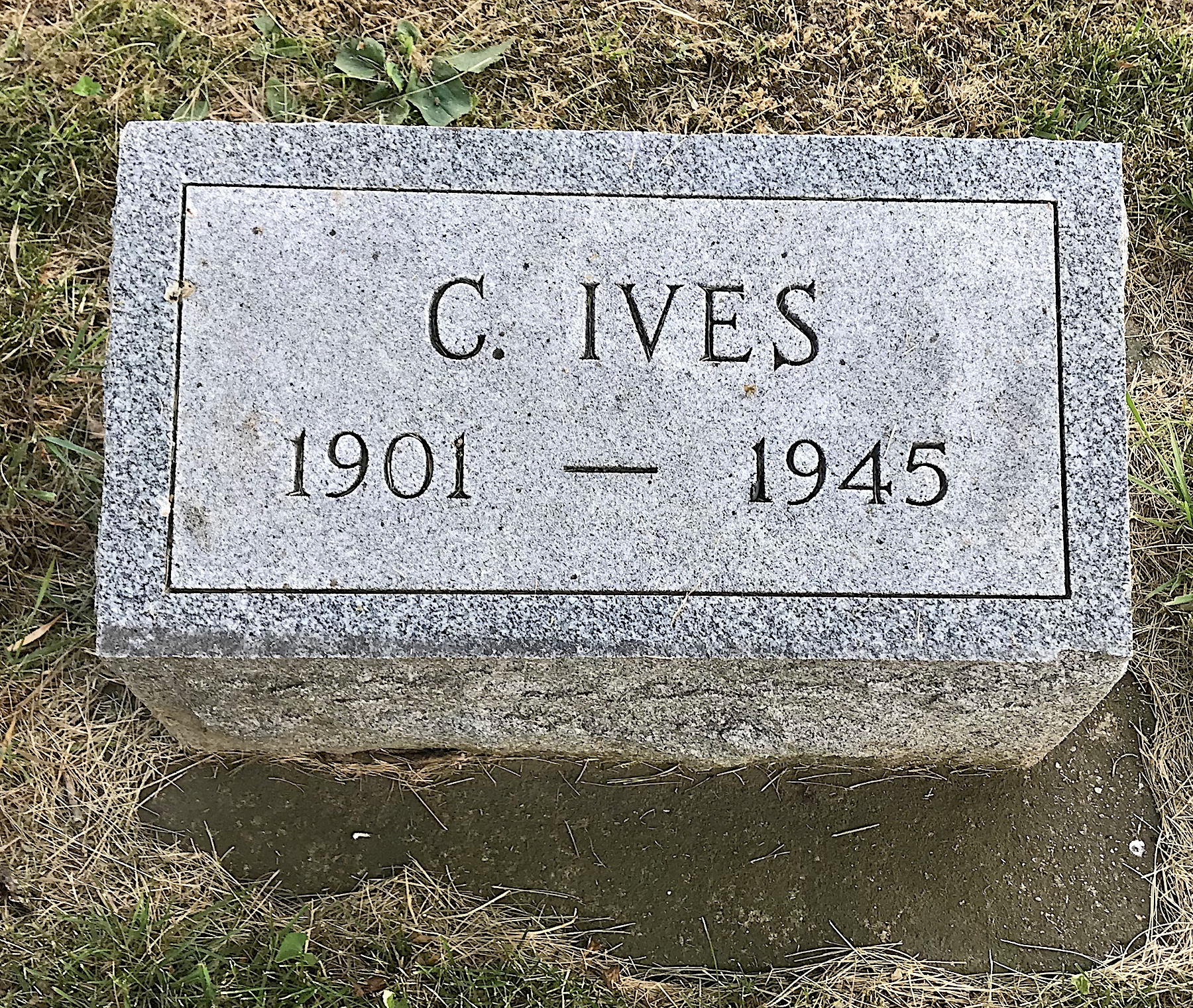
Charles Ives died at age 44 from tuberculosis.

Charles’ Find a Grave memorial claims he served time at San Quentin in California but I found no record of that. He did his time at Fort Madison. I wonder if he ran into Hoyt Wiggins while he was there. Charles contracted tuberculosis and was transferred to ASP’s hospital unit. He died there on Dec. 20, 1945 at age 44.

His death certificate listed his profession as “interior decorator before prison”.

Charles’ wife, Florence, divorced him and went on with her life. She continued to teach and moved with her sons to Clinton, Iowa. She died in 1985 in Durango, Colo. One of her sons became a doctor and moved to Louisiana.

Misspent Youth

I have more questions than answers concerning my final story. Arthur Fawcett was still a boy when he died, having gone down the wrong path.

Born in England in 1909, Arthur was the son of Thomas Lester Fawcett and Jennie Smith Fawcett. The Fawcetts emigrated to Canada in 1910 then to America in 1911. According to the 1920 U.S. Census, Thomas was working as a miner in Polk County north of Des Moines. Later, he worked laying linoleum.
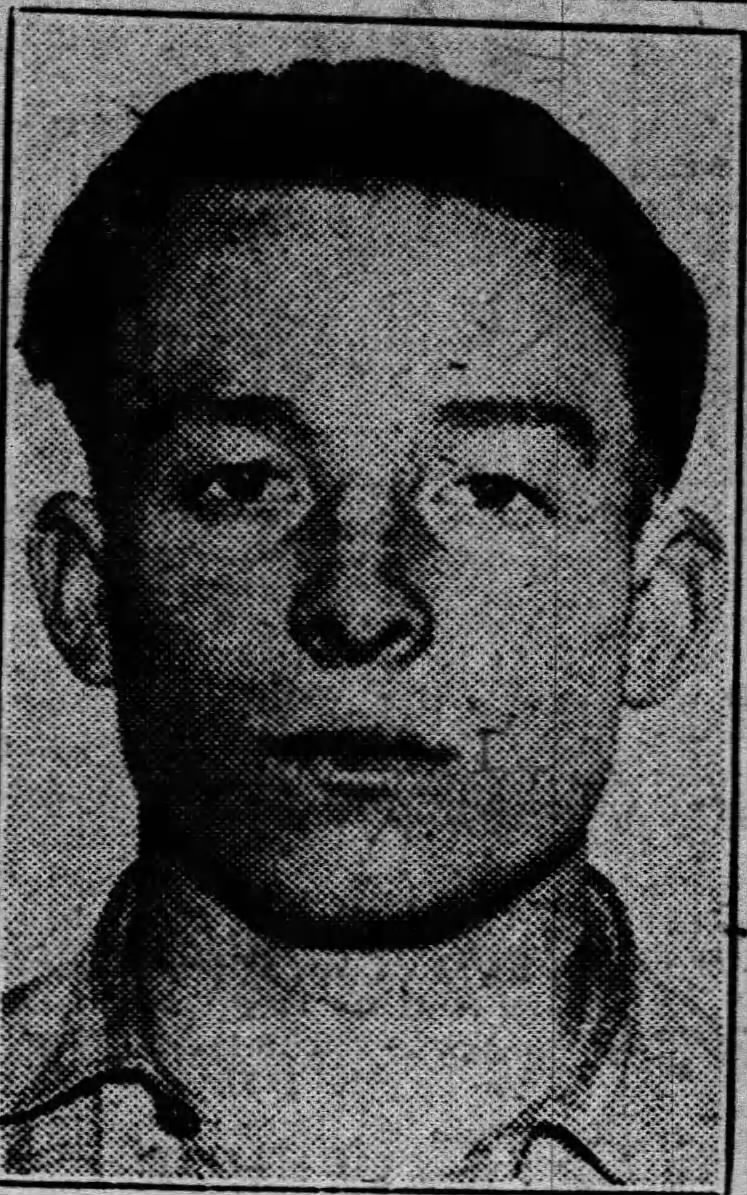
British-born youth Arthur Fawcett was a car thief. (Photo Source: Sioux City Journal, Dec. 15, 1927)

Sadly, Thomas died on Feb. 25, 1927 from a brain abcess. He was 41. He is buried in Floyd Cemetery in Sioux City, Iowa.

It wasn’t long after that when Arthur’s name started appearing in the Sioux City Journal as the culprit in various car thefts/joy riding incidents. On Nov. 22, 1297 he got fined for a traffic violation. On Dec. 13, 2017, Arthur and a friend were arrested for the theft of seven cars (with which they went joy riding) and charged with larceny of a vehicle. As a result, they went to jail.

Arthur somehow got paroled a few months later. In February 1928, he was arrested again for having tried to sell tires off of a stolen car. Back to jail he went. In May 1928, his sentence was reduced by three months.
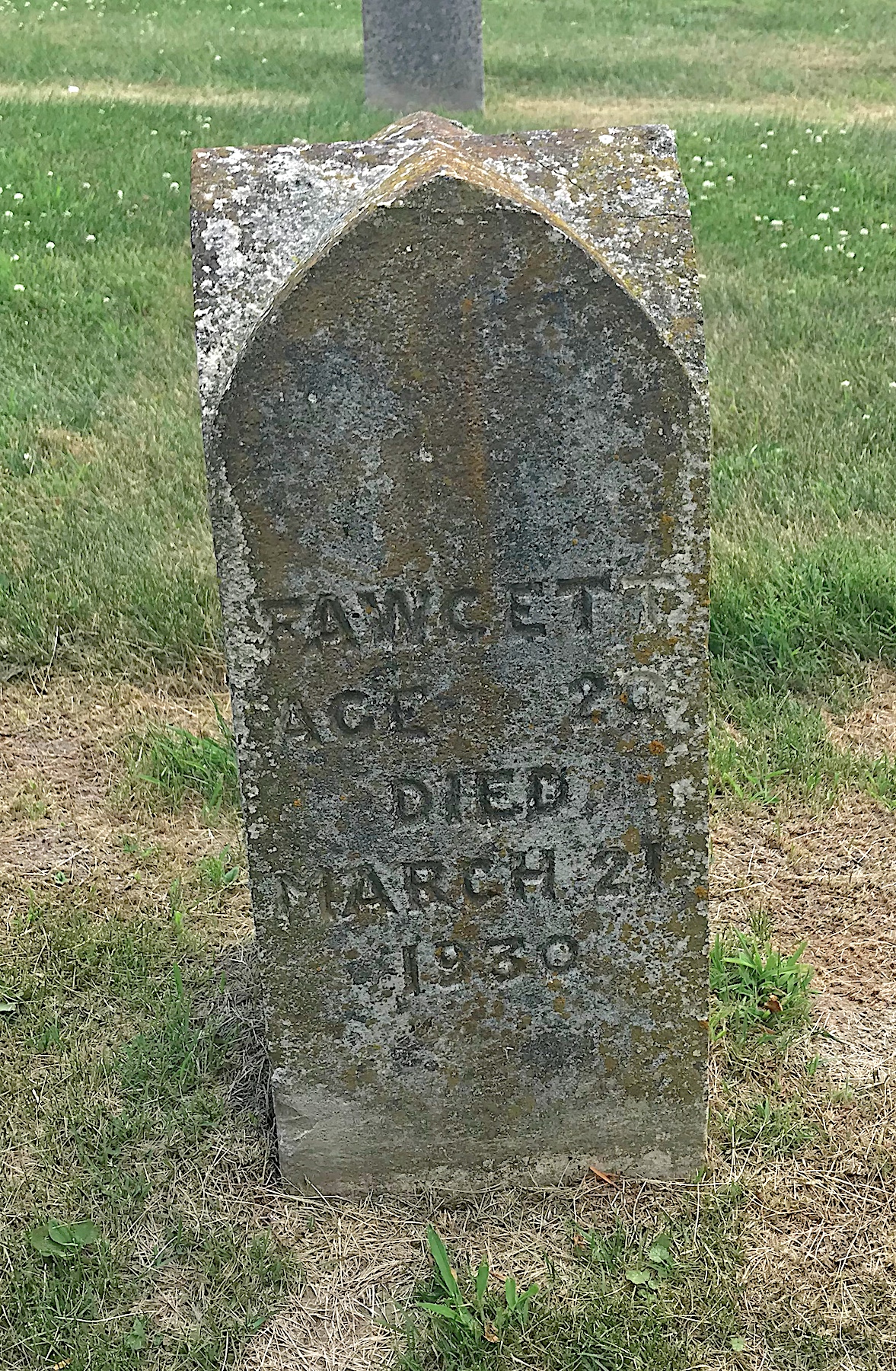
Arthur Fawcett’s death certificate indicates he actually died on March 20, 1930.

I’m not exactly sure what happened after that, but Arthur died at ASP on March 20, 1930. He was only 20 at the time. His death certificate lists his cause of death as cirrhosis of the liver. That’s not something I’ve ever seen in a fellow that young.

We had a brief stop to make in Anamosa before we began out trek back west. Join me next time at Riverside Cemetery.
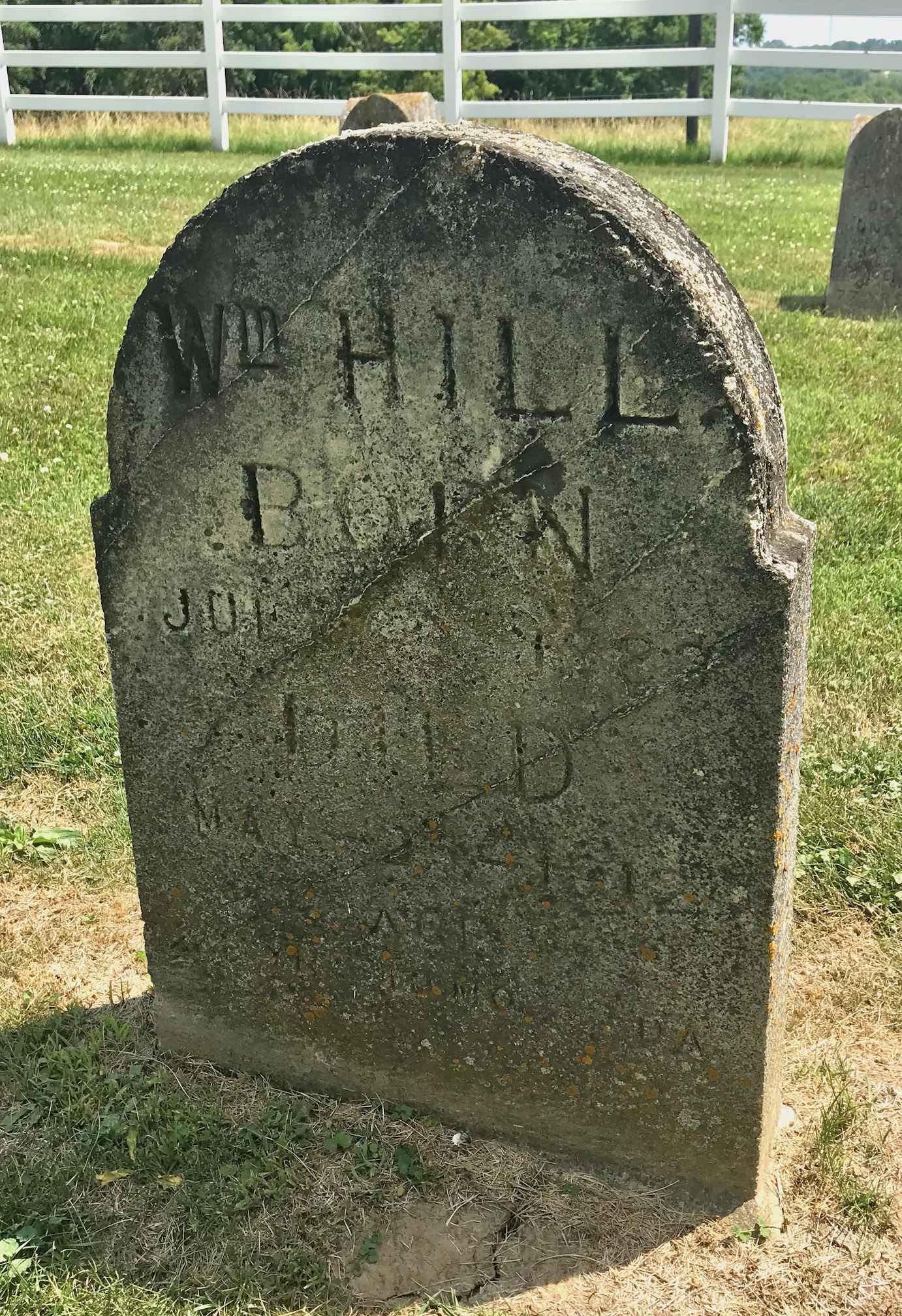
William Hill came to ASP as an inmate in 1908 for reasons unknown. He died on May 26, 1912 at age 28. His death notice said he had been “a sufferer for many years”. What that was is unknown.

Beyond Bars: Visiting Iowa’s Anamosa State Penitentiary Cemetery, Part I

02 Friday Feb 2024

Posted by adventuresincemeteryhopping in General

≈ 7 Comments

Since cemeteries are viewed by many as outdoor museums, it isn’t a stretch for me to say that I’m a bit of a museum junkie. It doesn’t take much to get me to visit one, the more obscure the topic the better. I love learning about anything and everything!

When I was doing research for this road trip, I discovered that Iowa’s Anamosa State Penitentiary (ASP) not only had a museum, it had a cemetery that’s open to the public. There was no way I was going to miss out on that!

So we headed east from Springville to Anamosa, a brief 10 mile ride. I was also interested in visiting Anamosa to visit the cemetery where artist Grant Wood was buried. I talked about him during my visited to Cedar Rapids’ Oak Hill Cemetery. Wood spent his last years in the Anamosa area. I’ll be writing about that in a few weeks.

Approved in 1872

First approved in 1872 by the Iowa Legislature because the prison in Fort Madison was full, the Anamosa State Penitentiary was first known as the Additional Penitentiary, then the Anamosa Penitentiary before it was a Reformatory. Then it became a Penitentiary once again. Inmates did much of the labor on the stone walls and buildings, some of them dying in the process.

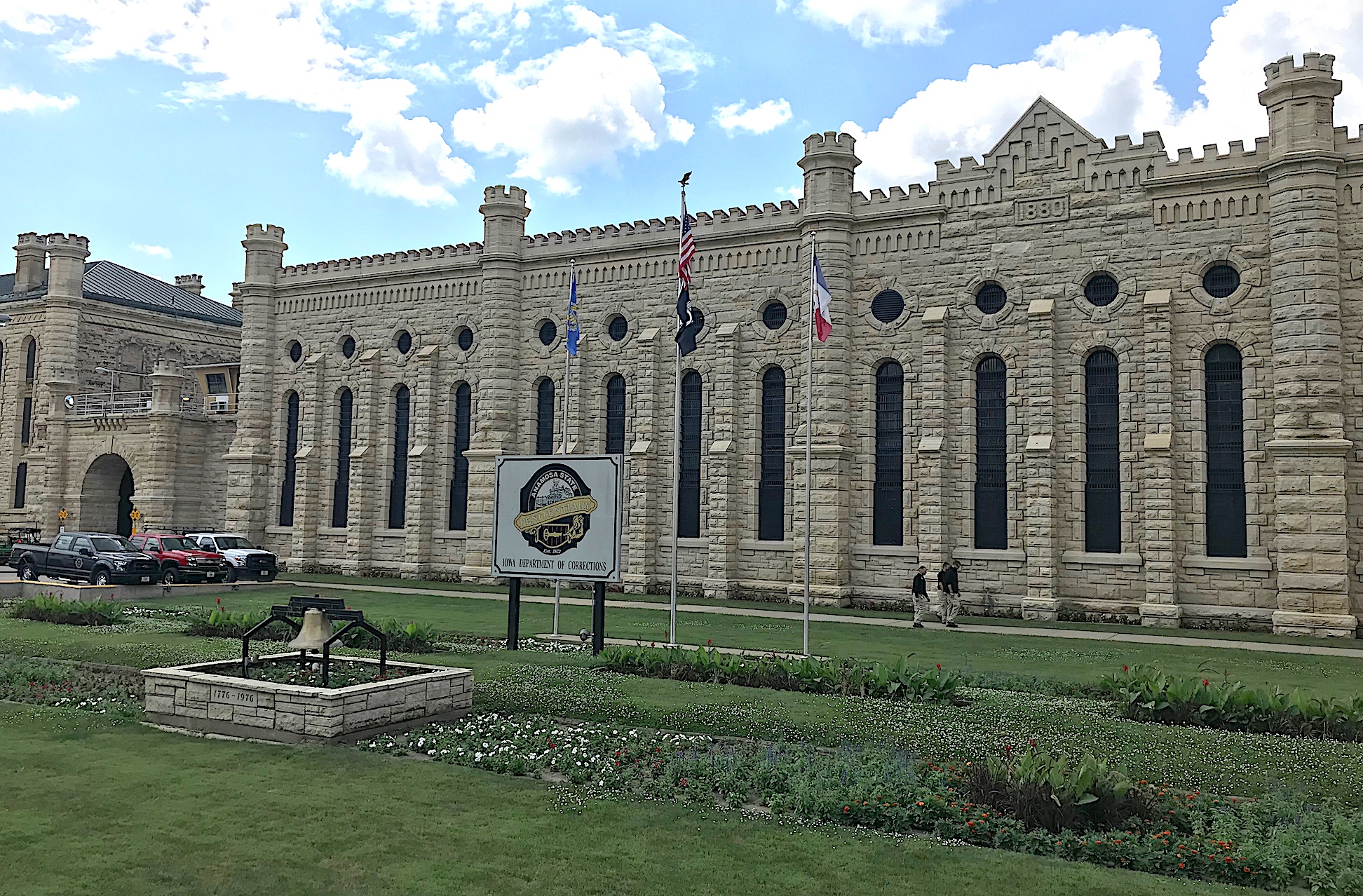
Made of limestone, ASP’s construction began in the 1870s and it s still houses prisoners today.

ASP’s walls, which are about 12 feet thick at the base and four feet thick at the top, enclose about 12 acres. It had a Female Department and an Insane Unit for decades.

One of Anamosa’s most infamous prisoners was 11-year-old Wesley Elkins, convicted of killing two people. Sentenced to life, Elkins ended up only serving a nine-year sentence. You might also remember Frank Novak, who I wrote about a few weeks ago. He tried to fake his own death for the insurance money, committed murder, and fled Cedar Rapids to Alaska. He was eventually caught and spent some years at Anamosa.

ASP’s most infamous inmate was serial killer John Wayne Gacy, who served time there for 18 months on a sodomy charge. He was released in 1970 and returned to the Chicago area where he began to commit his many murders.

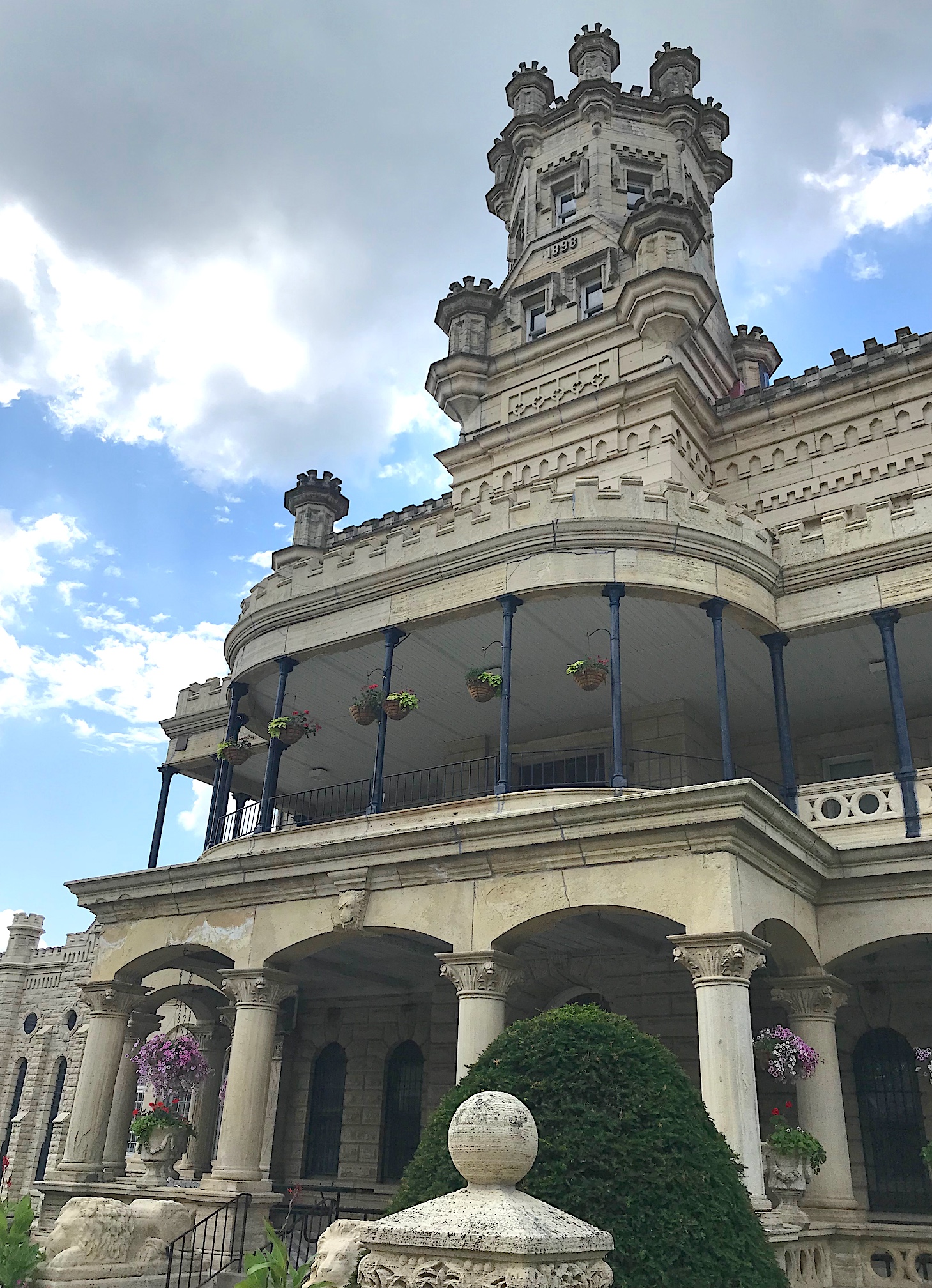
The Gothic looking intake office entry may seem elegant but ASP is still very much a prison.

As of March 2021, there were about 945 inmates serving time at ASP. That same year, corrections officer Robert McFarland and nurse Lorena Schulte were murdered by prisoners during a botched escape attempt. Inmates have been killed during escape attempts at ASP before, but 2021’s incident was the first time staff members working at the prison were killed by prisoners.

Prison Museum & Gift Shop

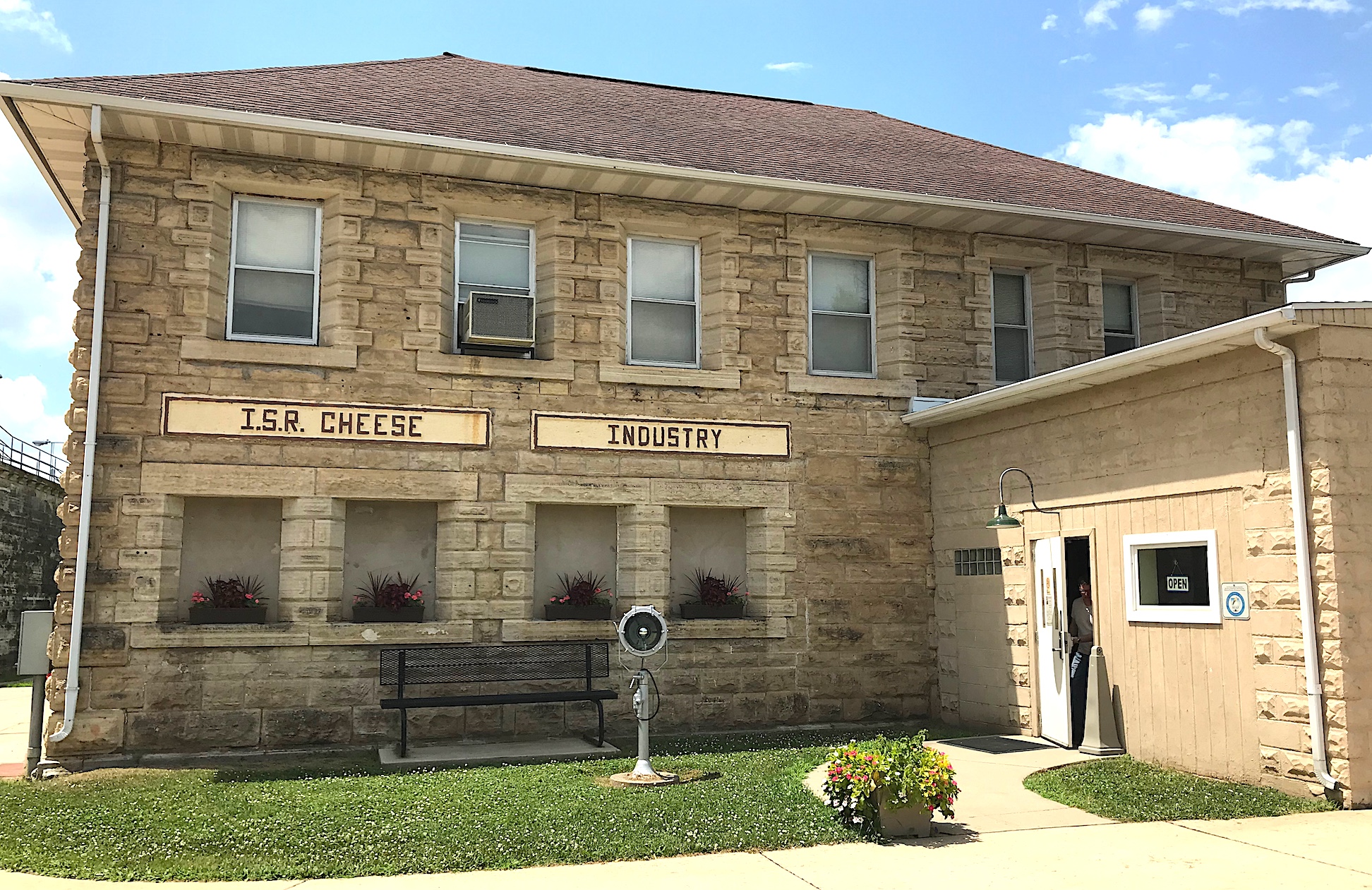
It may seem hard to believe that a working prison might have a museum and a gift shop, but Anamosa does. It’s housed in the building that used to be a cheese factory. The penitentiary once produced large amounts of food for prison consumption, from beef and milk to fresh vegetables.

ASP’s museum is housed in the former cheese factory. Admission is only $3.

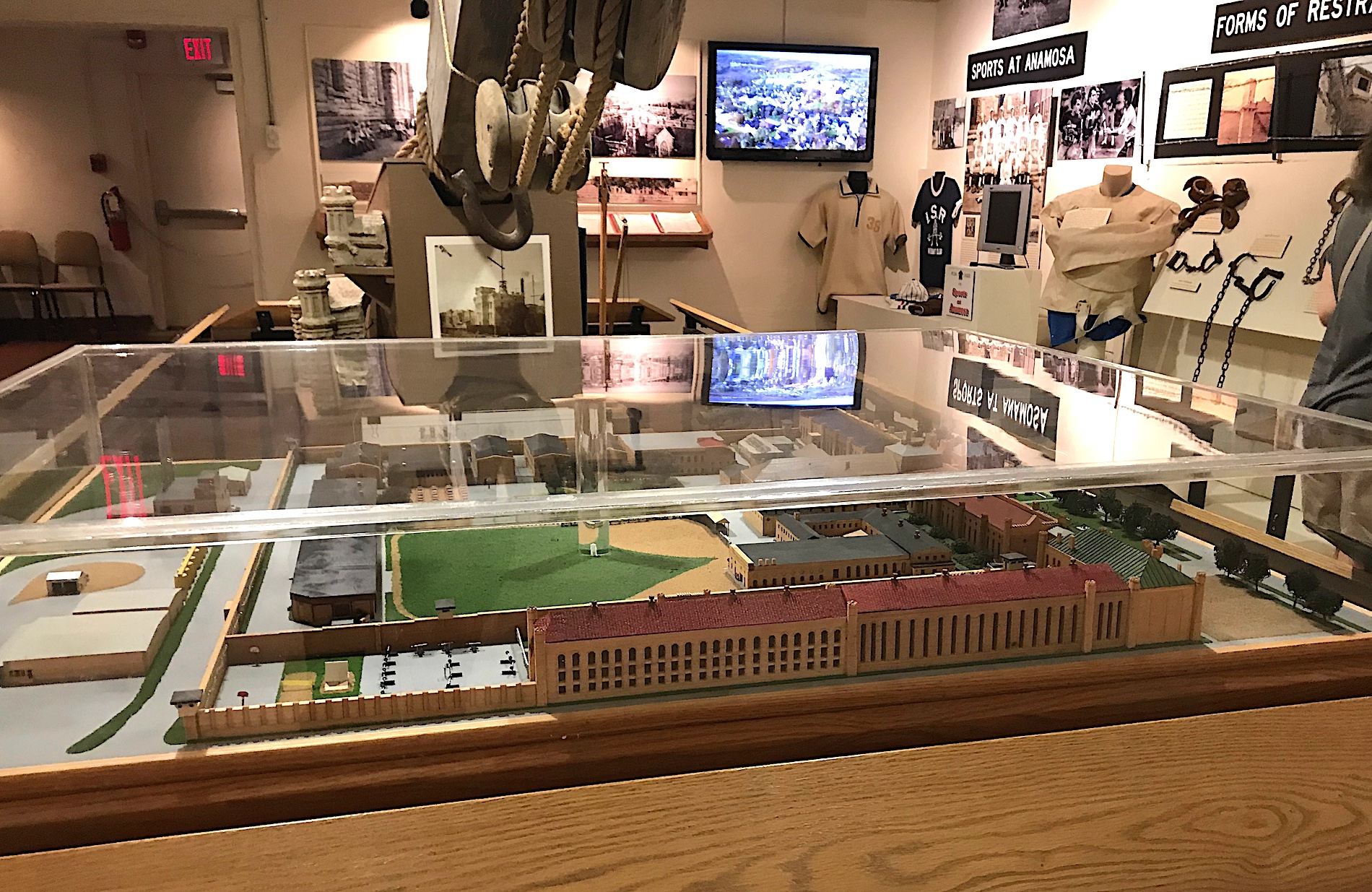
The museum has a recreation of a typical historic cell (it’s understandably small) and records of past inmates, photos of construction, and examples of prison products. Prison sports teams, stories of famous inmates, and the evolution of correctional policies and prison administrators are all included. I was quite impressed at the amount of information and the number of artifacts they had.

ASP’s museum includes many artifacts from the past.

One thing I learned while I was there was that during his stay, John Wayne Gacy was a model prisoner. He worked in the bakery and helped build a miniature golf course that is still in use today. I looked for a picture of it at the museum but never saw one.

We spent a good amount of time talking to the museum staff, who told us that many of their family members currently worked at ASP or had worked there in the past. While not exactly a pleasant place to work, ASP continues to provide jobs for many in the community.

I want to note that I don’t know if this museum is still open. Apparently, it closed during Covid and I don’t know if it ever reopened. If that’s true, I’m glad we had the opportunity to see it.

Also Called Boot Hill Cemetery

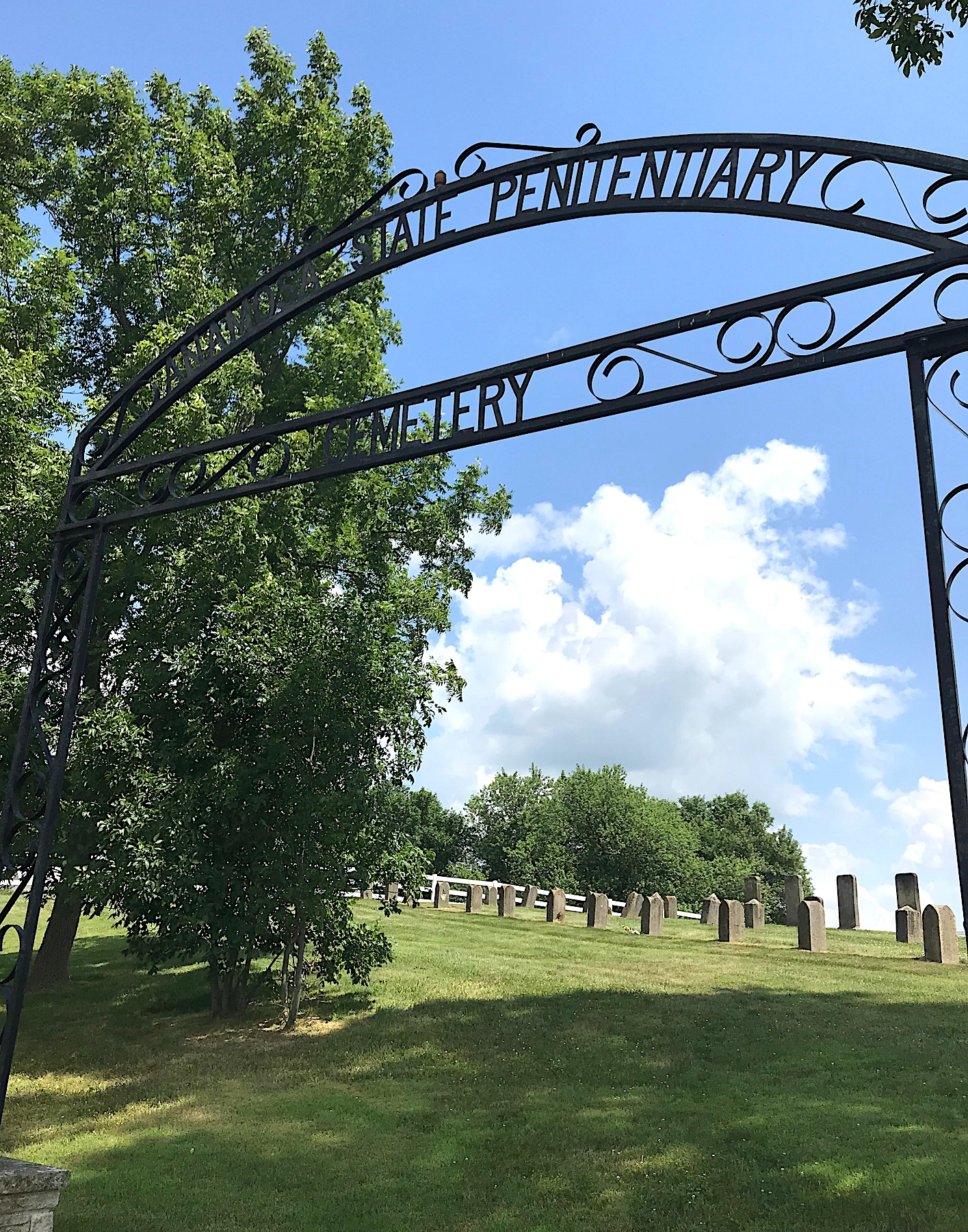
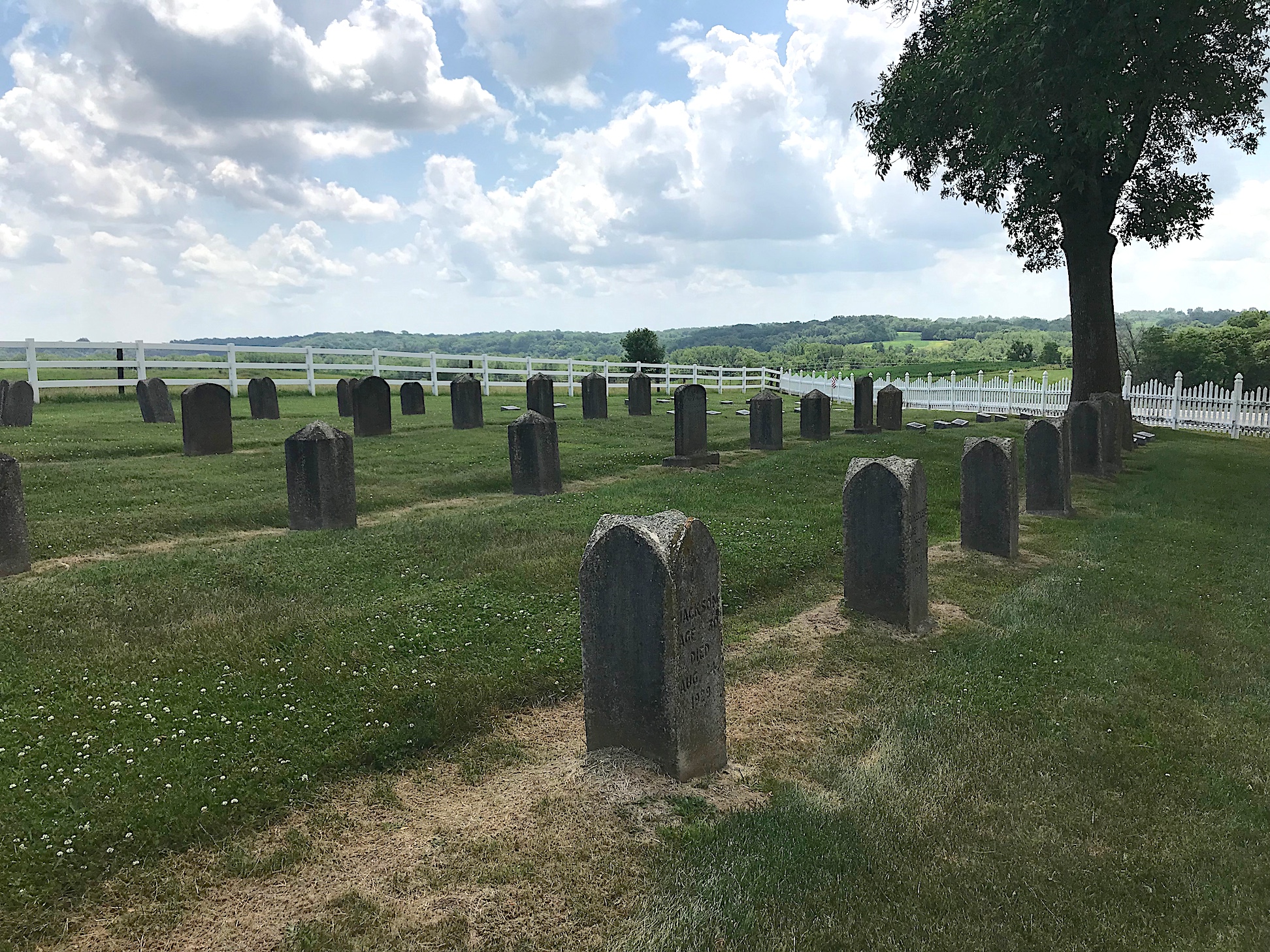
Located about a mile and a half from the prison is the ASP Cemetery, also known as the Iowa Men’s Reformatory Cemetery and Boot Hill Cemetery.

The ASP Cemetery has about 180 memorials listed on Find a Grave.com. Not all are marked.

I was a bit surprised that ASP’s cemetery is open to the public like it is. Most prison cemeteries, even the ones as old as ASP, are close to the facility and off limits. But I’m certainly glad we were able to see it.

The first cemetery associated with ASP was established in 1876 at Prison Farm No. 1 or possibly at Farm No. 5. Its exact location is unknown. The graves are of those prisoners whose bodies were left unclaimed or were not taken to one of the state’s medical colleges. They were buried in common graves that contained up to eight bodies. Tall limestone markers were placed at each grave and contained the prisoner’s name and death date.

They were moved here when the current cemetery was established in 1914. Subsequent graves hold individual bodies, and are marked with shorter limestone markers with the prisoner’s name, age, date of death, and sometimes their prison number. According to Find a Grave, the most recent burial took place in 2021. So it is still an active burial ground. Most of the time, prisoners who die at ASP are now claimed by family members and taken elsewhere for burial.

This is not the first cemetery at ASP.

They are in three different styles. Two styles are upright stones, one with a triangular top and the other with a rounded top. They were used from 1914 to the 1940s. The third style of stone is a flat, horizontal marker that was used from the 1940s to the present.

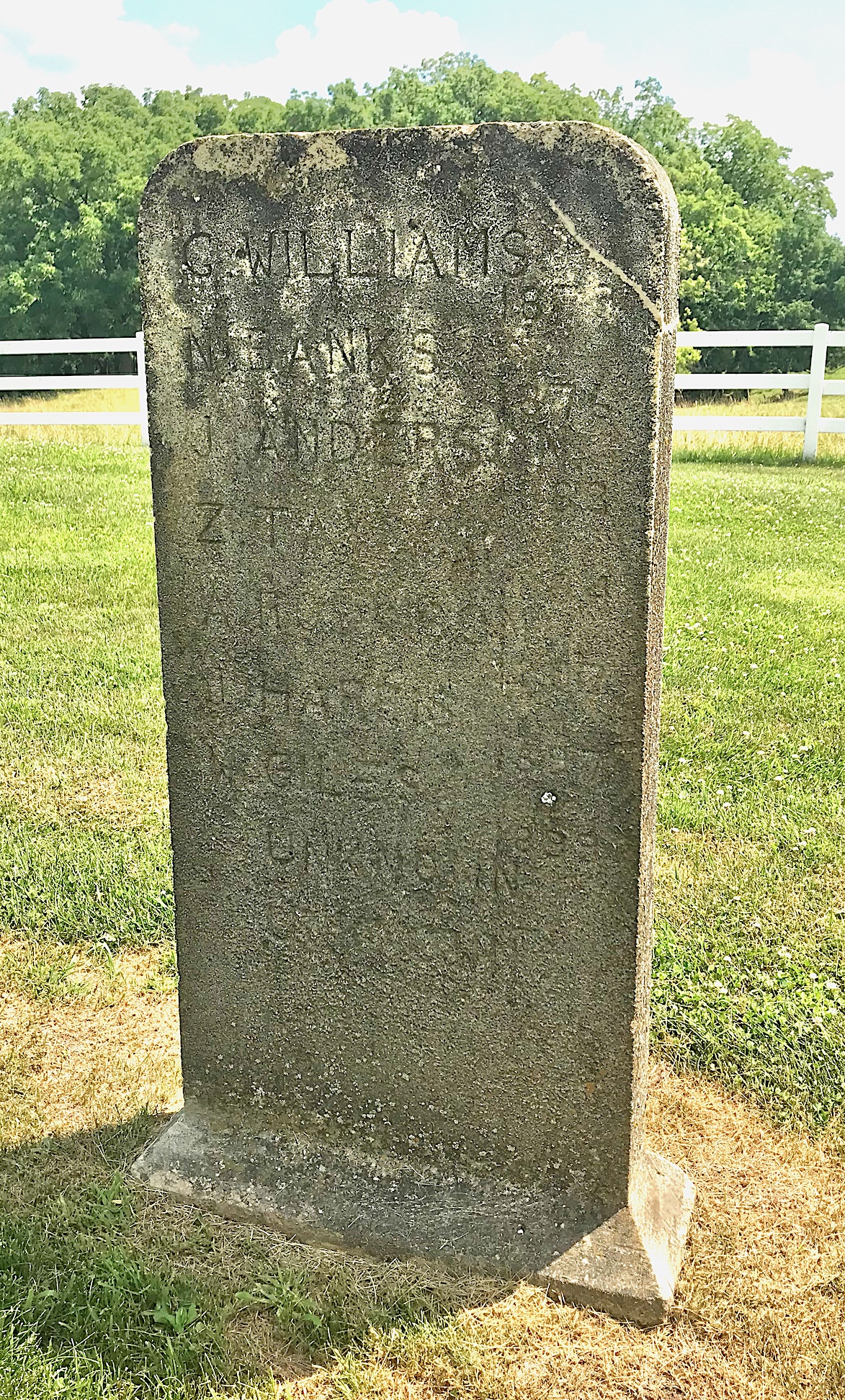
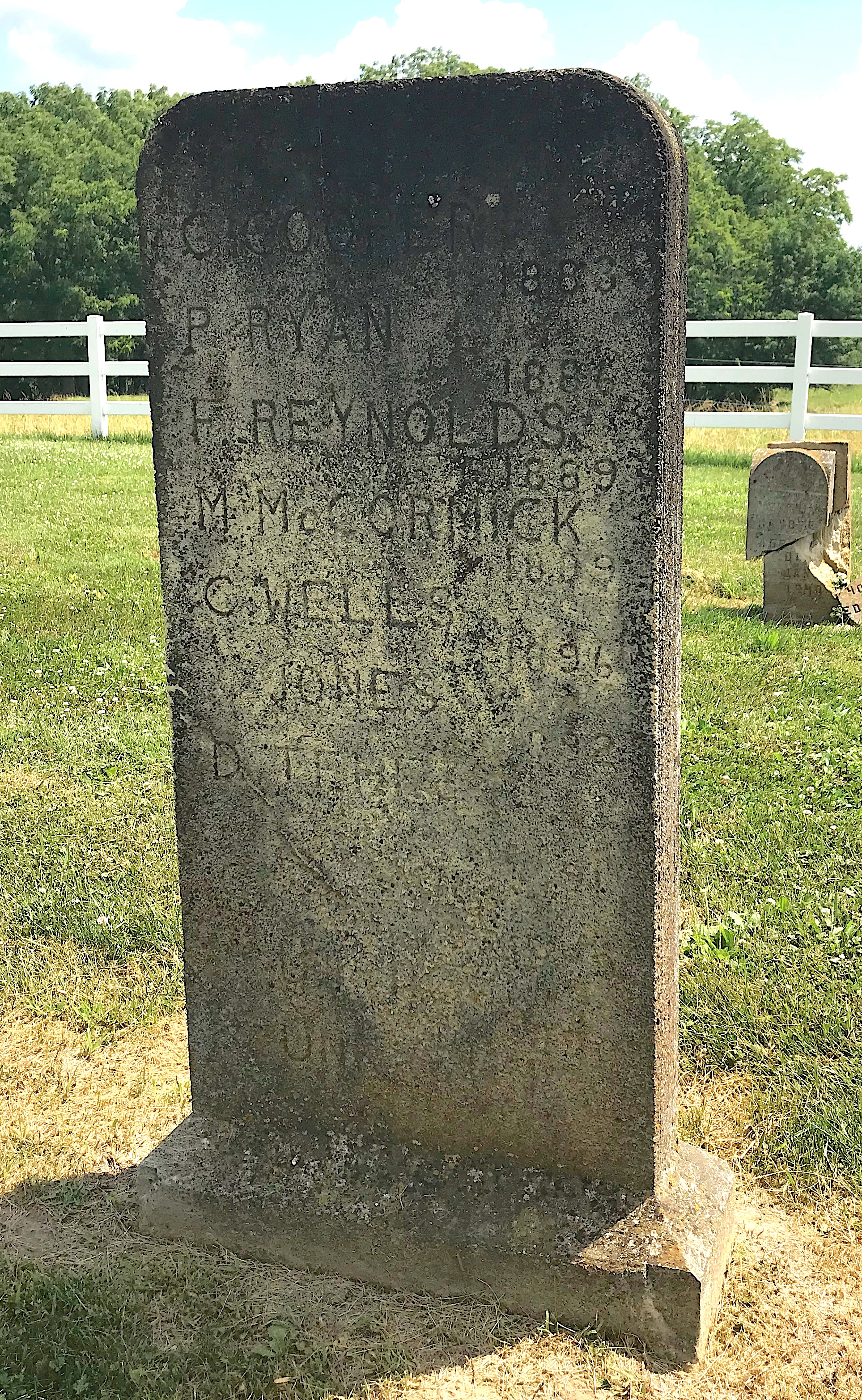
Find a Grave lists about 180 graves here. There don’t look to be that many markers. Then I realized that some of the larger stones had multiple names on them, like this one.

This multi-name grave represents nine prisoners that died at ASP.

One of the earliest burials listed on the above marker is for George Williams, who died on Dec. 11, 1873. That was when construction began at ASP.

Listed right below Williams’ name is that of Noah Banks. Born in 1828 in Arkansas, Banks was convicted of more than one bank robbery in 1874 and was sent to ASP for five years. The Waterloo Courier reported that:

Upon receiving his sentence he [Banks] swore the direst vengeance on all who had been instrumental, in any way, in securing that result, and more especially did he call down curses upon the devoted heads of our citizens, who may now draw a long breath of relief, resting secure.

Banks escaped prison twice before he died. Once in Independence, Mo. and another at ASP. But he was captured both times. Banks died at ASP of kidney disease on June 18, 1876 at age 47.

Dying the same day was African-American prisoner Edwin Smith, who died of tuberculosis at age 26. He was serving a two-year term for larceny.

ASP Escape Attempts

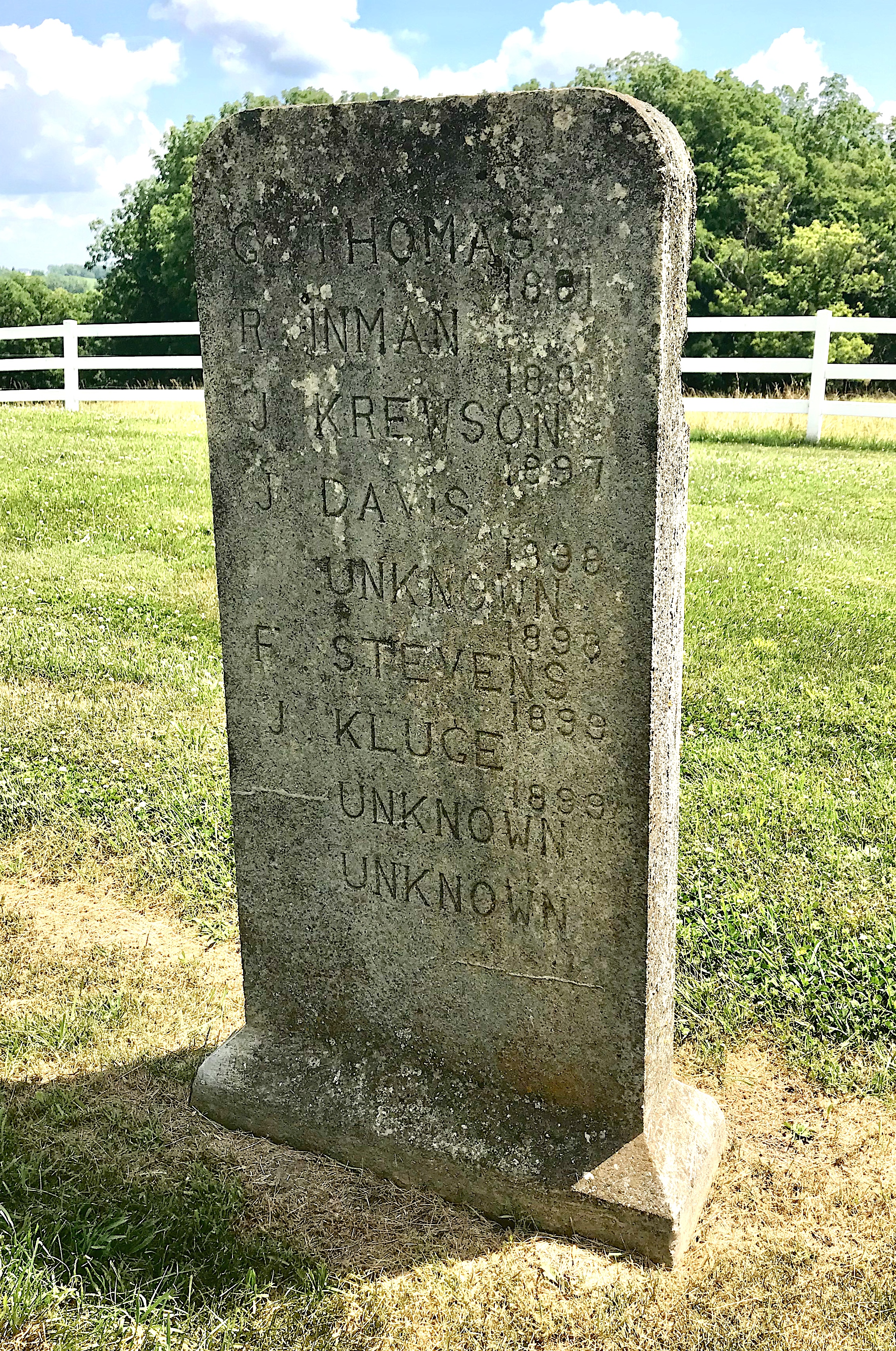
On July 14, 1881, 11 prisoners on their way to the dining hall made an attempt to escape. Charles Thomas, 23, was shot by a guard and brought back inside. A few others were also caught while four managed to get away. I don’t know if they were ever caught but rewards were offered for their capture/return.

Thomas had been at ASP for about a year, sentenced to a six-year term for larceny and robbery.

Charles Thomas (listed at the top) died at age 23 in 1881.

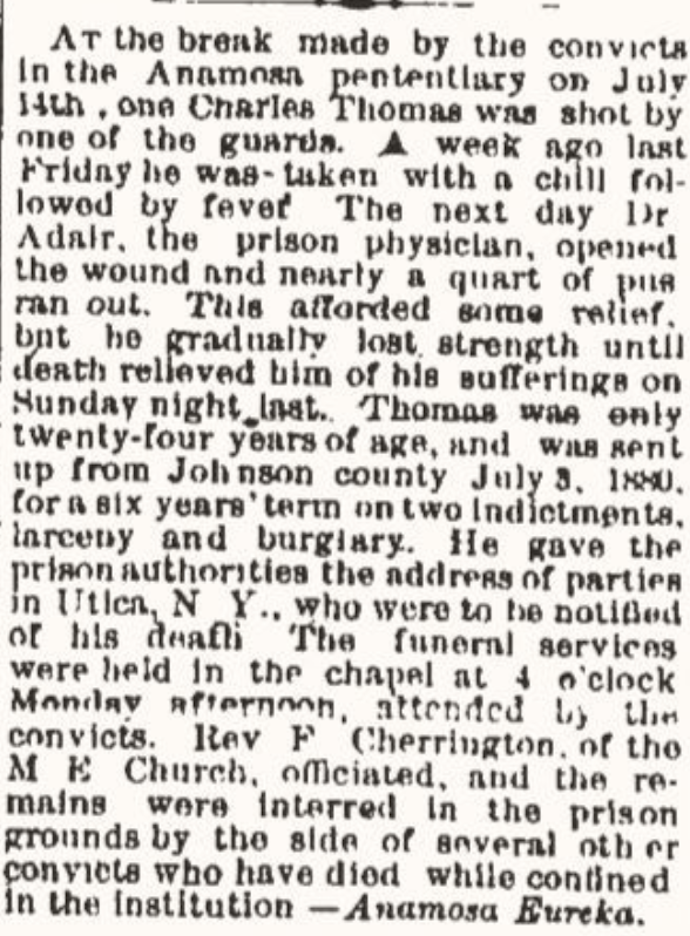
Charles died from his wound about a month later on Aug. 21, 1881. The article I found below gives us a glimpse into what a prison funeral might have been like. Warning, it’s a little medically graphic in detail.

Charles Thomas’ fellow inmates were allowed to attend his funeral in the ASP chapel.

Two more inmates died as a result of another attempted prison escape on Aug. 10, 1886. Patrick “Paddy” Ryan (30) and Albert Mitchell (27) were both shot. One died instantly and the other the next day.

Patrick “Paddy” Ryan (listed second) was killed when he attempted to escape ASP in 1886.

Death of a Tramp

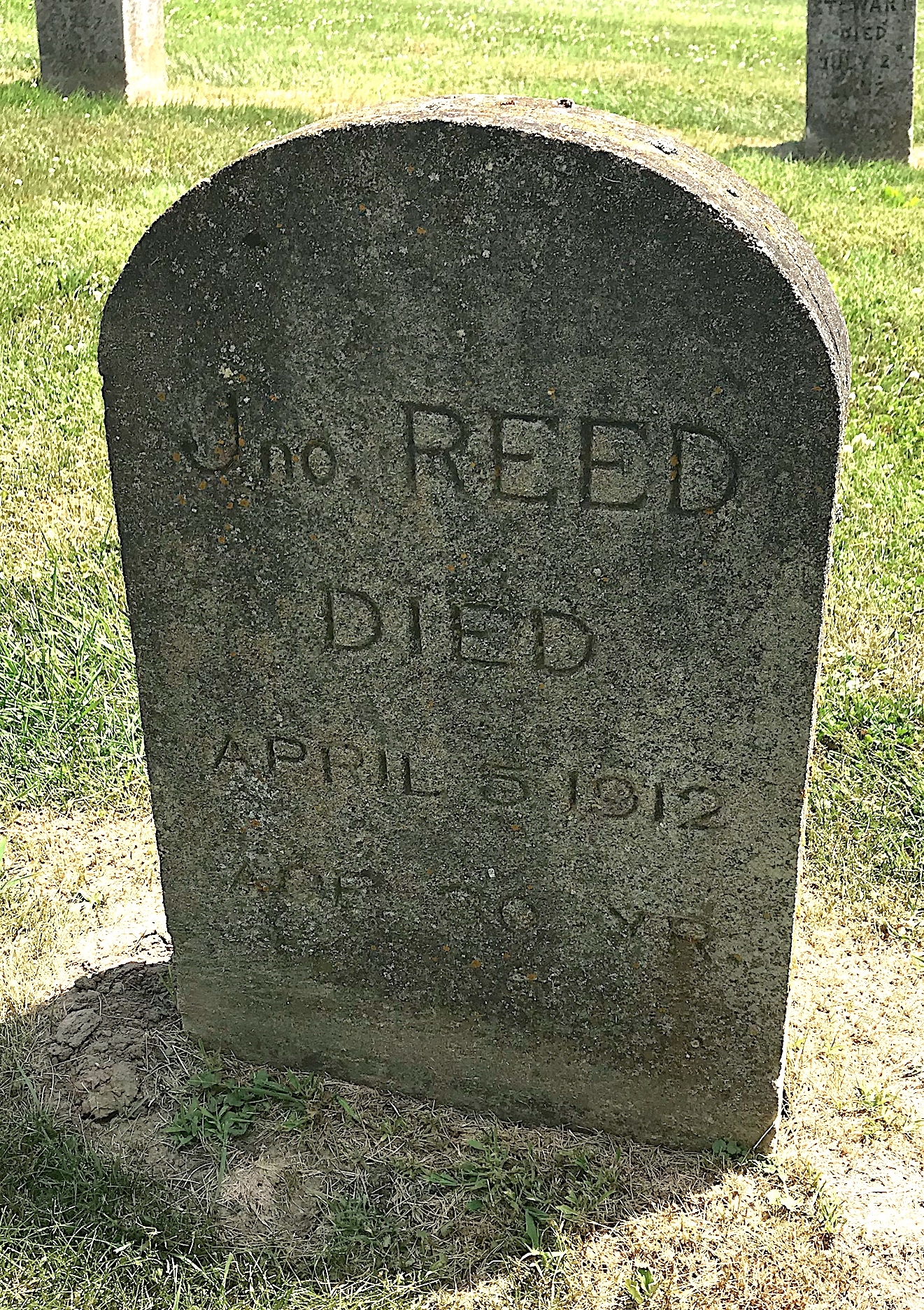
Some of those resting at the ASP Cemetery were housed in what was termed the Insane Unit. John Reed was one of them.

I could find out little about him. In the articles I read, Reed is described as a tramp who suffered from alcoholism. He would not disclose who his parents were, he said, because they were poor and he didn’t want to bring shame to them.

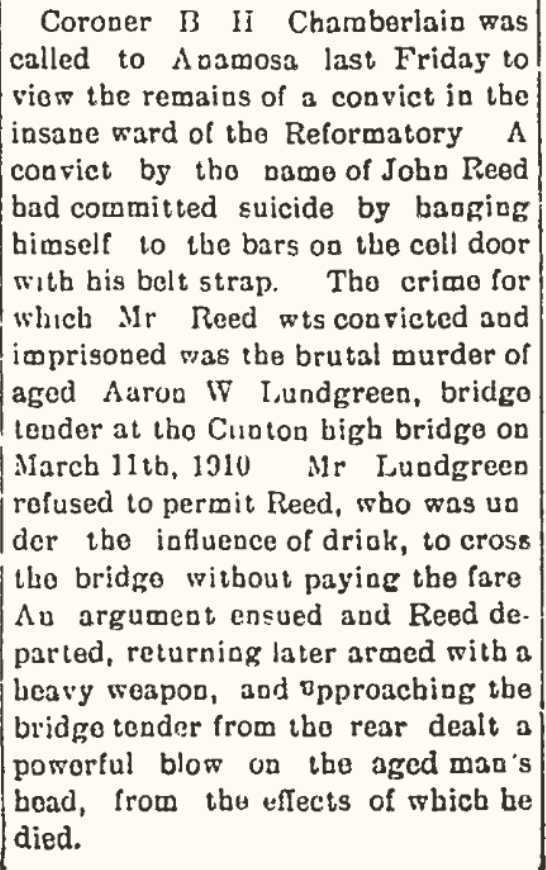
Born in 1882, he was convicted of murdering a bridge tender in 1910. What happened to bring that about and how he died in 1912 are in the article below.

John Reed killed himself while serving time for a murder charge. (Photo Source: Wyoming Journal, April 11, 1912)

It’s doubtful John’s parents knew whatever became of him. He was about 30 when he died.

John Reed’s family probably never knew what became of him.

A Terrible End

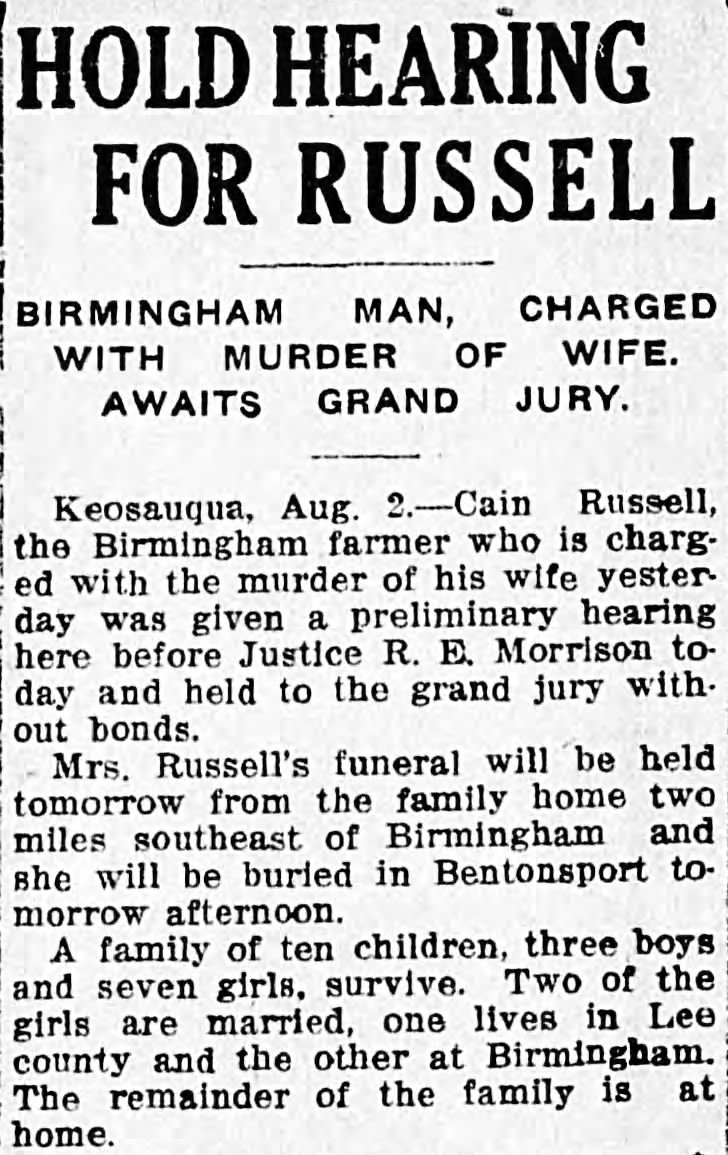
Then there are those stories that just leave you shaking your head, such as the one for Cain Russell.

Cain Russell was a farmer in Birmingham, Iowa, married to Etta Jane Marriott Russell. Together, they had several children over the years.

On the morning of Aug. 1, 1917, Cain shot and killed his wife with a shotgun blast to the back of her head.

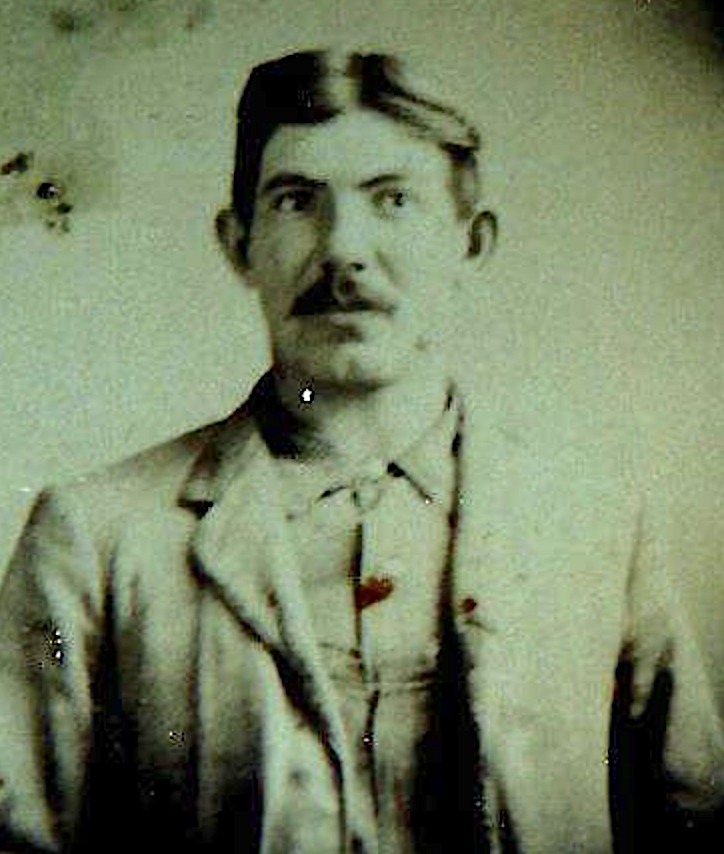
Undated photo of Cain Russell from Find a Grave.com.

According to bits and pieces I’ve read, 18 months before this, Cain had come before an “insanity board” to determine his soundness of mind but had escaped being sent to an asylum. He was described as increasingly short-tempered and irritable. One account of the murder read as follows:

The morning of the tragedy the mother had nursed her 11-months old baby boy and laid him on the bed asleep. As she went to the kitchen she noticed her husband prowling around in a closet and asked him what he wanted, and he replied nothing, but was evidently getting his gun. She then went to the garden for a pan of beans for dinner, brought them to the kitchen and placed them on the table.

It is supposed she was going out of doors again, as the husband came behind and shot her at close range with the one-barreled shotgun, the full load striking her behind the left ear, making a frightful wound, but did not disfigure her face. She dropped to the floor and was partly in a reclining position in the kitchen, her head resting on a chair. The husband apparently realized what he had done and was filled with remorse, as he had tried to kiss her after the deed, and his face and hands were covered with blood.

(Photo Source: Ottumwa Semi-Weekly Courier, Aug. 3, 1917)

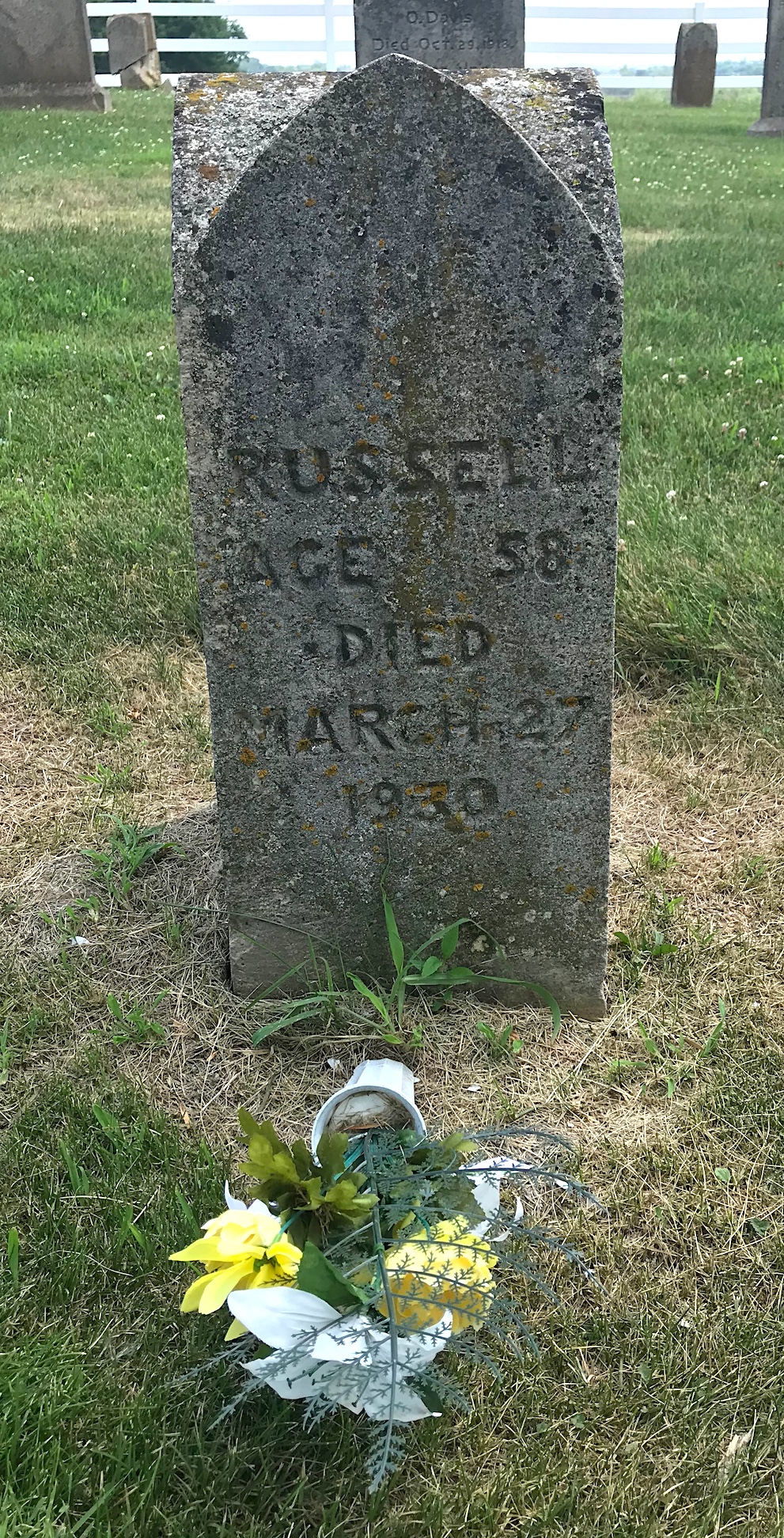
Cain was sent to ASP and placed in the Insane Unit. He died there on March 27, 1930 at age 58. His brother, Samuel Russell, supposedly died at the asylum in Mount Pleasant, Iowa in 1911.

Cain’s Find a Grave memorial notes that he suffered from Huntington’s Disease., a genetic disorder with no cure. I’m doubtful anyone knew much about it at that time. Cain’s deterioration over the years leading up to the murder sound similar in some ways to what Huntington’s Disease sufferers go through.

Cain Russell suffered from Huntington’s Disease.

While some of the Russell children were grown and married, several were quite young and one was an infant. They went to live with their siblings or other relatives. Etta is buried at Iowa’s Van Buren Cemetery. She was 43 at the time of her death.

Cain and Etta’s youngest daughter, Leoma, had Huntington’s Disease. Born in 1914, she was only three years old when her mother died. She married Llewellyn Mallinger in 1932 and the couple had three children. Her death certificate states that when she died of pneumonia on March 24, 1959, she was living at the mental health institute in Mt. Pleasant, Iowa. It also noted she had suffered from Huntington’s Disease for 12 to 15 years. She was 45 when she died. She is buried at Highland Cemetery in Richland, Iowa.

I’ll have more stories from Anamosa State Penitentiary Cemetery next week.

Anamosa State Penitentiary Cemetery is just outside of town.

Recent Posts

  • More Pensacola, Fla. Cemetery Hopping: Taking a Ramble Through Saint John’s Cemetery, Part III
  • More Pensacola, Fla. Cemetery Hopping: Taking a Ramble Through Saint John’s Cemetery, Part II
  • More Pensacola, Fla. Cemetery Hopping: Taking a Ramble Through Saint John’s Cemetery, Part I
  • The City of Five Flags: Stepping back in time at Pensacola, Fla.’s Saint Michael’s Cemetery, Part V
  • The City of Five Flags: Stepping back in time at Pensacola, Fla.’s Saint Michael’s Cemetery, Part IV

Archives

  • December 2025
  • November 2025
  • August 2025
  • July 2025
  • June 2025
  • May 2025
  • April 2025
  • March 2025
  • February 2025
  • January 2025
  • October 2024
  • August 2024
  • July 2024
  • June 2024
  • May 2024
  • April 2024
  • March 2024
  • February 2024
  • January 2024
  • December 2023
  • November 2023
  • October 2023
  • September 2023
  • August 2023
  • July 2023
  • June 2023
  • May 2023
  • April 2023
  • March 2023
  • February 2023
  • January 2023
  • December 2022
  • November 2022
  • October 2022
  • September 2022
  • August 2022
  • July 2022
  • June 2022
  • May 2022
  • April 2022
  • March 2022
  • February 2022
  • January 2022
  • December 2021
  • November 2021
  • October 2021
  • September 2021
  • August 2021
  • July 2021
  • May 2021
  • April 2021
  • March 2021
  • February 2021
  • January 2021
  • December 2020
  • November 2020
  • October 2020
  • September 2020
  • August 2020
  • July 2020
  • June 2020
  • May 2020
  • April 2020
  • March 2020
  • February 2020
  • January 2020
  • December 2019
  • November 2019
  • October 2019
  • September 2019
  • August 2019
  • July 2019
  • June 2019
  • May 2019
  • April 2019
  • March 2019
  • February 2019
  • January 2019
  • December 2018
  • November 2018
  • October 2018
  • September 2018
  • August 2018
  • May 2018
  • April 2018
  • March 2018
  • February 2018
  • January 2018
  • December 2017
  • November 2017
  • October 2017
  • September 2017
  • August 2017
  • July 2017
  • June 2017
  • May 2017
  • April 2017
  • March 2017
  • February 2017
  • January 2017
  • December 2016
  • November 2016
  • October 2016
  • September 2016
  • August 2016
  • July 2016
  • June 2016
  • May 2016
  • April 2016
  • March 2016
  • February 2016
  • January 2016
  • December 2015
  • November 2015
  • October 2015
  • September 2015
  • August 2015
  • July 2015
  • May 2015
  • April 2015
  • March 2015
  • February 2015
  • January 2015
  • December 2014
  • November 2014
  • October 2014
  • September 2014
  • August 2014
  • July 2014
  • June 2014
  • May 2014
  • April 2014
  • March 2014
  • February 2014
  • January 2014
  • December 2013
  • November 2013
  • October 2013
  • September 2013
  • August 2013
  • July 2013
  • June 2013
  • May 2013
  • April 2013
  • March 2013
  • February 2013
  • January 2013

Categories

  • General

Blogroll

  • A Grave Interest
  • Cemetery Photography by Chantal Larochelle
  • Cemetery Tours of Berlin by Matti
  • Confessions of a Funeral Director (Caleb Wilde)
  • Find a Grave
  • Hunting and Gathering (cool photography site)
  • Save Our Cemeteries (New Orleans, La.)
  • The Cemetery Club
  • The Graveyard Detective
  • The Rambling Muser
  • Westminster Abbey Tours by Grace

Meta

  • Create account
  • Log in
  • Entries feed
  • Comments feed
  • WordPress.com

Blog at WordPress.com.

  • Subscribe Subscribed
    • Adventures in Cemetery Hopping
    • Join 402 other subscribers
    • Already have a WordPress.com account? Log in now.
    • Adventures in Cemetery Hopping
    • Subscribe Subscribed
    • Sign up
    • Log in
    • Report this content
    • View site in Reader
    • Manage subscriptions
    • Collapse this bar
 

Loading Comments...