
Since cemeteries are viewed by many as outdoor museums, it isn’t a stretch for me to say that I’m a bit of a museum junkie. It doesn’t take much to get me to visit one, the more obscure the topic the better. I love learning about anything and everything!
When I was doing research for this road trip, I discovered that Iowa’s Anamosa State Penitentiary (ASP) not only had a museum, it had a cemetery that’s open to the public. There was no way I was going to miss out on that!
So we headed east from Springville to Anamosa, a brief 10 mile ride. I was also interested in visiting Anamosa to visit the cemetery where artist Grant Wood was buried. I talked about him during my visited to Cedar Rapids’ Oak Hill Cemetery. Wood spent his last years in the Anamosa area. I’ll be writing about that in a few weeks.
Approved in 1872
First approved in 1872 by the Iowa Legislature because the prison in Fort Madison was full, the Anamosa State Penitentiary was first known as the Additional Penitentiary, then the Anamosa Penitentiary before it was a Reformatory. Then it became a Penitentiary once again. Inmates did much of the labor on the stone walls and buildings, some of them dying in the process.
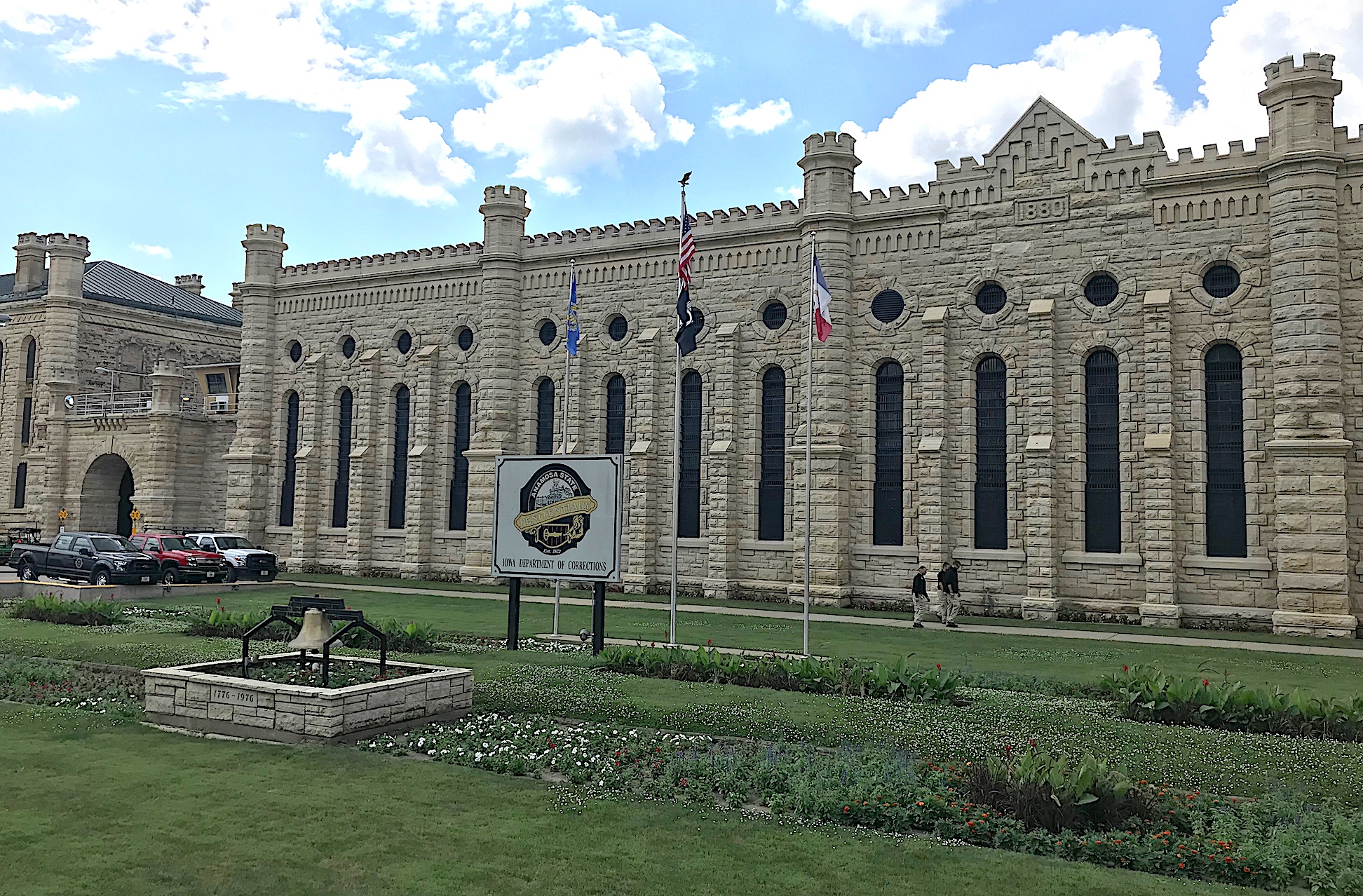
ASP’s walls, which are about 12 feet thick at the base and four feet thick at the top, enclose about 12 acres. It had a Female Department and an Insane Unit for decades.
One of Anamosa’s most infamous prisoners was 11-year-old Wesley Elkins, convicted of killing two people. Sentenced to life, Elkins ended up only serving a nine-year sentence. You might also remember Frank Novak, who I wrote about a few weeks ago. He tried to fake his own death for the insurance money, committed murder, and fled Cedar Rapids to Alaska. He was eventually caught and spent some years at Anamosa.
ASP’s most infamous inmate was serial killer John Wayne Gacy, who served time there for 18 months on a sodomy charge. He was released in 1970 and returned to the Chicago area where he began to commit his many murders.
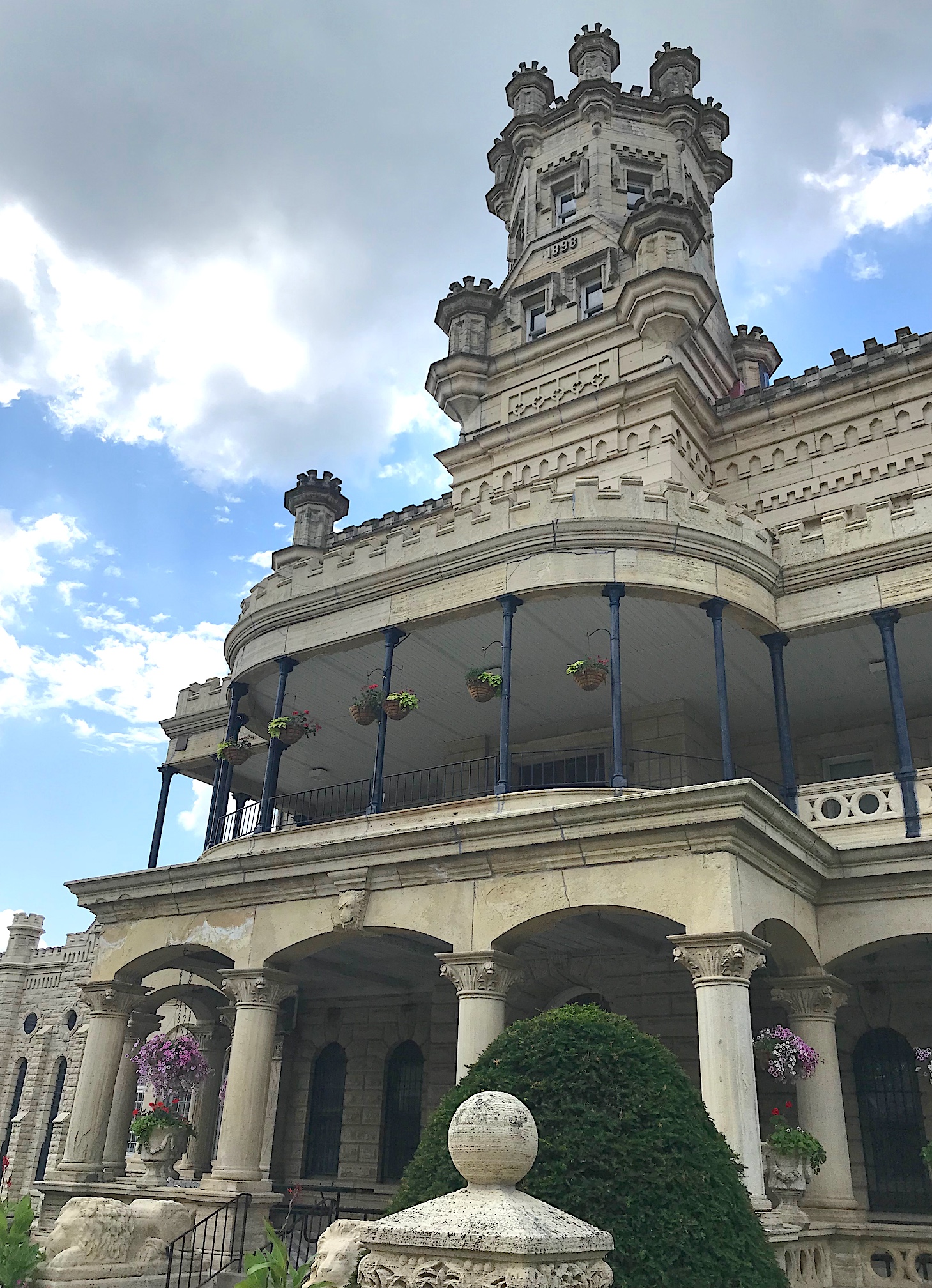
As of March 2021, there were about 945 inmates serving time at ASP. That same year, corrections officer Robert McFarland and nurse Lorena Schulte were murdered by prisoners during a botched escape attempt. Inmates have been killed during escape attempts at ASP before, but 2021’s incident was the first time staff members working at the prison were killed by prisoners.
Prison Museum & Gift Shop
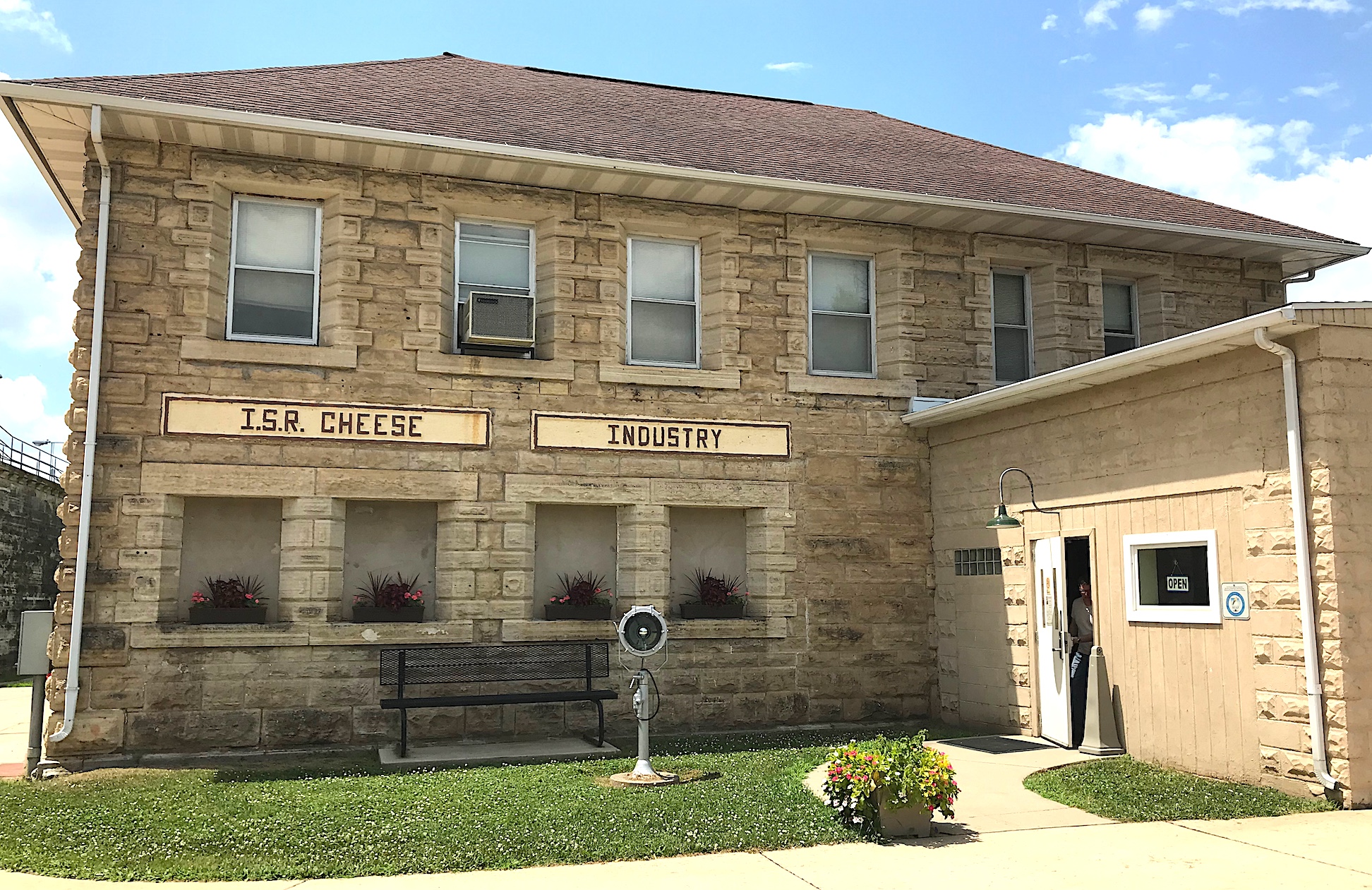
It may seem hard to believe that a working prison might have a museum and a gift shop, but Anamosa does. It’s housed in the building that used to be a cheese factory. The penitentiary once produced large amounts of food for prison consumption, from beef and milk to fresh vegetables.
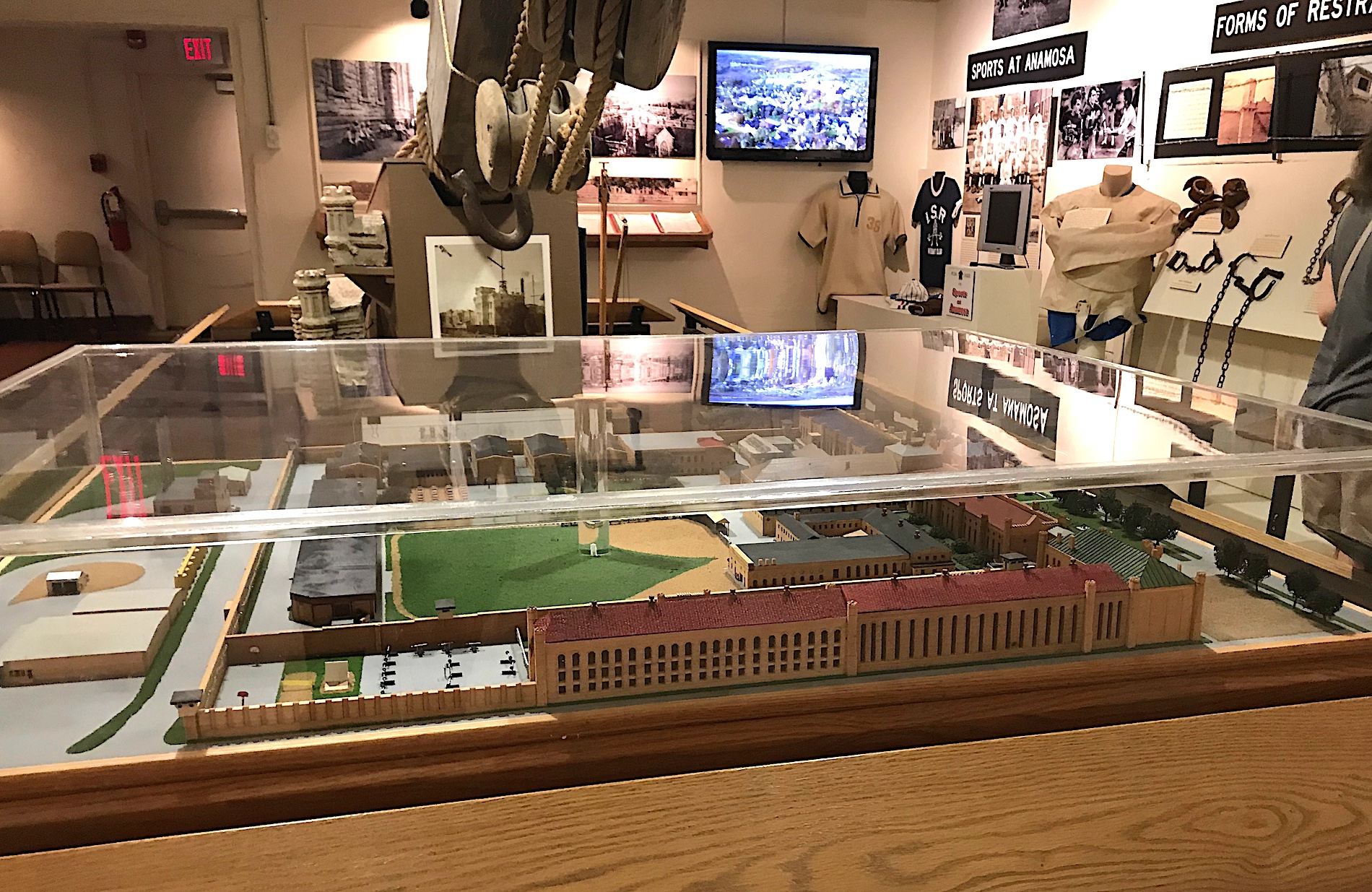
The museum has a recreation of a typical historic cell (it’s understandably small) and records of past inmates, photos of construction, and examples of prison products. Prison sports teams, stories of famous inmates, and the evolution of correctional policies and prison administrators are all included. I was quite impressed at the amount of information and the number of artifacts they had.
One thing I learned while I was there was that during his stay, John Wayne Gacy was a model prisoner. He worked in the bakery and helped build a miniature golf course that is still in use today. I looked for a picture of it at the museum but never saw one.
We spent a good amount of time talking to the museum staff, who told us that many of their family members currently worked at ASP or had worked there in the past. While not exactly a pleasant place to work, ASP continues to provide jobs for many in the community.
I want to note that I don’t know if this museum is still open. Apparently, it closed during Covid and I don’t know if it ever reopened. If that’s true, I’m glad we had the opportunity to see it.
Also Called Boot Hill Cemetery
Located about a mile and a half from the prison is the ASP Cemetery, also known as the Iowa Men’s Reformatory Cemetery and Boot Hill Cemetery.
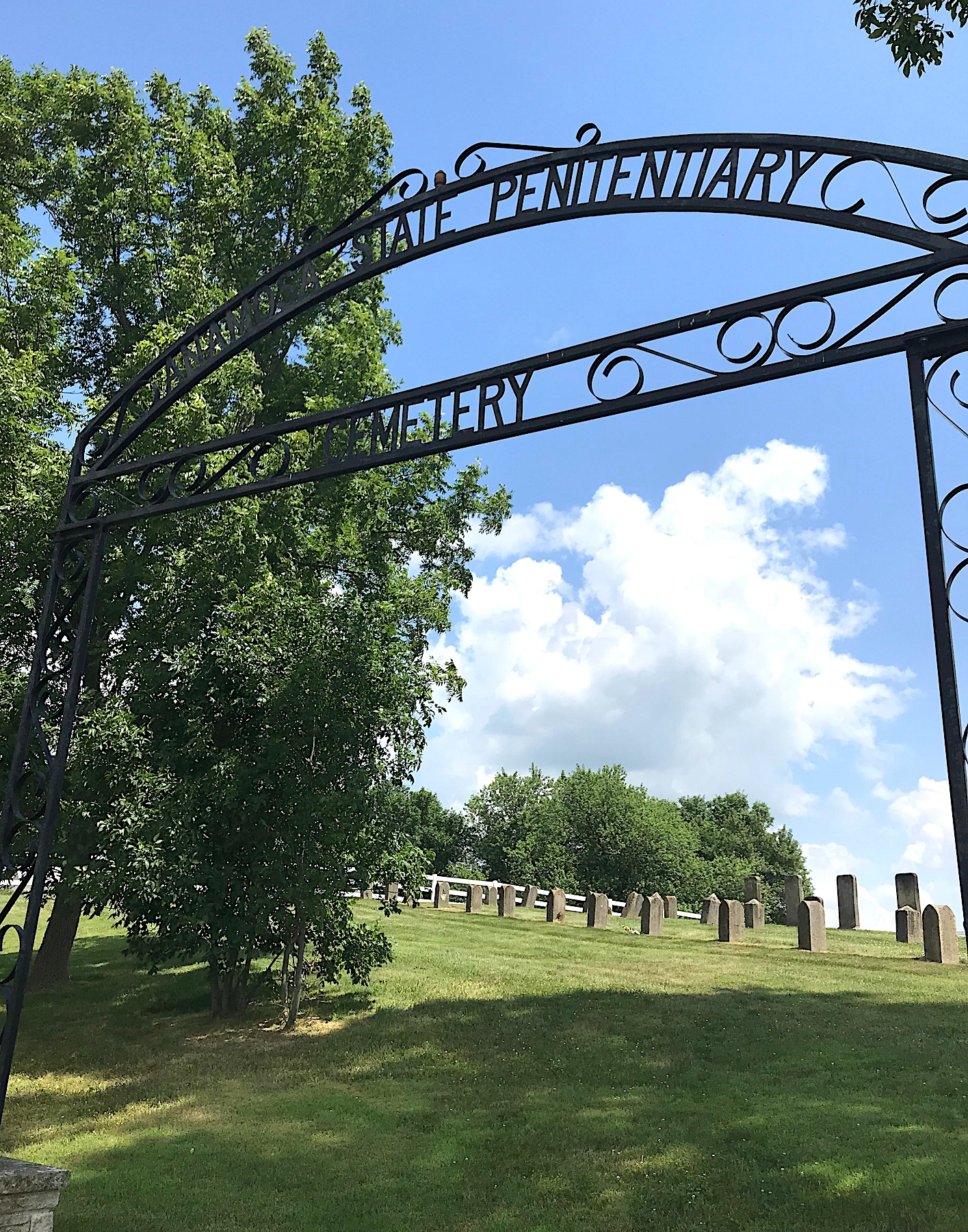
I was a bit surprised that ASP’s cemetery is open to the public like it is. Most prison cemeteries, even the ones as old as ASP, are close to the facility and off limits. But I’m certainly glad we were able to see it.
The first cemetery associated with ASP was established in 1876 at Prison Farm No. 1 or possibly at Farm No. 5. Its exact location is unknown. The graves are of those prisoners whose bodies were left unclaimed or were not taken to one of the state’s medical colleges. They were buried in common graves that contained up to eight bodies. Tall limestone markers were placed at each grave and contained the prisoner’s name and death date.
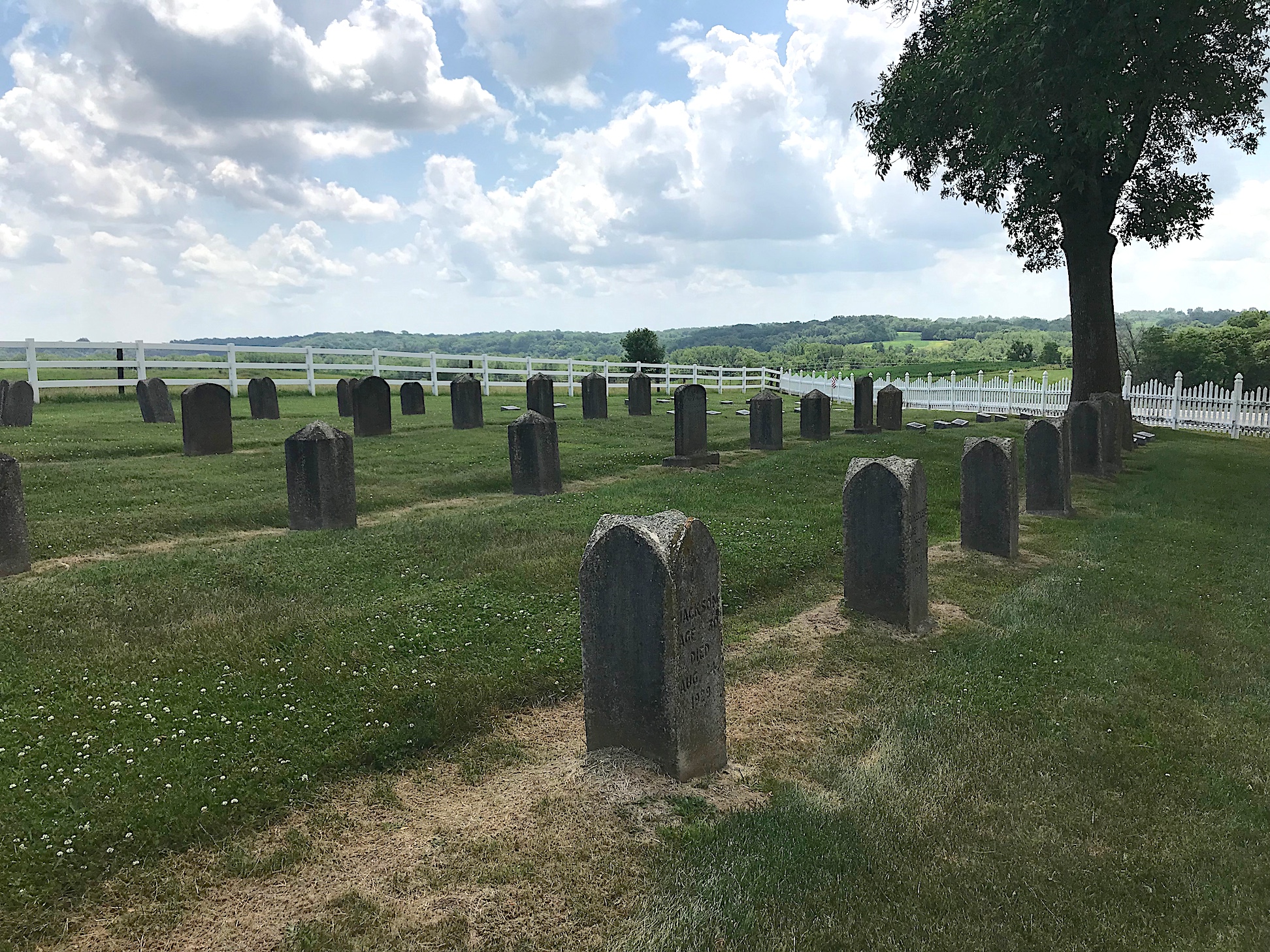
They were moved here when the current cemetery was established in 1914. Subsequent graves hold individual bodies, and are marked with shorter limestone markers with the prisoner’s name, age, date of death, and sometimes their prison number. According to Find a Grave, the most recent burial took place in 2021. So it is still an active burial ground. Most of the time, prisoners who die at ASP are now claimed by family members and taken elsewhere for burial.
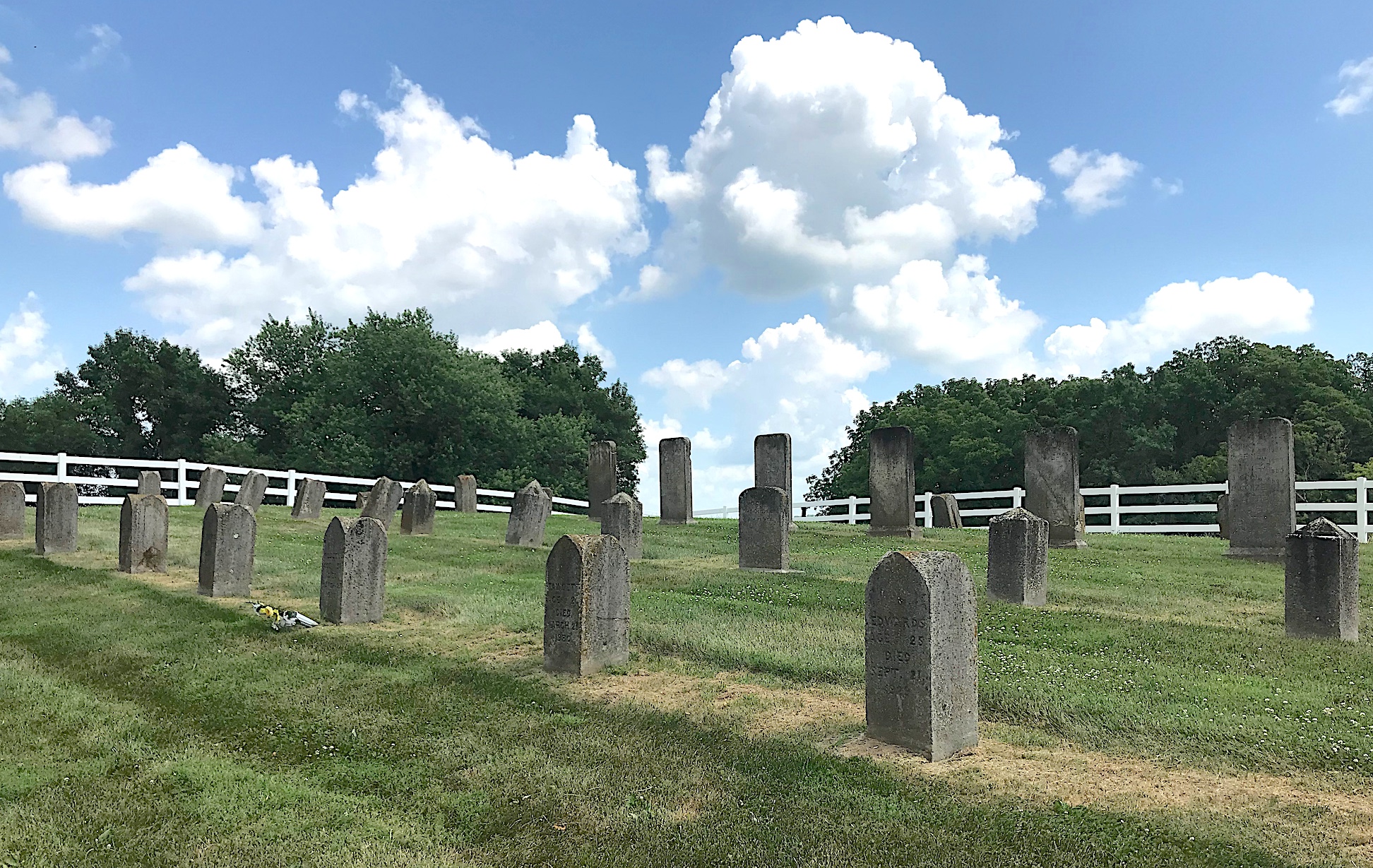
They are in three different styles. Two styles are upright stones, one with a triangular top and the other with a rounded top. They were used from 1914 to the 1940s. The third style of stone is a flat, horizontal marker that was used from the 1940s to the present.
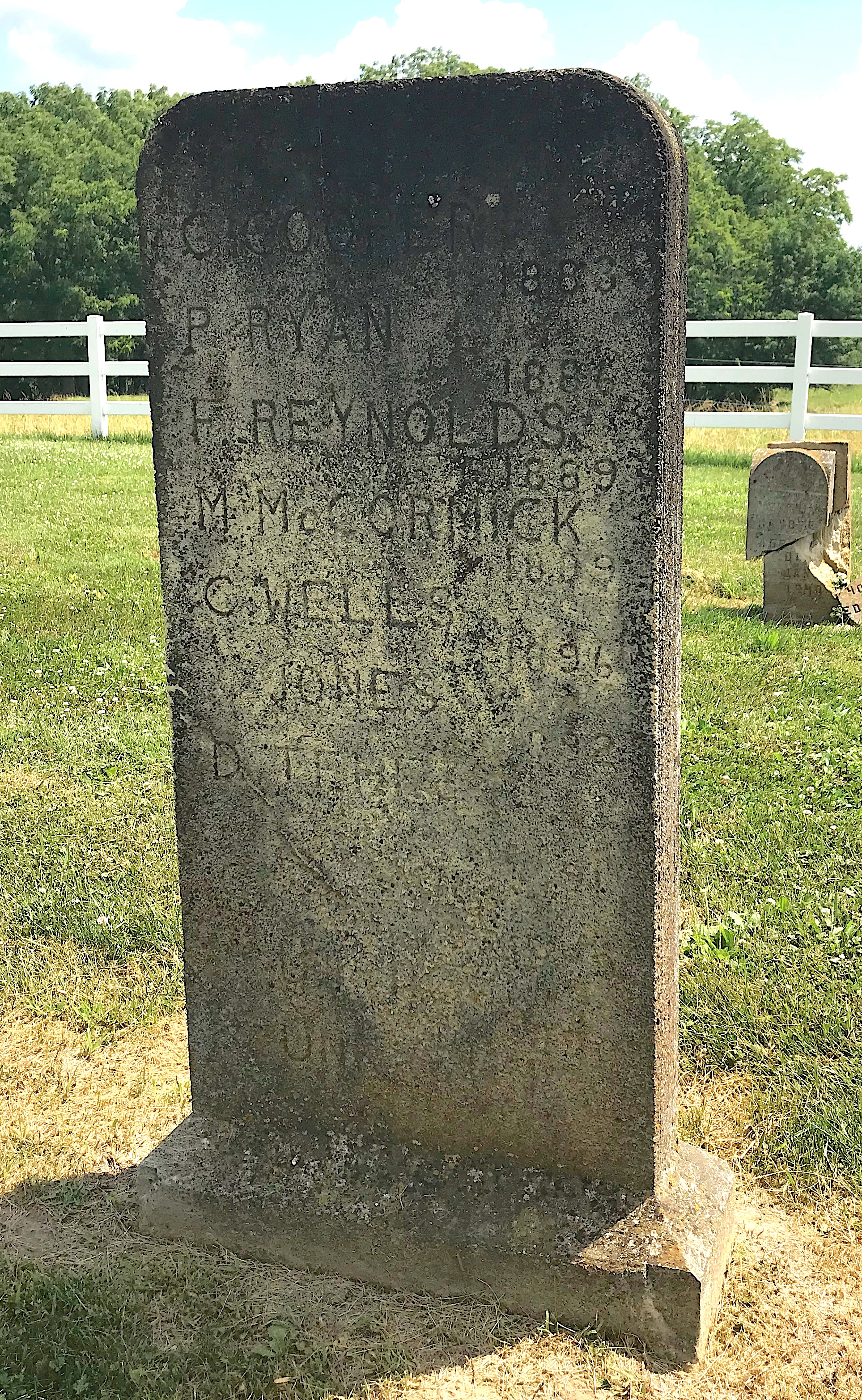
Find a Grave lists about 180 graves here. There don’t look to be that many markers. Then I realized that some of the larger stones had multiple names on them, like this one.
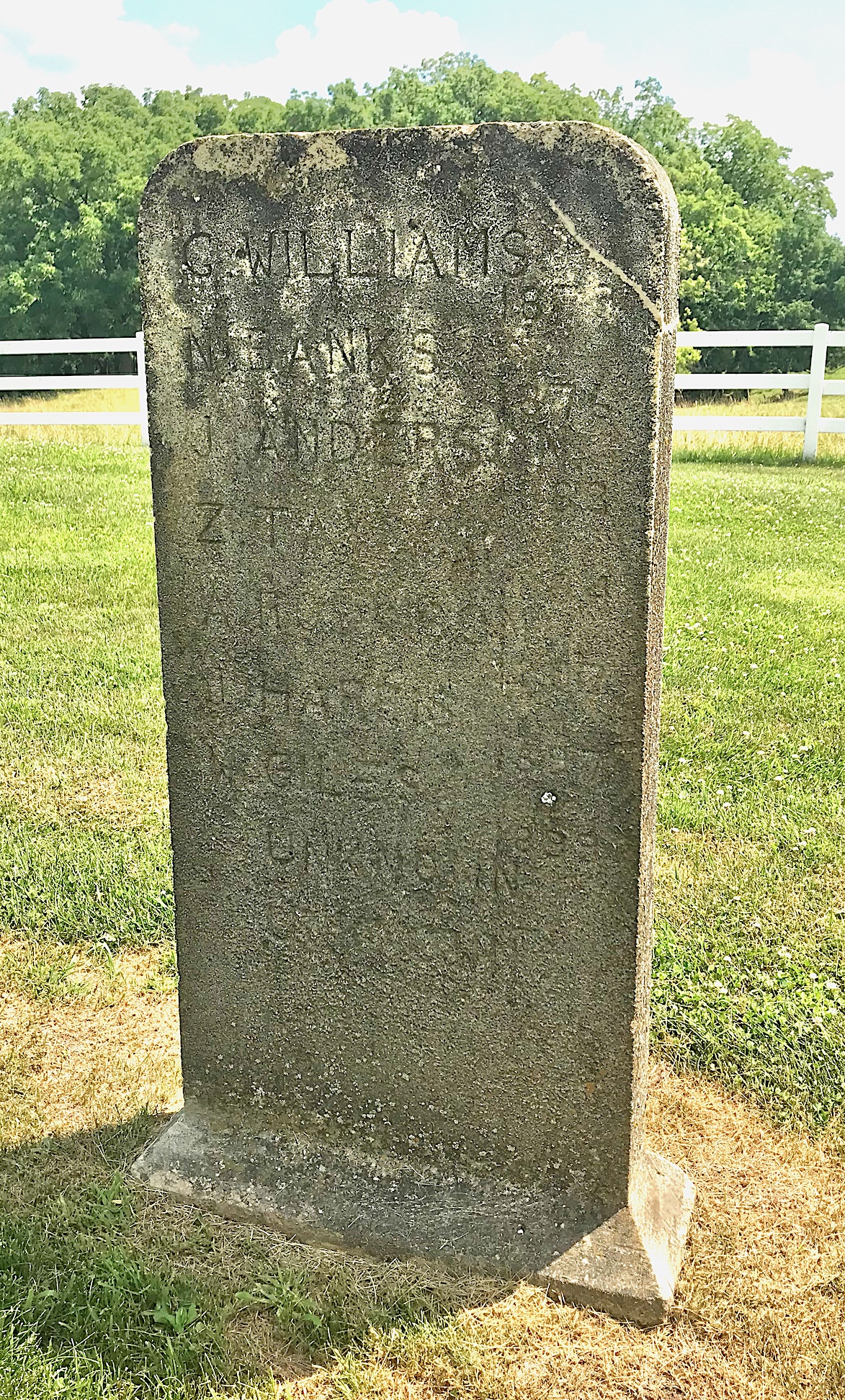
One of the earliest burials listed on the above marker is for George Williams, who died on Dec. 11, 1873. That was when construction began at ASP.
Listed right below Williams’ name is that of Noah Banks. Born in 1828 in Arkansas, Banks was convicted of more than one bank robbery in 1874 and was sent to ASP for five years. The Waterloo Courier reported that:
Upon receiving his sentence he [Banks] swore the direst vengeance on all who had been instrumental, in any way, in securing that result, and more especially did he call down curses upon the devoted heads of our citizens, who may now draw a long breath of relief, resting secure.
Banks escaped prison twice before he died. Once in Independence, Mo. and another at ASP. But he was captured both times. Banks died at ASP of kidney disease on June 18, 1876 at age 47.
Dying the same day was African-American prisoner Edwin Smith, who died of tuberculosis at age 26. He was serving a two-year term for larceny.
ASP Escape Attempts
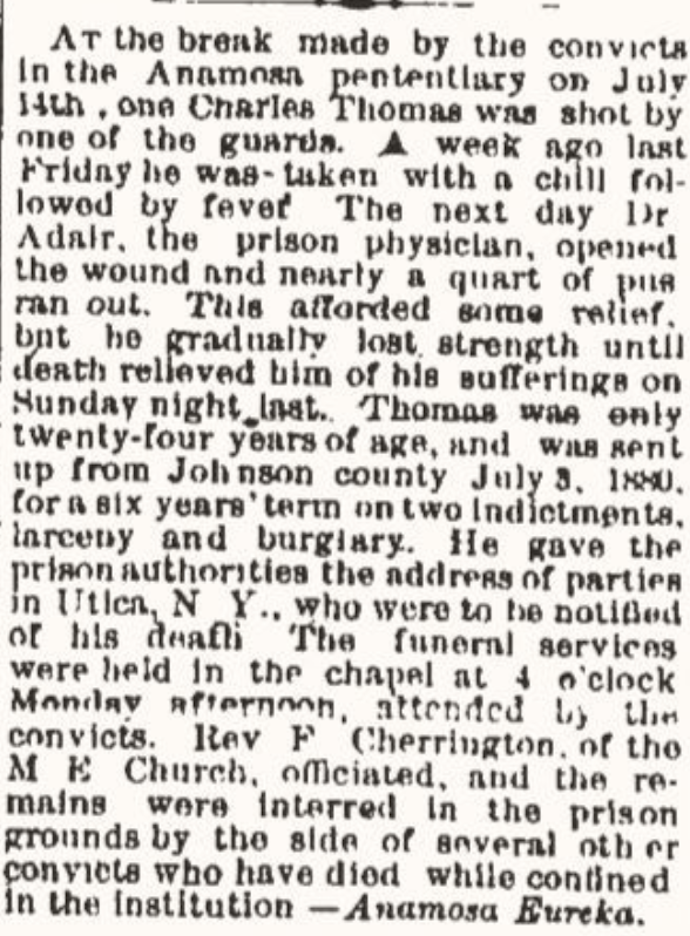
On July 14, 1881, 11 prisoners on their way to the dining hall made an attempt to escape. Charles Thomas, 23, was shot by a guard and brought back inside. A few others were also caught while four managed to get away. I don’t know if they were ever caught but rewards were offered for their capture/return.
Thomas had been at ASP for about a year, sentenced to a six-year term for larceny and robbery.
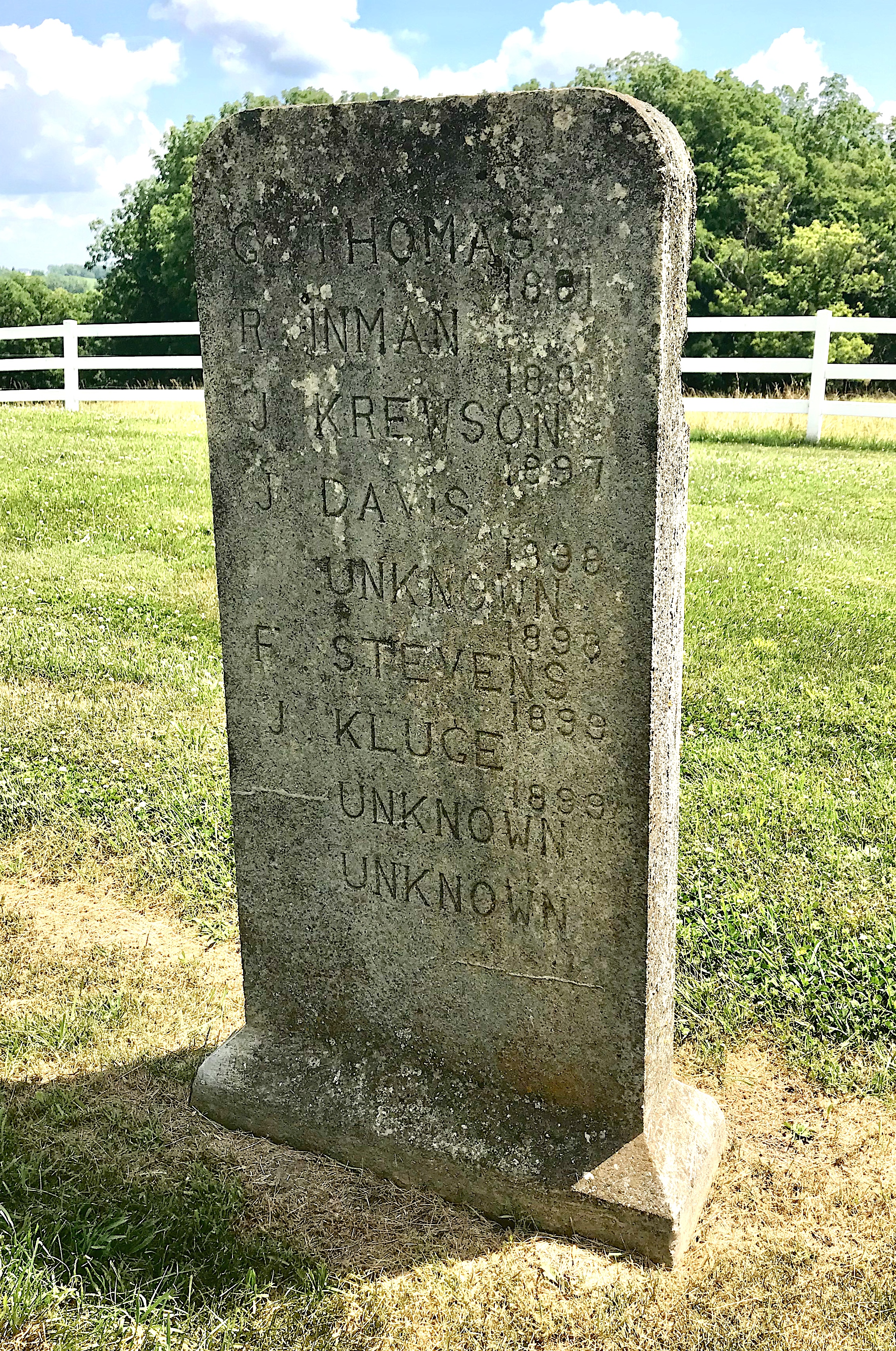
Charles died from his wound about a month later on Aug. 21, 1881. The article I found below gives us a glimpse into what a prison funeral might have been like. Warning, it’s a little medically graphic in detail.
Two more inmates died as a result of another attempted prison escape on Aug. 10, 1886. Patrick “Paddy” Ryan (30) and Albert Mitchell (27) were both shot. One died instantly and the other the next day.
Death of a Tramp
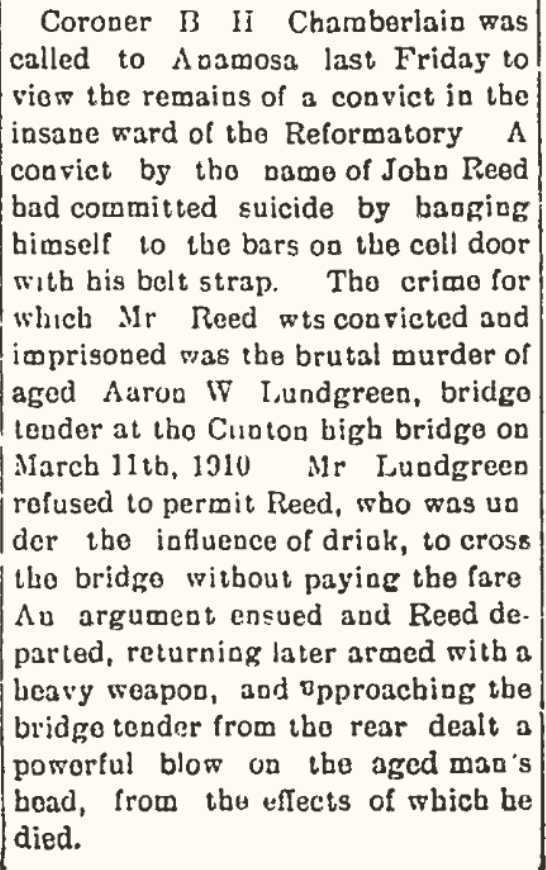
Some of those resting at the ASP Cemetery were housed in what was termed the Insane Unit. John Reed was one of them.
I could find out little about him. In the articles I read, Reed is described as a tramp who suffered from alcoholism. He would not disclose who his parents were, he said, because they were poor and he didn’t want to bring shame to them.
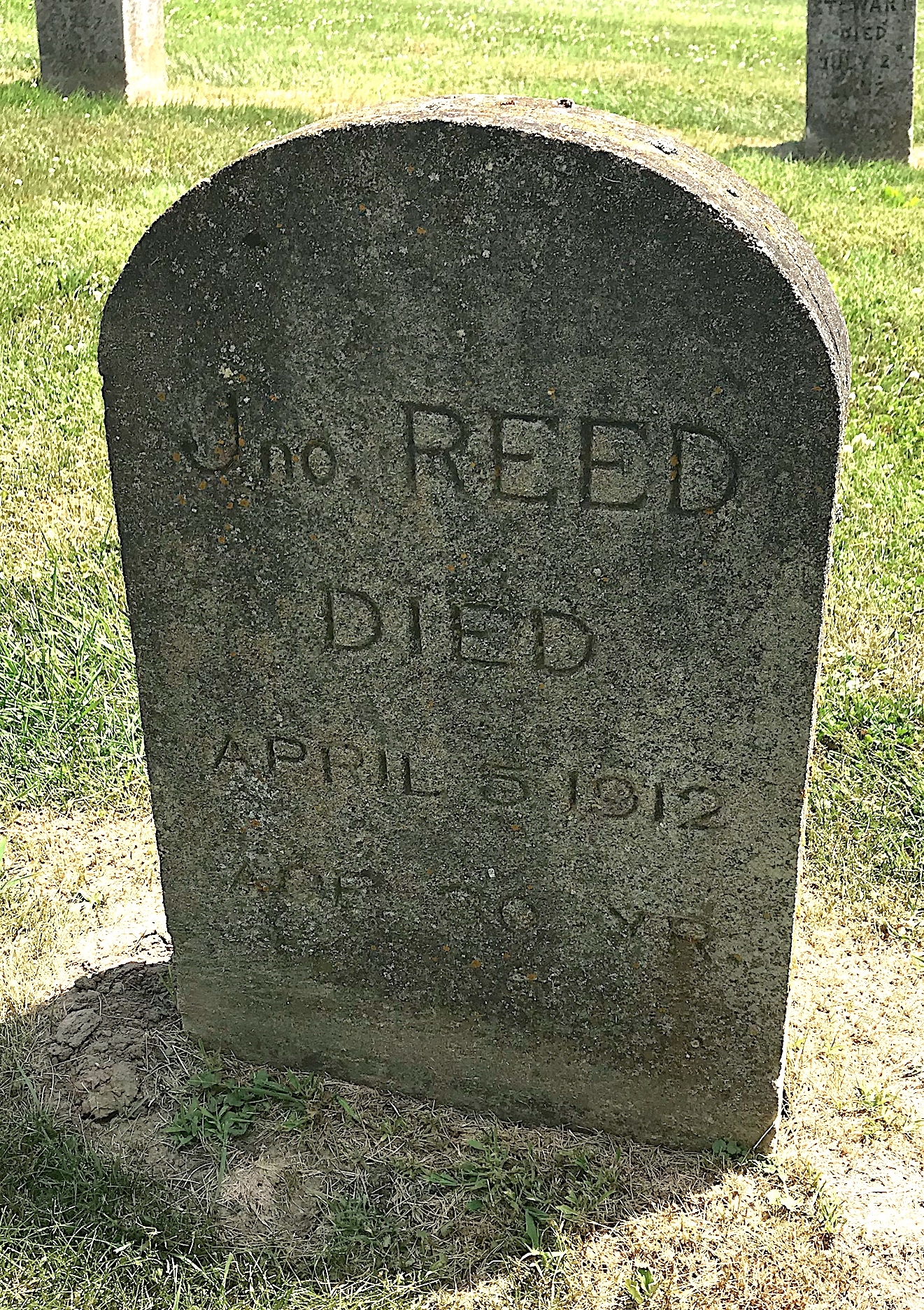
Born in 1882, he was convicted of murdering a bridge tender in 1910. What happened to bring that about and how he died in 1912 are in the article below.
It’s doubtful John’s parents knew whatever became of him. He was about 30 when he died.
A Terrible End
Then there are those stories that just leave you shaking your head, such as the one for Cain Russell.
Cain Russell was a farmer in Birmingham, Iowa, married to Etta Jane Marriott Russell. Together, they had several children over the years.
On the morning of Aug. 1, 1917, Cain shot and killed his wife with a shotgun blast to the back of her head.
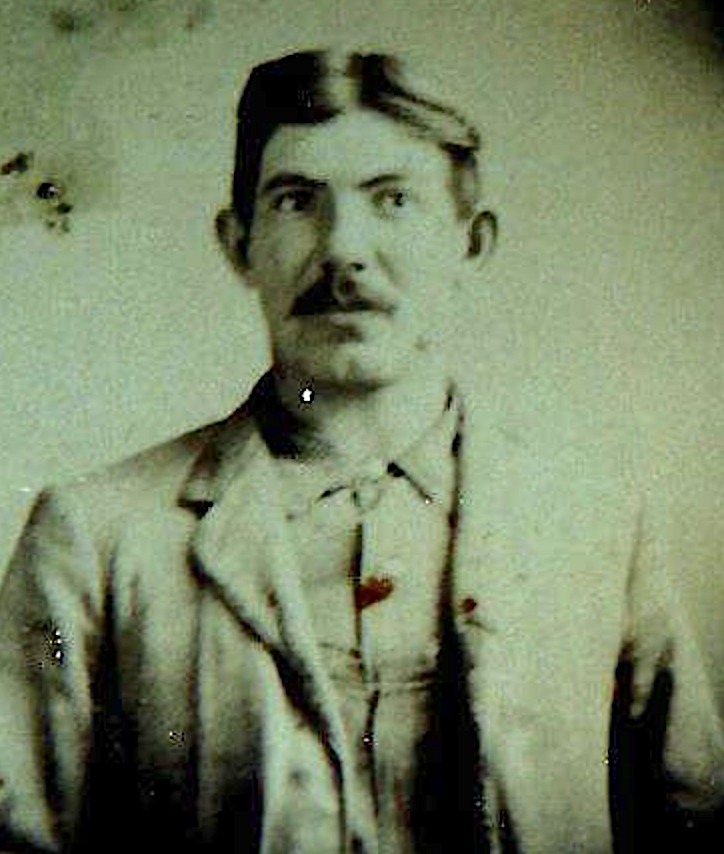
According to bits and pieces I’ve read, 18 months before this, Cain had come before an “insanity board” to determine his soundness of mind but had escaped being sent to an asylum. He was described as increasingly short-tempered and irritable. One account of the murder read as follows:
The morning of the tragedy the mother had nursed her 11-months old baby boy and laid him on the bed asleep. As she went to the kitchen she noticed her husband prowling around in a closet and asked him what he wanted, and he replied nothing, but was evidently getting his gun. She then went to the garden for a pan of beans for dinner, brought them to the kitchen and placed them on the table.
It is supposed she was going out of doors again, as the husband came behind and shot her at close range with the one-barreled shotgun, the full load striking her behind the left ear, making a frightful wound, but did not disfigure her face. She dropped to the floor and was partly in a reclining position in the kitchen, her head resting on a chair. The husband apparently realized what he had done and was filled with remorse, as he had tried to kiss her after the deed, and his face and hands were covered with blood.
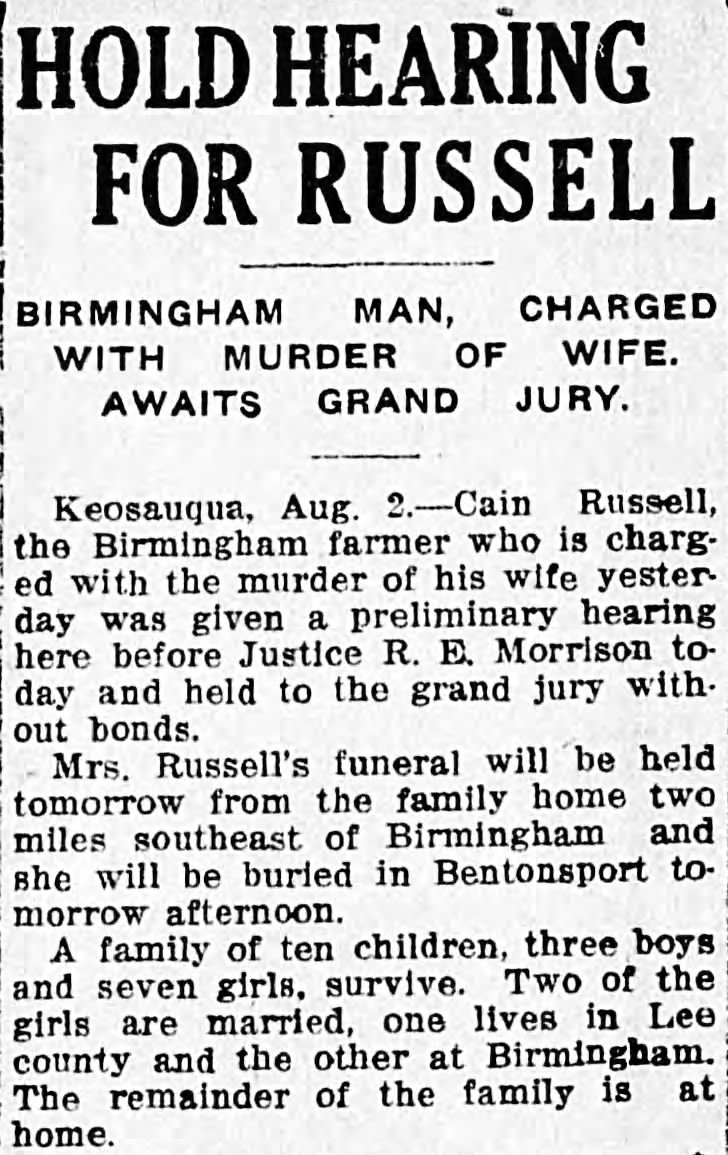
Cain was sent to ASP and placed in the Insane Unit. He died there on March 27, 1930 at age 58. His brother, Samuel Russell, supposedly died at the asylum in Mount Pleasant, Iowa in 1911.
Cain’s Find a Grave memorial notes that he suffered from Huntington’s Disease., a genetic disorder with no cure. I’m doubtful anyone knew much about it at that time. Cain’s deterioration over the years leading up to the murder sound similar in some ways to what Huntington’s Disease sufferers go through.
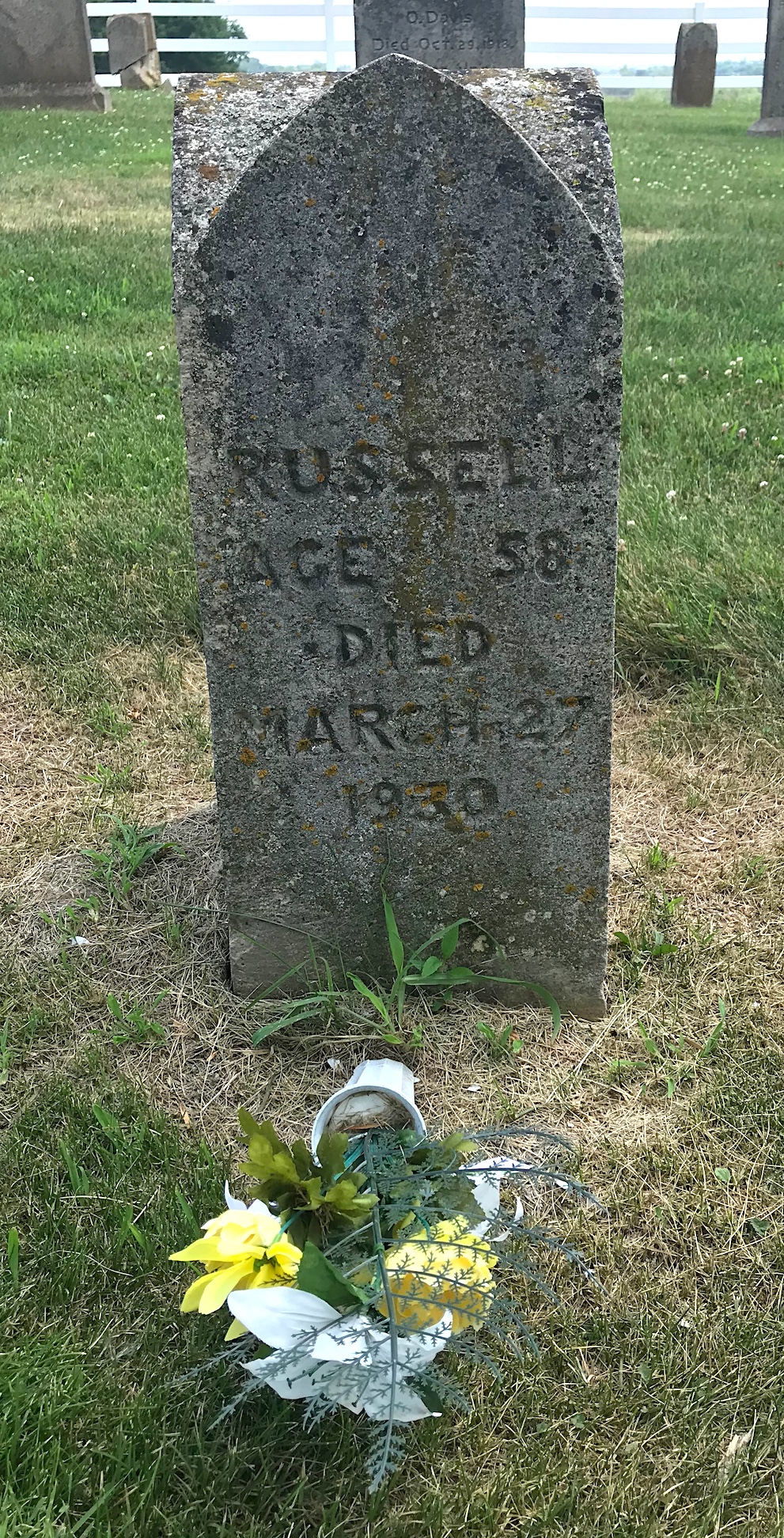
While some of the Russell children were grown and married, several were quite young and one was an infant. They went to live with their siblings or other relatives. Etta is buried at Iowa’s Van Buren Cemetery. She was 43 at the time of her death.
Cain and Etta’s youngest daughter, Leoma, had Huntington’s Disease. Born in 1914, she was only three years old when her mother died. She married Llewellyn Mallinger in 1932 and the couple had three children. Her death certificate states that when she died of pneumonia on March 24, 1959, she was living at the mental health institute in Mt. Pleasant, Iowa. It also noted she had suffered from Huntington’s Disease for 12 to 15 years. She was 45 when she died. She is buried at Highland Cemetery in Richland, Iowa.
I’ll have more stories from Anamosa State Penitentiary Cemetery next week.


This was fascinating.love your posts, I would suggest you look into using a reflector when photographing the stones.i think I have told you about this before. I have a folding reflecting disc th
The conundrum about “what to do,” knowing one has Huntington’s and the almost certain chances of passing it on to one’s genetic heirs, is a wrenching one indeed. The stories you reconstruct from reading gravestones and doing research at the prison libraries and gift shops are always so moving, Tracy. Voices from the past of the poor wretched unfortunates who died while incarcerated at the prison are heard again through your words. We should all be so lucky to have someone resurrect us so meticulously and respectfully a hundred years from now! Thank you.
Thank you so much for your kind words! I honestly believe there’s an important story behind every stone. Even for the little baby who only lived a day. Every person means something. If I can tell a few of those stories, I hope I did something good in the process.
While serving time in this Hell Hole, I witnessed horrific mistreatment of inmates under the rule of Warden William Sperfslage. Warden Sperfslage had no control over his staff – allowing them to physically, mentally, and sexually abuse inmates. Officer Glenda gave birth to a son fathered by the inmate she raped. Officer Vernon Isaac physically assaulted a severely disabled inmate, causing sever damage to his spinal cord.
What a wonderful and fascinating read! I am the great-great grand daughter of Cain Russell and I’ve been trying to see how far back I can trace the dreadful Huntingin gene in my family. Leoma and Llewellyn were my mom’s grandparents!
Thank you for telling this story!
Hello, Kayleen!
Thank you so much for your kind words. Cain Russell and his family have haunted me since I did the research on his grave. I think Cain was a victim of his disease and couldn’t control himself. That doesn’t make what did any less painful but back then, nobody understood the disease or what it could do to someone. I’m so glad that you replied because I often wonder if anybody I’ve written about has family who sees what I’ve found. I hope you are successful in your quest to find out more about the gene.
I enjoyed your article immensely. I had a distant cousin incarcerated here – Johnnie Forest Ashburn.