Westminster Abbey 2023: Saying Farewell – Bits and Pieces, Part VIII

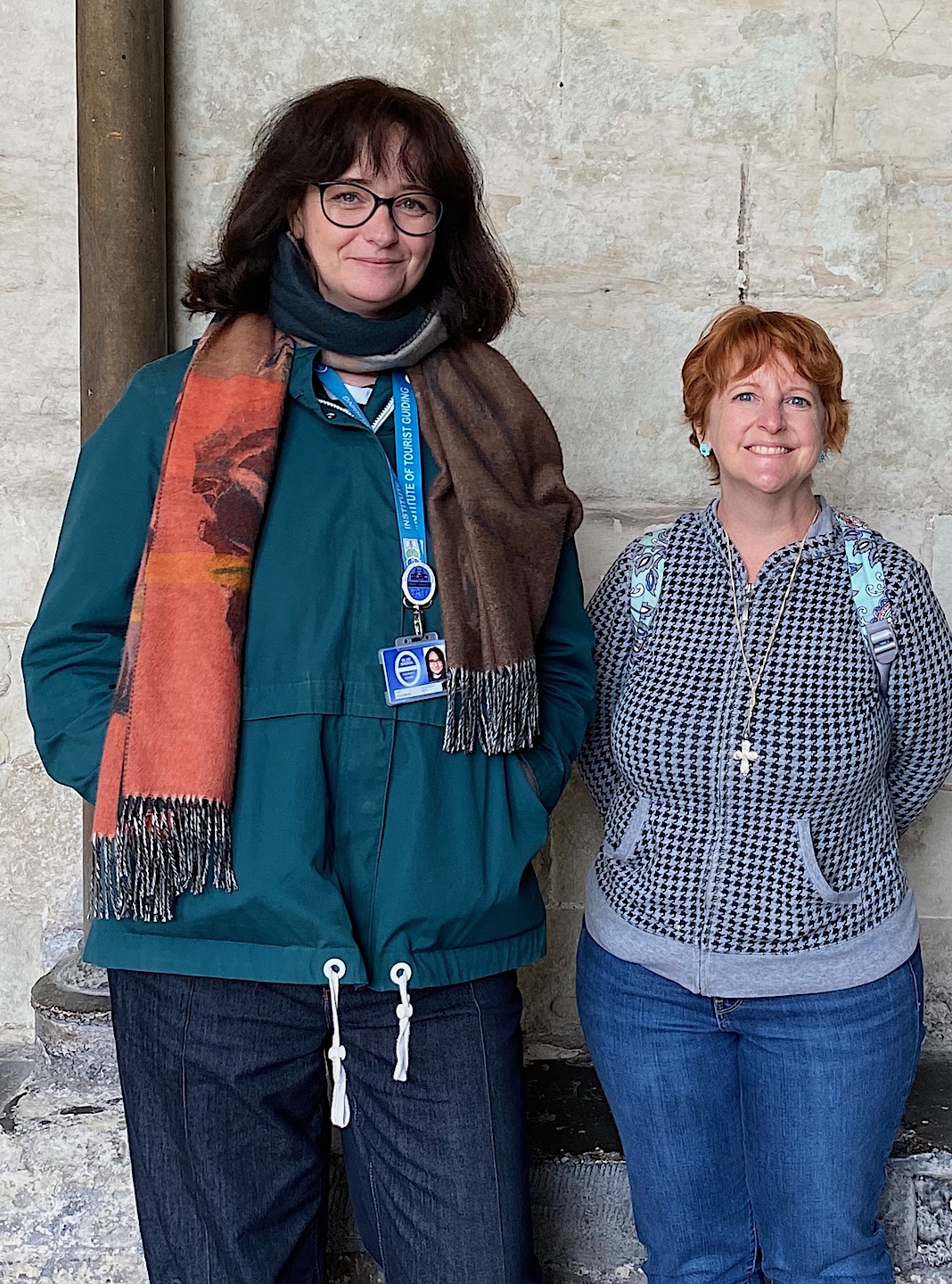
Many thanks to the amazing Grace Barrett of Tours by Grace for leading us through Westminster Abbey! She was fabulous!

This is my eighth and final blog post about Westminster Abbey. I think that’s a new record for me!

Today I’m rounding up the last bits and pieces that I haven’t gotten to talking about just yet that I think are worth mentioning.

Meet the Russells

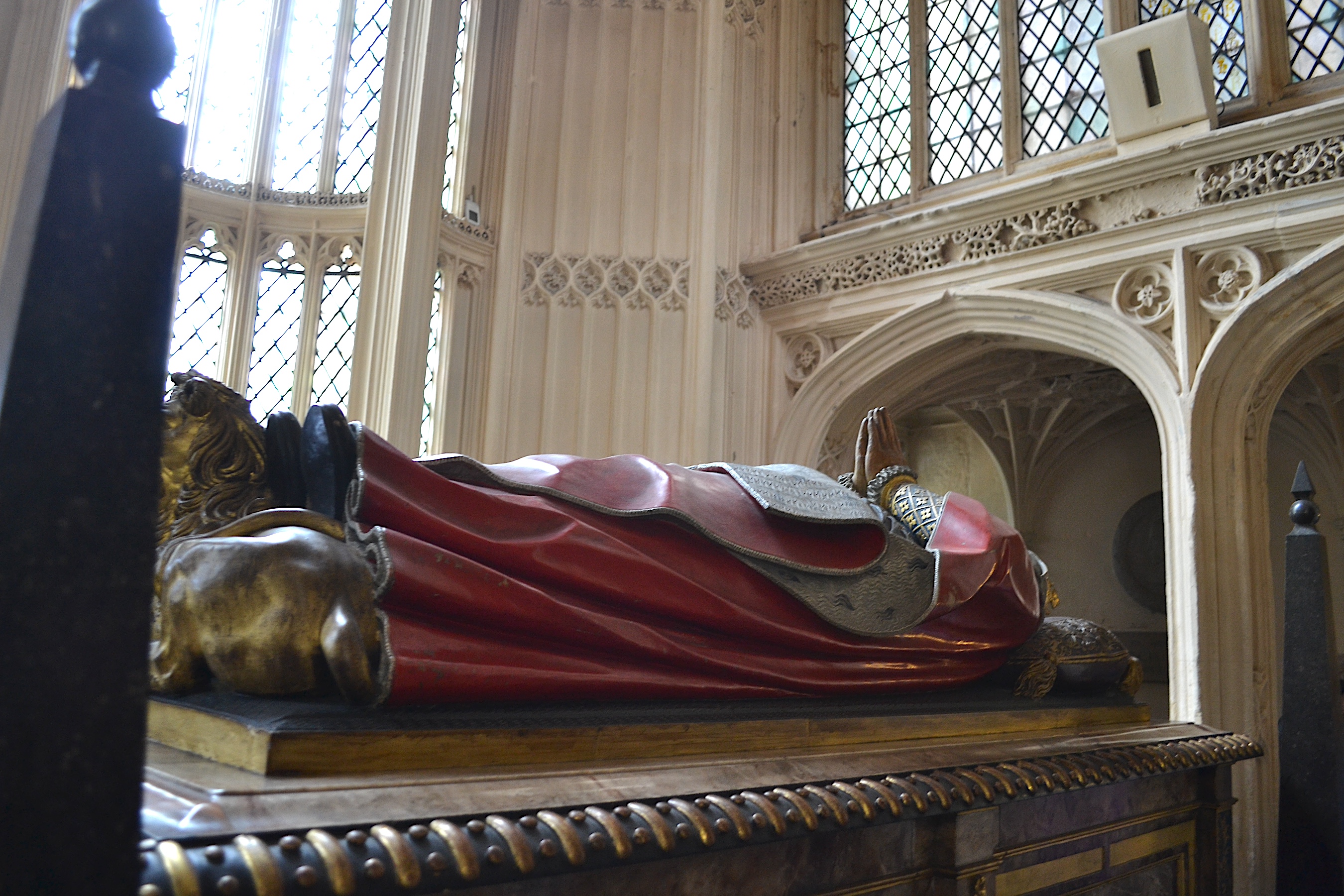
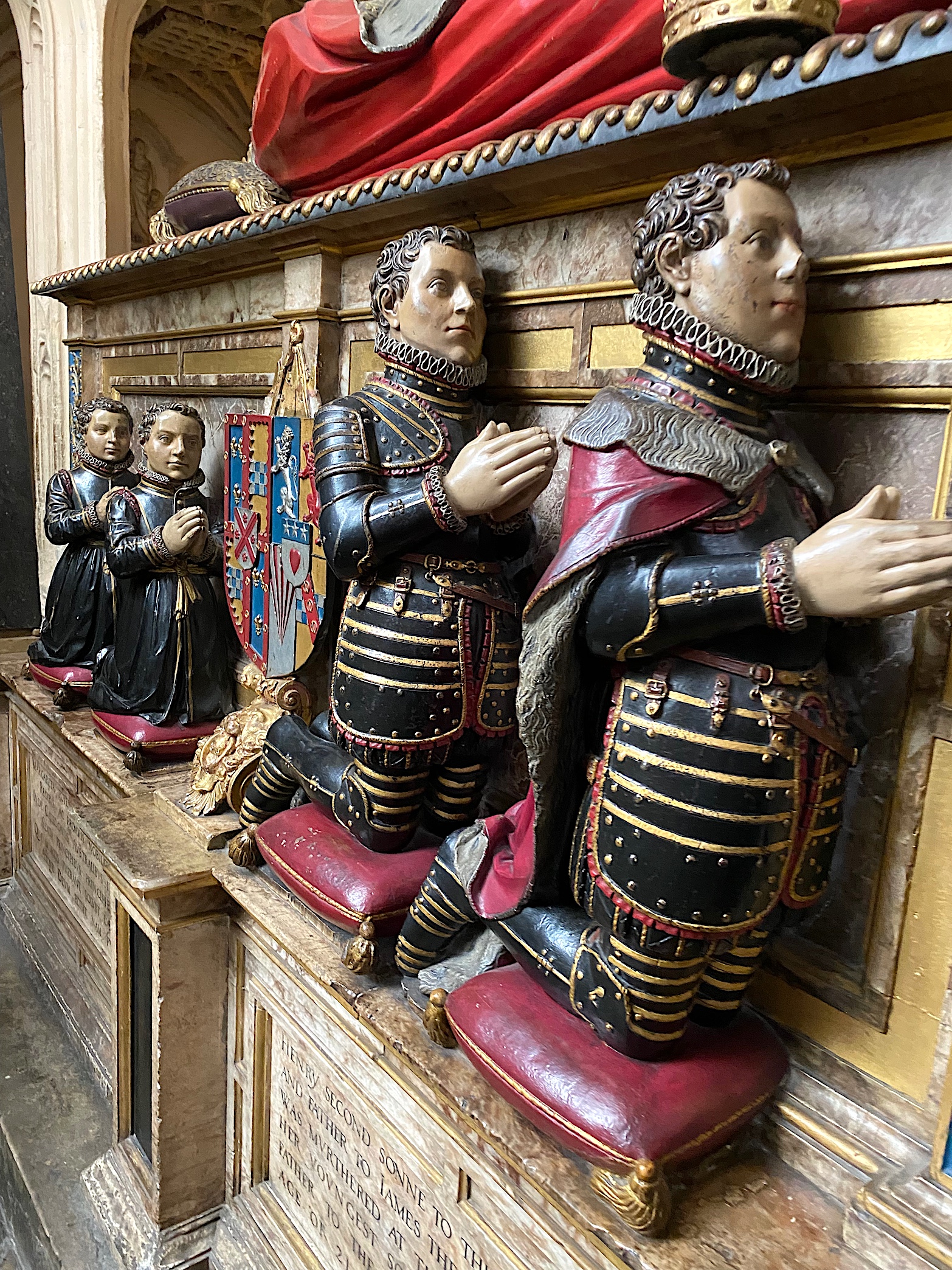
In my opinion, the monument to John Russell, and the one for his daughter Elizabeth (which is beside) it), are two of the most fascinating in the Abbey. They are located in the Chapel of St. Edmund.

The monument to John Russell (sometimes called Baron Russell) is stunning. All of the inscriptions were composed by his wife Elizabeth, except for one written by John’s son-in-law. They are in English, Latin, and Greek.

Born in 1553, John Russell was the son of Francis, second Earl of Bedford. John was summoned to Parliament in January 1581 as Lord Russell. He died on July 24, 1584.

Elizabeth, his wife, was born in 1528 and moved in exclusive circles. She was the daughter of Sir Anthony Cook (who tutored Edward VI) and widow of Sir Thomas Hoby. By her first husband, she had two sons and two daughters.

After Sir Thomas died in France, she commissioned Dutch sculptor William Cure to create a very handsome alabaster tomb at Bisham Church in Marlow on which repose the effigies Sir Thomas and his half-brother, Sir Phillip Hoby. This William Cure was the father of Cornelius Cure, who carved Queen Elizabeth I’s monument at Westminster Abbey. William Cure II was his grandson.

There’s a reason I’m mentioning all this that I’ll get to shortly.

She married John Russell on December 23, 1574 and had two daughters (Elizabeth and Anne), as well as a son Francis who died in infancy.

I have some issues with the dates. Elizabeth would have been 25 years John’s senior when they married. This would mean Elizabeth was having children in her late 40s. So I’m not at all sure if those dates are correct. Elizabeth is thought to have died in 1609 at age 81. She is interred at Bishan Church with her first husband.

The effigy at the feet of John Russell represents his son Francis, who died in infancy.

Here’s how the Westminster Abbey web page describes John Russell’s monument:

His large monument of alabaster and marble shows his effigy reclining in his ermine-lined red Parliamentary robes, with his head supported on his elbow. There are columns and many shields of arms (including those of Russell, De la Tour, Meschems, Herring, Froxmere, Wise, Sapcote, Semark and Cook). Two female bedeswomen support the achievement of arms. The monument was redecorated by order of the Earl of Bedford in the 19th century and the most recent re-painting was done in the 1960s.

“Bedeswoman” is from the Old English biddan, “to pray”; literally  ”a man of prayer”; and from the Anglo-Saxon bed), was generally a pensioner or almsman whose duty was to pray for his benefactor.

Two female bedeswomen support the achievement of arms.

The inscriptions were written by his John’s wife, Elizabeth, who was thought to be one of the most accomplished women of her day. One of them was written by their son-in-law. They are in English, Latin, and Greek.

There’s a reason Elizabeth chose this pose and it goes back to the Bisham Church monument she designed. The effigies of her first husband and his half-brother are situated in a very similar position. She was likely inspired by a monument she saw in the Celestine convent in Paris. I suspect Elizabeth had a hand in designing John’s monument, too. She was very much a hands on kind of woman.

John Russell looks a bit bored to me.

Before Elizabeth died in 1609, she designed another monument at Bishan Church that represents herself and her five children. The web site for Bisham Church describes it like this:

In the form of a tableau, we see her kneeling at a prayer desk. Behind her kneel her three daughters who predeceased her: Elizabeth Russell (daughter to Elizabeth and Lord John Russell, her second husband), Elizabeth Hoby and Anne Hoby. Lying beneath her is the effigy of her infant son Francis Russell, who sadly died shortly after birth. Facing her outside the canopy is her only surviving daughter, Anne. At the opposite end of the monument and outside the canopy are her two sons, Sir Edward Hoby and Sir Thomas Posthumous Hoby, the latter having been born in Paris shortly after the death of his father.
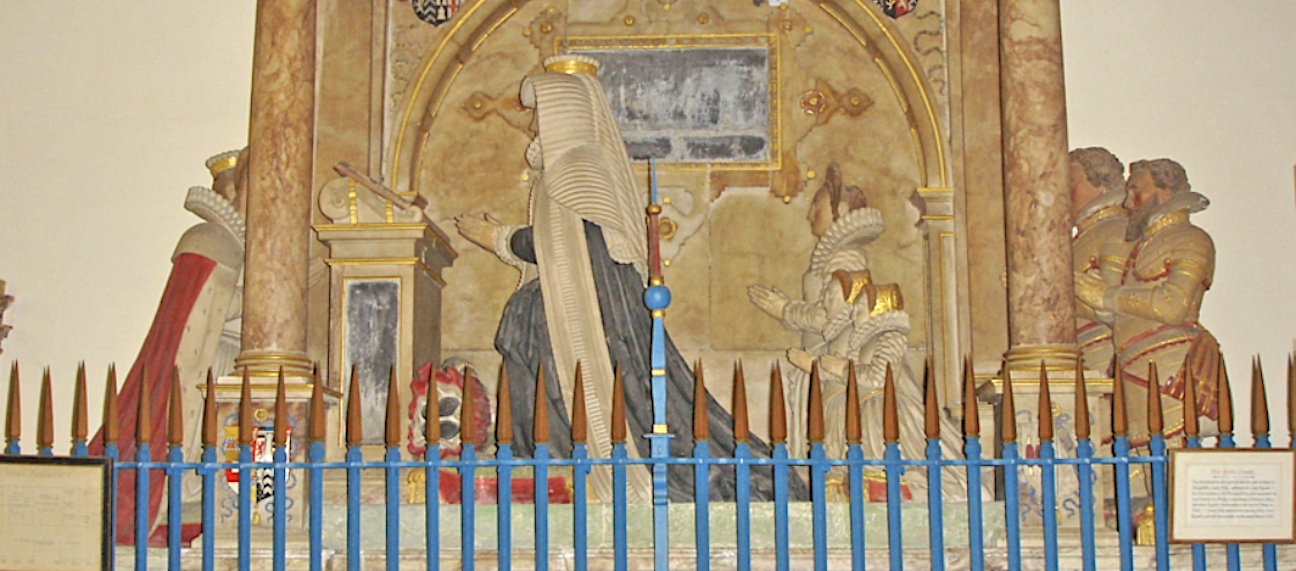
That’s Elizabeth Russell in the center in the blue gown with her five children kneeling behind her. I believe the Cures likely carved this one as well. (Photo source: www.bishanchurchfriends.org/monuments)

Back to Westminster Abbey. Let’s take a look at the monument to John and Elizabeth Russell’s daughter, Elizabeth. Notice she’s also resting her chin on her hand. And she’s got a skull under her foot!

In doing research for my blog post, I learned that Elizabeth has not only a statue (at the Abbey) at an effigy (at Bisham Church) in her honor.

Elizabeth was born in the precincts of London’s Westminster Abbey and baptized in the Abbey. Queen Elizabeth I and the Countess of Sussex were her godmothers and Robert Dudley, Earl of Leicester, her godfather. She was a maid of honor to the queen but died young of tuberculosis in 1601. We don’t know her exact age but she was unmarried.

Her monument consists of an alabaster and marble pedestal, on which is her statue, seated in a wicker chair with her right foot resting on a skull. As I mentioned, her head reclines on her right elbow and her left arm points down to the skull.

This led to the idea that she died by pricking her finger. But the skull is simply a symbol of mortality. The pedestal is decorated with ribbons, swags, ox heads and an eagle. Hers was the first memorial in England to depict a seated figure on a free-standing monument.

I like to think Elizabeth and Anne Russell were very close for Anne to have commissioned such a monument.

The Latin inscription can be translated:

“She is not dead, but sleepeth. Sacred to the happy memory of Elizabeth Russell, her afflicted sister Anne has erected this monument.”

Anne, her sister, married Henry Somerset, the first Marquees of Worcester, in 1600. Queen Elizabeth I, who had been close to their mother Elizabeth, attended the wedding. That’s only a year before Elizabeth (the sister) died. Anne had nine sons and four daughters with the Marquees, who was a prominent Royalist during the early years of the English Civil War.

The Talbots

Also located in the Chapel of St. Edmund is a large monument to Edward Talbot (1561-1618), the eighth Earl of Shrewsbury, and his wife, Jane (died 1626), the eldest daughter and co-heiress of Cuthbert, seventh Baron Ogle, by his wife, Catharine Carnaby. We don’t have an exact birth year for her but she did outlive her husband. The couple wed in 1583.

Chris took this photo of the jaw-dropping Talbot monument. Made of alabaster, it was completed by sculptor William Wright.

In 1616, Edward succeeded his brother Gilbert as eighth Earl of Shrewsbury. He was a member of Parliament for Northumberland and member of the Council of Wales. He died on Feb. 8, 1618.

A kneeling figure of a child, dressed in blue, is shown near the feet of the effigies. They had one son who predeceased his father so this is probably him although dressed as a girl, which was usual for small children at this period. There is no record of them ever having a daughter.

Although dressed like a girl, this figure likely represents a son the Talbots had that died.

After Edward died, Jane had the monument designed in his honor. She died in January 1626 and was interred with him.

Here’s a closer look at the Talbot effigies. Unlike Lord Russell’s, the Talbots are lying flat on their backs and looking up.

Edward’s effigy is attired in armor, with a talbot (a medieval hunting dog) at his feet. You can see it in the photo below. I’m glad the Abbey web page explained this because I wasn’t sure exactly what it was. Jane, who wears an ermine-lined red mantle, has a griffin at her feet.
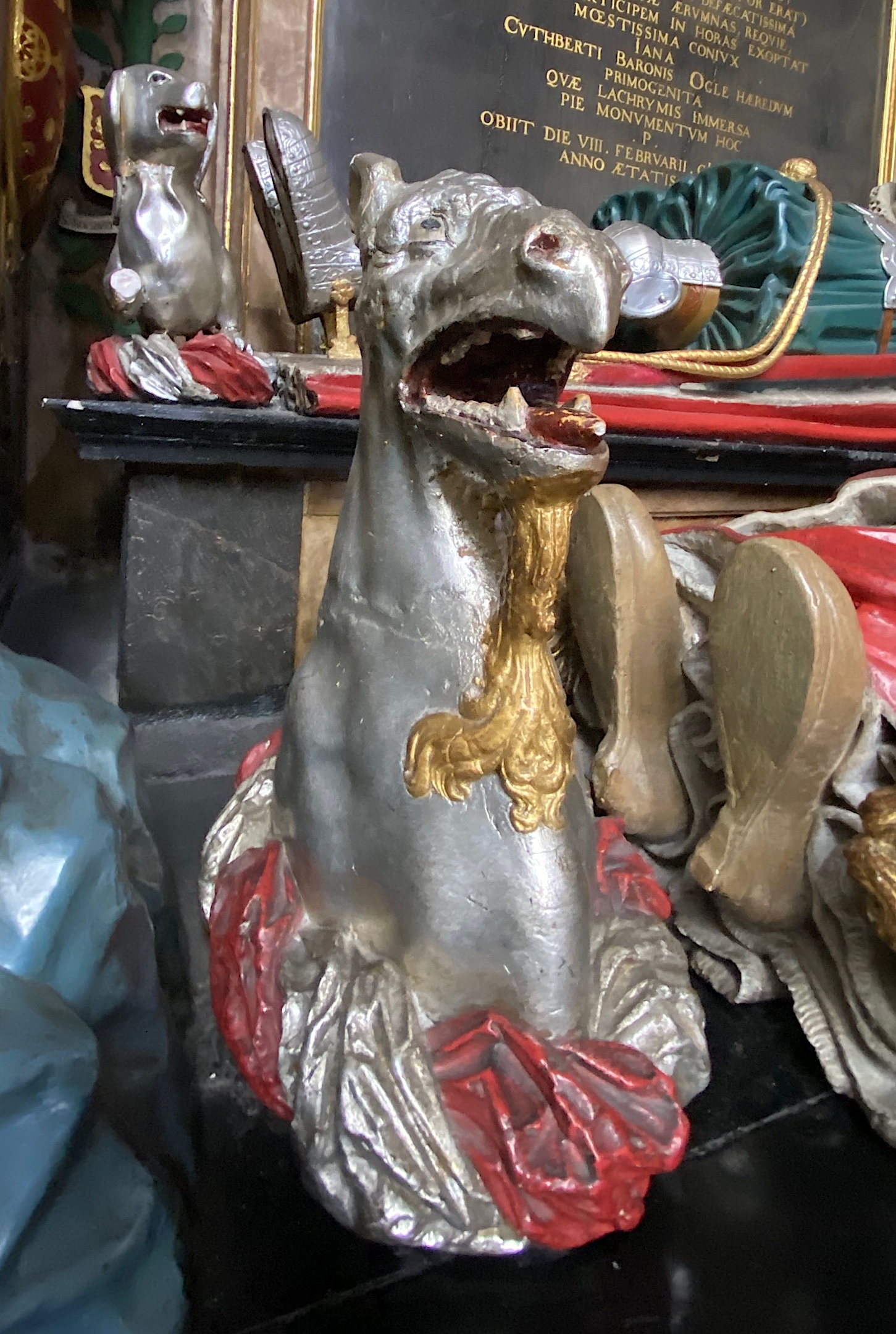
There always seems to be something interesting resting at the foot of these effigies. Here there’s a talbot (hunting dog) and a griffin.

The recess is ornamented with 13 shields of arms connected with the family, with names underneath. At the top of the monument is a large achievement of arms, with two talbot supporters and the motto Prest d’accomplir (ready to accomplish). The monument was repainted and missing hands replaced during the late 1950s cleaning of the Abbey.

Oliver Cromwell’s Brief Abbey Rest

The last person I’m going to talk about had a brief “rest” at the Abbey that only lasted a few years.

When we came upon a small marker in the Lady Chapel with his name on it, Chris and I looked at Grace (our lovely tour guide) with hopes of an explanation and she gave it.

I’m not going to give you a long-winded version of the history of the Reformation, you can find plenty of information on that elsewhere.
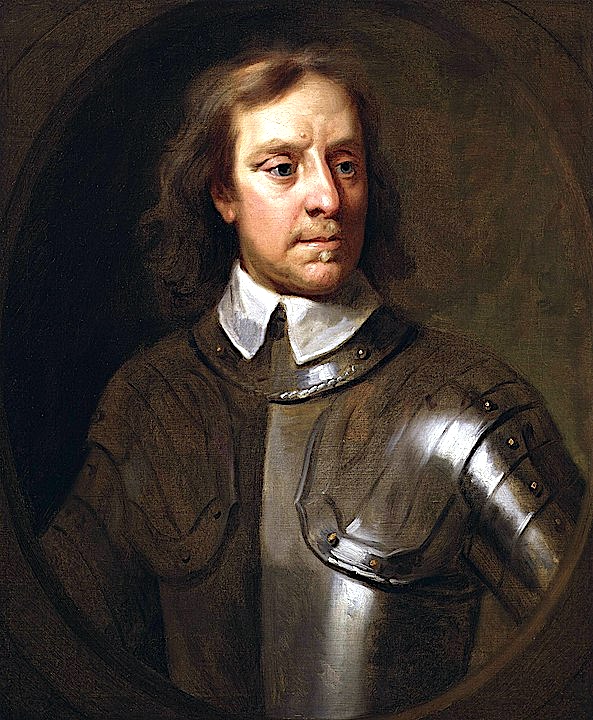
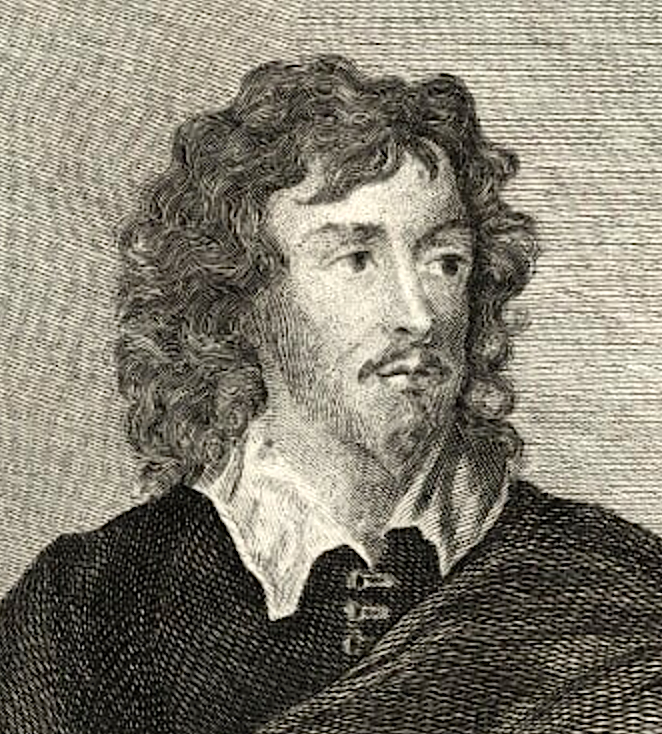
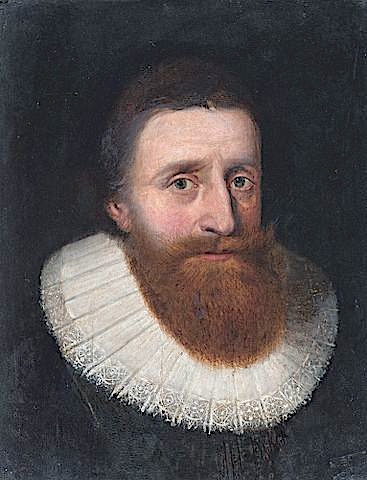
Portrait of Oliver Cromwell, painted by Samuel Cooper.

Oliver Cromwell (1599-1658) was a country squire and Member of Parliament for Huntingdon, and then for Cambridge. He became a Puritan and came to prominence while serving in the Parliamentary army fighting against the Royalists.

When he defeated Charles I, Cromwell had the king executed in 1649 and became Lord Protector of the Commonwealth of England, Scotland, and Ireland in 1653. Charles II fled across the Channel. This was the only time in English history that the monarchy had been ousted.

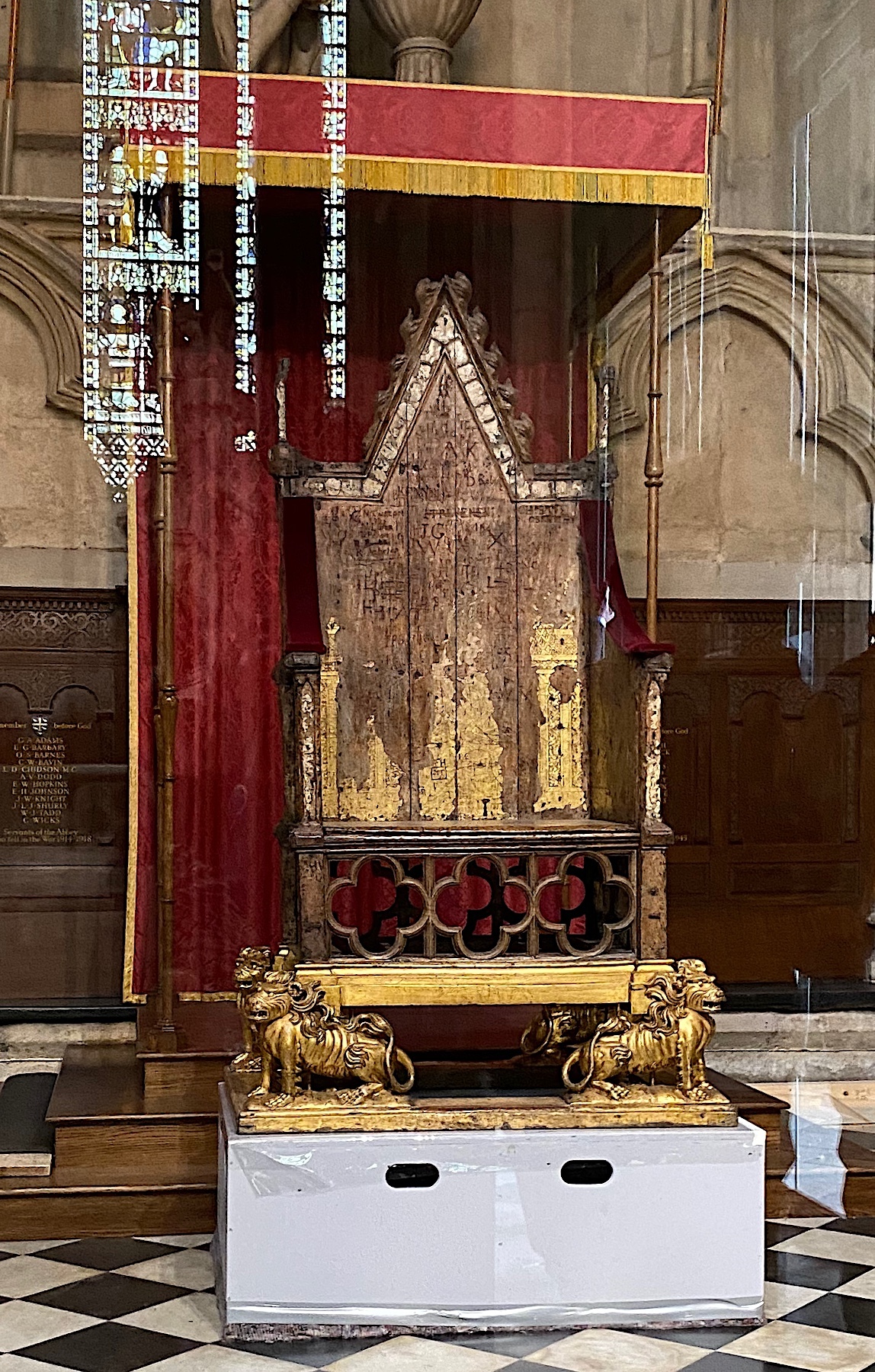
For his second investiture as Protector in 1657, the 14th-century Coronation Chair was taken from Westminster Abbey to Westminster Hall, and Cromwell sat in it arrayed in royal robes. After his death at Whitehall on Sept. 3, 1658, his son Richard, who had little interest in politics, gave up the government and lived abroad. This paved the way for the Restoration of Charles II to the throne in 1660.
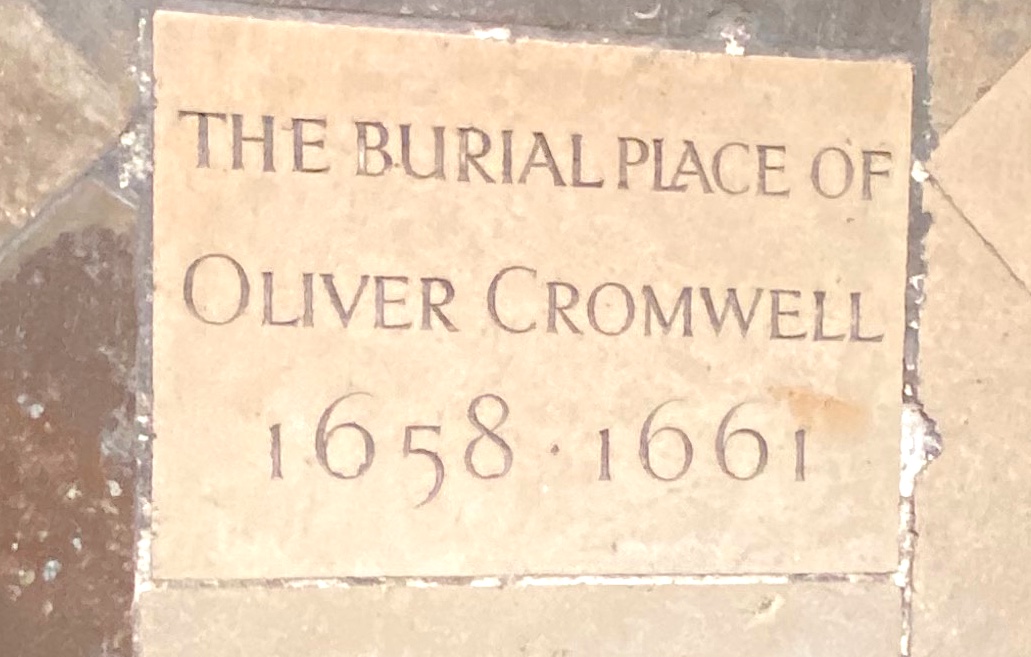
One might say this was the last span of years that Oliver Cromwell’s remains literally rested in peace. It was all downhill after that.

After being embalmed and lying in state for a few weeks, Cromwell was buried privately without ceremony (according to contemporary sources) in a vault at the east end of Henry VII’s chapel in the Abbey on the night of Nov. 10, 1658. But he didn’t stay there long. Charles II was out for revenge. The Westminster Abbey web page explains the gruesome activities like this:

When Charles II was restored to the throne, the House of Commons voted on Dec. 4, 1660 that the coffins of regicides Oliver Cromwell, Henry Ireton, and John Bradshaw should be dug up from the Abbey, drawn on a hurdle to Tyburn and the bodies hung up on the gallows there. So on Jan. 26, 1661 Cromwell and Ireton were removed and taken to the Red Lion Inn at Holborn, where they were joined a few days later by Bradshaw’s coffin (the delay was caused by the fact that Bradshaw’s body had not been embalmed like the others and smelt badly).

On January 30, the anniversary of the execution of Charles I, the hangings took place and then the heads were cut off and stuck on spikes outside Westminster Hall. The bodies were buried under Tyburn gallows (near the modern Marble Arch). Cromwell’s head is believed to [now] be buried at Sidney Sussex College [Cambridge].

There are a great many stories/theories concerning what exactly happened to Cromwell’s head over the years but that’s a rabbit hole you can go down on your own.

A fond farewell to Westminster Abbey…

As we made out way to the exit and bid goodbye to Grace, I felt exhilarated and exhausted at the same time. One of my biggest Bucket List items had finally been crossed off. I almost floated down the steps toward the obligatory Westminster Abbey gift shop.

As a taphophile, it will remain a highlight of my cemetery hopping career. I hope you enjoyed reading about it (all eight parts!).

Westminster Abbey 2023: Wandering Through Poet’s Corner, Part VII

Many thanks to the amazing Grace Barrett of Tours by Grace for leading us through Westminster Abbey!

This week, let’s explore that area of Westminster Abbey known as Poet’s Corner. More than 100 poets/writers are buried or have memorials there. Some of the memorial “squares” on the floor indicate where the person is actually buried if they are not interred in the Abbey. But not all of them.

There are also several clergymen and actors buried in this transept, and composer George Frederick Handel.

I’ll warn you that you’re going to see a lot of feet in these pictures simply because it was very crowded and it couldn’t be helped.

Poet’s Corner is in the eastern aisle, the ‘corner’, of the south transept, although over time graves and memorials have spread across the whole transept. Chris took this picture.

Westminster Abbey’s First Poet Interment

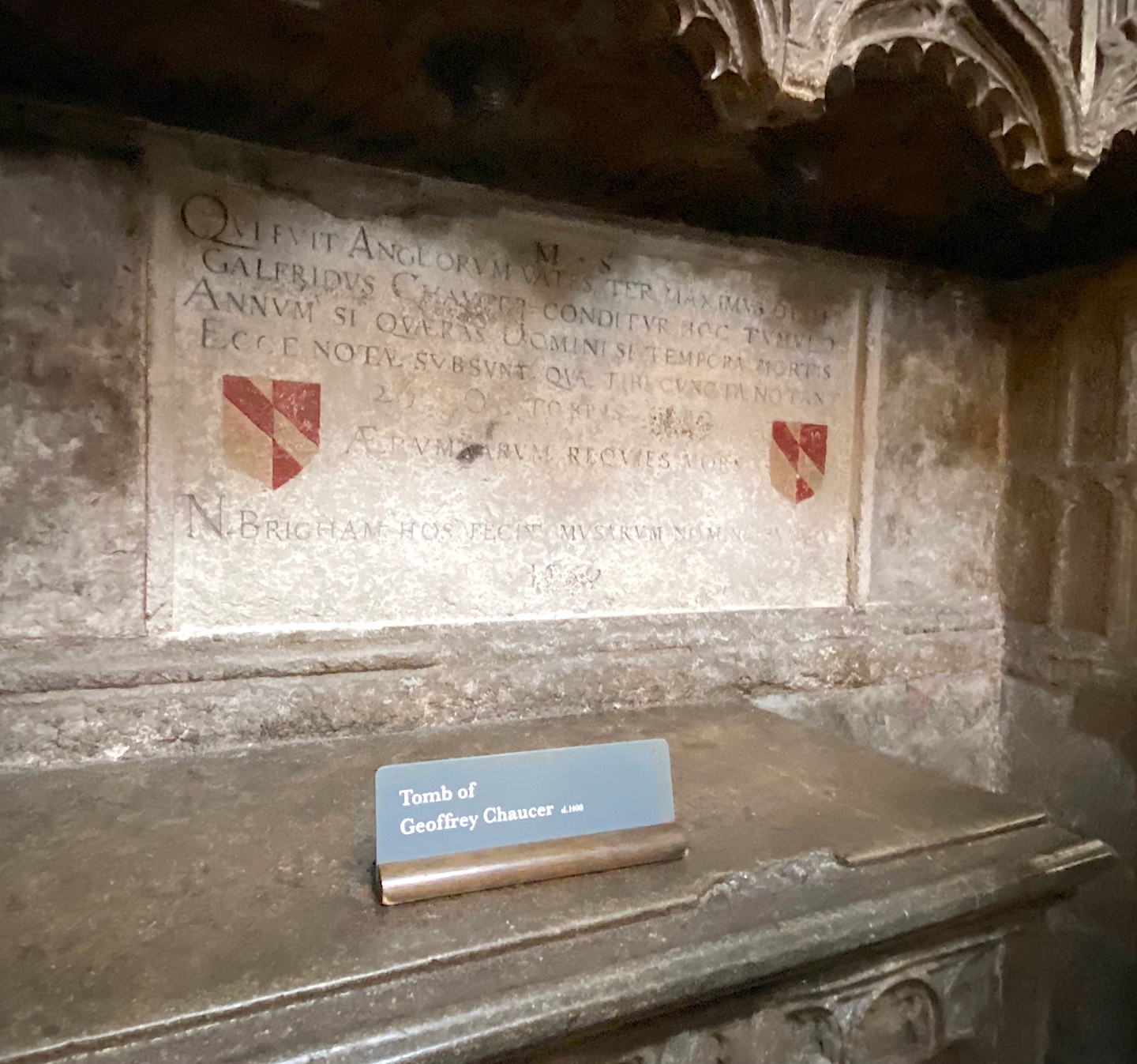
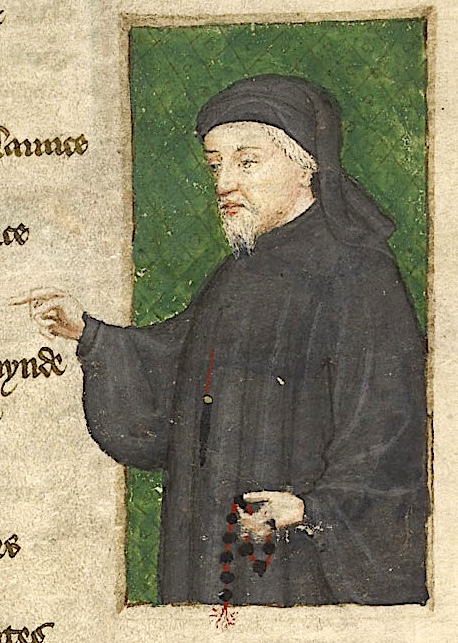
The first poet buried at Westminster Abbey in 1400 was Geoffrey Chaucer, author of “The Canterbury Tales”. However, it wasn’t due to his status as a writer but because because he was Clerk of the King’s Works. That means he organized most of King Richard II’s building projects.

Portrait of Chaucer by Thomas Hoccleve in the Regiment of Princes (1412), who claimed to have personally known Chaucer.

No major works were begun during his tenure, but Chaucer oversaw repairs on Westminster Palace, St. George’s Chapel, Windsor, and continued building the wharf at the Tower of London. Chaucer was also comptroller of the customs for the port of London from 1374 to 1386. To have had that job for 12 years indicates he was quite good at it.

Chaucer obtained the job of comptroller of the customs for the port of London, which he began on June 8, 1374. He continued in that role for 12 years, a long time in such a post at that time.

It would be 200 years later when Edmund Spencer (1553-1598) was interred at Westminster Abbey. He wrote “The Faerie Queen” for Queen Elizabeth I, one of the longest poems in the English language. He asked to be buried near Chaucer. I did not get a photo of his memorial, unfortunately.

So how does one get included in Poet’s Corner? The Deans of Westminster decide who receives a place based on merit, although they consult widely. Poets’ Corner proper is in the eastern aisle, the ‘corner’, of the south transept, though over time graves and memorials have spread across the whole transept.

Graham Jones designed a new window above Chaucer’s tomb in Poets’ Corner to allow memorials to poets and writers to be added to it in the future.

In the picture above that Chris took, you can see more recent memorials to Alexander Pope, Robert Herrick, A.E. Housman, Oscar Wilde, Christopher Marlowe, Fanny Burney and Elizabeth Gaskell. There is room for more to be added in the future. None of them are actually interred at Westminster Abbey.

Who’s Really Here?

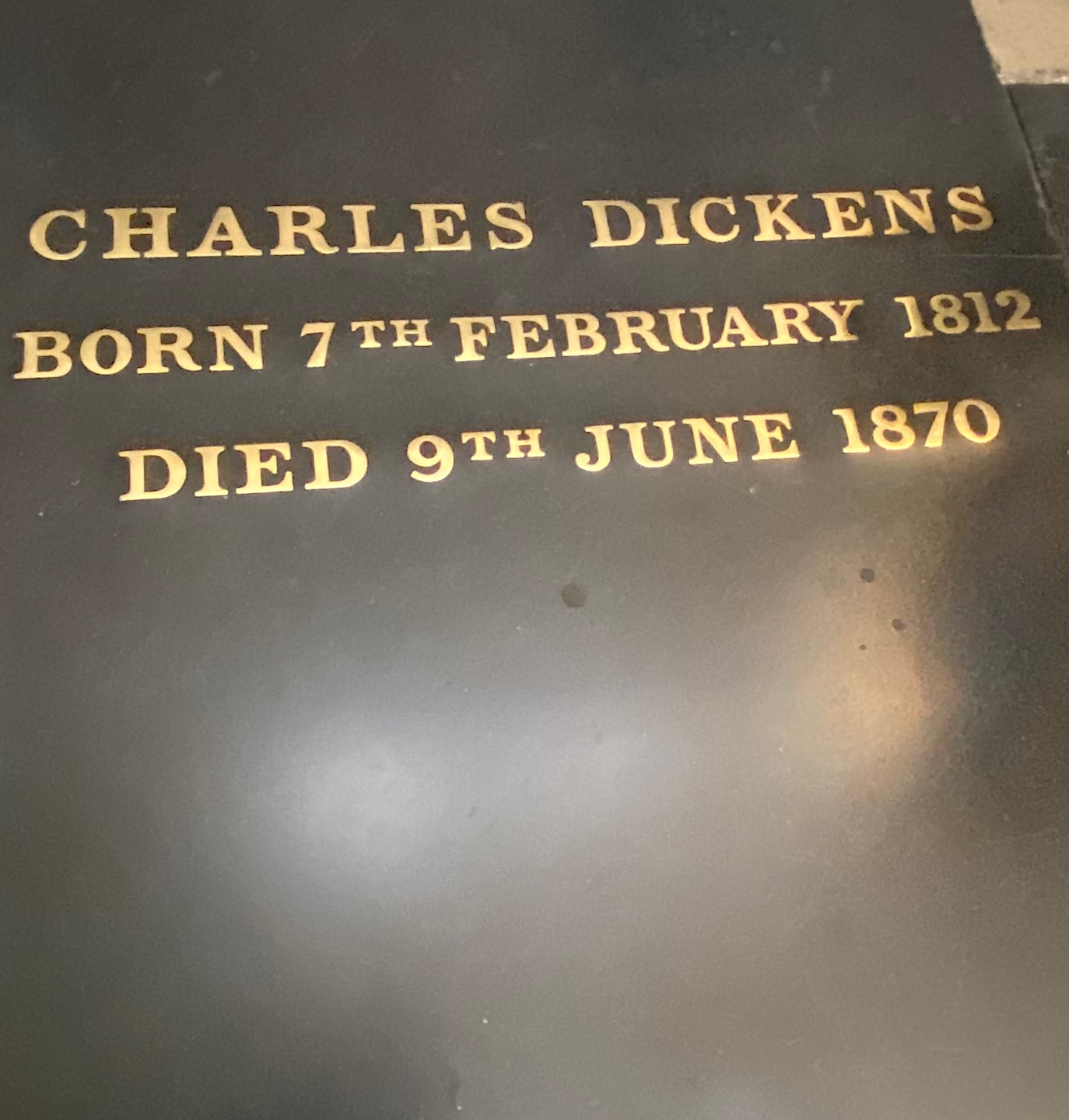
I’m glad you asked! I’m going to show you photos of memorials of those folks who are truly interred at the Abbey. It’s just a sampling, mind you. I’ve included some that stand out for various reasons. I’ve already shared the grave of Charles Dickens, so I won’t talk about him again.

A recording of Olivier reading an extract from Act 4 of Shakespeare’s Henry V was played during the service, the first time the voice of the deceased had been heard during their memorial service in the Abbey.

Actor Sir Laurence Olivier died on July 11, 1989 but his ashes were not buried there until Sept. 16, 1991, at a private ceremony. He was 82. A memorial service was held in the Abbey on Oct. 20, 1989.

A recording of Olivier reading an extract from Act 4 of Shakespeare’s Henry V was played during the service, the first time the voice of the deceased had been heard during their memorial service in the Abbey.

His memorial stone was unveiled on Sept. 23, 1991 by Sir John Gielgud. The stone of Westmorland green slate was cut by Ieuan Rees. Gielgud’s ashes (he died in 2000) were buried beside him. (See photo below.) Gielgud specifically requested that no memorial service be held for him.

The “OM” stands for Order of Merit.

Sir John Gilgud died on May 21, 2000 and was cremated at Oxford. He specifically requested that no memorial service be held for him.

Alfred, Lord Tennyson

At last an actual poet!

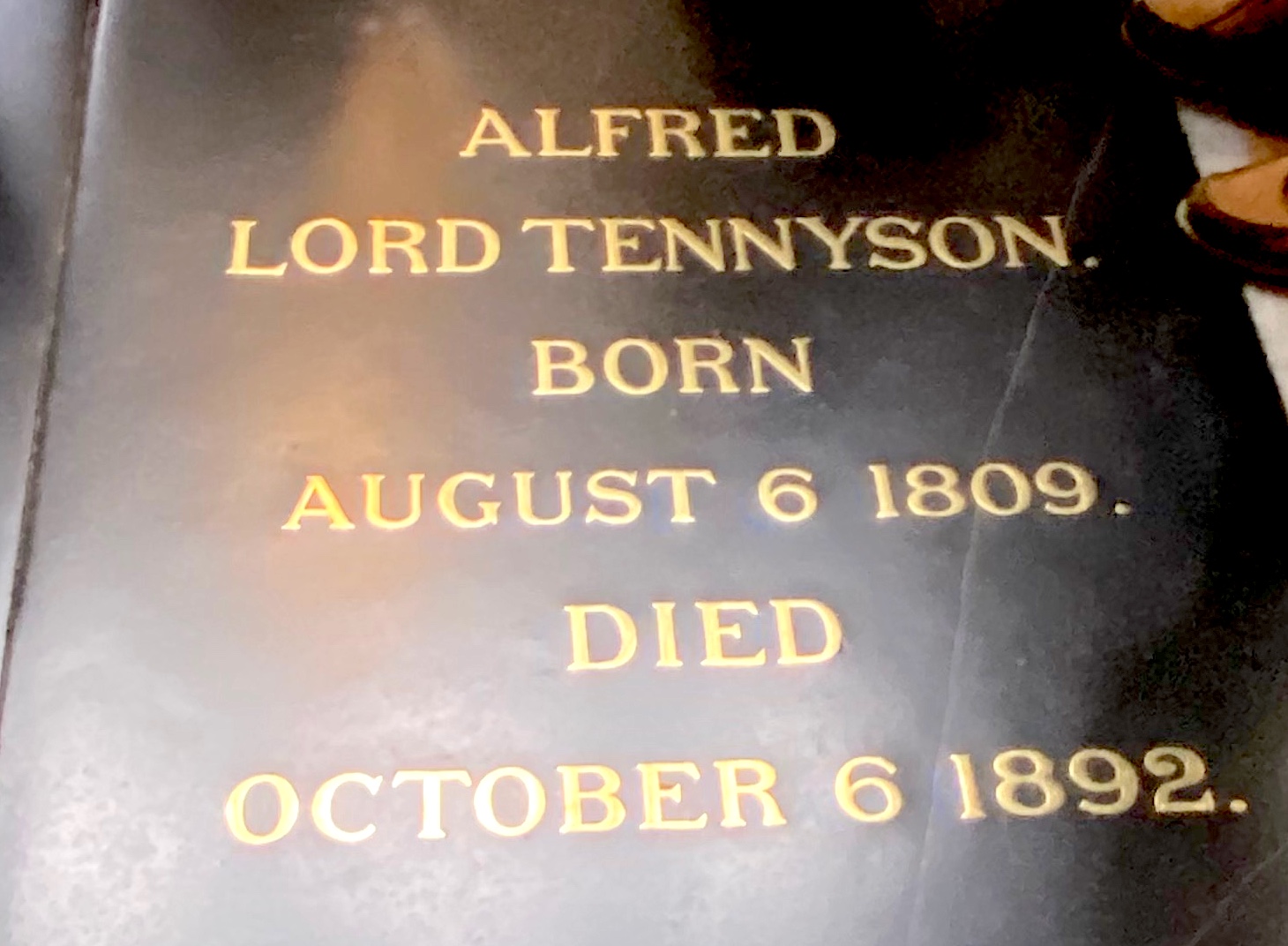
Alfred, Lord Tennyson, Poet Laureate, died on Oct. 6, 1892. On Oct. 11, his coffin was brought to Westminster Abbey and lay overnight in St. Faith’s chapel (just off the south transept). The chapel was hung with purple and the Union Flag covered the coffin. Queen Victoria’s tribute was a laurel wreath containing an inset lyre.

The funeral held the next day was attended by thousands of mourners. The Abbey organist, Frederick Bridge, set to music words from Tennyson’s poem “Crossing the Bar”. It’s one of my favorites and I see quotes from it on a number of grave markers I’ve photographed

In 1895, a bust of the poet, by Thomas Woolner, was placed on a pillar nearby. I didn’t get a picture of it but you can see it here.

Rudyard Kipling

Most people remember writer/poet Joseph Rudyard Kipling (1865-1936) because he wrote The Jungle Book in 1894. But he also wrote Plain Tales from the Hills, Soldiers Three, Kim, and Wee Willie Winkie.

His poems include “Mandalay” (1890), “Gunga Din” (1890), “The Gods of the Copybook Headings” (1919), “The White Man’s Burden” (1899), and “If—” (1910).

In 1907, Kipling was the first English writer to receive the Nobel Prize for literature. He was one of the first members of the Imperial (now Commonwealth) War Graves Commission. He died at age 70 on Jan. 18, 1936 after an operation for a perforated ulcer.

Rudyard Kipling was born in Bombay, India in 1907.

Thomas Hardy

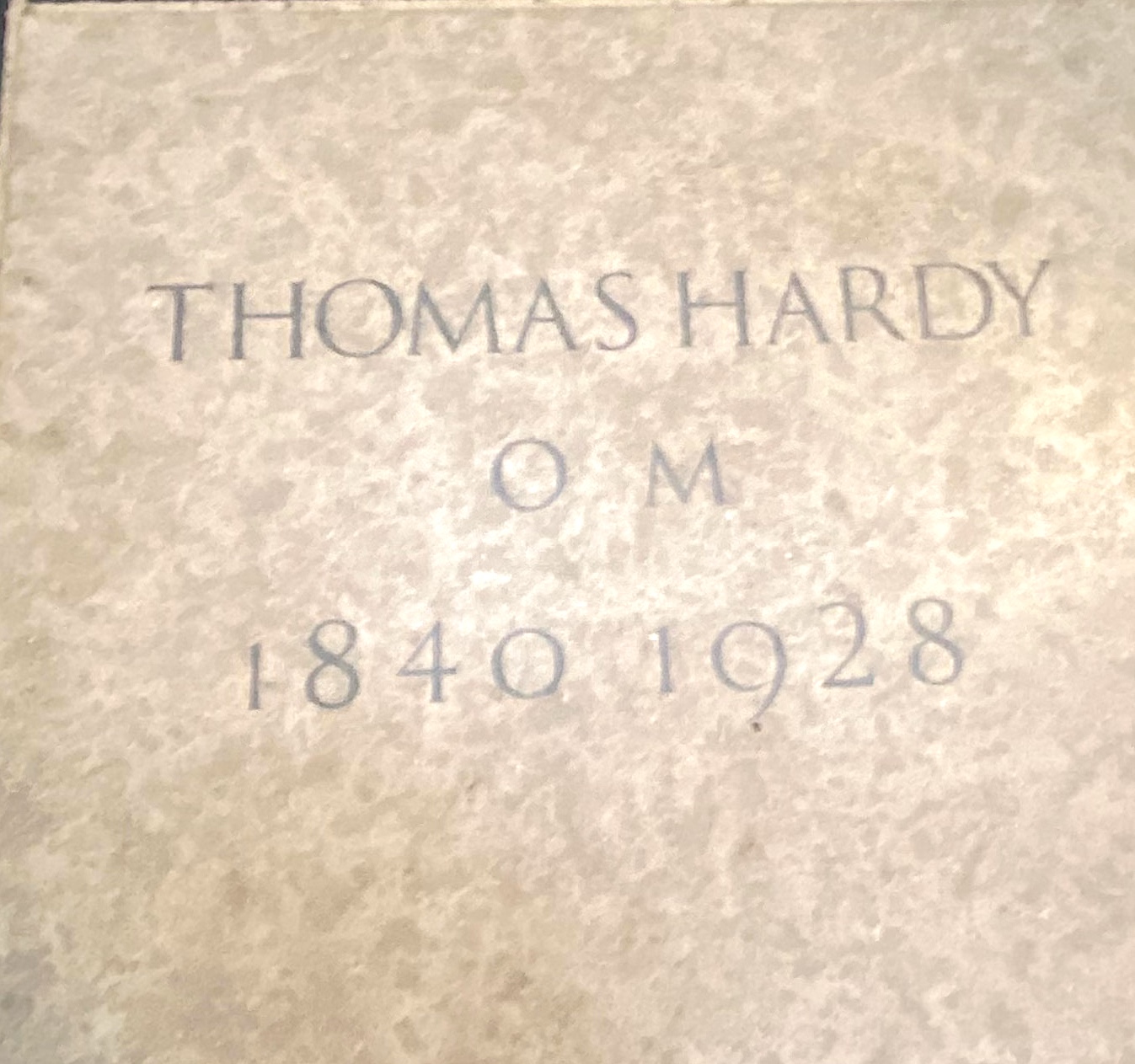
Located just below Kipling is the grave marker of author/poet Thomas Hardy (1840-1928). I imagine many people remember having to read his book Return of the Native in English back in high school

In my case, I started reading Hardy’s books out of curiosity as a teenager and fell in love with how he wrote. I’ve read every one of them. Many, such as Far from the Madd’ing Crowd, Tess of the D’urbervilles, Jude the Obscure, and yes, Return of the Native, have been made into films over the years.

Hardy’s “square” is located just below that of Rudyard Kipling.

Most of Thomas Hardy is interred at the Abbey, but not his heart.

Hardy’s funeral at the Abbey was on Jan. 16, 1928. It caused quite a stir because he’d wanted his ashes to be interred at Stinsford in the same grave as his first wife, Emma. His family and friends agreed. However, his executor, Sir Sydney Carlyle Cockerell, insisted that he be placed in Poets’ Corner. A compromise was reached whereby his heart was buried at Stinsford with Emma, and his ashes in Poets’ Corner.

I didn’t know this when I was reading his novels years ago, but there’s another reason I must have felt a kinship to Hardy. In the mid-1860s, he was in charge of the excavation of part of the graveyard at Old Church St. Pancras in London in the course of the construction of the Midland Railway’s London terminus, St. Pancras station. So he spent a lot of time in a cemetery just like me!

Samuel Johnson

Samuel Johnson (1809-1784) is not a name that might ring a bell to you but for English majors like me, it does. We have Johnson to thank for his great Dictionary of the English Language.

I studied Johnson while getting my master’s in English literature at the University of Georgia, and he led a rather roller coaster life of many ups and downs.

The inscription reads: “Samuel Johnson, Doctor of Laws, died 13 December in the year 1784, aged 75.”

After failing at being a schoolmaster, he came to London in 1737, with his friend David Garrick (the famous actor buried next to him). In 1735, he married widow Elizabeth Porter (she died in 1752). After periods of poverty and ill health, he made his name with essays entitled The Rambler and published his great Dictionary of the English Language in 1755. One of his last great works was The Lives of the Poets. He died on Dec. 13, 1784 at age 75.

In 1790, the Dean and Chapter gave permission for erection of a monument to Johnson but this was never actually put up. According to Westminster Abbey’s web page, a statue was erected at St. Paul’s cathedral in 1796 and this might have been the monument which had been intended for the Abbey.

Later on in the day that we visited Westminster Abbey, we visited the crypt at St. Paul’s Cathedral (which I will be writing about later). I got to see the very monument they mentioned (pictured below).

This statue of Samuel Johnson at St. Paul’s Cathedral may have been meant for Westminster Abbey.

George Frederick Handel

I certainly can’t leave out German-born composer George Frederick Handel (1685-1759).

Born at Halle in Saxony in 1685, Handel made his first visit to London in 1710. In 1727, he was naturalized as an Englishman by Act of Parliament.

Handel was blind at the time of his death in 1759.

Handel started three commercial opera companies to supply the English nobility with Italian opera. In 1737, after a physical breakdown, he transitioned to English choral works. After his success with Messiah (1742), he never composed an Italian opera again.

His orchestral Water Music and Music for the Royal Fireworks remain popular today. One of his four coronation anthems, Zadok the Priest, has been performed at every British coronation since 1727.

Monument to Geore Frederich Handel, created by Louis Francois Roubiliac).

Three days before he died in 1759, Handel signed a codicil to his will saying he hoped to be buried in the Abbey and desired that his executor erect a monument for him. He got his wish. The Abbey’s web site describes it like this:

On the wall above his grave is a fine monument by the sculptor Louis Francois Roubiliac (with the same inscription as on the stone but with the dates in Roman numerals). The life-size statue, unveiled in 1762, is said to be an exact likeness as the face was modeled from a death mask. Behind the figure, among clouds, is an organ with an angel playing a harp. On the left of the statue is a group of musical instruments and an open score of his most well-known oratorio Messiah, composed in 1741. Directly in front of him is the musical score I know that my Redeemer liveth. The index finger of his left hand had been missing for a long time and a new one has recently been sculpted to replace it.

Who’s NOT Buried at Westminster Abbey (But Has a Memorial)

You can get a glimpse of a bust of Samuel Johnson in this picture (lower left) of this wall of poets/playwrights. He’s the only one in that group interred at Westminster Abbey.

Notably, Shakespeare is buried at Holy Trinity Church, Stratford upon Avon in Warwickshire. Robert Burns is buried in St Michael’s churchyard, Dumfries, Scotland. Poet John Keats died of tuberculosis in Rome in 1821 and was buried in the Protestant cemetery there. Poet Percy Shelley died in 1822 in Italy, drowned while sailing and his body washed ashore at Viareggio. His ashes were placed in the Protestant cemetery in Rome.

Shakespeare, Burns, Keats, Shelley, Austen, Thomson, and Southey are not interred at Westminster Abbey. But Samuel Johnson is.

Author William Makepeace Thackeray (1811-1863), best known for his novel Vanity Fair, is not buried at Westminster Abbey. But he has a bust done by sculptor Carlo, Baron Marochetti. A petition to the Dean of Westminster for permission to erect a memorial was signed by Charles Dickens and many other authors and artists of the day. The monument was paid for in 1865.

Vanity Fair author William Thackeray (1811-1863) is buried at Kensal Green Cemetery in London.

Thackeray is actually buried in Kensal Green cemetery in London.

There are many, many more poets/composers/playwrights/artists and such that I could talk about with memorials at the Abbey, but you can look them up if you’re curious.

Next week, I will try to wrap things up at the Abbey with Part VIII, but there are no guarantees.

Author/theologian C.S. Lewis is probably best known for his Narnia series of books. This is a memorial stone unveiled at the Abbey 50 years after his death in 2013. He is buried in the cemetery at Holy Trinity Church in Headington, Oxford. We did visit his grave earlier in the week and I’ll write about it later.

Westminster Abbey 2023: On Top of the World with Britain’s Brightest Science Stars, Part VI

Many thanks to the amazing Grace Barrett of Tours by Grace for leading us through Westminster Abbey!

I’m sure many people have a favorite monument/memorial at Westminster Abbey. There are so many that made my own jaw drop. But I think you’d be hard pressed to not find yourself in a bit of awe when gazing up at the monument to British mathematician, physicist, astronomer, alchemist, theologian, and author Sir Isaac Newton.

If you asked the average person on the street, they might say “Oh, he’s the guy who discovered gravity.”

However, there was clearly much more to the man than that. His work Principia Mathematica (1687) laid the framework for the Scientific Revolution of the 17th century.

Born in 1642, Sir Isaac Newton did a lot more than just “discover” gravity. (Photo Source: Artist Godfrey Kneller, 1689)

More Than Gravity

Born on Christmas Day in 1642 in Lincolnshire, England, Isaac Newton’s father (a farmer) was also named Isaac Newton. He died three months before his son entered the world. His mother, Hannah Ayscough, remarried when little Isaac was three and she went to live with her new husband, the Rev. Barnabas Smith. Isaac was left in the care of his maternal grandmother, Margery Ayscough (née Blythe). Despite his mother’s wish that he become a farmer, Isaac was destined for a different path in life.

Newton attended the King’s School in Grantham before enrolling at the University of Cambridge’s Trinity College in 1661. While there, he became interested in the work of René Descartes. When the Great Plague closed Cambridge in 1665, Newton went home and began working out his theories on calculus, light, and color. His farm was the setting for the supposed falling apple that inspired his work on gravity.

I read that while the part where he was actually hit on the head by it isn’t true, the part about watching an apple falling from a tree inspired his thoughts on gravity was based in real events.

Isaac Newton dispersing sunlight through a prism, engraving after a picture by J.A. Houston, published around 1879.

In 1666, Newton experimented with light, and found that different colors had different refractions. He began lecturing on this topic in 1670.

Newton published his most famous book, Principia Mathematics, in 1687, while he was a mathematics professor at Trinity College, Cambridge. In the Principia, Newton explained three basic laws that govern the way objects move. Newton also discovered diffraction, which led him to enter the field of physics.

He also established a new field in mathematics known as calculus, although the German Gottfried Leibniz was working on these ideas at the same time. His work has greatly contributed in the areas of science and mathematics making him one of the most influential scientists in human history and one of the greatest mathematician of all time.

Elected a Fellow of the Royal Society in 1672, Newton served as its president from 1705 to 1727. He became Master of the Mint in 1699 and was knighted in April 1705.

Photo of Sir Isaac Newton’s death mask.

A lifelong bachelor, Newton died at Kensington on March 20, 1727 and was buried in Westminster Abbey on March 28. His body lay in state in the Jerusalem Chamber and his coffin was followed to its grave by most of the Fellows of the Royal Society. The Lord Chancellor, the Dukes of Montrose and Roxburgh and the Earls of Pembroke, Sussex, and Macclesfield were pall bearers. He was the first scientist to be so honored at the Abbey.

Newton’s Monument

Newton’s monument stands in the nave against the choir screen, to the north of the entrance to the choir. In the photo below, which Chris took, Newton’s monument is to the left. The one on the right is for James Stanhope (who died in 1721), a politician, soldier, and diplomat. I was so fixated on Newton’s monument that I didn’t even take any picture of poor Stanhope’s equally stunning one.

My eyes were immediately drawn to the monument for Sir Isaac Newton on the left side.

Both monuments were executed by the sculptor Michael Rysbrack (1694-1770) to the designs of the architect William Kent (1685-1748). Newton’s was unveiled in 1731 while Stanhope’s was erected in 1733.

Poet Alexander Pope wrote an epitaph for Newton but this was not allowed to be put on the monument in the Abbey. “Nature and Nature’s laws lay hid in night: God said, Let Newton be! and all was light”.

It’s hard to not be blown away by Sir Isaac Newton’s grand monument.

I think Westminster Abbey’s web page can describe what’s going on in terms of symbols better than I can:

The monument is of white and grey marble. Its base bears a Latin inscription and supports a sarcophagus with large scroll feet and a relief panel. The relief depicts boys using instruments related to Newton’s mathematical and optical work. One has a telescope, one is looking through a prism and another is balancing the Sun and planets on a steel yard. Others depict Newton’s activities as Master of the Mint (producing coin of the realm) – the figures carry pots of coins and an ingot (bar) of metal is being put into a furnace.

Above the sarcophagus is a reclining figure of Newton, in classical costume, his right elbow resting on several books representing his great works. They are labelled (on the fore-edges) ‘Divinity’, ‘Chronology’, ‘Opticks’ [1704] and ‘Philo. Prin. Math’ [Philosophiae Naturalis Principia Mathematica, 1686-7)]. With his left hand he points to a scroll with a mathematical design shown on it (the ‘converging series’), held by two standing winged boys.

The painting on this scroll had been erased or cleaned off in the early 19th century and was re-painted in 1977 from details in Newton’s manuscripts. The background is a pyramid on which is a celestial globe with the signs of the Zodiac, of the constellations, and with the path of the comet of 1680. On top of the globe sits a figure of Urania (the muse of Astronomy) leaning upon a book. On either end of the base is his coat of arms, two shinbones in saltire, within a decorative cartouche.

Michael Rysbrack, who executed Newton and Stanhope’s monuments, put his name on his work.

In Newton’s later years, his niece Catherine Barton Conduitt and her husband, John, lived with him. It was John Conduitt who commissioned the Newton monument. He drew a sketch of what he had in mind and gave it to Kent to design.The monument originally stood out against the flat front of the choir screen, but was enclosed within the present decorative arch when Edward Blore re-modeled the screen in 1834.

I haven’t read (or seen the movie) Dan Brown’s best-selling book “The DaVinci Code” but apparently Newton’s monument plays an important role in the plot and the word “apple” turns out to be part of it.

Newton also has a stone in the floor nearby as well. This Latin inscription can be translated as: “Here lies that which was mortal of Isaac Newton.”

I have no doubt countless people have unwittingly trod upon Sir Isaac Newton’s stone over the years.

Stephen Hawking

Fast forward to recent times and an equally ground-breaking scientist was interred at Westminster Abbey. While he doesn’t have a huge monument like Newton, his ashes are interred near him.

Professor Stephen Hawking (1942-2018) attended school in St. Albans and continued on to Oxford, and later Cambridge. While in his 20s, he was diagnosed with motor neuron disease. He first married Jane Wilde in 1965 with who he had three children, and the couple later divorced. He later married Elaine Mason in 1995 and they divorced in 2007.

Stephen Hawking was a groundbreaking cosmologist. (Photo Source: NASA)

Hawking became a research fellow at Cambridge and started his work on black holes. He was elected to the Royal Society when he was 32, and in 1979 became Lucasian Professor of Mathematics at Cambridge University, a post also held by Newton. His best known work is “A Brief History of Time”. He died on March 14, 2018 at age 76.

The Caithness slate stone was designed and made by John Maine and the letter cutter was Gillian Forbes.

Stephen Hawking’s stone is made of Caithness slate from Scotland.

The Westminster Abbey web page describes it thus:

The stone depicts a series of rings, surrounding a darker central ellipse. The 10 characters of Hawking’s equation express his idea that black holes in the universe are not entirely black but emit a glow, that would become known as Hawking radiation. In this equation the T stands for temperature; the h for Planck’s constant which is used to understand parts of quantum mechanics; c stands for the speed of light; 8Pi helps us to grasp its spherical nature; G is Newton’s constant to understand gravity; M stands for the mass of the black hole and k stand for Boltzmann’s constant, which is the energy of gas particles.

Charles Darwin

I’ll finish up with a world-famous naturalist, geologist, and biologist, Charles Darwin (1809-1882). Simply put, many think of him as the person who first truly wrote about evolution. Darwin is buried in the north aisle of the nave of Westminster Abbey, near Newton and Hawking.

Born in Shrewsbury, England on Feb. 12, 1809, Charles Darwin was the son of Robert Waring Darwin and Susannah Wedgwood Darwin, daughter of Josiah Wedgwood (of English china fame).

This photo of Charles Darwin is likely from around 1854.

Darwin studied with his brother Erasmus at Edinburgh University in Scotland but was not keen on the idea of following in his father’s footsteps as a doctor. At Cambridge, he became interested in natural history and sailed on the ship HMS Beagle in 1831 to South America and the Galapagos islands.

In 1839 he married his cousin Emma Wedgwood and they went to live at Downe, a small village in Kent. “On the Origin of Species” was published in 1859 and he continued working although his health was often poor.

I’m sorry to say that this was the best photo I have of Charles Darwin’s stone.

Darwin died on April 19, 1882. His body lay overnight in the Abbey, in the small chapel of St. Faith, and on the morning of April 26, his coffin was escorted into the Abbey. Pallbearers included Sir Joseph Hooker, Alfred Russel Wallace, James Russell Lowell (U.S. ambassador), and William Spottiswoode (president of the Royal Society).

The burial service was held in the Lantern. Chief mourners then followed the coffin into the north aisle of the Nave where Darwin was buried next to the eminent scientist Sir John Herschel.

His simple gravestone is made of pale Carrara marble.

You can look forward to Poet’s Corner next time in Part VII.

This is a memorial stone placed in 1969 for British poet, Lord Byron (1788-1824). He’s actually buried buried in his family vault at Hucknall Torkard in Nottinghamshire, near Newstead. The Dean of Westminster refused his burial in the Abbey.

Westminster Abbey 2023: The Work of Carvers Hubert Le Sueur, Nicholas Stone, and Cornelius and William Cure, Part V

Many thanks to the amazing Grace Barrett of Tours by Grace for leading us through Westminster Abbey!

When last I posted, I was still at Westminster Abbey and sharing the graves royals that got the “not so royal” treatment. The last monument I shared was for a non-royal named Ludovic Stewart, who isn’t known for much at all.

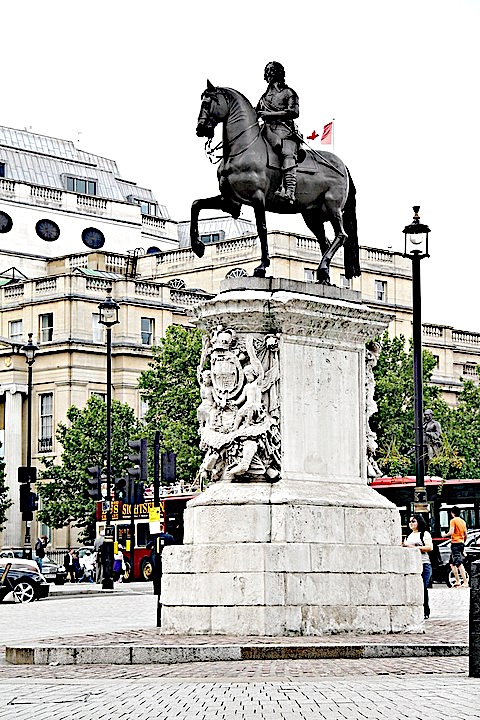
Stewart’s monument was created by Hubert Le Sueur (1580-1658), a French sculptor who trained with Renaissance artist Jean de Boulogne (known better as Giambologna) in Florence, Italy. Hubert moved to England and spent most of his career there, providing monuments, portraits, and replicas of classical antiquities for the court of Charles I.

A student of Giambologna, Hubert Le Sueur was a French sculptor who spent much of his life in England.

If you find yourself in London’s Trafalgar Square, you’ll see the statue he did of Charles I in 1633, when it was originally commissioned by Charles I’s Lord Treasurer Sir Richard Weston for his house Mortlake Park, Roehampton. The statue was later erected in Trafalgar Square (on the site of Eleanor Cross) in 1674.

This highly influential equestrian statue, the first of its kind in England, was originally commissioned in 1630 by Charles I’s Lord Treasurer Sir Richard Weston.

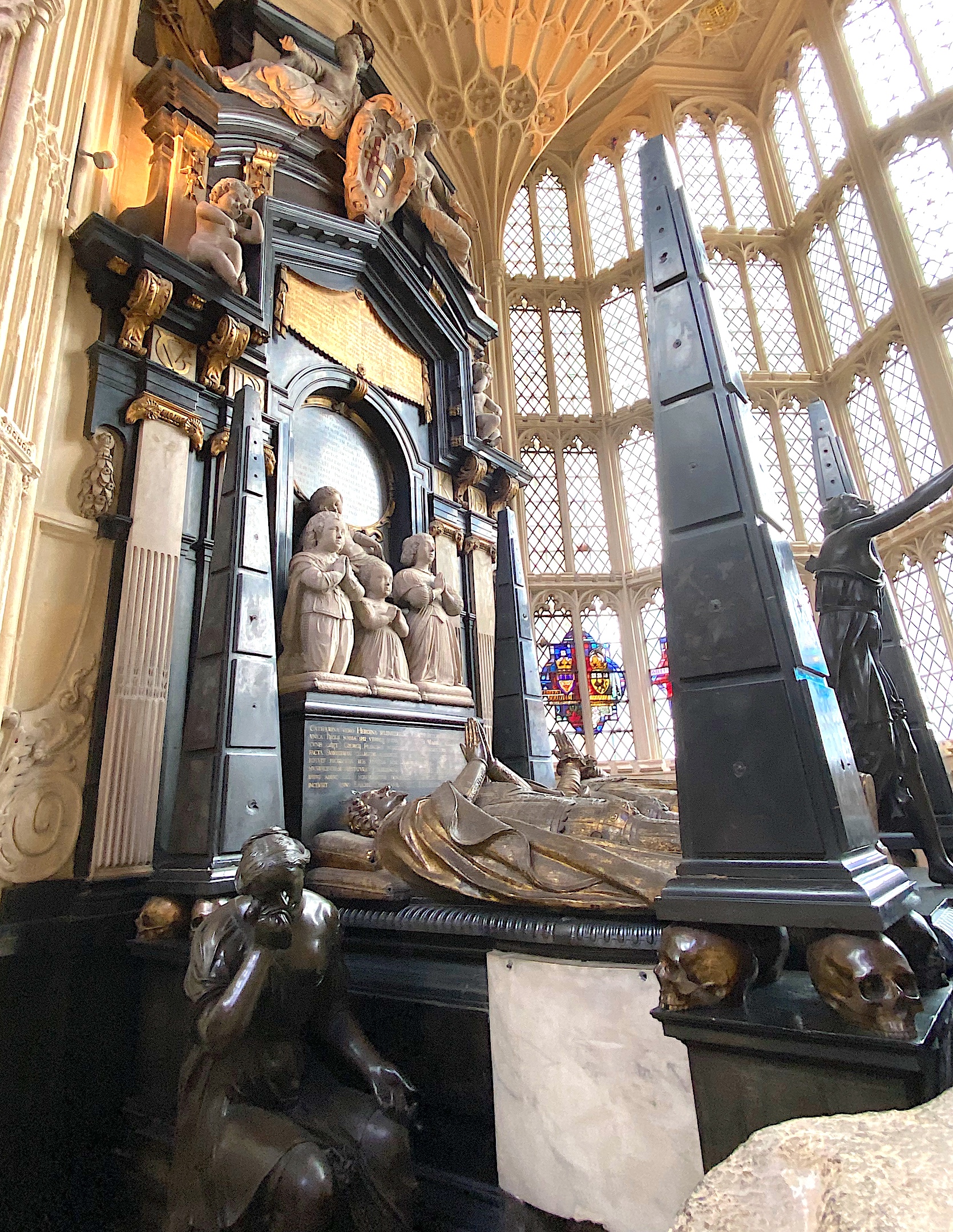
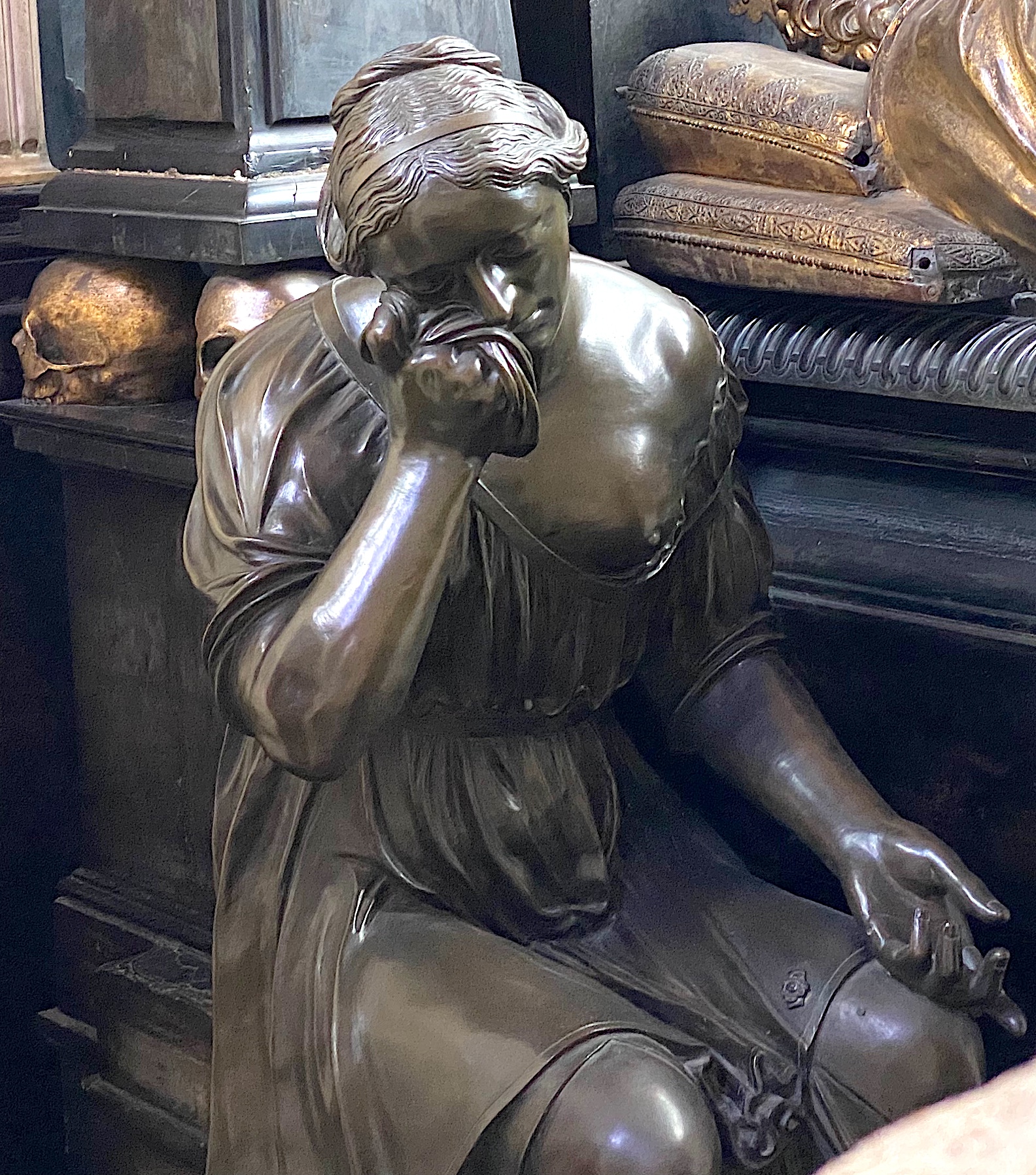
I was interested in Le Sueur because he did another memorial at Westminster Abbey that became one of my favorites. The monument to George and Katherine Villiers is stunning. It features some similar motifs as the one he did for Ludovic Stewart, such as weeping ladies and toothy skulls.

George Villiers, Duke of Buckingham

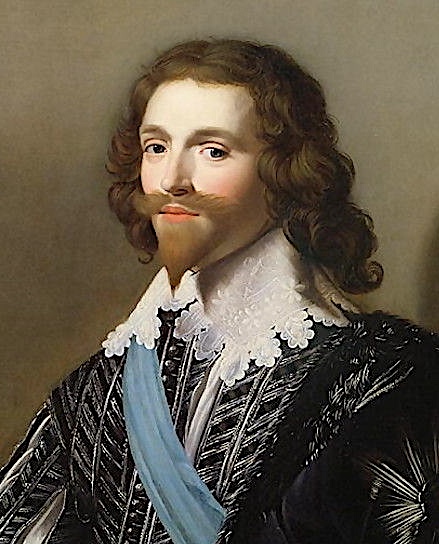
George Villiers, the first Duke of Buckingham, born in 1592, was a favorite of James I and Charles I. He rose to power quickly, but the results of his erratic counsels made him unpopular with the people, if not the king.

Portrait of George Villiers, the first Duke of Buckingham, painted by Gerrit Van Honthorst. He was assassinated in 1628.

On the eve of leading an expedition for the relief of La Rochelle in France, he was assassinated on Aug. 23, 1628 at Portsmouth by disgruntled soldier John Felton. Villiers’ mother, Mary, had such a strong premonition about his death that she was reportedly calm when she was told about it.

Before I knew who this was made for, I thought it has to be for a member of royalty.

Charles I ordered the Duke’s burial in the chapel (previously reserved for those only of royal descent) but with little pomp for fear of public backlash. The Duke was buried at night on Sept. 18, 1628.

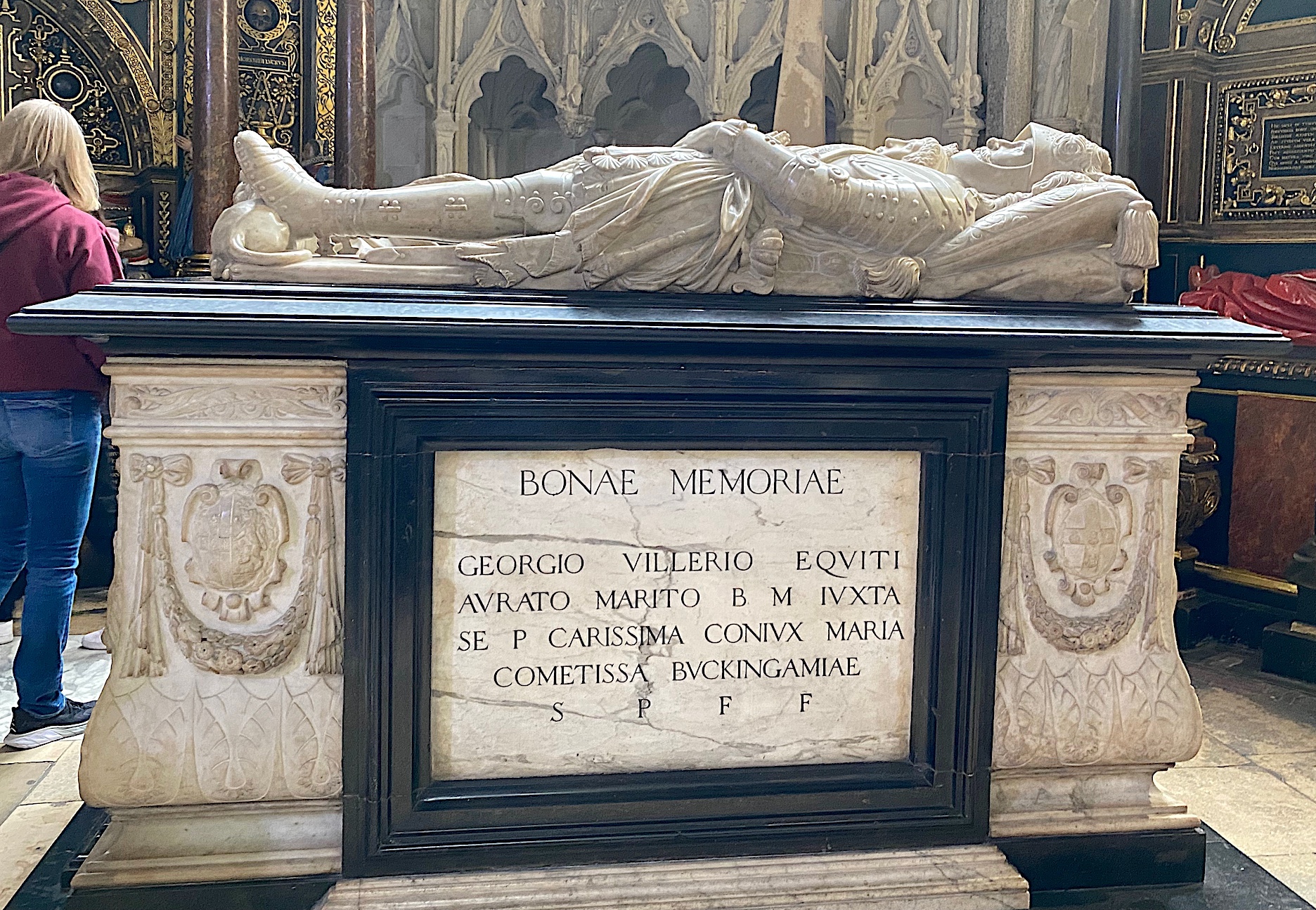
The Duke’s wife, Duchess Katherine (Manners), erected the large monument of black/white marble and bronze in 1634. Her effigy is shown beside him but she was actually buried at Waterford in Ireland (she died Nov. 3, 1649). Her second husband was Randal MacDonnell, the first Marquess of Antrim.

Hubert Le Sueur’s memorials tended to feature weeping female mourners.

The gilded bronze effigy of the Duke shows him in monogrammed plate armor while the Duchess is shown in an embroidered dress, ruff, and mantle, both wearing coronets. At their feet is a figure of Fame although it has lost its trumpet.

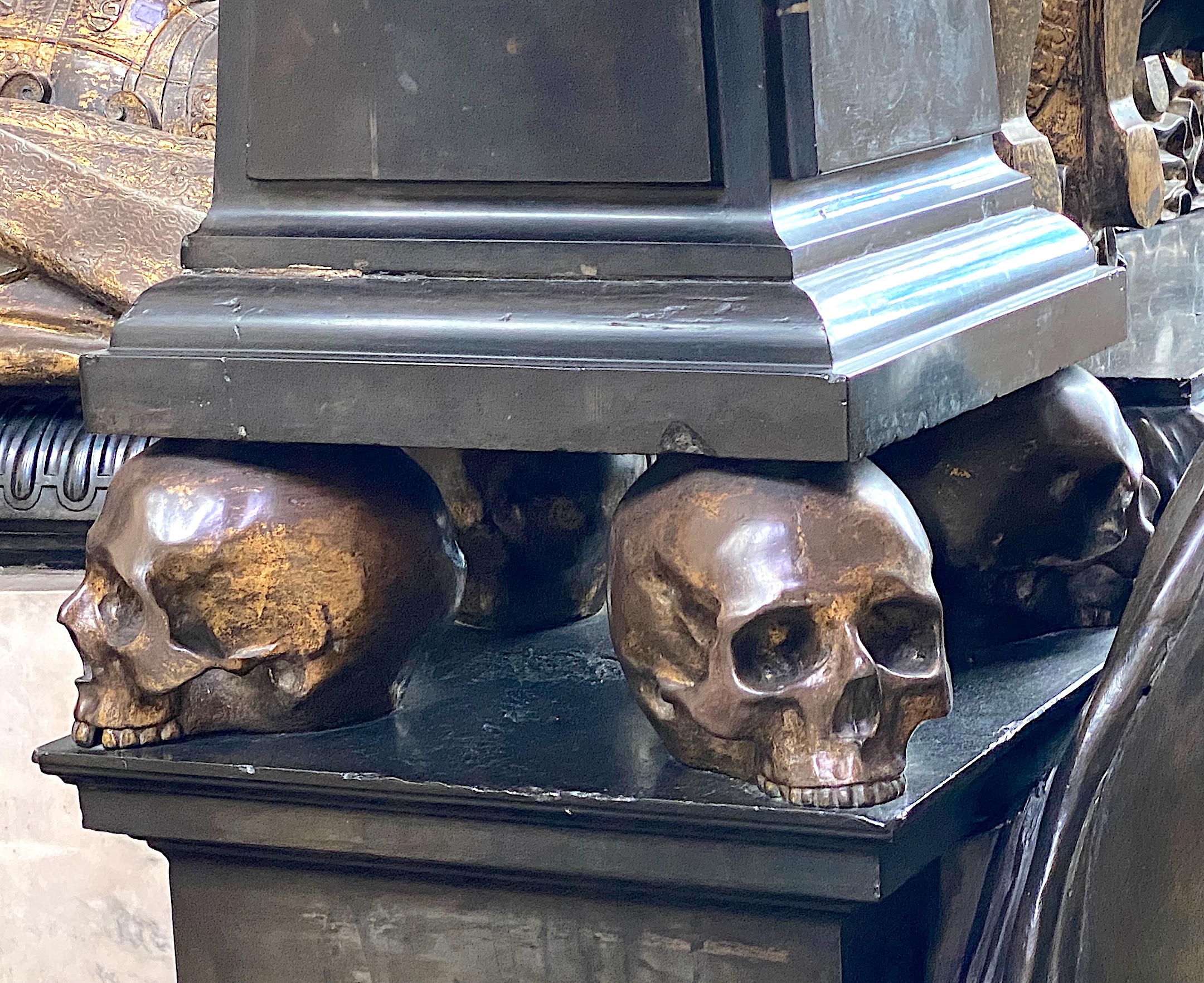
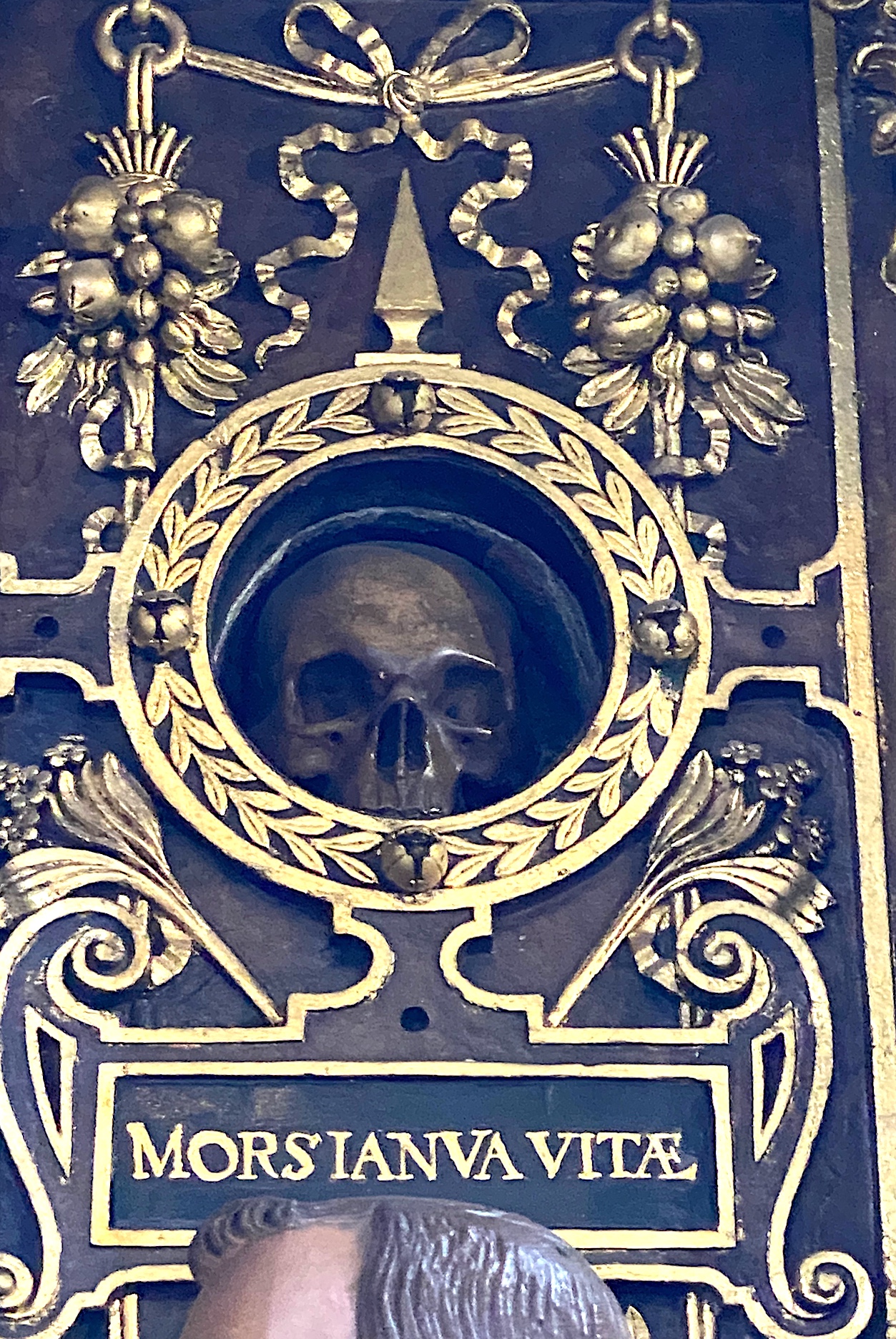
Le Sueur was fond of putting skulls into his works.

At each corner is a black marble obelisk supported on four skulls with bronze mourning figures of Pallas, Benevolence, Neptune, and Mars.

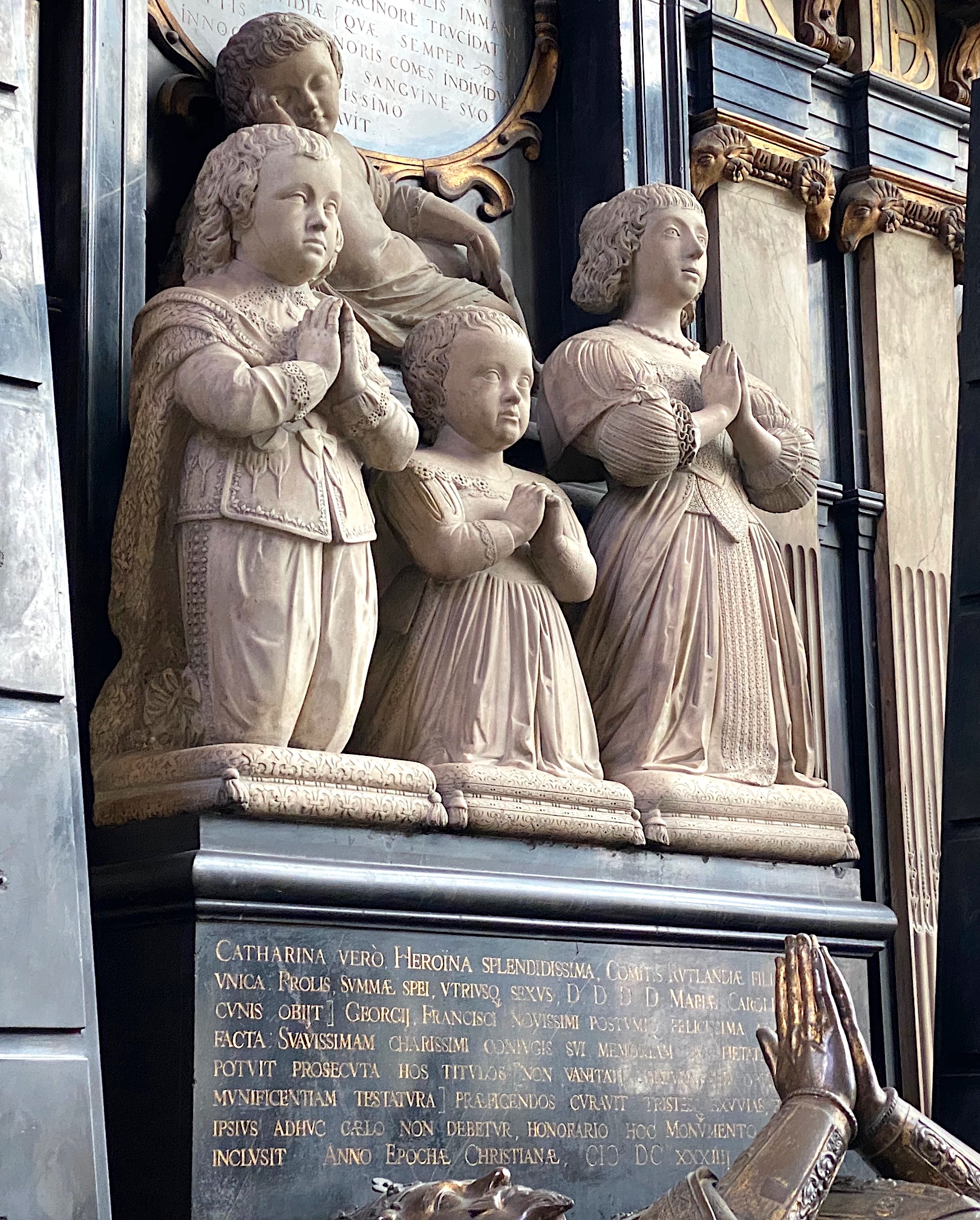
I think, however, one of the most poignant motifs in the monument is that of the Duke and Duchess’ children.

Small statues, by sculptor Isaac Besnier, represent four of their children including Lord Francis Villiers (1629-1648), a posthumous child killed fighting the Parliamentary forces and is buried in the Buckingham vault. The other children buried in the Abbey are Charles (1625-1627), George (second Duke of Buckingham), and Mary, Duchess of Richmond.

These kneeling statues represent the four children of the Duke and Duchess of Buckingham.

Sir George Villiers and Mary, Countess of Buckingham

If you want a glimpse of the Duke’s parents, you can find them (or rather one of them) across the way in the Chapel of St. Nicholas in the Lady Chapel.

A sheep farmer, Sir George was the son of William Villiers and his wife Colett (Clarke). Serving as a sheriff of Leicestershire, he was knighted in 1593 and served as a Member of Parliament.

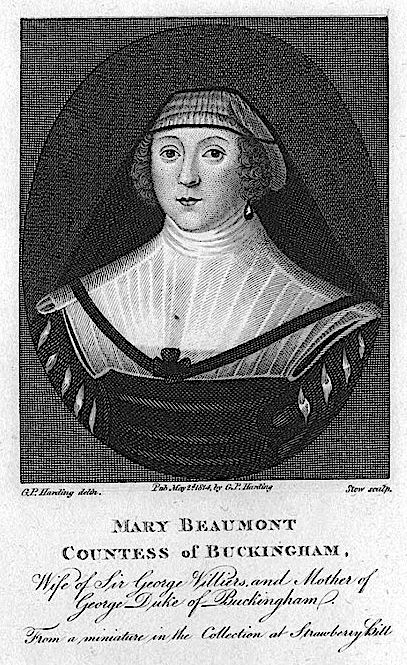
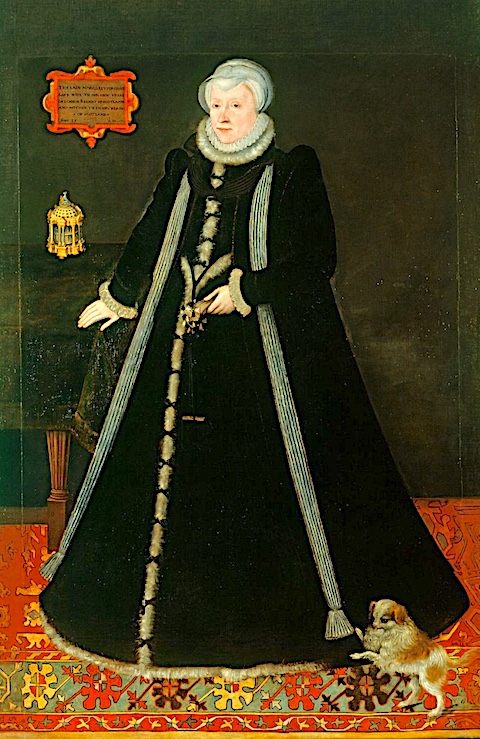
Portrait of Mary Beaumont, Countess of Buckingham. She was the daughter of Anthony Beaumont of Glenfield, Leicestershire, a direct descendant of Henry de Beaumont, and his wife Anne Armstrong, daughter of Thomas Armstrong of Corby.

He had four daughters and two sons with his first wife Audrey. He married next his cousin Mary, daughter of Anthony Beaumont, and had four children that included George, the aforementioned first Duke of Buckingham. Mary was created Countess of Buckingham in her own right in 1618, and married secondly Sir William Raynor and last, Sir Thomas Compton.

While Sir George has an effigy, he was actually buried on Jan. 5, 1606 at St Denys, Goadby in Leicestershire, near his residence.

Sir George died on Jan. 4, 1606 at age 61. Although he has an effigy, he’s actually buried at St. Denys, Goadby, in Leicestershire near his home.

The Westminster Abbey web page describes the monument like this.

On the altar chest, he is represented partly in plate armor with a plumed helmet, wearing trunk breeches and a sash on which are depicted shells. His feet rest on a lion. His wife has her head on embroidered cushions with cherub head tassels and wears an ermine lined robe, coronet and jewelled necklace with a pendant cross. She has a lion at her feet also. At each end of the monument chest are heraldic achievements with initials SGV and CMB at the corners. It was made in 1631 at the request of the Countess by sculptor Nicholas Stone who was paid 560 pounds for it. The carvers of the arms were Anthony Goor and Harry Akers.

I have a little bit of information on Nicholas Stone at the end of this post.

A closer view of Sir George and his wife, Mary.

Mary died on April 19, 1632 and was buried a few days later in the chapel. Although she married twice after Sir George’s death, it was he that she wanted to be buried with after she passed away.

Mildred and Anne Cecil

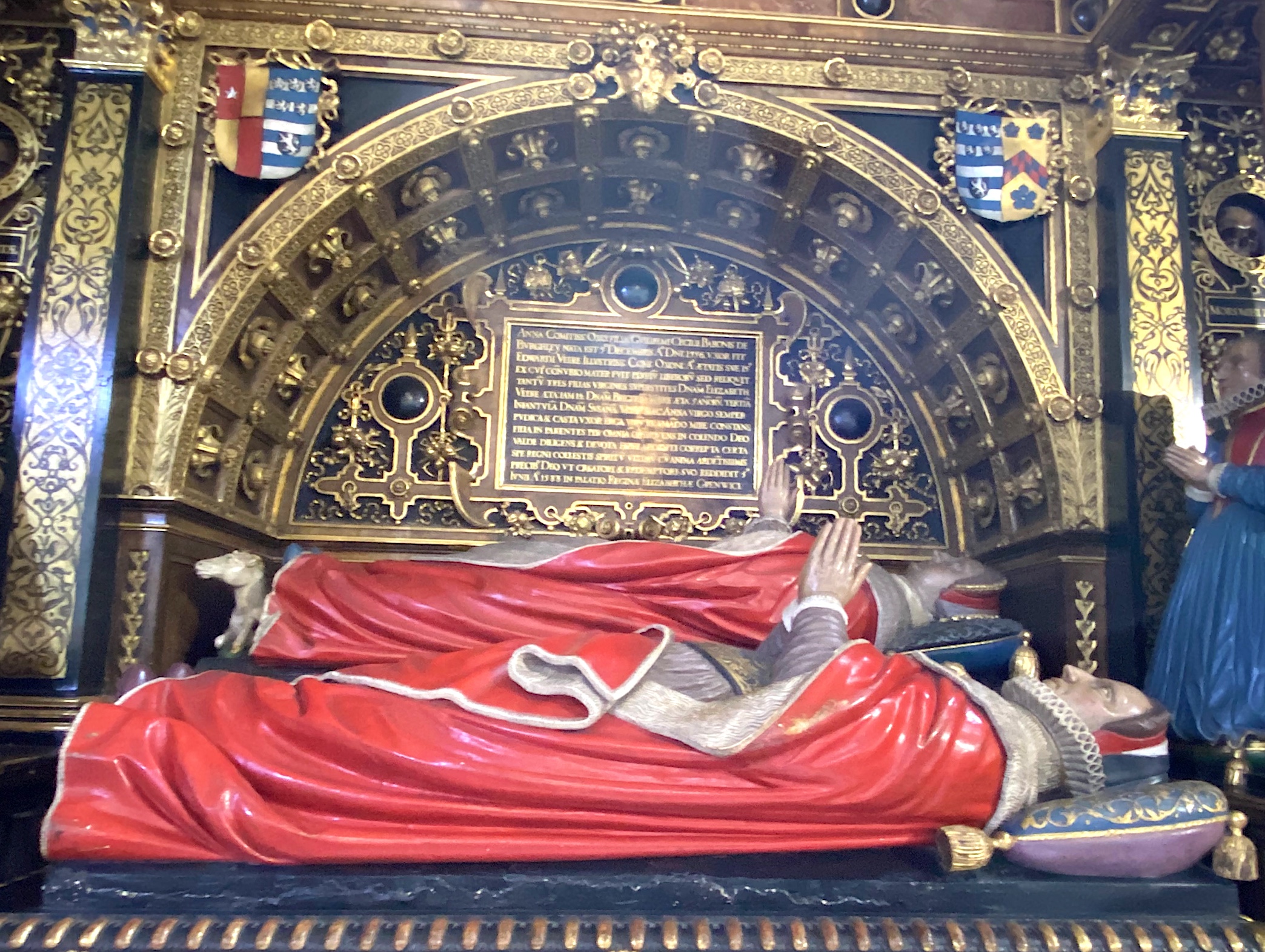
A few weeks ago, I showed photos of Mary, Queen of Scots’ large monument, carved by Cornelius Cure and completed by his son, William. There’s another grand monument at the Abbey that Cornelius did that was for Mildred Cooke Cecil (1526-1589), Lady Burghley, and her daughter, Anne Cecil de Vere, Countess of Oxford.

The monument is 24 feet high, in St Nicholas’ Chapel. Both Mildred and Anne wear long fur-lined red cloaks, and there is a unicorn at Anne’s feet.

It’s probably bad form, but I found myself uttering “That’s HUGE!” many times at Westminster Abbey.

So who were this mother/daughter pair?

Born in 1526, Mildred was one of the daughters of Sir Anthony Cooke (or Coke) of Gidea Hall, Essex, tutor to Edward VI (you might recall his tiny square I featured last week!). Educated by her father, Mildred was known as a scholar and philanthropist. She was William Cecil’s, Lord Burghley’s, second wife. Her effigy is the one in front.
Lord Burghley was Secretary of State and High Steward of Westminster. He was a trusted adviser of Elizabeth I.

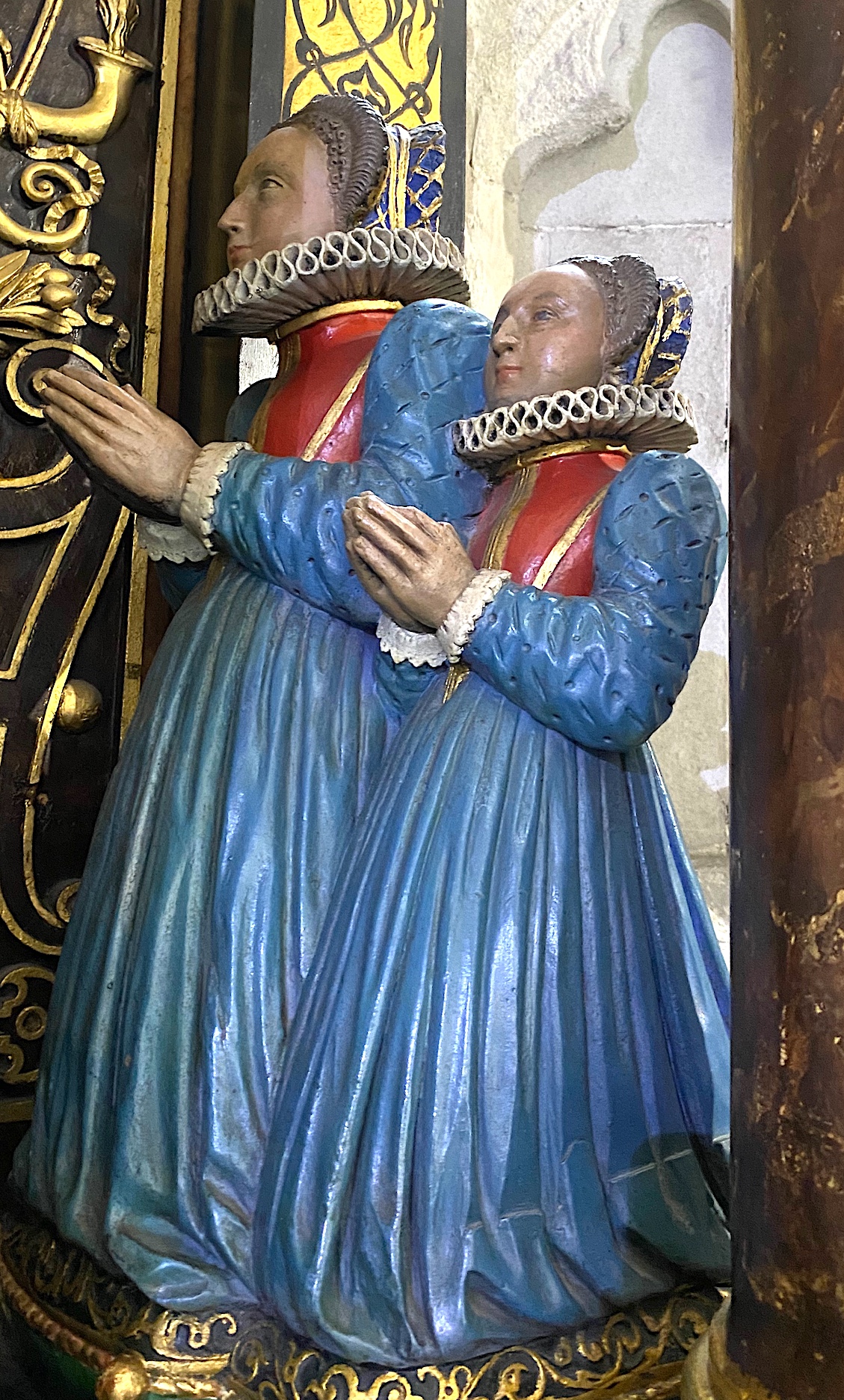
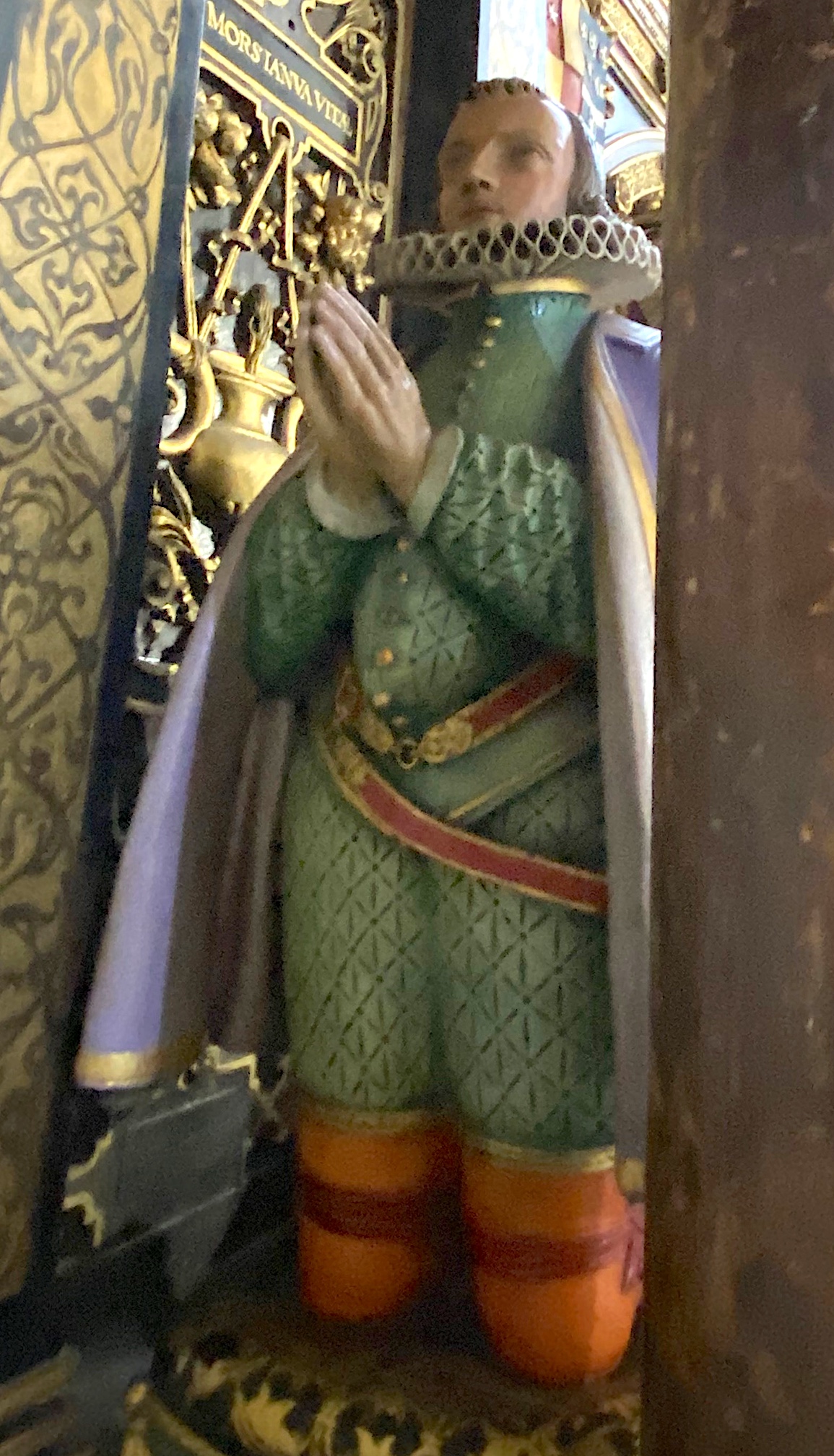
These are thought to be two of Anne’s daughters, Bridget and Susan, who are buried with her.

Mildred’s children were Anne (1556-1588), Robert (1563-1612) and Elizabeth (1564-1583). Anne is the effigy behind Mildred’s. She was married to Edward de Vere, 17th Earl of Oxford in 1571 at Whitehall Palace, in the presence of Queen Elizabeth I. The marriage was reportedly unhappy one, producing three daughters; Elizabeth, Bridget and Susan, who were later buried with Anne and Mildred. Anne’s husband, Edward, was buried at St. Augustine, Hackney with his second wife.
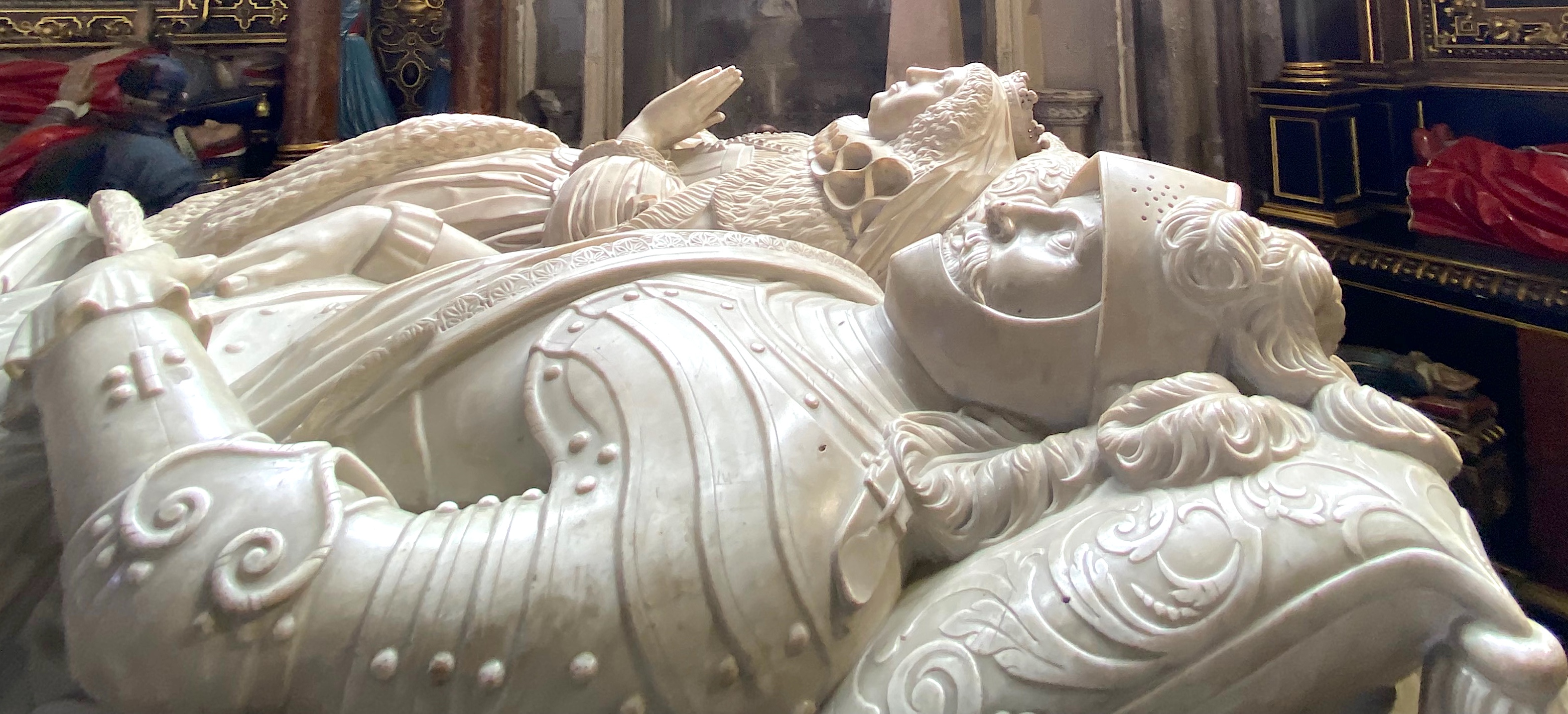
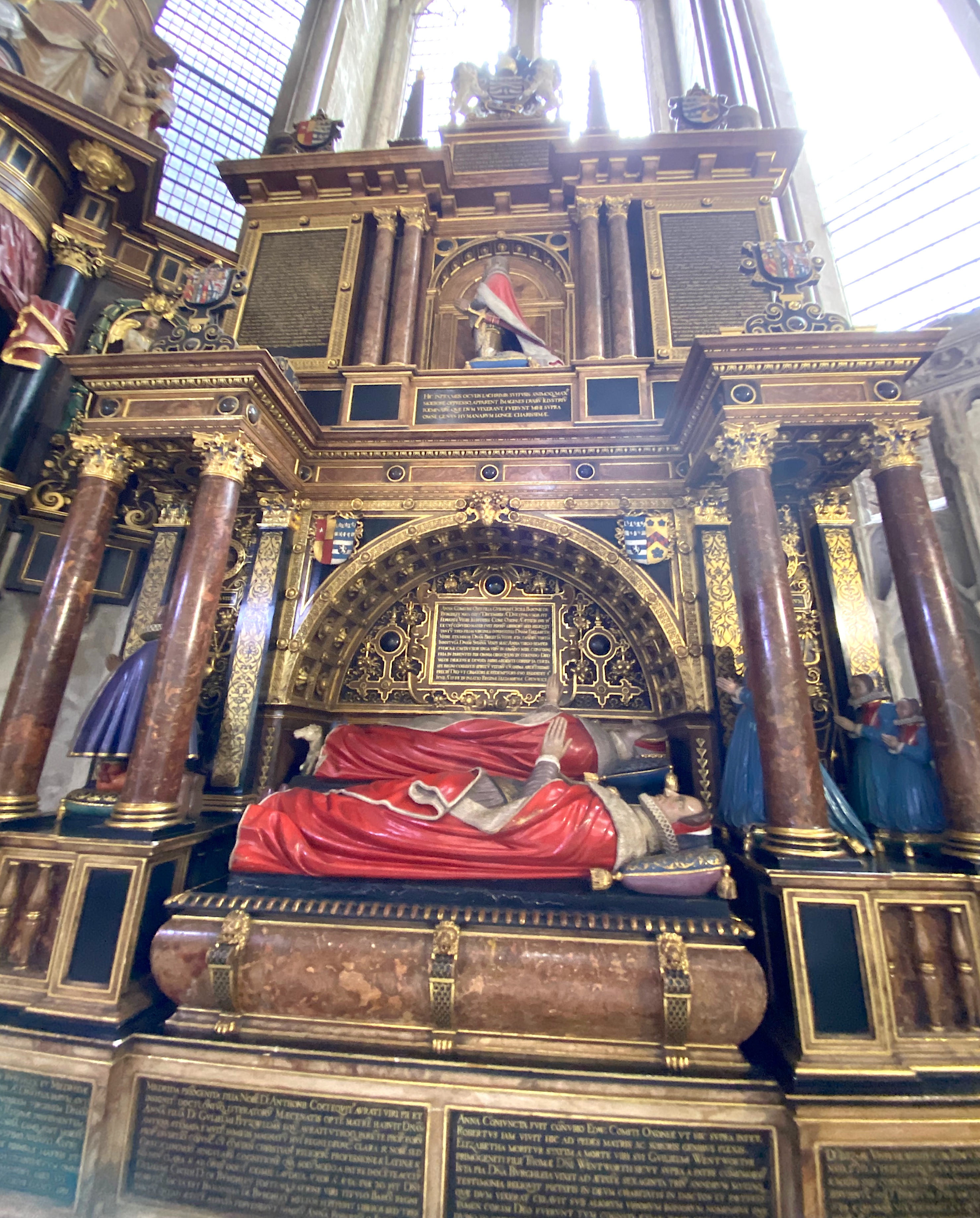
Here’s a closer look at the effigies of Anne and her mother, Mildred. To the far right, you can get a glimpse of the blue-gowned figure of Elizabeth, one of Anne’s daughters.

The kneeling figure of Lord Burghley is up at the top center of the monument, which you can see in the picture just above the one of Bridget and Susan. He’s not buried here, however, and is at St. Martin’s Churchyard in Stamford, England.

There’s also the kneeling figure of Sir Robert Cecil, who was Mildred’s son and Anne’s brother. Sir Robert is credited with being the person who discovered the Gunpowder Plot of 1605, an act of treason against King James I. He’s not interred at Westminster Abbey but is at St. Etheldreda Cathedral in Hertfordshire, England.

Figure of Sir Robert Cecil (1563-1612), the son of Mildred and brother of Anne. He’s actually buried at St. Etheldreda Cathedral in Hertfordshire, England.

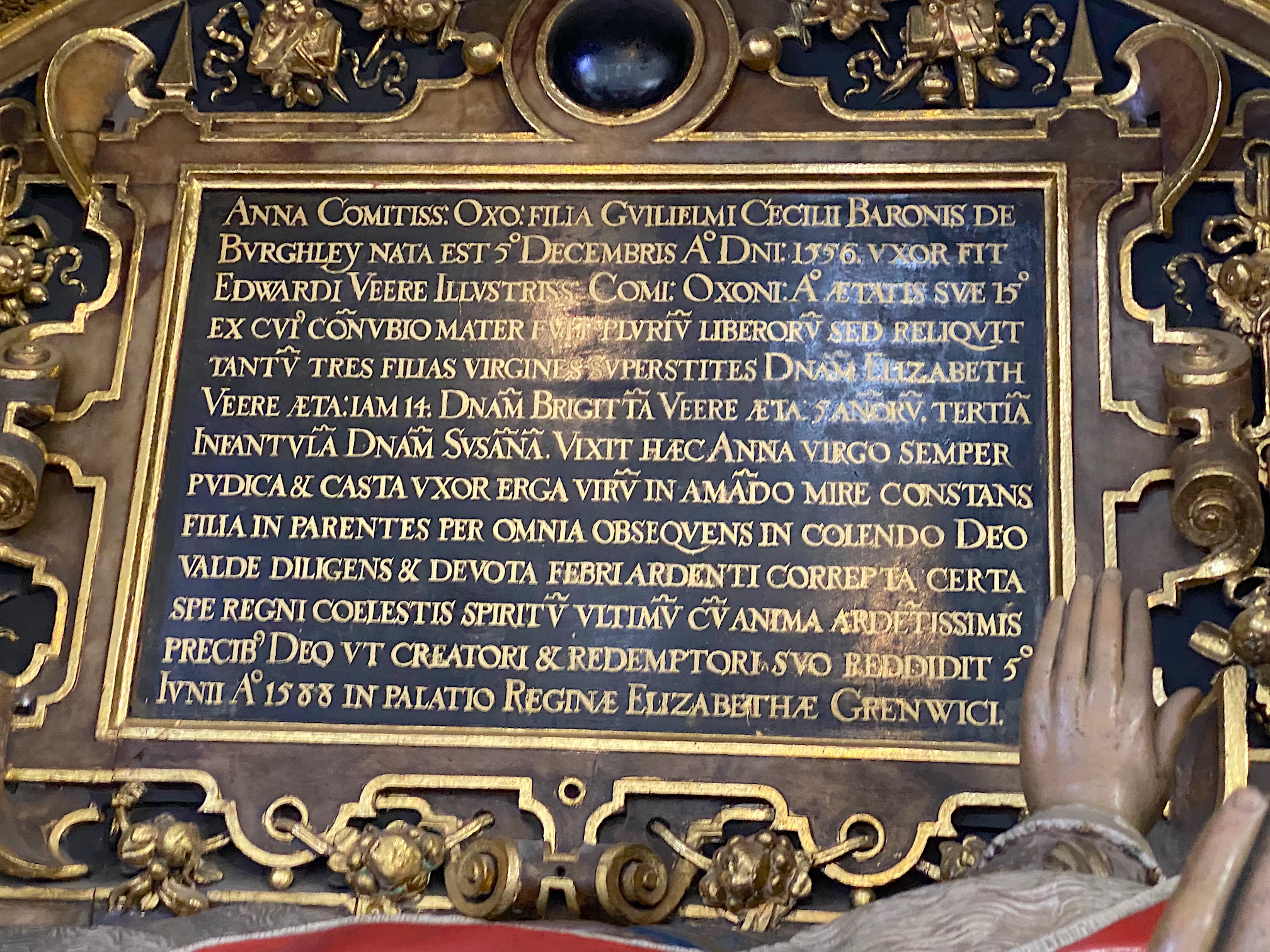
You’ll find a number of long epitaphs all over the monument, said to be written by Lord Burghley himself. You can read them all translated into English here.

Just one of many epitaphs you can find on the Cecil family monument.

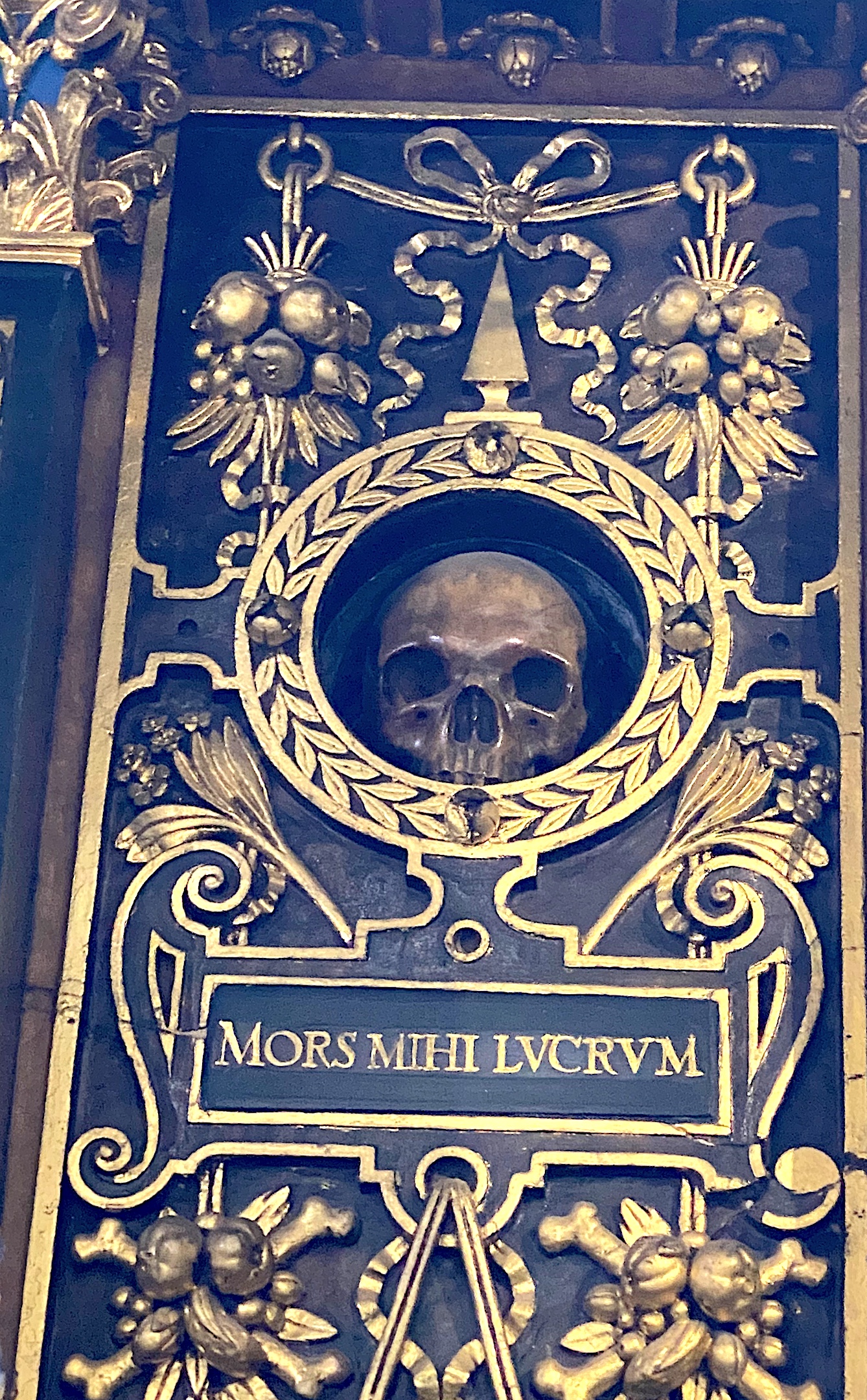
Then there are the pair of skulls on either side of the monument, with the inscriptions “Death is Life” (on the left) and “Death to me is gain” (on the right).
“Death to me is gain.”

In the 19th century, the monument was restored by Lord Cranborne, and cleaned and re-painted in the late 1950s.
Cornelius Cure’s father was William Cure I, a Dutchman, but Cornelius was born in England. He lived and worked in Southwark. William Cecil, Lord Burghley, recommended that he be appointed to replace Edward Young as royal master mason to the courtier William Killigrew, highlighting Cure’s skill, honesty, and knowledge of work in foreign places. Cure was appointed master mason of the Tower of London and the Queen’s other residences in June 1596. Cornelius Cure died in 1607.

So it makes perfect sense that Cornelius Cure would be the one to carve the Cecil family’s grand monument.

William succeeded his father to the post of master mason to James I. He worked under Inigo Jones at the Banqueting House, Whitehall, and continued to hold the office until his death in 1632. William was succeeded by Nicholas Stone, who created the monument to Sir George Villiers and his wife, Mary, that I showed you earlier.

Next time, I’ll be on top of the world with Sir Issac Newton.

“Death is Life.”

Westminster Abbey 2023: When the “Royal” Treatment Isn’t Always so Royal or Please Don’t Step on Me, Part IV

Many thanks to the amazing Grace Barrett of Tours by Grace for leading us through Westminster Abbey!

It’s hard to believe a year has already passed since we visited Westminster Abbey in June 2023. But as I’ve been working on this series, it’s brought back some wonderful memories and stirred up new observations.

Last time, I showed you the grand monument to Mary, Queen of Scots and shared the story of her tragic life. Having your death ordered by your cousin is not something most of us (fortunately) will ever have to face. Despite doing nothing to prevent his mother’s death, James I later ordered the construction of one of the finest memorials in Westminster Abbey to be created for her.

Not every king and queen (or prince) got the “royal” treatment at Westminster Abbey.

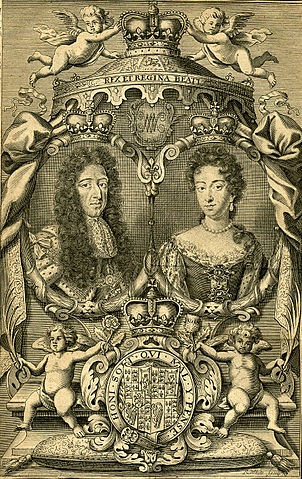
King William III and Queen Mary II

I mentioned in an earlier post that when you’re at Westminster Abbey, you can look down and realize that you’re possibly standing on someone important. That happened when I was near the tombs of King William III and Queen Mary II, who served jointly in the late 1600s. Unlike other monarchs, William and Mary are only marked by stones in the floor of the Triforium of the Lady Chapel.

A 1703 engraving of King William III and his wife Queen Mary II, who shared the English monarchy in the late 17th century.

William was the only child of William II, Prince of Orange and Princess Mary, eldest daughter of Charles I of England. He was born in Holland on Nov. 4, 1650, a few days after his father’s death.
English authorities did not want any son of the Roman Catholic James II to become king, so in 1688 they asked William to come to England and march against James to take the throne, and reign jointly with his wife, Mary (whom he wed in 1677). However, before William reached London, James fled to France and his abdication was declared.

I left my feet in this photo so you can see how easy it is to almost step on royalty!

William III and Mary II were crowned as joint monarchs in the Abbey on April 11, 1689, the first time this had happened in England. They had no children, the throne passing to Mary’s sister Anne. Mary died in 1694 at age 32. William died in 1702 at age 51.

I thought you might find Westminster Abbey’s web site take on William’s death interesting:

His death on 8th March 1702 was caused by a fall from his horse which had stepped in a mole-hill. The ‘little gentleman in black velvet’ (the mole) was therefore praised by his enemies. In contrast to his wife’s funeral his was private and simple, at the monarch’s own request. But there was a long carriage procession from Kensington Palace. William was buried with his wife in a vault beneath the south aisle of Henry VII’s Lady Chapel, not far from his mother’s grave. Although a monument was designed for the couple it was never erected.

Anne of Cleves

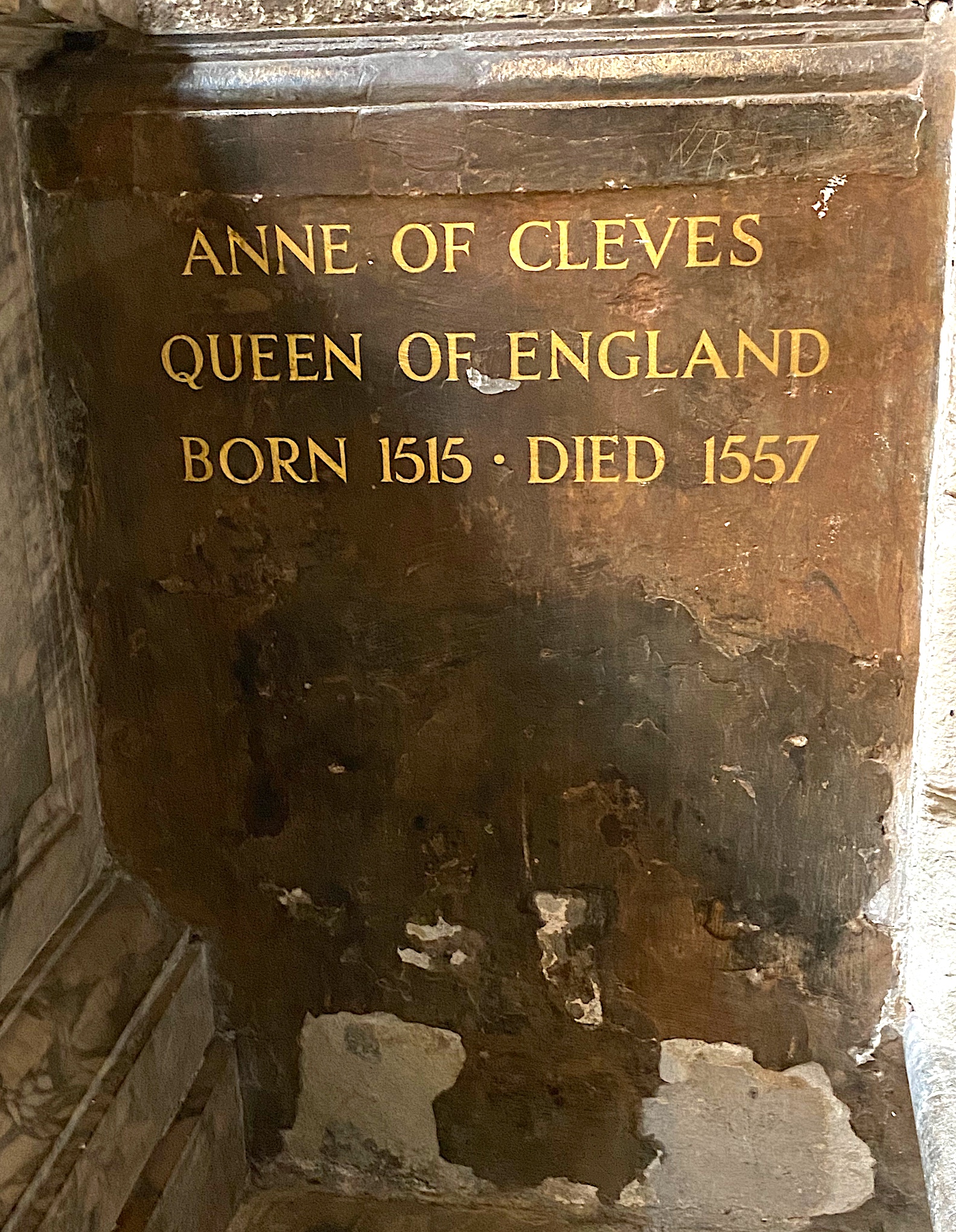
As the only one of Henry VIII’s six wives interred inside Westminster Abbey, you might think Anne of Cleves received a monument befitting her status. But she did not.

Of Henry’s many spouses, he was wed to Anne of Cleves the shortest amount of time. It lasted from January 1541 to July 1541 when its annulment was completed. As his fourth wife, Anne was born in 1515 in Germany and was the second daughter of John III of the House of La Marck, and his wife Maria, Duchess of Jülich-Berg.

Reproduction of the portrait of Anne of Cleves by Hans Holbein the Younger. Henry VIII felt he had been misled by it and didn’t care for his fourth wife’s appearance.

Despite the brevity of their marriage, Anne came out better in the end than her fellow wives. Having left her homeland knowing no English and little of the country she would spent the rest of her life living in, Anne took to it fairly well.

As former queen, she received a generous settlement, including Richmond Palace, and Hever Castle, home of Henry’s former in-laws, the Boleyns. Anne of Cleves House, in Lewes, East Sussex, is one of many properties she owned, although she never lived there.

Anne was invited to court often and, out of gratitude for her not contesting the annulment, Henry decreed that she would be given precedence over all women in England save his own wife and daughters.

I’ve read differing accounts on whether or not she wished to return to Germany after Henry’s death. In the end, she ended up spending the rest of her life in England.

This is all I could see of the tomb of Anne of Cleves at Westminster Abbey.

When Anne’s health began to fail, her former stepdaughter Mary allowed her to live at Chelsea Old Manor, where Henry’s last wife, Catherine Parr, lived after her remarriage. Anne died there on July 16, 1557. The most likely cause of her death was cancer. Passing away 10 years after Henry VIII, Anne was the last of his wives to die.

Mary ordered her burial in the Abbey, and the funeral held on Aug. 4, 1557 was conducted according to Catholic rites as Anne wanted. She lies on the south side of the High Altar and her monument is a low stone structure of three sections with carvings showing her initials AC with a crown, lions’ heads, and skulls and crossed bones. It was probably made by Theodore Haveus of Cleves but was never finished.

The tomb’s location is within the area of the sanctuary where the coronation service takes place and is therefore not accessible. For that reason, I only saw what you see in the photo above, which wasn’t easy to find at that because it’s in between two massive monuments for other people. Not exactly what you’d expect for a queen.

Prince Edward VI

King Edward VI (1547-1553) was the son of Henry VIII and his third wife, Jane Seymour. Born on Oct. 12, 1537, Edward’s mother died 12 days later at Hampton Court Palace. A healthy baby, Edward VI was well educated but tended to be sickly.

He succeeded his father when he was only nine years old and was crowned in the Abbey on Feb. 20, 1547. Since he was a minor, a Regency was created and his uncle, Edward Seymour, later Duke of Somerset, became Protector.

Edward died of tuberculosis at age 15 at Greenwich Palace on July 6, 1553. According to John Foxe’s account of his death, his last words were: “I am faint; Lord have mercy upon me, and take my spirit”.

Throughout England, the people greeted the birth of a male heir, “whom we hungered for so long”.

Edward was buried in the Henry VII Lady Chapel at Westminster Abbey on Aug. 8, 1553. But no grand memorial marked his grave for hundreds of years. That was not remedied until the 1960s. I find that a genuine pity considering he was indeed king for part of his life.

I have no doubt that poor Edward VI gets unknowingly trampled upon every day. Those are not my toes in the picture, however.

Edward’s burial place was unmarked until as late as 1966, when an inscribed stone was laid in the chapel floor by Christ’s Hospital School to commemorate its founder. I just happened to look down and see it. Rest in peace, Edward.

Diplomat and Royal Cousin Ludovic Stuart

By contrast, you don’t have to be royal to manage a jaw-dropping sized monument in your honor. When I saw the one for Ludovic Stuart and his family, I thought he certainly had to be royal to merit something so grand. While he wasn’t a king, he did have royal ties.

While not a king or prince, Ludovic Stewart had royal ties and was a nobleman of means.

Ludovic Stewart, second Duke of Lennox and first Duke of Richmond (1574–1624) was a Scottish nobleman who through his paternal lines was a second cousin of King James VI of Scotland and I of England. He was involved in the Plantation of Ulster in Ireland and the colonization of Maine in New England.

He held a number of titles over his lifetime, including lord high admiral, member of the English privy council, ambassador to Paris (1604–1605) and high commissioner to the Scottish Parliament (1607). In 1623, he was created Duke of Richmond.

Ludovic Stewart is buried in a vault in the southeast Apsidal Chapel of Henry VII’s Chapel in Westminster Abbey.

Although Ludovic was married three times, he only had one legitimate child and that was a daughter with his second wife. He died suddenly in bed in his lodging at Whitehall Palace on Feb. 16, 1624 at age 49. His third wife, Frances, died in 1639 and is interred with him.

This is the best picture I could get of Ludovic Stewart’s effigy. The one for his third wife, Frances, is beside him out of sight.

The Westminster Abbey web site describes the Stewart monument like this:

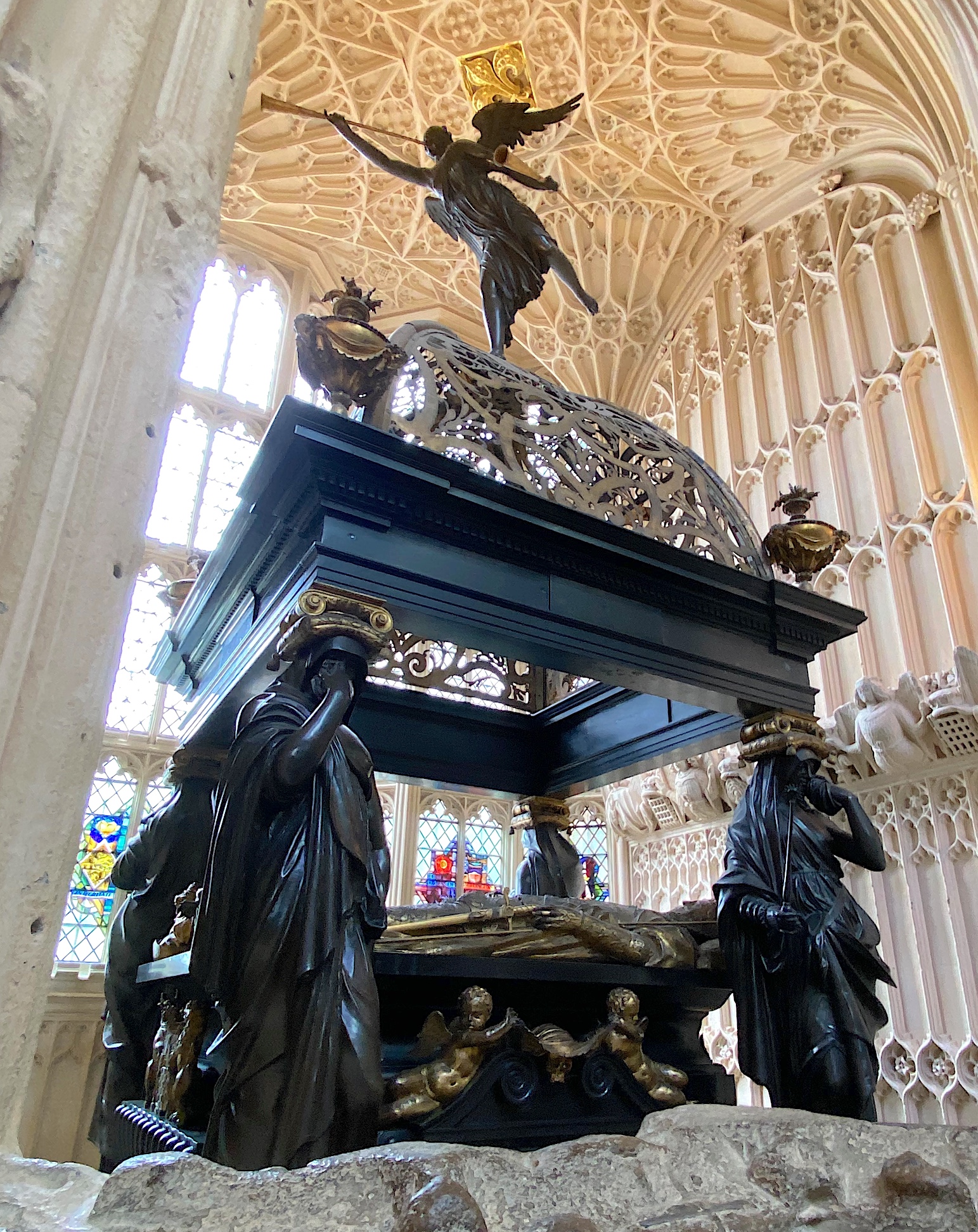
He has a very large monument of black marble and bronze by sculptor Hubert Le Sueur which fills the small chapel. Gilt bronze recumbent effigies of the Duke and Duchess hold hands; he is wearing plate armour, coronet, mantle and collar of the Order of the Garter and carries a wand, while wife Frances wears a ruff, stomacher and coronet. At his feet is a bull’s head and at hers is a chapeau with a couchant lion. At each corner of the tomb are large bronze life size figures representing Hope, Truth, Charity and Faith, acting as caryatides, supporting the domed open-work bronze canopy, with vases at each corner and a figure of Fame on the top. It was repaired and restored in 1875.

Two cherubs flank a shrouded skull above the epitaph.

To say that the Stewart monument is mind blowing (to me), is an understatement. There’s quite a lot going on here.

One of the four pillars holding up the bronze canopy of the Stewart monument.

Then you’ve got this angel on the top holding a trumpet.

An angel blows a trumpet and holds an additional trumpet in her other hand.

There’s still much to discover at Westminster Abbey so I’m not done just yet!

Westminster Abbey 2023: The Life (and Death) of Mary, Queen of Scots, Part III

Many thanks to the amazing Grace Barrett of Tours by Grace for leading us through Westminster Abbey!

This week, I’m going to tackle the story (and tomb) of Mary, Queen of Scots. That’s rather a tall order because her history is tragic and her monument/grave is even grander than that of her cousin, Queen Elizabeth I (whom I talked about a few weeks ago).

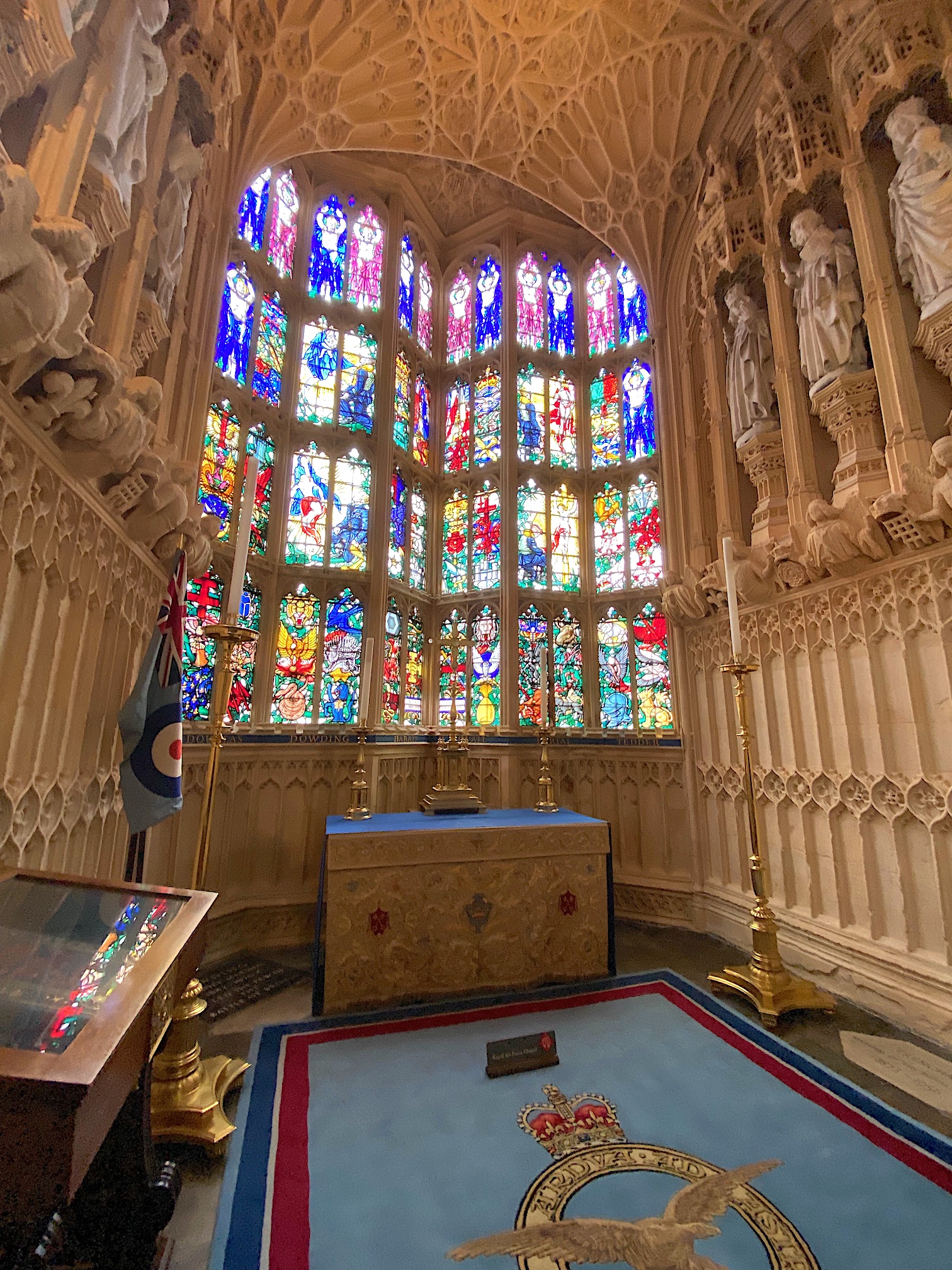
At the eastern end of the Lady Chapel built is a chapel dedicated to the men of the Royal Air Force who died in the Battle of Britain between July and October 1940. This chapel received damage from bombs which fell in that year and a hole made in the stonework has been preserved and covered with glass. The Tudor glass in the window had also been blown out at the same time.

First, let’s talk about Mary and how she fits into the complex history of the British/Scottish monarchy.

Royal Heir

Mary, Queen of Scots, was born on Dec. 8, 1542 in Linlithgow Palace in Scotland. She was the daughter of King James V of Scotland and Mary of Guise. Her father died just a week after her birth.

Incidentally, Mary of Guise was first married to Louis D’Orleans, duc de Longueville in 1534, by whom she had two sons. After the duc’s death in 1537, she was sought for marriage by Henry VIII and James V. She allegedly refused Henry VIII’s proposal by saying “I fear my neck is too small.”

Enthroned as Scotland’s ruler at just six days old, Mary spent her early years at the French court, where she was raised alongside future husband Francis II. They wed in 1558 but he died within a year of his accession and Mary left France in 1560 never to return.

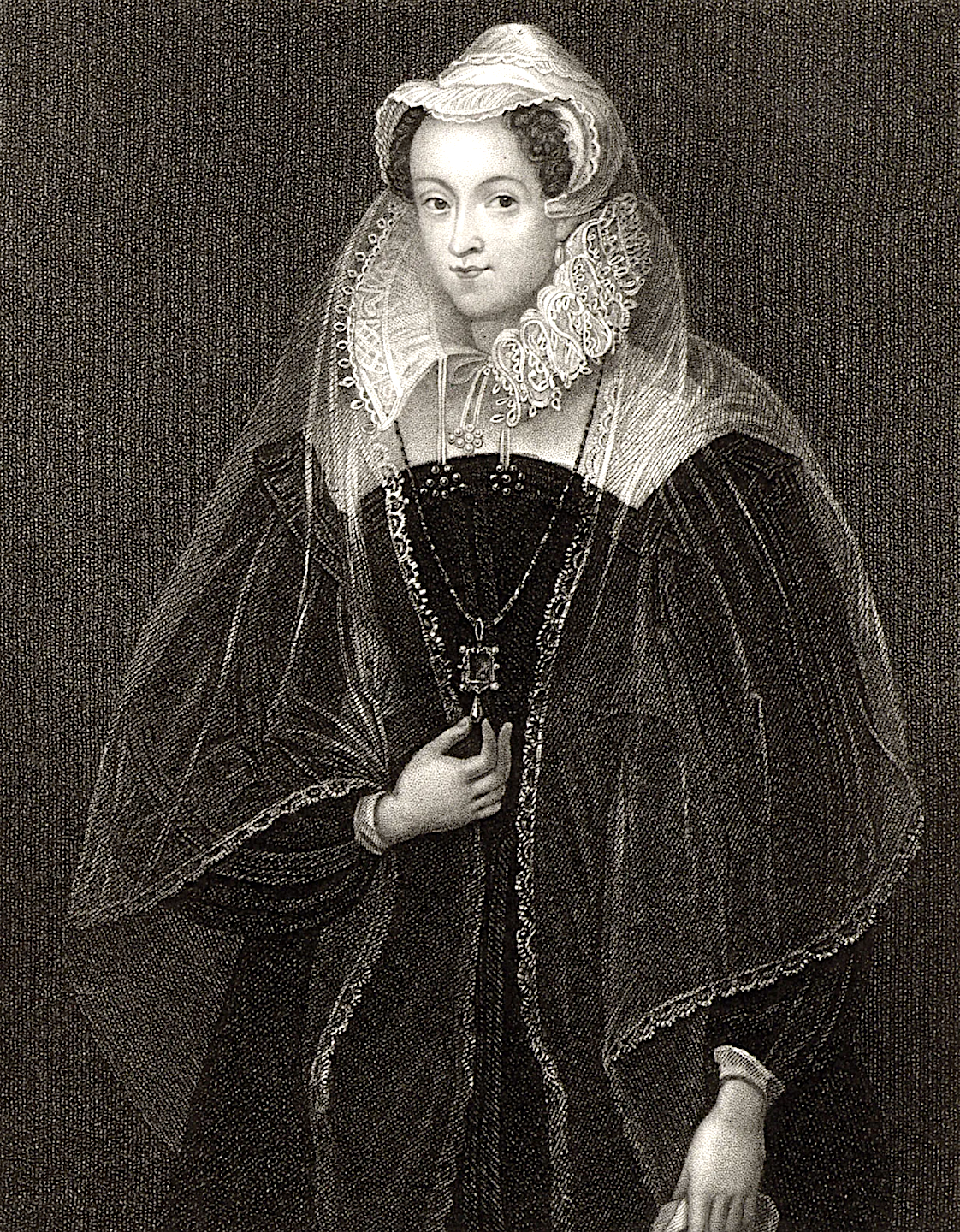
Engraving of Mary, Queen of Scots, from 1849. (Photo Source: Encyclopedia Brittanica.)

In November 1558, Henry VIII’s elder daughter, Mary I, was succeeded by Elizabeth I. Under the Third Succession Act, Elizabeth was recognized as her sister’s heir, and Henry VIII’s last will and testament had excluded the Stuarts from succeeding to the English throne. Yet, in the eyes of many Catholics, Elizabeth was illegitimate and Mary Stuart was the rightful queen of England. Mary’s claim to the English throne was a continual sticking point between her and Elizabeth.

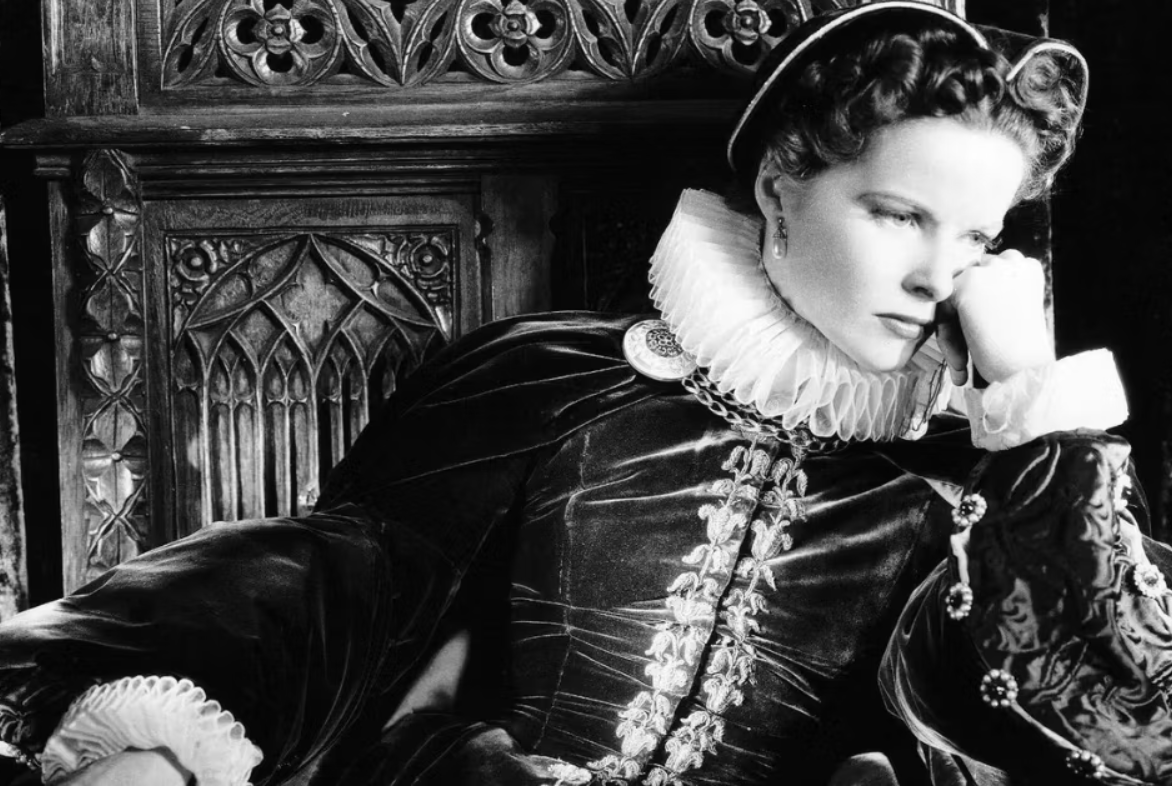
Katharine Hepburn was one of the many to portray Mary, Queen of Scots, in the 1936 film “Mary of Scotland”. The film is not regarded well by critics today, and in its time, it was a box office flop. (Photo Source: RKO Studios)

Second Marriage

Mary wed a second time in 1565 to Henry, Lord Darnley, son of Margaret Stewart, Countess of Lennox. They had one son in 1566 who later became King James VI of Scotland and I of England. The marriage soured but the couple was reportedly working toward reconciliation when on the night of Feb. 9, 1567, an explosion devastated Kirk o’ Field. Darnley was found dead in the garden, apparently smothered. There were no visible marks of strangulation or violence on the body.

Between April 21 and 23, 1567, Mary visited her son at Stirling for the last time (he was only 10 months old). On her way back to Edinburgh on April 24, Mary was abducted, willingly or not, by James Hepburn (Lord Bothwell) and his men, and was taken to Dunbar Castle. On May 6, Mary and Bothwell returned to Edinburgh. On 15 May 15, at either Holyrood Palace or Holyrood Abbey, they were married according to Protestant rites. Bothwell and his first wife, Jean Gordon, had divorced 12 days previously. It was not received well since many believed Bothwell was the one who had worked to have Darnley killed.

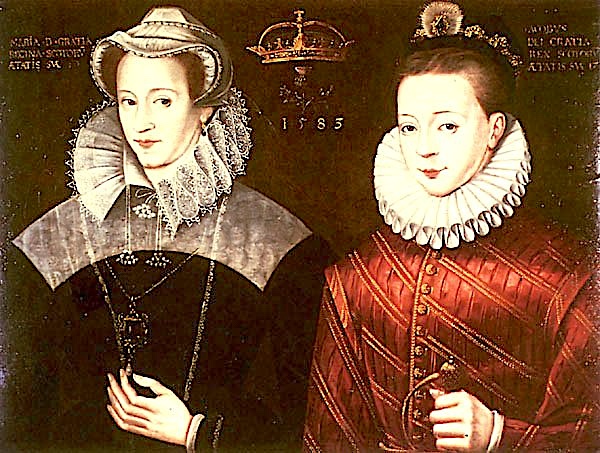
Mary depicted with her son, James VI and I. In reality, Mary saw her son for the last time when he was 10 months old.

Mary and Bothwell were parted forever at Carberry Hill on June 15, 1567, Bothwell to exile and imprisonment where he died in 1578, and Mary to incarceration on the island of Loch Leven, where she was formally deposed in favor of her son James.

Imprisoned and Executed

After a brief stint of liberty the following year, defeat of her supporters at a battle at Langside put her once more to flight. Mary sought refuge in England with her cousin Elizabeth. But Elizabeth, with all the political cunning Mary lacked, used a series of excuses connected with the murder of Darnley to hold Mary in English captivity in a series of prisons for the next 18 years of her life.

It was the discovery in 1586 of a plot to assassinate Elizabeth and bring about a Roman Catholic uprising that convinced Elizabeth that, while she lived, Mary would always constitute too dangerous a threat to her own position.

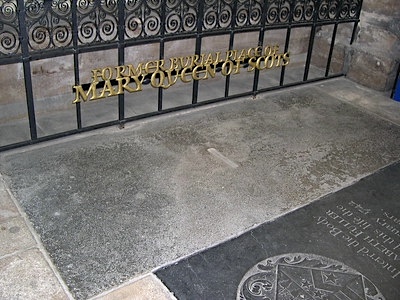
Mary was originally buried five months after her death on Aug. 5, 1587 in Peterborough Cathedral. There was already had one queen buried there, namely Katharine of Aragon, buried in 1536. (Photo Source: Kathleen Foskett, via Flickr)

Mary was tried by an English court and condemned. James, who had not seen his mother since infancy and now had his sights fixed on succeeding to the English throne, raised no objections. Mary, now 44, was executed in 1587 in the great hall at Fotheringhay Castle, near Peterborough.

Repairing Mary’s Reputation

Mary was buried five months after her death on Aug. 5, 1587 in Peterborough Cathedral. There was already had one queen buried there, namely Katharine of Aragon, buried in 1536.

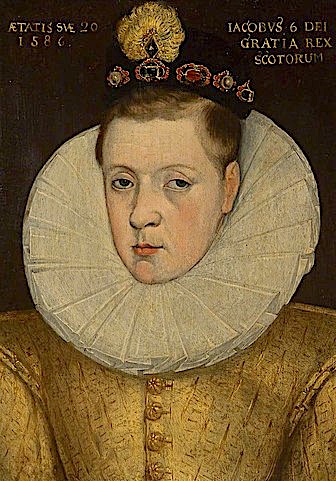
Portrait of Mary’s son, the future James I of England, in 1586. (Photo Source: National Trust for Scotland at Falkland Palace, Fife, Scotland)

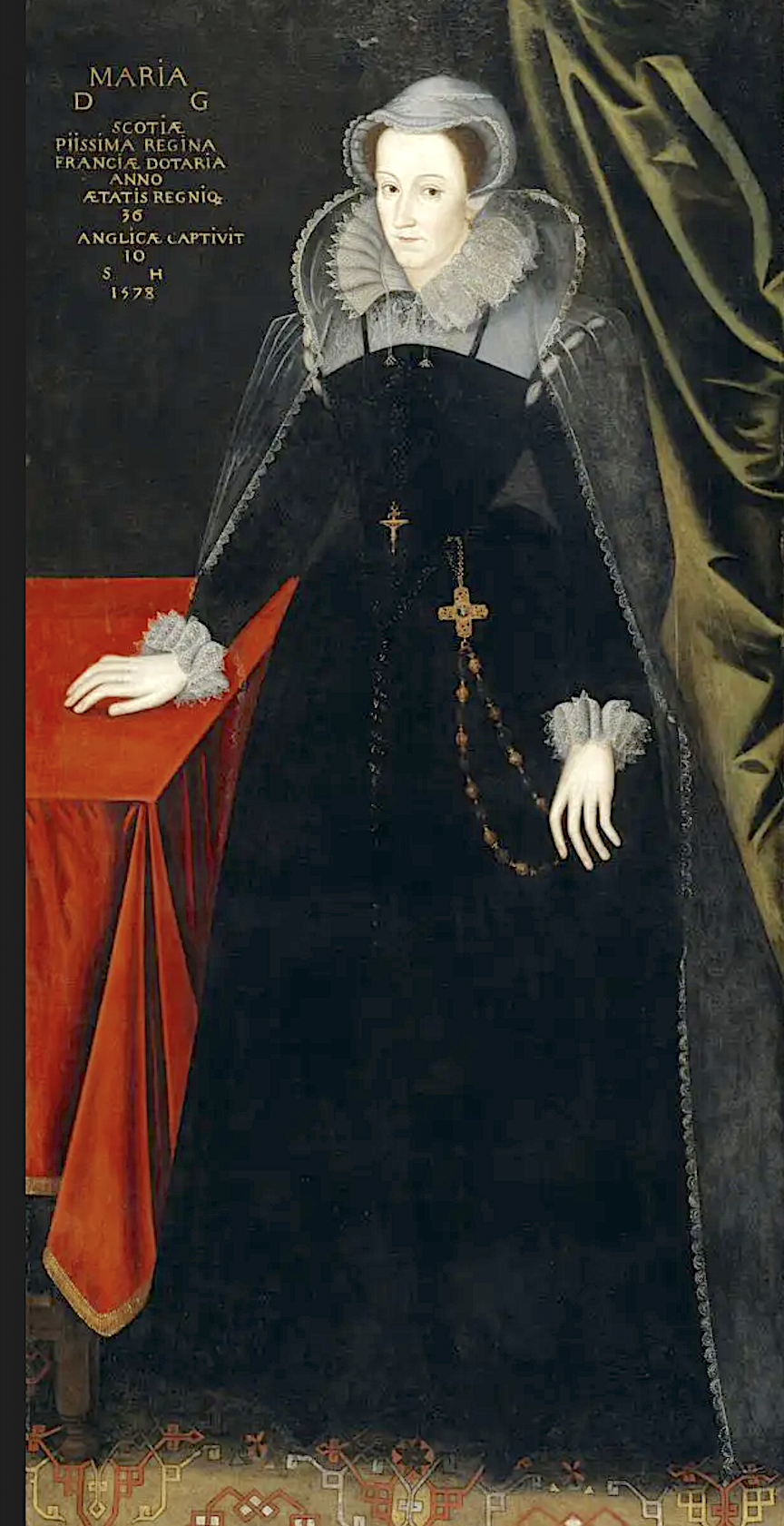
When Mary’s son, James VI, became James I of England in 1603, he did not immediately take action to move his mother. However, he did encourage rehabilitating his mother’s reputation via portraiture. A well-recognized portrait of Mary, Queen of Scots, was painted between 1610 and 1615. The portrait (see below) is held by the National Galleries of Scotland, and depicts Mary wearing a black gown and white veil; perhaps an allusion to what she wore on the day of her death.

Mary, Queen of Scots, was no petite flower. She was nearly six feet tall.

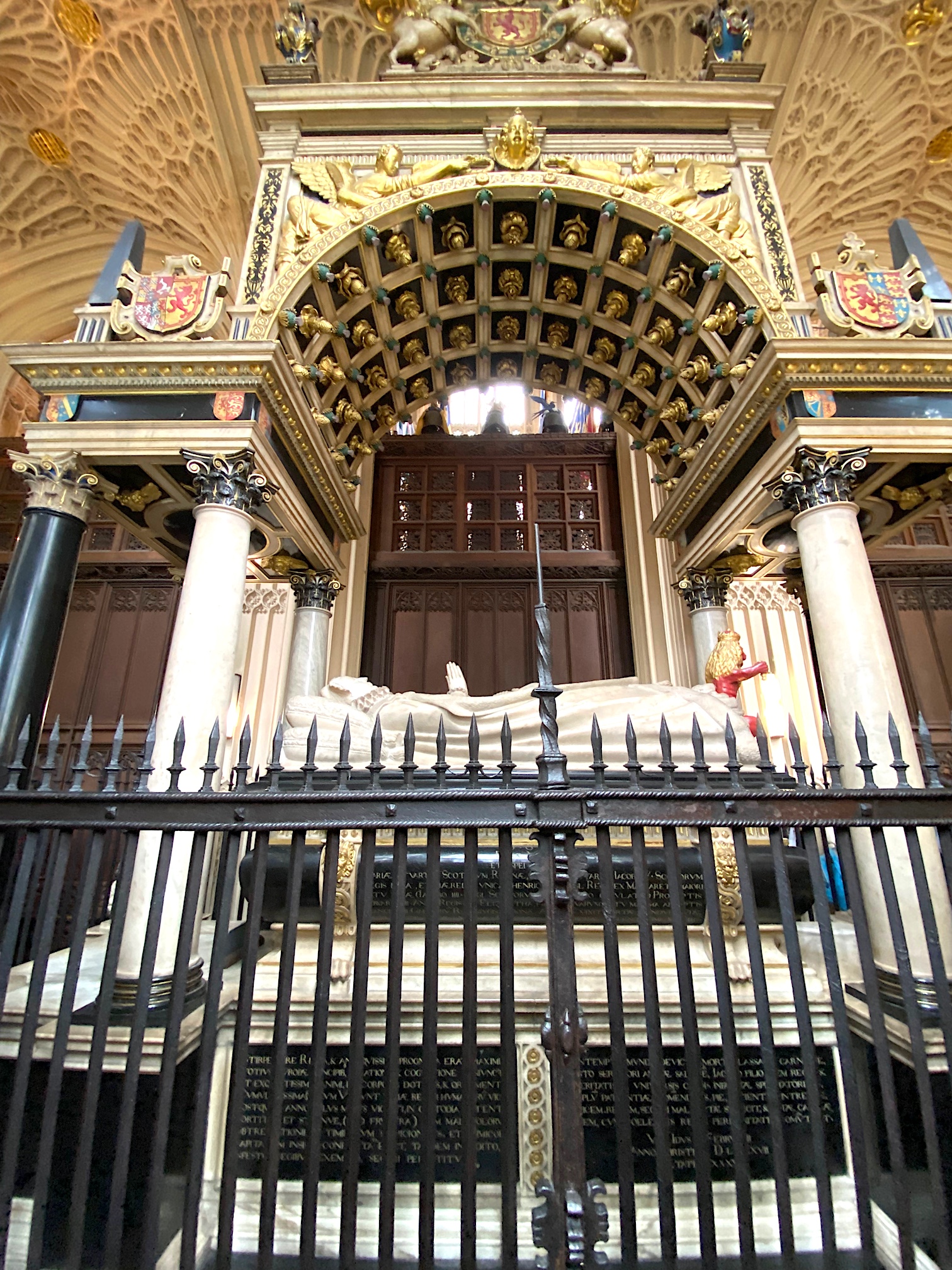
By 1612, James had a marble tomb created for his mother in the south aisle of the Lady Chapel of Westminster Abbey. Her body was exhumed and moved from Peterborough to Westminster Abbey in October 1612. It is quite something to behold. The Scottish thistle is embedded in the arch over Mary’s effigy, I noticed.

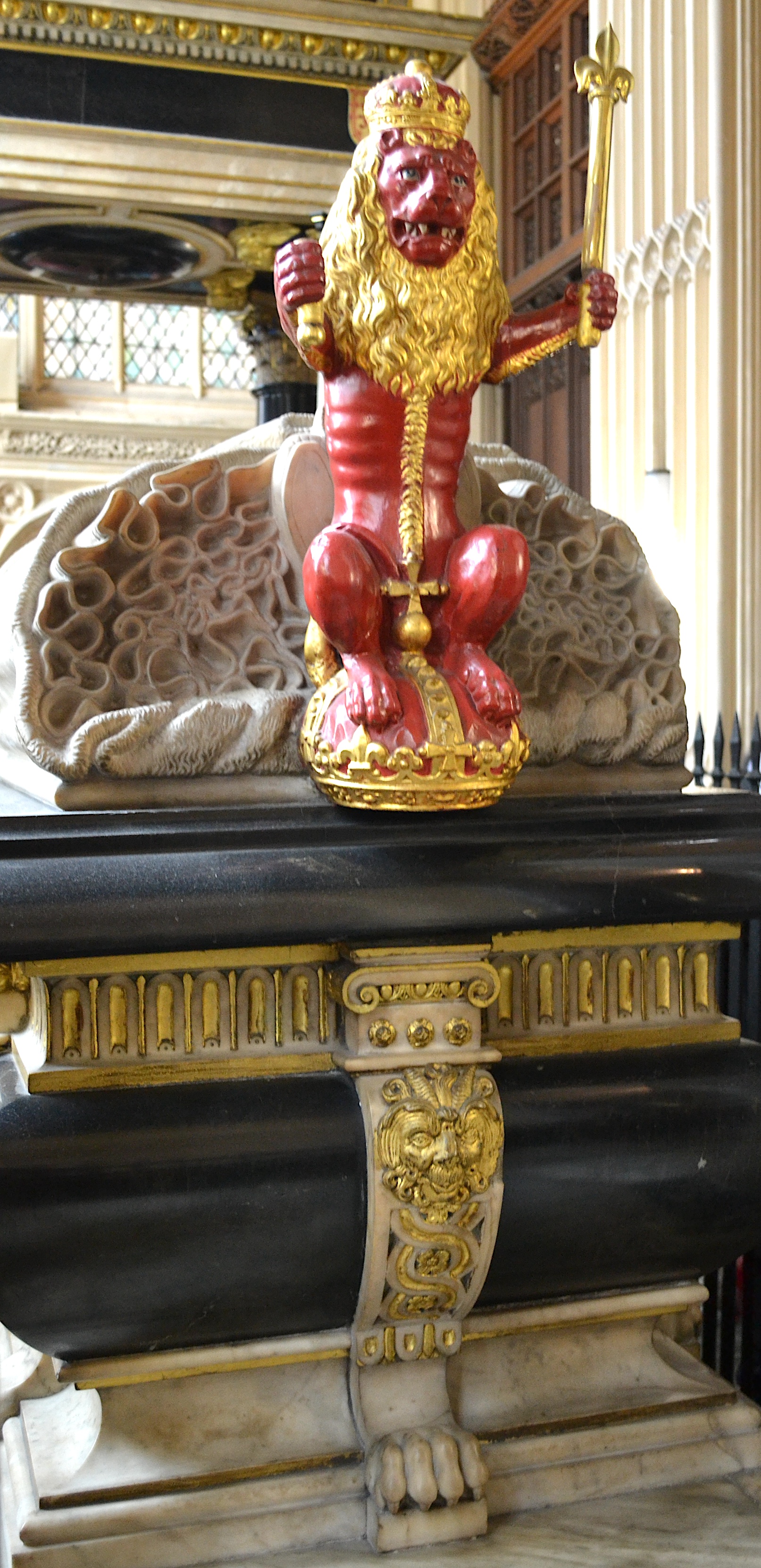
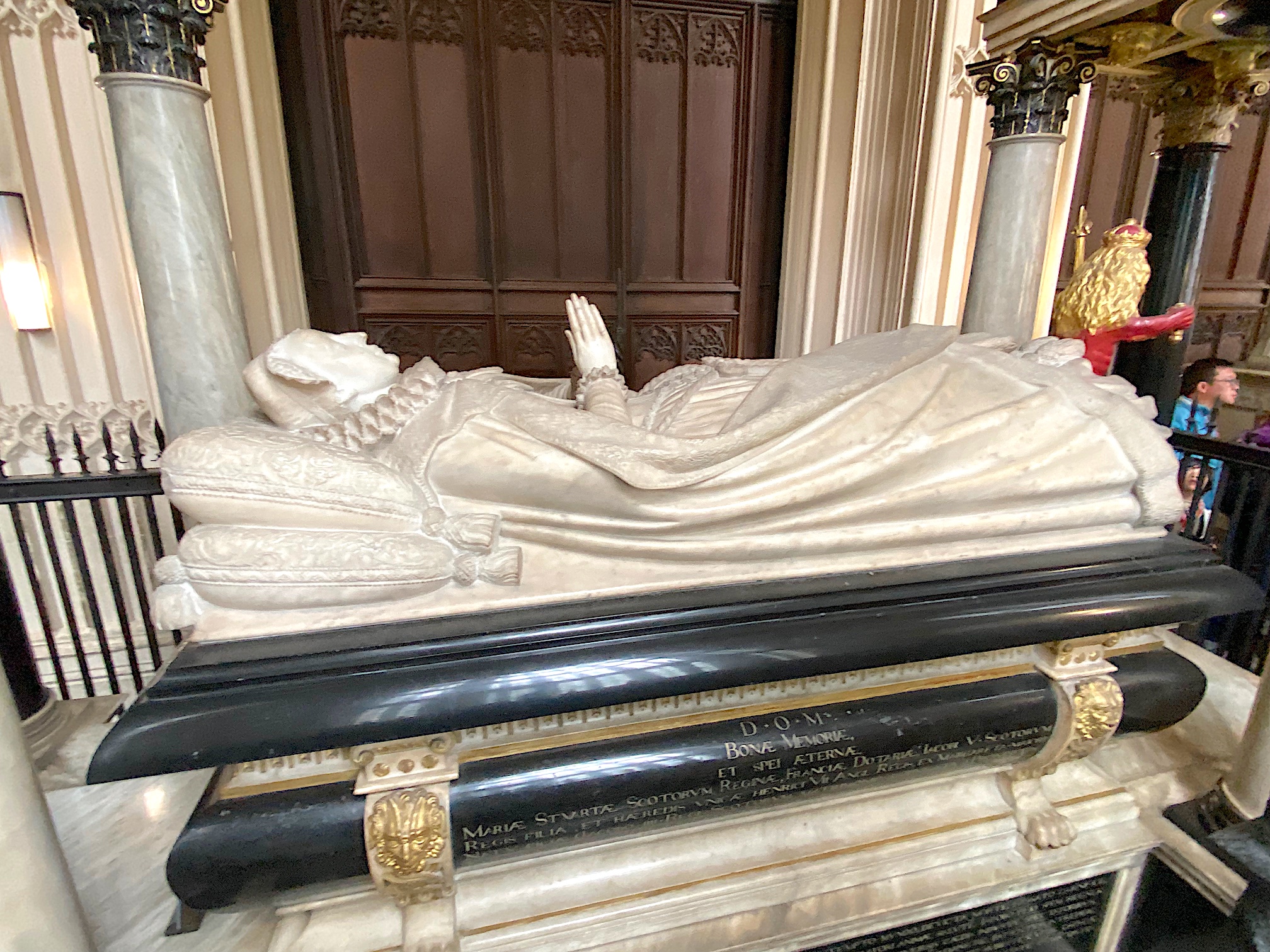
James erected a magnificent marble tomb for his mother on which there is a fine white marble effigy under an elaborate canopy. She wears a close-fitting coif, a laced ruff, and a long mantle fastened by a brooch. The sculptors were father and son, Cornelius and William Cure. Cornelius died before it was finished to William completed it. A red crowned Scottish lion stands at her feet.

A red Scottish lion stands at the foot of Mary, Queen of Scots’ grave.
The nearby shared tomb of Mary I and Elizabeth I almost pales in comparison to the sheer magnificence and care put into Mary’s tomb.

According to Westminster Abbey’s website, the Cures received 825 pounds for their work.

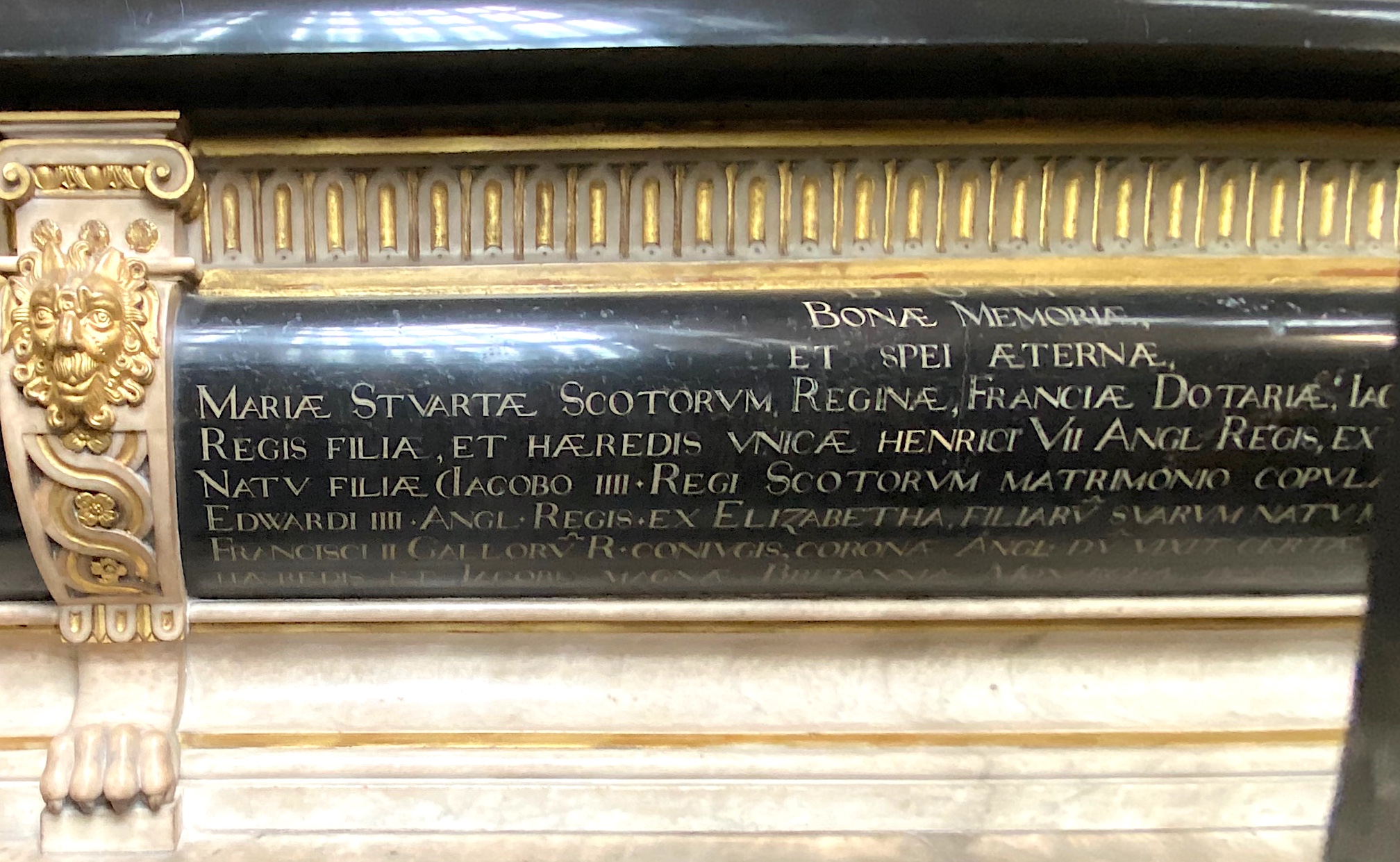
On the side of the tomb is a long inscription in Latin. Certain excerpts from the inscription show what some think is an attempt to rehabilitate Mary’s legacy:

Mistress of Scotland by law, of France by marriage, of England by expectation, thus blest, by a three-fold right, with a three-fold crown; happy, ah, only too happy, had she routed the tumult of war, and, even at a late hour, won over the neighbouring forces… here lies buried the daughter, bride and mother of kings. God grant that her sons, and all who are descended from her, may hereafter behold the cloudless days of eternity….

A small portion of the inscription on Mary, Queen of Scots’ tomb at Westminster Abbey.

Perhaps by making such a statement with his mother’s tomb, James was taking further steps to redeem Mary’s public image. I do find it a bit strange that for a son who had put up no form of resistance to his mother’s execution back in 1587, he was doing quite a bit to make a show of creating such an elaborate tomb. But in looking at how things played out, I’m sure he was trying to pave the way with Elizabeth to becoming her successor when the time came.

Mary’s Mother-In-Law

I don’t know if it was by design or accident that Mary, Queen of Scots’s tomb is beside that of the mother of her second husband, Lord Darnley. Margaret Douglas’ mother was Margaret Tudor (1489-1541), daughter of Henry VII and widow of James IV of Scotland, who had married Archibald Douglas, the sixth Earl of Angus in 1514 (they divorced in 1527).

Born in 1515, the young Margaret lived for a time with her aunt Princess Mary and then became a lady-in-waiting to Anne Boleyn and led an eventful life, being imprisoned in the Tower of London on several occasions.

Margaret, the Countess of Lennox, had a colorful life as a lady-in-waiting to Anne Boleyn.

On July 6, 1544, she married Matthew Stewart, 13th Earl of Lennox, a descendant of James I of Scotland. Matthew died after being shot in the back in a skirmish at Stirling Castle in 1571. None of her eight children survived her and she died, in poverty, on March 19, 1578 (New Style dating).

Margaret was buried, at the expense of Elizabeth I, in the south aisle of Henry VII’s chapel in Westminster Abbey, in the same grave as her son, Charles.

This is the best picture we got of the effigy of Margaret, Countess of Lennox (1515-1578).

The monument was completed in 1578 by her executor Thomas Fowler. The sculptor is not known. Her effigy, made of alabaster, wears a French cap and ruff with a red fur-lined cloak, over a dress of blue and gold. On either side of the tomb chest are “weepers” (small kneeling statues) of her four sons (Charles and Henry and two who died young) and four daughters (all died young).

I did unwittingly take a photo of the side where the weepers are. Darnley, Mary’s second husband, is the one with the crown over his head. He’s not actually buried there but is in the Abbey of Holyrood in Edinburgh, Scotland.

A “weeper” meant to represent Henry Stuart, Lord Darnley, is on the side of his mother Margaret, Countess of Lennox’s tomb beside that of his wife, Mary, Queen of Scots.

James I and Anne of Denmark

James I would eventually wed Anne of Denmark in 1589 and they had seven children together. You’ll recall the tombs of Sophia and Mary that I shared a few weeks ago that are with Queens Elizabeth and Mary. Those are two of those children. Anne died in 1619, and James I died of a stroke at age 58 in 1625.

Considering the grandness of his mother’s tomb, you might think James’s tomb would be equally grand. But that did not happen. Like Queen Mary I, he ended up being interred with someone else.

This is the best picture we could get of King Henry VII and Elizabeth of York’s tomb. Chris took it. There were so many people around it, taking photos was not easy.

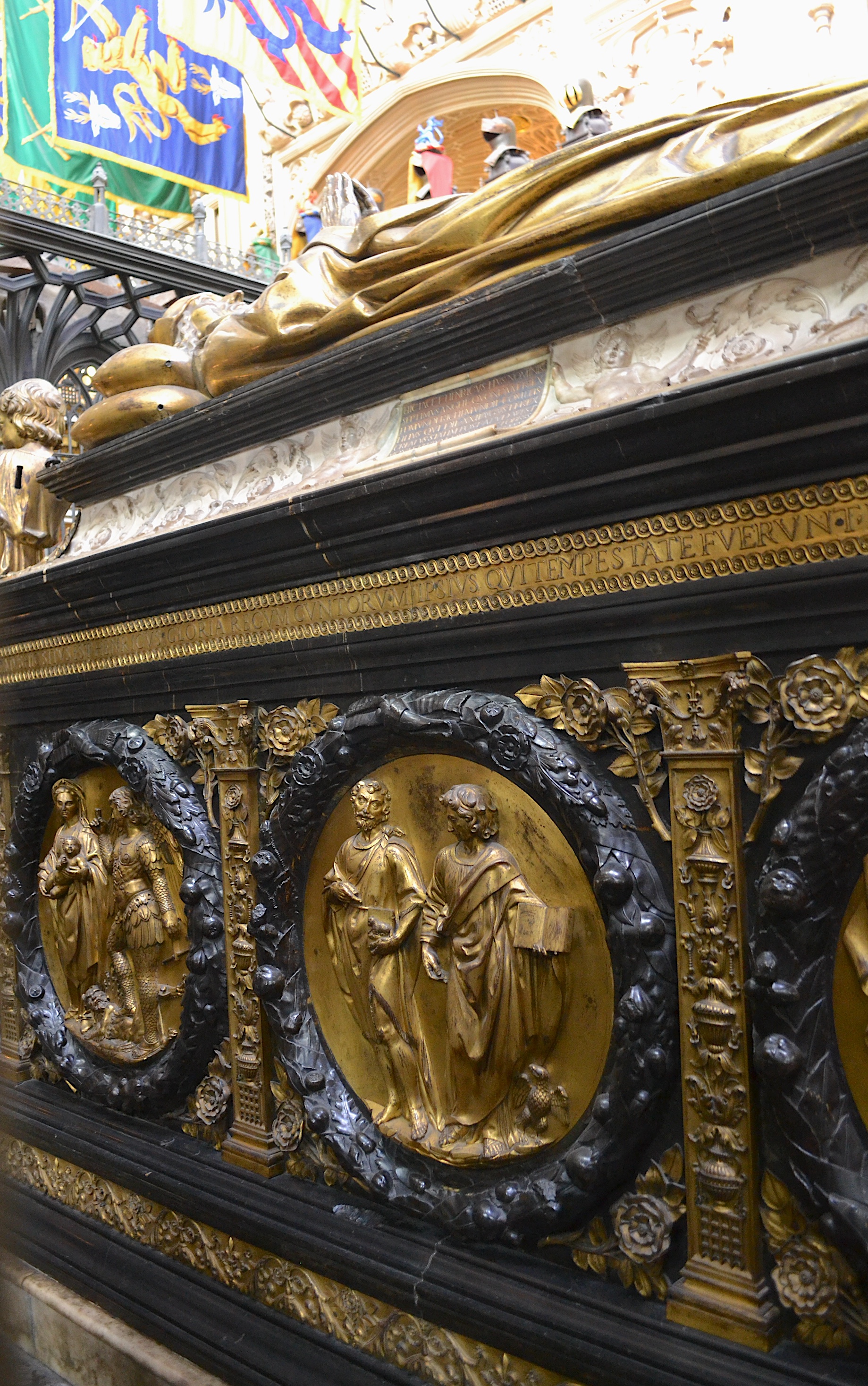
The place of his interment was rediscovered by Dean Stanley in February 1869 in the vault containing the coffins of Henry VII of England and Elizabeth of York. The body of his wife, Anne of Denmark, had been buried nearby on May 13, 1619. The antiquary John Dart saw a labelled urn containing the embalmed organs of Anne of Denmark in 1718, which he thought had been moved in 1674 during the reburial of the Princes in the Tower.

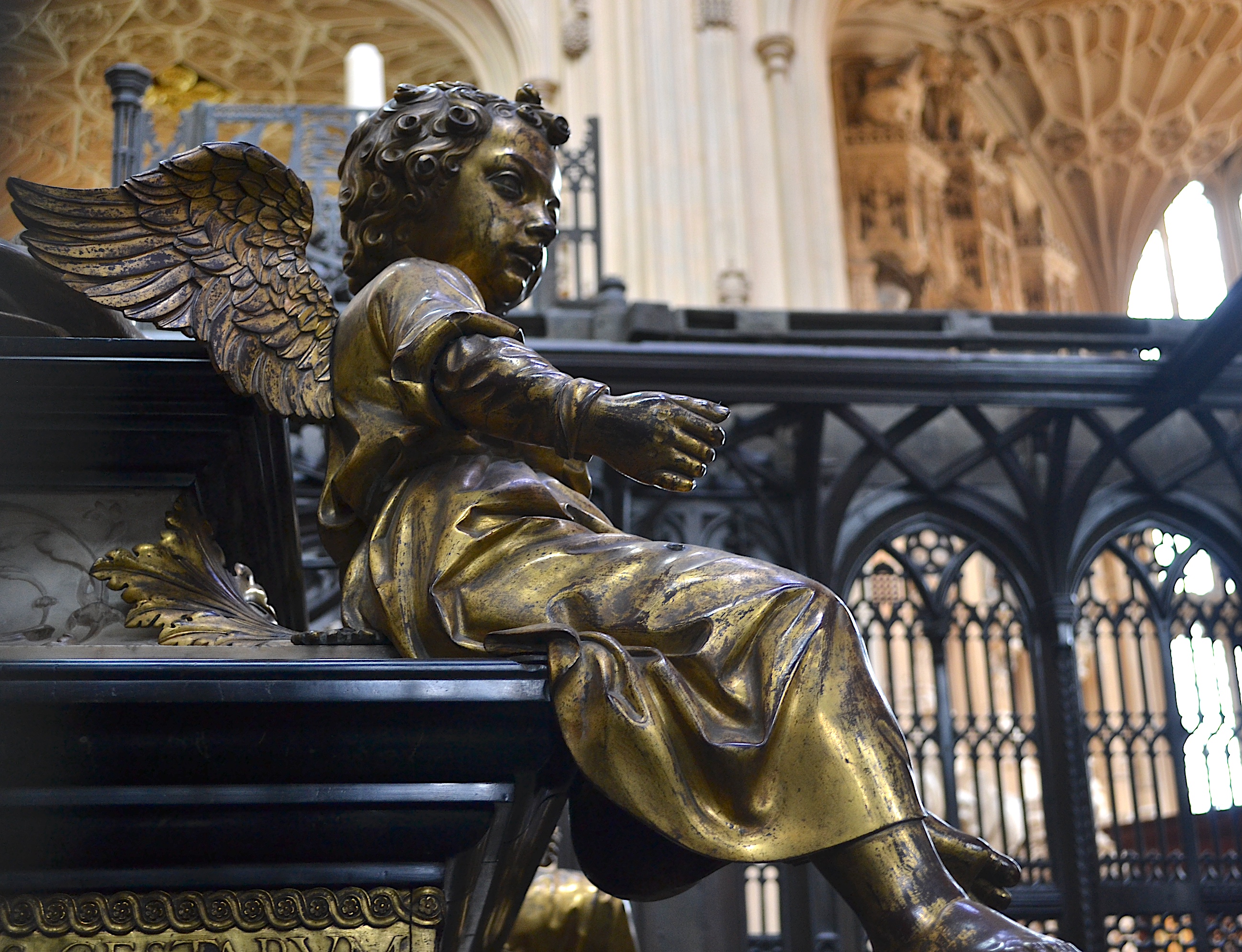
We didn’t get a very good photo of Henry VII (the king responsible for the Lady Chapel’s construction) and Elizabeth of York’s vault, sadly. There were too many people milling around it to do so. But Chris did the best he could. I did like this one he took of the angel sitting on it.

Angel sitting on the edge of the tomb of King Henry VII and Elizabeth of York.

There’s so much more to see at Westminster Abbey. I’ll have more for you in Part IV.

Westminster Abbey 2023: Visiting the Royal Half-Sisters, Queen Mary I and Queen Elizabeth I, Part II

Many thanks to the amazing Grace Barrett of Tours by Grace for leading us through Westminster Abbey!

Now that we’ve gotten the history of Westminster Abbey out of the way, what better time than now to start visiting some royalty?

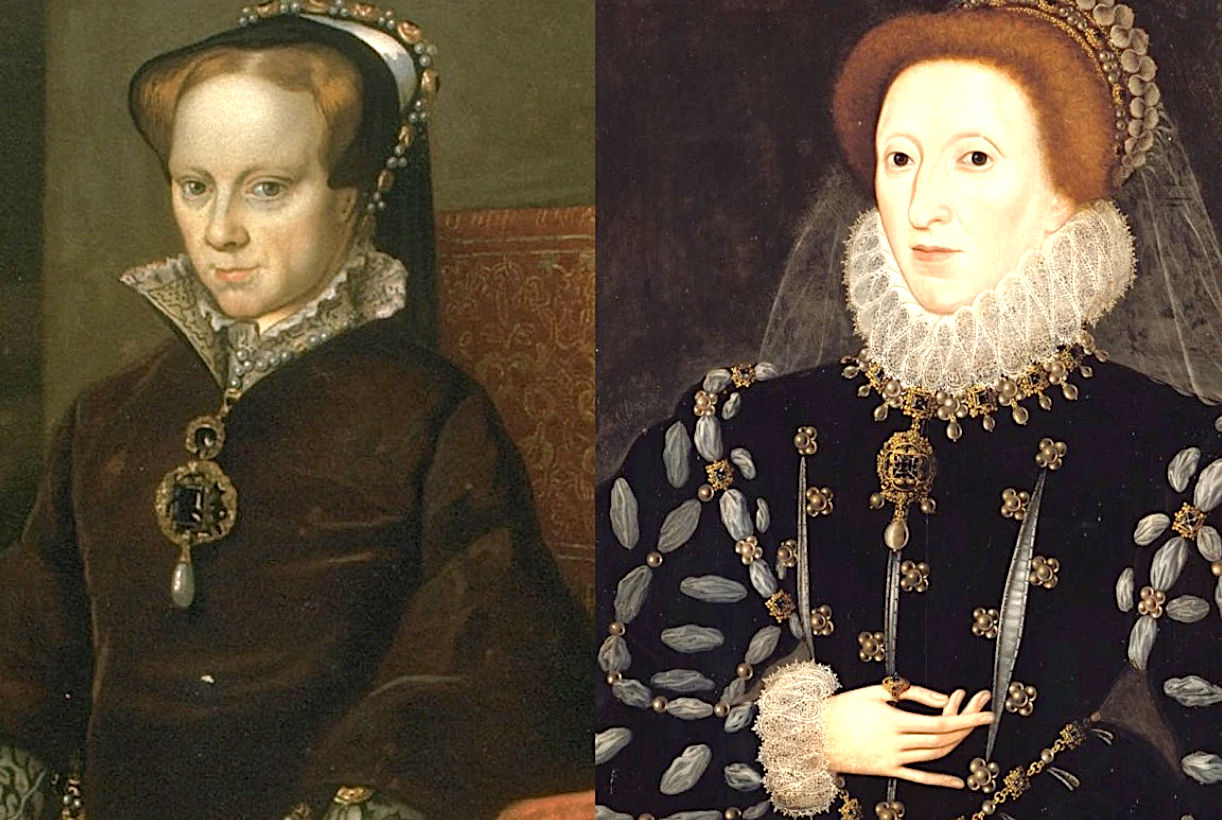
There plenty to talk about when it comes to Queen Mary I (1516-1558) and her half-sister, Queen Elizabeth I (1533-1603).

Born 17 years before her half sister, Mary did have pity for Elizabeth after her mother, Anne Boleyn, was beheaded in 1535. She knew what it was like to be ignored by her father.

Queen Mary I

Born on Feb. 18, 1516 at Greenwich Palace (which no longer exists), Mary was the only surviving child of Henry VIII and his first wife, Catherine of Aragon of Spain. People tend to forget that Henry and Catherine were married for more than 20 years before divorcing her to wed Anne Boleyn.

After her parents’ divorce around 1533 and Henry’s break with the Catholic Church, Mary eventually lived at Hatfield with half-sister Elizabeth. She did have some pity for Elizabeth after Anne Boleyn was beheaded in 1535. At that time, Elizabeth was ousted from favor and had little contact with her father. It was thanks to Mary that Elizabeth became closer with him.

During her father’s final marriage to Catherine Parr, Mary was brought back to court and named in her father’s will in the line of succession.

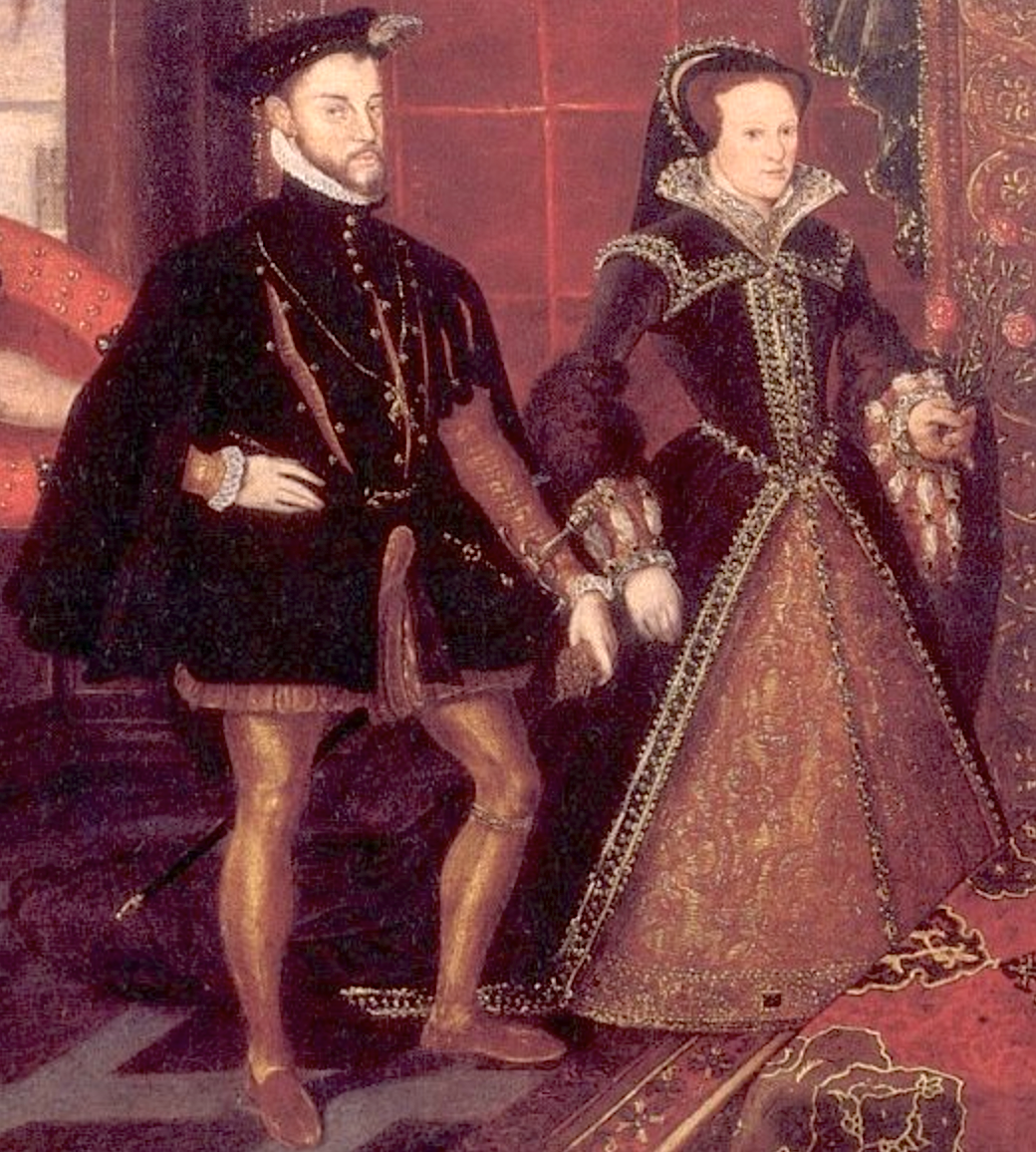
Mary wed Prince Philip of Spain in 1554. She was 10 years older than he was and they met only two days before the wedding.

Mary succeeded to the throne on the death of her brother Edward VI in 1553. Once in power, Mary took action to return England to Catholicism. She also resurrected the laws against heresy, and as a result, nearly 300 Protestants were burned at the stake. Her moniker “Bloody Mary” was well earned.

Mary married Prince Philip of Spain in 1554, which didn’t please her subjects. At age 37, she was 10 years older than her new husband. She insisted that he be given the title of king consort and all official documents bear their joint names. However, Philip left England to return to Spain a few years later when he realized he would have no heir with her.

Death of Queen Mary I

Dying childless on Nov. 15, 1558 at age 42, Mary was buried in a vault in the north aisle of Henry VII’s Lady Chapel in a coffin, above which the large monument we see today was later erected. Most of the monarchs at Westminster Abbey are buried beneath the Lady Chapel. Henry VII spent a great deal of money on it, which was begun in 1503 but not completed until 1516, nearly six years after his death.

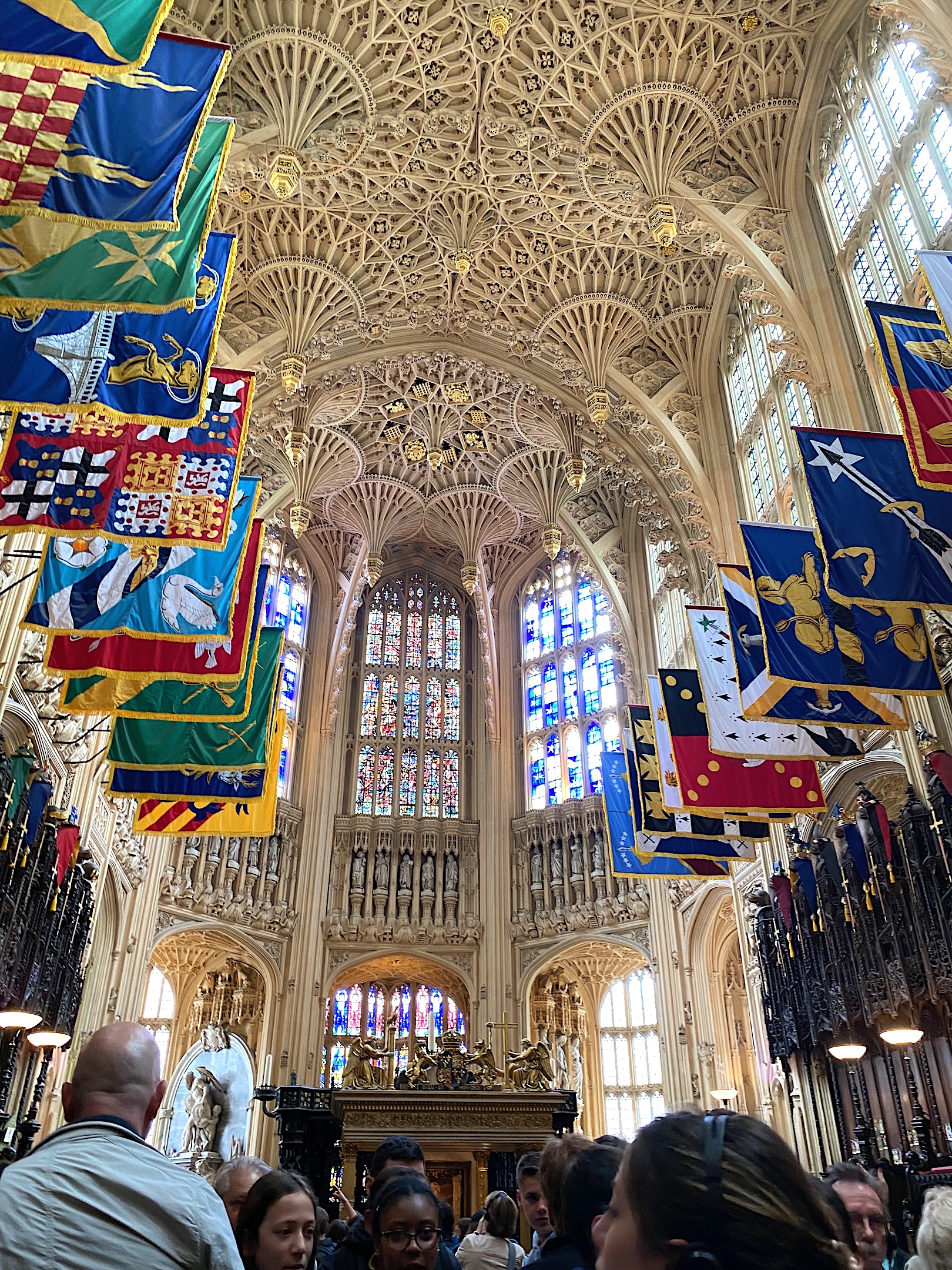
Finished in 1516, Henry VII and his wife, Elizabeth of York, are interred beneath the splendid monument at the bottom center of the picture. The ceiling is amazing!

Queen Elizabeth I

Queen Elizabeth I was the daughter of Henry VIII and Anne Boleyn and like her half-sister, she was born at Greenwich Palace on Sept. 7, 1533. When Henry tired of Anne and had her beheaded so he could marry Jane Seymour, Elizabeth was unceremoniously tossed aside. Her household was allotted little money but she did receive a good education.

From time to time, depending on her father’s mood, Elizabeth was brought to the English court where she impressed Henry VIII with her intellectual prowess. She developed a relationship with her stepmother, Henry’s fifth wife, Katherine Howard, only to see her beheaded. It’s small wonder that Elizabeth had little trust in marriage by this time.

By now, Elizabeth and Mary were not exactly “bosom friends” for many reasons. The largest bone of contention was their religious differences. Not surprisingly, Mary was staunchly Catholic like her mother Catherine and had married a Catholic. Elizabeth favored her father’s Church of England, which had replaced the Catholic Church when he divorced Catherine of Aragon.

Queen Elizabeth I died on March 24, 1603 at age 69 at Richmond Palace.

When Mary died in 1558, Elizabeth was crowned queen at Westminster Abbey on Jan. 15, 1559. She ruled for 44 years until her death on March 24, 1603 at age 69. She never married and had no children.

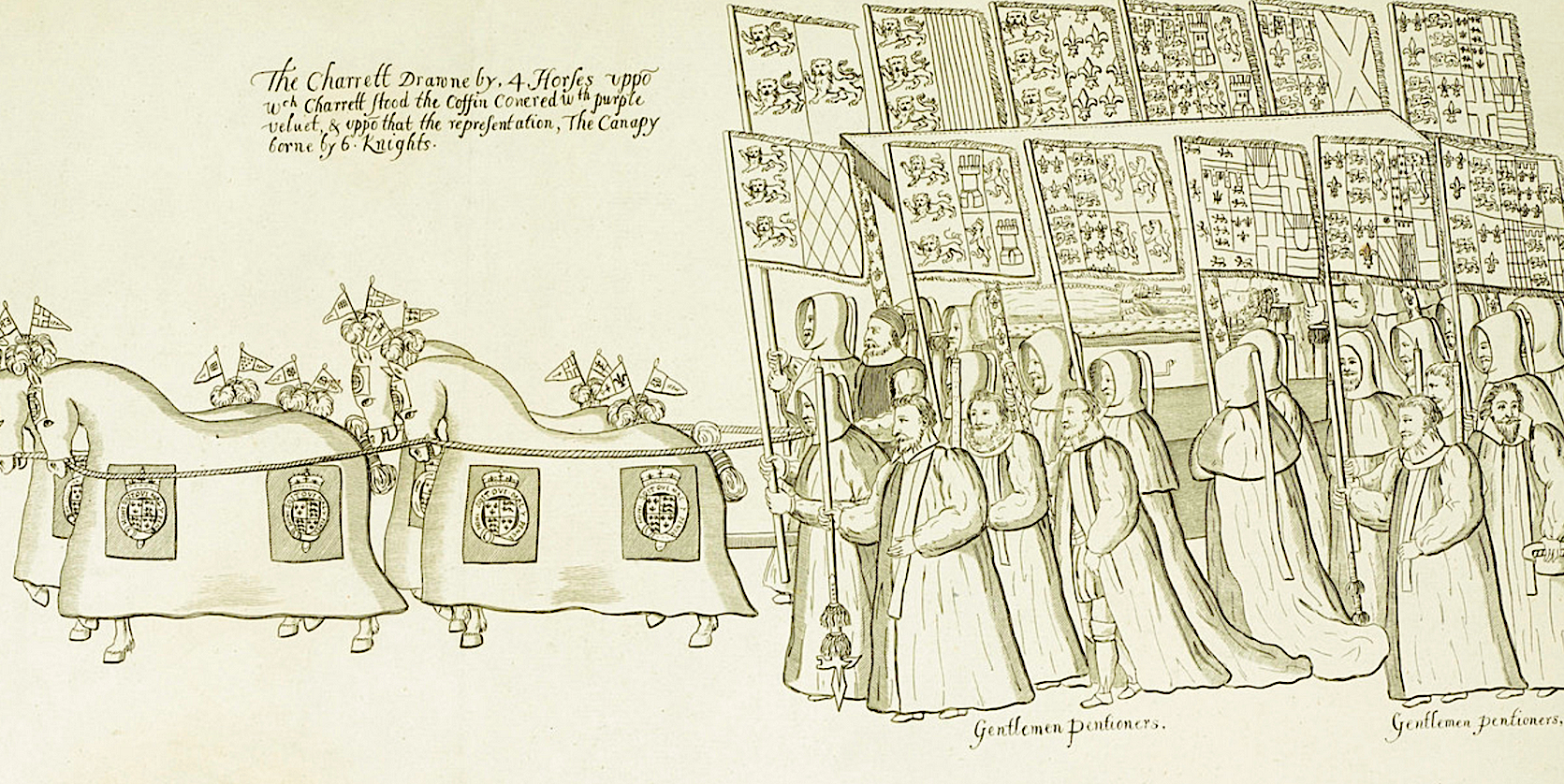
The funeral procession of Queen Elizabeth I to Westminster Abbey, April 28, 1603. (Photo Source: The British Library)

Two Sisters, One Monument

Here’s where it gets interesting!

As I noted earlier, Mary’s coffin was placed in a vault in the north aisle of Henry VII’s Lady Chapel. After Elizabeth died, the monarch who replaced her, James I, had Elizabeth’s coffin placed on top of Mary’s in the vault. I don’t think that was an accident.

Grace, our tour guide, shared with us that what came next was rather fitting considering how much the two sisters couldn’t stand each other.

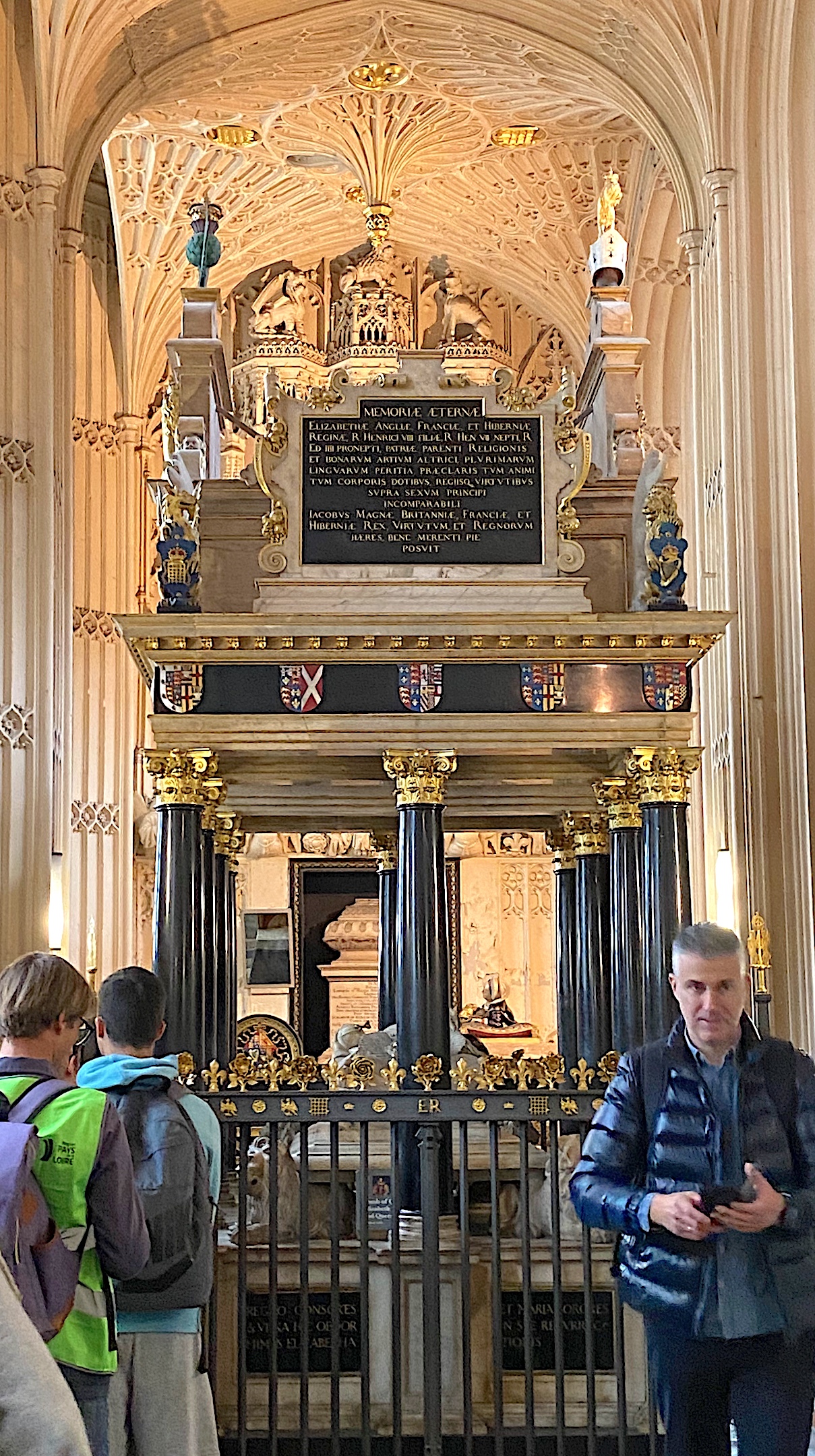
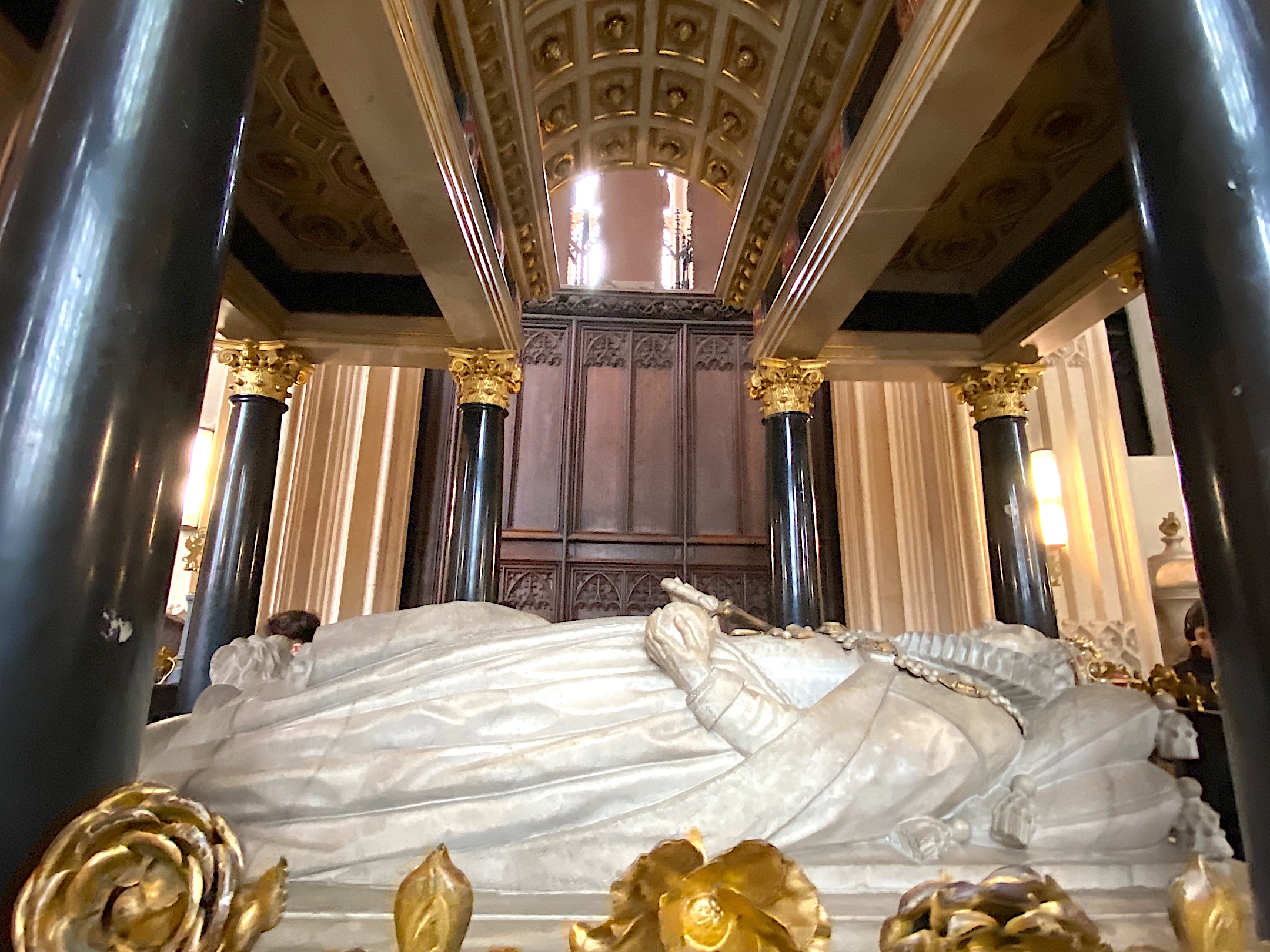
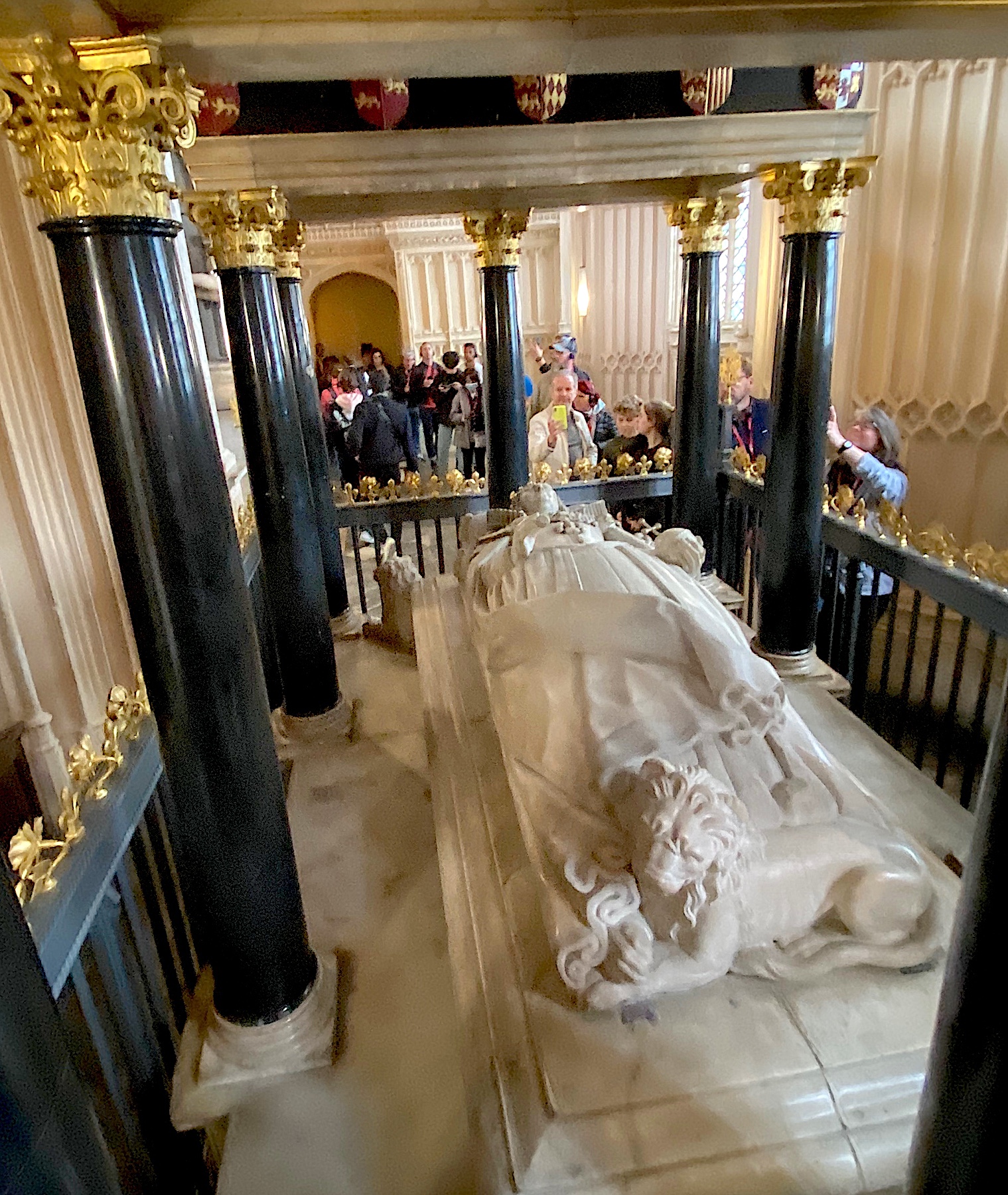
When you walk into the north aisle, this is what you see. Made of white marble, the monument is massive. Commissioned by James I, it was made by sculptor Maximilian Colt and painted by John de Critz. The recumbent effigy resembles portraits of Elizabeth in old age. According to Westminster Abbey’s web page, the cost was £1,485 at the time.

The monument to Queen Elizabeth takes up much of the north aisle.

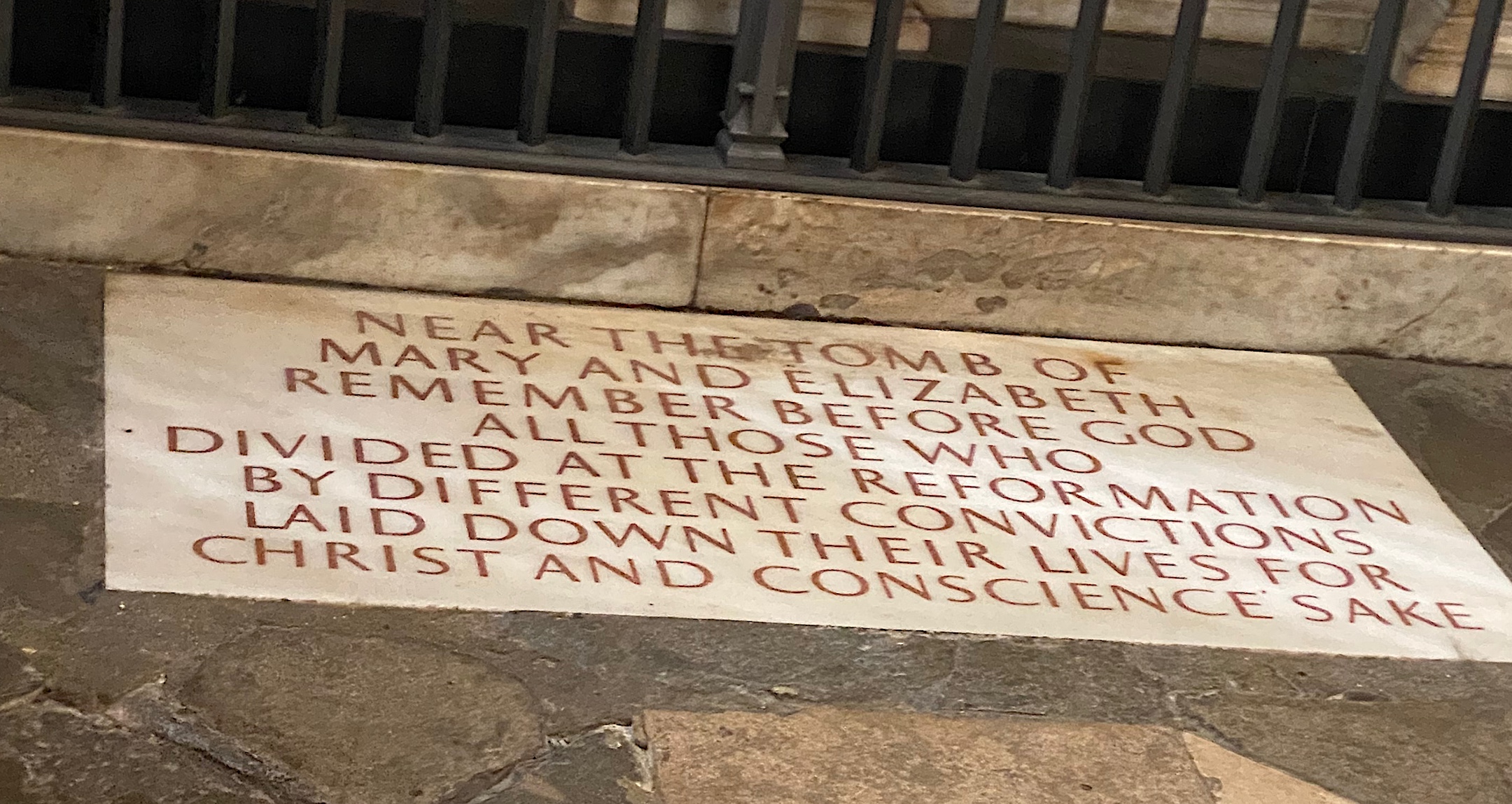
As you get closer, you’ll notice something. There’s only one effigy resting on top of the base enclosed under the canopy, and that’s of Elizabeth I. Mary is nowhere to be seen! Below is a photo of the only mention of Queen Mary I.

Where’s Mary? Under the floor in the vault, in a coffin beneath Elizabeth’s. Her younger half-sister ended up on top in the end.
The effigy of Queen Elizabeth I holds an orb and scepter, symbols of her power.
Another view from above. Chris or Sean must haven taken this photo, I’m too short!

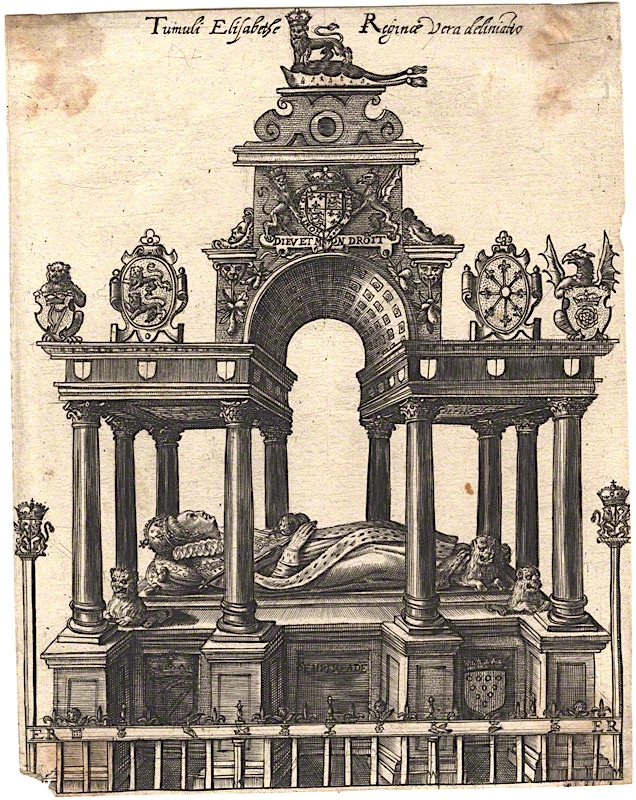
To get some idea of what the monument looked like in its earlier days, this is a 1620 engraving of it from London’s National Gallery.

This 1620 engraving was made by either Magdalena de Passe or her brother Willem de Passe, members of a well-known family of engravers.(Photo Source: National Gallery, London)
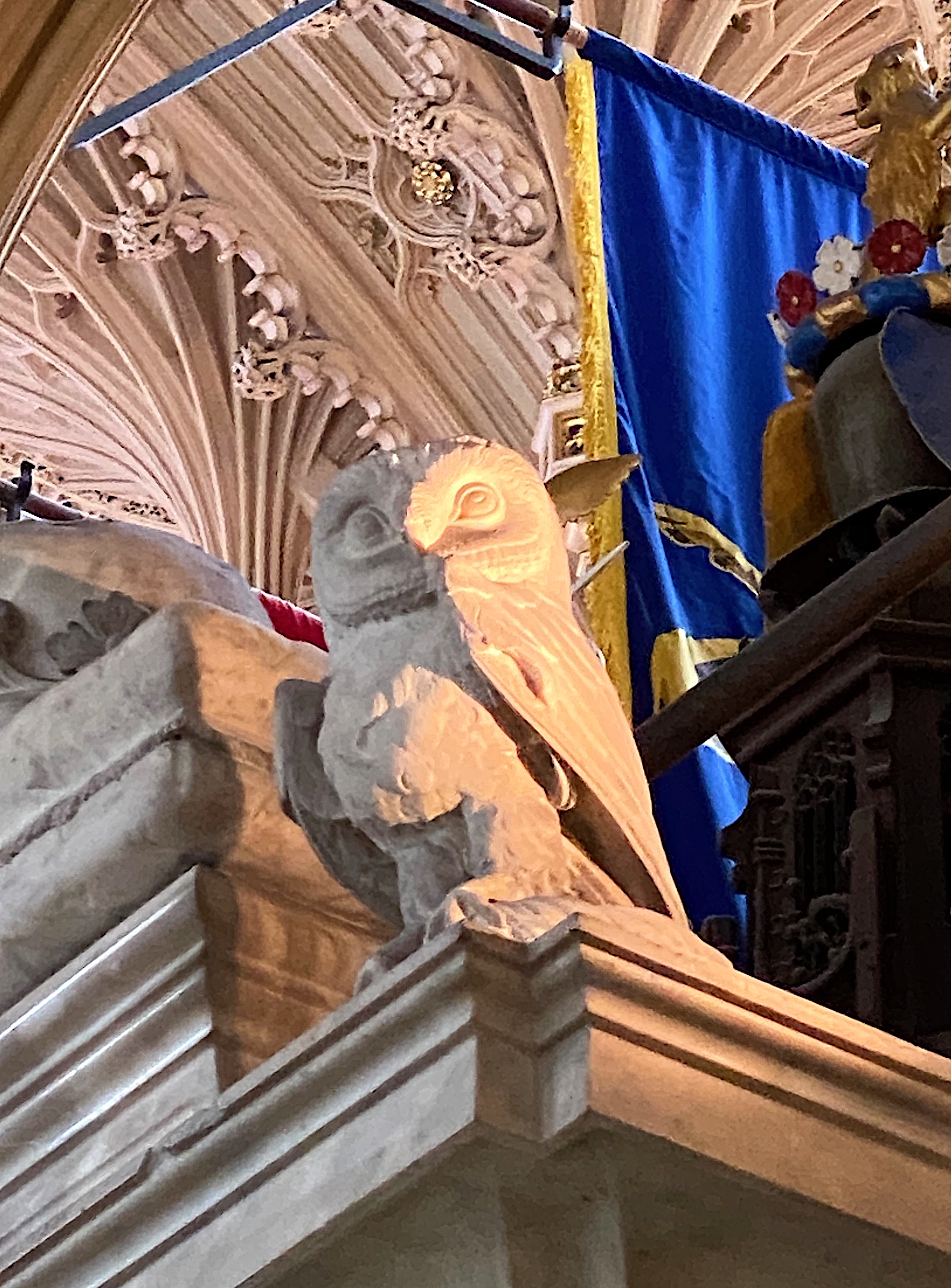
I particularly liked this carved owl!

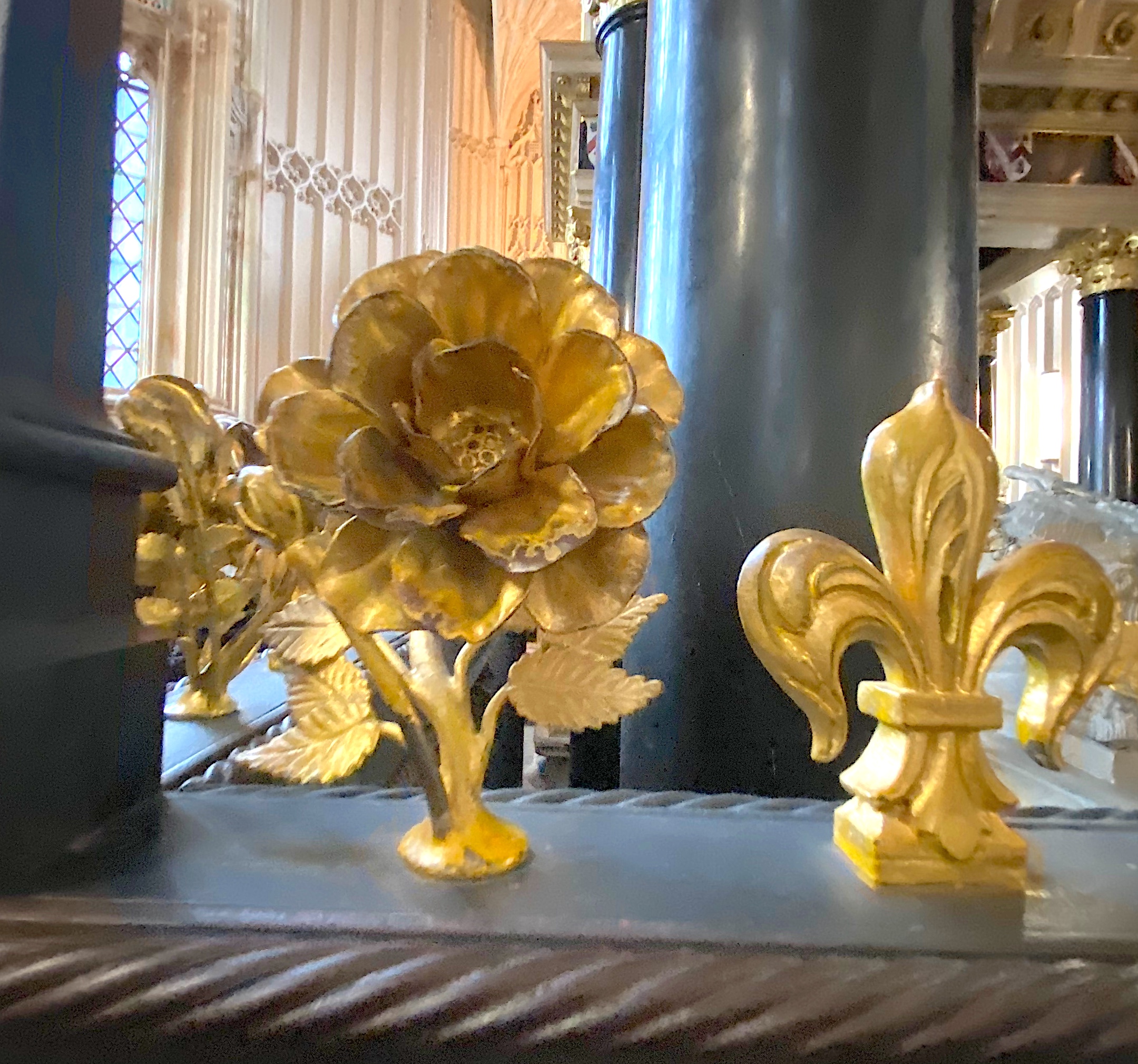
The roses and fleur-de-lis were prominently placed on the railings around the monument.

The golden ornaments around the monument are lovely.

Princess Sofia

After you’ve seen Queen Elizabeth I (and pondered poor Queen Mary I’s lack of presence), you’ll notice at the end of the north aisle there are monuments to some royal children worth mentioning.

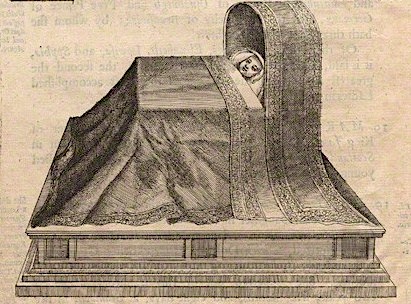
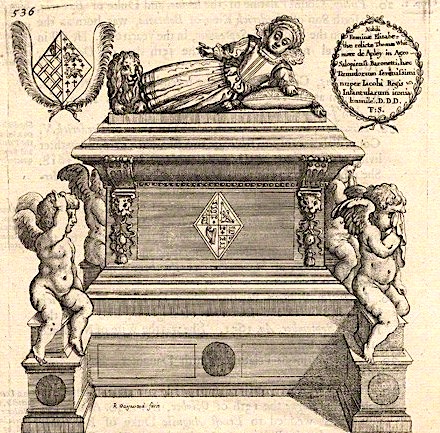
To the left is Princess Sofia, born on June 23, 1606 and died the next day at Greenwich Palace. She was the fourth daughter of James I and Anne of Denmark. Below is an engraving of her monument.

Engraving of Princess Sofia’s monument by Richard Gaywood.

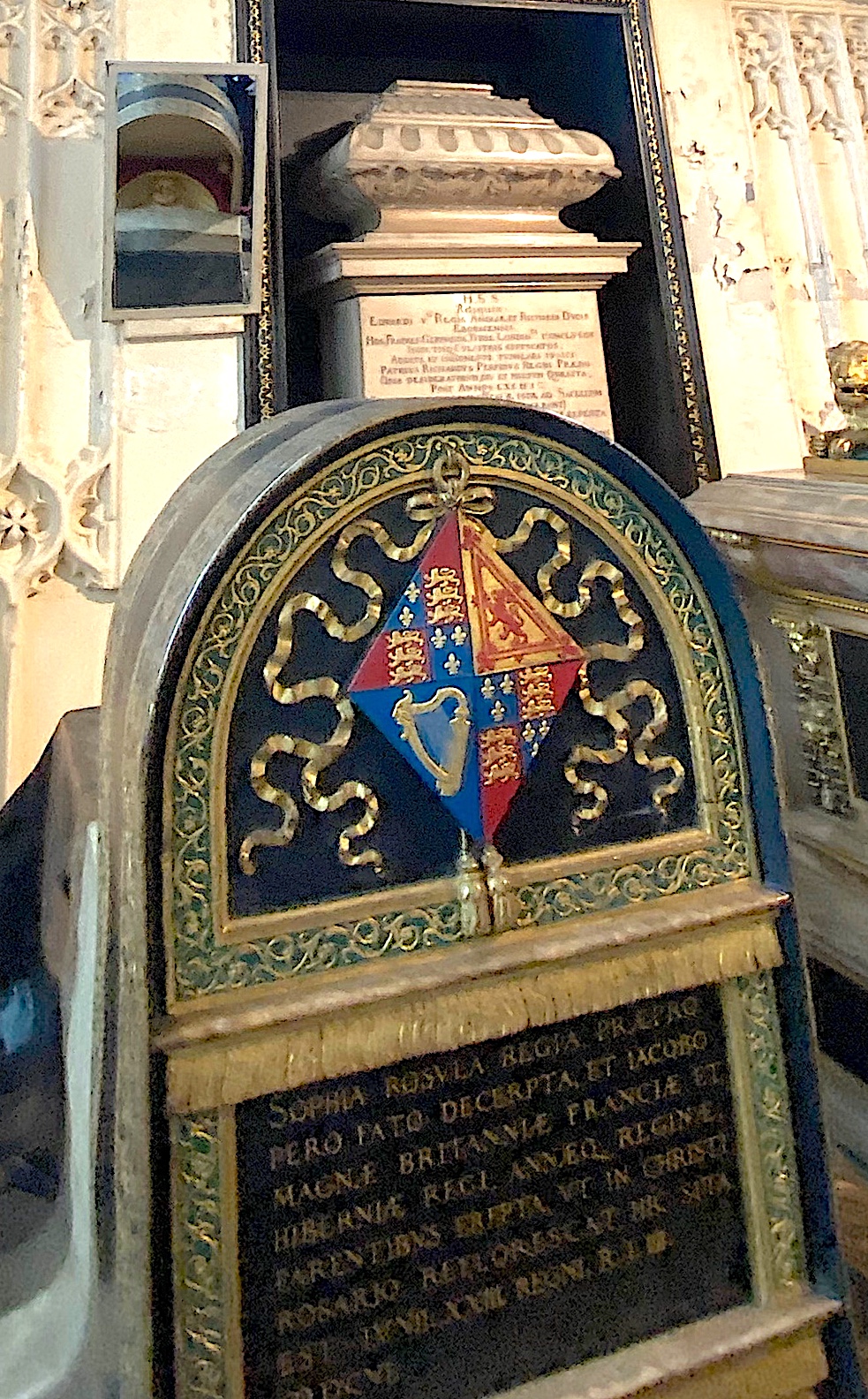
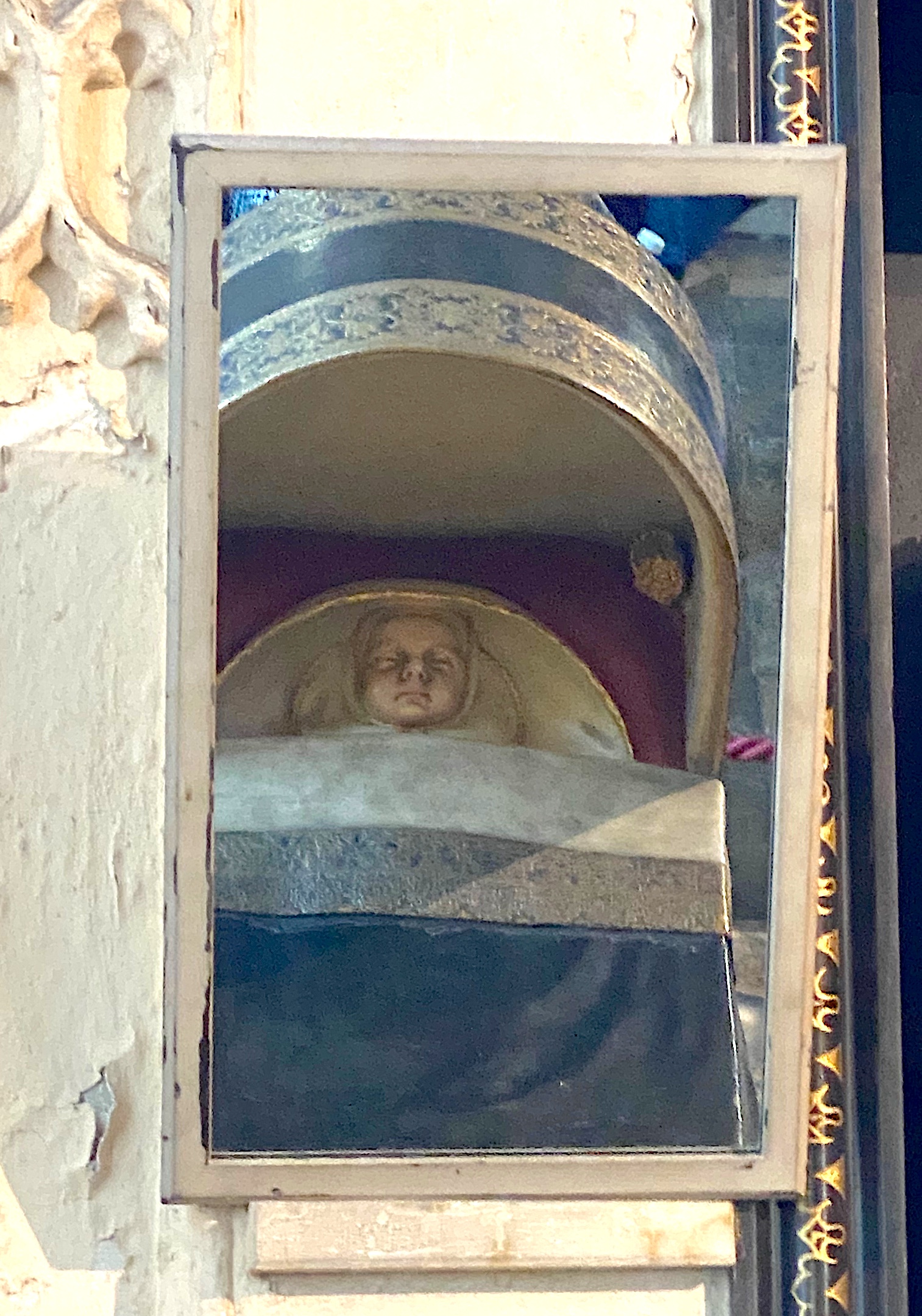
Sophia’s monument resembling a stone crib was designed by Maximilian Colt, and painted and gilded by John de Critz (they created Elizabeth I’s monument). The tomb is carved with lacework and an embroidered velvet cover. I didn’t get a very good photo of it. The angle at which it is placed makes it impossible for you to see the effigy’s face, so they have a mirror in place.

Princess Sofia only lived one day.
Above you can see the infant Princess Sofia’s little face in the mirror.

The Latin inscription on the end of the monument is translated below:

Sophia, a royal rosebud untimely plucked by Fate and from James, King of Great Britain, France and Ireland, and Queen Anne her parents, snatched away, to flower again in the rose garden of Christ, lies here. 23rd June, 4th year of the reign of King James 1606.

Princess Mary

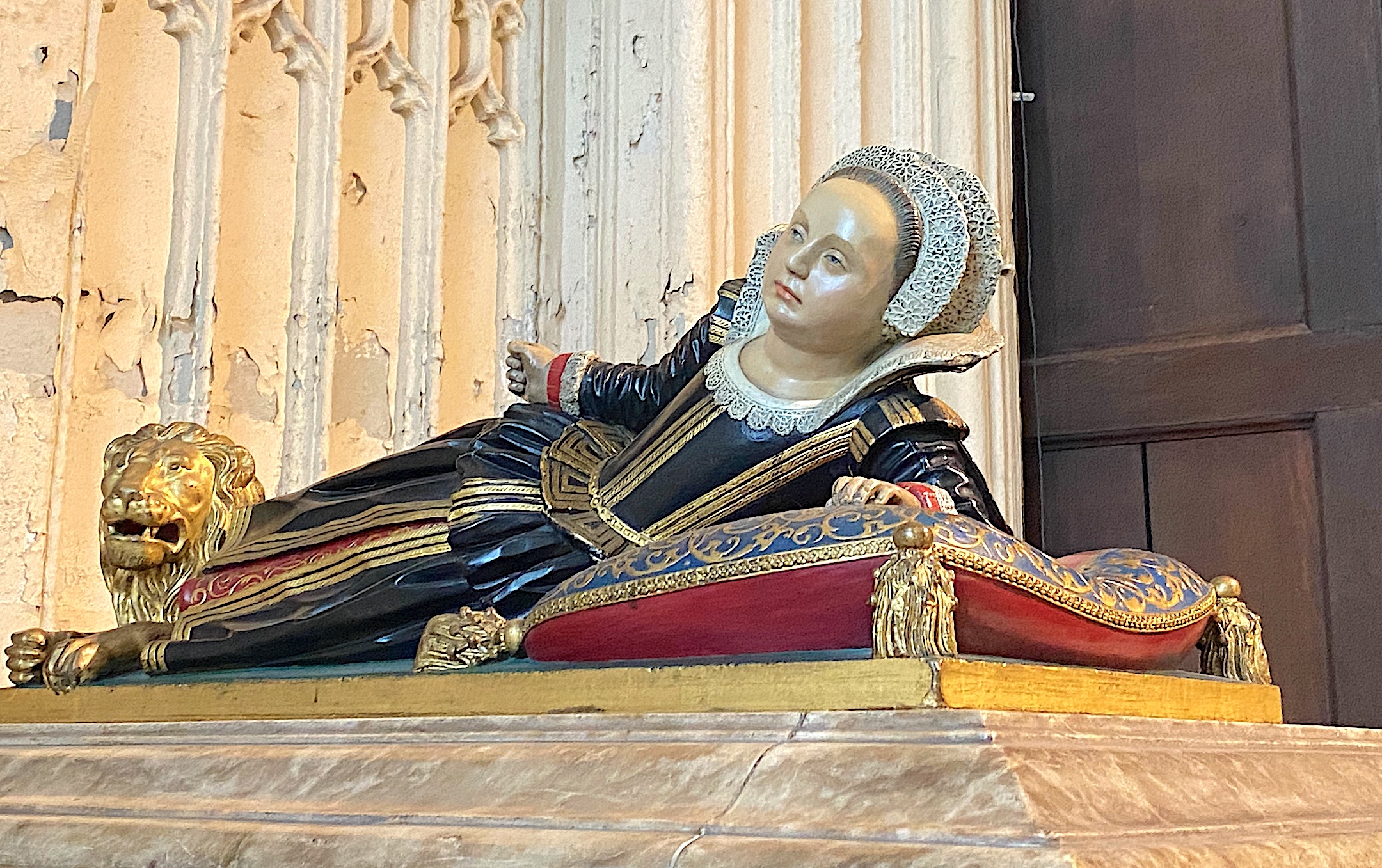
To the right of Princess Sophia is her older sister, Princess Mary. Born on April 8, 1605 at Greenwich Palace, she was the third daughter of James I and Anne of Denmark. She lived 17 months before succumbing to pneumonia on Sept. 16, 1608.

Richard Gaywood also drew this engraving of Princess Mary’s tomb.

Her effigy, created by Maximilian Colt, represents a young girl wearing a mature dress, with the traditional ruff, carved in ivory.

Princess Mary’s effigy looks much older than a child who was 17 months old.
Princess Mary lived longer than her little sister, Sophia, but died of pneumonia in 1608.

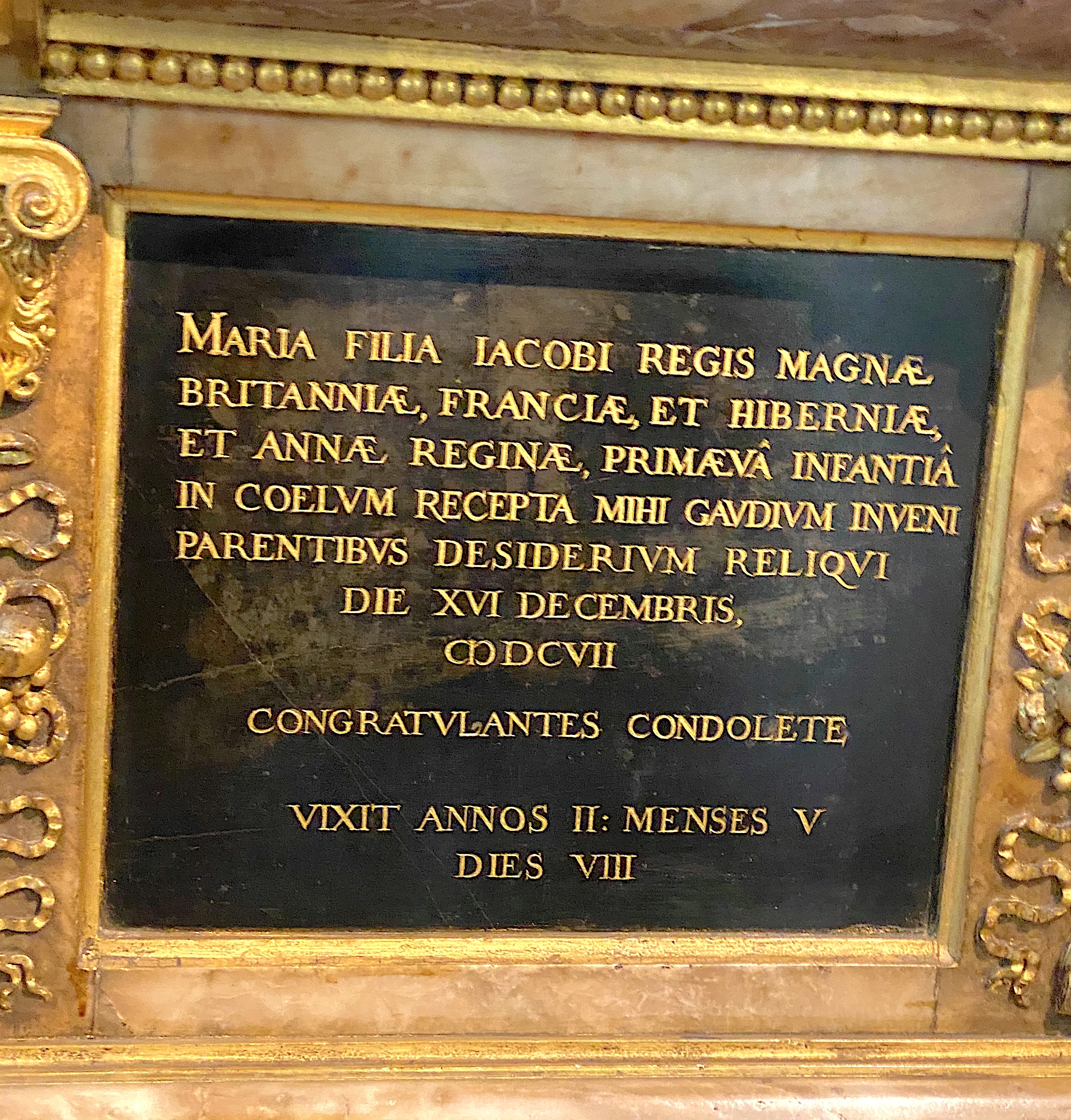
It reads:

I, Mary, daughter of James, King of Great Britain, France and Ireland and of Queen Anne, received into heaven in early infancy, found joy for myself, but left longings for my parents, on the 16th of September, 1607. Ye congratulators, condole: she lived only 1 year [sic, according to Everett Green] 5 months and 88 days.

Princes in the Tower?

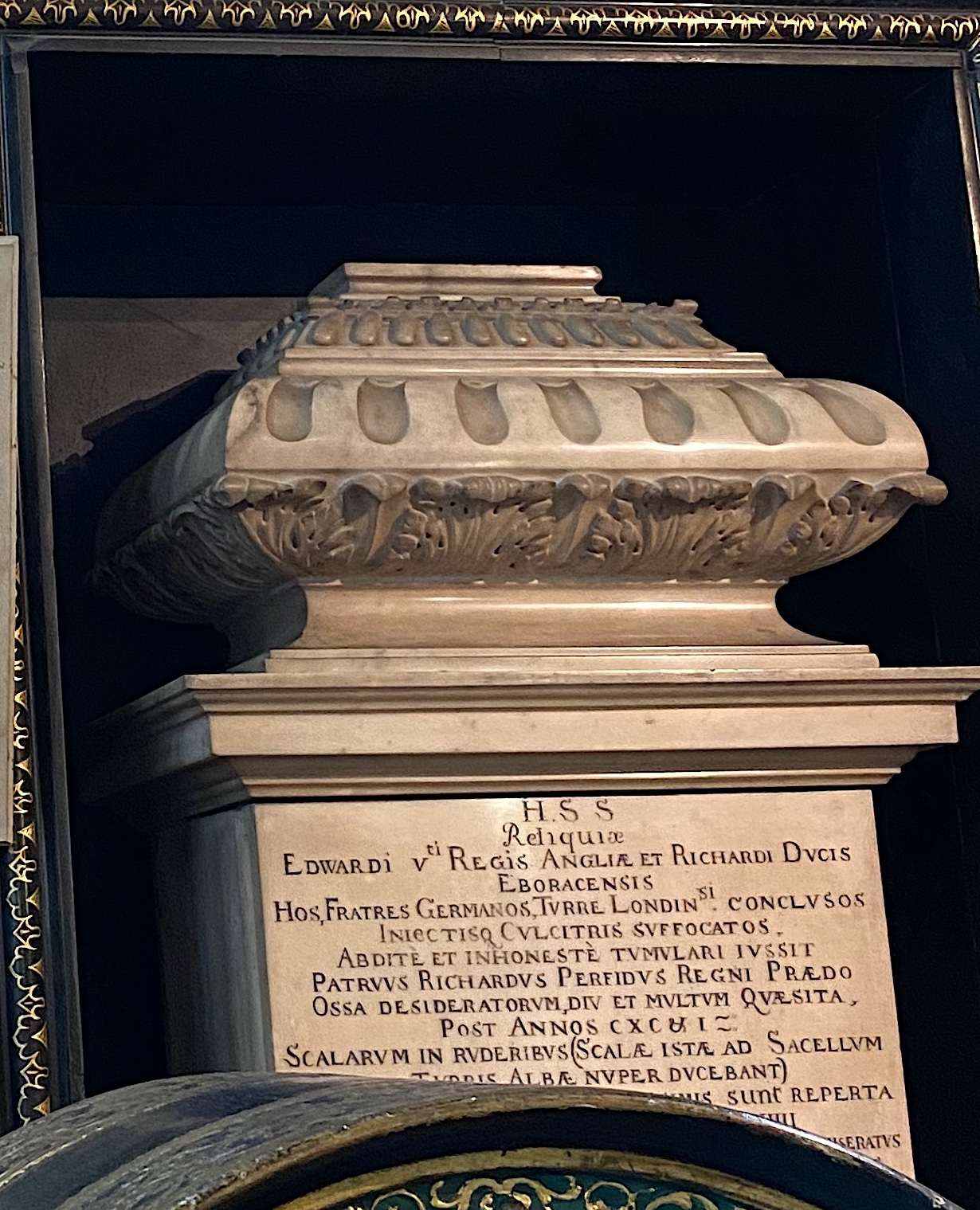
You may be wondering what this item is located behind Princess Sophia and Princess Mary. I admit that I didn’t pay much attention to it at the time.

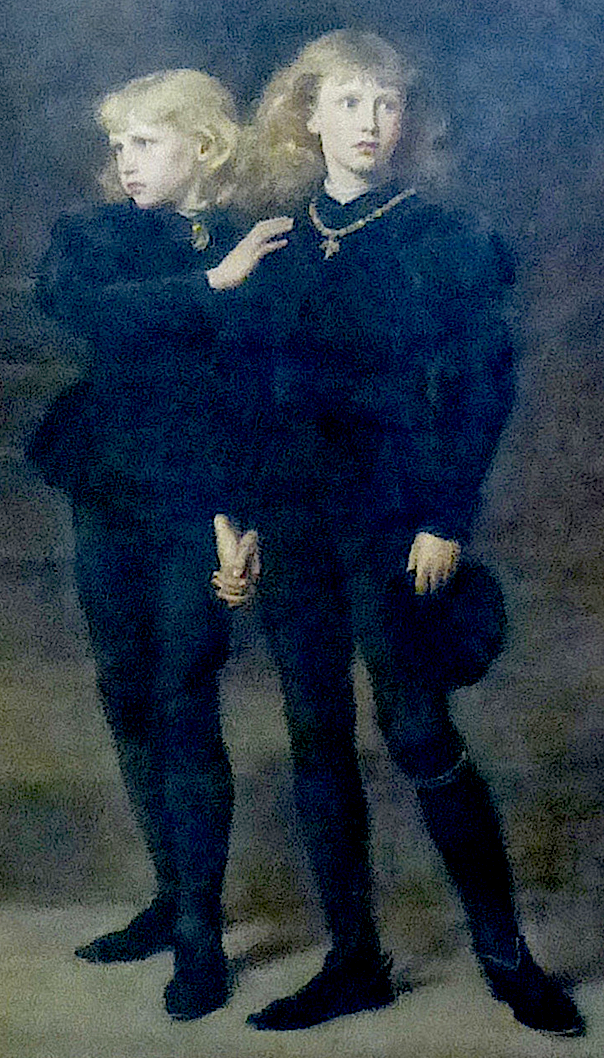
Are these the remains of the alleged murdered princes in the Tower of London?

I learned this was a monument created for the so-called Princes in the Tower, Edward and Richard. Their story is long and complicated. William Shakespeare wrote about them in his play, “Richard III”.

The princes, sons of Edward IV and Elizabeth Woodville, were born during the Wars of the Roses. After Edward IV’s death in 1483, his brother the Duke of Gloucester (later Richard III) became Lord Protector of Edward’s son and heir, the 12-year-old Edward V. The Duke immediately placed Edward in the Tower of London, closely followed by his nine-year-old brother Richard, for “their protection”.

What became of these two boys remains a mystery but they were never seen alive again. It’s long been believed that Richard III, who was crowed king in 1483, had them murdered. This has been debated for centuries with many theories having been put forth about it..

Did Richard III have his own nephews murdered so he could be crowned king?

Nearly 200 years later, in 1674, King Charles II ordered the demolition of what remained of the royal palace to the south of the White Tower. The location included a turret that once contained a privy staircase leading into St. John’s Chapel.

Beneath the foundations of the staircase, some 10 feet below the ground, workmen found a wooden chest containing two skeletons. It was concluded that they were the bones of children. Charles II had them interred at Westminster Abbey in the later 1670s and they’ve been there ever since in the monument you see today.

In 1933, the remains were forensically examined and thought to be the bones of two boys between 10 and 12. But testing was not exactly precise in those days, so doubts remain still today if it truly is Richard and Edward. We’ll likely never know.

I’ve got more royal tombs for you so come back for more in Part III!

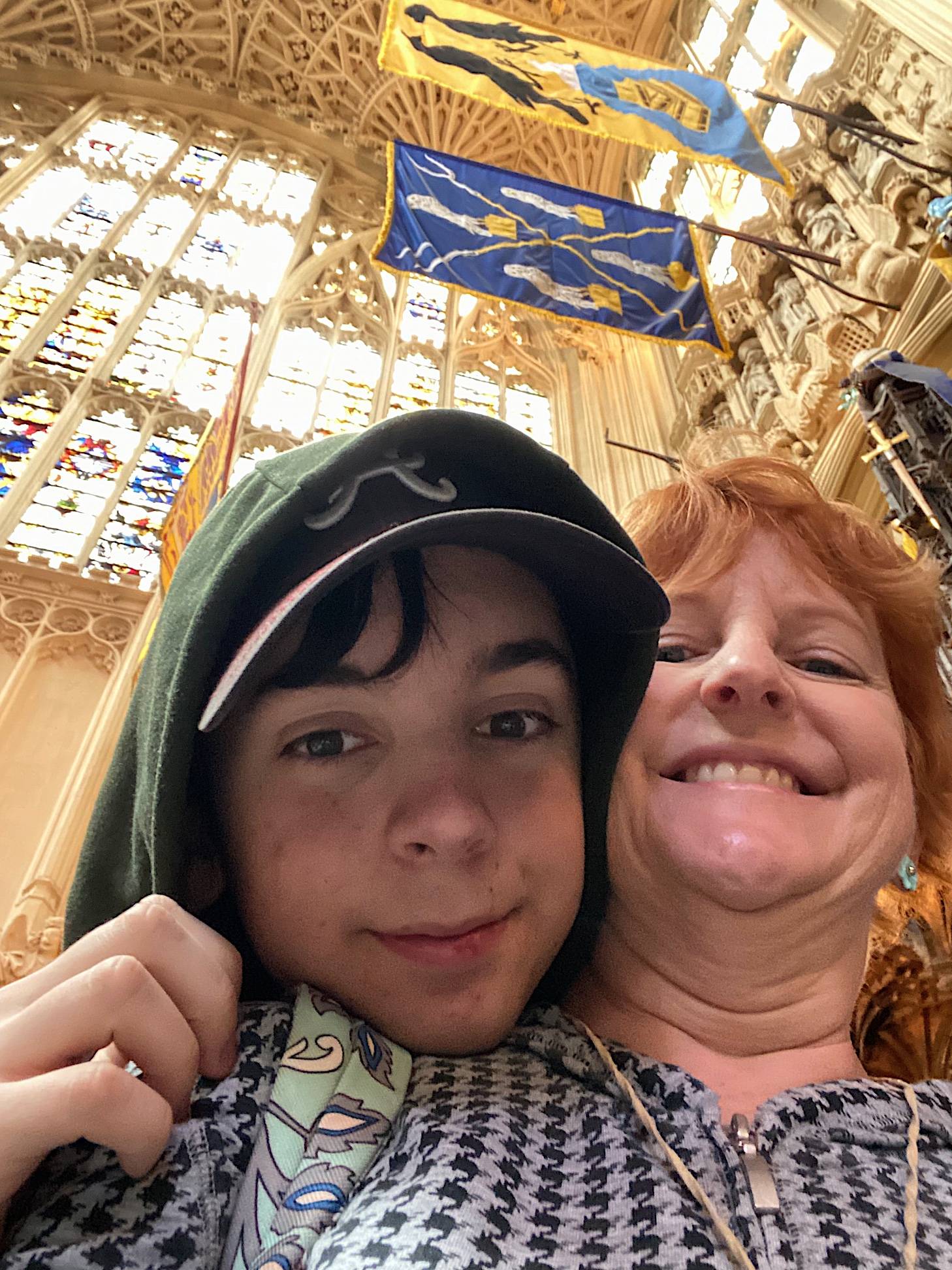
One of my favorite photos of me and my son, Sean, in the Lady Chapel at Westminster Abbey. Pardon my multiple chins.

Westminster Abbey 2023: Third Time’s the Charm, Part I

[Note: For more information on Tours by Grace, visit: https://www.toursbygrace.com/]

Last week, I told you I planned to feature some local (to me) cemeteries in my next blog posts. But this week, I realized I didn’t want to do that.

In the past, I’ve tried to write about my adventures chronologically. However, sometimes I get the urge to do something different.

When you make the rules, you can do that.

Today I’m starting a new series on London’s Westminster Abbey, which I visited in June 2023. There’s a bit of a story behind my relationship with this place, but I’ll try to keep it brief.

It was my third visit to London, but my first visit inside Westminster Abbey.

Disappointed in 1998

It started in July 1998 when I visited London for the first time with my college roommate and dear friend Megan. While I was not yet a cemetery hopper, I wanted to see Westminster Abbey. So one day we headed over there and to my disappointment, it was closed for an event.

I didn’t see the statues of the 20th-century martyrs that Queen Elizabeth and Prince Phillip came to dedicate that day in July 1998 until June 2023. In the center is Atlanta’s own Dr. Martin Luther King, Jr.

However, that event turned out to be a visit from Queen Elizabeth II and Prince Phillip! They were due to arrive in a few hours. We decided to settle down and wait, getting a prime place to watch near the gates. They were going to be part of a ceremony in which some new statues of 20th-century martyrs were to be unveiled.

Needless to say, seeing the royal couple walk in was worth the wait! But that meant we missed out on going inside.

We didn’t get to tour the Abbey that day in July 1998 but we did see the Queen and the Prince! Sorry the photo is rather blurry. She was even wearing my favorite color.

My second opportunity came in September 2000 after a week-long tour of Scotland. I spent a few days in London after the tour before heading west to Swindon to stay with a couple I knew. I planned to go back to the Abbey, but I ran into a fellow tourist in my hotel’s Internet cafe who was catching a bus to see St. Paul’s Cathedral and he invited me to tag along. So I did.

Fast forward to January 2020 as my family and I prepared to visit London and Paris, my husband and son had been to neither. I’d never been to Paris. Covid rudely put that off until June 2023 and we made new plans. I was determined to not only visit Westminster Abbey, but to hire a guide who could show us around to make the most of it.

Hopefully, the third time would be the charm.

Tours By Grace

There are plenty of guides eager to show you around Westminster Abbey. You can also rent an audio tour if you prefer. But when I found Grace (of Tours by Grace) online, I got the feeling right away that she was exactly the right person for us. And she was!

Grace proved to be the perfect tour guide for us. She capably guided us through the crowds while telling some amazing stories.

Grace is a certified Blue Badge London Tourist Guide and that’s nothing to sneeze at. It takes two years of training and passing strict qualifications to become one. These are not folks reciting a list of facts out of a guidebook while glancing at their watch. They tailor your tour to what you specifically want to see. Even if what you want to see most are graves.

There’s an awesome benefit to having waited until 2023 to visit. You couldn’t take pictures inside the Abbey until October 2020. Photography is still not allowed during services. But had I visited before, I wouldn’t have been able to take a picture of a single grave or tomb.

Britain’s Oldest Door

If it hadn’t been for Grace pointing it out, I’m not sure we would have seen Britain’s oldest door.

The door was dated for the first time in 2005 by a process called dendrochronology. A detailed study of the wooden door (in the vestibule leading to the Chapter House), showed that the wood came from a tree chopped down after 1032 A.D. The door was constructed sometime in the 1050s. This was during the reign of King Edward the Confessor.

The door is made of five vertical oak planks held together with three horizontal battens and iron straps.

According to the Westminster Abbey web site:

The door was obviously retained when Henry III rebuilt the Abbey and Chapter House from 1245 but cut down to be put in a new position. In the 19th century, the fragments of cow hide were first noted and a legend grew up that this skin was human. It was supposed that someone had been caught committing sacrilege or robbery in the church and had been flayed and his skin nailed to this door as a deterrent to others.

A Few Facts

I’m not going to spend much time on the history of Westminster Abbey, which is over 1,000 years old. With only two exceptions, every monarch since 1066 has been crowned there. The Abbey had just hosted the coronation of King Charles less than a month before our visit. We saw the Coronation Chair, pictured below, that he sat in. It has plexiglass in front of it, thus the reflection of the stained glass.

The Coronation Chair was made by order of Edward I to enclose the famous Stone of Scone, which he brought from Scotland to the Abbey in 1296, where he placed it in the care of the Abbot of Westminster.

The Abbey has never had a bishop, except for a brief time during the 1540s (before then, it was presided over by an abbot). Upon its re-founding by Elizabeth I in 1560, it was established as a royal peculiar. Ever since, it’s been outside the hierarchy and jurisdiction of the Church of England.

Westminster Abbey is among many monasteries founded in the Catholic Church, although it was later repurposed as a powerful symbol of Protestant national identity. Although much of the architecture is French in origin, the Abbey is widely regarded as quintessentially English.

How Many People Are Buried in Westminster Abbey?

Over 3,300 people are buried or commemorated in the Abbey. Many are not buried there but have a cenotaph placed in their honor, such as Victorian authors (and sisters) Charlotte, Emily, and Anne Bronte. They’re actually buried in Haworth in Yorkshire.

Victorian authors Charlotte, Emily, and Anne Bronte are actually buried in Haworth, Yorkshire. This is a cenotaph.

An estimated total of 18 English, Scottish and British monarchs are buried in the Abbey, including Edward the Confessor, Henry III, Edward I, Edward III, Richard II, Henry V, Edward V, Henry VII, Edward VI, Mary I, Mary Queen of Scots, Elizabeth I, James I, Charles II, Mary II, William III, Queen Anne, and George II.

During the early 20th century, for reasons of space, it became more common to bury cremated remains (ashes). In 1905, actor Sir Henry Irving became the first person to have their ashes interred at the Abbey.

Eight British prime minister are buried in the Abbey, and I happened to notice a few of them as I was walking around (and over) them. That’s the tricky thing about walking around Westminster Abbey. You might be stepping on a king or a poet or a prime minister and not even realize it!

Clement Attlee, (1883-1967), was a British statesman and Labour Party politician who served as prime minister from 1945 to 1951, and leader of the Labour Party from 1935 to 1955.

The Unknown Warrior

At the west end of the Nave, you’ll find the grave of the Unknown Warrior, whose body was brought from France to be buried at the Abbey on Nov. 11, 1920. The grave, which contains soil from France, is covered by a slab of black Belgian marble from a quarry near Namur.

Where did the idea come from? In 1916, a chaplain at the Front, the Rev. David Railton (1884-1955), noticed something in a back garden at Armentières. It was a grave with a rough cross on which were written the words “An Unknown British Soldier”. In August 1920, Rev. Railton wrote to the dean of Westminster, Herbert Ryle, who took up the cause of creating a memorial. The body was chosen from unknown British servicemen exhumed from four battle areas, the Aisne, the Somme, Arras, and Ypres. (some sources say six bodies but confirmed accounts say four).

The Tomb of the Unknown Warrior is surrounded by poppies, an important symbol of World War I.

General John J. “Black Jack” Pershing, on behalf of the United States, conferred the Congressional Medal of Honor on the Unknown Warrior on Oct. 17, 1921, which hangs in a frame on a pillar near the grave.

First Impressions

As an American accustomed to outdoor cemeteries, I found the tombs/graves of Westminster Abbey overwhelming and amazing all at once. The range of materials, along with the different sizes of monuments and memorials, had my head spinning. A single rectangle represented the author Charles Dickens, while an admiral I’d never heard of merited an enormous monument that could fill a small house.

Some feel that Dickens actually wanted to be buried in Rochester Cathedral, near where he died in 1870. But public opinion at the time demanded that Westminster Abbey was the only place for the burial of someone of his distinction.

Some say Charles Dickens wanted to be buried in Rochester, but he was interred in the Poets’ Corner of Westminster Abbey after a private funeral.

Also, you can look up at a wall in the East Cloister and see a memorial that just happens to include some skulls. While I’ve seen skulls on grave markers in New England cemeteries, that’s not something I’ve ever seen inside an American church.

Born around 1637, James Broughton was surveyor to the dean and chapter of Westminster, and was a deputy (under surveyor) to Sir Christopher Wren. He died in 1710 and is interred with his first wife, Rebecca, who died in 1699 at age 47.

There’s a great deal more to see at Westminster Abbey. So much more. I hope you’ll join me.

Located in the South Transept are the graves of Bishop Edward Wetenhall (1636-1713) and his son, Dr. Edward (1662-1733). Note the two winged skulls on the base.

End of the July 2019 Iowa Road Trip: Stopping by Iowa City, Iowa’s Oakland Cemetery, Part III

I’m wrapping up my series on Iowa City’s Oakland Cemetery today, which brings my July 2019 Iowa Road Trip to an end as well.

Oakland Cemetery has plenty of beautiful trees.

Last week, some of the veteran graves I shared with you were made of white bronze (zinc). These are some of my favorite markers because in this part of the country, I don’t see too many of them. Because the Monumental White Bronze Co. of Bridgeport, Conn. had a factory in Des Moines, Iowa, zinc markers are easy to find in Hawkeye state cemeteries.

When I came across the Carleton family white bronze marker at Oakland, I was flummoxed. So many little children’s names were on it and almost all had died in infancy. Figuring out their story took a little time but it was worth it.

The Carleton Family

Born in Maryland in 1812, James P. Carleton graduated from Pennsylvania’s Washington College (now known as Washington and Jefferson College). He married Louisa Patterson in Indiana. Eventually, the couple settled in Iowa City, Iowa around 1841 and James became a well-regarded judge of the Fourth Judicial District.

This is a drawing of James Carleton recently posted to his FindaGrave.com memorial.
Judge James Carleton and his wife, Louisa, would watch helplessly as each of their little ones died.

Over the course of their marriage, Louisa would bear six children. Five died in childhood. One, Cornelia, died at age 16. I don’t have any information on their causes of death. Was it illness? Was it a congenital heart defect? Something genetic? We will never know.

Louisa gave birth to their last child, Rinehart, on Oct. 12, 1848. He died on Jan. 14, 1849. She died on March 6, 1849 at age 29.

I can’t help but wonder if it was from a broken heart.

Cornelia Carleton, the child who lived the longest, died on Sept. 5, 1858 at the age of 16. Her mother died almost 10 years before that.

Judge Carleton remarried to widow Mary Jane Young on Oct. 4, 1849. They had three children together, Adda, Mary, and James-Anna. Adda lived to age 36, Mary to age 88, and James-Anna only 15 months.

Did Louisa Carleton die of a broken heart?

Judge Carleton died on Oct. 3, 1853 at age 43.

Obituary for Judge James Carleton in the Weekly Miners’ Express, Dubuque, Iowa, 12 Oct. 12, 1853.

James-Anna, the last child born to Judge Carleton and his second wife, died on June 5, 1855. She has her own plate at the foot of the marker.

James-Anna Carleton was born six months after her father died.

Two other white bronze plates can also be found at the base.

This quote is taken from the Bible, referring to John 16:3.
I’m not sure where this quote is taken from.

The final death noted on this monument is for the father of Judge Carleton’s second wife, Mary, the Rev. Alcinous Young, who died on March 30, 1876. His wife, Mary’s mother (Mary Young), shares the panel with him. She died on Oct. 8, 1856.

The Rev. Alcinous Young outlived his wife, Mary, by 19 years.

This white bronze marker must have been purchased after Rev. Young’s death in 1876. I don’t know who planned what it would say and whose names would be included. My guess is that it was Judge Carleton’s widow, Mary. She died in 1899 at age 72 in Burlington, Iowa. Her obituary indicates she was probably buried in Oakland Cemetery but I found no marker for her there.

I have to think that the rest of the Carleton clan owes a great debt to the person who had this monument made because these children, however short their lives were, deserve to be remembered.

Civil War Governor

I promised last week that I’d fill you in with more information about Iowa governor Samuel Jordan Kirkwood.

Born in Maryland in 1813, Kirkwood taught school before moving to Mansfield, Ohio in 1835. In 1843, he was admitted to the bar and served as the area’s prosecuting attorney for four years. That same year, Kirkwood married Jane Clark, sister of Phoebe Ann Clark, and thus became the brother-in-law of Edward Lucas. He was the son of Iowa’s first territorial governor Robert Lucas and his second wife Friendly Ashley Sumner Lucas.

The couple moved from Ohio to Iowa in the 1850s and Samuel got into the milling business with his brother-in-law Ezekiel Clark.

An 1852 photo of Jane and Samuel Jordan Kirkwood.

Samuel was elected to the Iowa Senate, serving from 1856 to 1859. In 1860, he was elected governor of Iowa. That year, the John Brown raid on Harpers Ferry further inflamed the country over slavery, and Kirkwood sided with abolitionists. Barclay Coppock, a young man who was part of Brown’s raid, fled to Iowa. Kirkwood refused to accept extradition papers for him from Virginia, and allowed Coppock to escape.

During the Civil War, Kirkwood recruited enough volunteers to put together over 50 regiments of infantry and cavalry for the Union cause. He was appointed by President Abraham Lincoln to be the minister to Denmark, but Kirkwood declined.

Sculptor Vinnie Ream Hoxie created Samuel J. Kirkwood’s statue in the National Statuary Hall Collection in the United States Capitol. I wrote about her in a previous post.

After leaving office in 1864, Kirkwood practiced law in Iowa City. In 1865-1867, he served the remainder of James Harlan’s term in the U.S. Senate, and served in the Senate again from 1877 to 1881. Between his separate terms as a Senator, he was again governor of Iowa from 1876 to 1877. He resigned as governor in 1877 to begin his second term as U.S. Senator.

In 1881, Kirkwood resigned his Senate seat to become Secretary of the Interior under President James Garfield until 1882. After unsuccessfully running for Congress in 1886, Kirkwood spent the rest of his life practicing law and serving as president of an Iowa City bank.

Samuel Kirkwood served as governor of Iowa twice. This state seal is on his grave monument.

Samuel Kirkwood died in Iowa City on Sept. 1, 1894, at the age of 80. Kirkwood Community College in Iowa City, Coralville, and Cedar Rapids is named for him. Kirkwood Avenue in Iowa City, where Kirkwood and his wife, Jane, lived for much of his political career, is named for him, as is Kirkwood Elementary School, located in Coralville, Iowa.

Jane Kirkwood outlived her husband by 24 years.

The Kirkwoods had no children. Jane stayed in Iowa City after her husband passed away. She died at age 99 on April 28, 1921. She is buried with Samuel.

Large Rectangular Slabs

I encountered a number of large, rectangular slabs from the 1840s to the 1870s that look like they came from the same stone mason. I don’t know much about the individuals they represent, but I enjoyed the different fonts and motifs on them.

Oakland has 27 Stover memorials listed on FindaGrave.com. This pair is for father and son Joseph Stover (1782-1875) and John Stover (1830-1858). It’s possible that John died of typhoid. Their markers both feature weeping willow trees.

Joseph and John Stover’s markers both feature weeping willow trees. I suspect they were carved at the time of Joseph’s death in 1875.

A native of Ohio, Samuel Shields married Jane M. Eaton in 1850. The couple moved to Iowa City in 1853. They had two children, Rocina (who died in 1860), and Wilbur (who died in 1952 at age 79).

Samuel died in 1858 at age 35. His marker features an open Bible. Jane outlived him by over 30 years, dying on Feb. 12, 1890 at age 63.

Samuel only lived in Iowa for about five years before he died in 1858.

A native of New York, Jane Shepard married British immigrant Joseph James Moyle in 1854. The couple moved to Iowa where Joseph worked as a miller. The couple had three children together. The third, Jennie, was born on Sept. 16, 1860. Jane died less than a month later on Oct. 5, 1960. Her grave marker features a hand pointing upward to Heaven.

Jane Shepard Moyle died soon after the birth of her child in 1860.

Joseph remarried twice after Jane passed away, adding four more children to his family. He died in 1888 at age 57 and is buried with his third wife, Ida, in Fairview Cemetery in Lenox, Iowa.

End of the Road

I flew back to Atlanta a few days later, savoring the memories of our Iowa road trip. But I was ready to explore some cemeteries closer to home that I’d been wanting to visit. I’ll be sharing those with you in the next few weeks.

Monument to Dr. George D. Darnall (1843-1928), and his two wives, Sarah C. Lawyer Darnall (1854-1883), and Cora Lawyer Darnall (1863-1943). They were sisters. In addition to practicing medicine for 63 years, he was a state representative from 1888 to 1890.

A Salute to the Grand Army of the Republic (GAR): Stopping by Iowa City, Iowa’s Oakland Cemetery, Part II

In my last post, I introduced you to Iowa City, Iowa’s Oakland Cemetery and focused on the story of the Black Angel. This week, I’ve got some veterans I’d like to honor by sharing their stories.

During the Civil War, Iowa contributed 48 regiments of state infantry, one regiment of black infantry, nine regiments of cavalry, and four artillery batteries. In addition to these federally mustered troops, the state also raised a number of home guard or militia units. In other words, a lot of soldiers!

Near the front of Oakland is the Grand Army of the Republic (GAR) section where you’ll find a handful of military graves for soldiers who served during the Civil War. They were Union soldiers enrolled in different groups from various states, most from Iowa but not all. There are other veterans buried at Oakland as well.

The Grand Army of the Republic section of Oakland Cemetery.

Samuel J. Kirkwood Corps 78 GAR Monument

Oakland Cemetery has something I can’t say I see very often and that is a tree-shaped GAR monument. It was erected on May 30, 1896 by the Samuel J. Kirkwood Corps 78 to honor the fallen GAR soldiers. At the time it was placed, there were 16 GAR graves there.

Samuel J. Kirkwood was Iowa’s governor twice (1860 to 1864 and 1876 to 1877). He also served in the U.S. Senate and was U.S. Secretary of the Interior. He passed away in 1894 and is buried at Oakland, but I’ll feature him in more detail in Part III.

I rarely see a tree-shaped monument erected for a military organization, it is more often done for an individual or a married couple.

I wasn’t sure what the Samuel J. Kirkwood Corp 78 was until I stumbled up on this tidbit on Pat Grandsta’s web site about the governor’s early involvement in the Civil War in raising troops for the Union:

Kirkwood immediately issued a proclamation calling for the various counties to raise volunteer companies consisting of a minimum of 78 men each; the companies would comprise a state militia which would ultimately be mustered into the United States army. In addition, the governor used his oratorical skills to explain his — and Lincoln’s— belief that the Union should remain inviolate. The result was that twice as many Iowans volunteered as could be accepted.

I admit I was almost giddy to find an article about this exact monument in the Iowa City Weekly Republican from June 3, 1896. Iowa City’s GAR veterans pooled their money to erect a proper monument to honor their comrades interred at Oakland Cemetery.

Iowa City’s veterans wanted a proper monument to honor their comrades in arms. (Photo Source: Iowa City Weekly Republican, June 3, 1896)

Little Drummer Boy

At the GAR plot, my gaze was drawn to the marker for Johnny Hendricks. It’s not often you see a Civil War veteran marker for a 12-year-old boy.

I couldn’t find much about Johnny back in 2019. But a fellow named Kurt Knapp on another Facebook page managed to find out the following:

Not very much info available on Johnny, being only 12. Below is a brief listing of his death in the Iowa Volunteers Casualty/Death list. He was a private in the 25th Iowa Volunteers. Died in a hospital in Nashville on May 5, 1865. Most likely, he had friends who paid for embalming and shipping his remains back to Iowa.

Johnny Hendricks is listed as having died of typhoid in a Nashville hospital on May 5, 1886.

At the time, most soldiers of both sides were buried in local graveyards or other open land, unless compassionate friends pooled their resources to return the remains to their home state.

Difficult to see the cause of death, but looks like: Febris Typhoidea. (Typhoid), a serious stomach and intestinal infectious disease caused by bacteria Salmonella typhi. Not uncommon among Civil War soldiers, in fact, more died from diseases than trauma.

Children on the Civil War battlefield were not as uncommon as you might think. According to the Vintage News, it’s thought that over 250,000 of participants were younger than 18, some not much older than 10. Tossed into an unfamiliar world, they were forced to act like adults. Most had lied about their age and joined without their parents’ permission.

The youngest, like Johnny, often became drummers and messengers.

Johnny Hendricks died in a Nashville, Tenn. hospital but was brought back to Iowa for burial.

Johnny’s friends (it appears) rallied to get his remains sent home so he was not left to rest in a grave in a state he never knew. While his life was short, Johnny was not forgotten then. Or now.

“We Miss Thee Everywhere”

Not far away from the GAR plot are two white bronze (zinc) monuments that got my attention. The first was for Dover, Maine native Justin H. Trundy, who saw a great deal of action while a member of the Sixth Maine Infantry, Co. E.

Justin Trundy spent most of his life in Maine before moving to Iowa City, Iowa around 1869.

Trundy moved to Iowa City with his new bride, Nellie, in 1869. When he died on Aug. 7, 1888 at age 47, he was senior vice commander of Iowa City’s GAR. He and Nellie had one son, George. Nellie would outlive Justin by 45 years, passing away in 1933.

Justin Trundy’s monument features a GAR medal on one side.

Trundy’s monument has one of the more poignant epitaphs on the base.

Justin Trundy’s wife, Nellie, would outlive him by 45 years.

We miss thee from our home, dear.

We miss thee from they place;

A shadow o’er our life is cast,

We miss the sunshine of they face.

We miss thy kind and willing hand,

They fond and earnest care;

Our home is dark without thee,

We miss thee every where.

“Rest, Soldier, Rest”

Ohio native Jasper N. Templeman enlisted at 16 in the Union Army but due to his small stature, he was made a drummer boy much like Johnny Hendricks. He was noted for his handsome features and good nature. He mustered into the 22nd Iowa Infantry, Co. G, on Feb. 17, 1864.

Only 16, Jasper Templeman enlisted in the 22nd Iowa Infantry. He sat for this picture on the day he enlisted, according to his daughter. (Photo Source: Des Moines Register, Oct. 19, 1958)

Three of Jasper’s brothers also served in Co. G. One of them, Milton, would die of disease in 1863. Jasper mustered out with the regiment in Savannah, Ga. on July 25, 1865.

Jasper Templeman wanted to be a soldier but became a drummer boy instead.

After the war, Jasper moved to Miller, Dakota Territory, where he worked for the Northern Pacific Railroad and later opened the Pioneer Gallery, a photography studio in Miller. In 1870, he married Alma Reeves in Norway, Iowa. They would have seven children together, all but one living to adulthood.

Like fellow soldier Justin Trundy, Jasper Templeman’s monument includes a GAR medal on one of the panels.

Unfortunately, Jasper’s health was failing by the time he reached his 40s. His youngest child was still an infant when he died at age 42 on March 22, 1890.

From the Oxford Weekly Journal (Oxford, Iowa), April 3, 1890:

Jasper N. Templeman died at his home in this city, on Saturday morning after a long and painful illness He had only recently returned from southern California where he had spent some time in hope of restoration to health. He leaves a wife and seven children. Mr. Templeman was about 43 years of age; in 1864, when a boy not yet seventeen, he enlisted in Co. G, 22nd Iowa Infantry, and made a good record as a soldier. His burial was conducted by Iowa City Post, G.A.R. Many of our citizens will remember the deceased as a former citizen of our town. He was highly respected by all who knew him.

Alma did not remarry but remained in Iowa City, later moving to California for a time. She died in 1946 at age 95 and is buried beside Jasper.

I’ll be back soon with more stories from Iowa City’s Oakland Cemetery.

One of the panels from Justin Trundy’s white bronze (zinc) grave monument.