A Death in the Family

A few weeks ago I wrote about the Church Chicks. As we’ve gotten older, we’ve gotten busier. Four of us are married with little roosters, I mean, sons to chase after. Others have demanding jobs and engrossing hobbies. One of us is far away in Michigan (and greatly missed).

But when one of us endures a loss, we can count on each other to drop whatever we’re doing to provide support and plenty of Kleenex. While none of us are a beautician or a grumpy old bat, we do resemble the gals in Steel Magnolias at times. We’ve shared so much over the years, good and bad, that it’s only natural that we stick together when someone we love dies.

image

The Steel Magnolias have nothing on us. I am pleased to say we have yet to resort to slapping each other after a funeral.

Out of our group, I was the first to experience the death of a parent. Like so many people, I couldn’t imagine my life without my father in it. He had endured Parkinson’s disease, mini strokes and eventually dementia. So I knew his death would be sooner rather than later. I was just hoping it would be much later than it was.

One of my favorite pictures of me and my Dad.

One of my favorite pictures of me and my Dad.

At the time Dad died, I was living in Nashville, Tenn., a newlywed of only four months. Fortunately, we were able to be with Dad when he passed. I moved in something of a fog in those days just after he died. By the time the funeral came, however, it was beginning to hit me.

I knew some of the Chicks would be at the funeral. Because I had decided to deliver one of Dad’s eulogies, I was too wrapped up in getting through the service to notice which ones were there. But when I walked down the church steps toward the limo after the service, I saw every single one of the Chicks standing beside it, waiting to give me an enormous group hug. You cannot know how that warmed my heart, that they had come to support me that day. I will never forget it.

As a humorous side note, Sarah says Dad’s funeral reminded her never to forget to put her phone on silent at such events. Apparently her cell phone went off in the middle of the service but I honestly don’t remember. That still cracks me up.

Beverly was the second one to lose a parent, her father having battled cancer. At the time, I was very pregnant and living in Atlanta again. The night I found out, I drove a good distance to get to her mother’s house. I knew one of us needed to be there. A few days later, most of us were at the funeral (one of us had since moved to Louisiana) and I know she appreciated our presence, even if we didn’t have much time to talk.

I'm not sure who would play whom but I think I have a lot of Shirley McLaine in me. But not in that "I'm a freak" kind of way.

I’m not sure who would play whom but I think I have some of Shirley McLaine’s eccentric Weezer in me. But hopefully not in that “I’m a grumpy witch” kind of way.

Sarah had it the worst. She lost her father only four years after her mother died. Because both funerals were held in Oklahoma, the Chicks could not physically be there. But you can be assured we surrounded her in spirit.

But when Lisa’s father suddenly died recently, it took all of us by surprise. With the other deaths, each of us had at least gotten an indication that the end was coming. Lisa did not have that luxury, if you can call it that.

Within the span of a day or so, as we swapped e-mails, it was clear the Chicks intended on going to the memorial service. It was a good hour and a half away but that wasn’t going to stop us. Even the newest Chick mom, with a new baby rooster to care for, was coming.

We knew there would be little opportunity to actually talk to Lisa, but that wasn’t really the point. As they had for me, the Chicks wanted to be a physical presence of support that Lisa could see and take comfort from. Because you don’t always need words to know someone cares about you.

As four of us walked up to the church in Helen, Ga. on that Sunday, I could see the look of relief on her face when she saw us. The church was already packed with people but magically, a row that had been reserved for family was opened up to us. Later, we commented that God must have known that we ARE like family. The fifth chick arrived soon after.

Later, as we stood outside fussing over the newest rooster, Lisa came out and we were able to talk with her for a little while. It was clear she needed some “Chick Chat”. It’s hard losing your Dad. But when you have friends who have already been there and done that, there is great comfort in being surrounded by them.
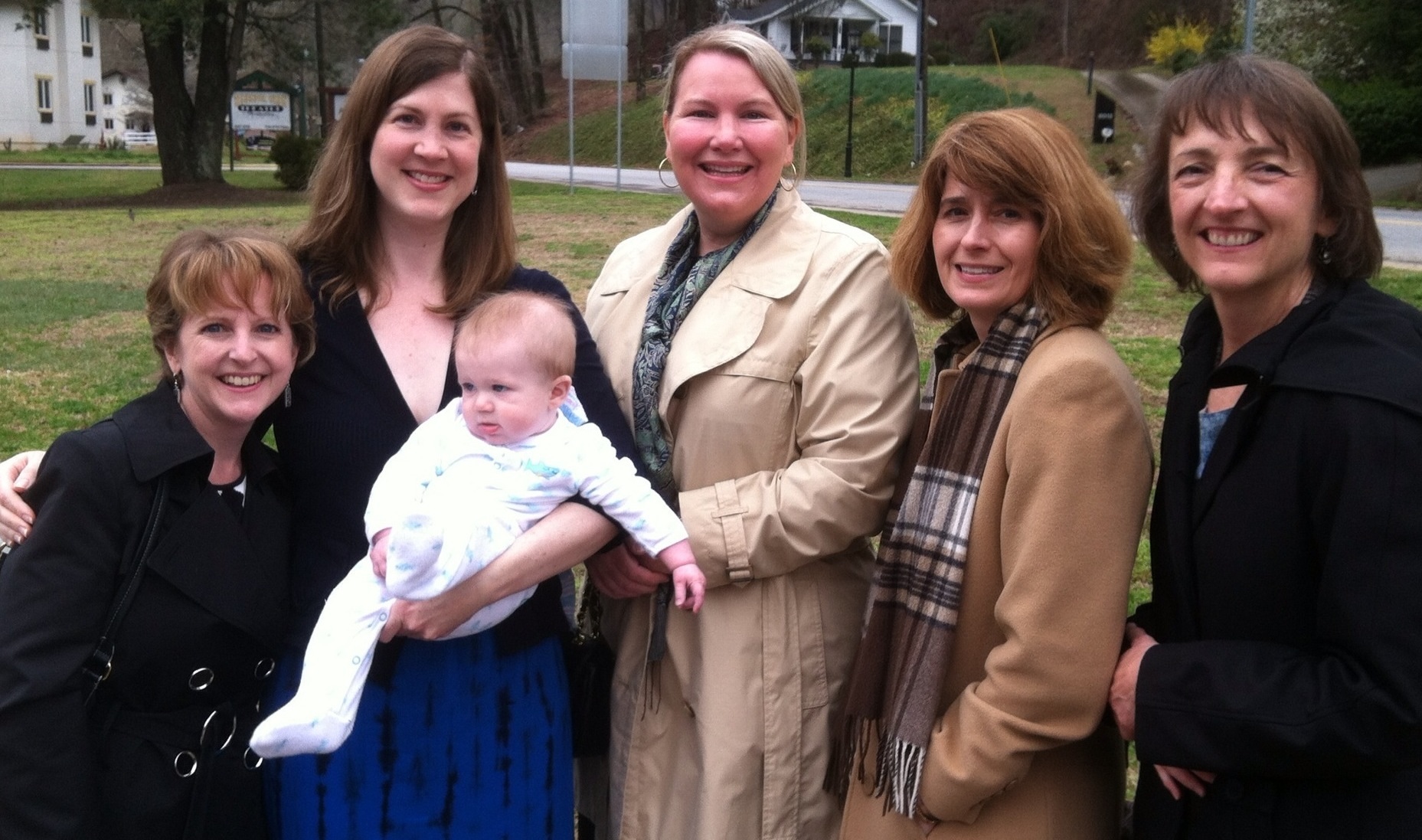
The Chicks with Jake, the newest baby rooster of our group.

The Chicks with, Jake, the newest baby rooster of our group.

Postscript: Sadly, Megan’s father passed away last week after strugling with Chronic Obstructive Pulmonary Disease (COPD). As was the case with Lisa’s father, his death was sudden. Having made plans long ago, he chose to be cremated and have no funeral (although there will be two different celebrations of his life in the weeks to come). The Chicks will gather privately this Sunday, however, for some “Chick Therapy” as we like to call it and let her know we share her grief.

Because that’s what you do when there’s a death in the family.

Luca Brasi Sleeps With the Fishes: A Look at Burial at Sea

It goes without saying that I have a great appreciation for Francis Ford Coppola’s Godfather trilogy. Except for Godfather III, which doesn’t really count. But let’s not get into that. If Godfather I or Godfather II is on TV, it’s a safe bet that I’ll drop what I’m doing to watch.

One of the most famous scenes in Godfather I is when an enemy family leaves two dead fish wrapped in Luca Brasi’s bulletproof vest inside some brown paper at the Godfather’s compound. Luca is the Godfather’s most faithful “enforcer”. Tessio (Abe Vigoda) gives the package to Sonny Corleone (James Caan) and explains, “It’s a Sicilian message. It means Luca Brasi sleeps with the fishes.”

After the line "Drop the gun, take the cannoli, "Luca Brasi sleeps with the fishes" is one of the most quotes movie lines of all time.

“Luca Brasi sleeps with the fishes” is one of the most quoted movie lines of all time.

While nobody would choose to die the violent way Luca Brasi did, burial at sea is a custom that’s been around for centuries. Even today, the scattering of cremated remains (known as “cremains”) at sea is quite common. But I’m not going to talk about that. It’s burial at sea of a body that’s much rarer and also more complicated.

In our corner of the world, the U.S. Navy does the lion’s share of burials at sea. One of the most noted and recent was the burial of Osama Bin Laden on the aircraft carrier USS Carl Vinson. According to the Pentagon, in accordance with Islamic practices, his body was wrapped in a clean, white sheet. It was then sealed inside a weighted bag, placed on a board and tilted so it would slide into the Arabian Sea.

When Beachboys drummer Dennis Wilson died in 1984, his wife (against the Wilson family’s wishes) made a special request of then President Ronald Reagan. She said she wanted to fulfill Dennis’s wish of being buried at sea. Reagan obliged and arranged for the U.S. Coastguard to take care of it.

It's rare for someone who wasn't in the military to get an official U.S. Navy burial at sea, but Dennis Wilson did.

It’s rare for someone who wasn’t in the military to get an official U.S. Navy burial at sea, but Dennis Wilson did.

You don’t have to be famous or a Naval veteran to be buried at sea. It can be a bit complex but the practice is becoming more common. Mother Jones contributor Dave Gilson wrote a very informative article in 2011 about it that I will reference heavily.

Ann Rodney is an environmental protection specialist in the New England office of the Environmental Protection Agency (EPA)’s ocean and coastal unit, which oversees burials in American waters. In Gilson’s article, she said, “Ten years ago, I might get one or two calls a year about it. Now I get at least one call a week.”

While burials at sea are gaining popularity, this is not something you want to take on by yourself. There are legal requirements and regulations you have to follow. Fortunately, some boat owners have incorporated burial at sea into their business and can guide you through the process.

Gilson writes about Brad White, a 52-year-old licensed ship captain who has been depositing bodies in the Atlantic since 2005. His company, New England Burials at Sea, based in Scituate Harbor, Mass., does an average of six full-body burials a year and has 25 “pre-need” requests on file. He said it was in response to the increasing number of requests he’d been getting. He even handles full body pet burials.

A guest at a sea burial signs a shroud before it is placed in the ocean. Photo courtesy of New England Burials at Sea

A guest at a sea burial signs a shroud before it is placed in the ocean. You can see the weights that will be used beside the deceased. Photo courtesy of New England Burials at Sea.

White actually created his own biodegradable burial shroud. This harks back to the tradition of deceased British and American sailors who were wrapped in a sailcloth before burial at sea during the 18th and 19th centuries. Like they did, White uses weights as ballast to keep the body from floating back up to the surface.

According to Gilson, White said grommets in the shroud “help the body sink because air comes out. And when a body decomposes, body gases come out. It also allows sea life to go in and do what sea life does. What’s left after everything degrades are the cannonballs, and they make their own reef.”

White will accept a body that has been embalmed but prefers not to because of the effect the chemicals have on the water. He prefers to keep the process as environmentally friendly as possible. In addition, the EPA requires that all wreaths or flowers thrown into the water must be “readily decomposable in the marine environment.”

So how much does this cost? White’s full-body services start around $10,000 and go from there depending on what’s requested. You also have to notify the EPA within 30 days of the scheduled burial. There are regulations that specify exactly how far out you need to go and how deep the water has to be. Some states have different rules. You can learn more by reading Gilson’s detailed article.

Burial at sea for the officers and men of the USS Intrepid (CV-11) who lost their lives when the carrier was hit by Japanese bombs during operations in the Philippines. Photo courtesy of the Naval Photographic Center of the National Archives.

Burial at sea in 1944 for the officers and men of the USS Intrepid (CV-11) who lost their lives when the carrier was hit by Japanese bombs during operations in the Philippines. Photo courtesy of the Naval Photographic Center of the National Archives.

The U.S. Navy refers to a body being buried at sea as “intact remains” and “casketed.” There’s a detailed process of whom they will bury and how they go about it. Norfolk, Va. and San Diego, Calif. are the only two ports of embarkation that handle this type of burial.

Contrasted with White’s practices, the U.S. Navy places the embalmed (required) body into a metal casket (with holes drilled in it to let air/gasses to escape) that is weighted down. Unlike White’s smaller boats, which enable him to slide the body gently into the water, Navy ships are much higher up. According to Gilson, Bin Laden’s body reportedly fell from the hangar deck of the Vinson, which is about 55 feet above the waterline.

Pallbearers for Cdr. Robert J. Sanderson (Ret.) conduct a burial at sea ceremony in 2004. Photo courtesy of the U.S. Navy.

Pallbearers for Cdr. Robert J. Sanderson (Ret.) conduct a burial at sea ceremony in 2004. Photo courtesy of the U.S. Navy.

Gilson points out the irony of the regulations involved. “The EPA will get on your case if you dump formaldehyde, a known carcinogen, into a stream or lake, but it won’t blink if you put a body filled with formaldehyde-based embalming fluid into the Pacific Ocean.” The EPA claims that because the ocean is so large, the chemicals are diluted and don’t have an impact on the ecosystem. I’m not so sure about that.

Interest in “green funerals”has definitely skyrocketed in recent years. That’s a topic I’ll cover in the future.

In the meantime, as you think about poor Luca Brasi, be comforted by the fact that the Corleones preferred their own family’s final resting place to be on dry land.

Don Corleone's funeral scene was filmed in Calvary Cemetery, Queens, New york.

For The Godfather, Don Corleone’s funeral scene was filmed in Calvary Cemetery, Queens, New york.

Less Than Three Seconds

I am a nerd, if you haven’t figured that out yet.

One aspect of my nerd-dom is that I love documentaries. The more obscure the subject is, the more I’m likely to watch. While this boosts my desirability as a trivia contestant, I’m still pretty weak on the sports categories.

Last year, I watched an episode of “Nova” on PBS about the history of the elevator. While Elisha Otis (who started the Otis Elevator Company, still in operation today) did not invent the elevator, his innovations in their critical braking mechanisms changed everything. Before that, elevators were often viewed as deathtraps and accidental deaths did occur. But by the 1900s, elevator safety was almost taken for granted.

Elisha Graves Otis, 1811-1861. His elevator braking innovations are still in use today.

Elisha Graves Otis, 1811-1861. His elevator braking innovations are still in use today.

Or so I thought, until I learned about Riley Owen Medlock.

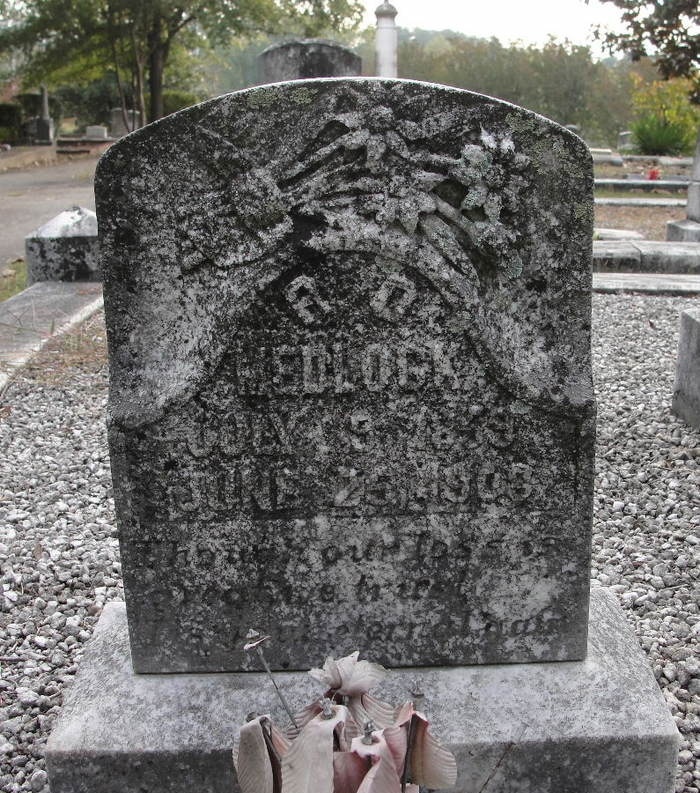
Norcross City Cemetery is located off busy Buford Highway, tucked beside a large sports field. It is a medium-sized cemetery with several generations of local families buried there, plenty of history. Ivey Brown Wingo (1890-1941), a catcher for the 1919 World Champion Cincinnati Reds, is the most famous.

While hunting for a grave for a Find a Grave photo request, I came upon the graves of John O. Medlock and his wife, Elizabeth Medlock. If that name sounds familar, it is. Medlock Bridge Road is a major traffic artery in Gwinnett County, north of Atlanta.

Elizabeth’s death date was not recorded on the monument and that always gets me curious. Why? Thanks to Ancestry.com, I figured out she had died in 1921. For reasons unknown, nobody inscribed that on her grave.

image

Successful businessman R.O. Medlock owned a number of buildings in Norcross.

But it was the eldest child of John and Elizabeth’s that got my attention. Riley Owen (R.O.) Medlock was a prominent businessman in Norcross. Among the buildings Medlock owned was the city’s first brick structure, which currently houses a successful Italian restaurant. He also founded and operated the Medlock Harness Company, which helped make him a wealthy man.

In his 40s, Medlock wanted to expand his real estate interests. He rented office space in Atlanta in what was then called the Empire Building. At 14 floors, it was one of the tallest buildings in the city. Later, it was known as the Citizens & Southern National Bank Building and today, Georgia State University’s J. Mack Robinson School of Business owns it.

Construction of the Empire Building was completed in 1901.

Located on the corner of Marietta and Broad Streets, construction of the Empire Building was completed in 1901.

I doubt that many current GSU students are aware of the horrific event that took place there on July 25, 1908.

On that day, for reasons not fully known, R.O. Medlock fell down the Empire Building’s elevator shaft to his death. When I read this, my first thought was that he had less than three seconds to realize what was happening. His death was probably instantaneous. I hope for his sake that it was.

I could find little about the incident but this article in the July 28, 1908 issue of the Atlanta Constitution contained this bit of information:

“Though a thorough investigation was instituted by the manager of the Empire building, W. B. Stovall, assisted by the engineer, R. C. Boone, the fatality is still unaccountable, except that it was one of those accidents that will happen in the best regulated affairs. No blame is attached to the elevator boy, and he will retain his position. As there was no eyewitness to the accident, no inquest was held.”

If such a thing happened today (and it does happen on rare occasions), you can bet there’d have been a thorough police investigation performed. Medlock’s widow, Emma Knox Medlock, would have had grounds to sue. But such things were unheard of at the time.

That evening, Medlock’s body was carried by wagon back to Norcross. Emma was no stranger to tragedy. She and Medlock had seven children together (he had one daughter with his first wife, who died in 1885) but only three survived past childhood. She did not remarry after her husband’s death and she is buried beside him.

According to the 1930 Census, Emma was still living in Norcross with her unmarried daughter, Minnie, while another daughter, Rowena, and her family lived next door. Emma and Minnie rented some of their rooms out to single female school teachers. The house is now known as the Medlock/Simpson House, the Simpson family having purchased it from Emma’s daughters after her death. It was sitting vacant and in bad shape until a few years ago when Don and Christine McClure purchased it, then restored it.

R.O. Medlock's house on Thrasher Street in 1888. Photo courtesy of Georgia Archives.

R.O. Medlock’s house on Thrasher Street in 1888. Photo courtesy of Georgia Archives.

The Medlock/Simpson House today in downtown Norcross.

The Medlock/Simpson House today in downtown Norcross.

Around Halloween, ghost tours are held in Norcross City Cemetery. Riley Owen Medlock’s story is among those shared. It is a stunning tale, to be sure. But a sudden accidental death, especially one that could have been prevented, is doubly tragic.

And even in the “best regulated affairs”, it can all be over in less than three seconds.

image

Reality TV Meets the Mortuary: Funeral Boss

Ever since MTV’s “The Real World” first aired in 1992, people have been fascinated by “reality based” television. I use that term loosely. Supposedly, these shows are unscripted but I believe that varies widely from show to show.

There’s even been a few about funeral homes. The first was probably A&E’s “Family Plots” in 2003 that covered a family-run funeral home in a San Diego suburb. It only lasted a few years but I thought it was done fairly tastefully. More recently, TLC introduced “Best Funeral Ever” about a Dallas-based funeral home and the over-the-top funerals they provide. That’s one I haven’t watched yet but I plan to TiVo it (as I do anything I want to watch these days to avoid commercials).

So I wasn’t surprised when I stumbled across a new show called “Funeral Boss” debuting on Discovery Fit & Health. I’m sure one of the first thoughts some people have is “Are you kidding me? How depressing that has to be, and creepy!”.

Naturally, my reaction was quite the opposite.

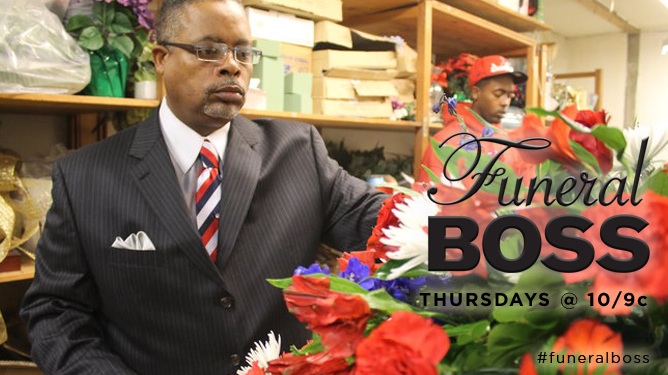
“Funeral Boss” follows the lives of the Harris family, led by the father, William (Bill) Harris, Sr. Their family-owned funeral home is located in St. Louis, Mo. Bill and Garnet’s (his wife) four oldest children work there. But the show does look beyond just funerals to highlight their personal lives.

Bill Harris, the Funeral Boss. Photo courtesy of Discovery Fit & Health.

Bill Harris is the Funeral Boss. Photo courtesy of Discovery Fit & Health.

The Harris family is African-American. I’ve always had a keen interest in black funeral traditions, such as homegoing celebrations. The history of African-American funeral service is a multi-faceted topic I plan to explore here very soon.

In previous blog posts, I’ve talked about how in the past, in the South, there were different cemeteries for blacks and whites. When I moved to Georgia in 1973, there were what people called “white funeral homes” and “black funeral homes”. Even in the post-integration era, this separation was very apparent. As a child ignorant of the Civil Rights movement at the time, it made no sense to me. While this is no longer the case, funeral service remains an industry still somewhat divided by color.

Amid society’s desire to encourage more diversity, this creates some interesting challenges for African-American funeral directors. Sara Marsden of US Funerals Online sums it up better than I can:

The question is, how does one either promote being a “black” funeral home, or locate one, in an era when mentioning “black” is not PC? Many African-American owned and operated funeral homes will openly acknowledge that they are a “black funeral home”, and obviously there are certain areas in the United States where it is expected that black funeral homes operate.

Like the Harris’ business, African-American funeral homes are often family owned and operated. The funeral director is usually a much respected person who is a leader in the church and community. In large urban areas, this is less common since traditional black churches tend to be bigger and the congregations more transient than in the past.

Bill, the Harris family patriarch, is a dynamic fellow in more ways than one. Not only does he have a lively personality, his snappy wardrobe is a sight to behold. But at the same time, you get a genuine sense that this man cares deeply about helping his clients because he already knows so many of them personally.

You might think a show about the funeral industry would be dreary but it isn’t. In the first episode, viewers meet the oldest son, William Jr., who is cleaning up his act after experiencing drug issues and a brief prison stint. He and middle brother, Windall, are given the task of transporting the deceased to the church and conducting the funeral service.

image

Bill Harris and his son, Windall (left), comfort a mother at the funeral of her 19-year-old son. Photo courtesy of Discovery Fit & Health.

The hearse pulls up to the church but guess what? It’s the wrong church! This is made all the more comic by Windall’s admission that he plans to kept quiet about it to his father, knowing Bill would raise the roof if he knew. William Jr. takes it all in stride and comments, “The church is a block up the street, so it all worked out fine.”

“Funeral Boss” reminds me of a family at my old church who operates a funeral home. Mr. Mowell was, and still is, a much loved man in the community. He is retired now, and his son, David, runs the business. But back in the day, you never knew when Mister C.J. would be paged to answer a death call. One minute he might be laughing with you over cheese straws at a party in the fellowship hall, the next he’d be gone.

That’s something you learn from “Funeral Boss” that transcends race and time. Running a funeral home is never a nine to five job. You don’t turn it off at the end of the day because you may be summoned to pick up a body at at 2 a.m. In many ways, it’s a calling. You have to have a great deal of compassion and patience to help people at one of the most difficult times in their lives.

Not everyone has that unique ability. Those that do, like the Harris and Mowell families, have a special place in this world.

That’s a reality I can take comfort in.

To get a glimpse of “Funeral Boss”, here’s a clip.

To read more about the Harris family and the show, check this out.

Four Hoppers Are Better Than One

It’s impossible to spend much time with me before I start talking about the Chicks. Not the Dixie Chicks (watch out, Earl) but the Church Chicks. That’s how we started because most of us met in church.

In 1996, I worked at the Home Mission Board (now known as the North American Mission Board or NAMB) of the Southern Baptist Convention. That’s where I met Sarah, who introduced me to Lisa. They invited me to visit their church and I did. That’s where we eventually met Beverly and Tiffany. Sarah also introduced us to Regina and Mary (now living in Michigan). I introduced the Chicks to my college roommate (we became roommates again years later), Megan. That makes eight Chicks. When we get together, we cackle a lot. And we like to eat. Because in the South, food and friendship go together like a knife and fork.

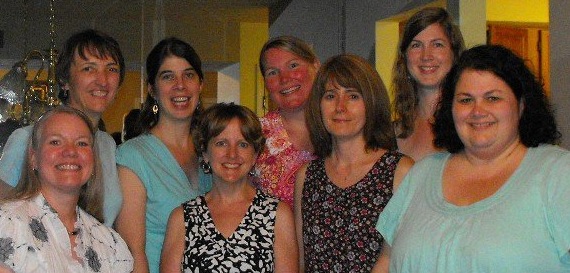
Meet the Church Chicks!

Meet the Church Chicks!

We lead busy lives so a Chick road trip is a rare thing but when it comes up, I try to be a part of it. When we started planning an adventure to Cloudland Canyon State Park in Northwest Georgia over Martin Luther King Jr. weekend, the Chicks knew that they were in for their first experience in cemetery hopping. Thankfully, they were excited at the prospect and let me plan some excursions.

Cemetery hopping by yourself is fun. But with three other people, it’s even better because, as my son wisely says, more eyes see more stuff. That means finding graves faster. It also means I get to introduce people to one of my hobbies while praying they don’t think I’m off my rocker. But the Chicks already know I’m quirky like that and accept it, and even encourage it.

Hopping in a rural locale is appealing to me. The cemeteries tend to be smaller and often include several generations of the same family. You can also see the same names popping up in different cemeteries. Then when you start seeing those names in the local roads, a history of the area starts taking shape. For example, at one point we were driving on Hinkle Road. Sure enough, at one of the cemeteries we stopped at, there were Hinkles buried there.

Our first hop was in Mount Pleasant Cemetery and from the beginning it was different. There was a tent up, indicating a funeral was happening soon. We saw two young men in uniform (I believe they were Marines) and something you don’t see in the middle of nowhere very often. A man dressed in a kilt practicing on the bagpipes.

I hesitated to even stop, but since the three men were on the far side of the cemetery and casually talking, we decided to give it a try. I gave the Chicks some names and we started looking around. Beverly found one first and then I think Sarah was next. We didn’t find all of the graves we were looking for because some were really old and those tend to be impossible to read or are broken. When we saw the funeral procession coming down the road, we left as a show of respect to the deceased and the mourners.

About five miles up the road was Paynes Chapel Cemetery, a picturesque and well maintained property. The graves were easy to find here, even the one hiding under the side of a bush.

Megan hunts for a grave.

Megan hunts for a grave.

On our way back to Atlanta, I found one last cemetery to stop at but this one was much harder to find. A bit off the beaten path. But those are some of the best cemeteries because they don’t get a lot of attention. Beverly’s GPS proved to be invaluable to us.

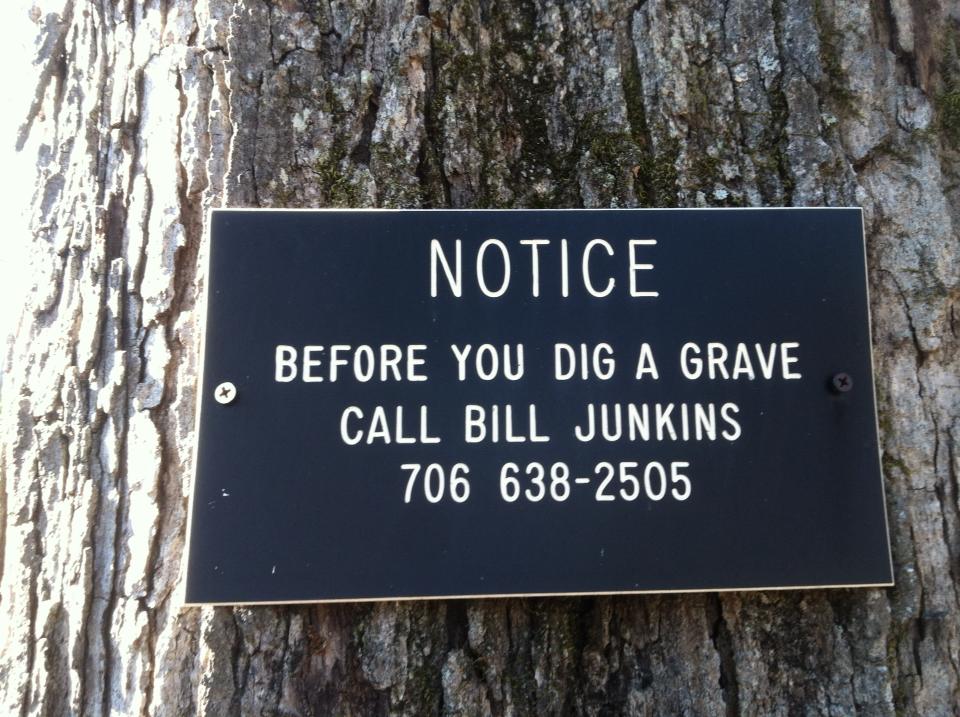
Wesley Chapel Methodist Cemetery is off Trion Highway (in case you wanted to know). The cemetery is on the hill behind the church and like many of the other country cemeteries I have seen, is well tended. But the first thing we noticed was this clever little sign.

I'm tempted to call Bill since he sounds like a good person to know.

I’m tempted to call Bill since he sounds like a good person to know.

Also unexpected were two dogs lounging at the edge of the cemetery. One was a tiny little thing but the other larger dog looked like a pit bull mix. When Beverly got to that side of the cemetery, she soon found out that the bigger dog wanted no part of us. We left him alone and he left us alone for the rest of our visit. I did not want my friends to end up hopping into a dog’s bared teeth.

Now seasoned hoppers, we located the graves we were looking for pretty quickly. It’s always interesting to see the different styles of headstones and monuments. This one, for John Adam Wilson and his wife, Mary, looked a little different than the others.

I'm at a loss as to why they were buried this way.

I’m at a loss as to why they were buried this way. It does not look like vaults were used.

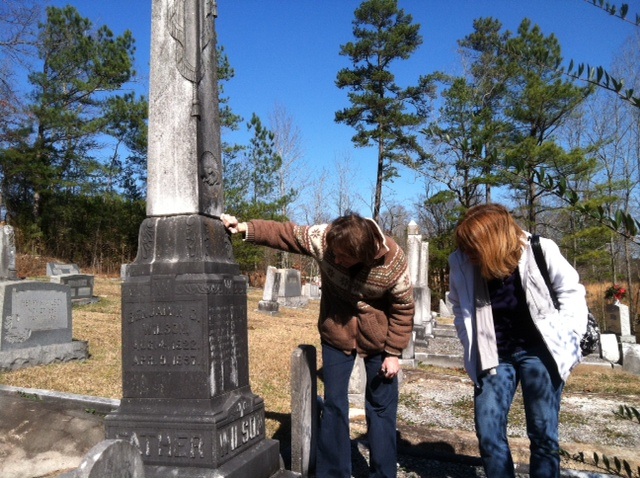
The inscription on a monument in front of the graves of John’s parents, Benjamin Capus and Elizabeth Lucinda Wilson, also got my attention. It reads:

An amiable father here lies at rest/As ever God with His image blest/The friend of man/The friend of truth/The friend of age/The guide of youth.

Benjamin Capus Wilson and Elizabeth Lucinda Wilson

Benjamin Capus Wilson and Elizabeth Lucinda Adams Wilson

Benjamin Capus Wilson, according to Ancestry.com, was a farmer in Walker County who served in the 34th Georgia Infantry as a Confederate soldier. He and Elizabeth had nine children together. Most of them, like their son John, are buried closely around them.

Sarah and Beverly take a look at the inscription on Benjamin Capus Wilson's monument.

Sarah and Beverly take a look at the inscription on Benjamin Capus Wilson’s monument.

On the drive home, I found myself wanting to come back to this neck of the woods again. Many of the graves I saw had been documented on FiAG but had no pictures to go with them. It looks like there aren’t a lot of FiAG volunteers in that area compared to Atlanta, where there are several of us to take on photo requests.

Sound like a future Chick roadtrip, doesn’t it?

Sarah, Megan, Beverly and I after our hike to the bottom of Cloudland Canyon.

Sarah, Megan, Beverly and me after hiking to the bottom of Cloudland Canyon.

Sitting Up With the Dead

In my college days, I worked as an intern for the Athens (Ga.) Daily News. One of my tasks was to be at the office on Sunday nights to take any obituary calls that came in. This was before the Internet and e-mails, so most funeral homes just called us and I took their obits over the phone.

It was through one of these funeral home contacts that I first heard the term “sitting up with the dead”. But it was never referred to in our obits like that. We were advised to write “the body will lay in state at the home of Mrs. XYZ” instead. It did nothing to make it sound less bizarre.

Even in the late 80s, few families were still practicing the ritual of bringing the body of a loved one back to the home so they could stay up all night with it before the funeral the following day. The communities that seemed to still adhere to this practice tended to be up in the mountains where old traditions die hard.

In decades past, many smaller rural communities had no access to a mortuary or funeral home. The tasks of preparing the body for burial and constructing the casket were done not by a mortician but the community members themselves. According to Southern newspaper columnist Emily Sells, this was a common practice in her small Tennessee town of Highland Mountain.

image

Web sites exist that show you step by step how to build your own coffin ahead of time. That’s the ultimate DIY project.

The men did the building of a casket, and the job of lining and dressing the inside as well as the outside of the casket was done by the women. The material used for the building of a casket, the labor involved, including the sewing, the batting and fabric used, was not something the family of the deceased person paid for. It was all done without any expectation of money exchanging hands. Neighbors helping neighbors was a way of life then.

It’s hard to imagine, in the mobile, disposable society we now live in, that this kind of concern for your neighbors was something upon which you could rely. But it was.

So what about sitting up with the dead? Why did families do this? Again, much of this took place before the commonality of funeral homes. After the body had been washed and dressed (embalming was very rare), it would be laid out on a large table or wooden board. If the weather was warm, a veil might be placed over the body to protect it from insects. Or someone might have the task of manning the fly swatter to take care of such things.

Sitting up with a dead body had a practical purpose as well. Along with flies being a problem, rodents could be an issue if the body was left alone overnight. So along with being on insect watch, you had to be on the lookout for mice (or worse).

Ever wonder where the ritual of sending flowers to a funeral came from? Sometimes the deceased, for several reasons, could become…a bit fragrant. The aroma from the profusion of flowers around the deceased helped mask the odor. So all those flowers did more than look pretty.

Other traditions accompanied sitting up with the dead. My mother still remembers how, when my great-grandmother died in rural Kentucky, that the family sat up all night with her body. The mirrors in the room were covered. Here’s why:

The tradition of covering a mirror with a cloth when someone dies initially goes back to ancient times. When a person had died through violent or suspicious circumstances all the mirrors in the home would be covered immediately by cloth. The reason for this was the belief that a returning spirit could use a looking glass as a portal. – taken from “The Weird World of Death”.

From an exhibition on Victorian funeral customs held in Denton, Texas in 2012.

From an exhibition on Victorian funeral customs held in Denton, Texas in 2012.

In later times, mirrors were covered because it was believed that if the living caught their reflection in one, they would join the dead in the near future. It was also believed that a mirror falling and breaking of its own accord was a sign that a death in the family would happen soon. While these superstitions seem almost quaint now, they were taken quite seriously.

In the Jewish faith, one of their mourning traditions is to “sit shiva” at the home of the deceased (or principal mourner) for seven days. The word “shiva” means seven in Hebrew. Family and friends visit to pay their repsects. They, too, cover their mirrors but for different reasons according to orthodox rabbi Ari Enkin.

Mirrors are covered in a shiva house (a place of mourning) for two reasons. The primary reason is because prayer services take place there and one must ensure that no one faces a mirror during prayer. The other reason is to emphasize that a mourner avoids vanity during the shiva, focusing on their loved one rather than themselves during this period. A mourner is permitted, however, to look into a mirror to ensure their hair is in order, etc.

A less spooky Southern funeral tradition is bringing massive amounts of food to the home of those in mourning. Baptists, especially, are reputed for doing this and it still happens today in many Southern communities. Transplants from up North (like I once was) or out West are usually astounded by it. The fact is that in the past, a funeral did not always take place as fast as it does now. Family would come in from far and wide, and often stay for days. They needed to be fed so the community again pitched in their support via pies and casseroles.

I can attest to the fact, too, that when a loved one dies, the last thing you want to do is cook. To know that someone else has that covered is a true blessing. There’s even a joke among Baptists that we like to eat our way through our grief.

If I could have my own funeral catered, this would be on the table. ;-)

If I could have my own funeral catered, this would be on the table along with some peach cobbler.

And who wants to mourn on an empty stomach?

A Tale of Two Cemeteries – Part Three

Now it was time to return to Rogers Cemetery to document the graves and take photos. I still feel a bit guilty for initially thinking about the place in negative terms. It may not have fancy gates or a gazebo, but Rogers Cemetery is just as important as Rogers-Bell Cemetery. A lot less is known about the people buried in Rogers Cemetery. Supposedly, there are Indian graves there but I did not see any.

In appearance, Rogers Cemetery is the opposite of Rogers-Bell. It seems to be haphazardly maintained. Someone placed a few crude cement benches near the largest tree, where most of the graves are located. The rest are on the other side of the clearing. This is where I believe the oldest graves might be located but they are probably buried in mud. Scraggly weeds are everywhere. But clearly people do come to visit these graves or the benches wouldn’t be there.

I was surprised to find that most of the graves I found dated from the 1890s and later. But it occurred to me that the quality of the markers from before this time probably wasn’t very good. Wood was the primary material for grave markers of poorer families and it didn’t last that long. Stones cost money and they didn’t have much. There were a few broken graves and some I couldn’t read.

EllenRogersCarter

The oldest grave I could find was for Ellen Rogers Carter, who was born just before the Civil War began. By looking on Ancestry.com, I discovered that by the time of the 1880 U.S. Census, Ellen was working as a servant for the Anderson family. This was post-Reconstruction, when life for former slaves and their families wasn’t much better than it had been under slavery. What was her life like? When did she marry? I wasn’t able to find that out. Several of the graves had military markers on them, most of them for the Navy.

Now for the snakes. Many of you know I have a great dread of snakes due to an incident from my teens when I accidentally (and stupidly) stepped on a copperhead in my driveway. The result was a visit to the ICU and a five-day hospital stay. So let’s just say I think the best kind of snake, near me anyway, is a dead one.

One of the first graves I found was surrounded by a very low wooden enclosure. Due to the autumn conditions, a lot of leaves were covering the gravestone. As I brushed some leaves off the gravestone, I saw the unmistakable scaly texture of a garden snake. And nearly jumped out of my skin in the process.

SnakesGrave

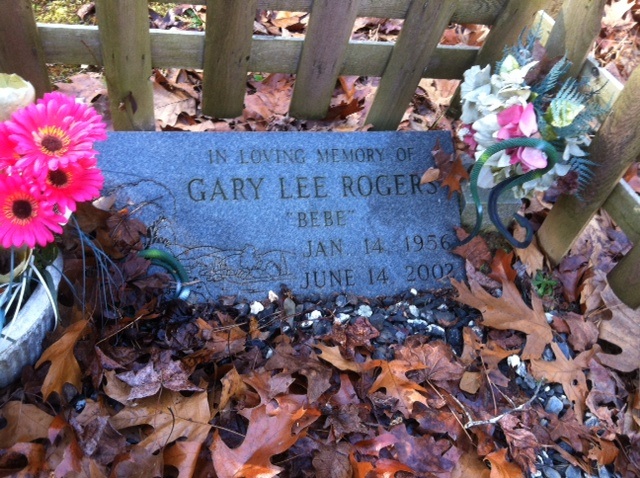
It’s not every day you see snakes on a grave!

When I realized that the snakes were fake (and my heart rate slowly returned to normal), the questions started. Why would someone place rubber snakes on both sides of someone’s gravestone? To keep nosy cemetery hoppers like me away? Maybe Bebe liked snakes or his friends and family were a protective lot. Who knows?

I created a new page for Rogers Cemetery, also with a brief bio and map. The bio is brief because next to nothing is known about it. Hopefully, because of my work, someone trying to find a loved one will look them up on FiAG,  locate the grave and be able to visit it.

Rogers and Rogers-Bell are an example of a common situation in the South. As most public places were, cemeteries were segregated until the 1950s. The races were not supposed to mix in life or in death. My guess is that someone in the white land-owning families provided land for the freed blacks who had worked on John Rogers plantation. An integrated cemetery was unheard of at the time.

Black cemeteries are often abandoned and in poor shape because there is no one left to care for them. Their history tends to be a mystery because little is recorded about them. African-Americans migrating from the South to Northern industrial cities for work took their family histories with them. That is a great shame because surely there are stories about the people buried there. But they may never be known.

If you want to know what kind of satisfaction I get from cemetery hopping, I would point to this kind of experience. I like knowing that someone, somewhere can trace their family tree better because of my efforts. Doesn’t seem like much. But if you’re trying to figure out where you came from and how you got where you are today, that discovery can mean something special.

And if surviving some fake snakes is necessary in the process, it’s worth it.

RogersCemetery

A Tale of Two Cemeteries – Part Two

Now that I knew how to get to Rogers-Bell Cemetery, I felt more confident on my second trip north. And much warmer.

When I saw it tucked between two very large homes, I’d already passed it and had to back up. There was ample room to park on the grass. I noticed a wooden gazebo close by. This felt like a place where people were welcome to linger as long as they like. Clearly, funds are in place to take care of this cemetery and it shows.

The gates of Rogers-Bell Cemetery, which you can also see at the top of my blog’s home page.

Looking through the gates, I paused. A large dog was nosing around amid the graves. My thoughts flashed back to the 70s horror film “The Omen” starring Gregory Peck. At one point, he and another guy are searching a spooky cemetery in Italy (at night!) when they get attacked by demonic Rottweilers. They barely escape with their lives. Mr. Roberts (the middle school teacher) had not said anything about a guard dog.

Undeterred, I pulled up the ground bolt and pushed the gates open. The dog ignored me for a moment and then looked up with a wagging tail. It was an elderly chocolate lab mix, not an attack dog. And the tag on his collar told me his name.

image

Meet Petey.

With my new (and somewhat fragrant) canine pal close by, I got to work. Rogers-Bell has only about 60 or so graves. The oldest ones are in a square area surrounded by a low decorative fence. That’s where John Rogers and his wife are buried.
Rogers-Bell2

John Rogers (1774-1851) and his wife, Sarah Cordery Rogers, settled in the area in 1820 with their seven children. He was a close friend of President Andrew Jackson, having fought alongside him in the War of 1812. Rogers was married to the daughter of Scottish trader Thomas Cordery and Susannah Sconicoonie, a full-blood Cherokee of the Anigatagewi clan (known as the Blind Savannah Clan). Because of this connection, he was allowed to build his plantation home on the Cherokee side of the Chattahoochee River. John Rogers was mostly a farmer, but also established a ferry service across the river. Other ferries like McGinnis and Nesbitt also came to be at this time (now the namesakes of much-traveled roads).

Rogers was unique in that he was comfortable in both the Indian and white worlds. Many of John and Sarah’s children (they eventually had 12 total) married other mixed-blood Cherokees. As well-educated and affluent Cherokees, they played a major role in the New Echota Treaty of 1835 and the subsequent Trail of Tears. A number of them are buried in Chelsea Cemetery in Rogers County, Oklahoma (named after John Rogers’ grandson, Clement Van Rogers).

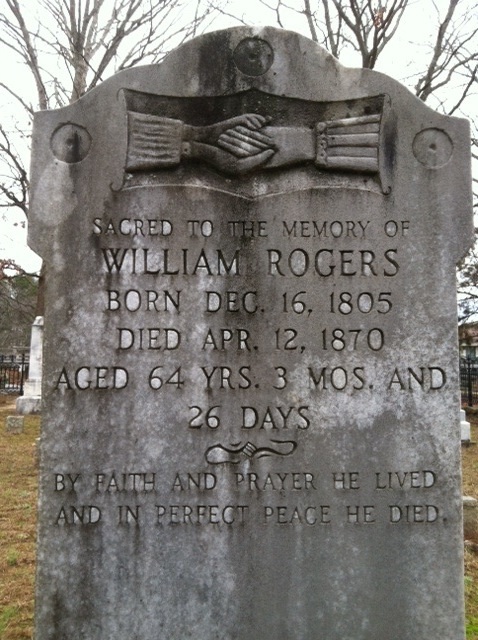
John Rogers’ second son, William Rogers, was a country lawyer who operated a farm and ferry a few miles north of his father’s plantation. He was also known for fighting for the rights of Cherokees during this turbulent time. To learn more about the Rogers family (and there’s a lot), read Unhallowed Intrusion: a History of Cherokee Families in Forsyth County by Georgia historian Don Shadburn.

WilliamRogers

Portrait of Williams Rogers, artist unknown. It was drawn in 1836 in Washington, D.C.

image

Grave of William Rogers.

When you visit an old cemetery like this one, you notice yet again that children died frequently, and very young. Much more often than today. It’s hard to imagine, but a child could have a simple cold that developed into something fatal. Antibiotics, which we take for granted now, were not invented then. And yet these frequent deaths were accepted as a natural part of life at the time.

image

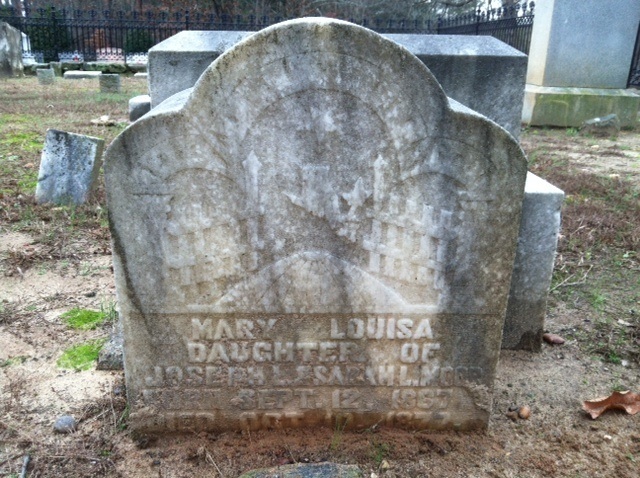
Mary Louisa Moor, who died at a tender age for unknown reasons.

image

Fredrick Augustus Moor probably died of the same illness as his sister, Mary.

William Rogers’ grandchildren are an example of this (both of their gravestones are off of their bases). Siblings Frederick and Mary Moor died within two weeks of each other. She was 10 and he was 8. I can only guess they both died from the same illness, maybe diphtheria or typhoid (both common at the time).

Their parents had the tragic task of burying them both that autumn. One clue to the fatalistic attitude of the era is seen in the inscription on the back of the bases of both headstones. “Of such is the kingdom of Heaven.”

I spent more than two hours at Rogers-Bell taking pictures and double checking dates. (Petey eventually got bored and ambled over to the house next door.) It was cold but I was so engrossed in what I was doing that I didn’t really feel it. This was a special place and the quietness of it caught me. I didn’t want to rush the experience of being there.

And yes, I did find Sarah.

image

I promise I’ll get to the snakes in Part 3, the end of this adventure, back where I started in Rogers Cemetery.

A Tale of Two Cemeteries – Part One

This three-part story involves me yelling at a pastor, nearly freezing my hinder off and finding snakes on a grave (not on a plane).

It’s also a tale of two cemeteries located within a mile of each other. They share a common past but their current state is drastically different.

My goal was to find the grave of Sarah Hackett Bell. Sounds simple, right? That’s what was going through my mind as I headed toward Johns Creek on a frigid December morning. I’d never been in that neck of the woods before but the map on the FiAG page for Rogers-Bell Cemetery (which noted that it was also known as Rogers Cemetery) seemed simple enough.

Driving through the area, I noted that this was what being “out in the country” meant, albeit pretty wealthy country. The only picture I had of the cemetery was of the plaque outside of it. The winding road gave me no clues as I checked my iPhone map yet again. Wait, did I pass it?

Frustrated, I pulled over into the parking lot of a large Methodist church. The locals would know, right? A young man came out, heading across to what looked like the office. I heard myself yelling out the car window, “Hey!” and felt my cheeks go red. Not my usual style to shout at the clergy, but it worked. Turns out he was the new pastor and not familiar with the area yet. But someone in the office knew. Just back down the road, but not very big and easy to miss.

I finally found it. Two short, rough wooden posts with a cord between them blocked off the path so you couldn’t drive up into it. So I parked as best I could on the side of the much traveled road and headed up the hill. This was NOT what I expected.

image

This picture was taken on a much warmer (and sunnier) day.

What I found was a collection of markers randomly scattered about, none of them with the last name Bell. Most were Rogers. Old silk flower arrangements dotted some of them. A few were too worn to read. This couldn’t be right.

Shivering under a sunless sky in this strange clearing, I was poorly dressed for this wild goose chase in my thin jacket. I’d forgotten my scarf and gloves. With numb fingers, I called the Gwinnett Historical Society for help. Yes, you’re in the right place, they said. That’s it.

image

It’s not a good idea to go digging around a grave so I left this one alone. Brushing leaves off is the extent of what I will do.

But it wasn’t. I had to ask myself what on earth had I gotten myself into. Fed up and nearly frozen, I climbed into my car, cranked up the heat and took off. On the way home, I found a Mellow Mushroom where I could thaw out and have a late lunch.

Once home, I started looking for answers. The only thing I could find on the Internet was a middle school teacher’s Web site showing how his students were studying the lives of some of the people buried in Rogers-Bell as part of their history curriculum. The pictures looked nothing like what I had seen that day. THIS Rogers-Bell was what I’d envisioned. Handsome iron gates, orderly graves, tall old trees. That’s when it hit me.

There were TWO cemeteries. I’d clearly been in Rogers Cemetery, not Rogers-Bell. This is a lesson to any new FiAG photo volunteer. Always check to see if there’s possibly a duplicate listing or potential misinformation. Those words “also known as Rogers Cemetery” were wrong.

I contacted Wesley, the person who created that original page for Rogers-Bell. I learned that he had written the “also known as Rogers Cemetery” by mistake and has been unable to fix it. Yes, he had documented the graves as part of his work with the Gwinnett Historical Society but had not taken photos at the time. He urged me to do so and to create a new Rogers-Bell page with a good bio, proper map and photos.

I also contacted that middle school teacher, Mr. Roberts. I discovered that the REAL Rogers-Bell was about a mile from Rogers Cemetery. It sits in a subdivision amid huge McMansions on a wooded acre. Turns out that Rogers-Bell contains the grave of John Rogers, who built and managed a plantation on the property with his half-Cherokee wife and children in the 1800s. More on John Rogers in Part Two next week.

So how is Rogers Cemetery connected? According to “Georgia Deaths: 1818-1989”, it is listed as “Rogers Cemetery (Black and Indians) NW side Bell (Boles) Rd., off McGinnis Ferry Rd., Fulton County.” It was created for the former slaves (and their descendants) that worked on John Rogers’ plantation. That explained the haphazard grave placement and its somewhat forlorn state. One was a white cemetery and one was a black cemetery. It was rich man vs. free but poor man.

Now I had to go back and find Rogers-Bell, take photos of all the graves. That included the one of the impetus for my quest, Sarah Hackett Bell. But this time, I was getting out the long johns, and my warmest scarf and gloves. Cemetery hopping is fun but not when your fingers are frozen.

You can read about that adventure next week in Part Two.

The Bailey Sisters: Together in Life and Death

No murder occurring within the last 10 years has caused so much excitement among the people of Georgia as that of Mrs. Ella Beck and her sister, Miss Addie, the husband and brother-in-law being the criminal. – New York Times, December 10, 1884.

When people ask what my visits to cemeteries are like, I don’t get very specific because, to be honest, it can be a Forrest Gump experience. I never know what I’m going to get.

Never was this more evident than when I recently claimed a Find a Grave photo request for a woman named Addie Bailey, buried in Cumming City Cemetery in Forsyth County. I don’t wander that far afield of the metro often, but I was up for something different. My friend, Sherri, had agreed to join me and I thought this might prove interesting. Little did I know how true that would be.

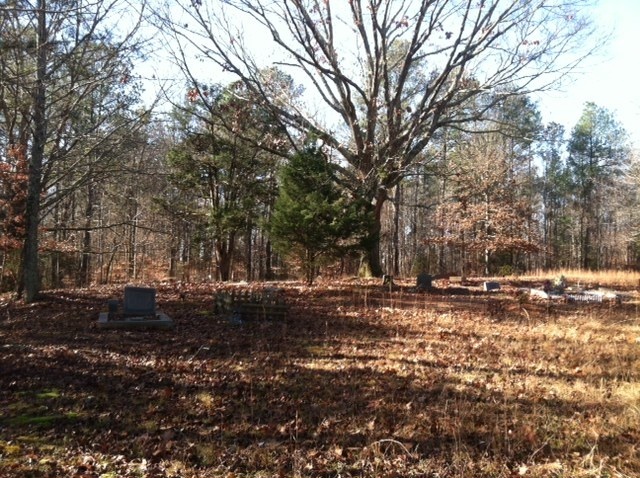
Locating Cumming City Cemetery in the “downtown” area was easy, but there was no designated parking area. We glimpsed the barbed wire atop the back fence and realized that located behind the cemetery was the county jail. It was confirmed when we pulled into the jail parking lot and saw some fellows in orange jumpsuits working in a shed nearby. We decided to park on the OTHER side of the cemetery.

Sherri

Sherri’s standing on the front steps of Cumming City Cemetery. It was her first hop!

It wasn’t until we began hunting for Addie’s grave (which Sherri found!) that I read her story on FiAG. Addie Evaline Bailey was born in 1867. Her older sister, Ella, was born two years earlier and was married to Eugene Beck. The couple lived in Clayton over in Rabun County, where Eugene’s father had been sheriff. The sisters were close but after Ella married, they did not see each other often. Their father, Dr. Samuel Bailey, was a well-known physician in Cumming and was close to both his daughters.

Addie was set to marry in November 1884 and Ella invited her to stay with her in Clayton during the week before the nuptials. Unfortunately, Addie had no idea that Ella had a secret. Eugene was an alcoholic and prone to long periods of drunkenness. Not until Addie had traveled to Clayton to stay with her sister did this become apparent. Ella was too proud to share her predicament with anyone, not unusual in those days.

According to a servant, on the evening of October 28, 1884, as the sisters slept, Eugene awoke, got dressed and came into their bedroom. He turned up the lamp before taking out a gun, then shot his wife in the head as she slept. She died immediately. As Addie awoke, he shot her in the chest. A servant reported that he fled out the door, and went straight to the jail and the marshal. According to court transcripts:
Hearing continued screaming, the marshal went out and learned that Beck had killed his wife and sister in law. Returning, he said to Beck, “Gene, you have killed your wife and sister-in-law!” Beck replied, “Well, I have killed the best friend I have got.” In about fifteen minutes the sheriff came and locked him up. He did not resist. He had a little half pint bottle about half full of whiskey.

Dr. Bailey was summoned but was only told his daughters were “ill”. He got quite a shock when he entered the bedroom to find one daughter laid out on the floor in preparation for burial and the other clinging to life. Addie died a few days later. Dr. Bailey brought their bodies back to Cumming for burial.

At the time of their deaths, Addie was 17 and Ella was 19. Incredibly young to be thrown into such violent circumstances. Their graves are on top of the hill in one of the most beautiful areas of the cemetery. The sisters share a monument beside their parents’ monument. Local lore says Dr. Bailey often visited their graves for long periods of time.

Close in life, close in death. The sisters share one monument.

Close in life, close in death. The sisters share one monument.

The double murder shook North Georgia to the core. It was reported on by several North Georgia newspapers. Even the The New York Times (quoted earlier) had a few lengthy articles about the murders. Some accounts stretched the truth a bit (one being that Dr. Bailey arrived at Beck’s house to find Addie’s body dressed in her wedding gown for her burial when in truth she had not died yet) to escalate the drama of an already tragic event.

Being the only son of a prominent family, Beck had some supporters in the community. Some testified on his behalf. He plead not guilty by reason of insanity. It did not keep him from being sent to prison for life in September 1885.

In March 1886, Beck appealed his case to the Georgia Supreme Court (Beck vs. The State of Georgia) on the grounds that due to his drunken state that night, he had no control over his actions and was not responsible for the murders. But it was not enough to get his sentence overturned. Beck died in 1890 from blood poisoning, reportedly contracted while working on a chain gang in a Dade County (Georgia) mine with other prisoners.

If you look past Dr. Bailey's monument on the left, you can see the guys in orange jumpsuits. Eugene Beck ended up becoming a prisoner himself.

If you look past Dr. Bailey’s monument on the left, you can see the guys in orange jumpsuits. Eugene Beck ended up becoming a prisoner himself.

Dr. Bailey died in 1887, only a few years after the murders. His second wife (the first died in 1834), Sally, was the mother of Addie and Ella. She was 24 years Bailey’s junior and lived until 1904. She is buried with him beside the sisters.

Grave inscriptions can run the gamut from sorrowful to joyful to humorous. The one at the foot of Addie and Ella’s monument is decidedly bittersweet.

Sweetly sleep, angel sisters.
No more from your slumber
Will you be awakened by pistol shots.
From the bothers of earth you were driven,
But the gates of Heaven were opened to let you in.

To read more about Addie and Ella’s story, you can visit these sites:

New York Times articles: http://bit.ly/YWYsZr and http://bit.ly/WTJZrt
Account of the murders: http://bit.ly/TQuBPN