• About Me
  • Cemeteries I Have Visited
  • Have questions?
  • Photos

Adventures in Cemetery Hopping

~ A blog by Traci Rylands

Adventures in Cemetery Hopping

Yearly Archives: 2015

Crowley Mausoleum: How Getting “Malled” Left It in Limbo

10 Friday Apr 2015

Posted by adventuresincemeteryhopping in General

≈ 137 Comments

(Author’s Note: Since I wrote this post in 2015, I have been contacted by several Crowley descendants and others wanting to know how they can get involved in cleaning up the mausoleum. A wonderful fellow named Brenton Head has spearheaded several clean up days in recent years and the mausoleum is now getting regular attention. You can find Brenton on Facebook if you’re interested in helping out. Forest Hill passed away in 2019.)

I’m going to talk about a place I get asked about from time to time. The Crowley Mausoleum has a storied past but it currently sits forgotten. How it got that way is quite a tale. Most of what I was able to find out about it was from an account from Forest Crowley, a descendant.

James Crowley was born in 1772 in Pittsylvania County, Va. His parents, Benjamin and Sarah, brought the family to Oglethorpe County, Ga. in 1785. Benjamin died in 1817. In 1822, James received about 500 acres in Decatur from a land lottery and farmed it until his death in 1828. He later owned additional farms and did well financially, owning a number of slaves.

The family put their cemetery on a hill overlooking their land. When James died, he was buried there as was his wife, Dorcas, in 1852.

Son Allen Crowley owned the land from 1829 to 1846, when he moved his family by wagon train to Northern Mississippi. Younger brother Seaborn Crowley and his family took it over from 1846 to 1896 when it was purchased by the Hill Family (also Crowley relatives).
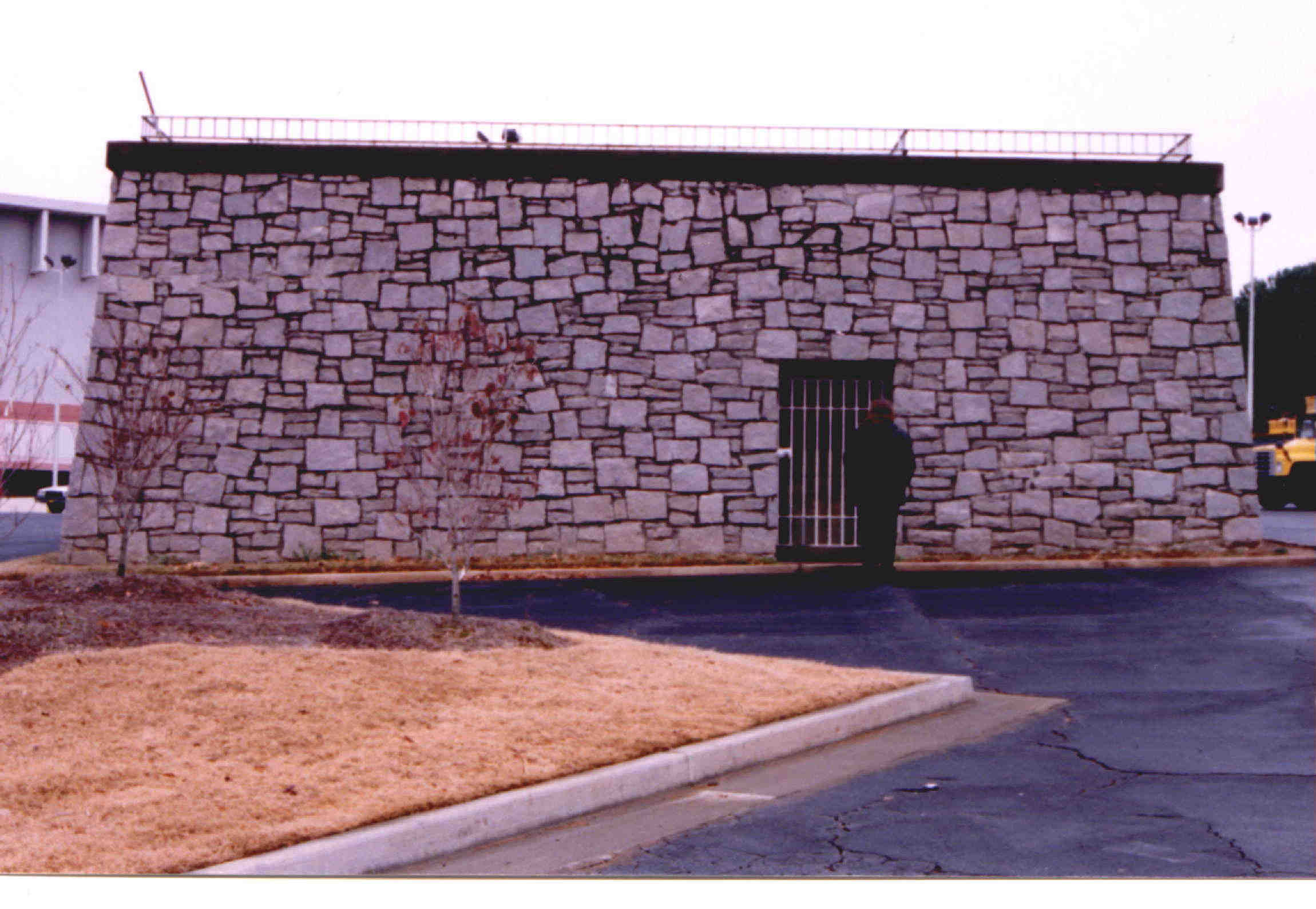
I found this picture of the Crowley Mausoleum when it was in the Avondale Mall parking lot. Many people have told me they remember it well when they lived in that area.

I found this 1997 picture of the Crowley Mausoleum when it was in the Avondale Mall parking lot. Many people have told me they remember it well when they lived in that area. The graves were accessed by going up a stairway to the top. Photo by Lois Mauk

According to Forest Crowley, the cemetery was originally in the middle of the pasture on the farm surrounded by a barbed wire fence. For a number of years in the 1950s, this fence fell into disrepair and livestock were able to enter and leave the cemetery.

In 1960, the Hills sold part of the land and leased the other part so that the Columbia Mall could be built. Completed in 1963, the mall was near the intersection of Memorial Drive and Columbia Road. The builder agreed to build a mausoleum around the cemetery, which was in the parking lot. The builder had to dig down about 20 to 25 feet on all sides of the cemetery and then build the building around the cemetery.

There were 40 or 50 slave graves buried surrounding the cemetery. Sadly, no effort was made to save those graves and they were built over. Currently, the 11 graves (nine of them of the box variety) at the top of the mausoleum are members of the Crowley, Cross and Hawkins families. Seven are adults and four are children.

These pictures appear to have been taken after Avondale Mall had closed around 2000. Most are uninscribed.

These pictures appear to have been taken after Avondale Mall had closed around 2000. I believe they originally had markers on top of them but those were later vandalized.

The name changed to Avondale Mall at some point. People visiting the mall often joked that the Mausoleum was the “Tomb of the Unknown Shoppers”. A 1994 newspaper article quoted someone as saying “When I die, bury me at the mall. That way I know you’ll come to see me every day.”

Many people I’ve talked to remember navigating around the mausoleum when going to the mall to shop. One even told me he remembered as a teen learning how to drive in that parking lot and nearly hitting it.

A bronze plaque explained the history of the site. I’m not sure where the part about the land grant being from the king of England came from. It contradicts everything else I’ve read. The plaque was later pried off the mausoleum and has vanished.

This plaque has since been pried from the mausoleum and stolen. I can't attest to it's truthfulness as the research I've done says nothing about a land grand from the king of England.

This plaque has since been pried from the mausoleum and stolen. I can’t attest to it’s truthfulness as the research I’ve done says nothing about a land grand from the king of England. Photo by Lois Mauk.

The area around the mall changed in the late 70s and 80s as white flight hit and some of the mall’s stores began to close. When Macy’s closed their clearance store there in 1995, the writing was on the wall. In 2001, it finally closed and sat empty until Walmart purchased the land and demolished the mall. After some community protests, construction for a Supercenter began and it opened in 2008.

According to Forest Crowley, there’ve been a number of break-ins at the Mausoleum over the last several years and some of the headstones on top of the box tombs were broken and thrown to the parking lot, then thrown away. Other headstones were stolen.

Due to the reconfiguration of the parking lot, the Crowley Mausoleum is now mostly hidden by trees and is behind a Napa Auto Parts store. You can’t see it from the parking lot but if you know where to look, you can glimpse it as you’re driving past the Napa on Memorial Drive.

This is an aerial view of the Crowley Mausoleum, courtesy of www.roadsideresort.com.

This is an aerial view of the Crowley Mausoleum, courtesy of http://www.roadsideresort.com.

I knew about the Crowley Mausoleum for a while but hadn’t stopped to get a good look at it. To be honest, that stretch of Memorial Drive is rather sketchy and I wasn’t keen on poking around on my own. It wasn’t until January of this year, when I had my friend and fellow cemetery hopper Jennifer with me, that I got an up close look at it.

Unfortunately, being hidden from sight hasn’t done it any favors.
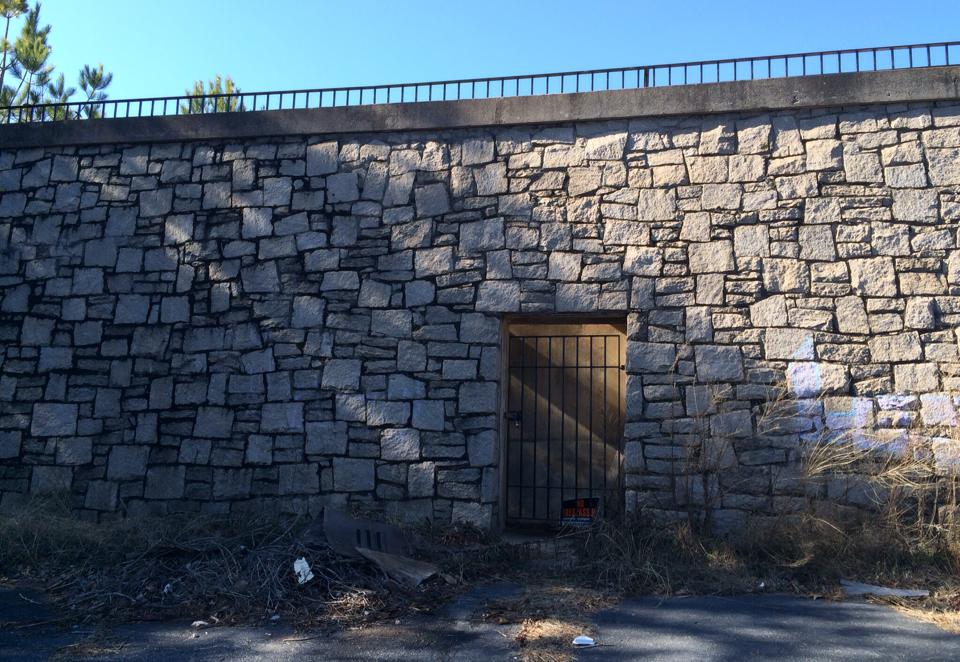
This is what the front of the Crowley Mausoleum looks like today. The door is chained and locked. Trash and debris litter the area.

This is what the front of the Crowley Mausoleum looks like today. The door is chained and locked. Trash and debris litter the area.

The mausoleum is about 20 feet high and unless you’ve got a ladder (or as I joked with Jennifer, a cherry picker), you can’t see the top of it or the graves. It looks like someone’s spray painted the area to the right of the door.

The walls of the mausoleum are about 15 feet high and unless you have a ladder, you can't see the top. I don't advise trying that.

The walls of the mausoleum are about 20 feet high and unless you have a ladder, you can’t see the top. I don’t advise trying that.

I did take a look up the stairs to try to get a glimpse of the view.
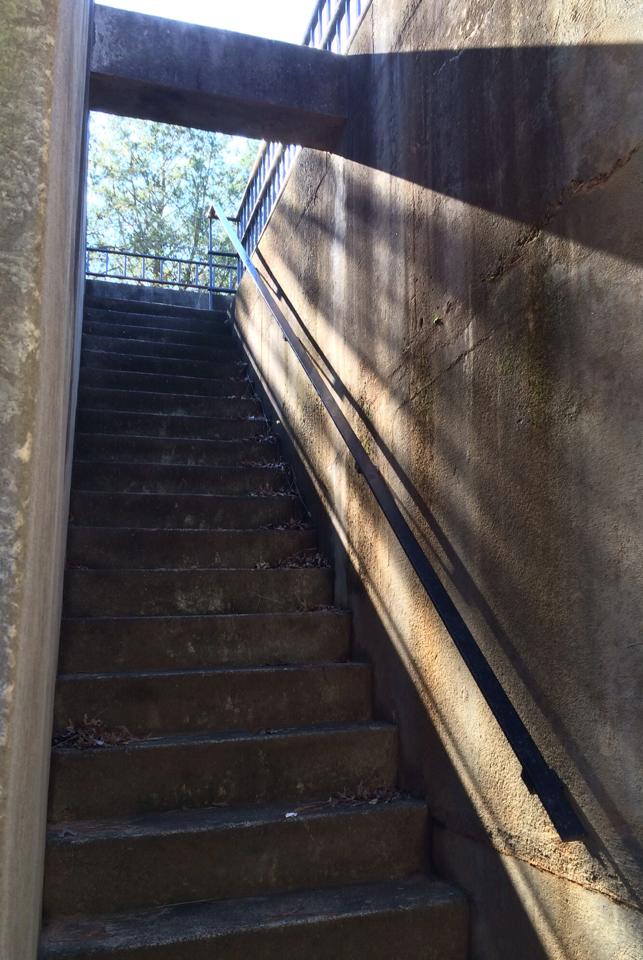
Here's the view from the stairwell. A pile of leaves and other trash sit at the foot of it.

Here’s the view from the stairwell. A pile of leaves and other trash sit at the foot of it.

I have no idea who is currently in charge of taking care of the Crowley Mausoleum now, if there is anyone doing so. I haven’t contacted the DeKalb History Center yet but I plan to. Maybe they know. I worry that if it continues to deteriorate, someone’s going to break into it and vandalize what’s left of the graves at the top. If there IS anything left of them.

Interestingly enough, the Crowley Mausoleum isn’t the only example of a cemetery in a parking lot. This site shows aerial photos of some others around the country.

Next week, I’ll visit the Stephen Martin Cemetery in Dunwoody (also in DeKalb County). It’s tucked away behind a large shopping center next to Perimeter Mall but is in better shape than the Crowley Mausoleum.

Hollywood Cemetery’s Buried Treasure: The Story of the Duke Brothers

03 Friday Apr 2015

Posted by adventuresincemeteryhopping in General

≈ 60 Comments

For some time, I’ve been aware of the dilapidated state of a cemetery in Northwest Atlanta but haven’t had the courage or companion to visit it. Located inside the I-285 Perimeter at the intersection of Hollywood and Hightower Roads is Hollywood Cemetery.

Because this area is known for its rough edges, I’d been told not to go alone. In addition, the place is so often overrun with vegetation, the best time to go is from late November through March. Not exactly prime weather time.

But last week, my friend and fellow cemetery hopper Cathy and I met up so we could visit Hollywood together. She brought her machete (for cutting away vines and our personal protection) and we headed over.

This is a view of where Hollywood Road and Hightower Road split at the Terraces. If you only saw this picture, you'd think Hollywood was in fine shape. But there are actual graves in the woods on the right across the road.

This is a view of where Hollywood Road and Hightower Road split at the terraces section. If you only saw this picture, you’d think Hollywood was in fine shape. But the majority of graves are hidden in the woods on the left and right side of it.

Hollywood Cemetery opened sometime in the early 1890s, lauded as a picturesque alternative to Oakland and Westview Cemeteries. It featured a terraced landscape and was easily accessible by streetcar. The neighborhood was considerably more well heeled at the time.

The story of how Hollywood went from a grand cemetery to a ruin is complicated and I don’t know all the facts. It’s currently owned and “maintained” by Lincoln Cemetery, who also owns the adjacent Magnolia Cemetery (in poor shape but still mowed) and Monte Vista Cemetery (which is well maintained and still sells plots). You can read more about that in this article.

To put it in a nutshell, much of Hollywood’s history is shrouded in rumors and question marks. What is clear is that it’s a big mess.

Cathy and I spent the first few hours negotiating the terraced level of Hollywood, which is easy to navigate compared to the jungle-like areas across the street. Some graves are broken, others knocked off their bases. Some are hidden from sight. This picture of a stairway can give you a glimpse of what it might have looked like in better days.

It's hard to imagine being able to negotiate this stairway even in better days.

It’s hard to imagine being able to negotiate this stairway even in better days since the steps are so narrow.

It’s not until we went over to Gun Club Road and up into the woods that we saw how truly bad things are.

GunClubRd1GunClbRd2GunClbRd3Hiking through the vines, thorns, trees and fallen branches was no easy task. I can’t imagine what it’s like during the summer when it’s hot and insects are in full throng. I’m thankful neither one of us encountered a snake or stepped in a hole (although we did see a decomposing deer carcass).

But it was when we encountered this monument amid the trees that we both stopped in stunned silence.

Sitting quietly forgotten among the vines and branches is the grave of Van Wallace Duke, an adventurous young man whose life was cut short by tragedy thousands of miles from home.

Sitting quietly forgotten among the vines and branches is the grave of Van Wallace Duke, an adventurous young man whose life was cut short by tragedy thousands of miles from home.

Inscribed on the grave of 19-year-old Van Wallace Duke are these words:

How soon fades the tender flower,
But love’s remembrance lasts forever.
Died in St. Francis Dam break Calif.

After we finished up and had lunch at nearby Hotty Hawg’s Smokin’ BBQ (which I highly recommend), I headed home and hit the Internet. Thanks to Ancestry.com, I was able to find out quite a bit about Van Wallace Duke and his older brother, J.R. (whose granddaughter gave me permission to share her photos and family stories).

A portrait of J.R. and Maxie Duke, who were about 17 years apart in age. Maxie died at the age of 31, leaving her five children without a mother. J.R. died seven years later. Photo courtesy of the Duke family.

This is a portrait of J.R. and Maxie Duke, who were 17 years apart in age. Maxie died at the age of 31, leaving behind five children. J.R. died seven years later. Photo courtesy of the Duke family.

Van was the youngest son of John (J.R.) Duke, Sr. and Maxie Isala Wallace Duke. Maxie died in 1910 when Van was still a baby. J.R. was a freight train conductor in Atlanta and died in 1917. Obituaries state that both parents were buried at Hollywood but their graves have not been found.

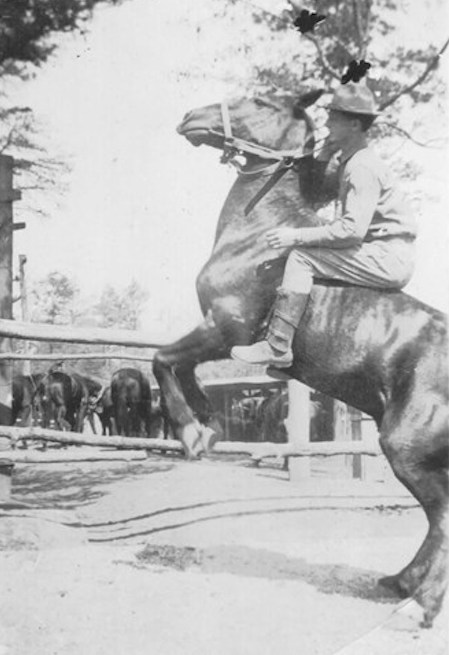
Van’s older brother J.R., Jr. lied about his age and joined the U.S. Cavalry, serving with General John J. Pershing from 1916 to 1917. Family history states they were pursuing Poncho Villa into Mexico when they were called back by the start of World War I.

Older than his brother Van by 12 years, J.R. Duke Jr. lied about his age to join the U.S. Cavalry. He told his family years later,

Older than his brother Van by 12 years, J.R. Duke Jr. lied about his age to join the U.S. Cavalry. He told his family years later, “You always took care of your horse first! Before you ate, before you got water, you fed and watered your horse.” Photo courtesy of the Duke family.

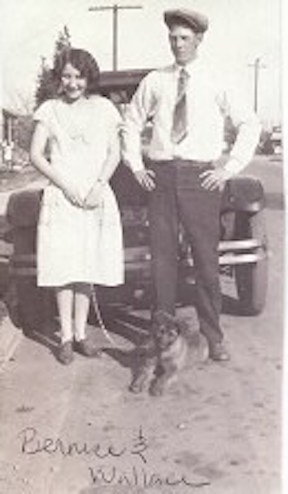
By 1928, J.R. was working as a foreman for the Southern California Edison Company. He invited his younger brother, now 19, to come out and join him. Van, in Georgia living with older sister Leona and her husband, jumped at the chance and headed to California by himself. He rode his bike or caught rides, working his way across the country alone.

This is a picture of Van Wallace Duke with his brother's wife, Bernice, after he arrived in California from Georgia. Photo courtesy of the Duke family.

This is a picture of Van Wallace Duke with his sister-in-law, Bernice, after he arrived in California from Georgia. Photo courtesy of the Duke family.

When Van arrived in California, he must have been awed by the newly constructed St. Francis Dam. As a curved concrete gravity dam, it was built to create a large regulating and storage reservoir for the City of Los Angeles and was an integral part of the city’s Los Angeles Aqueduct water supply infrastructure. It was located in the San Francisquito Canyon of the Sierra Pelona Mountains 40 miles northwest of Los Angeles near the present city of Santa Clarita.

Built between 1924 and 1926, the St. Francis dam had issues from the start. William Mulholland, its chief engineer and general manager, was blamed for its ultimate failure.

Built between 1924 and 1926, the St. Francis Dam had issues from the start. William Mulholland, its chief engineer and general manager, was blamed for its ultimate failure.

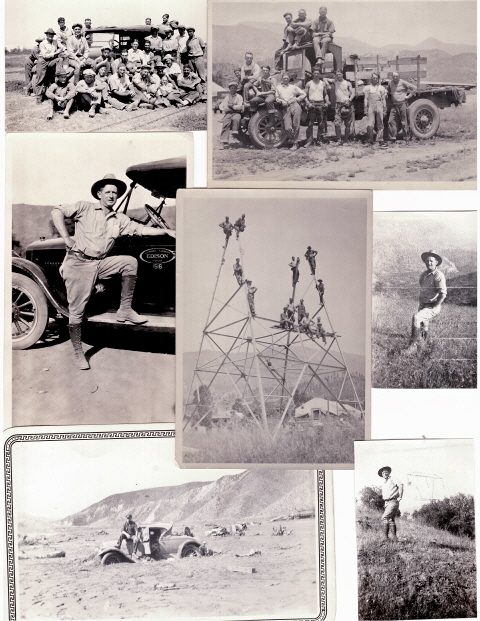
As the Duke brothers toiled for Southern California Edison, they were quite familiar with the dam since the work they did was just below it. The dam’s chief engineer and general manager was William Mulholland, a native of Belfast, Ireland who garnered much respect for his experience. At 600 feet long and 185 feet high, the dam had a 12.5 billion-gallon capacity.

This collage of photos features Southern California Ed foreman John R. Duke during his days in the San Francisquito Mountains. The picture on the bottom left was taken after flood. Photo courtesy of the Duke family.

This collage of photos features Southern California Edison foreman J.R. Duke Jr. during his days in the San Francisquito Canyon. The picture on the bottom left was taken after flood. Photo courtesy of the Duke family.

On March 12, J.R. laid off many of his workers (including Van) because their work was almost finished. However, instead of leaving, most of the men stayed a final night to play cards and relax. Van was one of them. That decision would cost many of them their lives.

Just a few minutes before midnight, the St. Francis Dam broke. J.R. barely escaped by riding a tent above the waves, jumping to the shore and clinging to it with all his might. He told his family later that he was stripped of all his clothes and his fingernails were torn completely off his fingers.

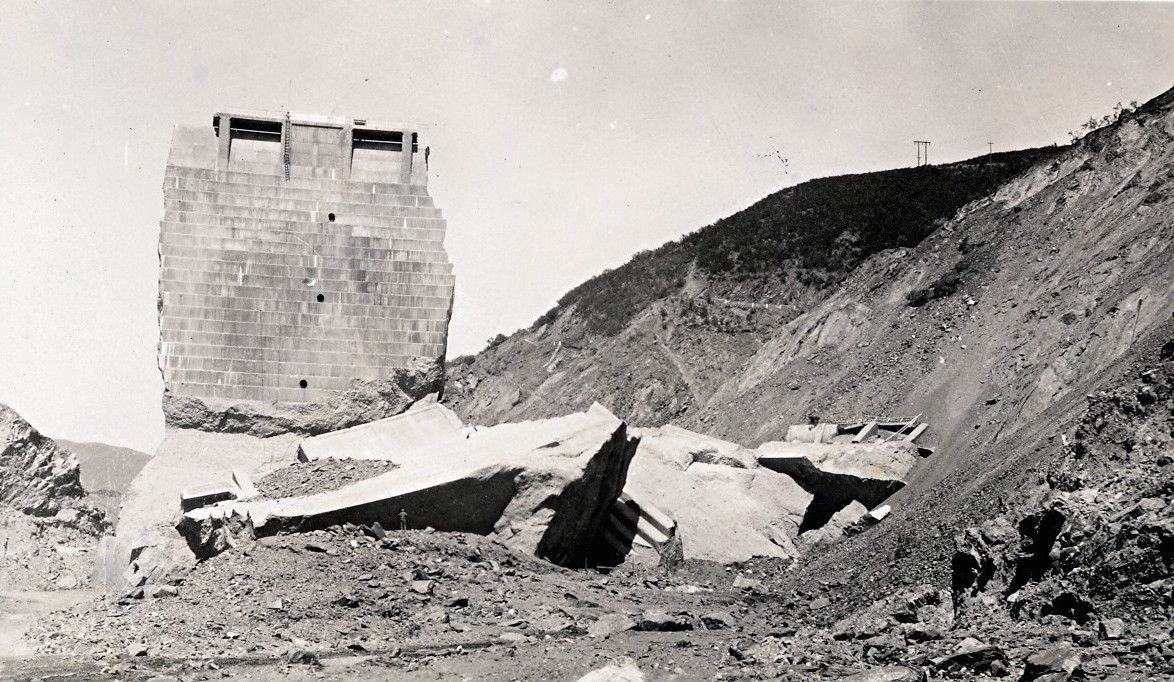
As the dam collapsed, 12 billion gallons of water surged down San Francisquito Canyon in a dam break wave, destroying everything in its path. The water flooded parts of present-day Valencia and Newhall before turning west into the Santa Clara River bed. It continued west through Santa Paula in Ventura County, emptying victims and debris into the Pacific Ocean at Montalvo (54 miles from the reservoir and dam site).

This fragment was all that remained after the St. Francis Dam broke a few minutes before midnight on March 12, 1928. Photo courtesy of Photos courtesy of Caroline and Glenn Marshall.

This fragment was all that remained after the St. Francis Dam broke a few minutes before midnight on March 12, 1928. Photo courtesy of Caroline and Glenn Marshall.

When the surge reached the ocean at 5:30 a.m., the flood was almost two miles wide, traveling at a speed of five miles per hour. Bodies of victims were recovered from the Pacific Ocean, some as far south as the Mexican border. An estimated 600 people were carried away by the flood, including Van Wallace Duke. (Note: When I wrote this post in 2015, 600 was the estimated death toll. As of 2022, the estimated death toll was closer to 450.)

According to his family, J.R. had the heart-wrenching job of identifying the dead bodies of his workers and his brother. Many bodies were never recovered.

At least 78 bodies were stacked up inside the Masonic hall at Railroad Avenue and Market Street in Newhalll, which was converted into one of several makeshift morgues along the St. Francis floodpath. Volunteers were already setting up improvised slabs inside the building at 4 a.m. on March 13, 1928, before the flood had even reached the Pacific Ocean. Photo courtesy of SCVhistory.com.

At least 78 bodies were taken to the Masonic hall at Railroad Avenue and Market Street in Newhall, which was converted into one of several makeshift morgues along the St. Francis floodpath. Photo courtesy of SCVhistory.com.

The collapse of the St. Francis Dam is considered to be one of the worst American civil engineering disasters of the 20th century and remains the second-greatest loss of life in California’s history, after the 1906 San Francisco Earthquake and fire.

Van Wallace Duke's obituary

Van Wallace Duke’s obituary

Van’s body was brought home to Atlanta and he was buried in Hollywood Cemetery. J.R. spent the rest of his life in California with his wife, Bernice, and they had one daughter. He died in 1984 and is buried in Visalia Public Cemetery in Visalia, Calif.

U.S. Rep. Howard “Buck” McKeon introduced H.R. 5357, the Saint Francis Dam Disaster National Memorial Act, in July 2014 but it failed to pass. This would have created a memorial to the estimated 600 victims of the flood. Currently, U.S. Representative Steve Knight is trying to get it passed again. You can read more about how you can help here.

As I pondered the story of the Duke brothers, I thought of my recent posts on the Bios Urn and the potential composting of human remains. Those are exciting prospects for some people.

But when you stumble upon a piece of history such as Van Duke’s grave stone, which tells about his life in a few simple words, a window to a moment in time is opened. A life ended by a dam’s collapse thousands of miles away. The fates of two brothers from Georgia, determined by a hand unseen, but whose effects were felt for decades afterward.

This is why cemeteries matter. Even if they are hidden under a mass of leaves and vines.

What other amazing stories rest unknown and unseen in Hollywood Cemetery?

Hollywoodmess

History at Risk: Saving the Heard Family Cemetery

20 Friday Mar 2015

Posted by adventuresincemeteryhopping in General

≈ 7 Comments

UPDATE:  The Heard Cemetery court case was settled privately not long ago and is safe from development or having any homes built on it. According to this article, a key to the case was the discovery of an old deed that granted the Heards’ male heirs ownership of the cemetery in perpetuity.

As you’ve learned from this blog, small but remarkable cemeteries can be tucked away in some surprising places. This week I visited one I read about last year and it’s embroiled in a legal battle that shows no sign of being resolved anytime soon.

Heard Family Cemetery is located in Fulton County at the end of Heards Drive, a narrow road lined with multi-million dollar homes. It’s a quiet haven, with about 30 or so visible grave stones with many more unmarked. Unlike some neighborhood cemeteries slowly sliding into ruin under vines and branches, this one is lovingly cared for by its neighbors.

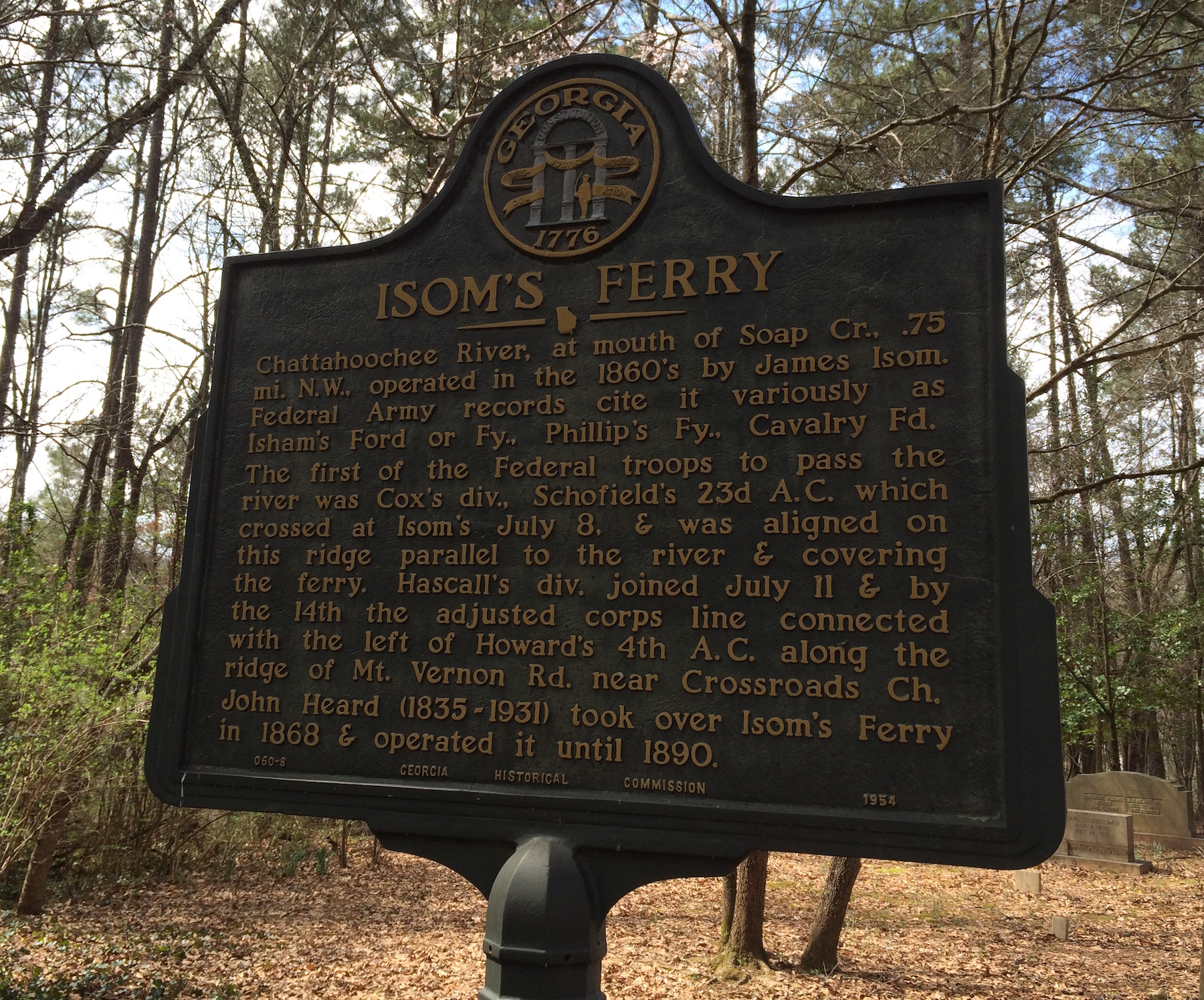
HeardFamilyCemeteryThis area is also near the site of what was once called Isom’s Ferry. If you’ve lived in Atlanta for any length of time, you know that many of the roads are named after the pioneer-operated ferries on the Chattahoochee River during the 1800s, such as Paces, McGinnis and Johnson. Isom’s Ferry was operated by James Isom until 1868.

This historical marker at the Heard Family Cemetery explains the vital role of Isom's Ferry (now known as Heard's Ferry) during the Civil War.

This historical marker at the Heard Family Cemetery explains the pivotal role of Isom’s Ferry (now known as Heard’s Ferry) during the Civil War.

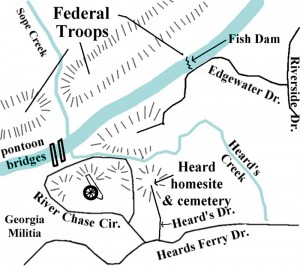
Located at the confluence of Sope Creek and the Chattahoochee River, this land is historically important because Union troops first crossed here on their way south to Atlanta during the Civil War. A well-written article by Kimberly Brigance, Clarke Otten and Michael Hitt describes the events that took place in July 1864.

This map shows the location of the Heard Family Cemetery and where Union Troops crossed the nearby Chattahoochee River on their way south through Georgia. Map courtesy of Reporter Newspapers.

This map shows the location of the Heard Family Cemetery and where Union troops crossed the nearby Chattahoochee River via Sope Creek on their way south to Atlanta. Map courtesy of Reporter Newspapers.

During that summer, President Abraham Lincoln faced re-election and his prospects were not good. Confederate troops had racked up a high number of Union casualties at the Battle of Kennesaw Mountain. General William T. Sherman knew that for Lincoln to have any chance of being re-elected, Atlanta had to fall by November. The Chattahoochee was the last natural barrier between Union troops and Atlanta and Isom’s Ferry was thought to be the weakest point at that time.

On July 7, Sherman sent troops to the Sope Creek area with orders of little noise and no fires. On July 8, Union soldiers on ridges along the Sope Creek side of the river opened a barrage of rifle and cannon fire aimed at the Confederate position. About a hundred soldiers came out of the woods toward the river, firing across it at the water level.

Pontoon boats like this one ferried Union soldiers across Sope Creek so they could advance south to Atlanta. Photo courtesy of Newspapers.

Pontoon boats like this one ferried Union soldiers across Sope Creek so they could advance south to Atlanta. Photo courtesy of Reporter Newspapers.

From behind the ridge, 25 pontoon boats carrying soldiers went into Sope Creek and headed downstream toward the opposite bank of the river. Confederate gunners are reported to have only gotten off one shot before being overtaken. By day’s end, Federal engineers had two pontoon bridges in place shuttling more men and equipment into Sandy Springs. Union troops held three hill tops, one being the home of the Heard family and present location of the Heard Family Cemetery.

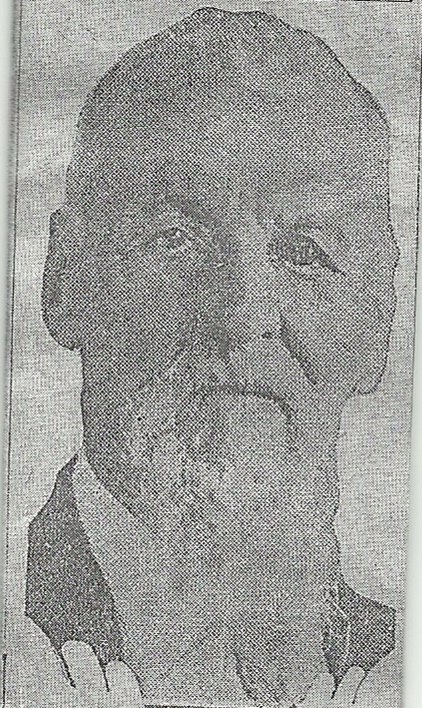
This newspaper photo of Judge John S. Heard is from his later years. His annual birthday barbecues at his farm were attended by many, including his family members.

This newspaper photo of Judge John S. Heard is from his later years. His annual birthday barbecues at his farm were attended by many, including his family members.

Judge James S. Heard was born to William “Buck” Heard (a blacksmith) and Rebecca Gill Heard in 1835. During the Civil War, Judge Heard served in the Ninth Battalion of the Georgia Artillery and is said to have been present at Appomattox when General Robert E. Lee surrendered to General Ulysses S. Grant. In 1868, Judge Heard bought Isom’s Ferry from James Isom and operated it until 1890 so it was renamed Heard’s Ferry.

Judge Heard’s first wife, Abie, was Isom’s daughter and together, they had several children. Some died in infancy but several lived to adulthood and had families of their own.

Judge John S. Heard is buried with his first wife, Abie Isom Heard, and his second wife, Athalena Dickerson Heard.

Judge John S. Heard is buried with his first wife, Abie Isom Heard, and his second wife, Athalena Dickerson Heard. Several of his children and grandchildren are buried around him.

After Abie died in 1882, Judge Heard married Athalena Dickerson. She was about 20 years his junior and they, too, had several children. Judge Heard lived to the ripe age of 96, celebrating his birthday each year on August 7 with a festive barbecue at his farm that was attended by many locals and family members.

Judge Heard sits between two of his granddaughters at the last birthday barbecue he celebrated in 1931. He wanted to be buried on his land among his family when he died.

Judge Heard sits between two of his granddaughters at the last birthday barbecue he celebrated in 1931. He wanted to be buried on his land among his family when he died.

The stones at the Heard Family Cemetery tell stories of lives short and long, especially children who died in infancy. Many of them are the grandchildren of Judge Heard and his wives.

Grady Frazier was the son of Kansas Heard Frazier and William Frazier, and grandson of Judge John Heard. She was the daughter of Judge Heard and his first wife, Abie.

Grady Frazier was the son of Kansas Heard Frazier and William Frazier, and grandson of Judge Heard and his first wife, Abie.

James “Jim” Heard was Judge Heard and Abie’s son. As a police officer, Jim made headlines when he was shot and killed during the 1906 Atlanta race riot. He and his 19-year-old bride, Stella Sowers, had been married less than a year. Originally buried at Oakland Cemetery in Atlanta, Jim was moved several months later to Heard Family Cemetery.

James "Jim" Heard was a policeman who was shot and killed during the 1906 Atlanta race riot. He was only 42 at the time.

James “Jim” Heard was a policeman who was shot and killed during the 1906 Atlanta race riot. He was only 42 at the time.

One of the more intriguing graves is that of Judge Heard and Abie’s eldest son, Newton Heard and his wife, Ellen. A tree is growing up the back of the stone and is actually notched on top of it, using it as a support. I don’t see that very often.

NewtonHeard1

Newton Heard was the son of Judge Heard and his first wife, Abie. A tree appears to be using his grave as a support.

Newton Heard was the eldest son of Judge Heard and his first wife, Abie. A tree appears to be using his grave as a support. Newton is buried with his wife, Ellen.

In 1900, with hopes of creating a permanent resting place for himself and his descendants, Judge Heard deeded the cemetery to his family. All went well until the mid-1990s when Fulton County, for reasons unknown, began to tax the property despite the fact cemeteries are tax exempt.

What happened next has been reported differently by various media outlets so I’ve done my best to piece things together. The property wound up on the tax assessor’s delinquent list. In December 2007, Mary Ann Elsner filed an affidavit of descent stating that she was the rightful inheritor. Elsner (listed as Mary Ellis in most of the older records) signed legal documents claiming to be the sole surviving heir of Carl Heard Jr., her brother, who was a descendant of Judge Heard.

That same month she sold the property to neighbors Henry and Wanda Cline, who paid the $38,400 tax bill and took possession. In July 2012, the Clines sold the property to attorney Christopher Mills for $1. He is also the Clines’ son-in-law.

Attorney Christopher Mills has filed a lawsuit against the city of Sandy Springs for blocking attempts to build on property where the Heard Family Cemetery is located. Photo from the website of Busch, Slipakoff & Schuh, LLP

Attorney Christopher Mills filed a lawsuit in 2012 against the City of Sandy Springs for blocking his attempt to build on property where the Heard Family Cemetery is located. Photo from the website of Busch, Slipakoff & Schuh, LLP

Mills’ attempt to build on the portion of the property not containing graves (which is in dispute since a number of unmarked graves exist) was blocked by the City of Sandy Springs, who refused to give Mills a permit to build. Mills sued the city in August 2012, arguing that the land is already zoned for residential use.

All of this has not gone unnoticed by the Heard descendants and neighbors living around the cemetery. They stand with the city in wanting the cemetery to remain as it is and don’t want Mills to build on the property.

Wright Mitchell, the attorney representing the Heard descendants, said as long as there are descendents of Judge Heard that would be eligible to be buried on the land in the future, the entire property should be considered burial grounds and restricted from being used for another purpose.

In a WSB-TV report, he said, “Mr. Mills may be building his house on top of graves that haven’t been identified yet.”

Attorney Wright Mitchell is representing the Heard family descendants.

Attorney Wright Mitchell is representing the Heard family descendants.

“I don’t think it matters how much of it is being used, there are decedents who do plan to be buried there in the future and that’s what the land was set aside for,” Heard descendant Nancy Smith said at a 2013 hearing about the lawsuit.

Georgia Court of Appeals judges John J. Ellington and Carla Wong McMillian heard the case in September 2014. After deliberating on the matter, they will send their decision to the parties’ lawyers at a date yet to be determined. It could take months before this happens so the fate of the Heard Family Cemetery remains in limbo.

Several Heard family descendants attended a hearing in 2013 to voice their opposition to a house being built on the property where the Heard Family Cemetery is located. Photo by CBS 46.

Several Heard family descendants attended a hearing in 2013 to voice their opposition to plans for a house to be built on the property where the Heard Family Cemetery is located. Photo by CBS 46.

In the meantime, Heard descendants and cemetery neighbors have created a Save the Heard Family Cemetery Facebook page here they post updates on the case. They also have a PayPal account where supporters can contribute to paying for the legal fees incurred.

It’s heartbreaking that an error that began with the taxation of a cemetery that’s exempt from it was the catalyst for what may spell the end for a historic site. Mr. Mills contends that he can build on the remaining part of the property. But having seen the property myself, I think it would be very hard to do so without disturbing the graves (including the unmarked ones you can’t see).

As I walked around the cemetery this week, a gentle breeze hinting of spring stirred the daffodils as I examined the old stones. Unlike many family cemeteries, it’s not fenced off or locked up. The Heard Family Cemetery is a lovely oasis amid a neighborhood that takes care of it and wants it to remain undisturbed, for both Judge Heard’s descendants and newcomers like me seeing it for the first time.

I think that’s something well worth saving.

Heard Cemetery angel

Soylent Green: Turning Human Remains into Compost

13 Friday Mar 2015

Posted by adventuresincemeteryhopping in General

≈ Leave a comment

Update: Since I wrote this story 10 years ago, much has changed. Human composting is now legal in 13 states, with my own state of Georgia starting July 2025. However, there are currently no facilities in Georgia that can carry out the process. So what began as kind of a pipe dream is fast becoming a reality. Whether or not many will take advantage of this option remains to be seen. — May 2025

Last week I wrote about the Bios Urn, a biodegradable container that holds a tree seed that you add human cremains (ashes) to before planting it in the ground. The symbolism this evokes is that when you die, you can become a tree.

During my research, I came across another novel (if not unsettling) concept that is getting attention: the composting of human remains. Yes, you read that right. The notion of taking a human body and turning it into compost you can use in soil is on the drawing board.

You know what that immediately made me think of, don’t you?

Richard Fliescher's 1973 film immortalized the words "Soylent Green is people!" Set in 2022, Charleton Heston plays Detective Thorn, a cop who discovers that the food chips called Soylent Green are not made of plankton but actual human beings.

Richard Fleischer’s 1973 film immortalized the cry of “Soylent Green is people!” Set in 2022, Charleton Heston plays Detective Frank Thorn, a sardonic cop who discovers that the food chips called Soylent Green are not made of plankton but actual human beings.

Soylent Green, a futuristic film set in 2022, is about how a renegade cop (played by Charleton Heston) discovers that the food provided by the government called Soylent Green is not made of the plankton it is said to contain. Soylent Green is actually made from the protein found in human bodies. By the movie’s end, a screaming Charleton (“Soylent Green is people!”) is being carried away while the crowd watching thinks he’s lost his marbles.

The kind of human composting being proposed now does not involve creating little green squares for direct mass consumption. But it does mean turning a human body into compost that can be used in real soil to grow edible plants and ornamental trees/flowers.

Katrina Spade, an architect based in Seattle, Wash., founded the Urban Death Project. I am borrowing liberally from an article by Brendan Kiley about human composting that goes into great detail about her ideas. She came up with the idea in 2011.

This illustration from Brendan Kelly's article shows how loved ones would process up a winding ramp to the "core" where their loved one's body would be placed in a bay and a ceremony would be held to honor their life. Illustration by Jeremy Sorese.

This illustration from Brendan Kiley’s article shows how loved ones would proceed up a winding ramp to the “core” where their loved one’s body (wrapped in a shroud) would be placed in a bay, followed by a ceremony held to honor their life. Illustration by Jeremy Sorese.

Spade envisions building a three-story building where mourners could bring their dead. Friends and family would go with the unembalmed departed (wrapped in a shroud) up a circular ramp to the top of the “core,” or central decomposition chamber. What follows could be a type of ceremony during which the body would be placed into a mix of wood chips, straw and other organic material.

The core where the body is placed would be divided up into 10 “bays” — similar to elevator shafts — with several bodies in various stages of decomposition in each bay, separated from the bodies above and below by several feet of wood chips. Gravity and microbial activity would time the speed of each body’s descent.

After a few weeks or months (this is still being researched), loved ones would return to the building to pick up the remains, which have become an organic substance consisting of partially or wholly decayed vegetable or animal matter (also known as humus with one “m”, not the hummus made of chick peas). They could then use it to fertilize their own garden or leave it there to be used on the gardens surrounding the facility.

Spade's concept includes as much or as little human involvement in the preparation of the body as desired. The UDP web site says loved ones are encouraged to be part of the process of preparing the body for the procession and in the placement into the bay with the wood chips. Illustration courtesy of the UDP website.

Spade’s concept includes as much or as little human involvement in the preparation of the body as desired. The UDP web site says loved ones are encouraged to be part of the process of preparing the body for the procession and placement into the bay with the wood chips/organic material. Illustration courtesy of the UDP website.

Spade refers to this process as being “cremation by carbon”.

Kiley’s article includes an interview with soil scientist Lynne Carpenter-Boggs. She states that based on the elemental composition of human bodies, the compost from a 200 lb. person could produce six pounds of nitrogen, two pounds of phosphorus, and one pound of potassium. These are  three nutrients typically listed on fertilizers.

“I know this is going to be an offensive simplification of the value of a human body,” she says. “but one could compare the fertilizer value to 100 pounds of cottonseed meal.”

Soil and crop scientist Lynne Carpenter-Boggs likens the compost created by the human body to the fertilizer value to 100 pounds of cottonseed meal. Photo courtesy of Harmony Farm Supply and Nursery.

Soil and crop scientist Lynne Carpenter-Boggs likens the compost created by the human body to the fertilizer value  of 100 pounds of cottonseed meal. Photo courtesy of Harmony Farm Supply and Nursery.

How long it takes for a human body to decompose has been studied in recent years by places like the University of Tennessee’s “Body Farm” (which inspired the popular Kay Scarpetta mysteries). Spade did travel to Western Carolina University, which has a similar facility, to see how scientists are studying the natural decomposition of human remains in the outdoors

But doesn’t this process create a foul smell?

Spade said in a recent interview, “There is no smell. And that’s going to be accomplished by a number of ways, primarily through biofilters in the system. A good compost pile really doesn’t have much of an odor, and that’s because there’s a right mix of nitrogen and carbon and moisture and oxygen.”

Raised in rural New Hampshire where her family raised animals for slaughter and grew vegetables. Each household had compost piles. "We knew where our meat was coming from, where our vegetables were coming from."

Raised in rural New Hampshire, Katrina Spade’s family raised animals for slaughter and grew vegetables. Each household had compost piles. “We knew where our meat was coming from, where our vegetables were coming from.” Photo courtesy of National Public Radio.

Having received an $80,000 grant from the global non-profit Echoing Green to further develop her ideas, Spade hopes to get the operation up and running within the next few years. While the UDP has architectural designs for a potential facility, they need funds and a site upon which to build it.

The project will also have to overcome significant legal and regulatory hurdles. State law requires that all human remains be buried, cremated, donated to science or transferred out of state. The UDP would also have to get a license to operate a funeral home, according to the Washington state Department of Licensing. Local zoning restrictions, which require composting facilities to be outside populated areas, would also come into play.

Another more esoteric issue that arises from human composting is anonymously becoming a collective part of the soil along with hundreds of other people instead of burying an individual. I fully concede it’s something I can’t personally embrace. But others seem to like the idea quite a lot.

Spade admits that this communal pile, instead of individual plots of land or a special urn, is a psychological leap. “I’m asking people to accept that we don’t all need our own space when we die.”

Using the compost that came from the body of a loved one is a topic that excites some but makes others uncomfortable. Especially if it involves edible plants rather than ornamental flowers. Spade quipped, ""People love the idea of growing trees," she said. "They get really squeamish with tomatoes."

Using compost that came from the body of a loved one interests some but makes others uncomfortable. “People love the idea of growing trees. They get really squeamish with tomatoes,” Spade quipped in a 2014 Reuters article.

I understand that the practice of placing a body full of embalming fluid in a metal container in the ground is distasteful to many people and not exactly eco-friendly. But using compost that was once my Uncle George (and other people near him) so I can produce prize-winning tomatoes that can go into my salad is not one I can stomach either.

Many people I talk to say “I’m going to be dead so what does it matter?”. That opinion has merit and I understand it. But the unique rituals of the funeral and burial (which can be “green” and impact the earth more gently) are for the living, not the dead.

After my death, I want to leave my loved ones a place and a way to remember me if they choose. I don’t want to be taken to a “core” and composted with dozens of strangers.

And since I have a “black thumb” in the garden, even compost made from Uncle George wouldn’t help any tomatoes I planted survive.

deadtomatoes

Lovely as a Tree: How the Bios Urn Works

06 Friday Mar 2015

Posted by adventuresincemeteryhopping in General

≈ 5 Comments

I think that I shall never see
A poem lovely as a tree.
A tree whose hungry mouth is prest
Against the earth’s sweet flowing breast;
A tree that looks at God all day,
And lifts her leafy arms to pray;
A tree that may in summer wear
A nest of robins in her hair;
Upon whose bosom snow has lain;
Who intimately lives with rain.
Poems are made by fools like me,
But only God can make a tree.

Joyce Kilmer (his given name was Albert Joyce Kilmer so many mistakenly think he was a she) wrote “Trees” in 1913. The poem is often scoffed at for being overly simplistic. But “Trees” remains memorable, unlike other more pretentious works. People love trees. Some even want to become a tree after they die.

So it’s not surprising that people are going bonkers over a fairly recent alternative to traditional burial called a Bios Urn. At least a dozen people have forwarded me articles about it, so I knew I had to see what they were all about.

The Bios Urn is being touted as an economically friendly way to dispose of your ashes, which will eventually help fertilize a tree. Picture courtesy of Bios Urn's web site.

The Bios Urn is touted as an environmentally and economically friendly way to dispose of your ashes, which supposedly help fertilize a seed as it becomes a tree. Picture courtesy of the Bios Urn web site. Co-designer Martin Azua told Discovery News that he would “like to be buried in a Bios Urn in a forest in the Basque country [of Spain].”

Back in 1999, two Spanish designers named Gerard Moline and Martin Azua owned a studio called Estudimoline. Together, they patented a biodegradable urn with a plant seed inside designed to place beloved pets who had died back into the life cycle. From there came the idea of the Bios Urn for humans.

A big selling point of the Bios Urn is that you can use your cremains (the ashes from cremation) to nourish a tree seed. In other words, you can literally become a tree that will grow for years after your death. Instead of taking up space in a cemetery, you can become part of a forest. The idea is very appealing to environmentally conscious post-Baby Boomers that want to do things differently than their parents did.

Before I explain how the Bios Urn works, let me clarify that I am in no way a scientist or a horticulturist of any kind. I am simply sharing with you what I discovered when I searched a bit beyond the Bios Urn web site.

The urn itself is made up of 100 percent biodegradable materials such as coconut shell, compacted peat and cellulose. So nothing is left behind after it breaks down. The top section contains the seed of whatever tree you’ve chosen (eight varieties are available) or you can supply a seed of your own.

The separate bottom part is where you pour the ashes. I’m not sure just how much is required but since a human body usually becomes between four to six pounds of ashes after cremation, there’s going to be some left over.

[caption id="attachment_4749" align="aligncenter" width="529"]This diagram gives you an idea of how the Bios Urn works. The top half contains the tree seed and soil while the bottom half contains the cremains (or cremated ashes) of the deceased. Photo courtesy of Jebiga.com. This diagram gives you an idea of how the Bios Urn works. The top half contains the tree seed and soil while the bottom half contains the cremains (or cremated ashes) of the deceased. The roots eventually grow through the bottom half and into the ashes. Photo courtesy of Jebiga.com.

Here’s how it works. You place some soil from where you intend to plant the urn in the top half along with the tree seed. You then pour the ashes into the bottom half. The two parts are secured together, which can then be planted. Bios Urns’ website recommends that the urn be planted five centimeters (about two inches) from the surface.

The Bios Urns website says the urn requires the same care as a normal tree: water, sunlight and a good temperature. This can vary according to the kind of tree you choose so they recommend that you read up on whether or not it is a good variety to plant in your specific area.

The Bios Urn tree seed eventually grows roots and breaks into the lower section where the ashes are, which are supposed to serve as fertilizer. Voila, you’re now part of a tree!

While one advertised benefit of the Bios Urn is that you can plant it almost anywhere, I don’t know if cemeteries are too keen on them. You’d have to get permission to plant it and they would be the ones in charge of maintaining it for you. Since most traditional cemeteries are very focused on maintaining easy grass mowing, they may not allow it. However, the new “green cemeteries” would likely be happy to handle that request.

One variety that Bios Urns sells is the ginkgo. Considering that they have a reputation for emitting a strong unpleasant odor, I don't think that's a legacy I'd want to leave behind.

One tree variety that Bios Urns sells is the ginkgo. Considering that they have a reputation for emitting a strong unpleasant odor, I don’t think that’s a legacy I’d want to leave behind.

My thoughts on the long-term implications go into overdrive when I consider this. If my Aunt Harriet wants to be buried in her back yard, what’s going to happen if the property is eventually sold? Do you dig her, I mean, the tree up and take it somewhere else? If Aunt Harriet wants to be buried in a park, you’d probably have to get permission. If you own family land, you could plant the urn there. But what happens years from now after you die and your heir chooses to sell the landt? What do you do if the tree dies?

I did read about proposed BiosParks where you could plant your Bios Urn and monitor it via GoogleEarth. But I couldn’t find any information about whether or not that ever became reality.

What I wanted to find out was if the concept of using human cremains as tree fertilizer is scientifically valid. Here’s what I came up with.

After a body is cremated, the resulting ashes and bone fragments are left to cool. A device then pulverizes the bone fragments into a fine dust with a consistency similar to sand. There’s nothing organic left behind.

What exactly are cremains made up of? The graphic below breaks down just that. Almost half of human ashes are made up of phosphate and a fourth of it is calcium.

Human cremains are made up of a mixture of different chemicals, but most of it is phosphate with calcium coming in second. Photo courtesy of VillageMemorial.com.

Human cremains are made up of a mixture of different chemicals, but most of it is phosphate with calcium coming in second. Graphic courtesy of VillageMemorial.com.

Some gardeners believe that calcium phosphate makes an excellent fertilizer. But I’ve also read that when produced at higher temperatures (like fire from a crematorium), it can become insoluble and not very useful as a fertilizer.

A company called Let Your Love Grow (LYLG) has done extensive research that shows that cremains have a very high pH level that hinders their ability to release any helpful nutrients. Also, cremated ashes contain sodium in amounts that range from 200 to 2000 times what plant life can tolerate.

LYLG published a photo that shows how 16 months after burial, a biodegradable urn has completely dissolved (I have no idea if this is a Bios Urn). The ashes are left in concentration and may remain that way for years. Plant roots will inevitably turn away from this clump of salty rock.

To remedy that, LYLG sells a special mixture that, when added to regular soil and cremains, balances out the high pH level/sodium. This enables people to then bury their loves one’s cremains without harming the soil or any surrounding plant life.

This picture from Let Your Love Grow shows the ashes left behind from a biodegradable urn some 16 months after burial in the ground. They contend that these ashes do not provide fertilization for growing plants.

This picture from Let Your Love Grow shows the ashes left behind from a biodegradable urn some 16 months after burial in the ground. They contend that human ashes do not provide adequate fertilization to support growing trees.

Discovery News’ article about Bios Urn points out that “plants that like acidic soil might find that the ashes raise the pH of the soil too much for comfort.”

I’m not enough of a scientist to say whether or not these concerns are valid. Perhaps there’s something in the Bios Urn itself that makes the growth process of the roots into the ashes work well with the local soil. The Bios Urns website is vague on those horticultural particulars.

Bios Urn can be purchased directly from their website for about $145 with shipping costs being variable. The cost is the same for Bios Urns for pets. Some retailers sell them as well. Bios Urns’ website claims that over 7,000 have been sold.

Puerto Rican-based Spiritree sells a similar urn. Their cost is a bit higher at $225 and the process is a little different in how the ashes are introduced to the roots. Another option on the horizon is the actual composting of human remains, but current state laws forbid it. I plan on writing about that soon.

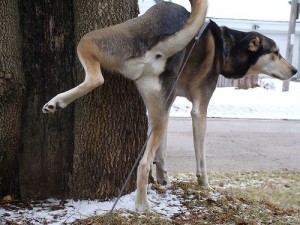
I’m sure many people will continue to be enamored with the symbolic idea of becoming a tree. Me? I don’t think so. Because this is the mental picture I get when I think about it. And that’s one I don’t think I can live (or die) with.

dog-peeing-on-tree

The Frozen Chosen: Winter Grave Digging Meets Modern Times

27 Friday Feb 2015

Posted by adventuresincemeteryhopping in General

≈ 6 Comments

There’s a term in religious circles that describes some Christians of a reserved and stiff nature as being part of the “frozen chosen”.

During the winter, this figure of speech can become a literal expression when it comes to digging graves in Northern states where temperatures hit below zero and harden the snow-covered ground.

Grave-digger, painted by Russian artist Viktor Vasnetsov in 1871, shows the typical illustration of a 19th-century grave digger might look like.

Grave-digger, painted by Russian artist Viktor Vasnetsov in 1871,  illustrates what a 19th-century grave digger might have looked like.

Before the invention of the backhoe, there was only one way to dig a grave and that was with a shovel. It could take quite a lot of backbone and energy to accomplish even in warmer conditions. But when the ground froze, it could be nearly impossible.

Often, families simply waited until spring to bury their loved ones. The dead would be placed in what was called a receiving vault, where they might wait a few weeks to a few months for burial.

Westview Cemetery's receiving vault was built in 1888 and was used to hold caskets during periods of bad weather when burials couldn't take place. During the Spanish Flu epidemic in 1918-1999, it was put to use because of the rising death toll. It was sealed in the 1940s when Westview's Abbey Mausoleum was completed.

Westview Cemetery’s receiving vault, built in 1888, held caskets during bad weather when burials couldn’t take place. During the Spanish Flu epidemic in 1918-1919, it was full because of the rising death toll. The vault was sealed in the 1940s when Westview’s Abbey Mausoleum was completed.

Atlanta’s Westview Cemetery has a large receiving vault built in 1888 but it was mostly used for storing the deceased when inclement weather made burial impossible. This was usually due to cold weather or prolonged rain, not snow. When the Spanish Flu epidemic swept the city in 1918 to 1919, the vault was full with victims of the illness.

When Westview’s Abbey Mausoleum was completed in the 1940s, the receiving vault was sealed because the new building had plenty of room to store the deceased awaiting burial.

The practice of holding a casket during cold conditions is still common today for many cemeteries and funeral homes, if they have the facilities to handle it. A cemetery can place them temporarily in a mausoleum while a funeral home can store the dead if it has refrigeration on site. In general, most funeral homes don’t make a practice of keeping the deceased in refrigeration longer than two weeks.

These coolers sold by U.S. Cooler Co. in Quincy, Ill. are typical of the kind used by mortuaries and funeral homes to store bodies. Photo courtesy of U.S. Cooler Co.

These coolers sold by U.S. Cooler Co. in Quincy, Ill. are typical of the kind used by mortuaries and funeral homes to store bodies. Photo courtesy of U.S. Cooler Co.

Spring burial is taken for granted in states like North Dakota, according to a 2011 Associated Press article. Dale Niewoehner, president of North Dakota’s Board of Funeral Service, said hundreds of burials are suspended each year at some cemeteries there after the snow comes. To him, delayed burials are a “necessary evil” in North Dakota. “It’s just how it is here,” he commented.

Wes Burkart, owner and funeral director at Thompson-Larson Funeral Home in Minot, N.D. said his funeral home has as many as 70 delayed spring burials each year. He admits the delay can potentially prolong the grieving process.

“Having a family go through a second service and having them waiting and waiting can be very difficult,” Burkart said. “I hate to use the term `unfinished business’ but that’s what it is.”

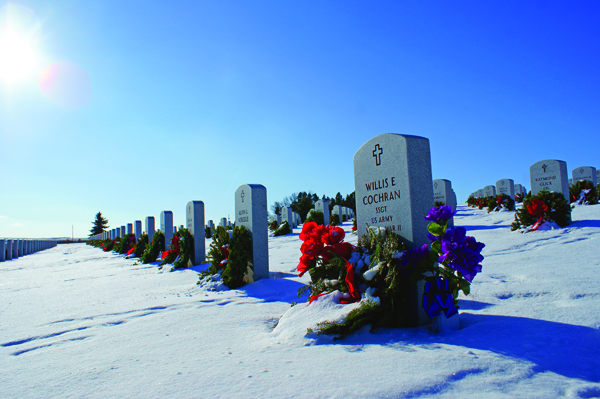
This photo of snow-covered North Dakota Veterans Cemetery in Mandan shows how difficult conditions can be for digging graves in the winter. Photo by Dustin White.

This photo of snow-covered North Dakota Veterans Cemetery in Mandan shows how difficult conditions can be for digging graves in the winter. Photo by Dustin White.

North Dakota funeral directors say a law requiring them to have winter burials would be impractical if not impossible for the hundreds of small rural cemeteries scattered across the sparsely populated state. Just plowing the country road to get to the cemetery can be an arduous task.

But in states like Minnesota and Wisconsin, state law requires them to dig graves amid the harsh winters.

Thankfully, technology makes it less back breaking to dig through the top layers of frozen soil. At a cemetery in Henning, Minn., gravedigging brothers Matt and Andrew Goeden use jackhammers powered by an air compressor to break through the frozen soil, which can often go as far as four feet deep.

“We do about a foot of frost an hour with the jackhammer, but the more frost there is, the longer it takes. Four feet doesn’t take four hours, it takes more like six hours,” Matt Goeden explained in a 2014 CNN segment.

Brothers Matt and Andrew Goeden dig graves with jackhammers and backhoes in Hemming, Minn. Photo courtesy of CNN.

Brothers Matt and Andrew Goeden dig graves with jackhammers and backhoes in Henning, Minn. Photo courtesy of CNN.

Sometimes they use a little non-mechanical help in the form of a heater. “Light a couple bags of Kingsford charcoal, put a couple pieces of plywood over the top and come back the next day. Make a little oven out of it and that’ll knock the rest of the frost out of it,” Matt said.

Backhoes also do the lion’s share of winter grave digging. At Highland Memorial Park Cemetery in New Berlin, Wis., E. Glenn Porter III’s crews take a different tack. They fit the bucket of a backhoe with a pair of “frost teeth” — curved metal arms several feet long with carbide tips that, combined with the power and leverage of the backhoe, are strong enough to break the frozen ground.

“The width of the teeth is exactly the width of our grave, so I can set up once and then just dig along the long dimension of a grave until I get below the frost,” Porter said. “I also cut across the short direction twice, just so that I get smaller pieces … to break out.”

Cory Lidwin (left) and Rick Budnick use “frost teeth” attached to a backhoe while digging a grave Monday at Highland Memorial Park Cemetery in New Berlin, Wisc. This enables them to penetrate the frost line of the soil. Photo by Mark Hoffman, Milwaukee Wisconsin Journal Sentinel.

Cory Lidwin (left) and Rick Budnick use “frost teeth” attached to a backhoe while digging a grave at Highland Memorial Park Cemetery in New Berlin, Wis. Photo by Mark Hoffman, Milwaukee Wisconsin Journal Sentinel.

One of the more recent innovations in winter grave digging is the ground thawer. They resemble oil barrels cut in half lengthwise, then fitted with smokestacks and a hole for a torch. You place the barrel open-end down over the grave site, insert a propane-powered torch and pump heat into the dome. When you return 24 to 30 hours later, you can then scoop out the now-soft dirt with a backhoe.

This is an example of a more primitive grave thawer that resembles an oil barrel. Propane is used to heat the barrel which in turns, thaws the ground to make it diggable.

This is an example of a grave thawer that resembles an oil barrel. Propane is used to heat the barrel which in turns, thaws the ground to make it easier to dig.

A more sophisticated version is made by ThawDawg and sold through Ground Specialties, Inc. based in Milaca, Minn. It, too, operates via propane tanks. ThawDawg’s website states these units can fit in the back of a truck and be set up/taken down by one person. I could not find a cost online for them.

The Thaw Dawg ground warmer can fit into tight spaces that a backhoe cannot, preparing the frozen soil for easier digging. Photo courtesy of Ground Specialties, Inc.

The ThawDawg ground warmer can fit into tight spaces that a backhoe cannot, preparing the frozen soil for easier digging. Photo courtesy of Ground Specialties, Inc.

Finally, ground thawing blankets are also becoming popular with cemetery grave diggers. You can lay it on top of the ground, plug it into an electrical source or gas generator then let it do the work. This type of ground thawing blanket is also used in the construction industry.

In Creston, Iowa, Graceland Cemetery’s superintendent Bruce Hodge is a fan of them, having used the barrel thawers in the past. “You get the wind blowing with that LP burner and it’d blow it out,” said Hodge. “I just decided there had to be a better way.”

To make the dirt soft enough to dig, the blanket usually has to remain on one plot for 12 to 18 hours, depending on how deep the frost is. It can thaw approximately 10 inches deep every four or five hours, if conditions are favorable.

Graceland Cemetery Superintendent Bruce Hodge uses a ground thawing blanket, powered by a generator, to soften the frozen soil to dig a grave. Photo courtesy of the Creston News Advertiser.

Graceland Cemetery superintendent Bruce Hodge uses a ground thawing blanket, powered by a generator, to soften the frozen soil to dig a grave. Photo courtesy of the Creston News Advertiser.

RapidTHAW sells a 4.5 foot by 15-foot ground thawing 110-volt outdoor electric blanket for $685.00. Larger ones can sell for over $1,000 depending on the size. Cemetery crews are finding these blankets to be a less cumbersome and more fuel efficient option.

So whether you choose a jackhammer, “frost teeth” or an outdoor electric blanket, grave digging through hard winter soil isn’t quite as difficult for the “frozen chosen” as it used to be.

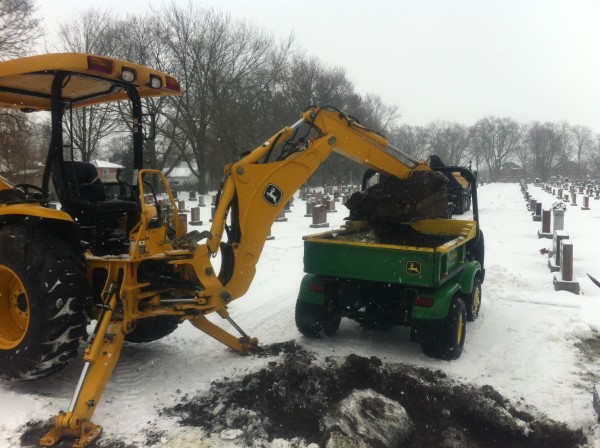
P.D. Baker Ltd. in Ontario, Canada uses a John Deere 110 TLB (tractor/loader/backhoe) and Pro-Gator. Both machines maneuver through tight cemetery spaces easily, and the lightweight turf tires on both distribute weight to minimize damage to cemetery grounds and flower beds. Photo courtesy of P.D. Baker Ltd.

CEMECARE, a division of P.D. Baker Limited in Canada, uses a John Deere 110 TLB (tractor/loader/backhoe) and Pro-Gator to maneuver through tight cemetery spaces. Photo source: CEMECARE web site.

1,654 Miles of Mourning: Abraham Lincoln’s Funeral Procession (Part II)

20 Friday Feb 2015

Posted by adventuresincemeteryhopping in General

≈ Leave a comment

Last week, I started a two-part series about the historic funeral procession of President Abraham Lincoln, starting with the funeral at the White House and his funeral train’s procession (and stops) in Maryland, New Jersey and New York. Today, I’ll cover the rest of the journey through Ohio, Indiana and Illinois to his final resting place in Oak Ridge Cemetery.

Ohio

Early on Friday, April 28, the Lincoln Special rumbled into the Euclid Street Station in Cleveland. Unlike previous stops, Lincoln’s coffin was not conveyed to a courthouse or auditorium for viewing but to an outdoor pagoda in Cleveland’s public park in Monument Square built just for the event.

Lincoln biographer Carl Sandburg explained, “At Cleveland, the Committee…decided no available building would accommodate the crowds, where the Committee on Arrangements had a pagoda put up in the city park, with open sides through which two columns could pass the coffin.”

Unlike the other cities it would travel through, Lincoln's casket was taken to an open pagoda in Cleveland's city park so that the crowds who came to view him could be most easily accomodated. The rain did not keep them away. Photo courtesy of The Encyclopedia of Cleveland History.

Unlike other cities, Lincoln’s casket was placed in an open pagoda in Cleveland’s city park so crowds could be best accommodated. Even the constant rain couldn’t keep them away. Photo courtesy of The Encyclopedia of Cleveland History.

Despite constant rain, over 100,000 mourners passed by Lincoln’s coffin in a period of about 15 hours. Late that evening, the Lincoln Special departed for Columbus (a 135-mile journey). Along the way, at every depot large bonfires were lit to light the way. Thousands gathered in the rain, hoping to catch sight of the passing funeral train.

This train schedule lists the many towns the Lincoln funeral procession passed through between Cleveland and Columbus. Residents would line the tracks to get a glimpse of the train as it passed.

This train schedule lists the many towns the Lincoln funeral procession passed through between Cleveland and Columbus. Residents lined the tracks to get a glimpse of the train as it passed.

Lincoln’s train arrived in Columbus on Saturday morning, April 29. A 17-foot long hearse carried his coffin to the State Capitol building. All along the way, thousands of mourners lined the streets, with houses and businesses draped in black.

Lincoln's funeral train Car at Cleveland's Union Station had guards on board after Lincoln's body had been taken to the Ohio Statehouse because his son, Willie who had died several years before, was still on board. The ditch along the track is filled with water from the heavy rain storms that fell during the night. The sun came out just before Lincoln's body arrived at the Statehouse.

Lincoln’s funeral train car at Cleveland’s Union Station had guards on board after Lincoln’s body was taken to the Ohio Statehouse because the remains of his son, Willie who had died several years before, remained on board.

At the West Gate of the Statehouse, an arch loomed over the large gate posts. At the arch’s center were the words: “Ohio Mourns”. Statehouse columns were wrapped in black cloth. Above the columns on the cornice a sign hung with a quote from Lincoln’s last inaugural address: “With malice to none. With charity for all.”

Once there, eight members of the Veteran Guard carried the coffin into the rotunda on their shoulders. The Columbus catafalque differed from the others in that it lacked elaborate columns and canopies, but was a simple low moss and flower-covered dais.

A lithograph of the Lincoln funeral procession heading east on Broad Street. This view is looking south, with High Street shown on the right.

A lithograph of the Lincoln funeral procession heading east on Columbus’ Broad Street. This view is looking south, with High Street shown on the right.

According to the website “Touring Ohio”, the dais was covered with lilacs. While it was an attractive site, the flowers also served as a much-needed olfactory buffer. The site states, “Although Lincoln’s body had been embalmed before leaving Washington D.C., the process was not yet perfected and his body had already begun to deteriorate badly giving off a putrid odor that had to be masked by the floral arrangements.”

Two sets of lines formed on High Street, one stretching north to Long Street and another south to Rich Street. About 8,000 people an hour walked past the casket. During the afternoon on the east side of the Capitol Building, state and local dignitaries, and military generals spoke about Lincoln’s contributions. Major General George Hooker, who would later lead the Springfield procession, was the featured speaker.

At 6 p.m., the Capitol doors were closed. A bugle sounded the assembly and the soldiers reformed for the final escort back to Union Station following the same route in reverse. A few hours later, the train departed Columbus and headed for Indianapolis (187 miles away).

Indiana

After arriving in Indianapolis at 7 a.m. on Sunday, April 30, Lincoln’s coffin was carried to the Indiana State House in a hearse topped by a silver-gilt eagle. Because the rain was so heavy, the planned procession was canceled and the day was devoted to viewing.

This photo is from Geoff Elliott's website The Abraham Lincoln Blog. He notes that "the photo...shows the capitol in the background, wrapped in black mourning cloth and ribbons. A strange structure at the entrance to the ground...neither arch, nor tunnel. Inside it had numerous displays of Lincoln's life, yet it struck mourners as unnecessary and even distracting from the majesty of the capitol."

This photo is from Geoff Elliott’s website The Abraham Lincoln Blog. He notes that “the photo…shows the capitol in the background, wrapped in black mourning cloth and ribbons. A strange structure at the entrance to the ground…neither arch, nor tunnel. Inside it had numerous displays of Lincoln’s life.”

The first mourners were 5,000 children, all members of various Sunday schools. Bringing up the rear were hundreds of African-Americans, clutching copies of the Emancipation Proclamation. By the time those final mourners had paid their respects, an estimated 100,000 people had visited Lincoln’s casket.

During the night, the Lincoln Special departed for Chicago. In Michigan City, Ill., on the morning of Monday, May 1, the funeral train stopped at 8:25 A.M. under a 35-foot memorial arch over the tracks. That’s when something totally unplanned happened.

Officials in charge of the funeral train decided to open the coffin to display the remains, breaking the rule that said the coffin would be opened only in the cities holding official funerals. Residents were allowed to enter to pay their last respects.

The justification for this impromptu funeral was that Lincoln’s train was forced to wait an hour in Michigan City for the arrival (by special train) of a committee of officials from Chicago that were to escort it into the city.

This picture of Michigan City's arch for Lincoln's funeral train from Geoff Elliott's web site shows the grand scale of it.

This picture of Michigan City’s arch for Lincoln’s funeral train from Geoff Elliott’s website shows the grand scale of it. The only unplanned funeral of the entire journey was held there.

Illinois

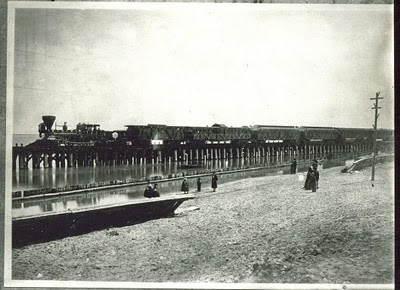
The funeral train reached Chicago by 11 a.m. and did not go the full distance to the Union Depot, stopping on a trestle that carried the tracks out into Lake Michigan for some distance. The train remained still, with only its bell tolling its arrival.

Instead of fully entering Chicago's Union Station, the "Lincoln Special" stopped on a trestle that carried the tracks some distance over Lake Michigan.

Instead of fully entering Chicago’s Union Station, the Lincoln Special stopped on a trestle that carried the tracks some distance over Lake Michigan.

Soon after, Lincoln’s casket was taken to a platform which rested underneath a grand arch. According to Geoff Elliott, the Gothic structure cost the city $15,000 along with the decorations in the Cook County courthouse (where Lincoln would lay in state). That amount was half of what Washington paid for the President’s entire funeral, indicating Chicago’s desire to equal New York City and Philadelphia in their efforts to show their respect for the fallen President.

Chicago went to great expense to memorialize Lincoln, erecting a grand Gothic arch and elaborately decorating the Courthouse where his casket was taken.

Chicago went to great expense to memorialize Lincoln, erecting a grand Gothic arch and elaborately decorating the courthouse where his casket was taken.

J.C. Power wrote of the procession to the Cook County courthouse that followed:

It was a wilderness of banners and flags, with their mottoes and inscriptions. The estimated number of persons in line was 37,000, and there were three times as many more who witnessed the procession by crowding into the streets bordering on the line of march, making about 150,000 who were on the streets of Chicago that day, to add their tribute of respect to the memory of Abraham Lincoln.

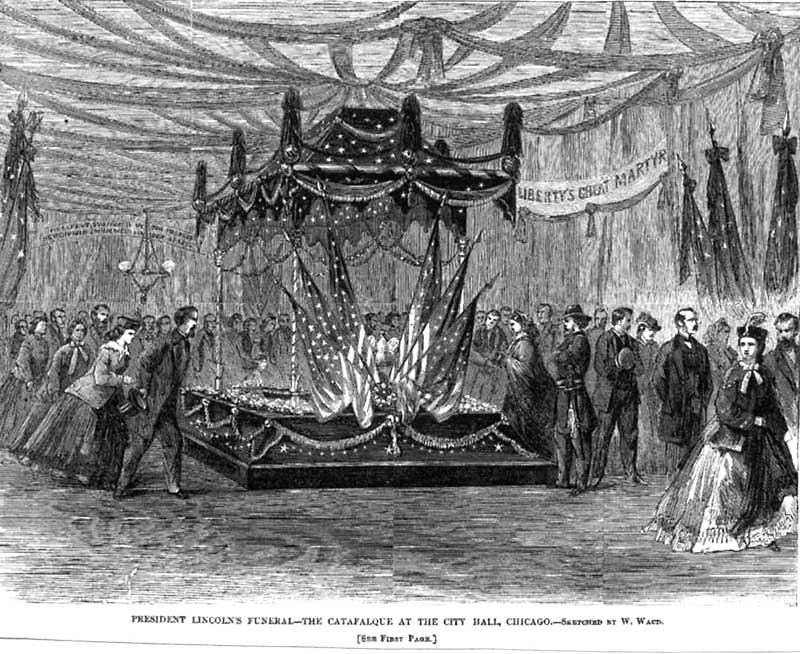
The courthouse opened to the public at 6 p.m. Once inside, mourners saw a mix of patriotic fervor and somber mourning as they passed by the president’s casket. Thousands of mourners paid their respects through the night and during the next day.

The catafalque used for Lincoln's casket in Chicago's Cook County courthouse was swathed in mourning black and patriotic flags.

The catafalque used for Lincoln’s casket in Chicago’s Cook County courthouse was swathed in mourning black and patriotic flags.

On Tuesday, May 2 at 8 p.m., a hearse carried the coffin to the depot of the St. Louis and Alton Railroad. The Lincoln Special was ready to go to its last stop, Springfield, which was 184 miles away.

Civil War veteran William S. Porter was a brakeman assigned to work on the funeral train. He wrote about what he saw on the journey from Chicago to Springfield:

There were large crowds of people, congregated – stern, grim visaged men, tear eye-dimmed women and children – all silent, but with an anxious expectant look as of some impending disaster. It was that way all along the line. There were throngs of people in all the smaller towns, also at the country road crossing could be seen a group of people waiting to see the arrival and passage of this train, the remembrance of which was to become an epoch in their lives.

The Lincoln Special arrived in Springfield on Wednesday, May 3. Lincoln would lie in state in the State House’s Hall of Representatives. It was the same room in which he gave his famous “House Divided” speech. Unfortunately, Lincoln’s face had become further discolored, so undertaker Thomas Lynch had to use rouge chalk and amber to restore the face to a near normal color.

Shortly after 10 a.m., the doors were opened to the long line of mourners. Additionally, hundreds of people gathered around Lincoln’s home where his horse, Old Bob, now 16 years old, had been brought back for the day.

Lincoln's beloved horse, Old Bob, stood riderless at the funeral procession. A bronze statue of Lincoln standing beside Old Bob was created by Ivan Schwartz in 2009 and stands outside President Lincoln's Cottage at the Soldier's Home in Washington, D.C.

Lincoln’s beloved horse, Old Bob, was walked riderless in the funeral procession. A bronze statue of Lincoln standing beside Old Bob was created by Ivan Schwartz in 2009 and stands outside President Lincoln’s Cottage at the Soldier’s Home in Washington, D.C.

Lincoln’s law partner William Herndon wrote:

All day long and through the night a stream of people filed reverently by the catafalque. Some of them were his colleagues at the bar; some his old friends from New Salem; some crippled soldiers fresh from the battlefields of the war; and some were little children who, scarce realizing the impressiveness of the scene, were destined to live and tell their children yet to be born the sad story of Lincoln’s death.

On the morning of Wednesday, May 4, the sun dawned bright and hot for Lincoln’s final funeral. At 10 a.m., the State House doors were closed, and his body was prepared for burial by the undertaker and embalmer. An elegant hearse (finished in gold, silver and crystal) lent to Springfield by the city of St. Louis carried the President’s coffin.

The handsome hearse that bore Lincoln's body to the cemetery was lent to Springfield by the city of St. Louis.

The handsome hearse that bore Lincoln’s body to the cemetery was lent to Springfield by the city of St. Louis.

Led by Major General Hooker, the procession took a a zigzag route from the State House, past Lincoln’s home, past the Governor’s Mansion and onto the country road leading to Oak Ridge Cemetery where he would be buried. The hearse was followed immediately by Old Bob wearing a mourning blanket. Lincoln’s only two blood relatives in attendance that day were his sons, Robert and Thomas (Tad). Mrs. Lincoln was still in mourning in the White House.

Lincoln came to his final resting place on Tuesday, May 4. He would not stay there for long, however.

Lincoln came to his resting place, a receiving vault, on Tuesday, May 4. He would not stay there for long, however.

Upon arrival at the cemetery, the coffin was laid upon a marble slab inside the receiving vault where it would temporarily stay since it would take three years to complete the President’s tomb. Willie’s coffin was placed beside his father’s. Bishop Matthew Simpson gave the funeral oration and Dr. Phineas Densmore Gurley read the benediction. Mourners then watched as the iron gates and heavy wooden doors of the tomb were closed and locked.

Unfortunately, Lincoln’s remains would be moved around several times after this but that story deserves its own blog post. The long journey was finally over, having moved through seven states over 14 long days.

Never had such a funeral procession been attempted and it never would again.

For additional information and photographs of Lincoln’s historic funeral procession, see the book Twenty Days by Dorothy Meserve Kunhardt and Philip B. Kunhardt, Jr.

Abraham Lincoln's tomb at Oak Ridge Cemetery in Springfield, Ill. was designed by Larkin Goldsmith Mead. Photo courtesy of David Jones.

Abraham Lincoln’s tomb at Oak Ridge Cemetery in Springfield, Ill. was designed by Larkin Goldsmith Mead. Photo courtesy of David Jones.

1,654 Miles of Mourning: Abraham Lincoln’s Funeral Procession (Part I)

13 Friday Feb 2015

Posted by adventuresincemeteryhopping in General

≈ 4 Comments

This week on February 12 we celebrated the birthday of our 16th President, Abraham Lincoln. There are a few reasons Lincoln is a favorite of mine beyond his historic accomplishments. He was the first U.S. President to be embalmed, a story I shared in another post.

This is a mourning card printed soon after Lincoln's death. Photo courtesy of the Library of Congress, Rare Books and Special Collections Division

This is a mourning card printed soon after Lincoln’s death. Photo courtesy of the Library of Congress, Rare Books and Special Collections Division.

But Lincoln’s also the only President whose funeral became a 14-day, multi-state affair that covered over 1,600 miles, went through more than 160 communities, and involved about 30 million mourners. This year marks its 150th Anniversary and efforts are in the works to re-create the trip, despite the fact funds have been somewhat lacking to finance it.

Today in Part I, I’ll cover the first half of Lincoln’s funeral procession through Maryland, Pennsylvania, New Jersey and New York.

Shot by John Wilkes Booth at Ford's Theater on April 15, 1865, Abraham Lincoln's death shook the deeply divided country. This illustration appeared in Harper's Weekly magazine.

Although John Wilkes Booth shot Lincoln at Ford’s Theater on April 15, 1865, the assassin originally wanted to do it on March 15 (the Ides of March) to emphasize his view of Lincoln as a tyrant.  This illustration appeared in Harper’s Weekly magazine.

Funeral at the White House and Rotunda Viewing

After four days of preparation, Lincoln’s White House funeral was held on April 19 in the East Room with about 600 in attendance. From the time the body had been made ready for burial until the last services in the house, it was watched by a guard of honor, the members of which were one major general, one brigadier general, two field officers, and four line officers of the Army and four of the Navy.

The procession from the White House to the Capitol Rotunda covered about three miles and took over two hours. The Twenty-Second United States Colored Infantry (organized in Pennsylvania) landed from Petersburg and belatedly marched up to a position on the avenue, played a dirge and headed the procession to the Capitol.

Over 100,000 people lined the streets. Frank Leslie’s Illustrated Newspaper reported: “Every window, housetop, balcony and every inch of the sidewalks on either side was densely crowded with a mournful throng to pay homage to departed worth. Despite the enormous crowd the silence was profound. It seemed akin to the death it commemorated.”

Ben Perley Poore, wrote: “At 2 p.m., the funeral procession started, all of the bells in the city tolling, and minute guns firing from all the forts. Pennsylvania Avenue, from the Treasury to the Capitol, was entirely clear from curb to curb. Preceding the hearse was the military escort, over one mile long, the arms of each officer and man being draped with black. Illustration from Harper's Weekly.

Ben Perley Poore, wrote: “At 2 p.m., the funeral procession started, all of the bells in the city tolling, and minute guns firing from all the forts. Pennsylvania Avenue, from the Treasury to the Capitol, was entirely clear from curb to curb. Preceding the hearse was the military escort, over one mile long, the arms of each officer and man being draped with black.” Illustration from Harper’s Weekly.

The next day, about 40,000 mourners passed by Lincoln’s open casket in the Capitol Rotunda. Union officer William Gamble supervised the honor guard and described the scene, including an elderly mourner who bent the rules a bit:

While I was standing at the head of the coffin preventing people from touching it, one old lady over 60 years old watched me closely, and quick as thought darted down her head and kissed the President in spite of me. I could not find it in my heart to say a word to her, but let her pass on as if I did not see it. You can form no idea of the scenes I saw.

The catafalque (a raised structure on which the body of a deceased person lies) that supported Lincoln’s casket in the Capitol Rotunda continues to be used for all who have lain in state there. Most recently, it was used in 2013 after the death of U.S. Senator Frank Lautenberg, whose body lie in repose in the Senate chamber after his funeral in Secaucus, N.J.

This map shows the seven states and major cities that the Lincoln funeral procession went through. A total of 13 different funerals were held, with one impromptu one in Michigan City, Ind.

This map shows the seven states and major cities the Lincoln funeral procession went through. A total of 13 different funerals were held, with one impromptu one in Michigan City, Ind.

Lincoln’s funeral procession, with a few deletions, traces the same route he took from Springfield, Ill. to the White House in 1861 when he became President. Over the course of that journey, Lincoln’s casket would be removed from the train several times for public memorial services and viewings. As you can imagine, embalming was a must in order to forestall decomposition.

Lincoln’s funeral car was not constructed just for the occasion. In early 1865, the United States Military Railroad delivered the 1865 equivalent of Air Force One to President Lincoln, a private railroad car. Yet Lincoln never used the railroad car, named The United States, while he was alive. After his death, it was modified to serve as his funeral train and called “The Lincoln Special.”

Postcard of Lincoln's funeral train, the Old Nashville, that carried him across seven states and through over 400 communities.

Postcard of the funeral train “The Lincoln Special” that carried him across seven states and through over 160 communities. A portrait of Lincoln was placed above the cowcatcher on the front of the engine.

Also on board were the disinterred remains of Lincoln’s son, Willie, who died at the age of 11 in 1862 at the White House. Per the family’s wishes, he would be buried with his father in Springfield, Ill. Lincoln’s wife remained in mourning at the White House, but son Robert Lincoln rode the train as far as Baltimore before returning to Washington.

Baltimore, Md. and Harrisburg, Pa.

Lincoln’s funeral train traveled first to Baltimore on April 21. His coffin was borne to the Merchant’s Exchange Building and opened for public view for only about an hour and a half. The train then departed for Harrisburg, Pa., a 58-mile trip. The coffin was then carried by hearse to the state House of Representatives, placed in a catafalque, and opened for public viewing.

Philadelphia, Pa.

The train departed Harrisburg for the 106-mile journey to Philadelphia where it arrived at the Broad Street Station. A hearse took Lincoln’s coffin through Philadelphia’s streets teeming with mourners to Independence Hall. There the coffin was placed in the East Wing where the Declaration of Independence had been signed. Viewing that evening was by invitation only.

Philadelphians were eager to catch a glimpse of Lincoln's funeral hears. Thousands flocked to Independence Square in hopes of viewing him up close.

Philadelphians were eager to catch a glimpse of Lincoln’s funeral hearse. Thousands flocked to Independence Square in hopes of viewing him up close. As the photo shows, spectators even climbed on rooftops to get a look.

On the morning of April 23, long lines started forming. At its greatest, the double line was three miles long and wound from the Delaware River to the Schuylkill River. An estimated 300,000 people passed by Lincoln’s open coffin and the wait was up to five hours. The crowds were so immense that police had trouble maintaining order. Some people had their clothing ripped, others fainted and one reportedly broke her arm.

Despite Thomas Holmes’ thorough embalming, Lincoln’s body did suffer a little from the repeated exposure. According to Bradley R. Hoch, “As soon as the entrances closed and the public was out of the Assembly Room…embalmer Brown cleaned Lincoln’s face of the dust that had accumulated during 33 hours in Philadelphia.”

New York City, N.Y.

On April 24, Lincoln’s funeral train left Philadelphia headed for New York, an 86-mile trip. While in New Jersey, the train arrived at the Jersey City station and Lincoln’s coffin was taken by ferry across the Hudson River. It was then borne to City Hall where it was carried up the circular staircase under the rotunda. After the coffin was placed in a black velvet dais, the public was admitted. At one point, it was reported that more than 500,000 people waited in line to view the President.

David T. Valentine wrote: "A ceaseless throng of visitors were admitted to view the body, while many thousands were turned away unable to obtain admittance. All classes of our citizens, the old and the young, the rich and the poor, without distinction of color or sex, mingled in the silent procession that passed reverently before the bier."

David T. Valentine wrote: “A ceaseless throng of visitors were admitted to view the body, while many thousands were turned away unable to obtain admittance. All classes of our citizens, the old and the young, the rich and the poor, without distinction of color or sex, mingled in the silent procession that passed reverently before the bier.”

An account from the New York Times mentioned Lincoln’s appearance: “It will not be possible, despite the effection of the embalming, to continue much longer the exhibition, as the constant shaking of the body aided by the exposure to the air, and the increasing of dust, has already undone much of the…workmanship, and it is doubtful if it will be decreed wise to tempt dissolution much further.”

The procession of Lincoln’s hearse from City Hall to the train station was a grand affair. An estimated 75,000 marched in the huge procession through New York’s streets. Windows along the route are said to have rented for up to $100 a person. When the procession neared Union Square, it passed Theodore Roosevelt’s grandfather’s home where the six-year-old future president was viewing the procession from a second-story window.

The red circle indicates where young Theodore Roosevelt, the future 26th President, observed Lincoln's funeral procession to the Hudson River Depot.

The red circle indicates where young Theodore Roosevelt, the future 26th President, observed Lincoln’s funeral procession to the Hudson River Depot.

Albany and Buffalo

On April 26, the next stop on Lincoln’s funeral procession was New York’s capitol, Albany. Planned to be simpler than the others but no less respectful, the procession included only three companies of National Guardsmen, three companies of firemen bearing torches, state officials, members of the Legislature, and city authorities. When the hearse arrived at the Capitol, the remains were taken to the Assembly Room.

W. Emerson Reck wrote: “As many as 70 viewers a minute (total nearing 50,000) passed by the coffin between 1:30 a.m. and 2 p.m. A mass of human beings, estimated at 60,000, crowded along the streets for more than a mile when the procession escorting the remains from the Capitol to the New York Central station.”

Arriving in Buffalo on April 27, Lincoln’s coffin was transported to St. James Hall in a hearse drawn by six white horses dressed in black. About 100,000 people passed by the coffin during the day.

John Harrison Mills, a veteran whose leg was shattered at Second Bull Run, guarded Lincoln's coffin in St. James Hall. "I cannot remember how it came to pass that I was chosen to stand guard at the head of our beloved President Lincoln on that momentous day," he said. "I had been through so much in the past four years, two of which were spent amid battle, murder, and sudden death, that details did not lodge in my memory, whereas events, made indelible impressions." Photo courtesy of Benedict R. Maryniak.

John Harrison Mills, a veteran whose leg was shattered at Second Bull Run, guarded Lincoln’s coffin in St. James Hall in Buffalo. “I cannot remember how it came to pass that I was chosen to stand guard at the head of our beloved President Lincoln on that momentous day,” he said. Photo courtesy of Benedict R. Maryniak.

Mourners included the 13th U.S. President Millard Fillmore and future President Grover Cleveland. There was no formal funeral procession in Buffalo since they had staged a complete mock funeral on April 19 not knowing then it would be a stop on the train’s itinerary.

Despite his criticism of Lincoln's war policies, Millard Fillmore was on hand to pay tribute to him upon his arrival by train at Buffalo.

Despite his criticism of Lincoln’s war policies, Millard Fillmore was on hand to pay tribute to him upon his arrival by train at Buffalo.

Next week in Part II, I’ll tackle the rest of Lincoln’s journey back home to Springfield, Ill. and his final interment there.

Come Walk With Me: What a Typical Cemetery “Hop” is Like

06 Friday Feb 2015

Posted by adventuresincemeteryhopping in General

≈ 5 Comments

Want to join me on a “hop”?

Much of the time, I end up at a particular cemetery because I’m on the hunt for a specific grave and someone has requested a photo of it via Find a Grave. But often, I don’t have any specific purpose in mind when I choose a cemetery to explore. It’s just for the joy of looking around.

This week is a good example. For some time, I’ve been trying to find a time to go on a hop with Bobbie Tkačik , who is chairman of the cemetery committee of the Gwinnett Historical Society. I met her when I gave a talk at one of their meetings last year. On Wednesday, we finally got together and headed for Shadowlawn Cemetery in Lawrenceville.

Shadowlawn is actually made up of two sections. Old Shadowlawn is (as the name indicates) the older section, with graves dating back to the mid 1800s. There’s still some space for future burials but not much.

East Shadowlawn Memorial is the newer, more modern area. They have a sales office if you want to purchase a plot. There’s also a mausoleum and chapel. The two cemetery sections are separated by a small, muddy pond and a narrow drive.

Here's a view from the old cemetery with the pond separating it from the new section. Photo courtesy of www.oldplaces.org.

Here’s a view from the old cemetery with the pond separating it from the new section. Photo courtesy of http://www.oldplaces.org.

We decided to do our wandering in Old Shadowlawn. Like me, Bobbie is more interested in the older markers and monuments because they have a lot more creative influences and tell a story.

But when we parked the car and came upon an area with a high wooden fenced square, it was anything but traditional. It’s not often you see Arabic in an old Southern cemetery.

This fenced off area belongs to the Dawoodi Bohra Qabrastaan-Hasani Baugh sect. Currently, there appears to be only one grave inside.

This fenced off area belongs to the Dawoodi Bohra Qabrastaan-Hasani Baugh sect of Shia Islam. There appears to be only one grave inside.

The gate was locked so we couldn’t get a good look inside. And as I’ve said before, I am NOT a fence hopper. But we did peek through the slats. A small above ground grave of recent vintage is the only grave we saw.

According to the sign, it belongs to the Dawoodi Bohra Qabrastaan-Hasani Baugh. Wikipedia says Dawoodi Bohra is a subset of Shia Islam and has roots in Yemen. I couldn’t find anything about this particular group online. My guess is that they purchased land from the cemetery for their own private area to bury their members.

It’s one of those times where the present collides with a solidly entrenched past. Not that long ago, the population of Gwinnett County (where the cemetery is located) used to be almost entirely white. In 2013, statistics indicated it’s now 59 percent white, 26 percent black, with the remaining split up between many other nationalities.

Up the hill in the much older section, one of the first monuments I saw was this small angel. Believe it or not, she’s quite common but not always in the same form. In most cases, it’s for a child’s grave. This one resembles another angel I took a picture of at a cemetery about 30 minutes from this one.

This angel looks a great deal like one I photographed at another cemetery about 30 minutes away.

This angel looks a great deal like one I photographed at another cemetery about 30 minutes away.

I saw another grave for a child not far away, a distinctive shell grave. I find them all over the South. You can read my post about them from last year. This one was different than most I’ve seen because it looks more like a child than an infant reposing in the shell. In cemetery symbolism, the shell is usually a sign of eternal life.

Julia McGree only lived for about a year. But the child in the shell looks older than that.

Julia McGee only lived for about a year and a half. But the sleeping child in the shell looks older than that.

Another child’s grave caught my eye for the unique style. Her long white legs are a contrast to her dress and upper body. I’m thinking that because the skirt overshadows her legs, they are more protected from the aging process.

This monument for a child is unusual in style and in how it has aged.

This monument for a child is unusual in style and in how it has aged over the years.

As you can imagine, I found plenty of Confederate veteran graves. But the one that stood out (physically and historically) was the only crypt in the cemetery. Captain William Jasper Born and his second wife, Barbara, are buried inside. It’s not ornate like many I’ve seen, a bit rustic. But you can learn quite a bit about Capt. Born and his family just by reading the door.

The door on Capt. Born's crypt reads: He Was A Veteran Of The Confederacy, And Was With Lee's Army When He Surrendered At Appomattox C.H. April 9, 1865.

The door on Capt. Born’s crypt reads: He Was A Veteran Of The Confederacy,
And Was With Lee’s Army When He Surrendered At Appomattox Courthouse April 9, 1865.

According to Stephanie Lincecum, who writes a blog called Southern Graves, William Jasper Born was a member of Company D, 9th GA Battalion Light Artillery (aka “Born’s Artillery”). He was a son of John and Lucinda Born.

Barbara Bates was William’s second wife. He was married before the war, then married Barbara about 1865. He married again after her death. According to the 1870 Census, Capt. Born operated a hotel. It’s fascinating to think that someone buried so close to me was there when Robert E. Lee surrendered to Ulysses S. Grant at Appomattox, ending the Civil War.

One thing I always notice at cemeteries are the different styles of iron fencing around various plots. Wealthy families in the old days could afford some handsome iron work. I found two nice examples of it at Shadowlawn. Both were done by The Stewart Iron Works of Cincinnati.

The Stewart Iron Works Company was established about 150 years ago and supplied iron fencing for decades thereafter. You can find their handiwork in cemeteries across the country.

The Stewart Iron Works Company was established about 150 years ago and supplied iron fencing for decades thereafter. You can find their handiwork in cemeteries across the country.

The Stewart Iron Works was started about 150 years ago and amazingly, is still going strong today. You can find their work in cemeteries around the country and I come across it quite often. Their history is worth mentioning.

During World War I, Stewart formed the United States Motor Truck Company and produced trucks for the U. S. Army. Following the war, Stewart returned to fence products and sold them in the Sears and Roebuck Co. catalog. In the 1930s, a Stewart Jail Cell Division produced jail cells for most of the high security penitentiaries in the country. Places like Alcatraz, Leavenworth, Marion and Sing Sing were all Stewart customers.

During World War II, Stewart shifted to wartime production and provided portable landing equipment for the U.S. Air Force. Today, they produce a wide variety of items, from parking deck fencing to sculptures to fountains.

Another example of the Stewart Iron Works handiwork at Shadowlawn.

Here’s another example of the Stewart Iron Works handiwork at Shadowlawn. As you can see, cast iron does not always age very well over time.

On the hillside between Old Shadowlawn next to the pond is what was the African-American section of the cemetery. I’ve gotten adept at figuring this out from a few visual clues. Some of the markers are simple white ones with the funeral home’s name carved into the top.

I can also see that there aren’t that many truly old markers because often the families could not afford to provide one or they were made of wood, which quickly fell apart and disappeared. Odds are there are many more people buried here than the number of visible markers would indicate.

Two of them got my attention because of their inscriptions. Dee Phillips and J.P. Phillips were both members of something called the Mt. Nebo Chamber 3108 of Lawrenceville. I have only run across this kind of organization one other time and it was a different chamber based in Toledo, Ohio that an African-American woman had been a member of. She is buried in Fairburn City Cemetery.

Dee Phillips was a young man when he died of Scarlet Fever during World War I.

Dee Phillips was 30 when he died of Scarlet Fever during World War I. He had only been in the Army for three months at the time of his death. On his WWI draft card, he listed his ethnicity as “Ethiopian”.

My Internet searches on the Mount Nebo Chamber of Lawrenceville have come up with nothing.

My Internet searches on the Mount Nebo Chamber 3108 of Lawrenceville have come up with nothing.

Not far from Dee, who died at the age of 30 from Scarlet Fever as a soldier in World War I, is the grave of J.P. Phillips. I could not find him in the U.S. Census anywhere but he was likely related to Dee. Perhaps he was Dee’s father. J.P.’s marker not only mentions the Mount Nebo Chamber but very faintly bears some kind of seal.

J.P. Phillips was probably related to Dee Phillips. Perhaps he was Dee's father. I need more time to research that connection.

J.P. Phillips was probably related to Dee Phillips. Perhaps he was Dee’s father. I need more time to research that connection. Please forgive the intrusion of my shoe in the bottom right corner.

I hope to eventually get some more information on this mysterious Mt. Nebo Chamber 3108. Mt. Nebo was is an elevated ridge in Jordan, which is mentioned in the Bible as the place where Moses was given a view of the Promised Land. So there may be a religious/church connection.

Finally, in contrast to the older graves that are the norm in this part of Shadowlawn, I found one from 2005. It was a marker for Deborah S. Oakes. The pink ribbon on it indicates she probably died of breast cancer. But it’s what is written below that ribbon that catches you off guard.

Dee may have died of breast cancer but she never lost her sense of humor.

Death by Chocolate

I can tell you, that’s not something you see at a lot of cemeteries. But I think Deborah must have been a pretty sassy and special woman to ask for that to be carved on her gravestone. It would have been a pleasure to know her, I am certain.

That does it for this hop. As usual, I saw some interesting markers and found a few mysteries to solve. Hopefully, I can solve the Mt. Nebo Chamber mystery soon.

I hope you enjoyed it and learned something along the way.

Remembering the Holocaust at Atlanta’s Greenwood Cemetery

30 Friday Jan 2015

Posted by adventuresincemeteryhopping in General

≈ Leave a comment

This past Tuesday was International Holocaust Remembrance Day. In recognition of that, I am reposting a piece I wrote in October 2013 about Greenwood Cemetery’s Holocaust Memorial. I am not Jewish but the Holocaust has always had a great significance for me. You can find out why in this post.

In the mid 90s, I visited my friend (and fellow Church Chick) Megan in Washington, D.C. The U.S. Holocaust Museum had not been open very long so we went to see it. That day changed my life.

At the beginning of the tour, each guest is given a passport of a real person who lived during the Holocaust and was sent to a concentration camp. It briefly describes their life and what happened to them. When I opened mine, I was stunned.

The name inside my passport was Hana Mueller. My niece’s name is Hannah. And my maiden name is Muller. That’s when it became real to me.

Born in Prague in 1922, Hana was reading John Steinbeck’s The Grapes of Wrath in her apartment when she was taken by the Nazis. Despite enduring months in two different concentration camps, Hana was freed when her work crew was abandoned by the SS as liberators approached in May 1945. To watch videos from 1990 of Hana talking about her experiences, you can visit the museum’s website.

Hana Mueller was reading a book by Steinbeck when she was taken by the Nazis. Steinbeck has always been one of my favorite authors.

Hana Mueller was reading a book by Steinbeck when she was taken by the Nazis. Steinbeck has always been one of my favorite authors.

My father’s roots are in Germany. The Mullers came from the town of Konz in the Rheinland, in the Southwest. My great-great grandfather, John Henry Muller, arrived in the United States in 1866. He was a carpenter and a Catholic. Despite the fact Hana was from Prague and a Jew, I thought that girl could have been me.

This is the only photo I have of my great-great grandfather, John Henry Muller. He came to the U.S. and worked as a carpenter up until his death in 1926.

This picture from his newspaper obituary is the only photo I have of my great-great grandfather, John Henry Muller. He came to the U.S. in 1866 and worked as a carpenter up until his death in 1926.

Ever since then, my interest to learn as much as possible about the Holocaust has been almost obsessive. I’ve read countless memoirs written by Holocaust survivors and seen over a hundred hours of documentaries. I’ve read The Rise and Fall of the Third Reich all the way through. It’s a subject I never tire of learning more about.

When I found out that Atlanta had a cemetery with its own Holocaust Memorial, I knew I had to visit it. That’s when I discovered Greenwood Cemetery, located off Cascade Road in Southwest Atlanta.

Greenwood Cemetery opened in 1907. Its diversity is worth noting. Hundreds of graves are for Jews who made Atlanta their home. I had never seen Jewish headstones up close before, except at Oakland Cemetery. There’s also an entire section for those of the Greek Orthodox faith, complete with a small chapel. A very small area belongs to the Chinese, perhaps 20 graves in all.

image

Row upon row of Jewish graves at Greenwood Cemetery. Usually, the front inscription is written in English and the Hebrew version is written on the back.

But what truly separates Greenwood Cemetery from others is its Holocaust memorial. Built in 1965, the “Memorial to The Six Million” is a small granite open-air structure. The funds to build it came from a group of 100 Holocaust survivors living in Atlanta. In 2008, the Memorial was added to the National Register of Historic Places. It is the only Holocaust memorial in Georgia to have that distinction.

The  Memorial for the Six Million is small but impressive. You can see the six white "candles" above the top edge.

The Memorial for the Six Million is small but impressive. You can see the six white “candles” above the top edge.

What catches your eye immediately are the six 19-foot tall pillars in the middle of it. They represent the estimated six million Jews who perished as a result of the atrocities of the Holocaust. During special ceremonies at the Memorial, these “candles” are lit as an act of remembrance for those who died.

Inside, on the walls, are plaques inscribed with the names of hundreds of people (with surviving family members and descendants that reside in Atlanta) who died in the concentration camps scattered across Europe. Entire families are listed, their lives snuffed out by the Nazi regime. The pillars are anchored by a large, black base that resembles a casket.

This metal plaque is inscribed in both English and Yidish. "For these I weep..." Is from Lamentations 1:16 of the Old Testament.

This metal plaque is inscribed in both English and Hebrew. “For these I weep…” is from Lamentations 1:16 of the Old Testament.

On the day I visited Greenwood and the Memorial, it was a stunningly beautiful sunny day with a hint of fall in the air. Nobody else was around as I quietly entered. It is a place of reverence and remembrance. As I scanned the names on the wall, it was like being back at the Holocaust Museum in D.C. The huge number of six million becomes much more personal when you see the actual names of people who died.

Entire families perished in the Nazi concentration camps. Many came from Poland, who surrendered to Hitler in September 1939.

Entire families perished in the Nazi concentration camps and ghettos. Many came from Poland, which surrendered to Hitler in September 1939.

Also within the memorial is an urn containing human ashes brought from the concentration camp at Dachau.

There is a little bit of controversy attached to the Memorial. Outside of it are buried four bars of soap that are purported to have been made by Nazis from the fat of Jewish Holocaust victims. A Jewish soldier who was part of a U.S. force that liberated a concentration camp brought them home after the war. They were forgotten until his wife found them in their Dekalb County basement in 1970. They are stamped “RIF”.

Historians say the initials stand for Reich Industrial Fat. But when the bars were found, the “I” was widely interpreted as a “J,” and some people thought the initials stood for the German translation of Pure Jewish Fat.

After the bars were discovered, the couple called a local rabbi who consulted with Jewish scholars and planned a burial at Greenwood. The bars remain buried there, although I could not find the flat stone marker where they are located. The picture below was taken by someone else.

This is a picture of the memorial stone where four bars of soap purported to be made from the remains of Jews killed in the Holocaust are buried. Photo courtesy of Anneke Moerenhout.

This is a picture of the memorial stone where four bars of soap purported to be made from the remains of Jews killed in the Holocaust are buried. Historians do not believe that the Nazis ever did this. Photo courtesy of Anneke Moerenhout.

In 2000, a Jewish architect from Atlanta named Ben Hirsch (his parents and two siblings died in concentration camps) wrote a book that put forth his belief that the Nazis did indeed make soap from Jewish victims. Hirsch’s uncle’s unpublished writings describe how he was forced to work in the concentration camp crematories and saw it himself.

Most historians contend that while the atrocities enacted by the Nazis were horrific, there is no substantial proof that this soap making actually took place. Because of this sentiment, the U.S. Holocaust Museum barred a book signing for Hirsch there.

Regardless of who is right or wrong, the Memorial for the Six Million at Greenwood Cemetery is a sacred place that sends the message it creators originally hoped to get across. Such a tragedy must never be repeated. That’s why remembering it is so critical.

We must never forget.

This is the skirt Hana Mueller wore as a concentration camp prisoner. It is on display at the U.S. Holocaust Museum in  Washington, D.C.

This is the skirt Hana Mueller wore as a concentration camp prisoner. It is on display at the U.S. Holocaust Museum in Washington, D.C.

← Older posts
Newer posts →

Recent Posts

  • Few But Not Forgotten: Paying My Respects at the Houston County Poorhouse Cemetery in Dothan, Ala.
  • More Pensacola, Fla. Cemetery Hopping: Taking a Ramble Through Saint John’s Cemetery, Part III
  • More Pensacola, Fla. Cemetery Hopping: Taking a Ramble Through Saint John’s Cemetery, Part II
  • More Pensacola, Fla. Cemetery Hopping: Taking a Ramble Through Saint John’s Cemetery, Part I
  • The City of Five Flags: Stepping back in time at Pensacola, Fla.’s Saint Michael’s Cemetery, Part V

Archives

  • February 2026
  • December 2025
  • November 2025
  • August 2025
  • July 2025
  • June 2025
  • May 2025
  • April 2025
  • March 2025
  • February 2025
  • January 2025
  • October 2024
  • August 2024
  • July 2024
  • June 2024
  • May 2024
  • April 2024
  • March 2024
  • February 2024
  • January 2024
  • December 2023
  • November 2023
  • October 2023
  • September 2023
  • August 2023
  • July 2023
  • June 2023
  • May 2023
  • April 2023
  • March 2023
  • February 2023
  • January 2023
  • December 2022
  • November 2022
  • October 2022
  • September 2022
  • August 2022
  • July 2022
  • June 2022
  • May 2022
  • April 2022
  • March 2022
  • February 2022
  • January 2022
  • December 2021
  • November 2021
  • October 2021
  • September 2021
  • August 2021
  • July 2021
  • May 2021
  • April 2021
  • March 2021
  • February 2021
  • January 2021
  • December 2020
  • November 2020
  • October 2020
  • September 2020
  • August 2020
  • July 2020
  • June 2020
  • May 2020
  • April 2020
  • March 2020
  • February 2020
  • January 2020
  • December 2019
  • November 2019
  • October 2019
  • September 2019
  • August 2019
  • July 2019
  • June 2019
  • May 2019
  • April 2019
  • March 2019
  • February 2019
  • January 2019
  • December 2018
  • November 2018
  • October 2018
  • September 2018
  • August 2018
  • May 2018
  • April 2018
  • March 2018
  • February 2018
  • January 2018
  • December 2017
  • November 2017
  • October 2017
  • September 2017
  • August 2017
  • July 2017
  • June 2017
  • May 2017
  • April 2017
  • March 2017
  • February 2017
  • January 2017
  • December 2016
  • November 2016
  • October 2016
  • September 2016
  • August 2016
  • July 2016
  • June 2016
  • May 2016
  • April 2016
  • March 2016
  • February 2016
  • January 2016
  • December 2015
  • November 2015
  • October 2015
  • September 2015
  • August 2015
  • July 2015
  • May 2015
  • April 2015
  • March 2015
  • February 2015
  • January 2015
  • December 2014
  • November 2014
  • October 2014
  • September 2014
  • August 2014
  • July 2014
  • June 2014
  • May 2014
  • April 2014
  • March 2014
  • February 2014
  • January 2014
  • December 2013
  • November 2013
  • October 2013
  • September 2013
  • August 2013
  • July 2013
  • June 2013
  • May 2013
  • April 2013
  • March 2013
  • February 2013
  • January 2013

Categories

  • General

Blogroll

  • A Grave Interest
  • Cemetery Photography by Chantal Larochelle
  • Cemetery Tours of Berlin by Matti
  • Confessions of a Funeral Director (Caleb Wilde)
  • Find a Grave
  • Hunting and Gathering (cool photography site)
  • Save Our Cemeteries (New Orleans, La.)
  • The Cemetery Club
  • The Graveyard Detective
  • The Rambling Muser
  • Westminster Abbey Tours by Grace

Meta

  • Create account
  • Log in
  • Entries feed
  • Comments feed
  • WordPress.com

Blog at WordPress.com.

  • Subscribe Subscribed
    • Adventures in Cemetery Hopping
    • Join 395 other subscribers
    • Already have a WordPress.com account? Log in now.
    • Adventures in Cemetery Hopping
    • Subscribe Subscribed
    • Sign up
    • Log in
    • Report this content
    • View site in Reader
    • Manage subscriptions
    • Collapse this bar
 

Loading Comments...