
Last time, I took you with me to Atlanta’s Crest Lawn Cemetery. Among the names it’s had over the years are North View Cemetery. Atlanta already had a Westview Cemetery and an Eastview Cemetery (Decatur area), not to mention a South-View Cemetery. So I’m not surprised that Crest Lawn was once called North View Cemetery.
Today I’m going to talk about the area behind Crest Lawn that’s better known as Casey’s Hill. It’s not “officially” a part of Crest Lawn Cemetery, so it is not maintained by them in any way. If you go to the office to ask about a grave there, it’s likely they won’t be able to help you. Find a Grave lists about 1,500 memorials for Casey’s Hill but at least half of those are not photographed. If you visit, you’ll see why.
You can see that Casey’s Hill is not a traditional, well-manicured cemetery. Nobody technically owns or manages it, as far as I know. It’s something akin to a barely tamed wilderness. Hard to say. When I first visited in 2013, the folks living in the then fairly new homes just behind it had worked to create paths for people to use for walking. They’d even added a few picnic tables near the furthest edge of the cemetery (not among the graves).
The neighbors did it by themselves with their own time and money. When the pandemic was going strong, there were several people walking around Crest Lawn and Casey’s Hill so they weren’t be cooped up at home. I was one of them.
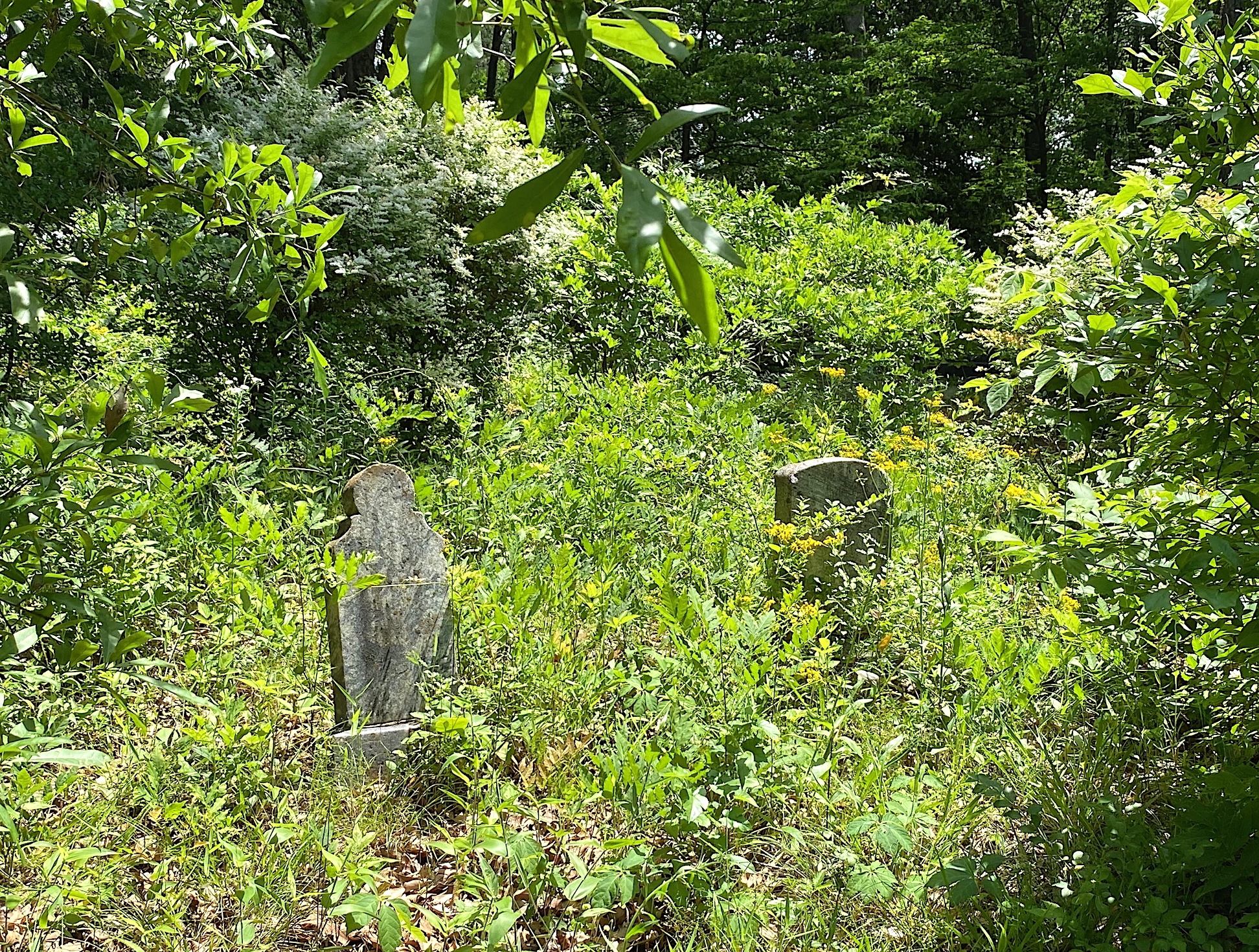
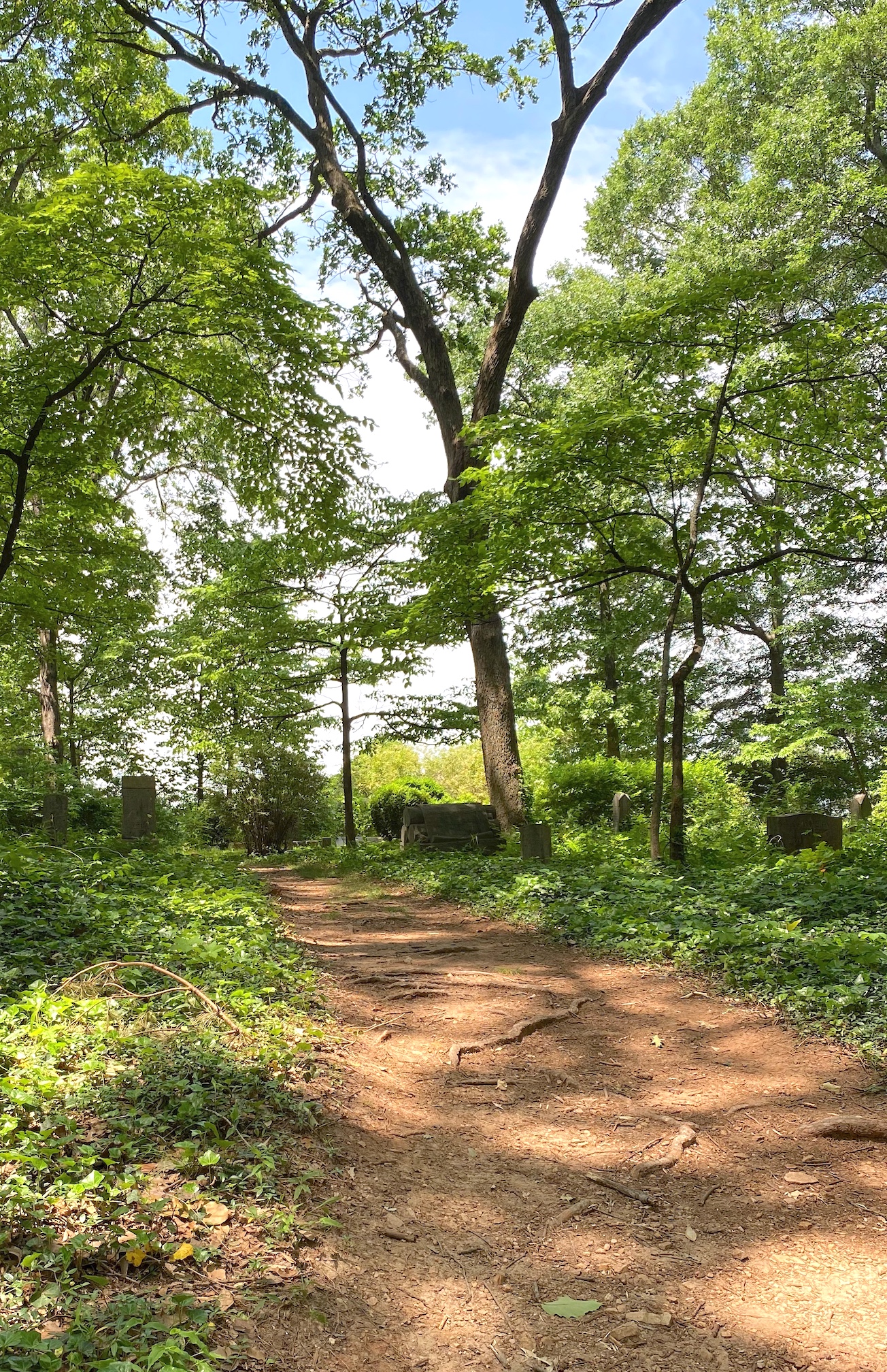
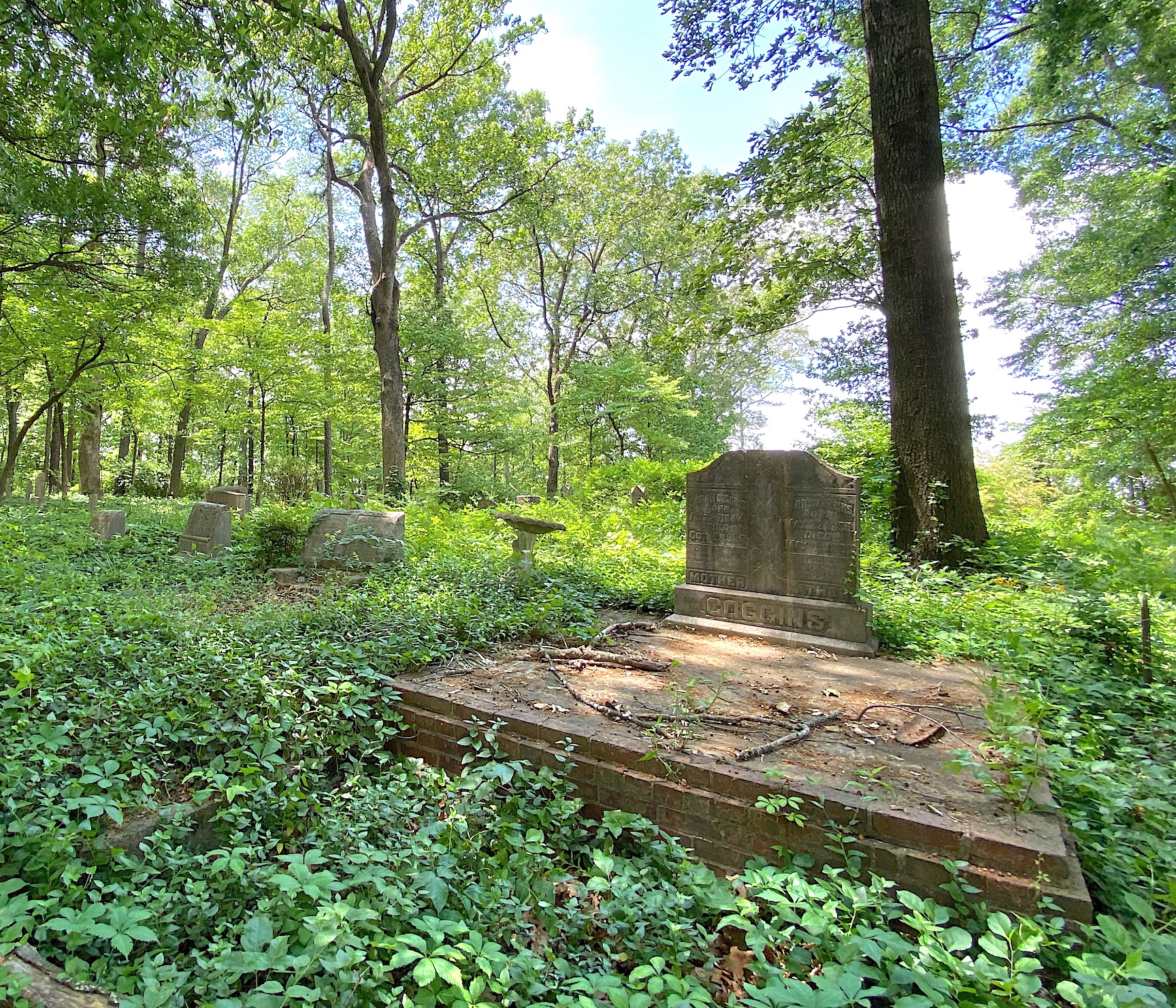
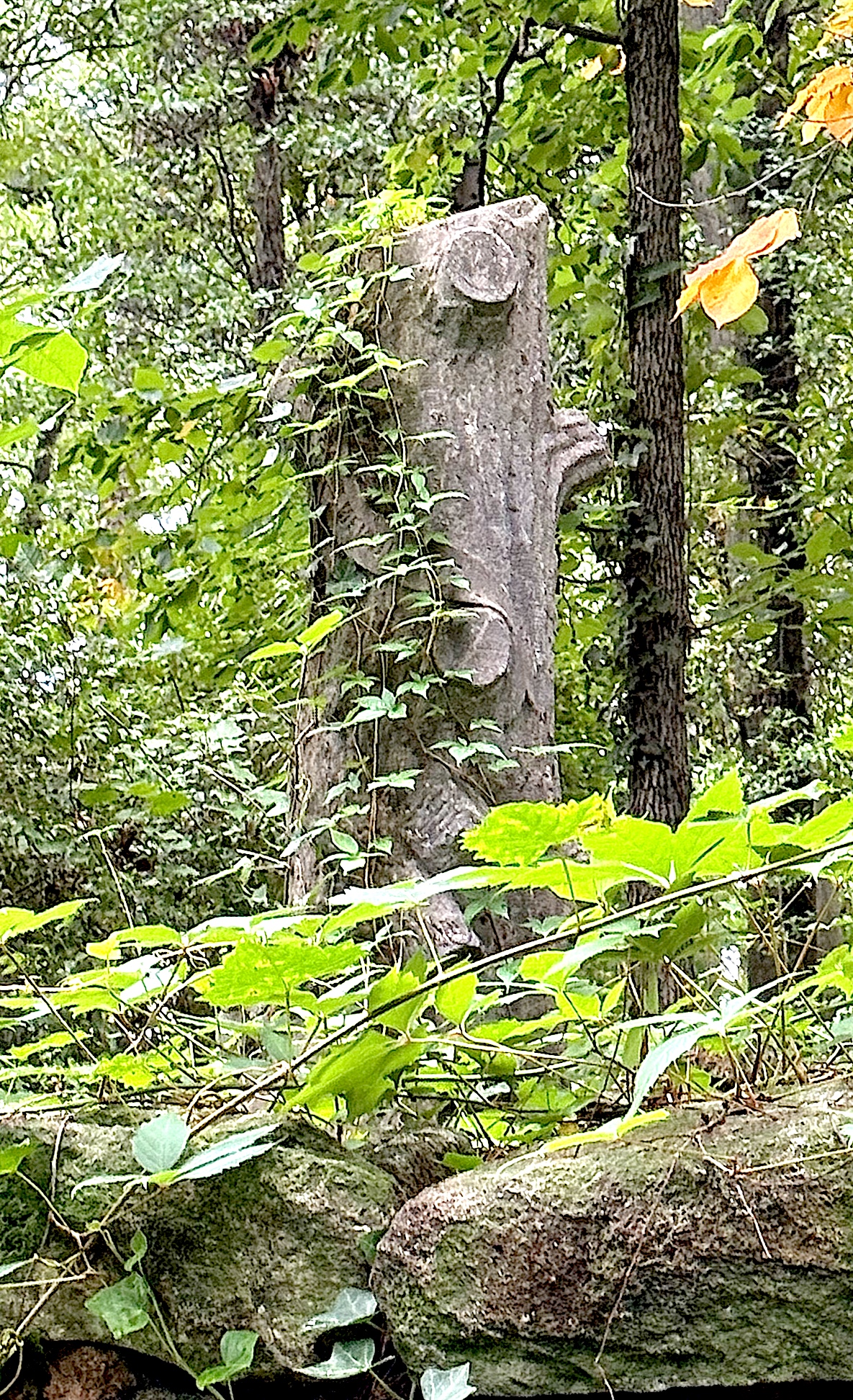
Some grave markers are easily seen, others not so much. The photo below is of a tree-shaped grave monument made of stone being overtaken by real vines. I couldn’t get to it because the thick vines/thorns were blocking my way. I have no doubt many people who have never seen such a monument before thought it was a real tree.
Who Was John Austin Casey?
The burial ground gets its name from John Austin Casey (1820-1907), a man who was well known in his day and lived on the property. A historical marker explains how this piece of land played a part in the Civil War. Born in 1820, John came from Walton County with his parents to settle in what is now Fulton County.
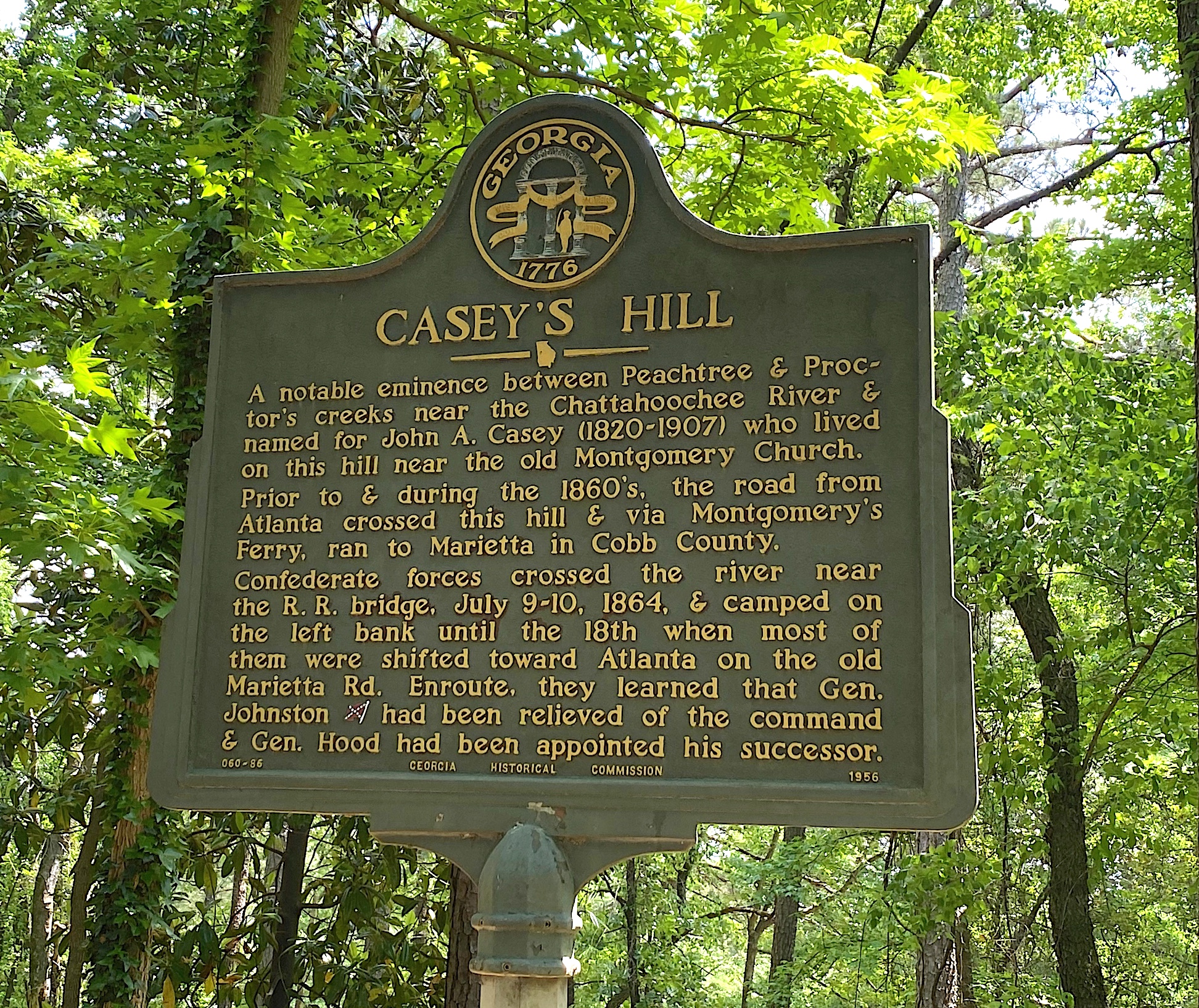
Casey’s obituary notes that he and his father, Hiram Casey, were contracted to build and grade the first section of the Western and Atlantic railroad in the city. Casey also served for 38 years as justice of the peace for his district. He was regarded as a bit of an Atlanta pioneer and was often consulted when land purchases were being made.
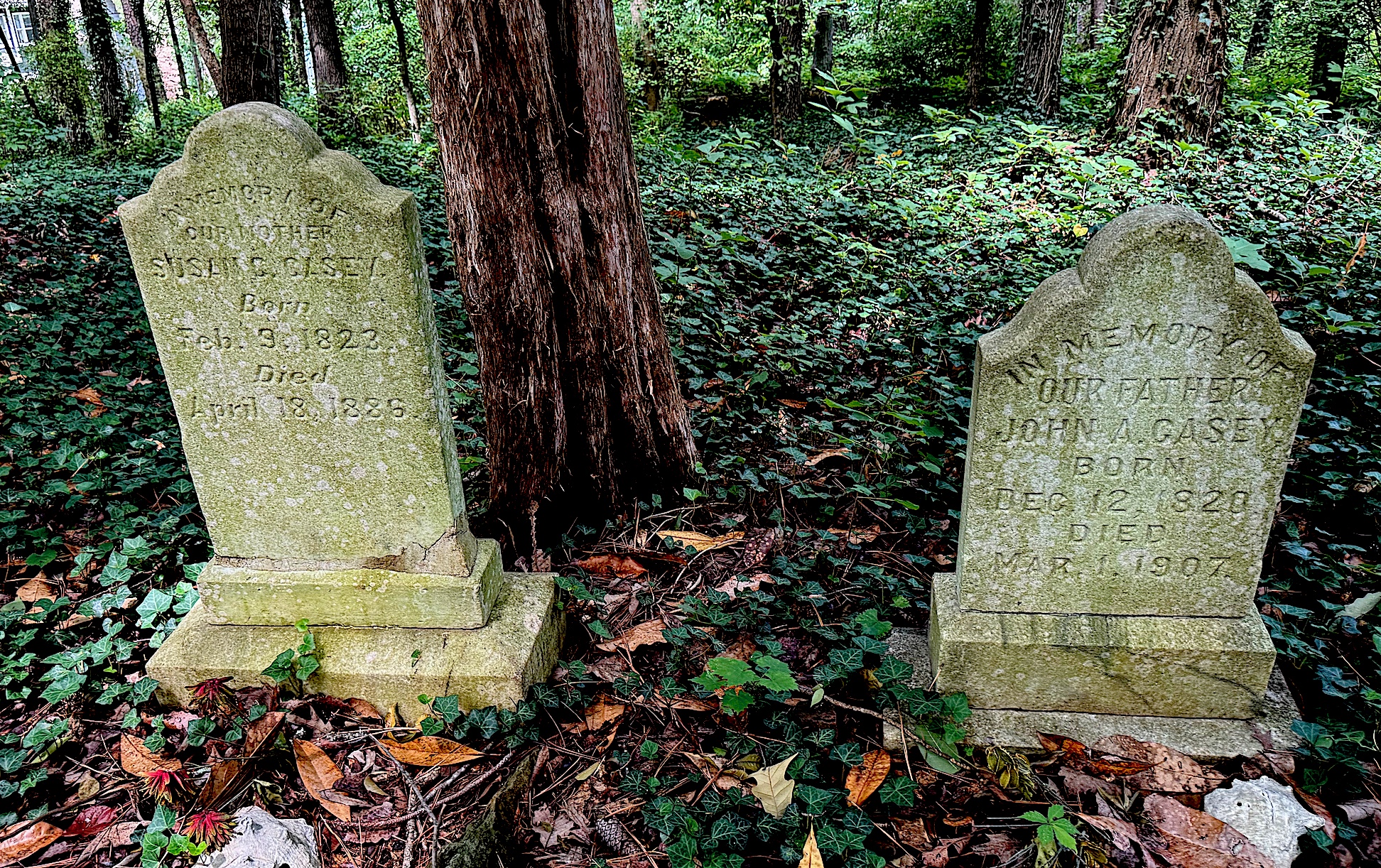
When I visited Casey’s Hill in the past, I didn’t see his grave. But last week, I wanted to see how things were looking on Casey’s Hill now and went over. Thanks to the kind person who provided his grave’s GPS coordinates on Find a Grave, I located John Casey’s grave marker and the one for his wife, Susan. I did have to tiptoe my way through a lot of ivy and hop over several dead branches to do it.
I have no idea when they started burying people here. One of the first markers was for Nellie Rivers Thurman and her husband, Benjamin Franklin Thurman. Nellie died in 1862 while Benjamin died a few years later. The couple had nine children together.
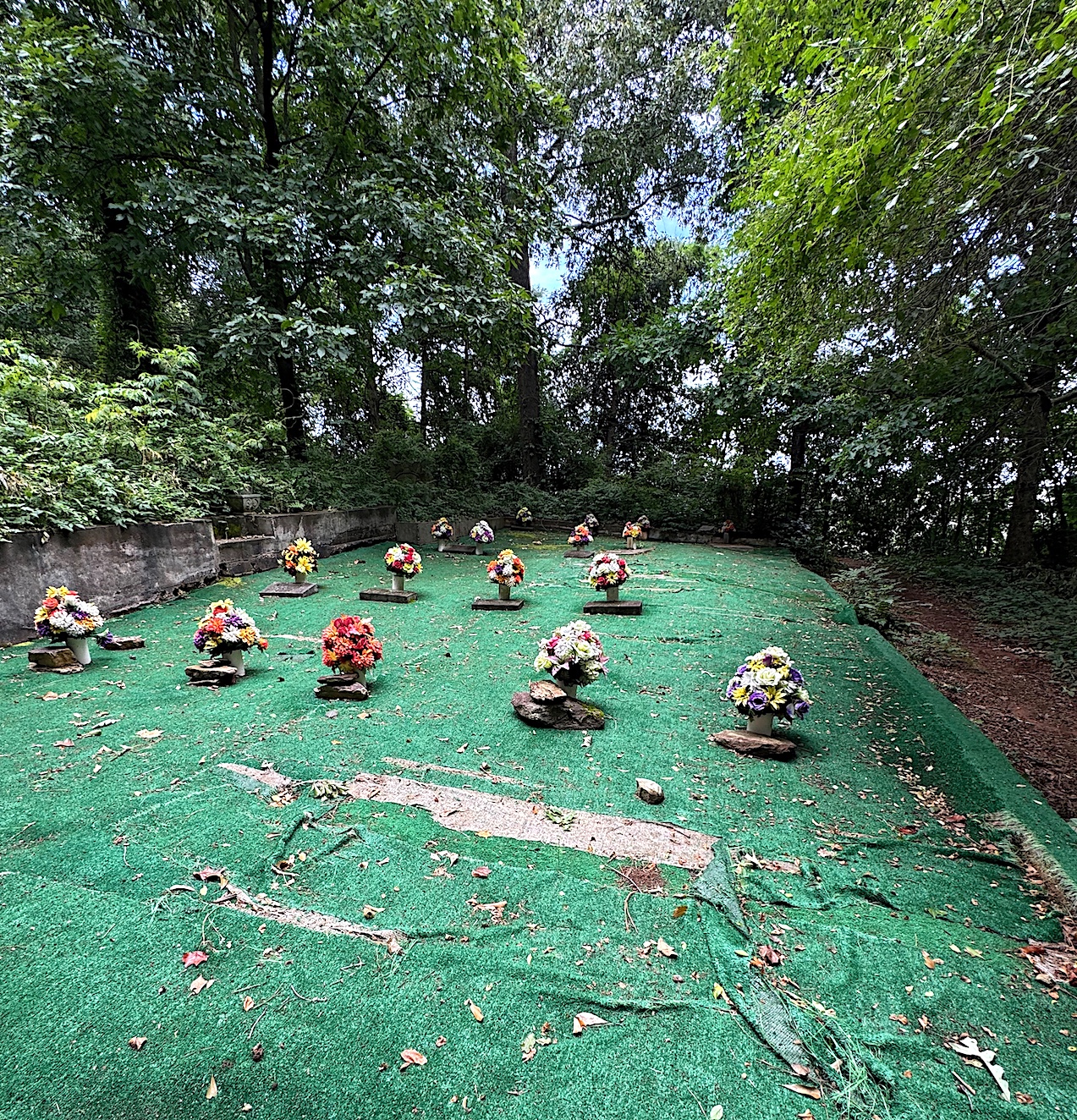
There are a few family plots that somebody (or multiple people) has cleaned up so they can visit their loved ones without tripping over branches or vines. The Gault family plot is an example of this. As far as I can tell, the homemade markers were created in the last 20 years or so.
Preserving A Family Plot
Born in 1845, Jackson “Jack” Gault married Mary Jane Gault (I’m guessing they were cousins) around 1879. At the time of his death, Jack was working as a roller in a mill. Census records indicate they had six children together with four living to adulthood. One of them, Henry, was born in 1876.
From what I can tell, there are at least 14 people buried in the Gault plot. There are also a number of field stones that represent graves of unknown people.
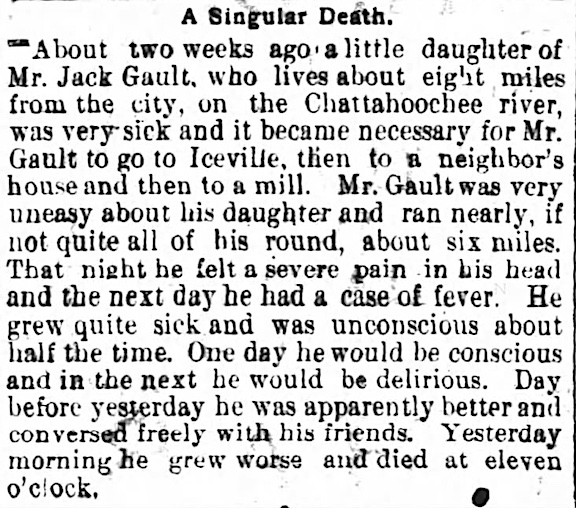
A newspaper article describes how Jack met his demise. I’m guessing he suffered a stroke of some kind as a result of running six miles to get help for his sick daughter. He was around 36 when he died a few weeks later.
Jack Gault’s marker (at least I think it’s his) presents a mystery of sorts because it says he died in 1889, seven years after his actual death. Mary Gault, who died in 1919, is buried beside him.
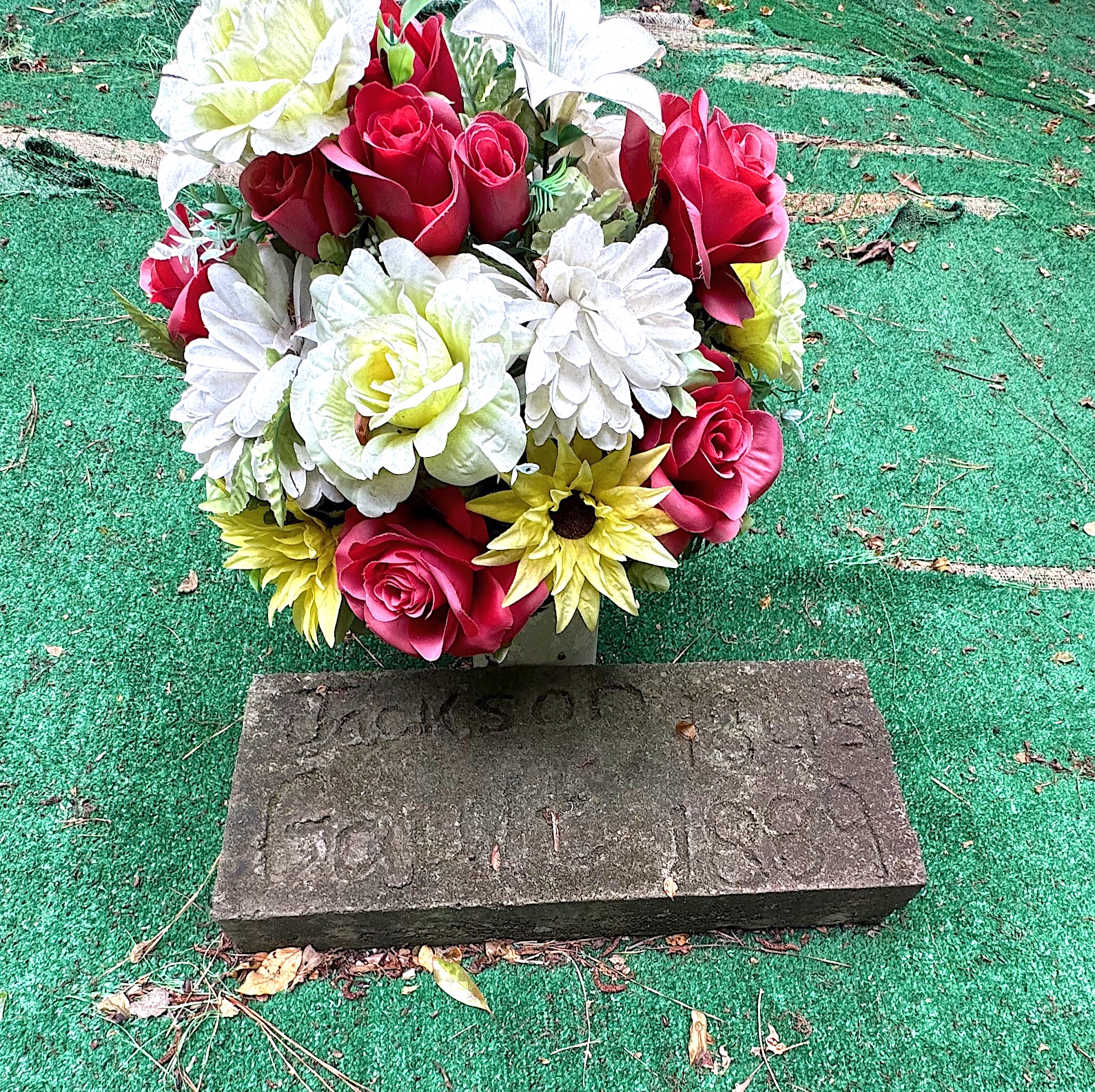
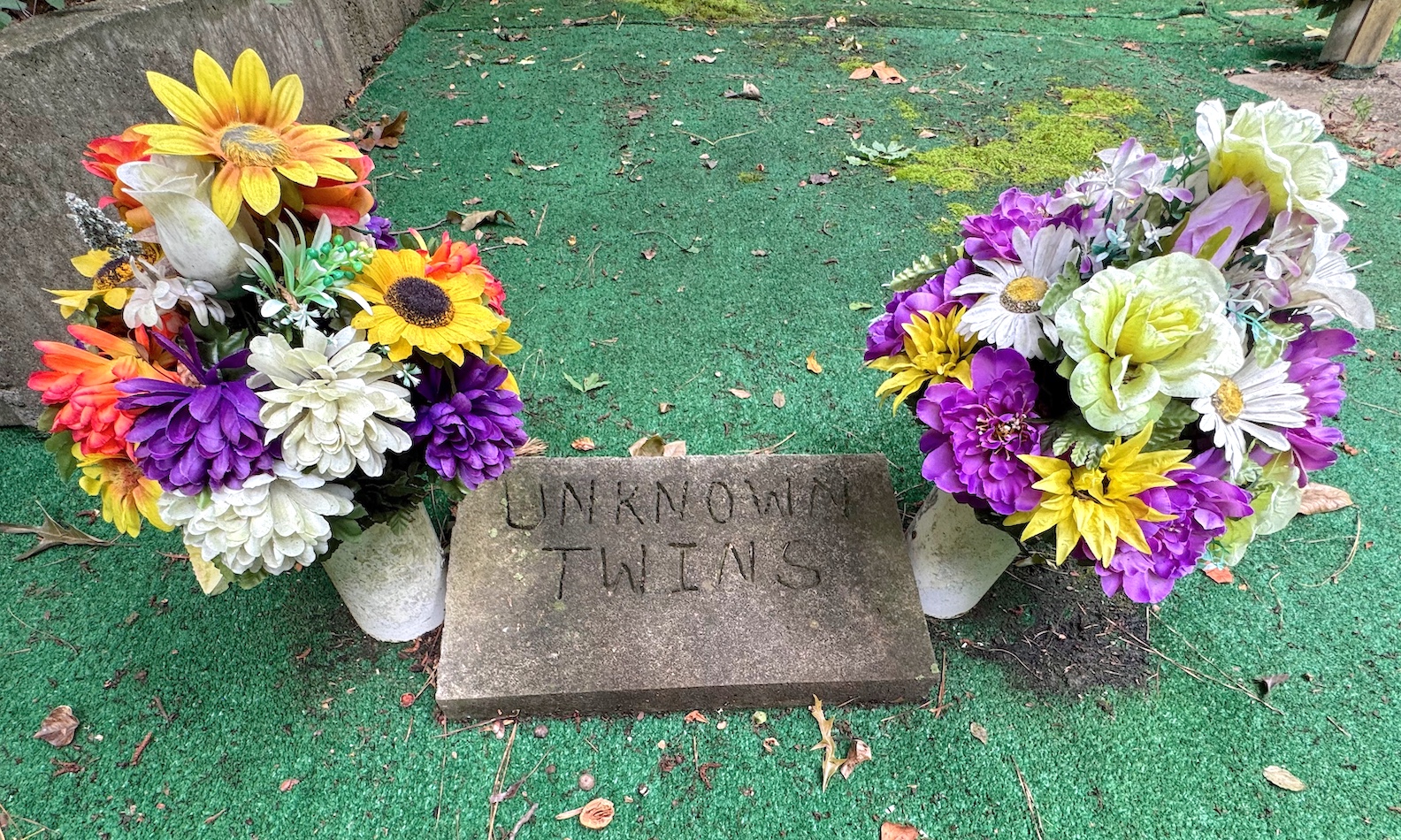
I think one of the saddest markers I’ve ever seen was this one. I don’t know who these little ones were born to or when.
A Young Invalid
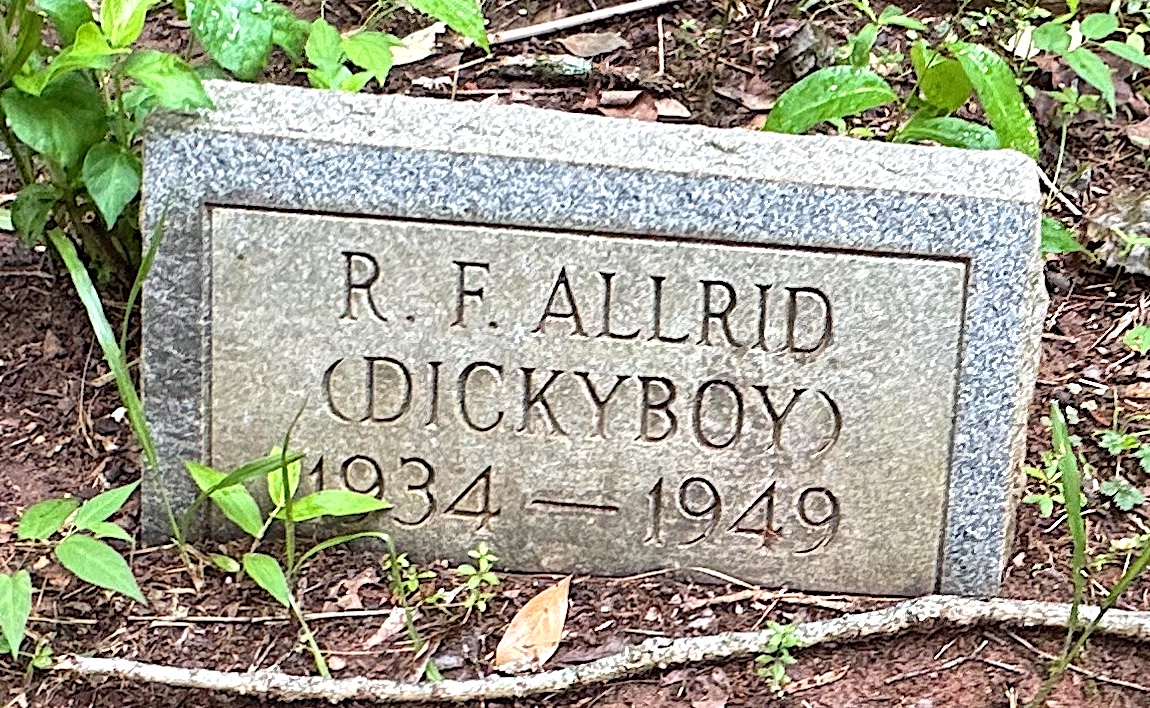
In another plot are the Jones and Allrid families. James Barber “Bob” Alrid (1894-1944) married Pearl Jones (1897-1966) in 1917. The couple had seven children together. At the time of his death in 1944, James was store keeper at the Atlanta Ordnance Depot.
Next to last in the birth order was Richard Frederick “Dickyboy” Allrid, born in Alabama on Feb. 22, 1934. According to his obituary, he was an invalid for most of his life.
Richard died at age 15 on April 13, 1949, five years after his father passed away. He is buried beside his parents.
From a Child Bride to a Cougar
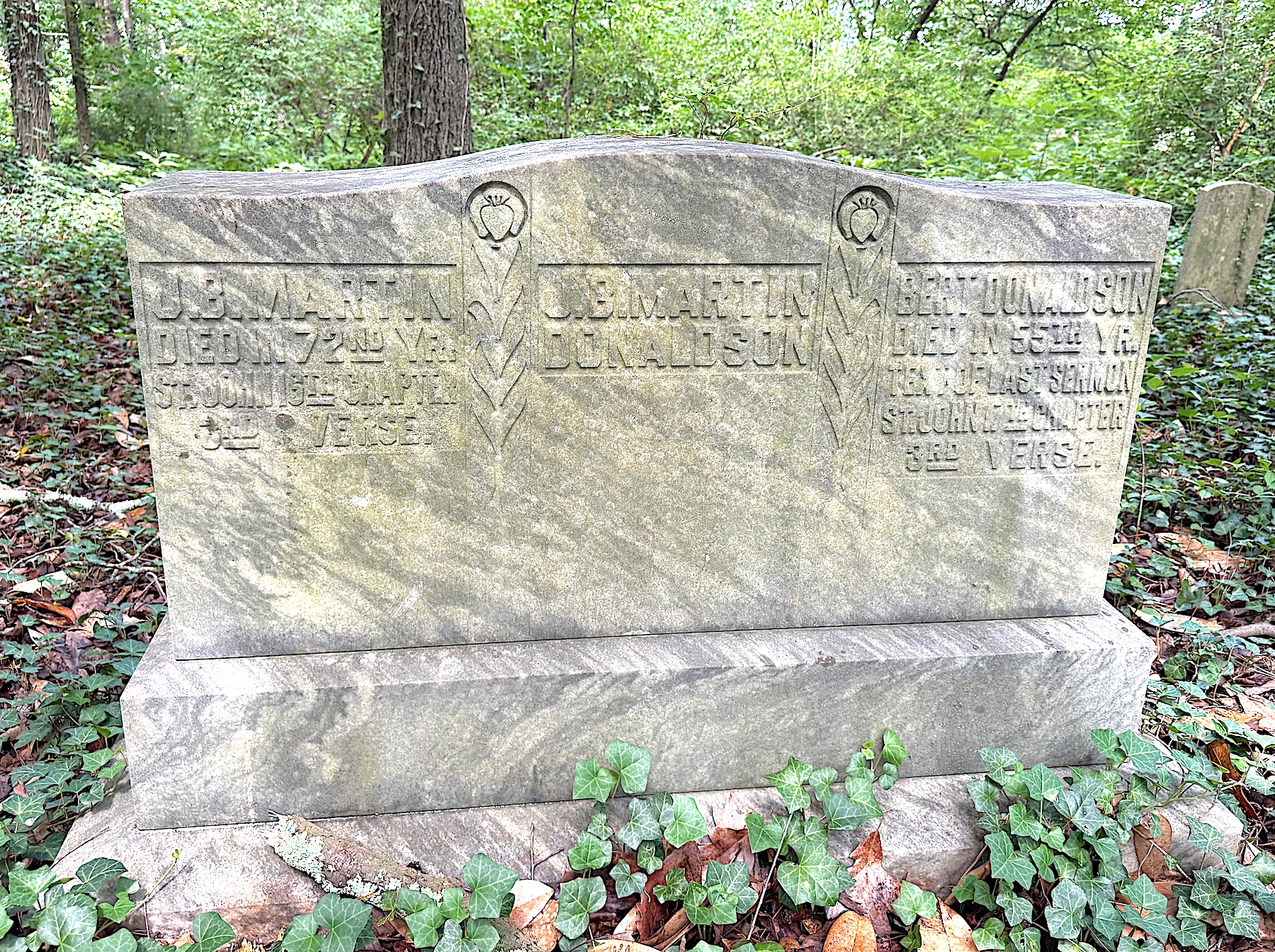
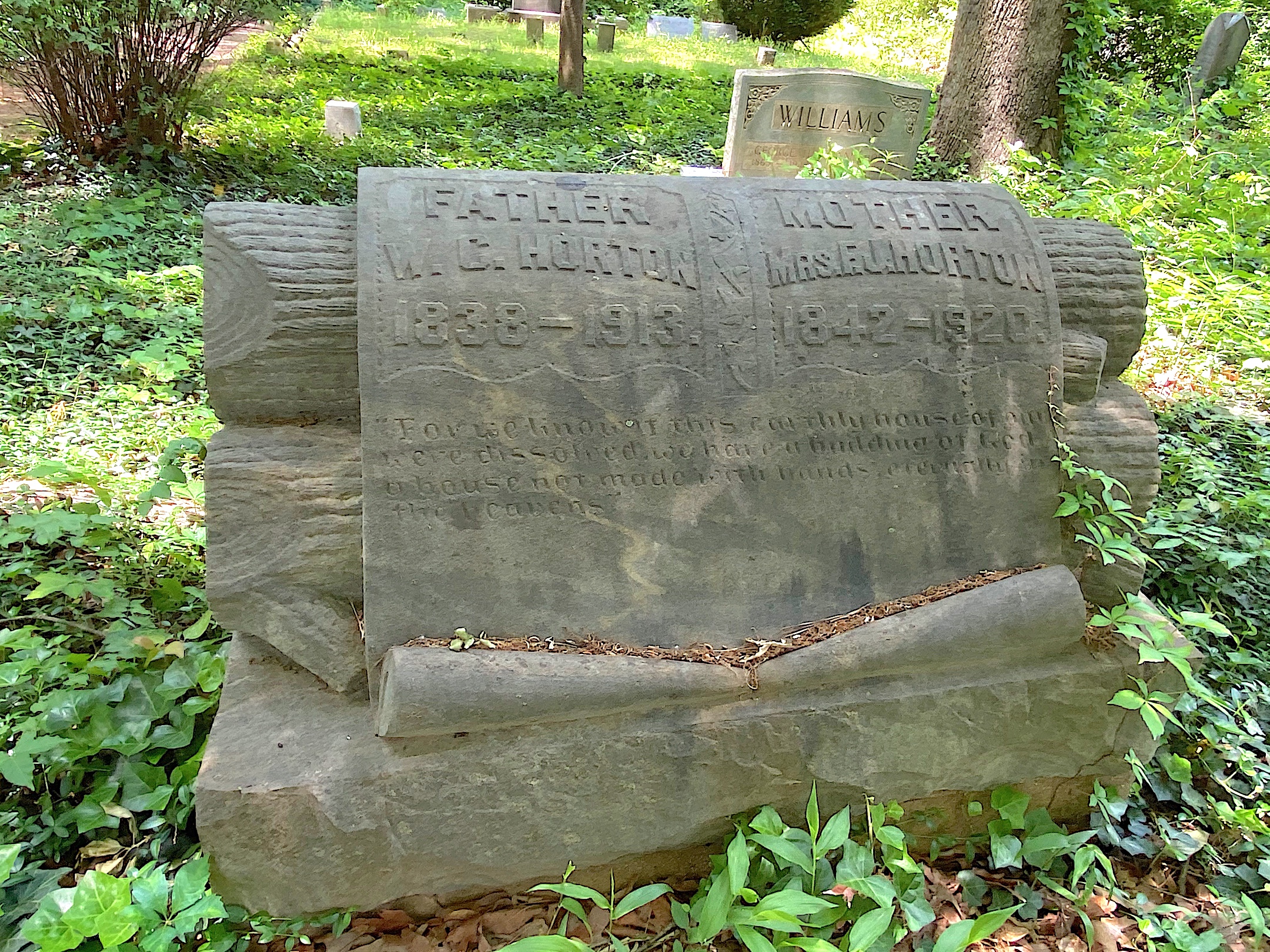
The last marker I’m featuring is unusual in that there are no birth or death dates for the three people for whom it was made. In the middle is the name J.B. Martin Donaldson. I believe this to be Narcissa Emily Casey Martin Donaldson, the daughter of John Austin Casey and his wife, Susan. The “Mrs.” is missing from the marker, so to speak. On the left is her first husband, James Martin, and to her right is her second husband, Robert “Bert” Donaldson.
When I began researching this trio, the story that unfolded could have been a script for a blockbuster movie.
Born on May 9, 1851, Narcissa (or Narcissus) was one of 11 children. Records indicate it was in October 1865 that she married James Martin. She was 14 at the time, James about 23. He worked in the court system in the bailiff’s office for much of his career. He retired before his death on March 30, 1914 at age 72. Narcissa and James never had any children.
Note that below J.B. Martin’s age is the Bible verse John 16:3: They will do such things because they have not known the Father or me.
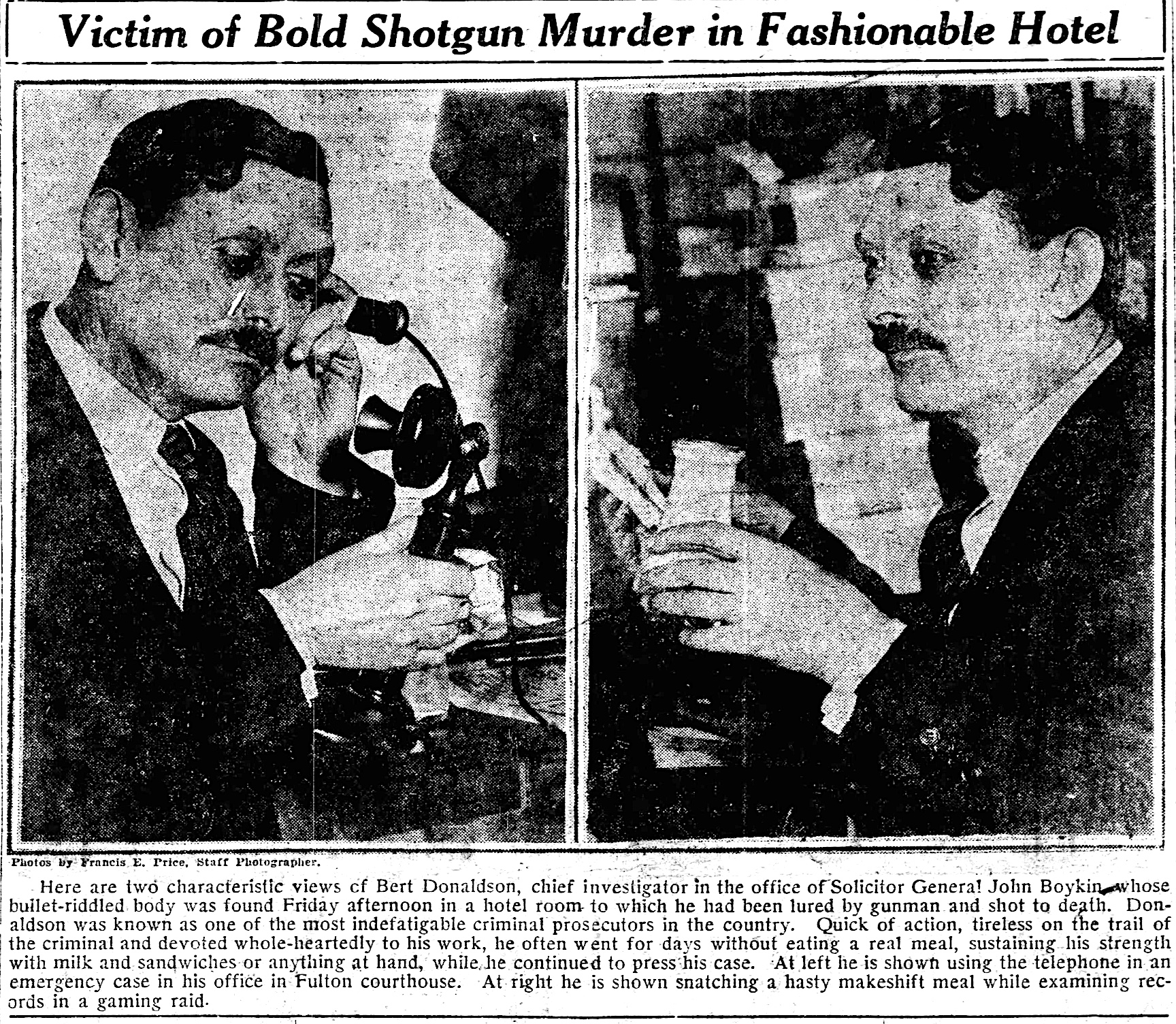
A few years later, Narcissa met ex-convict Robert “Bert” Donaldson when he was fresh out of the Atlanta Penitentiary and rented a room in her home. Bert was about 20 years younger than Narcissa and had previously spent time in the penitentiary in Cleveland, Ohio. In 1913, along with three other men, Bert attempted to rob a safe containing $300,000 worth of diamonds from the Philip Present jewelry store in New York. He was reportedly in the Atlanta Pen for robbing a post office.
One report noted that Bert had spent an estimated 26 years of his life in prison over the years.
Bert found religion in the Atlanta Pen and became a Methodist. Eventually, he was ordained as a pastor. Narcissa helped him “go straight” after they met and the two married in 1916. Soon after, he was hired as an inspector by Atlanta’s solicitor general, John A. Boykin. Much like Frank Abagnale (whose life is featured in the movie “Catch Me If You Can”) who left his life of crime (after he was caught) to help catch criminals, Bert primarily worked with the bunco squad to catch thieves. Bert was relentless in what he did and put many criminals behind bars.
Reformed Ex-Con Murdered
Sadly, Bert’s reformed life came to an abrupt end in 1926. He received a call summoning him to a room at Atlanta’s Georgian Terrace (a hotel still operating today). Upon entering, Bert was blasted multiple times with a shotgun. He died from his wounds on July 29, 1926 at age 55. It’s believed Bert “knew too much” and had to be eliminated by his enemies
Atlanta newspapers over the next year were full of headlines about the investigation and subsequent arrests. Jack Lance was originally charged and convicted of Bert’s murder, sentenced to death. But he received a new trial later and the indictments against him were tossed out. Lance walked free. As a result, the mystery of Bert’s murder has never been solved.

Below Bert’s age on the marker, it notes that the text of his last sermon was John 17:3: Now this is eternal life: that they know you, the only true God, and Jesus Christ, whom you have sent.
Narcissa lived on her own until her death on Sept. 17, 1933 at age 82, primarily from chronic kidney issues. She is buried between her two husbands in Casey’s Hill, not far from where her parents rest.
Next time, I’ll be revisiting Atlanta’s Greenwood Cemetery. I wrote about their Holocaust memorial back in 2013 but there’s much more to this burial ground that I think you’d like to know about.
 Adventures in Cemetery Hopping
What a great write up. I need to get out and visit the family in Crestlawn and I’ll need to visit this part. You are a fantastic writer and a very brave soul. Hopefully you aren’t making these visits alone but have a trusted companion that can “run for help” in case you fall into one of the old graves that have collapsed into a hole. Keep doing what you are doing. I personally appreciate it very much!
Thank you so much for your kind words! I’m glad you enjoyed reading about Crest Lawn.
I do most of my cemetery visits alone but I have learned to be very careful to watch where I step to avoid holes and ant hills especially. I recently visited a cemetery in Cleveland, Ohio that was full of gopher holes! My cousin was with me on that adventure so we kept each other safe, thankfully.
Well, the mystery about the “woods” graves behind Crest Lawn has been solved…..Casey’s Hill Cemetery! When I drove thru there some years ago I thought it was a “forgotten” part of the larger adjacent cemetery.
Surprised there are some ‘recent’ graves there, including the Gault family.
…..seemingly interred underneath green carpeting…. astro-turf? And yes, the “Child Bride to Cougar” story could have been an episode on the ID Channel. Bert Donaldson could have played a gumshoe detective. Sadly, Atlanta, like a lot of places has some cemeteries that are well into decline and have surrendered their glory days to neglect and decay. Roseland on the southside is all but forgotten, and two that you have written about previously are becoming overgrown and not really safe places to visit these days. Hollywood on the west side of the city could use a lot of love, and Greenwood, location of the first memorial to those lost to the Holocaust, is beginning to show neglect in certain areas. It is the resting place of Truett Cathy, of Chick Fil A fame, and Hank Ballard, who first sang about the Twist dance.
Thank you.
I’ve got Roseland on my list to visit but I’ll need to take someone with me for that one.
I’m actually writing about Greenwood next. I’ve written two blog posts about it, but not all of it. I focused on the Jewish memorial and another on Rabbi Geffen. I want to give it a bigger treatment. A friend of my mother’s has a family member buried there and she said it is looking sad out there. I don’t know what is going on with the ownership out there but it’s never been in the best condition in some areas. Makes me sad.
I saw an article last year that said Hollywood Cemetery had been purchased by a younger couple who want to clean it up. I drove by recently (didn’t explore) and it looked like some work had been down around the edges. That place will need TONS of work so I’ll be watching to see how it goes.