• About Me
  • Cemeteries I Have Visited
  • Have questions?
  • Photos

Adventures in Cemetery Hopping

~ A blog by Traci Rylands

Adventures in Cemetery Hopping

Category Archives: General

Deep in the Heart of Dallas, Texas: A Quick Jaunt Through Temple Emanu-El Cemetery

18 Friday Sep 2020

Posted by adventuresincemeteryhopping in General

≈ 3 Comments

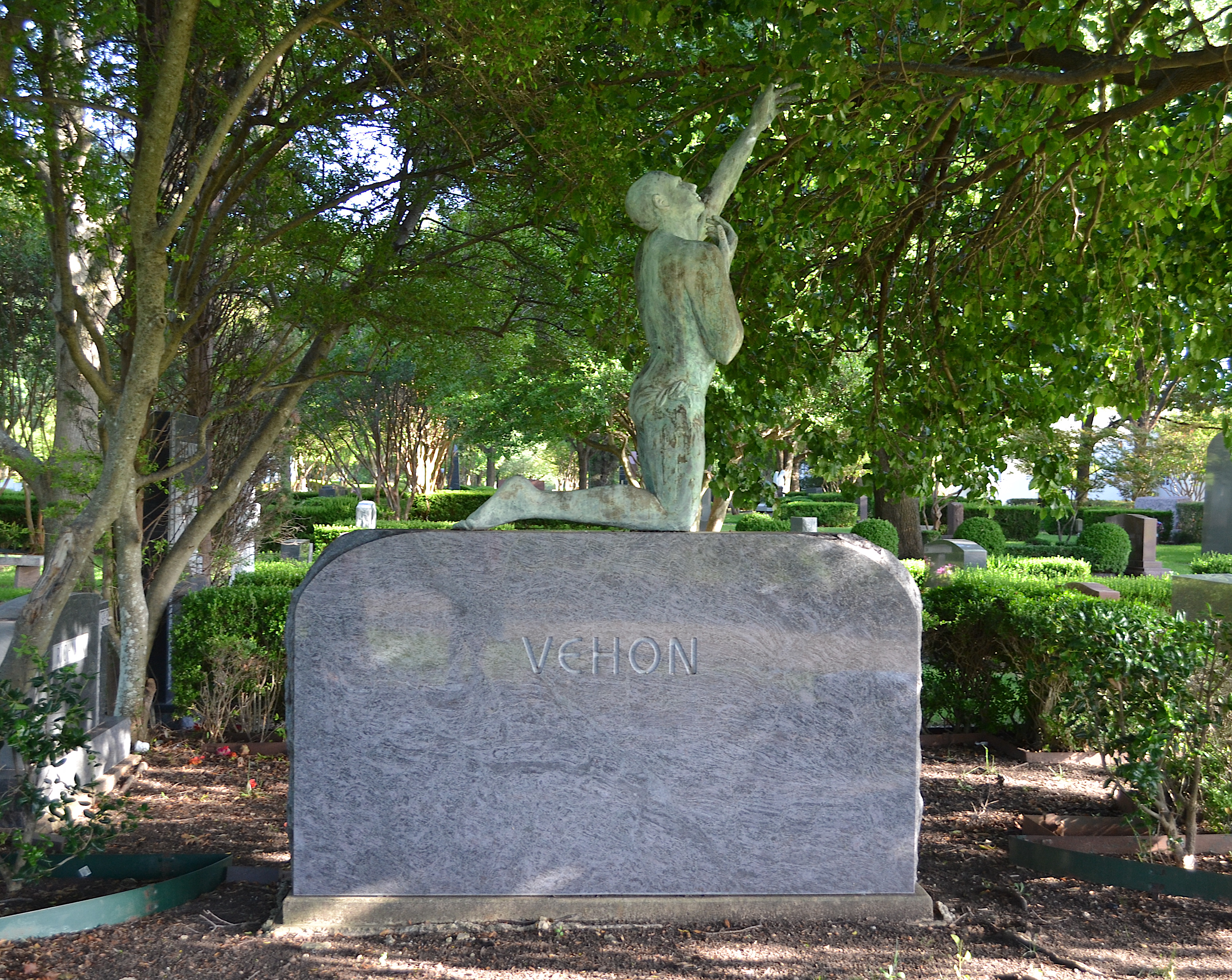
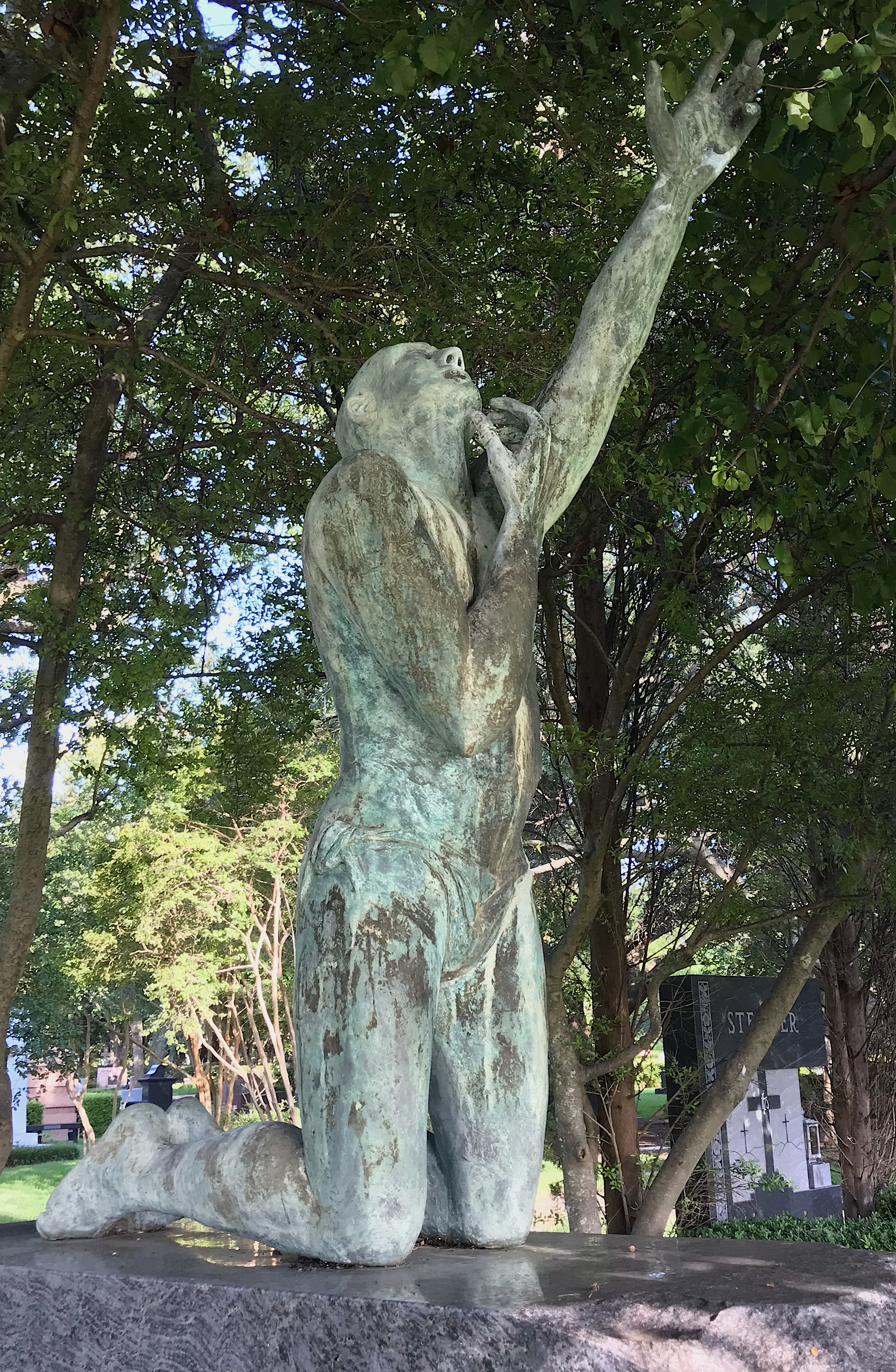
I mentioned last week that I didn’t spend much time at Old Calvary Cemetery in Dallas due to the rising temperature that day. The same holds true for next door’s Temple Emanu-El Cemetery. But I spent even less time there for another reason that has never happened to me before.

When I walked through from Old Calvary Cemetery (there’s a paved path between the two), it wasn’t long before two dogs came running toward me barking angrily. I was frozen in place and fearing the worst when a voice called for them to stop. Thankfully, they did. It turns out one of the caretakers had brought his dogs with him to work. While the caretaker was very nice, the dogs weren’t nearly as friendly.

Front gates of Temple Emanu-El Cemetery in Dallas, Texas. Since I entered through the connecting path from Old Calvary Cemetery, I did not see it until I was leaving.

The caretaker assured me they wouldn’t hurt me but I was not so sure how they’d behave if I encountered them again when he was busy doing his work elsewhere in the cemetery. So I didn’t explore much after that. What you’ll see are the few pictures I took there that day.

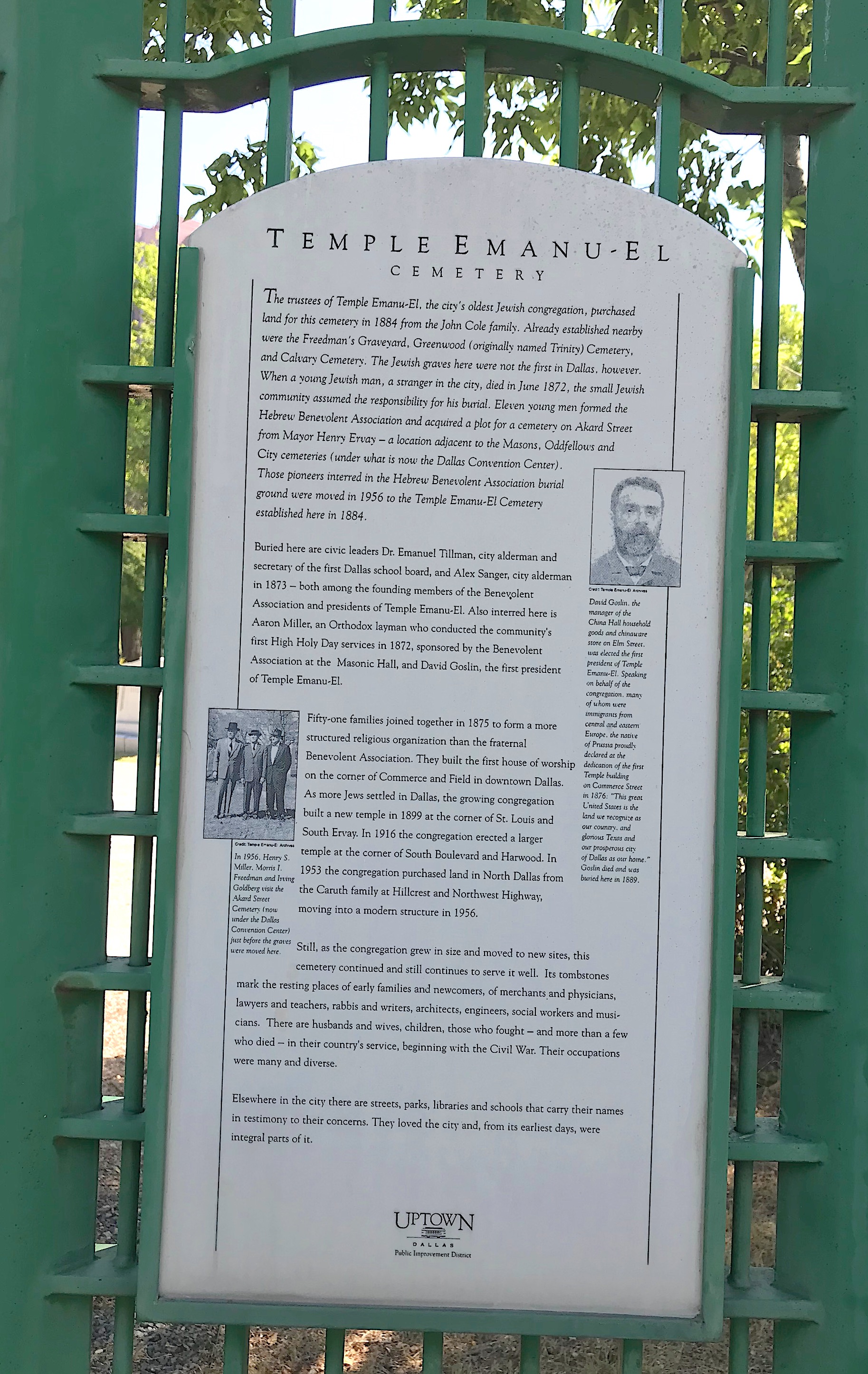
A helpful sign explained the history of Temple Emanu-El Cemetery’s history. As was the case of Old Calvary Hill being the second oldest Catholic Cemetery in Dallas, Temple Emanu-El is the second oldest known Jewish burial ground in the city. Find a Grave has about 3,250 memorials recorded for this cemetery.

This sign explains the detailed history of the first Jewish cemetery in Dallas and how the second, Temple Emanu-El, came to be.

When a young Jewish man died in Dallas in June 1872 who was a stranger to the city, the small Jewish community of Dallas felt it was their responsibility to give him a proper burial. A group of 11 young men formed the Hebrew Benevolent Society and secured land for a burial plot on Akard Street from Mayor Henry Ervay. There were already cemeteries there for the Odd Fellows and Masons so it made sense at the time.

When plans were made in 1956 to build the Dallas Civic Center on the property where these graves were located, they were moved to Temple Emanu-El Cemetery.

Birth of a New Jewish Cemetery

The congregation of Temple Emanu-El was established around 1875 and met at their temple on Commerce Street that opened in 1876. The majority of members were Eastern European immigrants. In 1884, the trustees of Temple Emanu-El purchased land from the John Cole family. The first burials were those of Russian immigrants Aaron L. Levy and Jacob Rosenthal.

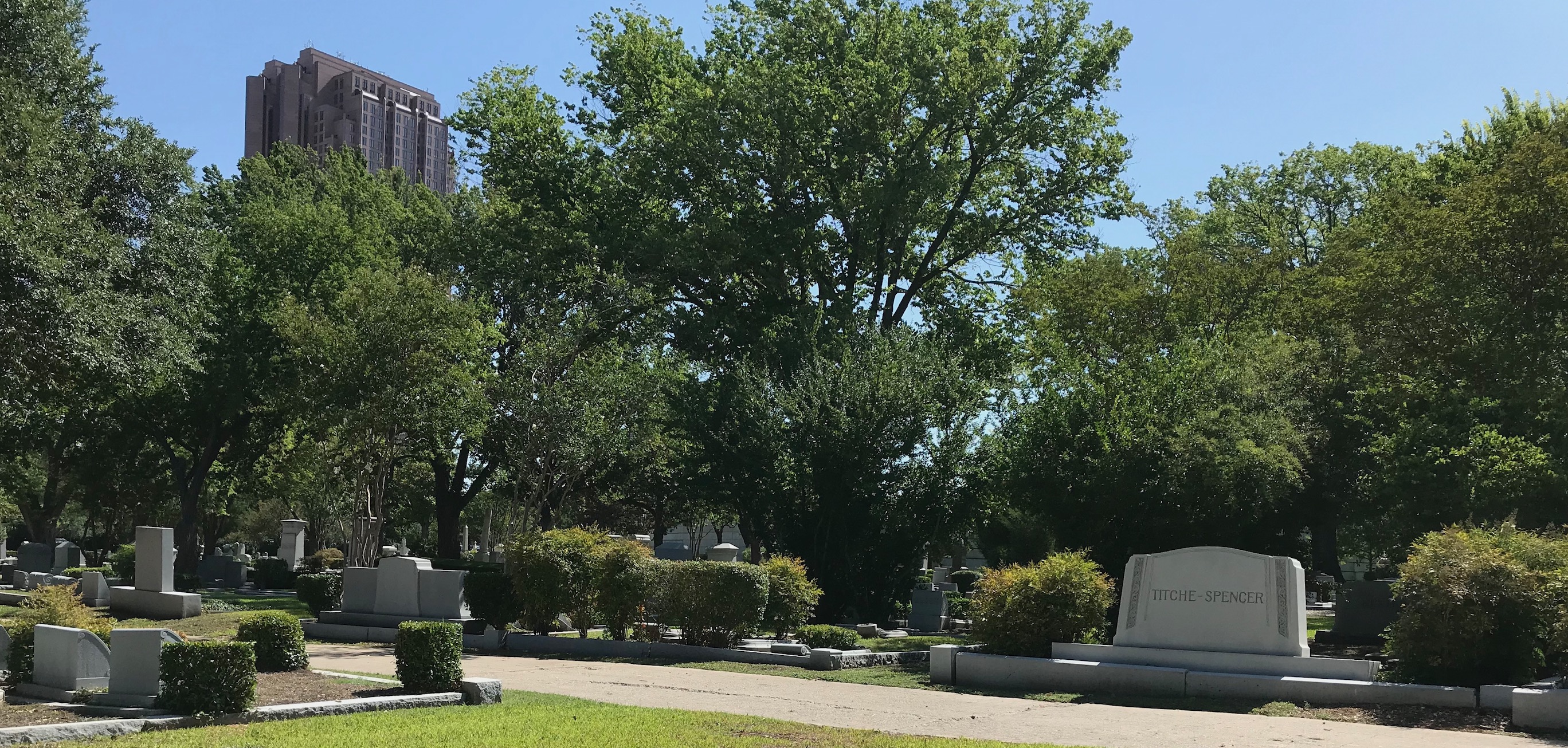
Temple Emanu-El Cemetery is a well-maintained burial ground.

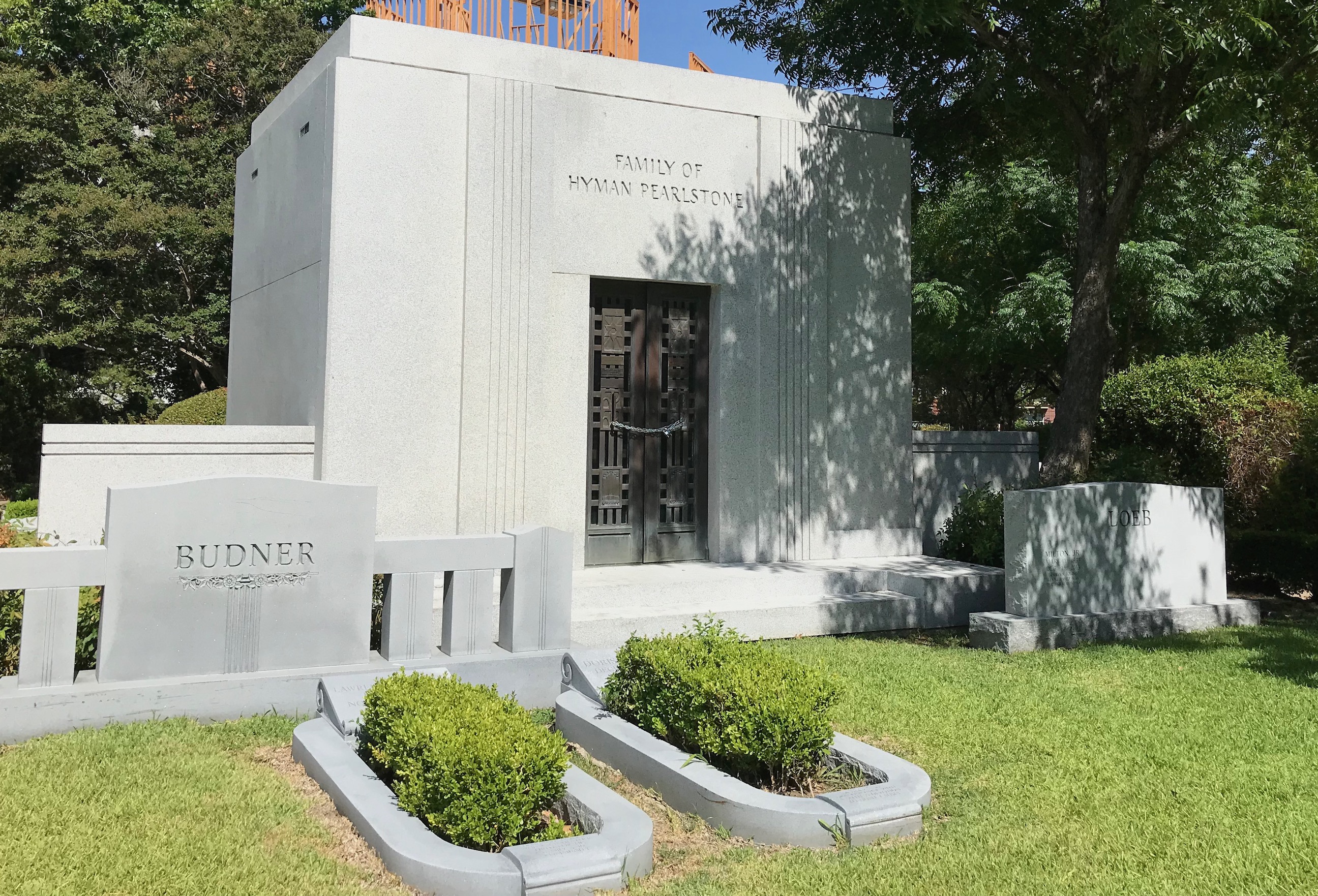
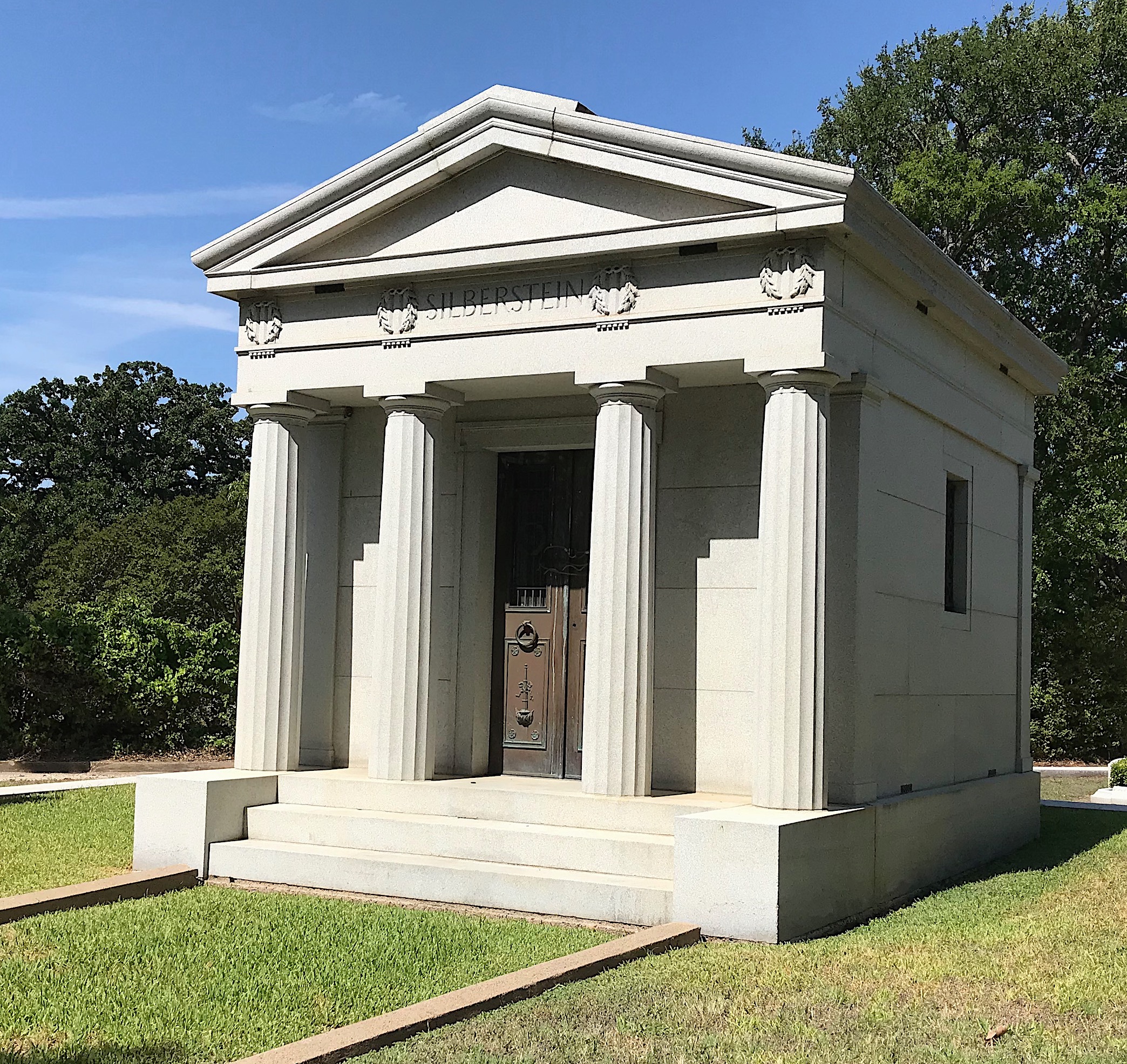
I didn’t learn until this week that one of the mausoleums I photographed held the remains of a Dallas businessman known more for his passion for baseball than his success as a businessman. Much of his delightful story I found in an article written by his granddaughter May Sebel.

The Biggest Baseball Fan in Dallas

Born in 1878 in Buffalo, Texas, Hyman Pearlstone lived in Palestine, Texas with his family. He operated a successful wholesale grocery business and served on a number of corporate boards. But the true love of his life (after his wife, Claire) was baseball.

Hyman coached the Palestine Elks and in 1905, he went to New Orleans on business. The Philadelphia Athletics (today known as the Oakland A’s) were staying at the same hotel when one of the players saw Hyman wearing an Elks pin. He introduced him to Doc Powers, catcher for the team. Hyman invited Doc to attend the theater with him that evening. Doc Powers told him that the A’s next spring training would be in Marlin, Texas, just down the road from Palestine. Doc invited Hyman to come watch the team.

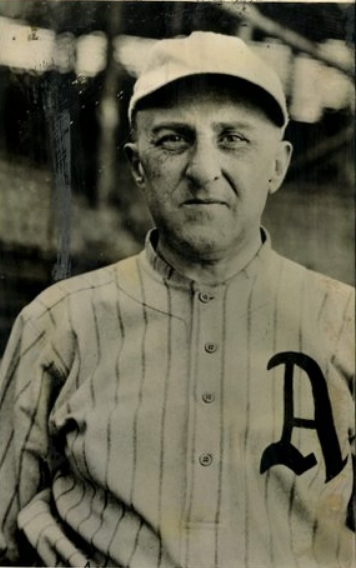
Dallas businessman Hyman Pearlstone traveled with the Philadelphia A’s for a month every summer for 45 years. (Photo source: http://www.Jewishbaseballmuseum.com)

The following year, at the hotel in Marlin, Hyman introduced himself to the legendary Connie Mack, who was manager, treasurer, and part owner of the Athletics. A longtime friendship began at that meeting.

Following spring training, Hyman received a large box from Connie Mack containing a baseball uniform, shoes, hat, and a glove. There was also a note from Mack inviting Hyman to spend his summer vacations traveling with the team. For Hyman, it was a dream come true!

For the next 45 years, Hyman spent one month of the summer doing just that. He would pitch to the team during practice in the early years, but later did some scouting and advised players on business matters. Hyman and Connie were guests of the Macks at every World Series, and this tradition continued even after Mack sold the team in 1955.

The Pearlstone family mausoleum holds the remains of Hyman, his wife, Claire, daughter, Helen Pearlstone Loeb, and her husband, Milton Loeb, and daughter Lorraine Pearlstone Budner.

When Hyman died in 1966, his baseball memorabilia was sent to the National Baseball Hall of Fame in Cooperstown, N.Y. Hyman Pearlstone is the only known “civilian” to ever have traveled with a Major League Baseball team.

“God Called Thee Home”

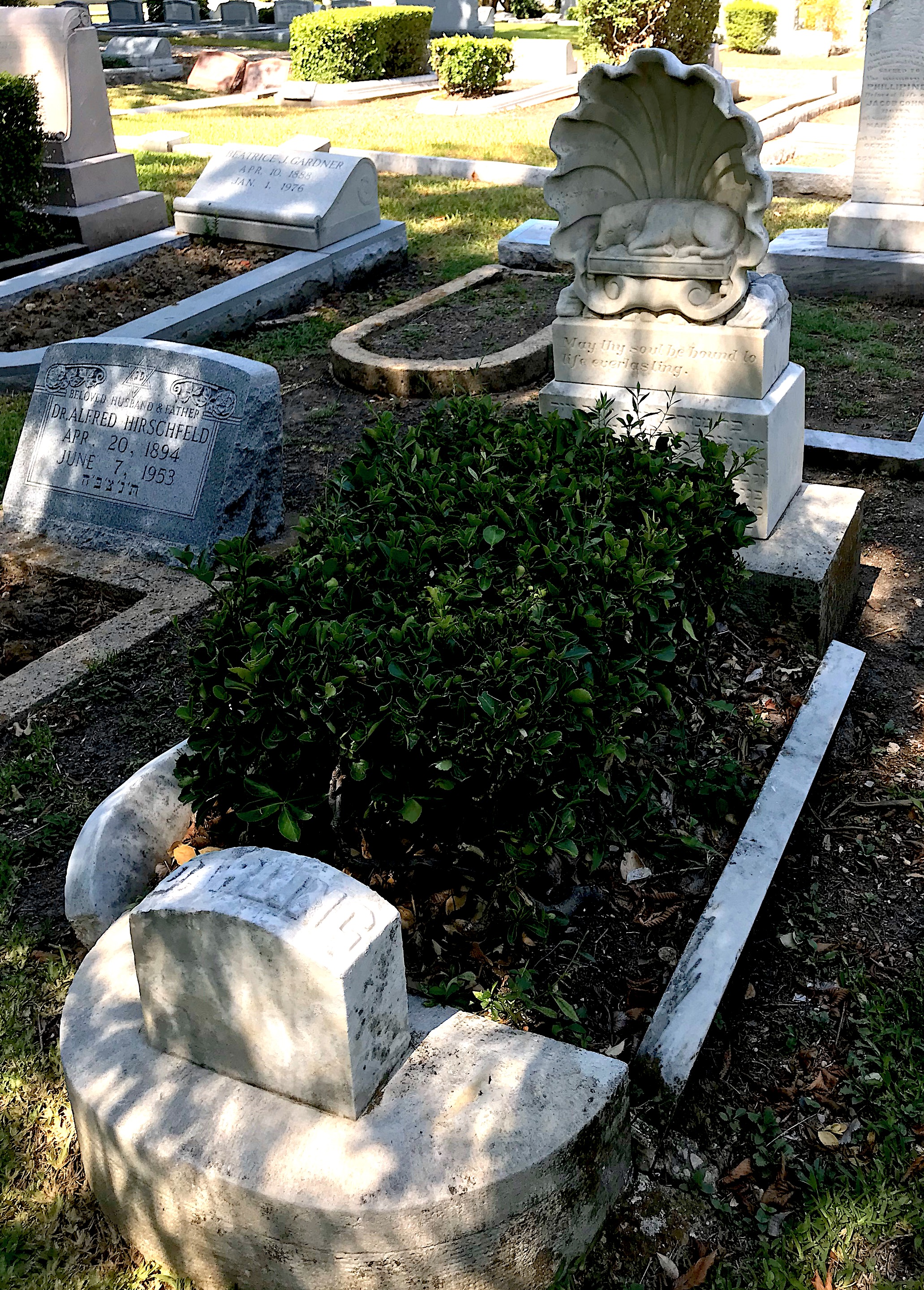
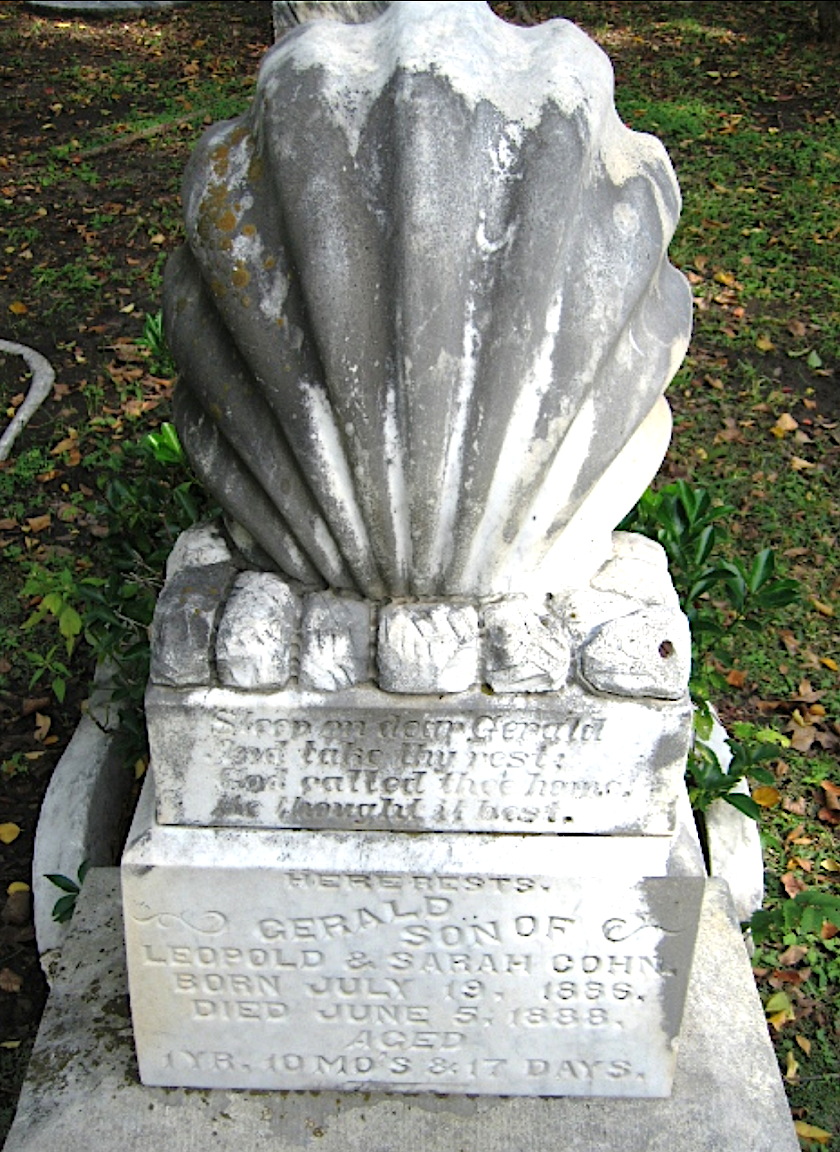
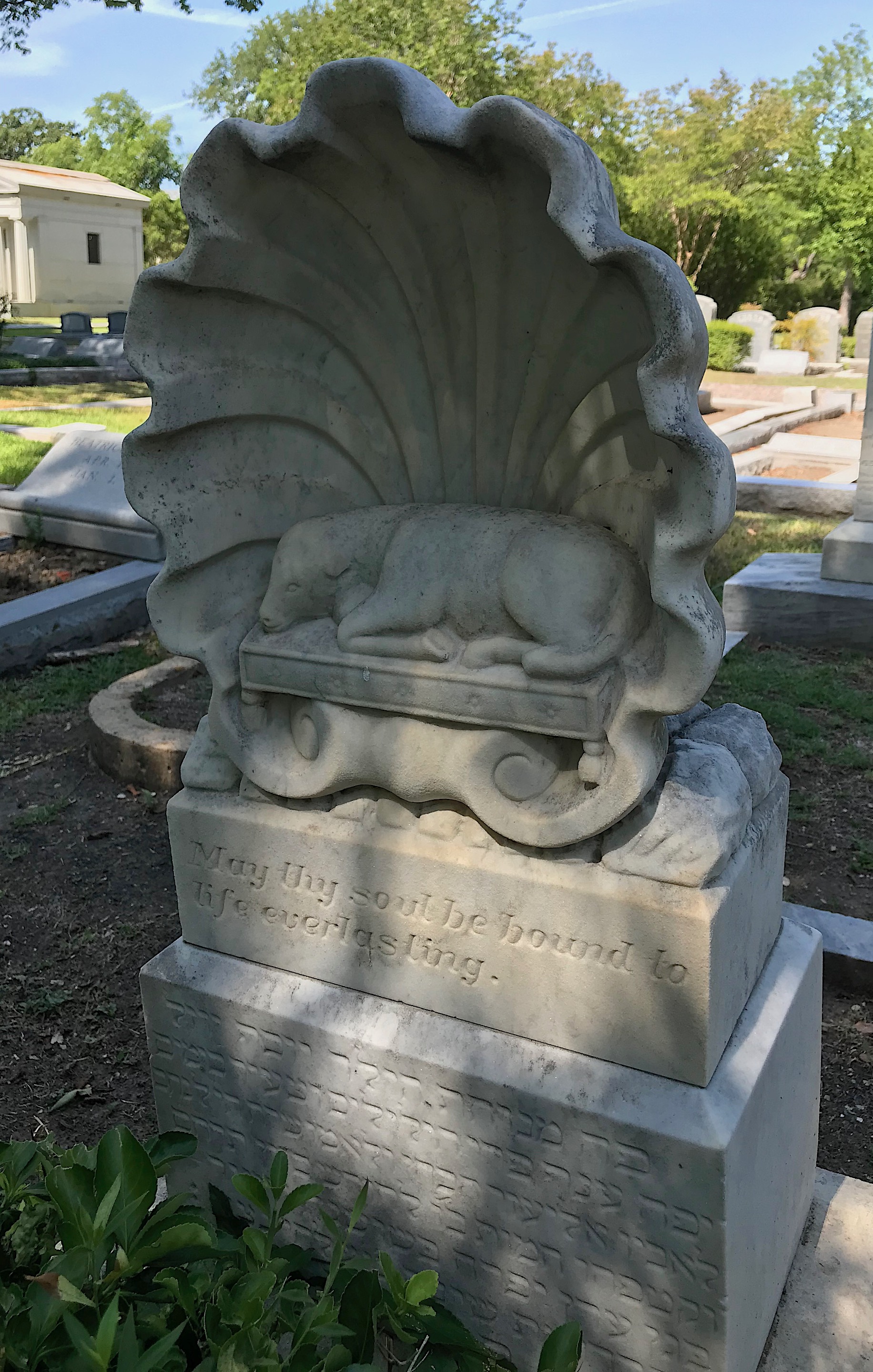
One of the sweetest markers I have ever seen is this one for Gerald Cohn. I didn’t know whose grave it was when I photographed it because I did not see that his name and dates were on the back of the base under the “shell”. I found out later by looking at the surname of “Cohn” on the marker behind it on Find a Grave.

Gerald was the son of Leopold and Sarah Cohn.

Born on July 19, 1886, Gerald was the son of German-born Leopold and Sarah Baer Cohn. I believe Sarah was Leopold’s second wife because he is listed as a widower in the 1880 Census and was living with his two sons, Albert and Bernard. He married Sarah Baer in Dallas on Jan. 30, 1881. Newspapers from 1884 advertise his barber shop on the corner of Lamar and Main Streets.

Bernard died at the age of five on Jan. 19, 1882 and is also buried at Temple Emanu-El Cemetery. There is another stone for an infant daughter born to Leopold and Sarah, but the dates are blurry.

This photo of the back of Gerald Cohn’s grave marker comes from Find a Grave.

Gerald died on June 5, 1888, having lived a year, 10 months, and 17 days. I have seen a number of shell graves of this nature over the years, but this is the first time I’ve seen a lamb in the shell instead of a sleeping child. In this case, it is a lamb resting on an elegant cushion with tassels on the corners.

The epitaph “May they soul to bound to everlasting.” comes from Samuel 25:29 in the Old Testament of the Bible.

Leopold died in 1915 at the age of 65 and Sarah died in 1917 at the age of 59. I was unable to trace Albert after the 1910 Census.

Work of Art

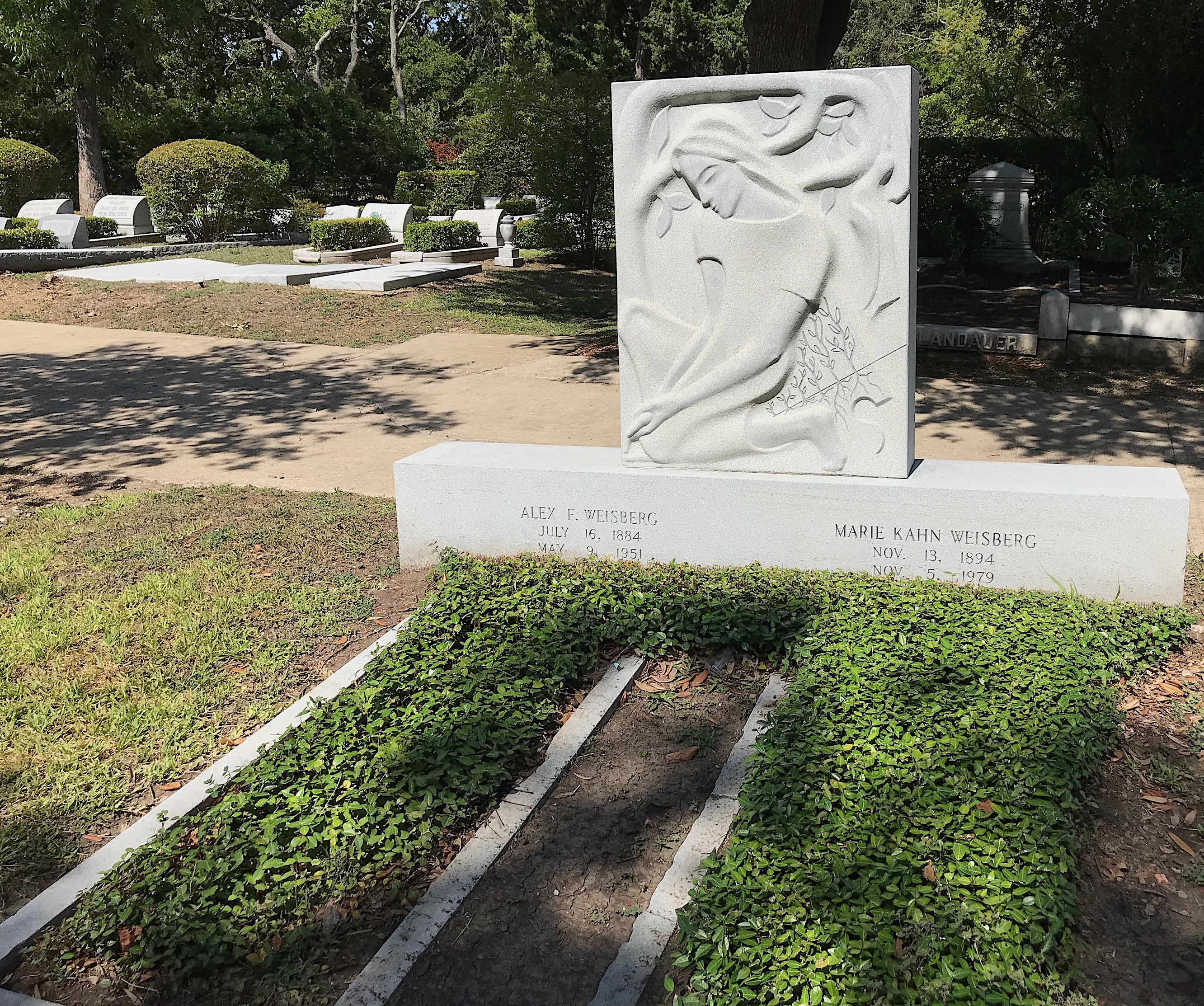
I was heading to the back gate to find Chris in the rental car when an unusual marker caught my eye. It was definitely different than most of the markers I’d seen that entire day so I wandered over to get a better look.

Born in 1884, Alex Wesiberg was the son of Russian immigrants. Some records indicate he himself was born in Russia but others say he was born in Waco, Texas. He married Marie Kahn in New York in 1920. He was working as an attorney by that time. Together, Alex and Marie had three children.

At the time of Alex’s death in 1951 from a heart ailment, he was an attorney in his own firm, Thompson, Knight, Wright, Weisberg, and Simmons. His death notice indicates he’d not only been involved in city planning but had been head of the Dallas Art Association. That told me Alex likely had an eye for the unusual. I think his monument, which he shares with Marie, expresses that. She died on Nov. 5, 1979.

Attorney and art lover Alex Weisberg died in 1951 at the age of 66.

Temple Emanu-El has an Alex Weisberg Library so I am believing it was created in his memory.

Next time, I’ll be starting a new series at Dallas’ Sparkman Hillcrest Memorial Park.

Austrian immigrant Ascher Silberstein (1853-1909) was a successful cattle dealer and was also involved in banking. Ascher Silberstein Elementary School in the Dallas neighborhood of Pleasant Grove was named after him.


Deep in the Heart of Dallas, Texas: Taking a Stroll Through Old Calvary Cemetery

11 Friday Sep 2020

Posted by adventuresincemeteryhopping in General

≈ Leave a comment

Located just across the street from Greenwood Cemetery is Old Calvary Cemetery. Some call it Old Calvary Hill Cemetery. But because there’s also a Calvary Hill Cemetery that came later, I’m staying with Old Calvary Cemetery.

I will tell you that we visited Old Calvary after spending over an hour at Greenwood when it was approaching 100 degrees. When it’s that hot, even a seasoned cemetery hopper like me starts to wilt. So I spent less time here than I normally would. Chris was in the car trying to cool off and re-hydrate.

There are two entrances for Calvary Cemetery, one on Hall Street and another on Campbell Street (the one pictured above).

Calvary Cemetery has two entrances. Because of construction taking place near the Hall Street gate (which was obscured by some orange cones), I entered through the Campbell Street gate.

Whereas Greenwood Cemetery was limited to Protestant burials, Calvary Cemetery was established for Catholic burials. It wasn’t the first cemetery for Dallas-area Catholics, however. That was La Reunion (also known as Fishtrap) Cemetery in West Dallas, a burial ground for French and Belgian immigrants who were part of the utopian La Reunion Colony founded in 1855. That cemetery is still intact and maintained by the City of Dallas.

Old Calvary Cemetery was established around 1878. It was the burial ground for immigrants mostly from France, Ireland, Italy, Germany, Poland, and Czechoslovakia, the European origins of settlers of that period. There are about 2,000 burials recorded for Old Calvary on Find a Grave.

By 1926, the Dallas Diocese had established the much larger Calvary Hill Cemetery north of the current Love Field Airport. As a result, there have been few burials at Old Calvary since 1945.

Birth of the Dallas Diocese

Because of the influx of immigrants coming into North Texas in the latter part of the 1800s, the statewide Diocese of Galveston was split and the Diocese of Dallas was created. The first bishop of Dallas, the Right Reverend Thomas Brennan, was consecrated in 1891. That’s the same year the unmarked cross (pictured below) at the center of Old Calvary’s Religious Circle was placed.

The grave marker of Father James Mulloy is in front of the larger cross in Old Calvary’s Religious Circle.

In the 1880s, St. Mary’s Orphanage was established in Oakcliff for needy orphans. Father John Moore was one of its first chaplains. He died of heart failure at the age of 61 in 1895.

Rev. John Moore was one of the first chaplains at St. Mary’s Orphanage in Oakcliff.

The Heart of Father Hartnett

Father Jeffrey A. Hartnett was a native of Ireland but came to America at age four with his family. He attended St. Mary’s College in Kansas and St. Mary’s Seminary in Cincinnati, Ohio where he received a master of arts degree in 1891. He returned to Texas and was ordained at the procathedral in Dallas by Rev. Brennan the same year.

In late 1897, he was appointed rector of the procathedral in Dallas and immediately applied his building skills to the construction of the present cathedral. In early 1899, a smallpox epidemic broke out in Dallas, and Father Jeffrey tended to the spiritual needs of the disease victims at the “pest house” (quarantine hospital) six miles away.

Father Hartnett died at the young age of 36 but is still remembered for his efforts to help smallpox victims in Dallas.

On the night of February 11, 1899, an blizzard hit Dallas. Answering the call for help, Hartnett walked to the pest house at the peak of the blizzard to administer last rites to a dying woman. He contracted smallpox and on March 7, 1899, he died. He was only 36 years old.

The Dallas Morning News remarked: “No death which has occurred in Dallas for many years, has occasioned more general regret than that of Rev. Father Hartnett.”

A memorial stained glass window dedicated to Father Hartnett is in the Sacred Heart Cathedral (now known as Guadalupe Cathedral) in Dallas.

Also located within the Religious Circle at Old Calvary are the graves of four Catholic nuns. They all are thought to have died under the age of 25. The Sisters of Mary of Nahum came to Fort Worth in 1885 and opened an academy. In 1902, the Sisters purchased the former James Dargan mansion in Oakcliff and opened Our Lady of Good Counsel School. In 1912, they began building a school in East Dallas at St. Edward’s Church.

The nun who I found the most information on was Sister Conlon. A native of Ireland born in 1889, Sister Antonia Conlon came to America in 1907 to teach at schools in Fort Worth and Wichita Falls before coming to Dallas. She died following an appendectomy on Jan. 22, 1913 at the age of 23. Her grave marker and death certificate have her first name as “Antonio” for reasons I don’t know.

Sister Antonia Conlon (spelled Antonio on her marker) died at the age of 23 after an appendectomy.

Death of a Humble Clerk

One of the first markers I saw near the front was this one for young Stephen S. Marino. I suspect there might have been a cross on top of it originally. He was only 15 when he died. Because he passed away in 1917, I wondered if it was Spanish Flu. But I was wrong.

Stephen Marino was only a few months short of his 16th birthday when he died.

Born in 1901, Stephen was the son of Italian immigrants Joseph Marino and Jennie La Barbara Marino. Joe was a fruit and vegetable peddler in Dallas and Stephens was the Marinos’ oldest son.

At the time of his death, Stephen was working as a clerk for Butler Brothers, a Chicago-based wholesaler whose building was constructed around 1910. It was a massive structure at the time and employed many.

The Butler Brothers building was refaced in the 1960s, sat empty for some time and was renovated into luxury condominiums in 2015.

Stephen was only a few months shy of his 16th birthday when he fell ill and went to the Texas Baptist Memorial Sanitarium for treatment. This facility would go on to become Baylor University Medical Center.

Before it was called Baylor University Medical Center, the hospital was known as Texas Baptist Memorial Sanitarium.

Stephen died at the Sanitarium on March 19, 1917. His death certificate lists “chronic olitis media” as the main cause of death, a middle ear infection. A step infection is listed as a secondary contributor. His four younger siblings all lived well into adulthood and his parents also lived long lives. But they are buried at other cemeteries.

Stephen Marino was the oldest child of his Italian immigrant parents.

Tracking a Family Tree

The Dessaint tree monument is a puzzling piece of history and it took me a while to figure out exactly what was going on with it. Initially, I thought that the children whose names are on it were not actually buried there because the cemetery was not established until 1878 and the deaths occurred in the early 1860s. Also, the parents lived in Iowa when these children died.

The Dessaint family “tree” is in need of repair. The letters of “Dessaint” have fallen off over the years.

A native of Quebec, Canada, Louis Cyriac Dessaint married Marie Claire Duroshier in St. Louis, Mo. in 1839. Their first four children, Marie, Louis A., Emilie, and Clara were born there. Sometime after Clara’s birth in 1857, they moved to Davenport, Iowa where Cora, Eugene, and Adella were born. Louis made his mark in Davenport, accumulating wealth through his hardware store and lumber business. He built a number of homes that include the Palmer Mansion, which still stands today.

Louis and Marie Dessaint left Iowa for Dallas in 1885 after youngest daughter Adella married real estate agent Frank Irvine of Virginia and had moved there.

Children’s Remains Moved

It was finding the 1907 death notice for Marie Claire, Louis’ wife, that solved the mystery of the Dessaint children’s final resting place. Louis C., their father, had the remains of Eugene, Cora, and Clara disinterred from a Davenport, Iowa cemetery and moved to Calvary Cemetery in Dallas when they moved to Texas. It really is a testament to how valuable old newspaper clippings can be!

Sadly, daughter Adella died on Aug. 25, 1894 at the age of 31. You can see her name/dates near the foot of the tree marker. Placed nearby is a marker to a baby named Addie, who was born on April 14, 1894 and died 10 months later in March 1895. I think she must be the daughter of Adella and Frank Irvine since Adella died only nine days after little Addie was born.

I believe Addie to be the child of Marie “Adella” Dessaint Irvine and Frank Irvine.

The names of Adella’s siblings who died in the 1860s are inscribed on other parts of the tree. Lying at the base is part of the “tree” that has since broken off for Eugene, who was born in 1859. I cannot make out exactly when he died.

Eugene’s death date is difficult to read.

There there is Claire or “Clara” (as she was called) who died in January 1862 at the age of 10.

Claire or “Cora” Dessaint died in January 1862 at age 10.

Then there is sister Corinne “Cora” who was born on July 12, 1857 and died in December 1862, almost a year after her older sister Clara.

Cora was five years old when she died in December 1862.

Marie, the family matriarch, died on Jan. 26, 1907. Patriarch Louis C. Dessaint followed on Dec. 20 of the same year. They are buried beside each other next to the Dessaint tree. Adella’s husband, Frank, died in 1908 at a sanitarium in Colorado from consumption. His body was brought back to Dallas for burial beside his wife and in-laws at Old Calvary.

Next time, I’ll be next door at Temple Emanu-El Cemetery.

An angel sits atop the monument to Marianna Cardella (1845-1915).


Deep in the Heart of Dallas, Texas: Exploring Silent City of the Dead Greenwood Cemetery, Part III

04 Friday Sep 2020

Posted by adventuresincemeteryhopping in General

≈ 2 Comments

We’re not done at Greenwood Cemetery in Dallas, Texas just yet. With a cemetery this big, there are too many stories that I can’t seem to leave out.

This is a picture Chris took.

I am often drawn to markers with the names of multiple children on them. I always find it hard to grasp the grief of a couple who has anticipated the joy of the birth of a child, only to experience heart-breaking loss within a year or two. Over and over.

The Clark family is one such family.

The Clark family monument has eight names inscribed on it. Five are of children who died young.

Tennessee native William Jefferson Clark, born in 1828, moved with his family to Harrison County, Texas. After serving in the Mexican War in 1848, he met and married Loucinda Jane Fisher around 1858. She was a recent arrival to Texas from Georgia.

Dallas Pioneer

Clark farmed alongside his family and John H. Bryan, a family friend who came from Tennessee with the Clarks. By 1860, William Clark was a wealthy farmer with large property holdings.

In March 1862, Clark helped raise Company A of the 19th Texas Infantry of the Confederacy in Jefferson, Texas. Following the Civil War, Clark returned home and moved his family to Dallas County where he invested in Keyes, Clarke, and Company, a dry goods mercantile, with his friend, John H. Bryan. The two renamed their store Clark & Bryan Dry Goods.

An 1874 ad in the Dallas Daily Herald for Clark & Bryan’s dry goods store.

William and Loucinda had their first child, Leslie, in 1859. He would marry, raise a family, and operate a successful real estate business in Dallas with help from his father. Second son Atwell Wycliff was born in 1865. He never married but helped his father in the day-to-day operations of his dry goods business.

On Ancestry, I found a few letters Atwell wrote to his cousins later in life describing memories of his childhood in Dallas. Wycliff Avenue and Wycliff Avenue Lake in Dallas are probably named after him as it is located on what was originally the W.J. Clark Cedar Springs addition that his father and brother developed.

Although an eternal bachelor, Atwell Clark was deeply involved in his father’s business interests.

Young Lives Cut Short

Over the next several years, Loucinda would give birth seven more times. Herbert was born in 1869 and died in 1871. Jessie Lou was born in 1871 and died the same year. Leeta was born in 1874 and lived a long life. Virgia was born in 1876 and died the same year. Fannie was born in 1876 and died the same year. Bertha was born in 1878 and lived well into adulthood. Their last child, Mathew Ennis, was born in 1880 and only lived a week.

The statue on top of the Clark monument is missing part of her hand.

The Clark monument features a statue of a female figure that was originally pointing upward but has lost a few fingers. When I first saw this photo I took of her, it almost looked like she was holding her fist up in defiance. It made me wonder if there were times Loucinda’s got angry at God because so many of her children died. It had to have been so hard to bear.

William’s partnership with Bryan resulted in a highly successful Dallas retail establishment and provided Clark with capital that he invested in real estate and railroads.

An inverted torch, like the ones pictured on either side of the Clark monument, symbolizes death or a life extinguished. It means your soul is still burning in the afterlife.

I wasn’t able to trace Loucinda with any of her adult children after William’s death in 1901 of heart failure. But she was living in Atlanta when she died in 1917. Her remains were brought back to Dallas for burial at Greenwood Cemetery beside William and her little ones. Son Leslie, who died in 1919 at age 59, is also buried at Greenwood with his wife, Lula, in a different plot. Atwell died in 1925 and is buried with his parents.

The Loss of Four Children

The markers for the Terry family also attest to the deaths of several children. But I found more holes than fabric when I tried to knit together their history.

Born in South Carolina around 1837, Charles Terry moved with his family to Mississippi where they farmed. Charles moved to Dallas in 1866 and his brothers followed in the next few years. He married Martha “Maffie” Clark at some time after that. They had two daughters, Winnie (1871) and Maidie (1873). Charles is listed as a merchant in 1870, a miller in 1880 and as a landlord in 1900. Apparently, the Terry brothers owned and operated a flour mill with a Charles Beauchamp. I found an ad for a dry goods store opened by the two Charles from 1870.

Both of Maffie and Charles’ daughters lived well into adulthood, married, and had children.

I don’t know if Maffie died or the couple divorced. But Charles married Louisiana native Caroline “Carrie” Beauchamp in 1874. She was likely related to the Beauchamps he operated the store with but I’m not sure how.

Daughter Augusta was born in 1876. Over the next several years, they would have several children but none of them would live to adulthood. I do not know what years these children were born or died. Only the names on four stones at Greenwood Cemetery survive. According to the 1900 Census, Carried reported that she had given birth to six children but only one (Augusta) survived.

Charles Terry’s mother’s name was Winifred Graydon Terry, perhaps inspiring the name of this child.

I believe Florence and Flora must have been twins.

Charles died in 1907 and his will reveals that he left everything to Carrie, Winnie, Augusta, and Maidie. Carried died in 1931 of heart failure at the age of 81. She and Charles both have what are called “cradle” style graves because of their oval shape. I believe that they were created after Charles died and that one was made for Carrie at that time. But there are no dates on either. Such a style would not have been common in the 1930s.

Charles and Carrie Terry do not have birth or death dates on their graves.

Maidie died of a brain tumor in 1926 at age 53 and is buried with her husband (who would become mayor of Dallas in 1932) in Grove Hill Cemetery in Dallas. Winnie died in 1942 at age 72 and is buried with her husband in Laurel Land Memorial Park in Dallas.

Part I of the Life of Henry C. Coke

My start my last story is what I’ll call Part I of the life of Henry C. Coke. I say that because his first wife and two of his children with her are buried at Greenwood. But Henry is not buried with them. He would go on to remarry and have a second family. Perhaps a second life.

Born in 1856 in Norfolk, Va., Henry Cornick Coke was the son of farmer/attorney William Coke and his wife, Lucy Cornick Cook. William was the nephew of Senator Richard Coke of Dallas. Henry graduated from the College of William and Mary and got his law degree from the Univ. of Virginia in 1879. He arrived in Dallas in 1881.

Photo of Henry C. Coke taken from the 1904 University of Virginia profile book. He received his law degree there in 1879.

Henry married Texas native Roberta Lee Rosser sometime in 1884. Before their union, Roberta was often lauded in the Dallas papers for her musical prowess as a vocalist. Their first child, Roberta, was born in 1885. Henry was practicing law and making a name for himself in Dallas by this time.

Their second child, Henry Coke, Jr., was born on Nov. 17, 1884. Hobson Coke was born on Feb. 8, 1887 but died only three months later on May 10, 1887. His marker is what I term the “baby on a half shell” style that I see from time to time.

Hobson Coke only lived three months before he died in May 1887.

Roberta would give birth a final time on Aug. 3, 1888 to Rosser “R.J.” Coke. She died a week later on Aug. 9, 1888. I found no newspaper articles about her death. Henry erected this large monument to her that is topped with an urn from which an eternal flame emerges.

Roberta Rosser Coker was only 23 when she died soon after the birth of her third child.

“In loving remembrance of my dear young wife.”

Part II of Henry Coke’s Life

Henry would marry again in 1890 to Missouri native Margaret Johnson, whose father was a civil engineer in Dallas. They had three children together over the next 10 years: Richard in 1892, Lucy in 1896, and Anna in April 1900.

But tragedy would strike again a month after Anna’s birth. Henry Jr., 15, was attending high school in Sherman, Texas at Letellier High School when he went swimming with three friends. According to a newspaper article, he got a cramp and drowned. He was buried beside his mother at Greenwood Cemetery.

Henry Cornick Coke, Jr., 15, drowned in 1900 while swimming with friends in a tank.

Henry and Margaret had their last child, another Henry Jr., on Aug. 24, 1903. Henry Sr.’s success as an attorney continued. He served as chief counsel for Standard Oil when Texas sought to dissolve the company as a corporate entity there. He was also heavily involved in the banking industry. When he died in 1933 at the age of 77, he was chairman of the board of the First National Bank of Dallas.

Wife Margaret died the following year. They are buried together at Grove Hill Memorial Park in Dallas. Henry and Roberta’s first child, Roberta, and her husband are buried there along with three of his children with Margaret. They all lived well into old age. Anna is interred in the mausoleum at Sparkman Hillcrest Memorial Park in Dallas.

There are many more stories that I could share from Greenwood Cemetery. But I’ll leave those for another day. Next time, I’ll be across the street at Calvary Cemetery.

The streets within Greenwood Cemetery are named after virtues such as grace, faith, friendship, freedom, hope, liberty, and peace.


Deep in the Heart of Dallas, Texas: Exploring Silent City of the Dead Greenwood Cemetery, Part II

28 Friday Aug 2020

Posted by adventuresincemeteryhopping in General

≈ 3 Comments

Last week, I introduced you to Dallas, Texas’ Greenwood Cemetery and its history. Today, let’s find out more about some of the people buried there. The first grave I’m going to feature uncovered a story I didn’t go looking for. Thanks to my husband, Chris, it came to me.

I was going through the photos he took there a few weeks after our trip and found this one of a crow perched beside the marker for a J.M. Thurmond. It wasn’t very fancy so I probably wouldn’t have noticed it. But that crow got Chris’ attention so he took a picture.

Something made me look into J.M. Thurmond’s past. It turned out to be quite a story.

Born in 1836, James Madison Thurmond served as a private in Company E, Fourth Kentucky Cavalry during the Civil War. My research indicated he fought for the Confederacy but some sources point to a Union affiliation. There were units from both sides of the war with Kentucky soldiers. After the war, Thurmond moved to Texas and was appointed mayor of Bryan, Texas, by Gov. E. J. Davis in November 1869, an office he held for only two months before leaving in January 1870. Thurmond later moved to Dallas and opened a law practice.

A two-term mayor of Dallas, Judge J.M. Thurmond wasn’t fast enough when enemy Robert Cowart drew his pistol.

Thurmond was elected mayor of Dallas on a reform ticket in April 1879 and re-elected in April 1880. In September 1880, the city council voted to remove him based on not making those promised reforms, and appointed John J. Good to fill the vacancy. Thurmond married Amanda J. Bentley on February 14, 1880, in Dallas. They had one son, James M. Thurmond Jr.

A Simmering Feud Explodes

One of the attorneys that worked hard to get Thurmond removed as mayor (who was now a judge) was Atlanta native and Confederate veteran Robert E. Cowart. Thus began a feud between the two that simmered for two years until it exploded on March 14, 1882 in a Dallas courthouse.

On that day, angry words were exchanged by Cowart and Thurmond that were witnessed by others. Thurmond drew his pistol but Cowart was faster, shooting Thurmond in the head and killing him instantly. He was only 46. Cowart was charged with murder and convicted later that year but a second trial acquitted him. Public opinion was with Cowart that he had shot Thurmond in self defense.

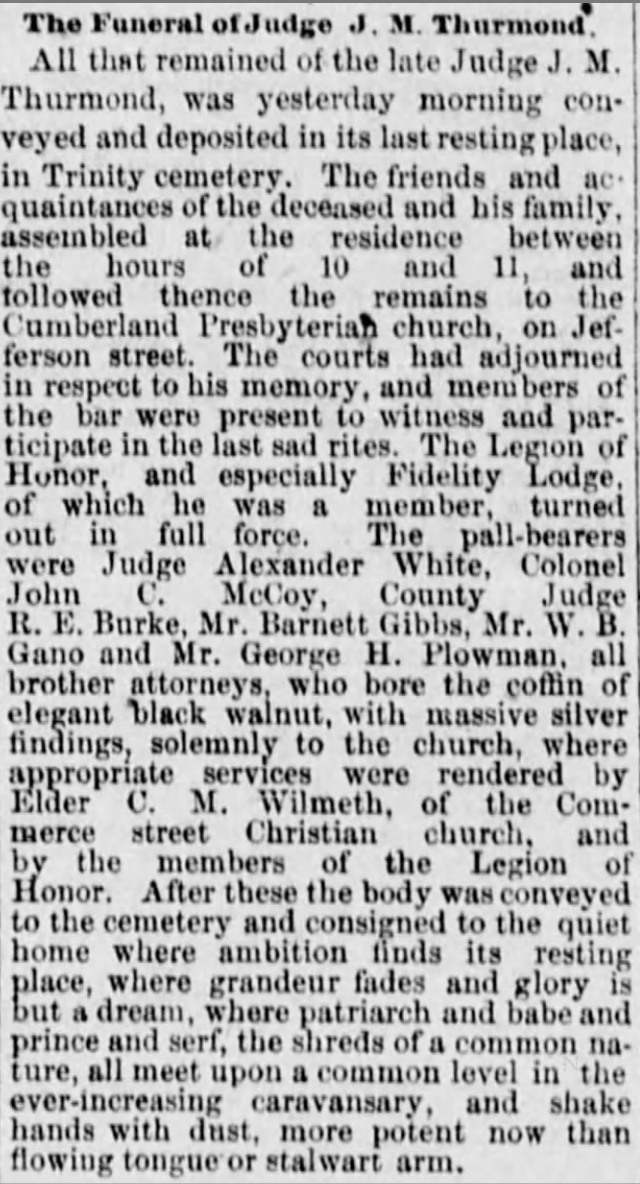
An account of the funeral of Judge J.M. Thurmond from the March 17, 1882 edition of the Dallas Daily Herald.

After his acquittal, Cowart spent many years in Washington, D.C. representing Texas interests in Congress. But he never quite escaped the reverberations of the shooting. One article I found said, “Privately, he expressed himself as regretting he had not let Thurmond kill him, and he was inclined to regard the early death of his wife and the long invalidism of a son as somehow a judgment.”

When Cowart died at the age of 80 in 1924, he was buried in Greenwood Cemetery.

Cattle King of Texas

One of the few mausoleums at Greenwood is for Col. Christopher Columbus (“C.C.”) Slaughter. His colorful life could fill a book easily but I’ll try to keep it brief.

Col. Christopher Columbus (C.C.) Slaughter lived large but had a giving spirit, donating large sums of his fortune to Dallas institutions.

As a boy, C.C. worked cattle with his father and at age 12, he helped drive the family’s 92-head herd to a ranch on the Trinity River in Freestone County, Texas, where the family moved in 1852. At 17, C.C. was hauling timber and processing Collin County wheat into flour for sale. With the money he earned, he bought his uncle’s interest in the Slaughter cattle herd. His family did not neglect his education, tutoring him at home before he graduated from the now-defunct Larissa College in Cherokee County, Texas.

In 1857, Slaughter became a rancher with his father in Palo Pinto County, Texas, where they owned 15,000 cattle. They sold beef to Fort Belknap and local Native American reservations. In 1861, he married Cynthia Anna Jowell and together, they had five children.

During the Civil War, he served as a colonel in Terry’s Texas Rangers of the Confederate Army. Together with Charles Goodnight, he helped rescue Cynthia Ann Parker, an American kidnapped by Comanches at the age of 10 in 1836. I photographed her grave last year while at Fort Sill in Lawton, Okla.

Col. Christopher Columbus (C.C.) Slaughter is interred in one of the few mausoleums at Greenwood Cemetery.

After the war, he founded the C. C. Slaughter Cattle Company, plus co-founded the Texas and Southwestern Cattle Raisers Association in 1873. Cynthia passed away in 1876 and he married Carrie Averill 1877. He established the American National Bank in 1884, which is now part of the First National Bank chain.

Col. Slaughter, his two wives, sons Walter and Eugene who died in infancy, and daughter Della, with her husband Judge Gilbert Wright, are all interred within the Slaughter mausoleum.

Owned Over a Million Acres

By 1905, Col. Slaughter owned over 40,000 head of cattle and oversaw over a million acres of land in West Texas. As a result, he was for some years the largest taxpayer in Texas. He also added to his family, having four children with second wife, Carrie.

In his later years, Col. Slaughter gave generously. He helped establish Baylor Hospital of Dallas, serving on its board of trustees and was president of the United Confederate Veterans. He also served as vice president of the Southern Baptist Convention and a member of the executive board of the Baptist General Convention of Texas.

Close up view of the stained glass inside the Slaughter mausoleum.

Slaughter maintained strict control over his operations until 1910, when he suffered a broken hip that crippled him for the remainder of his life. After his death at age 81 in 1919, his heirs divided his ranch and land holdings, and sold them. His mausoleum at Greenwood contains Col. Slaughter, his two wives, two children who died in infancy, his daughter, Delia Slaughter Wright, and Delia’s husband, Judge Gilbert Wright.

Death of a Young Wife

The monument to young Jennie Thomas Scollard is beautiful. But I chose it for more than that reason alone.

Jennie Thomas Scollard died at the age of 26 from “dropsy of the heart.”

Born in 1860, Jennie Thomas was a native of Texas. But her future husband Thomas W. Scollard was British born in 1849. He likely arrived in Dallas in the 1870s. He and Jennie married were married in 1880 and spent their first years in Galveston, Texas.

Unlike many businessmen in Dallas, Scollard was more interested in sheep than cattle. He became a wool buyer/dealer. He also was involved in real estate, constructing the Jennie and Juanita buildings in downtown Dallas. I even managed to find a picture of the one named after Jennie on Ancestry.

Wool dealer and real estate developer Thomas W. Scollard named this building after his first wife, Jennie. (Photo source: Ancestry.com)

Thomas’ fortunes prospered. He and Jennie had three children together, two living to adulthood. But Jennie’s health began to falter in 1887. According to her funeral notice, she went to stay at a place known as Wootan Wells, which promoted itself as a pleasure resort and health spa. They claimed that the waters had restorative powers.

The first well at what became Wootan Wells was dug in 1878. This postcard is from 1912.

Located in Bremond, Texas, Wootan Wells was just one of many resorts that socialites flocked to in the late 1800s/early 1900s. You could even purchase their water and take it home with you. At one point, it boasted hotels, a bottling works, dance pavilion, and school. A fire that swept through Bremond in 1915 did considerable damage and Wootan Wells’ remaining buildings were torn down in the early 1920s.

Sadly, Jennie died at Wootan Wells at the age of 26 on June 12, 1887. Her funeral notice attributed it to “dropsy of the heart”, meaning she suffered from edema and heart failure. I found it interesting that the notice also made a particular observation about her “life-like appearance” at her visitation.

Jennie Scollard’s funeral notice observed that she had a most “life-like appearance” at her visitation. (Photo Source: The Dallas Daily Herald, June 17 1887)

While at least four people are buried in the Scollard plot, only Jennie Scollard’s has a marker of any kind.

Thomas Scollard remarried in 1889 to Fannie Bossart, who was 21 years his junior. They had five children who lived to adulthood. One infant born in 1889 named Jennie is buried in the Scollard plot. She has no marker.

When Thomas Scollard died suddenly on his veranda at the age of 55 in 1905, he was buried at Greenwood in the family plot without a marker. Records indicate that after Fannie Scollard died in 1959, she was initially interred at Sparkman-Hillcrest Memorial Park (which I visited as well). But she was later moved to Greenwood to be buried with Thomas and the two Jennies in June 1960. Her grave is not marked either.

We’re not finished at Greenwood Cemetery. Come back for Part III.

Mary Todd Lindsley was the daughter of Judge Philip Lindsley and Louise Gundry Lindsley. Born on Dec. 18, 1882, she died on July 3, 1883. The Lindsleys’ son and Mary’s older brother, Henry Lindsley, served as mayor of Dallas, Texas from 1915 to 1917.


Deep in the Heart of Dallas, Texas: Exploring Silent City of the Dead Greenwood Cemetery, Part I

21 Friday Aug 2020

Posted by adventuresincemeteryhopping in General

≈ 3 Comments

Who visits Dallas, Texas in the middle of July, one of the hottest months of the year?

ME!

Every five years, my husband and I take a trip out of state to celebrate our wedding anniversary. For 2018, our 15th, we chose Texas. We knew it would be boiling-lava hot but summer is always the best time for us to travel because our son can stay with his grandparents while we’re gone.

We arrived in Dallas with plans to visit at least one cemetery during our visit and ended up seeing many more. The first one was Greenwood Cemetery in the Uptown neighborhood. But it wasn’t always called that.

Greenwood Cemetery was originally called Trinity Cemetery when it opened around 1875.

Birth of Trinity Cemetery

The establishment of Trinity Cemetery began with a man who played a key role in the prominence Dallas would eventually have. But one of Alabama native William H. Gaston’s first glimpses of Dallas would be as a 20-year-old young man on the day after the fire that nearly destroyed the city in 1860.

William joined the Confederacy with three of his brothers after the outbreak of the Civil War, rising quickly among his peers to become known as the “boy captain”. After the war, Capt. Gaston did quite well with his cotton crop, making enough money to leave the farm and enter into business in Dallas. His focus was on banking and real estate.

Capt. William H. Gaston served with distinction in the Confederacy during the Civil War but had his heart set on becoming a successful businessman some day. When he died in 1927, he was buried in the cemetery he established.

A sign at the cemetery explains that the land upon which Trinity Cemetery is located on was once “part of a Republic of Texas grant called the John Grigsby League, given for service in the Battle of San Jacinto.” After some legal wrangling, Capt. Gaston acquired the land and established the cemetery along with his banking partner, Capt. W.H. Thomas. Some sources say that the first recorded burial at Trinity was a Mrs. Susan Bradford in March 1875. I found no memorial for her on Find a Grave.

Silent City of the Dead

An article in the Dallas Weekly Herald on November 13, 1884 describes the cemetery  this way:

Our reporter took an excursion over the Belt street railroad yesterday and, leaving the cars where the road turns out of the McKinney road, walked out to Trinity cemetery. This silent city of the dead is truly a beautiful location and, although it is small for so large a city as Dallas, it can be made as beautiful a cemetery as can be found in all the land. Young forest trees and cedars abound, which, if trimmed up properly and with nice shelled walks and drives winding among them, would make it a lovely spot for the repose of the dead.

Unfortunately, by 1896, the cemetery had fallen into a state of disrepair. One article even mentioned cattle grazing in it. Capt. Gaston had plunged into the business world, developing much of East Dallas and starting the State Fair, so his attention was elsewhere. The cemetery was renamed Greenwood and an association was formed to oversee its operation and upkeep.

In 1896, Trinity Cemetery became Greenwood Cemetery.

According to Find a Grave, Greenwood has close to 8,000 recorded burials but an article I found indicates there are hundreds of unmarked graves on the grounds. Originally, it consisted of 30 acres but I’m not sure what it currently is. The Uptown neighborhood that surrounds it was once farmland but is now prime real estate that’s almost completely developed.

Both Sides Buried Here

Both Union and Confederate soldiers are buried at Greenwood. There’s a special section dedicated to Union Soldiers that is cared for by a local chapter of the Sons of Union Veterans. After the Civil War, many Union veterans headed to the South for a new life. Cheap land was plentiful and business opportunities were abundant. According to one plaque I saw, about 110 Union veterans are buried at Greenwood.

One of those men was John Comley Bigger, an Ohioan who fought with the 92nd Illinois Infantry at the Battle of Chickamauga. Bigger would go on to practice law in Dallas in 1875 and was appointed the U.S. Attorney for Texas in 1882. He led two Grand Army of the Republic (GAR) chapters in Dallas. A Prohibitionist, Bigger was admired by his colleagues for his “probity and kindness of heart”. When he died in 1900, he was buried at Greenwood Cemetery.

Several Union veterans are buried at Greenwood Cemetery.

According to a plaque, there are about 250 Confederate veterans buried at Greenwood. There is no Confederate monument at Greenwood, but there is one that I mistook for one when I first saw it. The monument to Captain Samuel P. Emerson certainly looks like one but it was carved just for him.

In 1861, at age 29, Kentucky native Samuel Emerson enlisted in the Confederate Army. Under the command of General Simon Buckner, he saw action at Fort Donelson, on the Cumberland River in Tennessee. When the fort fell to federal forces under General Ulysses S. Grant in February 1862, General Buckner surrendered some 15,000 troops.

Capt. Emerson, however, escaped by swimming and wading the river. He subsequently had a number of adventures as captain of a company of Confederate scouts. He moved to Dallas after the Civil War.

Capt. Samuel Emerson had very specific ideas about what kind of monument he wanted and how his funeral should be conducted.

From reading his Find a Grave memorial, I learned that Capt. Emerson was close friends with Confederate Brigadier General William Lewis Cabell and his daughter, Mrs. Katie Cabell Currie Muse. She was not only president of the Dallas chapter of the United Daughters of the Confederacy but was an avid listener to Capt. Emerson’s wishes for his monument and funeral plans.

After he died on October 21, 1900, she did what she could to carry out those wishes. In his will, Emerson left $5,000 for Katie to use for his monument, which was unveiled a year after his death. Sharing the plot with Emerson are 36 other former Confederates whose graves all face south, marked by two rows of identical white stones.

At the base of Capt. Emerson’s monument are the words “Here Lies One That Was True To The Teachings Of The Old South”.

Garlington Monument

Located close to Capt. Emerson’s monument is the large monument to Moses D. Garlington and his wife, Annie Moore Garlington. I could find very little information about it. It’s my guess that it was made after Annie’s death but I’m not sure. I did not take a very good photo of it and the construction going on in the background didn’t help.

Moses Garlington came from humble means but managed to amass a fortune after coming to Dallas in 1872.

Born in Mississippi in 1835, Moses Garlington became a clerk/book-keeper in Trenton, La., where he spent 18 years. He entered the Confederate Army as second lieutenant of Company A of the 17th Louisiana Infantry, and came out as a regimental quartermaster. In 1868, he married Arkansas native Annie Moore. Over the years, they would have five children together that lived to adulthood, one having died in infancy.

The Garlingtons moved to Dallas around 1872 and Moses got involved in a business partnership with the Central Railroad. His fortunes prospered over the years through his wholesale produce business and he amassed quite a fortune, known for dealing in cash and eschewing credit of any kind. He died of malarial fever on Sept. 22, 1894.

My husband managed to get a good photo of the top of the Garlington monument. I’m not entirely sure whom these figures are meant to represent.

Eldest son William took over the business for his father. Annie would have a home with his family for the rest of her life. She died at the age of 70 of apoplexy and heart disease on April 20, 1918. I am not certain what the three figures at the top of the monument are meant to represent. Perhaps someone reading this will know.

This is just the tip of the iceberg so join me next time for more stories from Dallas’ Greenwood Cemetery.


Yellowstone National Park Adventures: Visiting Wyoming’s Fort Yellowstone Cemetery, Part II

07 Friday Aug 2020

Posted by adventuresincemeteryhopping in General

≈ 2 Comments

Last week, I introduced you to Fort Yellowstone Cemetery, located in Mammoth Hot Springs, Wy. within Yellowstone National Park. I focused mainly on the children’s graves I found. Today, we’re going to look into the lives (and deaths) of some of the adults buried there.

In many cases, as with the children, there isn’t much known about some of the people buried at this cemetery. That’s definitely the case for Nellie Auditto, if that is indeed her true last name.

Who was Nellie Auditto?

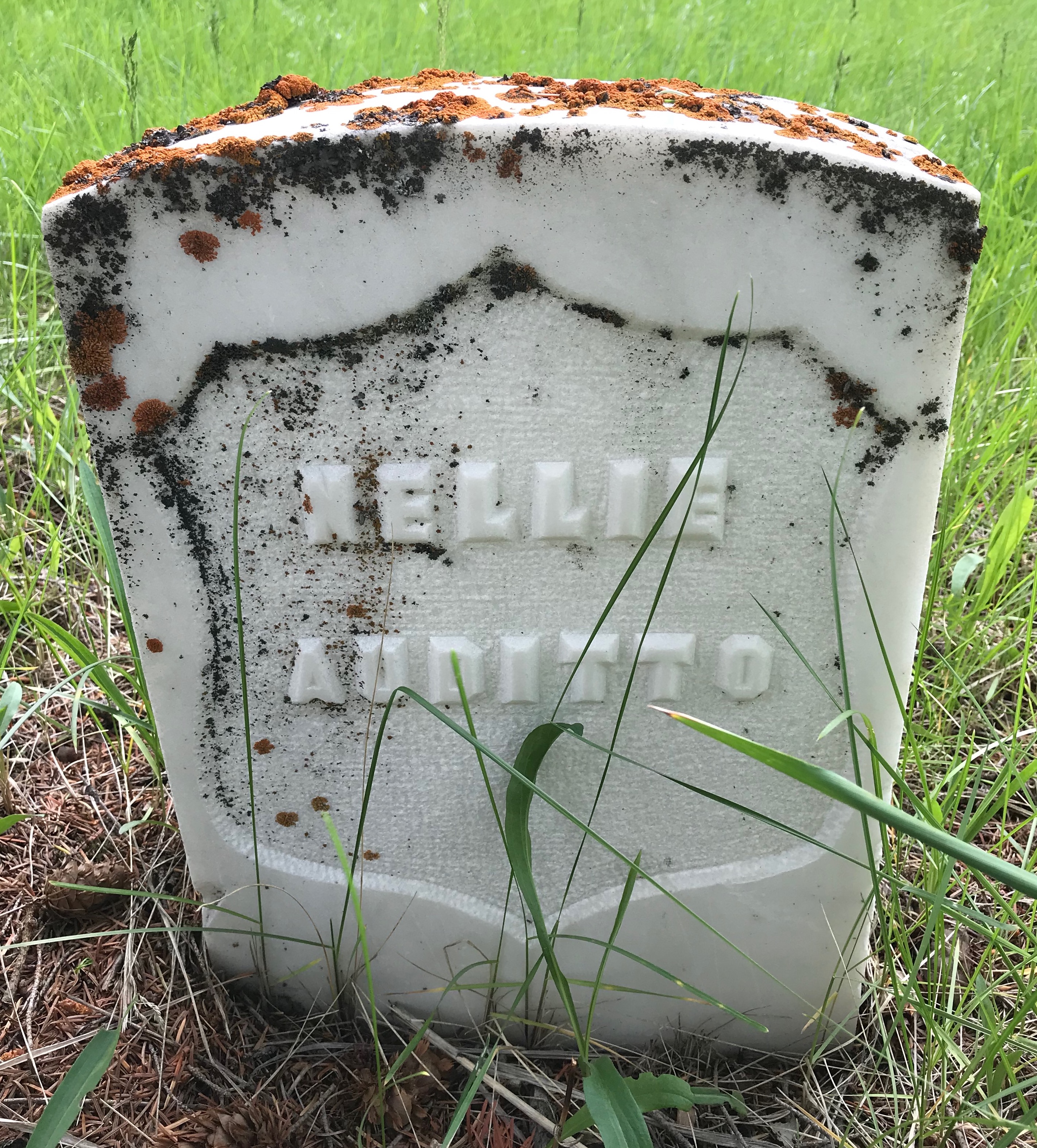
There’s a simple white government-issued grave marker for Nellie. We know from cemetery records that Nellie died on Aug. 11, 1905 from diphtheria at the Norris Hotel. There’s no mention for her age. But records do list her as working for the Yellowstone Park Association (YPA) at the time of her death.

Was Nellie’s name really Auditto?

The YPA was created in 1886 by the Northern Pacific Railroad to take over the properties and operation of the bankrupt Yellowstone Park Improvement Co. (YPIC). The YPA built and managed the various hotels in Yellowstone. Nellie died at “Norris Hotel”, which would have been at the Norris Geyser Basin about 20 miles south of Fort Yellowstone.

There were a number of hotels constructed at Norris over the late 1880s through to 1901, when the last one was built. It also had a lunch station to feed hungry travelers passing through. It’s my guess that Nellie worked at the hotel or lunch station. It closed in 1916 and was razed in 1928.

Nellie’s last name puzzled me. She was the only Auditto even recorded in Find a Grave’s records. On Ancestry.com, I couldn’t find any Audittos either.

Nellie appears in U.S., Burial Registers, Military Posts and National Cemeteries, 1862-1960.

It was when I looked a bit harder on Ancestry.com that it became clear to me that Nellie’s name had been misspelled on her marker. If you look at the cemetery record for her, her last name is “Arditto”. Not “Auditto”. There are several Ardittos that lived in California, even another Nellie Arditto (not the same one). Unfortunately, I still couldn’t track her with this correction. It’s possible that Nellie was a nickname.

Death of William Eaton

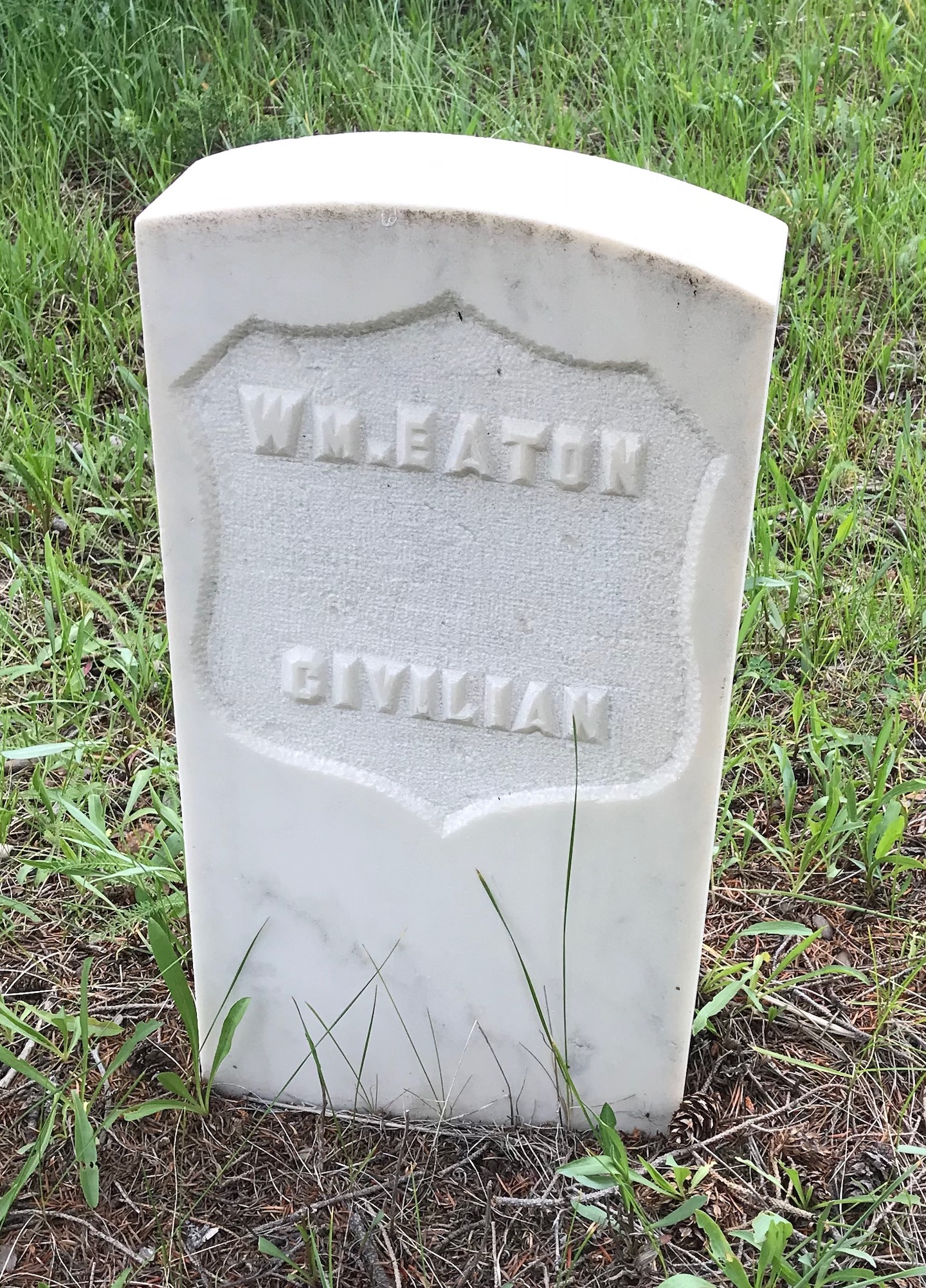
Civilian William Eaton is listed on the same page as Nellie. But his death was decidedly more violent. According to records, he died on May 30, 1904 when he was “killed by runaway team at Mammoth Hot Springs, Yellowstone National Park.” That’s all we know. His age is not listed.

We don’t know how old William was when he died but it was a violent end.

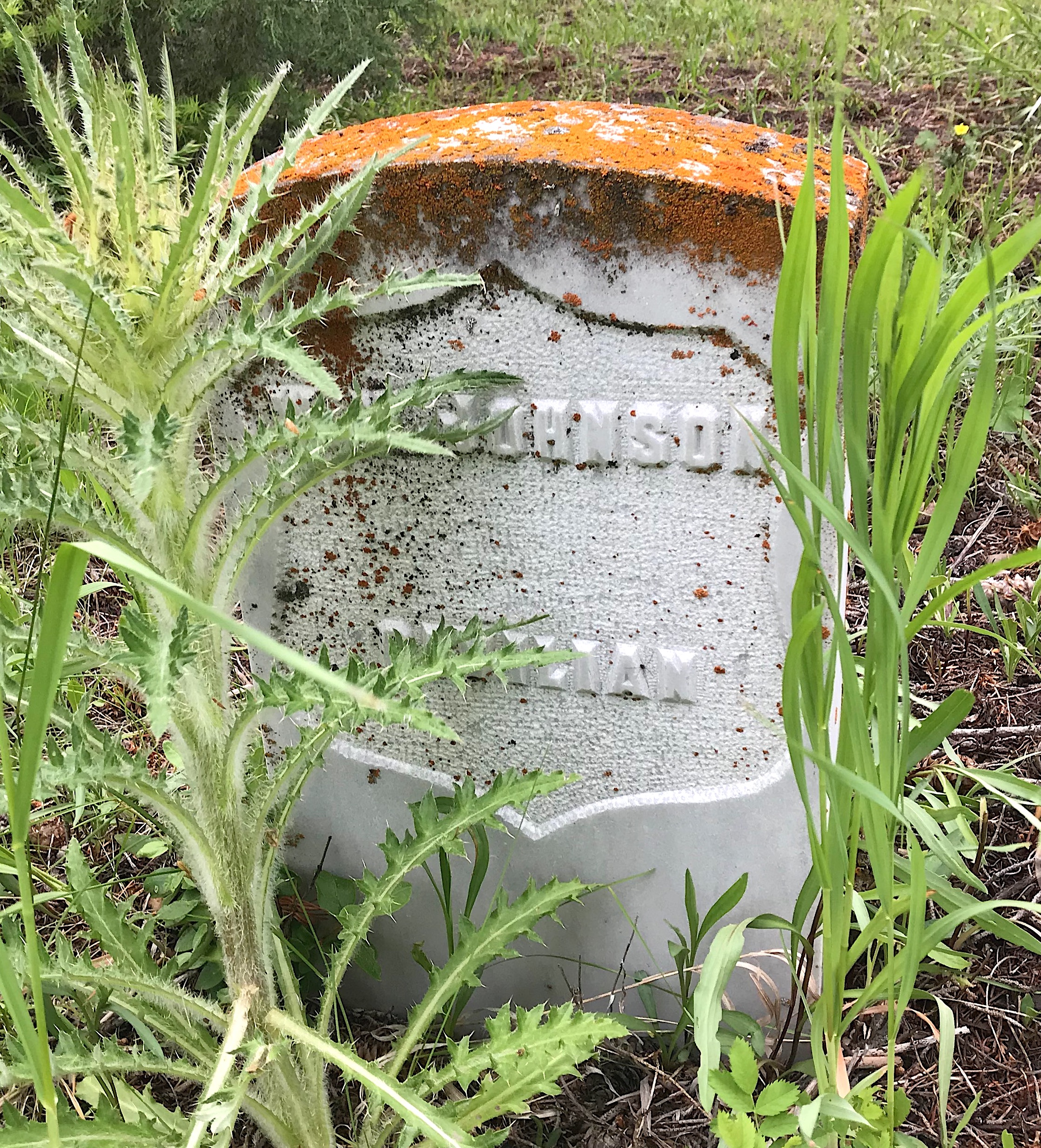
There’s also little known about William M. Johnson but he is the only African-American buried at Fort Yellowstone Cemetery that I’m aware of. He died on June 21, 1907 and was employed as a civilian to a Major Pitcher. He died of double “catarrh/pneumonia” at the post hospital. As with the others buried here, we don’t know William’s age.

William M. Johnson is the only person of color buried at Fort Yellowstone Cemetery.

The Army Surgeon’s Wife

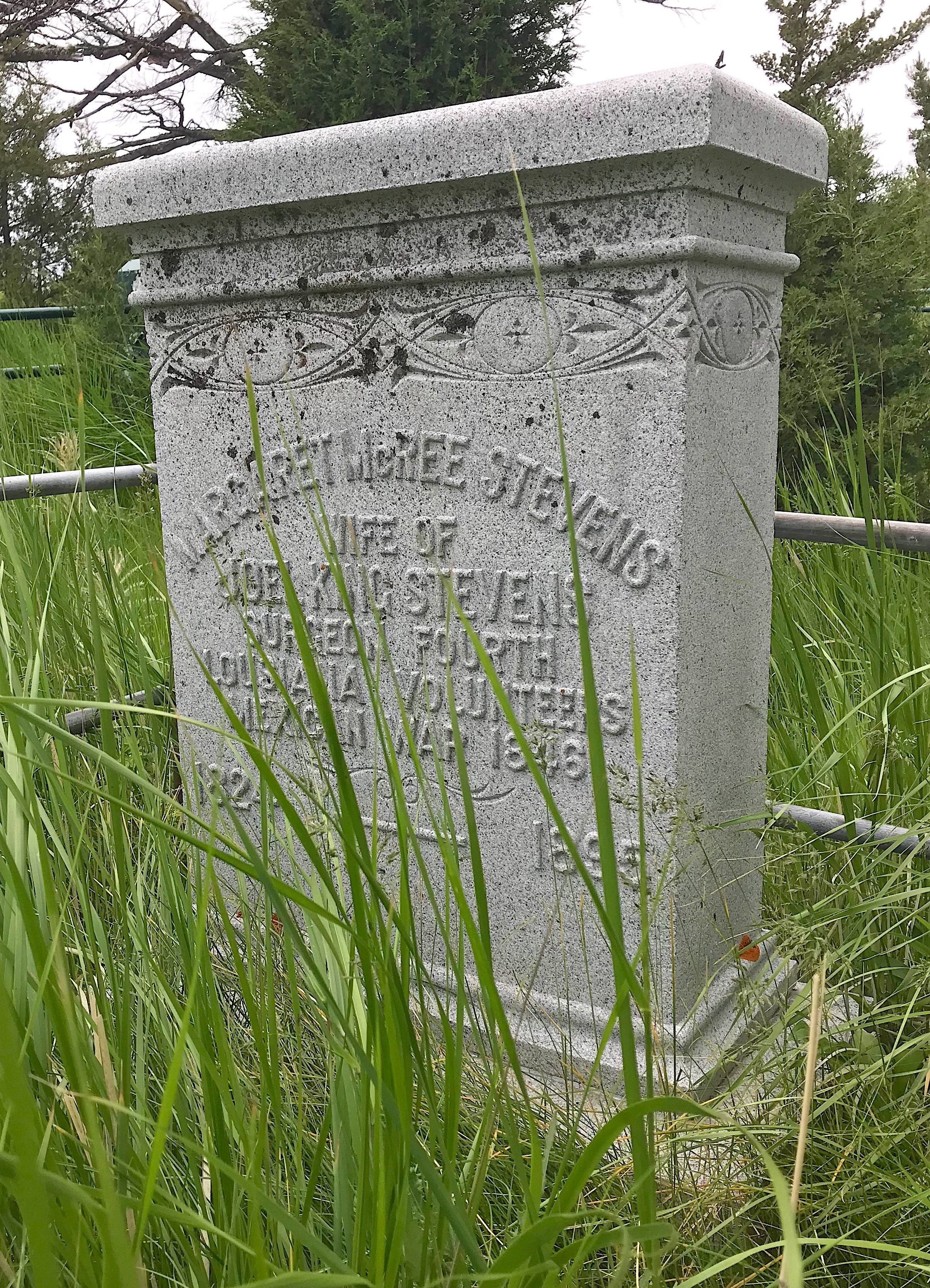
The most ornate grave marker in the cemetery is for Margaret Caroline McRee Stevens. She was the wife of Army Surgeon Joel King Stevens. Her marker explains that her husband was served in the Mexican War of 1846 with the Fourth Louisiana Volunteers.

Margaret married Mississippi native Joel Stevens on Jan. 27, 1848 in Louisiana at the age of 24. They moved to Texas where they had three children. During the Civil War, Joel died on May 18, 1864 at the Battle of Yellow Bayou in Louisiana. He was serving as Captain in the 36th Regiment of the Texas Cavalry of the Confederate Army.

Margaret Stevens was likely living with her son and his wife when she passed away in 1895.

Capt. Stevens’ death left Margaret a widow at age 40, with her youngest child being only six years old. The family moved to Mississippi to live with her sister, Melissa McRee Jayne, who was married to banker Joseph Jayne.

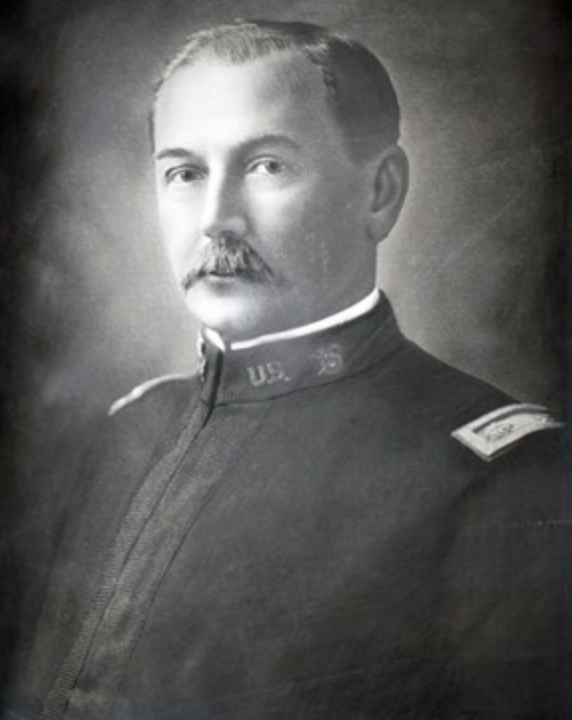
It’s my guess that with the help of his uncle, Margaret’s son Robert Ratcliff Stevens (born in 1855) was able to follow in his father’s military footsteps. Robert graduated from the U.S. Military Academy at West Point in 1877. He then served at several posts in the western U.S. before being assigned to the Quartermaster Office at the Army and Navy General Hospital in Hot Springs, Ark. in 1889. After leaving Hot Springs, he was in charge of construction of Fort Logan H. Roots in North Little Rock.

Margaret’s son Col. Robert Ratcliff Stevens followed in his father’s military footsteps and had a distinguished career. (Photo Source: National Park Service)

It was in the 1890s that Robert was tasked with overseeing improvements at Yellowstone and Yosemite National Park, as well as the expansion of Fort Sam Houston in San Antonio, Texas. I can’t prove it, but by this time Margaret was likely living with her son and his new wife, Katie, whom Robert had just married the year before. Margaret died on Nov. 17, 1895 at the age of 71.

Sadly, Katie Stevens died just four years later Jan. 12, 1899 at the age of 29. She is buried in Oakland and Fraternal Historic Cemetery Park in Little Rock, Ark. Robert served as Quartermaster at the Presidio in San Francisco, Calif. and fought in the Philippine-American War, advancing to the rank of colonel. He died on Jan. 28, 1931 and is buried at San Francisco National Cemetery.

Killed by “Old Two Toes”

The last marker I’m going to share with you is actually new. It replaced the original wooden one that was deteriorating rapidly. You can see a photo of that marker on Find a Grave here. I’m glad to see it was replaced by something more permanent.

Frank Welch has the distinction of being Yellowstone National Park’s first documented human fatality from a bear attack. I don’t know how old Frank was, but he did own a ranch, was married and was old enough to have a daughter who was married.

Frank worked as a teamster in Yellowstone National Park. The attack took place near Ten Mile Spring at Turbid Lake while he was hauling a load of hay and oats to a camp near Sylvan Pass. Welch and two co-workers were camping, one of the men sleeping in the wagon while Welch and another slept under it. As they slept, a bear approached their camp.

Frank Welch died a terrible death on September 11, 1916.

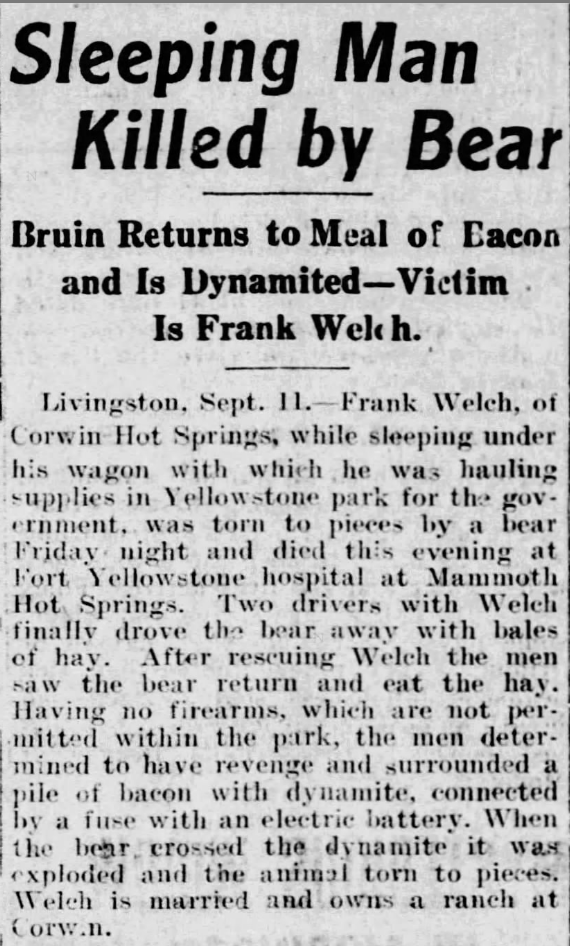
The bear in question, nicknamed “Old Two Toes”, had already injured others in the park. It got the moniker in 1912 after losing some toes when the man he attacked fought back. The bear entered Welch’s camp around 1 a.m. and attacked him. The other two men tried to divert the bear with no success. After the bear left, the two men flagged down a car and took Welch to Fort Yellowstone’s hospital in Mammoth Hot Springs where he died on Sept. 11, 1916.

Article about Frank Welch’s death as it appeared in the Sept. 12, 1916 edition of the Great Falls Tribune, Great Falls, Mont.

“Death In Yellowstone” notes that the possible cause for the attack may have been because Welch slept with his bacon under his pillow, which certainly would have enticed a hungry bear. After Welch’s death, the bear was was killed. You can read the account of it in the above newspaper article but I’m not entirely sure all its details are true, having read some varying stories.

Postscript

I left Fort Yellowstone Cemetery with a sense of accomplishment that I’d found this  elusive burial site. But even two years later, I feel there’s so much more to the people buried there that I will never know. For different reasons, they were working or even just passing through this untamed part of the country few had ever seen. And it was where they died.

It’s also where their remains rest, buried at this peaceful hidden burial ground where few feet ever tread.

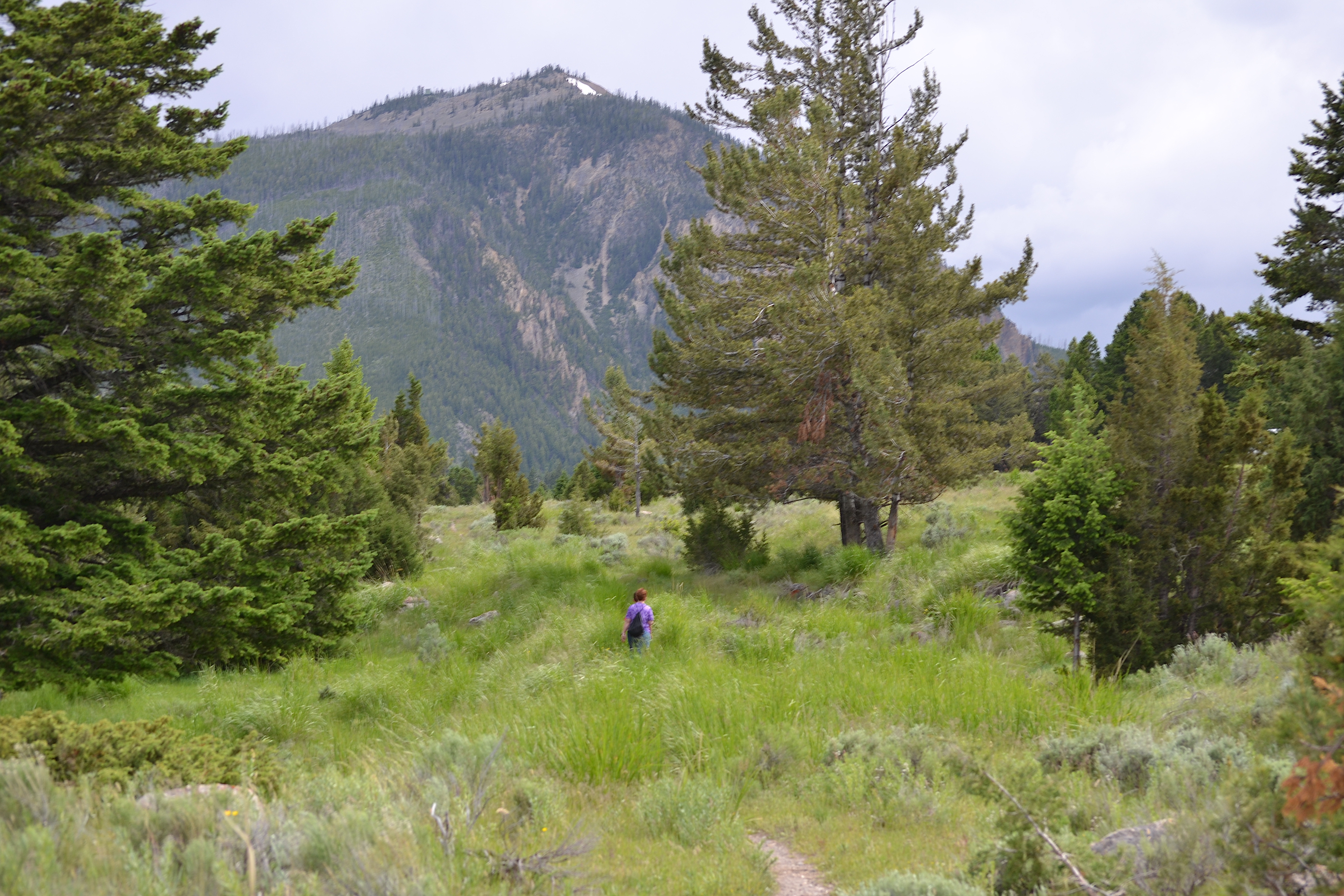
I’m the purple figure following my son down the trail to Fort Yellowstone Cemetery.


Yellowstone National Park Adventures: Visiting Wyoming’s Fort Yellowstone Cemetery, Part I

31 Friday Jul 2020

Posted by adventuresincemeteryhopping in General

≈ 4 Comments

It’s rare that I have a difficult time locating a cemetery but sometimes it happens.

Before I get into that, I’d like to share a little bit about the history of Yellowstone National Park. It’s the first U.S. National Park, established in 1872 and covers parts of three states (Wyoming, Montana and Idaho). It’s vast, covering 2,219,791 acres. But it did not start out as the family-friendly tourist destination it is today.

First U.S. National Park

While Yellowstone was a haven of unspoiled wilderness that attracted adventure seekers, it also beckoned to those who weren’t above breaking the law. Ongoing poaching and destruction of natural resources within the park went on unstopped until the U.S. Army arrived at Mammoth Hot Springs in 1886 and built Camp Sheridan. It was located near the northeast border of the park, close to the Wyoming/Montana border.

View of Mammoth Hot Springs from the Lower Terraces in 2018.

Over the next 22 years, as the Army built permanent structures, Camp Sheridan was renamed Fort Yellowstone. Soldiers were needed to maintain law and order in this newly developing part of the country.

When the National Park Service (NPS) was created in 1916, many of the management principles developed by the Army were adopted by the new agency. The Army turned control over to the NPS on October 31, 1918.

Aldridge Visitor Center, part of the Mammoth Hot Springs Historic District and Fort Yellowstone Historic Landmark District, first served as the bachelor officers’ quarters. (Photo Source: National Park Service.)

Many of the old buildings (35 to be exact) from those Army days still exist in Mammoth Hot Springs and it was fun to walk around them. The Aldridge Visitor Center is a historic structure originally built by the Army in 1909 as bachelor officers’ quarters for the cavalry troops who protected the park before the creation of the NPS.

The Aldridge Visitor Center as it looks today.

Before we arrived at Mammoth Hot Springs (which was no easy undertaking due to extensive road construction), I knew that Fort Yellowstone Cemetery was located somewhere in the area. I just wasn’t sure exactly where because there’s little information online about where it is. Looking on Google Maps now, I am thankful someone has since added it.

An elk grazes at Mammoth Hot Springs. (Photo Source: Chris Rylands)

History of Fort Yellowstone Cemetery

Fortunately, the book “Death in Yellowstone” does provide some history about the cemetery. The original 58 interments took place between 1888 and 1957. U.S. Army soldiers, members of their families, and civilian employees of the Army along with members of their families were buried there. However, 20 of the graves were moved to the Little Bighorn Battlefield near Crow Agency, Mont. in 1917.

In 1947, historian Aubrey L. Haines surveyed the cemetery and produced a list of the 37 graves that remain present today. Of those, 16 appear to be for children.

Our first attempt to find the Fort Yellowstone Cemetery did not go well. Someone had created a page for it on Find a Grave that included GPS coordinates that were incorrect. We ended up at the entrance of a campground outside of Mammoth Hot Springs and they had no idea what we were talking about.

Searching for a Cemetery

Unwilling to be deterred, we returned a few days later and this time I went to the Aldridge Visitor Center to ask a park ranger. The first person I asked, a young employee, had never heard about it.

Fortunately, a ranger who had been there some years overheard my inquiry and knew exactly where it was. He gave us directions to where the old horse stables were located. It’s where a park concessionaire used to provide horses for tourists to ride on the trails. Fort Yellowstone Cemetery is in the woods right next to it, hidden from sight.

My husband and son are usually up for an adventure so they led the way as we hunted for the cemetery.

Frankly, I still wasn’t sure we’d find it. The skies were overcast and it was spitting rain. But there was no way I was giving up. We parked where the ranger told us and began walking down a rough trail going toward some trees. When I spotted the green fence, I knew we’d found it.

Small But Powerful

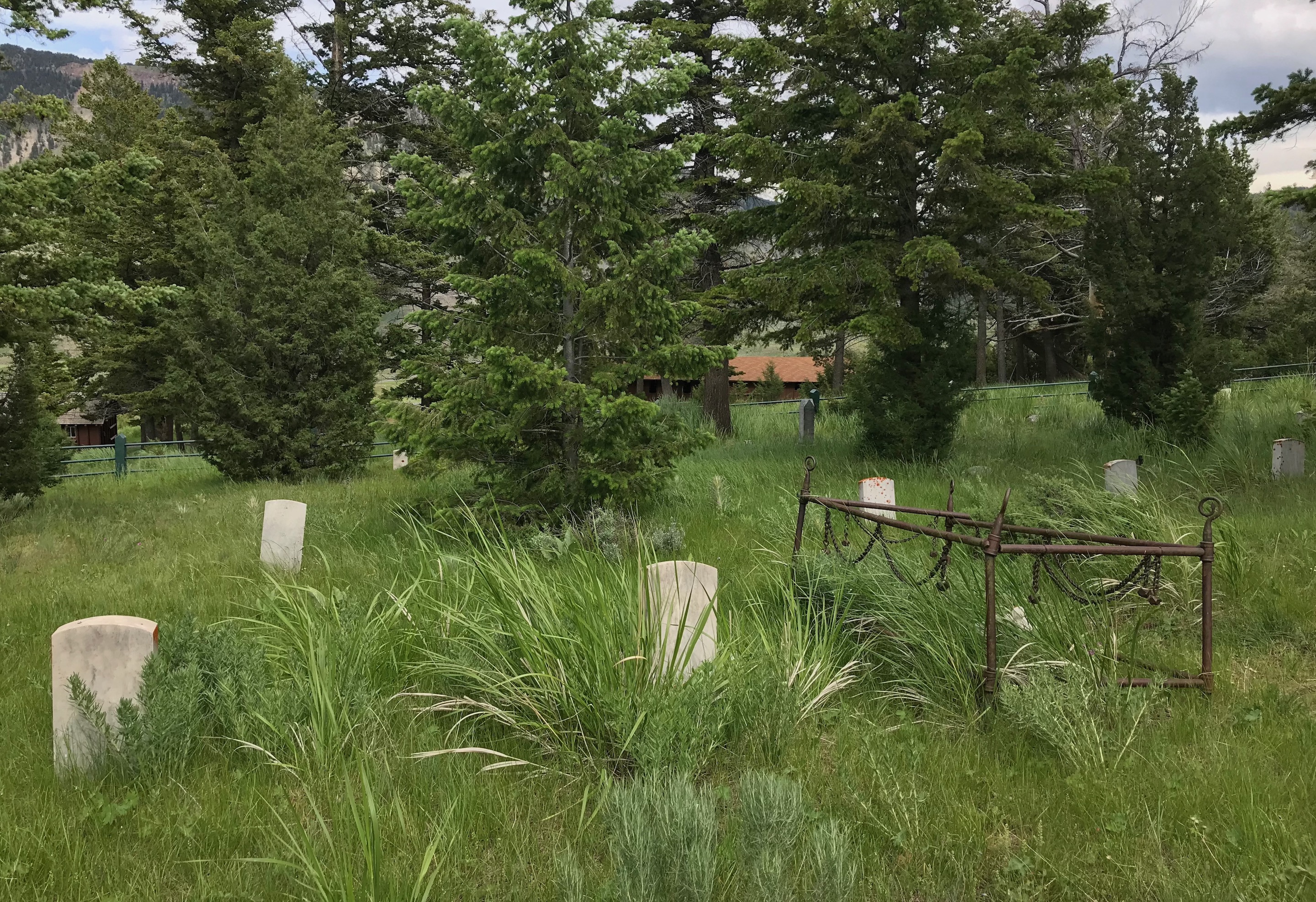
The first thing I noticed was the stillness of the place. The grass was a bit high in places but navigating the cemetery wasn’t hard. The grave markers were scattered about. Some were the white government issued ones, others grander. You can tell few tourists ever set foot in this place, much less actual park employees.

Fort Yellowstone Cemetery doesn’t get much attention from the outside world.

But as I walked around, I began to feel as if I’d stepped back in time about a hundred years. When Fort Yellowstone was home to soldiers and the people who did the hard work of keeping the place running, civilians and families attached to the buzz of activity. Some were older, but quite a few were young. Of the 37 graves there, 16 appear to be for children. Some of their stories are unknown but one sadly is written about in detail.

Murder in Yellowstone

The story of the murder of five-year-old Joseph Trieschman jolted me as few others have. I knew nothing about it when I photographed his grave, which is surrounded by a metal fence. I had no idea what horror had happened to this precious boy.

German immigrant George Treischman arrived in America at age 19 in 1866 and enlisted in the U.S. Army a few months later. He served three years, working as a wheelwright while stationed in Montana. After being discharged, he continued living in the West. George was married to Margaret “Margie” Gleason on an unknown date and they were at Fort Custer, Montana, (built in 1877) by 1886.

George and Margie had five children. Daughter Anna, was born in 1885 and Elizabeth in 1886, with son Harry born not long after. Another son, Arthur, died in infancy in 1892 and is buried at Fort Custer. Son Joseph was born in 1893. By then, George was a wheelwright at Fort Yellowstone.

Little Joseph Trieschman was only five when his mother killed him with a knife in 1899.

I don’t know what was taking place in the mind of Margie Treishman but there were signs she was becoming unstable. On March 21, 1899, an item in the Billings Gazette reported she attempted to kill herself with a butcher knife. But 11-year-old Harry had found her in time and she survived. Another newspaper item reported on April 15, 1899 that she was “adjudged insane” and committed to the insane asylum in Warm Springs.

Her stay at Warm Springs was obviously brief and in June, Margie was back with her family. At least that’s what I can tell from newspaper accounts. On June 3, 1899, Margie grabbed little Joseph and cut his throat, killing him almost instantly. She attempted to do the same to Anna, Elizabeth, and Harry but they managed to escape.

A Fatal Leap

Over the next days, plans were made to take Margie to a facility in Washington to treat her mental illness and she was kept in the guard house at Fort Yellowstone. But the troubled mother had other plans. While in the custody of her husband and a Deputy U.S. Marshall, she slipped away and jumped off the train that was taking her to Washington. Her body was never found.

A pair of little shoes and socks are atop the grave of Joseph Trieschman.

Joseph’s stone is styled in a way I have seen before, little shoes and socks on top. The motif always hurts my heart. The inscription on the bottom of Joseph’s stone reads:

Tis’ a little grace, but Oh Take care
For the hopes are buried there.

George Trieschman tried to pick up the pieces of his life after the tragedy, raising his children as best he could. He never remarried. He continued to live at Yellowstone until May 1928 when he was admitted to the U.S. National Home for Disabled Volunteer Soldiers at Sawtelle, Calif. where he died on May 12, 1929. He is buried at Los Angeles National Cemetery.

Anna married and had children but Elizabeth remained single her entire life. Both lived to ripe old age. Harry became a Yellowstone park ranger, where Trieschman’s Knob was named after him. He died in 1950, all of his pallbearers fellow park rangers. He is buried at Mountain View Cemetery in Livingston, Mont.

Causes of Death Unknown

I know far less about other children’s graves I photographed that day. Harry Wilson was the son of Henry and Lizzie Wilson. I only know that Henry served as a commissary sergeant at Fort Yellowstone.

Harry Wilson’s iron fencing looks just like the one for Myrtie Scott at Gardiner Cemetery.

One reason Harry’s plot caught my eyes was because I noticed it was exactly like the one for Myrtie Scott at Gardiner Cemetery.

For reasons unknow, Harry died at the age of 14 months on May 3, 1893. That was only three years after Myrtie died. I suspect the same person supplied the fence.

Humble White Stones

Standing by itself was the simple white government issued gravestone for Baby Elliott. No first name, no dates. But according to “Death in Yellowstone”, the infant was the son of William J. Elliott, electrical engineer. The child died on Sept. 29, 1912.

Baby Elliott did not have a first name.

What I did not known that in another part of the cemetery, Chris had photographed the grave of another Elliott child. This one was for Katherine Elliott, who died on Oct. 4, 1909. Again, we don’t known how old she was or how she died.

It is unknown how old Katherine Elliott was when she died. (Photo Source: Chris Rylands)

Located by Joseph Trieschman’s plot is the gravestone of little Emily Sievert. She died just short of her second birthday on Aug. 13, 1903. She was the daughter of Capt. Herman Sievert, who was an officer of Company F of the Ninth U.S. Cavalry Regiment.

Emily Sievert was just short of her second birthday when she died in 1903.

From what I can piece together, Capt. Sievert was on leave while visiting Fort Yellowstone with his wife and Emily when the child died. He was stationed at Fort Walla Walla in Washington with the Ninth Calvary at the time.

So many little lives, ended far too soon.

Next week, I’ll be focusing more on the adults buried at Fort Yellowstone Cemetery.  I hope you join me.

Yellowstone National Park Adventures: Exploring Montana’s Gardiner Cemetery, Part II

17 Friday Jul 2020

Posted by adventuresincemeteryhopping in General

≈ 5 Comments

I’m still at Gardiner Cemetery, after a two-week break. As I said, it’s a smallish cemetery but still has plenty of stories to offer. I was saddened to learn that just this week, a fire that began in a business on Main Street in Gardiner swept through a number of stores. Fortunately, nobody was injured but it will take time for those businesses to recover.

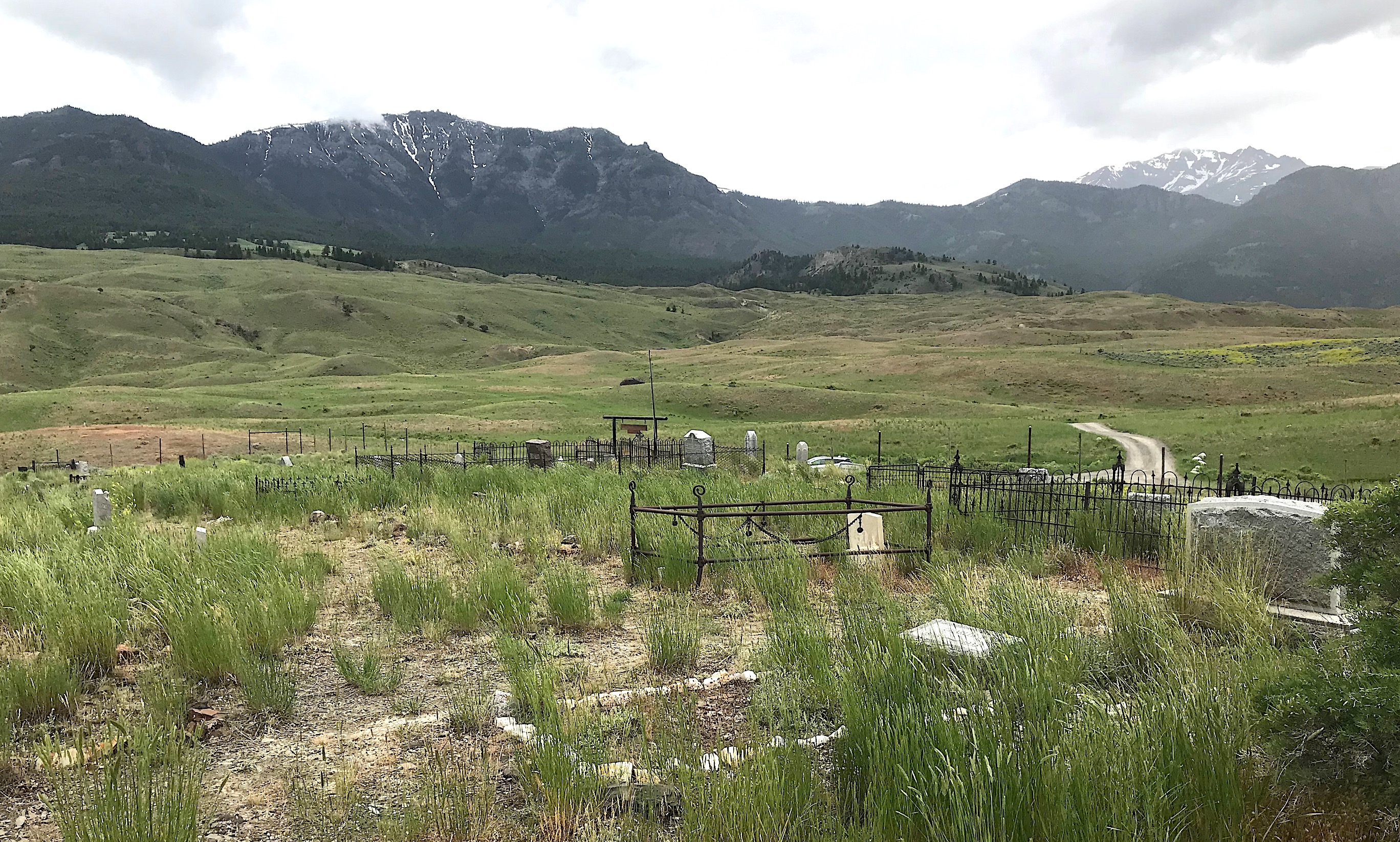
The mountains are a beautiful backdrop behind Gardiner Cemetery.

Montana was definitely the wild frontier for many years, even up through the early 1900s. Unfamiliar landscapes and drastic weather changes could catch many unawares, leading to an untimely demise.

Death of “Mormon” Brown

Alexander “Mormon” Brown probably got his nickname from having lived in Ogden, Utah much of his life. But by 1886, the 35-year-old was living in the Gardiner area. According to Lee Whittlesey’s book, Death in Yellowstone, the winter of 1886-1887 was brutally cold. Brown left Gardiner with a friend, Thomas Garfield, to stay in Thomas’ cabin some five miles away for a few days.

An article in the Billings Gazette (Wyo.) describes Brown’s last days.

Unfortunately, because Brown struggled with alcoholism, he suffered from DTs (delirium tremors) while at the cabin. While Thomas slept, Brown left the cabin on the night of January 4, 1887 and disappeared. Brown was found the next day by a search party, his body nearly frozen halfway in the water of the Yellowstone River.

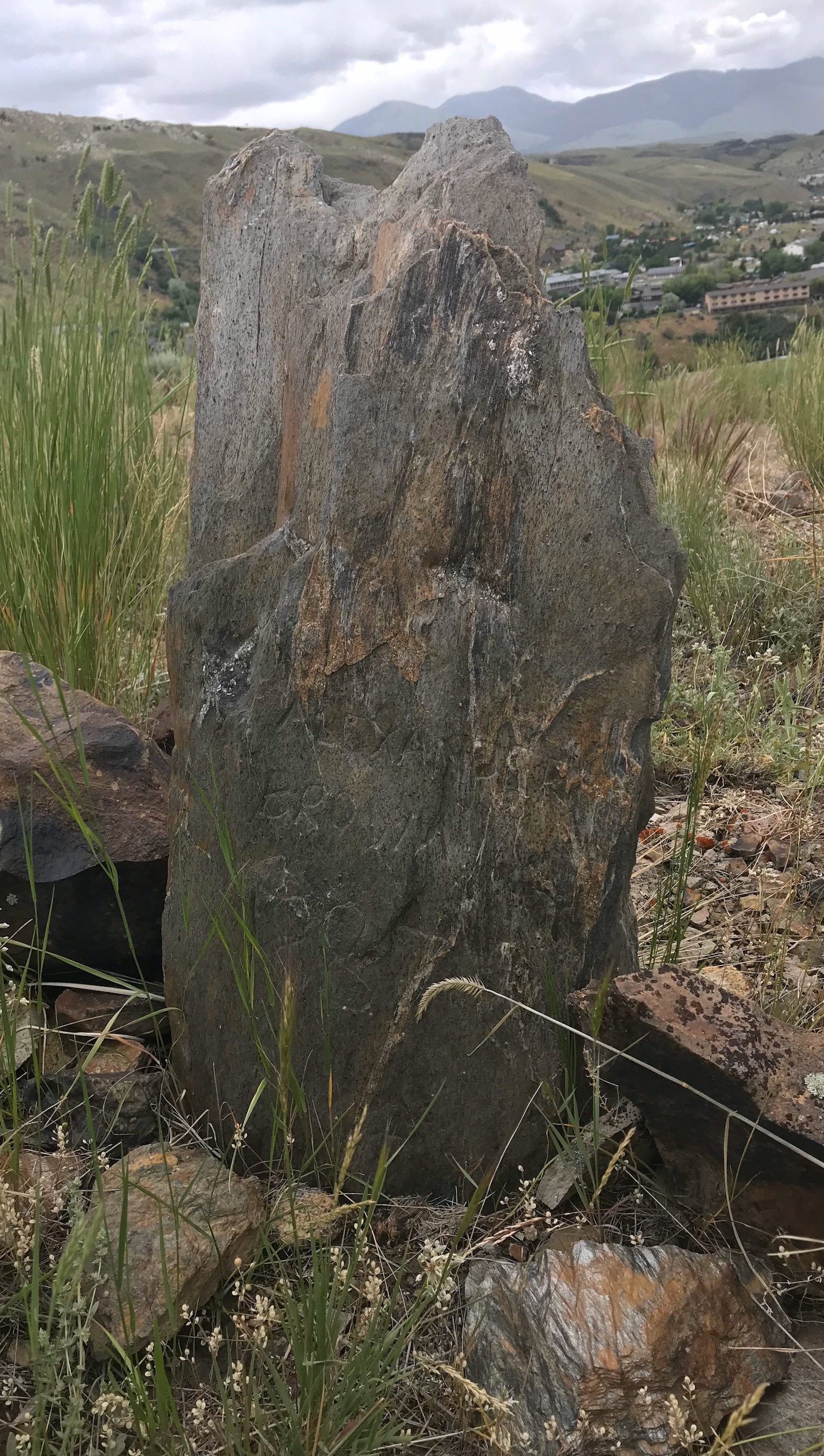
Alexander “Mormon” Brown froze to death in January 1887, one of the coldest winters on record.

You can barely make out Brown’s name and dates on what looks to me to be a wooden marker. I suppose it could be petrified rock. Regardless, it’s rather amazing that it still exists at all.

Struck by Lighting

Mormon Brown’s demise was certainly an agonizing death but in the case of Robert Wright, he had no warning whatsoever of what was coming.

Although a native of Montana, Robert S. Wright was the son of Scottish immigrants. His father, Edward, arrived in America around 1895 and married Sibel Somerville around 1897. Robert was born in 1908.

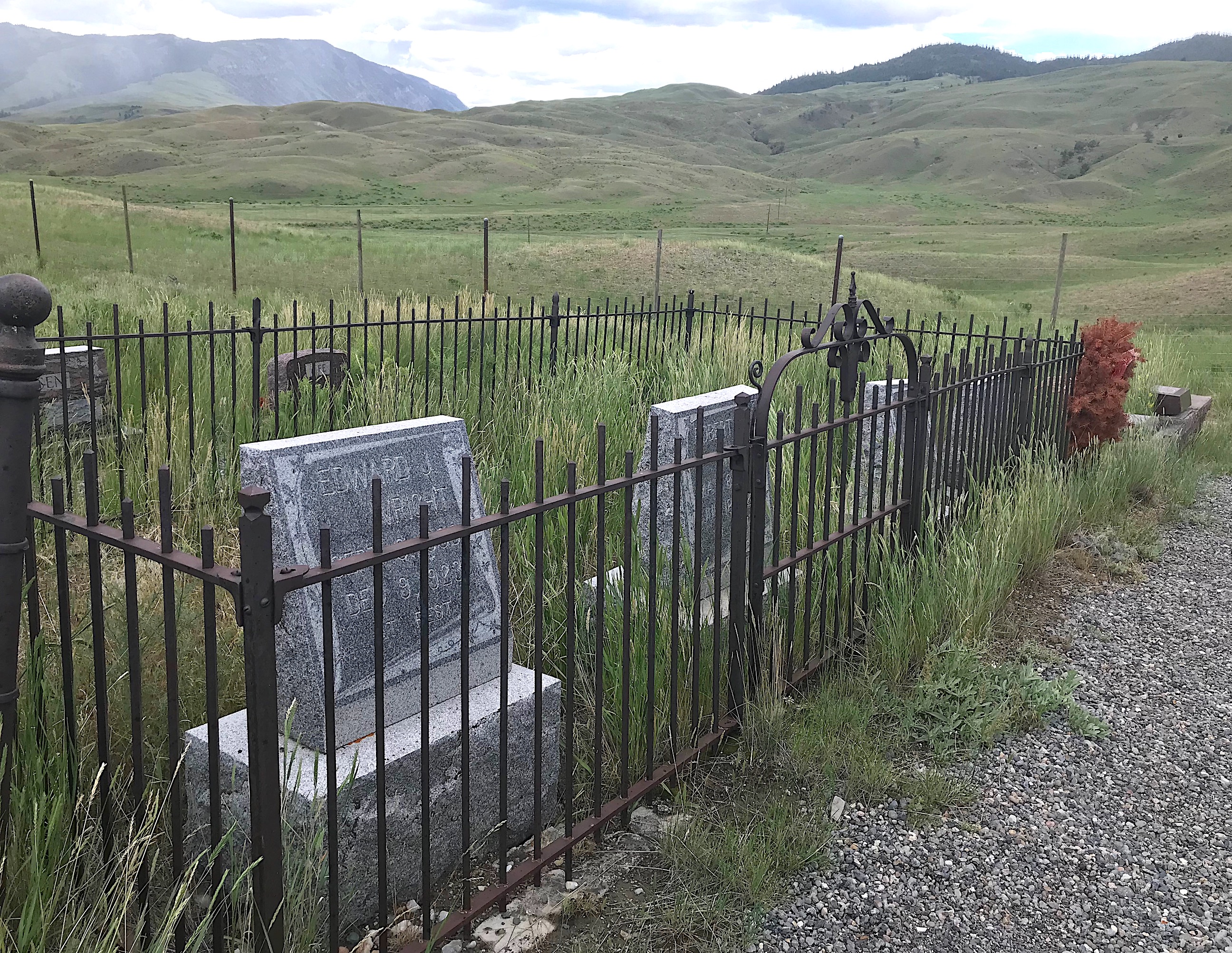
According to Whittlesey, Robert was working for the Yellowstone Park Transportation Company. On July 18, 1929, he was driving a company truck on the Mammoth-Tower Road. The truck broke down near Oxbow Creek. It began to rain, so he sat down under a large tree. Lighting struck the tree, killing him instantly. According to a newspaper report, his body was found leaning against the split tree. He was only 21.

Robert S. Wright is buried with his parents and an uncle in the Wright plot at Gardiner Cemetery. His marker is the one directly behind the gate.

Another article I read said that Robert’s funeral reunited the extended Wright family for the first time since they had left Scotland, a group of about 35 of them attending. Robert is buried between his parents in the Wright family plot. Sibel died in 1937 and Edward died in 1938.

Two Markers, Two Cemeteries?

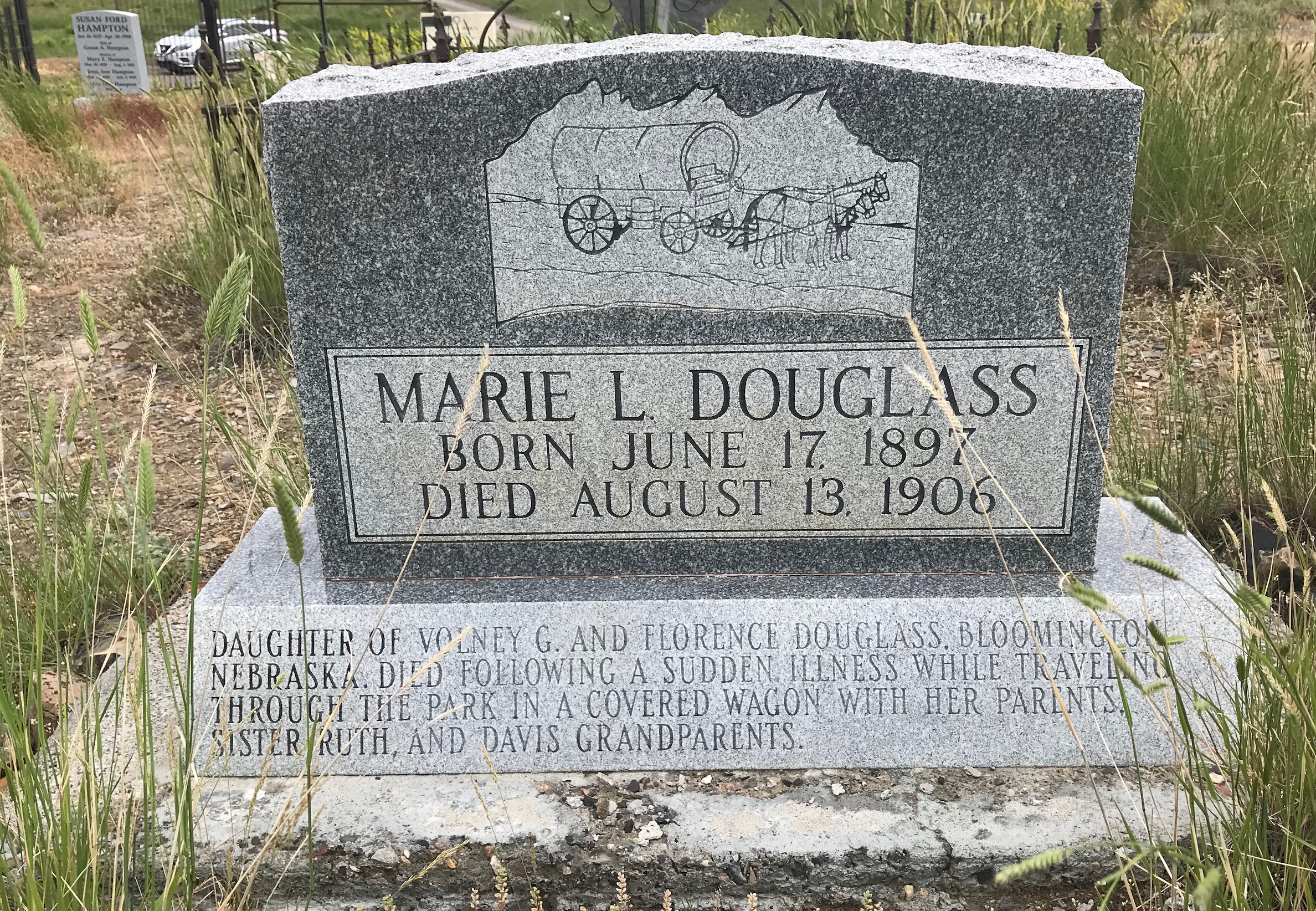
There’s a marker that looks fairly new for a child named Marie L. Douglass. It states that she was traveling with her parents, Nebraskans Volney and Florence Douglass, through Yellowstone Park in a covered wagon (along with grandparents and a sister named Ruth) when she died of a sudden illness on Aug. 13, 1906.

Why does Marie Douglass have two different markers in two different cemeteries? I didn’t learn the full answer until 2021.

From what I could discover, the Douglass family lived in Bloomington, Neb. most of their lives. Volney was a native of New York but had lived in Nebraska from the time he was a boy. Sadly, Florence Douglass died the following year in 1907. Volney remarried and died in Bloomington in 1946.

The puzzling thing about all this is that there is also a marker for Marie in Maple Grove Cemetery in Bloomington, Neb. beside those of her parents. Is Marie buried in Gardiner Cemetery or in Maple Grove Cemetery? Which one is a cenotaph? I can understand why the family would choose to bury Marie in Montana while remembering her with a marker at home. But I still wonder exactly where Marie is buried.

UPDATE: In June 2021, I received an e-mail from Ruth Marie Steinkruger, whose mother was the half-sister of Marie Douglass. The stone in Maple Grove Cemetery in Bloomington, Neb. is indeed a cenotaph. Here’s what Ruth wrote: “Marie is buried at Gardiner. The stone at Bloomington, NE was placed by her parents when they returned from the trip to Yellowstone. My dad designed the stone that is in Gardiner on the 1980s to replace a very small marker that was originally there.”

“Little Gus” Smitzer and “Morphine Charley” Reeb

I photographed one grave marker for its unusual name than the look of it, since it appeared to be fairly new. “Little Gus” Smitzer, as it turns out, had a colorful past his stone did not hint at in any way.

Born in 1849, “Little Gus” Smitzer got his nickname for his short stature. I don’t know what his family background was but he was born in New York. By the 1890s, he was living in the Yellowstone area and had become friends with German immigrant George “Charley” Reeb. Like Gus, Charley was a bit of a drifter. Charley, who had an addiction to drugs, went by the moniker “Morphine Charley”. Together, the pair hatched a plan to rob a stagecoach to finance their itinerant lifestyle.

Lying in Wait

On August 14, 1897, Gus and Charley stationed themselves on Solfatara Plateau about four miles from the Canyon Hotel in Yellowstone Park. Each had a pistol and rifle, and wore a mask. They awaited the line of stagecoaches traveling from the Canyon Hotel to Norris Geyser Basin. Six stages filled with tourists and an army ambulance carrying two officers, their wives, and a doctor, rounded a bend to face the two armed bandits.

One by one, the robbers halted the coaches at gunpoint and relieved the passengers of their cash and coin. Nobody was injured and when it was all said and done, Gus and Charley netted about $650. But they were careless and left evidence of their misdeed on the trail of their escape, so arrests soon followed.

Charley and Gus were later sent to Cheyenne, Wy., where in May 1898 they were tried in U.S. Federal court, convicted of highway robbery, and sentenced to 2.5 years in the federal penitentiary by Judge Riner.

“Little Gus” Smitzer and “Morphine Charley” Reeb’s career as stagecoach robbers was brief.

A Fresh Start

When the ex-thieves emerged from their incarceration, both were determined to stick to the straight and narrow. Charley was actually released four months early on good behavior. Upon his return home, Reeb personally stopped at Fort Yellowstone to thank Judge Meldrum for helping him to break his morphine habit. He went on to marry (and divorce) twice, fathering several children. But he never broke the law again.

Judge Meldrum assisted Gus as well, helping the former drifter get hired on at the buffalo ranch in Lamar Valley as an irrigation worker. Gus proved to be a good employee for a number of years. He died in 1931 at the age of 81.

The Short Life of a Young Wife

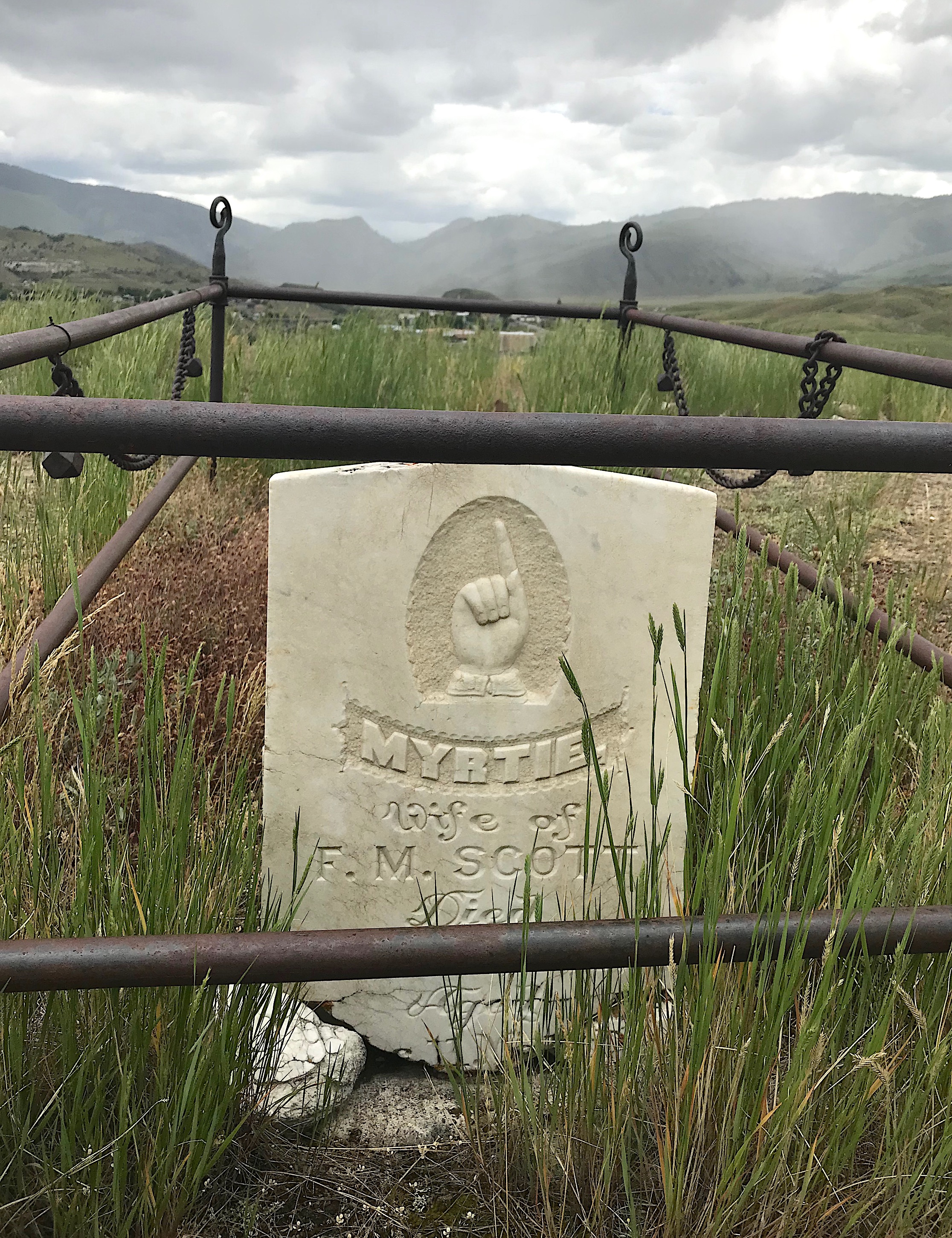
The last story I’m going to share is that of a young wife who died at the age of 19. She is alone in her plot but it is surrounded by a handsome wrought-iron fence that still retains decorative chains on each side. I find it somewhat amazing that they are still there.

Myrtie Johnson Scott was a bride only a short time before her death in 1893.

Myrtle “Myrtie” Johnson was born on March 10, 1873 in Enterprise, Mo. to Noah Johnson (a Canadian) and Catherine Bechtel Johnson. She was one of several Johnson children who moved with her parents to North Dakota in her childhood.

On Nov. 17, 1890, at the age of 17, Myrtie married F.M. Scott in Pembina, N.D., just a few miles from the Canadian border. Her new husband was 33. I don’t know if they had any children. Myrtie Scott died on Feb. 27, 1893 for reasons unknown. It may have been childbirth or diphtheria or typhoid.

I could not definitively trace F.M. Scott after Myrtie’s death but there was a Frank Scott living in Gardiner in 1900 who was married in 1895 and had two young children. That may have been him.

I like to think that F.M. must have loved his young wife a great deal by providing such a pretty fence and marker for her. A single finger points to Heaven where surely she must now reside after her brief life.

A single finger points up into the gray, threatening clouds on the marker for Myrtie Scott.

Next time, I’ll be within the borders of Yellowstone National Park as I share stories from Fort Yellowstone Army Cemetery.

Yellowstone National Park Adventures: Exploring Montana’s Gardiner Cemetery, Part I

26 Friday Jun 2020

Posted by adventuresincemeteryhopping in General

≈ 5 Comments

About 10 days after returning to Atlanta from my Iowa/South Dakota 2018 adventure, I got on a plane with my family to Jackson Hole, Wy. for a much-awaited vacation to Yellowstone National Park and Grand Tetons National Park.

We only visited two cemeteries for a number of reasons. In fact, we didn’t stop at any cemeteries in Grand Tetons. I couldn’t find one that was close to our route. Yellowstone does have a few cemeteries. One of them, Kite Hill Cemetery, involves a hike and only has one marker so we skipped it. We did visit Fort Yellowstone Cemetery in Mammoth Hot Springs, but I’ll get to that one in a few weeks.

The other cemetery we visited was Gardiner Cemetery in Gardiner, Montana, which is just outside the North Entrance of Yellowstone National Park. Truth be told, the food (in my opinion) offered in the Xanterra-operated facilities inside the park leaves a lot to be desired. So we ate a number of meals in the town of Gardiner. The cemetery is very close to “downtown” so it was an easy trip to make. The day we stopped at the cemetery was drizzly and overcast, as the pictures show.

One great resource I had for research is “Death in Yellowstone: Accidents and Foolhardiness in the First National Park” by Lee H. Whittlesey. With a title like that, I was easily persuaded to purchase it.

The Roosevelt Arch is located at the North Entrance to Yellowstone National Park. The cornerstone was laid by President Theodore Roosevelt on April 24, 1903 and covered a time capsule.

Gateway to Yellowstone National Park

Before we exited Yellowstone at the North Entrance, we stopped to take photos of the towering Roosevelt Arch. It has a connection with Gardiner Cemetery that I’ll get to later.

The idea of the arch is attributed to Hiram Chittenden, who thought the area around Gardiner was not sufficiently grand. Before 1903, trains brought visitors to Cinnabar, Mt. Cinnabar was a few miles northwest of Gardiner and travelers would transfer to horse-drawn coaches to enter the park. In 1903, the railroad finally came to Gardiner. With development of the Gardiner train station, the arch was proposed as part of the station ensemble.

Construction of the arch started on February 19, 1903, and was completed on August 15, 1903, at a cost of around $10,000. President Roosevelt was visiting Yellowstone during construction and was asked to place the cornerstone for the arch, which then took his name. The cornerstone laid on April 24, 1903 covered a time capsule that contains a Bible, a picture of Roosevelt, local newspapers, and other items. Several thousand people came to Gardiner for the event.

Chris pulled into a parking lot by Gardiner High School’s scoreboard so I could snap a picture of this grazing elk.

Soon after we passed through the arch and into Gardiner, we were not greeted by people but by elk lounging around Gardiner High School’s track. I later learned that the school is located on the former grounds of the Northern Pacific Railway Gardiner train station. The contrast between the school and the wildlife made me wonder how peacefully the two manage to coexist.

Gardiner High School’s mascot is a bear. I wonder what this elk thinks about that.

Getting to the cemetery wasn’t difficult. At first, it looked like the gates were locked but the chain was only secured with a wire you could unwind.

Death of a Tinker

Not much is known about how Gardiner Cemetery began but it’s also known as Tinker’s Hill Cemetery. That’s probably because the first “official” burial there is thought to be of a 60-year-old tinsmith (also called a “tinker”) named John Hartz.

While on a horse that reared up on its hind legs, Hartz tried to keep from being crushed beneath the animal. In the process, Hartz hit his head on a rock and died without regaining consciousness. This took place on Oct. 3, 1886. I didn’t see a marker for Hartz at the cemetery and there’s no photo of one on Find a Grave.

Gardiner Cemetery is also known as Tinker’s Hill Cemetery.

According to Whittlesey, at the time of the cemetery’s establishment, it was outside of park boundaries. Today, it is privately owned by the Eagles’ Club of Gardiner, which recently disbanded. Its representatives are working to get Yellowstone National Park to accept the cemetery. I don’t know if they’ve been successful, but it looked to be in good shape when we were there.

Whittlesey goes on to point out that almost all of the 1880s and many 1890s graves are now unmarked because the stones have long ago fallen from years of neglect. There are at least 50, maybe 77, unmarked graves, he says. Find a Grave lists about 200 memorials for Gardiner Cemetery.

This is the Fitzgerald family plot at Gardiner Cemetery.

The earliest marked graves at Gardiner Cemetery belong to Fannie Fitzgerald and her baby, who both died in 1888. I didn’t know that they were the earliest marked graves when I photographed them that day.

Before I talk about Fannie, let me back up a little. Selleck Fitzgerald, Fannie’s father-in-law, was a native Iowan who married Mary Ann Brown in 1863 in Wyoming. After living in several Western states, the couple settled in Montana in 1873. Henry was one of their eight children, born in 1866.

Death Following Childbirth

Henry married Fannie Roche on Sept. 30, 1885 in Gallatin, Mt. A son, Roy, was born the next year. Another son, David, was born on July 5, 1888. Sadly, Fannie died of what was then called “puerperal fever”, a common bacterial infection following childbirth often caused by poor hygiene during delivery. It was a common cause of death for new mothers.

Fannie Fitzgerald died six days after giving birth to her second child, David.

Little David died 15 days later on July 26, 1888. He is buried near Fannie.

David Gardiner only lived 21 days.

Henry remarried in 1897 to Estella Alderton. Oddly enough, Roy is not listed as living with them on the 1900 Census. I could not find Henry in the 1910 Census but he is listed as living in Stillwater County, Mt. in the 1920 Census. He is listed there as a widow. Roy’s name does appear in Henry’s obituary after he died in 1932. He is buried in Nye Cemetery in Nye, Mt. I don’t know where Estella is buried.

Tragedy in the Fitzgerald family was not limited to Henry. His older brother Ambrose’s wife, Laura, knew her fair share. Ambrose was born in 1864 and in 1891, he married Wisconsin native Laura Hansen. On March 19, 1893, son Willie was born. Hazel was born on March 29, 1895. For reasons his obituary does not note, Ambrose died six months after Hazel’s birth on June 9, 1895. He was only 30.

Henry Fitzgerald’s older brother, Ambrose, died at the age of 30. His marker is on the left of the gate beside his children.

Laura remained in Gardiner with Willie and Hazel, possibly supported by her in-laws and husband’s siblings. By the time of the 1900 Census, she was managing a hotel in Gardiner. But her grief was not over. Willie died on February 21, 1900 at the age of six from spinal meningitis, according to a local newspaper.

Willie and his sister, Hazel, died eight years apart. Willie has a separate marker of his own to the right and behind the one he shares with Hazel.

“These Little Flowers of Love”

For reasons I could not uncover, Hazel died at the age of 13 on Jan. 9, 1908. The 1910 Census lists Fannie as living in Bozeman, Mt., working as a servant. She died at the age of 53 on April 21, 1912. I don’t now if she was still living in Montana but she is buried in Newport Lutheran Church Cemetery in Wisconsin, and shares a marker with her brother, John.

As it turns out, Henry and Ambrose’s father, Selleck, outlived his two wives and three of his children. He died in Fishtail, Mt. on March 22, 1932 at the age of 92. His first wife, Mary, died in 1906 and is buried beside him at Gardiner Cemetery. His second wife, Emily, died in 1920 and is buried at South Street Cemetery in Portsmouth, N.H.

Pioneer “Uncle” John Yancey

Whittlesey’s book mentions a Montana pioneer named “Uncle” John Yancey that’s buried at Gardiner Cemetery so I looked through my photos. Sure enough, I had photographed his grave. It’s Yancey who has the Roosevelt Arch connection.

Born in 1826, John Yancey was a Kentucky native. In the 1870s, shortly after the creation of Yellowstone National Park, he turned up as a prospector in the area of the Crevice Creek gold strike on the northern boundary of the park. With the money he made, he established a way station on the Gardiner to Cooke City road inside the park in 1882. Someone who met Yancey during a visit in 1896 described him as a “goat-bearded, shrewd-eyed, lank, Uncle Sam type.”

Undated portrait of “Uncle” John Yancey, a colorful character who ran the Pleasant Valley Hotel for many years.

In April 1884, the Department of the Interior granted Yancey a 10-acre lease in nearby Pleasant Valley to establish a hotel. Soon thereafter, Yancey constructed a five-room hotel he named Yancey’s Pleasant Valley Hotel. While the housekeeping left something to be desired, the hotel was a success and many travelers stayed there.

“Uncle” John Yancey died soon after he attended the April 1903 dedication of the Roosevelt Arch.

Yancey was 77 when he traveled to Gardiner to witness the dedication of the Roosevelt Arch by President Theodore Roosevelt on April 24, 1903. Yancey not only witnessed the dedication, he apparently met President Roosevelt that day. Unfortunately, Yancey caught a cold soon after and died in Gardiner of pneumonia on May 7, 1903.

While Gardiner Cemetery is small, there are many more stories to share from this picturesque burial ground. I’ll have more in Part II.


Iowa/South Dakota Cemetery Hopping: Finishing Up at Voss-Mohr Cemetery in…Nebraska?

19 Friday Jun 2020

Posted by adventuresincemeteryhopping in General

≈ Leave a comment

My Iowa/South Dakota 2018 cemetery adventure actually ended in Nebraska! That doesn’t tie up my “Iowa/South Dakota” trip in a tidy package but it was a part of my visit so it doesn’t feel right to leave it out.

Two Cemeteries Merge

Voss-Mohr Cemetery is located in southwest Omaha in the suburb of Millard, not far from where Christi lives. I learned that it began as two family cemeteries. The Vosses buried their loved ones in the northwest corner of their farm and the Mohrs buried their family members in the northeast corner of their farm. The burial grounds adjoined to form the basis of the Voss-Mohr Cemetery. The area was known as Chalco at the time.

At some point, graves from the Stender family’s cemetery were moved to Voss-Mohr but nobody is sure when. Today, Voss-Mohr is a private cemetery managed by the Voss-Mohr Cemetery Association and burials are still taking place today. Additional room is available for future burials. Well maintained, it is located on busy Harrison Street and easy to access.

So why stop at Voss-Mohr? We were actually driving by it when I saw this large monument from the road. It was a great excuse to pull over and take a look.

Who was Ferdinand Petersen and why did he do to merit such a large monument?

It’s not often you see a statue on top of a monument in the U.S. of a man in a German military uniform. So I was immediately curious to figure out how Ferdinand Petersen merited such a grand monument.

Born on May 4, 1828, Ferdinand Petersen was from the Schleswig-Holstein region of Germany. It’s located in the far northern part of the country bordering Denmark. That would be a key factor in his future.

Ferdinand Petersen served in the First Schleswig War from 1848 to 1850.

According to his monument, Ferdinand fought in the German Wars of 1848, 1849, and 1850. From what I could find out, the First Schelswig War or Three Years’ War was the first round of military conflict in southern Denmark and northern Germany rooted in the Schleswig-Holstein Question. It involved the issue of who should control the Duchies of Schleswig and Holstein.

It’s a safe bet that it was a desire to leave the strife of war behind him that caused Ferdinand to emigrate to America around 1850. How he ended up in Nebraska Territory is uncertain but around 1858, he married Elizabeth “Bettie” Fuellner. They only had one child, Lizzie, around 1864.

Lizzie married Adolph Voss at the age of 32 in 1897. Adolph had also emigrated from the Holstein region with his family around 1876 as a boy. That explains how the Petersens came to be buried in Voss-Mohr Cemetery. The 1900 U.S. Census shows Ferdinand and Bettie living with their daughter and son-in-law on their farm.

The inscription on Ferdinand Petersen’s “Vater” marker is in German.

Ferdinand died on March 17, 1903 at the age of 74. Fortunately, someone posted an article from the Papillion Times that described the monument and how it came to be at Voss-Mohr Cemetery.

“An Honest Soldier”

Last week at the cemetery a mile and a half south of Millard was erected one of the finest monuments in the state to the memory of Ferdinand Peterson, who was one of the oldest residents of Sarpy County. The monument was finished and erected by Hodges & Baldwin of Fremont at the cost of $500. It is of the best dark barre granite, with a granite statue of a soldier standing at parade rest, with a uniform like they wore in the German War of 1848, 1849, and 1950 of which Mr. Petersen was an honest soldier. The monument stands 15 feet high and made two train car loads from Fremont to Millard. The bottom base weights over eight tons and took ten horses to haul it from the station to the cemetery.

The inscription on Ferdinand’s marker is in German but someone on Find a Grave had a translation:

As the World’s Master sent me to the last Peace, then you all rest good night. Thy work is complete, now have a blessed sleep in Peace.

I’m intrigued by the effort and expense that went into providing this fine monument for a farmer. He must have been much loved by his family and community. I wish I knew more about what role he played in the community but was unable to do so.

Bettie Petersen died in 1912, nine years after her husband.

Bettie continued living with Lizzie, Adolph, and her grandchildren until her death in 1912. She is buried beside Ferdinand.

Lizzie and Adolph had one son, Ferdinand, in 1902. They moved to Long Beach, Calif. around 1915. Lizzie died in 1919 and her body was sent home for burial at Voss-Mohr Cemetery. Adolph remarried in 1924 to twice widowed Nebraskan Mary Jensen Reeh, who had four children of her own. Adolph died in 1947 in California but he, too, was sent back to Nebraska for burial beside first wife, Lizzie. Son Ferdinand died in 1963 and is buried in California.

Hodges & Baldwin Fremont Marble and Granite Works (1894) were a mainstay in Nebraska for 50 years. (Photo Source:

It’s not often you get the luck of knowing who actually provided a monument. As the article points out, Ferdinand’s monument came from the Hodges & Baldwin Marble and Fremont Granite Works. Fremont is located about 30 miles northwest of Voss-Mohr Cemetery.

G.H. Hodges and L.W. Baldwin operated a prosperous monument works in Fremont, Neb. until 1936.

The History of Hodges & Baldwin

George Henry “G.H.” Hodges came to Fremont around 1881 and worked as a stonecutter. At some point, he and L.W. Baldwin forged a partnership, opening their own monument works in Fremont. Over the years, they grew and expanded their operations, always operating a store in Fremont where customers could view samples of the stone available and designs.

The business had its fair share of ups and downs. A lawsuit that resulted after the accidental death of a worker went all the way to the Supreme Court. One article I found reported the theft of a horse from the monument works’ barn. But for the most part, Hodges & Baldwin prospered.

Hodges & Baldwin stayed in business until both men retired around 1936. G.H. died in 1940 at the age of 76. He and his first wife, Lura, share a beautiful monument.

A native of Wisconsin born in 1859, Lewis William “L.W.” Baldwin came to Nebraska in 1877 in a covered wagon. He was working as a traveling salesman for the same employer as G.H. when they met. L.W. died of a stroke in 1944 at the age of 85.

Both G.H. Hodges and L.W. Baldwin are buried at Fremont’s Ridge Cemetery.

Julius Schroeder began farming in Nebraska but gave it up in 1875 due to poor health.

Millard Pioneer

The tree-shaped monument for Julius Schroeder and his wife, Wilhelmine, stands out. There’s also a bit of irony about it that I’ll share later. A native of Germany, Julius was born in 1836. He married Wilhelmine Millitz around 1857. They journeyed to America in 1868.

They landed in Louisiana, traveling through Texas to settle in Nebraska where Julius farmed until 1875 when his health declined. In 1880, Julius was operating a saloon in what was then known as McCardle, just north of the area that became Millard. Julius was part of the first board of trustees when Millard was incorporated in 1885.

Although Julius was still keeping the saloon, he also owned a 320-acre farm that prospered. He and Wilhelmine would have six children who lived to adulthood.

“Mutter” is German for the word “Mother”, which was appropriate for Wilhelmine Schroeder.

Wilhelmine died on Feb. 12, 1896 at the age of 59. Soon after, Julius died on April 17 of the same year. He, too, was 59.

Julius Schroeder’s “vater” marker is log-themed to fit with he and Wilhelmine’s tree monument.

Now here’s why I think the Schroeder’s tree monument is a bit ironic. In doing a Newspapers.com search for Julius, I was only able to come up with this interesting item from the Nebraska State Journal (Lincoln, Neb.) on Aug. 28, 1896. In those days, newspapers thought nothing of publishing your financial worth and that included any insurance you might have had.

Julius Schroeder’s life insurance came from his affiliation with the Knights of Pythias fraternal organization.

If you’ve followed my blog for a while, you know that tree-shaped markers are very closely tied to Woodmen of the World, a fraternal organization based in Omaha. Many people have WOW tree-shaped markers, complete with a WOW seal. While Julius and Wilhelmine’s family chose a tree-shaped marker for their parents, it was likely paid for by insurance proceeds from the Knights of Pythias. Not Woodmen of the World.

Stender Cemetery Grave

The last marker I’m going to share probably came from the old Stender Cemetery. Margaretha “Mattie” Brock married fellow German immigrant John Stender on Dec. 28, 1873 in Sarpy County, Neb. She was 17 years old. Mattie gave birth to a son, Fred, on Dec. 15, 1875. She died at the age of 22 on March 18, 1878.

Mattie Stender was only 22 when she died.

Husband John would remarry to Sophia Lupteen not long after Mattie’s death. The couple had five children, four living well into adulthood. John died in 1902 and is also buried at Voss-Mohr. Sophia died in 1891 but if she is buried at Voss-Mohr, her grave is unmarked.

With all three of these markers, German was used for the inscriptions. Even the German “mutter” for mother and “vater” for father were not considered unusual at the time. This acceptance would change in the next decade when World War I approached and anti-German sentiment began to rise. Some immigrants would even change the spelling of their names entirely to downplay their German heritage.

Visiting Voss-Mohr was a pleasant way to end my Iowa/South Dakota adventure and it’s one I’ll remember fondly. Going cemetery “hopping” with my best friend is time I always treasure.


← Older posts
Newer posts →

Recent Posts

  • More Pensacola, Fla. Cemetery Hopping: Taking a Ramble Through Saint John’s Cemetery, Part III
  • More Pensacola, Fla. Cemetery Hopping: Taking a Ramble Through Saint John’s Cemetery, Part II
  • More Pensacola, Fla. Cemetery Hopping: Taking a Ramble Through Saint John’s Cemetery, Part I
  • The City of Five Flags: Stepping back in time at Pensacola, Fla.’s Saint Michael’s Cemetery, Part V
  • The City of Five Flags: Stepping back in time at Pensacola, Fla.’s Saint Michael’s Cemetery, Part IV

Archives

  • December 2025
  • November 2025
  • August 2025
  • July 2025
  • June 2025
  • May 2025
  • April 2025
  • March 2025
  • February 2025
  • January 2025
  • October 2024
  • August 2024
  • July 2024
  • June 2024
  • May 2024
  • April 2024
  • March 2024
  • February 2024
  • January 2024
  • December 2023
  • November 2023
  • October 2023
  • September 2023
  • August 2023
  • July 2023
  • June 2023
  • May 2023
  • April 2023
  • March 2023
  • February 2023
  • January 2023
  • December 2022
  • November 2022
  • October 2022
  • September 2022
  • August 2022
  • July 2022
  • June 2022
  • May 2022
  • April 2022
  • March 2022
  • February 2022
  • January 2022
  • December 2021
  • November 2021
  • October 2021
  • September 2021
  • August 2021
  • July 2021
  • May 2021
  • April 2021
  • March 2021
  • February 2021
  • January 2021
  • December 2020
  • November 2020
  • October 2020
  • September 2020
  • August 2020
  • July 2020
  • June 2020
  • May 2020
  • April 2020
  • March 2020
  • February 2020
  • January 2020
  • December 2019
  • November 2019
  • October 2019
  • September 2019
  • August 2019
  • July 2019
  • June 2019
  • May 2019
  • April 2019
  • March 2019
  • February 2019
  • January 2019
  • December 2018
  • November 2018
  • October 2018
  • September 2018
  • August 2018
  • May 2018
  • April 2018
  • March 2018
  • February 2018
  • January 2018
  • December 2017
  • November 2017
  • October 2017
  • September 2017
  • August 2017
  • July 2017
  • June 2017
  • May 2017
  • April 2017
  • March 2017
  • February 2017
  • January 2017
  • December 2016
  • November 2016
  • October 2016
  • September 2016
  • August 2016
  • July 2016
  • June 2016
  • May 2016
  • April 2016
  • March 2016
  • February 2016
  • January 2016
  • December 2015
  • November 2015
  • October 2015
  • September 2015
  • August 2015
  • July 2015
  • May 2015
  • April 2015
  • March 2015
  • February 2015
  • January 2015
  • December 2014
  • November 2014
  • October 2014
  • September 2014
  • August 2014
  • July 2014
  • June 2014
  • May 2014
  • April 2014
  • March 2014
  • February 2014
  • January 2014
  • December 2013
  • November 2013
  • October 2013
  • September 2013
  • August 2013
  • July 2013
  • June 2013
  • May 2013
  • April 2013
  • March 2013
  • February 2013
  • January 2013

Categories

  • General

Blogroll

  • A Grave Interest
  • Cemetery Photography by Chantal Larochelle
  • Cemetery Tours of Berlin by Matti
  • Confessions of a Funeral Director (Caleb Wilde)
  • Find a Grave
  • Hunting and Gathering (cool photography site)
  • Save Our Cemeteries (New Orleans, La.)
  • The Cemetery Club
  • The Graveyard Detective
  • The Rambling Muser
  • Westminster Abbey Tours by Grace

Meta

  • Create account
  • Log in
  • Entries feed
  • Comments feed
  • WordPress.com

Blog at WordPress.com.

  • Subscribe Subscribed
    • Adventures in Cemetery Hopping
    • Join 402 other subscribers
    • Already have a WordPress.com account? Log in now.
    • Adventures in Cemetery Hopping
    • Subscribe Subscribed
    • Sign up
    • Log in
    • Report this content
    • View site in Reader
    • Manage subscriptions
    • Collapse this bar
 

Loading Comments...