Kriss Kross and Find a Grave: Reaching a Two-Year Milestone

Every now and then, I look at my profile on Find a Grave.com (FG) to see what my progress has been. When I checked it recently, I realized I had passed another milestone.

On November 2, 2012, I signed on with Find a Grave.com. I’ve been with them for over two years. Over that time, I’ve taken almost 10,000 pictures for FG. Wow.

Because not everybody knows what Find a Grave.com is or how it came to be, here’s the scoop.

This picture of Jim Tipton is on the Find a Grave.com web site. It's the only one of him I could find.

This picture of Jim Tipton is on the Find a Grave.com web site. It’s the only one of him I could find on the Internet.

Find a Grave was started as a free site in 1995 by Jim Tipton. According to the FG web site, Jim started it because he couldn’t find an existing site that supported his hobby of visiting the graves of famous people. He decided to create a platform for it. What started as an eccentric hobby became “a livelihood and a passion”.

At first, FG was supposed to be a database of photos and information about famous people, from movie stars to historical figures to famous athletes. What actually determines the “famous” label is up for debate. But FG has the final say on that when you submit a photo/bio of a person you consider famous.

Fast forward to 2013. FG has many more memorials to unfamous people than famous ones. In fact, it contains about 100 million memorials and 75 million photos. It’s become a valuable tool for people like me who use it for genealogical purposes. Millions of members take photos of graves and post them on FG every day.

In 2013, FG was sold to Ancestry.com for an undisclosed amount. It remains a free service, although some worry that this may change.

I’ve never created a memorial/bio for a famous person. But I did take the first photo of one famous Atlantan’s grave that FG published last year. It’s odd how it happened, too.

Here's a shameless plug for John's book on Westview Cemetery. Over 30 of the photos in it were taken by me! Aside from that minor detail, the book is a great history of Westview and you'll learn a lot about Atlanta's movers and shakers who shaped the city's rich history.

Here’s a shameless plug for John’s book on Westview Cemetery. Over 30 of the photos in it were taken by me! Aside from that minor detail, the book is a great history of Westview and shares a lot about Atlanta’s movers and shakers that shaped the city’s rich history.

Last year, I took a lot of pictures at Atlanta’s Westview Cemetery for my friend, John Bayne. The result of his hard work was published a few weeks ago (shameless plug). About 30 of my photos ended up in the book and John gave me credit for all of them.

That's John on the right. It was taken at the book signing at Westview in October. He also gave a nice talk about the book in Westview's Abbey Mausoleum Chapel.

That’s John on the right. This was taken at the book signing at Westview Cemetery in October. He also gave a nice talk about the book in Westview’s Abbey Mausoleum Chapel.

At the time, I used a spreadsheet of names, dates and grave locations to find what John needed. But one name on the list didn’t have a location and he hoped I would find it. He wasn’t even totally sure this famous person was buried there. Since Westview has over 100,000 graves, I was dubious that I could.

On a sunny October afternoon, I was hunting for the grave of Donald Lee Hollowell, a Georgia attorney famous for fighting for civil rights in the 1960s. I was having trouble finding it. Two fellows from the maintenance crew were working nearby and asked me if I needed help. One of them kindly radioed the office to get a better fix on the location while I looked around. That’s when I saw something.

It was the elusive grave of rapper James Christopher “Mac Daddy” Kelly that John had asked me to find. Kelly died of a drug overdose in May 2013.
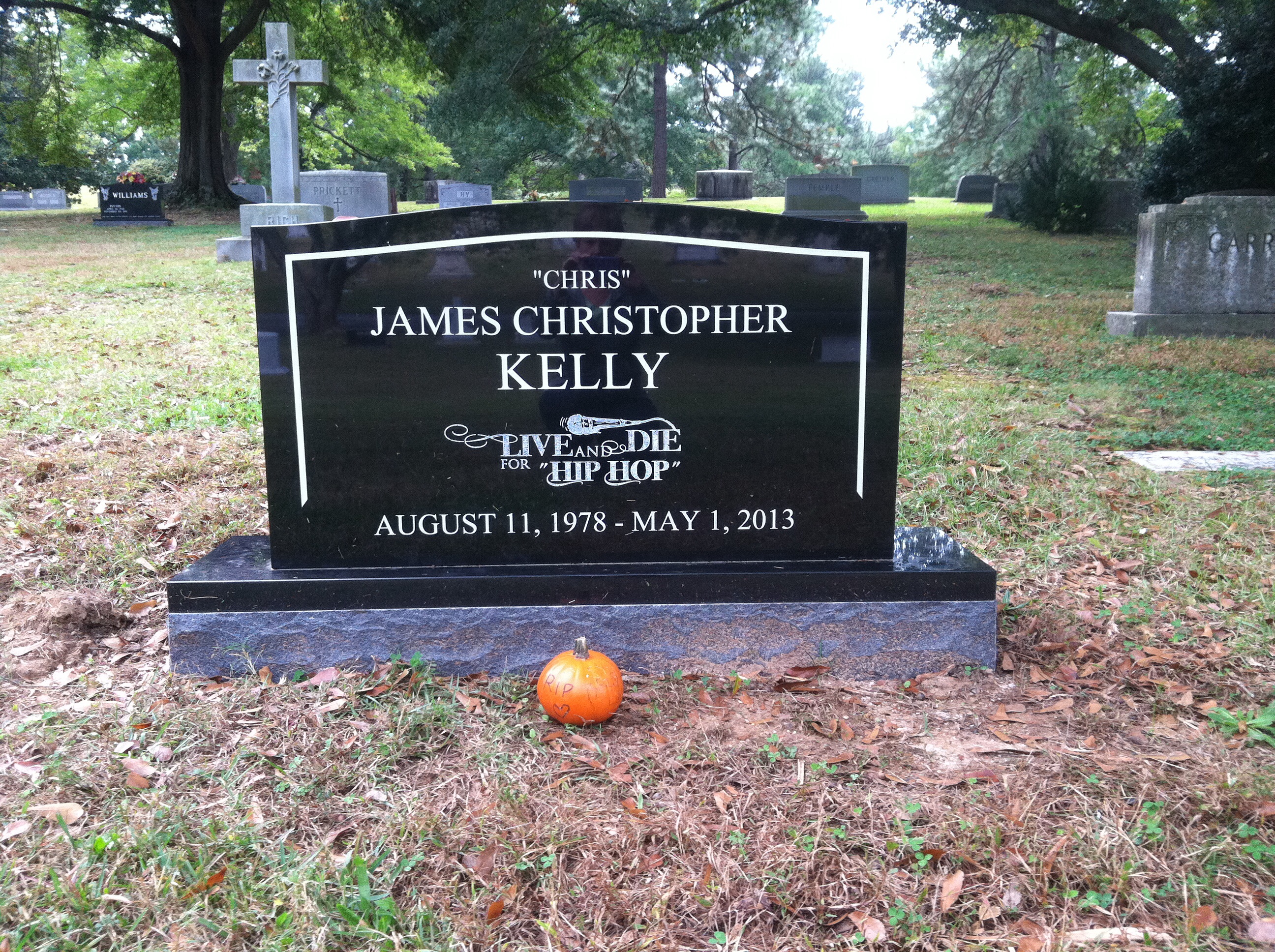
The grave of famous rapper Chris "Mack Daddy" Kelly. I am embarrassed that I didn't realize that when I took the picture, I didn't see that you can see my reflection. I've since gotten better with my photography, I hope.

The grave of Kriss Kross rapper Chris “Mac Daddy” Kelly. I’m embarrassed that I didn’t realize that when I took the picture that you can see my reflection. I’ve since gotten better with my photography, I hope.

Chris Kelly is best known for being half of the duo Kris Kross. A native of Atlanta, Chris and his friend Chris “Daddy Mac” Smith were discovered by music producer Jermaine Dupri at an Atlanta mall. The pair’s unique habit of wearing their clothes backwards definitely made them stand out. Their hit song “Jump” in 1992 was on the radio in constant rotation at the time. It was indeed a catchy tune.

The album cover for Kriss Kross' first album, Totally Krossed Out, shows their trademark style of wearing their clothes backward.

The album cover for Kriss Kross’ first album, Totally Krossed Out, shows their trademark style of wearing their clothes backward. Photo courtesy of Ruffhouse Records/Columbia Records.

Kriss Kross went on to make more albums that sold very well. But adulthood proved more challenging to Chris Kelly than his youthful fame. Although it’s reported that he pursued training to become a music engineer, he also struggled with substance abuse. His mother told the press that on the night before he died, he had taken “speedballs”, a potentially fatal cocktail of heroin and cocaine.

Only in his mid-30s when he died, Chris Kelly’s death stunned many, including his former Kriss Kross partner, Chris Smith. In his statement to the press, he said, “Chris Kelly was my best friend. He was like a brother. I love him and will miss him dearly.”

Chris Kelly (left) reunited with his Kriss Kross partner Chris Smith at a Februar 2013 anniversary concert for Atlanta-based So So Def Records.

Chris Kelly (left) reunited with his Kriss Kross partner Chris Smith at a February 2013 anniversary concert for Atlanta-based So So Def Records. Photo courtesy of Chris Mitchell.

Hardly able to believe I’d stumbled across the one grave I thought I would never find, I turned to see the other crew member witnessing my surprise. He knew what I was asking without saying the words. “Yeah, that’s him,” he murmured.

I’ve never been a fan of rap music because of its tendency toward strong profanity, violence and terrible treatment of women. But as the mother of a son, I can empathize with Chris Kelly’s mother over the loss of her child.

I took my pictures, still stunned. Later, I posted them to FG and one became my first published photo of a famous grave.

Looking back over the last two years, I can say volunteering for FG did change my life in a dramatic way. Because when I started hunting for graves, I found a new sense of purpose I hadn’t had in a long time.

This picture of William Rogers' grave at Rogers-Bell Cemetery near Johns Creek, Ga., is one of the first I took for Find a Grave.

This picture of William Rogers’ grave at Rogers-Bell Cemetery near Johns Creek, Ga., is one of the first I took for Find a Grave.

In fall 2012, my son started kindergarden so I had a little more time to myself. I’m blessed to be able to stay home and not work a full-time job as so many moms must. I know that washing pots and pans, and folding laundry isn’t fun for anybody. But I felt frustrated, lacking in purpose.

My already limited freelance writing career was going nowhere so I sought an outlet for my creative juices. Even if it meant not making a dime from it. Joining FG provided the spark and from that, Adventures in Cemetery Hopping was born. It’s been quite an adventure indeed.

While what I do doesn’t equal curing a disease or solving economic problems, it gives me a way to use my talents and skills while educating and (hopefully) inspiring others. I’ve made a few people happy by finding the final resting place of their loved ones. Maybe some of you have learned something new because of this blog.

I hope you’ll continue with me on the journey.

Sunday morning at Bonaventure Cemetery in Savannah, Ga.

Sunday morning at Bonaventure Cemetery in Savannah, Ga.

A Walk Through Atlanta’s Pet Heaven Memorial Park

UPDATE: I haven’t visited this cemetery in years but I still get the occasional email from folks asking about it. As far as I know, it is still there and pets are still being buried there.

A few weeks ago I wrote about Oak Rest Pet Gardens, a modern pet cemetery in the Northeast suburbs of Atlanta. But on the way there, I was thinking of another pet cemetery I’d heard about. I stumbled upon a listing on Find a Grave for Atlanta Pet Cemetery. The few pictures I saw showed a rather rough around the edges cemetery with an old sign that referred to it as Pet Heaven Memorial Park.

This picture of the cemetery sign is from 2010, courtesy of Find a Grave volunteer Scott Steinbrink.

This picture is from 2010, courtesy of Find a Grave volunteer Scott Steinbrink.

It wasn’t until this week, having recruited my photographer friend Jennifer Graham to accompany me, that I got there. I’ve been in that part of Northwest Atlanta a few times, but not that deep inside the I-285 Perimeter.

Pet Heaven Memorial Park is located in a quirky area called Monroe Heights near Bolton Road and Donald Lee Hollowell Parkway (formerly Bankhead Highway). Amid industrial plants and older residences, it’s got long stretches of forest along the road. Not what you would expect so close to the city. I was thankful my directions advised drivers to turn onto a small driveway just past the Procter Creek bridge. I would have never seen it otherwise.

Procter Creek runs through Pet Heaven Memorial Park. You can see the highway bridge from the driveway.

Procter Creek runs through Pet Heaven Memorial Park. You can see the highway bridge from the driveway.

The first thing I noticed was the new sign.

A new sign marks the entrance to Pet Heaven Memorial Park.

I know nothing about Pet Heaven Memorial Park. There is no information about them on the Internet, although I did see it listed in the online Yellow Pages with a phone number. I don’t know who owns or operates it. But clearly people know about it because burials continue to take place here.

Pet Heaven has two distinct sections. The old section, off to the left as you enter, is a disorganized, shabby area. I found graves for pets dating back to the 40s there. The newer section, to the right, is neatly mowed and the dates are from the 80s to the present.

To the left of the entrance, you can see the older, disorganized section of the cemetery. Some of the graves are sunk so deep you cannot read the markers.

To the left of the entrance, you can see the old section of the cemetery. Some of the graves are sunk so deep you cannot read the markers. Procter Creek borders the back of the property.

One of the markers was for a toy poodle named Fluffy. I think perhaps “Hardee’s Mignon” was her official AKC (American Kennel Club) name but I don’t know for sure.

Fluffy did not have a long life but she was loved by her owners.

A double grave for Peaches and Mittens Wynne (I think they must have been cats) had some inscriptions on the flat potions.

Mittens Wynne died in 1990.

Mittens Wynne died in 1990.

Further on, we began seeing graves from the 60s and earlier.

Gravestones for cats Dixie Belle and Lady Swadley. It's sometimes hard to tell what kind of pet it is from just the name alone.

I got a little excited when we starting seeing dates from the 40s. One of them was sunk down in the ground, so I had to brush off dirt to see the dates at the bottom.

Cedartown is about 55 miles west of the cemetery, not far from the Alabama border.

Cedartown is about 55 miles west of the cemetery, not far from the Alabama border.

Then I saw a group of graves that had some numbers on them. I’m wondering if they were AKC registration numbers.

All of these pets were buried here at some time before 1950, at a time when pet cemeteries were unheard of.

It's hard to fathom that a dog that lived through the Great Depression is buried here.

It’s hard to fathom that a dog that lived through the Great Depression is buried here.

As we went deeper into the cemetery, it was apparent that the older section was a mess. Some of the markers looked like they had been uprooted and tossed into a pile at some point. I don’t know if they even mark the actual graves anymore. It was sad to see.

I am curious to know if this part of the cemetery has been abandoned. It looks neglected.

I am curious to know if this part of the cemetery has been abandoned.

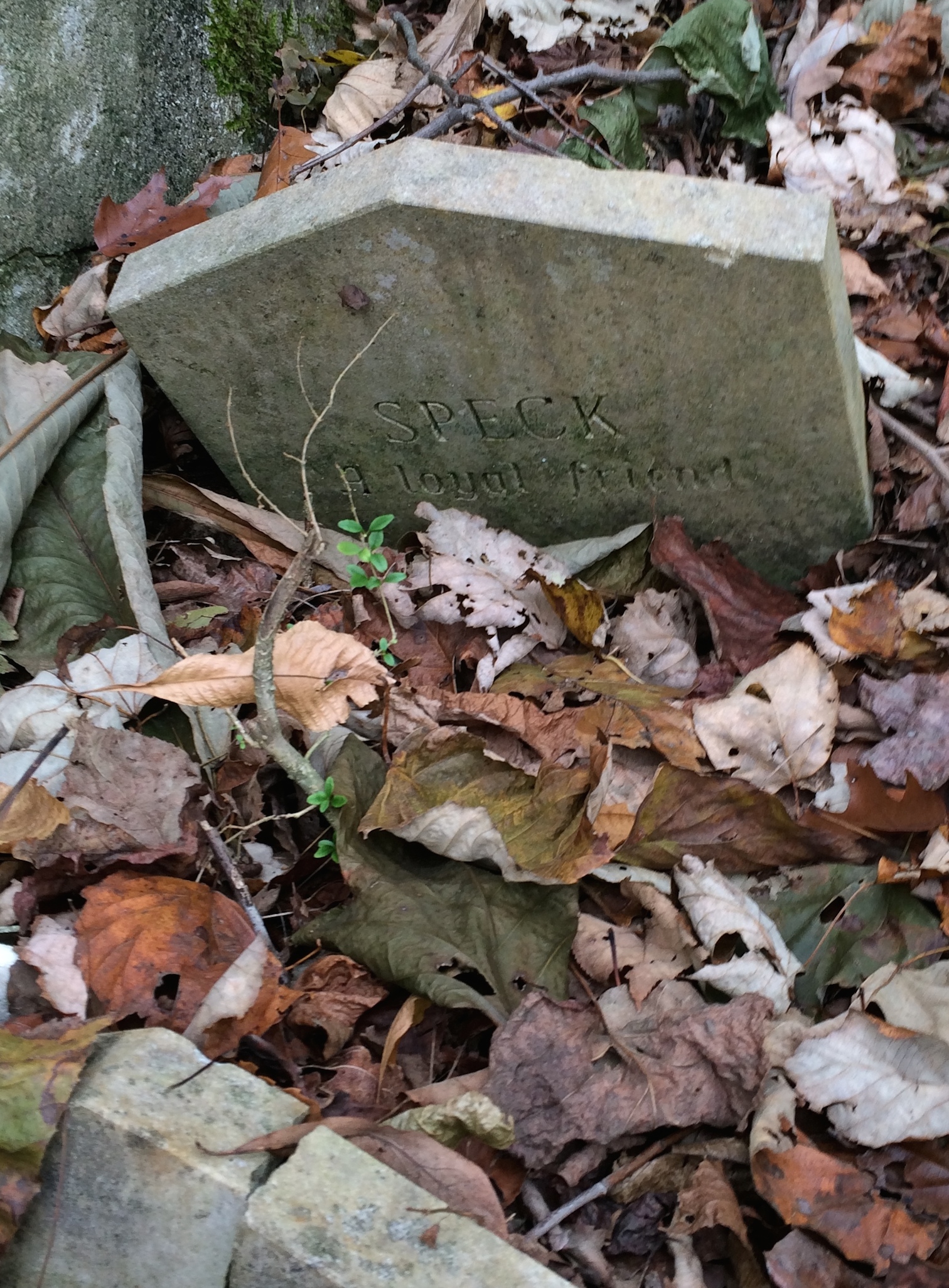
Over to one side by some concrete blocks was a sad little grave nearly face down.

Poor Speck's owners probably didn't intend for his marker to end up like this.

Speck’s owners probably didn’t intend for his marker to end up like this.

Looking toward Procter Creek, we saw more evidence of the chaos in the older section.

There is no rhyme or reason to marker placement, which indicates to me they may not be on the original graves.

This one was a favorite of mine.

The names on the older pet graves reflect dog names of the time. Bingo, Rex and King were common then.

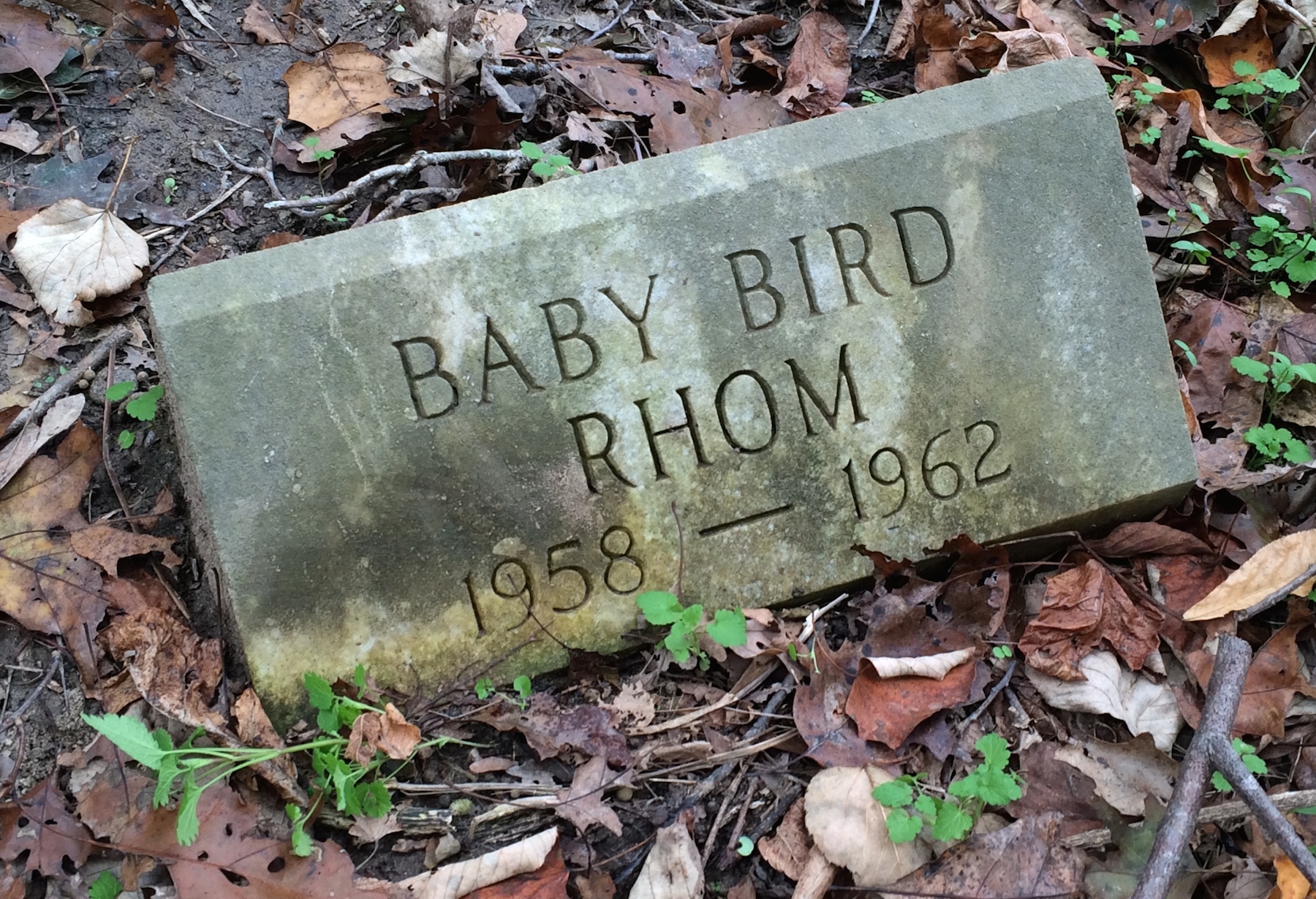
There were even a few for birds.

PetHeavenZipPetHeavenRohmSome markers had the breed of the pet engraved on them.

PetHeavenSunbeamAs is the case in the photo above, many of the graves are being overtaken by grass and weeds.

PetHeavengrassWalking over to the new section, the difference between the two is obvious. The grass is cut, the graves have been edged with a weed whacker (it looks like). The graves are mostly in neat rows. Also, many of the markers look very similar.

The difference between the older and newer sections is quite dramatic.

Lucifer reminded me of the comic strip dog, Marmaduke. His grave is one of the few that has a photo of the pet on it.

If you look at the top of the photo, you can see the edge of the older section. The contrast is pretty clear.

If you look at the top of the photo, you can see the edge of the older section.

Most of the markers were more like this, small and square. This one is for a pet rabbit named Fiver. It was the only one (in the new section) I saw that was cracked like this.

PetHeavenBunnyThere did seem to be more cat graves in the newer section.

PetHeavenCallieWe noticed there were some little statues here and there. Some were of fawns, some were cats, and there was one statue. An alert reader told me it is St. Teresa.

PetHeavenMaryI did take fewer pictures of the new section because frankly, it wasn’t as interesting to me as the old one. Even though the old section was a hot mess, it felt more genuine.

It would be unfair of me to say that the owners of Pet Heaven have kept up the new section and abandoned the old one because I have no information about the history of the property. Maybe the land the old section is on was sold to someone else (or the City of Atlanta) and they can’t do anything to it. That’s not unheard of when it comes to cemeteries.

Or it may be the victim of continued vandalism, a phenomenon that seems to be getting worse every year.

At the same time, people are still burying their pets here. One of the markers I saw was for June 2014. And that’s a good thing. While they are growing in popularity, pet cemeteries are still hard to find in some parts of town.

There are too many questions about Pet Heaven that I don’t have the answers to. I would love to know who originally started it and what happened over the years. Why it’s a hidden little place that few people know about.

I’m hopeful that someone who knows more about this place will contact me so I can share it with you soon.

PetHeavenPug

This one is for the pug lovers I know, Lisa and Jennifer.

A Beautiful Decay: Visiting Laurel Grove North Cemetery

A few weeks ago, I wrote about my recent visit to Laurel Grove South Cemetery. Today, I’m going to concentrate on her sister, Laurel Grove North Cemetery (LGN).

When taphophiles (cemetery nuts like me) talk about Savannah, the first place they mention is Bonaventure Cemetery, and for good reason. Featured in Midnight in the Garden of Good and Evil, Bonaventure gets a lot of press and tour buses run through it daily. As you may have seen from pictures of it that I’ve posted on my AICH Facebook page, it’s amazing.

Because of that notoriety, LGN is a hidden Savannah gem. The first time I visited there in February, my friend Frank and I spent many hours wandering, and we only encountered one other group of people. It’s perfect for meandering about, looking at names and poking around the old moss-laden crypts and mausoleums.

My visit a few weeks ago was no different, although Frank wasn’t with me. The mere fact that LGN is quiet and obscure makes it even more attractive to a cemetery wanderer like me.

Laurel Grove North is twice the size of her sister cemetery, Laurel Grove South.

Laurel Grove North is more than twice the size of her sister cemetery, Laurel Grove South.

Like LGS, LGN was carved out of the former Springfield Plantation. Named after the native laurel oak trees that once inhabited the site, LGN was developed in 1850 as the Old Cemetery (Colonial Park Cemetery), the Old Jewish Cemetery, Potter’s Field and the Old Negro Cemetery approached capacity.

All of the available cemetery lots at LGN were sold during the Victorian Era. Because of that, it probably has the highest concentration of Victorian cemetery architecture in the Southeast.

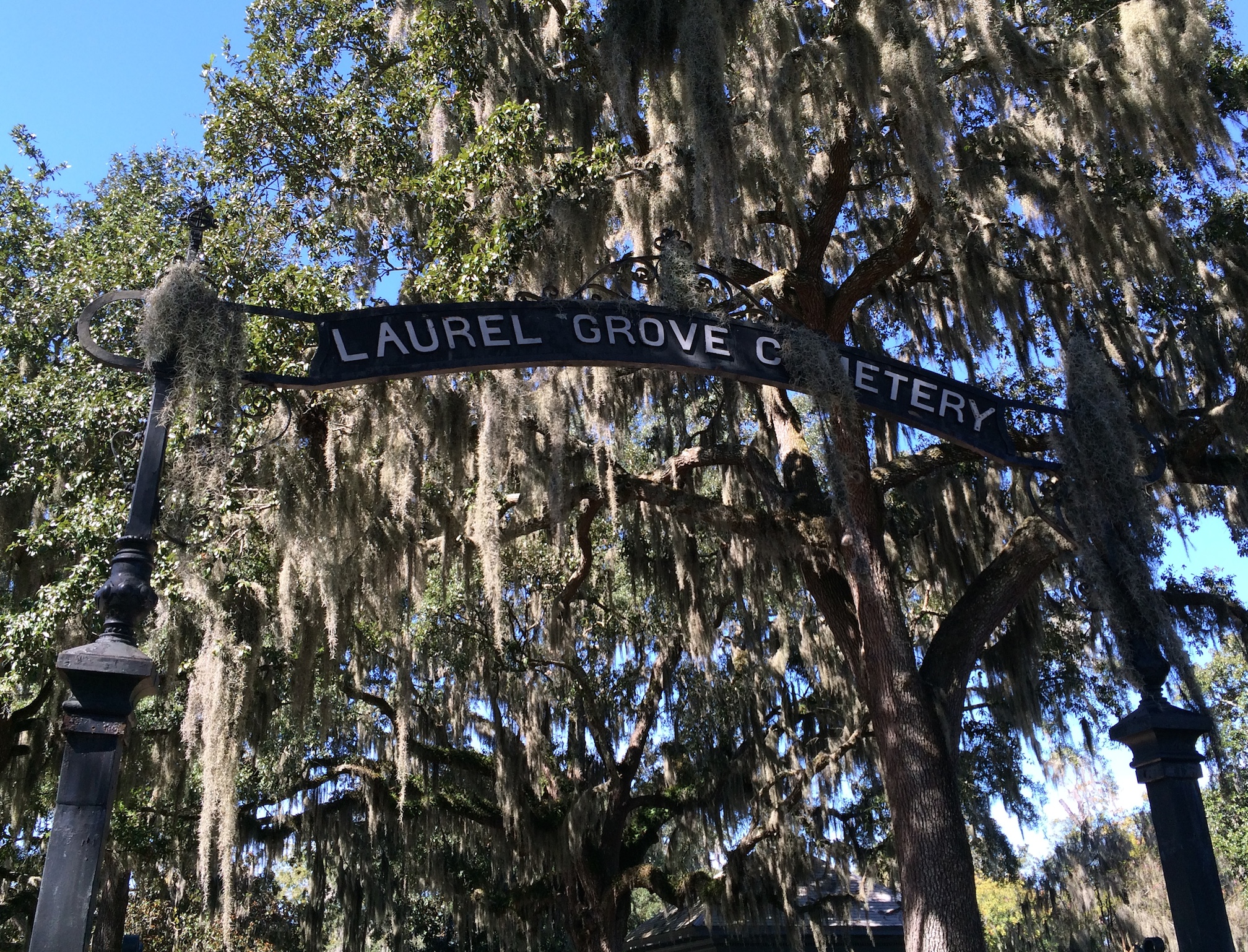
Entrance drive of Laurel Grove North. I only encountered a few other people that day.

Entrance drive of Laurel Grove North.

About 10 years ago, the status of Laurel Grove North was in question due to some differences of opinion on how it should be preserved and maintained. You can read about that brouhaha here. It also suffers some occasional vandalism. As with Magnolia Cemetery in Charleston, some of the old iron fencing is falling apart due to age and weather. But all in all, LGN is in pretty good shape.

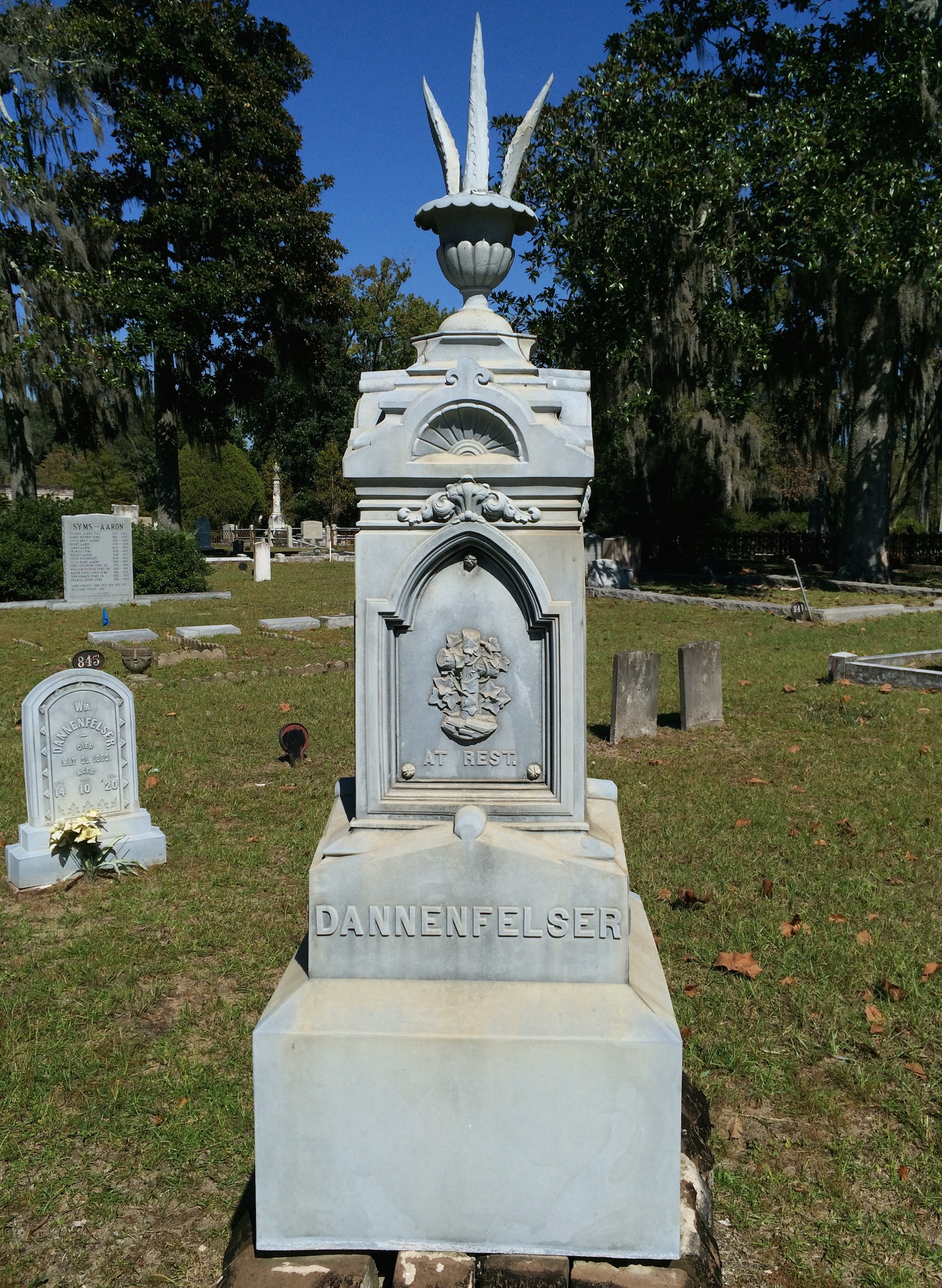
One of the first monuments I zeroed in on was a white bronze (zinc) marker for the Dannenfelser family. William Dannenfelser emigrated to Savannah from Germany, becoming a naturalized citizen in 1856.

The Dannenfelser family monument is made of white bronze, which is actually zinc. You can see their son William's marker in the background to the left.

The Dannenfelser family monument is made of white bronze, which is actually zinc. You can see their son William’s marker in the background to the left.

After first living in Norwich, Conn., William and his wife, Catherine, moved to Savannah. William was a butcher. Together, they had three children. The youngest, William Jr., was the only child born in America. He died at the age of 14 and is buried beside them.

William Dannenfelser Jr. died at the age of 14. His sisters both lived into adulthood.

William Dannenfelser Jr. died at the age of 14. His sisters both lived into adulthood.

LGN has a large number of Confederate soldiers buried there, with one section containing about 700 graves. According to one website I read, most of the veterans’ markers were in bad shape until the local United Daughters of the Confederacy requested that the Veterans Administration replace them with new ones.

Known as Confederate Field, this section of cemetery contains the graves of about 700 Confederate veterans.

Known as Confederate Field, this section of LGN contains the graves of about 700 Confederate veterans.

One of the markers I photographed was for Private William M. Patterson, who could have been no more than 16 when he enlisted in May 1861. Unmarried, he died at Gettysburg in July 1863. Patterson was from Sterling Bluff Plantation on the Ogeechee River in Ways Station, Bryan County, Ga. His body, along with others who died at Gettysburg, was returned to Savannah in 1871.

William Patterson enlisted in May 1861 as a Private, becoming part of "B" Co. Ga 8th Infantry. He was Killed on July 2, 1863 at Gettysburg, Pa.

William Patterson enlisted in May 1861 as a Private, becoming part of “B” Co. Ga 8th Infantry. He was killed on July 2, 1863 at Gettysburg, Pa. It’s a little hard to see.

The large statue that dominates Confederate Field is called “Silence”. She stands among the soldiers who fought at Gettysburg. The bottom of the base reads, “Here Rest ‘Till Roll Call’ The Men Of Gettysburg.”

The words on the north side of the monument are from Theodore O’Hara’s poem, “The Bivouac of the Dead” which is displayed in many National Cemeteries: “On Fame’s Eternal camping ground, Their silent tents are spread. And Glory guards with silent round The bivouac of the Dead.”

The words on the north side of the monument are from Theodore O’Hara’s poem, “The Bivouac of the Dead” which is displayed in many National Cemeteries.

According to a blog Gettysburg Daily, Silence’s first home was not LGN. She was originally on the Confederate Monument in Forsyth Park in downtown Savannah, situated inside a cupola. But the locals weren’t very happy about it. Some thought being inside the cupola made her look like “a canary in a cage.” So in 1878, she was moved to LGN to stand watch over the Confederate dead.

However, my favorite area is toward the back and contains a jaw-dropping Italian statue that I must have photographed from every angle. I can’t stop staring at it when I visit.

Very little is known about Louisa Porter. But the statue that graces her grave is stunning.

Louisa Porter was the only daughter of Dr. Adam Alexander of Inverness, Scotland, and Louisa Fredrika Schmidt of Stuttgart, Germany. Dr. Alexander came to America in 1776 and served in the Colonial Army as a surgeon during the Revolutionary War. While tending to wounded, Dr. Alexander was briefly taken prisoner by the British at the Seige of Savannah and later released to attend to a wounded British officer.

Born in Liberty County, Ga. in 1807, Louisa had an older brother named Adam. She married Anthony Porter, who was president of the Bank of Georgia, in 1824. She was his second wife. Louisa was 18 and Anthony was probably 40.

The detail of the angel's wings is elaborate. Looking at it up close, I was in awe of the time it must have taken to create.

The detail of the angel’s wings is eye-catching. Looking at it up close, I am in awe of the time it must have taken to create. The marble monument to the right belongs to her husband Anthony Porter, who was a wealthy banker.

Although the Porters had no children, Louisa was very devoted to her brother’s children. Thanks to Anthony’s wealth, she was also devoted to philanthropic causes. She was on the board of directors of the Savannah Free School three times between the years of 1833 and 1855. She was also director for the Savannah Female Society during 1843 and 1855.

Louisa was a devout Christian. She was a member of the Independent Presbyterian Church, and the Presbyterian Sunday School Association.

A devout Christian, Louisa was a member of the Independent Presbyterian Church, and the Presbyterian Sunday School Association.

But Louisa’s greatest concern was for homeless women and children, and she helped to form the Industrial Relief Society and Home for the Friendless. After her death in 1888, her heirs gave a considerable part of her estate to that institution. In appreciation, its name was changed to the Louisa Porter Home for Girls.

The angel itself is made of Carara marble, signed by Italian sculptor A. Caniparoli. I couldn’t find anything at all about him online.

From the buttons on her sleeve to her enigmatic expression, this angel is a testament to Louisa Porter's giving heart.

From the buttons on her sleeve to her enigmatic expression, this angel is a testament to Louisa Porter’s giving heart.

Of course, there’s a lot more to Laurel Grove than Louisa Porter’s angel. Time has not been particularly kind to the metalwork that abounds. But this kind of gentle decay that’s common in some Southern cemeteries can bring out a different sort of beauty worth appreciating.

This is one of many slowly decaying metal gates at Laurel Grove North.

This is one of many slowly decaying metal gates at Laurel Grove North.

LGN also has so many interesting crypts and mausoleums, it’s hard to take them all in. This Egyptian-styled one stands out.

This Egyptian-themed tomb reminds me of the one I saw at Magnolia Cemetery in Charleston, S.C. There's another one at nearby Bonaventure Cemetery, too.

This Egyptian-themed tomb reminds me of the one I saw at Magnolia Cemetery in Charleston, S.C. There’s another one at nearby Bonaventure Cemetery, too.

The Gilmer-Minis family pavilion is equally elaborate.

LGNGilmerMinis

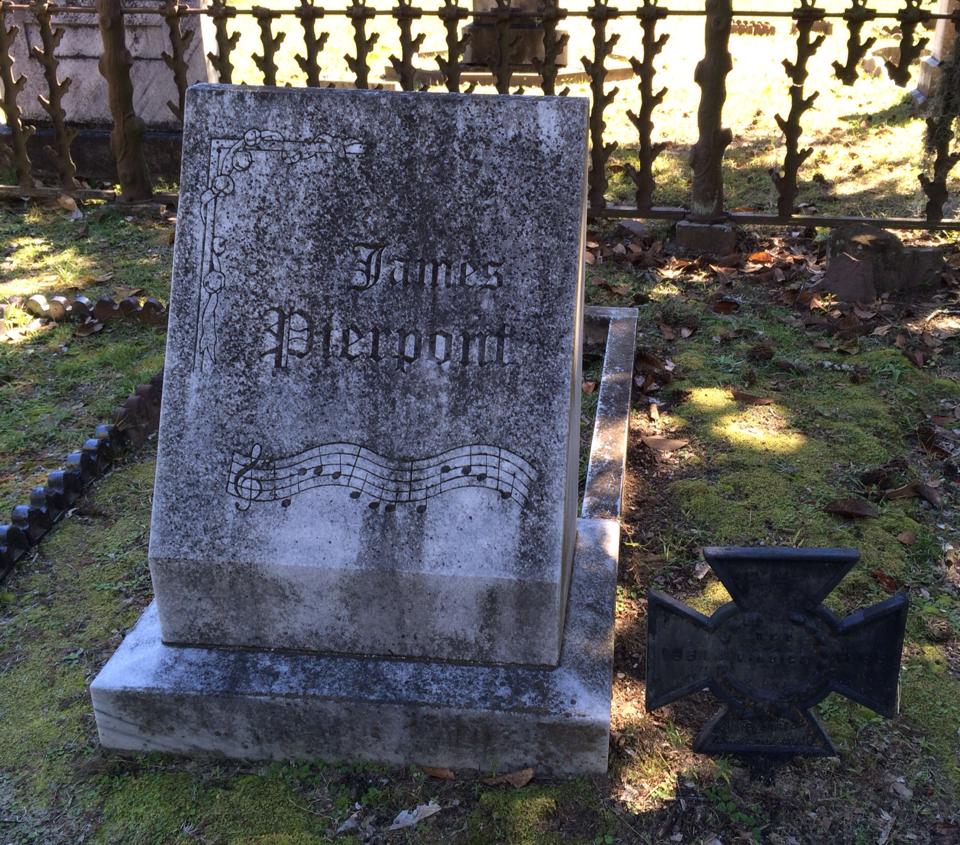
Finally, LGN does have a few celebrities buried there. The most famous is Juliette Gordon Low, founder of the Girl Scouts. But I was more interested in finding a more obscure celebrity, James Pierpont. The name probably doesn’t ring a bell but the song he wrote will.

James Pierpont's name is unknown but the famous Christmas carols he penned certainly is.

James Pierpont’s name is unknown but the famous Christmas carol he penned certainly is.

Born in 1822 in Boston, James Lord Pierpoint was the uncle of the financier and banker John Pierpont Morgan. After a stint in the Navy, James married. His wife and children stayed back east while James tried his luck as a photographer during the California Gold Rush but a fire burned his goods.

In 1853, James’ wife died. His brother, the Rev. John Pierpont, Jr., accepted a post with the Savannah, Ga., Unitarian congregation. James followed, taking a post as the organist and music director of the church. He remarried and in his spare time, wrote many ballads, polkas and minstrel songs.

Although James Pierpont wrote one of the most popular songs in history, he didn't make much money from it.

Although James Pierpont wrote one of the most popular songs in history, he didn’t make much money from it.

In August, 1857, James’ song “The One Horse Open Sleigh” was published. The song was originally performed in a Sunday school concert on Thanksgiving in Savannah. In 1859, it was re-released with the title “Jingle Bells, or The One Horse Open Sleigh”. While it wasn’t a hit at the time,  the popularity of the song grew to the point where it’s now one of the most popular Christmas songs ever.

I could spend another few blog posts detailing the beauties of Laurel Grove North. But for now, I’ll let you dwell on what I’ve written today. Maybe someday you can see it for yourself.

You won’t regret it.

The hourglass symbolizes time's inevitable passing and and the shortness of life.

The hourglass symbolizes time’s inevitable passing and and the shortness of life.

Halloween Musings: Do I Talk To the Spirits?

It’s Halloween! Tonight thousands of children will be knocking on doors, begging for candy. Jack o’ lanterns will glow on front porches. Grownups will cavort in crazy costumes at wild parties. Ghost stories will be told. Does anyone else remember the one about the Golden Arm?

Horror movies will dominate TV programming. My favorite? Stanley Kubrick’s The Shining tops the list. Watching Jack Nicholson slowly lose his mind while a chain-smoking Shelly Duvall tries to cope is riveting.

Shelley Duvall starts off as a meek, cheerful wife and mother in The Shining but soon finds herself thrown into a nightmarish situation at the Overlook Hotel.

Shelley Duvall starts off as a meek, cheerful wife and mother in The Shining but soon finds herself thrown into a nightmarish situation at the Overlook Hotel.

All of this leads me to a question that I get asked quite a bit:

“Do you talk to the spirits when you’re out at the cemetery? And do they talk to you?”

The short answer is no. As I’ve said before, my faith is in Christ. Not Ouija boards or seances or things like that. Psychics and the like don’t interest me. I believe in the Holy Spirit, not the spirit world some people talk about.

Ouija boards have been around in the U.S. since the 1840s. Hasbro currently owns all rights and parents to them. Mental Floss has a well-written history about Ouija boards worth reading.

Ouija boards have been around in the U.S. since the 1840s. Hasbro currently owns all rights and patents to them. Mental Floss has a well-written history about Ouija boards worth reading.

However, sometimes, things do happen that I can’t explain.

When I visit a cemetery, I sometimes (not always) get a “vibe” or a feeling about it. Most of the time, it’s a positive one. I like to think that those who are buried there are happy to have some company. To have someone read their names and the dates in which they lived.

To know that someone came to pay their respects to their memory.

Sometimes I do ask for help when I am trying to locate a grave. This happens most often at large cemeteries with big sections in which I have to go up and down the rows looking for a name. This can take quite a long time.

My method is really simple. I just ask, “Okay, (name of person), if you want to be found today, you’re going to have to tell me where you are. Can you help me out?”

Fortunately, nobody has ever audibly answered me!

My success rate is good, although some days my quest has been a bust. More times than not, I have felt almost led to where I needed to go. Especially at Westview Cemetery. Maybe because I’ve spent so much time there looking for graves.

Or maybe it’s the Holy Spirit guiding me. That’s the only kind of spirit I truly believe in.

I was looking for Effie and her sister (who was not far from her) and she let me know where she was.

I was looking for Effie and her sister (who was not far from her) and sure enough, she was under the tree I felt drawn toward.

Last week, I was at Westview looking for a woman named Effie. I had already “hopped” a few rows when I kept noticing a few short rows under a tree near the middle of the section. My logical mind told me to stick to the rows I was walking but as I was about to leave that area near the tree, I decided to go back to look.

Sure enough, that’s where Effie was. Nearly covered in acorns and dead leaves, but she was there.

Last year, I shared how I found the grave of children’s author Madge Bigham. This also happened at Westview. I really wanted to find it.

I had walked almost the entire section and was ready to call it quits. Only because I stepped on a subtle indentation in the ground and felt something solid did I know a marker was there. And I almost kept going. But I felt the need to stop, to crouch down and start digging. That never happens.

Madge Bigham's simple, flat grave marker lay hidden under grass and dirt until I found it. Since this photo was taken, it's been "weed whacked" and looks much better.

Madge Bigham’s simple, flat grave marker lay hidden under grass and dirt until I found it. Since this photo was taken, it’s been “weed whacked” and looks much better.

Under a thick layer of grass and dirt was the small flat marker for Madge’s sister, Eugenia. Next to her was Madge, another sister, and a brother. All of them were covered up. Had I given up as I had wanted to, I never would have found them.

There’s only one occasion where I clearly thought I needed to leave a cemetery. It stands out in my memory vividly.

I was in a part of the metro area I had rarely been before that has an iffy reputation. Normally, that doesn’t bother me because I am good at being aware of my surroundings. Westview is located in an area known for crime. But from the moment I got to this particular cemetery, something felt wrong.

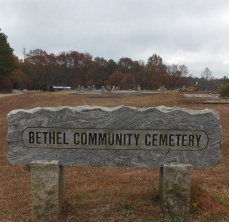
Bethel Community Cemetery seems perfectly normal. But I didn't like the feeling I got when I was there.

Bethel Community Cemetery seems perfectly normal. But I didn’t like the feeling I got when I was there.

Bethel Community Cemetery is located between a busy main road and a railroad track, so it isn’t isolated. But at the time, I felt like I was being watched.

I tried to ignore it as I “hopped” the rows quickly. I found the grave of a relative of the person I was looking for under a bush. A nearby marker that was unreadable and nearly eaten up by the same bush was likely my target. So I took a few pictures and stood up.

Whether it was God or my gut instinct, I don’t know. But something inside me said to get out of there. So I got in my car and left. And never went back.

While it may disappoint some of you, I don’t give much thought to spirits when I’m out at a cemetery. I think if I spent my time thinking about them, it would distract from the purpose I’m there for in the first place and that’s to find a grave. It’s hard enough to accomplish while trying to avoid stepping in ant hills while scanning stone after stone for names.

I think if I did dwell on it, I might send up scaring myself silly like I do when I’m watching The Shining.

Happy Halloween, y’all. 🙂


Back to Savannah: Visiting Laurel Grove South Cemetery

My latest visit to Savannah included a few firsts. I stayed in a new (to me) place this time. In the past, I’ve stayed in hotels out in the ‘burbs or Tybee Island because in-town accommodations are pricey. But thanks to VRBO and our very helpful real estate agent, Mary Anderson, we scored awesome (yet affordable) digs in the historic district.

Formerly known as the William J. Spencer House, it was built sometime before 1809. The current owner is a restauranteur and is restoring it.

Formerly known as the William J. Spencer House, this historic home was built sometime before 1809. The current owner, a restauranteur, is restoring it.

My other “first” was visiting Laurel Grove South Cemetery (LGS). When I was in town back in February, I went to her sister cemetery next door, Laurel Grove North (which I will write about soon) but didn’t make it to LGS.

Laurel Grove South is well maintained and still a very active cemetery today.

Laurel Grove South is well maintained and still an active cemetery today. But few people seem to visit it, which is a shame.

Laurel Grove Cemetery is split by what is now Highway 204, carved out of the Styles family’s Springfield Plantation. Cemeteries like Colonial Park in the heart of Savannah were nearing capacity so a new place for burials was needed. It opened in 1850.

In 1853, four acres were set aside at Laurel Grove for African-American burials. Several graves were moved from the earlier cemetery known as “Negro Ground” on an 1818 map. In 1857, an additional 11 acres were added and in 1859 it was expanded to 30 acres. A caretaker’s house was added as well.

Laurel Grove has always been two separate cemeteries. LGS was for African-Americans and LGN was for whites.

LGS is notable because it contains not only slave graves but several of freedmen who lived before the Civil War as well. It remains an active cemetery with many recent burials. LGN filled up near the end of the 1800s.

Walking around, I saw a mixture of old and new markers, brick vaults and tall monuments. One of the first I noticed was for the Rev. William J. Campbell.

The Rev. William Campbell was the fourth pastor of the historic First African Baptist Church of Savannah.

The Rev. William Campbell was the fourth pastor of the historic First African Baptist Church of Savannah. He was born a slave but obtained his freedom years later.

I learned later that Campbell went from being a slave to become the fourth pastor of the historic First African Baptist Church of Savannah. His life is a story worth sharing.

The Rev. William Campbell was born a slave in 1812 but some research suggests he was later given his freedom by his mistress.

The Rev. William Campbell was born a slave in 1812 but research suggests he was given his freedom in 1849 by his mistress, Mrs. Mary Maxwell.

Born into slavery in 1812, William Campbell probably received his freedom in 1849 from his mistress, Mrs. Mary Maxwell. He was baptized in 1830 by the Rev. Andrew Marshall (also buried at LGS). In 1855, William was licensed to preach and after working as Marshall’s assistant at the First African Baptist Church, he succeeded Rev. Marshall (who had died in Virginia) as pastor in 1857.

In addition to his powerful voice, Rev. Campbell is known for overseeing and fulfilling Rev. Marshall’s dream of building a permanent place of worship for the congregation. Completed around 1860, you can still tour the church today.

The brick building that Rev. Campbell saw come to completion is still an active church today. He is featured in one of the stained glass murals.

The brick building that Rev. Campbell saw come to completion is still an active church today. He is featured in one of the stained glass murals inside.

Rev. Campbell also took part in an extraordinary meeting (along with 19 other African-American pastors/leaders from Savannah) in January 1865 with General William T. Sherman, who was encamped there after his infamous March to the Sea. It would later be known as the “Forty Acres and a Mule” meeting.

Sherman wanted to know what the now-freed slaves wanted as the Civil War drew to a close. Garrison Frazier said, “We want to be placed on land until we are able to buy it and make it our own.”

The "Forty Acres and a Mule" painting of the Jan. 12, 1865, meeting was done by Haller Buchanan. It  hangs in the Ralph Mark Gilbert Civil Rights Museum in Savannah.

The “Forty Acres and a Mule” painting of the Jan. 12, 1865 meeting was done by Haller Buchanan. It hangs in the Ralph Mark Gilbert Civil Rights Museum in Savannah.

The result of that historic meeting was Special Field Order 15, which stated that each freed family “shall have a plot not more than forty acres of tillable land.” The Order confiscated as Federal property a strip of coastal land extending about 30 miles inland from the Atlantic and stretching from Charleston, S.C. about 245 miles south to Jacksonville, Fla.

It didn’t, however, mention mules. Those were distributed sometime later.

Several other pastors and deacons of the First African Baptist Church are buried at LGS. But some very old graves near the entrance represent the humbler souls buried there.

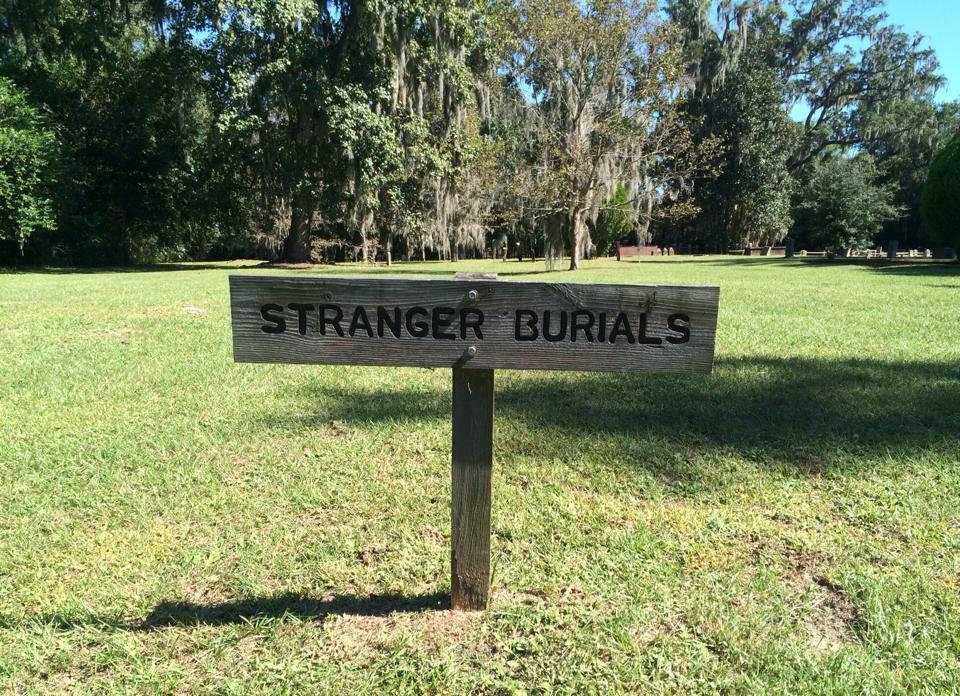
This simple sign marks the place where slaves are buried. Some are marked but most are not.

This simple sign indicates the area where slaves are buried. Some are marked but most are not.

The names and dates on most of these markers is impossible to read, blurred by time and age.

The names and dates on most of these markers are impossible to read, blurred by time and age.

Initials and a date are all that is known about the slave buried here.

Initials and a date are all that is known about the slave “Q.D.” buried here.

Toward the east side of the cemetery, a sign notes the pauper’s field for those who couldn’t afford a marker. It looks like an empty swath of grass.

At the same time, there are some eye-catching markers worth noting. Willemina Claghorn was probably the daughter of freed slaves due to her expensive-looking grave marker. The motif of an angel bearing a child Heavenward is one I’ve seen in many Southern cemeteries.

Wellemina Claghorn was probably born to free parents, indicated by the fine quality of this marker. She was only nine when she died.

Willemina Claghorn was only eight when she died. The cause of her death is unknown.

Dr. Thomas James Harris was born in Jamaica in the British West Indies in 1866 before he came to Savannah. He was likely a Freemason, as evidenced by the symbols on the side of his monument.

The all-seeing eye, also called the Eye of Providence or Eye of God, has origins dating back to the Eye of Horus in Egyptian mythology. It’s also part of the Great Seal of the United States, which shows the all-seeing eye floating on top of a pyramid. This can be seen on the back of the U.S. one dollar bill. I’d never seen one on a marker before.

The three-link chain below the eye is another Freemason (or Independent Order of Odd Fellows) symbol, representing faith, love and truth. Those are common in both white and black cemeteries.

Born just after the Civil War, Dr. Thomas came to Savannah from the British West Indies. He died in his 40s as a result of kidney problems (nephritis).

Born just after the Civil War, Dr. Thomas Davis came to Savannah from Jamaica in the British West Indies.

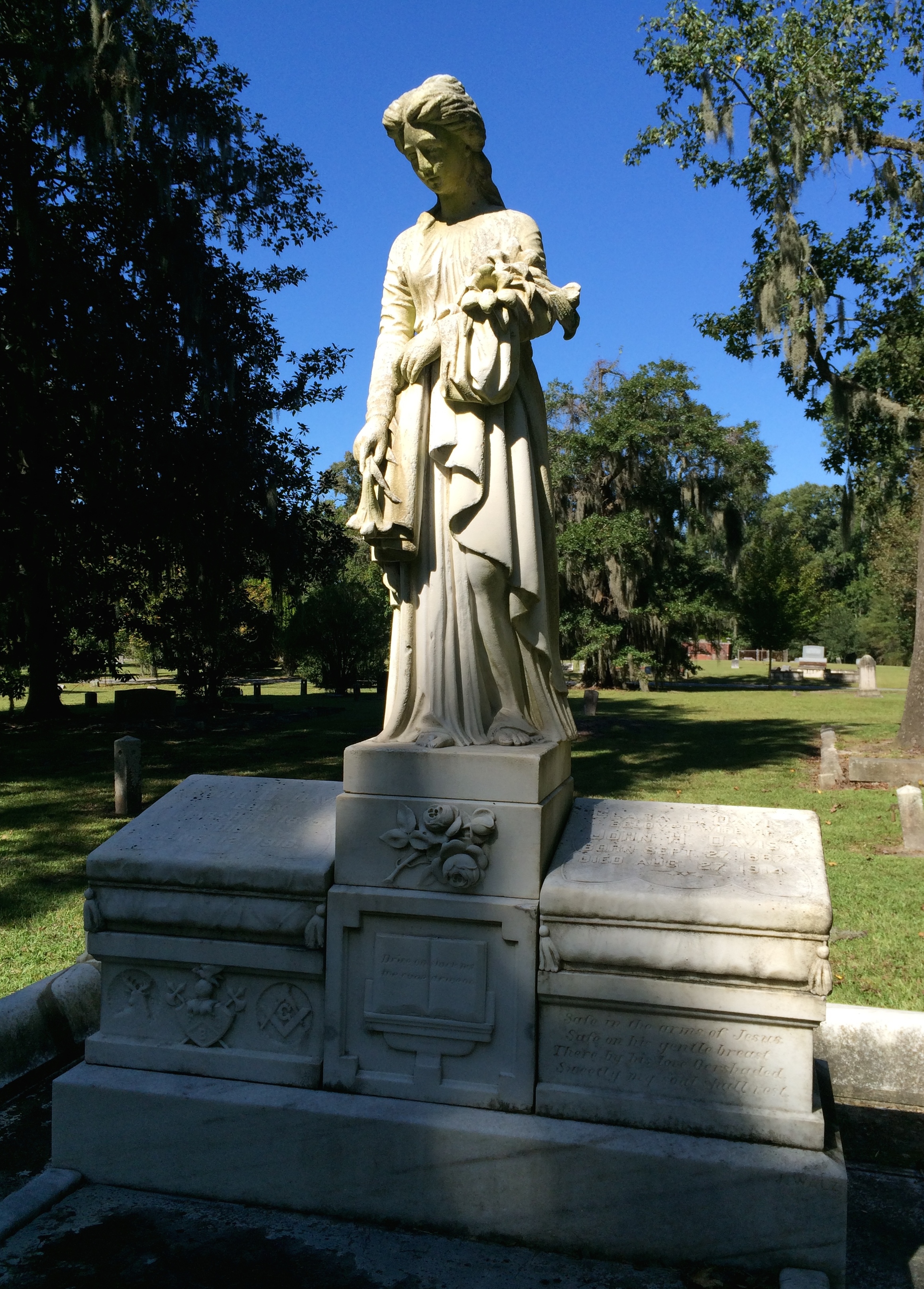
Tucked away in a back corner is a gem similar to many monuments at LGN or Bonaventure. In fact, the sculptor who created the statue for it was John Walz. He is best known for his much-loved statue of Gracie Watkins at Bonaventure Cemetery. Walz owned a studio on Bull Street and created many stunning grave markers during his lifetime.

JDavisgrave1I was unable to find out much about John H. and Clara Davis. John was a butcher and died in 1916 of nephritis, a kidney disorder. Clara, his wife, died two years earlier.

Twin cherubs stand watch over the graves of John and Clara Davis.

Twin cherubs stand watch over the graves of John and Clara Davis. Angels were a common theme in Walz’ work.

Is this the likeness of Clara Davis? That is unknown but John Walz was reported to have created many of his sculptures based on a photograph.

Is this the likeness of Clara Davis? That is unknown but John Walz was reported to have created many of his sculptures based on photographs.

Lilies are common in grave symbolism, sometimes meaning purity or majesty.

Lilies are common in grave symbolism, sometimes meaning purity or majesty.

My visit to LGS proves yet again that beauty is where you find it. The grandeur of Laurel Grove North and Bonaventure Cemeteries will always dazzle and amaze. But Laurel Grove South’s quiet charm and rich history are just as captivating.

I’ll be back.

LaurelSouthsun

When a Cemetery is Reborn: A Happy Ending For Old Greencastle Cemetery

Some of you may remember the blog posts I wrote about Old Greencastle Cemetery in Dayton, Ohio. The first one (“When a Cemetery Dies”) was about my visit there in 2012 to try to find the graves of my great-great-grandparents, Samuel and Margaret Grice. I never did find them and the place was in very bad shape, except for the area dedicated to veterans.

This is what Old Greencastle Cemetery looked like when I visited in 2012. I had no idea that everything was about to change.

This is what Old Greencastle Cemetery looked like when I visited in 2012. I had no idea that everything was about to change for the better.

The second post was about a year ago when I learned that a lot had been happening at Old Greencastle to bring it back to its former glory. I was cautiously optimistic that the changes were of a permanent nature. Having seen old cemeteries get cleaned up only to slide back into ruin, I was afraid to get my hopes up.

This week, I received an exciting email from Fred Lynch, senior vice commander of the Sons of Union Veterans of the Civil War, General William T. Sherman Camp #93. The gentlemen from this group have been sending me periodic updates about the cleanup efforts at Old Greencastle.

But this email contained pictures of the dramatic physical improvements made there. I wanted to share them here.

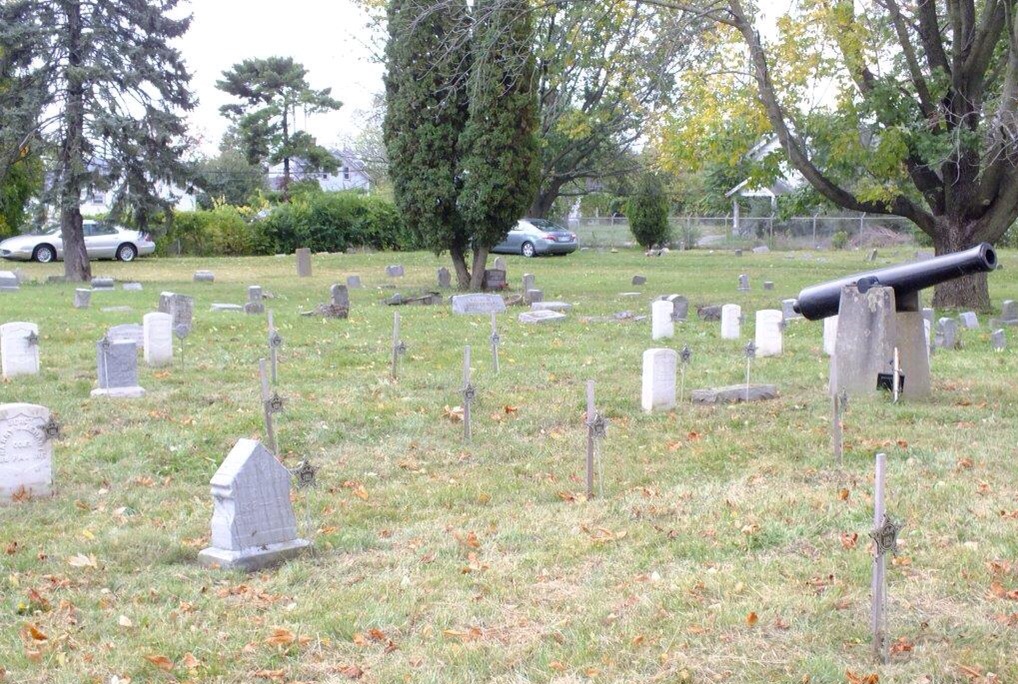
This area is mostly made up of Civil War Union veterans but there are also several civilians buried there as well. It looks amazing compared to what it was before. Photo courtesy of Sons of Confederation Union Veterans of the Civil War, Sherman Camp #93.

This area is mostly made up of Civil War Union veterans but there are also several civilians buried there as well. It looks amazing compared to what it was before. Photo courtesy of Sons of Union Veterans of the Civil War, Sherman Camp #93.

These men have been hard at work not just cleaning up and repairing the graves of veterans but those of civilians buried there as well. I was pleased as punch that they sent me a picture of some of the group, too!

Many Sherman Camp #93 members are making sure that the history and sacrifice of veterans will not be forgotten.

Many Sherman Camp #93 members are making sure that the history and sacrifice of veterans will not be forgotten. Photo courtesy of Sons of Union Veterans of the Civil War, Sherman Camp #93.

One of the updates said:

Graves of 197 Civil War veterans have been identified and documented in a record available to the public. Unmarked graves of Civil War veterans were located and verified using ground penetrating radar. All Civil War veterans’ graves are marked with a GAR flag holder. Graves of veterans who served in the American Revolution, War of 1812, Indian Wars, World War I, World War II, Korean War, and Vietnam are also being marked by the SUVCW with proper flag holders.

That information got me thinking about my great-great-grandfather, Samuel Grice. I had forgotten that he indeed was a Union soldier during the Civil War as a member of the 112th Ohio Infantry. He and his brother, Henry, both signed up. I have no idea if either saw combat since many such volunteers were never called upon to serve actively. But he is listed in official records, which also indicates that both he and Henry had served in the military previously.

In June 1863, Samuel and William Grice volunteered for service in the Union Army. It is unknown if they were ever in combat.

In June 1863, Samuel and William Grice volunteered for service in the Union Army. It is unknown if they were ever in combat. Photo is from the National Archives and Records Administration (NARA); Washington, D.C.; Consolidated Lists of Civil War Draft Registration Records (Provost Marshal General’s Bureau; Consolidated Enrollment Lists, 1863-1865).

I would love to eventually see a marker placed for Samuel since it appears that if he ever had one, it probably got swept away by the Dayton Flood of 1913. The only way the government will provide one is if the next of kin authorizes it or a person authorized by the decedent. So I will have to look into that a little further.

On Nov. 15, Sherman Camp #93 will be holding a Remembrance Day Commemoration and Grand Army of the Republic Veterans’ Section Rededication Ceremony at Old Greencastle Cemetery. These wonderful folks have invited me to join them on this special day. I would like to go very much but because the end of the year is my husband’s busy time at work, it’s unlikely I will be able to do so.

Regardless, I am so proud of this dedicated group of men who saw a cemetery that was on its last legs and did something about it. Too often, people sit idly by waiting for someone else to come along and take action. Along with some help from additional volunteer groups, they have worked hard to restore dignity to the dead and restore a place that might have disappeared forever.

On behalf of my family, I want to thank Sherman Camp #93 for not letting Old Greencastle Cemetery die. You are my heroes.

Gentlemen of the Sons of Union Veterans of the Civil War, General William T. Sherman Camp #93. Photo courtesy of their Facebook page.

Gentlemen of the Sons of Union Veterans of the Civil War, General William T. Sherman Camp #93. Photo courtesy of their Facebook page.

Farewell to Furry Friends: Visiting Oak Rest Pet Gardens

When I was a kid, a dog adopted us. He plopped himself down on our front doorstep and promptly fell asleep.

My Dad had no interest in acquiring a dog but when we moved later that year, Peanut Butter came with us. He was a genuine mutt, with a bit of wire hair terrier. He was a mellow soul but tough as nails. He survived a scorpion bite and a nasty run-in with some neighborhood dogs. Maybe a cat gave him a few of their nine lives because he recovered both times.

Peanut butter was my best friend in my tween and teen years. He was a faithful friend who loved me unconditionally.

Peanut butter was my best friend in my tween and teen years. He was a faithful friend who loved me unconditionally.

I was with Peanut Butter when we took him to the vet one last time. It was probably the hardest thing I’ve ever had to do. But when a friend as faithful as he was needed help to cross the Rainbow Bridge, you do it. I cried for days afterward.

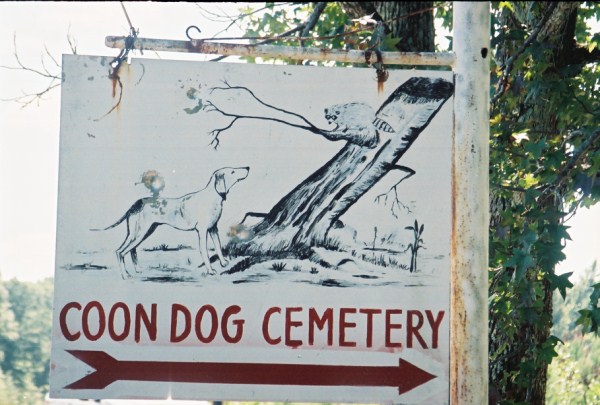
At that time, there were no pet cemeteries. At least no formal ones. People tended to bury their pets in the backyard (although for goldfish, the toilet was the stairway to Heaven). Makeshift pet cemeteries did crop up here and there. There’s actually a cemetery for coon dogs in Alabama.

Located in Northwest Alabama, the Key Underwood Coon Dog Memorial Cemetery was established in 1937 when a man wanted to honor his faithful dog, Troop. Only coon dogs are allowed to be buried at the cemetery. Photo courtesy of coondogcemetery.com.

Located in Northwest Alabama, the Key Underwood Coon Dog Memorial Cemetery was established in 1937 when a man wanted to honor his faithful dog, Troop. Only coon dogs are allowed to be buried there. Photo courtesy of coondogcemetery.com.

Things have changed since then.

According to the Atlanta-based International Association of Pet Cemeteries and Crematories, just a handful of pet aftercare facilities in the U.S. were in operation less than a decade ago. Today, there are about 700 nationwide, including funeral homes, crematories, and cemeteries. Why?

Some pet funeral directors point to baby boomers, who have increasingly turned to pets for companionship after their spouses die or their children leave home. But in recent years, pet funerals are arranged just as often by people in their 20s and 30s, many of whom chose not to become parents and treat their “fur kids” like their own children. A 2012 Bloomberg Businessweek article goes into more detail.

“You really can’t put your finger on it,” says Ed Martin Jr., director of Hartsdale Pet Cemetery and Crematory in Hartsdale, N.Y. “I used to think this was something for older women who never had children. Or very wealthy people. But we get everybody: men, women, rich, poor, young, old.”

Atlanta does have a pet cemetery (located a bit out of town in Bethlehem) called Oak Rest Pet Gardens. I had never been to a formal pet cemetery before so I decided to check it out.

Located about 25 miles northeast of Atlanta, Oak Rest Pet Cemetery is a peaceful place for spending quiet time remembering beloved furry friends.

Located about 40 miles northeast of Atlanta, Oak Rest Pet Gardens is a peaceful place for spending quiet time remembering beloved furry friends.

Oak Rest sits on a large piece of land amid rural fields and new subdivisions. It’s very peaceful and nicely landscaped, but not overly so. Everything from dogs and cats to rabbits, pigs, birds and even horses are buried here. Some of the markers are large and include the pet’s name, birth/death dates and even a picture. Others are a simple brass plate with the pet’s name inscribed on it.

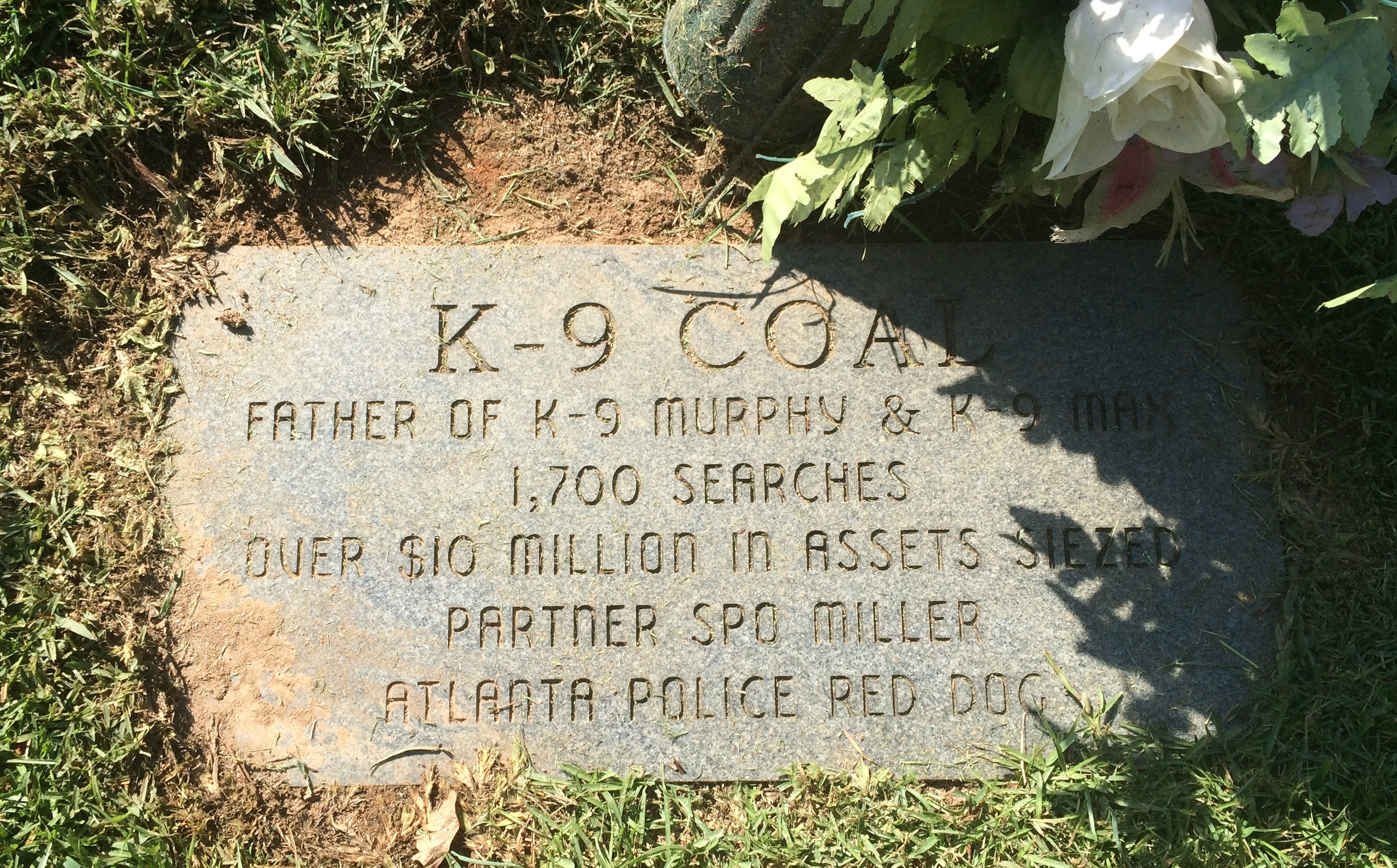
OakRestpicIn the center of the cemetery is a special area dedicated to K9 police dogs as well as guide/service dogs. Many of the markers include the police unit the dog worked with. It’s thoughtfully laid out and pays respectful homage to these amazing animals.

Oak Rest's Garden of Honor is dedicated to the courage and sacrifice of K9 police dogs as well as guide/service dogs.

Oak Rest’s Garden of Honor is dedicated to the courage and sacrifice of K9 police dogs as well as guide/service dogs.

K-9 Coal is just one of several police dogs buried at Oak Rest. Coal was also the son of two very successful K-9s, Max and Murphy, who are buried near him.

K-9 Coal is just one of several police dogs buried at Oak Rest. Coal was also the father of two very successful K-9s, Max and Murphy, who are buried near him.

K-9 Sherrif was the Atlanta Police Department's first suicide bomber detection dog. My apologies for the grass bits, the staff had just mowed.

K-9 Sheriff was the Atlanta Police Department’s first suicide bomber detection dog. His picture, with his handler, is on his grave. My apologies for the grass bits, the staff had just mowed.

Most of the markers were heartfelt memorials to beloved friends. Some were for multiple pets on one marker. But all of them conveyed an owner’s love for their beloved friend.

The West family's dogs share a monument at Oak Rest Pet Gardens.

The West family’s dogs share a monument.

Varmit Cat, who lived to be 15, was the apple of her owner's eye.

Varmit Cat, who lived to be 15, was the apple of her owner’s eye.

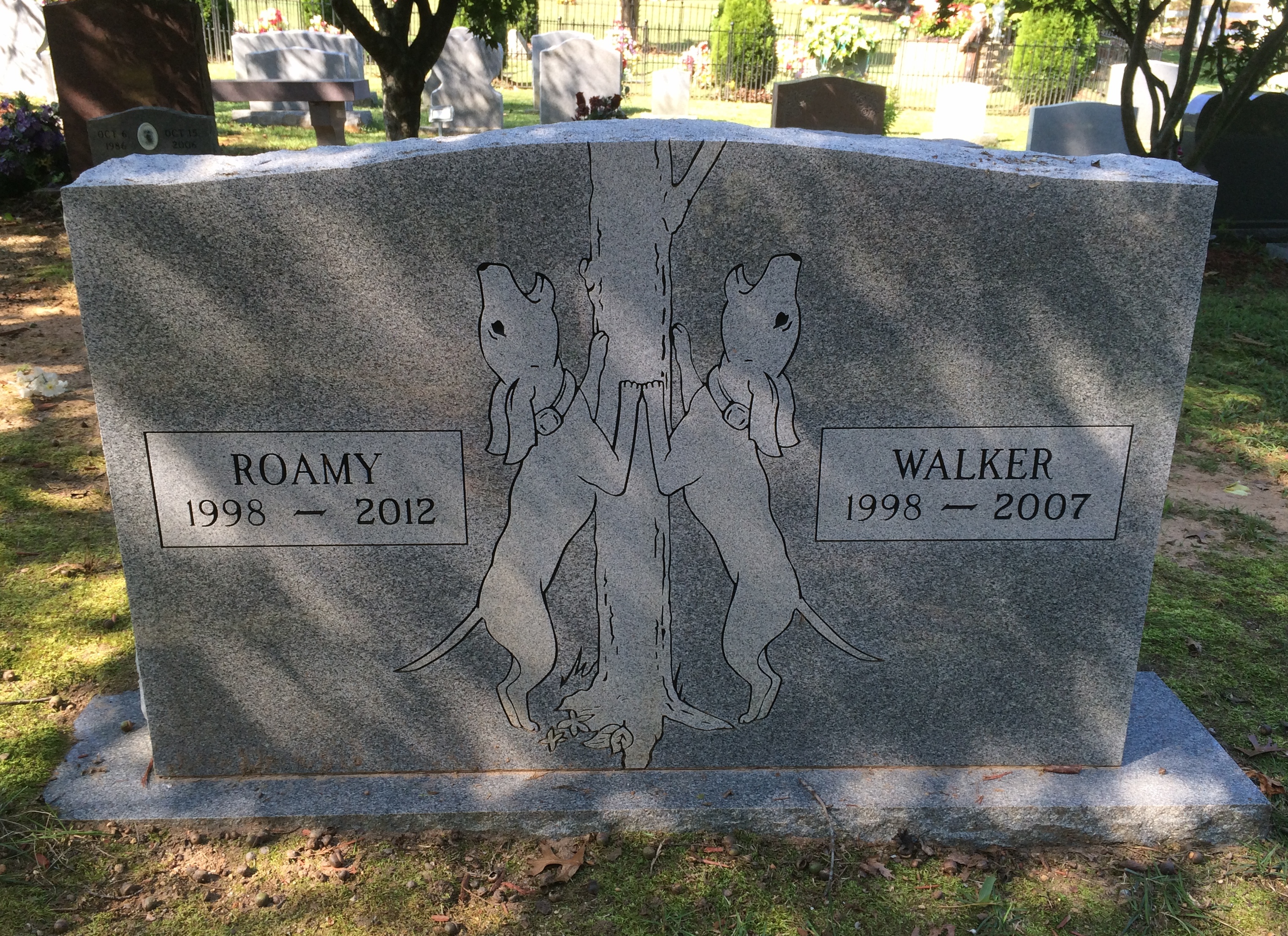
Roamy and Walker appear to have been hunting dogs and litter mates.

Roamy and Walker appear to have been hunting dogs and litter mates.

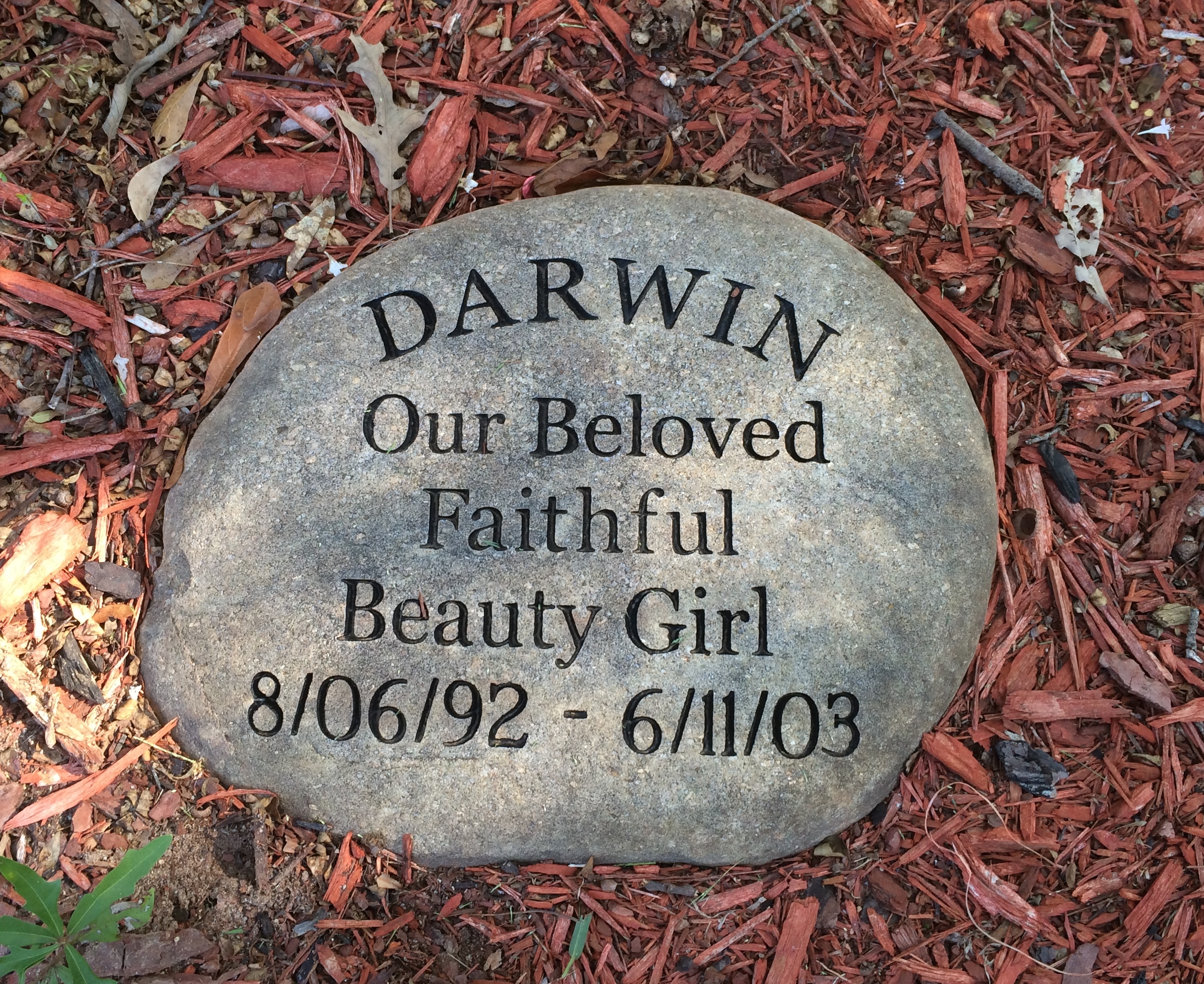
There’s also an area dedicated to burying or scattering the ashes of horses called Horseshoe Gardens.

HorseshoeGardens

Darwin's  memorial stone is one of several in Horseshoe Gardens.

Darwin’s memorial stone is one of several in Horseshoe Gardens.

On many stones, there are only names so you can’t tell for sure what type of animal they were. But in one case, I’m pretty sure it was a pet pig.

ZoinkToward the front, there’s a patch of grass with a number of small plates bearing pet names. They were for cats that had all belonged to the same person.

E.H. Rice loves cats because he or she has honored at least 13 with memorial plaques.

E.H. Rice loves cats because he or she has honored at least 13 with memorial plaques.

Oak Rest Pet Gardens was the dream of Doyle Shugart, who was a licensed funeral director. With his wife Maudann, he started Deceased Pet Care in 1972 in a small brick building.

The business now consists of four locations (which includes their offices, showrooms, crematorium, chapels and cemeteries). Their web site describes Shugart as “an advocate for pet parents across the nation and a pioneer in the pet aftercare profession.” He passed away in July 2012, but Maudann and their children continue to run the business.

Planning a pet funeral is much like planning one for a person. Oak Rest has showrooms with caskets, vaults, urns and memorial markers. There’s also a chapel available for those wanting to spend a few last moments with their pet. They even provide grief counseling services if needed.

Considering how much unconditional love and companionship our pets give us, providing them with a fitting farewell seems right. For many people, a pet can be the only friend they truly have.

I think Peanut Butter would have liked Oak Rest Pet Gardens.

PetPoem

Farewell to Furry Friends: Visiting Oak Rest Pet Gardens

Having some trouble with WordPress today. Sorry if you get this twice.

adventuresincemeteryhopping's avatarAdventures in Cemetery Hopping

When I was a kid, a dog adopted us. He plopped himself down on our front doorstep and promptly fell asleep.

My Dad had no interest in acquiring a dog but when we moved later that year, Peanut Butter came with us. He was a genuine mutt, with a bit of wire hair terrier. He was a mellow soul but tough as nails. He survived a scorpion bite and a nasty run-in with some neighborhood dogs. Maybe a cat gave him a few of their nine lives because he recovered both times.

Peanut butter was my best friend in my tween and teen years. He was a faithful friend who loved me unconditionally. Peanut butter was my best friend in my tween and teen years. He was a faithful friend who loved me unconditionally.

I was with Peanut Butter when we took him to the vet one last time. It was probably the hardest thing I’ve ever had to do. But when a friend as faithful as he was needed help…

View original post 866 more words

Making Coca-Cola Kosher: Atlanta’s Rabbi Tobias Geffen

This week, I got an email from Baruch Amsel, who lives in Queens, N.Y. His web site features famous Jewish rabbis, including photos of their grave sites. You could call it a Find a Grave for rabbis.

Baruch asked if I had a photo of the grave of Rabbi Tobias (Tuvia) Geffen, whom he referred to as “Chief Rabbi of the South back in the day.” I’d never heard of Rabbi Geffen but I offered to find out where he was buried and get a picture of his grave. There is a photo of it online but it’s not very clear. I also wanted to find out what made Rabbi Geffen so special.

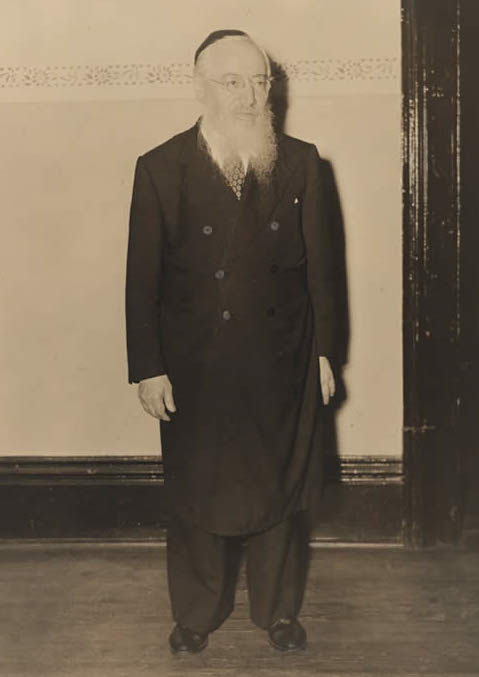
Rabbi Tobais (Tuvia) Geffen was small in stature but he stood tall in the American Orthodox Jewish community. Photo courtesy of JewishCurrents.org.

Rabbi Tobias (Tuvia) Geffen was small in stature but he stood tall in the American Orthodox Jewish community. Photo courtesy of JewishCurrents.org.

A Google search fixed that. Rabbi Geffen was responsible for ensuring that Coca-Cola was kosher! Now that’s a considerable accomplishment. I wanted to know more. An article by Adam Mintz was very helpful. I also located his grave at Greenwood Cemetery, which is Southwest of downtown Atlanta.

Rabbi Geffen was born in Kovno, Lithuania in 1870. He and his wife, Sarah, moved to the U.S. sometime after 1903 due to the anti-semitic unrest in Eastern Europe. After deciding that the cold winters of Ohio were too much, they moved to Atlanta. In 1910, Rabbi Geffen became the leader of Shearith Israel Synagogue (which still exists today). When the Geffens arrived in Atlanta, the Jewish community was relatively small. About 4,000 Jews lived among a population of 150,000.

So how did Rabbi Geffen get involved with the “is Coca-Cola kosher?” debate?

By the 1930s, American Jews (like many people) were enamored of James Pemberton’s revolutionary beverage, Coca-Cola. Problem was, nobody knew exactly what was in it. The formula (which is still locked up in Atlanta’s Sun Trust Bank) was a well-kept secret.

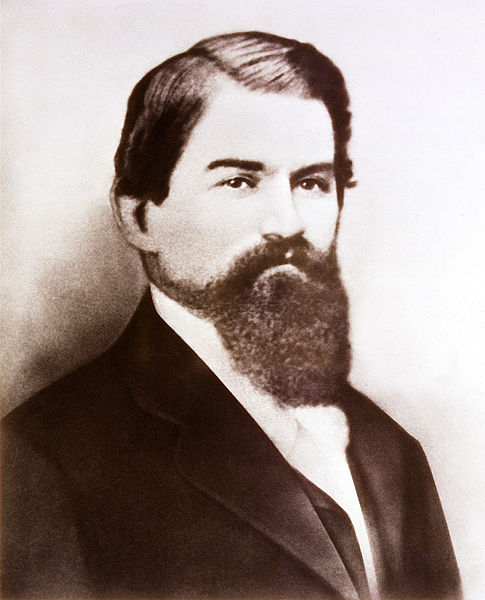
In 1886, John Pemberton invented what we now know as Coca-Cola after temperance laws forced him to make a non-alcoholic version of his French Wine Cola. It contained cocaine until 1903.

In 1886, John Pemberton invented what we now know as Coca-Cola after temperance laws forced him to make a non-alcoholic version of his French Wine Cola. It contained cocaine until 1903.

Rabbis were being asked by their congregants if the soft drink was kosher enough to consume during the Passover season. Some said yes, others said no.

As early as 1925, Jewish rabbis wrote to Rabbi Geffen asking if he knew if Coca-Cola was truly kosher since he lived in Atlanta. Rabbi Eliyahu Kochin, rabbi of Pittsburgh’s Orthodox Jewish community, said in a letter, “Many of the people are drinking Coca-Cola without proper rabbinic certification and claiming that it is kosher. Please clarify this matter.”

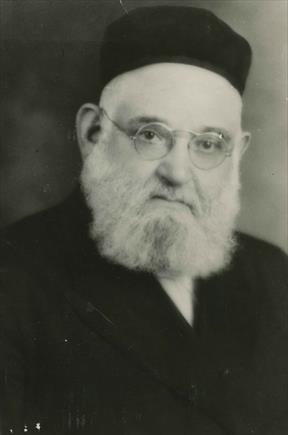
Rabbi Eliyahu Kochin of Pittsburgh wrote to Rabbi Geffen in 1925 in hopes of finding out if Coca-Cola was kosher enough for Passover. He as rabbi to Tiphereth Israel Congregation in Pittsburgh. Photo courtesy of Corinne Azen Krause Photographs, Rauh Jewish Archives at the Heinz History Center.

Rabbi Eliyahu Kochin of Pittsburgh wrote to Rabbi Geffen in 1925 in hopes of finding out if Coca-Cola was kosher enough for Passover. Photo courtesy of Corinne Azen Krause Photographs, Rauh Jewish Archives at the Heinz History Center.

By the 1930s, two prominent rabbis had stated their belief that Coca-Cola was kosher. Rabbi Shmuel Pardes (a Chicago rabbi) said he’d visited a Coca-Cola plant in his city and had seen no non-kosher ingredients being used. He shared his thoughts with Rabbi Geffen in letters.

Rabbi Geffen decided to make it his mission to find out whether or not Coca-Cola’s formula contained any items that would cause it to be non-kosher. But how was a Lithuanian rabbi who spoke Yiddish better than English going to do that?

Rabbi Geffen knew someone who had access to the secret formula. He’d met Coca-Cola attorney Harold Hirsch not long after Hirsch attended the high school graduation of Geffen’s daughter, Helen (who gave the valedictorian address). Hirsch was so impressed that he paid Helen’s tuition to the University of Georgia, his alma mater (and mine!).

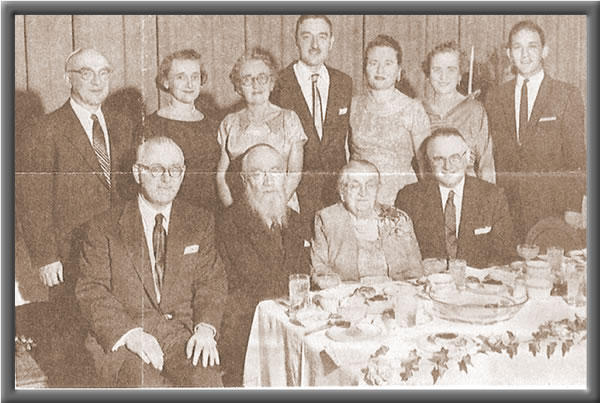
Rabbi Geffen (first row, second from left) met Coca-Cola attorney Harold Hirsch after his daughter’s high school graduation. Helen Geffen (back row, second from left) played an important role in the “kosherization” of Coca-Cola. Photo courtesy of http://www.ourfamilystory/rabbigeffentestimonial.html.

Hirsch, who was active in the Atlanta Jewish community, introduced Rabbi Geffen to Coca-Cola executives. The rabbi explained the concerns of Orthodox American Jews wanting to be true to kashruth (Jewish dietary laws) while remaining loyal Coca-Cola consumers.

Coca-Cola executives agreed to help and Rabbi Geffen became one of a very small group of people allowed to see the secret formula. The only stipulation was that he could not get specific on the matter if his fellow rabbis wanted to know the exact ingredients.

Once Rabbi Geffen saw what went into Coca-Cola, he needed help deciphering exactly what those ingredients were. Daughter Helen, majoring in chemistry, told her father that there were two ingredients that conflicted with kosher laws: glycerin and grain kernels (corn).

American Jews depended on their rabbis to ensure that “Kosher Coca-Cola” was approved for Passover consumption.

While the amount of glycerin in Coca-Cola was small, it posed a problem because it was made from meat and fat tallow from non-kosher animals. Rabbi Geffen suggested (with Helen’s advice) substituting vegetable-based glycerin. Coca-Cola executives were okay with that and contracted with Proctor & Gamble to provide it. Concerning the grain kernels, sugar beets or sugar cane were a suggested substitute. That idea was also approved.

Pleased that Coca-Cola’s ingredients were now all kosher, Rabbi Geffen issued a response in 1935:

“With the help of God, I have been able to uncover a pragmatic solution according to which there would be no question nor any doubt concerning the ingredients of Coca-Cola”, he wrote. “It is now possible for the most stringent Halachist to enjoy Coca-Cola”.

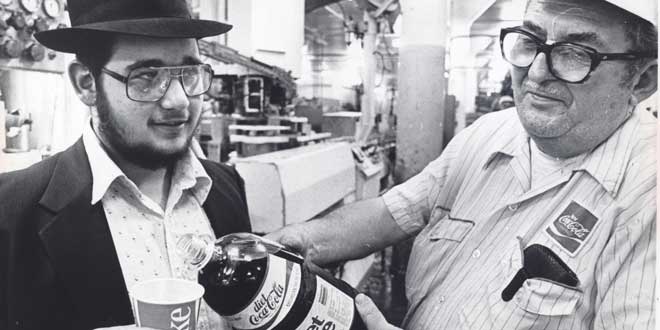
A bottler pours a taste of “kosher for Passover” Diet Coke for a local rabbi in 1983. During Passover, Coke uses a formula free of corn syrup for its kosher Coke. Photo courtesy of Detroit Free Press/Ira Rosenberg.

A bottler pours a taste of “kosher for Passover” Diet Coke for a local rabbi in 1983. During Passover, Coke uses a formula free of corn syrup for its kosher Coke. Photo courtesy of Detroit Free Press/Ira Rosenberg.

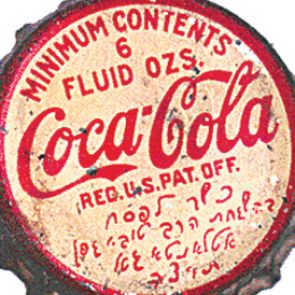
This change did make some waves. Nazi sympathizer Karl Flach, who manufactured a German rival to Coca-Cola called Afri-Cola, returned from a trip to the U.S. carrying Coca-Cola caps stamped “Kosher for Passover” on them. A picture of the caps appeared in Nazi propaganda to fuel the belief that Jews had too much influence in the U.S. The director of Coca-Cola’s operations in Germany pushed for Hirsch to be removed from Coca-Cola’s board but Coca-Cola stood by Hirsch.

Today, Coca-Cola uses high fructose corn syrup in place of the sugar cane that Rabbi Geffen asked for. But during Passover, Coca-Cola produces the sugar cane version that the kashrut demands. It’s recognizable by the yellow caps on the bottles. Non-Jewish Americans who love the old taste of the sugar cane variety of Coke snap them up as well.

“Passover Coke” is easy to identify by its yellow cap. Even non-Jews buy it to enjoy the original sugar cane flavor.

In 2012, Coke directed its suppliers to change the way they manufacture caramel to reduce levels of the chemical 4-methylimidazole (4-MEI) after California listed it as a carcinogen. The company said the new caramel process has since rolled out nationally to streamline its manufacturing process. But outside California, it’s still using the previous caramel process so that it can continue providing kosher Coke for Passover.

Coca-Cola is still working on a method to make Passover Coke that meets the standards of the kashrut while avoiding the caramel issue. So California Jews must purchase their kosher Coke elsewhere for the time being.

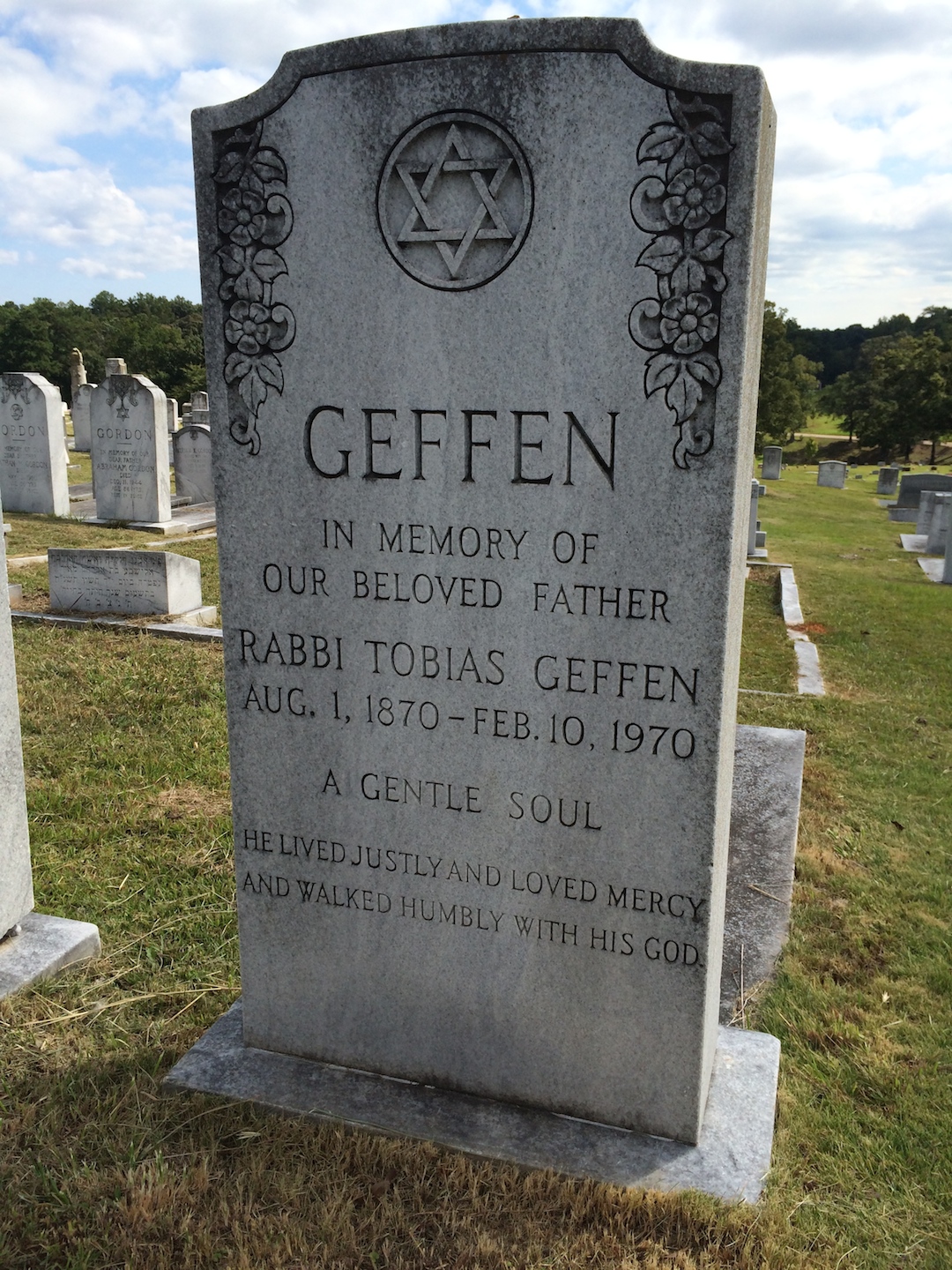
But it’s comforting to know that in the 1930s, an Atlanta rabbi was looking out for his fellow Orthodox Jews to ensure they could enjoy Coca-Cola during Passover. I found his grave at Greenwood Cemetery on a beautiful fall day and took this photo for Baruch.

A sheynem dank, Rabbi Geffen.

Rabbi Tobias (Tuvia) Geffen is buried in Greenwood Cemetery in Atlanta, Ga. He lived to be 99 years old.

Rabbi Tobias (Tuvia) Geffen is buried in Greenwood Cemetery in Atlanta, Ga. He lived to be 99 years old.
These Famous Ladies Had Georgia on Their Minds (repost)

This is worth reading again, I think. 🙂

adventuresincemeteryhopping's avatarAdventures in Cemetery Hopping

There are plenty of famous men buried in Georgia, but the ladies often get overlooked. This week, I am featuring a handful of those enterprising women. Some you may already know about, but a few of them may surprise you.

Rome, Georgia is home to Shorter and Berry Colleges. Class A minor league baseball team the Rome Braves draw plenty of crowds. But did you know a U.S. President’s wife is buried there?

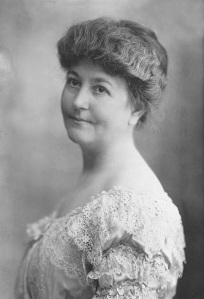
Woodrow Wilson was not a household bame when he met Ellen Axson at her father's church. Woodrow Wilson was not a household name when he met Ellen Axson at her father’s church.

President Woodrow Wilson’s first wife was born Ellen Louise Axson. The daughter of a Presbyterian minister, she grew up in comfortable circumstances. Her parents believed in the importance of a good education for both sexes, so Ellen became an intelligent, observant young lady who eventually studied art in New York City. She enjoyed painting throughout her life and even spent time…

View original post 909 more words