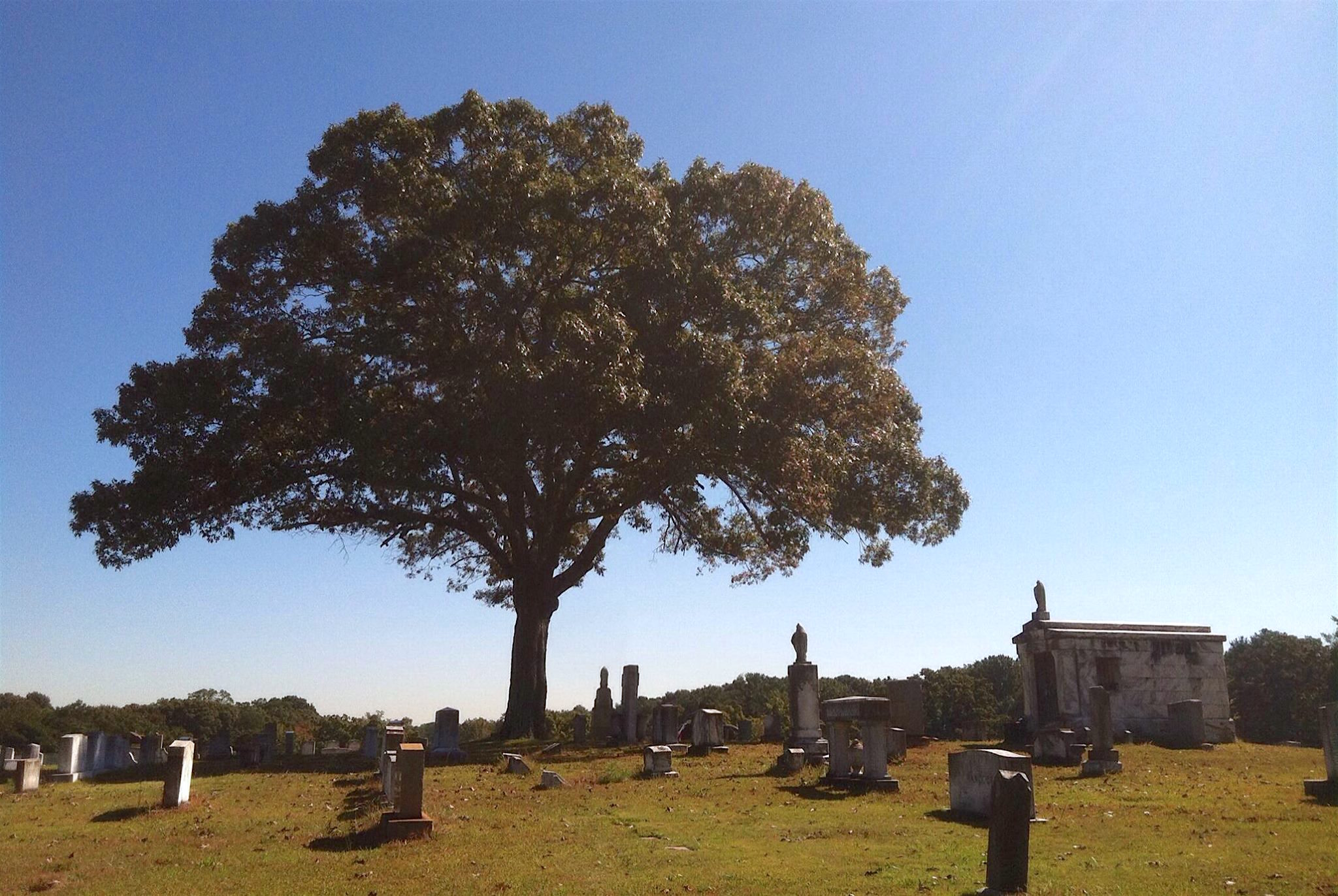
Note: If you’re wondering why I’ve posted so infrequently this year, I sincerely apologize. For whatever reasons, it’s been difficult for me to sit down and just…write. The good news is I have done a lot of cemetery hopping over the last months that I’ll be sharing with you! Thanks for your patience.
I’ve written about Atlanta’s Greenwood twice before. One post was about Greenwood’s Holocaust memorial and the other was about Rabbi Leo Geffen, the man who made Coca-Cola kosher. Located just four miles south of Westview Cemetery, Greenwood Cemetery is worth a stop.
At the same time, I’ve never given Greenwood Cemetery the full focus it deserves. Unfortunately, this cemetery has been in the spotlight recently for unsettling reasons.
In March 2026, two men filed lawsuits against Greenwood’s owner and operator, F. Coll Bowen III for not maintaining the cemetery properly. Just a month ago, Georgia Secretary of State’s Office investigators showed up to look around having heard reports of “misplaced bodies” in the cemetery.
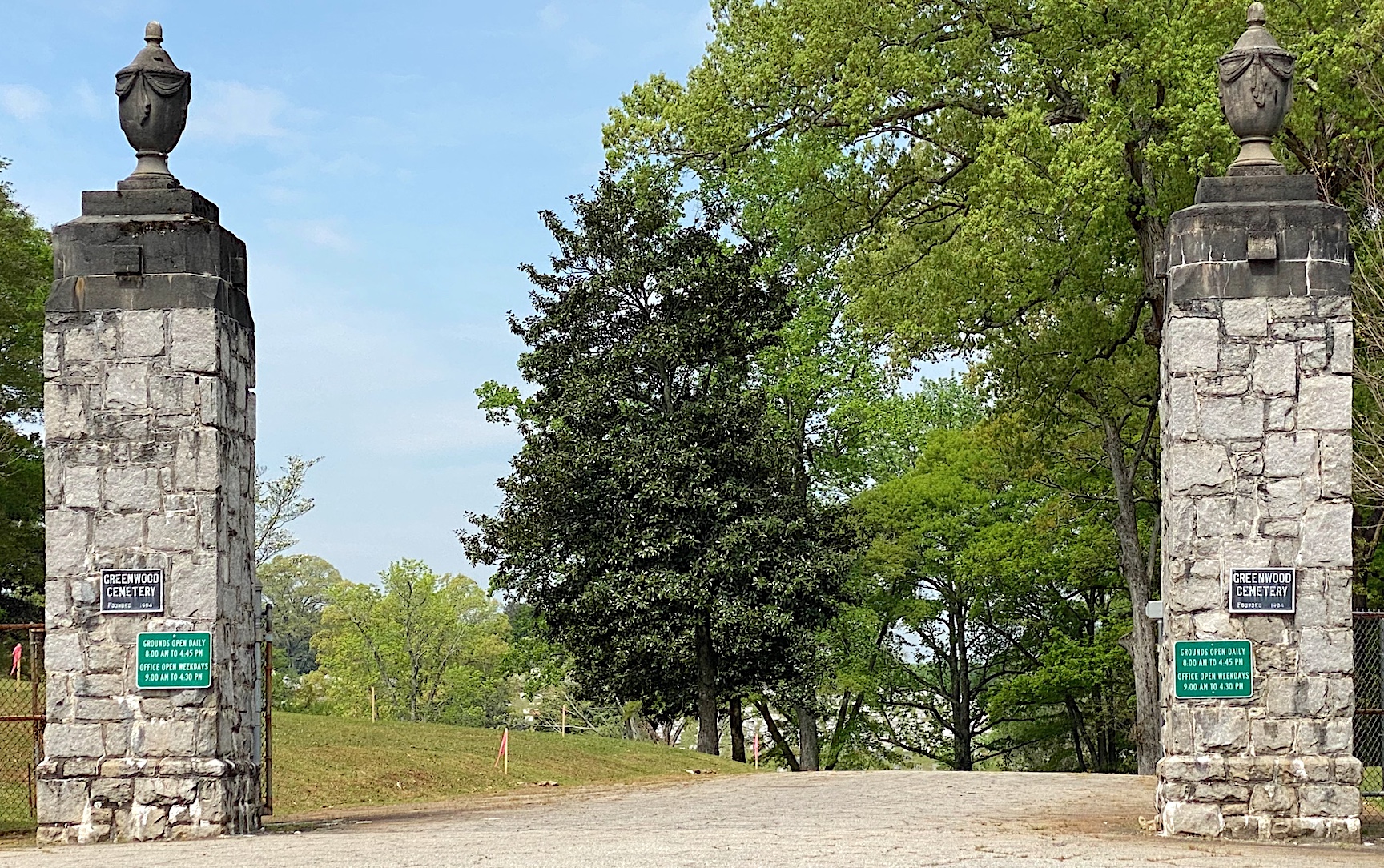
I first visited Greenwood in 2013 and even then, there were issues. Many grave markers needed TLC, roads were badly rutted. If you went into the office to inquire about the location of a specific grave, they weren’t very helpful. Sadly, it’s gotten worse since then. It’s been a few years since I was out there so I can’t testify to it’s current condition. What you are seeing here are photos from visits between 2013 and 2020.
Greenwood Cemetery was established in 1906 by William H. Brown and James L. Mayson. Find a Grave lists about 21,000 burials. Aside from Oakland Cemetery, Greenwood was where Atlanta’s Jewish community buried their loved ones and many still do. Different congregations are in designated sections, such as the Ahavath Achim (AA) Synagogue. There’s also a Greek section and a very small Chinese lot with graves from the 1910s and 20s.
Greenwood remains an active cemetery and burials are still taking place.
Chinese Section
This small plot has always intrigued me. From what I can gather, most of these markers are from the 1910s and 1920s.
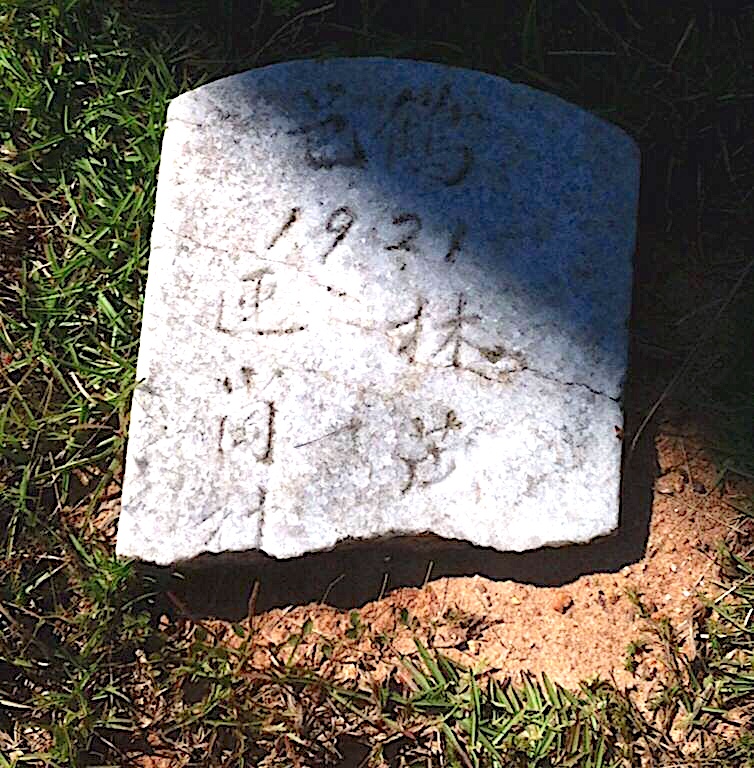
In the middle is a large obelisk that says “Chee Hung Tong Chinese Free Masons, Sept. 8, 1911.” These are not the traditional Masons we think of in the U.S. One web site noted that “The Chee Kung Tong” (Kung is spelled “Hung” on the monument) is a Chinese fraternal secret society from 18th-century Southern China that was a brotherhood rooted in anti-Qing sentiment and Ming loyalism.
Newspapers.com helped me locate an article about this Atlanta chapter from June 20, 1907 that indicated there were two rival Chinese groups, the Chee Kong Tong and the Kung Chu Tong that clashed. It confirmed that a number of members worked in Chinese laundries in Atlanta, something I’d noticed when I researched a few of the names years ago.
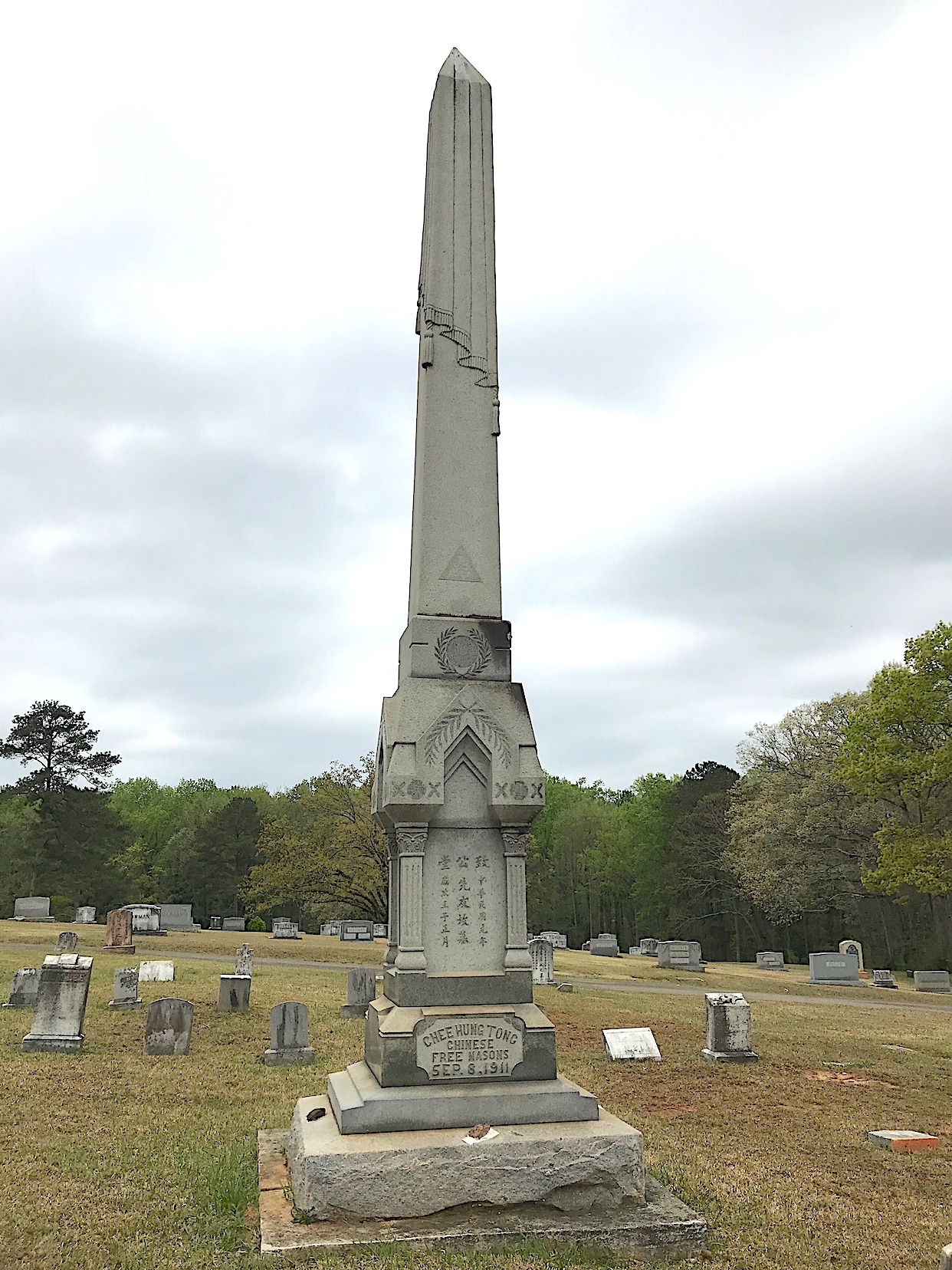
This statement made sense to me: “In the early 20th century, many branches adopted Masonic-inspired nomenclature and rituals, rebranding as “Chinese Freemasons” to enhance legitimacy among Western societies familiar with fraternal orders.” In other words, they called themselves Freemasons to avoid scrutiny and to better fit in with their neighbors.
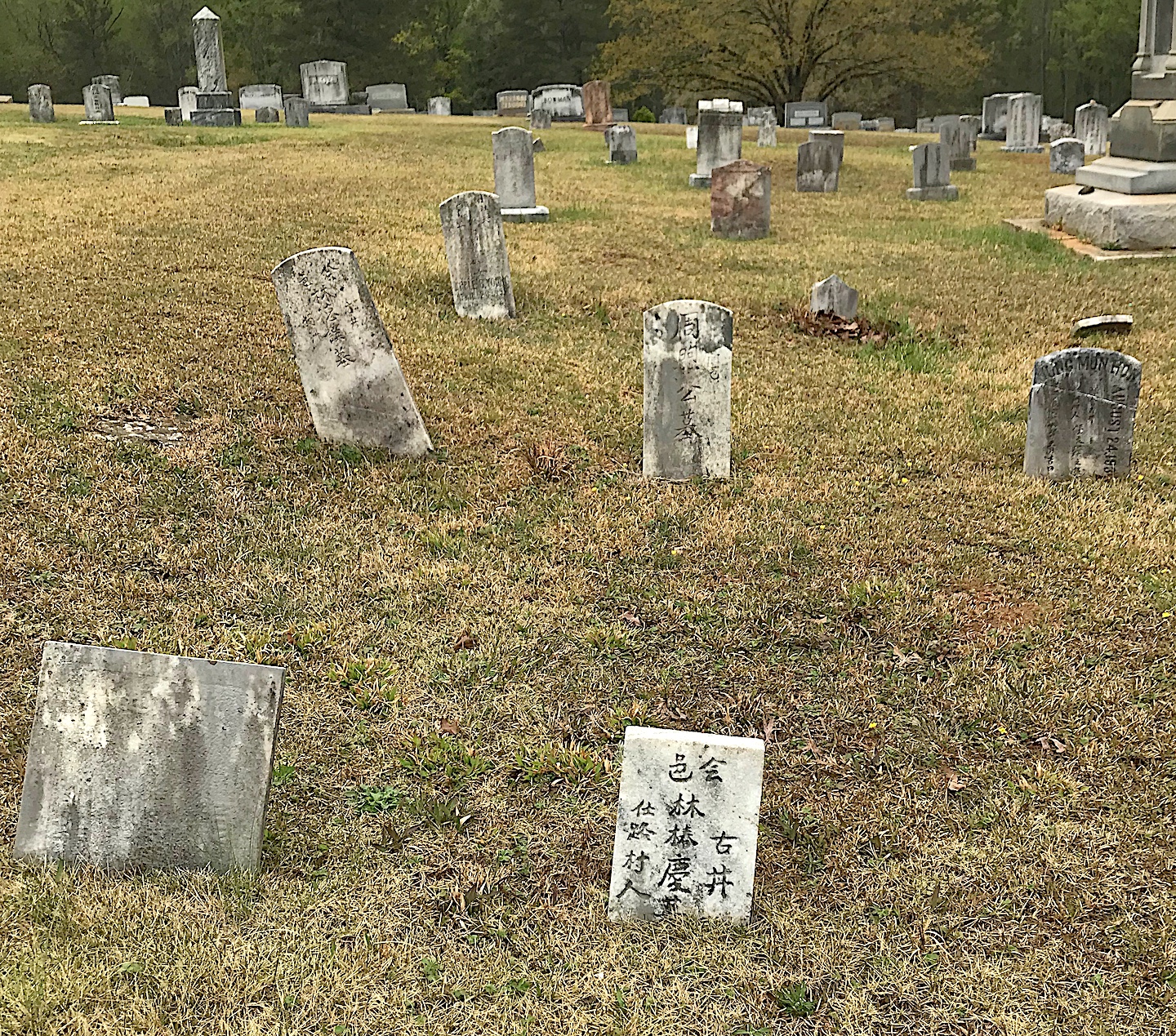
My guess is the workers who were Chee Kung Tong members in Atlanta formed their own chapter and pooled their money to buy this plot in 1911. Other such chapters are still in existence in New York and Chicago.
Greek Orthodox Section
More is known about the Greek Orthodox section, the site of Saint Barbara’s Chapel. On one visit, I saw it was open and current chapel members were doing some landscaping around the building. They kindly let me look inside.
The Greek Orthodox section was formally established in 1911, only six years after the founding of Annunciation parish. Due to growing need, by 1928, the Greek Ladies Auxiliary Society decided to build a cemetery chapel.
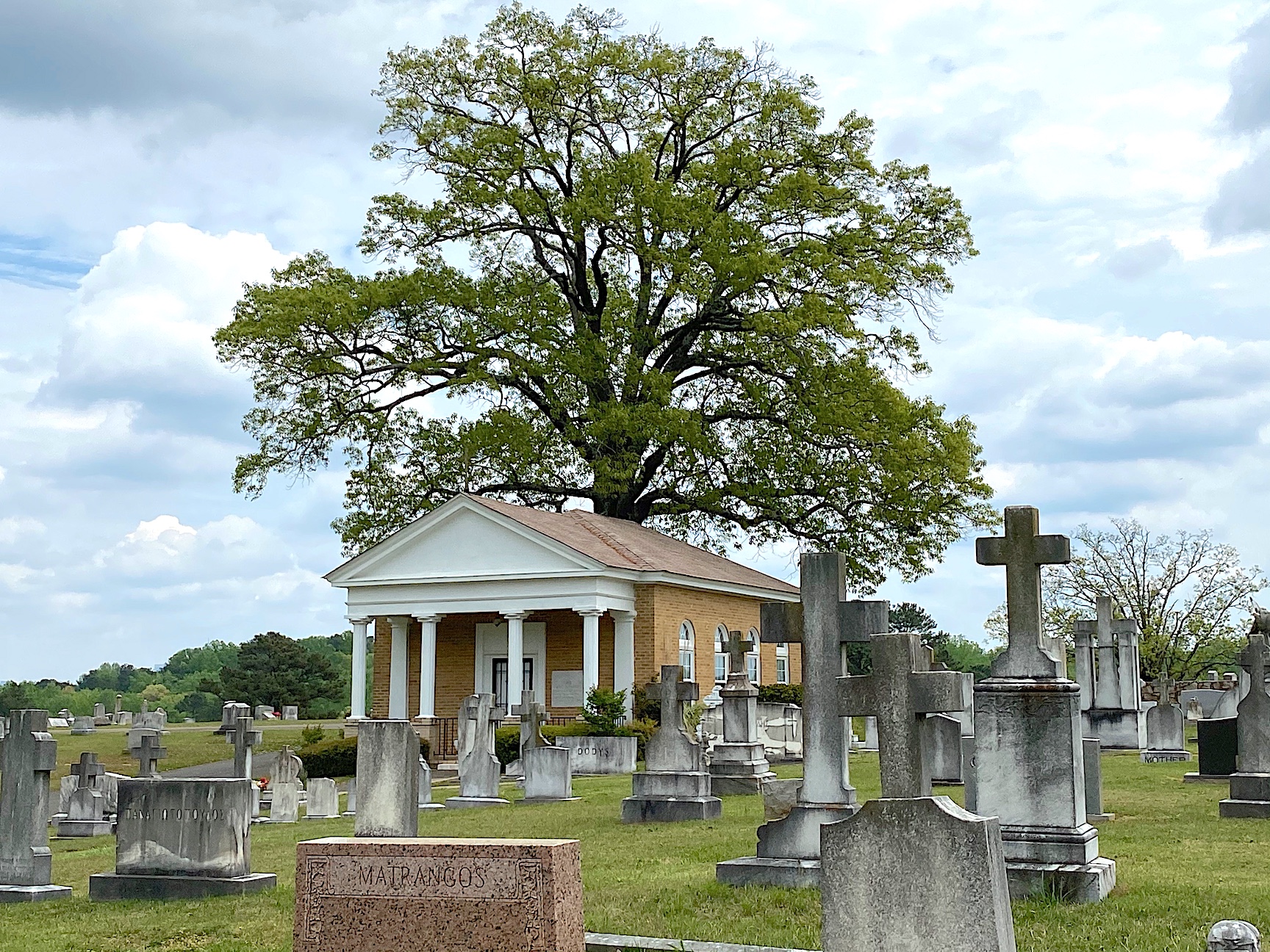
According to their web site: “Divine Liturgies are conducted at least three times a year (the Saturday closest to the Feast of St. Barbara on December 4th, second Saturday of Souls just prior to the beginning of Great Lent, and the Saturday of Souls right before the feast of Pentecost). Other services are also conducted throughout the year.”
Burial plots are still available in the original section, and a second Orthodox section was added later.
There are two monuments here that never fail to draw my attention. The first one is a jaw dropper. I’ve not seen one like it before or since. It is the surname monument for the Hanjaras family.
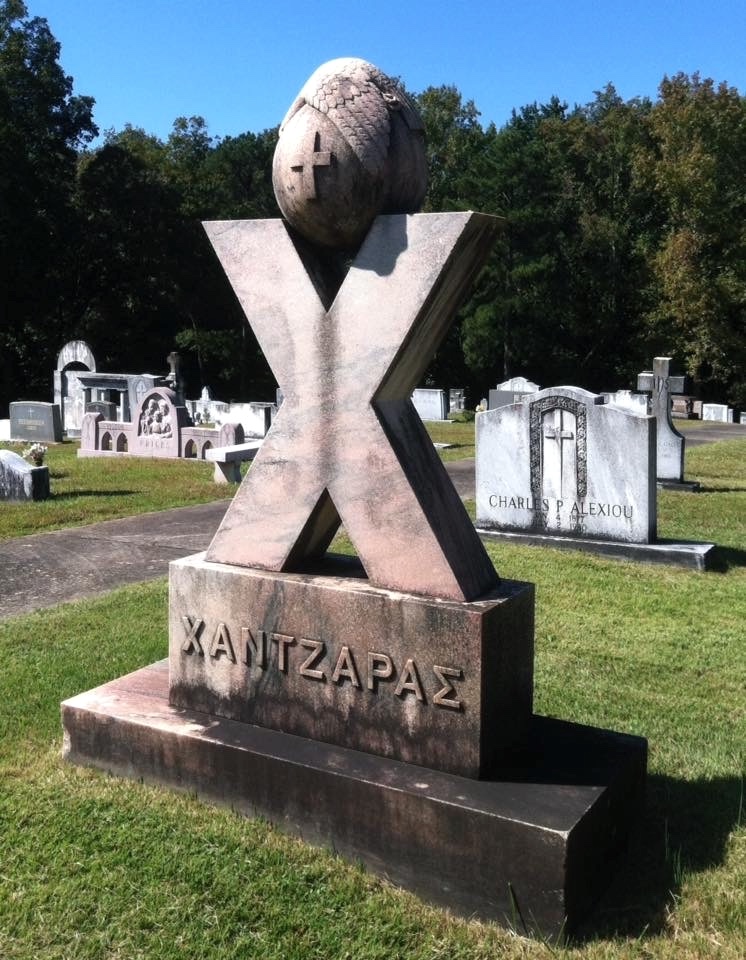
I’m not certain which of the Hanjaras family came to the United States first. The patriarch was Constantine Hanjaras (who died in 1931), and I’m not sure he ever came over from Greece with his sons, George, Gus, and Angelo. Gus and Angelo arrived in New York City in September 1910, I’m not sure when George and Leo came. The word “hanjaras” was said to be a curved knife used by Greeks when fighting closely.
Gus operated a dairy in Atlanta but it was George and Angelo who were well known locally because their popular restaurant, United Lunch Room (their motto was “We Never Close”), was across the street from the Atlanta Constitution on Forsyth Street. Below, you can see George painting a “V” for victory on the restaurant window in 1941.
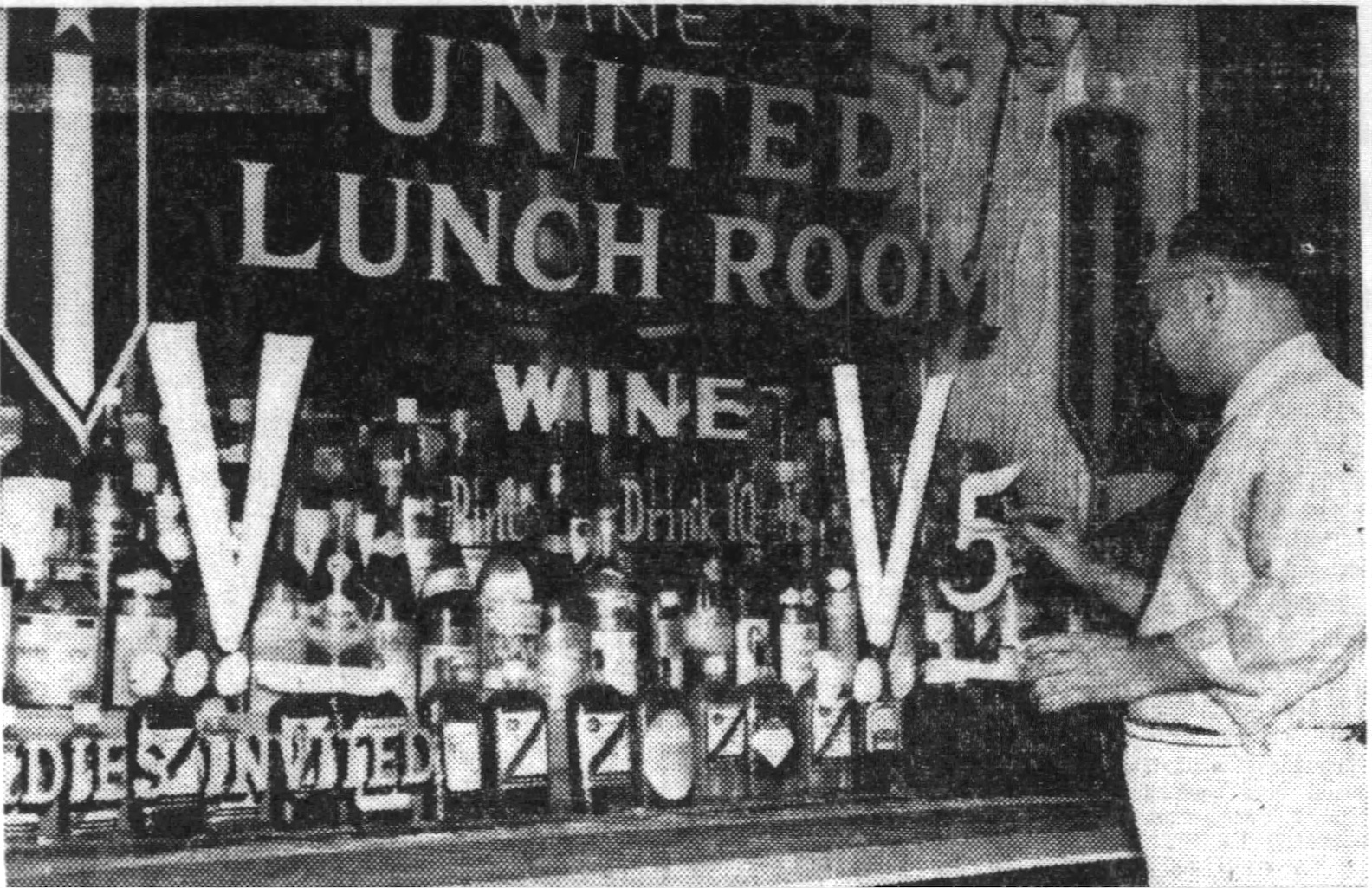
George returned to Greece on occasion to visit the family. He never married. George died on Aug. 8, 1943 at age 48 after a lingering illness. Angelo continued the business. Older brother Gus died on Nov. 29 1944. at age 65. Leo died at age 95 on June 26, 1991. He and his wife, Florence (who died in 1984) are buried with brothers George and Gus.
Gus’ son Theodore made headlines on Nov. 10, 1952 when he was found dead from a shotgun blast in his bathroom at age 38. Having separated from his wife, Maggie, his behavior had become increasingly erratic. The police ruled it a suicide.
“Our Boy”
This monument appears to have a Christmas tree on it, with children’s toys hanging on the branches. It was made for a little boy named Tito Matrangos. Finding even his full name was not easy because it is not on the monument.
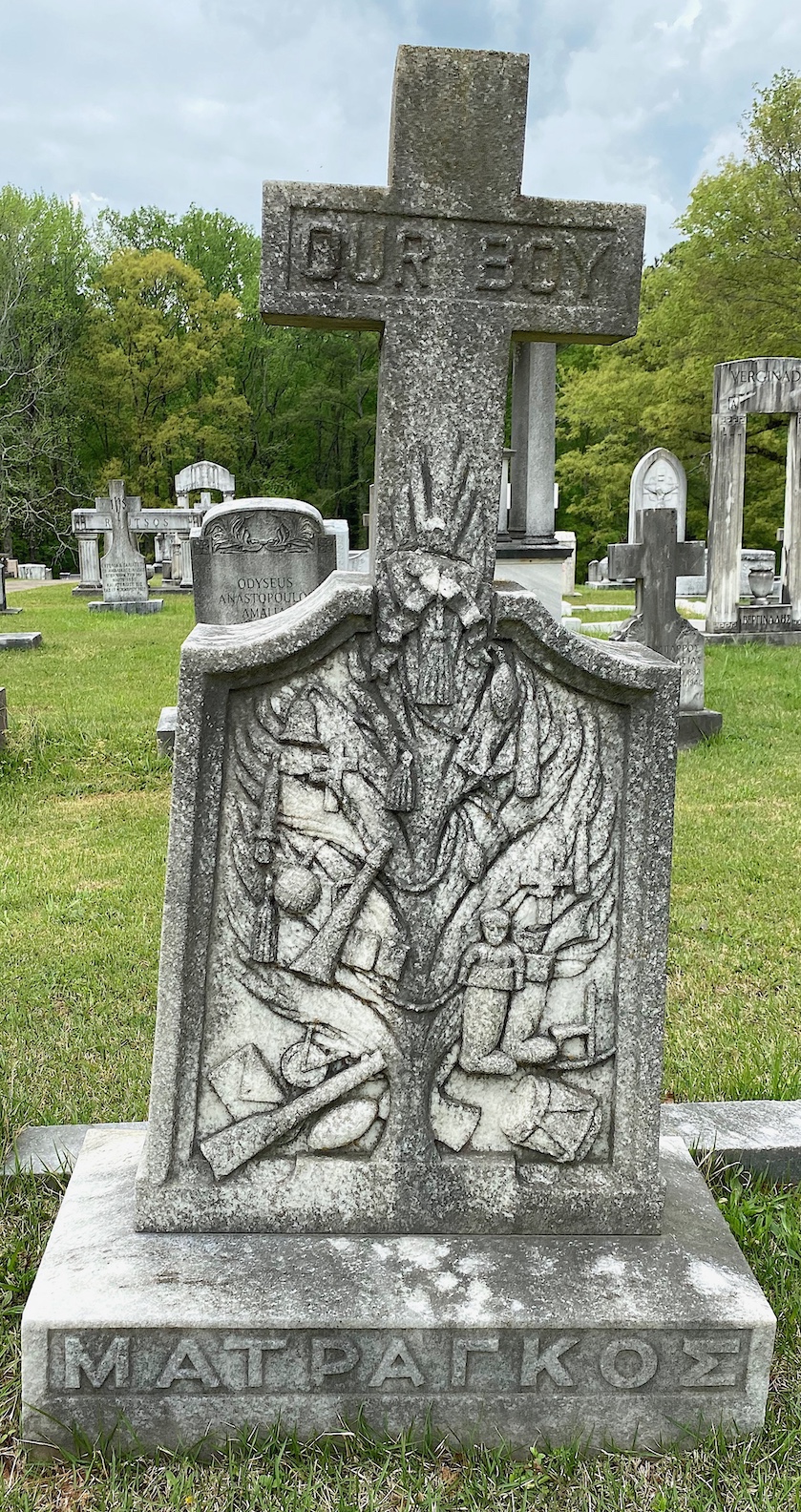
The son of Chris and Marie Matrangos. Tito, 9, died of endocarditis and influenza on Christmas Eve 1924. I cannot imagine losing a child, much less on the day before Christmas. I have no doubt that the holiday was forever changed for the Matrangos family. Chris and Marie are buried beside Tito.
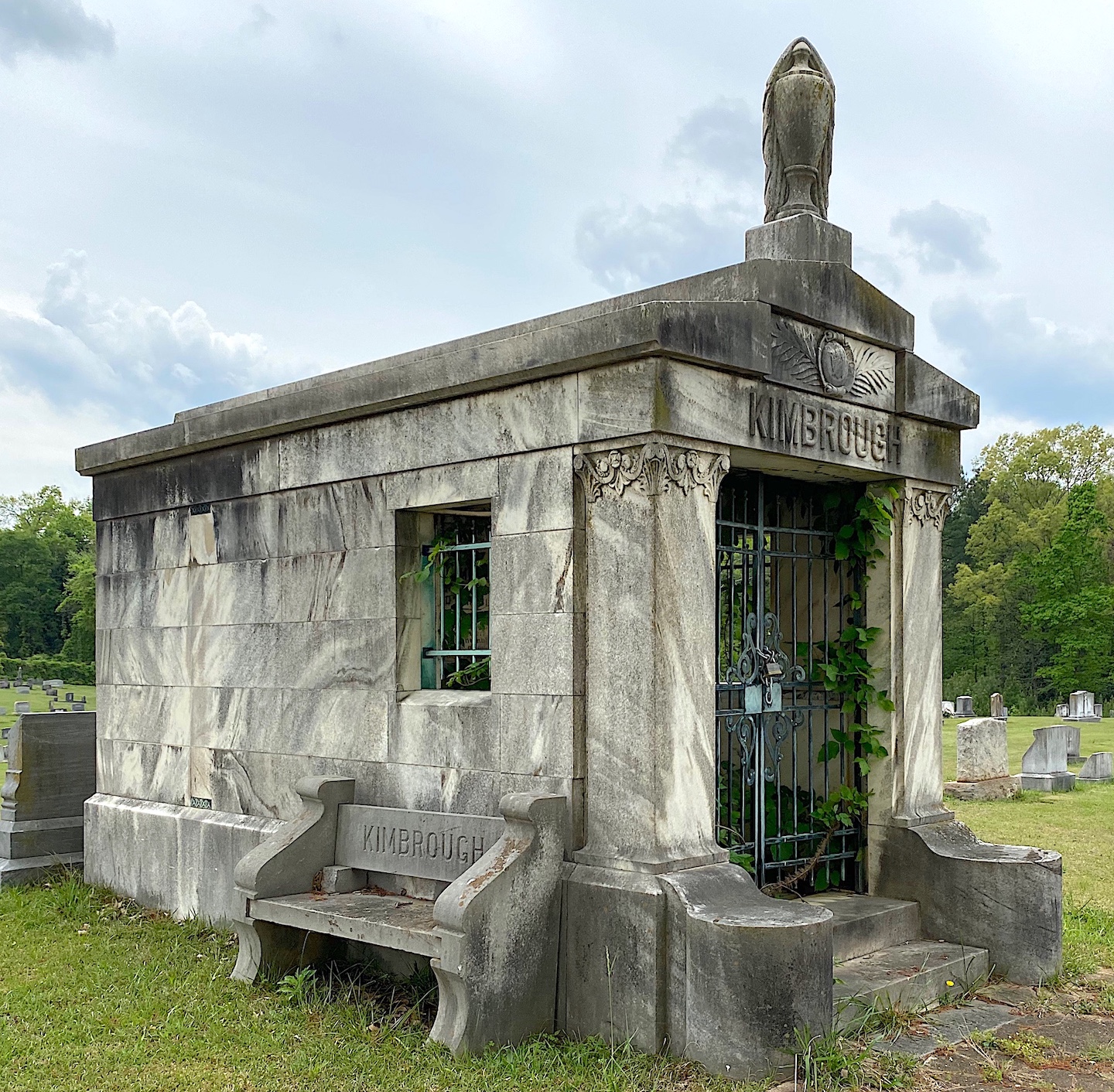
Kinbrough Mausoleum
Greenwood only has one mausoleum. These pictures are from several years ago, so I don’t know what kind of shape it is in now.
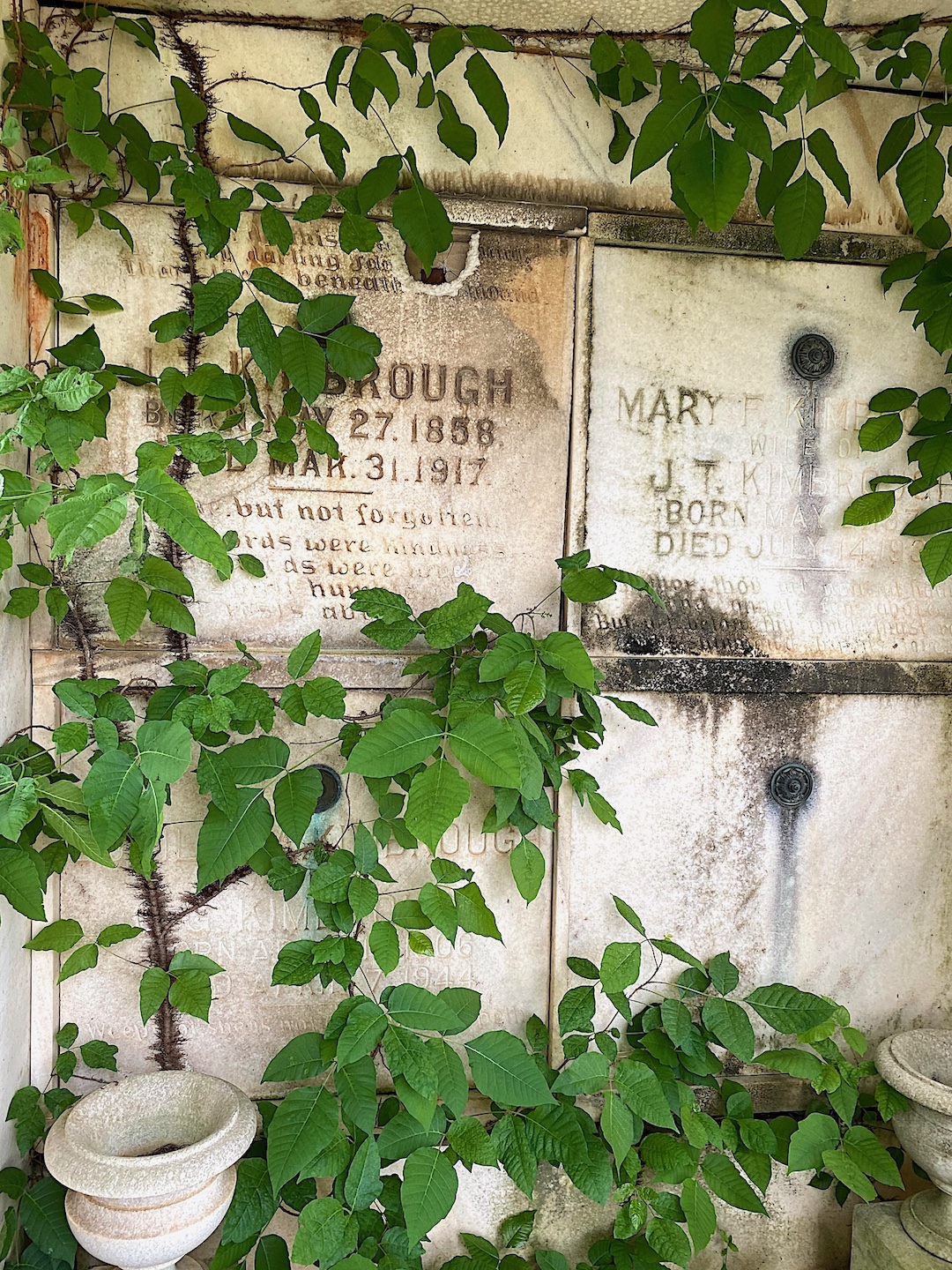
Three of the four spaces are occupied by John Thomas Kimbrough, his wife, Mary F. Anglin Kimbrough, and daughter-in-law Lucille Avery Kimbrough.
Born in Muscogee County, Ga. in 1858, John Kimbrough came from a large family. He remained a bachelor until 1908 when he married Mary F. Anglin when he was 39. As it turns out, John (by then a policeman) and Mary had met when he was boarding with her and her husband, Oliver Anglin. A prison guard, Oliver and Mary were married in 1886. He was 20 years her senior. Their son, also named Oliver, was born in 1904.
Exactly when Mary divorced Oliver is unclear but little Oliver took John’s last name. No longer a policeman, John got into the real estate business and served as a council member for Atlanta’s 10th Ward. He died at age 58 on March 31, 1917 and became the first occupant of the mausoleum. John left his entire $30,000 estate to Mary, who died on July 19, 1934 at age 62.
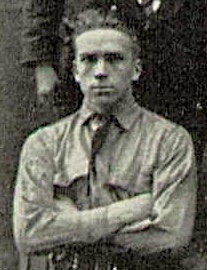
Oliver Kimbrough (the son) continued living with his mother after John died. He attended Atlanta’s Technical High School. I found a photo of him from the 1922 school yearbook.
At some point before 1935, Oliver married Lucille Avery. They had no children together. Oliver worked in the auto industry in sales. Lucille died on April 7, 1944 at age 37 after a brief illness. She would be the last person entombed in the Kimbrough mausoleum.
Oliver remarried to Mildred Turner Tweedy, who had a son from a previous marriage. The 1950 U.S. Census shows the three of them living in Florida. Mildred died in 1968. Oliver died at age on July 9, 1973. He is buried in Dade Memorial Park in Opa Lacka, Fla., but I could find no memorial for him on Find a Grave. So his space in the Kimbrough mausoleum remains empty.
I’ll be back next time with more about Greenwood Cemetery.