• About Me
  • Cemeteries I Have Visited
  • Have questions?
  • Photos

Adventures in Cemetery Hopping

~ A blog by Traci Rylands

Adventures in Cemetery Hopping

Category Archives: General

Iowa/South Dakota Hopping: Making a Stop at Graceland Cemetery in Blencoe, Iowa

13 Friday Mar 2020

Posted by adventuresincemeteryhopping in General

≈ 3 Comments

After devoting the last several months to the graveyards of Charleston, I’m heading back to Iowa (somewhat familiar territory) and South Dakota (totally new territory). In the summer of 2018, after spending a week at Folly Beach, S.C., I got on a plane for Omaha, Neb. to visit my best friend, Christi. She’s always up for a roadtrip and understands my cemetery obsession.

On the Road to South Dakota

That year, it was our goal to visit Sioux Falls, S.D. I’d never even BEEN to South Dakota and thought that was very cool.

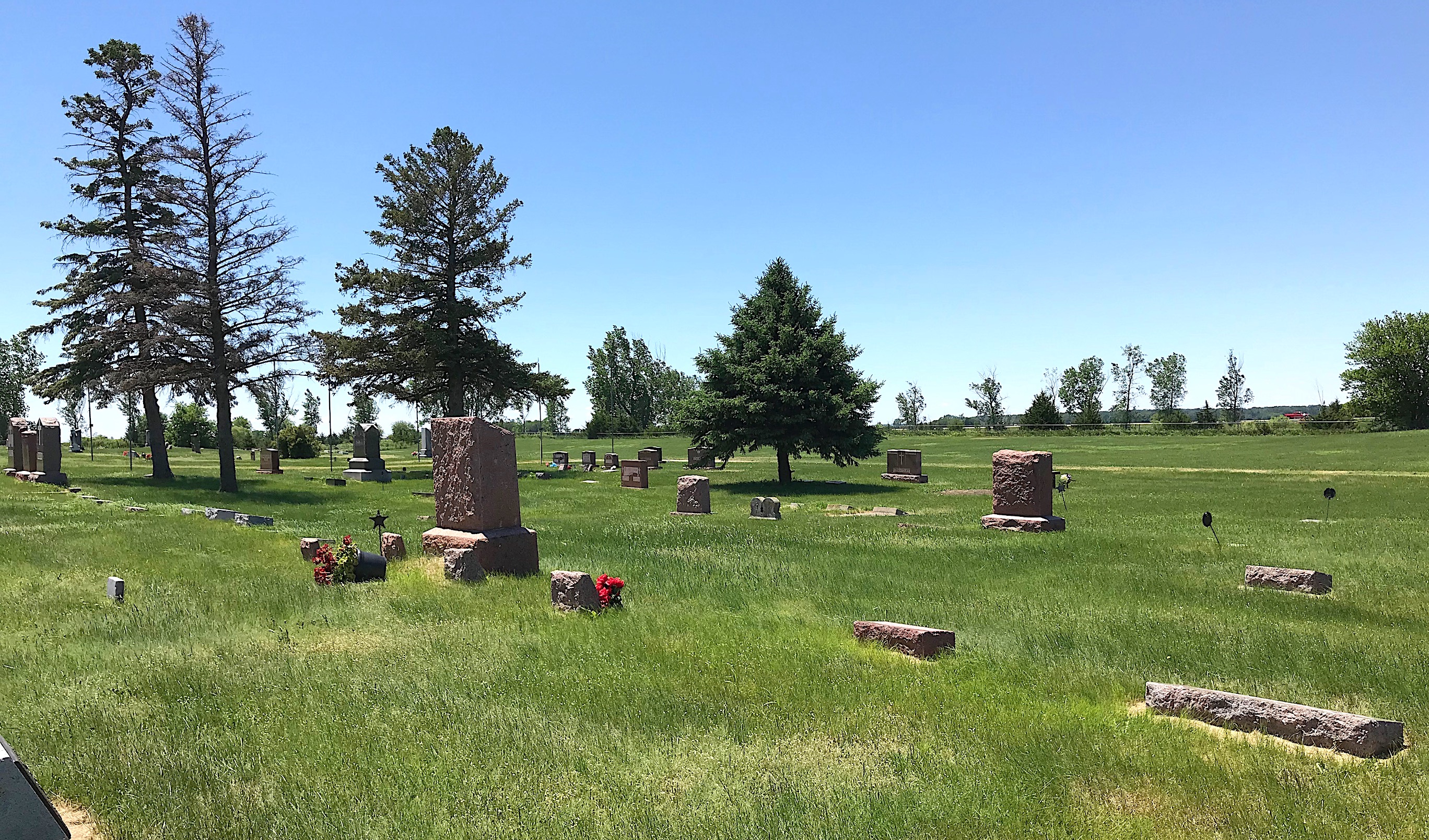
Our first cemetery stop was randomly chosen because I found it on the Find a Grave app as being located not far off of I-29, 50 miles north of Omaha. Some people call it Blencoe Cemetery (after the nearby town) while the sign indicates it is Graceland Cemetery. So I’m going to stick with Graceland.

According to the 2010 U.S. Census, Blencoe (in Monona County) had a population of 224 people. It looks like its highest population was in 1940 when it reached 367.

Like most Iowa cemeteries of this size, Graceland Cemetery has a large sign and is well kept. It’s one of the reasons I keep coming back here to nose around the cemeteries. They respect and take very good care of them, making my job much easier.

On patriotic holidays, the flagpoles lining the main road into Graceland Cemetery are full of American flags.

I could find very little information about the cemetery itself, such as when it was established. The oldest markers I saw dated from the early 1880s. According to Find a Grave, there are about 1,125 total burials recorded at Graceland. Some are unmarked. That’s the extent of what I know.

Death of Abe Michaels

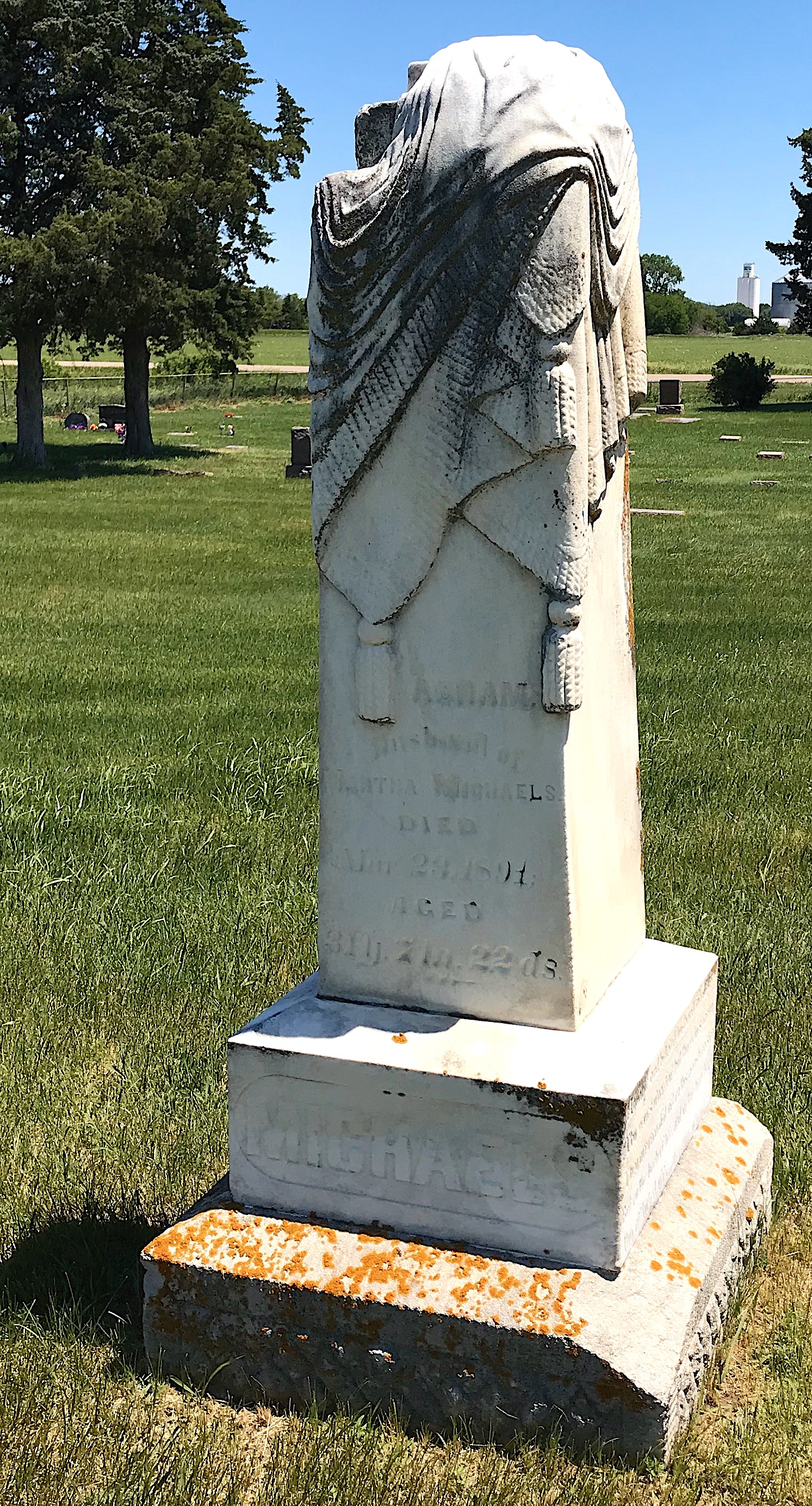
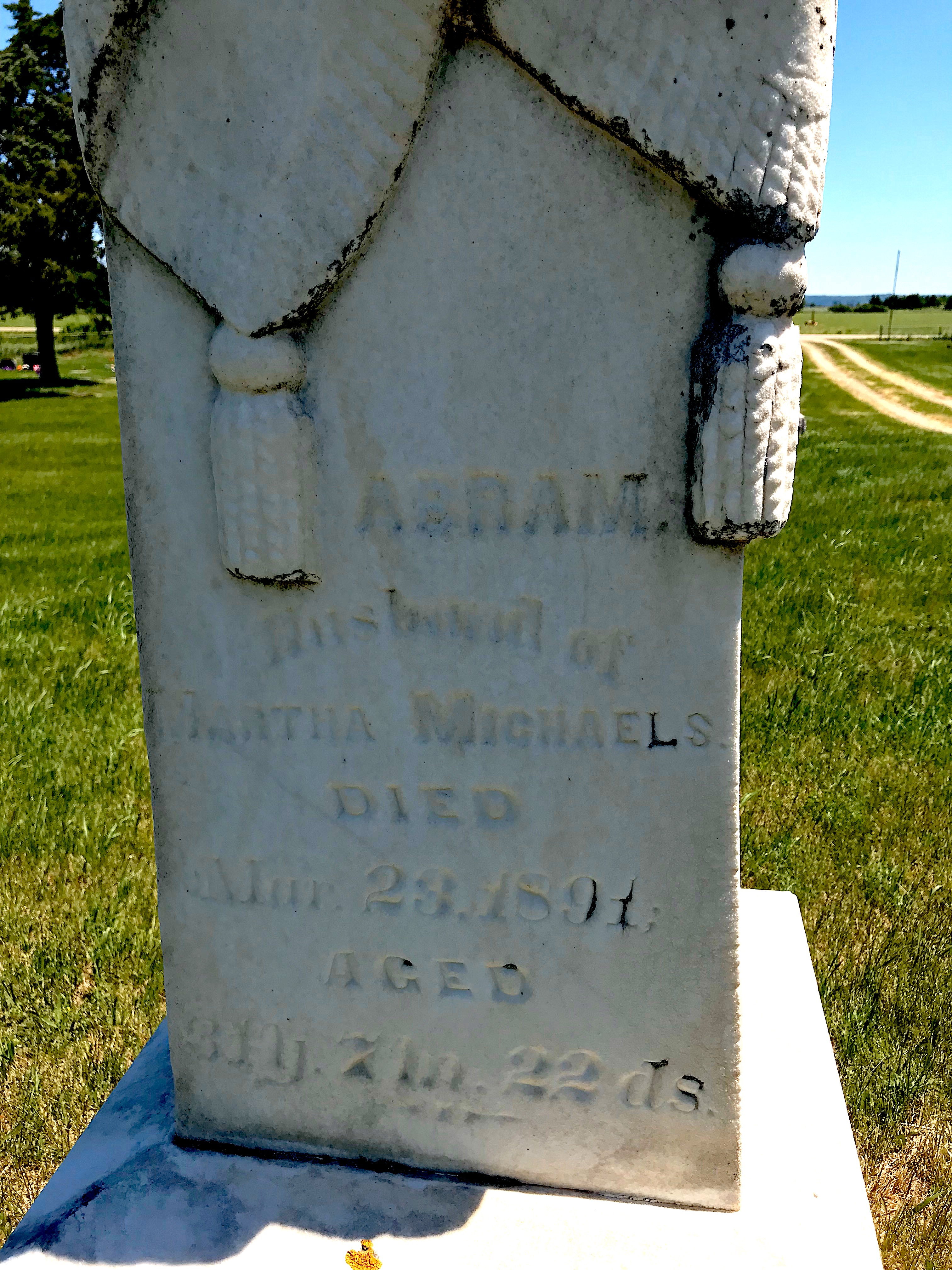
I didn’t know the story I was going to uncover about Abram “Abe” Michaels until this week when I began doing some research on his marker. I knew he was 31 when he died, so I was curious to know what happened to him.

It’s difficult to trace Abe’s roots. Some records indicate he was born in Cleveland, Ohio while others say he was from Indiana or Iowa. Regardless, he married Ellen “Martha” Kennedy (Glenn) on May 2, 1885 in Sherman, Iowa.

Abe Michaels was originally buried at Little Sioux Cemetery, about 25 miles away from Graceland Cemetery.

On Saturday, March 21, 1891, Abe had spent much of the day at a saloon (newspapers called it a “beer shack”) playing cards and socializing. Newspaper accounts say once outside, he got into a dispute with local men George Welch and John Marley. Witnesses said Welch tried to reason with Abe but instead of calming down, Abe drew a knife. Welch allegedly picked up a piece of a two-by-four and hit Abe in the head with it in self defense.

The story of why Abe didn’t receive prompt medical attention is not clear but he died the next day from his concussion. Both Welch and Marley were arrested for their role in his death and awaited trial for murder.

Abe’s Grave Moved to Graceland

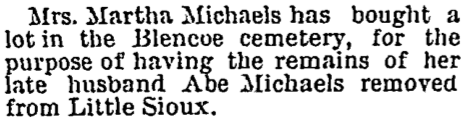
Martha gave birth to a son, Abram Russell Michaels, on May 13, 1891. I can’t imagine what she was going through at the time. A small newspaper item notes that she purchased a plot at Graceland Cemetery in October the same year with the plan to move Abe’s remains from where they were buried 12 miles away at Little Sioux Cemetery. She apparently did just that.

Abe’s wife, Martha, had his body moved from Little Sioux Cemetery to Graceland Cemetery several months after he died. Article from the Monona County Democrat, Oct. 29, 1891.

On Dec. 3, 1891, George Welch was acquitted of the charge of murdering Abe. As a result, John Marley’s indictment was dropped.

Abe Michaels died two months before the birth of his son.

Untangling Martha’s martial history was tricky. She had married Robert Glenn in 1880 when she was 18 years old. She married Abe five years later. Her marriage to Englishman Samuel Neeson, who was a few decades older than she, came in 1898. After Samuel died in 1918, she married Christoper Decker. She died in 1947 in Arkansas. Her son with Abe, Abram Russell Michaels, died in 1957 in Arkansas as well.

A Noble Heart

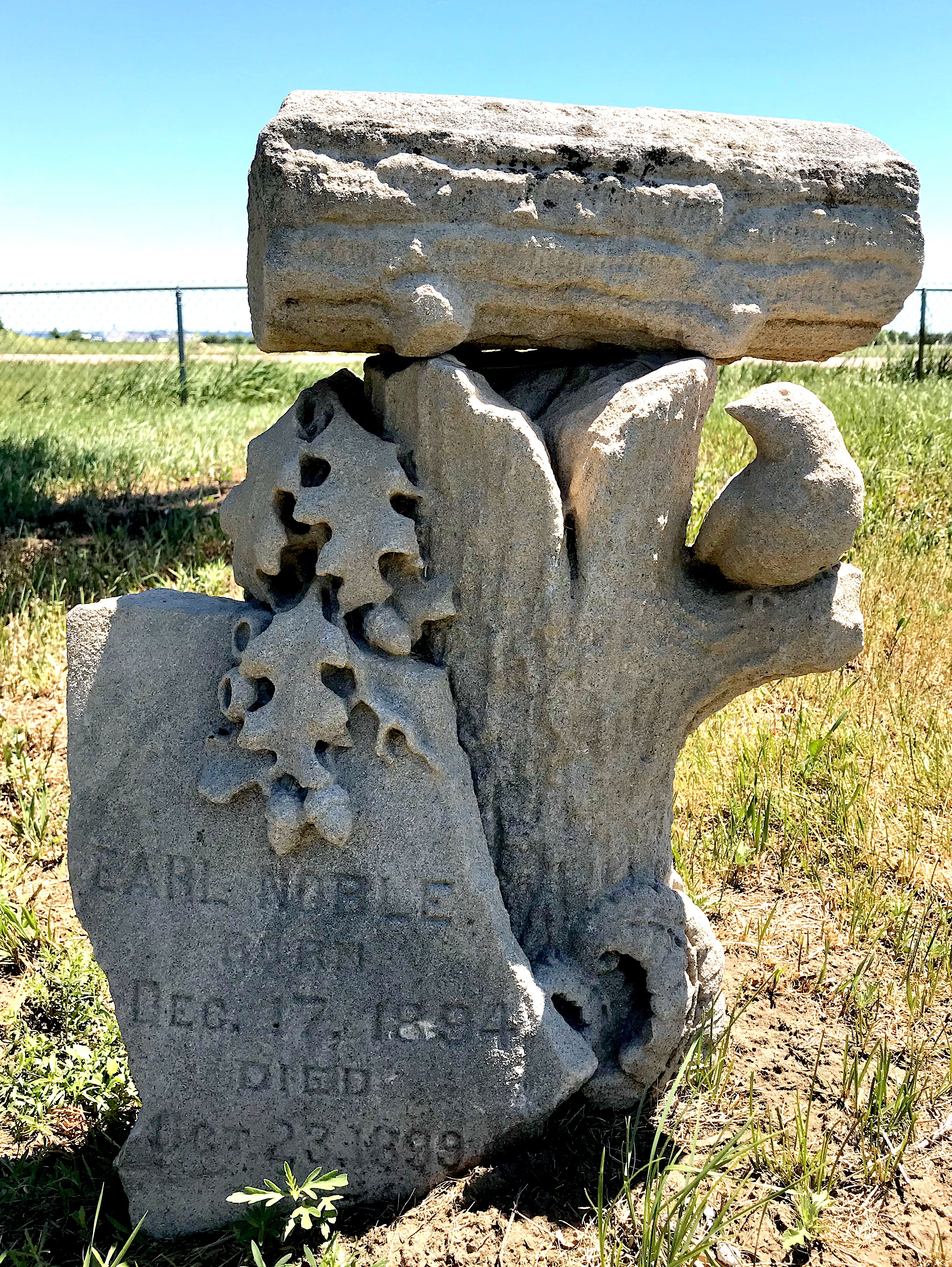
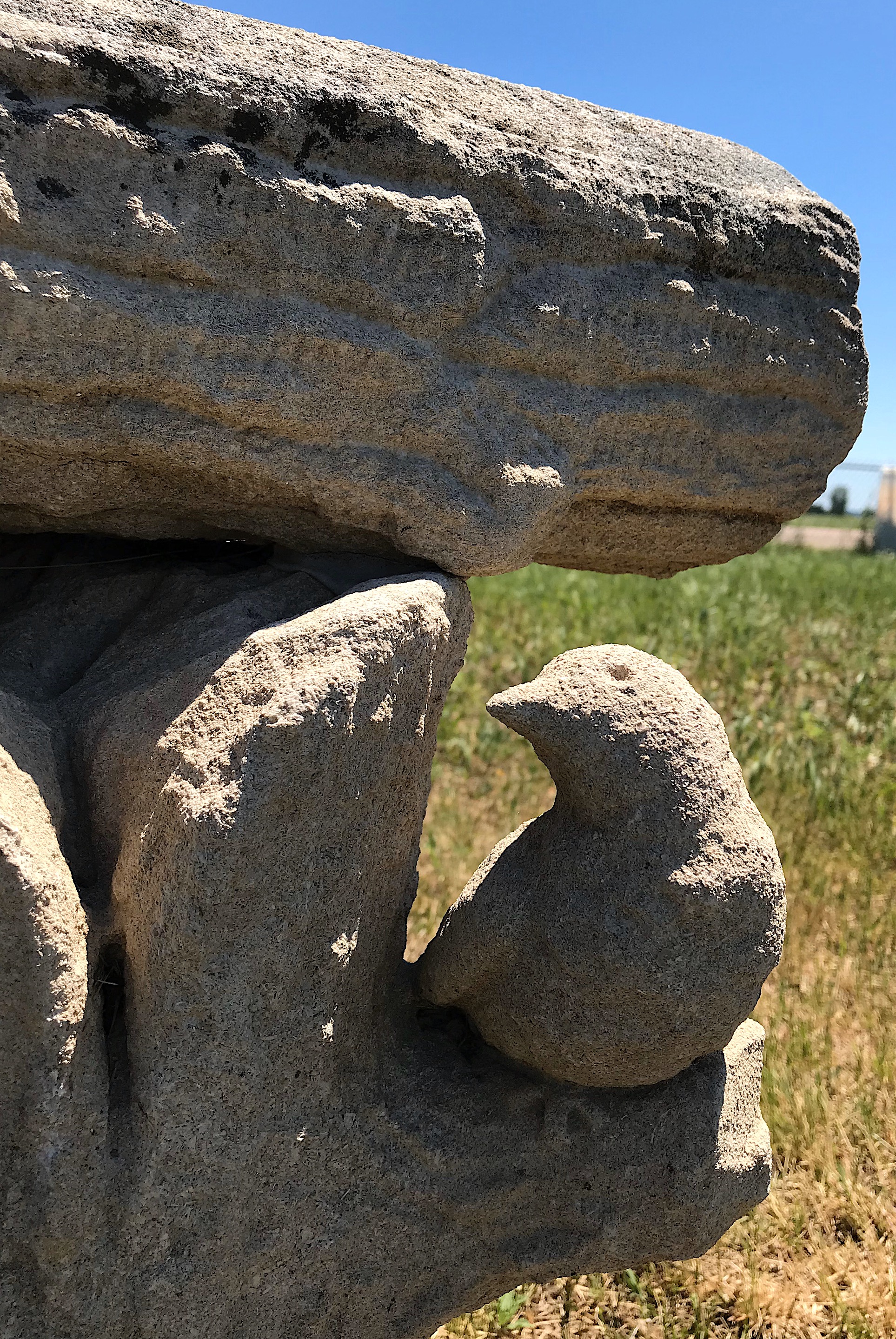
Near the entrance of the cemetery is a small stump grave marker for four-year-old William Earl Noble. He was the son of Jackson Noble and Ida Belle Hogue Noble. It has more detail than most stump stones I’ve seen in the past. It even has fern fronds on the side.

Little Earl Noble’s stump marker is more detailed than most I’ve seen.

Let’s talk about the oak leaves and acorns that adorn Earl’s stump. I found them rather curious considering he was only four years old when he died.

What Do Oak Leaves Signify?

Oak leaves were a popular symbol on gravestones in the 19th and 20th centuries.    The oak stands for longevity, strength, and power.  It also symbolizes eternity, as the oak produces acorns that grow into more oaks that continue the “family” of trees.  Acorns were signs of independence and strength as well.

According to a newspaper article, little Earl Noble had never had good health.

I am more fascinated by the sweet little gird resting on a short branch coming off the stump. The stump itself means a life cut short. But the bird makes me think of little Earl, just getting started in life and stretching his wings.

The Noble family moved to Mitchell, Neb. in January 1907 and Jackson died in December of that year from pneumonia. Ida remarried in 1910 to J.T. Watson. When she died in 1920, she was buried in Graceland Cemetery back in Blencoe beside her first husband, Jackson, with “Ida B. Noble” inscribed on her marker.

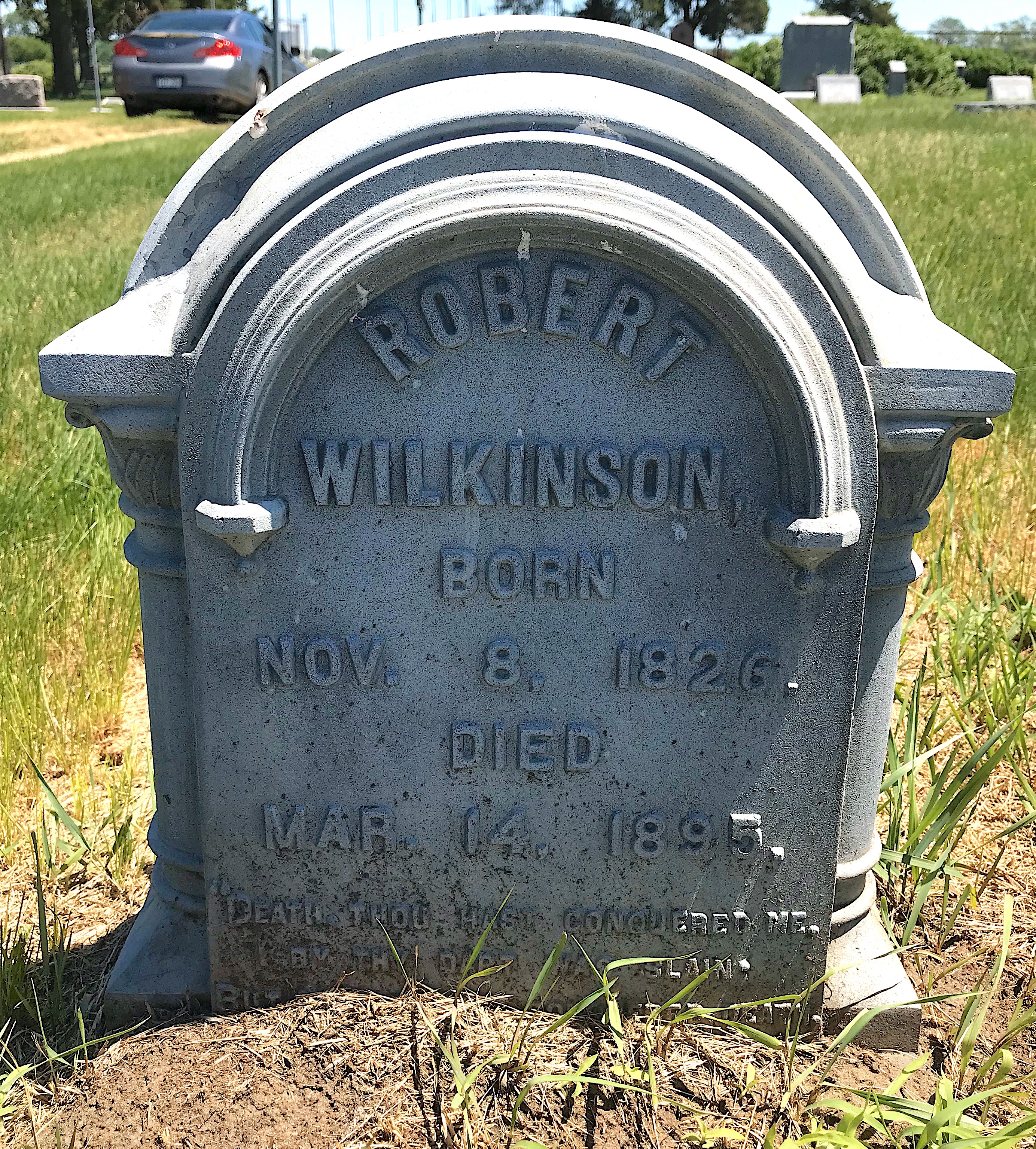
“Death, Thou Hast Conquered Me”

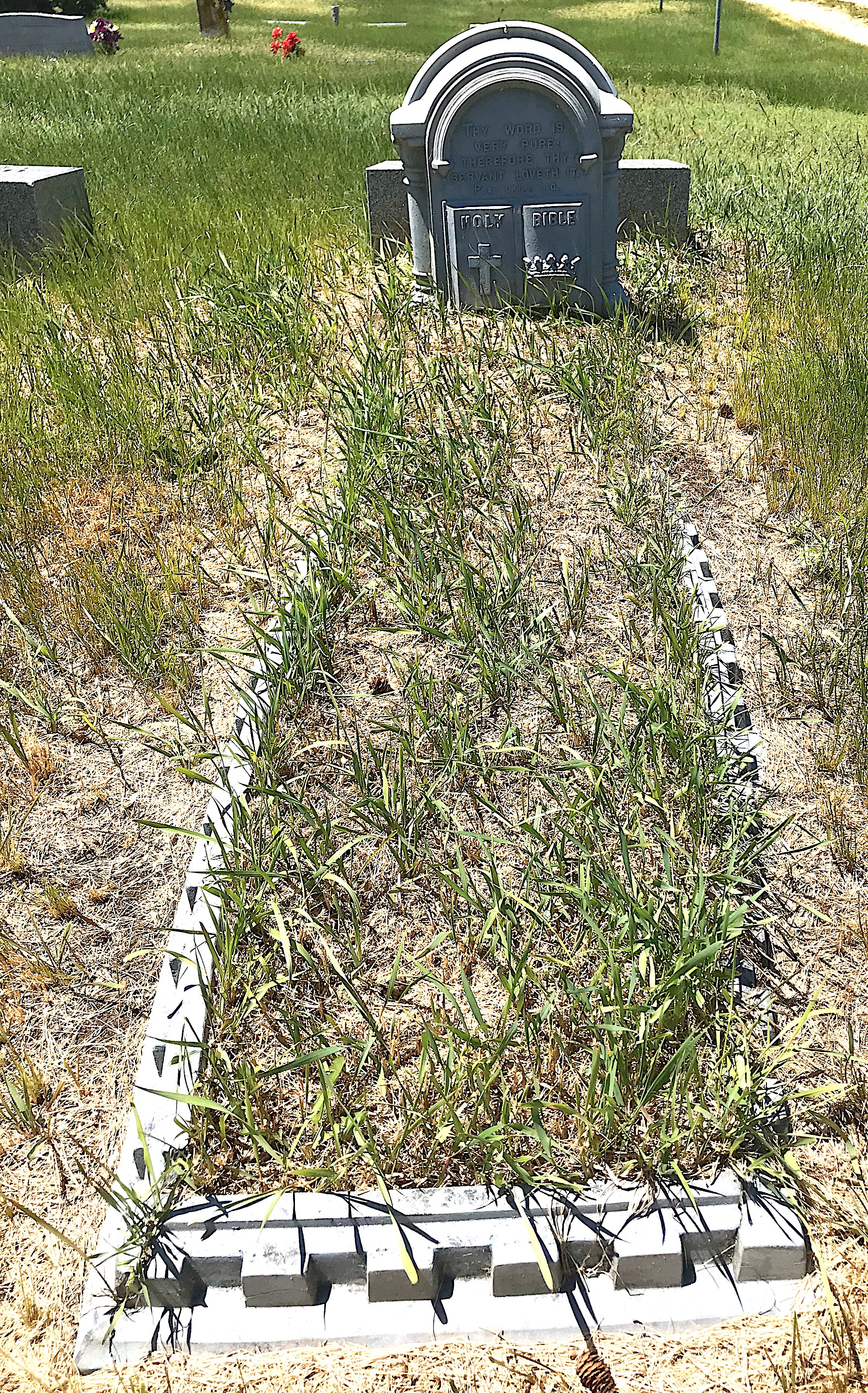
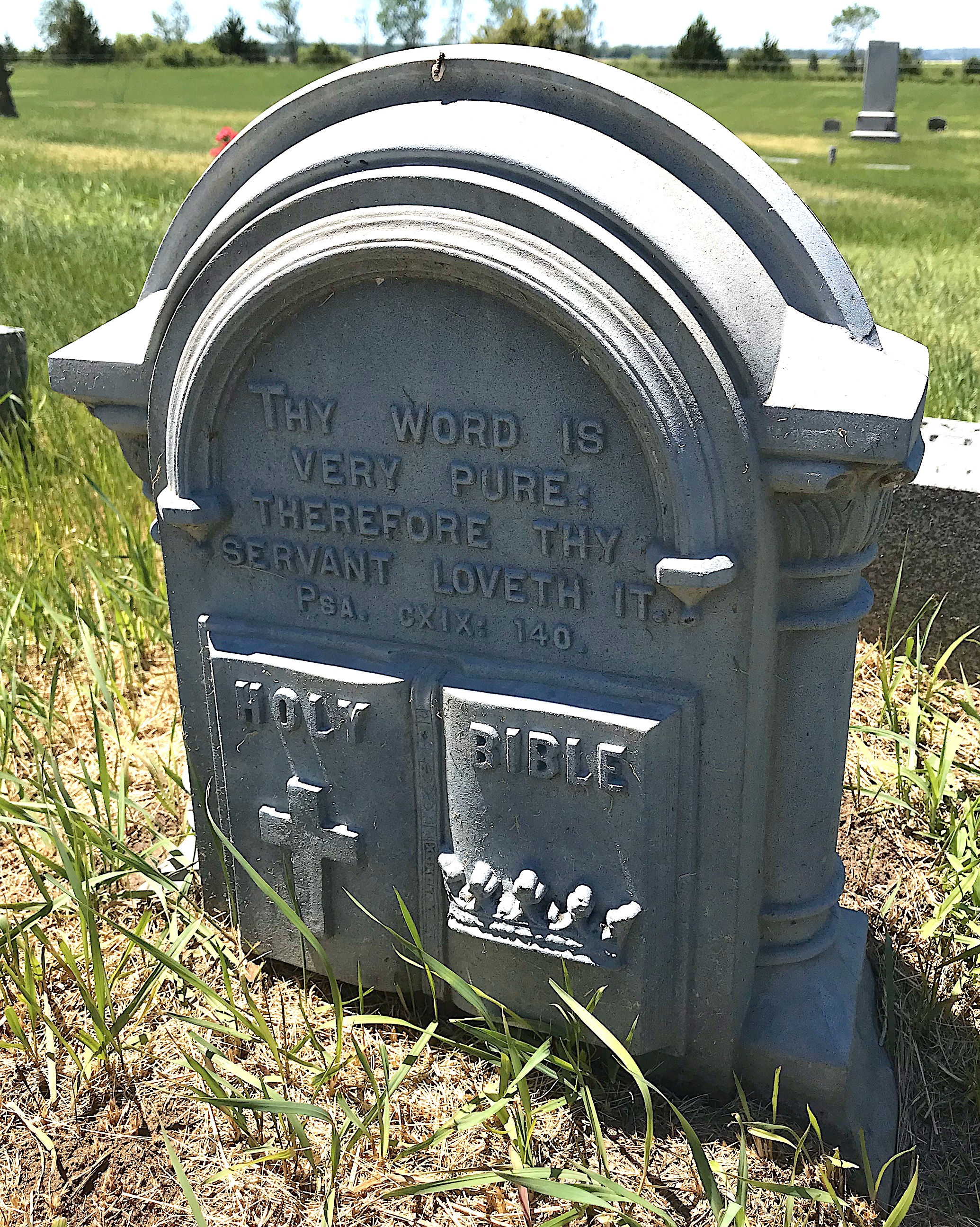
I managed to find one white bronze (actually zinc) marker at Graceland Cemetery and it was made in a style I don’t see often. In addition to a small marker, it includes a rectangular border that goes behind it. I’m guessing that loved ones could plant flowers in the space in the middle.

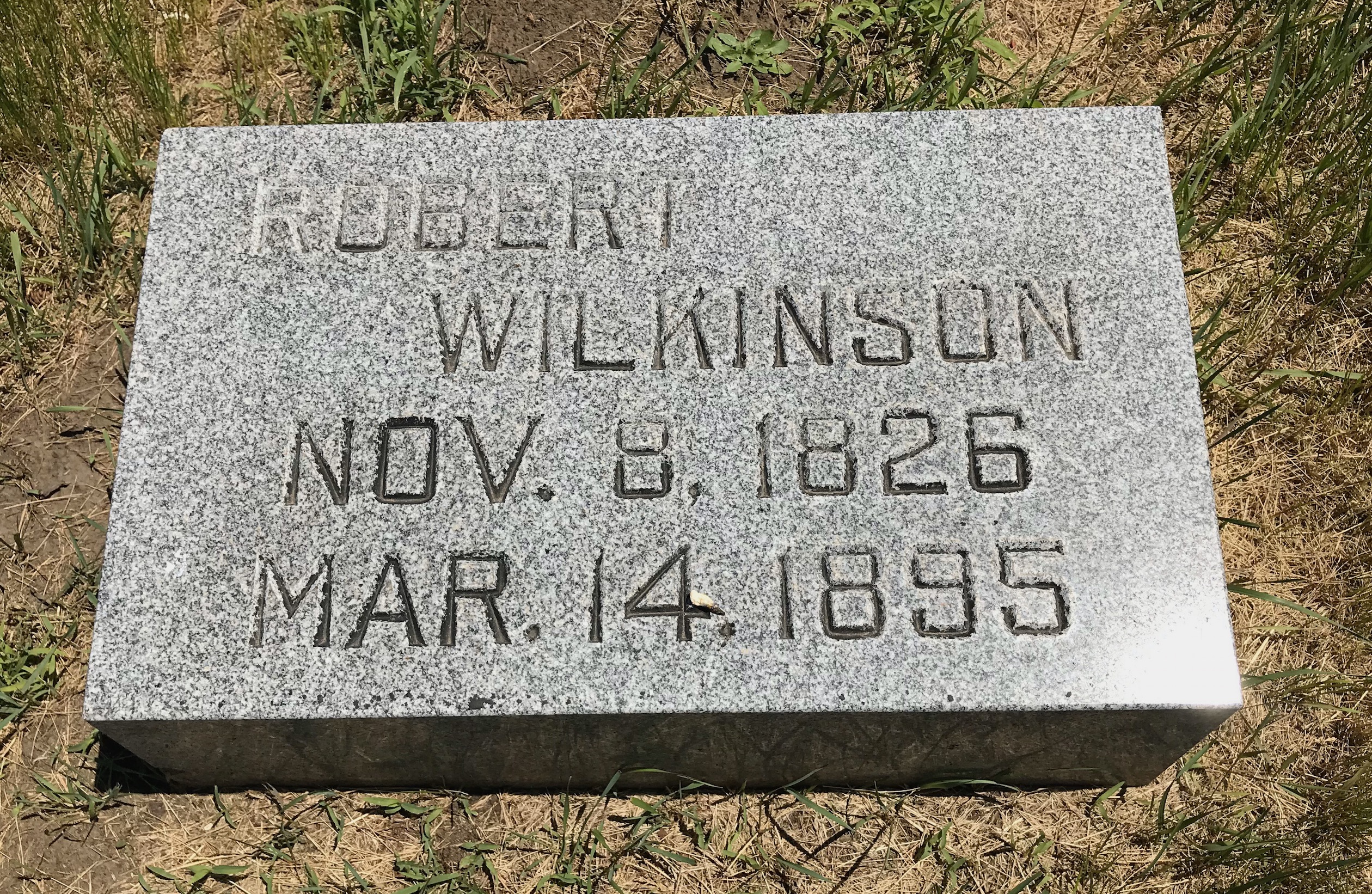
A white bronze border accompanies the grave marker of Robert Wilkinson.

A native of County Donegal, Ireland, Robert Wilkinson and his wife, Elizabeth, came to America around 1881. He was already in his 50s by then and some of the couple’s eight children were already married and had family of their own. A number of them had crossed the Atlantic just a few years before their parents.

Interestingly, a regular square marble marker is situated right beside this white bronze one.

According to an article in the Onawa Weekly Democrat from March 21, 1895, Robert enjoyed breakfast at his house on the day he died. His death was not long after that and the author of the article concluded it must have been from heart failure. Not sure how he came to that conclusion, but there you have it.

Robert Wilkinson was a member of the Adventist church when he died.

One thing I noticed was that Robert’s white bronze marker was right next to a square marble one with the same information. It matched the style of his other family members. My guess is that one came later. Robert was 68 at the time of his death.

Robert’s wife, Elizabeth, outlived him by about 14 years and died on Feb. 15, 1909.

I’m going to finish up my visit to Graceland by sharing with you this glorious double tree monument for George and Martha Edmonds. I’ve seen a lot of tree monuments but not that many double trees. And this one is especially well executed, in my opinion.

George and Martha Edmonds are memorialized by this lovely double tree monument.

A native of New York, George W. Edmonds was born in 1816 in New York. He married Martha Ricketson and at some point, they moved to Plattsville, Ill. to start a family. They did not move to Iowa until sometime around 1880. Their son, Edgar, moved there as well. Their daughter, Rosina, had married and stayed behind with her family in Illinois.

George died on Oct. 19, 1892. Martha died on Oct. 5, 1894. I am guessing that Edgar may have commissioned a carver to make this amazing double tree monument. Notice how the upper branches are intertwined.

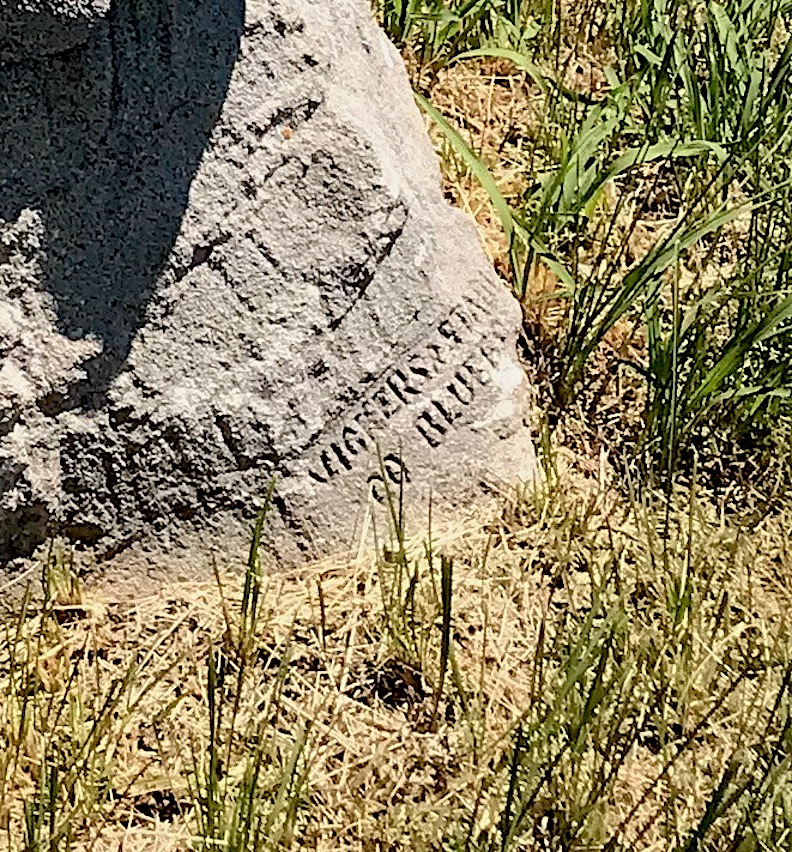
I noticed that two names at the bottom of the monument indicating the company that produced it, but was unable to find out anything about them since my picture didn’t get their entire names. But they were located in Council Bluffs.

I wish I had gotten a better picture of the monument makers’ names.

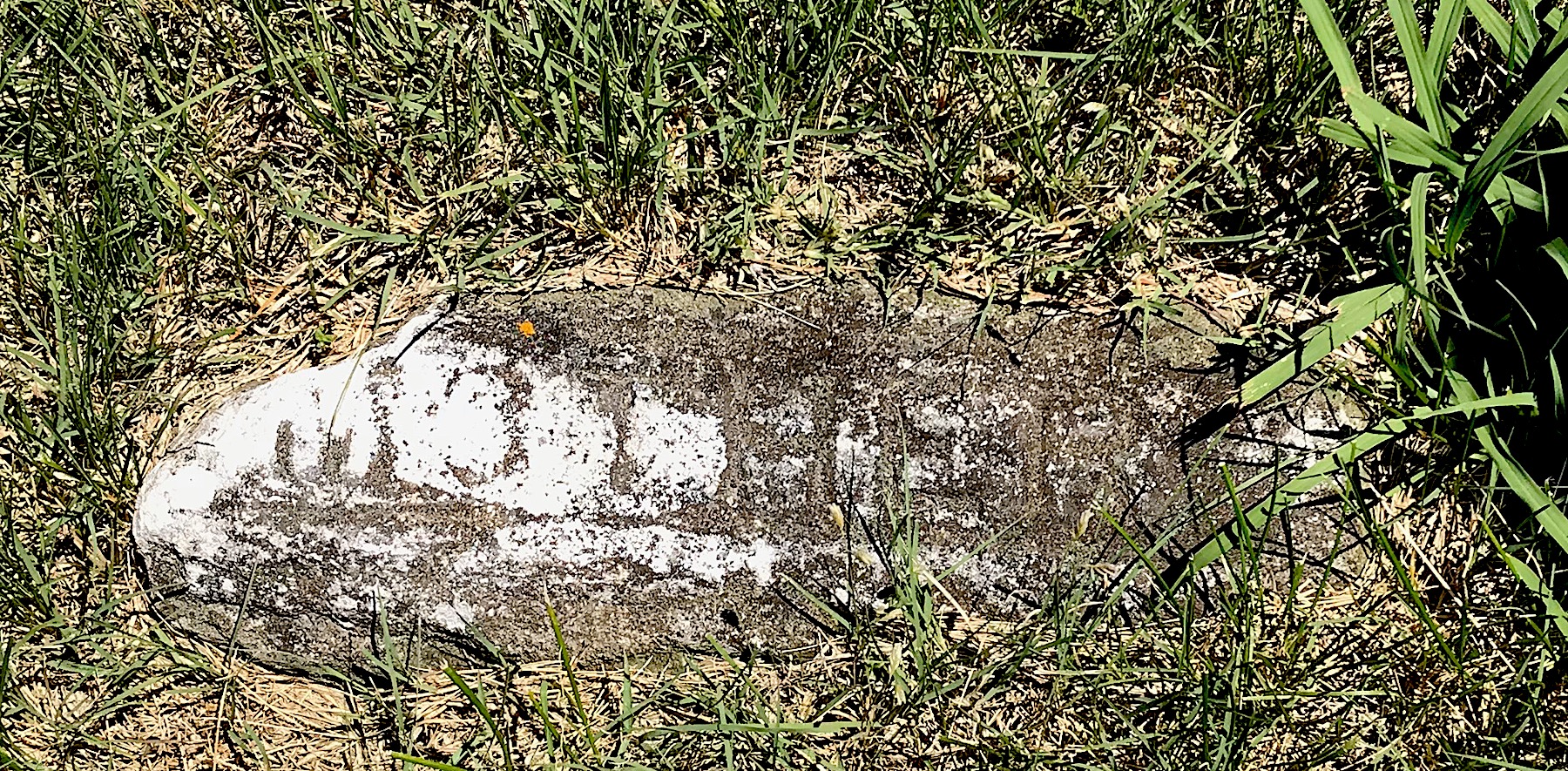
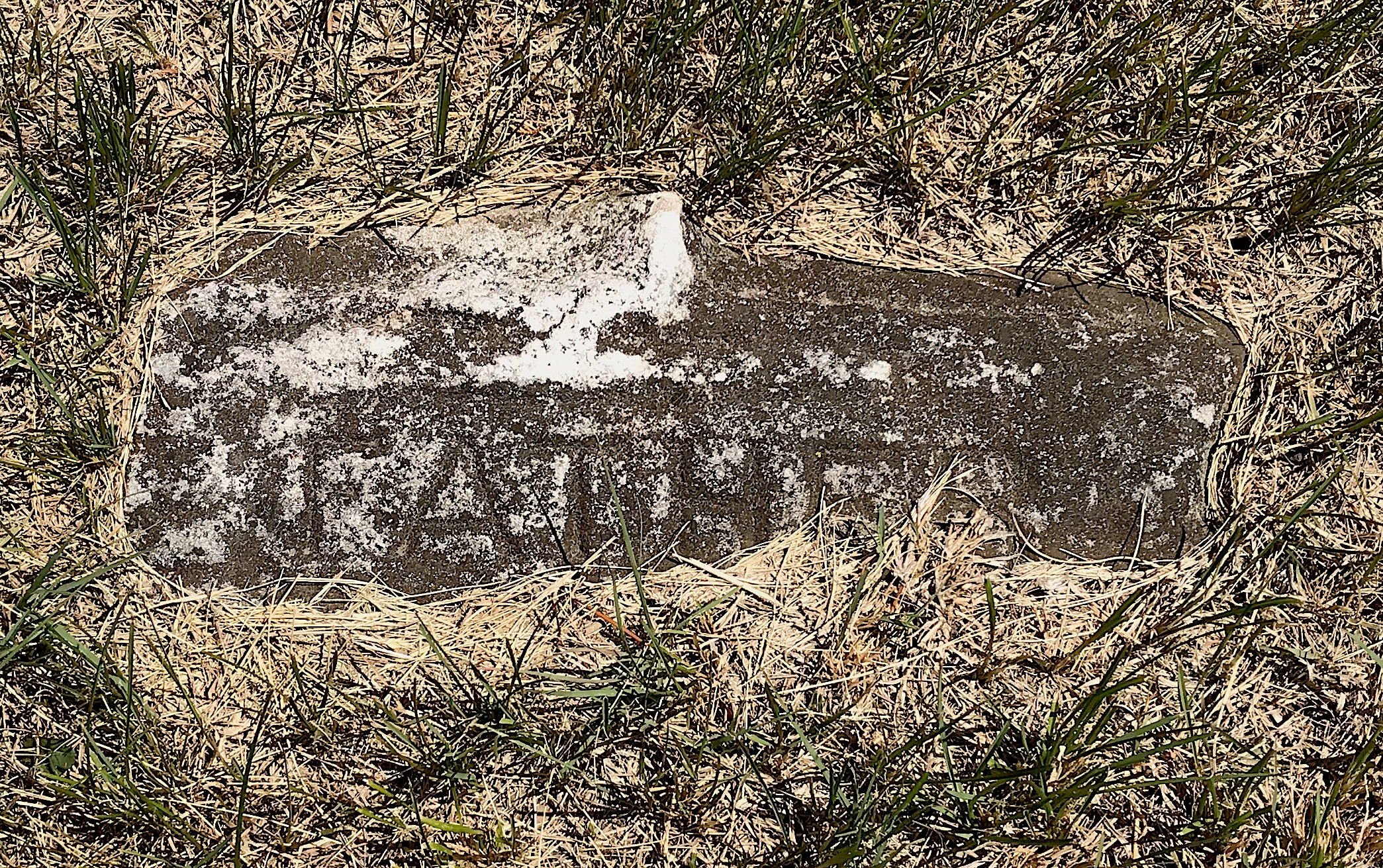
You can also find two “logs” with the words “father” and “mother on them in front of the monument. It would be great if someone could reclaim them from the ground that’s threatening to swallow them up.

Edgar died in 1933 and was buried at Graceland according to both his death certificate and a newspaper article. I did not see a marker for him there. His wife, Melissa, died in 1934. There is a stone for her at Plattville Cemetery back in Illiniois where both were born and raised. Edgar’s sister, Rosina, is buried there as well.

Back on the Road

Having spent a some time wandering Graceland Cemetery, it was time to head the 12 miles up the road to Onawa Cemetery. Meet me there next time for another adventure.

A last look at Graceland Cemetery.

More Charleston, S.C. Cemetery Hopping: Wandering Through the Circular Congregational Church Burial Ground, Part II

28 Friday Feb 2020

Posted by adventuresincemeteryhopping in General

≈ 2 Comments

Did you know it was five months ago when I started writing this series about the historic district churchyards  of Charleston, S.C.?

Most of the information I gathered and photos I took were from a single day in May 2018 when author/educator Frank Karpiel kindly showed me around some of his favorite haunts. A few I’d been to before and a small number of my photos are from those previous visits. My visit to Bethel United Methodist Church took place in 2013 but I felt it was worth including.

Today, I’m finishing the adventure by wrapping things up at the Circular Congregational Church (CCC) burial ground with a final look around at this unique collection of grave markers and monuments.

A view of the Circular Congregational Church burial ground. That’s the Huston-Peronneau brick vault to the right.

Hutson-Peronneau Vault

The largest grave site in the CCC burial ground is the Hutson-Peronneau brick vault, measuring 10X10X10. An archeological survey done in the early 1980s revealed that at least 18 persons were interred inside of it, many that are listed in church records.

The Hutson-Peronneau vault contains at least 18 people.

Some of the markers I shared last week belonged to the Peronneau family. Arthur Peronneau (1735-1774) may have been the first person placed inside of this vault. I could not find much information about him. He married Mary Hutson at St. Philip’s (whose West Cemetery is right next door) in June 1762.

Arthur died on Oct. 15, 1774 at the age of 39. His will mentions his wife, Mary, and the four oldest children, all of whom lived to adulthood. It does not mention his youngest daughter, Ann. Sadly, she was born nine days after Arthur died on Oct. 24, 1774.

Lawyer, Politician, Lieutenant Governor

The most famous person interred in the Hutson-Peronneau vault is Arthur’s brother-in-law, Richard Hutson (1747-1795). A plaque detailing his storied career was placed on the vault by his family’s descendants in 1995.

That’s quite a list of achievements.

Richard Hutson graduated from Princeton University in 1765. He studied law afterward and gained admittance to the South Carolina bar in 1768.

Hutson also played an influential role in Charleston’s political circles. He served five terms in the South Carolina House of Representatives between 1776 and 1788. After the British captured Charleston in 1780, he was held prisoner at St. Augustine, Fla. until July 1781. After he returned to Charleston, Hutson served as the eighth Lieutenant Governor of South Carolina under Governor John Mathews in 1782 and 1783.

Richard Hutson (1747–1795) was an American lawyer, judge, and politician.

Hutson also served as Charleston’s first intendant mayor, serving in 1783 and 1784. The position was known as intendant until 1836, and has been known as “mayor” since that time. He died in Philadelphia, Pa. in 1795.

The Actor Who Became a Pastor

I’d like to share the grave marker of Richard Hutson’s father, the Rev. William Hutson. It might look familiar in style because it was carved by William Codner, who also produced the Rev. Nathan Bassett’s marker that I shared about in the previous post.

The Rev. William Hutson’s marker is inscribed in Latin.

Born in 1720 in England, William was a stage actor who made his way to America. He was working on the stage in New York when he attended a revival where George Whitfield was speaking. Whitfield was part of the Great Awakening, a religious revival sweeping the new country. As a result, William became a pastor and eventually led the Circular Congregational Church. I wonder if William’s acting skill helped him in the pulpit when delivering sermons.

Note the two cherubs flanking the Rev. Hutson. One is leaning on an hourglass and the other on a skull.

The Rev. Huston died in 1761 at the age of 41. The top of his marker fascinates me. Like the Rev. Bassett, there are two cherubs flanking a portrait bust. But if you take a close look at the cherub on the left, he’s leaning on an hourglass. That fits right in with the 18th-century notion that we have little time on the Earth. The other cherub is leaning on a skull, tapping into the motif that we’re all going to die so it’s best to live a good life so we end up in Heaven and not Hell.

“His Turn is Come”

This next marker is truly striking. While much isn’t known about John Warham (1751-1773), we do know his stone was carved by Rhode Islander John Bull. An hourglass dangles on the blade of a scythe, a favorite motif he used on some of his stones.

John Warham was only 22 when he died in 1773.

Over toward the Parish House is a plot that Frank Karpiel pointed out to me during our 2018 tour of Charleston cemeteries. It’s a domed brick vault in the plot belonging to the Simmons family. Dating from 1695, many believe this to be the oldest crypt in Charleston. Around it are markers other pioneer families like the Peronneaus and Vanderhorsts.

This domed brick vault could be the oldest crypt in Charleston.

Two Remarkable Portrait Stones

There are two portrait-style grave markers I don’t want to leave out. Attributed to carver William Codner, the stones for Isaac Holmes, Jr. and his wife, Elizabeth Stanyarne Holmes, capture details some of his others do not. Note that neither has angels/cherubs flanking the portraits, something Codner liked to do.

Elizabeth Stanyarne Holmes and Isaac Holmes, Jr. were married in September 1755.

The son of Isaac Holmes, Sr., a native of Boston, Isaac Jr. was a prosperous merchant who was born and raised in Charleston. He married Elizabeth Stanyarne in September 1755 when she was around 16 years of age. She died only three years later on May 18, 1758 at age 19. It looks like they’ve had to repair her stone due to cracks.

If you get a good look at Elizabeth’s portrait, the detail is amazing. Codner does a lovely job of detailing the curls of her hair, the folds of her gown, and even the ties of her bodice.

“A Heap of Dust”

Isaac remarried in 1759 to Rebekah Bee, who was 30. One of their children, Susannah, is listed on Isaac’s marker. She died at the age of nine months on April 11, 1763.

I think Codner did an equally amazing job on Issac and Susannah’s marker. Again, the detail of the hair is apparent. Note the button and buttonhole of his coat. Even the folds of Isaac’s cravat are included.

Isaac died only seventh months after his daughter, Susannah, on Dec. 17, 1763. Here’s part of the inscription on their stone, with the spelling exactly as it was carved:

How lov’d How valu’d once avails Thee not
To whom related or by whom begott
A Heap of Dust alone remains of Thee
Tis all thou art and all the Proud shall be
Blessed are the Dead that die in the Lord
May my latter End be unto theirs

“Arrested by the Hand of Death”

There are a few more grave stones I’d like to share that date a bit later than previous ones but are still remarkable. This one is for Mary Jane Smith (1740-1765). She was the wife of a CCC deacon, Josiah Smith, according to her stone.

Mary Jane Smith was 55 when she died in 1795.

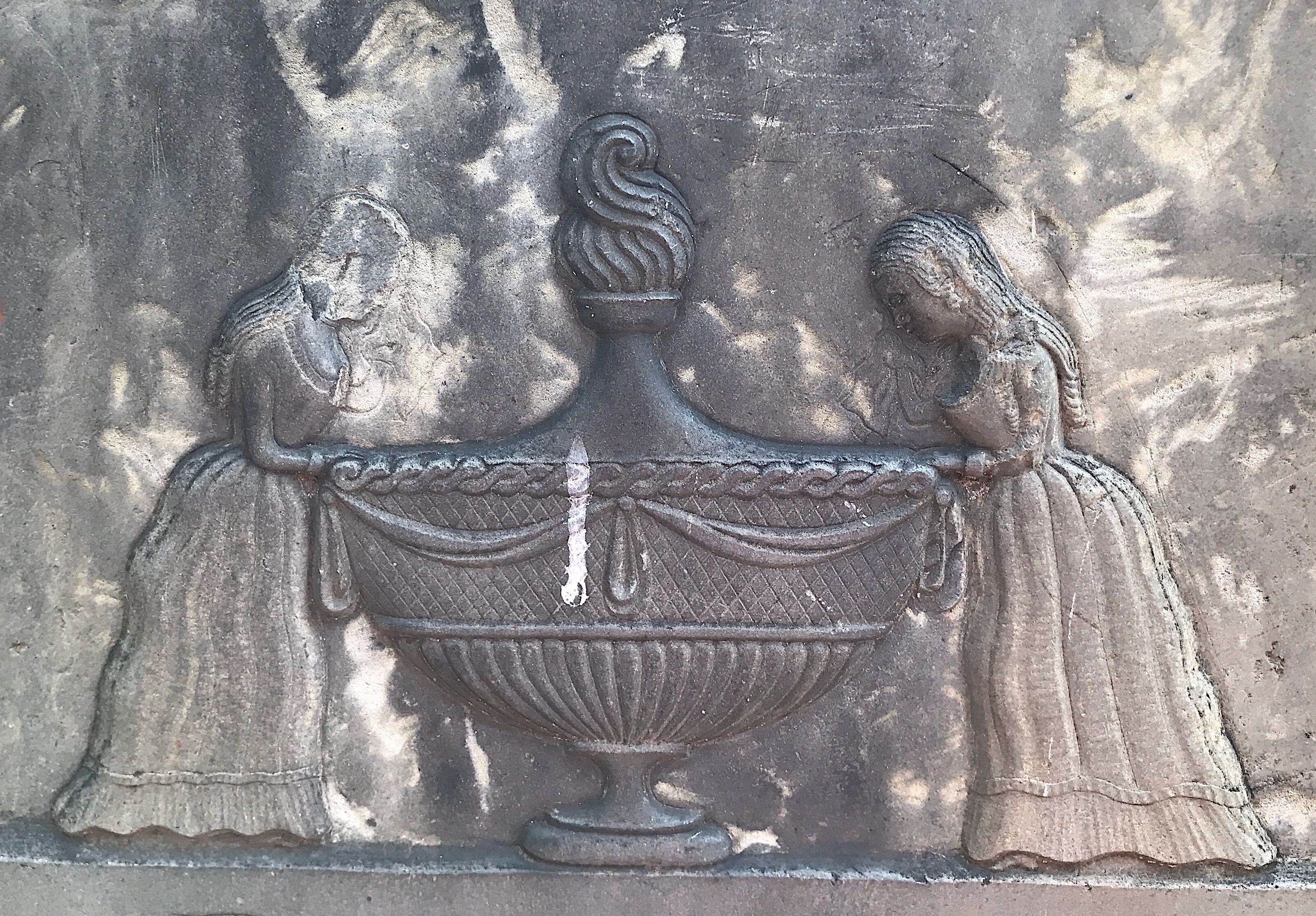
Her marker features an urn flanked by two weeping women, which is keeping with the movement away from soul effigies and portraits. The Classical influence is more heavily felt in this era. Let’s take a look at the top closer up.

Two women weep on both sides of an urn.

You’ll notice that the urn is quite detailed, from the flame to the draping of the ribbon. I have a notion that the mourners were added later and with less attention, although they are still well done. I think someone else, even much later, added the additional arms bearing handkerchiefs. The face of the mourner on the left was vandalized, sadly.

What’s in a Wreath?

This last monument is for Major David Ramsay (1830-1863), whose life is memorialized by a cut-off column topped by a wreath. A broken off column often meant a life cut short. It was carved by one of Charleston’s best known stone masons, E.B. White (his name is on the base).

Wreaths are ancient symbols, going back to the ancient Greeks, who wore them to signify their occupations, achievements, or status. They also crowned Olympic game winners with laurel leaf wreaths as a symbol of the Greek god Apollo, who embodied victory and achievement.

During the 1800s, in grave iconography, an oak leaf wreath meant strength. Laurel wreaths still meant victory but could also signify the arts/music. The bay leaf wreath often stood for death and mourning.

The broken column signified a life cut short.

Major Ramsay’s marker actually gives a good account of his life:

Educated in the Schools of Charleston he completed his collegiate studies at the University of Heidelburg, Germany. There his natural gifts of intellect aided by industry and stimulated by an honorable ambition secured for him the highest honors of his alma mater.

Returning to his native country he embarked in the practice of law and soon reached an honorable rank of the profession fame and fortune seemed equally with in his reach when at the call of his country he repaired to the field of battle, there as Major of battalion. He fell mortally wounded gallantry fighting in the defense of Battery Wagner on Morris Island.

Stone carver E.B. White’s name is on the base of David Ramsay’s monument.

A well-educated man, David Ramsay was practicing law and had attained a seat in the state legislature when the Civil War began. As a Confederate Army officer, Ramsay served as a major in the First South Carolina Volunteer Infantry Battalion, also known as the Charleston Battalion. He died on Aug. 6, 1863 after he was mortally wounded at Battery Wagner on Morris Island, S.C.

David’s grandfather, also named David Ramsay was an American physician, public official, and historian from Charleston. He was one of the first major historians of the American Revolutionary War. He is also buried at the CCC burial ground, albeit with a much humbler marker that I missed seeing when I was visiting.

Farewell to Charleston

It’s hard for me to leave Charleston behind. I’m not totally done with this city because I’ve not yet written about Magnolia Cemetery, which I’ve visited numerous times. So look for that to be accomplished in the near future (fingers crossed).

In the meantime, I’m going to leave you with some more CCC markers that I think you ought to see. Thanks for joining me on this long but amazing adventure through Charleston’s historic church yards.

Martha Wright’s stone was one of many carved by William Codner.

The head on the soul effigy on John Collins’ (1757-1790) marker has an almost modern-looking hairstyle.

The inscription on this marker is worn off but the beauty of the draped urn remains.

Thomas Roberts (1739-1747) was only eight years old when he died, a sad end indeed. But the impish look on the face of the soul effigy on his marker makes me smile.

More Charleston, S.C. Cemetery Hopping: Wandering Through the Circular Congregational Church Burial Ground, Part I

21 Friday Feb 2020

Posted by adventuresincemeteryhopping in General

≈ 3 Comments

It’s the last stop on my 2018 Charleston cemetery adventures. I’m ending on a true high note at the Circular Congregational Church (CCC) burial ground. If you visit Charleston and only have time to visit one cemetery/church yard/burial ground, pick THIS one because the rarity of what you can see here in the Southeast will literally blow you away.

Visually, it’s apparent where the church got its name. If you visit their web site, they do a good job detailing their history so I won’t talk too much about that. There are too many awesome stones to share.

A British cannonball blew up in the CCC graveyard during Sunday services in 1780. Earthquake, fires, and vandalism have also left their mark over the years.

Some important things to know are that the first meeting house on this site gave Meeting Street its name. While the CCC congregation was established around 1680 on this spot, the current building is its fourth and was built in 1892.

The church yard or burial ground (as it is listed on Find a Grave) was established around 1695. As a result, you get a true microcosm of the history of funerary style/art over two centuries. The skull and crossbones of the earliest slates evolve into the skull with wings, the angel’s head with wings, and then portrait busts, first primitive and then classical.

Most of the carvers of these stones never stepped foot in Charleston but lived in New England. So how did their work end up in South Carolina? Wealthy Charlestonians wanted to keep up with their Northern neighbors when it came to representing their wealth when they passed on. A simple gravestone would not suffice. So they paid top dollar to have New England carvers produce the same stones their society peers were demanding up North.

There’s a gate between the CCC burial ground and St. Philip’s West Cemetery. It was locked the day we were there but all we had to do was walk around to the entry by the bank drive-thru.

The CCC burial ground is located right behind the West Cemetery of St. Philip’s, which I wrote about a few weeks ago. Most of the time, the gate between the two is unlocked and you can walk through. The day we took this photo, it was locked but all we had to do was walk around the block to where the bank beside the CCC is located. That entrance wasn’t locked.

That’s a bank drive-thru right beside the CCC burial ground. Is it a gentle hint that you can’t take it with you?

According to the CCC’s web site, while many gravestones have disappeared, more than 500 remain, with about 730 individuals named on those stones. Another 620 people are named in church records with indications they were most likely buried in the graveyard.

Statistics for gravestones currently in the graveyard:

  • Earliest unmarked grave: 1695
  • Earliest inscribed gravestone: 1729
  • Number of burials before 1776: 150
  • Number of burials for people who were born before 1800: 450

One of the oldest stones in the CCC burial ground belongs to one of its pastors, the Rev. Nathan Bassett, Jr. It’s located right beside the church building itself.

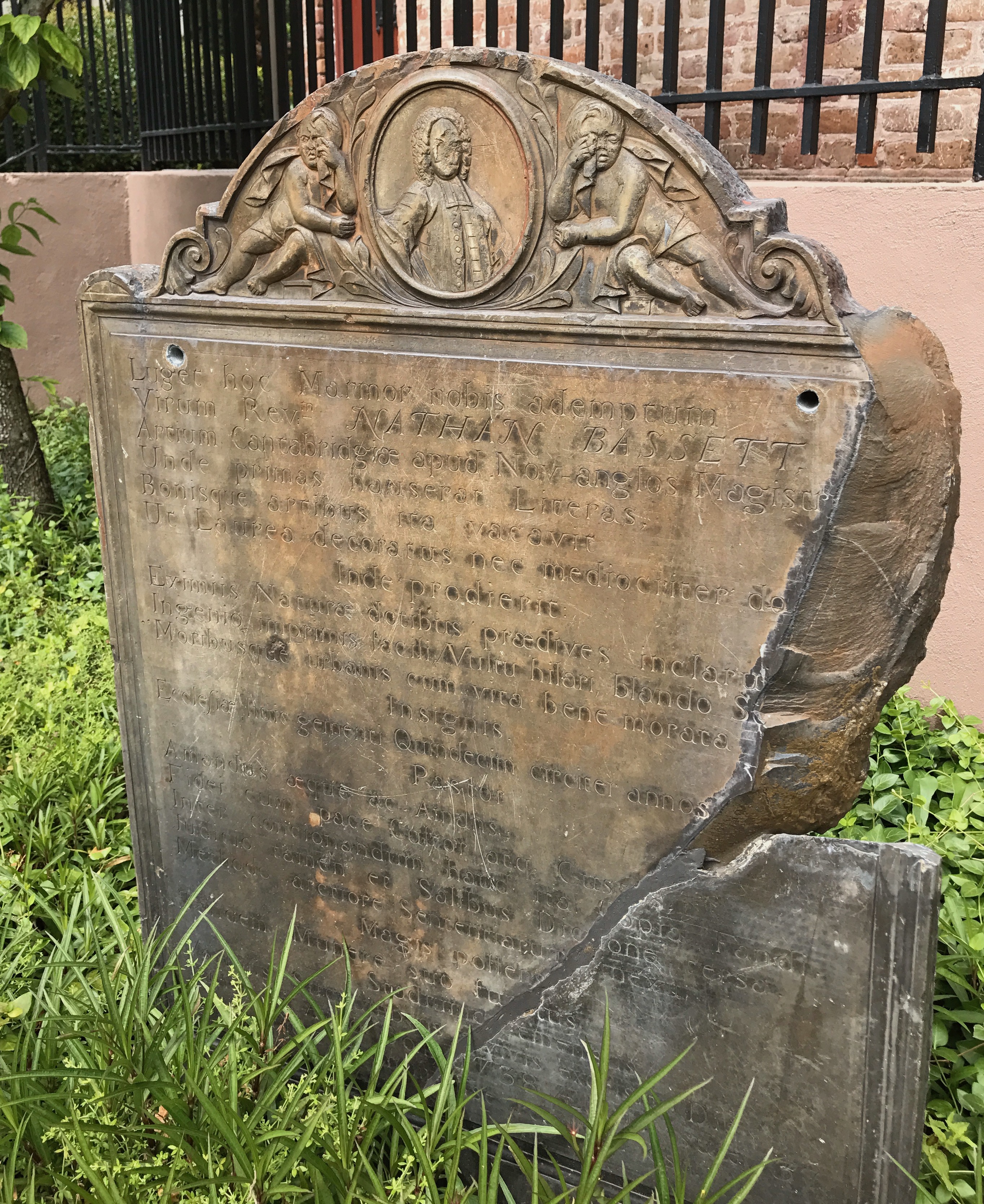
The Rev. Nathan Bassett, Jr.’s marker is thought to be the first portrait stone in America.

Born in 1701 in Roxbury, Mass. to blacksmith Nathan Bassett, Sr. and Mary Huckins Bassett, the Rev. Bassett arrived in Charleston in 1724 to pastor the CCC. The lengthy inscription on his marker is written completely in Latin. He died on June 26, 1738 of smallpox at the age of 36.

Two weeping angels flank a portrait of the Rev. Bassett.

There are some important things that set the Rev. Bassett’s marker apart. For one, scholars believe it’s the first example of a portrait-style stone in America, predating any seen in New England by a handful of years. Second, it was created by one of New England’s top carvers, William Codner. His signature, a rarity in itself, is on the bottom. Unfortunately, I didn’t know this when I photographed it. The grass was obscuring it so I never noticed it at the time.

There are at least 30 Peronnneaus buried at the CCC and a number of their markers were also carved by William Codner. This stone for Henry Peronneau (1667-1743) is just one of them. It’s another great example of a portrait stone.

The marker for Henry Peronneau was carved by William Codner.

Born in La Rochelle, France, Henry Peronneau came to Charleston in 1687 when he was 20. He and his family were some of the early Huguenots in the colony as well as members of the Independent Congregational Church in Charleston. A merchant, Henry Peronneau, his wife Desiree, many of their children and grandchildren were buried in the church yard.

Henry’s grandson, Alexander, is buried near him and his stone is another Codner creation that embraces the portrait style. In this photo, his grave is on the left.

Alexander Peronneau (left) died in 1747 at the age of 12. His mother, Mary, is to his right. She died in 1742.

To the right of Alexander’s marker is that of his mother, Mary Peronneau. She passed away when Alexander was seven years old. Her marker is thought to have been carved by the Lamson family of carvers in New England. You can find their work in graveyards all over Cape Cod. One distinctive trait of Lamson’s winged skulls are eyebrows with hooked ends.

Another Lamson marker was done for Mary’s son (and Alexander’s brother) John, who died at the age of two in 1736. While Mary’s stone has a winged skull and John’s features a soul effigy, many of the decorative elements like the amoeba-like swirls on the border are very much the same.

Note that the swirls on the sides are similar to the ones on John’s mother’s marker.

Elizabeth Simmons’ marker is another portrait-style marker but it was done by Boston carver Nathaniel Emmes (1690-1750). William Codner apprenticed in his shop. You can see Codner’s influence on Emmes quite clearly in Elizabeth’s stone.

Like the Rev. Bassett’s marker, Elizabeth Simmons’ stone has two weeping mourners flanking the portrait. She died in 1740 at the age of 35.

Some of the features Emmes liked to include were ornate borders, graduated discs in the fineals, along with indented skulls and cross bones over the winged skulls.

Another carver whose work you can find at the CCC is that of Capt. John Homer of New England. Homer enjoyed using the combination of a skull and crossbones over a soul effigy. He did an especially fine job on this stone for Charleston merchant David Stoddard, who died at the age of 30 in 1769.

A stark skull and crossbones sits atop a more detailed soul effigy. David Stoddard’s father, William, was from Boston. David died in 1769 at age 30.

Finally, let’s take a look at the graves of the children of William and Sabina Ellis. From what I can tell on Ancestry, the couple had at least nine children. The eldest and the youngest are the only two whom appear to have lived well past their 20s. Five of their children were buried at the CCC between 1753 and 1765. Let’s take a look at the four that I managed to photograph.

Second son William was four months and 19 days old when he died on June 14, 1753. He is buried to the left of his younger brother, John, whose marker I did not get a complete photo of. The soul effigy on William’s marker has a happy expression, with its wings folded down on the sides. 

William Ellis was probably the second child of William and Sabina Ellis.

Next was daughter Sabina, who lived 11 months and 20 days before she died on June 6, 1757. Her stone was probably done by the same carver who did William’s marker.

I believe Sabina was the Ellis’ fourth child.

Finally, we have John and Margaret Ellis. John lived only a month and 11 days before he died on July 19, 1758. Margaret, who is to his left, lived three months before she died on Jan. 4, 1765.

Siblings Margaret and John Ellis are buried next to each other.

You can see that the soul effigy on William’s grave marker has wings that point up.

The contrast between Margaret and John’s two markers is quite interesting. Margaret’s marker is more like William and Sabina’s, with the soul effigy having down-turned wings. But John’s marker has a soul effigy with its wings turned up. They’re also not nearly as well detailed.

There’s so much more to discover at the Circular Congregation Church burial ground. Join me for more stories among the stones next time.


More Charleston, S.C. Cemetery Hopping: Remembering St. Philip’s Churchyard and West Cemetery, Part II

31 Friday Jan 2020

Posted by adventuresincemeteryhopping in General

≈ 1 Comment

Last week, I introduced you to St. Philip’s Episopal Church and its churchyard in Charleston, S.C. Now we’re going to step across the aptly-named Church Street to visit St. Philip’s West Cemetery.

St. Philip’s West Cemetery has about 3,000 recorded memorials on Find a Grave.

I wrote about the most famous person buried in St. Philip’s West Cemetery back in 2013 so I’m not going to repeat it all here but he’s worth mentioning. John Caldwell Calhoun served as U.S. Vice President from 1825 to 1832. He was a controversial figure then and after his death, so much so that his remains were moved across the street to St. Philip’s Churchyard during the Civil War to keep them safe. They were returned to the West Cemetery years later.

John C. Calhoun was strongly in favor of secession and slavery, earning himself the nickname “the Cast Iron Man” for his ideological rigidity.

One of the older graves in the West Cemetery belongs to Col. William Rhett (1666-1722), a native of London, England. He’s interred in an above-ground box tomb. There is no easy way for a short person like me to properly photograph the inscription on top of it but thankfully, someone erected a sign telling you exactly what it says.

Col. William Rhett came to America from England in 1694.

Rhett arrived in America in 1694, along with his wife Sarah. In addition to becoming a a prominent rice farmer, Rhett was a member of the South Carolina Assembly. Eventually, he became colonel of the Provincial militia, receiver-general of the Lords Proprietors of Carolina, surveyor, and comptroller of customs for Carolina and the Bahama Islands.

This sign includes the words inscribed on the top of Col. Rhett’s box tomb. More information about him is on the other side.

But it was his actions on the high seas that garnered him the most attention. Rhett was an active merchant captain, sailing the vessel Providence between the Carolinas and the Bahamas. In April 1699, the Providence was attacked by Dutch pirate Hendrick van Hoven (alias Captain Hyne or Hind). He was known as “the grand pirate of the West Indies.” Rhett survived the attack and lived to sail another day.

Col. William Rhett had little patience for pirates robbing Carolina merchant ships. Portrait by Henrietta Deering Johnston. (Photo source: Gibbes Museum of Art/Carolina Art Association.)

In 1716, Rhett provided two vessels to be fitted out as pirate hunters – the Henry and the Sea Nymph. He served as captain of this small flotilla and led it to victory in the 1718 Battle of Cape Fear River, capturing the infamous Stede Bonnet, the so-called “gentleman pirate.” Bonnet was close friends with Edward Teach, better known as Blackbeard, who gave him many pointers on how to (ARGH!) be a pirate.

Stede Bonnet had a prosperous life as a plantation owner in Barbados but turned to piracy in 1717.

Bonnet escaped from jail with the help of local merchant and fellow pirate Richard Tookerman. He made it as far as Sullivan’s Island before Rhett again captured him. On Nov. 10, 1718, Bonnet was charged with two acts of piracy. Judge Nicholas Trott sentenced Bonnet to death. Bonnet was hanged in Charleston on Dec. 10, 1718. A marker on the Battery in the area formerly known as White Point Garden notes the event.

White Point Garden (not Gardens as the marker says) became a public park in 1837. It was first known as Oyster Point, then White Point due to the amount of sun-bleached oyster shells that piled up at the water’s edge. (Photo source: Wally Gobetz, Flickr)

In 1721, Rhett was appointed governor of the Bahamas, but died in Charleston on January 12, 1722, just as he was preparing to leave for his new responsibilities. He was 55 years old.

The Bones of Thomas Pool

I talked about Thomas Pool’s marker back in 2013 but his marker is just too cool not to share again. I mean, how often do you see a skeleton reclining against an hourglass?

Thomas Pool’s ghoulish marker is unlike any I’ve seen before or since.

Born in Bosport, England on April 20, 1717, Thomas Pool was a sailor. He met his untimely end in a shipwreck on March 20, 1754. The final lines of the inscription (spelling errors and all) on his marker are as follows:

He was a sober industrious and skilfull pilot
Obliging in his Conversation, a kind
Husband, a tender Parent, and a usefull
Member of Society & was much regretted
by everyone that knew him.

Here’s a close-up look.

The words written above the grinning skeleton are “Yesterday for me, is to Day for thee.” Note that the final “e” in “thee” is vanishing into the skeleton’s teeth. Not only do we get a grinning skeleton, he’s leaning against a winged hourglass, emphasizing how “time flies”. These motifs fit in well with the notion that the living are destined to die and nobody can escape it.

The Classical Influence

A less ghoulish marker was carved for Thomas Moore, whom we know little about. He was born in 1750 and died on April 4, 1794 at the age of 44. His stone is topped by am elegant draped urn, which I’ve talked about before. It appears on many grave markers. But as I researched this particular stone, I learned a bit more about why the urn was so popular during the mid to late 1700s.

Thomas Moore’s sandstone marker was carved by Scotsman Thomas Walker.

With America becoming a new republic, comparisons were being made to the old Classical civilizations of Greece and Rome. Urns became popular since that was part of the celebrated architecture and art of that era. It was also quite common to see thes themes incorporated into English homes at the time.

Moore’s sandstone marker was carved by transplanted Scotch carver Thomas Walker, who began a carving dynasty that carried down to his sons, sons-in-law and grandsons. He was echoing what he had seen in the U.K., especially the work of architect Robert Adam.

The part of Moore’s inscription that I can make out reads:

Lo where this silent marble weeps
A Friend, a Husband, a Father sleeps
A Heart, within whose sacred cell
The peaceful Virtues loved to dwell
Affection Warm and faith sincere.

The Widow & the Urn

This next stone was carved over 50 years after Thomas Moore’s and also features an urn but includes the “weeping widow” motif we’ve come to know well in Charleston churchyards.

Fortunately, I found a death notice for Oliver. L. Dobson, who was born in Ireland sometime around 1788 to 1790. I say that because his obituary states he was 58 when he died but his marker states he was 60. At some point, Oliver came to America, married a woman named Naomi, and had at least one child, a son. He also had step-children. He “filled the offices of Assessor of Taxes and Eacheator of the Parishes of St. Philip and St. Michael, and several other posts of trust and confidence.”

Despite being 170 years old, Oliver Dobson’s marker looks quite good.

I don’t know who carved this stone but it’s cleanly done and has stood the test of time. Note that the widow’s gown is contemporary to the era in which is was carved, the 1850s. Women’s attire featured defined waistlines and fuller skirts than the early 1800s. She appears to be holding a handkerchief as well.

Oliver died on March 26, 1850 of dropsy of the heart, which often involved fluid build up leading to congestive heart failure. He did leave a well, which left most of his estate to his wife, Naomi, with some bequests to his step-daughter, Elizabeth, and other family and friends.

Sweet Little Lamb

Off to the side of cemetery, it’s less orderly and more untamed. The ivy runs a bit wild there and you have to watch where you’re walking.

I’m going to finish my time at St. Philip’s West Cemetery with a simple stone that could be seen at just about any burial ground, even today. But for some reason, it hit me hard to see it. Because the last name of this child is unknown and all that we know about her is on the stone itself. She died on April 24, 1861, having lived only a year, six months, and 24 days.

Her marker done by William T. White, one of the best carvers in Charleston.

Julia was only about 19 months old when she died.

The inscription reads:

This lovely bud so young and fair
Called hence by early doom
Just came to show how sweet a flower
In Paradise would bloom.

Next time, we’ll be right next door at the Circular Congregational Church Burial Ground to wrap up my Charleston, S.C. adventures.

More Charleston, S.C. Cemetery Hopping: Exploring St. Philip’s Churchyard and West Cemetery, Part I

24 Friday Jan 2020

Posted by adventuresincemeteryhopping in General

≈ Leave a comment

Still in Charleston!

I wrote about St. Philip’s Episcopal Church back in 2013. However, it wasn’t a lengthy post because of an encounter I had there with a lovely woman named Dotty who (as it turned out) was personally connected to one of the graves I was looking for. I felt that story needed its own post because it was so special.

Churchyard and Cemetery

I wanted to write about St. Philip’s again because it has such a delightful combination of funerary styles. It also has the distinction of having both a churchyard (graves surrounding the church building itself) and a cemetery across the street. As I wrote back in 2013, the West Cemetery of St. Philip’s (which is across the street from the church) is said to have opened for “strangers and transient white people.”

Members, however, were later buried in the cemetery as well when space in the churchyard filled up. It is an active cemetery and St. Philip’s has a growing membership. So if you go on Find a Grave, just look for St. Philip’s Cemetery because it lists both burials at the churchyard and the West Cemetery.

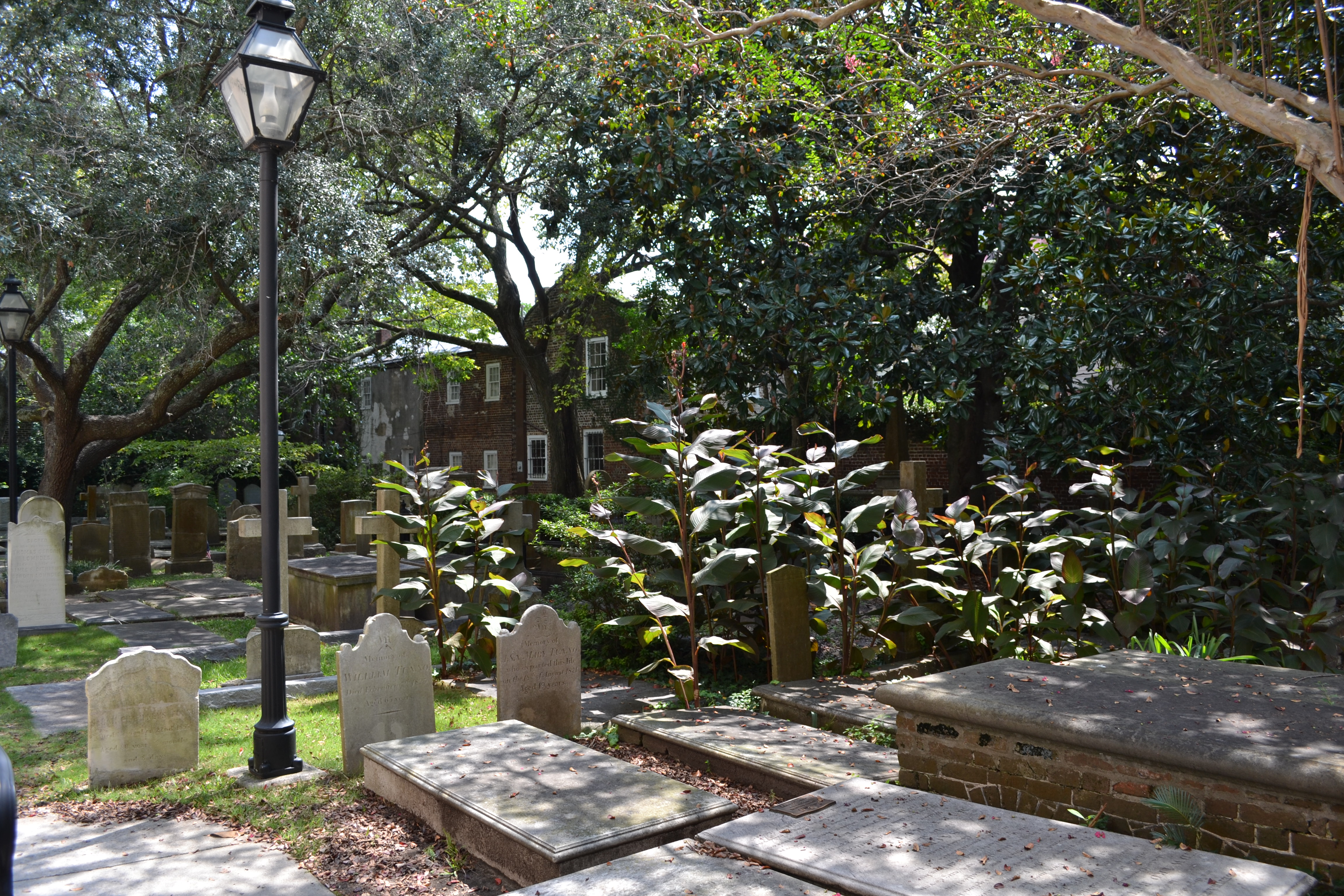
I’m going to focus on the church and the churchyard in today’s post. If you look up at the permanent banner of this blog on top of the page, that photo comes from St. Philip’s churchyard. My husband, Chris, took that picture in 2013.

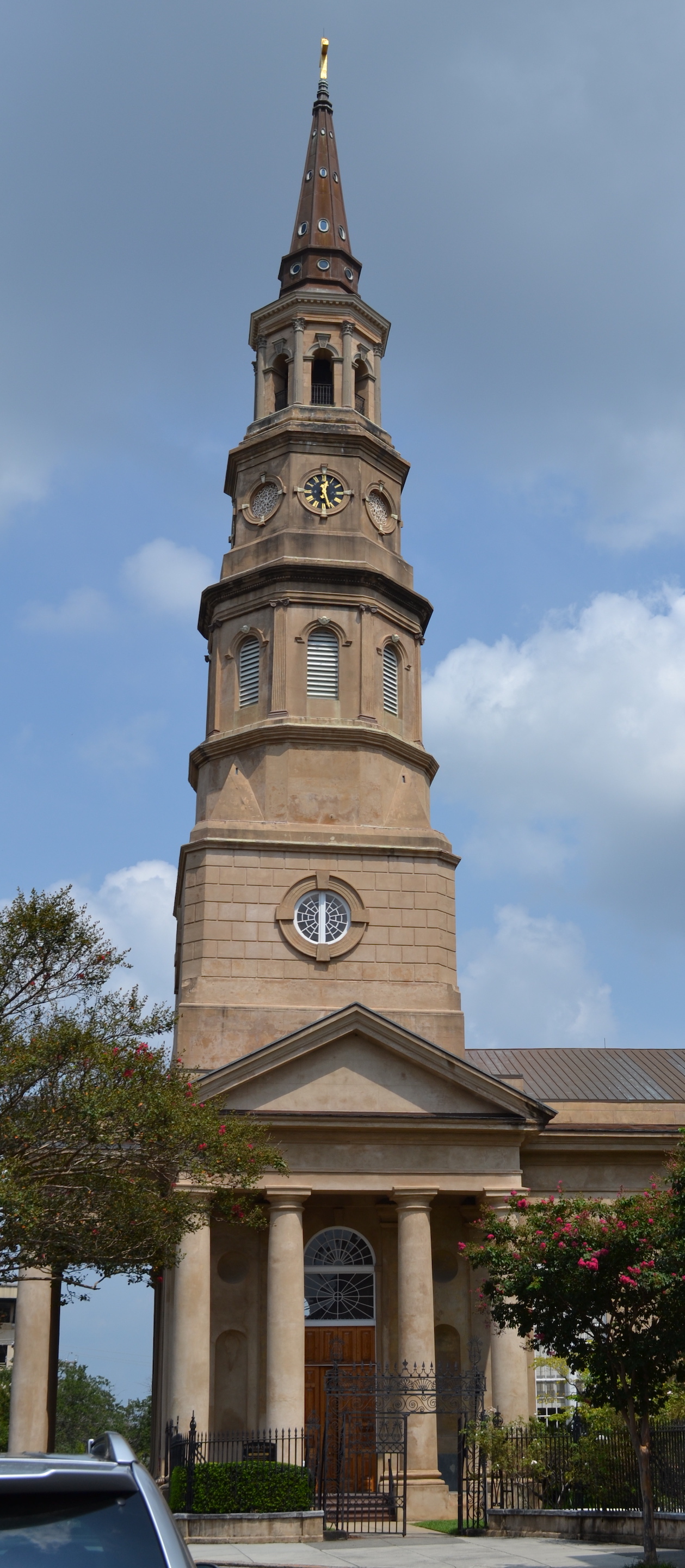
Side view of St. Philip’s showing the gate to the churchyard. A local law that states no building in Charleston can be taller than the church’s steeple. (Photo source: Chris Rylands)

Established in 1681, St. Philip’s is the oldest church congregation in the state of South Carolina. After they moved to their Church Street site in 1710, they built a church that lasted until it was wiped out by a fire. The current building was constructed in 1835 and boasts a beautiful, tall steeple.

Highest Point in Charleston

A gentleman we spoke with at St. Philip’s in 2013 said there’s a local law on the books that no building in Charleston can be built taller than the steeple. At one point during the Civil War, it was used for sighting during the Union’s bombardment of the city and suffered damage. St. Philip’s chapel bells were actually melted down for the Confederate war effort. You might recall that the same was done to the bells over at First Scots Presbyterian Church.

The interior of St.  Philip’s is stunning so if you’re exploring the churchyard or cemetery, go inside the church and look around. It’s usually open, with helpful guides to tell you all about it.

The chancel and apse were altered after a fire in 1920 by Albert Simons. (Photo source: Chris Rylands)

We could have spent hours staring up at the detailed carvings amid the rich wood accents.

A winged cherub peeks down from the ceiling.

There are some memorials lining the walls of St. Philip’s and Chris photographed this one for William Mason Smith, which I recently re-discovered. Here’s the story behind it.

Born in Charleston in 1788, William Mason Smith was the son of the Rev. Robert Smith, who was made Bishop of South Carolina in 1795, and Anna Maria Tilghman Smith of Maryland. After graduating from Brown University in Rhode Island, William did a stint in the Navy before marrying Susanna Pringle. His brother had married Susanna’s sister, Elizabeth in 1812.

In addition to owning a large plantation called Smithfield that was 30 miles from Charleston and a handsome townhouse on Meeting Street, William was active in St. Philip’s Church and eventually became a vestryman there. He was also on the committee that helped in the rebuilding efforts in 1835.

The mourning widow motif leaning over an urn is the theme of this memorial. Note the wine cup and bowl of what look to be bread cubes at the foot of the pedestal, along with a Bible.

After William died at the age of 50 on Aug. 7, 1838, Susanna commissioned this handsome memorial for him from famed sculptor Sir Francis Chantrey. Known for his statue of King George IV in London’s Trafalgar Square, Chantrey was a leading portrait sculptor in Regency-era Britain. You can see his name on the base of the memorial below the figure’s foot. Chantrey died in 1842, just a year after it was installed at St. Philip’s.

William and Susanna (who died in 1846) are both buried in St. Philip’s churchyard but both of their stones are now part of the walkway, although the inscriptions are still readable.

Wandering the Churchyard

I didn’t know that our visit in 2013 was going to be the one time I would get to freely wander around St. Philip’s churchyard. On the occasions that I’ve stopped by since that time, most of it has been closed off to visitors because they were doing restoration work. Here’s my picture of the right side of the churchyard, which is similar to Chris’ photo at the top.

Chris’ version of this view is sharper/cleaner. I took this one with my trusty phone.

One person I don’t want to leave out is one of the churchyard’s more famous burials. Charles Pinckney (1757-1824) was a United States Constitution signer, a U.S. senator, a U.S. congressman, and a four-term governor of South Carolina.

Historic plaque indicating that St. Philip’s churchyard is the final resting place of two South Carolina governors.

The Pinckney name is well known throughout the state and there are 43 Pinckneys buried in St. Philip’s churchyard and cemetery. Charlest Coatsworth Pinckney, whom I wrote about earlier and is buried at St. Michael’s Churchyard, was Charles Coatsworth Pinkney’s cousin. The two men were both among the men selected to be South Carolina’s delegates to the Constitutional Convention of 1787 in Philadelphia, Pa.

After being admitted to the South Carolina Bar in 1779, Charles Pinckney was elected to the State’s Third General Assembly representing Christ Church Parish. (Photo source: National Park Service web site)

In between his third and fourth terms as governor of South Carolina, Pinckney served as the Minister to Spain from 1801 to 1805. He rounded out his career by serving a term in the U.S. House of Representatives before dying in 1824 at the age of 67.

Pierce Butler, Charles Pinckney, Charles Cotesworth Pinckney (his first cousin), and John Rutledge were selected as South Carolina’s delegates to the Constitutional Convention of 1787 in Philadelphia, Pa.

St. Philip’s also boasts another South Carolina governor and a signer of the Declaration of Independence, Edward Rutledge. But I didn’t get a photo of his grave, sad to say.

One of my favorite monuments at St. Philip’s churchyard is this one for Captain Edward Rutledge Shubrick. Perhaps he and Edward Rutledge are related in some way.

Capt. Edward Shubrick died of illness on a sea voyage at the age of 50.

Born in 1793 in Charleston, Edward Shubrick was the third of four brothers that had distinguished careers as mariners. A captain in the U.S. Navy, he married Hester Mary Berlin in 1820. They had one son, Edward, in 1832.

Thanks to an article in the Mississippi Free Trader, I learned the fate of Capt. Shubrick that caused his death on March 12, 1844. He was in charge of the U.S. Frigate Columbia on a voyage from Rio de Janeiro, Brazil to Cadiz, Spain when he became ill, likely caused by a chronic liver ailment he suffered from. He died after 30 days.

“Beloved and Lamented Commander”

The letter that communicated his death from the ship written by one of the men under his command said, “He was universally loved and and esteemed by all who knew him.” On his monument, it says it was erected by the officers and mariners of the U.S. Frigate Columbia. I especially like the detailed depiction of the ship, which you can see below, including small figures standing on the rolled up sails.

The detail of the carving of the ship is amazing.

I’m going to finish today on the other side of the churchyard. In the picture below, you can see the can see in the back St. Philip’s Parish House, built in the 1920s for church administration and events.

St. Philip’s Parish House was built in the 1920s.

The last marker I want to share for you is for William Pritchard, whose marker has a bugle and a Masonic symbol on it. I was eager to unlock the puzzle behind this young man.

Born on Feb. 11, 1832 in Charleston, William was the son of William George Pritchard and Margaret Pritchard. W.G. died in 1838 of influenza at the age of 30 when his son was only six years old. It was the same age William, his son, would be when he died.

William Pritchard was loved by his comrades in arms and by his fellow fire fighters. The bugle indicates his high rank in the fire company.

I could only find William identified as working as a clerk and there’s no proof he was married. But he was definitely a member of the Washington Light Infantry, Company A. Established in 1807, it’s one of the nation’s oldest militia units, founded when America was anticipating a second war with Britain, which became the War of 1812. The company fought in the Seminole Wars (1836) and the Mexican-American War (1842).

When South Carolina seceded from the Union in early 1861, the Washington Light Infantry reformed into three distinct companies and served in the Confederate Army during the American Civil War. A total of 414 men served in the unit during the war, 114 of which were killed.

An obelisk was erected in 1891 in Charleston’s Washington Square to honor the men of the Washington Light Infantry. William Pritchard’s grave is only a few blocks away. (Photo source: Susie Hyman)

In 1891, an obelisk meant to resemble the Washington Monument was erected in Washington Square in Charleston to honor the men of the Washington Light Infantry. William Pritchard is one of the names inscribed on it. He is listed as a private.

“Tribute of Respect”

Records note that William died on Aug. 15, 1862 of typhoid fever, a disease common in that era.

William’s fellow soldiers were so shaken by his death that one of them penned this moving obituary that appeared in the Charleston Mercury on Sept. 17, 1862.

This lengthy obituary written to memorialize William Pritchard describes a man who was much-liked and admired by his comrades. (Photo source: Charleston Mercury, Sept. 17, 1862)

William’s marker says nothing about his affiliation with the Washington Light Infantry. In fact, it says:

Erected
By the Officers and Members
of the Vigilant Fire Engine Co.
In Memory of
Their Late Vice President
William Pritchard
Who Died Aug. 15, 1862
Aged 30 years, Six Months
And 4 Days

According to records, the Vigilant Fire Engine Co. may have been the first volunteer fire engine company in Charleston, submitting an application for incorporation in 1793. Many more would follow. It’s possible that William and his fellow volunteer firemen helped fight the infamous 1861 fire that destroyed much of Charleston.

The bugle on William’s marker, I learned, marked his high level of leadership as vice-president of the company. This indicates, as his fellow soldiers had, that the men with whom he fought fires also regarded him with respect and appreciation,

Next time, we’ll be across the street at the West Cemetery. I promise you won’t want to miss it.

More Charleston, S.C. Cemetery Hopping: Remembering Bethel United Methodist Church Burial Ground, Part II

17 Friday Jan 2020

Posted by adventuresincemeteryhopping in General

≈ 2 Comments

Last week, I shared some of the complicated history of Charleston’s Bethel United Methodist Church and its burial ground. The markers I highlighted in that post were either lying on the ground or leaning against the church. There’s another one I want to start with today that’s in that category because I think it’s really lovely to look at. It also has a pretty cool epitaph at the bottom.

Mary Syfan’s marker also include three children who may have been connected to a sister-in-law.

I couldn’t find much about Mary Syfan. She was born on Dec. 30, 1775 and married John Syfan. She died on July 6, 1825 at the age of 47. But her marker also includes information about the deaths of four children with the last name of Gladden: John, Ann, James, and Susannah.

The marker does tell us that these were all children of George and Susannah Gladden. The children died between 1815 and 1823. Susannah was a Syfan before she married George Gladden so my guess is that she was the sister of John Syfan, thus a sister-in-law to Mary Syfan. I did find a notice in a Charleston newspaper posted by John Syfan in April 1833 concerning the debts of George Gladden after his death. I could not find John Syfan on Find a Grave but another newspaper notice indicated that he died in 1841.

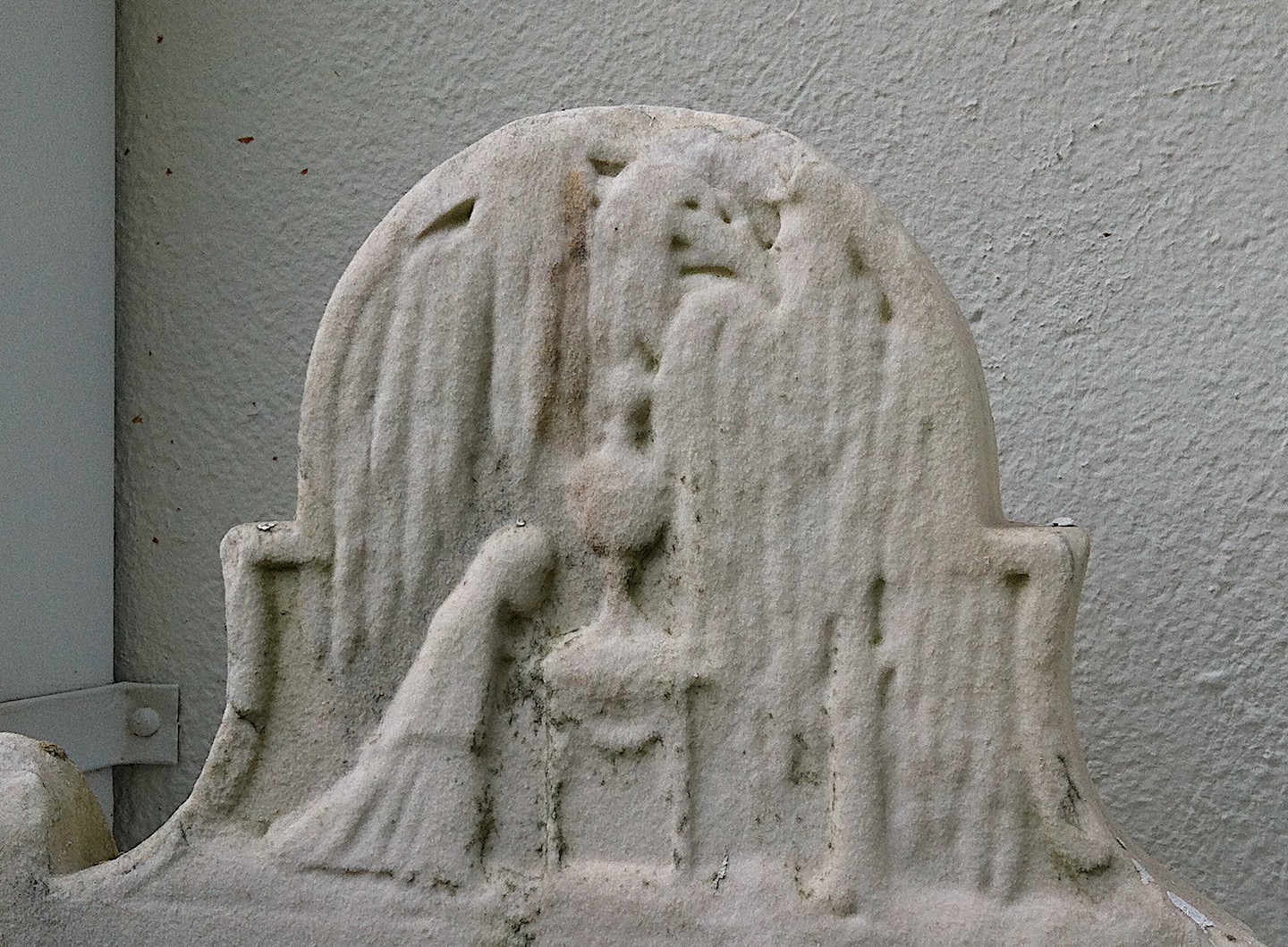
The top of this marker features what appears to be a woman in mourning facing a funeral urn beneath a weeping willow.

At the top of Mary’s marker is a familiar motif. It’s a woman garbed in mourning clothes next to a funeral urn beneath what appears to be a weeping willow tree. Again, this was a popular motif for this era although you see it more often later in the 1800s than in the 1820s.

“Spend a Tear”

Because this marker is not in the best condition, I was happy to learn that someone had transcribed the inscription in 1938. The epitaph at the very bottom is worth reading because it harkens back to those older markers with hourglasses on them. I did an  Internet search and actually found a few grave markers in British 17th-century churchyards with inscriptions similar to this one.

Stay reader stand and spend a tear
And think of me who now lies here
And while you read the state of who
Think on the glass that runs for thee.

One of my favorite markers from Bethel UMC is the for Rebecca Jane Bateman, daughter of Irish immigrants Charles D. Bateman and Rebecca Jane Tuig Bateman (yes, she and her daughter shared the same name). She is buried between her parents.

The difficulty with the Bateman plot (at least the day we were there) is that a large bush was planted directly in front of it. My husband tried to hold back the branches so I could photograph the markers. I believe all three were likely done by one or more of the Walker family of carvers.

The three Bateman grave markers were not easy to photograph due to the bush in front of them. It’s probably not an issue in autumn when the leaves are gone.

Charles and Rebecca Jane left Cork, Ireland in 1852 for Charleston. Rebecca Jane, their first daughter, was born in 1856. She was followed by another daughter, Ella, in 1858. Charles worked as a bookkeeper for a time before attaining a post as agent for the South Carolina Railroad.

Rebecca Jane was only 19 when she died on Nov. 21, 1875 of consumption, better known today as tuberculosis.

Rebecca Jane Bateman’s marker features an angel strumming a harp.

You can only see the first sentence of her inscription in my photo, but it is worth reading the entire thing. It comes from a popular hymn from the 1800s called “A Voice From Heaven”, whose author is unknown.

I have learned the song they sing
whom Jesus hath set free
and the Jasper walls of Heaven ring
with my new born melody.

I am especially moved by the angel on the top.

An angel on a grave marker may indicate a messenger of God.

In Oct. 24, 1882, Rebecca Jane (her mother) also died of consumption at the age of 54. Her marker is to the right of her daughter’s grave. I apologize for the obstruction of the inscription.

Rebecca Jane Tuig Bateman died about seven years after her daughter in 1882.

Rebecca’s marker features a profusion of calla lilies, which usually symbolize marriage. Her inscription (which says “fell asleep” instead of “died”) reads:

A tender mother, a devoted wife,
a true friend,
triumphant in death
and now resigning in the light
of an endless life.

Soon after her mother’s death, Ella married James Robb. They had at least four children together.

Charles Bateman died on Sept. 22, 1889 from complications due to hepatitis. He is buried to the left of his daughter, Rebecca Jane. Daughter Ella died in 1934 at the age of 74 and is buried at Elmwood Memorial Gardens in Columbia, S.C.

Charles Bateman died at the age of 61. Unlike his wife and daughter, his marker has no poetic-sounding inscription.

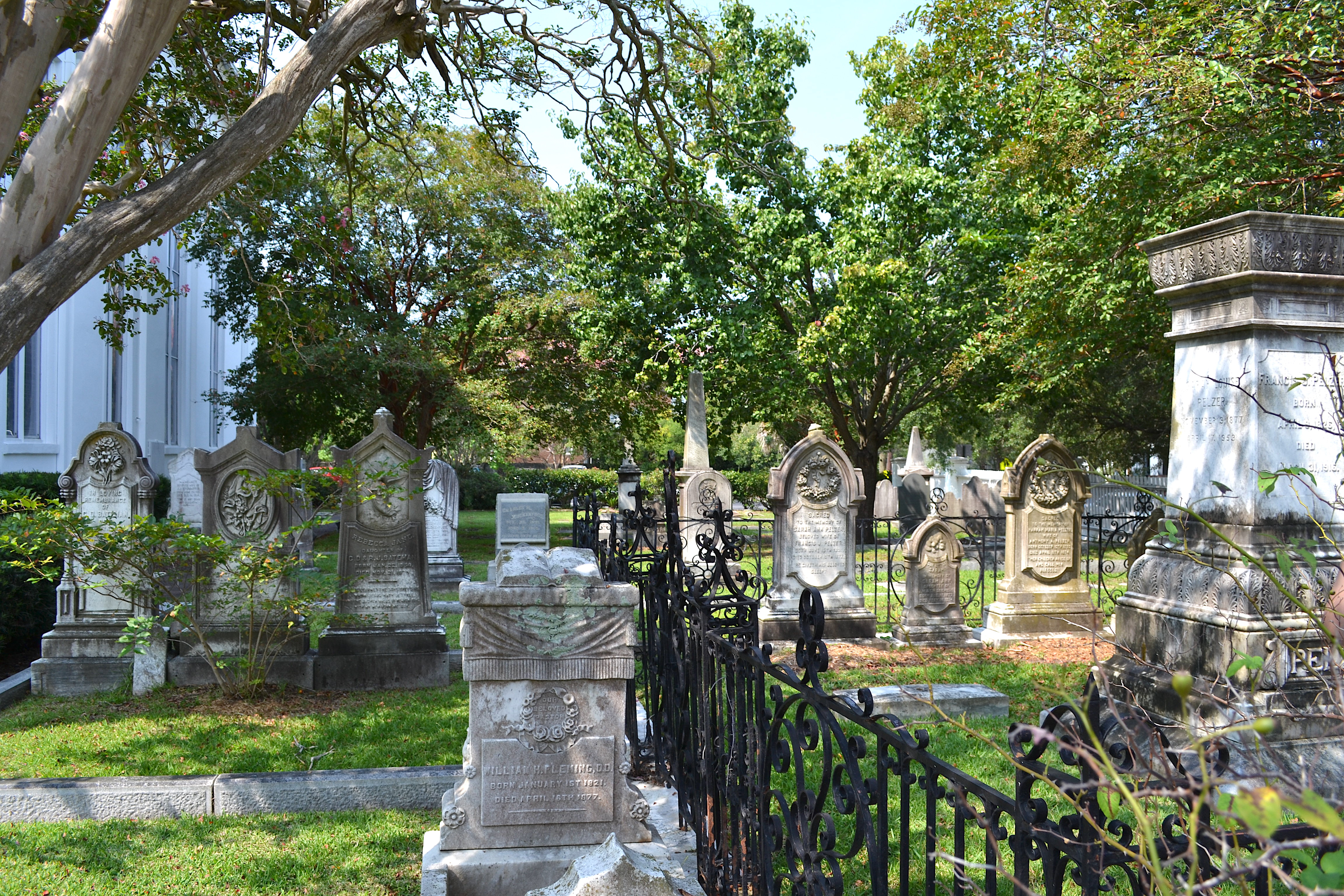
Adjacent to the Bateman plot is a detailed marker purchased for one of the pastors of Bethel UMC, the Rev. William Honor Fleming.

“Our Beloved Pastor”

Born in 1821, William is thought to be a native of Charleston. He received his doctorate of divinity (D.D.) degree from Trinity College (which later became Duke University) in Durham, N.C.

Rev. W.H. Fleming’s monument was erected by his congregants.

I’m not exactly sure when the Rev. Fleming became pastor at Bethel UMC, but I believe most of his career was spent there. He was also an active member of the South Carolina Conference of the Methodist church for 36 years, according to his obituary and monument. At one time he was Presiding Elder.

The Rev. Fleming was married twice, first to Agnes Magill (whose birth/death dates I cannot find) and they had at least one daughter, Mary, in 1848. After Agnes died, Rev. Fleming married Rosa Caroline Austin and they had at least one son. The Rev. Fleming died on April 6, 1877 of “gangrene of the lungs”.

William’s marker is indeed a work of art. It features two lovely carved wreaths and also includes a tasseled drape over a pulpit with an open book, most likely meant to represent the Bible. I suspect this monument was also done by one of the Walkers.

Killed in an Explosion

This final slate marker is older than any I’ve featured at Bethel UMC so far and features a young man cut down in the prime of his life.

Born in July 1773, George Stattler left little information behind about himself. We know from an advertisement he placed in the Dec. 4, 1797 Charleston City Gazette that he had spent time in England learning his trade, and had a business making looking glasses and frames. We also know that he was married.

George’s grave marker, which features a soul effigy, explains how he died. He was killed on Feb. 4, 1799 in a cannon explosion at Fort Mechanic in Charleston.

George Stattler was only 23 when he was killed in a cannon explosion at Fort Mechanic in 1799.

So where was Fort Mechanic? It was built in Charleston in 1794 at a point where high ground extended nearly to the edge of the Cooper River. This site was fortified in the 1750s, and again during the Revolutionary War, before international hostilities in the 1790s forced a new round of defensive construction in Charleston.

“The South View of Fort Mechanic, from untitled sketchbook 1796-1805” by Charles Fraser (American, 1782-1860)
Ink and watercolor on paper. (Photo source:
The Gibbes Museum of Art, Charleston, S.C.)

Construction of the waterfront battery went beyond the Congressional funds set aside for it because much of the work was done for free by the carpenters of the city. In November 1794, master carpenter Anthony Toomer, the president of the Mechanics Society, presented the fort to Governor William Moultrie. The governor named the work Fort Mechanic to honor its builders.

The wooden Fort Mechanic was replaced in 1809 by a fort of masonry. It was garrisoned by American forces until after the War of 1812 and was razed about 1818. The Edmonston-Alston House (which still stands) was built over a large portion of its land.

“Torn from the Fond Companions of Life”

How George Stattler ended up at Fort Mechanic is not known since he was fully employed at his own business. He may have been a member of a local militia called up for duty. His epitaph reads:

The youth obedient to his Country’s calls
A faithful victim to his duty falls
Torn from the fond companions of his life
His Mother, Brother, Sister and his Wife.

Next time, we’ll be heading to St. Philip’s Church in Charleston, which not only has its own churchyard but a cemetery across the street.

More Charleston, S.C. Cemetery Hopping: Remembering Bethel United Methodist Church Burial Ground, Part I

10 Friday Jan 2020

Posted by adventuresincemeteryhopping in General

≈ 2 Comments

Happy 2020!

This post starts my eighth year of writing Adventures in Cemetery Hopping. When I wrote my first post in January 2013, my son was in kindergarten and I was just starting to get some time to pursue my family tree research. Now he’s in middle school and I’m still plugging along on this blog with little end in sight. And many of you have been along for the ride ever since.

There are simply too many awesome cemeteries to put the brakes on now. So I hope you’ll stay with me for the rest of the journey.

It seems fitting that this week I’m kicking off a new series on Bethel United Methodist Church’s (UMC) burial ground in Charleston, S.C. I’m referring to it as a burial ground rather than a churchyard because as you will find, it contains the remains of more than Bethel UMC’s congregants. My first visit and only visit to Bethel UMC was in September 2013, the first year of my blog and on a 10th anniversary trip I took with my husband to Charleston.

A photo my husband took of Bethel UMC’s burial ground in September 2013.

History of Bethel United Methodist Church

This visit is not part of my cemetery tour day in May 2018 with Frank Karpiel that I’ve discussed in the last several blog posts. I realized I had a quite a few photos from that 2013 visit and I’d not yet written about it. So why not now?

Bethel UMC’s origins are from 1797, when it met in a small wooden structure on the corner of Calhoun and Pitt Streets. Members were both black and white, with a specific order of whom sat where. Whites sat downstairs in the front rows, free persons of color occupied the seats in the back and slaves were allowed to sit in the upstairs gallery.

This wooden structure was the original Bethel United Methodist Church building, thought to be the oldest standing Methodist church in Charleston and the third oldest structure in Charleston. (Photo source: Old Bethel United Methodist Church’s web site)

According to Bethel UMC’s web site, the original wooden building was moved westward on the lot facing Calhoun Street in 1852 to allow for construction of a new and larger structure. The early building, now known as Old Bethel UMC, was donated to the black congregation in 1876. In 1882, with the agreement of both white and black congregations, it was moved across the street to its present location, 222 Calhoun Street. It continues to serve as Charleston’s oldest standing Methodist church building.

This is the current Bethel United Methodist Church building, completed around 1853. (Photo source: Wikimedia Commons)

Who’s Buried Where?

A wonderful thing happened while I was putting together this post. I had posted a photo on this blog’s Facebook page of a grave from Bethel UMC’s burial ground of a child who died at the age of three months in 1859. A gentleman by the name of Grant Mishoe, who is connected with the Gullah Society, contacted me via Facebook with information about her. I began to learn about the complicated past that is the history of Bethel UMC’s burial ground.

Bethel UMC does not deny this past and acknowledged it by placing a marker in 2012 to confirm that many burials took place here that were not marked or whose markers no longer exist, were moved or even paved over in some cases.

This marker indicates that there are indeed a number of unknown burials in this burial ground, under the church and the parking lots around it.

I could painstakingly go over the history of what parts of the old cemetery were paved over, what congregation they belonged to, and so on. Grant did a great job sharing his maps with me and it goes beyond Bethel to other black congregations (namely Trinity Colored Church Burial Ground and Eprath Burial Ground) that existed at the time. In addition, part of the Bethel’s churchyard was built over during the construction of the 1852 building. I’m sharing this map from Grant to give you an idea of just how complex these burials are.

This map, courtesy of Grant Mishoe of the Gullah Society, gives you an idea of how many different congregations had burial grounds next to Bethel UMC’s.

After construction of the 1852 building, Old Bethel UMC purchased land for a cemetery on Cunnington Avenue several miles north of Charleston in the area I wrote about in 2016 known as the Magnolia Umbra Cemetery District and contains 23 different cemeteries (some very small). What became known as “Colored Bethel” cemetery is wedged between Lewis Christian Union Cemetery and Friendly Union Society Cemetery.

Who Was Engenia Robia?

While there are some grand monuments in the Bethel UMC burial ground that I’ll show you in this series, there’s also a curious mishmash of pieces of grave markers that resemble puzzle pieces on the ground surrounding the current church. Others, intact, are leaning against the building. Some are clearly old from the early 1800s and some are from later on. This is not a situation unique to Bethel UMC. I’ve seen it at just about every churchyard in the historic district of Charleston.

It’s not unusual to see pieces of old grave markers scattered about at Charleston churchyards and cemeteries. One fragment in this picture was from a marker carved by noted Charleston stone mason W.T. White.

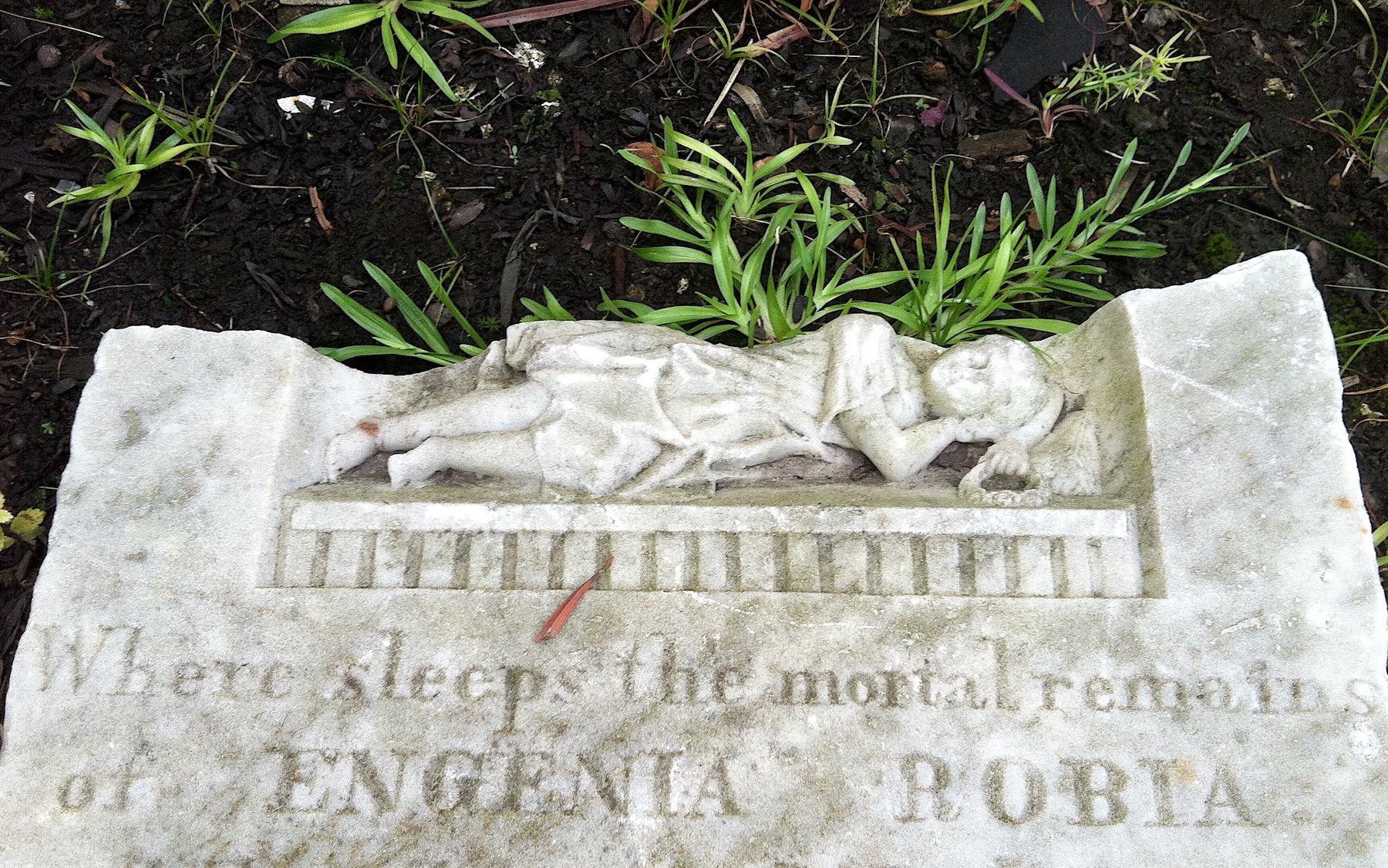
One of these was an almost totally intact marker I referred to earlier for a child named Engenia Robia. She was born on March 21, 1859 and died on June 23, 1859, barely three months old.

Engenia Robia was only three months old when she died in 1859. Grant Mishoe has a copy of a death record for her that indicates she was likely the child of a white father and a mixed race or black mother.

Engenia Robia’s past has been obscured by time and circumstances but thanks to Grant, I was able to uncover some possibilities. The Robias were likely descended from slaves who worked for the white Robiay (spelling is uncertain) family, who were originally French Huguenots. Engenia was probably the child of a white father and a mixed raced or black mother, free of slave. There are no known Robias that were white. The Robiays moved to New Orleans, La. after the Civil War.

Were Engenia’s parents members of Bethel UMC or was Engenia’s mother a member of Trinity, who also buried members in Bethel’s burial ground at that time? We don’t know for sure.

Engenia Robia’s life was very short but she clearly had an impact on those who loved her. Here she appears to be sleeping.

This grave marker carved so exquisitely must have been expensive. The epitaph comes from the first half of a song “Forgive Bless’d Shade” by John Wall Callcott. Published around 1775, it was a popular English song put on gravestones.

Forgive, blest shade, the tributary tear,
That mourns thy exit from a world like this;
Forgive the wish that would have kept thee here,
And stayed thy progress to the realms of bliss.

Died in the Pulpit

I could find little information about Elizabeth Martha Simons Vinmo Moore beyond the fact she was born around 1796 and died on Oct. 26, 1861, possibly 60 years old. Her marker’s epitaph is quite worn but the carving at the top (although the rainwater didn’t help) stands out. I found more information concerning the death of her husband.

Elizabeth Vinmo Moore was the wife of the Rev. George Washington Moore.

Elizabeth was married to the Rev. George Washington Moore, who began serving as a pastor (according to his death notice) in 1820. They had an estimated 11 children together, a few dying in childhood.

An angel bearing a wreath beside an urn tops the grave marker of Elizabeth Moore.

On Aug. 13, 1863, the Rev. Moore died while attending a camp meeting near the Anderson Country Court House. A Charleston Courier article from Aug. 24, 1863 describes his death as follows:

The opening hymn has been sung, and with more than usually fervid power, he had invoked the divine blessing upon the assembled congregation, especially for the widows and orphans of the country. The last word was uttered, the “amen” impressively died upon his lips, and then as if God himself had thus pronounced His approval of a well spent life, the holy man fell forward, and in ten minutes more, was numbered among the sainted dead. He appeared to suffer but little, and did not speak again.
This article also noted that his remains were brought back to Charleston for burial. While his wife’s beautiful marker has survived, the one for the Rev. Moore did not.

“Happy Soul They Days Are Ended”

The last stone I’d like to feature today is for a young woman who was six days away from her 17th birthday and already a wife. That’s difficult for me to wrap my mind around that.

Ann Eliza Prince Calder was only six days from her 17th birthday when she died on May 19, 1859.

Ann Eliza Prince was born on May 25, 1842 to bricklayer Edwin Prince and his wife, Sarah. We don’t know when she married Edwin Eason Calder. But they had one child, Annie, shortly before Anna’s death on May 25, 1859. Edwin and little Annie went to live with his in-laws, the Princes.

A flower with a broken stem indicates a life cut short.

At some point, Edwin married Ann’s sister, Sarah. They had three children together, Caroline, James, and John. Edwin enlisted as a private in the Confederate Army on Feb. 20, 1862 and was transferred to Co. A of the 25th South Carolina Infantry on July 22, 1862. He was captured at Fort Fisher, N.C. on Jan. 15, 1865 and sent to Elmira, N.Y. Edwin was released on May 17, 1865. He died at age 33 on Dec. 13, 1868 from some sort of heart ailment and was buried at Bethel UMC Burial Ground but has no surviving marker.

Edwin Calder died from heart problems on Dec. 13, 1868. This funeral notice is from the Dec. 14, 1868 edition of the Charleston Daily News.

Sarah lived with her parents, and little Annie, along with her other children. The last record of her is that she was boarding at a residence at 231 Meeting Street. Son James was working as a carpet layer and his sister, Caroline, was living with him.

What Happened to Annie?

Annie was lived with her step-mother until she married mechanic John Reynolds McCarrell on April 7, 1879. They had two children, John Jr. and Alice. John died in in 1887 and Annie remarried to John P. Bee, with whom she had a son, John P. Bee Jr. John P. Bee, Sr. may have died in 1918. Annie vanishes after appearing on the 1920 U.S. Census living with daughter, Alice, and her family.

There’s much more to discover at Bethel UMC Burial Ground in Part II.

More Charleston, S.C. Cemetery Hopping: Stopping By First Scots Presbyterian Churchyard, Part III

20 Friday Dec 2019

Posted by adventuresincemeteryhopping in General

≈ Leave a comment

This week I’m wrapping up my series on Charleston, S.C.’s First Scots Presbyterian Churchyard. There was simply too many great stones to not have a Part III!

So to finish up, I’m featuring a few more stories. This first stone is unlike any I’ve featured so far because there are no urns, weeping widows, or soul effigies. Not even a cross or broken tree. How’s that for a surprise?

This marker for Captain John Morrison and his wife, Elizabeth, was most likely carved in 1821 (when John died) or 1852 when the wife died. Because it is topped with a Scotch Thistle, the national flower of Scotland (Capt. Morrison’s home), my guess is that it was carved in 1821 and his wife’s name was added after her death three decades later. It is located beside the Walker marker I featured last week in Part I.

The inscription on for the Morrison marker is now so faint that I had to look on Find a Grave to read what it says.

So why is the Scotch Thistle the national flower of Scotland? According to legend, an invading Norse army was attempting to sneak up upon a Scottish army’s encampment one night. During this operation, a barefoot Norseman stepped on a thistle, causing him to cry out, alerting Scots to the presence of the Norse invaders. Some sources suggest the specific occasion was the Battle of Largs in 1263, but that’s not certain.

A closeup of the thistle on the Morrison marker.

At some point, John met and married a British woman named Elizabeth Watson. They had at least one child, a daughter named Mary Flora born in 1811.

Here’s a picture of the real thing. (Photo source: Ian Georgeson, the Scotsman.com)

Capt. John Morrison’s house still stands at 125 Tradd Street. You might recall from last week’s Part II that Dr. Fayssoux owned the house at 126 Tradd Street. Morrison bought the property at 125 in 1800 and the construction date is thought to be sometime around 1805.

A historic plaque on the house states that it is noted “for its handsome four bay facade facing Tradd Street, and for its expansive three-tiered piazzas which were added in the 1840s. The house is also noted for its Adam style interiors and for the large scale of its primary rooms and entrance hall.”

Here’s a picture of Capt. Morrison’s house, which sold for $3.96 million to a tech entrepreneur in November 2017.

The home of Captain John Morrison and his family on 125 Tradd Street was purchased in 2017 for almost $4 million dollars. (Photo source: Wikipedia Commons)

Mary Flora was only nine when her father died on Feb. 26, 1821. His marker says that he was 56 when he died while his death record indicates he was 65. The cause of death was influenza. If you look at his death notice below from the Charleston Daily Courier, his funeral was held at his house on Tradd Street, although at that time it was numbered 97 instead of 125.

Like Capt. John Ross featured in Part I, Capt. John Morrison was a member of the Marine Society. (Photo source: Charleston Daily Courier, Feb. 27, 1821)

Elizabeth lived another three decades. At the time of her death in 1852, she was living with daughter Mary Flora, who had married a cooper named Robert Bee, and her grandchildren. She died of cancer on June 26, 1852. Her death notice indicates her funeral was held at First Scots Presbyterian Church.

Elizabeth Morrison’s funeral was held at First Scots Presbyterian Church on June 21, 1852. (Photo source: Charleston Daily Courier, June 21, 1852)

A Political Climb

The final marker I’m going to share with you is for Charleston Governor Brigadier General John Geddes and some of his family. While it features the names of five people, John Geddes is the best known. His political climb made him a successful figure in Charleston, but it came with a price as a result of some of his choices.

Born in 1777, John Geddes graduated from the College of Charleston, studied law and was admitted to the bar in 1797. He was active in the South Carolina Militia, serving as a Cavalry Major.

A member of the South Carolina House of Representatives, (1808-1816) Geddes served in the South Carolina Senate from 1816 to 1818. That same year, he was appointed as a Democratic-Republican the 47th Governor of South Carolina, serving until 1820. After leaving office in 1821, he was appointed Brigadier General of the South Carolina Militia. From 1824 to 1825, he served as mayor of Charleston.

Were They Sisters?

John Geddes was married twice and the names of both wives are on this marker. On May 30, 1798, he married Harriet Chalmers, a daughter of Charleston artisan Gilbert Chalmers. After Harriet’s death in 1803, he married Ann Chalmers on March 28, 1805, who died the following year. The marriages produced at least three children, John Jr., Harriet, and Gilbert. Since both women had the last name of Chalmers, Harriet and Ann may have been related but I could not trace exactly how.

While this marker features five different people, South Carolina Governor John Geddes is the best known. It includes his wives, his eldest son, and a grandchild.

After Geddes left the office of Governor in 1820, he still retained a great deal of power and influence in Charleston. In October 1822, his son John Jr. acquired the Charleston City Gazette, which became the organ of the Geddes faction.

Geddes and Dueling

John Geddes was involved in at least two duels during his career. The first took place with political opponent and Federalist Keating Lewis Simons. In 1823, Simons and Geddes met on Sullivan’s Island. Simons was wounded and limped the rest of his life.

In 1824, Geddes found himself the target of some scurrilous comments from 28-year-old Edward Simons, a cousin of Keating Lewis Simons. Feeling his honor had been insulted, Geddes challenged Simons to a duel. This time, Geddes gave his younger son Gilbert the task of acting as his “second”. Gilbert was incensed at Simons’ remarks against his father and may have asked to take his place.

On Johnson’s Island in Charleston’s harbor (another report called it Fort Johnson and the duel happening at high noon), Gilbert faced Edward Simons. Four different rounds passed between the two men at a decreasing distance with neither being wounded. On the fifth round, Gilbert was shot in both thighs and Edward Simons was hit in the chest, a wound from which he died. One article I read noted that Gilbert’s wounds rendered him a cripple for the rest of his life, but I don’t know if that’s true.

Death of Father and Son

On March 4, 1828, John Geddes had a stroke and died. It’s listed as “apoplexy” in the death records. Sadly, his oldest son, John Jr., would die only a few hours later on the same day of “debility”, which is thought to be physical weakness. He was 28 a the time of his death.

When I looked for newspaper accounts of the Geddes deaths, I found this interesting diagram in the March 6 edition of the Charleston Courier that laid out what order in which the elaborate funeral procession was to be placed that went from the Geddes home on Meeting Street to First Scots Presbyterian Church.

The March 6 edition of the Charleston Courier featured this diagram of the elaborate funeral procession planned for former South Carolina Gov. John Geddes and his son, John Jr. Note that “citizens and strangers” were to bring up the rear. (Photo source: The Charleston Courier.)

The Geddes marker notes that John Jr.’s “remains lie beneath the tomb of Gilbert Chalmers at the Northwest corner of the square.” Gilbert, who had been wounded in 1824 in the duel with Edward Simons, died of brain fever in 1848 at the age of 40. While there is a memorial for him on Find a Grave as being buried at First Scots Presbyterian, there is no photo of it.

Also listed on the marker is John Geddes’s daughter, Harriet, who died on Oct. 9, 1827 at the age of 26. Below John Jr.’s inscription is one for John Sr.’s granddaughter (Gilbert’s daughter) Elizabeth Sarah Anne Geddes. She died on Oct. 22, 1811 at the age of three.

I’m not sure which churchyard or cemetery I’ll be featuring next week but I’ll still be in Charleston. I’ve still got a few more to share.


More Charleston, S.C. Cemetery Hopping: Stopping By First Scots Presbyterian Churchyard, Part II

13 Friday Dec 2019

Posted by adventuresincemeteryhopping in General

≈ Leave a comment

Last week, I shared a brief history of Charleston’s First Scots Presbyterian Church and its churchyard. I also told some of the stories behind the stones there, with a few carved by Scotsman Thomas Walker. He was a member of First Scots, as were many Scottish newcomers to Charleston. In Part II, we’ll take a look at some more markers along with a little history.

Although these next two markers are not exactly the same, both feature a “grieving widow” motif. Little is known about William Hunter beyond what’s on his stone. I found no death notice in the newspapers.

The mourning woman at the top of William Hunter’s stone is a theme repeated on other grave markers through the 1800s.

A native of the county of Antrim in Ireland,
who died on the 18th of September, 1805
aged 58 years
the last seventeen of which were passed in this city.
He was respected and beloved for his solicitude as a relative and friend
his probity as a man and (above all)
his philanthropy and benevolence to the stranger and the distressed.

Urn as a Greek Symbol

Take a close look at the top image on William’s stone. A mourning woman (perhaps a widow) leans over an urn positioned on top of what may be a vault. I featured the urn last week in some of Thomas Walker’s markers but on those it was the main icon, not playing a supporting role as it is here.

The urn was a Greek symbol of mourning.

The urn is a Greek symbol of mourning, originating as a repository for the ashes of the dead in ancient times. It was a popular symbol of mourning, which is why you see it on so many markers or in draped form atop large monuments.

This is a departure from what we saw in the 1700s, when skeletons, winged skulls, and soul effigies were the norm. A shift in focus was taking place from trying to convince those visiting the grave to live a good life or suffer the flames of hell to a softer message of consolation to the mourner. The emotion of sadness and memory of a life well lived is stronger than fear of the afterlife.

Now let’s take a look at a similar but different marker for Alexander Kennedy, which was signed as being carved by Thomas Walker’s studio (although it wasn’t necessarily done by Thomas himself).

Andrew Kennedy’s marker differs from William Hunter’s in that there’s draping around the top scene.

So who was Andrew Kennedy? According to his marker, he was a native of Scotland who died at his plantation in St. John’s Berkley Parish on Sept. 18, 1802. He was around 40 years old. As one of the 10 original parishes created by the Church Act of 1706, the parish of St. John’s Berkeley stretched northwestward from the upper reaches of the Cooper River to the Santee River through modern Berkeley and Orangeburg Counties.

If you look on a map today, this area is located near modern day Moncks Corner, S.C. about 35 miles north of Charleston. It came to be associated closely with rice plantations, one of which was probably owned by Andrew Kennedy. The 1800 Census indicates he did live there and he was married, supported by the words on his marker that say “erected in his memory by his disconsolate widow.”

“His Disconsolate Widow”

Those last words are echoed in the motif at the top of Andrew’s marker, which features a mourning figure next to what appears to be an urn sitting on an obelisk. This figure is not bending over it as in William Hunter’s, but she does appear to be “disconsolate”, her hand pressed against her cheek with her other hand on top of the urn.

The mourning figure on the Kennedy marker is also standing next to an urn, but this time placed on the base of an obelisk.

To the figure’s left is a pitcher sitting amid some of the draping of her garment. You can also faintly make out the initial “K” on the base of the obelisk the urn rests on. To the right of the obelisk appears to be a flower that’s been snapped in two, indicating a life cut short. Add to that some elaborate drapery that surrounds this scene, showing off more of the carver’s talents.

When I look at these two mourning scenes side by side, I conclude that Andrew Kennedy most likely had a higher placement on the social ladder than William Hunter. The extra touches like the drapery and initialed obelisk lead me to believe this.

The Douglas Sisters

This next marker is for two sisters, Sarah and Catharine Douglas. The inscription is as follows:

This stone is erected by the
afflicted parents of
SARAH E. DOUGLAS
and her sister
CATHARINE DOUGLAS
the former who died
July 24th, 1806 & the latter
June 21st, 1807,
Aged 3 years 9 months
17 days.

Sisters Sarah and Catherine Douglas died within about a year of each other.

It appears that Sarah, the first child, died on the day she was born on July 24, 1806. Older sister Catharine was three years old (and nine months) when she died on June 21, 1807. We don’t know who their parents were but it was surely a blow to lose two children within about a year of each other.

Two Lives Cut Short

Let’s take a closer look at the top. Instead of a grieving widow, we’ve got an angel with full hands. In one he’s holding a trumpet to his lips. The other is holding a scythe and has cut down a flower, signifying a life cut short. We saw that motif earlier on the Kennedy marker, leading me to believe it might be another Walker studio creation. Regardless, it’s a striking image.

Similar to the Kennedy marker, the Douglas marker features a flower cut down.

This last marker has no decoration on it. Fairly straightforward, it shares the information about Charleston native Dr. Peter Fayssoux (1745-1795) and his second wife, Ann (1758-1810). But Dr. Fayssoux had quite a career in and it’s worth mentioning.

Born in Charleston around 1745, Dr. Peter Fayssoux was the son of Huguenot emigre Daniel Fayssoux and his wife, Frances.

The son of Huguenot émigré Daniel Fayssoux and his wife, Frances, Peter Fayssoux attended medical school in Scotland. Upon returning to South Carolina in 1769, he was dismayed by the number of “quacks” practicing medicine. “It is Sufficient for a man to call himself a Doctor, & he immediately becomes one, & finds fools to employ him,” he complained to medical school chum Benjamin Rush, who was a signer of the Declaration of Independence.

Treating the Sick and Wounded

On Jan. 29, 1772, Fayssoux married Sarah “Sally” Wilson, who died in 1776. The following year, on March 29, 1777, Dr. Fayssoux married Ann Smith Johnston. The marriages produced 13 children, six of whom died in infancy or early childhood.

Early in the Revolutionary War, Dr. Fayssoux attended the sick on James Island. By 1778, he was serving as senior physician of the South Carolina branch of the Continental army.

The Dr. Peter Fayssoux House is a pre-Revolutionary War house built about 1732 for Alexander Smith. After the war, the Georgian house was home to Dr. Fayssoux and his family. (Photo source: Spencer Means, Flickr)

In 1780, Dr. Fayssoux was named physician and surgeon general of the Southern Department. Captured at the fall of Charleston, he was released to attend to the sick and wounded. At the end of the war, Dr. Fayssoux was treating patients in Camden, S.C. where he stayed until March 1782. After the war, Fayssoux became a member of the Faculty of Physic in Charleston, the first sign of organized medicine in the state.

In 1786, Dr. Fayssoux was elected to the General Assembly, where he represented St. John’s Berkeley Parish until 1790. He was a founding member and the first president of the Medical Society of South Carolina, which held its first meeting at Fayssoux’s home on Dec. 24, 1789. Dr. Fayssoux was also involved with the Charleston Library Society, the Charleston Museum (as a curator), the Society of the Cincinnati, and the St. Cecilia Society.

He died on Feb, 1, 1795, of an apoplectic stroke at the age of 50. Wife Ann died in 1810 at age 52.

I’m not quite done at First Scots Presbyterian Churchyard. Please come back for Part III for more stories from the stones.

More Charleston, S.C. Cemetery Hopping: Stopping By First Scots Presbyterian Churchyard, Part I

06 Friday Dec 2019

Posted by adventuresincemeteryhopping in General

≈ Leave a comment

Were you hoping I was done hopping in Charleston, S.C.?

When you’ve got sights like the one pictured below, it’s just too hard to leave without talking about as many burial grounds you can. And this churchyard has a playground in it. More about that later.

Part of the Churchyard at First Scots Presbyterian Church.

After leaving St. Michael’s Churchyard, we headed down Meeting Street a short block to First Scots Presbyterian Churchyard. Find a Grave has about 800 burials recorded. The congregation was established in 1731 when a dozen Scottish residents left the Independent Church of Charleston, now the Circular Congregational Church (yes, I’m writing about that one soon). In its early days, it was known as Scots’ Kirk.

Built in 1814, the current building is considered the fifth oldest church building in Charleston.

A plaque on the gate shares the historic dates involved with First Scots Presbyterian Church.

Scottish brothers John and James Gordon built First Scots’ current building. The design is thought to be inspired by Baltimore Basilica in Baltimore, Md. and contains a number of Scottish symbols in the stained glass windows and a symbol of Scotland, the thistle, on the wrought iron grilles. This building replaced an earlier wooden church.

A front view of the First Scots Presbyterian Church. (Photo Source: Wikipedia Commons)

The Story of the Bells

Although First Scots has two bell towers, the original bells were donated to the military during the Civil War. It’s said that the bells were never replaced to honor the Confederate dead.

In 1999, a bell built in 1814 was reinstalled in the northern tower. St. Johns Church in Preston, Lancashire, England, had eight bells in its own historic church, but no longer needed them when a replacement set was acquired. First Scots made plans to bring the seven working bells to Charleston and hang them in their towers.

However, the southern tower was found to be too weakened from the 1886 Charleston earthquake to support the six smaller bells. As a result, the largest of the bells from St. Johns was hung in the northern tower. That 1,470-lb. bell was funded in large part by congregant Bonnie Workman, so the bell is named “Bonnie” in her honor.

Playing on Graves?

So I mentioned a playground earlier. There are four different sections to the First Scots Churchyard. The main churchyard encompasses the sanctuary. Near the rear of the sanctuary where a parking lot is located, there’s an area of stones along a side wall. There’s a back burial yard surrounded by a similar wall of stones. Then there’s a small yard surrounded by a high brick wall covered in stones. In the middle of it? A playground.

Grave markers line the high brick walls of this playground at First Scots Presbyterian Churchyard.

So how did that happen? My guess it that with the blessing of the congregation, the markers were pulled up and put on the surrounding walls. I could find nothing online to indicate when this happened. I’m not sure how I feel about it because the thought of children romping on graves is a bit disconcerting. However, this was a decision made by the congregation and they must have felt it was the right thing to do to provide a place to play for their younger congregants.

Back to the rest of the churchyard. One of the most interesting markers Frank pointed out to me was done by one of Charleston’s best known carvers for his very own family, Thomas Walker. It definitely stands out.

Five members of stone carver Thomas Walker’s family are listed on this stone he himself carved. Three are named Jane.

The scene on this marker is unlike any I’ve seen before. No winged skulls, no cherubs, no flowers. It’s basically a stone carver’s workshop. In the middle is an oval coat of arms that contains a compass and three brick towers, which bears a strong likeness to the Mason’s Company of Edinburgh. Walker was likely a member, having left Scotland for Charleston around 1790.

Grave Marker as Advertising

In their book, Historic Gravestone Art of Charleston, South Carolina, 1695-1802, David Mould and Missy Loewe interviewed art historian Diana Combs about this marker. She commented that the stone serves as a combination history of his family members with an advertisement for his business. The variety of implements that stone carvers of that era would have used are apparent.

Walker, who was a member of First Scots, has a number of his markers in the Churchyard that are worth pointing out. He liked urns and you can see examples of them here and there.

“The Son Most Dear”

This one features a smaller urn for Thomas Turnbull, who died on Oct. 13, 1795 at the age of 25.

Thomas Turnbull’s marker is thought to have been carved by Thomas Walker.

Thomas also favored grander urns like this one for John Cunningham, who died in 1799 around the age of 23. I apologize for the small size but it came from a larger photo I took that day.

John Cunningham’s marker features a wide elaborate urn with draping on each side.

I’m reaching a little further back in time with this next marker to the 1760s. Mould and Loewe point out that John Rattray’s marker might be a British import because it doesn’t look like what we usually see in terms of New England’s style and the upper crust Charleston markers. Decorated above it with a scallop flanked by flowers is a chubby-faced cherub surrounded by feathers under his chin. Wings, trumpets and palm fronds are also featured.

What do these items signify? The scallop and flowers often symbolize rebirth while palm branches are associated with spiritual victory. The trumpets symbolize Judgement Day. All in all, there’s a lot going on here but it works wonderfully well.

John Rattray’s marker stands out for several reasons.

So who was John Rattray? He was born around 1716 and eventually became an attorney, practicing in Charleston. In addition to his law practice, he had two plantations and owned 60 slaves. He represented the St. Helena Parish in the 21st (1754-1757) and the 22nd (1757-1760) Royal Assemblies and the Prince William Parish in the 24th Royal Assembly (1761).

On November 14, 1760 Rattray was appointed Judge of the Vice Admiralty Court, a post he held until his death on Sept. 30, 1761. Other offices he filled were Firemaster for Charleston (1755-1758, 1759-1761), commissioner to regulate trade with the Creek Indians (1755), commissioner of Fortifications for Charleston (1755-1761), and justice of the peace for Berkeley County (1756).

Much less is known about Frances Hunter, wife of James Hunter, who died at the age of 48 on Dec. 9, 1768. But because her marker is from the same decade as John Rattray’s, I thought I would include it.

Frances Hunter’s stone features the more familiar style of soul effigy that we see in Charleston cemeteries.

Next to Frances’ stone is a small one for her son, John, who died in 1775. His age is not included.

To close out today’s eclectic collection, I’m featuring the stunning grave marker of Capt. James Ross and it’s not just because I love the skill that went into it. From the mid-1800s, it has a more modern style to it that the 18th-century soul effigy markers had.

If you look on the base, you can see the name “W.T. White” on it. This was William T. White, the great-grandson of Thomas Walker. The tradition was indeed being carried on.

One reason I’m drawn to this marker is the fact that unlike a number of ship-adorned markers I’ve seen in cemeteries and graveyards, Capt. Ross not only lived a long life, he didn’t die in a shipwreck or perish in a storm. Believe me, I’ve seen my share of those. I don’t doubt that Capt. Ross faced a lot of dicey moments in his seafaring career. But he survived it all and ended his career on a high note.

Although Capt. Ross’ marker had to be repaired at some point, even his footstone has survived.

James Ross was born sometime around the late 1770s or early 1780s in Lerwick in Britain’s Shetland Islands, which is about as far north as you can get and still be the U.K. I don’t know when he arrived in Charleston but his grave marker indicates that “for upwards of 30 years he commanded vessels out of this port.”

The carver of this stone, William T. White, was the great-grandson of Scottish carver Thomas Walker.

“An Honest, Upright, and Noble-Hearted Man”

Having proven his salt (pardon the pun) as a mariner, Capt. Ross became a member of the Board of Port Wardens around 1840 and eventually became chairman. He died on Oct. 8, 1856 of “congestion of the brain” according to death records. His marker notes that he was 70 years old but his death records has him as 75.

I found in a Charleston newspaper a trio of death announcements for him that outlines not only his membership in the Charleston Marine Society but also the Independent Order of Odd Fellows (IOOF).

This triad funeral notice in the the Charleston Daily Courier, for Capt. James Ross reflects his active role in the Charleston community over his lifetime.

There’s plenty more to see at First Scots Presbyterian Churchyard, so be sure to come back for Part II.


← Older posts
Newer posts →

Recent Posts

  • More Pensacola, Fla. Cemetery Hopping: Taking a Ramble Through Saint John’s Cemetery, Part III
  • More Pensacola, Fla. Cemetery Hopping: Taking a Ramble Through Saint John’s Cemetery, Part II
  • More Pensacola, Fla. Cemetery Hopping: Taking a Ramble Through Saint John’s Cemetery, Part I
  • The City of Five Flags: Stepping back in time at Pensacola, Fla.’s Saint Michael’s Cemetery, Part V
  • The City of Five Flags: Stepping back in time at Pensacola, Fla.’s Saint Michael’s Cemetery, Part IV

Archives

  • December 2025
  • November 2025
  • August 2025
  • July 2025
  • June 2025
  • May 2025
  • April 2025
  • March 2025
  • February 2025
  • January 2025
  • October 2024
  • August 2024
  • July 2024
  • June 2024
  • May 2024
  • April 2024
  • March 2024
  • February 2024
  • January 2024
  • December 2023
  • November 2023
  • October 2023
  • September 2023
  • August 2023
  • July 2023
  • June 2023
  • May 2023
  • April 2023
  • March 2023
  • February 2023
  • January 2023
  • December 2022
  • November 2022
  • October 2022
  • September 2022
  • August 2022
  • July 2022
  • June 2022
  • May 2022
  • April 2022
  • March 2022
  • February 2022
  • January 2022
  • December 2021
  • November 2021
  • October 2021
  • September 2021
  • August 2021
  • July 2021
  • May 2021
  • April 2021
  • March 2021
  • February 2021
  • January 2021
  • December 2020
  • November 2020
  • October 2020
  • September 2020
  • August 2020
  • July 2020
  • June 2020
  • May 2020
  • April 2020
  • March 2020
  • February 2020
  • January 2020
  • December 2019
  • November 2019
  • October 2019
  • September 2019
  • August 2019
  • July 2019
  • June 2019
  • May 2019
  • April 2019
  • March 2019
  • February 2019
  • January 2019
  • December 2018
  • November 2018
  • October 2018
  • September 2018
  • August 2018
  • May 2018
  • April 2018
  • March 2018
  • February 2018
  • January 2018
  • December 2017
  • November 2017
  • October 2017
  • September 2017
  • August 2017
  • July 2017
  • June 2017
  • May 2017
  • April 2017
  • March 2017
  • February 2017
  • January 2017
  • December 2016
  • November 2016
  • October 2016
  • September 2016
  • August 2016
  • July 2016
  • June 2016
  • May 2016
  • April 2016
  • March 2016
  • February 2016
  • January 2016
  • December 2015
  • November 2015
  • October 2015
  • September 2015
  • August 2015
  • July 2015
  • May 2015
  • April 2015
  • March 2015
  • February 2015
  • January 2015
  • December 2014
  • November 2014
  • October 2014
  • September 2014
  • August 2014
  • July 2014
  • June 2014
  • May 2014
  • April 2014
  • March 2014
  • February 2014
  • January 2014
  • December 2013
  • November 2013
  • October 2013
  • September 2013
  • August 2013
  • July 2013
  • June 2013
  • May 2013
  • April 2013
  • March 2013
  • February 2013
  • January 2013

Categories

  • General

Blogroll

  • A Grave Interest
  • Cemetery Photography by Chantal Larochelle
  • Cemetery Tours of Berlin by Matti
  • Confessions of a Funeral Director (Caleb Wilde)
  • Find a Grave
  • Hunting and Gathering (cool photography site)
  • Save Our Cemeteries (New Orleans, La.)
  • The Cemetery Club
  • The Graveyard Detective
  • The Rambling Muser
  • Westminster Abbey Tours by Grace

Meta

  • Create account
  • Log in
  • Entries feed
  • Comments feed
  • WordPress.com

Blog at WordPress.com.

  • Subscribe Subscribed
    • Adventures in Cemetery Hopping
    • Join 402 other subscribers
    • Already have a WordPress.com account? Log in now.
    • Adventures in Cemetery Hopping
    • Subscribe Subscribed
    • Sign up
    • Log in
    • Report this content
    • View site in Reader
    • Manage subscriptions
    • Collapse this bar
 

Loading Comments...