• About Me
  • Cemeteries I Have Visited
  • Have questions?
  • Photos

Adventures in Cemetery Hopping

~ A blog by Traci Rylands

Adventures in Cemetery Hopping

Category Archives: General

Guest Post: My Cemetery Adventure!

11 Friday Oct 2013

Posted by adventuresincemeteryhopping in General

≈ 5 Comments

This week, for the first time, I am featuring a guest blogger!

Meet Steve Reagin. We became good friends in high school through the drama department and by being in the same church youth group together. I hadn’t seen or talked to him since 1987 until we made contact on Facebook last year.

This is a picture of Steve from the 80s. Photo courtesy of J. Frank Lynch.

This is a picture of Steve from the 80s. Photo courtesy of J. Frank Lynch.

This is me in the 80s in the center of my group of friends. Christi, who I went with me on my first cemetery trip in Omaha, is on the left.

This is me in the 80s with my best friends. Christi, who went with me on my first cemetery trip in Omaha, is on the left.

I think we look pretty good more than 20 years later, don't you?

I think we look pretty good more than 20 years later, don’t you?

Here’s a message he sent me in February:

“Hey Traci, If you’re ever in a cemetery around Conyers, Lithonia, or Stone Mountain, and you run across a headstone for “Marvin J. Reagin, Sr.” or some version thereof, give me a yell. That would be my grandfather. No one alive seems to know where he’s buried.”

What happened after that is what Steve has written about in his own words. I know you’ll enjoy reading about how he found many of his ancestors in just one day in a Georgia cemetery:

When my Dad died in August 2007, I began to wonder more about his family. I realized I knew close to nothing about the generations of Reagins before him. When he was a kid, his father was an alcoholic who spent time in and out of jail, and died in a car crash fleeing the police. His mother ran out on the family for a while. My Dad and his brother, Robert, were shuffled amongst his aunts and uncles, and weren’t always treated well. A few years before I was born, Robert died in a car accident as well. Because of this, Dad rarely talked about his family, not even to Mom. I had no concept of a larger family outside of my immediate family.

At Dad’s funeral, I met a cousin who was so close to Dad when they were kids, he was like another brother. He told us stories about Dad as a kid and about my grandfather whom he called “Mr. Joe”. During one of his stories (which always seemed to end with Dad keeping my grandfather out of jail or bailing him out of jail), he stopped, looked right at me, and said I “was the spittin’ image of Mr. Joe.”

This is the grave of Steve's father, Marvin J. Reagin, Jr. He is buried in Fayetteville, Ga.

This is the grave of Steve’s father, Marvin J. Reagin, Jr. He is buried in Fayetteville, Ga.

After Dad’s funeral, my sister-in-law, Kara, showed me some information she found on the Reagins through Ancestry.com. She and my parents even tried to find the family land in South Carolina where Dad’s ancestors lived before moving to Georgia. I didn’t pay much attention to this and forgot about it for the most part.

On my way back to my current home outside of Seattle, I realized I had no idea where my grandfather or uncle were buried. We never visited a graveside on a birthday, death anniversary, Memorial Day, etc. The next time I talked to Mom, I asked if she remembered where they were buried. She said no, but assumed they were at Lithonia City Cemetery. This struck me as odd, as I knew she had to have been at my uncle’s funeral. He was the best man at my parent’s wedding and had dated Mom before Dad did. I knew she must have attended his funeral. However, I decided not to push it.

Years later, through Facebook, I started reconnecting with friends I hadn’t seen since before I moved to Seattle in 1993. One of those friends was Traci. After reading some of her blog posts, I sent her a message that if she ever came across the graves of Marvin J. Reagin, Sr. or Robert Reagin to let me know. Traci zoomed into action. In a matter of moments, she was looking up census records, death records, and a website called Find A Grave.com. She didn’t have much luck, but said she would keep an eye out during her adventures.

Some months later, I found out I was going to Atlanta for a work conference. I arranged to stay a few extra days to visit with Mom and see some friends. I asked Traci if she would be interested in exploring some cemeteries with me in search of my grandfather and uncle. She was all over it.

Before we met up, Traci did some legwork to see if she could find anything. She found many of my grandfather’s brothers and sisters in the Lithonia City Cemetery and nearby Turner Hill Baptist Church Cemetery, but no sign of my grandfather and uncle. She said I should be prepared for the reality that they could be in unmarked graves. She did send me a picture of a monument in the Lithonia cemetery that said “REAGIN” that had no names etched into it or any other markers around it.

This is the Reagin monument I found at Lithonia City Cemetery. I feel strongly that although their graves were unmarked, Steve's grandfather and uncle are buried there. He agrees with me.

This is the Reagin monument I found at Lithonia City Cemetery. I feel strongly that although their graves were unmarked, Steve’s grandfather and uncle are buried there. He agrees with me.

As my trip neared, I finally remembered the information that Kara had put together and left with Mom. When I got to Mom’s house in Georgia, I searched Kara’s research for any clues. While there was nothing much about my grandfather besides the listing of his siblings and parents, the story I discovered about my family was incredible!

In contrast to the story I remember hearing about three brothers who immigrated to Georgia from Ireland during the potato famine in the mid-19th century, evidence suggests that my family came from Ireland in 1690s and settled in Maryland. Part of that original family wound up in Newberry County, S.C., where one William Reagin owned a plantation that consisted of 250 acres and many slaves.

William Reagin owned a plantation in Newberry, S.C. He is buried in the Reagin Family Cemetery in Newberry. Photo courtesy of Donna Brummett.

William Reagin owned a plantation in Newberry, S.C. He is buried in the Reagin Family Cemetery in Newberry. It reads: “There is a world above where parting is unknown, A long eternity of love formed for the good alone.” Photo courtesy of Donna Brummett.

When William died in 1830, his estate was divided up between his wife and 10 children. Sometime after that, three of his sons and one daughter left for Georgia including my great-great-great-great-grandfather, James Jones Reagin.

As I was reading this history and talking with Mom, she started to remember some things. Yes, both my grandfather and uncle were buried in Lithonia City Cemetery. She vaguely remembered where they were located and described what she remembered seeing from the graveside (and obelisk across the road, Confederate graves off to the side, a Scottish family nearby).

This enormous magnolia tree is the only tree in Lithonia City Cemetery.

This enormous magnolia tree is the only tree in Lithonia City Cemetery.

When Traci and I finally got to the Lithonia City Cemetery, a city landscaping crew had just finished mowing and trimming the entire cemetery, so it was very easy to see everything. When I stood in front of the monument Traci had found, I knew that this was where my grandfather and uncle were. It matched my Mom’s description exactly.

I was surprised at how emotional I became, not only because I found where my grandfather was buried, but as I looked around, I saw the name “Reagin” everywhere. The only time I had ever seen Reagin on a headstone was on my Dad’s that I had just seen in person for the first time a few days before. I finally had a sense of a larger family that I never had before, and I found myself crying beside my grandfather’s grave.

Steve discovered many of his relatives' final resting places at Lithonia City Cemetery.

Steve discovered many of his relatives’ final resting places at Lithonia City Cemetery.

As we walked around the cemetery, I started recognizing some of the names that were in the historic information Kara had gathered, which I neglected to bring with me. I started taking pictures of the Reagin headstones that sounded familiar. James, Jones, and Joseph are all common names through the Reagin generations. My middle name is even James. When I showed Mom what I had found, she said, “By the way, your father’s grandparents are in the same plot as his father and uncle.”

When I compared the pictures I took with the family history I had, I discover that my great-great-great grandparents are in the plot next to the one I had just visited. My great-great-grandparents are nearby across the street. In one day, I found four generations of my family that I didn’t know existed the day before.

As I looked at the family tree, I realized the next person up would be my great-great-great-great-grandfather, James Jones Reagin, one of the sons of William Reagin that moved to Georgia from South Carolina. My information didn’t show where he was buried, but it did note that one of his brothers was buried in the McClung Cemetery near Conyers, and his sister was buried in the Rock Springs Primitive Baptist Church Cemetery near Lithonia. I messaged this to Traci, and she quickly found a listing for both James and a third brother at the McClung Cemetery on Findagrave.com.

By contrast, McClung Cemetery is private so it doesn't receive the care that Lithonia City Cemetery gets. As a result, it is neglected.

By contrast, McClung Cemetery is private so it doesn’t receive the care that Lithonia City Cemetery gets. As a result, it is neglected.

On my last day before heading back to Seattle, I found myself searching for McClung Cemetery in the middle of a residential neighborhood near Conyers. I drove down a dead end road and didn’t see it. I turned around thinking I may not find it after all, but as I headed back to the main road, I noticed what looked like a vacant lot, but there were stone stairs leading up from the road. This was it.

McClung Cemetery is a neglected cemetery. The weeds are waist high. Right in front of me were granite tombstones with “REAGIN” carved or etched into them. It seems there are more Reagins than McClungs in the McClung Cemetery. Some graves are marked only by a single, huge, granite rock. Under a tree, I found a very well preserved stone that said “REAGIN” and under it the names and dates of James and Talitha, my great-great-great-great grandparents. The trees that shelter the tombstone definitely weren’t there when James and Talitha were buried, but fortunately, they protected the couple during the graveyard’s years of decline and neglect.

James and Talitha Waldrop Reagin are Steve's great-great-great-great grandparents, who came to Georgia from South Carolina.

James Jones Reagin and Talitha Waldrop Reagin are Steve’s great-great-great-great grandparents, who came to Georgia from South Carolina.

I eventually found one of James’ brothers grave, and what I think are the broken remains of the other brother’s tomb, as well as their sister later on in a nearby church graveyard. However, as I stood in front of James and Talitha’s grave, I marveled at the fact that the day before, I was unaware of my grandfather, and now I’d discovered five generations of my family.

Steve found another relative, Phoebe Reagin, at nearby Rock Springs Baptist Church Cemetery.

Steve found another relative, Phoebe Reagin, at nearby Rock Springs Baptist Church Cemetery.

James moved his family to Georgia, and as of right now, we don’t know exactly why. When his father’s estate was divided up, was there not enough money? Did the oldest brother claim the plantation house itself? Did James leave to work in the granite quarries around Lithonia, Conyers, and Stone Mountain? Did he become a stonecutter as some of his descendants did?

For whatever reason, he is why I was raised in Georgia and why I’ll always identify myself as a Georgia native. His decision five generations ago had a hand in shaping who I am today. It also makes me wonder if five generations from now, will there be someone standing at my grave wondering why I moved from Georgia to Washington State?

What will my legacy be?

This is a photo of Steve and his beautiful family today. I think he can be quite proud of the legacy he's creating.

This is a photo of Steve and his beautiful family today. I think he can be quite proud of the legacy he’s creating.

Paint it Black: Mourning Fashions in the Victorian Age

04 Friday Oct 2013

Posted by adventuresincemeteryhopping in General

≈ 4 Comments

In this modern age, you don’t even have to wear black to a funeral any more. There are no rules, it seems. I’ve seen people show up in everything from sweatpants to club attire.

Back in the Victorian era, there was a very specific code for what a woman (men were pretty much off the hook) in mourning must wear and for how long. If you didn’t follow it to the letter, you risked being branded a social outcast by those around you.

In the third season of PBS' popular "Downton Abbey", Lady Mary follows the dictates of society by wearing jet jewelry in her time of mourning.

In the third season of PBS’ popular “Downton Abbey”, Lady Mary follows the dictates of society by wearing jet jewelry in her time of mourning.

The Victorian age officially began in 1837 when an 18-year-old Queen Victoria took the British throne. A few years later, Victoria married her German first cousin, Prince Albert. Their marriage resulted in nine children and was said to be a very happy one.

Franz Xaver Winterhalter's painting of Queen Victoria and Prince Albert with their children. Photo courtesy of Wikimedia Commons.

Franz Xaver Winterhalter’s painting of Queen Victoria and Prince Albert with their children. Most people do not picture her as a happy wife and mother. Photo courtesy of Wikimedia Commons.

Perhaps that’s why when Prince Albert died of typhus in 1861, the Queen went off the rails a bit when it came to grieving her loss. She remained in full mourning for three years. From that day forward, she always wore black and spent a considerable time in seclusion. This earned her the nickname, the Widow of Windsor.

This 1879 photo is of Queen Victoria mourning her daughter Princess Alice's death. She is seated with Princess Alice's widower and children.

This 1879 photo is of Queen Victoria mourning her daughter Princess Alice’s death. She is seated with Princess Alice’s widower and children.

Mourning clothes were supposed to be an outward reflection of a family’s inner feelings.The rules for who wore what and for how long were complicated, and were outlined in popular journals or household manuals which were very popular among Victorian housewives. They were filled with instructions about appropriate mourning etiquette. If your second cousin’s cousin twice removed on your father’s dad’s side died and you wanted to know what sort of mourning clothes you should wear and for how long, you consulted The Queen or other manuals.

The elaborate mourning fashion code tended to isolate a widow in her time of need just as the Queen had done. For the first year, a woman in mourning was not allowed to leave her home without full black attire and a weeping veil. When she did go out, it was supposed to be only to attend church services. Crepe was the material of choice for its dull sheen and lack of richness.

Examples of mourning fashion for widows.

Examples of mourning fashions for widows.

In other words, when you were in full mourning, there was no such thing as throwing on a pair of yoga pants to run to the grocery store for a gallon of milk. You had to send someone else to do it. So although it really mattered what you wore, few people saw it because you were stuck at home!

Middle and lower class women did not have the luxury of buying an entirely new wardrobe for mourning. But they would go to great lengths to appear fashionable in such times. Dying clothing black and then bleaching them out again was quite common. The industry of mourning became so vital to tailors that rumors were spread concerning the bad luck of recycling funeral attire.

Scarlett O'Hara broke all the rules of proper mourning by dancing with Rhett Butler at a fancy dress ball. She was supposed to be at home crying for her dead husband.

In Gone With the Wind, Scarlett O’Hara broke all the rules of proper mourning by dancing with Rhett Butler at a fancy dress ball. She was supposed to be at home crying for her dead husband.

In nineteenth-century England, a widow was expected to remain in mourning for over two years. The rules were slightly less rigid for American women.

Providing the proper mourning attire became a full-blown industry during the Victorian era.

Providing the proper mourning attire became a full-blown British industry during the Victorian era.

These stages of mourning were observed by widows:

Full mourning, a period of a year and one day, was represented with dull black clothing without ornament. The most recognizable portion of this stage was the weeping veil of black crepe. If a women had no means of income and small children to support, marriage was allowed after this period. There are cases of women returning to black clothing on the day after marrying again.

The woman on the left, from an 1855 fashion magazine, is an example of full or second mourning with her black veil, black gown and gloves.

The woman on the left, from an 1855 fashion magazine, is an example of full or second mourning with her black veil, shawl, gown and gloves.

Second mourning, a period of nine months, allowed for minor ornamentation by implementing fabric trim and mourning jewelry. The main dress was still made from a lusterless cloth. The veil was lifted and worn back over the head. Taking their cue from Queen Victoria’s example, older widows often remained in second mourning or half-mourning for the rest of their lives.

Half mourning lasted from three to six months and was represented by more elaborate fabrics used as trim. Gradually easing back into color was expected coming out of half mourning. All manor of jewelry could be worn. A woman now had a bevy of colors to choose from, by comparison. Grey, mauve, purple, lavender, lilac, and white could all be implemented. Subtle prints using any combination of these colors were also allowed. This trend was more popular in the South because of the weather. I can’t imagine wearing black crepe in 90 degree heat.

Half mourning finally saw the slow return of color to a widow's wardrobe.

Half mourning finally saw the gradual return of color to a widow’s wardrobe.

The standard mourning time for a widower was two years but it was up to his discretion when to end his single status. Men could go about their daily lives and continue to work. Typically, young unmarried men stayed in mourning for as long as the women in the household did.

Mourning for parents ranked next to that of widows, children mourning for their parents or parents for children being identical. One year was the standard length. Six months in crepe, three in second, and three in half mourning. Second mourning, without full mourning, was suitable for parents-in-law. After one month in black, lilac would follow.

Did you get all that?

Not long after the Queen’s death, the Victorian style of mourning attire faded out. Styles became more relaxed and women became more independent. Black became a fashionable color that transcended death, giving its importance in mourning fashion far less impact. The “little black dress” became a key element of a woman’s wardrobe, but not for grief.

While the pendulum may have swung almost too far back the other way, few would say they desire a return to this kind of lengthy, rule-driven form of mourning. But for the Victorians, for whom death was a large part of life, it seemed entirely natural.

mourningmother

Casualties of War: Visiting the Empty Grave

27 Friday Sep 2013

Posted by adventuresincemeteryhopping in General

≈ 2 Comments

Do not stand at my grave and weep,
I am not there; I do not sleep.
I am a thousand winds that blow,
I am the diamond glints on snow,
I am the sunlight on ripened grain,
I am the gentle autumn rain.
When you awaken in the morning’s hush
I am the swift uplifting rush
Of quiet birds in circled flight.
I am the soft stars that shine at night.
Do not stand at my grave and cry,
I am not there; I did not die.

You’ve probably seen this poem before. It was written in 1932 by Mary Elizabeth Frye. She had never written any poetry before this. But the story of a young German Jewish woman, Margaret Schwarzkopf, inspired her to start.

Margaret was staying with Mary and her husband in their Baltimore home. She had been concerned about her mother, who was ill in Germany. Despite her desire to see her mother, Margaret was too afraid to return to Germany because of increasing anti-Semitic unrest. When her mother died, Margaret told Mary that she never had the chance to “stand by my mother’s grave and shed a tear”.

Greatly moved, Mary began writing a piece of verse on a brown paper shopping bag. Later, she said the words expressed what she felt about life and death. The result is a beautiful poem that just about everyone can relate to when they lose a loved one.

I thought about this poem a few months ago when I visited Westview Cemetery. On that day, I was looking for the grave of a mother and her adult son, but it was proving to be a challenge. As I “hopped” down the rows looking, I encountered two different graves where a body was not actually interred. That was because both young men had perished at sea in World War II.

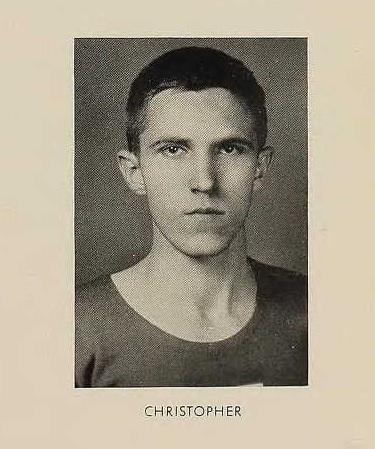
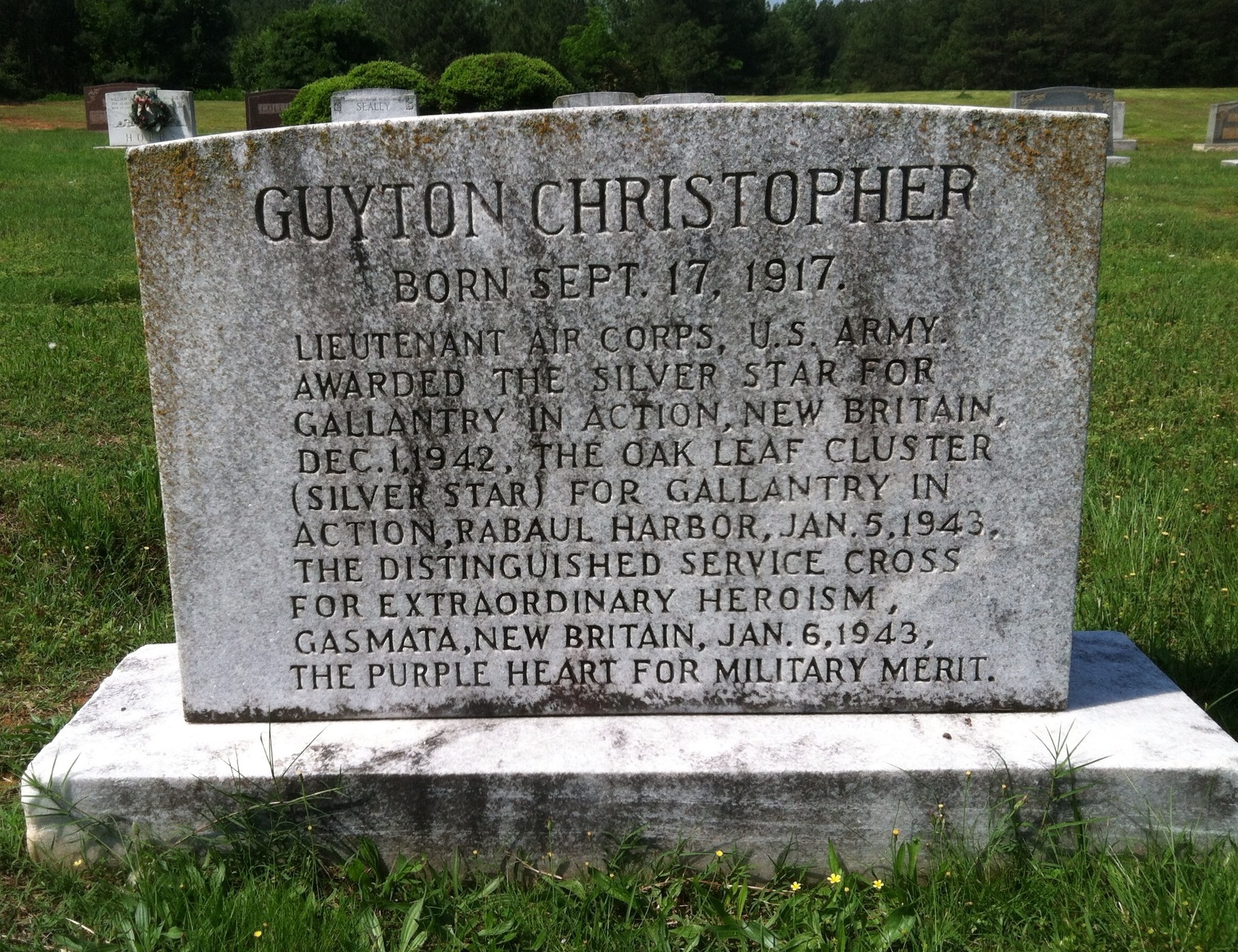
The first one was Guyton Christopher. The only son of a homemaker and a fire insurance salesman, Guyton attended Georgia Tech. According to the 1940 yearbook, The Blueprint, he was on the track team. His best event was the long jump. He was also in the marching band. When he enlisted on September 4, 1941 at Fort McPherson, he wrote that he had attended college for three years and his profession is listed as “actor”. He would enter as an aviation cadet in the Army Air Corps, later known as the U.S. Air Force.

This is a photo of Guyton Christopher from the 1940 Georgia Tech yearbook. He would never have the chance to graduate with his classmates.

This is a photo of Guyton Christopher from the 1940 Georgia Tech yearbook. He would never have the chance to graduate with his classmates.

Guyton entered his training and became a member of the 64th Bomber Squadron, 43rd Bomber Group. They were deployed to Australia in February 1942 and went into combat that September. The squadron operated in support of the campaign in Papua New Guinea, first from Australia, then from New Guinea and Owi Island. They were concentrated, in particular, in attacks on shipping.

Emblem of the USAAF 64th Bomb Squadron. Courtesy of Wikimedia Commons.

Emblem of the USAAF 64th Bomb Squadron. Courtesy of Wikimedia Commons.

This is the B17F bomber, more commonly known as the “Flying Fortress”. Guyton had become adept at flying them.

Guyton was piloting a B-17F “Flying Fortress” as part of a nine-man crew on the day he died. They took off from Port Moresby on a bombing mission against a Japanese convoy bound for Lae, New Guinea. Returning from the mission low on fuel, they attempted to ditch into the Gulf of Papua. Three of the crew members were later rescued but the other six, including Guyton, were never found.

He was posthumously awarded the Purple Heart Medal, two Silver Star Medals, the Distinguished Service Cross, and additional Army awards. His name is listed on the Tablets of the Missing at Manilla American Cemetery and Memorial in Fort William McKinley, the Philippines.

Guytongrave1GuytonGrave2

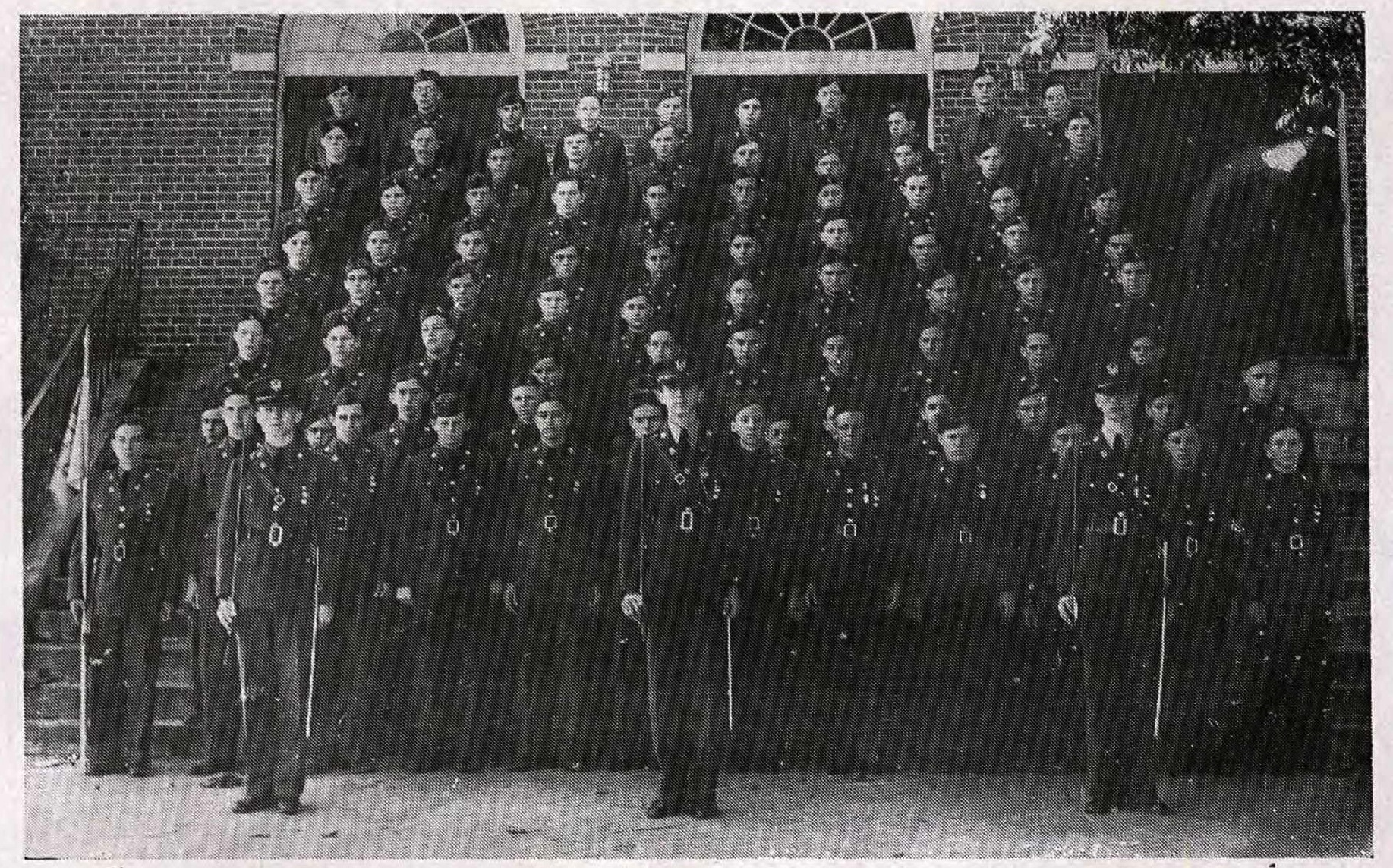
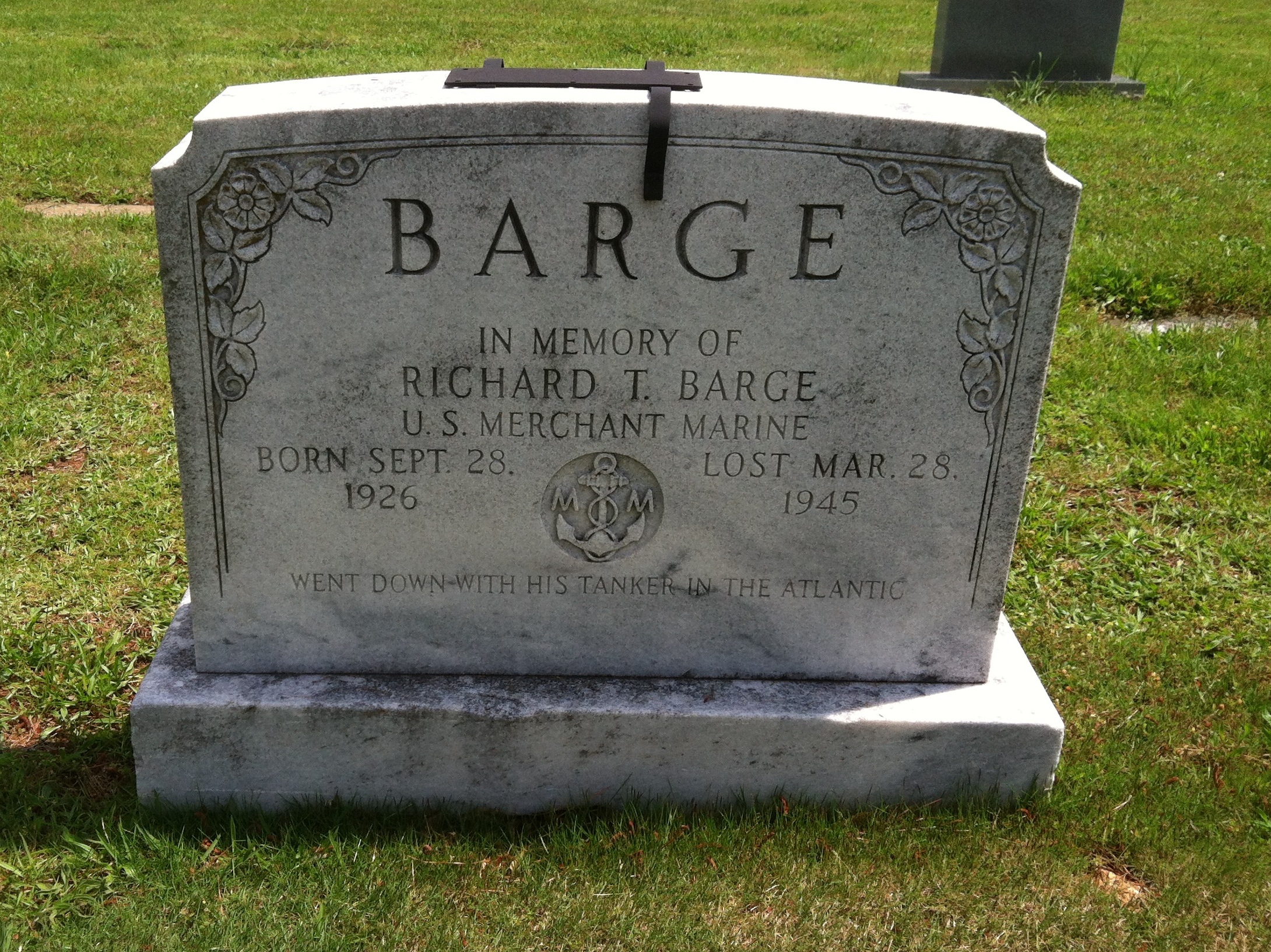
On the same day, I found another monument that told the story of a merchant mariner. Richard Barge was also from Atlanta, the middle son of James and Delia Mae Barge. He attended Technological “Tech” High School. Some famous graduates include legendary golfer Bobby Jones and Chickfila founder Truett Cathy. In 1943, Richard was in Company B of the ROTC. While he never served in the U.S. military, he did lose his life as part of the World War II conflict.

Company B of the Tech High School ROTC in 1943. The names are listed alphabetically so it is unknown which one of them is Richard Barge.

Company B of the Tech High School ROTC in 1943. The names are listed alphabetically so it is unknown which one of them is Richard Barge.

Richard signed on to the U.S. Merchant Marines, which is responsible for transporting cargo and passengers during peace time. During times of war, the Merchant Marine serves as an auxiliary to the Navy, and can be called upon to deliver troops and supplies for the military. While the Merchant Marine does not have a role in combat, they protect any precious cargo.

About 3.1 million tons of merchant ships were lost in World War II. Mariners died at a rate of 1 in 24, which was the highest rate of casualties of any service. An estimated 733 American cargo ships were lost and 8,651 of the 215,000 who served perished in troubled waters and off enemy shores.

Richard served as a messman on the steam tanker SS Oklahoma. Ironically, the Oklahoma had already been hit by a German U-Boat in March 1942 off the shallow waters of Georgia’s St. Simons’ Island. Nineteen men died as a result. The boat was towed to Chester, Pennsylvania to be refitted and put back into service.

The SS Oklahoma was a commercial steam tanker operated by Texaco. But it was carrying military cargo when it was torpedoed in March 1945. Photo courtesy of Texaco.

The SS Oklahoma was a commercial steam tanker operated by Texaco. But it was carrying military cargo when it was torpedoed in March 1945. Photo courtesy of Texaco.

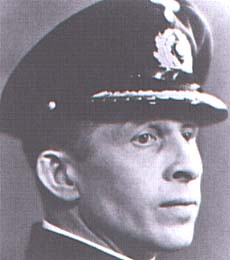
In the early hours of March 28, 1945, the Oklahoma was in the Atlantic when it was torpedoed by the German U-boat U-532, captained by Ottoheinrich Junker. It was reported that flames surrounded the ship for a distance of 500 feet and the flaming cargo blazed on the water a mile astern. While 22 men survived, Barge was one of 50 men who perished as the tanker sank.

German Captain Ottoheinrich Junker was in command of the U-boat that sank the SS Oklahoma. During his career, Junker sank eight ships and damaged two.

German Captain Ottoheinrich Junker was in command of the U-boat that sank the SS Oklahoma. During his career, Junker sank eight ships and damaged two.

While Richard Barge was not in the military, his life was taken in service to his country. He was 19 years old when he died.

While Richard Barge was not in the military, his life was taken in service to his country. He was 19 years old when he died.

Two young men, two very different lives. They both died at sea, their bodies lost to the ocean’s harsh waves. Their parents didn’t have the chance to bring their sons home. Although their graves are empty, their sacrifices are not forgotten. Their lives meant something.

They may not be here physically, but their spirits remain.

Do not stand at my grave and weep,
I am not there; I do not sleep.

Embracing the Bizarre: Funerary Art in Charleston

20 Friday Sep 2013

Posted by adventuresincemeteryhopping in General

≈ 2 Comments

Whenever I’m asked why Southern writers particularly have a penchant for writing about freaks, I say it is because we are still able to recognize one.— Flannery O’Connor

Flannery O’Connor is one of my favorite authors. She was born and raised in Georgia, but I think she would have found plenty of freakish things in the cemeteries of Charleston. I know I did.

In the South, we revel in the unique and bizarre. Eccentricities are embraced, not shunned. You can see that in the Charleston style of what is called funerary art, which is basically anything having to do with burials or funerals.

One of the first headstones that caught my attention during my cemetery hopping adventures was this stunner in St. Philip’s Episcopal Church’s Western Cemetery. A grinning skeleton reclines against a winged hourglass, symbolizing death’s power over time.

The top of Thomas Pool's headstone reads: "Yesterday for Me and To Day for Thee".

The tympanum, or top, of Thomas Pool’s headstone reads: “Yesterday for Me and To Day for Thee”. Pool died at the age of 37 in 1754 during a shipwreck in Charleston harbor.

Why would anyone want a skeleton on their headstone?

Skull and skeleton imagery is a holdover from the colonists’ English past. Puritan preachers warned of the dangers of sin in a worldly society. The result could be eternal damnation. These macabre images were to serve as a lesson to the living to be mindful of where they might end up if they didn’t mend their ways.

To Charlestonians, this was not unusual. At this time, there was an inherent awareness of the fragility of life. Considering the number of epidemics (mostly yellow fever) that wiped out many lives in the fledgling city, death was an everyday event.

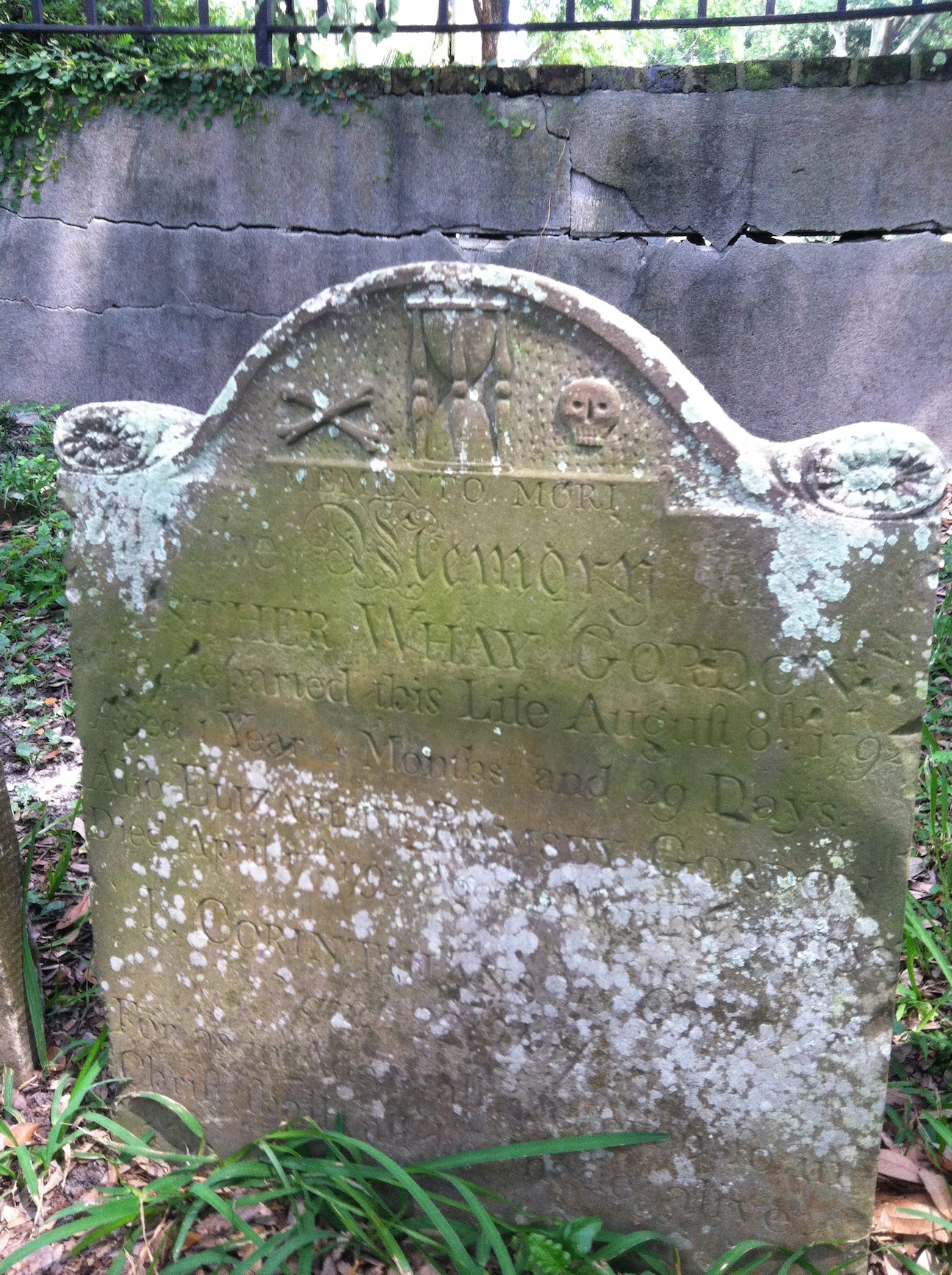
The headstone of infant Esther Whay Gordon features crossed bones, an hourglass and a skull. She died in 1792, having lived only one  year, four months and 29 days. She is buried in the Circular Congregational Church Burial Grounds.

The headstone of infant Esther Whay Gordon features crossed bones, an hourglass and a skull. She died in 1792, having lived only one year, four months and 29 days. She is buried in the Circular Congregational Church Burial Grounds.

Another example was childbirth. Today, giving birth is a fairly risk-free event women go through with few complications. But in the 1700s and 1800s, it could easily mean death for both mother and child.

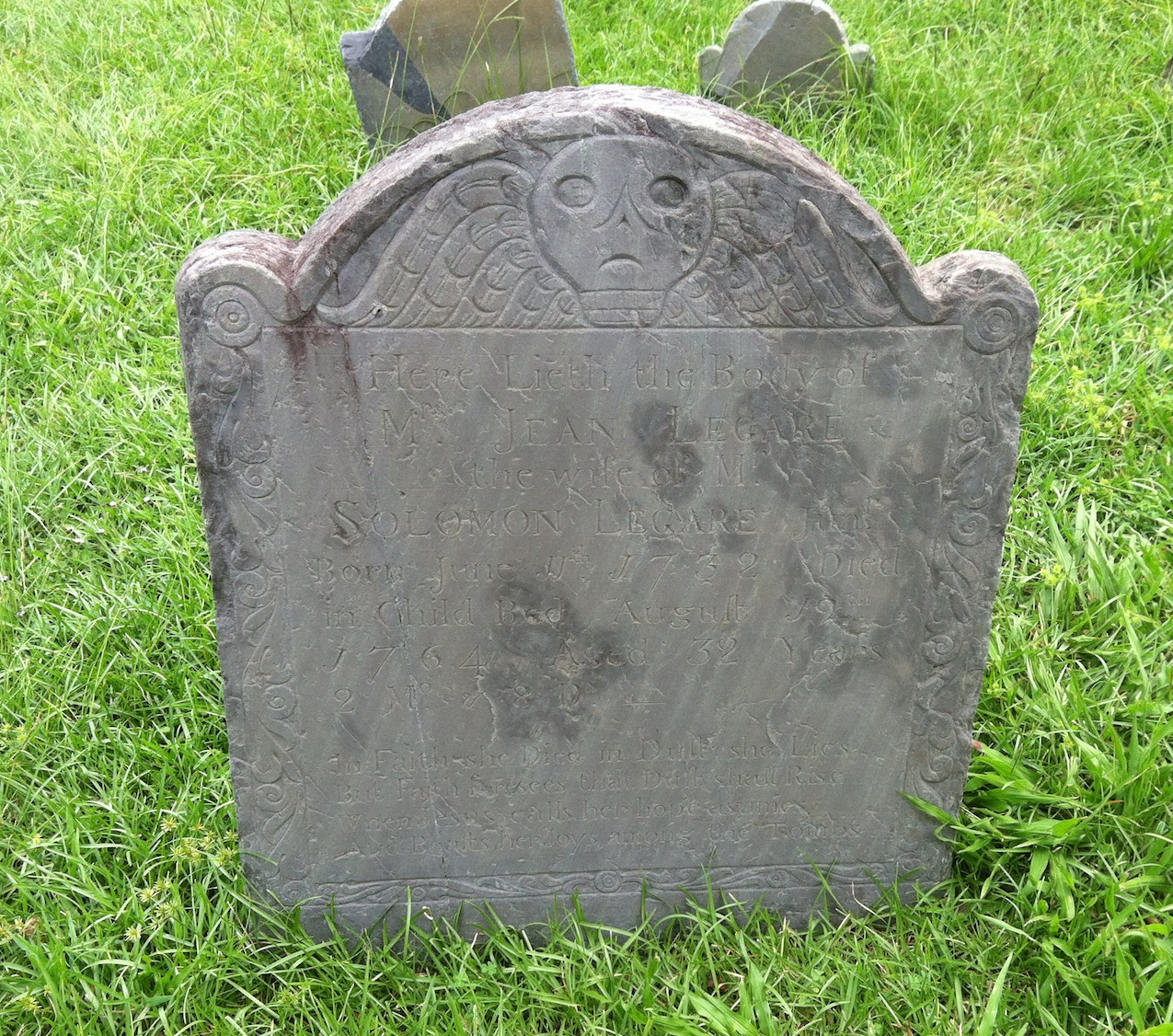
Jean Legare died in childbirth at the age of 32. This was quite common back in the days before ultrasounds and fetal heart monitors.

Jean Legare died in childbirth at the age of 32 in 1764. This was quite common back in the days before ultrasounds and fetal heart monitors.

Buried in the Circular Congregational Church Burial Grounds, Jean Legare was one of countless women who died in childbirth. It is unknown if her baby survived. The poem at the bottom reads:

In Faith she Died, in Death she Lies
But Faith foresees that Death shall Rise.
When Jesus calls her hope assumes
And Boasts her joys among the Tombs.

For Christians, the skull has been a death symbol since Medieval times. When you add wings to it (as seen on Jean’s grave pictured above), it becomes a vivid symbol of the resurrection of the spirit.

Such intricately carved slate headstones were not purchased by the average Charleston resident. They were sought after by the wealthy who had the funds to show the world their status. Back in 1727, the cost for such a finely crafted piece of work might cost about $27. Adjust that for inflation and you’re looking at $30,000 today.

Some wealthy Charlestonians were so intent on impressing the living after they died that they ordered their headstones from a handful of known carvers from New England. Their handiwork can be seen in many Charleston cemeteries. Few were marked but some bear the name of these craftsmen, such as Boston’s Henry Emmes. Some carvers even traveled to Charleston to set up their own shops.

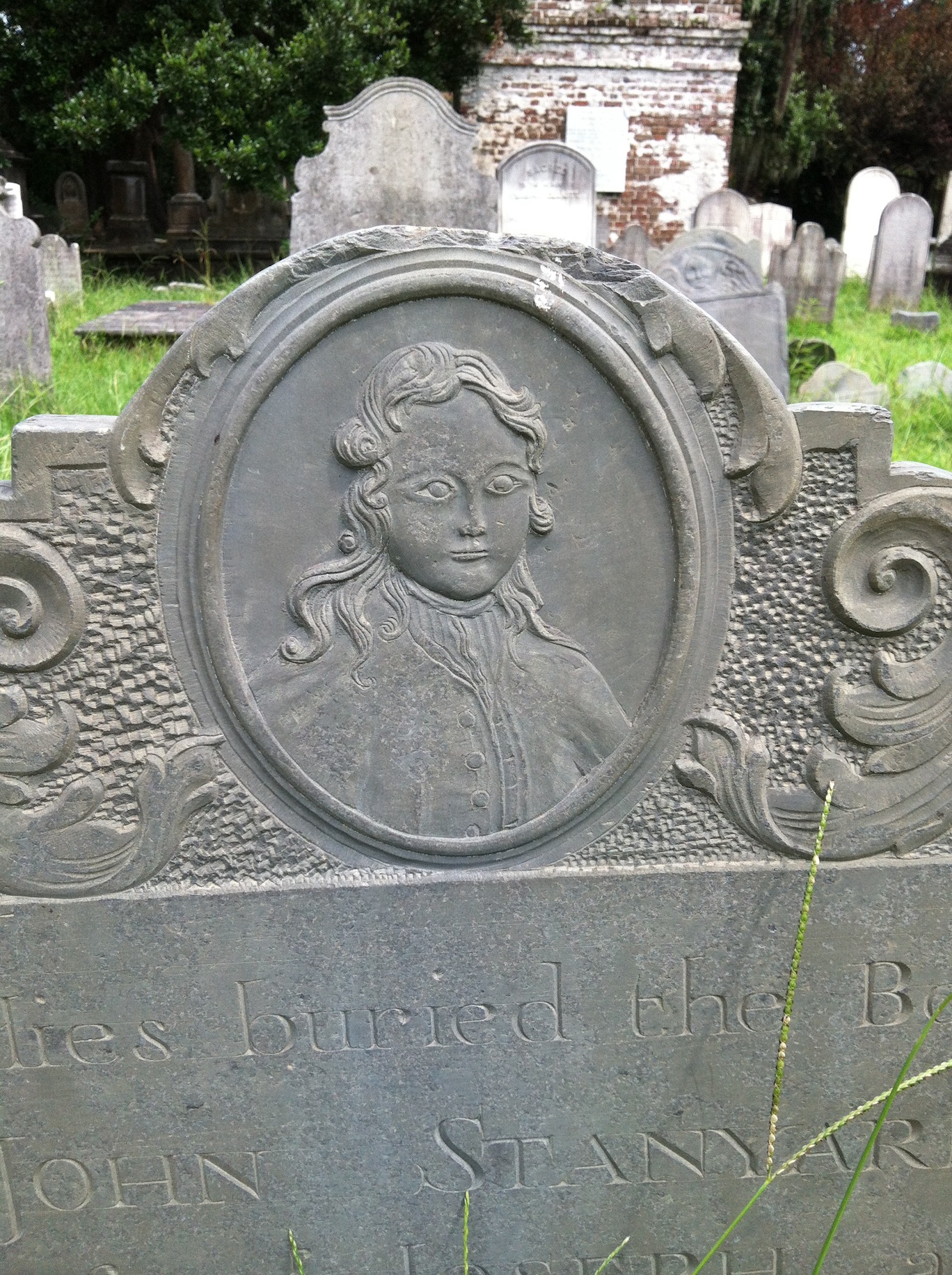
With the onset of the 1800s, funerary art began to take on a less macabre tone. This is due to, in part, to the Great Awakening taking place in New England. Salvation was the order of the day and not the Puritans’ Predestination. Angels and cherubs began to replace skulls and hourglasses. Some of the cherubs bore the facial features of the deceased.

Sarah Creighton, who died in 1775, lived to the age of 36. Her headstone is reflective of the less gruesome style that was coming into play as the 19th century approached.

Sarah Creighton, who died in 1775, lived to the age of 36. Her headstone is reflective of the less gruesome style that was coming into play as the 19th century approached.

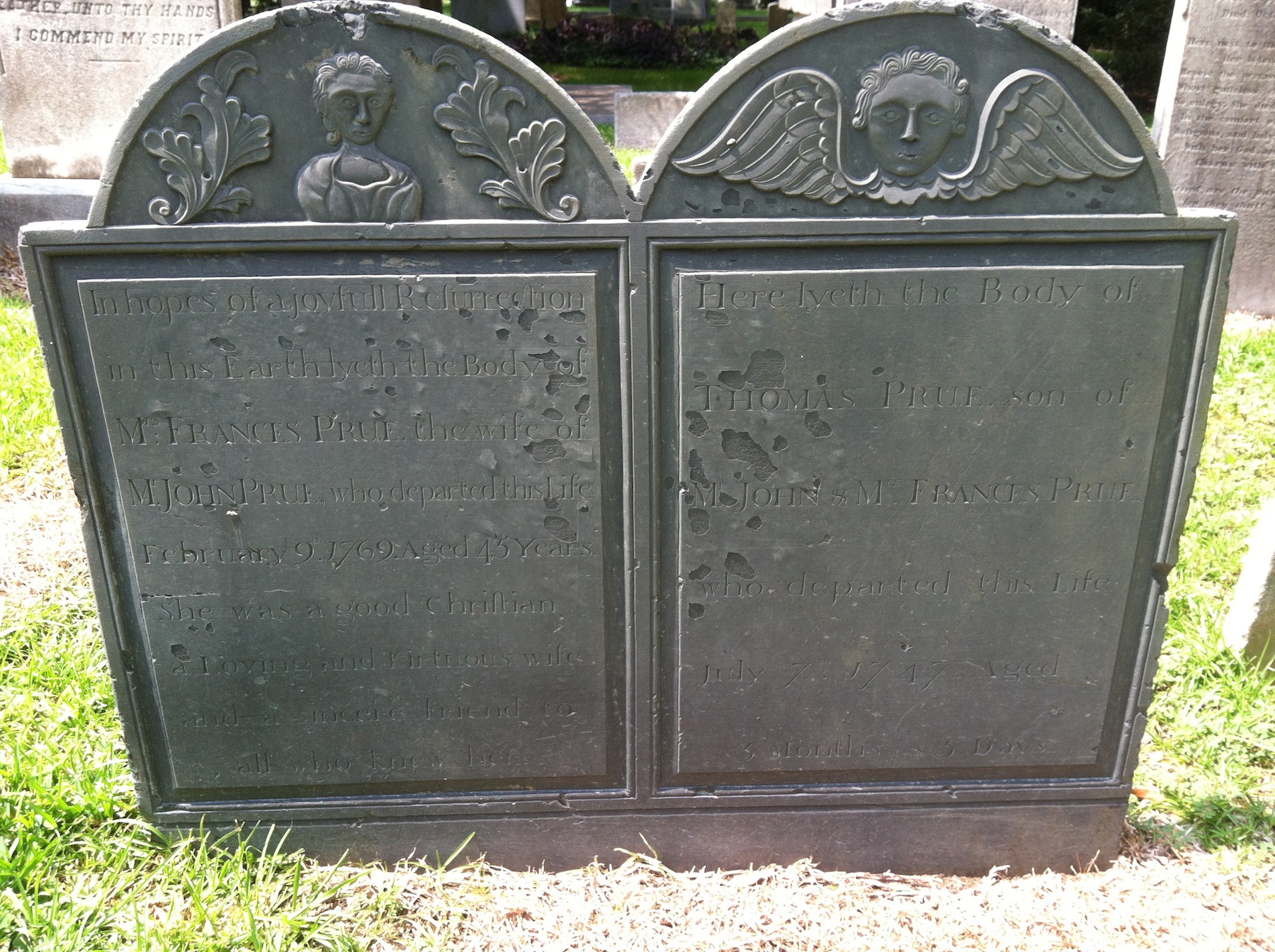
Some headstones featured likenesses of the person themselves, as can be seen in the grave of Frances Prue. She shares it with the son she lost in infancy, Thomas. He is depicted as a cherub, his head having wings.

This double headstone of Frances Prue and her son Thomas is located at St. Philip's Episcopal Church Western Cemetery.

This double headstone of Frances Prue and her son Thomas is located at St. Philip’s Episcopal Church’s Western Cemetery.

The fact that these headstones were being carved in New England but appearing so frequently in Charleston has raised a few questions for historians. Were these headstones a product of New England that a few Southerners sought for themselves? Years ago, I saw one of those winged skull headstones in a Boston cemetery so I knew the wealthy residents of New England favored them.

Evidence indicates that the high level of education and artistic sophistication of Charleston’s elite created a lucrative market for New England carvers. It was a unique group that most Southerners could not afford to belong to, but those that could provided a good living for those carvers willing to meet the demand.

John Stanyard's grave provides a good example of the portraiture style of headstone that came into style toward the end of the 1700s and into the 1800s.

John Stanyard’s grave provides a prime example of the portraiture style of headstone that came into style toward the end of the 1700s and into the 1800s.

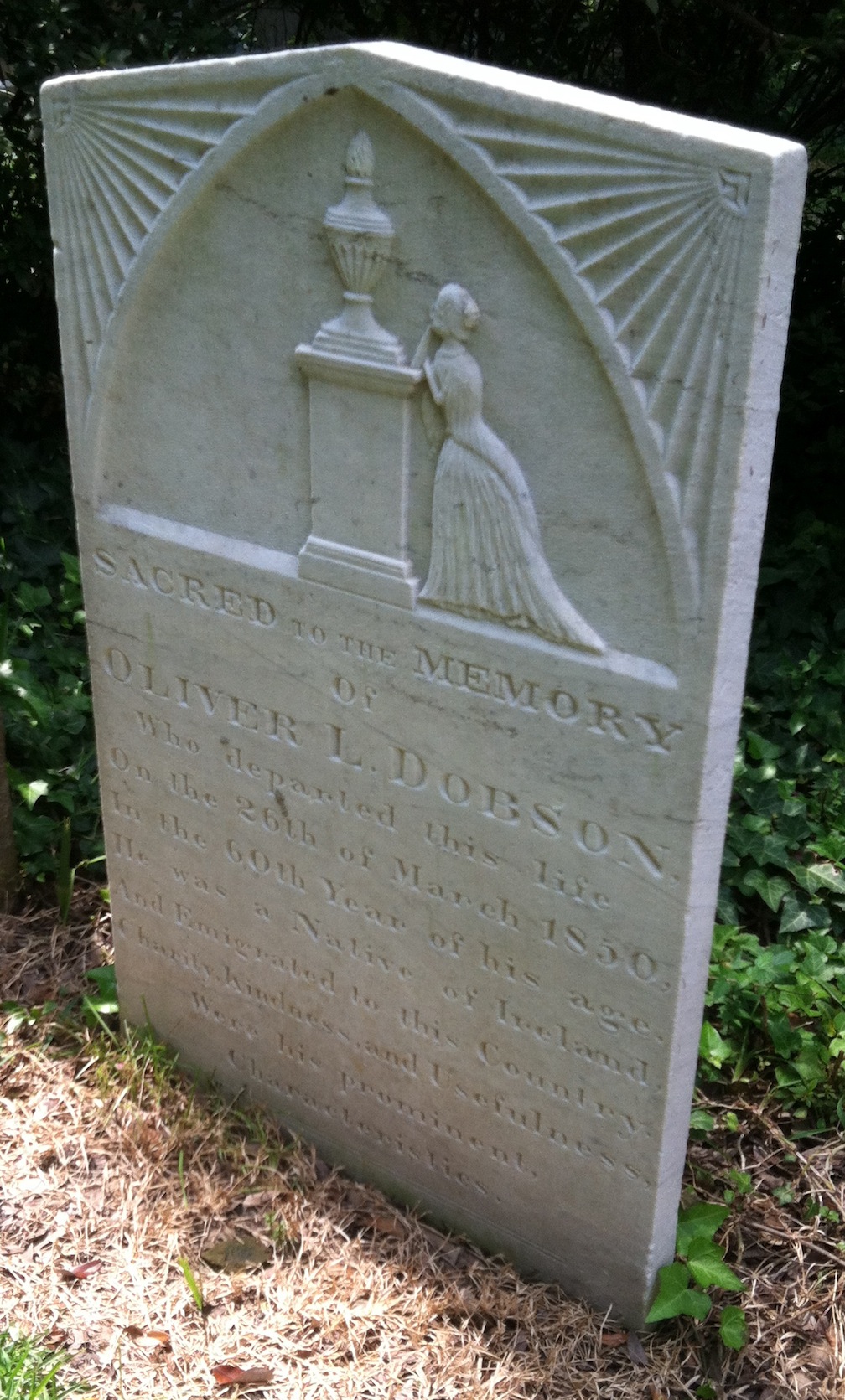
With the onset of the Victorian era, headstones began to be made of different types of stone as opposed to slate. Carvings became less religious and more artistic in nature as religious tolerance took on more prominence. Images of urns, weeping willows, flowers and other motifs began to appear on headstones and monuments.

Oliver Dobson's grave exemplifies the Victorian age in which religion was no longer the most prevalent them.

Oliver Dobson’s grave exemplifies the Victorian age in which religion was no longer the most prevalent theme.

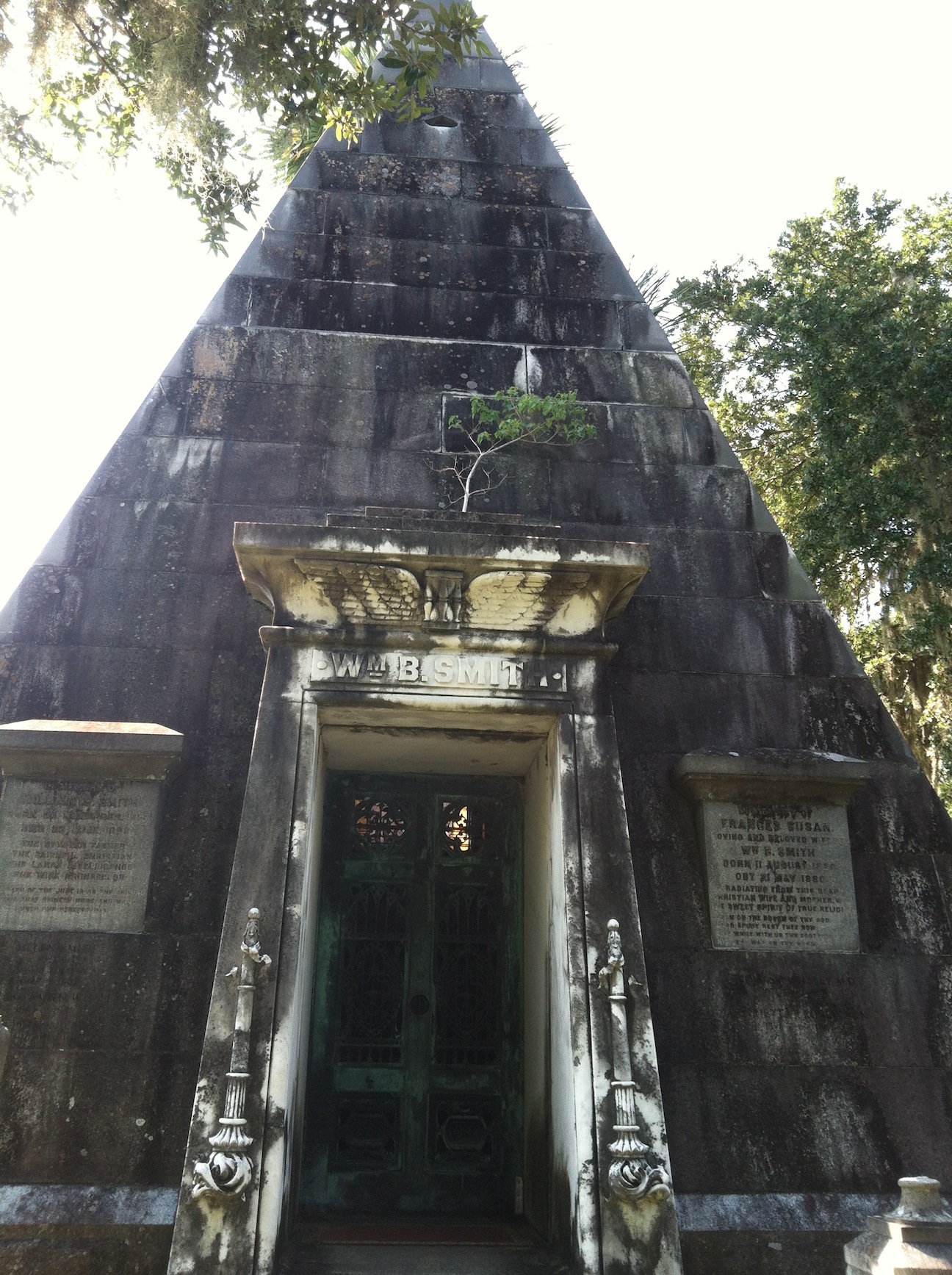
To finish up, I want to feature a tomb that is quite rare in American cemeteries. Magnolia Cemetery, on the outskirts of Charleston, is home to an Egyptian Revival-style pyramid tomb. It’s quite striking.

This unique pyramid-shaped tomb holds the graves of members of the Smith and Whaley families. Only a few of this kind of tomb exist in the South.

This unique pyramid-shaped tomb holds several members of the Smith and Whaley families. Only a few of this kind of tomb exists in the South.

Here's a front view of the tomb.

Here’s a front view of the tomb.

The intricate design of the stained glass panel inside the bomb is indicative of the late 1800s and turn of the century arts.

The intricate design of the stained glass panel inside the tomb is indicative of the late 1800s and turn of the century arts style.

Actor Nicholas Cage actually commissioned his own pyramid-style tomb to be built in New Orleans’ St. Louis Cemetery #1 recently. It’s not very visually appealing, in my opinion, compared to the Smith/Whaley tomb at Magnolia. Cage does have a reputation for being rather eccentric, so it’s not entirely surprising.

I think he’d feel right at home in Charleston.

A Divine Appointment: Cemetery Hopping in Charleston, S.C.

13 Friday Sep 2013

Posted by adventuresincemeteryhopping in General

≈ 2 Comments

Divine appointments are meant to be kept. Especially when you’re in Charleston.

Chris and I had our anniversary recently so we planned a beach vacation to Charleston for just the two of us. I don’t think we’d been away from our son longer than two nights since he was born so it was a trip we were looking forward to. We chose Isle of Palms as our home base and were not disappointed.

Both of us had been to Charleston as children with our families. I had come back a few times as an adult so my memories were fresher. But I can still remember my first visit, riding a horse-drawn carriage through the streets as a tour guide expounded on the rich history of this enchanting city.

You never know what elegant eccentricity you'll find in Charleston.

You never know what elegant eccentricity you’ll find in Charleston. Photo courtesy of Chris Rylands.

This time, I was returning as a cemetery hopper. This meant we were going to spend at least one of our three full days nosing around in cemeteries. Chris kindly consented as he has done in the past when we’re out of state. The fact that he enjoys photography doesn’t hurt. In fact, he took most of the photos you will see in this blog post.

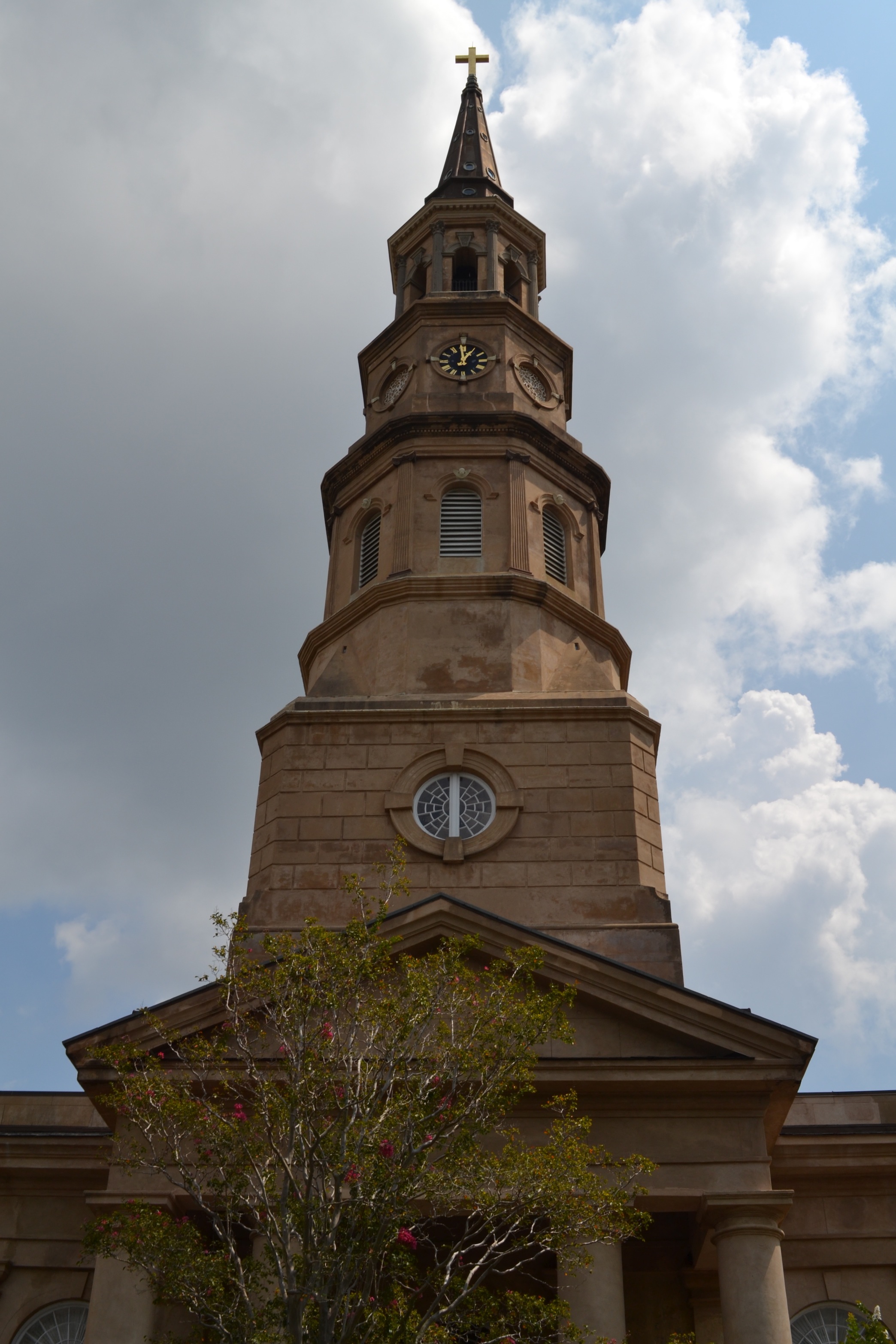
One church I was determined to visit was St. Philip’s Episcopal Church. Established in 1681, it is the oldest church congregation in the state of South Carolina. The current building was constructed in 1835 and boasts a beautiful, tall steeple. The gentleman we spoke with there said there is a law on the books that no building in Charleston can be built taller than the steeple. At one point during the Civil War, it was used for sighting during the Union’s bombardment of the city. St. Philip’s chapel bells were actually melted down for the Confederate war effort.

St. Philip's majestic steeple was designed by E.B. White.

St. Philip’s majestic steeple was designed by E.B. White. Photo courtesy of Chris Rylands.

St. Philip’s has a churchyard and a cemetery. What’s the difference? The churchyard is on the immediate grounds around the church and is limited to members of the congregation. Across the street is the West Cemetery, which St. Philip’s is said to have opened for “strangers and transient white people.” Members, however, were later buried there as well. It is an active cemetery and St. Philip’s has a growing membership.

The Western Cemetery also holds a number of famous people. Countless founding fathers (and mothers) with surnames like Pinckney, Pringle, and Lowndes are buried here. But the most notable has to be U.S. Vice President John Caldwell Calhoun (1825-1832). He was strongly in favor of secession and slavery, earning himself the nickname “the Cast Iron Man” for his ideological rigidity.

John C. Calhoun was the seventh U.S Vice President. He died in 1850 of tuberculosis.

John C. Calhoun was the seventh U.S Vice President. He died in 1850 of tuberculosis. Photo courtesy of Wikimedia Commons.

According to the church’s history, when the Civil War began to break out, there was a great concern that due to Calhoun’s very vocal pro-secession views, invading Union troops might desecrate or totally destroy his grave. Under cover of darkness, his remains were quietly removed from the Western Cemetery and placed in an unmarked area in the church graveyard across the street. After the war, his remains were returned to their original place. His elaborate tomb was erected in 1880 by the South Carolina State Legislature.

Few people were aware that John C. Calhoun’s remains cross the road between St. Philip’s Cemetery and Churchyard more than once.

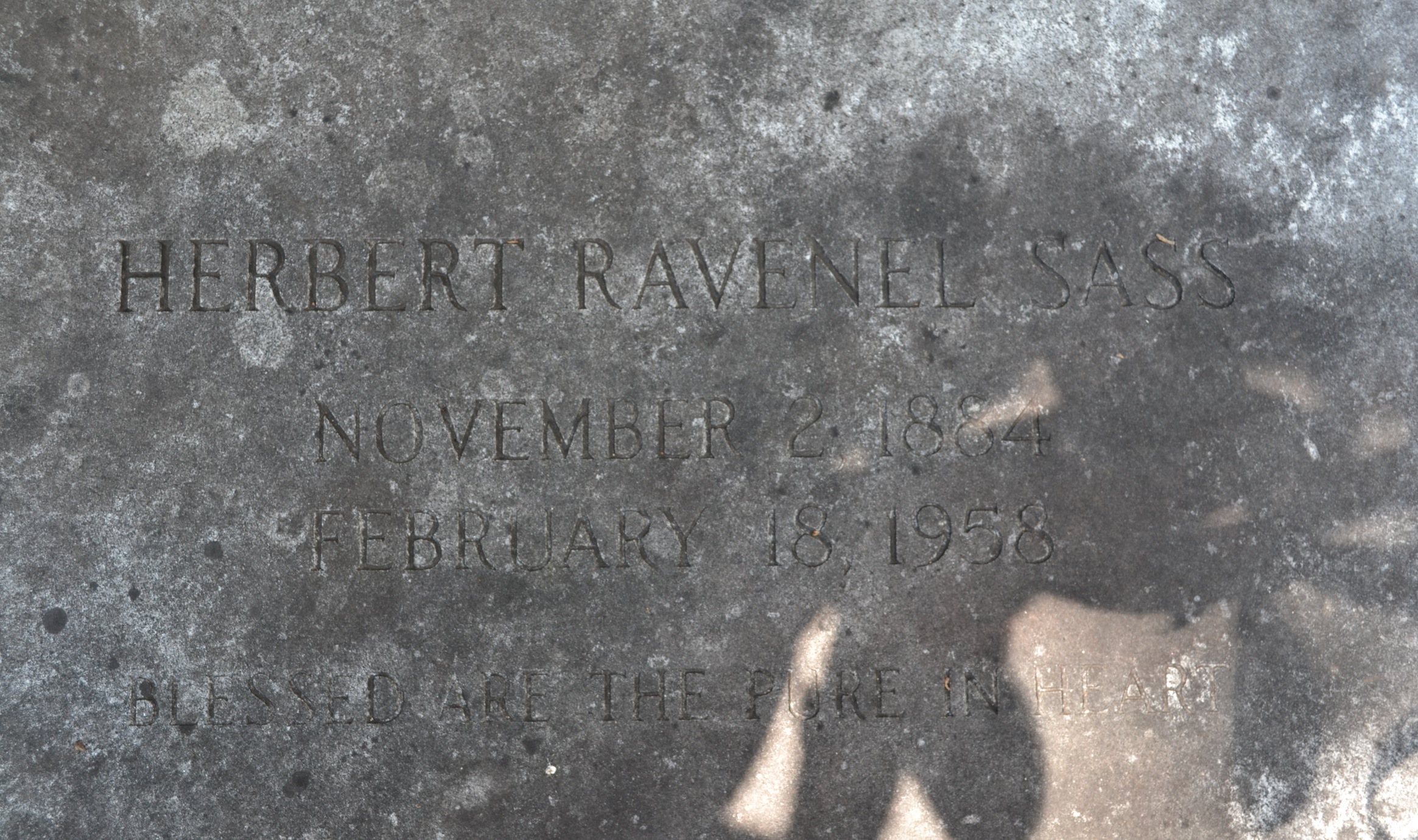
I was also keen to see St. Philip’s because a fellow cemetery enthusiast had mentioned he needed a photo of the grave of South Carolina writer Herbert Ravenel Sass. I had never heard of him before but I was game for the challenge.

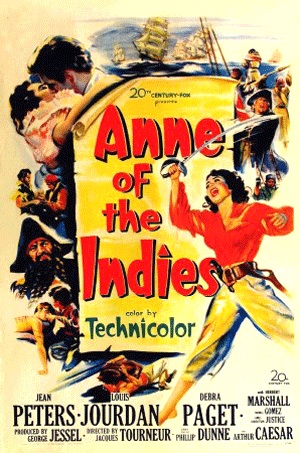
Sass was a man for all seasons. Among his titles were author, editor, reporter, novelist, ornithologist and naturalist. He wrote passionately about his beloved home state, his articles published in magazines like Harper’s Bazzar, Atlantic Monthly and National Geographic. Several of his stories were turned into movies, including The Raid and Anne of the Indies.

Sass' story "Queen Anne of the Indies" was made into a film starring Ann Peters and Louis Jourdan in 1951.

Sass’ story “Queen Anne of the Indies” was made into a film starring Jean Peters and Louis Jourdan in 1951.

All I knew was that Sass’s grave was a flat marker, having seen a less than stellar photo of it on Find a Grave. I knew Chris and I had our work cut out for us. It was a hot, humid day, the kind Charleston is famous for, but we were determined to try.

That’s when I arrived for that divine appointment I mentioned.

When Chris and I entered the West Cemetery, we noticed two ladies chatting as one of them gently hosed off a grave marker in an attempt to get some mud off of it. After we greeted them, I headed away toward the front corner next to the wrought iron fence line to start looking.

I was so intent on what I was doing that when a gentle voice spoke, I nearly jumped out of my sandals. Turning, I saw one of the ladies smiling kindly at me through the fence as she stood on the sidewalk. She apologized for spooking me and mentioned that there was a particularly interesting grave close by, if I was interested.

We began chatting and she asked if there was anyone I was specifically looking for. I mentioned Sass and I could immediately see the shock in her face. God’s timing suddenly became very real.

Unbeknownst to me, Chris managed to snap a picture of me talking to Dotty. Her help and kindness were invaluable. Photo courtesy of Chris Rylands.

Unbeknownst to me, Chris managed to snap a picture of me talking to Dotty. Her help and kindness were invaluable. Photo courtesy of Chris Rylands.

Dotty (her full name is Dorothy Parkin Pratt-Thomas Leonard) began to share with me that her parents, now deceased, had been friends of Sass and had purchased his home from him. Her family had lived in it happily for many years, and Dotty had fond memories of the place. She had known the Sass family intimately and was in the process of writing a paper on Herbert Ravenel Sass for her book club.

Dotty then led me over to Sass’ grave, first pausing at playwright Dubose Heyward’s grave. Sass and Heyward had written the book Fort Sumter together. We stood at the Sass family graves as Chris took pictures. I was too stunned to be of much use in that department. I am not sure if I would have found them had Dotty not been there to show us.

Herbert Ravenel Sass was a man of many talents. His grandson, Herbert Ravenel Sass III, was elected a county councilman in Charleston in 2011.

Herbert Ravenel Sass was a man of many talents. His grandson, Herbert Ravenel Sass III, was elected a county councilman in Charleston in 2011. Photo courtesy of Chris Rylands.

Dotty also pointed out her parents’ graves nearby. Her mother had recently died in 2012. It was clear she missed them very much. She excused herself soon after. But I think our chance meeting that day was as special to her as it was to me. I hope it was.

I have no idea why I crossed paths with Dotty on that sweltering hot day. What I’m learning as this journey I am taking unfolds, is that it is better not to ask or to question too much. Some things are simply meant to be.

Because divine appointments are always right on time.

Photo courtesy of Chris Rylands.

Photo courtesy of Chris Rylands.

Selling Death: Would You Go Shopping at a Cemetery?

06 Friday Sep 2013

Posted by adventuresincemeteryhopping in General

≈ 2 Comments

This week, I’m going to cheat a little and share something I recently wrote for another venue. When you’re on vacation, the urge to be a bit of a slacker is hard to resist.

For the last 13 or so years, I’ve written on a freelance basis for a quarterly magazine called Museum Store. Based in Denver, it’s published by an organization called the Museum Store Association (MSA). If you manage a gift shop at any kind of museum, aquarium, historic site, zoo or Presidential Library, chances are you are a member of MSA.

In that time, I’ve written about topics ranging from how to handle school groups to using Pinterest to boost sales to improving inventory management. Maybe it was inevitable that my passion for cemetery hopping would collide with my writing for MSA. When I pitched the idea of writing an article about cemeteries with gift shops, they went for it.

So take a moment to read about this new retail trend. Shopping at a cemetery may sound a bit strange but it seems to be catching on. I’m especially pleased that I got to talk with some of the wonderful staff at Atlanta’s Oakland Cemetery.

Gift Shops in Cemetery Stores – Museum Store, Fall 2013

On a Wing and a Prayer: Airports and Tombstones

30 Friday Aug 2013

Posted by adventuresincemeteryhopping in General

≈ 8 Comments

Peanut Butter and Jelly. Batman and Robin. Bacon and Eggs. Those are pairings that just make sense.

But airplanes and tombstones don’t. Not usually.

Hartsfield-Jackson International Airport is what most people think of when you mention Atlanta (hopefully it’s not those trashy TV housewives). Just about everybody can say they’ve been through Atlanta because of it, even if they never left the building. They don’t call it the World’s Busiest Airport for nothing.

Amid great hoopla in 2001, construction of a new fifth runway began. The final cost was around $1.28 billion dollars. Completed in 2006, it involved enough fill dirt (in some places) to reach 11 stories high. That fill dirt has its own whiff of scandal attached to it, but I digress.

By putting in that runway, what little was left of the Flat Rock community that sat on that property was erased. Fortunately, two cemeteries with deep roots in that area were kept intact. While they both look drastically different, not a single grave was disturbed.

Hart Cemetery was established in 1860 with the burial of Ellender “Nellie” Brown Hart (1822-1860). According to long-time community member Melba Daily, the story of the cemetery’s founding goes like this (from a 2008 Clayton Daily News article):

“My great-grandfather and great-grandmother (John Jay Hart and Ellender Brown-Hart) were walking on their property one Sunday and when they got to that spot, she said, ‘This is where I want to be buried some day,’ and she became the first person buried there.”

“It’s very hard to go there and picture where buildings were, because there’s all those embankments they built for the runways,” said Tommy Jones. His grandmother, Jewel Hart, lived in the Flat Rock community. An embankment for a taxiway is now located on the spot where his grandmother’s house stood. “It’s very interesting how Hartsfield grew and eventually overran the community.”

He’s being kinder than I would be if someone bulldozed my grandmother’s house to put in a runway.

This is what Hart Cemetery looked like in 1985. Photo courtesy of Tomitronics.com.

This is what Hart Cemetery looked like in 1984. (Photo Source: Tomitronics.com)

My mother worked for the Delta Employees Credit Union for 15 years. I frequently drove to the airport from Fayetteville and passed through this area, although I had never visited the cemeteries. So when I was recently over that way, I decided it was time to do so.

A sign on Riverdale Road directs you down the short road to the bottom of a deep embankment. The front of the cemetery is bordered by a white picket fence and landscaped with bushes. A sign details the history of the cemetery and lists every person thought to be buried there.

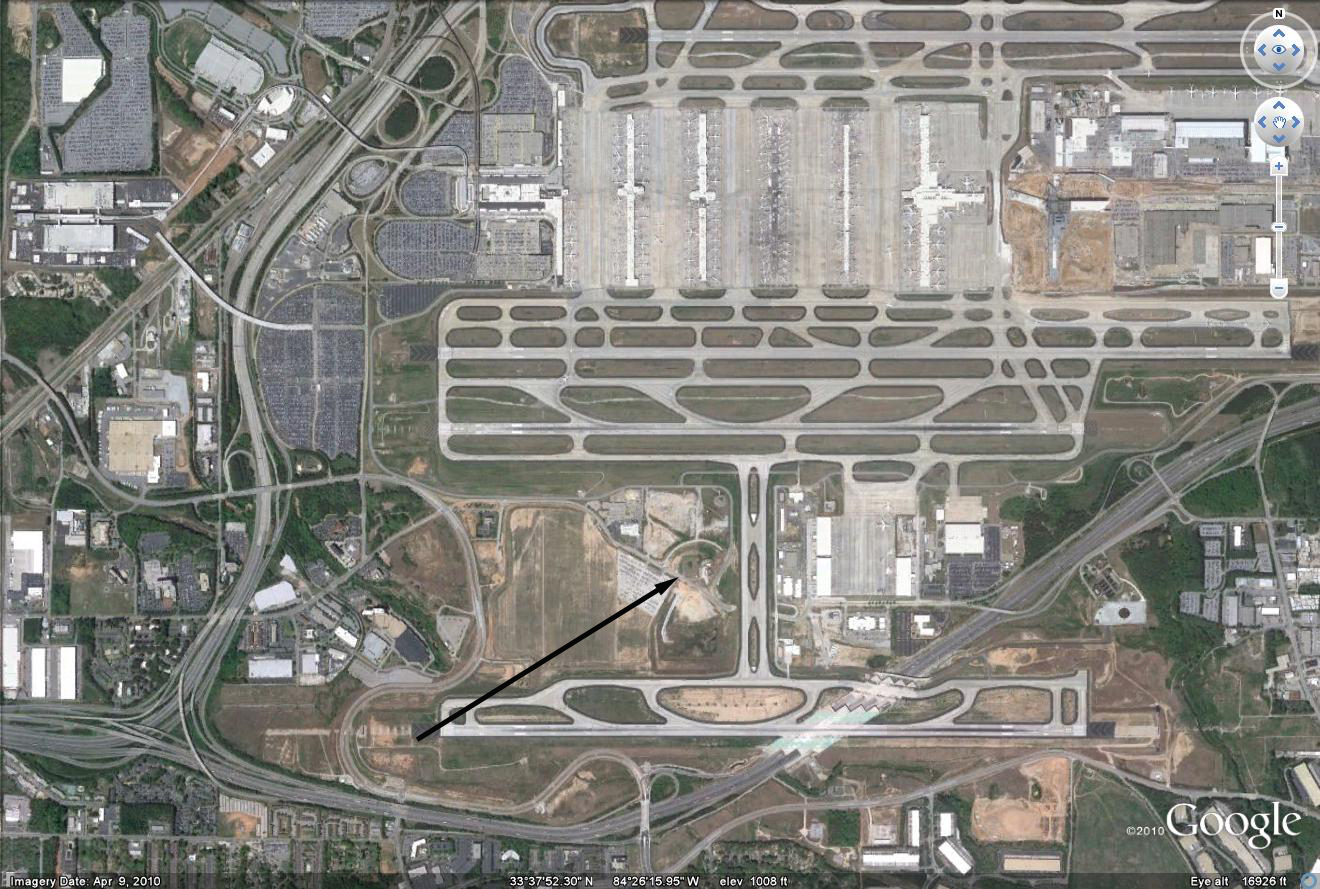
This areal view of the airport runways shows the location of both cemeteries, the black arrow runs between them.

This areal view of the airport runways shows the location of both cemeteries, the black arrow runs between them. Hart is on the lower left and Flat Rock is on the upper right. (Photo Source: Google)

When the archeological study was done on Hart Cemetery in 1995, they discovered 83 graves were buried there. Only 16 had any kind of inscribed marker. A number of them are marked with simple field stones. Two giant magnolias stand watch over them.

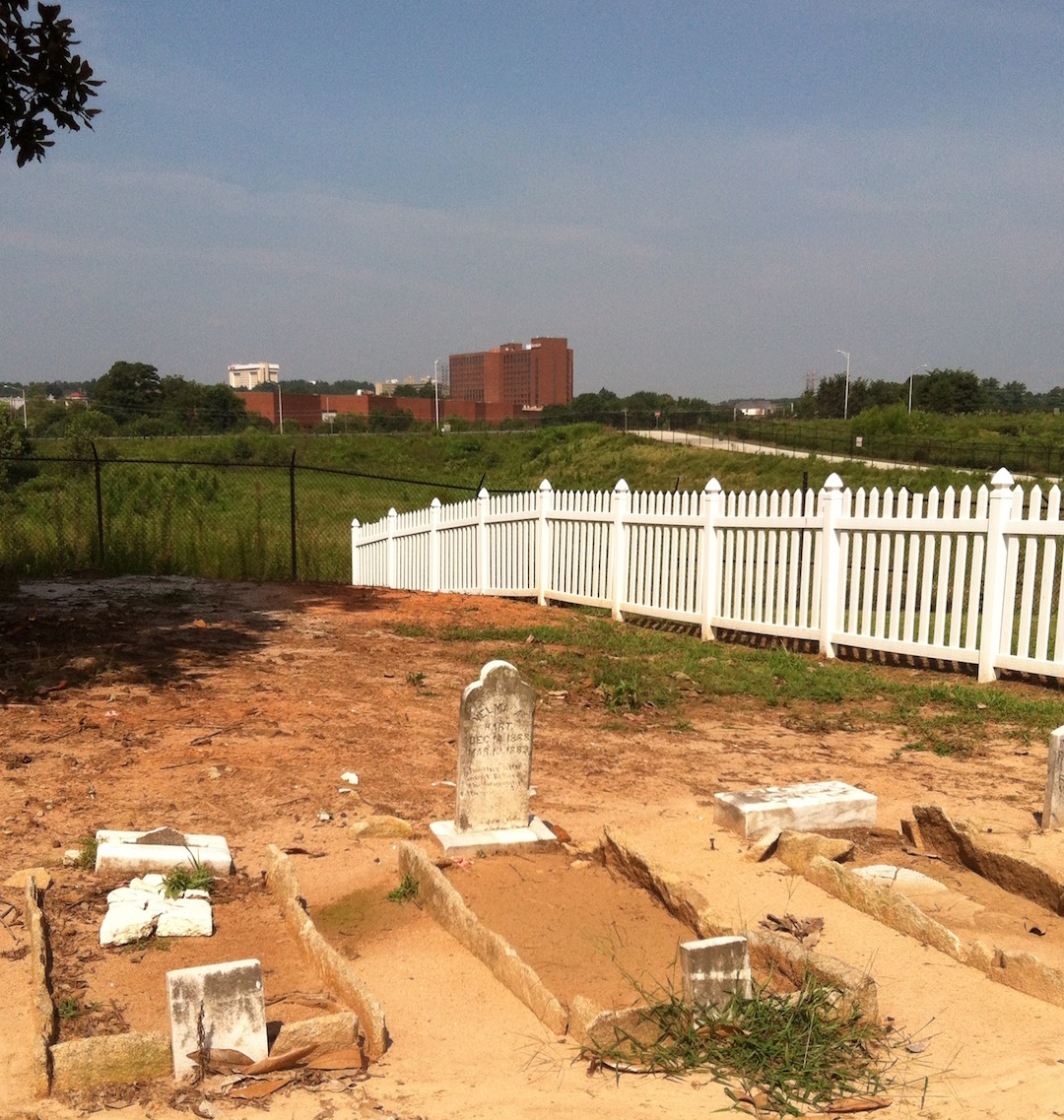
Hart cemetery looks quite different today.

Hart cemetery looks quite different today.

It feels somewhat desolate there. The incessant spring and summer rains have left the ground muddy and rough. An island of land suspended in time among rising green mounds, with the whine of jumbo jets flying overhead, it is a surreal atmosphere. One that left me feeling empathy for those with loved ones there. Yes, it was kept intact. But it will never be the same.

This sign reminds you that you are only a handful of yards from a gigantic runway.

This sign reminds you that you are only a handful of yards from a gigantic runway.

Takeoffs are frequent when you're visiting Hart Cemetery.

Takeoffs are frequent when you’re visiting Hart Cemetery.

Flat Rock Cemetery is located deeper within the labyrinth of airport roads (see map above). The cemetery sits amid the cacophony of rumbling cement trucks, speeding tractor trailers and various aircraft overhead. With over 300 graves (most with markers), Flat Rock Cemetery feels more natural than Hart Cemetery, if that’s possible. It’s a grassy plot of land that is tended fairly well. Someone was mowing the grass on the far side of the property during my visit.

Flatrock Baptist Church Cemetery has a more natural feel to it than Hart Cemetery. But in a different way.

From this direction, Flat Rock Baptist Church Cemetery looks pretty normal.

Then you look in this direction and see the cement plant.

Then you look in this direction and see the concrete plant. That’s when you realize things have changed quite a bit.

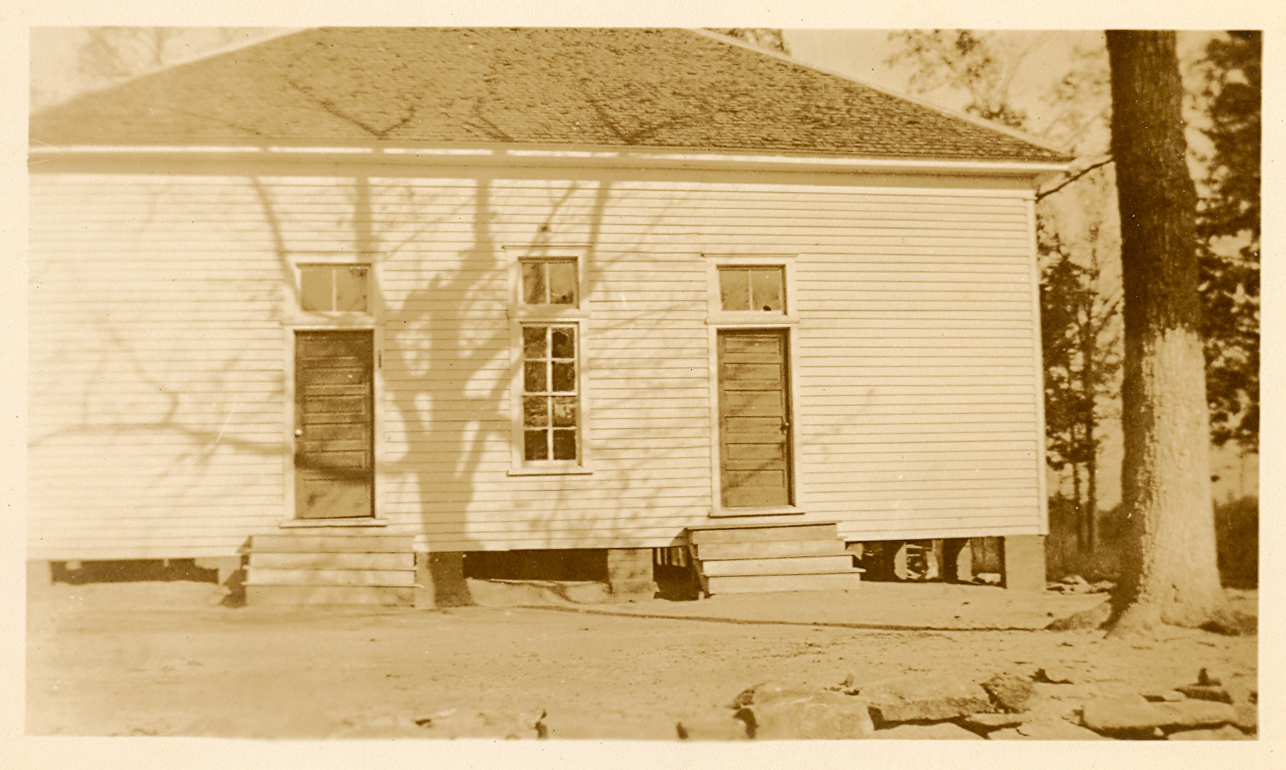
History has it that John Hart (mentioned previously) and his second wife, Elizabeth, helped establish Flat Rock Baptist Church in the 1870s. Although Flat Rock was never a Primitive Baptist congregation, they met in a plain building in the tradition of the Primitive Baptists, devoid of ornament or religious pretension. It was built with two entrances, each approached by three wooden steps with no landing. It’s not known if they were ever used to divide the sexes.

Flat Rock Baptist Church in the 1940s. Notice the two different entrances.

Flat Rock Baptist Church in the 1940s. Notice the two different entrances. (Photo Source: Tomitronics.com)

As the Atlanta airport expanded and I-285 was built in the 1960s, much of the old Flat Rock community was destroyed. By the 1970s, the congregation was looking to relocate. They sold the property to the airport authority in 1979 and re-established themselves as National Heights Baptist Church. The church and Sunday School building were still used by various airport agencies before being abandoned, then finally torn down in 1996.

The cemetery is still active. I was able to take a photo for Find a Grave that was for a burial in 2012. There’s a good bit of space available. Several descendants of the Hart family (and others with kin who grew up there) still live close to the Flat Rock area. I’m willing to bet some of them will be buried there when the time comes.

It’s comforting to know that these two cemeteries remain intact. Other cemeteries have met much sadder fates. In 1956, Monument Cemetery in Philadelphia was pretty much wiped out, most of the graves destroyed. Why? To add a new parking lot to Temple University. It’s a heartbreaking story.

At the same time, it’s a situation that leaves me torn. I only know that I’m glad my loved ones aren’t buried directly beneath some airplane’s flight path, silent witnesses to hundreds of unknowing travelers.

Melba Dailey put it this way, “”I just can’t bear to look at the area now. It doesn’t look the same at all. When we drive to the cemetery, I just close my eyes until we get there.”

I think I’d feel exactly the same way.

Flatplane

Why I Do What I Do: Finding Carrie Turner

23 Friday Aug 2013

Posted by adventuresincemeteryhopping in General

≈ 27 Comments

When I talk about cemetery hopping, I am often asked this question:

Why do you do this?

This week’s post should answer that question for both you and me.

A few months ago, I visited Old Fellowship Cemetery here in Tucker. Oddly enough, it is located at the end of a residential street behind a wooden fence with the name on a simple sign. Four of the graves are of Revolutionary War veterans who ended up making Georgia their home. The stacked stone graves are fascinating. I’ve never seen anything quite like them before.

RhodeIslandvet

This is the grave of Revolutionary War veteran Daniel Fones. He enlisted in the 1st Regiment of Rhode Island Troops on April 5, 1777 at age 13. He served until the end of the war in 1783, being promoted from corporal to sergeant along the way. It is unknown how he ended up in Georgia.

Located nearby is Fellowship Primitive Baptist Church Cemetery, established some time after Old Fellowship Cemetery was. Nobody I’ve asked locally knows why there are two cemeteries, it happened so long ago.

Fellowship Primitive Baptist Church was established in 1829. The original church building burned sometime after 1910. Most of the cemetery records were destroyed in the blaze but the remnants are said to be maintained at the Mercer University Library in Macon, Ga. I haven’t gotten there yet to see if that’s true, but I hope to eventually.

FellowshipPrimitivephoto

This photo of Fellowship Primitive Baptist Church was taken sometime around 1910. You can see the cemetery on the right side. There are two doors on the front of the church, one for men and one for women.

I’ve read that at most Primitive Baptist churches, the sexes sat on opposite sides of the church. I don’t know if this was the practice at this church. They did have separate entrances for men and women, according to a photo (see above). Despite how it sounds, this was not supposed to be a form of discrimination but a way of showing that marriage between men and women was not the major factor to God. While in the church, men and women were supposed to forget earthly ties and concentrate on their worship. Not each other.

While there’s nothing left of the church today, the cemetery is still there. It’s situated between two churches, the First Presbyterian Church of Tucker on the right and the Iglesia Evangelical Apostle Proseta on the left. From what I can tell, the cemetery is fairly well taken care of and is mowed often.

presentdayfellowshipprimitve

This is the present day site of Fellowship Primitive Baptist Church Cemetery. It’s in good shape for a cemetery that no longer has a church of its own.

Having passed it many times, I decided to take a look around one day while my son was attending Vacation Bible School nearby. I realized that many of the graves had not been documented, much less photographed. I spent the next few mornings (before it got too hot) taking pictures and poking around. During my work, I managed to get bitten by ants for the first time. Thankfully, I had on sneakers and socks so it wasn’t too horrible. I think I eventually created over 100 new memorial pages with photos.

Several weeks later, I noticed there was a photo request on Find a Grave for the grave of Carrie Turner at this cemetery. The name did not sound familiar but I had definitely created a memorial page for her. As I looked back in my files, I realized I had forgotten to post the picture, so I quickly did. That, I thought, would be the end of it.

It wasn’t. Not by a long shot.

Shortly after I posted the photo of Carrie’s grave and e-mailed an apology to Janet (the requester), she posted this on my Find a Grave message page:

Thank you so much, my hands are actually shaking writing this, I just know this is my grandmother Carrie. I have spoken to my siblings and we are now planning to make another fact finding trip to Georgia with this new information.

Currently living in New Jersey, Janet was a Find a Grave volunteer in the past. Periodically, she would check the website to see if someone might have found her grandmother’s grave. Unwittingly, that someone was me!

CarrieTurner

Tucked back beside some trees rests the grave of Carrie Turner, who died at the age of 40 from pneumonia. I had no idea when I took this picture that I would be helping someone unlock the mysteries of their family’s past.

As I continued to correspond with Janet, she told me more about her family. She has given me permission to share their story here.

Francis and Carrie Turner lived in rural Tucker in 1910. Records indicate that Francis was born in Lumpkin County, Ga., although his parents were from South Carolina. Carrie grew up in Coweta County, Ga. There was a 25 year age difference between the two, but their union did produce four children. They had a set of male twins, a daughter and another son. Janet’s father was their youngest child.

Unfortunately, Carrie died of pneumonia in 1917 at the age of 40. Francis, then 65, was left with a daunting decision to make. He was poor and his own health was not very good. How was he going to take care of four young children, all of them under the age of 10? It’s a heart-breaking situation few of us would envy.

Ultimately, Francis took his children to the Baptist Children’s Home, then located in Hapeville. He entrusted his children to the care of the orphanage, where they grew up and started lives of their own. Out of the four Turner siblings, only Janet’s father and mother had children.

Janet and her siblings visited Georgia four years ago, hoping to find out more. They visited the Georgia Baptist Children’s Home, now in Palmetto, and found papers that proved the orphanage story was indeed true. She wrote:

[We] are presently in the process of finding out what we have to do legally to unite the twin brothers in one grave, they are in different cemeteries, since neither of them had children and are buried alone.  Every piece of the puzzle is so important and it is my life dream to find my grandmother’s family and my grandfather’s family to perhaps, with the grace of God, find a photo of them, and to reach out to what I believe could be a large family.

Janet and her family are now looking for a professional genealogist in Georgia to do the legwork in finding out more about her grandparents. I hope to be of use to them in some small way, if only to track down some documents locally. Hopefully, they will learn more about Carrie and the other Turners. I’m looking forward to meeting Janet and her siblings in person when they come to Georgia.

Sometimes I do question why I enjoy spending my time poking around in old graveyards. Taking photos while sidestepping ant hills and sweating under a hot Georgia sun (during the rare times it wasn’t raining this summer). I admit that when I was photographing this cemetery, it did cross my mind. Why on earth do I do this?

The answer is that I do it for people like Janet who are seeking answers to their family’s past. I am elated that by simply taking a picture, I helped her find her grandmother. I want to keep doing this. I love doing this!

I think that reason’s good enough for me.

CarrieTurner

Carrie’s grave is the last one in the row, on the right side of the picture.

Death in Paradise: Visiting Cementerio Isla Vista

09 Friday Aug 2013

Posted by adventuresincemeteryhopping in General

≈ 3 Comments

I love to travel. Unfortunately, I’ve only been out of the country a few times. Now that I’m a hopper, it excites me to think of all the interesting cemeteries, I mean, places I’d like to visit.

My friend Todd Guenzi also has the travel bug, but he actually goes to the places that I dream of visiting. He’s a great photographer, too, so I get to enjoy seeing pictures of his adventures. One place he visits often is Puerto Rico, an island paradise I have on my “must go” list.
On one of his visits a few months ago, he had the chance to wander around a cemetery called Cementerio Isla Verde that’s practically on the beach. Pretty rare, indeed. When he sent me the pictures, I knew I was going to feature them here eventually.

This week, I’m simply going to post these pictures, paraphrasing Todd’s insights. I could not find much information on this cemetery and what I did see was in Spanish (definitely not my primary language). So my usual lengthy research didn’t result in anything worth sharing.
Here’s what Todd had to say:

“I was staying in a region of San Juan called Carolina, just east of San Juan. My hotel was on the beach and just about a half a mile up the beach to the west, you could see this cemetery from the beach (fenced from beach to cemetery). There was no access from beach to cemetery, but when I took the avenue walk on the other side, there was an entrance from the main road. So I was able to gain access that way.

Amazing to me that they took valuable beach front property to place a cemetery, but I suppose that is “modern” thinking. When this cemetery was developed, life was different, and there may have been more reverence for this entity. Long before the resorts and hotels were built.”

When you think of paradise, it might look like this. Todd says this is the view you have with your back to the fence between the beach and cemetery.

When you think of paradise, it might look like this. This the view you have with your back to the fence between the beach and cemetery.

"The cemetery is on my right just a few feet away, and this is the view of Carolina down the beach." -- Todd

The cemetery is on the right just a few feet away, and this is the view of Carolina down the beach.

"The cemetery is on the left looking the opposite way down the beach. You can sort of make out some of the mausoleums between the palms. This shows you how close it is to the water."

The cemetery is on the left looking the opposite way down the beach. You can sort of make out some of the mausoleums between the palms. This shows you how close it is to the water.

"This shows the general view of the cemetery. It's not really in very good shape as we are accustomed to here in the States. Many of the graves, including mausoleums, have actually been abandoned."

This shows the general view of the cemetery. It’s not really in very good shape as we are accustomed to here in the States. Many of the graves, including mausoleums, have actually been abandoned.

"Another general view. The billboards and modern lamp posts are from the boulevard just beyond. The cemetery is a narrow strip of land between the  ocean and the boulevard."

Another general view. The billboards and modern lamp posts are from the boulevard just beyond. The cemetery is a narrow strip of land between the ocean and the boulevard.

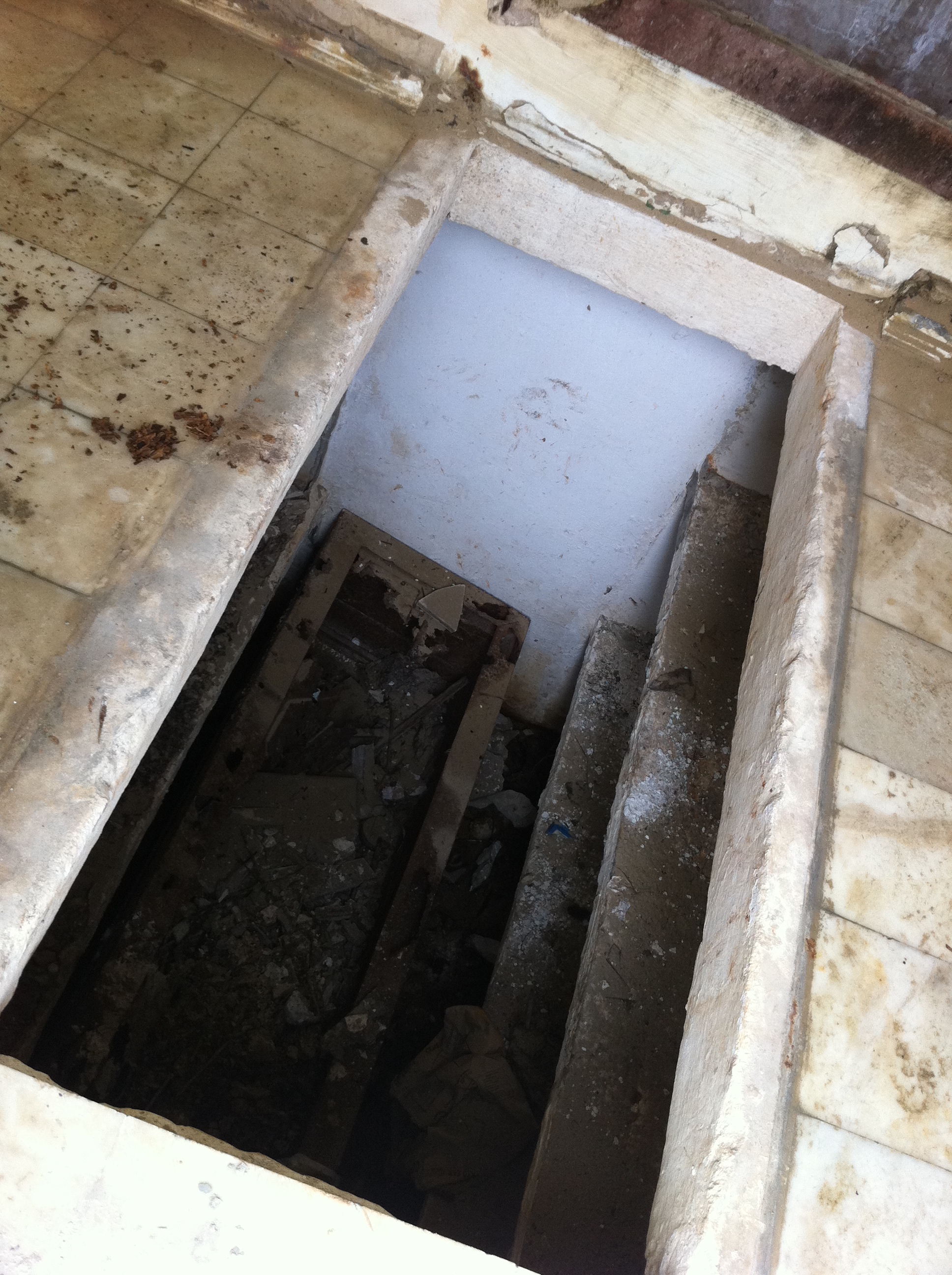
"This is a personal family mausoleum.  The upper, ground level portion was originally meant to be a small chapel and would have had an altar just inside the door.  A marble slab would be removed in the floor to access the family crypt where several coffins would reside depending on the size of the structure and the crypt. This one has long been abandoned. Perhaps the family not able to keep up the cost of the burial plot and building?  Maybe it was desecrated by others. I don’t know, but it certainly conjures a story. You can see the crypt is open and was empty when I peered in.  Very, very eerie. "

This is a personal family mausoleum. The upper, ground-level portion was originally meant to be a small chapel and would have had an altar just inside the door. A marble slab would be removed in the floor to access the family crypt where several coffins would reside depending on the size of the structure and the crypt.

Guenzi14

This one has long been abandoned. Perhaps the family was not able to keep up the cost of the burial plot and building? Maybe it was desecrated by others. I don’t know, but it certainly conjures a story. You can see the crypt is open and was empty when I peered in. Very, very eerie.

"Detail of the abandoned crypts. Looks like “bunkbeds” to rest the coffins on. A very disturbing photo indeed. Did the family take the bodies and relocate them? I hope that is the case."

Detail of the abandoned crypt. Looks like “bunkbeds” to rest the coffins on. A very disturbing photo indeed. Did the family take the bodies and relocate them? I hope that is the case.

"This is the slab that would have covered the crypt."

This is the slab that would have covered the crypt.

"This mausoleum is lacking a door, so it may have also been abandoned."

This mausoleum is lacking a door, so it may have also been abandoned.

This one seems to be taken care of.

This one seems to be somewhat taken care of.

This one is more elaborate.

This one is more elaborate.

"Here's a typical altar in one of the mausoleums."

Here’s a typical altar in one of the mausoleums.

Guenzi12

No altar was present in this mausoleum.

The Pieta is one of the most common statuary depictions.

The Pieta is one of the most common statuary depictions.

The detail of the statuary is eye catching.
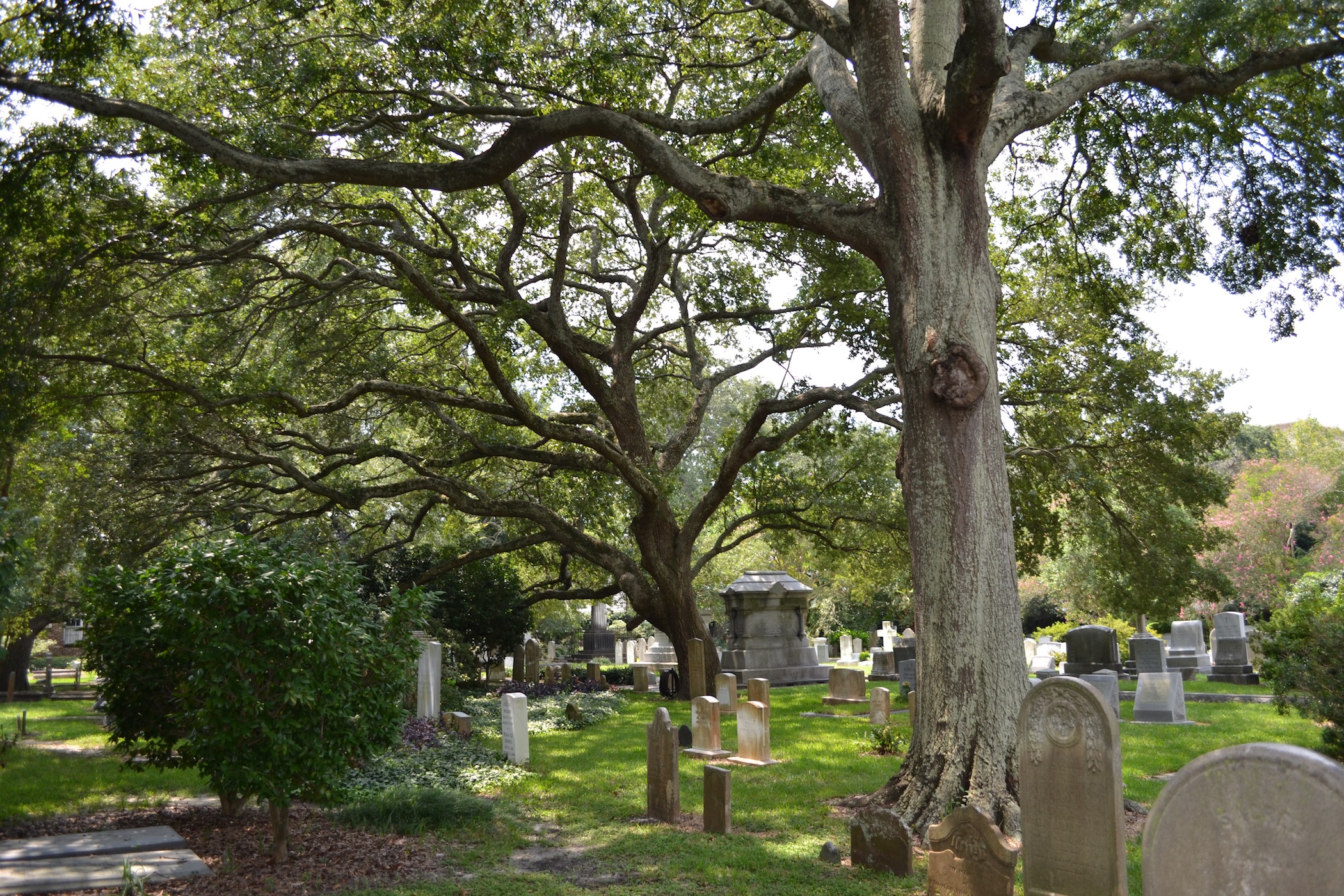
The detail of the statuary is eye catching.
A very well executed tableau done in mosaic tiles.

A very well executed tableau done in mosaic tiles.

The Good Shepherd and his flock.

The Good Shepherd and his flock.

Todd took this photo through the fence. The single grave's condition is rather forlorn.

Todd took this photo through the fence. The single grave’s condition is rather forlorn.

This is what Todd said about this last picture: "I have a feeling that this sums up the plight of this cemetery.  People could no longer afford (or didn’t want to) the expense of the family mausoleums. There were several signs like this one, which I assume meant that the plot or statuary was for sale, and the dearly departed would be moved elsewhere if the plot would sell? Odd at best. I’ve never seen this in any other cemetery I’ve ever visited."

This is what Todd said about this picture: “I have a feeling that this sums up the plight of this cemetery. People could no longer afford (or didn’t want to) the expense of the family mausoleums. There were several signs like this one, which I assume meant that the plot or statuary was for sale, and the dearly departed would be moved elsewhere if the plot would sell? Odd at best. I’ve never seen this in any other cemetery I’ve ever visited.”

These photos leave more questions than answers but they offer a unique glimpse into a cemetery nestled in paradise. I would love to know the story behind this neglected place. I appreciate that Todd could share it with me so I could share it with you.

Guenzi18

Better Off in a Pine Box: Death 101

02 Friday Aug 2013

Posted by adventuresincemeteryhopping in General

≈ 1 Comment

Is there a difference between a casket and a coffin?

This kind of question probably doesn’t keep you up at night. At the same time, funeral terminology can get confusing if you’re not familiar with it. That’s why this post will be the first installment in an occasional series called Death 101.

Coffin versus casket?

Today, the terms coffin and casket are used interchangeably. In the past, the term for the container people were buried in was called a coffin. Casket is now more commonly used. However, there are differences between the two.

The most obvious distinction is the shape. Coffins have either six or eight sides, either hexagonal or octagonal. Remember those old black and white horror films featuring vampires, zombies and other creatures of the night? Those are coffins being depicted.

Christopher Lee portrayed the infamous Transylvanian in the 1958 film "Horror of Dracula".

Christopher Lee portrayed the infamous Transylvanian in the 1958 film “Horror of Dracula” That’s a coffin he’s peeking out of.

Coffins are shaped that way to conform to the shape of the human body: narrow around the head, broad on the shoulders area and much narrower down to the feet. By contrast, caskets are rectangular and are what most people are familiar with. That’s what funeral homes sell now. I wonder if the increasing girth of the average American is one reason for the more (ahem) generous shape.

So why the change?

The term casket was initially used as a euphemism for a coffin when funeral parlors started replacing mortuaries. Coffin seemed offensive with the sense of finality that comes with it. But is casket that much better, you might ask? Years ago, yes.

The original meaning of casket was a box for keeping precious belongings like jewelry. Using “casket” to mean “coffin” was meant to diminish the negative connotation that comes with the burial container. Even the death care industry is aware of the value of good marketing.

This explains something I’d always wondered about in Charlotte Bronte’s novel, Jane Eyre. In it, governess Jane becomes engaged to her mysterious employer, Rochester. At the altar, she learns of a tiny complication that’s been living in Thornfield’s attic: Rochester’s insane wife, Bertha. Not eager to become a sister wife, Jane flees. Months later, she returns to find Thornfield burned to the ground, Bertha dead, and Rochester maimed and half-blind. He talks about when he realized she had left him:

After examining your apartment, [I] ascertained that you had taken no money, nor anything which could serve as an equivalent! A pearl necklace I had given you lay untouched in its little casket; your trunks were left corded and locked as they had been prepared for the bridal tour.

This 18th-century French jewel casket was for storing precious gems. Not dead bodies. Photo courtesy of Kevin Stone Antiques and Interiors.

This 18th century French jewel casket was for storing precious gems. Not dead bodies. Photo courtesy of Kevin Stone Antiques and Interiors.

Another difference between the two is in materials. Coffins are usually very simple, made of wood, and often do not have handles or interiors. Even back when people were only beginning to adapt the practice of burying the dead in vessels, a cross right above the deceased’s head is the only adornment a coffin would have.

Coffins were almost always handcrafted by one person, often the local carpenter. It was he who would “undertake” the task of taking care of the final disposition of the deceased. That’s where the term “undertaker” comes from.

Caskets are typically made of softwood or hardwood, or 16, 18, or 20 gauge metal. In fact, most caskets purchased today are metal. They are often intricately designed and have engravings, imagery, gold or silver details, handles, and much more. Furthermore, caskets tend to have interiors made of silk, velvet, or other high-quality fabrics. They can also be incredibly expensive.

This casket retails for about $30,000. Michael Jackson and James Brown were buried in this model. It's made by the Batesville Casket Company.

This 14 karat gold casket retails for about $30,000. Michael Jackson and James Brown were buried in this model. It’s made by the Batesville Casket Company.

In America, caskets are made by a handful of large manufacturers. Two of them are Batesville and Aurora (both based in Indiana). The shells are often built on an assembly line, with the additional hardware and decorative elements added later. This is quite different from one carpenter building a simple wooden coffin by hand.

image

Ghana has a colorful tradition of handcrafting fantasy caskets based on the deceased’s wishes, from soda bottles to giant fish to a replica BMW.

You can actually buy your own casket at places like Costco or BJ’s. They will ship it directly to the funeral home of your choice. This can save a good deal of money since the casket you might purchase from a funeral home is going to carry a markup in price. However, I did note that of the 37 states in which Costco sells and will deliver caskets to, Georgia is not one of them.

Casket manufacturers are feeling the pinch these days as the demand for cremation continues to rise. As a result, companies like Batesville are coming up with more options in the way of decorative containers and urns in which to place ashes.

At the same time, the need for caskets is never going to completely go away. There are too many religious issues attached to cremation for that to ever happen. But that’s a topic that deserves its own blog post another time.

As for me, I’m partial to the idea of a simple wooden coffin, not a casket. It brings to mind the lyrics from a song by Doug Stone:

I’d be better off in a pine box,
On a slow train back to Georgia,
Or in the grey walls of a prison doing time.

Then again, maybe not.

Photo courtesy of Collegiate Memorials, based in Macon, Ga.

Photo courtesy of Collegiate Memorials, based in Macon, Ga.

← Older posts
Newer posts →

Recent Posts

  • Pandemic Cemetery Hopping: Wandering Around Atlanta’s Crest Lawn Cemetery/Casey’s Hill, Part II
  • Pandemic Cemetery Hopping: Wandering Around Atlanta’s Crest Lawn Cemetery/Casey’s Hill, Part I
  • Few But Not Forgotten: Paying My Respects at the Houston County Poorhouse Cemetery in Dothan, Ala.
  • More Pensacola, Fla. Cemetery Hopping: Taking a Ramble Through Saint John’s Cemetery, Part III
  • More Pensacola, Fla. Cemetery Hopping: Taking a Ramble Through Saint John’s Cemetery, Part II

Archives

  • July 2026
  • June 2026
  • February 2026
  • December 2025
  • November 2025
  • August 2025
  • July 2025
  • June 2025
  • May 2025
  • April 2025
  • March 2025
  • February 2025
  • January 2025
  • October 2024
  • August 2024
  • July 2024
  • June 2024
  • May 2024
  • April 2024
  • March 2024
  • February 2024
  • January 2024
  • December 2023
  • November 2023
  • October 2023
  • September 2023
  • August 2023
  • July 2023
  • June 2023
  • May 2023
  • April 2023
  • March 2023
  • February 2023
  • January 2023
  • December 2022
  • November 2022
  • October 2022
  • September 2022
  • August 2022
  • July 2022
  • June 2022
  • May 2022
  • April 2022
  • March 2022
  • February 2022
  • January 2022
  • December 2021
  • November 2021
  • October 2021
  • September 2021
  • August 2021
  • July 2021
  • May 2021
  • April 2021
  • March 2021
  • February 2021
  • January 2021
  • December 2020
  • November 2020
  • October 2020
  • September 2020
  • August 2020
  • July 2020
  • June 2020
  • May 2020
  • April 2020
  • March 2020
  • February 2020
  • January 2020
  • December 2019
  • November 2019
  • October 2019
  • September 2019
  • August 2019
  • July 2019
  • June 2019
  • May 2019
  • April 2019
  • March 2019
  • February 2019
  • January 2019
  • December 2018
  • November 2018
  • October 2018
  • September 2018
  • August 2018
  • May 2018
  • April 2018
  • March 2018
  • February 2018
  • January 2018
  • December 2017
  • November 2017
  • October 2017
  • September 2017
  • August 2017
  • July 2017
  • June 2017
  • May 2017
  • April 2017
  • March 2017
  • February 2017
  • January 2017
  • December 2016
  • November 2016
  • October 2016
  • September 2016
  • August 2016
  • July 2016
  • June 2016
  • May 2016
  • April 2016
  • March 2016
  • February 2016
  • January 2016
  • December 2015
  • November 2015
  • October 2015
  • September 2015
  • August 2015
  • July 2015
  • May 2015
  • April 2015
  • March 2015
  • February 2015
  • January 2015
  • December 2014
  • November 2014
  • October 2014
  • September 2014
  • August 2014
  • July 2014
  • June 2014
  • May 2014
  • April 2014
  • March 2014
  • February 2014
  • January 2014
  • December 2013
  • November 2013
  • October 2013
  • September 2013
  • August 2013
  • July 2013
  • June 2013
  • May 2013
  • April 2013
  • March 2013
  • February 2013
  • January 2013

Categories

  • General

Blogroll

  • A Grave Interest
  • Cemetery Photography by Chantal Larochelle
  • Cemetery Tours of Berlin by Matti
  • Confessions of a Funeral Director (Caleb Wilde)
  • Find a Grave
  • Hunting and Gathering (cool photography site)
  • Save Our Cemeteries (New Orleans, La.)
  • The Cemetery Club
  • The Graveyard Detective
  • The Rambling Muser
  • Westminster Abbey Tours by Grace

Meta

  • Create account
  • Log in
  • Entries feed
  • Comments feed
  • WordPress.com

Blog at WordPress.com.

  • Subscribe Subscribed
    • Adventures in Cemetery Hopping
    • Join 399 other subscribers
    • Already have a WordPress.com account? Log in now.
    • Adventures in Cemetery Hopping
    • Subscribe Subscribed
    • Sign up
    • Log in
    • Report this content
    • View site in Reader
    • Manage subscriptions
    • Collapse this bar
Loading Comments...