• About Me
  • Cemeteries I Have Visited
  • Have questions?
  • Photos

Adventures in Cemetery Hopping

~ A blog by Traci Rylands

Adventures in Cemetery Hopping

Category Archives: General

Free At Last: Visiting Atlanta’s South-View Cemetery (Part II)

23 Friday Oct 2015

Posted by adventuresincemeteryhopping in General

≈ 3 Comments

Last week, I introduced you to some of the history of Atlanta’s South-View Cemetery and featured a few of its more notable residents. Today, we’ll continue on our tour.

On the far side of the cemetery, John led me to the grave of one of Atlanta’s most successful businessmen. The story of how he went from a slave to Atlanta’s first black millionaire is well worth telling.

Born into slavery in 1858, Alonzo Franklin Herndon was the son of his white master, Frank Herndon, and a slave, Sophenie. Like many former slaves after the Civil War, the Herndon family (Alonzo, his mother, maternal grandparents and brother) became sharecroppers. Herndon worked as a farmhand in his teens and learned the barbering trade, opening his first shop in Jonesboro where he developed a thriving business.

Alonzo Herndon with his mother, Sophenie, and his brother, Thomas, around 1890. Source: The Herndon Home

Alonzo Herndon with his mother, Sophenie, and his brother, Thomas, around 1890. Herndon wrote, “My mother was emancipated when I was seven years old and my brother Tom five years old. She was sent adrift in the world with her two children and a corded bed and…a few quilts.” Photo source: The Herndon Home

After Herndon settled in Atlanta, he worked in a shop owned by William Dougherty Hutchins and later purchased half interest in the shop. By 1904, he owned three shops in Atlanta. His famous “Crystal Palace” shop at 66 Peachtree Street was advertised as the largest and best barbershop in the region.

Herndon's famed "Crystal Palace" on 66 Peachtree Street around 1920. Photo source: Herndon Home

Herndon’s famed “Crystal Palace” on 66 Peachtree Street around 1920. The African-American barbers served an elite whites-only clientele. Photo source: The Herndon Home

Following racial practices of the time, African-American barbers served an exclusively white clientele composed of the city’s leading lawyers, judges, politicians, and businessmen. As Herndon’s success grew, he invested in real estate in Atlanta and in Florida.

In 1905, Herndon purchased a failing mutual aid association, which he incorporated as the Atlanta Mutual Insurance Association. The small association expanded its assets from $5,000 to more than $400,000 by 1922. In the same year, the company became the Atlanta Life Insurance Company and achieved legal reserve status, a position enjoyed by only four other black insurance companies at that time.

SVHerndonIns2In the 1920s, Herndon expanded Atlanta Life into a half dozen new states. Seeking to save failing black enterprises whenever possible, he re-insured policyholders and merged the faltering business into Atlanta Life to maintain confidence in black businesses while saving jobs for African-Americans.

As a result of Herndon’s wealth and business stature, the African-American community looked to him for leadership. He knew many of the leading black intellectual and political leaders in the country, and participated in several organizations with a national political or economic focus.

Alonzo Herndon successfully courted and married he married Adrienne Elizabeth McNeil, noted for her beauty and intelligence. Their only son, Norris, took over his father's business after he died in 1927. Photo source: Herndon Home

Alonzo Herndon married Adrienne Elizabeth McNeil, noted for her beauty, acting talent and intelligence. Their only son, Norris, took over his father’s business after he died in 1927. Photo source: The Herndon Home

On the local level, Herndon generously supported the YMCA, Atlanta University, three orphanages, the Herndon Day Nursery and the First Congregational Church. He also supported commercial activities, including the Southview Cemetery Association and the Atlanta State Savings Bank.

The Herndon Home, completed in 1910, still stands today and is a museum.

The Beaux Art-style Herndon Home, completed in 1910, still stands today and is a museum.

Herndon’s wife, Adrienne, was a drama professor at Atlanta University when they met. She was also admired for her beauty, intelligence and good taste. Along with her husband, she helped design and decorate their new Beaux Art-style residence that became the Herndon Home. Although she died shortly after the home was completed in 1910, it still stands today and is a museum.

The Herndon family plot is located toward the Northeast area of the cemetery.

The Herndon family plot is located toward the Northeast area of the cemetery.

Alonzo Herndon had a public housing development named after him (now demolished) and a stadium at Morris Brown College.

Alonzo Herndon had a public housing development (now demolished) and a stadium at Morris Brown College named after him.

Located not far from the Herndon family plot is a marker that’s quite different by contrast. George “Union” Wilder’s grave is believed to be the only existing marker for a black victim of the 1906 Atlanta Race Riot. This 2006 article by Jim Auchmutey goes into greater detail.

On Sept. 22, 1906, Atlanta newspapers were featuring extras with wildly exaggerated reports of rapes by blacks. An estimated crowd of 5,000 whites downtown started assaulting blacks at random. By the time the violence ended four days later, between 25 and 50 people were dead. One of them was 70-year-old George “Union” Wilder.

Few photos of the 1906 Atlanta Race Riot exist today.

Few photos of the 1906 Atlanta Race Riot exist today. This one shows a militia guard at an intersection downtown.

When the Civil War began, Wilder was a slave working for the Wilder family in Macon. On April 8, 1865, (the day before Robert E. Lee surrendered at Appomattox), Wilder enlisted in Selma and became part of the 137th U.S. Colored Troops, a regiment of former slaves from Alabama and Georgia. Wilder was so proud of his service that he apparently adopted “Union” as a middle name.

After Wilder and his wife returned to Atlanta in the 1880s, he guarded leased convict labor at the Chattahoochee Brick Co. He applied for an invalid’s pension in 1890, complaining of rheumatism, heart disease and pain behind one eye burned by gunpowder during the war.

The 1906 Atlanta Race Riot made international headlines. The riot, sparked by sensationalized accounts of black violence, resulted in dozens of black deaths. This is an illustration from the October 7, 1906 issue of the French publication Le Petit Journal.

The 1906 Atlanta Race Riot made international headlines. The riot, sparked by sensationalized accounts of black violence, resulted in dozens of black deaths. This is an illustration from the October 7, 1906 issue of the French publication Le Petit Journal.

On the night her husband died, Wilder’s wife was working as a servant in a private home. But she had seen his corpse. She gave the cause of death as “cuts by knives and gun and pistol shots … in the hands of a mob.” Wilder’s death resulted in no charges. The Atlanta Constitution listed him as a riot fatality in a short brief, but none of the city’s newspapers bothered to write an obituary.

This broken grave marker is the only one known to exist for a black victim of the 1906 Atlanta Race Riot.

This broken grave marker is the only one known to exist for a black victim of the 1906 Atlanta Race Riot.

Seven of the riot victims lie in unmarked pauper’s graves at South-View. Only Wilder’s is marked with a broken piece of granite with an inscription that’s almost impossible to read. Below his name, age and affiliation with the Odd Fellows fraternal organization are three lines:

A soldier of the Civil War
was killed in the riot
of Atlanta Sept. 26, 1906 

Our next stop was the grave of Lieutenant Walter Drake Westmoreland, member of the legendary Tuskegee Airmen. The son of a letter carrier, Westmoreland was a graduate of Class 43-G. He earned his pilot wings at Tuskegee in 1943 and flew a P-51C fighter, nicknamed “Dopey”.

First Lt. Walter Drake Westmoreland stands with his P-51C, nicknamed "Dopey". Photo source: U.S. Air Force

First Lt. Walter Drake Westmoreland (right) stands with his P-51C, nicknamed “Dopey”. Photo source: U.S. Air Force

Westmoreland was a member of the 332nd Fighter Group, 305th Fighter Squadron based in Italy during World WWII. To identify themselves in combat, they painted the tails of their fighters bright red, which earned them the nickname “Red Tails.”

Class 43-G graduated from flight training on July 28, 1943, at Tuskegee Army Air Field in Alabama. Lt. Westmoreland is on the front row, third from the end of the left side. Photo source: U.S. Air Force Historical Research Agency

Class 43-G graduated from flight training on July 28, 1943, at Tuskegee Army Air Field in Alabama. Lt. Westmoreland is on the front row, third from the end of the left side. Photo source: U.S. Air Force Historical Research Agency

On Oct. 13, 1944, Westmoreland’s plane was shot down by enemy ground fire near Lake Balaton, Hungary, while returning from an escort mission to Blechhammer, Germany. First designated as missing in action, Westmoreland’s remains were not returned from Europe until December 1948 and he was laid to rest at South-View.

Lt. Walter Drake Westmoreland is buried beside his older brother, William George Westmoreland, Jr.

Lt. Walter Drake Westmoreland is buried beside his older brother, William George Westmoreland, Jr.

We’re not done with our tour yet so come back next week to continue the journey in Part III.


Free At Last: Visiting Atlanta’s South-View Cemetery (Part I)

16 Friday Oct 2015

Posted by adventuresincemeteryhopping in General

≈ 6 Comments

Ever have the best intentions of doing something but keep getting derailed? That’s the story of my wish to visit Atlanta’s historic South-View Cemetery.

Those intentions might have stayed just that had it not been for fellow “hopper” and author John Bayne. He’d bring up going there once in a while since he’s writing a book about South-View but something always came up. Over the summer, we found a Friday that worked and I picked him up in front of the King Center before we headed out.

This is a photo from John's book signing at Westview Cemetery from October 2014. Cemetery hopping with John is a pure delight.

This is a photo from John’s book signing at Westview Cemetery from October 2014. Cemetery hopping with John is a pure delight, even amid the most humid conditions (and ant hills).

South-View Cemetery has a rich history that few Atlantans know about and if not for John, I wouldn’t have discovered it either. I hope to share this local treasure over the next few weeks so more people will visit and learn.

After the Civil War, former slaves and their free-born children hoped to establish a new way of life for their families throughout the South. It wasn’t easy and they faced many obstacles. Those living in Atlanta were no exception.

South-View Cemetery was an answered prayer for those African-Americans wanting to bury their loved ones in a respectful place of honor.

South-View Cemetery was an answered prayer for African-Americans in Atlanta wanting to bury their loved ones in a respectful place of honor.

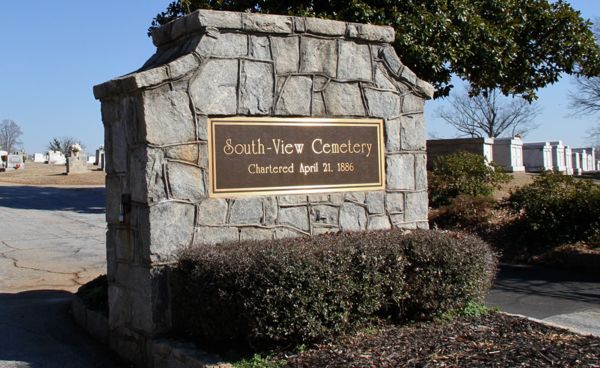
African-Americans often had to enter cemeteries through back gates and even wade through swamps to hold funeral services. They were told “If you don’t like it, start your own cemetery.” In 1886, they did just that. Nine black businessmen (most of them former slaves) petitioned the State of Georgia for a charter to establish a cemetery and it was granted in April of the same year.

South-View's angel welcomes visitors in front of the cemetery office.

South-View’s angel welcomes visitors in front of the cemetery office.

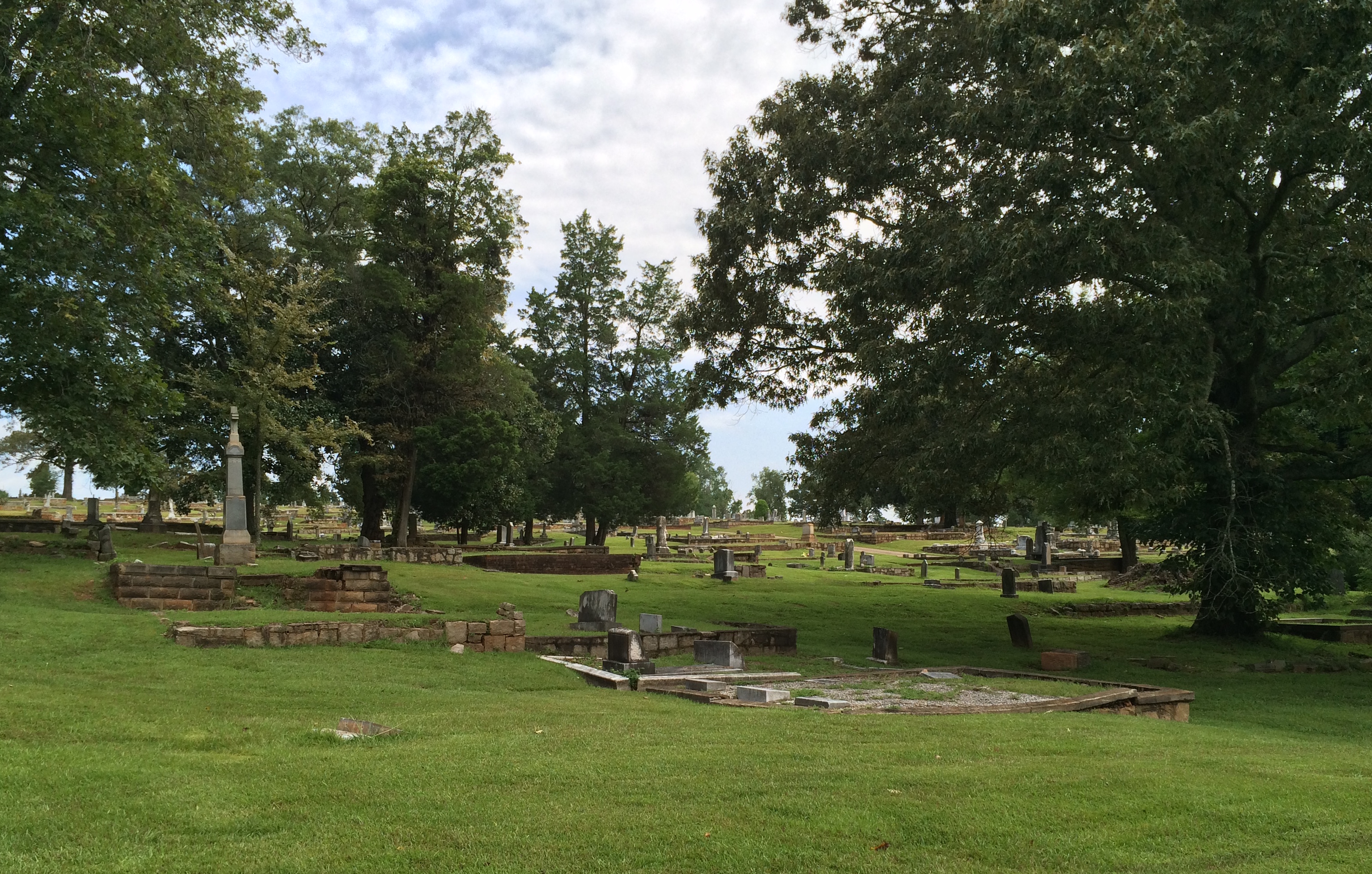
Today, South-View is the final resting place for many of Atlanta’s African-American elite. Civil rights icons, successful entrepreneurs and influential ministers can be found within footsteps of each other. About 70,000 people are buried at South-View and it’s still an active cemetery, with hundreds of burials a year.

During our visit, I had the honor of meeting South-View’s current president, Winifred Watts Hemphill. She is the great-granddaughter of one of the cemetery’s founders, Albert Watts, Sr. An accomplished attorney, Ms. Hemphill is dedicated to preserving and sharing South-View’s history. You can watch a video of her touring the cemetery here.

Albert Watts, Sr. was born a slave in 1842 but as a freed man, he helped establish South-View Cemetery in 1886.

Albert Watts, Sr. was born a slave in 1842 but as a freed man, he helped establish South-View Cemetery in 1886.

Winnie Watts Hemphill carries on the legacy of her great-grandfather, Albert Watts., Sr. as president of South-View Cemetery. Photo courtesy of the Southern Cemetery, Cremation & Funeral Association.

Winifred Watts Hemphill carries on the legacy of her great-grandfather as president of South-View Cemetery. Photo courtesy of the Southern Cemetery, Cremation & Funeral Association.

Thanks to a recently created audio tour, you can learn about some of South-View’s more notable residents. John and I tried it out using my iPhone and found it easy to follow.

Geneva Haugabrooks manged the A.B. Cummings Funeral Home for eight years before deciding to open up her own operation.

Geneva Haugabrooks manged the A.B. Cummings Funeral Home for eight years before deciding to open up her own operation.

The first stop was the grave of Geneva Haugabrooks, an icon in the African-American community. As founder (1929) and owner of Haugabrooks Funeral Home, which is still operated by family, she was one of the early African-American pioneers of Atlanta’s black business community and one of the few black female entrepreneurs on Auburn Avenue.

Mrs. Haugabrooks handed over the reins of her funeral home to her nephews before her death in 1972.

Mrs. Haugabrooks’ nephews took over the business after her death in 1977. Photo from the Haugabrooks Funeral Home web site.

Geneva Haugabrooks was also recognized as an accomplished community leader who interacted with Atlanta’s nationally and internationally-known political figures, and local personalities.

A civil rights pioneer and activist, John Wesley Dobbs was also the grandfather of Atanta's Mayor Maynard Jackson.

A civil rights pioneer and activist, John Wesley Dobbs was the grandfather of Atanta’s Mayor Maynard Jackson.

Our next stop was the grave of John Wesley Dobbs. Often caled the unofficial mayor of Auburn Avenue, Dobbs was one of several distinguished African-American civic and political leaders who worked to achieve racial equality in segregated Atlanta during the first half of the 20th century.

Dobbs believed African-American suffrage was the key to racial advancement. Hoping to reach a goal of registering 10,000 black voters in Atlanta, he preached the importance of voter registration wherever he spoke. Dobbs also founded the Atlanta Civic and Political League in 1936 and, with attorney A. T. Walden, co-founded the Atlanta Negro Voters League in 1946.

Born in Marietta, Ga. and raised in poverty, John Wesley Dobbs was a major player in the African-American community during the birth of the civil rights movement.

Born in Marietta, Ga. and raised in poverty, John Wesley Dobbs was a key figure in the African-American community during the birth of the civil rights movement.

Dobbs was also the grandfather of Atlanta Mayor Maynard Jackson (1972-82 and 1990-94). In 1994, Jackson honored him by changing Houston Street to John Wesley Dobbs Ave. I was working at United Family Life at the time (located on that street) and remember it well.

The next grave we came to is not on the tour but John stopped me to tell me about it. Without John Harden, Atlanta African-Americans might not have enjoyed several seasons of exciting baseball in the 1930s and 1940s.

John Harden and his wife, Billie, became owners of the Atlanta Black Crackers in 1937.

John Harden and his wife, Billie, became owners of the Atlanta Black Crackers in 1937.

From 1937 to 1949, John Harden and his wife, Billie, owned and managed the Atlanta Black Crackers, the city’s famed Negro Southern League baseball team. Harden owned a filling station on Auburn Avenue and was already well known in the community.

The Atlanta Black Crackers were a popular attraction at Ponce De Leon Park. A large shopping center now sits on that site today.

The Atlanta Black Crackers were a popular attraction at Ponce De Leon Park. A large shopping center now sits on that site today.

Like their white counterparts, the Black Crackers played at Ponce de Leon Park. On days when the white Atlanta Crackers were scheduled to play a home game, the Black Crackers played their games at either Morehouse College or Morris Brown College. Over the years, the team often suffered severe financial setbacks that kept them from playing but they were a hot ticket when they did. The team officially disbanded for good in 1952.

Upon first appearance, the Whitman family plot doesn’t indicate the depth of history involved with the occupants buried there. The largest stone is for the Rev. Albery Allson (A.A.) Whitman and his wife, Caddie. Born into slavery in Kentucky, Rev. Whitman became a prominent African Methodist Episcopal (AME) Church pastor and a noted author. During his life, he was acclaimed as the “Poet Laureate of the Negro Race”.

Front piece and signature from the 1884 publication of The Rape of Florida.

Front piece and signature from the 1884 publication of The Rape of Florida.

A native of Kentucky, the Rev. A.A. Whitman was a respected pastor and author.

A native of Kentucky, the Rev. A.A. Whitman was a respected pastor and author. But his four daughters were much better known than he was in the first half of the century.

While Rev. Whitman was well known in certain circles, the successful entertainment careers of his daughters would at the time far outshine that of their father.

While the upbringing of Mabel (May), Alberta, Essie and Alice Whitman was understandably strict, it included musical training and they often accompanied their father at gospel jubilees at various churches. Some say he taught them dances as a form of exercise. He probably wasn’t thrilled when the three oldest decided to start a vaudeville act in 1899, but the fact that he left them a sizable legacy after his death indicates he supported them.

The Whitman Sisters were unusual not only because they outlasted other black companies, but also because it was solely owned and managed by an African-American woman, May Whitman.

As the daughters of a prominent preacher, the Whitman Sisters might have faced opposition when they started working in Vaudeville shows.

As the daughters of a prominent preacher, the Whitman Sisters might have faced opposition when they started working in vaudeville shows.

Because they were light skinned and sometimes performed in blackface, white audiences thought they were white. The Whitman Sisters started their show business career touring in many white vaudeville shows. They toured in Europe at one point and eventually made Chicago their home base, focusing on black audiences. The Whitman Sisters would become the highest paid black act on the black vaudeville circuit.

One of the few pictures that remain of the Whitman Sisters' troupe. The number of performers in the act expanded and shrank depending on the financial conditions of the times. Photo from Nadine George-Graves.

One of the few pictures that remain of the Whitman Sisters’ troupe. The number of performers in the act expanded and shrank depending on the financial conditions of the times. Photo source: Nadine George-Graves.

May successfully directed and ran the production company that sometimes employed as many as 30 people. In an environment dominated by male white theater owners and booking agents, Mabel stood apart and was dubbed the “Tiger Show Woman”. Her business savvy in negotiating contracts while keeping her show clean and respectable was admirable. Ever a preacher’s daughter, she insisted that all performers attend church services on Sundays.

Alberta (“Bert”) was an agile dancer who worked as a male impersonator in her acts. She handled all the show’s finances and composed much of the music. Essie, a big-voiced singer, was in charge of designing and making the costumes for the group. Her comedy routines were audience favorites. She retired from the act in 1926 to become an evangelist.

Alberta (left) often dressed as a man while sister May (right) ran the production with a talented hand. Photo from Nadine George-Graves.

Alberta (left) often dressed as a man for her stage routines while sister Alice (right) wowed crowds with her tap dancing. Photo source: Nadine George-Graves.

Alice, the youngest, was regarded by many as the “Queen of Taps” and performed many dances of the day, including the Shim Sham Shimmy, Ballin’ The Jack and Walkin’ the Dog. Her son, Albert, joined the show as a child and grew to become a talented dancer.

The Whitman Sisters’ fortunes waxed and waned over the decades but thanks to May’s financial planning, they retired to an elegant 15-room home in Chicago by 1940. All had been married a few times by this point.

May died in 1942 while planning the troupe’s next show. Essie died in 1963 from smoke inhalation when the Chicago home burned and Alberta died a year later. Alice died in 1969 and is buried in Lincoln Cemetery in Blue Island, Ill. with her son, Albert. He died in 1950 at the age of 33. The other sisters are all buried at South-View. While I was able to find markers for Alberta and Essie, I could not find one for May.

Alberta Whitman's marker is entrenched in the soil of the family plot.

Alberta Whitman’s marker is entrenched in the soil of the family plot.

Sadly, the Whitman Sisters’ individual grave markers have not stood the test of time well. They are the temporary markers from African-American owned funeral homes that often remained their only marker since a permanent one was never purchased. Both are in very poor condition.

Known for her rich singing voice, Essie quit the act in the late 1920s and became an evangelist. She died in the 1960s soon after Alberta.

Essie quit the act in 1926 and became a full-time evangelist. She died in 1963.

Today, few pictures remain of the Whitmans Sisters and no audio/video recordings of their performances survive. I’m hopeful that someday, a memorial to these four remarkable women will be placed to honor their special niche in vaudeville history.

Next week, we’ll continue our tour of South-View in Part II.

SVOldSection

Portraits From the Past: A Mount Carmel Catholic Cemetery Pictorial

02 Friday Oct 2015

Posted by adventuresincemeteryhopping in General

≈ 5 Comments

I photographed so many great portraits at Chicago’s Mount Carmel Catholic Cemetery that it seemed unfair to relegate them to a file on my computer, never to be seen. So I pulled out some I like most and made today’s post a simple pictorial.

I tried to do some research on the people pictured here but it didn’t yield much useful information. As I discovered in doing research on my own family tree, immigrants did not always divulge accurate information to census takers, if they told them anything at all.

The tradition of placing a portrait of the deceased on the grave marker was embraced and cherished by the Italian immigrants that came to Chicago and made it their home. Their gazes are often solemn, attired in their best clothes. We are blessed to have these mementos of their lives.

Maria Campo Rosone (1883-1918)

Maria Campo Rosone (1883-1918)

Maria Campo Rosone (spelled Rosoni in some records) came from Italy with her parents, Tom Campo and Margaret Gatagopa Campo. Her death record lists her as a housewife but I couldn’t find her husband’s name. She was only 40 when she died.

Sophie Rasone (1887-1930)

Sophie Rosone (1887-1930)

The only record for Sophie Rosone that I could find was that in 1928 she was living with her husband, Joseph, who was a candy maker. I don’t know if she was related to Maria Rosone.

I believe this to be Carmen Pintozzi (1896-1926).

I believe this to be Carmen Pintozzi (1896-1926).

I am 95 percent sure that this young man is Carmen Pintozzi but his name is not on the monument he shares with Vito Pintozzi (whom I believe was his father). It’s on a ground level marker, however. Vito (who was a newspaper dealer) died only three years after Carmen, who was a florist and married to Ruth Pintozzi. Carmen and his parents came to America from Salerno, Italy.

The Angelico family monument features father Antonio, mother Rafaella and daughter Rosina.

The Angelico family monument features father Antonio, mother Rafaella and daughter Rosina.

Three members of the Angelico family share one monument. Antonio and Rafaella both came from the village of Brienza in Italy and lived in Buenos Aires, Argentina before moving to the U.S. sometime after 1900.

Antonio Angelico (1864-1917)

Antonio Angelico (1864-1917)

Antonio is listed in the 1910 as a laborer. He looks rather well to do in his photograph.

Raffaela Tepedino Angelico (1871- 1953)

Raffaela Tepedino Angelico (1871- 1953)

Rosina Angelico (1907-1922)

Rosina Angelico (1907-1922)

I’m certain Rosina was greatly missed by her parents. In her portrait she is wearing her first communion dress. She was only 14 at the time of her death. The Angelicos had several other children who lived well into adulthood.

Rafaella Sena Mautone (1866-1942)

Rafaella Sena Mautone (1866-1942)

Rafaella Mautone came from Marigliano, Italy and was married to Sebastiano Mautone, who is listed as a laborer. She shares a marker with him and what appear to be two of her children who died in their 20s. But her face is the most interesting of the four. She most likely never became a U.S. citizen. Her husband died about 20 years before she did.

Onofrio Taglia (1890-1919)

Onofrio Taglia (1890-1919)

I wanted to include Onofrio Taglia’s mausoleum because it is a good example of how Italian immigrant families honored their beloved sons. His mausoleum features a statue and two portraits of him.

The stained glass inside Onofrio Taglia's mausoleum has an American flag tucked into the corner. There's another on the front doors.

The stained glass inside Onofrio Taglia’s mausoleum has an American flag tucked into the corner. There’s another on the front doors.

His parents, Vincenzo and Angelina, were from Italy but Onofrio was born in Chicago and worked for the city’s sewer department before he was drafted during World War I.

This was probably taken before Onofrio entered the military.

This was probably taken some years before Onofrio entered the military.

A portrait of Onofrio in his uniform.

A portrait of Onofrio in his uniform.

He died at Camp Logan in Houston, Texas in January 1919. I discovered that Camp Logan fell victim to the massive Spanish Flu pandemic. Military bases were especially susceptible to Spanish Flu outbreaks, so it is highly likely that Onofrio died from it.

Francesco "Frank" Sorianello (1887-1919)

Francesco “Frank” Sorianello (1887-1919)

The Sorianello monument leaves more questions than answers. This is Francesco “Frank” Sorianello, the son of Francesco Sorianello, Sr. He died at the age of 32. One record for him concerns a will indicating he left an estate of around $10,000 behind.

Franco Sorianello, Sr. (1851-1901)

Francesco Sorianello, Sr. (1851-1901)

Even less is known about Francesco Sorianello, Sr., who died at the age of 50. He was probably an Italian immigrant. His wife is not buried with him but the words “Ricordo di Vittoria Sorianello” are on the base of the monument.”Ricordo” usually means “memory” or “remembered by” in Italian.  The only record I could find for him was that he died intestate and the amount of his estate was undetermined.

Vittoria later remarried and was the wife of Rocco Petiffo, a butcher.

Who are these boys?

Who are these boys?

This portrait is on the side of the Sorianello monument and there are no names or dates under it. The only clue to whom it might be is that one more name is listed under those of the father and son. Franco Sorianello died at the age of one. But are these two different pictures of him? I don’t know.

Pasquale Marcandento (1871-1919

Pasquale Marcandento/Mercadante (1871-1919)

This last portrait has to be one of the…well…creepiest I’ve ever seen. I was walking through the cemetery and looked up to see Pasquale staring back at me. It’s the first “post mortem” photo I have seen up close on a monument. I’ve seen a few online but never one in person. A post-mortem photo is taken after the person has died.

Pasquale’s name is a bit of a puzzle. The monument lists him as Pasquale Marcandento but the children listed below him are all Mercadante. I’m thinking perhaps his name was changed after he came through Ellis Island, as many Italian names were (remember The Godfather?).

I found a will for Pasquale that states he had an estate worth $20,000 when he died, so he must have been prosperous in his day. I have no idea why his family chose to have him photographed like this but perhaps no photos were taken of him when he was alive.

While I could post several more of these portraits, I’ll end it here. I hope you’ve enjoyed my Chicago rambles.

Arrivederci e che Dio vi benedica.

ArcAngelMichele

Dead Men Tell No Tales: A Walk Through Mount Carmel Catholic Cemetery (Part II)

18 Friday Sep 2015

Posted by adventuresincemeteryhopping in General

≈ Leave a comment

Last week, I put the spotlight on the bad boys buried at Mount Carmel Catholic Cemetery. Lest you think only gangsters rest in peace there, I’m going to change gears and share the story behind the beautiful Bishops’ Mausoleum, located in the center of the cemetery.

Located in the heart of the cemetery, the Bishops Mausoleum holds the remains of two bishops, two archbishops and three cardinals.

Located in the heart of the cemetery, the Bishops’ Mausoleum holds the remains of two bishops, two archbishops and three cardinals.

Informally called the Bishops’ Mausoleum, the full name is the Mausoleum and Chapel of the Archbishops of Chicago. It was built between 1905 and 1912, at the order of Archbishop James Quigley (who is interred inside of it).

Here's a closer look at the mausoleum. It is closed to visitors.

Here’s a closer look at the Bishops’ Mausoleum, which is closed to visitors. Above the door is “RESURRECTURIS”, which means “for those who will rise again”.

Archbishop Quigley chose architect William J. Brinkman to design the Mausoleum. The son of German immigrants, he supervised the construction of Chicago’s Masonic Temple, a skyscraper that was the world’s tallest building at the time of completion in 1892.

This is the best picture I could get of the Arcangel Gabriel blowing his trumpet.

This is the best picture I could get of the Arcangel Gabriel blowing his trumpet.

Brinkman also designed several churches, among which are St. Josaphat’s, St. Michael’s in South Chicago and St. Mary’s in Buffalo Grove. He was one of the three architects involved in the design of Our Lady of Sorrows Basilica.

Here’s an odd postscript about Brinkman, who died before the Mausoleum was completed. His decapitated body was found on train tracks near 73rd Street in February 1911. Contradictory evidence prevented an inquest from determining a clear reason for his death or a finding of murder. Was it suicide or was he pushed onto the tracks?

Brinkman’s funeral was held at St. Leo’s Church on 78th Street, a church he had himself designed in 1905. His death remains unsolved.

The front door of the Bishops' Mausoleum, completed in 1912.

The front door of the Bishops’ Mausoleum, completed in 1912.

Archbishop Quigley chose Aristide Leonori, noted for his 1899 design of the Mount St. Sepulcher Franciscan Monastery in Washington, D.C, to handle the mausoleum’s interior. Leonori reportedly relied heavily on marble and mosaics to give the chapel a Roman look while still referencing Celtic, Nordic and Slavic saints in the design so it would reflect the archdiocese’s many ethnic groups and national churches.

I wish I’d been able to see the inside of the Bishops’ Mausoleum, but it was tightly locked up.

The most famous of this group of two bishops, two archbishops and three cardinals is Cardinal Joseph Bernardin (1928-1996). He was much beloved in Chicago and considered by many to be a candidate for the Papacy.

A native of Columbia, S.C., Cardinal Bernardin was the son of Italian immigrants.

A native of Columbia, S.C., Cardinal Bernardin was the son of Italian immigrants and became a much beloved figure in Chicago.

As the son of Italian immigrants, Bernardin had early ambitions to be a doctor but later chose the priesthood. Ordained a priest of the Diocese of Charleston in 1952 (which covers all of South Carolina), he served there 14 years.

In 1966, Pope Paul VI appointed now Monsignor Bernadin titular Bishop of Ligura and Auxiliary Bishop of the Archdiocese of Atlanta. His episcopal consecration took place that same year and at only 38 years of age, Bernardin became the youngest bishop in America.

The plaque bearing Cardinal Joseph Bernardin's name outside the Bishops' Mausoleum.

The plaque bearing Cardinal Joseph Bernardin’s name outside the Bishops’ Mausoleum.

Over the next years, Bernardin ascended in rank and prominence. Following the death of Cardinal John Cody of Chicago in 1982, Pope John Paul II chose Archbishop Bernardin to lead the Archdiocese of Chicago.

On Nov. 20, 1996, after a battle with pancreatic cancer, Cardinal Bernardin joined his predecessors in the Bishops’ Mausoleum. He visited there a few months before his death to choose a crypt. Choosing one next to Cardinal Cody, he remarked, “I’ve always been a little left of Cody”.

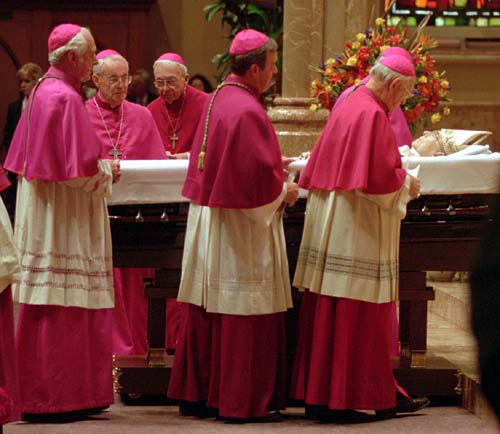
Bishops pass the body of Cardinal Joseph Bernardin in Holy Name Cathedral in Chicago. Picture by the Cincinnati Enquirer.

Bishops pass the body of Cardinal Joseph Bernardin in Holy Name Cathedral in Chicago. Picture by the Cincinnati Enquirer.

Located very close to the north gate is the grave of a young bride who did not possess the infamy of a gangster or reverence of a Catholic Cardinal. But her story has made her almost as famous in some circles.

Many rumors and stories swirl around the life and death of the Italian Bride, Julia Buccola Petta.

Many stories swirl around the life and death of the Italian Bride, Julia Buccola Petta.

For many years, rumors and ghost stories have abounded about the Italian Bride of Mount Carmel Cemetery. I found a fantastic article by Adam Selzer, who has a blog called Mysterious Chicago. He spent considerable time finding the truth amid the sensationalism. While some of the legend is faulty (such as the assertion that she died on her wedding night), the basis of it appears to be true.

CarmelBride3

Mount Carmel’s Italian Bride, Julia Buccola Petta

Julia Buccola and her mother, Filomena, came to Chicago from Palermo, Italy in 1913, joining Julia’s siblings Joseph, Henry and Rosalia. Filomena’s surviving descendants said the death of her own husband in Italy had left her a bitter woman who depended a great deal on her children.

Oddly enough, Julia's name appears nowhere on her elaborate monument. But her mother's appears on it twice.

Oddly enough, Julia’s last name appears nowhere on her elaborate monument. But her mother’s full name appears on it twice.

CarmelBride6

Julia on her wedding day.

According to Selzer’s article, Julia married Matthew Petta in 1920. Her death certificate reveals that she died in childbirth almost exactly nine months after her wedding. Two days later, she and the baby were buried in the same plot at Mount Carmel Cemetery, near the north gate. She was only 29 when she died.

Julia’s husband remarried a few years later and moved away. In the years after Julia’s death, Filomena moved back and forth between Chicago and Los Angeles (where son Henry and his family now lived).

Five years after Julia’s death, Filomena claimed she was having terrible nightmares in which her daughter demanded to be let out of her grave. Being a rather demanding mother, she pressured Henry into having his sister dug up. Having become a successful designer of women’s clothing, he could afford it.

This photo was taken after Julia's casket was exhumed and opened. You can see the empty hold and dirt in the background.

This photo was taken after Julia’s casket was exhumed and opened. You can see the empty hole and dirt in the background. Around this photo are the words “Questa fotografia presa dopo 6 anni morta”. That means “a body that does not decay is called incorruptible”, a condition observed in several saints.

Six years after her death, Julia Buccola Petta’s casket was exhumed and opened. You can see it in the photograph installed on the new monument that was placed there after she was reburied. Julia looks amazingly, uhm, fresh for having been underground for all that time.

So why did Filomena go to all that trouble? Some think it wasn’t nightmares at all but that she wanted a new, more elaborate monument to take the place of Julia’s much smaller gravestone. Son Henry grudgingly ended up paying for that as well. Since Filomena’s name is on it not once but twice, perhaps she was looking for a little bit of attention herself.

Some people have claimed to see a woman in white visiting Julia’s grave. I didn’t see anybody during my visit. But it was broad daylight on a hot, humid day so that’s not surprising.

There’s one more resident of Mount Carmel that I want to talk about. He’s buried in the far Northwest corner of the cemetery, not far from Sam Giancana’s mausoleum. His grave is marked by a simple flat stone that took me a little time to find.

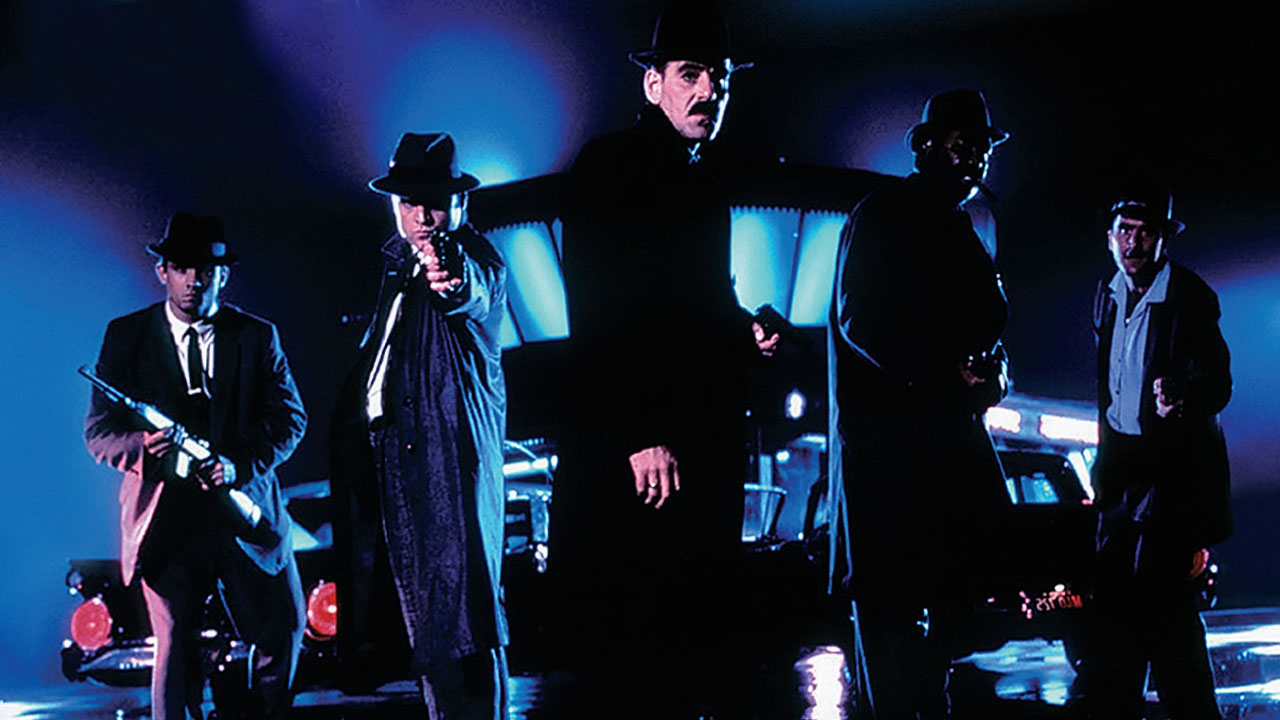
CarmelFarinaI first became aware of Dennis Farina from the 1986 NBC TV show Crime Story. My Dad was a huge fan of classic 60s automobiles and the show was set in that era, so he watched every episode. Farina played hard-bitten Chicago cop Lt. Mike Torello.

Dennis Farina starred as jaded Chicago cop Lt. Mike Torello in NBC's Crime story from 1986-1988.

Dennis Farina starred as Chicago cop Lt. Mike Torello in NBC’s Crime Story from 1986 to 1988.

I found out years later that Farina was a cop in Chicago’s burglary division for 18 years before becoming an actor. He began working for director Michael Mann as a police consultant, which led Mann to cast him in a small role in the 1981 film Thief. He left the Chicago PD in 1985 to become an actor full time.

Two of Farina’s best-known movie characters are Jimmy Serrano, the mob boss from Midnight Run, and Ray “Bones” Barboni, a rival criminal to Chili Palmer in Get Shorty (for which he won an American Comedy Award). Farina also played FBI agent Jack Crawford in the first Hannibal Lecter crime film, Michael Mann’s Manhunter. He was good at portraying rough and tough characters but had great comic timing as well.

Dennis Farina at the 2011 Tribeca Film Festival. Photo by David Shankbone.

Dennis Farina at the 2011 Tribeca Film Festival. (Photo source: David Shankbone.)

Having battled lung cancer, Farina died in July 2013 from a pulmonary embolism. Michael Mann told the Chicago Tribune, “He was the best guy on the planet. And he was a lot more than a nice guy. He had the charisma and the ability as a storyteller and raconteur to hold your interest. He appreciated the fullness, the roundness, of human life.”

Because Mount Carmel has so many monuments featuring portraits of the deceased on them, they will be the focus of next week’s blog post. I hope you’ll come back to see them.

Dead Men Tell No Tales: A Walk Through Mount Carmel Catholic Cemetery (Part I)

11 Friday Sep 2015

Posted by adventuresincemeteryhopping in General

≈ 6 Comments

Today’s post is Part I of the final installment of my Chicago Cemetery Adventure. Having visited Rosehill, Bohemian National and Graceland, I saved Mount Carmel Cemetery for last.

Getting to see Mount Carmel Catholic Cemetery was an unexpected gift. My son was eager to visit a Lego exhibition at the Morton Arboretum in Lisle. Out of habit, I looked to see if there were any cemeteries nearby and my eyes lit up when I saw Mount Carmel was about 20 minutes away. So after dropping off my fellas at the Arboretum, I headed over.

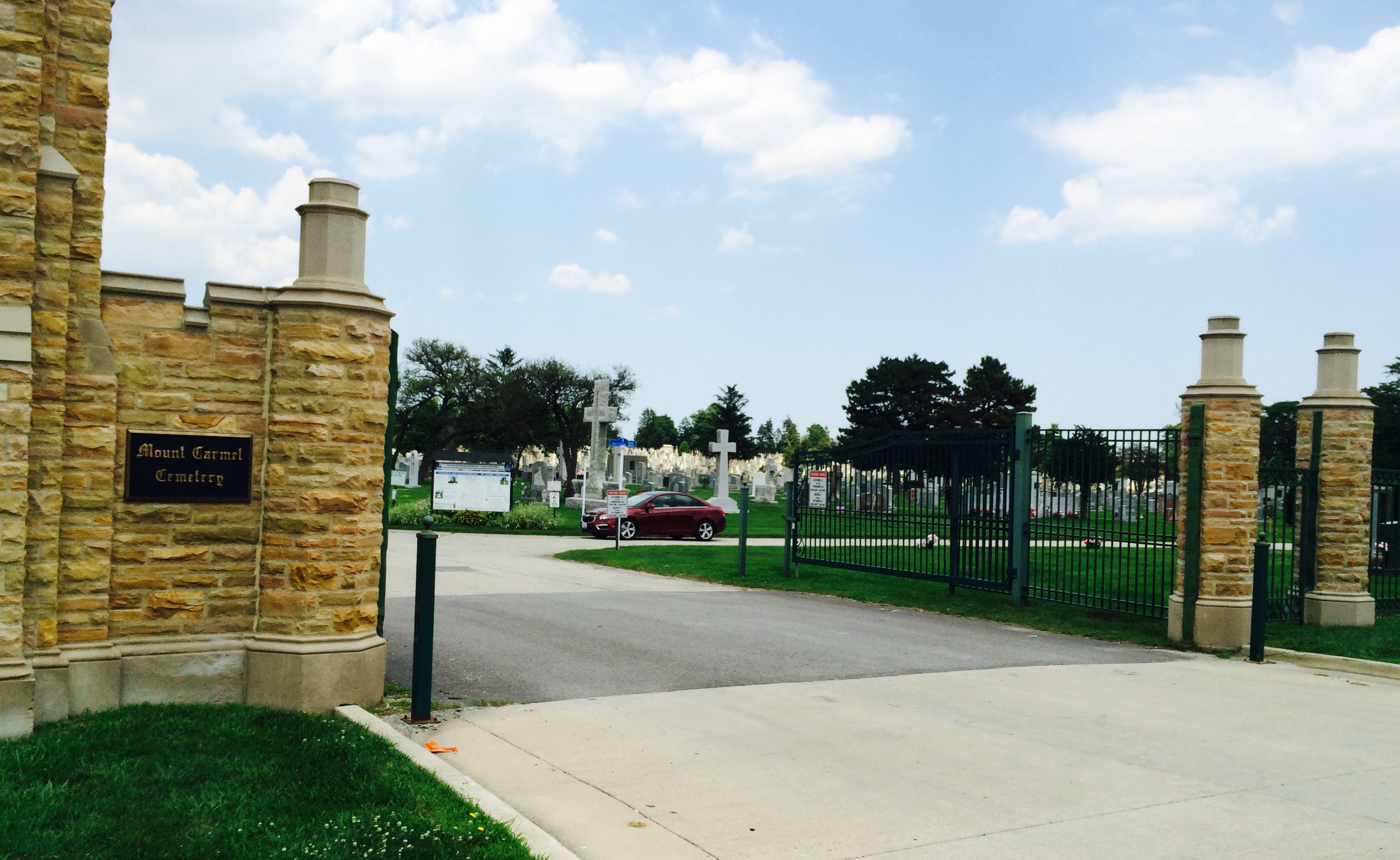
Consecrated in 1901, Mount Carmel Catholic Cemetery was the first cemetery to be opened in the western area of the Archdiocese of Chicago.

Consecrated in 1901, Mount Carmel Catholic Cemetery was the first cemetery to be opened in the western area of the Archdiocese of Chicago. At about 214 acres, Mount Carmel combined operations with Queen of Heaven Cemetery (which is across the street) in 1965.

There are more than 226,275 graves/family mausoleums at Mount Carmel and about 800 people are interred there annually. In all, the cemetery grounds contain over 400 family mausoleums. Many families are of Italian descent.

Mount Carmel GatehouseI freely admit that I wanted to see Mount Carmel’s main claim to fame, the grave of notorious gangster Alphonse “Al” aka “Scarface” Capone. Not because I think Prohibition-era mobsters should be glamorized but because of the impact they had on Chicago at that time in history.

Born to Italian immigrant parents in 1899, Al Capone grew up in New York City but came to the peak of his criminal fame in Chicago.

Born to Italian immigrant parents in 1899, Al Capone grew up in New York City but came to the peak of his criminal career in Chicago.

Born Alphonse Gabriel Capone in 1899 to Gabriel and Theresa Capone in Brooklyn, N.Y., Al quit school in eighth grade. Later, he was a Five Points Gang member who became a bouncer in organized crime premises (such as brothels).

In his early 1920s, Capone moved to Chicago. He became bodyguard and trusted friend of Johnny Torrio, head of a criminal syndicate that illegally supplied alcohol. The group, which came to control the Southside of the city, became known as “the Outfit”.

This is the Capone family plot. Al Capone is buried with his parents and five of his siblings.

This is the Capone family plot. Al Capone is buried with his parents and five of his siblings. His grave is the one on the far right with the flowers.

Torrio retired after North Side Gang (more on them later) gunmen almost killed him, handing control to Capone. Capone expanded the bootlegging business through increasingly violent means, but his mutually profitable relationships with Chicago Mayor William Hale Thompson and the city’s police meant Capone seemed safe from law enforcement. His notoriety also gave him some measure of public popularity.

But after the infamous Saint Valentine’s Day Massacre in 1929, Capone’s image was tarnished and he came under FBI scrutiny. He was eventually convicted of tax evasion in 1931 and ordered to serve 11 years in prison, some of it spent at the Atlanta Penitentiary.

Al Capone didn't die in a hail of gunfire but of late-stage syphilis.

Al Capone didn’t die in a hail of gunfire but of late-stage syphilis.

Ralph “Bottles” Capone was Al’s older brother, who got his nickname not from involvement in the Capone bootlegging empire but from running legitimate non-alcoholic beverage and bottling operations in Chicago. While Ralph was also jailed for tax evasion at one point, he was considered a minor player in the underworld.

Capone died in 1947 in Miami but not in a hail of gunfire. He contracted syphilis in his youth and thought he was cured when it went into remission, so he never sought treatment. During his incarceration, the disease ate away at his mental capacities. His final years were spent at his Palm Beach mansion and he died of a stroke brought on by his late-stage syphilis.

After a wake in Miami, Capone’s body was sent to Chicago for burial. He was first buried at Mount Olivet Cemetery but after his mother’s death in 1952, he was moved to Mount Carmel (along with his father and brother Salvatore) in hopes a change in location would stop the vandalism to his gravestone. You can read more about that here.

Deeper into Mount Carmel you can find two of Capone’s bitter enemies, Henry Earl J. Wojciechowski (better known as Hymie Weiss) and Dean O’Banion. As a Polish-American, Weiss was a petty criminal who befriended Irish-American O’Banion. With Weiss and George “Bugs” Moran, O’Banion established the North Side Gang, which eventually controlled rum running, bootlegging and other illicit activities in northern Chicago.

Irish-American Dean O'Banion and Hymie Weiss were a powerful force within the North Side Gang.

Irish-American Dean O’Banion and Hymie Weiss were a powerful force within the North Side Gang.

Unlike the Outfit run by Torrio and later Capone, the North Side Gang was made up of Irish, German and Polish criminals. Ultimately, clashes between the two groups led to both the death of O’Banion and Weiss. In 1924, after personally insulting his arch rival Angelo Genna, O’Banion was shot and killed inside his own flower shop, Schofield’s, by Southsiders John Scalise and Albert Anselmi.

Obanion1

OBanion2In October 1926, Capone sent his best hitmen to Weiss’ headquarters on State Street, O’Banion’s old flower shop. Two gunmen hiding in a nearby rooming house opened fire with a sub-machine gun and shotgun at Weiss and his three associates as they crossed the street.

When photographers tried to snap Weiss’ picture, he would glare at them and say in a low voice, “You take a picture of me and I’ll kill you.”

The Weiss mausoleum is located near Dean O'Banion's monument.

The Weiss mausoleum is located near Dean O’Banion’s monument. It is said that Weiss was the only man Al Capone feared.

This is the best picture I could get of the inside of the Weiss mausoleum.

This is the best picture I could get of the inside of the Weiss mausoleum.

On the other side of Mount Carmel you can find the mausoleum of the Giancana family. It’s the final resting place of Salvatore “Mooney Sam” Giancana. Among his other nicknames were, “Momo”, “Sam the Cigar,” and “Sammy.” He was the son of Sicilian immigrants.

Sam Giancana joined the Forty-Two Gang, a juvenile street crew headed by boss Joseph Esposito. Giancana soon developed a reputation for being an excellent getaway driver (he was wheel man for Capone at one time), a high earner and a violent killer.

After Esposito’s murder, in which Giancana was allegedly involved, the 42 Gang became an extension of the Outfit. Gangsters like like Frank “The Enforcer” Nitti (also buried at Mount Carmel), Paul “The Waiter” Ricca (buried across the street at Queen of Heaven) and Tony “Joe Batters” Accardo (buried at Queen of Heaven) took notice of Giancana and in the late 1930s, Giancana became the first 42er to join the Outfit.

Giancana

Photo by Mafia Wiki.

After doing some prison time in the early 1940s, Giancana set out to take over Chicago’s illegal lottery gambling operations, specifically those in the city’s mostly African-American neighborhood. Through a brutal string of events, including kidnappings and murder, he and his associates got control of the numbers racket, increasing the Chicago Mob’s annual income by millions of dollars.

When Accardo stepped down as head of the Outfit in the mid-1950s, Giancana took his place. By 1955, he controlled the gambling and prostitution operations, narcotics trafficking, and other illegal industries in Chicago. He later told an FBI agent that he “owned” not only Chicago, but Miami and Los Angeles as well.

The Giancana family mausoleum is located on the far west side of the cemetery.

The Giancana family mausoleum is located on the far west side of the cemetery.

In 1965, Giancana went on trial for refusing to testify before a Chicago grand jury investigating organized crime and was sentenced to a year in jail. After his release, Giancana lived in self-imposed exile in Mexico until 1974. Extradited by Mexican authorities to testify before another grand jury, he was given immunity from federal prosecution and appeared before that jury four times, but provided little information worth using.

Giancana was then called to testify before a U.S. Senate committee investigating Mafia involvement in a failed CIA plot to assassinate Fidel Castro. Before he could testify, Giancana returned to his Chicago home on June 17, 1975. Two days later, Giancana was shot once in the back of the head and several more times up through the chin with a .22-caliber pistol while cooking sausages and peppers in his basement.

I was able to get a decent photo of the interior of the Giancana mausoleum. Oddly, there was a dustpan inside.

I was able to get a decent photo of the interior of the Giancana mausoleum. Oddly, there was a dustpan inside.

While many theories exist as to who killed him, no one was ever arrested in connection with the murder. Some think it was someone Giancana knew that he let in the house because he himself could not handle spicy foods and may have been cooking them for a friend.

Next week in Part II, we’ll visit a bride who died young, noted Chicago bishops and a beloved American actor. You won’t want to miss the rest of Mount Carmel’s story.

Elvis isn’t Here: Exploring Graceland Cemetery (Part II)

04 Friday Sep 2015

Posted by adventuresincemeteryhopping in General

≈ 1 Comment

Last week, I shared the history behind Graceland Cemetery’s origins and spotlighted a few of the more eye-catching monuments. This week, we’ll continue that theme and make a few new discoveries.

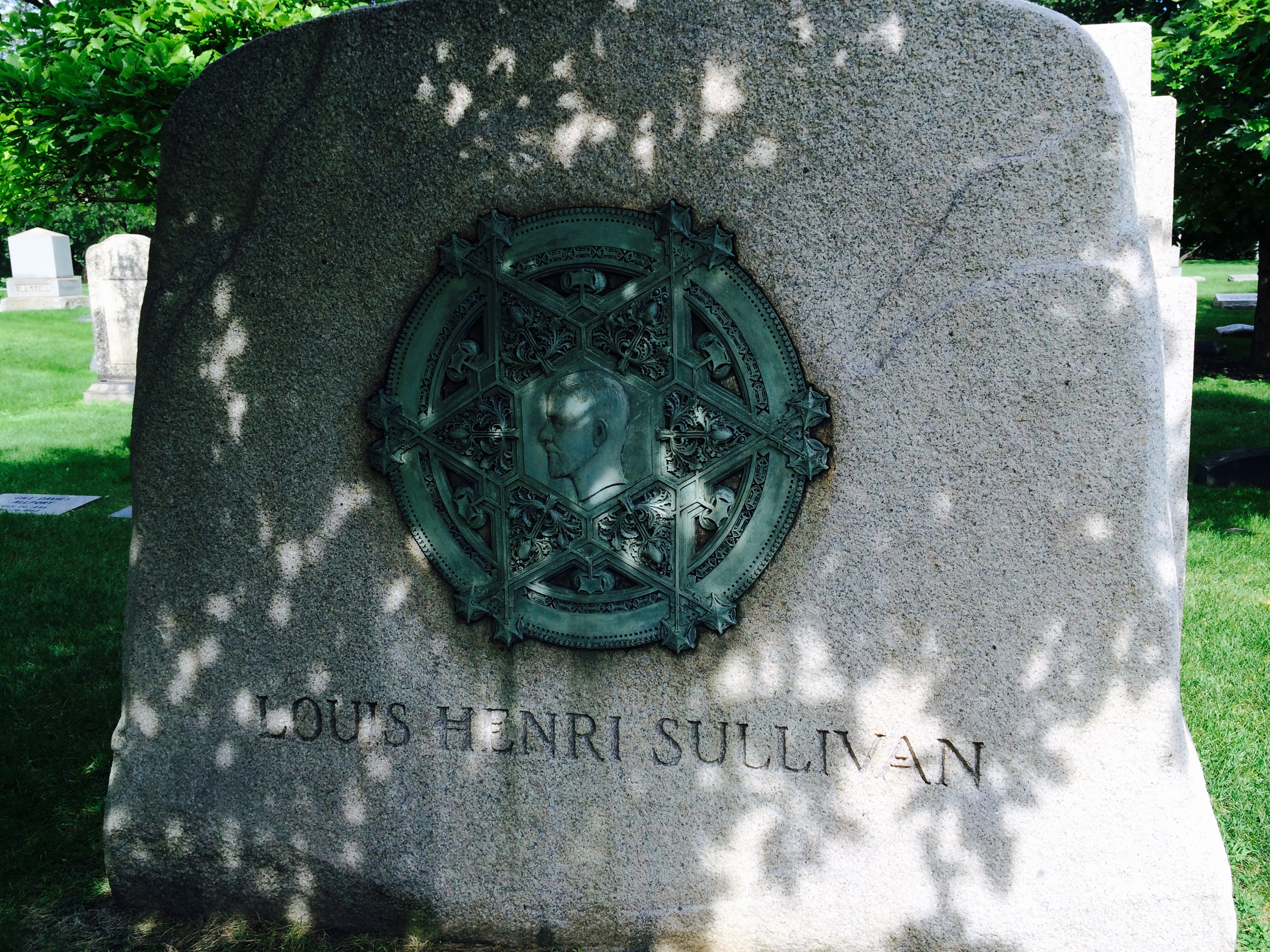
After photographing the massive Kimball monument, I noticed that behind it was a rock monument with a man’s profile on it. As is often the case, I took a picture because I thought it looked interesting and would look up the name later because it sounded familiar.

It's hard to walk by Sullivan's grave without stopping to take notice of it.

It’s hard to walk by Sullivan’s grave without stopping to take notice of it. Sorry about the shadows!

LouisSullivan2

This emblem is typical of Sullivan’s style of intertwining vines and leaves combined with crisp geometric shapes.

Later, I learned that Louis Henri Sullivan (1856-1924) is considered not only the “father of skyscrapers” but the “father of modernism” in the architectural world.

Born to immigrant parents in Boston, Sullivan entered MIT at 16 by completing not only high school early but skipping past his first two years of college studies by taking a series of exams. He worked with noted architects Frank Furness and William LeBaron Jenney (also buried at Graceland) before going to Paris for a year of study at the Ecole des Beaux Arts.

Louis Sullivan is considered to be the creator of the modern skyscraper. Portrait of Louis Henri Sullivan, 1919, painted by Frank A. Werner. Photo by Chicago History Museum/Universal Images Group/Hulton Fine Art/Getty Images.

Portrait of Louis Henri Sullivan, 1919, painted by Frank A. Werner. Photo by Chicago History Museum/Universal Images Group/Hulton Fine Art/Getty Images.

It was Sullivan’s work from 1883 to 1895 when he partnered with engineer Dankmar Adler (1844-1900) that his career took off. Adler oversaw business and construction aspects of each project while Sullivan’s focus was on design.

Along with a young draftsman named Frank Lloyd Wright, the team completed many architecturally significant buildings such as the Chicago Stock Exchange, the Wainwright building in St. Louis, Mo., the Guaranty Building in Buffalo, N.Y. and New Orleans Union Station (demolished in 1954). Before demolishing the Chicago Stock Exchange in 1972, Sullivan’s grand arch was removed and installed at the Art Institute of Chicago.

Although the Chicago Stock Exchange building that Sullivan helped design was demolished in 1972, the arch was saved and is now at the Art Institute of Chicago. Photo by Jeremy Atherton.

Although the Chicago Stock Exchange building that Sullivan helped design was demolished in 1972, the arch was saved and is now at the Art Institute of Chicago. Photo by Jeremy Atherton.

Instead of imitating historic styles, Sullivan created original forms and details. Older architectural styles were designed for buildings that were wide, but Sullivan was able to create aesthetic unity in buildings that were tall.

Sullivan is perhaps best known for the following quote:

It is the pervading law of all things organic, and inorganic, of all things physical and metaphysical, of all things human and all things super-human, of all true manifestations of the head, of the heart, of the soul, that the life is recognizable in its expression, that form ever follows function. This is the law. —1896 essay “The Tall Office Building Artistically Considered.”

Sullivan and Adler also designed two of Graceland’s tombs. I didn’t get to see the celebrated Getty tomb but I did unwittingly take a picture of the Martin Ryerson tomb, having no idea Sullivan designed it. Martin Ryerson (1818–1887) was a wealthy Chicago lumber baron and real estate speculator. His son commissioned the team to create the impressive yet understated Egyptian Revival tomb.

The Ryerson tomb is constructed from large blocks of highly polished Quincy granite and was inspired by Egyptian funerary traditions.

The Ryerson tomb is constructed from large blocks of highly polished Quincy granite and was inspired by Egyptian funerary traditions.

Across the way from the Ryerson tomb is another Egyptian Revival mausoleum but of a much grander style. With its quirky mix of Egyptian and Christian iconography, the Schoenhofen mausoleum definitely makes you stop in your tracks.

Unlike the Ryerson tomb, the Schoenhofer mausoleum is clearly modeled after the Egyptian Revival style popular during the Victorian age.

Unlike the Ryerson tomb, the Schoenhofen mausoleum is clearly modeled after the Egyptian Revival style made popular during the Victorian age.

German-born Peter Schoenhofen (1827-1893) came penniless to America in 1851 and took jobs in various breweries around Chicago. Eventually he and a partner, Matheus Gottfried, opened a brewery. Schoenhofen bought out Gottfried in 1867 and the company became the Peter Schoenhofen Brewing Company. Ads bragged that the beer’s clean taste came from the artesian spring located under the brewery. Their Edelweiss brand was the best known.

Peter Schoenhofen started out as a penniless immigrant in Chicago to a prominent brewer.

Peter Schoenhofen started out as a penniless immigrant in Chicago and became a prominent brewer.

The Schoenhofen Brewing Company has quite a storied past (including unfounded rumors they were broadcasting war secrets to the Germans during World War I) that you can learn more about in this excellent podcast.

Some of the Schoenhofen Brewing Company’s buildings in Chicago still survive today and are on the National Historic Register. You can glimpse two of them in the iconic movie The Blues Brothers when the fellows are driving to St. Helen of the Blessed Shroud Orphanage. German architect Richard Schmidt, who designed a number of them, also designed Schoenhofen’s mausoleum.

A male Sphinx guards the door.

A male Sphinx guards the door, a distinctly Egyptian motif.

At one time, the angel to the left of the tomb's door held a key. It's not longer there.

At one time, the angel to the left of the mausoleum’s door held a key. It’s no longer there. As a Christian symbol, an angel seems a little out of place next to a Sphinx.

From this vantage point, it looks like the angel is looking over at the Ryerson tomb.

From this vantage point, it seems like the angel is looking over at the Ryerson tomb.

What an ornate door! Can you see what's on the handle?

What an ornate door! Can you see what’s on the handle?

My husband, Chris, got a great shot of this protective cobra.

My husband, Chris, got a great shot of this protective cobra.

The monument to George Pullman, inventor of the Pullman sleeping car, features a Corinthian column flanked by curved stone benches. It was designed by Solon Spencer Bemen, architect of the company town of Pullman (where those sleeping cars were manufactured).

Pullmanmonument

Anyone with ideas of getting into George Pullman’s grave should think twice.

The story behind Pullman’s burial is unique. Fearing that some of his former employees or other labor supporters might try to dig up his body, his family arranged for Pullman’s remains to be placed in a lead-lined mahogany coffin. After lowering that coffin into a deep pit whose base and walls were reinforced with 18 inches of concrete, they poured more concrete and a layer of steel rails that were bolted together on top of that. The entire burial process took two days.

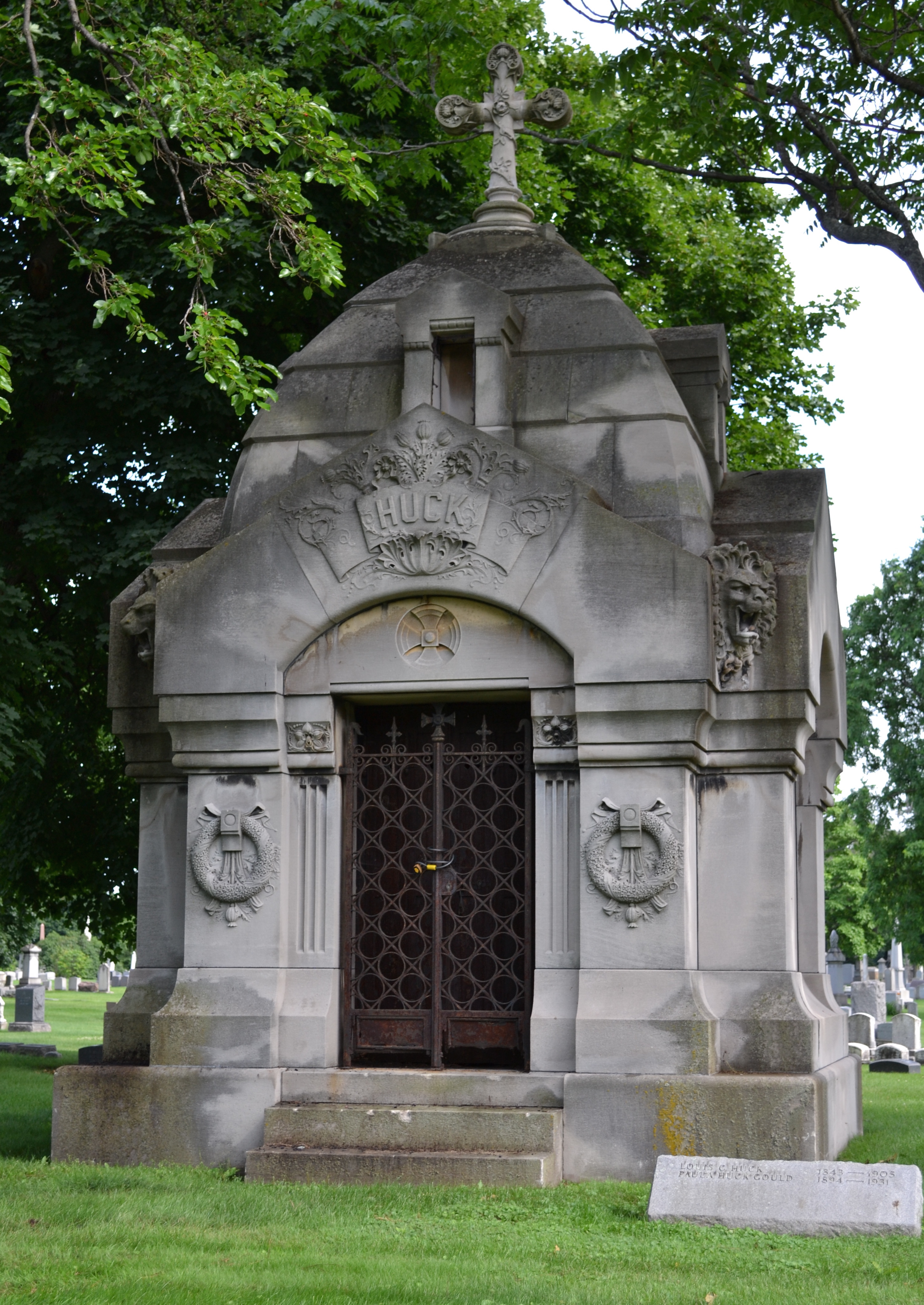
There’s one more mausoleum I want to feature that I saw as we were driving toward the front gate to leave. It looked so different from the others I made Chris stop so I could hop out.

This Gothic-style mausoleum for the Huck family is hard to drive by without stopping. Photo by Chris Rylands.

This Gothic-style mausoleum for the Huck family is hard to drive by without stopping. Photo by Chris Rylands.

The Huck mausoleum was built in 1915, probably by the wife of Louis Carl Huck, on a plot Huck purchased in 1888. The architect is unknown. Like Schoenhofen, Huck was a German-born brewer who founded his own business, the Louis C. Huck Malting Company. He sold it 22 years later and went into real estate, leaving behind an extensive list of holdings after he died.

Huck’s namesake, Louis C. Huck, Jr., invented the blind rivet which was first used in the B-24 Bomber in 1943. He formed Huck Fasteners in 1940 and developed what became known as the Huck Bolt, an aluminum fastener that is used today in trains, planes and automobiles. He is entombed in the mausoleum with his parents.

All four corners of the Huck mausoleum are guarded by roaring lions.

All four corners of the Huck mausoleum are guarded by roaring lions.

One of the doors features a wreath with a frond through it. Both are often viewed as symbols of victory and immortality.

One of the doors features a wreath with a frond through it. Both are often viewed as symbols of victory and immortality.

As we left Graceland Cemetery, I reflected on what a lovely oasis we had enjoyed amid the frenetic busyness that is Chicago. So much history rests there in the monuments, and the beautiful flora and fauna that surrounds them. I hated to leave it.

Later that week, I visited one last Chicago cemetery that is the final resting place of some fellows with less than stellar reputations. If you want to learn more about Chicago’s colorful mobster past and some of its starring players, come along with me next week to Mount Carmel Cemetery.

It’s an offer you can’t refuse. 😉


Elvis Isn’t Here: Exploring Graceland Cemetery (Part I)

28 Friday Aug 2015

Posted by adventuresincemeteryhopping in General

≈ 5 Comments

Last week, I completed a two-part series on Chicago’s Rosehill Cemetery. On the same day, my husband and I also visited Graceland Cemetery. Having already visited two other large cemeteries on a hot and humid day, I was tempted to call it quits but we pushed on. I knew it would be a long time before I’d have the chance again.

I did not get a good photo of the front gate so I am borrowing this photo from Carolyn Simpson's cemetery website, The Art of Nothing.

I did not get a good photo of the front gate so I am borrowing this photo from Carolyn Simpson’s well-written cemetery blog, The Art of Nothing.

Like most cemeteries, Graceland has a personality all its own and it shines. The landscape has a decided flow to it and the grounds are beautifully kept. There are no rough, weedy edges to Graceland. You can tell they work hard at keeping it neatly trimmed but not to the point of making it look unnatural.

Chris loves Celtic crosses (as do I) and this was one of the first we saw that day. Photo by Chris Rylands.

Chris loves Celtic crosses (as do I) and this was one of the first we saw that day. Photo by Chris Rylands.

Graceland was established in 1860 when Thomas Bryan, a successful Chicago lawyer, purchased the original 80 acres (located in the Buena Park neighborhood very close to Wrigley Field) and received a perpetual charter from Illinois in 1861. Thomas then chose landscape architect H.W.S. Cleveland to plan the layout.

Prominent lawyer Thomas B. Bryan established Graceland Cemetery in 1860 and was the first president of the Graceland Cemetery Association. He was also a Commissioner-At-Large for the infamous Columbian Exposition of 1893

Prominent lawyer Thomas Bryan established Graceland Cemetery in 1860 and was the first president of the Graceland Cemetery Association. He was also a Commissioner-At-Large for the Columbian Exposition of 1893.

During my research, I learned that Bryan was duped by the notorious serial killer, H.H. Holmes (who confessed to 27 murders but likely committed many more). Holmes’ story is featured in the best-selling book, The Devil in the White City by Erik Larson. Bryan purchased stock in Holmes’ bogus A.B.C. Copier Company and ended up losing over $9,000 in the process. Fortunately, Bryan was only a financial victim of the bloodthirsty Holmes and lived

By the time he was hired, Horace William Shaler Cleveland had already established himself as a landscape architect. A native of Massachussets, he and his partner Robert Morris Copeland designed Sleepy Hollow Cemetery. He later went on to design Minneapolis’ park system.

Massachussets native Horace William Shaler Cleveland also designed Sleepy Hollow Cemetery and the Jekyll Island Club grounds in Georgia.

Massachusetts native Horace William Shaler Cleveland designed Sleepy Hollow Cemetery and the Jekyll Island Club grounds in Georgia.

Swedish landscaper Swain Nelson was also instrumental in the early planning stages of the project. William Le Baron Jenney (who is buried at Graceland) and later Ossian Simonds also had key roles. Simonds said, “The great diversity of tastes, opinions, superstitions and prejudices that must be consulted or controlled make cemetery landscape-gardening the most difficult branch of the art.”

If you were mayor or governor of Chicago, if you were not buried at Rosehill, Graceland was where you ended up. Graceland is the final resting place of department store founder Marshall Field, architects David Adler, Bruce Graham and Louis Sullivan (to name a few), and dancer Ruth Page. Railroad industrialist George Pullman and Jack Johnson, the first African-American heavyweight boxing champion, are also buried there.

One of the more obscure burials at Graceland is Augustus Dickens, brother of acclaimed author Charles Dickens. He died penniless in Chicago in 1866.

While Elvis is nowhere to be found at this Graceland, the place is certainly fit for a king. Or a knight. I’ve never seen one in a cemetery before.

Lorado Taft sculpted "The Crusader" in honor of Chicago newspaper publisher Victor Lawson.

Lorado Taft sculpted “The Crusader” in honor of Chicago newspaper publisher Victor Lawson. Photo by Chris Rylands.

Created by Illinois-born Lorado Taft, “The Crusader” honors the life of Chicago newspaper publisher Victor Lawson, who became manager of  the Chicago Daily News in 1876. At the foot of the monument are the words:

Above All Things Truth Beareth Away The Victory

I was especially drawn to the way Taft forged the life-like hand hefting the sword.

I am especially drawn to the way Taft forged the life-like hand hefting the sword.

Lorado Taft studied art in Paris before returning to Chicago to make his mark in the art world. Photo from the Library of Congress.

Lorado Taft studied art in Paris before returning to Chicago to make his mark in the art world. Photo from the Library of Congress.

Lorado Taft is credited with another sculpture at Graceland that instantly grabs your attention when you see it. It’s formal title is “Eternal Silence” but some refer to it as the “Statue of Death”.

My first thought was, “This is who Blue Oyster Cult was singing about.”

Cast in bronze against a black granite setting, the statue “Eternal Silence” by Lorado Taft has been mesmerizing visitors since he created it for the final resting place of Dexter Graves in 1909.

Cast in bronze against a black granite setting, the statue “Eternal Silence” by Lorado Taft has spooked visitors since he created it for the final resting place of Dexter Graves in 1909.

The bronze monument was crafted in honor of Dexter Graves (1789-1844), who was one of the earliest settlers in Chicago. According to the inscription on the back of the monument, he “brought the first colony to Chicago, consisting of 13 families, arriving here July 15, 1831 from Ashtabula, Ohio, on the schooner Telegraph.”

Although Graves died in 1844, his son Henry did not have the bronze commissioned until near the end of his own life, 1907. Taft completed the sculpture in 1909. The black granite provides contrast for the bronze statue, which is heavily oxidized because of its age. Some say Taft’s own ideas on death and silence influenced him heavily.

Visitors like to leave coins at the feet of the "Eternal Silence" statue. Are they perhaps paying the ferryman to guide them over the River Styx?

Visitors like to leave coins at the feet of the “Eternal Silence” statue. Are they perhaps paying the ferryman to guide them over the River Styx?

It’s not surprising that “Eternal Silence” gets photographed quite a lot. Pictures of it show on on Facebook pages devoted to cemeteries all the time. But now that I’ve seen it up close, I can totally see why.

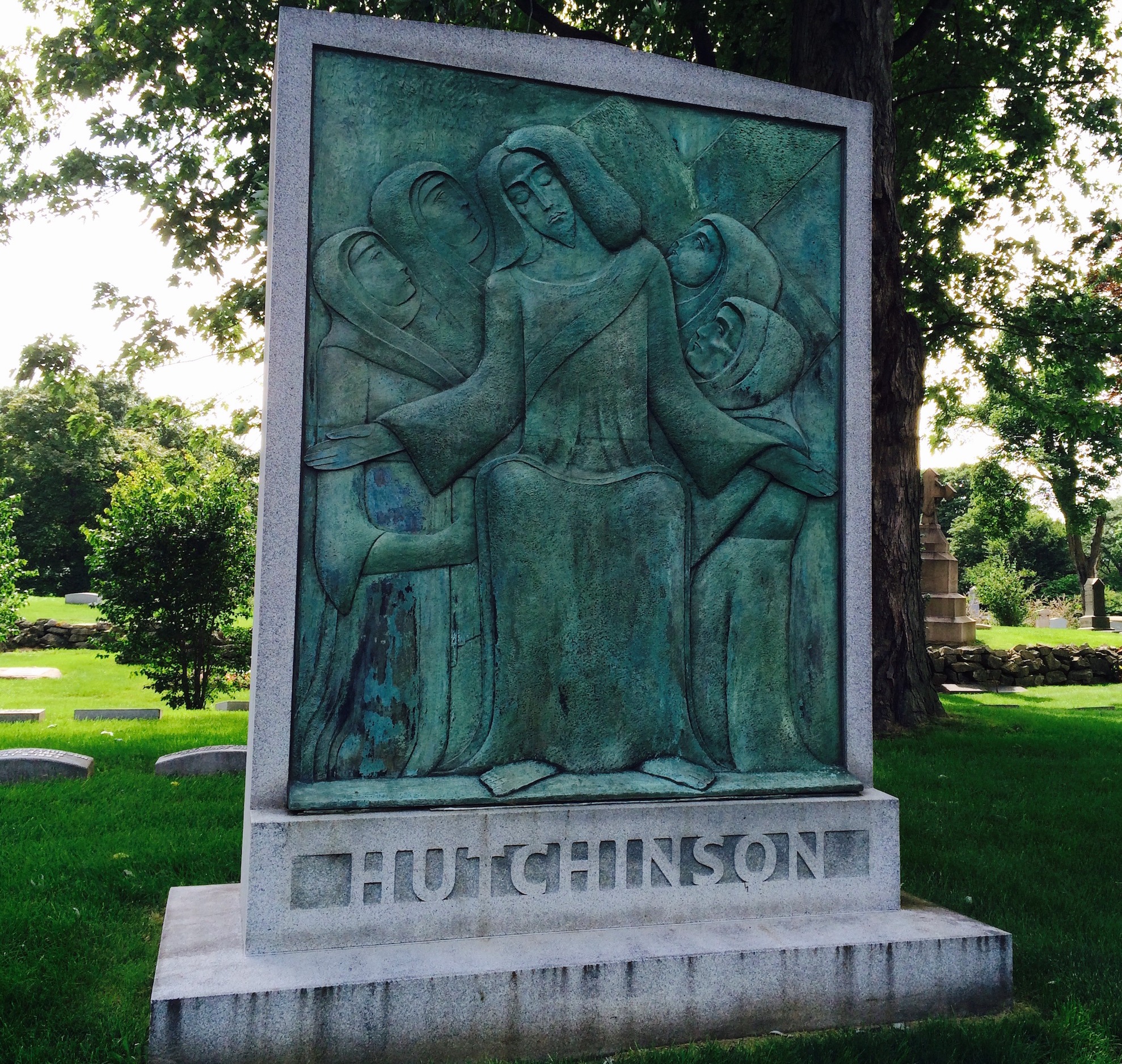
Across the way from “The Crusader” is the Charles Hutchinson monument. It’s often thought to be for a different Charles Hutchinson (1854-1924), who is buried in another part of Graceland. That Hutchinson was president of the Corn Exchange National Bank, as well as founding member and first president of the Art Institute of Chicago. This Charles Hutchinson (1828-1893) was a businessman with Sweet, Demster & Co.

This monument to one Charles Hutchinson is often mistaken for that of another man by the same name buried at Graceland.

This monument to one Charles Hutchinson is often mistaken for that of another man by the same name buried at Graceland.

The artist who created this monument, Alfeo Faggi (1885-1966) was known for his stylized forms and anti-Classical approach to the figure. In other works, he sculpted outside the conventional norms. The central figure of Christ is shown surrounded by four figures and the Cross, visible in the right corner. Faggi also contributed works in this style to the St. Thomas the Apostle Church in Hyde Park.

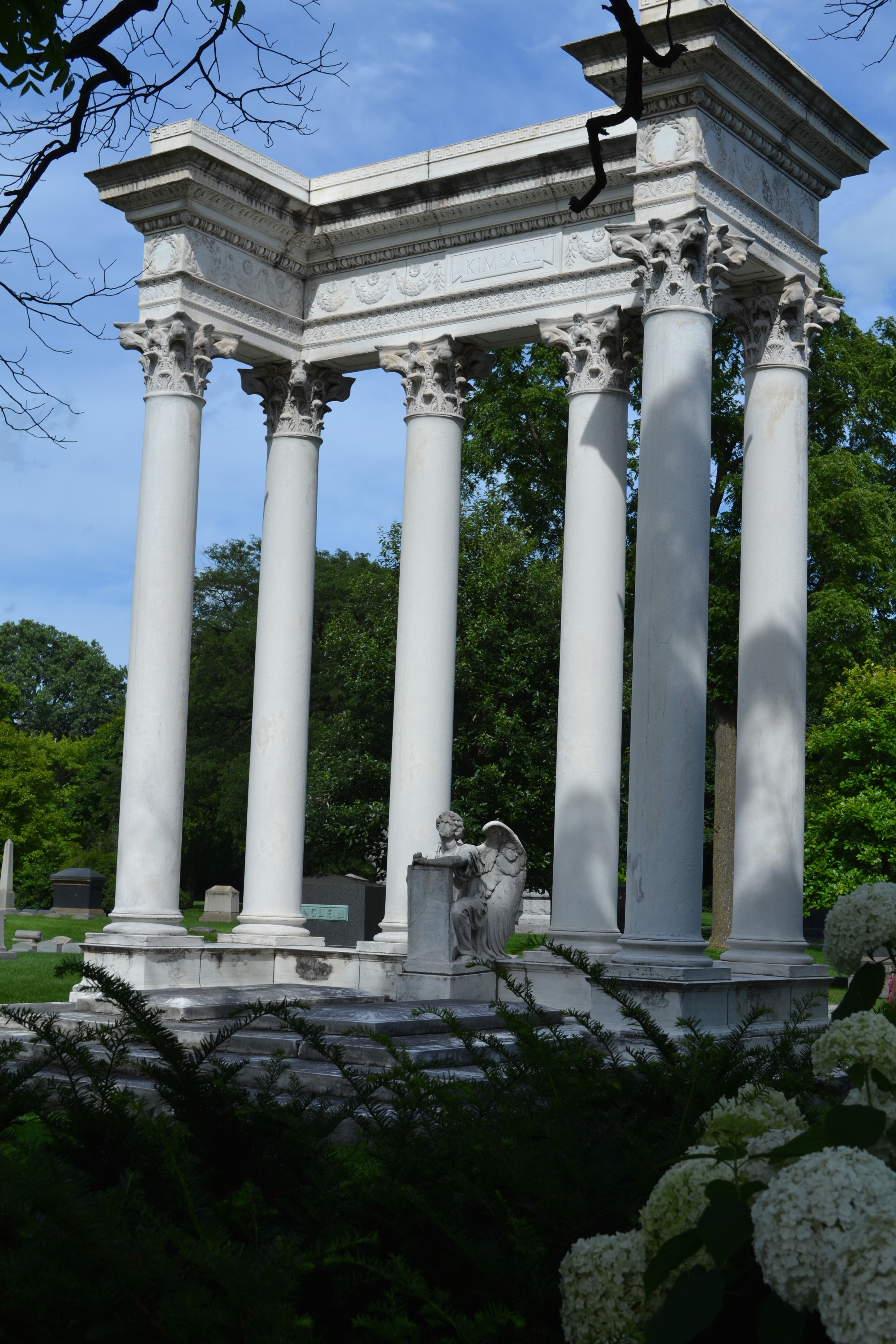
One of the most stunning monuments at Graceland is for William Kimball, the piano manufacturer. A native of Maine, Kimball moved to Chicago in 1857 and started the Kimball Piano Company with only four pianos. He sold these at a profit and eventually started selling pianos manufactured in the east then shipped to his store.

The Kimball monument towers over the cemetery landscape. Photo by Chris Rylands.

The Kimball monument towers over the cemetery landscape. Photo by Chris Rylands.

The Great Chicago Fire of 1871 destroyed his business and cost him around $100,000. In 1877, Kimball decided to manufacture his own pianos to keep down the costs. He opened his own factory in 1881 and began churning out around 100 pianos and organs every week.

The back view of Kimball's now faceless angel. Her wings are beautiful. Photo by Chris Rylands.

The back view of Kimball’s now faceless angel. Her wings are beautiful. Photo by Chris Rylands.

Across the rear are four Corinthian columns, with two more on the sides. Below, an angel kneels, watching over the two graves beneath the floor. The entire monument is of white marble, and was erected in 1907 from a design by the architectural firm of McKim, Mead & White.

Sadly, the face of the angel has worn away but the impression she leaves is still great.

I can't help but wonder what her face looked like when she was installed in 1907. Photo by Chris Rylands.

I can’t help but wonder what her face looked like when she was installed in 1907. Photo by Chris Rylands.

Next week, Part II of my trip to Graceland will include the story of the father of the American skyscraper and feature an unusual Egyptian pyramid tomb with an angel guarding the door.

Chicago’s Crown Jewel: Discovering Rosehill Cemetery (Part II)

21 Friday Aug 2015

Posted by adventuresincemeteryhopping in General

≈ 4 Comments

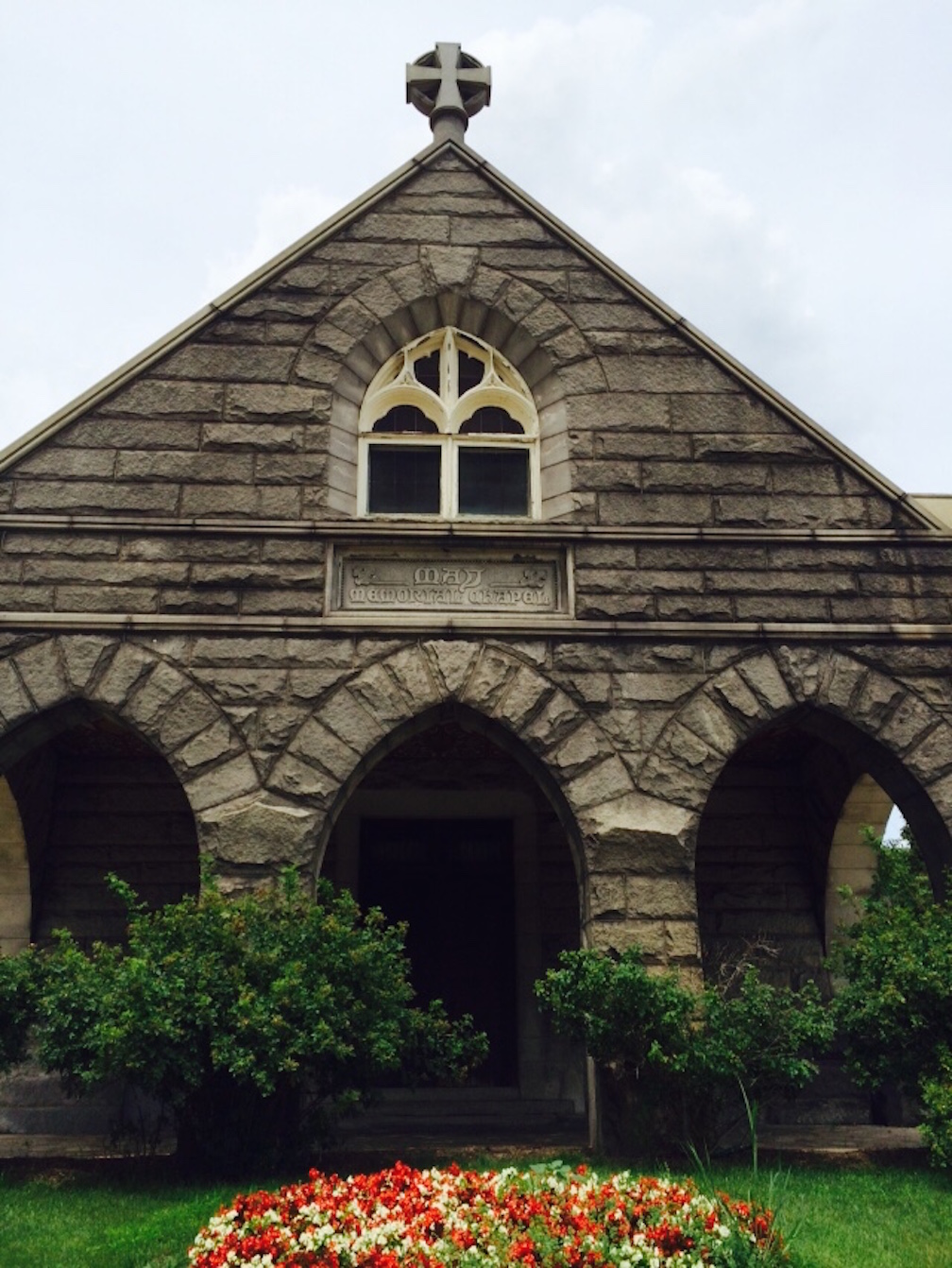
Last week, I shared Part I of my visit to Chicago’s historic Rosehill Cemetery. I featured some of the stunning stained glass in the mausoleums and told the story behind the elegant Horatio May Chapel.

After exploring the outside of the May Chapel and its unique receiving vault, we wandered over to one of the largest mausoleums in the cemetery. The Adam Schaaf Mausoleum is guarded by two distinctive lions. I knew I wanted to find out more about him and his family.

The Schaaf family mausoleum is a commanding presence. Adam, a piano dealer that eventually became a manufacturer, is buried inside along with his wife and at least one of his sons.
The Schaaf family mausoleum is a commanding presence. Adam, a piano dealer that eventually became a manufacturer, is interred inside along with his wife and at least one of his sons.

Adam Schaaf was born in 1849 in England and made his way to Chicago around 1870. Soon after, he married Karolina Gall, whose sister had married Adam’s distant cousin, John Schaaf. Adam worked for John and his brother (piano manufacturers) but only stayed a few years. Adam eventually began selling pianos out of his own home.

A native of England, Adam Schaaf came to America in 1870 and eventually became one of Chicago's premiere piano manufacturers. Photo from Adam Schaaf Pianos: Biography by Robert Seeley.

A native of England, Adam Schaaf came to America in 1870 and eventually became one of Chicago’s premiere piano manufacturers. Photo from Adam Schaaf Pianos: Biography by Robert Seeley.

Adam’s success came slowly but it did come. Unlike other dealers, he capitalized on newspaper advertising to bring in business. He opened his own store but went even further in 1893 when he opened his own piano factory. When fire destroyed the showrooms in 1896, he rebuilt and his success only increased.

SchaffofficesshowroomsAdam’s sons, Fred, Harry and Walter, joined him in the business. They were instrumental in expanding its reach and in time, Schaaf pianos were being sold all over the country via agents.

Sadly, Adam’s last years were full of turmoil. With expansion and new factories came labor problems and a number of strikes (some violent) took place. Union demands were lengthy and often contentious. He died in July 1902, leaving the business to his sons to handle.

The stained glass inside was beautiful but I couldn’t get any good photos of it. But the lions were easy to photograph.

Schaaflionhead

The detail in the lion’s mane adds to his regal bearing.

Schaafpaw

Check out that paw!

Schaaftail

Claws and a tail.

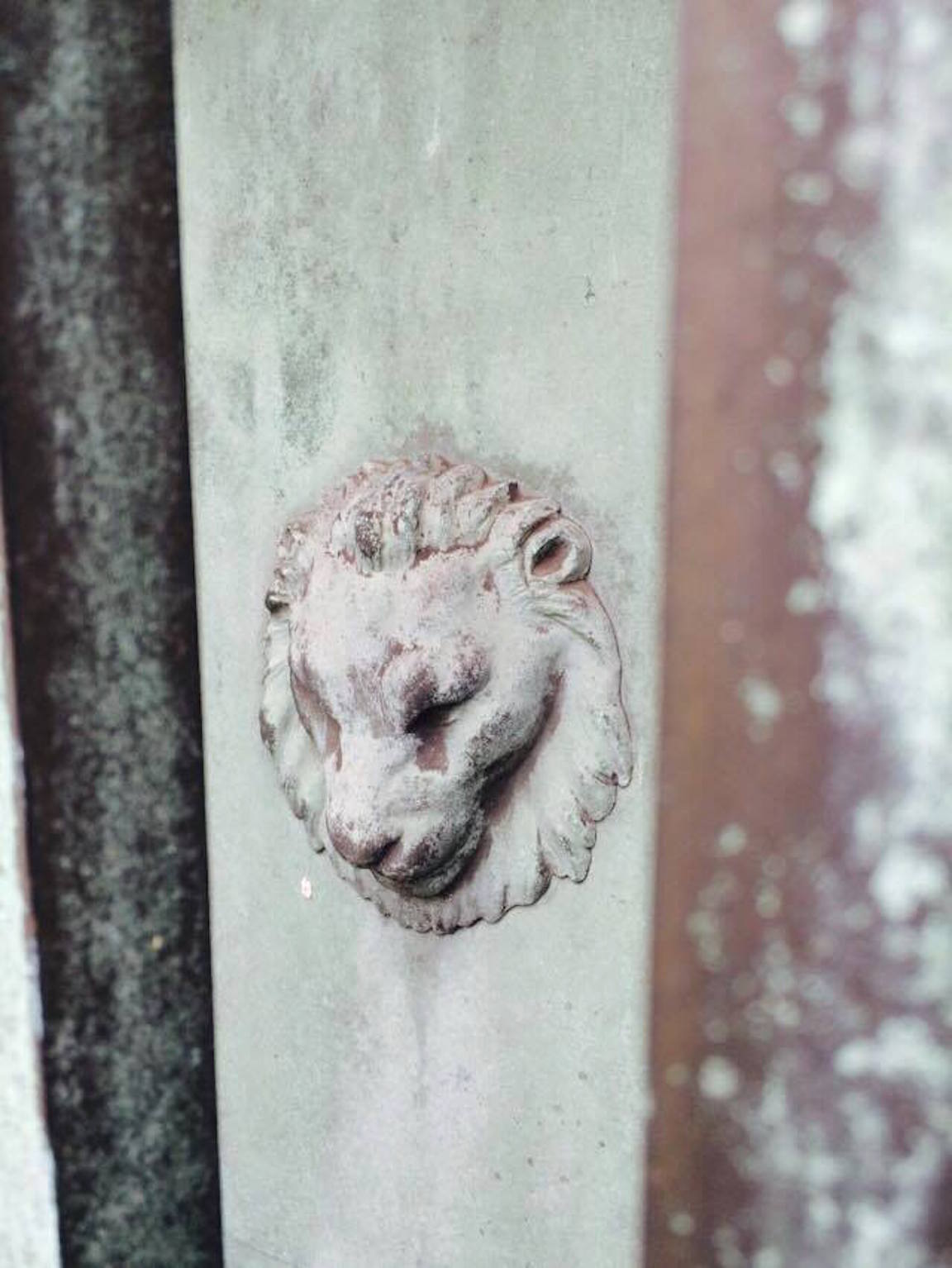
There are also lion details on the mausoleum itself.

SchaafliondoorUnfortunately, the 1930s brought an end to the Schaaf family’s piano business. But the Schaaf mausoleum is a beautiful reminder of the success they once knew. Karolina is buried inside along with their son, Walter.

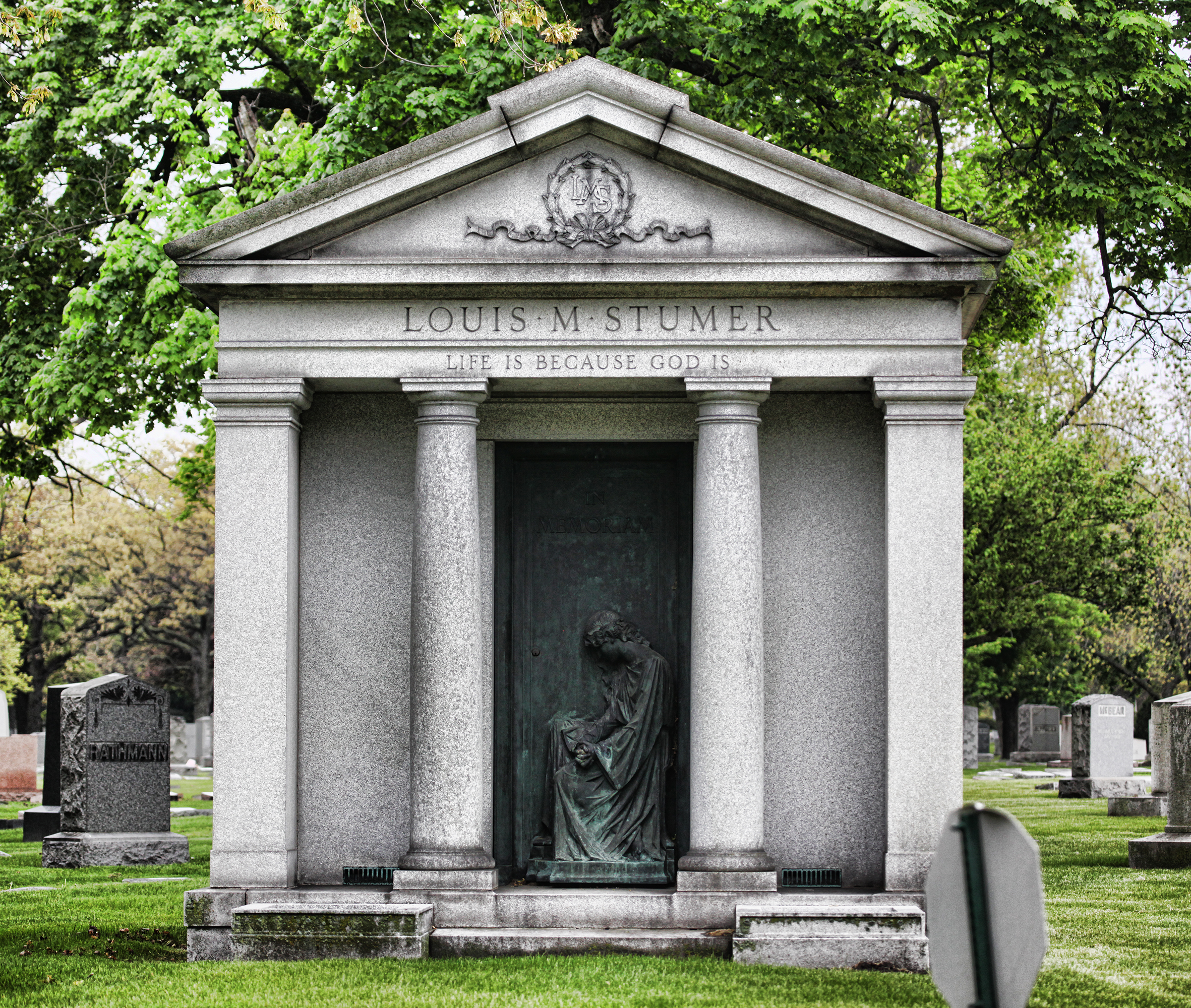
Another striking mausoleum at Rosehill is located further into the cemetery. The Louis Stumer mausoleum is hard to miss due to the kneeling figure of a young woman that is part of the front door. I did not get a good overall photo of it, so I am borrowing one by Sid Penance on Find a Grave.

Louis M. StumerLouis M. Stumer’s mausoleum is definitely one of a kind. The young woman on the front was sculpted by Czech-American artist Mario Korbel. Photo by Sid Penance.

Stumer published three literary magazines, The Red Book, The Blue Book and The Green Book. He also owned (or co-owned) a store, Emporium World Millinery, in Chicago. The nature of his magazines seem to have been on the more sensational side than high prose/poetry.

StumerdoorThe kneeling figure at the door of the mausoleum is hard to forget. She was sculpted by Czech-American artist Mario Joseph Korbel (1882-1954), a native of Osik, Bohemia (now part of the Czech Republic). His work can be found in a number of cemeteries and art galleries. Stumer died in 1919 so the Art Deco style used by Korbel is in keeping with the time.

StumerfootAs I’ve noted in previous posts, I am continually fascinated by feet in cemetery statuary. Korbel’s work is no exception. But her hands are equally detailed.

StumerhandsYou can’t help but linger on her face as well, especially the long lashes against her cheek.

StumerfaceAcross the way from the Stumer mausoleum is Rosehill’s huge mausoleum. It’s probably the largest one I’ve seen except for perhaps Westview’s. The building was locked up tight so we could only photograph the outside.

A view of the front sweep is only a hint of how big the mausoleum is. Photo by Chris Rylands.

A view of the front sweep is only a hint of how big the mausoleum is. Photo by Chris Rylands.

Here’s a side view.

RosehillMausoleumsideAs you can see, if you look at it from the side, the vast size of the place becomes apparent. The front is an impressive Greek Temple style.

RoseHillFrontFrontThe carving above the doorway is in keeping with the Greek theme.

RosehillMausoleumdoortopDedicated in 1914, the Rosehill Mausoleum was designed by architect Sidney Lovell, who is himself entombed within. The interior is almost entirely of marble, with even the floors composed of Italian Carrara marble.

According to Graveyards.com, the Rosehill Mausoleum has two levels, with the lower level partially underground. Some areas, particularly in the west wings, consist mainly of large rooms or corridors lined with crypts. In the eastern side, there are several small private rooms owned by individual families, most with heavy bronze gates. Some have spectacular stained glass windows by Louis Tiffany and other artists.

Notable people interred inside are Chicago Mayors Richard Ogilvie and Dwight Green, A. Montgomery Ward and Richard Warren Sears (both of catalog fame) and John G. Shedd (second president and chairman of Marshall Fields department store). Shedd donated $3 million in 1927 to help found Chicago’s Shedd Aquarium (which we visited during our stay).

This gives you an idea of the level of detail Lovell put into the design of the mausoleum.

This gives you an idea of the level of detail Lovell put into the design of the mausoleum. Photo by Chris Rylands.

Cemetery lore states that the ghost of Richard Sears haunts the mausoleum. Some have said they’ve seen a tall man in a top hat within Sears’ locked room, walking toward the crypt of A. Montgomery Ward. These two giants of the mail order business are interred very near one another so considering they were fierce rivals, I wonder if they have verbal sparring matches.

Fellow Find a Grave volunteer David Habben kindly gave his permission for me to use his photo of the Sears family crypt.

Fellow Find a Grave volunteer David Habben kindly gave his permission for me to use his photo of the Sears family crypt.

Fortunately, I was able to get a photo of the front hall through the door so you can get an idea of what it looks like. My apologies for the poor quality of it. The features and proportions are supposed to be modeled after the Parthenon at Athens, where similar columns lead to an enormous statue of the goddess Athena.

RosehillEntryNot far from the Mausoleum is a small Jewish section marked with a stone.

RoseHillHarVeredstoneI took a few photos of graves and came upon this one. It looked much older than it actually was. You can make out the words “Forever Over The Rainbow” and that got me intrigued. As I learned long ago, some of the smallest graves hold some of the most interesting stories.

Steven Levin loved life, his family and the Wizard of Oz.

Steven Levitin loved life, his family and The Wizard of Oz.

An executive for Riverside Graphics in Chicago, Steve was married and had two daughters. After them, his great love was for the movie The Wizard of Oz and the books it was based upon. He was an enthusiastic collector of memorabilia and attended several conventions, where he made a warm and lasting impression on fellow collectors. A tribute page details his life here.

Time was running short so we started making our way back to the entrance when I caught sight of this distinctive monument.

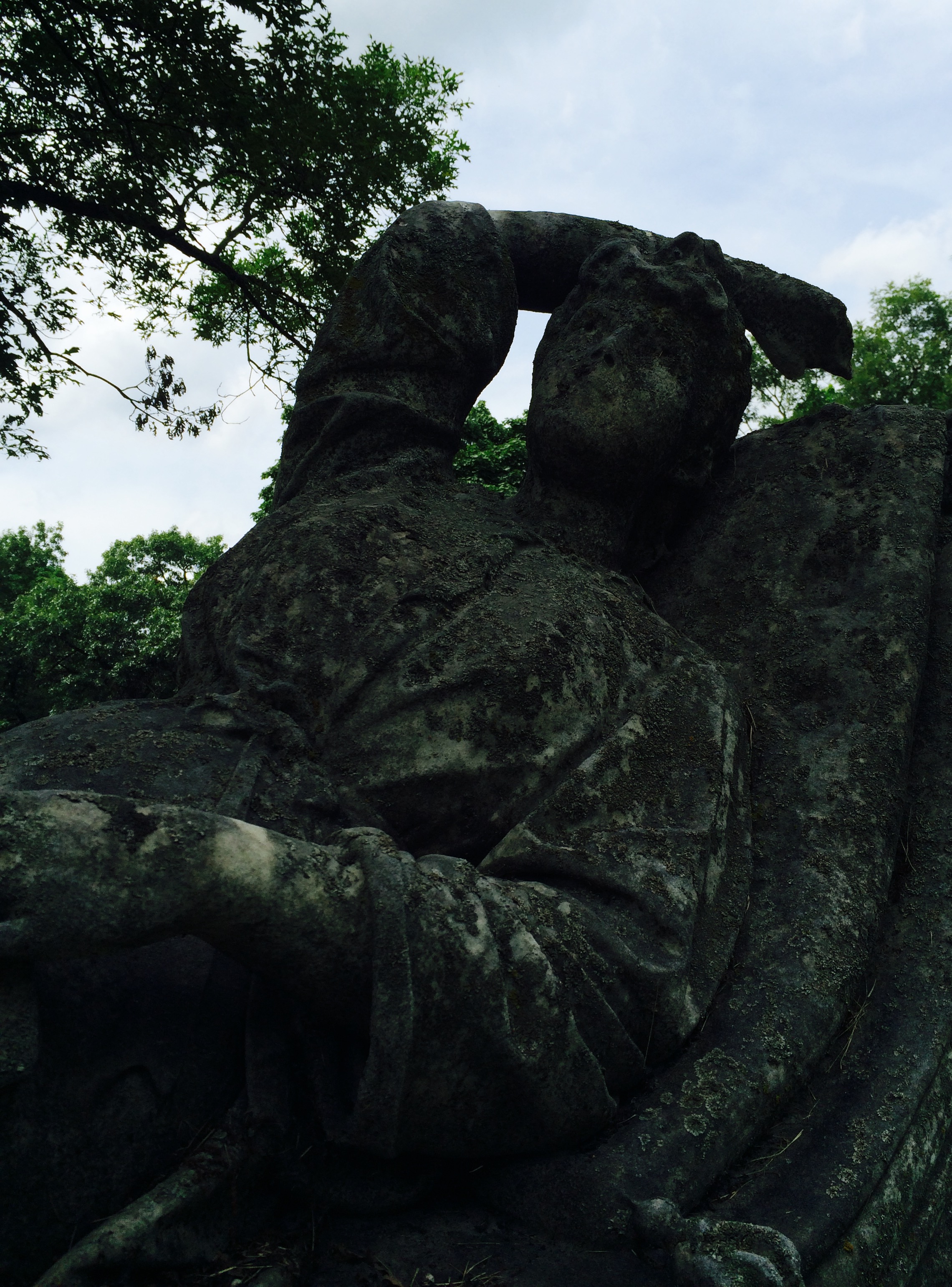
Mattie Swanson May married Harry May at the age of 16.

Mattie Swanson May married Harry May at the age of 16.

Reclining on a divan is the figure of Mattie Swanson May, a young woman who died at the age of 20. Born to Swedish parents in Michigan in 1873, she married Harry May at the age 16. I don’t think Harry was related to Horatio May (of May Chapel fame).

RosehillMattie2

Naturally, I had to get a picture of her feet!

RosehillMattie3But I think my favorite feature was her delicate hand touching a book.

RosehillMattie4The inscription on the base of the monument reads:

In sweet and loving remembrance of my wife Mattie M. May, Born Sept. 5, 1873 – Died July 13, 1893. She was an ideal woman and model wife.

From what little I could find, I learned that Harry May was a baker when he died in 1914 and it doesn’t appear that he remarried after Mattie died. His love for Mattie, despite the brevity of their union, may have been too deep to be replaced by another.

There are so many beautiful and unique monuments at Rosehill that I didn’t have a chance to see, such as the Frances Pearce statue of a young mother and her infant daughter. Or the statue of a little girl, Lulu Fellows. Those will have to wait for another day.

In the meantime, if you have find yourself in the Chicago area and are looking for a beautiful cemetery to get lost in, Rosehill is where you need to go. It sets a high standard for similar big city cemeteries to meet. You won’t regret it.

Next week, I hope you’ll join me for one last Chicago cemetery, Graceland, which is equally spectacular.

Just be aware that Elvis isn’t there. 🙂

The monument in the foreground is for Civil War Union Major General. Thomas E.G. Ransom enlisted as captain of Company #, 11th Illinois Volunteer Infantry in 1861. Within three months he ascended to the rank of Lieutenant Colonel. He was wounded in battle four times: at Ft. Donelson, Shiloh, Vicksburg, and Red River. He led the 17th Corps, Army of the Tennessee in the Battle of Jonesboro, severed the last railroad into Atlanta, and pursued Confederate General John B. Hood northward. Ransom was known as the

The monument in the foreground is for Civil War Union Major General Thomas Edward Greenfield Ransom, who enlisted as captain of Company E, 11th Illinois Volunteer Infantry in 1861. He led the 17th Corps, Army of the Tennessee in the Battle of Jonesboro and severed the last railroad into Atlanta. Ransom was known as the “Phantom General” due to having been assumed dead so many times.

Chicago’s Crown Jewel: Discovering Rosehill Cemetery (Part 1)

14 Friday Aug 2015

Posted by adventuresincemeteryhopping in General

≈ 1 Comment

When we were planing our visit to Chicago, I was hopeful I would visit at least three cemeteries: Rosehill, Graceland and Bohemian National. On the Sunday after we attended Chris’ cousin’s wedding, we headed north of the city and I got to see all of them! Not knowing my way around at all, I was glad Chris was driving.

We only had a few hours to cover a vast amount of territory, so for those who know the place well, I know I missed some of the more famous and eye-catching graves. Believe me, I wish I’d been able to see all of them.

At 325 acres, Rosehill Cemetery is one of oldest and largest in Chicago, chartered in 1859. The name “Rosehill” was actually a mistake. Because of a city clerk’s error, the area previously called “Roe’s Hill” (named for nearby farmer Hiram Roe) become “Rosehill” instead. Roe is said to have refused to sell his land to the city until it was promised that the cemetery be named in his honor.

My theory is that “Rosehill” just sounded better than “Roe’s Hill Cemetery”

Rosehill's impressive limestone front gate was designed by famed architect William Boyington. The limestone came from the quarry at Joliet Prison.

Rosehill’s impressive front gate was designed by famed architect William Boyington. The limestone used to build it was mined from the quarry at Joliet Prison.

Rosehill is the final resting place of several Chicago mayors (including Long John Wentworth), Civil War generals and soldiers, and Charles Gates Dawes, a U.S. Vice President. Icons such as Oscar Mayer, Montgomery Ward and Richard Sears are buried there, too.

Rosehill is located in the Lincoln Park neighborhood and an elevated Metra train line bridge runs right in front of the Ravenswood Avenue entrance. This impressive gate was designed by William Boyington, who also designed Chicago’s famous Water Tower and many other Chicago buildings. The sign on the gate says it follows the castellated Gothic architecture style.

William Boyington designed several Chicago buildings but the most famous is the Chicago Water Tower. The original University of Chicago buildings (since demolished) were also designed by him.

William Boyington designed several Chicago buildings but the most famous is the Chicago Water Tower. The original University of Chicago buildings (since demolished) were also designed by him.

I did notice that the folks at Rosehill want to make sure you don’t stay past closing time and end up locked in. I saw more than one sign making that clear.

The first warning sign is at the front gate.

The first warning sign is at the front gate.

If the sign at the gate didn't scare you enough, there was another.

If the sign at the gate didn’t scare you enough, here’s another.

A few days after our visit to Rosehill, I read about a guy dubbed “Creepy Clown” that was filmed a month before hopping the 7-foot gate and hanging out just inside the cemetery after sunset. So maybe they’re just trying to give people fair warning.

Once inside (and properly warned), we headed over to some beautiful crypts that surrounded a pond. Chris took some great pictures of the stained glass inside some of them, much better than my iPhone’s capabilities.

I think the colors in this one are specatular.

I think the colors in this one are spectacular. Photo by Chris Rylands

The peacock is a symbol of immortality in that the ancients believed the peacock had flesh that did not decay after death. As such, early Christian paintings and mosaics use peacock imagery. Origen and Augustine both refer to peacocks as a symbol of the resurrection.Photo by Chris Rylands.

This less religious stained glass makes me think of Frank Lloyd Wright. Photo by Chris Rylands.

This less religious-themed stained glass makes me think of Frank Lloyd Wright. Photo by Chris Rylands.

Sadly, the top portion of the stained glass in this one has been broken. I still thought it was beautiful.

Sadly, the top portion of the stained glass in this one has broken. I still thought it was beautiful. (I took the picture of this one).

Not far from this area is the Horatio N. May Chapel, designed in 1899 by architect Joseph L. Silsbee. He’s noted for having mentored Frank Lloyd Wright and a number of other Prairie School-style architects. The building and the story behind it fascinated me for a number of reasons.

 Built in 1899 by Joseph Silsbee, the May Chapel is a tribute to Anna May's love for her husband, Horatio May. He and Anna are buried beside the chapel.

Built in 1899 by Joseph Silsbee, the May Chapel is a tribute to Anna May’s love for her husband, Horatio May. He and Anna are buried beside the chapel.

Who was Horatio N. May and how did he get a chapel built for him? Good question! Thanks to Jim Craig and his delightful blog, Under Every Stone, I was able to find that out so I can share the story.

MayChapelfrontpic

Front of the Horatio May Chapel.

Born in Canada, Horatio May came to Illinois and eventually became a grocer. But his star didn’t rise until he married Anna Lush Wilson in 1882, daughter of pioneer and newspaper editor John Lush Wilson. When May was appointed a Lincoln Park commissioner in 1886, Anna was very pleased. Even more so in 1891 when he was named Controller of Chicago by new mayor Hempstead Washburne (buried at nearby Graceland Cemetery).

Horatio May made an impact on his Lincoln Park community and the City of Chicago with his financial acumen.

May’s role as Controller only lasted as long as Mayor Washburne’s two-year term of office, but he made a positive impact on the Lincoln Park community and the City of Chicago.

Horatio went to the spa town of Bad Nauheim, Germany in July 1898 in hopes of shaking off the lingering effects of the flu. (known as “la grippe” in those days). Despite initial signs of improvement, he died in October and Anna arranged to have his body sent home to Chicago. Abraham Lincoln’s son, Robert Todd Lincoln, was named an honorary pallbearer.

The daughter of a newspaper editor, Anns Wilson May wanted her late husband, Horatio May, to have a special chapel built to honor his memory.

The Mays were admirers of Joseph Silsbee and had hired him to design their Chicago home on N. Astor Street. So when Anna considered how to honor her husband’s life at Rosehill, she went beyond providing a grave stone. She wanted a chapel built in his name and she asked Silsbee to design it.

Silsbee's most prominent works were in Syracuse and Buffalo, N.Y., and Chicago. He was influential as mentor to a generation of architects, most notably architects of the Prairie School including Frank Lloyd Wright.

Joseph Silsbee’s most prominent works were in Syracuse and Buffalo, N.Y., and Chicago. He was influential as mentor to a generation of architects, most notably architects of the Prairie School including Frank Lloyd Wright.

You can’t go inside the May Chapel unless you request special permission and we didn’t have time to ask. From what I learned later, you can request to use it for a funeral service. And some weddings have been performed there. We did spend ample time looking around outside as there was plenty to take in.

The ornate ceiling of the May Chapel entryway is stunning.

The ornate mosaic ceiling of the May Chapel entryway is stunning. My photo does not do it justice.

Here's a view of the side of the May Chapel beside the entrance of the receiving vault.

Here’s a view of the side of the May Chapel beside the entrance of the receiving vault.

Chris took this picture of the other side of the May Chapel. You can see barbed wire on the back wall.

Chris took this picture of the other side of the May Chapel. You can see barbed wire on the back wall.

Probably the most peculiar but fascinating area is the back of the May Chapel where the underground receiving vault is located until the hill. You can climb up it and peer down into it through some very old domed windows. I don’t know what you would call them.

These small domes on top of the receiving tomb at the back of the May Chapel may have been for ventilation purposes.

These small domes on top of the receiving tomb at the back of the May Chapel may have been for ventilation purposes.

In case you were curious, here's what you see when you look down into the receiving tomb. Not much to see.

In case you were curious, here’s what you see when you look down into the receiving tomb. Not much to see.

As is the case with most receiving tombs at cemeteries, the Rosehill one stored bodies when the ground was too frozen to dig graves. Another reason was when a family mausoleum being built for the deceased had not been finished yet. It was also used to house bodies when the Rosehill Community Mausoleum was being built.

However, I’ve never seen one built into the hill in the back of a chapel like this. The entry is still intact. I don’t know if it still being used. From the look of it, I would say no. At least not for storing bodies/caskets.

The entrance to the May Chapel’s receiving tomb is still intact.

MayChapeltomb2Contrary to some reports, Horatio and Anna are not interred with the chapel. But they are buried to the right side of the entryway, with a small slab to mark the graves.

Silsbee also designed a mausoleum for the family of grain merchant and close friend William Bartlett that is on the grounds of Rosehill. Alas, I didn’t get any pictures of it so I am borrowing one from the excellent blog Searching for Silsbee.

Photo from the blog Searching for Silsbee at www.jsilsbee.blogspot.com.

Photo from the blog Searching for Silsbee at http://www.jsilsbee.blogspot.com.

Next week, I’ll share about Rosehill’s grand mausoleum and more stories about some of the people buried at the cemetery. I hope you’ll come back for more.

RHironwork

A Place of Rest for All: Exploring Bohemian National Cemetery

07 Friday Aug 2015

Posted by adventuresincemeteryhopping in General

≈ 4 Comments

Come to me, all who labor and are heavy laden, and I will give you rest.

— Matthew 11:28

They say death is the great equalizer. But in the cemetery, that hasn’t been the case in centuries past.

More often than not, the people you lived among and worked with were buried around you. This included your religious and ethnic background. The rich were buried with the rich and the poor…? Well, their final home was often a nameless patch of earth.

As I visited a number of cemeteries in Chicago recently, I saw this play out frequently. The grand mausoleums of Graceland and Rose Hill Cemeteries bore the names of wealthy financiers and blue bloods with family wealth. Some of the grandest monuments I’ve ever seen are there.

But it was at Bohemian National Cemetery (BNC) in Chicago’s North Park neighborhood that I saw some of the most fascinating and beautiful gravestones I’ve ever seen. And most of the people buried there were not wealthy at all.

Although it started with 50 acres, Chicago's Bohemian National Cemetery now covers about 124 acres. Every nationality and religion is welcomed.

Although it started with 50 acres, Chicago’s Bohemian National Cemetery now covers about 124 acres. Every nationality and religion is welcome.

BNC was created as a result of a desire to break down the barriers of class and religion. In 1877, a Catholic priest denied burial in the Bohemian-Polish Catholic cemetery to those he disliked. The refusal to allow the burial of Marie Silhanek was the last straw.

Frank Zrubek was one of the founders of Bohemian National Cemetery and is buried there. Photo by Michelle Peace.

Frank Zdrubek was one of the founders of Bohemian National Cemetery and is buried there. Photo by Michelle Peace.

Frantisek “Frank” Zdrubek was editor of the Bohemian daily Svornost and gave lectures under the auspices of the Bohemian Freethinker’s Society. At a mass meeting of the more than 20 Czech benevolent, fraternal, workingman’s, gymnastic, and freethinkers societies on January 7th, 1877, Zdrubek asked all of Chicago societies to come together and create a “free national cemetery, where any Czech could be buried without regard to religion.”

The organization raised funds and obtained a suitable location for the cemetery, which was in the township of Jefferson. The first burial was the child of Charles Brada on July 1, 1877. BNC officially opened on September 2, 1877. Although they started with 50 acres, it expanded over the years and now covers about 124 acres.

One reason I wanted to visit BNC was to see the brand new memorial to the victims of the 1915 Eastland Disaster. Chris’ great-grandmother Minnie, whom I wrote about last week, is not buried there but some of his other relatives are. At 143 people, BNC is the resting place of the largest number of Eastland victims. The cemetery’s newly opened Section 16 was almost sold out after that tragic event.

At the time, it took two men about four hours to dig one grave. Because so many graves had to be dug for Eastland victims, an additional 50 men were hired to work 12-hour days to get the job done.

Out of the 844 victims of the 1915 Eastland Disaster, the largest number of them are buried at Bohemian National Cemetery.

Out of the 844 victims of the 1915 Eastland Disaster, the largest number of them are buried at Bohemian National Cemetery. This memorial was just unveiled in July 2015.

A number of families and local organizations have purchased memorial bricks at the foot of the new Eastland monument at BNC.

These are just a few of the memorial bricks placed at the foot of the Eastland Memorial at BNC.

These are just a few of the memorial bricks placed at the foot of the Eastland Memorial at BNC.

Wandering through Section 16, I could see that the date of July 24, 1915 is inscribed on many of the markers. They run the gamut from individuals to entire families who died that fateful day.

One of the saddest stories is of Emilie Samek and her fiance, William Sherry. According to the Friends of BNC, Emilie’s father was too ill to work so Emilie got a job at Western Electric as a switchboard operator. With her salary, she was able to help support her parents and four siblings.

Emilie Samek and William Sherry never had the chance to begin married life together.

Emilie Samek and William Sherry never had the chance to begin married life together. She was only 18 when she died.

SherrySamek2Theresa Danda also worked for Western Electric and was engaged to George Dobek, a casemaker. On the fateful day, they took Theresa’s little brother, Edward, with them to join the other employees boarding the boat. Theresa’s sister, Frances, was the only one of the group to survive.

Edward and Theresa Danda were a brother and sister hoping to enjoy a day of fun with their sister and Theresa's fiance. It ended in tragedy.

Edward and Theresa Danda were a brother and sister hoping to enjoy a day of fun with their sister, Frances, and Theresa’s fiance. It ended in tragedy.

There are many other stunning monuments at BNC that kept me wandering from section to section. Unlike many cemeteries, many of the markers at BNC have lovely porcelain discs with photos of the deceased on them. It’s amazing that they’ve remained in such good shape. Just seeing the faces gives you a better idea of what the person who lies beneath the stone was like.

BNC also boasts an impressive collection of monuments of World War I soldiers and sailors. I’ve seen these online but they are very difficult to find in the South. At BNC, these tributes to young men who died in the flower of youth are common.

Brothers John and Charles Kuchar both served in the U.S. military. I could not trace the date of John's death but he served in the 72nd Coast Artillery.

Brothers John and Charles Kuchar both served in the U.S. military. I could not trace the date of John’s death but he served in the 72nd Coast Artillery.

The Kuchar brothers served in the U.S. military but Charles survived World War I. I believe younger brother John did not but I cannot trace his military records beyond his service in the 72nd Coast Artillery.

Charles Kuchar survived his military service. He married and had two children.

Charles Kuchar survived his military service. He married and had two children.

Another monument features young sailor Edward Bartizal. He died of influenza at the Great Lakes Naval Hospital in 1918. While he was not killed in action, I am sure his death was no less painful to his parents.

The Bartizal family monument features a statue of son Edward in his Naval uniform.

The Bartizal family monument features a statue of son Edward in his Naval uniform.

Bartizalstatue

While Edward's life was cut short, it clearly had an impact on his parents.

Edward’s life was cut short just as he was entering adulthood.

Pvt. Michael Kokoska was 27 when he died. He was a soldier in the the 127th Infantry, Company L. He was killed in action in France. His is one of the few detailed stories I was able to find in my research.

Michael Kokolska was a Chicago-born son of two Bohemian immigrants. He worked as a tailor and a truck driver before being drafted into the U.S. Army.

Michael Kokoska was a Chicago-born son of two Bohemian immigrants. He worked as a tailor and a truck driver before being drafted into the U.S. Army.

Michael was the son of two Bohemian immigrants, Joseph and Majdalena. After finishing school, he found work as a tailor and later as a truck driver. According to his Find a Grave memorial, he was temporarily buried in Morvillars Military Cemetery in France after his death and word was sent to his parents. The task of getting Michael’s remains sent home to America took time but he was eventually buried at BNC in 1921.

Michael Kokoska's parents wrote letters in hopes of getting his remains sent back to the U.S.

Michael Kokoska’s father wrote several impassioned letters in hopes of getting his son’s remains sent back to the U.S.

On a lighter note, there’s one section of BNC that is bound to put a smile on a few faces. In 2009, Cubs fan were given a unique opportunity to combine their passion for a beloved baseball team with a fitting final resting place.

Cubs Fans Forever: Beyond the Vines was created as a special place just for Chicago Cubs fans to place their cremated remains. About 288 “skyboxes” are available for urns in a unique interment wall. Loved ones can sit in four seats from Wrigley Field that face the wall or even play catch on a small lawn grown from Wrigley sod.

Established in 2009, the Cubs Fans Forever interment wall offers baseball fans a unique final resting place.

Established in 2009, the Cubs Fans Forever interment wall offers baseball fans a unique final resting place.

One example of the many

One example of the many “skyboxes” in the “Cubs Fans Forever” interment wall at Bohemian National Cemetery.

I could have stayed at Bohemian National Cemetery for the rest of the day and spent another several exploring the place. As is often the case when cemetery hopping, we just didn’t have enough time. BNC has a distinctly rich character that’s reflective of the people buried there. You want to linger over every grave.

Because whether rich or poor, we all need a place to rest.

Photo by Chris Rylands.

Photo by Chris Rylands.

← Older posts
Newer posts →

Recent Posts

  • Pandemic Cemetery Hopping: Wandering Around Atlanta’s Crest Lawn Cemetery/Casey’s Hill, Part II
  • Pandemic Cemetery Hopping: Wandering Around Atlanta’s Crest Lawn Cemetery/Casey’s Hill, Part I
  • Few But Not Forgotten: Paying My Respects at the Houston County Poorhouse Cemetery in Dothan, Ala.
  • More Pensacola, Fla. Cemetery Hopping: Taking a Ramble Through Saint John’s Cemetery, Part III
  • More Pensacola, Fla. Cemetery Hopping: Taking a Ramble Through Saint John’s Cemetery, Part II

Archives

  • July 2026
  • June 2026
  • February 2026
  • December 2025
  • November 2025
  • August 2025
  • July 2025
  • June 2025
  • May 2025
  • April 2025
  • March 2025
  • February 2025
  • January 2025
  • October 2024
  • August 2024
  • July 2024
  • June 2024
  • May 2024
  • April 2024
  • March 2024
  • February 2024
  • January 2024
  • December 2023
  • November 2023
  • October 2023
  • September 2023
  • August 2023
  • July 2023
  • June 2023
  • May 2023
  • April 2023
  • March 2023
  • February 2023
  • January 2023
  • December 2022
  • November 2022
  • October 2022
  • September 2022
  • August 2022
  • July 2022
  • June 2022
  • May 2022
  • April 2022
  • March 2022
  • February 2022
  • January 2022
  • December 2021
  • November 2021
  • October 2021
  • September 2021
  • August 2021
  • July 2021
  • May 2021
  • April 2021
  • March 2021
  • February 2021
  • January 2021
  • December 2020
  • November 2020
  • October 2020
  • September 2020
  • August 2020
  • July 2020
  • June 2020
  • May 2020
  • April 2020
  • March 2020
  • February 2020
  • January 2020
  • December 2019
  • November 2019
  • October 2019
  • September 2019
  • August 2019
  • July 2019
  • June 2019
  • May 2019
  • April 2019
  • March 2019
  • February 2019
  • January 2019
  • December 2018
  • November 2018
  • October 2018
  • September 2018
  • August 2018
  • May 2018
  • April 2018
  • March 2018
  • February 2018
  • January 2018
  • December 2017
  • November 2017
  • October 2017
  • September 2017
  • August 2017
  • July 2017
  • June 2017
  • May 2017
  • April 2017
  • March 2017
  • February 2017
  • January 2017
  • December 2016
  • November 2016
  • October 2016
  • September 2016
  • August 2016
  • July 2016
  • June 2016
  • May 2016
  • April 2016
  • March 2016
  • February 2016
  • January 2016
  • December 2015
  • November 2015
  • October 2015
  • September 2015
  • August 2015
  • July 2015
  • May 2015
  • April 2015
  • March 2015
  • February 2015
  • January 2015
  • December 2014
  • November 2014
  • October 2014
  • September 2014
  • August 2014
  • July 2014
  • June 2014
  • May 2014
  • April 2014
  • March 2014
  • February 2014
  • January 2014
  • December 2013
  • November 2013
  • October 2013
  • September 2013
  • August 2013
  • July 2013
  • June 2013
  • May 2013
  • April 2013
  • March 2013
  • February 2013
  • January 2013

Categories

  • General

Blogroll

  • A Grave Interest
  • Cemetery Photography by Chantal Larochelle
  • Cemetery Tours of Berlin by Matti
  • Confessions of a Funeral Director (Caleb Wilde)
  • Find a Grave
  • Hunting and Gathering (cool photography site)
  • Save Our Cemeteries (New Orleans, La.)
  • The Cemetery Club
  • The Graveyard Detective
  • The Rambling Muser
  • Westminster Abbey Tours by Grace

Meta

  • Create account
  • Log in
  • Entries feed
  • Comments feed
  • WordPress.com

Blog at WordPress.com.

  • Subscribe Subscribed
    • Adventures in Cemetery Hopping
    • Join 399 other subscribers
    • Already have a WordPress.com account? Log in now.
    • Adventures in Cemetery Hopping
    • Subscribe Subscribed
    • Sign up
    • Log in
    • Report this content
    • View site in Reader
    • Manage subscriptions
    • Collapse this bar
Loading Comments...